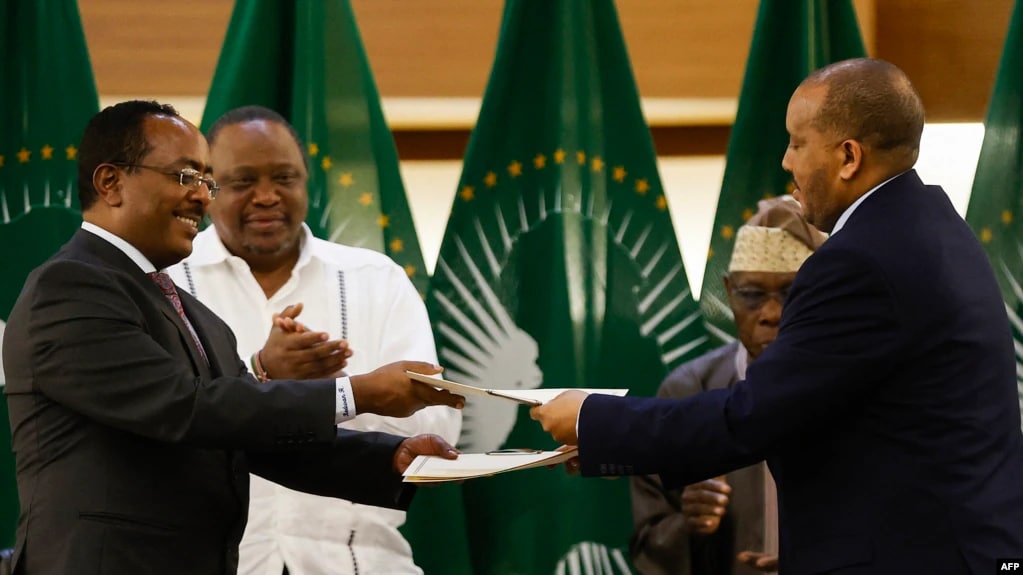
“A peace deal between the Ethiopian Government and the Tigray People’s Liberation Front (TPLF) signed on Wednesday (November 2) in South Africa, represents “a critical first step” towards ending the brutal two year war”, said the UN chief.
After two years of the civil war between the TPLF and the Ethiopian army, with the mediation of Olusegun Obasanjo, the former president of Nigeria, as well as representatives of the African Union, representatives of both sides were invited to Pretoria, the capital of South Africa, and negotiations began on October 25 to reach a peace agreement.
According to this agreement, tension and war in the conflict areas will be stopped and international organizations and humanitarian institutions will be allowed access to the war zones to provide humanitarian aid.
“The two sides have agreed to a systematic, orderly, peaceful and coordinated cessation of hostilities and disarmament,” former Nigerian President Obasanjo said about the agreement.
Antonio Guterres, the Secretary General of the United Nations, the African Union and other countries of the African continent and the world have welcomed this agreement.
The Ethiopian civil war started in early November 2020 following the escalation of the differences between the Ethiopian government headed by Abiy Ahmed and the Tigray Autonomous Region, and caused the deaths of tens of thousands of people and the displacement of two million civilians. The people of Tigray believe that Abiy Ahmed’s government is trying to completely take over the decision-making process in the Tigray region and take the power out of Tigray’s hands.
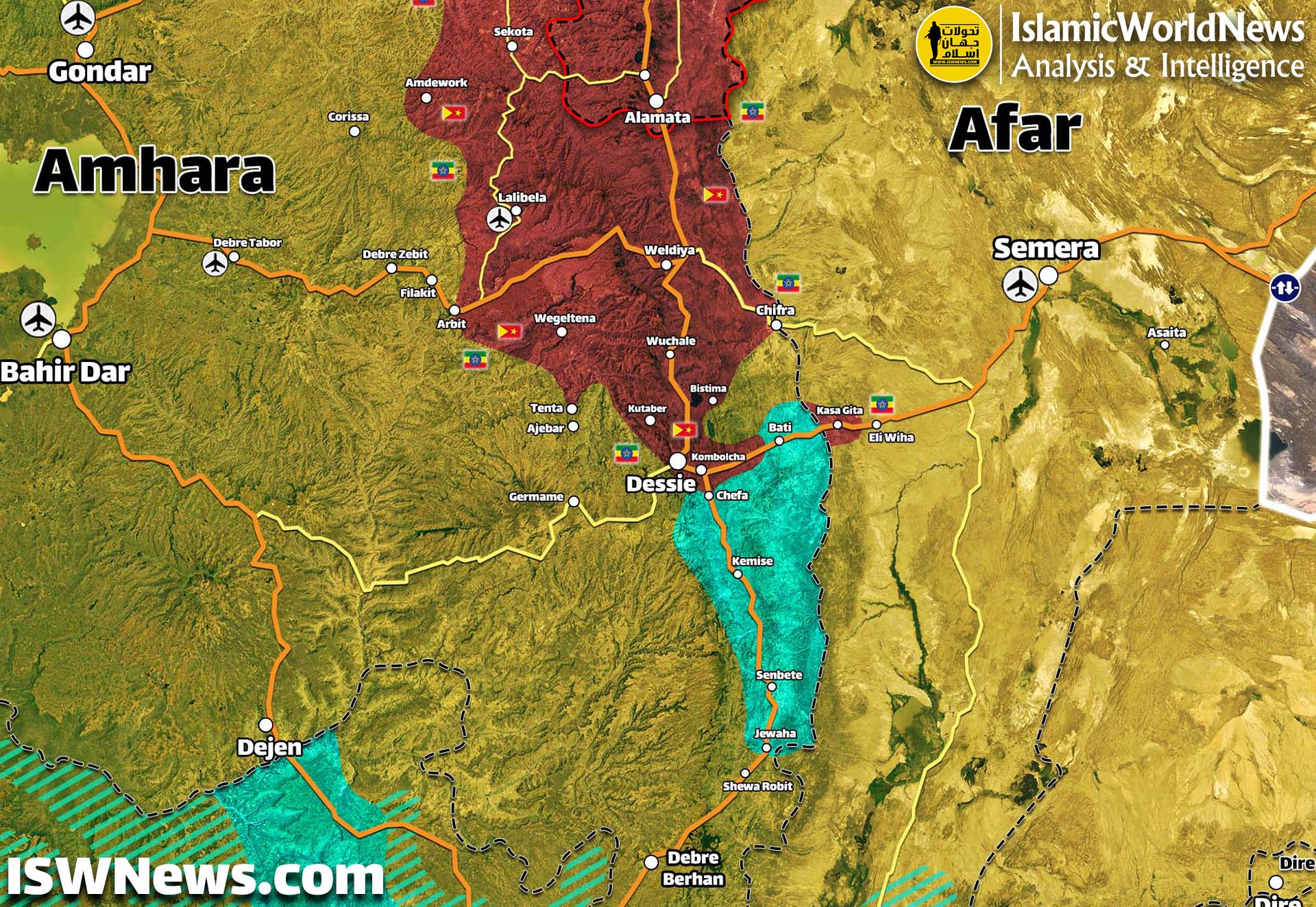
In recent weeks, Tigray forces reached to the gates of Ethiopian capital, and the city of Addis Ababa was expected to fall, But Ethiopian federal forces led by Abiy Ahmed managed to retake most of the lost territory in six days from December 1 to December 7 in the southeast of Amhara State from the Tigray (TDF) and Oromo (OLA) forces, gaining the upper hand in the battlefields. After these defeats, the Tigray forces counterattacked and managed to regain control of some areas, And the clashes seemed to be tied around the towns of Weldiya and Lalibela.
But then it was the Ethiopian federal forces (ENDF) who once again managed to dictate their superiority on the field to the Tigray forces, and within 15 days from December 7 to December 22 cleared all remaining areas in the State of Amhara from the TDF and even captured the city of Alamata in the southeast of Tigray State. However, it is noteworthy that a significant part of these advances took place after the withdrawal of Tigray forces from Amhara State.
Debretsion Gebremichael, President of the Tigray Region and chairman of Tigray People’s Liberation Front (TPLF), sent a letter to the United Nations three days ago stating that he had ordered all his forces to retreat to the Tigray border. In a letter to UN Secretary-General Antonio Guterres, Debretsion Gebremichael blamed the international community for its inability to protect civilian lives, citing “drones provided by foreign powers” as one of the main reasons for its decision, and called for a ceasefire and peace talks. He stated that the Tigrayans showed that no one can rule them by force, and that the Tigray have proved their resistance and steadfastness. According to Gebremichael, there were several opportunities for peace during the war, but the other side did not use it, and he hopes that the current opportunity for peace will be used to achieve a lasting peace.
Debretsion Gebremichael letter to the United Nations
Debretsion Gebremichael’s remarks come as Ethiopian Prime Minister Abiy Ahmed, with his complete victory over the Tigray and the end of the war in the Amhara, has regained his place as the winner, and it seems unlikely that the former demands of the Tigrayans to be accepted by him. Now that the Tigrray forces have returned to their home state, there are rumors that Eritrean troops are amassing forces and equipment on the northern border, and there is a possibility of another war on the northern border. So the slightest clashes or excuse could start another long-running war in Tigray State.
An important point in the recent war in Ethiopia is the game-changing use of drones. The recent war in Ethiopia has clearly shown that the effective use of combat drones can completely change the outcome of battles. This will be crucial for countries with weaker air forces. As we have mentioned in previous articles; Abiy Ahmed had bought drones from countries such as Turkey, the UAE and Iran, and during the past month, the use of purchased drones reached its peak, and this significantly forced the Tigray forces to retreat from different areas of Amhara State.
According to the latest news, the Tigray Defence Forces (TDF) have captured the towns of Dessie and Kombolcha in the Amhara region. Clashes are currently raging between militants and Ethiopian military (ENDF) in the suburbs of Kombolcha. There are also reports of Tigray forces advancing south and capturing Were Ilu.
Oromo Liberation Army (OLA) militants, on the other hand, managed to take control of the town of Kemise, 45 km south of Kombolcha, and advanced north to reach the Tigray forces. In recent statements, the Tigray and OLA militants have stated their intention to overthrow the government of Abiy Ahmed and seize the Ethiopian capital Addis Ababa.
Until recently, the Oromo Liberation Army (OLA) were considered the military branch of the Oromo Liberation Front (OLF) political party. In 2018, a peace agreement was reached between the Ethiopian federal government and the Oromo Liberation Front (OLF) to end the conflict in Oromia; But the Oromo Liberation Army (OLA) split from the (OLF) in opposition to the agreement. Since then, OLA militants have continued their attacks on Ethiopian military forces in the region.
On August 11, Kumsa Diriba, the leader of Oromo Liberation Army announced that the group had formed an alliance with the Tigray Defense Forces (TDF) and was in talks with other insurgent groups to form a “grand coalition” to overthrow Ethiopian Prime Minister, Abiy Ahmed.
Regarding the newly captured areas by the TDF and OLA militants, it is noteworthy that these towns have hosted thousands of war refugees in the Amhara region in recent months. The towns of Dessie and Kombolcha are about 255 kilometers from the Ethiopian capital Addis Ababa, and their capture by the militants poses a serious threat to the Ethiopian capital. TDF militants also entered Afar province from Chifra and Kasa Gita areas. The ultimate goal seems to be to cut off the A1 highway and weaken one of the Ethiopian government’s logistics routes. The A1 Highway is the access route from Addis Ababa to the port of Djibouti or the port of Assab and access to open water.
The latest clashes in Ethiopia began on November 3, 2020, after the Tigray Liberation Front (TPLF) attacked the Ethiopian Army headquarters in Mekele, the capital of Tigray State, and finally after a few weeks of Ethiopian military operations and the capture of a number of important areas in the Tigray region, the battles ended with the announcement of the liberation of the city of Mekele and the end of the operation by Abiy Ahmed on November 28, 2020.
But that was not the end, and the Tigray forces gradually regained their strength and regained control of many lost areas by forming a new military structure called the Tigray Defense Forces (TDF). Tigray Defense Forces came into existence during the Tigray War in the fall of 2020 from the merger of the Special Forces of the Tigray Regional government, soldiers that have defected from the federal forces, local militia, members of Tigrayan political parties such as the TPLF, National Congress of Great Tigray, Salsay Weyane Tigray, Tigray Independence Party and others together with numerous youth who fled to the mountains.
Coinciding with the military and field developments in northern Ethiopia, several peace meetings have been held by international organizations and African countries to resolve the Tigray crisis and the Ethiopian civil war, but all efforts have been fruitless. On the other hand, the Tigray front, which is very dissatisfied with the current situation and the unequal behavior of the Ethiopian federal government towards the Tigray people, recaptured the city of Mekele on June 28, 2021 and vowed to continue their offensive and drive into Eritrea or the Amhara Region if necessary.
Therefore, on July 6, the TDF militants launched an operation called “Operation Tigrayan Mothers” with the aim of retaking the occupied territories in the Tigray state, and then dragged the war into the state of Amhara, and tensions between Tigray and the Ethiopian government have risen more than ever.
It is noteworthy that over the past year, there have been numerous and contradictory reports of war crimes and massacres of civilians and unarmed individuals by groups involved in the Ethiopian war. According to available information, at least 10,000 civilians have been victims of war crimes and genocide, rape, looting and etc.
According to the statement, the city of Mekelle is under the control of the Ethiopian Army (ENDF) and the Ethiopian Army in control of critical areas, including Mekelle Airport, government centers and vital facilities. Thousands of Ethiopian army officers held captive by the TPLF have also been released.
No news has been published so far about the fate of the Tigray leaders who were present in the city of Mekelle.
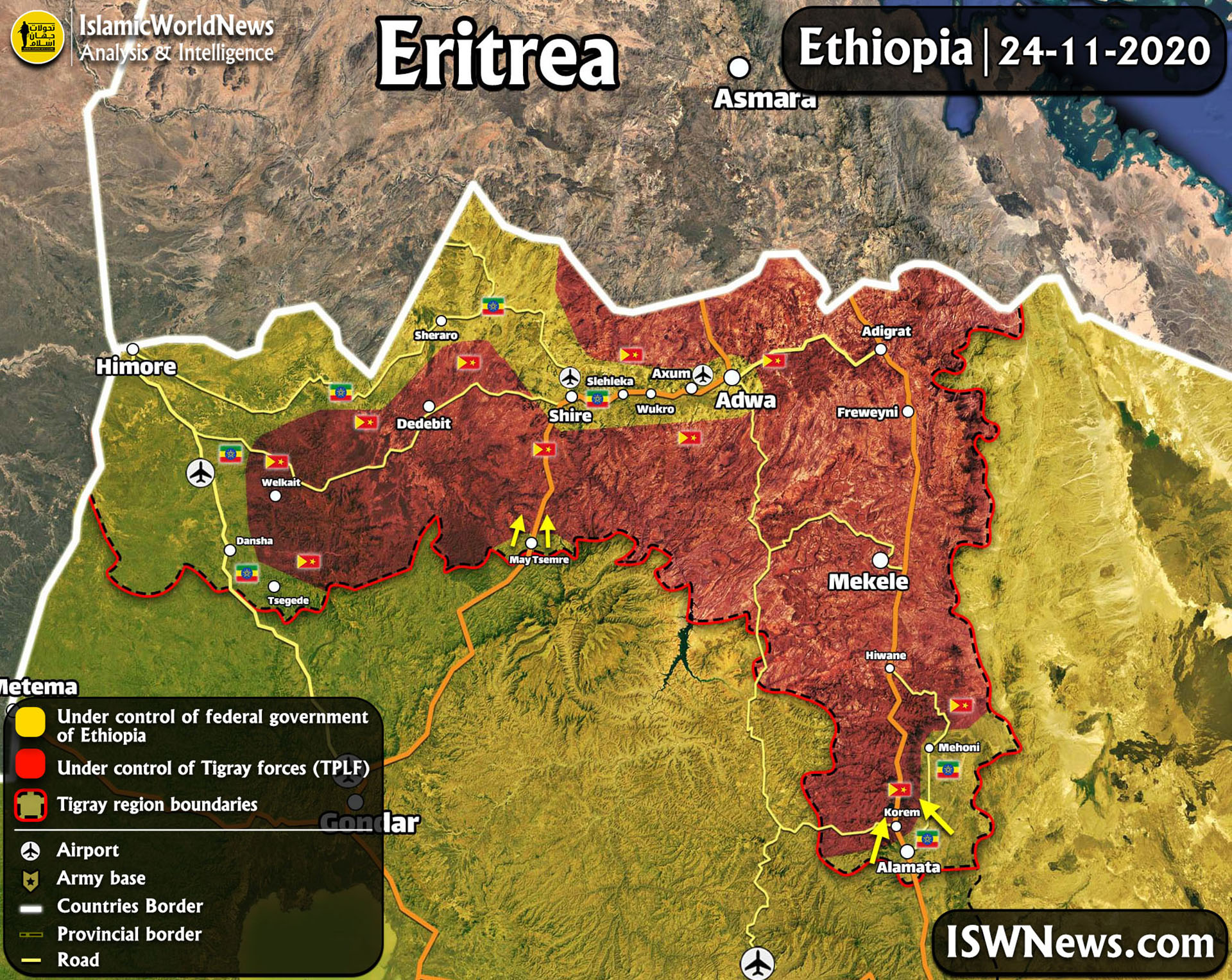
The news of the capture of the city of Mekelle is announced while in the last 24 hours, the Ethiopian army had announced the control of Abraha and Wikro areas, 30 km north of Mekelle and the city of Hiwane, 40 km south of Mekelle.
If the claim of Abiy Ahmad is true, it seems that the city of Mekelle has been attacked from three directions, north and south, as well as from Abala, which is located 30 km east of Mekelle.
TPLF media have reported artillery and air bombardment of the city of Mekelle and civilian casualties in the past 24 hours. Earlier, Ethiopian Prime Minister Abiy Ahmed had given Tigray 72 hours to surrender, but after refusing the ultimatum, the final attack order was issued by Abiy to control Mekelle. The Army commander also threatened if people do not distance themselves from TPLF, they will be targeted by tanks!
With the fall of the city of Mekelle, the Tigray People’s Liberation Front (TPLF) in northern Ethiopia will be virtually finished.
Also yesterday, there were some reports of the bombing of the Adi Harush refugee camp in the north May Tsemre. Five people are said to have died and ten others were injured in the attack. It is worth mentioning that there are more than 100,000 refugees in Tigray, almost all Eritrean, living largely in four refugee camps of Hitsats, Mai-Aini, Adi Harush and Shemelba.
– Ethiopian Prime Minister Abiy Ahmed’s 72-hour deadline for Tigray People’s Liberation Front (TPLF) to surrender has come to an end. Abiy Ahmed gave the TPLF three days to surrender on November 22, otherwise the attack on Mekelle, the capital of Tigray province, would begin. The commander of the Ethiopian army also demanded the people to separate their way from the TPLF and stay away from them, otherwise they would be attacked by tanks! On the other hand, TPLF leader Debretsion Gebremichael rejected Ahmed’s deadline and said that Tigray would resist the Ethiopian army.
– The Tigray media has denied the Ethiopian Army (ENDF) claim that it captured the city of Adigrat by publishing live broadcast from the city. In recent days, the ENDF has claimed control of the city of Adigrat.
– Bahir Dar airport in Amhara province was again targeted by several rockets.
– The Ethiopian army took control of the May Tsemre region south of the Tigray, and the clashes reached the Adi Harush Refugee Camp in the area. One child is said to have died in the clashes so far.
– According to the United Nations, 40,000 Ethiopian refugees have fled to Sudan since the beginning of the conflict in Tigray province.
– According to the Human Rights Concern – Eritrea (HRCE), there is credible evidence that the Eritrean Armed Forces, including conscripts, have been deployed to the Tigray region of Ethiopia and are engaged in heavy fighting with the TPLF alongside the Ethiopian Armed Forces.
Tigray region lays in north of Ethiopia along the border with Eritrea and Sudan, and the main land for three tribes of Tigray, Irob and Kunama. According to Ethiopia constitution, Tigray province enjoy a some kind of autonomy. Nevertheless, the relationship between Tigray and capital of Ethiopia was under tension from time to time and it became worse after Abiy Ahmed took power in 2018. Before Abiy Ahmed, TPLF was the strongest ruling party in Ethiopia but after Abiy was elected as PM, he started wide political reforms and limited TPLF power significantly. Tigray people believe that the central government is trying to cease the power in Tigray region completely and put TPLF aside from power.
The first signs of military tensions appeared in September 2019 when a caravan of Ethiopia forces was stopped in north of Tigray. The convoys were transferring and evacuating the Ethiopian forces from border with Eritrea after almost two decades due to the agreement between two countries to open the border and normalize the bilateral relations.
The second serious tension between TPLF and ENDF took place in September 2020 when Tigray requested the central government to help them hold the regional election in Tigray region but Abiy Ahmed canceled the election due to Covid-19 pandemic. However TPLF with support of opposition parties in Tigray province formed the election committee to hold the election and 2.7 million people participated in the election. On the other hand Abiy Ahmed announced that the government does not consider the election in Tigray official and banned the foreign reporters to cover the election.
On 4 November, TPLF attacked EDNF HQ in Mekelle city, capital of Tigray province and took control of it. TPLF claimed that ENDF were preparing for a long time to attack Tigray and this was a pre-emptive attack. Abiy Ahmed however claimed that TPLF crossed red lines and announced war against them.
Abiy Ahmed: TPLF intended to war. With today’s attacks red lines were crossed and the federal government has to enter the military conflict.
He declared a six month emergency situation and no flight zone in Tigray province, said there will be a military operation to restore the rule of law in the area. It is said that after declaration of war, the government cut the electricity, telephone and internet services in Tigray province.
TPLF also captured all the posts and stations of ENDF in the province and the forces in them joined TPLF. Some of army radars and SAMs including S-125 Pechora was ceased by TPLF as well.
It is noteworthy that TPLF has between 200-250 thousand experienced warriors and the army has 160 thousand soldiers, which is a serious challenge for the Ethiopian army.
According to TPLF officials, during the recent clashes, the group’s positions have been targeted at least 10 times by Ethiopian army warplanes. There are also reports of drones targeting Tigray positions. The UAE army are said to be assisting Ethiopia from a Assab base in Eritrea and targeting Tigray positions in northern Ethiopia.
According to local sources, from the beginning of the conflicts on 4 November so far at least 500 of TPLF or Pro-TPLF forces have been killed. ENDF suffered heavy casualties, too.
On 14 November, TPLF hit Gondar and Bahir Dar airports by several rockets. Late on November 14 also, Eritrea’s Asmareh airport was targeted with several rockets. TPLF announced that their forces are engaging with Eritrea army, which is ally of Ethiopia, in several fronts in recent days.
Currently, The conflicts continue between ENDF and TPLF in different areas of the province.
In the latest updates of the battlefield, in western front, ENDF seized control of the Gondar-Homera road and Homera airport. On the eastern front also ENDF tried to advance on Raya Azebo and Mekelle area, but the attacks were repulsed by the TPLF. In the southern front, the Ethiopian army took control of the city of Alamata, and the advance continues towards Mekelle from the south.