
Balochistan: A Geopolitical Battleground for Global Powers
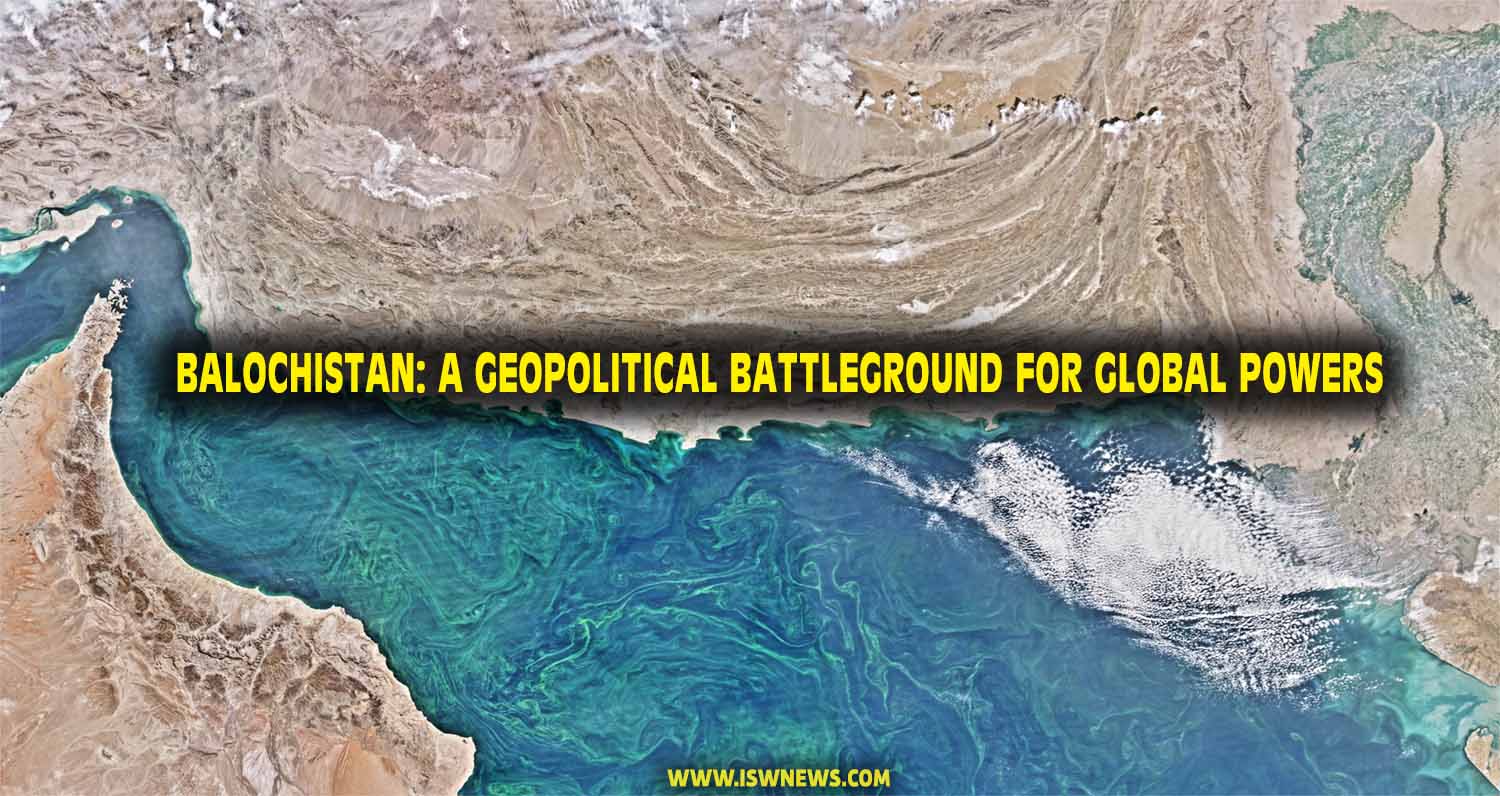
Balochistan, a region straddling the borders of Iran, Pakistan, and Afghanistan, has become a focal point in the geopolitical rivalry among major powers such as China, Russia, and India. These nations view its ports and infrastructure corridors as strategic assets to counter Western influence. Despite facing separatist movements and severe human rights violations, Balochistan plays a critical role in shaping an alternative bloc to the Euro-Atlantic hegemony, acting as a crossroads for trade routes, strategic investments, and military cooperation within the Eurasian sphere.
Historical Background
Historically, Balochistan was subjected to colonial divisions and centralized state control, depriving its people of self-determination. After Pakistan’s formation in 1947, the region was forcibly annexed, while in Iran it was absorbed into a centralized system. During the Cold War, Balochistan remained marginal, often suppressed due to separatist demands. However, in the 21st century, amid rising Asian economic power and multipolar dynamics, its ports and natural resources have elevated its geopolitical significance, placing it squarely in the global power competition.
Economic Value and Strategic Position
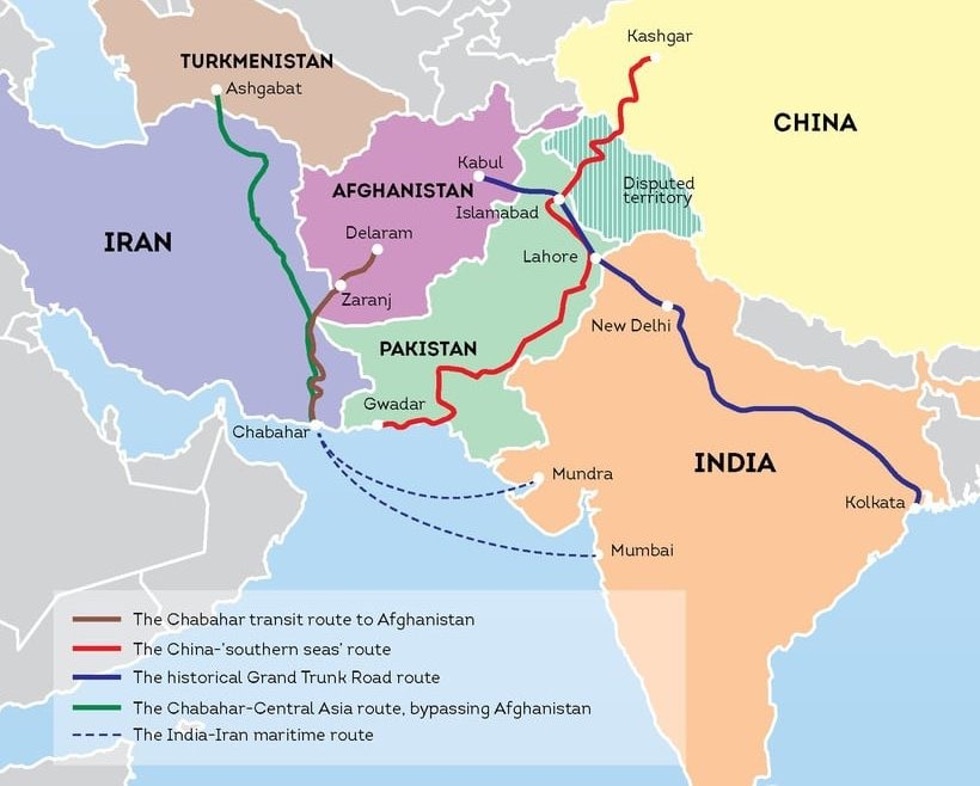
With a population of around 10 million and direct access to the Gulf of Oman and the Indian Ocean, Balochistan holds vital geopolitical value. The ports of Gwadar (Pakistan) and Chabahar (Iran) are central to ambitious infrastructure projects. Gwadar is a key component of the China–Pakistan Economic Corridor (CPEC), while Chabahar is linked to the North–South Transport Corridor supported by Iran and Russia.
In a multipolar world, Balochistan serves as a strategic counterweight to Western dominance. China and Russia see its ports as a means to reduce reliance on U.S.-controlled trade routes and to strengthen an independent bloc both economically and militarily. Investments from Russia, India, and China follow a shared logic: establishing a sphere of influence free from Euro-Atlantic interests and bypassing chokepoints like the Strait of Malacca, the Suez Canal, and the Persian Gulf.
Chinese investment
Initially, China focused on Gwadar, investing $65 billion under its Belt and Road Initiative (BRI) to connect its Xinjiang province to the Arabian Sea and reduce dependence on the Strait of Malacca. However, persistent instability in Pakistani Balochistan—driven by separatist insurgency—has disrupted CPEC projects and led to attacks on Chinese and Pakistani military assets. These tensions have weakened Islamabad’s control and raised sovereignty concerns within Pakistan’s parliament.
In March 2025, China’s ambassador to Iran met with Chabahar Free Zone officials to discuss strategic cooperation under a 25-year agreement. The two sides emphasized linking Gwadar and Chabahar to create a transit corridor to Europe. The deal includes major investments such as petrochemical complexes, smart city development, coastal infrastructure, airport construction, automotive industrial zones, and water and fisheries management. According to Italy’s IARI think tank, China is gradually shifting its investments toward Chabahar, where Tehran’s centralized control offers a more secure environment for Chinese interests. This strategic pivot is part of Beijing’s broader effort to build a maritime network independent of Western dominance.
India’s Counterstrategy
To counter the China–Pakistan axis, India invested in Chabahar before China did. Unlike Gwadar, which is part of China’s BRI, Chabahar was developed with Indian support to secure direct access to Afghanistan and Central Asia. However, China’s potential involvement in Chabahar has raised concerns in New Delhi, as the port was previously seen as a rival to Gwadar. While Gwadar remains partially operational due to unrest, Chabahar has gained commercial traction. If India strengthens its partnership with Iran and expands logistical infrastructure, Chabahar could become a key trade hub for accessing Afghanistan, Central Asia, and even Russia. Still, competition with China and broader geopolitical tensions remain major challenges.
Russia’s Strategic Role
Iran–Russia cooperation in Chabahar is part of a 20-year strategic pact signed in 2025, focusing on defense, energy, and the North–South Transport Corridor (INSTC). Russia seeks access to warm-water ports and aims to bolster its position in non-Western trade networks. Joint military drills in Chabahar involving Russia, China, and Iran underscore the port’s rising geopolitical importance.
If local tensions are managed and neutral players like India are engaged, Balochistan could transform from a peripheral zone into a strategic pillar of the emerging multipolar world order.
Source:
https://iari.site/2025/05/19/limportanza-strategica-del-belucistan-in-chiave-anti-occidentale/
https://x.com/Sputnik_India/status/1923734105469952470
https://twitter.com/TheRFTeam/status/1933507090649088473

Comments