
Latest Status of Yemen’s Frontlines (Map)
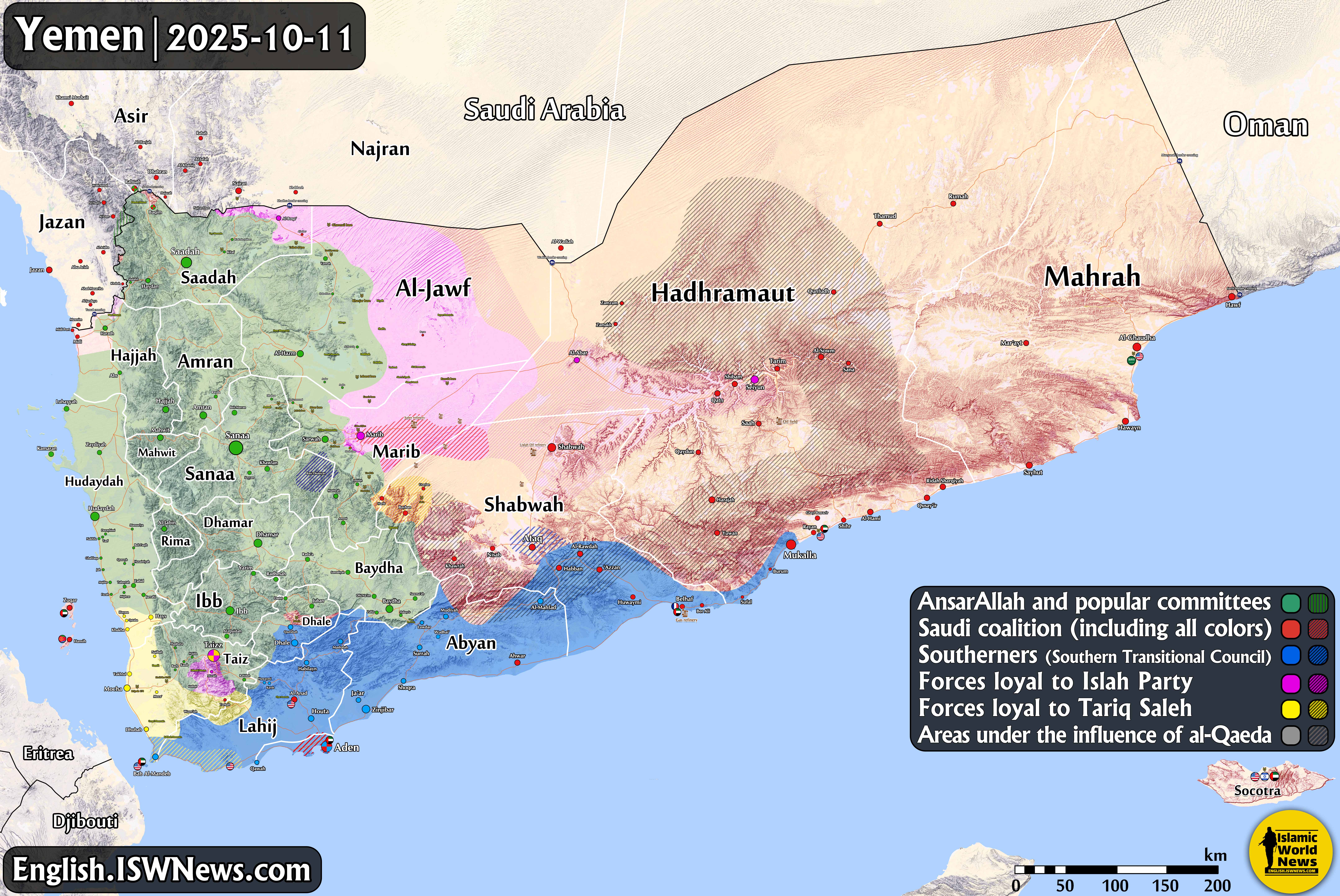
The battlefronts in the provinces of Ma’rib, Al-Jawf, and the southern regions remain under ceasefire between Yemeni armed forces and Saudi-led coalition forces. However, tensions persist in occupied areas of Yemen between factions aligned with Saudi Arabia and the UAE, including the Islah Party, Tariq Saleh’s forces, and other armed groups.
Support operations by Yemen’s armed forces (backed by Ansar Allah) in solidarity with Palestine have continued until the final day of negotiations between the resistance and the Zionist regime. The latest actions include a precision cruise missile strike on the Dutch vessel MINERVAGRACHT and the entry of several suicide drones into the port of Eilat in southern occupied Palestine. According to Sayyed Abdul-Malik Badr al-Din al-Houthi, Yemen has carried out 1,835 support operations over the past two years using ballistic missiles, cruise missiles, hypersonic weapons, drones, and suicide boats.
In Hadhramaut province, tensions are rising between the UAE-backed Southern Transitional Council (STC) forces and the Saudi-backed Hadhramaut Protection Forces. Saudi Arabia is equipping three divisions under the Hadhramaut Protection Forces, aiming to seize oil resources and advance toward the Hadhramaut coast. Similar developments are unfolding in Al-Mahrah and Shabwah provinces, although in the city of Ataq, the capital of Shabwah, UAE-aligned forces currently hold control.
In Abyan province, guerrilla attacks by Al-Qaeda militants—including roadside bombings, drone strikes, sniper fire, and other harassment tactics—continue to target STC forces, inflicting significant casualties.
In Taiz province, tensions between the Islah Party and Tariq Saleh’s forces have escalated following the assassination of Afthan al-Mashhary, head of the sanitation and beautification office. Several failed assassination attempts have targeted local commanders from both sides. Islah militants have attempted to arrest and confront Tariq Saleh’s forces in the city of Al-Turba in southern Taiz, but these efforts have failed, and control of Al-Turba remains with Tariq Saleh’s forces.
In Lahij province, the Al-Subayha tribes—aligned with Saudi Arabia—are trying to gain control of the southwestern coast of Lahij. However, UAE-backed Al-Amaliqa forces, under the command of Brigadier General Hamdi Shukri, are blocking their advance and currently hold the area. The Al-Subayha tribes are independent tribes from southwestern Yemen, some of whose leaders have been recruited by Saudi Arabia. In recent years, Al-Subayha militants have clashed multiple times with Tariq Saleh’s forces, preventing their entry into southwestern Yemen.
Overall, Yemen’s internal front is facing numerous challenges that make the path to peace increasingly elusive. Saudi Arabia and the UAE, as influential Arab powers, have exploited Yemen’s dire economic conditions over the years, supporting proxy factions such as the STC, Islah Party, Al-Amaliqa, remnants of Ali Abdullah Saleh’s regime, and others to serve their strategic interests.
These dynamics have deepened divisions between Yemeni factions and the government in Sanaa, making national reconciliation or liberation from foreign-backed groups more difficult. Undoubtedly, once the Palestinian issue is resolved, Yemen’s government will have to confront this major challenge and adopt thoughtful and flexible strategies to overcome it.

Comments