Tag: Hadhramaut

  • Recapture of Hadhramaut and Mahra By the Saudi-backed Government (Map)

    Recapture of Hadhramaut and Mahra By the Saudi-backed Government (Map)

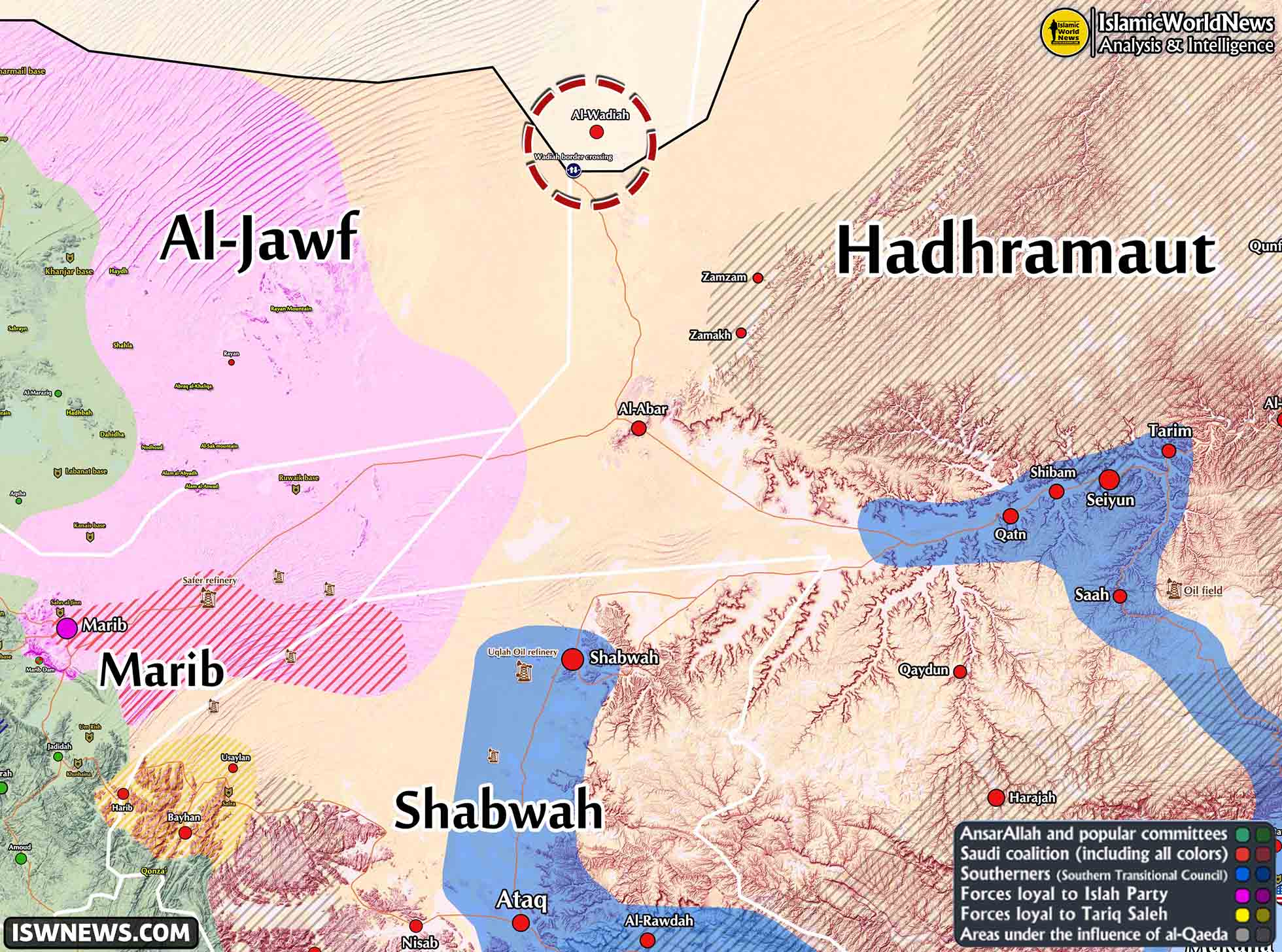
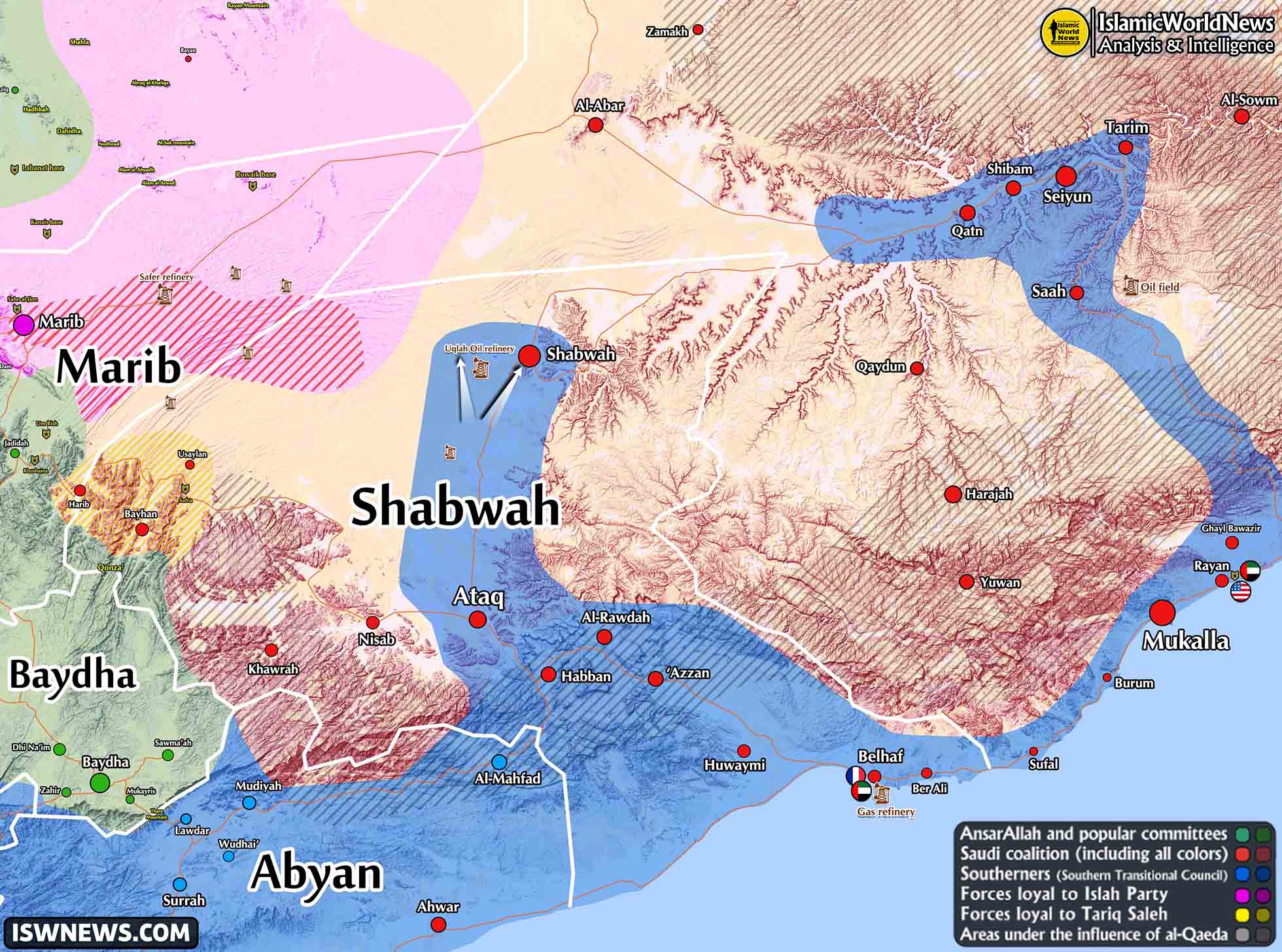
    The operation, involving Al-Dara’ Al-Watan forces, armed tribal groups from Hadhramaut, and fighters from the Islah Party, began on Friday, January 3, with Saudi air support. Starting from the Al-Khasha area, they attacked positions of the Southern Transitional Council and advanced toward Al-Qatn in the Hadhramaut valley. By Saturday morning, Al-Qatn and Shibam had fallen to Al-Dara’ Al-Watan, while Southern forces retreated toward the Hadhramaut coast. By Sunday morning, Seiyun and other central districts of Hadhramaut were under government-in-exile control. The forces then moved to Al-Rayyan airbase (previously used by Emirati forces on the Hadhramaut coast) and, after hours of clashes, seized it from the Southern Transitional Council.

    During these battles, at least 80 Southern fighters and an unspecified number of Saudi-backed troops were killed, with hundreds more wounded. Both sides have yet to release official casualty figures.

    Al-Dera’ Al-Watan forces have since entered Mukalla, the capital of Hadhramaut, without resistance, taking control of all government and military facilities. They also advanced into Al-Mahra province, seizing Al-Ghaydah city and the port of Nishtun. Their objective is to secure Al-Ghaydah’s city and airport, border crossings, and remove Major General Talib Barjash, commander of the Second Military Region (Al-Mahra and Yemen’s southeastern coast), who recently defected to the Southern Transitional Council and rejected the authority of the Presidential Council of the government-in-exile.

    Given the heavy defeat of the Southern Transitional Council in Hadhramaut valley and coastal cities, Al-Mahra is also expected to fall under government-in-exile control soon. Awad bin Al-Wazir Al-Awlaki, governor of Shabwa—previously supportive of Southern forces and backed by the UAE—has now announced cooperation with the Saudi-led coalition to deploy forces in oil-rich areas and military bases.

    Overall, the Southern Transitional Council’s “Promising Future” operation collapsed with the UAE’s withdrawal and Saudi determination. The plan to partition southern Yemen has been sidelined. However, the Saudis have invited the Southern Transitional Council to participate in Yemen’s internal dialogue conference in Riyadh, and the [Persian] Gulf Cooperation Council’s federal plan for Yemen remains on the table. Still, the re-establishment of a separate South Yemen has failed, leaving Aidarus al-Zoubaidi’s efforts fruitless.

    Download high res map

  • Clashes Continue Between Saudi‑Backed Tribal Coalition and UAE‑Backed Hadhrami Elite Forces

    Clashes Continue Between Saudi‑Backed Tribal Coalition and UAE‑Backed Hadhrami Elite Forces

    Reports indicate at least four members of the Hadrami Elite Forces have been killed in the clashes. (image)

    Saudi warplanes continue conducting airstrikes on open, uninhabited areas as a warning to UAE‑aligned forces, aiming to deter further attacks and advances in Hadramaut.

  • Third Consignment: UAE Bolsters Southern Forces in Yemen

    Third Consignment: UAE Bolsters Southern Forces in Yemen

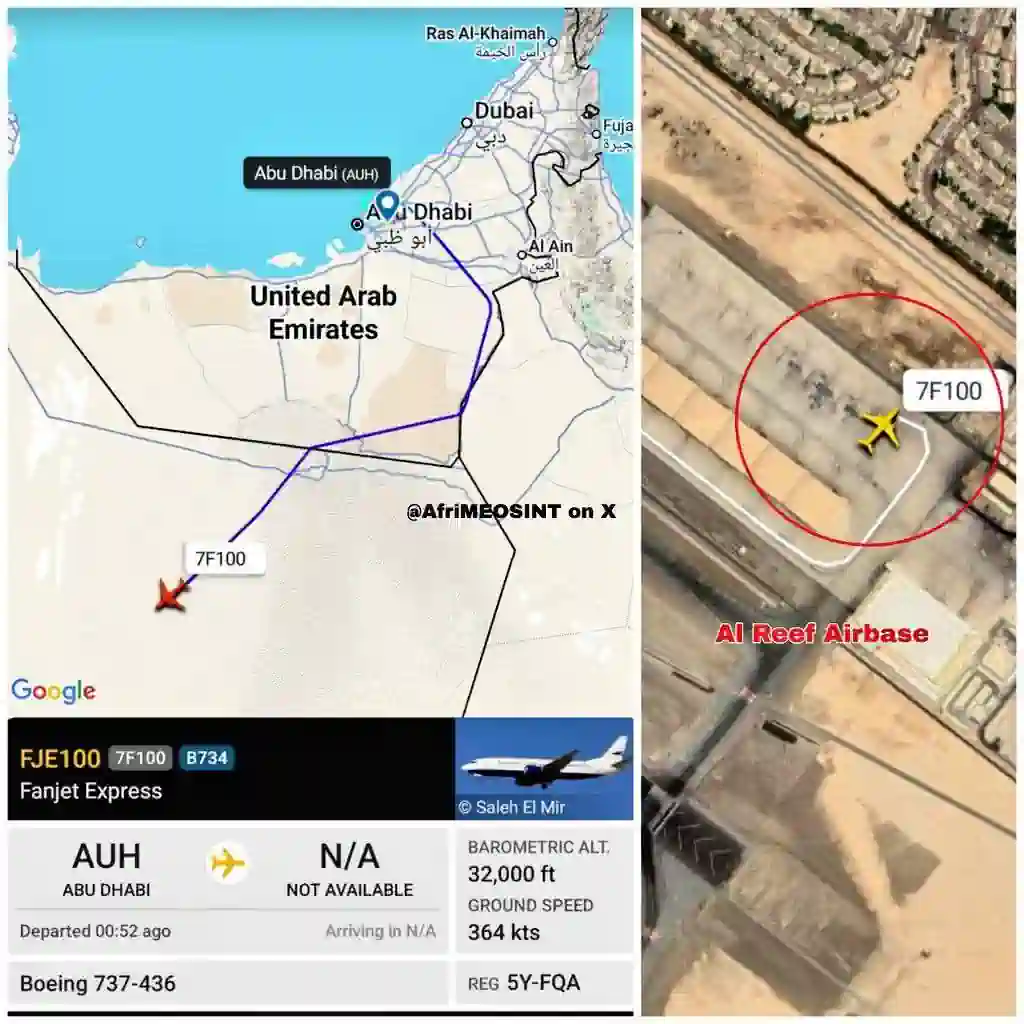
    The shipment was transported via a Boeing 737 aircraft operated by the Emirati company Fanjet Express, departing from Al-Rif Air Base in Abu Dhabi and arriving at Al-Rayyan Airport on Yemen’s Hadramaut coast. This marks the third military consignment sent by the UAE to southern forces in recent days.

    By supplying new weapons to southern groups, Abu Dhabi aims to strengthen their positions in Hadramaut and prevent future offensives by Saudi-aligned factions.

  • Southern Transitional Council Withdraws from Areas in Northern Hadhramaut

    Southern Transitional Council Withdraws from Areas in Northern Hadhramaut

    In addition to this withdrawal, the Southern Transitional Council has issued directives to prepare for an exit from the Hadhramaut Valley and to transfer control of the area to the Saudi-backed al‑Dara‘ al‑Watan forces.

    As expected, Saudi warnings prompted the southern forces to retreat from their recent advances in Hadhramaut and to hand over the valley to Saudi‑aligned factions. However, the withdrawal process is still in its early stages, and it remains unclear how far the retreat—or the tensions between Emirati‑backed and Saudi‑backed groups—will go.

    It appears the southern forces, through cautious and calculated maneuvers, are seeking to secure a larger share of Hadhramaut’s oil wealth and intend to continue these moves as long as possible.

  • Al‑Wadi‘ah Border Crossing Closed

    Al‑Wadi‘ah Border Crossing Closed

    At the same time, Saudi Arabia’s closure of the crossing coincided with the deployment of Al‑Dara‘ al‑Watan forces and armed groups loyal to Hashem al‑Ahmar (a parliament member and former Yemeni army officer under Ali Abdullah Saleh) along the road in the al‑Abr area, blocking vehicles from heading toward the border.

    Currently, the al‑Abr region and the 23rd Mika Brigade base are under the control of Al‑Dara‘ al‑Watan forces. Saudi Arabia is reportedly fortifying this position to support unspecified security measures. It appears Riyadh is preparing to counter the recent advances of the Southern Transitional Council in Hadhramaut and Shabwa provinces and to reclaim oil‑rich areas.

  • Emirati‑backed forces seize oil fields in Hadhramaut and Shabwa

    Emirati‑backed forces seize oil fields in Hadhramaut and Shabwa

    At the same time, STC fighters seized all checkpoints and outposts surrounding the PetroMasila oil company (affiliated with Saudi Arabia) in Hadhramaut province.

    The advance of Emirati‑aligned forces in Hadramaut and Shabwa, coupled with the repeated withdrawals of Islah fighters, marks a significant shift. The STC does not have the capacity to control these areas without support from other Emirati‑backed factions, indicating Abu Dhabi’s role behind the scenes.

    In the coming days, attention will turn to Saudi Arabia’s response to these southern advances and what orders will be issued to the al‑Dara al‑Watan forces. Opponents of the UAE in Hadramaut are awaiting action by al‑Dara al‑Watan against the southerners.

    Click to view full size
  • Southern Transitional Council Fighters Advance into Northern Hadhramaut, Capture Seiyun; Clashes Halted by Saudi Mediation

    Southern Transitional Council Fighters Advance into Northern Hadhramaut, Capture Seiyun; Clashes Halted by Saudi Mediation

    Following the STC’s takeover of Hadhramaut’s administrative center and surrounding areas, STC representatives and Hadhramaut tribal leaders reached an agreement through the mediation of a Saudi security‑military delegation. The talks focused on safeguarding oil fields and negotiating toward a comprehensive settlement.

    Under the deal, military tensions between the sides will cease starting Thursday morning, with a ceasefire in place until the mediation committee concludes its work and a full agreement is reached. All fighters under the Saudi‑led coalition must withdraw at least one kilometer from oil facilities, allowing personnel and security forces free movement. Once withdrawals are implemented, meetings between al‑Khanbashi and Amr bin Habreesh will be held to finalize the settlement under mediator supervision.

    The Hadhramaut confrontation appeared to end with the Southern Transitional Council expanding its influence in occupied Yemeni territories, Saudi interests secured in the oil‑rich areas, and tribal leaders brought under control. Yet it left behind important lessons.

    The first was the defeat of the Islah Party in Hadhramaut, which showed that Saudi Arabia places little value on them, limiting cooperation to countering Ansarallah and holding populous, religiously sensitive cities such as Marib and Taiz. The second was the strengthening of STC military power, now equipped with new weapons including drones and micro‑drones, aligned with UAE objectives.

    Behind the STC’s success in Wadi Hadhramaut lay support from Tariq Saleh’s forces, the Giants Brigades, and Shabwa Defense units, which allowed southern forces to fully concentrate on northern Hadhramaut while these allies managed other areas until the clashes ended. This scenario could also be replicated against Ansarallah positions, potentially delivering significant blows to the central government’s authority in Sanaa.

  • Saudi-Backed Militias Mobilize to Protect Oil Fields in Northern Hadhramaut

    Saudi-Backed Militias Mobilize to Protect Oil Fields in Northern Hadhramaut

    This move aims to prevent a possible offensive by Southern Transitional Council (STC) forces against the Hadhramaut desert and the province’s oil-rich regions.

    Al-Dara’ Al-Watan (Shield of the Nation) militias were formed in late November 2022 with Saudi backing and the involvement of Sagheer bin Aziz and Tariq Saleh. They were assembled from Hadhramaut tribal fighters, Yemen Al-Saeed forces (aligned with Sagheer bin Aziz), and elements of Tariq Saleh’s units in western Lahj province. Saudi Arabia has equipped these forces to counter the STC and secure control over Hadhramaut’s oil fields and ports.

    Tensions between Hadhramaut tribes and STC factions stationed along the province’s southern coast are escalating as both sides mobilize reinforcements from other regions to gain dominance over oil resources. Despite their alliance against Ansar Allah, Saudi-backed proxy groups are locked in fierce competition to divide the wealth and resources of Yemen’s occupied territories.

  • UAE and Saudi Arabia Mobilize Forces to Seize Hadhramaut

    UAE and Saudi Arabia Mobilize Forces to Seize Hadhramaut

    At the same time, reinforcements from the Southern Transitional Council (STC), consisting of hundreds of fighters and military vehicles, have entered the city of Mukalla. In addition, a battalion from Tariq Saleh’s forces has been deployed to a camp west of Mukalla, the provincial capital of Hadhramaut.

    Given the large-scale deployment of STC fighters to Hadhramaut over the past two weeks, the likelihood of a southern military offensive against the Hadhramaut tribes has increased. The province’s oil-rich areas remain under tribal control, and tribal leaders — backed by Saudi Arabia — have refused to transfer revenues to the exiled government or the STC. This has fueled sharp tensions and rivalry between UAE- and Saudi-backed factions in Yemen’s occupied territories.

  • Latest Status of Yemen’s Frontlines (Map)

    Latest Status of Yemen’s Frontlines (Map)

    Support operations by Yemen’s armed forces (backed by Ansar Allah) in solidarity with Palestine have continued until the final day of negotiations between the resistance and the Zionist regime. The latest actions include a precision cruise missile strike on the Dutch vessel MINERVAGRACHT and the entry of several suicide drones into the port of Eilat in southern occupied Palestine. According to Sayyed Abdul-Malik Badr al-Din al-Houthi, Yemen has carried out 1,835 support operations over the past two years using ballistic missiles, cruise missiles, hypersonic weapons, drones, and suicide boats.

    In Hadhramaut province, tensions are rising between the UAE-backed Southern Transitional Council (STC) forces and the Saudi-backed Hadhramaut Protection Forces. Saudi Arabia is equipping three divisions under the Hadhramaut Protection Forces, aiming to seize oil resources and advance toward the Hadhramaut coast. Similar developments are unfolding in Al-Mahrah and Shabwah provinces, although in the city of Ataq, the capital of Shabwah, UAE-aligned forces currently hold control.

    In Abyan province, guerrilla attacks by Al-Qaeda militants—including roadside bombings, drone strikes, sniper fire, and other harassment tactics—continue to target STC forces, inflicting significant casualties.

    In Taiz province, tensions between the Islah Party and Tariq Saleh’s forces have escalated following the assassination of Afthan al-Mashhary, head of the sanitation and beautification office. Several failed assassination attempts have targeted local commanders from both sides. Islah militants have attempted to arrest and confront Tariq Saleh’s forces in the city of Al-Turba in southern Taiz, but these efforts have failed, and control of Al-Turba remains with Tariq Saleh’s forces.

    In Lahij province, the Al-Subayha tribes—aligned with Saudi Arabia—are trying to gain control of the southwestern coast of Lahij. However, UAE-backed Al-Amaliqa forces, under the command of Brigadier General Hamdi Shukri, are blocking their advance and currently hold the area. The Al-Subayha tribes are independent tribes from southwestern Yemen, some of whose leaders have been recruited by Saudi Arabia. In recent years, Al-Subayha militants have clashed multiple times with Tariq Saleh’s forces, preventing their entry into southwestern Yemen.

    Latest situation on Yemeni fronts – Click to view image in full size

    Overall, Yemen’s internal front is facing numerous challenges that make the path to peace increasingly elusive. Saudi Arabia and the UAE, as influential Arab powers, have exploited Yemen’s dire economic conditions over the years, supporting proxy factions such as the STC, Islah Party, Al-Amaliqa, remnants of Ali Abdullah Saleh’s regime, and others to serve their strategic interests.

    These dynamics have deepened divisions between Yemeni factions and the government in Sanaa, making national reconciliation or liberation from foreign-backed groups more difficult. Undoubtedly, once the Palestinian issue is resolved, Yemen’s government will have to confront this major challenge and adopt thoughtful and flexible strategies to overcome it.

  • Saudi Arabia Carries Out New Measures To Take Absolute Control Over Hadhramaut 

    Saudi Arabia Carries Out New Measures To Take Absolute Control Over Hadhramaut 

    In this respect, a few days after the technical visit and the preparation of a plan to control the oil fields in the largest Yemeni governorate, the Saudi command room in Hadhramaut dispatched a logistical convoy to the facilities of the Petrosilah Company in the mountainous areas of the eastern governorate with the intervention of the Saudi-backed Al-Dara’ Al-Watan (Shield of the Homeland) militants.

    This Saudi move coincided with the completion of the process of handing over control of the Al-Wadiah border crossing to the Al-Dara’ Al-Watan forces as well as the pull-out of the forces of the 141st Infantry Brigade of the Islah Party (the Yemeni Congregation for Reform) from the border area, indicating that the Saudis are seeking to consolidate their grasp over the east of the war-torn country.

    The forces of the Al-Daraa Al-Watan (Shield of the Homeland) are militias that were formed in November 2022 with the support of the Saudi kingdom and the role of Saghir bin Aziz, Chief of the General Staff and Commander of Joint Operations, as well as Brigadier General Tareq Mohammed Abdullah Saleh, a Yemeni military commander and the nephew of the late President Ali Abdullah Saleh. The Al-Daraa Al-Watan militants were consisted of pro-Saudi tribes in Hadhramaut Governorate, the Yemen al-Saeed forces (subordinate to Saghir bin Aziz) as well as a division of the pro-Tariq Saleh forces in western Lahj Governorate.

    Saudi Arabia’s objectives in deploying Al-Dara Al-Watan militants in Hadhramaut Governorate can be summarized in two sections: 1- Confronting the Southern Transitional Council, and 2- Controlling the oil fields and ports of Hadhramaut Governorate, all of which are in line with challenging the intensification of the United Arab Emirates’ influence in the occupied regions of Yemen. Despite the Saudi-UAE alliance against the Ansar Allah movement, the Saudi kingdom and the UAE are fiercely competing with each other in usurping resources and looting the wealth of Yemen’s southern and eastern areas.

  • Yemen: The US Army Occupied The North Of Hadhramaut!

    Yemen: The US Army Occupied The North Of Hadhramaut!

    The US Marine occupying forces were stationed in the town of al-Ghurfa in the western suburbs of the city of Seiyun in Hadhramaut province. They have also taken control of the main streets and roads of this area and have deployed their military vehicles in them.

    According to Ansar Allah officials, the Americans have been stationed in six places in Yemen. Al-Riyan airbase and Ghayl Ba Wazir are among the areas in Hadhramout province that have been under temporary or permanent occupation by the US military.

    Read more: US Troops Stationed In Six Points In Yemen: Ansar Allah Movement