Tag: Iraq

  • Bombing ISIS Positions in Syria by Iraqi F16 | Clip

    Bombing ISIS Positions in Syria by Iraqi F16 | Clip


    Iraqi security sources announced, under the command of Haider al-Abadi, the commander-in-chief of the armed forces of this country and with coordination of Iraqi Joint Forces, The F-16 fighters targeted ISIS positions in Hajin, in east of Euphrates.


    During the past months, this is the second Iraqi airstrikes against ISIS positions in Syria.


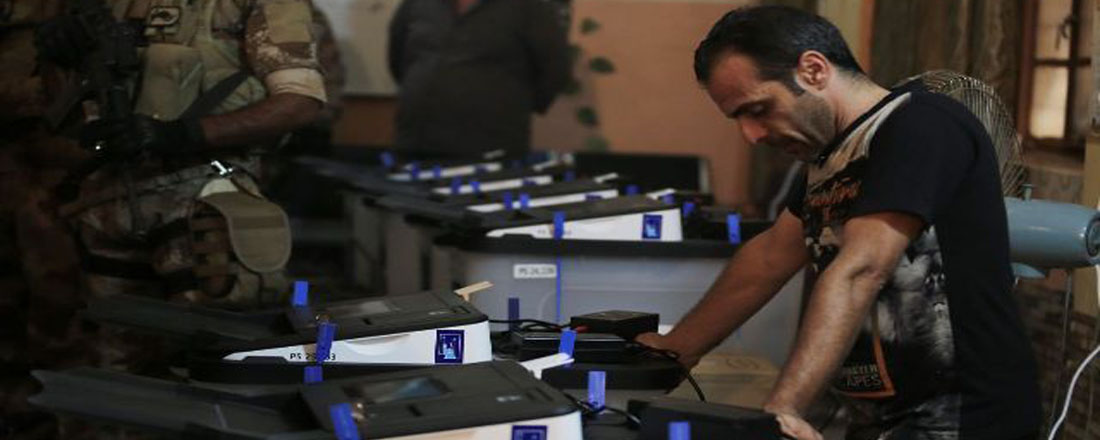
  • The First Elections of Iraq After the Defeat of ISIS and the First Electronic Election; Introducing Iraqi Coalitions.

    The First Elections of Iraq After the Defeat of ISIS and the First Electronic Election; Introducing Iraqi Coalitions.

    According to the unofficial results, “The Alliance of Revolutionaries for Reform” (Sairoon) with the leadership of Muqtada Sadr gained 55 seats, “The Victory Alliance” (Al-Nasr) with the leadership of Haider al-Abadi gained 51 seats, “The Fatah Alliance” with the leadership of Hadi Al-Amiri gained 50 seats.


    Meanwhile in some cities, specially Kirkuk and the three provinces of Iraqi Kurdistan, the protests about the results and election manipulation continue.
    After the announcment of 91% of election results and achieving first place in election by “The Alliance of Revolutionaries for Reform” (Sairoon), Muqtada Sadr in his twitter showed his cabinet choices and the way he wants to form his administration.


    In his tweet, Sadr announced:

    We “The Alliance of Revolutionaries for Reform” will act with “Wisdom” (Hikma), “Nationalism” (alwatanyah) and “The Will of The Electorate” (tajmae ‘iiradat alaintikhabii), and to create a “New Generation” we try and expect to see the “Change Movement” towards “Reforms”, and it is our “Decision” to create an iraq so that we raise the “Flags” of “Victory”, and Baghdad (our “identity”) is our capital, and our movement will be “Democratic” and we will form a “Technocratic Government” without “Partisanism”.


    After this tweet, Nechirvan Barzani and Masoud Barzani —which because of the high tensions of this election, their absence in this election were overlooked — were the first ones to call and congratulate the alliance of revolutionaries for reform’s victory to Muqtada Sadr.


    Because of very close difference in number of gained seats by the victorious political parties and coalitions, and the necessity to create a big coalition of different parties in order to ensure the formation of a bigger parliamentary group, the idea of forming such a coalition is hard and complicated.


    The possible scenarios by some of the sources, about which of these coalitions will form the cabinet :

    1. The state of law coalition, along with Fatah alliance and victory alliance.
    2. The alliance of revolutionaries for reform, along with victory alliance, Fatah alliance and the national wisdom movement.
    3. The alliance of revolutionaries for reform, along with Fatah alliance and the national wisdom movement.
    4. The alliance of revolutionaries for reform, along with victory alliance and the national wisdom movement.
    5. The alliance of revolutionaries for reform, along with victory alliance, patriotic union of Kurdistan (PUK), the Kurdistan democratic party (KDP or PD), and Al-Qarar.
    6. The victory alliance , along with national wisdom movement, fatah alliance, state and law coalition, and the national coalition (Al-Wataniya)
    7. The victory alliance, along with national wisdom movement, the national coalition (Al-Wataniya) and the alliance of revolutionaries for reform.
    8. The victory alliance, along with state of law coalition, Fatah alliance, and the national wisdom movement.


    ✅ The Shia Coalitions

    1) The Alliance of Revolutionaries for Reform

    Muqtada Sadr, along with Iraq Communist Party, Justice Government Party, People’s Party for Reform, Committee of Union and Progress, And Republic of Iraq Party, forms this coalition.


    2) The Fatah Alliance

    Fatah or Fath Al-Mobin (Undeniable Victory) is a electoral coalition including different shia political factions backed by Hashd Al-Sha’abi (Popular Mobilization Forces, PMU) which announced it existance with registering itself in “Independent High Electoral Commission, ” of Iraq.
    The main core of this treaty are as follows:

    a. The Badr Organization (Munaẓẓama Badr) with the leadership of Hadi Al-Ameri
    b. Brigades of the Party of God (Kata’ib Hezbollah)
    c. League of Righteous People (Asa’ib Ahl al-Haq),
    d. Soldiers of Imam Brigades (Kata’ib Jund al-Imam)
    e. Islamic Supreme Council of Iraq (Al-Majlis Al-A’ala Al-Islami Al-‘Iraqi, namely, ISCI or SIIC)

    and some other groups that are backed by “Popular Mobilization Forces”.


    3) The Victory Alliance The head of this coalition is the prime minister of iraq, Haider Al-Abadi, also some of the prominent leaders of “Islamic Dawa Party” and and some sunni figures including, Khaled al-Obaidi former minister of defense of iraq.


    4) State of Law Coalition

    The head of this coalition is the former prime minister of iraq and the general secretary of “Islamic Dawa Party”, Nouri al-Maliki, which

    5) The National Wisdom Movement

    Sayyid Ammar al-Hakim, after leaving the “Islamic Supreme Council of Iraq”, established this movement.


    ✅ The Sunni Coalitions

    1) The National Coalition (Al-Wataniya)

    This coalition includes sunni groups of iraq which are under the leadership of Ayad Allawi and the participation of Salim al-Jabouri, head the “Civil Society for Reform”, and Saleh al-Mutlaq, head of the “Al-Arabiya Coalition” and some other political movements and figures.

    2) Al-Qarar Al-Iraqi coalition

    This coalition is under the leadership of Osama al-Nujaifi, former deputy of president and former head of iraq parliament. he formed a coalition with Khames Al-Khanjar, leader of the arabic project movement, Salman Al-Jumaili and other iraqi sunni figures.


    ✅ The Kurdish Coalitions
    Kurdistan Democratic Party (KDP or PDK) and Patriotic Union of Kurdistan (PUK), The alliance of Taqiir Party, Jama`t Islami, Barham Salih

  • Unofficial Result of Parliamentary Election in Iraq in 10 Provinces; Photo + Vote List

    Unofficial Result of Parliamentary Election in Iraq in 10 Provinces; Photo + Vote List

    Baghdad Province:

    Saeroun, al Fath, Dawlat al Qanoun al-Wataniyah, al-Nasr, al-Qarar al Iraqi ,al-Hikmah.


    Anbar Province:
    Anbar Howiatna, al Wataniyah, al-Qarar al Iraqi, Aberoun, al-Nasr.


    Waset Province:

    Saeroun, al Fath, al-Nasr, al-Hikmah, Dawlat al Qanoun.


    Babel Province:

    al Fath, Saeroun, al-Hikmah, Dawlat al Qanoun.


    Muthanna Province:

    Saeroun, al Fath, al-Hikmah, al-Nasr, Dawlat al Qanoun.


    Karbala Province:

    al Fath, Saeroun, al-Nasr, Dawlat al Qanoun, al-Hikmah.


    Diyali Province:

    al-Qarar al Iraqi, al Fath, al-Wataniyah, Saeroun, al-Nasr.


    Dhi Qar Province:

    Saeroun, al Fath, al-Nasr, Dawlat al Qanoun, al-Hikmah.


    Basrah Province:

    al Fath, Saeroun, al-Nasr, Dawlat al Qanoun, al-Hikmah.


    Qadesiyah Province:

    al Fath, Saeroun, al-Nasr, al-Hikmah, Dawlat al Qanoun.


    The commission did not release the results for three provinces in Iqlim Kurdistan and Kirkuk due to objections and more processing.


  • Iraqi Forces Arrested Five Major ISIS Commanders in Syria; Images and Names

    Iraqi Forces Arrested Five Major ISIS Commanders in Syria; Images and Names

    The Iraqi joint forces, in cooperation with the intelligence units of the country,during a major security operation arrested five ISIS commanders on the Syria border with Iraq.


    Brigadier General Yahya Rasool the Iraqi joint operations command spokesman said that under the supervision of Heydar Ebadi the Prime Minister and Commander-in-Chief of the Armed Forces and the efforts of the Iraqi intelligence units and Iraqi Joint Forces, a major operation against ISIS in Syria was successfully carried out.

    In this security operation five of the most important ISIS commanders who were involved in the attacks on the provinces of Mosul and Anbar were arrested.


    The names of the captured ISIS commanders are as follows:

    1- “Saddam Omar Yahya al-Jamal”, known as Abu-Roghayeh al-Ansari, the security officer of ISIS in Wilayat Furat and commander of the Sharqi’ah Division.

    2- “Mohammad Hussein Hadhar”, known as Abu Sayyaf al-Sha’batti, Senior ISIS commander in al-Mayadin.

    3 – «Essam Abdulqader Ashour Zobaie», known as Abu Abdel-Haq al-Iraqi, the commander of “al-Fatah” special forces.

    4- “Omar Shahab Hamad al-Karboli”, known as Abu Hafs al-Karboli, Senior intelligence officer of ISIS in Wilayat Furat and in charge for the al-Mayadin section.

    5- “Ismail Alwan Salman al-Ithawi”, known as Abu Zayed al-Iraqi, one of Al-Baghdadi’s deputies and chairman of ISIS Training Programs Committee.


    Brigadier General Yahya Rasool added that the operation took place along with air strikes to the ISIS gathering and nearly 40 other ISIS terrorists were killed.

    Also other ISIS important terrorists like “Omar Abd Hamd al-Fahdawi” known as Abu Tariq al-Fahdawi the high ISIS official, “Abu Walid al-Sayyawi” senior ISIS commander in Wilayat Sham, “Abu Salam al-Kurdi”, “Ahmad Yahya Zaydan” known as Abu Hasan al-Askari the military commander of ISIS in Wilayat Furat were killed.


  • Bombing ISIS positions in Syria by Hashd Al-Sha’abi (PMU)

    Bombing ISIS positions in Syria by Hashd Al-Sha’abi (PMU)

    The statement said, this bombardment has been successful with the exact hit on targets.


    It should be noted that the ISIS who remained in the eastern part of Syria had repeatedly attacked the Hashd Al-Sha’abi (PMU) positions on the Iraqi border, which failed in the past.

  • World’s Largest Consulate Facility Will be Built in Iraqi Kurdistan Region by United States

    World’s Largest Consulate Facility Will be Built in Iraqi Kurdistan Region by United States

    Islamic World News Analysis Group: Last Monday at a ceremony held by presence of Douglas A. Silliman US Ambassador to Iraq and Nechirvan Barzani Prime Minister of Iraqi Kurdistan Region, Silliman announced the start of construction of the US new consulate building in Erbil.


    This consulate is the world’s largest consulate and will be built in an area of over 200 thousand square meters, at a cost of $ 600 million within 4 years by EYP.


    It should be noted that the largest US embassy in the world, now is in Baghdad, Iraq.


  • Security condition in Sulaymaniyah governorate; seven protesters are killed.

    Security condition in Sulaymaniyah governorate; seven protesters are killed.

    In latest news from Kurdistan Iqlim (region), seven protesters are killed and more than 100 are injured due to fires of security forces.

    In some cities security forces are on alert and security condition is called which prevents commutes.


    NRT channel is stopped broadcasting by security forces.

    Shaswar Abdulwahid Qadir, leader of “New Generation” and owner of NRT and Hamdiya Ma’ruf Member of Parliament are arrested by these forces with the allegation of supporting protest.

    These two protested the Kurdistan independence referendum which was held on 29 September 2017 by leading a “Vote No” campaign.

  • Patience of people in Iraqi Kurdistan is over.

    Patience of people in Iraqi Kurdistan is over.

    The pressure of financial depression and delay in employment salary payments (It is almost 3 years that local government reduced the salaries by 30%) and lack of distribution of oil in winter and electricity make some people to come out and demonstrate widely.


    Yesterday, teachers in Sulaymaniyah governorate start demo in Sulaymaniyah, Kalar, Ranya Darbandikhan, Penjwin and other cities and other people join them.

    After a few hours, people start to use violation, which result in forces to use tear gas.


    In Penjwin, people attacked several Parties’ offices and set them on fire.


    Although this is not the first time, people in Sulaymaniyah governorate protest current living situation but due to high security level in Erbil and Dohuk governorates and threats of Barzani party that they will react severely and fire employees who take place in demos, could not gather and start any demo.


    Demonstrations are still going today and people were killed and injured by law enforcements.


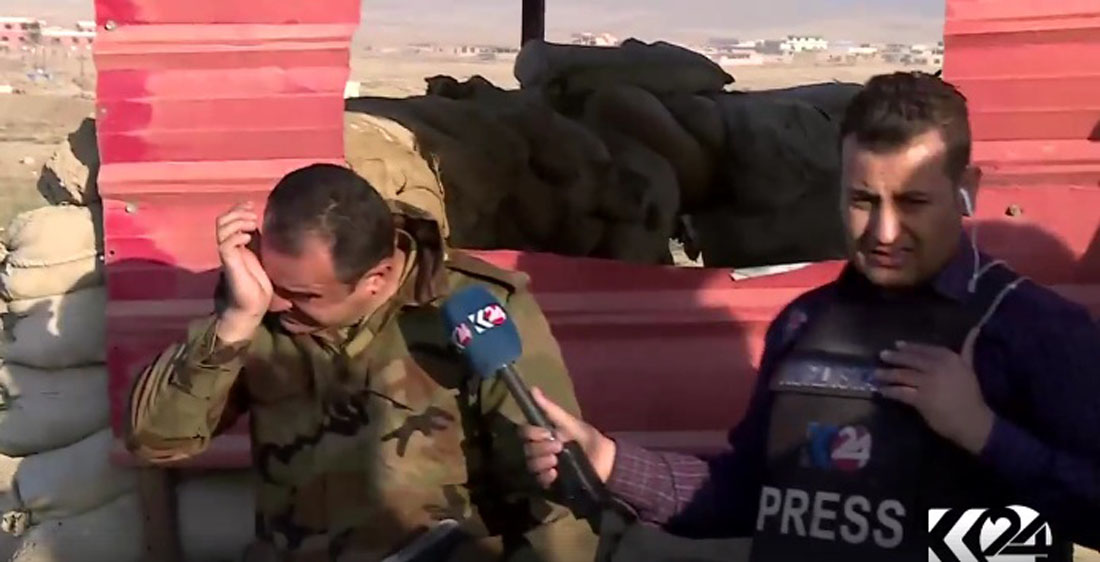
  • How Barzani regime’s media ridiculed itself during the Kirkuk Crisis: the case of Rudaw and Kurdistan24

    How Barzani regime’s media ridiculed itself during the Kirkuk Crisis: the case of Rudaw and Kurdistan24

    The political circus received relatively wide coverage in the Western media, but many people find it easier to follow the English-language regional media whose teams of professional journalists reported from the field and published articles more frequently. Beside the well established news networks like the Qatar-based Al-Jazeera, the Saudi-owned Al-Arabiya and the Iranian Press TV, several new actors have emerged on various social media platforms, notably Rudaw and Kurdistan24. In this October, the first one has recorded more than 94,000 shares and 480,000 comments on Facebook posts, as well as over 20 million impressions on Twitter, reaching over 90 million people in total. Rudaw has over 3.2 million Facebook followers, compared to Kurdistan24 which has less than half.

    Media of tribal enterprise

    The ownership background and the differences between two networks are quite astonishing. In the authoritarian countries, the national media presents one-sided view, and in totalitarian systems, all outlets are owned by the ruling party. However, in the tribal enterprise of the Barzani clan, called Iraqi Kurdistan, they have gone even further. Rudaw and Kurdistan24 therefore do not only present a single view and propagate policies that support the Kurdistan Democratic Party (KDP), but they’re also owned by the same family. Rudaw was established in 2008 for the purpose of serving interests of current Kurdish prime minister Nechirvan Barzani, and competitive Kurdistan24 (K24) was launched in 2015 by his cousin Masrour Barzani, a son of president Masoud Barzani. That’s the concept of, as Kurdophiles like to say, a Western-minded flourishing democracy and its free press.

    In the mid 2000s, there was a brief period of the independent media in local languages, emerged in political chaos rather than a pluralistic environment. Information monopoly of ruling party was temporary staggered, so regional authorities quickly moved to stifle it. The first step of undermining was establishing a number of allegedly independent outlets, but de facto subservient to the regime. The second step was the severe repression of individuals and organizations. In 2008, journalist Soran Mama Hama was killed by unknown armed men, and later the same fate befell Sardasht Osman and Kawa Garmeyani. All were writing critically on the political situation and corruption in Iraqi Kurdistan. Numerous other independent reporters received death threats for reporting on corruption and discrimination. In 2011, a free satellite TV-station NRT was established, but was set on fire by armed men only three days after its official launch.

    Both Rudaw and Kurdistan24 do not enjoy popularity among neighboring countries and their Kurdish groups. Rudaw has been banned in PYD-led Syrian Kurdistan for conducing a ‘smear campaign’ against them, while the Turkey’s Kurdistan Communities Union also called for the boycott and accused the media group as being founded by Turkish Intelligence Organization. Turkey itself has removed both Rudaw and Kurdistan24 from its TurkSat satellite, due to broadcasting violations during the independence referendum. Both channels are also banned in Iran, and even Baghdad issued statements threatening to revoke their television license in Iraq. Neither the US Department of State has any words of praise for Rudaw, describing it as the KDP affiliated outlet rather than objective media. On the other hand, among very few of their foreign admirers is Bernard-Henri Levy who recently spoke against proposed Baghdad’s ban and stated that “every friend of freedom in the world should support Rudaw.” His objectivity is already well known, as we’re speaking about the same person who called Israeli forces as “the most democratic army in the world.”

    Referendum coverage

    By analyzing coverage during the thirty days following the referendum, it’s easy to conclude that Rudaw’s and Kurdistan24’s strategic and tactical approach was almost identical. The personal rivalries between Nechirvan and Masrour were set aside, as well as various economic issues. There was not a single word about disputed oil exports (illegal over-exploitation against constitution and an OPEC agreement), the KRG’s major customers (Italy and Israel), a few months’ delay in payment of salaries, or the region’s debt which may be upwards of $20 billion. For a region with population comparable to that of Croatia, oil reserves/exports larger than those of Libya, that’s truly an amazing achievement. Still, they happily pointed out and exaggerated Iraqi debts, and all their financial hardships were attributed to Baghdad. Duo published over a thousand articles during a month, subordinating everything to the positive outcome of the referendum and desperately desired international recognition.

    Their position regarding the referendum choices can be hardly described as a black-and-white dichotomy, since “no” vote option was not even considered possible. According to their reports, stances among participants could be divided only into “yes” and “not yet” categories. When it comes to specific political actors, the contrast between good and bad was more clear. On one side there’s the light forces, “One Leader, One Party, One Choice, One Country,” and on other side there are the dark forces of the inconvenient Gorran Movement, the traitorous Patriotic Union of Kurdistan (PUK), oppressive Baghdad and the regional bullies Turkey and Iran. In the hundreds of articles, there is not a single statement against separatism, either from an average citizen or some high-ranking politician. Counter-views obviously weren’t worth even of disproportionate treatment.

    Opposing arguments given by numerous international leaders were also ignored, and the Kurdish media instead rushed to find and present any publicly available support. The results are invaluable, as they gave us a clear picture of the nature of their apologists. Those ‘freedom lovers,’ in alphabetical order, include Ralph Abraham, Stephane Bergeron, Marsha Blackburn, Richard Blumenthal, John Bolton, Ted Cruz, Trent Franks, Peter Galbraith, Mike Gallagher, Jay Garner, Newt Gingrich, Franklin Graham, Lindsey Graham, Glenn Grothman, Fuad Hussein, Jim Inhofe, Jack Keane, Zalmay Khalilzad, Bernard Kouchner, Bernard-Henri Levy, John McCain, Benjamin Netanyahu, Jared Polis, Vesna Pusić, Marco Rubio, Chuck Schumer, and the Wilson Center. Beside a few energy lobbyists and conspiracy theorists, virtually all of them are Zionist extremists and the neoconservative warmongers. Thus, the alleged Iranian-Turkish ‘accusation’ or a ‘conspiracy theory’ of Zionist role in the referendum, turned out to be a verified fact.

    From heroes to victims

    Rudaw’s and Kurdistan24’s coverage has reached peak absurdity during the Kirkuk Crisis, when they clumsily balanced between the narratives of heroism and victimhood. Four days prior to the start of military operation, they reported that region’s Security Council is expecting a ‘major attack’ by the Iraqi Security Forces and Popular Mobilization Forces (Hashd Al-Shaabi), and in the following days numerous reports about Kurdish heroism appeared. President Barzani told to Baghdad that referendum won’t be annulled at any price, Peshmerga also rejected all Iraqi warnings and stood prepared to face them, the Kurdish authorities were allegedly united, and thousands of volunteers took up arms. They even published bizarre videos of children and old ladies carrying rifles, claiming “they would rather die than allow occupation.” According to such reports, a decisive battle was supposed to happen, the cataclysmic conflict between the forces of good and evil, between Peshmerga as the finest soldiers ever and the cowardly Iraqi army, with Glorious Leader declaring ‘not a step back’ order, and courageous civilian support. A new Stalingrad battle.

    The reality proved to be quite different. On 15 October 2017, the Iraqi military started a major operation and restored full control of Kirkuk City in just about 15 hours, with very little violence since Kurds mostly retreated without fighting. This fact passed unreported as both Rudaw and Kurdistan24 continued to report about minor skirmishes between smaller groups of disobedient soldiers, and phrase ‘fall of Kirkuk’ appeared only three days later. In the meanwhile, the desperate need for heroic scenes resulted in flooding their websites and social media by fake pictures and stories, intentionally posted to increase hatred and escalate tensions. They presented Saudi army vehicles burned in Yemen as ‘Iraqi’ equipment, killed Daesh terrorists in Fallujah as ‘Shia militia’ in Kurdistan, a controlled demolition of the bridge in Kansas as the ‘Peshmerga’s scorched-earth policy’ in Altun Kupri, etc. One rumor said that Abu Azrael, a famous Shia figher against Daesh, had been killed in fighting in northern Iraq, but the lie was refuted by himself who posted a YouTube video to show he was still alive and well. They also published unconfirmed and highly dubious data of ‘180 killed’ Iraqis, ‘400 killed’ Kurdish civilians and ‘200 missing’ in Kirkuk.

    A sudden shift in the reporting strategy has rigorously transformed the Peshmerga soldiers and the Kurdish people. On Sunday night, they were ‘fearless warriors’ who never retreat, but it was already Monday morning when they became ‘betrayed and abandoned,’ blubbering incoherently for help. The bitter confession about real outcome required shame and humility, denial that true heroes never fail, and for Rudaw and Kurdistan24 that was out of the question. Instead, they found the main reason for failure in a ‘treacherous elements’ within the rival PUK party, claiming their leaders ordered a retreat, while the second reason was role of merciless foreign powers, notably Iran. During the first day of operation, Kurdistan24 showed several videos of weeping Peshmerga members who allegedly wanted to fight, but commanders ordered to pull back. The Kurdish narrative of victimhood became fashionable once again. First they managed to convince own population that there’s a total war going on, and after many fled from Kirkuk, they showed crowded roads and claimed people are escaping due to persecution.

    Non-combatant Kurdish citizens also reportedly suffered ‘tremendous crimes,’ as the Kurdish language was barred from the Iraqi organized press conference in Kirkuk, and someone even put Iranian Khamenei’s photos inside governorate building. Such ‘horrors’ might remind us of Saddam’s al-Anfal campaign and the times when tens of thousands of the Kurds when gassed. It was Iran who helped Peshmerga and gave refugee to over 1.5 million Kurds, and it was the United States who supported Saddam’s regime and continued to aid it after receiving reports of chemical attacks. Still, in the perspective of Barzani ruling thugs, Iran is a major enemy, and the US should intervene in the KRG favor. Beside equalizing Iraqi prime minister Haider al-Abadi to Saddam, the Kurdish media also tried to present Iraqi Shia militias as no different than Daesh. A recently published video by Rudaw shows women with totally covered faces and smiling boys, claiming they have witnessed a beheading of a 12-year-old son and house burning. The footage shows no dead bodies, no destroyed houses, only empty stories. Perhaps Kurdish soldiers are not the bravest in the World, but Kurdish journalists definitely are. Not because they are not afraid of anything, but because they are not ashamed of anything.


    Source

  • A look of the Kurdistan Democratic Party media game on making tensions between Kurds, Hashd al-Shabi and the Iranian Revolutionary Guards

    A look of the Kurdistan Democratic Party media game on making tensions between Kurds, Hashd al-Shabi and the Iranian Revolutionary Guards

    In recent days, KDP affiliated media have claimed in widespread and false propaganda that the Iranian Revolutionary Guard and general Soleimani have a major role in making the Iraqi government and Hashd al-Shabi(PMU) attack Kirkuk. While the intensive meetings and ongoing consultations of general Soleimani and other Iranian representatives with the authorities of all parties of regional Kurdistan government indicate that the policy and objectives of Iran and the Revolutionary Guards have been avoiding conflicts and bloodshed between the two sides.

    There were concerns that civilian lives in Kirkuk could be threatened by getting into conflicts and the situation worse, but this did not happen with the rational and logical management of the Iraqi government, the army and the Hashd al-shabi and the elders of Iraq and, of course Kurds, including the authorities of the Patriotic Union party(PUK).

    The killing of Kurdish people in Iraq could have been a good option for gaining legitimacy for unlawful referendum for separation of Kurdistan.

    The Democratic-affiliated media deliberately by mentioning Hashd al-shabi and Revolutionary Guards as the main parts of the operation of Kirkuk is trying to divide and break the unity in Iraq and they highly counted on the support of the Western countries but the responses of western governments to the events of today indicate that they did not achieved their goal.

    A sample of these efforts was the tweet of Hemen Abdulla, the well-known correspondent of the Rodaw Network, who that by referring to Iranian anonymous media, showed the old image of general Soleimani’s presence in operation against ISIS in Iraq as his presence around Kirkuk for commanding the military attack on the regional Kurdistan government.

    In addition, the amateur and fake films that were produced and published as they have been called the shooting of the Hashd al-Shabi forces against the people of Kirkuk and similar titles like that had nothing but invalidity for these media.