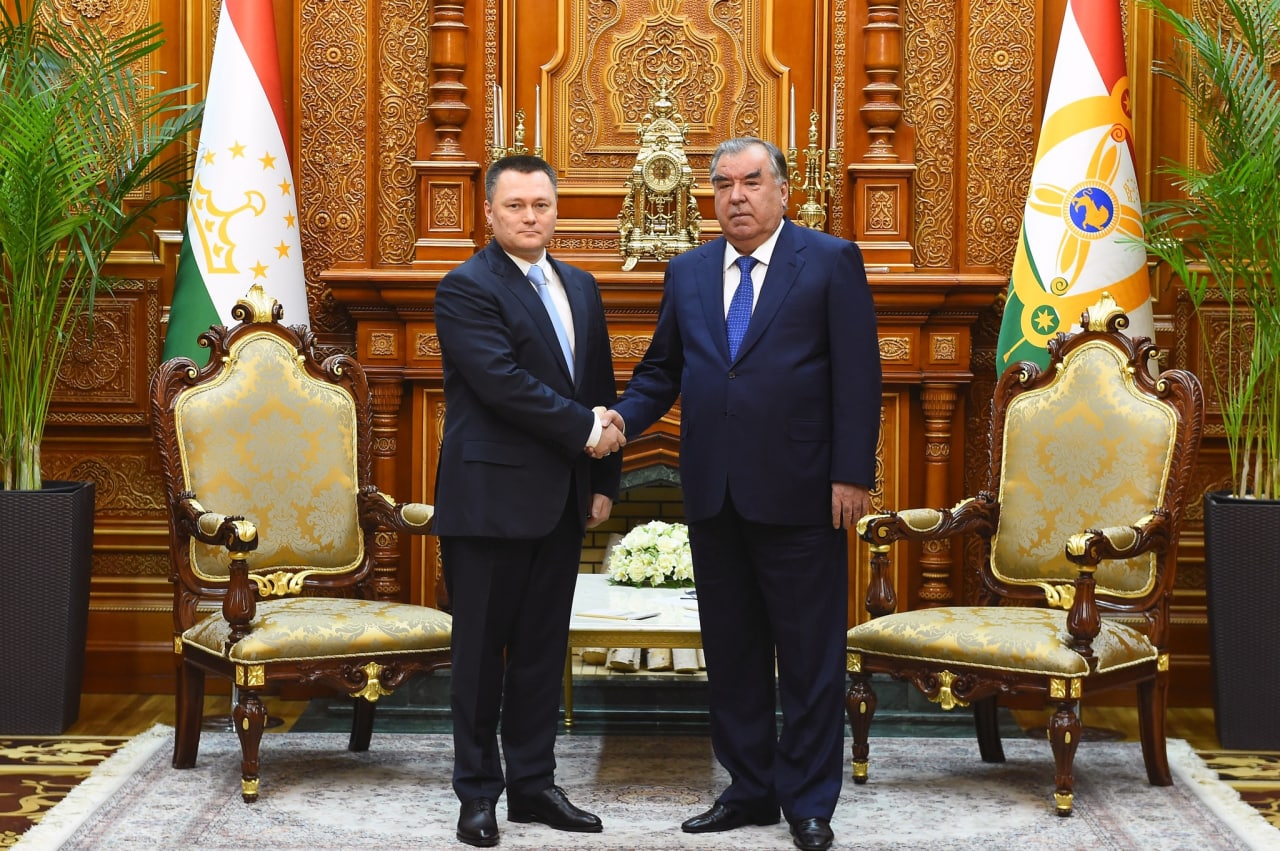
Russian Prosecutor General Igor Krasnov said in a meeting with Tajik President Imam Ali Rahman in the capital city of Dushanbe: “We have already sent a corresponding lawsuit against the Islamic Renaissance Party of Tajikistan (IRPT) to the Supreme Court of Russia.”
Referring to Russia’s need for a political partnership with Tajikistan, Muhiddin Kabiri, the leader of the Islamic Renaissance Party of Tajikistan, said: “This will not pose a risk to us, because we do not have any activities in any of the former Soviet countries, and Russia, although it has not declared us as terrorists, but it has extradited some of our activists in Russia to Tajikistan, who are now in prison. This issue does not present us with a new danger, but the government of Tajikistan can consider it a great achievement and victory for itself and use this for propaganda.”
Kabiri wrote in another message on his Twitter page: “The Prosecutor General of Russia has said that Moscow accepts Tajikistan’s request and recognizes the IRPT as a terrorist organization. For a long time, Russia ignored this request and now Rahmon believes that the Kremlin is now in a weak position and it is time to put pressure on them. This way will be used for propaganda and new repressions.”
The Islamic Renaissance Party of Tajikistan (IRPT) is the main Islamist party in Tajikistan, which is currently led by Muhiddin Kabiri. During the Tajik civil war, this party was the leader of the opposition to Emomali Rahmon’s government and has been prosecuted for terrorist activities in Tajikistan since 2015. After that, the government of Emomali Rahmon repeatedly asked the former Soviet countries to include this party in their terrorist list, but this request has not met with a positive response from any of these countries.
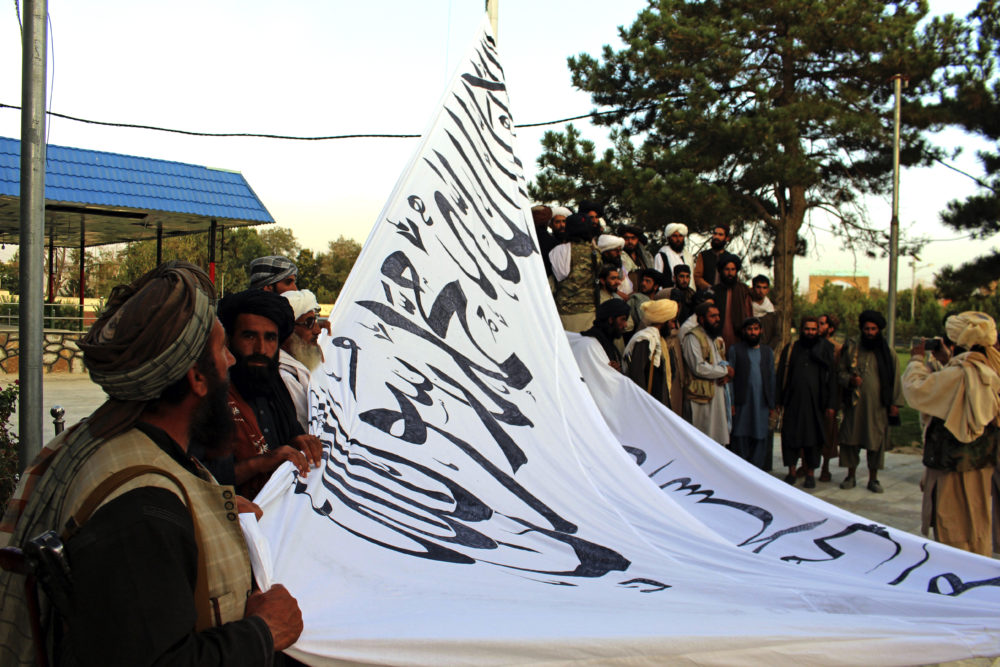
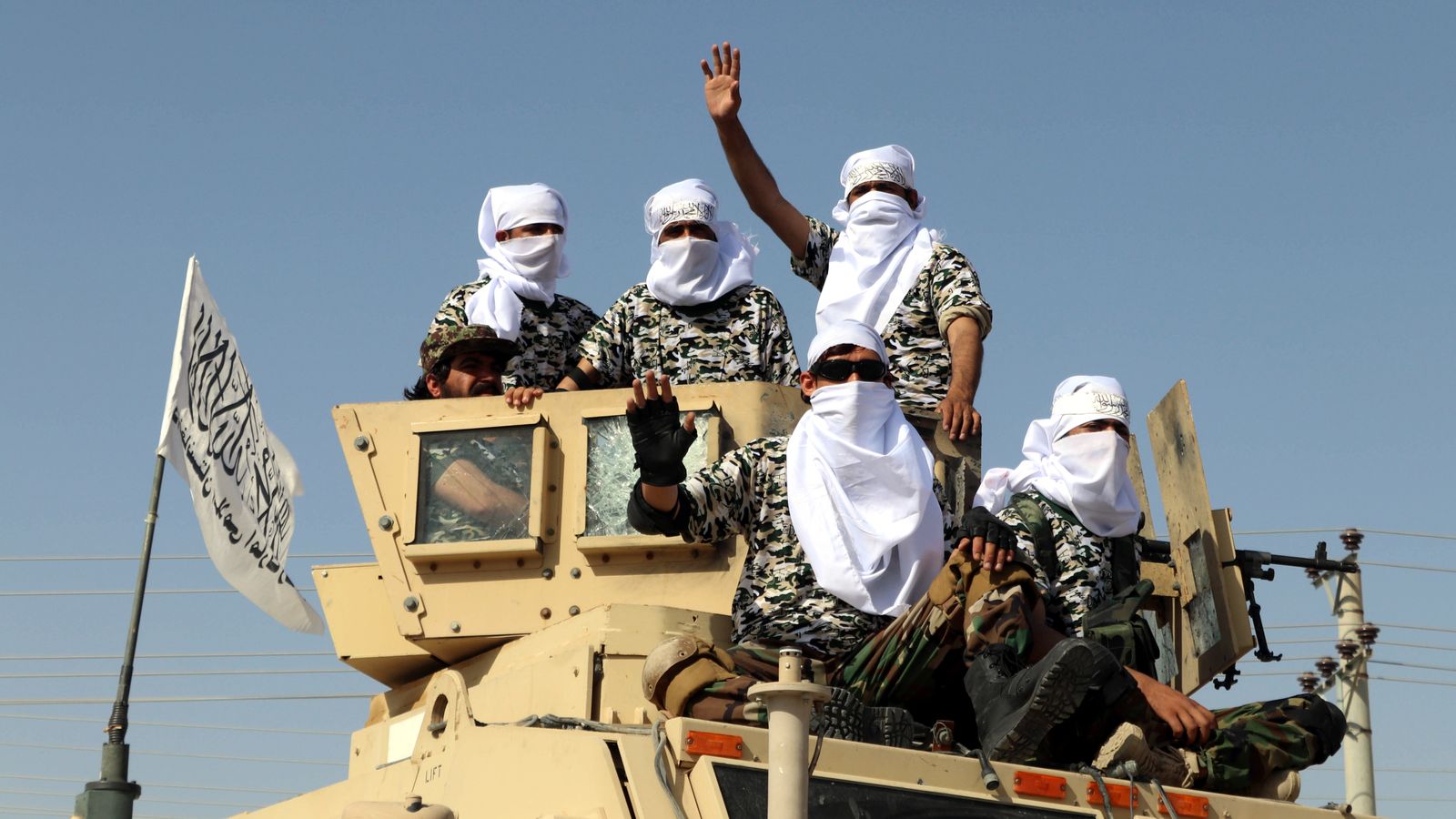
The Tajik Taliban militants in Afghanistan, led by Mehdi Arslan, created Tehreek-e-Taliban Tajikistan (TTT) with the aim of armed struggle against the Tajik government. These people were former members of Jamaat Ansarullah of Tajikistan, who were supported by this group after the Taliban came to power in Afghanistan and founded the Taliban of Tajikistan.
According to local sources, the number of armed men under the command of Mehdi Arslan is more than 250 people, all of whom are citizens of Tajikistan, and most of them are wanted by the government of Tajikistan for security and terrorist reasons. Mehdi Arslan has been appointed as the governor of five border districts in the Badakhshan province in the Afghan Taliban organization and is responsible for controlling the borders of Afghanistan and Tajikistan. Every day, these people shout slogans against the Tajik government in the watchtowers and border stations and invite the Tajik military to fight against the government of Emomali Rahmon.
“Mohammed Sharifov” known as “Mehdi Arslan” is a resident of Noorabad district of Badakhshan Autonomous Region of Tajikistan and a former member of “Jamaat Ansarullah Tajikistan” group, who has been wanted by the Tajikistan government for terrorist activity allegations for the past eight years.
During the last year, Central Asia has witnessed different crises, from street protests to military conflicts at different levels. Also, the activities of political movements and the military officials of various countries in the Central Asian region, especially the Americans, have increased the importance of this situation. The crises of this region can be defined as follows:
1- Afghanistan crisis and America’s effort to influence more in Central Asia: After a year passed since the Taliban came to power in Afghanistan and also the withdrawal of the American forces from the country, a big security vacuum was created in the region and most of the Central Asian countries started their relations with the Taliban in limited condition. But in the meantime, Tajikistan publicly supported Ahmad Massoud forces and rejected the general interaction with the Taliban government. This issue arises from a close relationship with America. In general, the goal of the Americans for the warm relationship with Tajikistan is to continue to be present in the Central Asian region so that they can firstly penetrate into the backyard of Russia, China and Iran and also continue to play a role in the Afghanistan developments. America was defeated by Pakistan’s negative response regarding the construction of the base and several other things at the beginning of this matter; But now with the HUMINT policy, support for non-governmental organizations (NGOs) as well as training and military and security assistance, it has increased its influence in Tajikistan. One of the reasons for Putin’s recent visit to Tajikistan was the concern about the increase of American activities. In less than a month, three high-ranking American officials, Donald Lowe, Tom West, and General Michael Kurilla, had traveled to Tajikistan.
Rocket attacks by ISIS and unknown groups from Afghanistan to Tajikistan, Uzbekistan and Turkmenistan were also among the other events that happened in the last few months, and this issue cannot be analyzed until its dimensions are hidden.
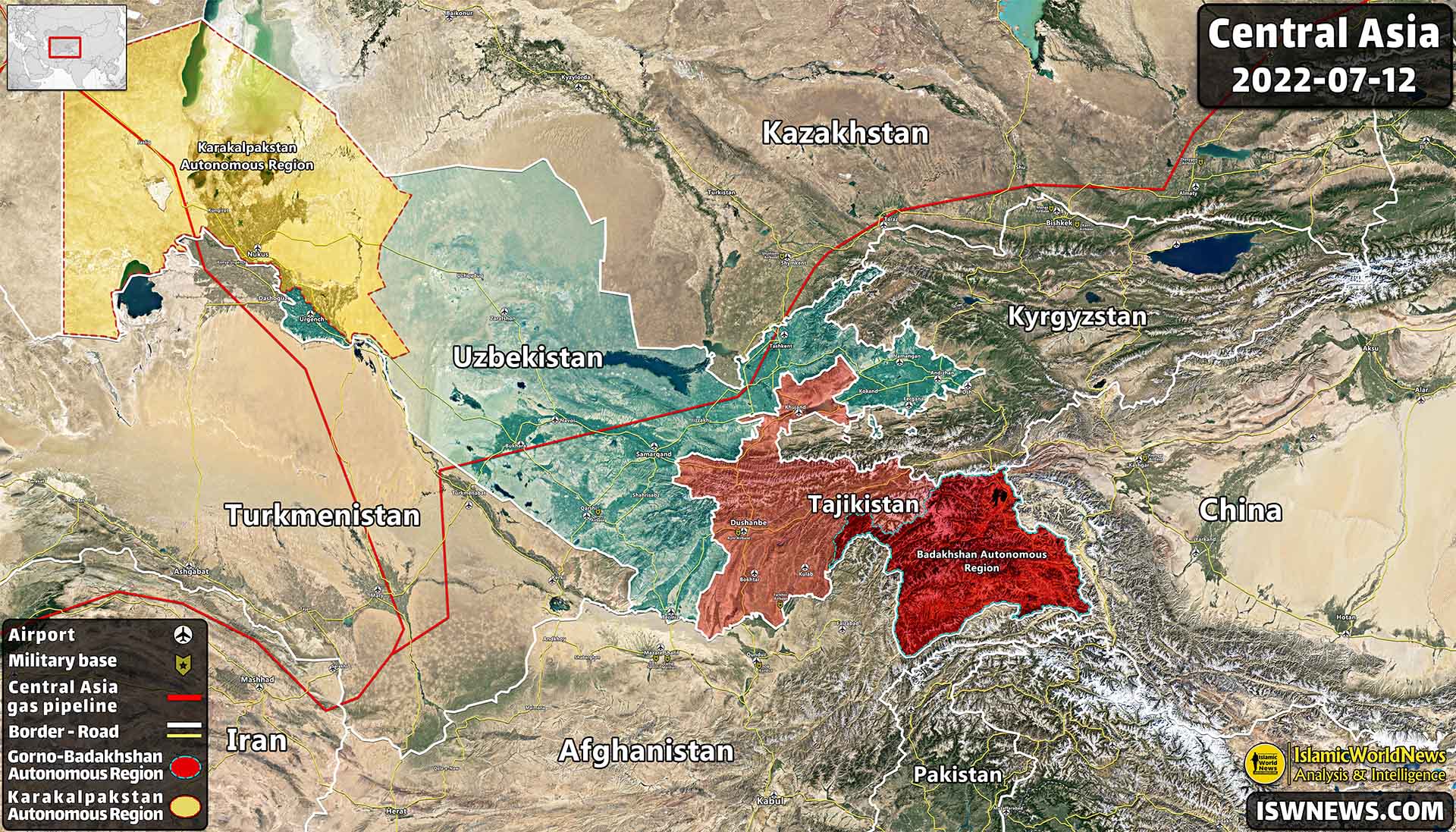
2- Suppression of popular protests in Tajikistan’s Badakhshan: Since 2012, the mountainous Badakhshan Autonomous Region of Tajikistan has been the source of popular protests and severe repressions by the government of Emomali Rahmon. This issue has intensified since November 2021 and its peak can be seen in the assassination of “Martyr Mohammad Baqer MohammadBaqerov”, one of the popular leaders of this region. Also, other local leaders have had a similar fate or have been arrested.
According to the latest field information, the government of Tajikistan seeks to suppress the popular groups in Badakhshan in order to apply its unified and autocratic rule in all of Tajikistan. With the opportunity of Russia’s war with Ukraine and simultaneous regional trips to Iran, Russia and Uzbekistan, “Rahmon” was able to complete his operations for ethnic cleansing in Badakhshan without any pressure. It should be noted that after this tension, the young fighters of Badakhshan either ran away or hid in the mountains, and the atmosphere of suffocation reigned over the city of Kharogh and other cities of Badakhshan province.
3- Uzbekistan and the Karakalpakstan crisis: During the Soviet Union period, the Karakalpakstan region was first included in Kazakhstan, then in Kyrgyzstan, and later in the status of an autonomous republic, and finally it was handed over to the Soviet Republic of Uzbekistan. In 1990, the sovereignty of Karakalpakstan was approved, and at the beginning of 1993, an intergovernmental agreement was signed, according to which the Republic of Karakalpakstan became part of Uzbekistan for 20 years. Karakalpaks believe that their country is not an autonomous region, but an independent country within Uzbekistan.
Karakalpakstan is a parliamentary republic, which has a national flag, official coat of arms, constitution and national anthem, and covers 37.1% of the territory of Uzbekistan. This region has rich resources and reserves of oil, gas and gold, and its population is about 2 million people, who are in the minority compared to the population of 35.3 million Uzbeks.
The separatist tendencies in this republic intensified when the government of Tashkent announced that it was preparing to approve a constitutional amendment, which will remove the sovereignty of the Karakalpaks over their region. On July 5, “Dauletmurat Tazhimuratov”, the leader of Karakalpaks, planned to hold a peaceful rally on this issue, but the situation became tense after his video call. After this, military equipment and counter-insurgency forces were deployed throughout the city of Nukus, the capital of Karakalpakstan and Tazhimuratov was arrested. Of course, the Uzbek government has backed off from changing the constitution and the situation has calmed down. In the last 10 years, the situation in Karakalpakstan has become the hottest topic in the media about Uzbekistan.
It should be noted that the authorities of Tashkent government have not renewed the autonomy agreement of Karakalpakstan since 2003 without polls and elections from the people of Karakalpakstan, and this led to start of these protests.
4- Protests in Kazakhstan: What ignited the protests in Kazakhstan was the increase of fuel prices, but the demands of the protesters have now changed and they want to address broader issues. Kassym-Jomart Tokayev, the president of Kazakhstan, claims that these protests are organized by “terrorist groups” trained outside of Kazakhstan. The president of Kazakhstan declared a state of emergency following these protests across the country and promised to deal severely with the protesters. In a televised speech in the first hours of the protests, he said that he requested the help of the “Collective Security Treaty Organization” (CSTO) to establish stability in his country. Tokayev is the second leader of Kazakhstan after declaring independence from the Soviet Union in 1991. The election of Tokayev in 2019 was condemned by the Organization for Security and Cooperation in Europe (OSCE) on the pretext of not observing democratic standards in the elections.
The presence of CSTO forces in Kazakhstan to suppress protests was one of the notable points.
5- The military aid of the world powers to the countries of the Central Asian region: During the past few months, significant military aid was provided to the countries of the region, most of which was directed to Tajikistan. The establishment of the Ababil 2 drone production line in Tajikistan with the presence of Major General Bagheri, the Commander of the General Staff of the Iranian Armed Forces, the visit of the head of US CENTCOM to Tajikistan and the announcement of US$60 million military aid to Tajikistan (Puma drone, the construction of border posts in the Chaldovar region in the south of Tajikistan, ranger and mountain warfare training to the Tajik military, as well as providing special border equipment to Tajikistan), equipping the Tajik army with Chinese weapons, Russia’s promise to support and equip the Tajik border guards, and the sale of Turkish drones to Kyrgyzstan have been part of these military deals.
Location of US border bases near Aiwaj in Chaldovar region
Based on these developments, it can be concluded that Central Asia has always been in the spotlight due to its high importance, and due to the attention of the world’s military powers and the sending of military aid to this region, it is susceptible to important developments in the future. As Alexander Lukashenko, the President of Belarus, pointed out at the ceremony of the Independence Day of Belarus, Central Asia, like Eastern Europe, is located between two fronts and is a place where global poles clash. But the main issue today is not Ukraine, Belarus, grain and wheat exports, etc. Rather, the main issue is the emergence of new, powerful players in the international arena who have challenged the unipolar structure of the world. Protests and color revolutions, the greater influence of America and China and in contrast to the decrease of Russian influence in Central Asia, the possible role of Iran, etc. are among the things that we will hear more about in the future.
On the morning of May 16, Maj. Gen. Mohammad Hossein Bagheri, Chief of General Staff of the Iranian Armed Forces, headed a high-level military delegation at the official invitation of Tajik Defense Minister Col. Gen. Sherali Mirzo to Dushanbe.
The visit was aimed at implementing the agreement reached by the Joint Commission on Military Cooperation between the two countries and meeting with senior Tajik political and military officials.
Referring to the policy of the Islamic Republic of Iran to develop relations with its neighbors and strengthen military and defense cooperation with Tajikistan, General Bagheri said: “The Islamic Republic of Iran and the Republic of Tajikistan are in a geopolitical region and the events of both countries will affect each other. In order to improve the security and peace of both countries, we will have bilateral meetings with military and political officials during our visit, and in the future we will see more cooperation and interaction at all levels of military defense between the two countries.”
During the visit, General Bagheri inaugurated the production and assembly plant for the Iranian Ababil-2 tactical drone and symbolically handed over the plant key to the Tajik Defense Minister.
In the opening hall, images of other drones can be seen, including the Iranian Fotros drone, the Chinese Wing Loong 2 drone and the Russian Orion drone, for which there is no explanation for their production or use.
“Ababil-2” is one of the reconnaissance and suicide drones made by Iran Aircraft Manufacturing Industries Corporation, which has an operating range of 100 km with a flight duration of 75 to 120 minutes.
Infographic of Iranian Fotros UAV in the opening hall of Ababil-2 production lineIranian Chief of Staff symbolically handed over the plant key to the Tajik Defense MinisterIranian and Tajik officials visit Ababil-2 UAV production line hall
PS: One of the interesting sidelines of the inauguration of the Ababil-2 drone production line in the Tajik capital, Dushanbe, was the posters mounted on the wall of one of the hangars. These posters shows Iranian Fotros drone, Chinese Wing Loong 2 drone and the Russian Orion drone. And interestingly, the poster that General Bagheri is watching from a distance is the poster of the Iranian Fotros drone, which was designed and published by the “Islamic World News” two years ago!
On May 15, Taliban militants opened fire on Tajik border post near the Sher Khan Bandar border in the Imam Sahib district of Kunduz province after verbal tensions with a Tajik border guards. The Taliban firing was met with a response from the Tajik military, which lasted more than four hours. Despite several hours of clashes, the two sides did not report any casualties.
This is the first time that Taliban militants have been directly involved in armed clashes with the Tajik military. Since taking power in Afghanistan, Taliban militants have repeatedly clashed with neighboring countries, including Pakistan, Iran, Uzbekistan and Turkmenistan, indicating that their militants are misguided and unfamiliar with international and border law.
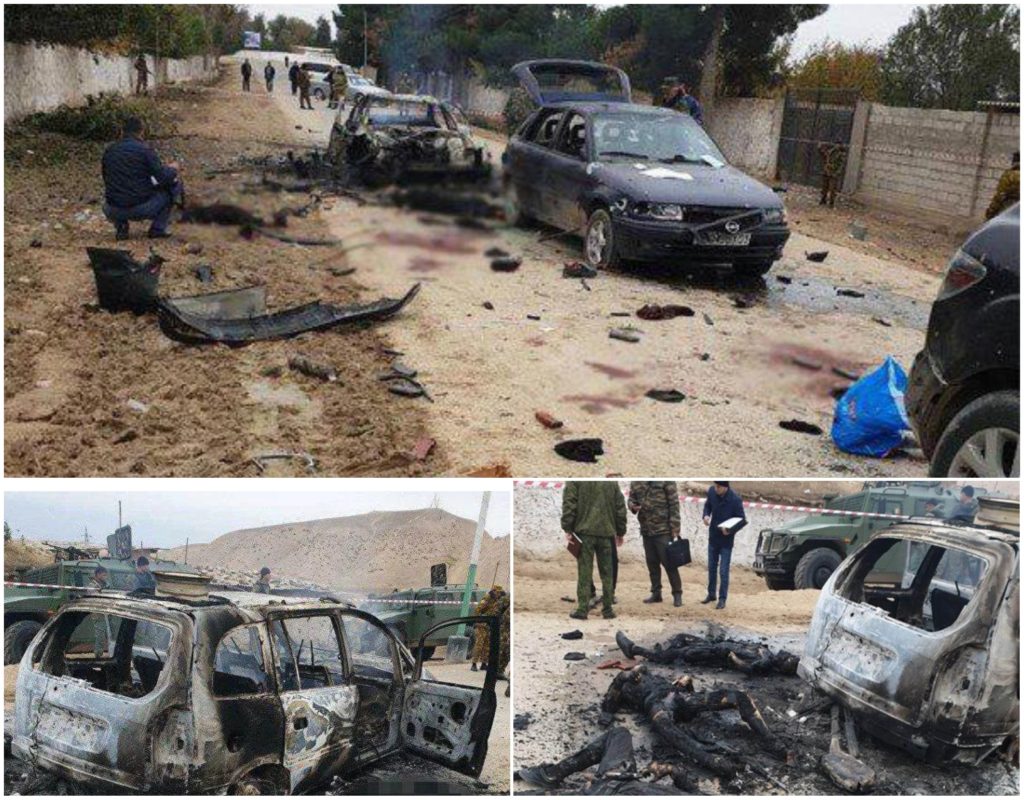
The watch post is at the border of Tajikistan and Uzbekistan. It is said the attack was conducted by ISIS members in Afghanistan. This attack was done while Tajikistan and Uzbekistan agreed to negotiate to end the border engagements until the end of 2019.
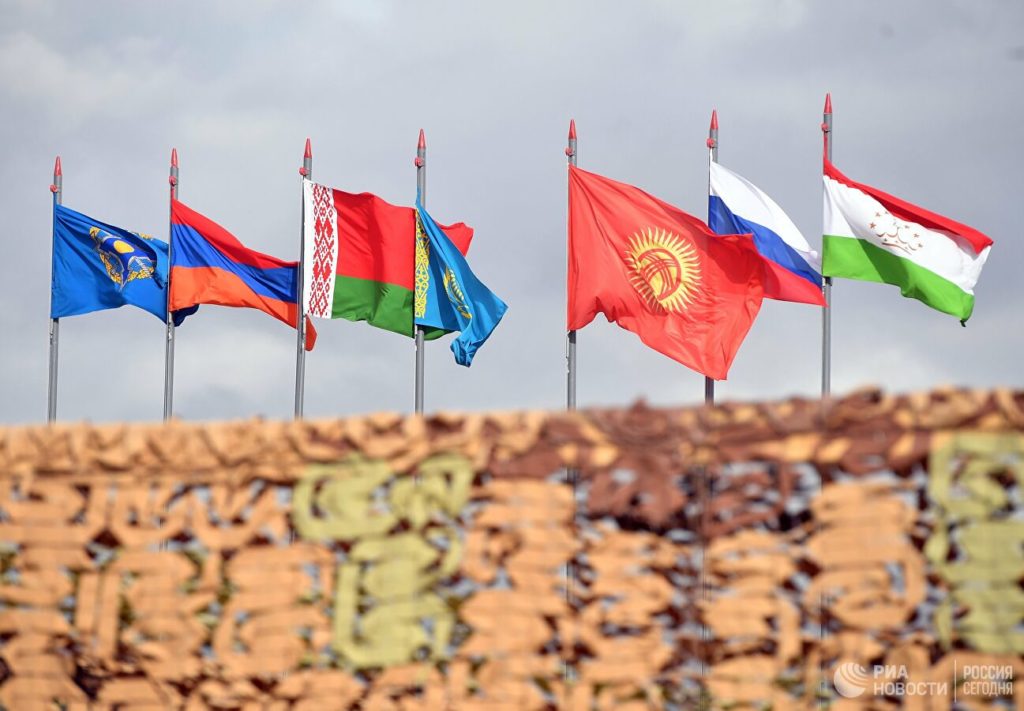
This organization is formed by Russia, Belarus, Tajikistan, Kazakhstan, Kyrgyzstan and Armenia which had a military drill near the border of Afghanistan and Tajikistan and is going to continue until 29 October.
Chiefs of Russian army and officials of Tajikistan Ministry of Defense and other countries in the opening ceremony considered this maneuver helping the stability in the world, preparation against threats in Afghanistan and providing security in the region in a legitimate way.