Author: Mirza

  • Details of Emirati ship explosion in Dubai + evidence

    Details of Emirati ship explosion in Dubai + evidence

    At the ending hours of 7 July a container in an Emirati ship in Jebel Ali harbor exploded. Emirati media claimed the cause was explosion of a container in the ship and no casualty was reported.

    Dubai Police claimed that the incident is a terrorist attack due to which Ocean Trader is damaged and evidences show it was planned.

    It happened at the time that a group of six Zionist engineers were in Jebel Ali harbor and according to Dubai Police confidential documents three of them killed and two heavily wounded. Also 16 workers wounded who were brought to Royal hospital.
    After the explosion, Emirati officials ordered the security forces to prevent the reporters from taking photos or reporting the news.
    It is said the explosion happened due to explosion of a bomb in a containers and it was heard up to 50 km away.
    Three foreigners are arrested. Dubai Police claimed the target of the explosion was Zionist engineers.

    Following normalizing the relation with Zionist regime, UAE is hosting many Israeli tourists, officials and troops. After many rounds of talks between Emirati and Israeli officials, the security ties between sides have increased. Less than two months ago, MOSAD cyberic units transfered to UAE.

    Maybe the explosion in Jebel Ali harbor is a warning to Emirati officials to not host anymore Zionist terrorist teams and not to endanger security for the region anymore.

  • Details of Ansar Allah’s proposal for peace in Marib

    Details of Ansar Allah’s proposal for peace in Marib

    On June this year, a delegation from the Kingdom of Oman arrived in Sanaa to meet with Ansar Allah leader and Yemeni officials regarding the Yemeni war, along with Mohammed Abdulsalam, Ansar Allah’s spokesman and head of negotiations. These cases were not one-sided and unjust, and their aims met the conditions of peace in Marib.

    Ansar Allah’s proposal was as follows:
    “Ansar Allah in the first and second paragraphs of this plan has emphasized the formation of joint management and security forces from the people of Marib province under joint command.
    The third paragraph emphasizes the expulsion of the terrorist groups ISIS and al-Qaeda, and the fourth paragraph deals with the reopening and operation of refueling centers, including gas stations, and the allocating the income of oil ships in Al-Hudaydah to pay salaries in Marib.
    In the fifth paragraph, Ansar Allah called for the formation of a joint committee to repair the Safer pipeline (in Marib) to “Ras Isa” (in al-Hudaydah).
    Other clauses also emphasize the security and freedom of Marib residents and the return of displaced people to their homes.”

    The plan was not approved by Saudi Arabia despite the welcome of the Omani representatives, and Mohammed Abdulsalam finally announced the failure of the Omani mediation in the talks on June 19. Of course, in his recent interviews, Abdulsalam emphasized the openness of the way for the Omanis and praised their efforts.

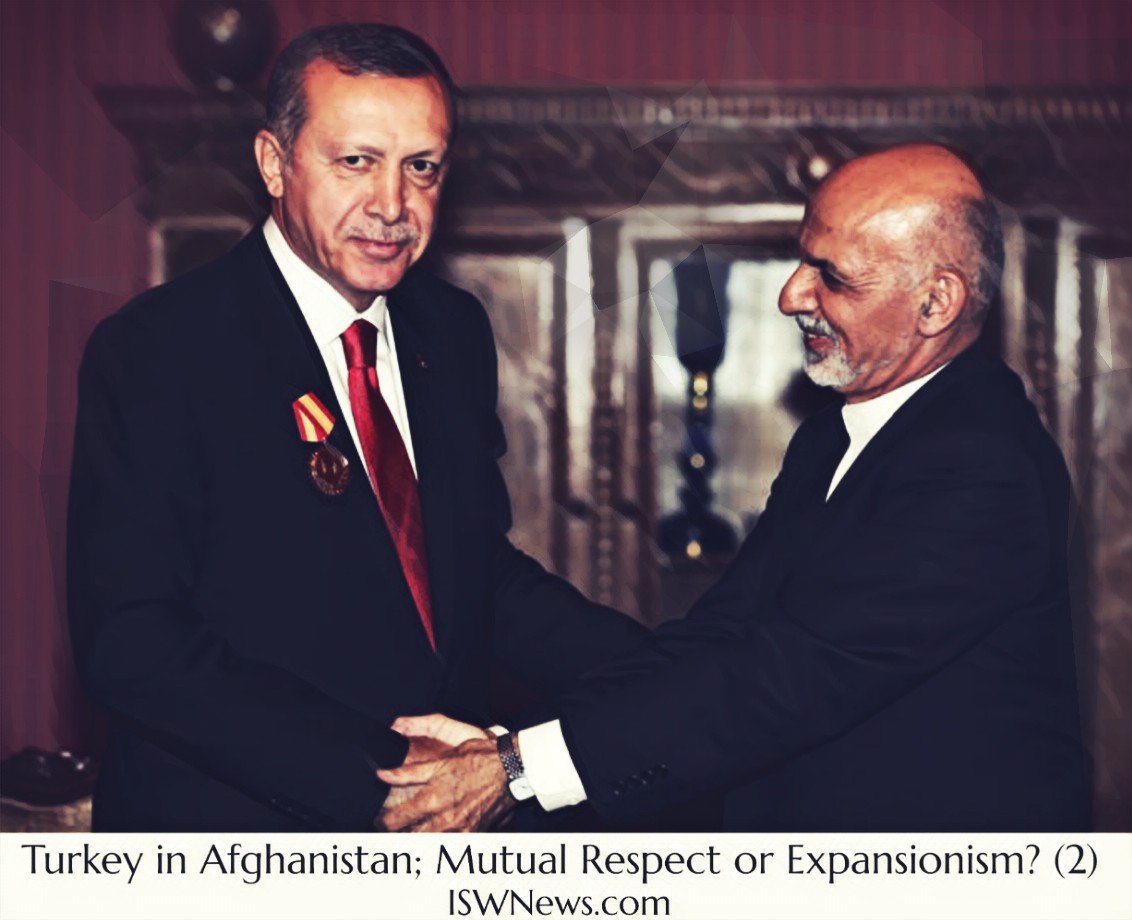
  • Turkey in Afghanistan; Mutual respect or expansionism? (2)

    Turkey in Afghanistan; Mutual respect or expansionism? (2)

    It was in July this year that Turkish Defense Minister Hulusi Akar confirmed the continued presence of Turkish troops at Kabul Airport, stressing that control of Kabul Airport had been in Turkey’s hands for the past six years.
    According to unofficial reports from the US-Turkey agreement, after the completion of the withdrawal of US troops from Afghanistan, control of Kabul Airport will be handed over to the Turkish military, which includes 600 to 1,000 troops, and this issue has been coordinated with Ashraf Ghani’s government.

    As mentioned in the previous article, the commonalities of Turkey and Afghanistan can be seen in the following three components: a- Religion (Sunni) b- Race (Turkmen, Uyghur and…) c- Thought (Islamic Party led by Gulbuddin Hekmatyar and The Jamiat-e-Islami party, whose religious thought is close to the Muslim Brotherhood.)

    But these components can only answer the background and why Turkey is present in Afghanistan, and the reasons for the military presence can be found in other cases. In summary, these are:

    1- Warming relations with the United States:
    In recent years, US support for the Kurds in Syria, the dispute over Turkey’s purchase of the Russian S-400 defense system, and the subsequent imposition of US sanctions on Turkey have led to strained relations between the two countries. Now, accepting Joseph Biden’s offer, Erdogan is seeking to open a new page in relations with the United States, which he says will attract US financial, logistical and other support to Turkey.

    2- Turkey’s political relations with the leaders of the Northern Afghanistan coalition, including General Dostum, Gulbuddin Hekmatyar and others:
    In fact, in this way, Turkey can strengthen its military influence and even establish itself in the northern bases of Afghanistan and export its goods to Afghanistan. This model has already been implemented in Libya, and Turkey, by influencing a number of Libyan politicians and on their behalf, sent invitations to itself and legalized its presence.

    3- Turkey’s relations with Pakistan and India:
    Following Pakistan-India tensions over Kashmir in 2019, Turkey strengthened its ties with Imran Khan’s government, making it more dependent on Pakistan by investing $ 1 billion and increasing arms exports to Pakistan. Pakistan supports the Taliban, and Turkey’s deployment in Afghanistan will certainly be supported by Pakistan, as it pursues their interests. On the other hand, Turkey’s presence in Afghanistan is confirmed by one of the regional powers, India. India opposes the Taliban and sees their return to power as an increase in Pakistan’s power in the region. India therefore welcomes Turkey’s decision to have a military presence at Kabul Airport and to play a role in facilitating negotiations between the Taliban and other factions.

    4- Uyghurs living in Afghanistan:
    One of the reasons for the confrontation between Turkey and China in Afghanistan is the presence of Uyghurs in this country.
    The Uyghurs are the main source of mercenary groups in Central Asian countries, including Tajikistan and Turkmenistan, which are mainly formed to counter the Taliban threat. Now, given Turkey’s racial affinity with the Uyghurs, the Uyghurs are the best option for building armed groups in Afghanistan. From this perspective, China sees the issue of Afghanistan as a margin of its security and, in addition to other Afghan political currents, seeks to strengthen ties with the Taliban. Of course, Turkey’s reliance on the Uyghurs is formed when their goals are shaped by military confrontation with the Taliban, or when Turkey feels the need for a regional consensus against China and other countries in the region. The transfer of the Uyghur threat from Afghanistan to China is also not possible due to the specific geographical conditions of the region, but their arming could be a problem for China.

    In general, the appearance of Turkish policy in Afghanistan is a policy of “mediation”. They have been successful in starting their work and are waiting for the reaction of their opponent, the Taliban and the countries influencing Afghanistan, to take the next steps. Turkey is facing two serious rivals in Afghanistan, China and Iran, and the Taliban’s close relations with the two countries are intensifying the competition.
    Turkey’s military presence and expansionist presence in Afghanistan may not seem like a big deal at the moment, but their freedom of action in Afghanistan could lead to a regional confrontation.

  • Syria: Latest Updates on Daraa Front, 11 August 2021

    Syria: Latest Updates on Daraa Front, 11 August 2021

    Syrian Army artillery and mortar attacks on militants have resumed in eastern Mazayrib, Daraa al-Balad, al-Ajami, and Zayzun in Daraa province since Wednesday (August 4).

    As clashes continued in the southern province of Daraa, militants attacked a vehicle carrying Syrian Army soldiers on the Nahta-Busr al-Harir road, killing and wounding a number of Syrian soldiers. Following this attack, the Syrian army sent a convoy consisting of five tanks and a BMP to the Nahta and Busra al-Harir areas. A number of these forces were stationed at the Syrian army checkpoint on the Nahta-Busra al-Harir road and another part of the forces was stationed on the Busra al-Harir-Azra road.

    The militants also attacked the Syrian army checkpoint on the Al-Nai’ma-Umm al-Mayazen road, a security checkpoint in the city of Nawa, and a Syrian Army checkpoint in the city of Sheikh Meskin from Monday morning (August 8) until the last hours of Tuesday (August 10). .

    The Syrian Army’s attacks are aimed at increasing pressure on the militants to accept the terms of the recent talks with the Daraa Central Committee (affiliated with the militants). Attacks and tensions between the two sides have eased since the last round of talks on Friday (August 15) between Russian delegation and the Daraa Central Committee, but sporadic clashes between the two sides continue.

    According to the information obtained by ISWNews, from 22:00 last night (August 10) to 11:00 today (August 11), the flight of Syrian Army reconnaissance drones over different areas of Daraa, especially Daraa al-Balad neighborhood, has increased. If this situation continues, Syrian artillery attacks on these areas are likely to continue.

  • US transfer troops to Jordan

    US transfer troops to Jordan

    Last month the White House reported to move the troops and equipment slowly to Jordan. It started by Joe Biden presidency which reformed the military and political priorities of USA in the realm of CENTCOM responsibility.

    The redistribution of the troops are as follows,
    1- Qatar: US Army closed As Sayliyah Army Base and Falcon warehouse and transfered them to Jordan in June. US will probably keep Al Udeid Air Base in Qatar.
    2- Afghanistan: All for the US troops and equipment to evacuate Afghanistan, some of which will go to the neighbors of Afghanistan such as Tajikistan, Pakistan, Turkmenistan and Jordan. Two thousand American troops transfered from Afghanistan to Jordan.
    3 Kuwait, Saudi Arabia, UAE: The transfer of American troops and equipment to Jordan. After call between Lloyd Austin, US DoD, with Mohammad Bin Salman, Saudi crown prince, it was agreed that US transfer eight Patriot SAMs from Iraq, Kuwait and Jordan and one THAAD SAM from Saudi Arabia.

    Why US is transferring the troops to Jordan?

    On 31th January Jordan and USA signed a defense treatment. Jordan government approved it on 17 February. It includes 19 sections that allows US soldiers to carry weapons in Jordan and allows US aerial and naval crew to enter Jordan without visa.

    The agreement was criticized by some members of the Jordanian parliament and political and legal experts, with many expressing concern that the agreement was a sign of colonialism and a violation of Jordanian sovereignty and was unconstitutional because it was passed without parliamentary approval by the government.

    One of the reasons for this transfer is to keep them out of Iran’s missiles and its proxies reaches, according to American analysts. According to US DoD, Jordan is a strategic friend of US in security in the region and cooperates with American coalition against ISIS, Al Qaeda and other terrorist groups. According to this agreement, American forces control 12 bases for 15 Years, from which 4 are used jointly by Jordan for training and other purposes.

    Under the agreement, some Jordanian bases will also be used by US forces. Accordingly, Muwaffaq Salti Air Base will become the main base and headquarters of US drones in West Asia.
    t was also decided that the US military would operate at the Jordanian Air Force Main Training Center (Amman Training Center) in the Jordanian capital, Al-Hamimah Naval Base, Jordanian Air Force Command Center (King Abdullah II Air Base), Aqaba Naval Base، Jordanian military training base in al-Quwara, King Abdullah’s base to train Jordanian special forces, Prince Hassan Air Base, Prince Faisal Air Base, Al-Tatan Training Barracks and 15 border bases with Iraq and Syria.

    Al-Tanf’s US base on the Iraqi-Syrian border is expected to be strengthened after the large-scale deployment of US troops in Jordan.

    This extensive shift of power in west of Asia shows that Jordan is to be used as US main HQ to fight with the resistance axis and keep Israel safe by opposing Iran’s activities! This is not in favor of Islamic Republic and states of the region were warned numerous times by Iran.