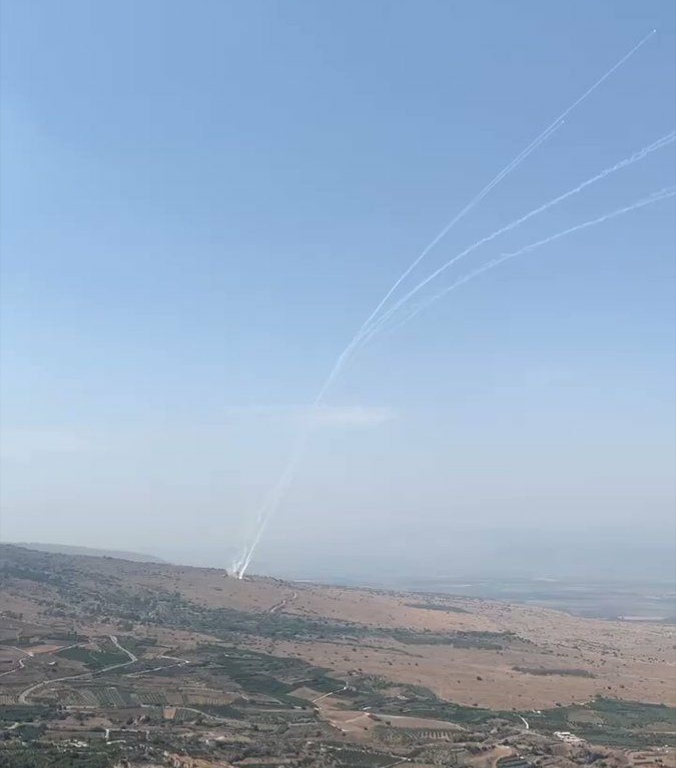
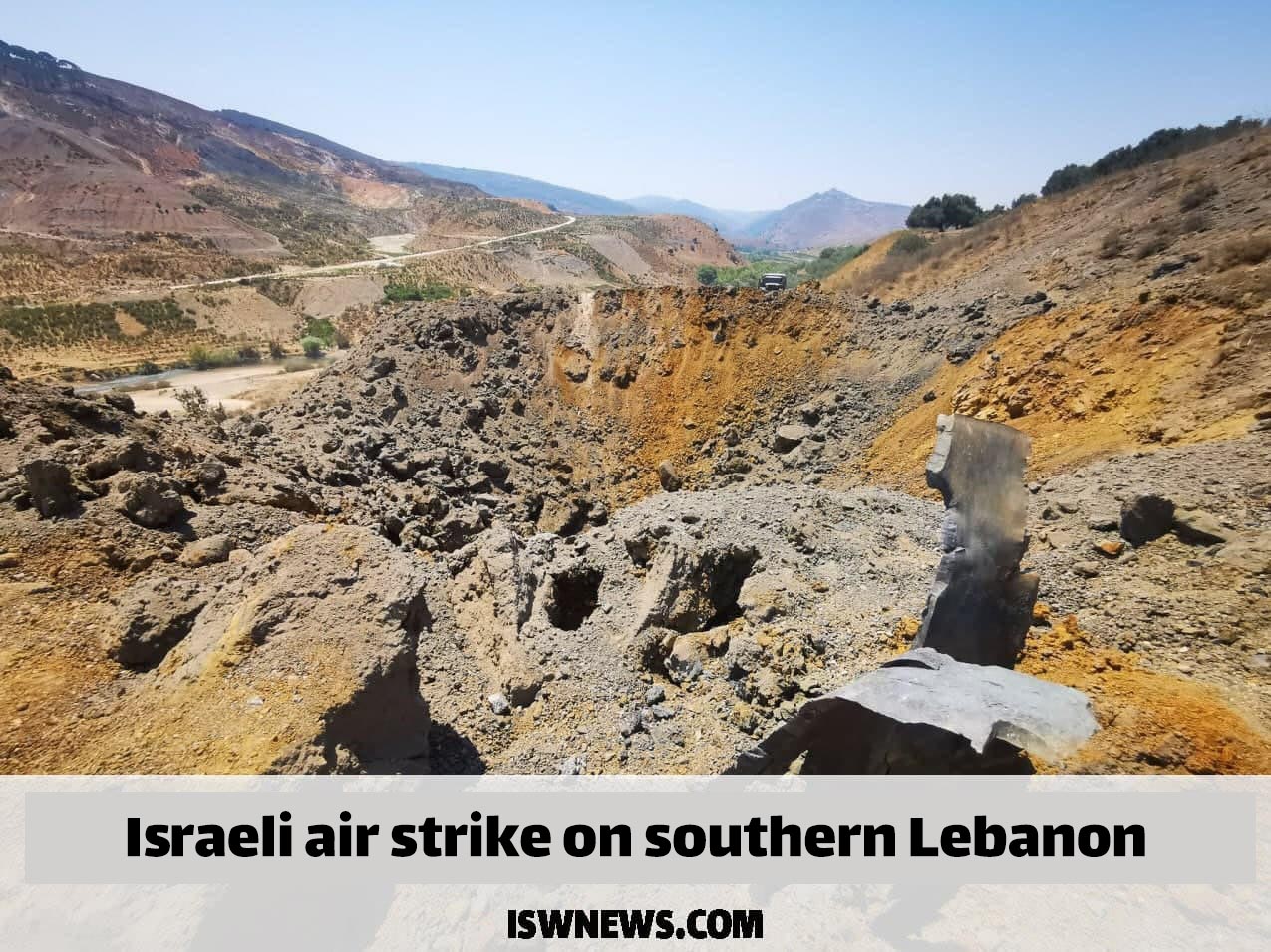
Hezbollah movement fired more than ten 122 mm rockets at open lands in the vicinity of the Israeli positions in Shabaa Farms. The movement issued a statement calling the rocket attack a response to recent airstrikes by Israeli warplanes on the areas of Jarmaq and Shawakir in southern Lebanon.
After firing Hezbollah rockets, the Israeli Iron Dome Defense System also countered the attack and shot down more than eight rockets. Israeli Army artillery also targeted the source of rocket fire in Lebanon.
The artillery duels has so far left no casualties, and only Hezbollah rockets has resulted in limited fires in the occupied territories.
The conflict between Hezbollah and the Israeli regime has entered into serious tension and military confrontation for the first time since the 33-day war in 2006. This tension is not unrelated to the recent Western and Zionist threats against Iran…
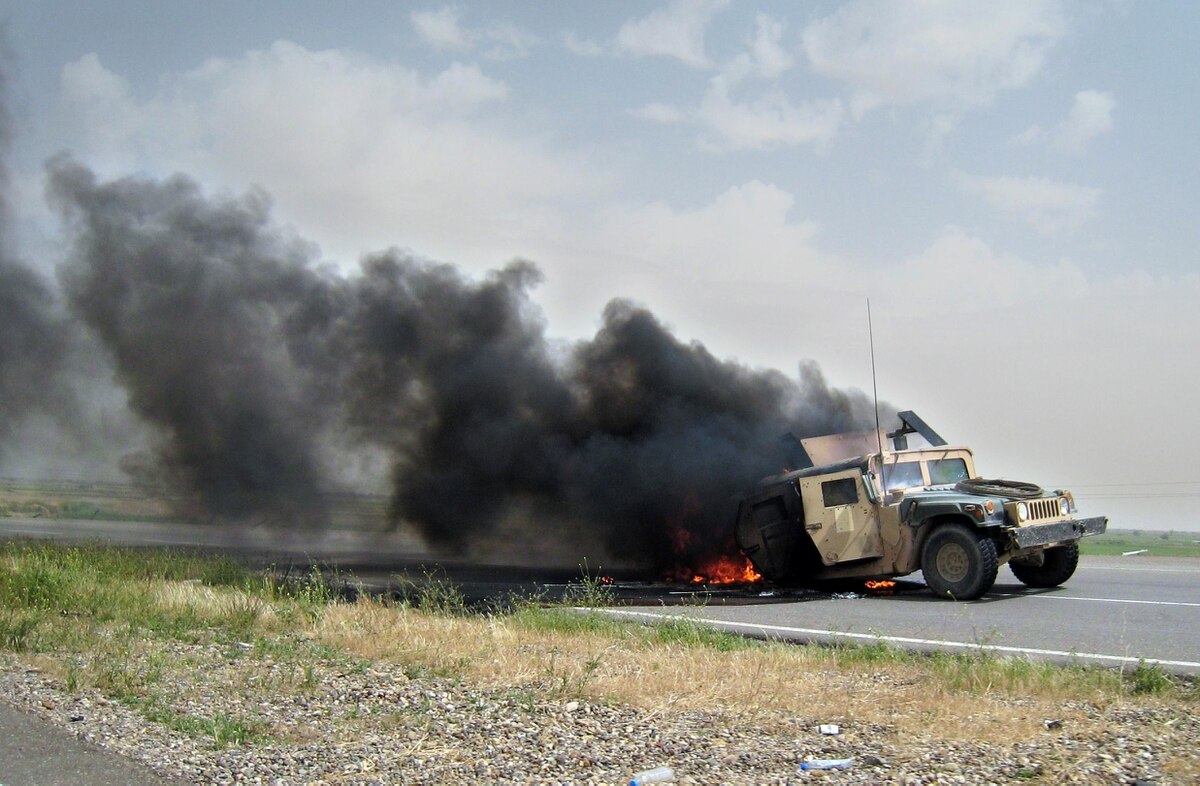
The Qasem al-Jabbarin resistance group claiming responsibility for the attack, targeted two US logistical convoys in Babel and Qadesiyah areas in southern Iraq.
Zionist officials and experts have stated in this regard: Although this previous attack and rocket attacks may not have been carried out by Hezbollah, but it was definitely carried out with the green light of Hezbollah and Iran. Given the Zionists’ previous actions, it was likely that they were setting the stage for public opinion to target Hezbollah positions or a number of residential areas. Annoyed and confused by the approximate coincidence of a drone strike on an Israeli ship and a rocket attack from southern Lebanon, for the first time since the 33-day war, they decided this morning to use army fighter jets to target two points near the town. They targeted Aishiya(Aaichiyeh) village in southern Lebanon. The attack did not cause any casualties or damage.
Israeli regime officials tried to make a balance of power between themselves and the Axis of Resistance by using the decision and attacking southern Lebanon, using media tools and multiplying this action, but last night’s attack showed their weakness and fear of reaction. Although the Zionists claimed to have targeted a Hezbollah base and a rocket launcher in southern Lebanon, the images released from the scene in southern Lebanon contradicted the claims of the regime’s army.
The Zionists know full well that Hezbollah will respond to their crimes in the attack on Syria (which resulted in the martyrdom of several Hezbollah forces) in the right time and location, but the story of the attack on Lebanon is completely different and their every action will be accompanied by an early Hezbollah reaction. As in the Shebaa farms, they received the answer to one of their crimes and forced to withdraw from their positions and sent numerous messages and asking the United Nations to mediate!
Although the Lebanese government is not in a good situation due to various issues, Hezbollah in Lebanon is more prepared than ever to ambush a mistake by the Zionists!
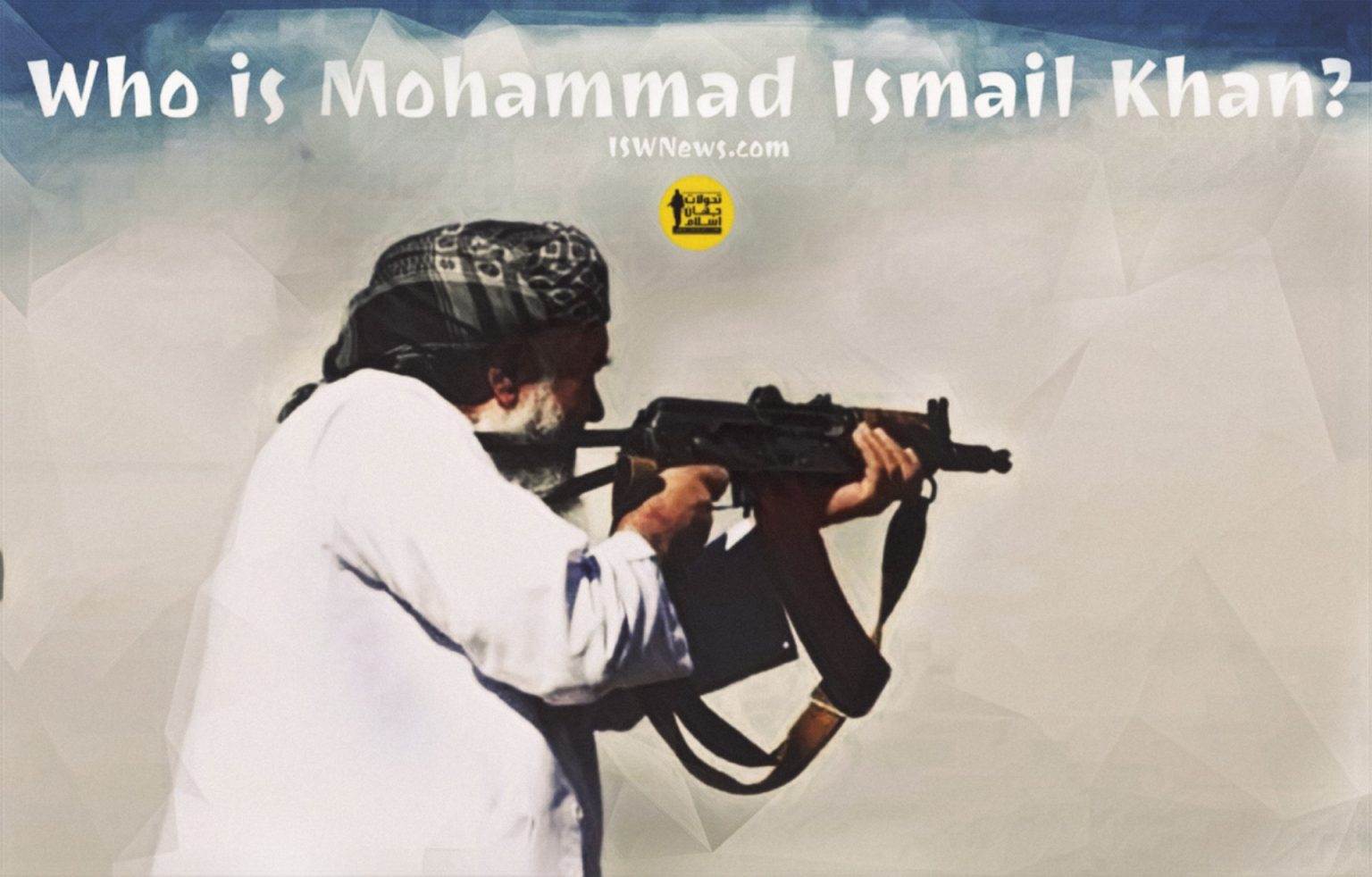
Mohammad Ismail Khan was born in the village of Nasrabad in the city of Shindand in Herat province and is one of the jihadi leaders of Afghanistan. During the government of Burhanuddin Rabbani, he was in charge of commanding the western region of Afghanistan, and during the period of Hamid Karzai, he was appointed governor of Herat and then the Ministry of Energy and Water.
After the conflict between the Taliban and Burhanuddin Rabbani’s government began, Ismail Khan supported Rabbani government and fought the Taliban in western Afghanistan until 1995. Ismail Khan pushed the Taliban back to Helmand province at the beginning of the fighting, but was forced to retreat to Herat by the widespread deployment of Taliban forces to the west, as well as clashes with General Dostum on the Faryab and Badghis fronts. After this, the Taliban attacked Herat and succeeded in capturing Herat.
After the fall of Herat, Ismail Khan went to Faryab and was gathering forces there until 1997, when he was arrested for betraying General Abdul Malik (the Uzbek commander in Faryab) and handed over to the Taliban in a deal. Ismail was later imprisoned in Kandahar Prison and escaped to Iran in 1998 with the help of a Taliban gunman. After that, with the support of Iran, he went to Panjshir and to Ahmad Shah Massoud, and from there he was transferred to Balkhab district. Ismail Khan, with the help of the Balkhab People’s Forces, succeeded in recapturing areas in Ghor and Herat provinces.
The moment the helicopter carrying Ismail Khan arrived in Panjshir and Ahmad Shah Massoud welcomed him
His conflict with the Taliban continued until 2001, when the US invasion of Afghanistan began. Ismail Khan seized the opportunity after the US invasion and, with the help of the Iran’s Quds Force, was able to regain control of Herat from the Taliban. According to Ismail Khan, with the help of the martyr Haj Qasim Soleimani, he was able to organize the energy situation and communication routes in Herat and improve the city’s position in Afghanistan.
Ismail Khan, due to his position in Herat, had a great influence on the removal and installation of officials in the western provinces of Afghanistan, but his power declined with the coming to power of Hamid Karzai and then Ashraf Ghani, and he gradually stepped down from government positions.
With the recent Taliban attacks in Afghanistan and the fall of the districts of Herat province, Ismail Khan has taken up arms again and is fighting the Taliban; The only difference is that this time the Northern Alliance no longer exists and the Western government does not ask for help from a country other than the United States…
Pictures of Ismail Khan next to Hamid Karzai, Abdullah Abdullah and Ata Mohammad Noor
It is said that the drone was an “MQ-4C Triton” and was shot down by the “Buk-M2” air defense system. The American drone reportedly flew from Muwaffaq Salti Air Base in Jordan.
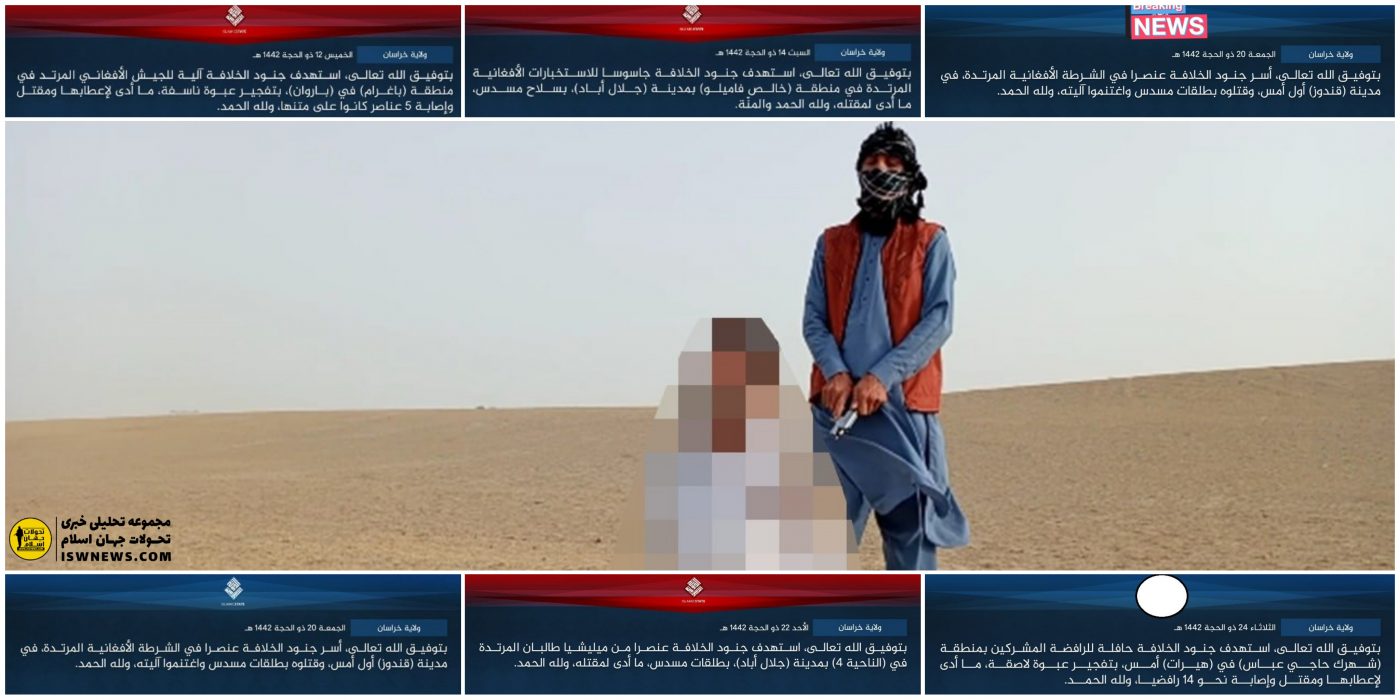
1- IED attack on the path of a government forces vehicle near Bagram Airbase in Parwan province, which resulted in the death and wounding of 5 people, on July 22. 2- Assassination of one of the government forces in the Khales family area of Jalalabad city, on July 24. 3- Assassination of a Pakistani embassy employee in the fourth district of Jalalabad, on July 30. 4- Assassination of one of the Afghan police forces in Kunduz city, on July 30. 5- Assassination of a member of the Taliban in the fourth district of Jalalabad, on August 1. 6- A car bombing in Haji Abbas neighborhood located in the west of Herat city, which resulted in the martyrdom of 3 people and wounding of 10 civilians, on August 3.
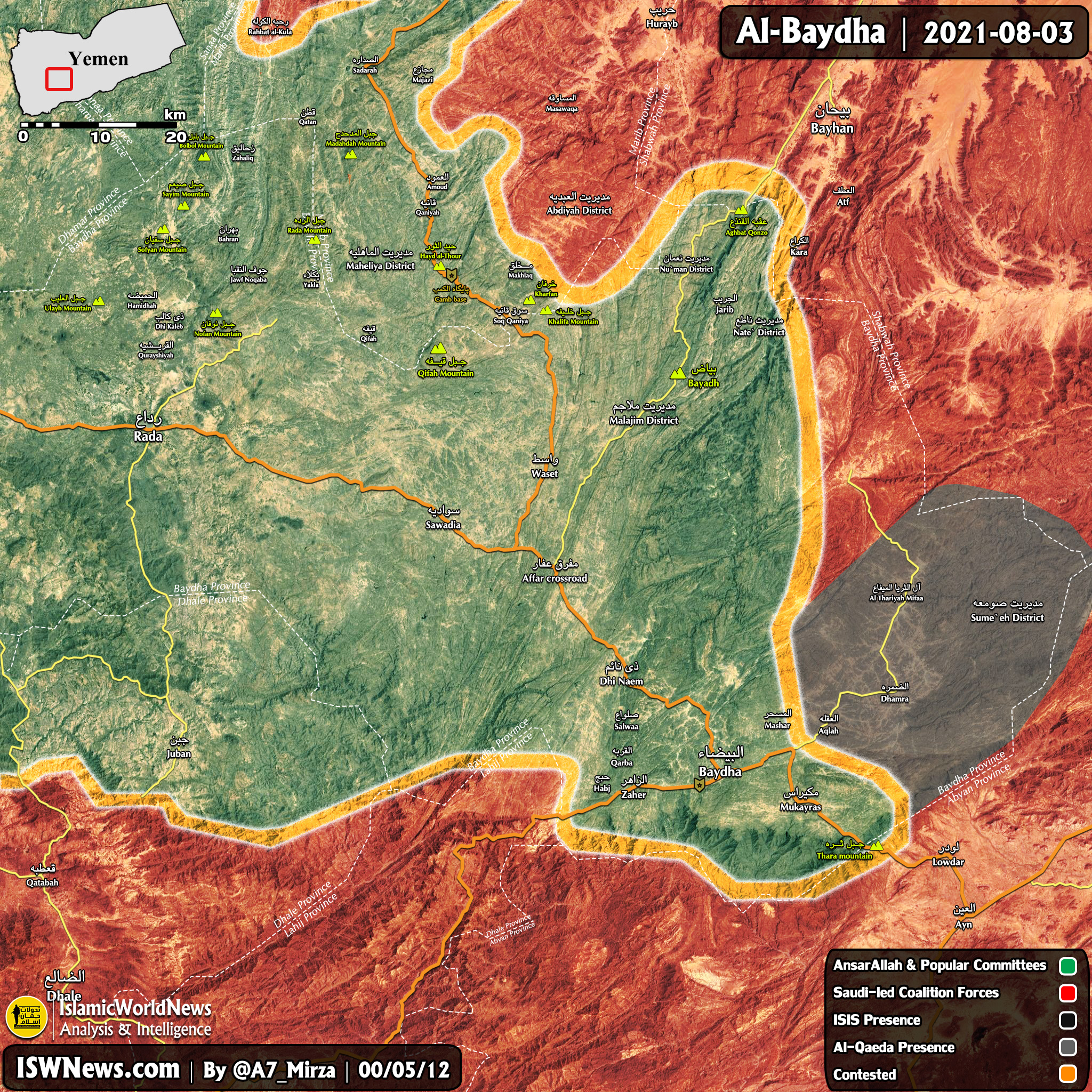
The liberation of important heights of Aqabat al-Qonzo’ in the north of al-Baydha province is the turning point of this operation. Aqabat al-Qonzo’ has complete overlook over the southern regions of Bayhan and can be considered as the gateway to the city of Bayhan.
On the other hand, in the south of al-Baydha province, an area of about 120 square kilometers in the districts of al-Sawma’ah and al-Zaher were liberated from the occupation of al-Qaeda terrorists.
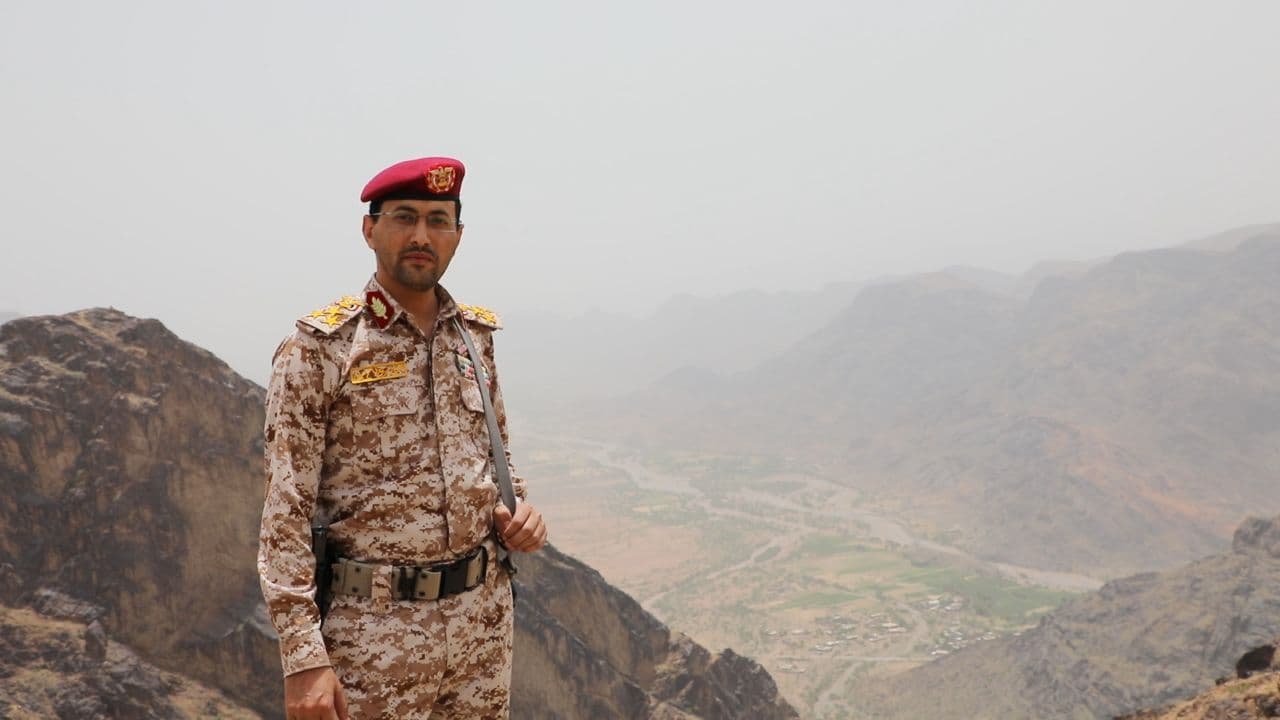
Yahya al-Sari, spokesman for the Yemeni Armed Forces at the strategic heights of Aqabat al-Qonzo’
It should be noted that Ansar Allah operations under the name of “Operation Al-Nasr Al-Mobin” in this province began after the Saudi coalition, armed the al-Qaeda terrorists and launched an operation with the aim of completely occupying al-Baydha province; However, this operation, like other operations of the Saudi coalition, was defeated by Ansar Allah, and of course, in the continuation, new areas were liberated by Ansar Allah counterattacks.
The operation launched by the Saudi coalition with the aim of completely occupying al-Baydha province led to the loss of more land for the Saudi coalition. Ansar Allah message is simple: If necessary, we have the ability to conduct military operations and advance, but we will wait. Do not test our patience!
During clashes between the Taliban and the Afghan army over the past two days, the Safian, Qala-e-Kohneh and Kariz areas on the outskirts of Lashkar Gah have fallen to Taliban militants. Clashes are also taking place in the suburbs of the Helmand governorate building and in the southern and western suburbs of the city.
Following the Taliban attacks, the Afghan Ministry of Defense announced the deployment of special forces to Lashkar Gah. Afghan and US military fighter jets have also repeatedly bombed Taliban-held areas, which in some cases led to destroying residential areas and killing civilians.
The security situation in the capital of Helmand province is unstable, and some government forces commanders, such as Abdul Baqi Barez, the commander of security forces in the first district of Lashkar Gah, have surrendered to the Taliban. If this trend continues, the fall of Lashkar Gah is imminent.