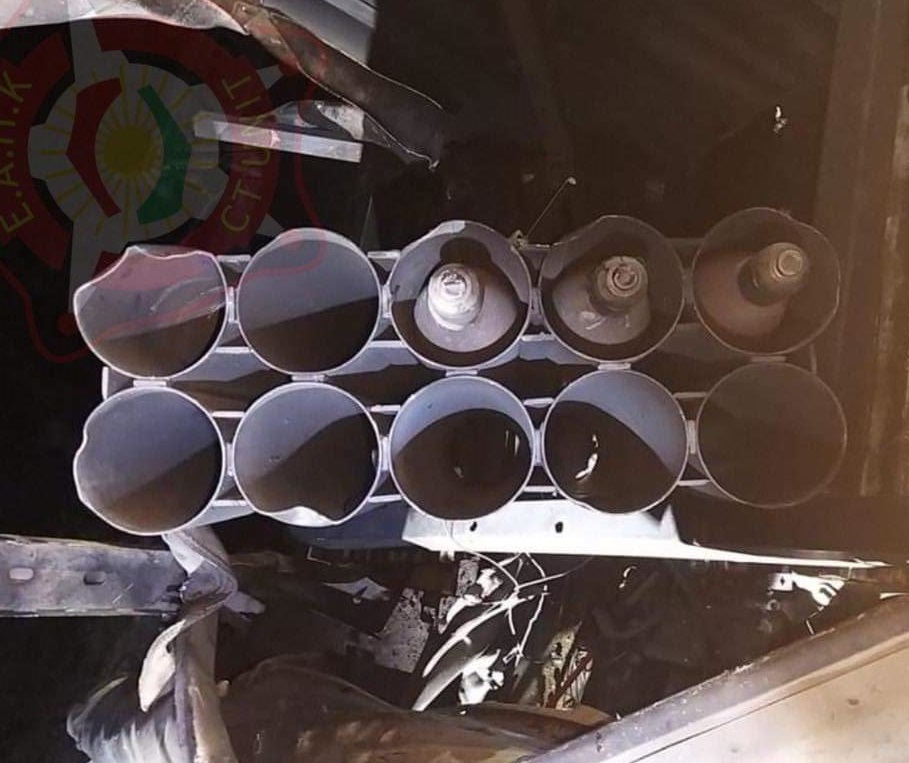
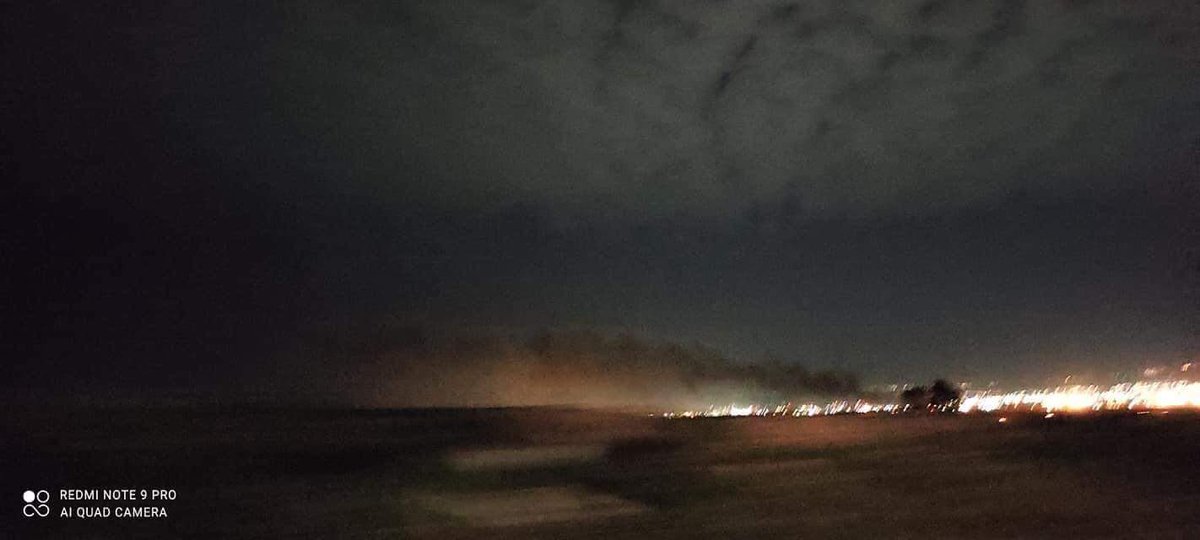
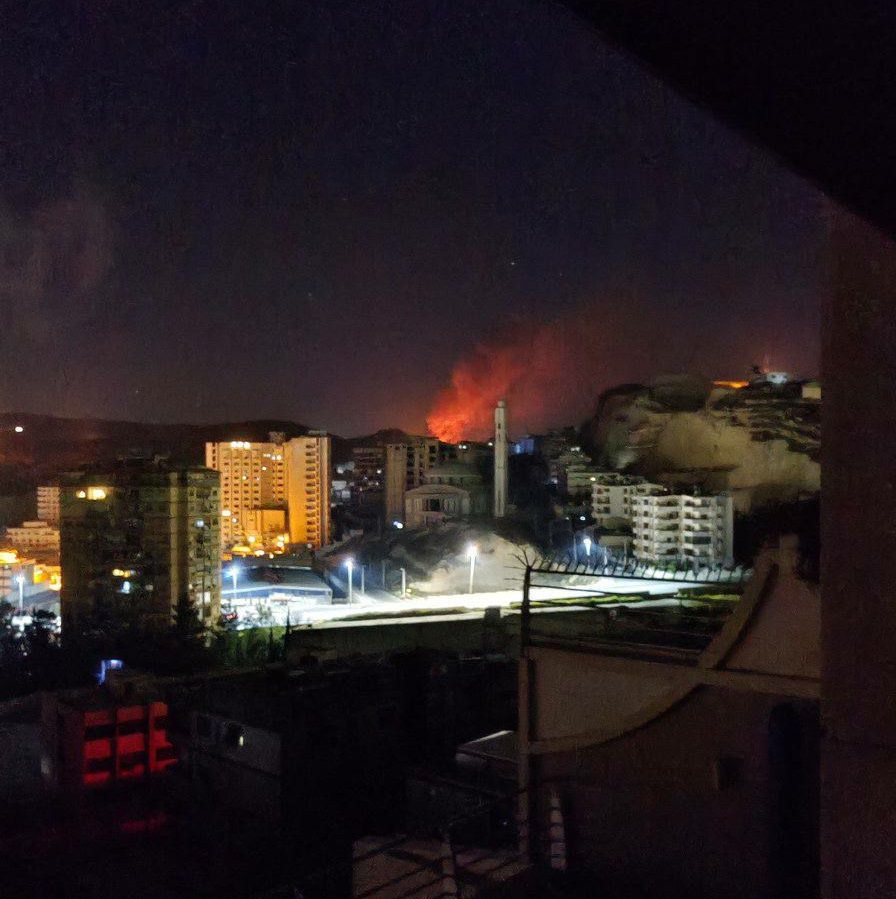
Pictures of the rocket launch site are being released without specifying its exact location. However, it appears that as statement of the Saraya Oliya al-Dam group, the shooting site is 7 km from the US military base near Erbil International Airport.
It is worth noting that the attack took place near the city of Erbil, and this is the first time that Iraqi resistance forces have targeted US positions from inside areas controlled by the Iraqi Kurdish region.
A US-led coalition spokesman also confirmed the attack stating on a tweet that one civilian contractor was killed and 9 others were injured including 5 US military personnel.
Update: CJTF-OIR confirms approx. 14 107 mm rockets launched with 3 impacting within EAB, Feb 15 at 2130 hours (Iraqi time). One civilian contractor was killed (Not US), and 9 injured ( 8 CIV contractors/ 1 US MIL) – 4 US/ 1 US MIL concussion protocol.
Last night at around 21:30 local time, the Iraqi resistance forces with (about) 14 rockets targeted the positions of the American occupying forces at Erbil Airport. A number of rockets, or at least remnants of intercepted rockets or American ammunition used to intercept the rockets, are said to have landed in areas of Erbil, including near the Chinese embassy.
Iraqi resistance group, Saraya Oliya al-Dam took responsibility for the attack stating that at 9:15 on February 15, several rockets fired toward the Airport and inflicted heavy losses to US forces in the area.
At least five civilians were wounded due to the rocket attack so far. Also several rockets or the remnant of the rockets fell on several areas of Erbil city. Three rockets hit the Waziran and Bakhtiyari neighborhoods, one of which hit the wall of the Chinese consulate.
According to a video released by the Ashab al-Kahf group, the attack was carried out by a rocket. According to local sources, Turkish warplanes flew over northern Iraq today.
– Turkish-backed militants abducted four Kurdish citizens in the city of Afrin.
– A car bomb explosion took place in the town of Jinderes south of Afrin. 6 civilians were injured.
– Pro-militants media claimed that Syrian Army forces targeted a checkpoint of internal security forces (Asayish) in Qamishli.
– Turkish-backed militants targeted the village of al-Hamra, east of Al-Bab. The bombing left only material damage.
– One of the Syrian Army forces was martyred during calshes with ISIS terrorists in the al-Sukhna area in the east of Homs province. Another SAA member, Majd Ahmad Shabat, was killed in the same area last week due to the severity of his injuries.
– According to the Russian Center for Reconciliation in Syria, the militants violated the ceasefire 36 times in the Idlib region, including 2 in Aleppo, 13 in Latakia, 6 in Hama and 15 in Hama.
– Two SDF members were killed when unknown gunmen opened fire on a vehicle of the Syrian Democratic Forces (SDF) in the city of Busayra in the southeastern province of Deir Ezzor. Another vehicle belonging to the Syrian Democratic Forces was targeted east of Hasakah city, injuring three SDF members. The number of attacks on patrols, vehicles and checkpoints of the Syrian Democratic Forces (SDF) is increasing.
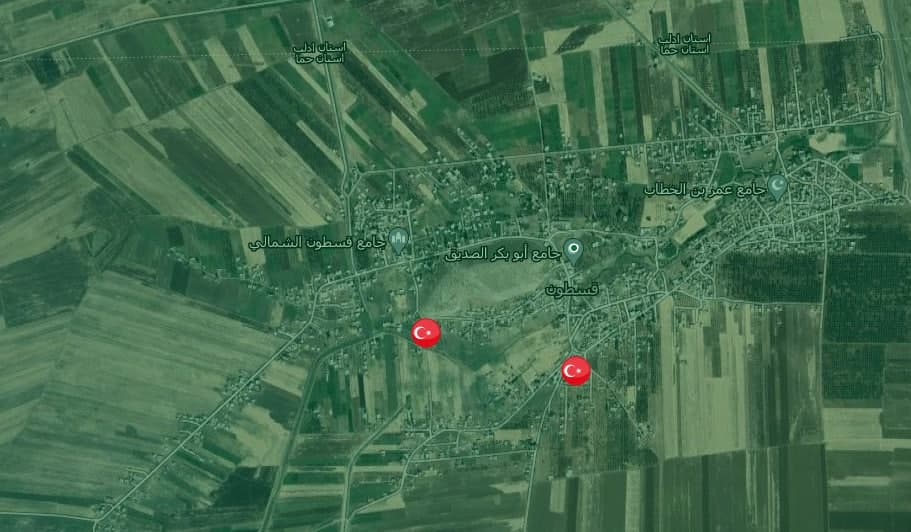
– Contrary to the Moscow agreement, Turkish Army is building a new military post in the town of Qastun in the north of Al-Ghab plain. So far, no military equipment has entered this military post. It should be noted that this is the second Turkish military post in the town of Qastun.
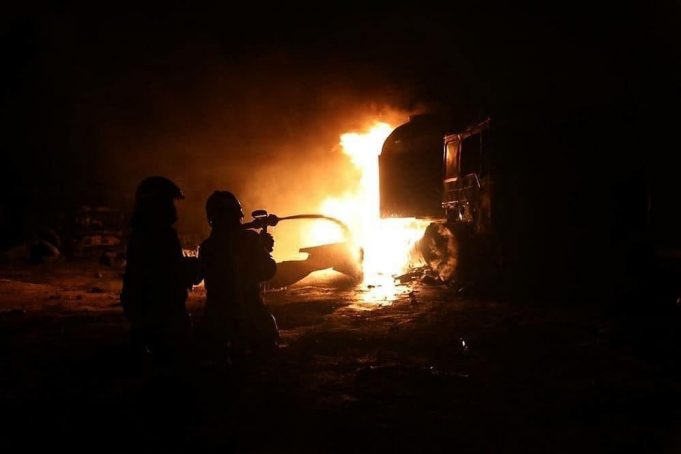
1- Herat: Widespread fires in the Islam Qala area were contained with the help of Iranian firefighters. According to Herat provincial officials, more than 70 people were killed or injured and 400 tankers were burnt in the accident. The main cause of the incident has not yet been determined, but the initial damage is estimated at $ 50 million.
Presence of Iranian firefighters in Islam Qala and the damage caused by the explosions
2- Kandahar: 20 people were killed and three others were injured in clashes between the Army and the Taliban in Arghandab and Panjwai districts. 16 mines and booby traps have also been discovered and defused by the military.
3- Balkh: – 11 Taliban members were killed and three others were wounded as a result of clashes between the army and the Taliban in Chahar Bolak district. – Taliban spokesman Zabihullah Mujahid denied allegations by the Afghan Ministry of Defense that 56 Taliban members were killed in Chahar Bolak. – Afghan Army warplanes targeted Taliban positions in Dolatabad 2 times.
4- Badghis: 30 Taliban members were killed and 11 wounded during an army operation in the city of Ab Kamari, according to the Afghan Ministry of Defense.
5- Kabul: 18 people were killed and six others were wounded during an army operation against Taliban gatherings in the town of Sarubi, east of Kabul, according to the Afghan Ministry of Defense.
6- Pakistan: – Four Pakistani soldiers were killed as a result of armed attack on an army checkpoint in the South Waziristan region. Four terrorists were also killed during the attack. – Pakistani security forces arrested a Jamaat-e-Ahrar group commander, Murad Ali Shir Afzal in Mansehra in Khyber Pakhtunkhwa province.
Earlier onn February 15, the pro-Saudi media claimed that an Ansar Allah drone had been shot down on the southern border of Saudi Arabia.
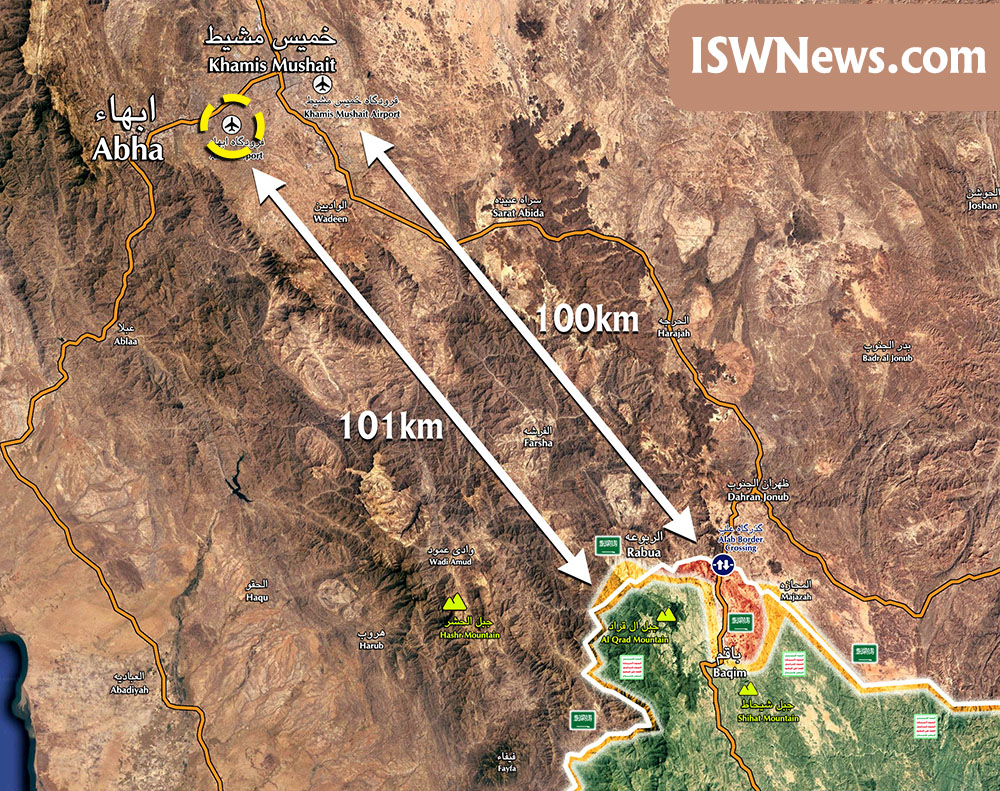
Later, a spokesman for the Yemeni Armed Forces, Brigadier General Yahya al-Sari’, said in a statement that two Qasef 2k and Sammad-3 drones attacked Saudi coalition positions at Jeddah and Abha airports.
No further information were released on the aftermath of the attack.
According to official statement of the Syrian Army, the attack took place at 1:18 local time, and the Army air defense systems managed to destroy most of the missiles fired by Israeli warplanes. However at least one missile hit the target.
So far, no news has been published about the amount of damage or human casualties.
According to the latest news from the Yemeni fronts in recent weeks, Ansar Allah has focused its attacks on four axes in the district of Khab al-Shaaf in al-Jawf province and the district of Raghwan, east of Sarwah and east of Madghal in Marib province.
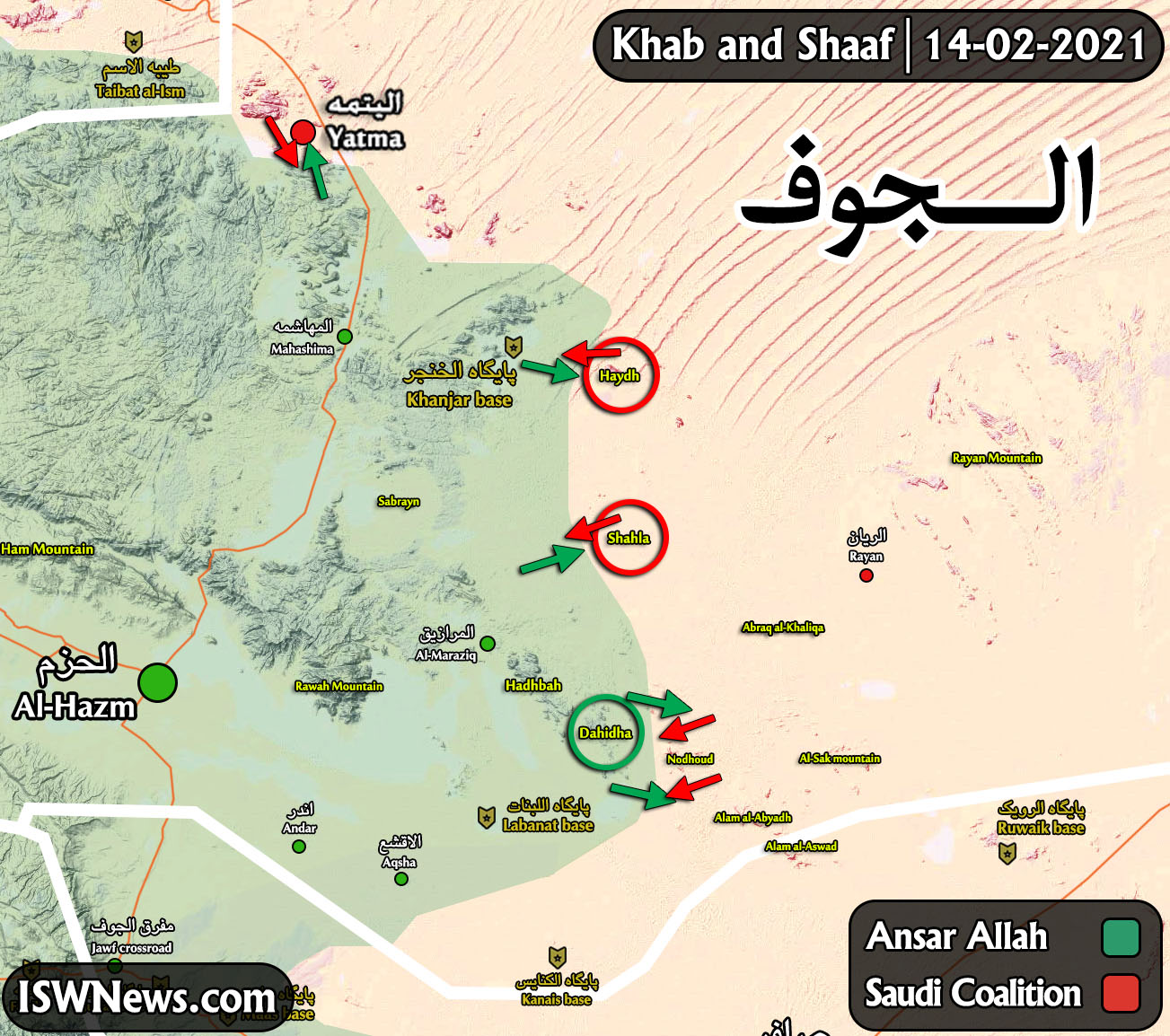
Al-Jawf front: In this front, clashes in the areas of east al-Maraziq and al-Khanjar camp continue as in the past, and Ansar Allah has only increased the volume of its surprise attacks, aiming to inflict heavy casualties and destroy the manpower of the Saudi coalition. The pro-Ansarallah sources frequently mention the areas of Dahidhah, Shahla and al-Haydh mountains as the advance of Ansar Allah, which is not true. According to our information, Dahidhah area has been under the control of Ansar Allah in the past and the contact line is currently in Al-Nodhoud, Shahla and al-Haydh mountains, and the lines on these fronts have not changed in the last months.
The scattered clashes also continue in the Yatmah area.
Saudi coalition warplanes have bombed al-Jawf fronts three times in the past week.
Al-Jawf front – click to see the full size map
Raghwan front: Ansar Allah has succeeded in clearing the villages of Abu Sarah, Hazma Al-Zaba’ and Al-Naji in this front. Due to the alliance of Asdas and Raghwan tribes with Mansour Hadi forces and also Ansar Allah’s unwillingness to clash with the tribes of these areas, no further progress has been made in this direction. East of Madghal front: In recent days, Ansar Allah has increased pressure on the Wadi Nakhla and al-Kasarat area. Most of the clashes on this front involved artillery fire and air battles. Ansar Allah air defense shot down a Chinese-made CH-4 UAV in the skies of Madghal on February 12. Saudi coalition warplanes have bombed Madghal district 14 times in the past week. East Sarwah front: This front, which has been the main target of Ansar Allah attacks in recent weeks, witnessed a large amount of airstrikes by the Saudi coalition warplanes. According to the ‘ISWNews‘, 75 airstrikes have been carried out on Ansar Allah positions in Sarwah district in the past week. On this front, Ansar Allah succeeded in clearing the Kufil mountain and its oil pumping station. The contact line is now transferred to the areas of Tala’at al-Hamra, west of al-Zour and the western suburbs of Hamar mountaun. Athaf and Dahwan mountains are no man’s land and no clashes have been reported in these areas so far. The news of the Bani Dhabiyan tribes joining the ranks of the Saudi coalition is not true so far, and despite their opposition with Ansar Allah, there has been no specific clashes between them and Ansar Allah.
Marib front – click to see the full size map
Ansar Allah carried out nine drone and missile operations against Saudi coalition positions in the past week, the details of which are as follows: UAV attacks: 5 times Khamis Mushait, 4 times Abha Airport, 2 times Najran and 1 time Jizan. Missile attacks: 1 time the Sahn al-Jinn base, 1 time the third military zone in Marib province, 1 time the King Khalid Airbase in Khamis Mushait.
It seems that Ansar Allah will continue its attacks on these fronts until it destroys the power of coalition and breaks the resistance of the Saudi coalition on the Marib front, and even adds the southern and northern axes to them, and then advance on the main front of the conflict: the western front of Marib.
This morning, Turkish Defense Minister Hulusi Akar, accompanied by the Chief of General Staff Yasar Guler and a number of Turkish commanders, announced the end of the operation after visiting the ‘Claw Eagle 2’ operation room in Turkey’s Sirnak province.
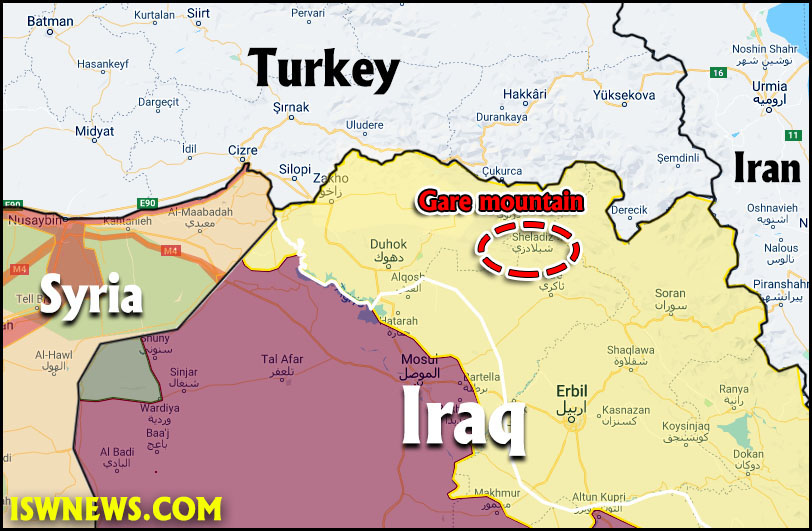
Hulusi Akar claimed that 40 PKK members were killed in the Turkish operation in Gare Mountain and also stated that 4 army personnel were killed in the last four days.
According to information released by the Turkish Defense Ministry, the bodies of 13 Turkish nationals were found in a cave in Gare Mountain, while on the other hand the PKK said in a statement that the dead persons were the captured Turkish soldiers who had been killed by Turkish army bombardment on the location of prison in the Gare mountain.
On February 10, Turkey transferred its forces to the Gare Mountain in the northern Iraqi province of Dohuk and launched an operation ‘Claw Eagle 2’ against the PKK group, which according to the Ministry of Defense 50 locations of the PKK group have been targeted, including weapons depots and command centers.
The PKK also reported that more than 30 Turkish troops had been killed in the operation, saying that a number of Turkish troops were besieged in the Siane area in the Gare Mountain and that Turkish efforts to rescue them failed so far.
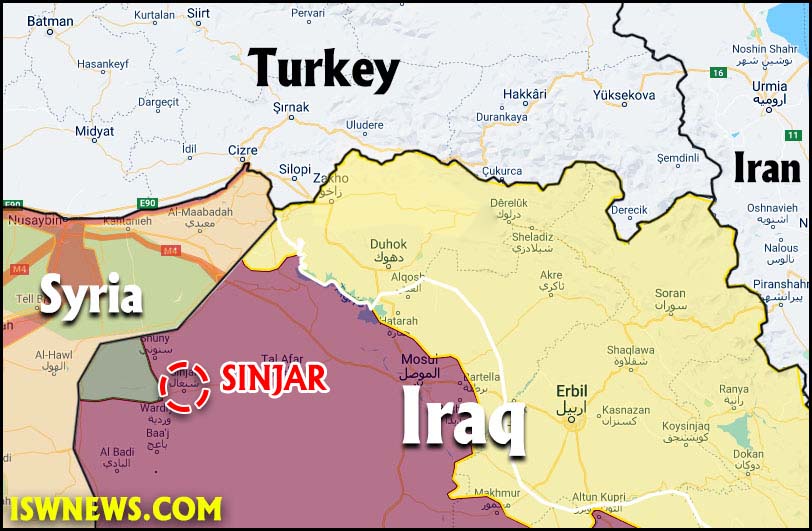
On February 11, Hashd al-Shaabi (PMU) forces consisting of three brigades including 9,000 to 10,000 troops were deployed in the Sinjar region and surrounding areas by order of Mustafa al-Kadhimi, commander-in-chief of the Iraqi Armed Forces. According to reports, after dispatching Hashd al-Shaabi forces to the area, Abdul Aziz al-Muhammadawi (Abu Fadak), deputy head of Hashd al-Shaabi forces organization, and his entourage visited the town of Sinjar, Tal Afar and surrounding areas and met with local people.
Deputy head of Hashd al-Shaabi forces organization
Following Erdogan’s threats of a possible Turkish attack on Sinjar under the pretext of PKK presence in the region, one of the PMU commanders in Sinjar said: “A few days ago, we were informed from Baghdad that we were preparing to repel any Turkish attack on Sinjar, and in this regard, the PMU forces were sent to Sinjar with about 10,000 fighters.” “According to the information we have, Turkey intends to attack Sinjar and deploy Peshmerga forces [affiliated with Barzani (PDK)],” he said.
Following the implementation of the agreement reached on October 9 between the Iraqi federal government (Kadhimi government) and the northern region of the country (Kurdistan Democratic Party (PDK)) over the Sinjar region to implement a joint administration and expel PKK-affiliated militants and also the retreat of Hashd al-Shaabi forces at a distance of 5 km from this area, this is the first time that Hashd al-Shaabi (PMU) forces return to the area.
Also, considering the increase of ISIS attacks in different parts of Iraq and the announcement of the Pope’s visit to Iraq on March 5 and his possible visit to the town of Qaraqush on the outskirts of Mosul, Another reason for the increase of PMU forces in the Sinjar region is to ensure the security of the region against any terrorist threats.
In general, the various brigades of the Hashd al-Shaabi (PMU) forces play a very important and significant role in ensuring the security of the different regions of Iraq and in the fight against terrorism and ISIS.