Author: Mirza

  • Why is Russia trying to give concessions to the Kurds against the will of the Syrian government?

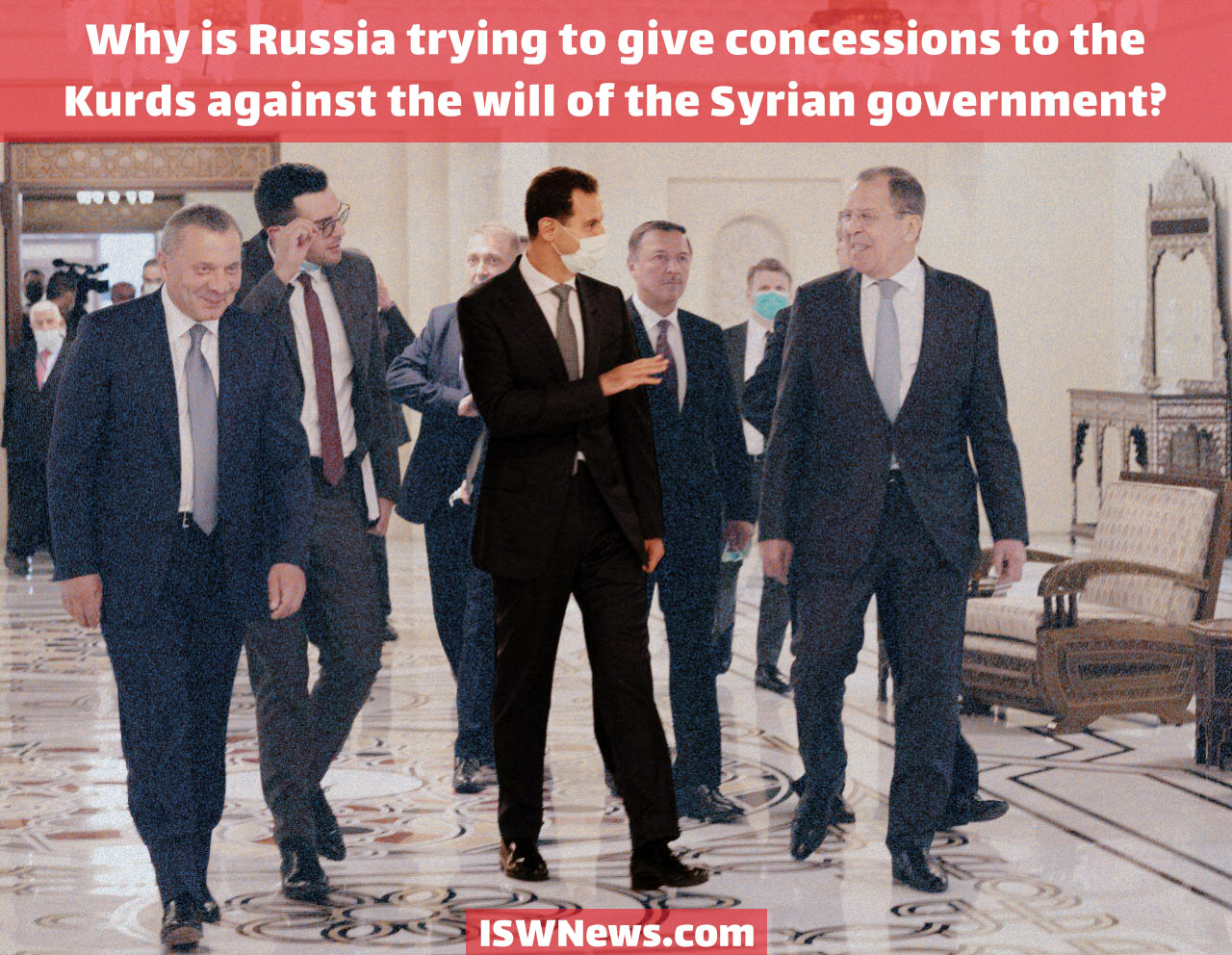
    Why is Russia trying to give concessions to the Kurds against the will of the Syrian government?

    Since the beginning of the Syrian crisis, Russia, as a permanent member of the Security Council, has played a positive role in resolving the crisis. Until 2015, which was the time of Russia’s military intervention in the US-led war against Syria as one of the most important members of the Axis of Resistance, the role of this permanent member of the Security Council was merely to veto US and European resolutions against the Damascus government. Russia in cooperation with China has vetoed six of the seven Security Council resolutions against Syria since the crisis began in early 2011.

    Russia’s influence, however, increased dramatically after it entered the arena of the Syrian crisis in 2015, and in addition to the political sphere, it also extended to the military and economic spheres. There are various reasons for Russia’s involvement in the Syrian crisis, including the existence of a Russian naval base in the Syrian port of Tartus, confrontation with the US monopoly system, economic benefits including the activities of Russian oil and gas companies before the crisis in Syria, and Russia’s efforts to explore for gas in the Mediterranean to compete with competitors such as; Turkey, Israel, Greece and Egypt for exporting to Europe, as well as turning Syria into an economic gateway to the Middle East.

    Russia’s entry into the political and economic processes of Syria after the crisis subsides, preserving the structure or Bashar al-Assad?

    Now that the crisis has subsided and sovereignty has been established, the important challenge for the Syrian government and its allies is to rebuild and build political processes to unite to overcome the economic and political crisis. Russia is trying to play an effective role at this time as well.
    In this period, unlike during the war, Russia has commonalities with the Westerners, and that is the emphasis of both sides on the implementation of Resolution 2254, which in 2015 was not vetoed and approved by the Security Council, unlike other resolutions. The subject of this resolution is the creation of a political process in Syria for the transition period and the formation of a new constitution and political structure.
    The biggest weakness of this resolution is that it does not mention the fate of Bashar al-Assad.
    Russia also seems to agree with the policy of maintaining structure and changing the individual in order to attract capital for the reconstruction of Syria and to make a deal with the West. This is exactly the opposite of Iran’s position, which is to emphasize the preservation of Bashar al-Assad as a symbol of resistance and unity in Syria despite political reforms. Russia’s position was also reflected in the recent visit of a high-level delegation to Syria, emphasizing the need to hold elections under the new constitution, which, of course, was opposed by the Syrian government.

    Efforts to become international mediators and oil deals, most important Russian incentives to resolve Bashar al-Assad dispute with Kurds

    Another issue that Russia is trying to resolve in the Syrian political process by playing the role of mediator is the differences between the Syrian government and the Kurds. After the crisis in Syria began, the Kurds tried to secede from Syria and form an independent government, using the weakness of the government as well as US support; This issue was reduced to the formation of an autonomous region after the Turkish invasion and the lack of US support and support from the Syrian army. In fact, the Kurds realized that they could not survive without the support of the Syrian government. After the disappointment of the United States, the Kurds turned to Russia to solve their problems with the Syrian government and gain concessions from it, so that they might be able to use its influence in the Syrian government to gain concessions in the autonomous region.

    In this regard, a week before the Russian delegation’s visit to Syria, two Syrian Kurdish parties traveled to Moscow and signed an important five-point agreement there. The agreement, which was ratified by Russia, emphasizes the creation of a decentralized political system (creation of autonomous regions), work on Resolution 2254, the entry of Kurds into the Syrian constitutional negotiations, and the integration of Kurdish forces into the Syrian army. The agreement was one of the main points of Lavrov’s meetings with Bashar al-Assad and Syrian Foreign Minister Walid Muallem. Why Russia is trying to resolve the differences between the Kurds and the Syrian central government by granting them concessions does not seem to have a complicated answer. One of the reasons for this is the existence of oil resources in the Kurdish regions, which Russia has also signed agreements with the Syrian government to explore and extract, but due to the presence of the Americans, it is not possible to implement these agreements. In fact, the Russians are trying to drive the United States out of the region and gain economic benefits by making peace between the Kurds and the Syrian government.

    Russia is also trying to become an influential and trusted mediator in the world by resolving such issues politically. Another reason that can be mentioned in this issue; Russia’s efforts to build trust with the West to cooperate with Russia’s policies include efforts to rebuild Syria. In fact, Russia sees this as a concession to the West that they are willing to invest in Syria in return.
    So far, Russia has not been able to succeed due to the opposition of the Syrian government, but it remains to be seen whether in the future, with increasing economic pressures and in the absence of a cohesive economic and political presence of an important ally such as Iran, Bashar al-Assad’s government will be able to resist Russian policies or not.

  • Latest Updates on Karabakh Clashes, 30 September 2020 (Map Update)

    Latest Updates on Karabakh Clashes, 30 September 2020 (Map Update)

    – Azerbaijani media claimed that Azerbaijani forces had destroyed the Armenian S-300 air defense system, which had been moved from Yerevan to Stepanakert area. On the other hand, Armenian sources denied this claim. Azerbaijani media have not yet published any video or image to prove this claim.

    – Proclaims by both side on imposing heavy casualties:
    Armenia and Azerbaijan claimed to impose heavy damage and loss to other side’s forces and armored vehicles, whiles these numbers are clearly exaggerated.
    Azerbaijan defense ministry claims that 2,300 Armenian soldiers are killed and injured, 130 tanks and AFVs, 200 artillery and batteries, 25 air defense systems, 6 command post, 5 ammo warehouse, 50 anti tank guns and 55 vehicles of Armenian army were destroyed. Armenia defense ministry claims that 790 Azerbaijani forces killed and 1,900 injured, and 7 helicopters, 137 tanks and AFVs and 72 drones of Azerbaijan were destroyed.

    – Latest updates on conflicts in Fuzuli area, south of Nagorno-Karabakh, are controversial. Azerbaijan claims to have advanced to Fuzuli town but Armenia rejected. No reliable image has been released by Azerbaijan from advances in south of Fuzuli.

    – In the last three days, Turkish planes flights to Baku have increased. One of these flights was a direct flight from Tripoli, Libya to Baku, and there are speculations that Turkey’s Syrian mercenaries transferred from Libya to Azerbaijan. In recent months and days, the transfer of Turkish mercenaries from northern Syria to Azerbaijan and the publication of images of their presence on social media has become viral.

    – Based on field information from Idlib and Aleppo, the death of 9 Syrian forces on the Karabakh fronts has been confirmed. This is the first time that the statistics of Turkish mercenary casualties in Azerbaijan are published. Assuming this information is correct, the presence of Syrian militants on the front lines of the conflict in Nagorno-Karabakh is confirmed.

    – According to the Armenian Ministry of Defense, Armenian forces destroyed 12 Azerbaijani tanks in the last 24 hours.

    – Heavy bombardment of the positions of the Armenian forces in Hardut by the Azerbaijani artillery.

    – According to the video published by the Ministry of Defense of Azerbaijan, 4 tanks of the Armenian army were targeted by Azerbaijani suicide drones.

    – Heavy clashes continue on the Terter-Madagis-Talesh axis in the north of the Nagorno-Karabakh region between the forces of Armenia and Azerbaijan.

    – Iran’s defense systems shot down another drone near Aslanduz inside Iran.

    – According to the Azeri media, the pilot of Armenian warplane, which was shot down yesterday, managed to eject and was captured alive by Azerbaijani forces.

    Click to see the full size map
  • Rocket attack on US and PJAK positions in northern Iraq

    Rocket attack on US and PJAK positions in northern Iraq

    According to the latest news from local sources, three rockets hit the base of the PJAK terrorist group in the Gardehchal area and two more rockets hit the positions of the American terrorist forces near the Erbil International Airport.

  • Latest Updates on Yemen 29 September 2020

    Latest Updates on Yemen 29 September 2020

    1- Marib
    Following Ansar Allah operation toward Ablah-Abdiyah road, areas Marwah, Sanah, Nud, Nasib and Nashah heights were liberated from Saudi-led coalition. Cutting this road has a great impact on liberation of Abdiyah district.

    2- Saudi coalition air strikes:
    Saudi coalition warplanes bombed Sarwah district 7 times, Rahbah district 9 times, Maheliyah district 2 times, Madghal district in Marib province 2 times and Khab and Shaaf district in Al Jawf province 3 times, in the last 48 hours.

    3- Al Hudaydah
    Saudi coalition forces violated ceasefire in the province 396 times in the last 48 hours.

    4- Saadah
    – Ansar Allah and Saudi-led coalition conflict in areas Kasarah and Hemad, north of Saadah. Saudi coalition warplanes bombed these areas four times.
    – Saudi coalition artillery shelled border area Raqu in Munbah district, three civilians martyred and five injured.

  • Latest Updates on Afghanistan, 30 September 2020

    Latest Updates on Afghanistan, 30 September 2020

    1- Abdullah Abdullah traveled to Pakistan to meet with Pakistani officials.

    2- The United States sent 700 troops to Afghanistan on a nine-month mission to replace its forces. (Under US-Taliban agreement, all US troops must leave Afghanistan by May 2021.)

    3- Uruzgan:
    Local authorities in Uruzgan reported the displacement and migration of thousands of residents of the province to Daikundi and Shiran areas, following the intensification of Taliban attacks.
    The Taliban have recently increased their attacks on Dehrawad and Gizab.

    4- Ghazni:
    – One of the commanders of the local forces in Qarabagh district was martyred by the Taliban on the Kabul-Ghazni road.
    – Three civilians were killed when a rocket fired by the Taliban hit a residential area in Ghazni city.

    5- According to local Afghan sources, 50 Taliban prisoners that were released lately, have been killed after returning to the battlefield.

    6- Faryab:
    Three government forces were killed during Taliban attacks on security checkpoints in the district of Maimana and Shirin Tagab.

  • Latest Updates on Karabakh Clashes, 29 September 2020 (Map Update)

    Latest Updates on Karabakh Clashes, 29 September 2020 (Map Update)

    – Clashes continue in the southern axis of Nagorno-Karabakh around Fuzuli between Azerbaijani and Armenian forces. The Armenian army claims to have regained all the lines lost yesterday, but Azeri field sources denied this.

    – The Ministry of Defense of Azerbaijan announced the destruction of 4 tanks of the Armenian forces on the Fuzuli front.

    – Heavy clashes on the axis of Agdarreh (Martakert) and Madaghis-Talesh in the north of Karabakh region:
    During the recent clashes between Azerbaijan and Armenia on the Martakert and Madagis-Talesh axis, the bodies of 30 Azeri forces have been transferred to the rear. 13 of the dead are members of the army and members of the border guards and the Azerbaijani army. Another 15 are residents of the Talesh area who generally lost their lives in infiltration operations. Recent operations are based on infiltration of Armenian lines, and commandos have a special role to play in these operations.
    The exact number of casualties of Armenian forces on this front has not been published yet.

    – A Sukhoi 25 fighter jet of the Armenian army was shot down by a Turkish F16 fighter jet. The Ministry of Defense of Armenia confirmed the incident and announced that the pilot of this fighter jet had been killed.

    – According to the Ministry of Defense of Armenia, the damage to the Republic of Azerbaijan since September 27, 2020 has included the destruction of 82 vehicles, 1 aircraft, 4 helicopters, 49 UAVs and 80 armored vehicles.

    – UAVs of the Republic of Azerbaijan targeted a bus in the town of Vardenis in Armenia. Armenia has emphasized will retaliate with an appropriate response.

    – Azerbaijani artillery heavily bombarded the positions of the Armenian forces in Martuni (Khojavand).

    – Armenian air defense systems shot down an Israeli Hermes 900 UAV belonging to the Azerbaijani army near Khojaly.

    – The Armenian army claimed to have shot down an Azerbaijani Antonov An-2 light military aircraft.

    – An unidentified drone crashed in the skies of Malekan city in East Azarbaijan province of Iran. Some news sources claim that the drone belongs to the Army of the Republic of Azerbaijan.

    – The Army of the Islamic Republic of Iran has sent heavy military equipment to the border areas of northwestern Iran. This measure has been taken to prevent possible attacks by neighboring countries and to ensure the security of Iran’s northern borders.

    – According to the Azerbaijani “AzTV”, the Pakistani ambassador met with the President of Azerbaijan Ilham Aliyev while supporting the Azerbaijan military operation in the Karabakh and stated that he would do his best for the victory of Azerbaijan. Elham Aliyev also praised the deployment of troops from Pakistan and Turkey, calling them friendly and brotherly countries.
    Large numbers of Pakistani troops are said to be waiting to enter the battlefield behind the battle lines. Although Azeri sources exaggerate their number to 40,000, the presence of 5,000 people who entered the country from Lankaran and Baku airports has been confirmed.

    Click to see the full size map
  • Armenian fighter jest shot down

    Armenian fighter jest shot down

    The Armenian Ministry of Defense confirmed the news and announced the death of an Armenian pilot.
    Some news sources have claimed that the Armenian warplane shot down by an Azerbaijani MiG-29 and some sources said that it was a Turkish F-16.

    Armenian officials have previously threatened Turkey with the use of Sukhoi-30 fighter jets and the 9K720 Iskander missile system if it interferes in the war with the Republic of Azerbaijan.

  • The Emir of Kuwait passed away

    The Emir of Kuwait passed away

    Sabah Al-Ahmad Al-Jaber Al-Sabah was 91 years old and has been in power in Kuwait since 2006.
    His successor is his half-brother Sheikh Nawaf, known as the oldest crown prince in the world.

  • Takfiris in Azerbaijan?! + Video

    Takfiris in Azerbaijan?! + Video

    Shortly afterwards, a foreign journalist posted a photo on his Twitter account titled “Hamza Brigade” forces on the way to Azerbaijan”, which shows a group of Takfiri gunmen on a plane. The publication of domino-like images of the constant flight of Turkish planes to the Republic of Azerbaijan, the announcement of the directive banning the transfer of militants to the Republic of Azerbaijan by the “322nd Battalion Command of the Free Syrian Army” and some protest tweets by Takfiri figures on the subject further strengthened speculation about the veracity of Takfiri presence in the Republic of Azerbaijan.

    Although due to the internet outage in the early hours of yesterday in the Republic of Azerbaijan, not many pictures of the region’s interactions were published even by the state media, but in the final hours, the release of a video of fighters sent to the Karabakh front line in Horadiz caused a great deal of controversy. Because these images are very similar to the events of previous years in Syria and Iraq.