Category: Central Asia – Pacific

  • Tajikistan Increases Border Posts With Afghanistan

    Tajikistan Increases Border Posts With Afghanistan

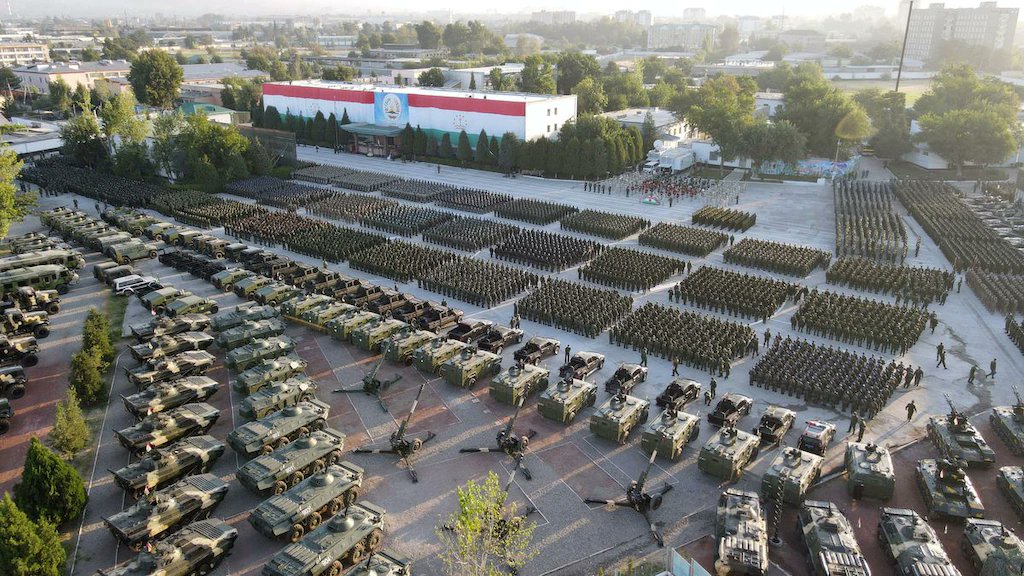
    Khairuddin Osmanzadeh, the chairman of the Center for Strategic Research under the president of the republic of Tajikistan emphasized that after the Taliban’s takeover of Afghanistan, security threats from the south have increased; So, in order to ensure the security and control of the southern borders, the country has strengthened and increased the army posts in the south.

    While emphasizing the continuation of Tajikistan’s economic cooperation with Afghanistan, Osmanzadeh asked Taliban to form a comprehensive government and respect the rights of women in the field of work and education in Afghanistan.

    It should be noted that the Taliban government also reciprocated the common borders with the country of Tajikistan in the provinces of Badakhshan, Takhar, Kunduz and Balkh by deploying the , Omari, Sarkh and Badri battalions consisting of thousands of foreign fighters (Jamaat Ansarullah Tajikistan, Tehreek Taliban Pakistan and East Turkestan Islamic movement) has strengthened

    It should be noted that the Taliban government has also strengthened the common borders with Tajikistan in the provinces of Badakhshan, Takhar, Kunduz and Balkh by deploying Badri and Surkh battalions, Red Unit and suicide squads consisting of thousands of foreign fighters from Tajikistan Jamaat Ansarullah, Pakistani Tehreek-e-Taliban and Eastern Turkistan Islamic movement.

  • Ukraine Conducts Third Drone Attack On Moscow In A Week (Video)

    Ukraine Conducts Third Drone Attack On Moscow In A Week (Video)

    According to the Ministry of Defence of the Russian Federation, Ukrainian drones tried to attack some targets in capital Moscow early this morning (August 1, 2023). 

    Two drones were destroyed over the areas of Naro-Fominsk and Odintsovo in Moscow and the third drone was shot down by electronic warfare, and as a result of the operation, the third drone hit one of the towers of Moscow.

    The building had also been attacked by Ukrainians two days ago. 

    The air-strike is the third drone attack by Ukraine on Moscow in the past ten days, but it has not resulted in severe casualties and damage.

    Ukraine’s goal of repeating such attacks is to transfer more insecurity and threats into the Russian soil; so, to this end, Moscow seems to be the best target to pursue the objective.

    The moment the Ukrainian drone hit a building in Moscow
    The moment the Ukrainian drone arrived in Moscow
  • Over 250 Killed, Injured In Terrorist Attack In Bajaur

    Over 250 Killed, Injured In Terrorist Attack In Bajaur

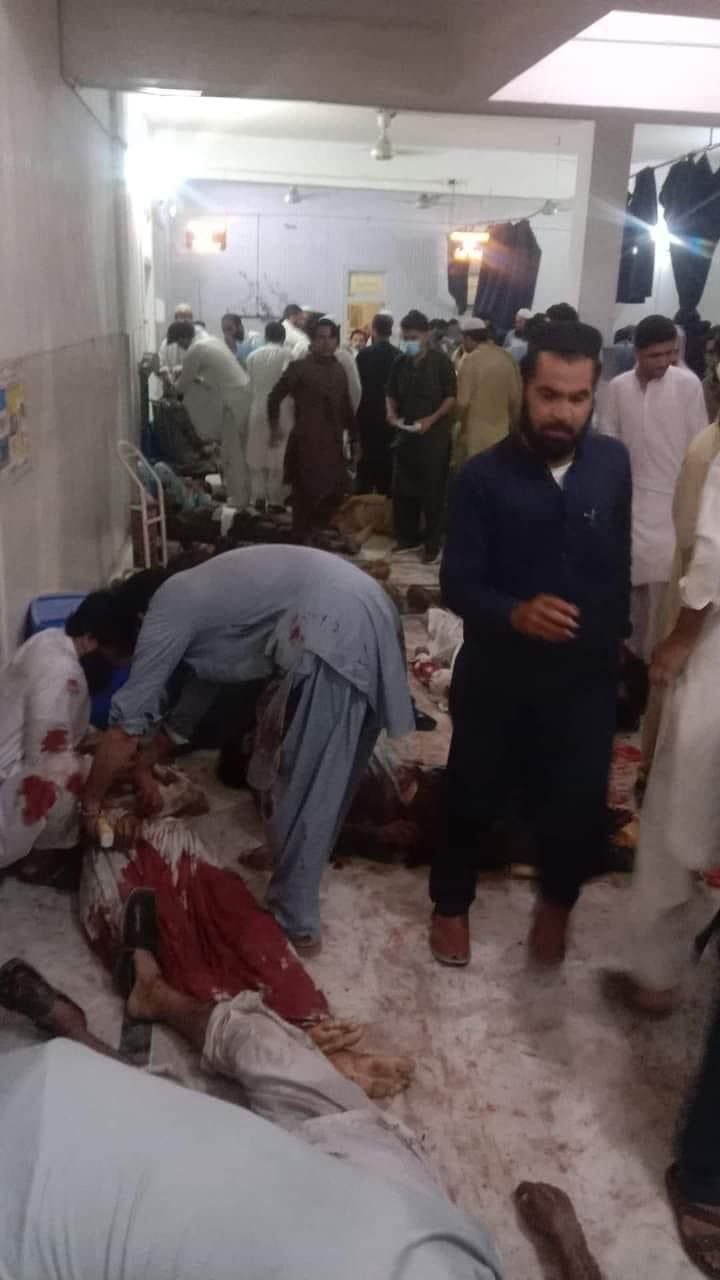
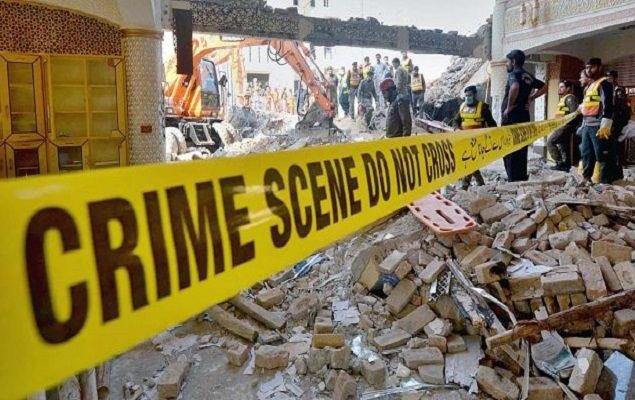
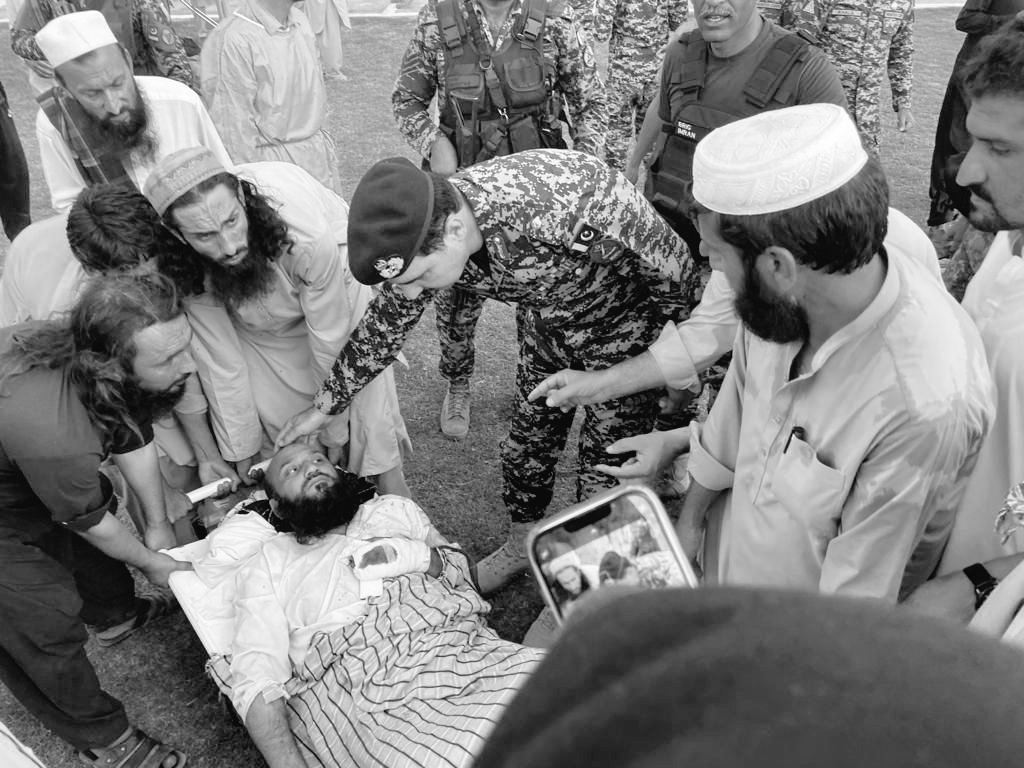
    ISWNews Analysis Group: Following a terrorist attack at a public rally of the Jamiat Ulama-e-Islam Pakistan party, which is led by Maulana Fazlur Rehman, in Bajaur District of Malakand Division of Khyber Pakhtunkhwa province in Pakistan, 40 people, including Maulana Ziaullah Jan Haqqani who is one of the senior leaders of the Jamiat Ulama-e-Islam Pakistan party, were killed and more than 200 other civilians were injured.

    Senior Pakistani officials and figures have condemned the terrorist attack.

    Zabihullah Mujahid, spokesman for the Taliban caretaker government in Afghanistan, also strongly condemned the terrorist attack at the rally of supporters of the Jamiat Ulama-e-Islam Pakistan party in a statement and described the act as a crime against humanity.

    Despite media speculation against Tehreek-e-Jihad Pakistan and even the ISIS terrorist group, none of these groups has yet claimed responsibility for the terrorist attack.

    Moreover, some local and anti-government sources in Pakistan believe that such attacks have been orchestrated by the Pakistani army’s intelligence agency dubbed the Directorate-General for Military Intelligence of Pakistan with the aim of creating tension and separation among religious sects in the country as well as diverting the conflicts to Afghanistan.

    The moment of the explosion in the gathering of Jamiat Ulama Islam in Bajaur district
  • Updates On Russian, Ukrainian Clashes In Western Front Of Severodonetsk, Zaporizhia (Map)

    Updates On Russian, Ukrainian Clashes In Western Front Of Severodonetsk, Zaporizhia (Map)

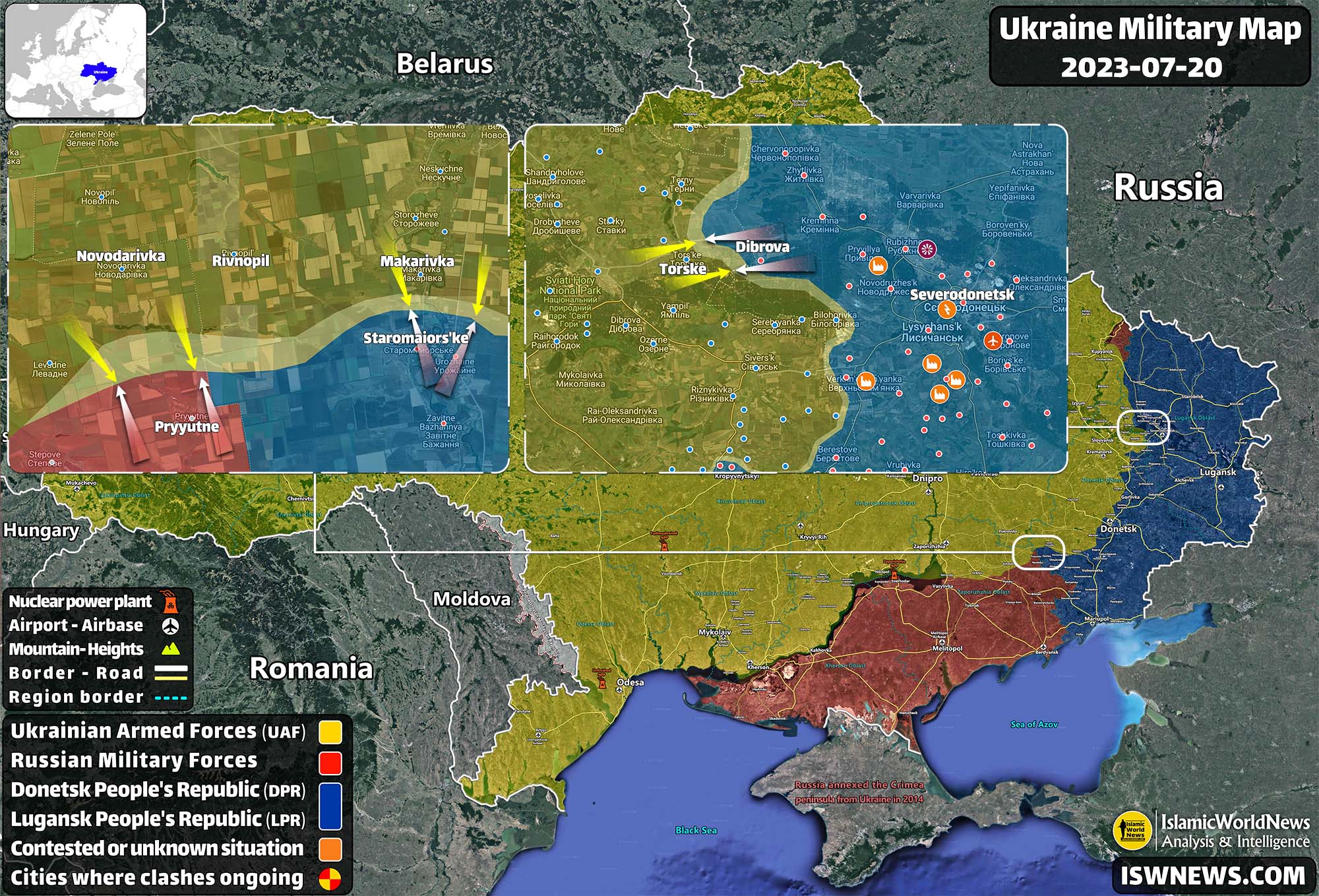
    The Russian armed forces made partial advances in the west of the Dibrova region in recent days and reached the northern regions of Tors’ke village, and they even entered this village from the north; but later, following heavy counterattacks by the Ukrainian army, they were forced to retreat to the outskirts of Tors’ke.

    At present, sporadic clashes and artillery shellings continue between Russian and Ukrainian forces. In general, the Russian forces are in a defensive position on the northern axes of Donetsk and Luhansk oblasts, and such attacks and advances are carried out to reduce the pressure of the Ukrainians’ attacks.

    However, the situation is different on the Zaporizhia front. On this axis, the Ukrainian forces are in an offensive position and have made partial advances in some areas in recent weeks.

    Following the attacks and advances of the last few weeks of the Ukrainian forces in the south of Velyka Novosilka, the Ukrainian forces intensified their attacks on Pryyutne and Staromaiors’ke settlements to break down the resistance of the Russian army on this axis and resume their advances; thus, they are carrying out daily sporadic and sometimes heavy attacks; but the Russian military forces are still resisting despite suffering casualties and damages.

    Sporadic clashes and artillery attacks continue on the Goliapole, Orikhiv and Kamianske axes. In recent weeks, the village of Piatykhatky near Kamianske has been one of the main points of conflict between Russian and Ukrainian forces. Currently, Russian forces retreat from Piatykhatky and this area is under Ukrainians’ control.

    Generally, Russia’s superiority in artillery and air power over Ukraine remains the main factor, which leads to the failure of most Ukrainian attacks in several fronts. In fact, Russia enjoys much stronger arms logistics, and aids from the US and Europe to Ukraine has not yet changed the balance of power in the Russia-Ukraine conflict.

    It is also worth mentioning that the scale of Ukraine’s attacks against Russia’s logistics lines has recently decreased significantly, and the Russians can more easily rebuild their defense lines.

    Interactive map

    Click to view full size
  • Top Commander Of Tehrik-E Taliban Pakistan Assassinated In Eastern Afghanistan

    Top Commander Of Tehrik-E Taliban Pakistan Assassinated In Eastern Afghanistan

    ISWNews Analysis Group: On July 13, unidentified gunmen assassinated Qari Mohammad Dawezi, the highest field commander of the Tehrik-e Taliban Pakistan (TTP) and one of the close associates of leader of the (TTP) Omar Khaled Khorasani, in Sharan city, the center of Paktika province located in eastern Afghanistan.

    Qari Mohammad Dawezi, known as Mohammad Ibrahim, comes from the Kurram District of ​​Khyber Pakhtunkhwa province and is an important field commander of the Pakistani Taliban Movement.

    He is trusted by the leader of the group and is also a member of the leadership council of the terrorist group Jamaat-ul-Ahrar Pakistan.

    Read more: Tehrik-i-Taliban Pakistan And The Jamaat-ul-Ahrar Group

    Mia Jafar and Qari Qadim were also his two brothers who were killed in Taliban clashes with US/NATO forces in Afghanistan.

    The Pakistani government set a prize of one million Pakistani rupees for providing any information about his hideout.

    It should be noted that the Taliban government has not commented on the killing of Qari Muhammad Dawezi, the commander of the Tehrik-e Taliban Pakistan in Paktika province.

    Dawezi was probably assassinated by order of Pakistan’s Inter-Services Intelligence (ISI) with the aim of retaliating a terrorist attack on an army base by elements of the Afghan Taliban group or other factions opposed to him in the Tehrik-e Taliban Pakistan.  

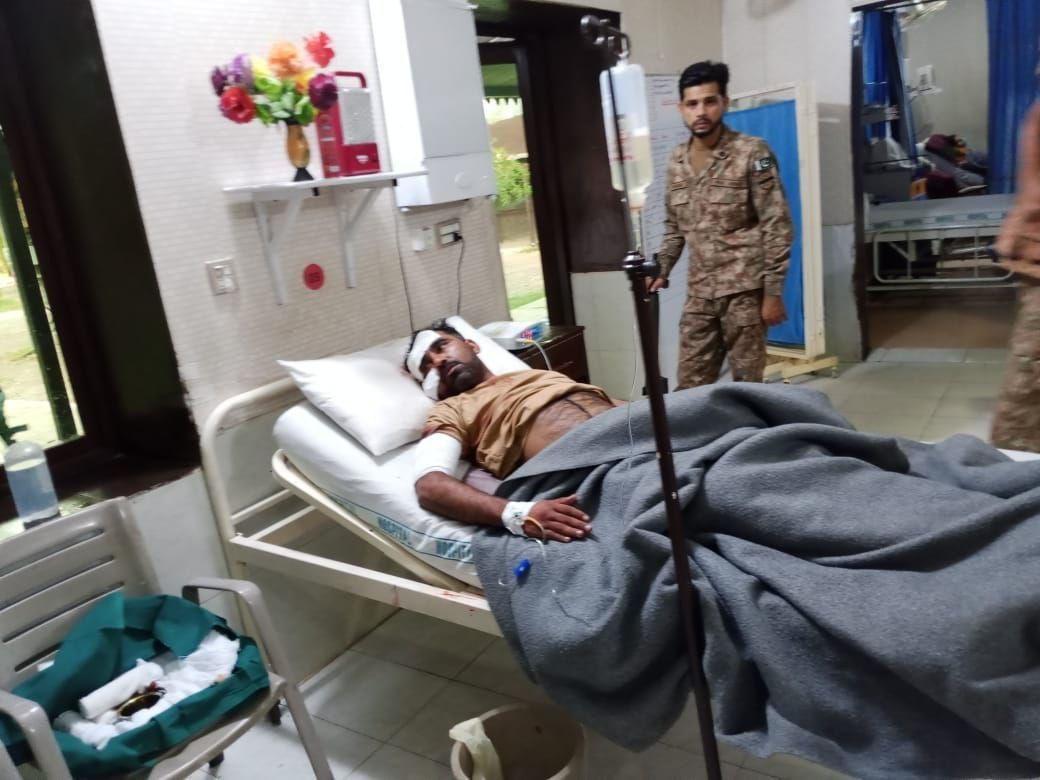
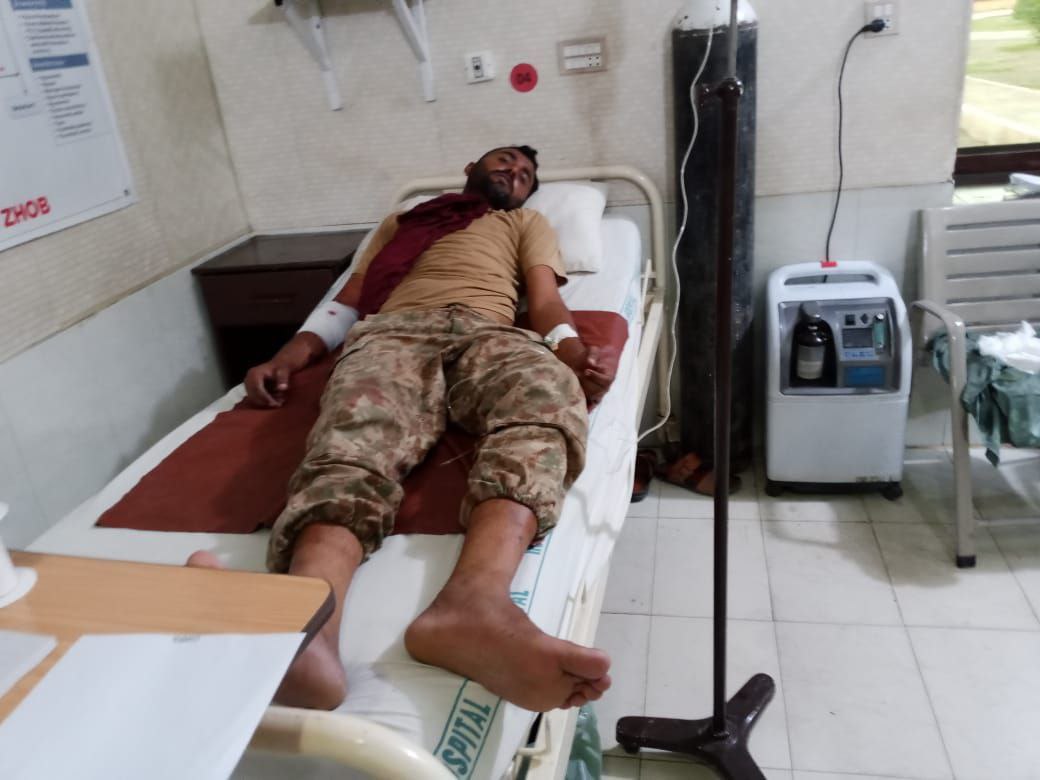
    General Asim Munir Ahmed Shah HI, Chief of Staff of the Pakistani Army, threatened militants from Pakistan’s Taliban Movement and other terrorist groups on Afghan soil that they would take revenge on them during a visit to the wounded personnel from an armed attack by the Jihadi Movement of Pakistan (TJP) on an army base in Balochistan province on July 12.

    Read more: Identification Of Formation And History Of Activities Of Tehrik-E-Taliban Pakistan

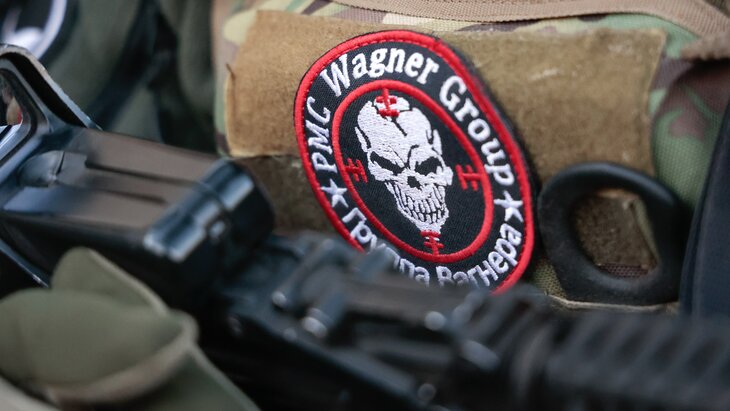
  • Putin Says Wagner Group Does Not Exist

    Putin Says Wagner Group Does Not Exist

    While attending a technology fair in Moscow, Putin was asked whether Wagner will continue operating as a combat formation.

    Putin said: “Well, PMC Wagner does not exist; We don’t have a law on private military companies. So it simply doesn’t exist. The group exists, but legally it does not. It’s a separate issue, related to legalization, that needs to be taken up by the State Duma and the government. A complicated question.”

    Led by their chief Yevgeny Prigozhin, Wagner fighters staged a mutiny on June 23 and attempted to advance towards Moscow. The mutiny ended the very next day, June 24, with an agreement brokered by Belarusian President Alexander Lukashenko. Under the agreement, many of the group fighters signed contracts with the Russian Ministry of Defense and the rest left for Belarus.

    Earlier this week, Kremlin spokesman Dmitry Peskov confirmed that Putin had met with 35 members of Wagner on June 29, several days after the group engaged in an armed rebellion. Putin was asked about the meeting.

    “I don’t have a version,” the Russian president replied. “You or NATO may have a version. I have what actually happened.”

    According to Putin, he wanted to meet with Wagner commanders who had fought honorably, more than with Prigozhin, though he was present as well.

    “At the meeting I gave an assessment of what they did on the battlefield, and what they did during the events of June 24,” Putin said. “Third, I showed them the possible variants of how they could continue their service, including in combat. That is all.”

    Putin added that he offered the men gathered at the Kremlin to continue their military service under the same commander they had served with for the past 16 months, known by his call sign “Grayhair”. While many of them nodded, Prigozhin spoke up on their behalf and said they did not agree.

    In a related development, the Russian MoD announced on July 12 that Wagner had surrendered more than 2,000 pieces of military hardware to the military. The ministry said in a statement that the transfer process is going “according to plan” and is nearing completion.

    The hardware handed over by Wagner included hundreds of heavy weaponry pieces, including main battle tanks of various types, multiple rocket launcher systems, self-propelled and towed artillery, anti-aircraft systems, and other combat vehicles.

    Dozens of combat vehicles transferred by Wagner “have never been used in a combat environment,” the ministry noted in its statement. The group also surrendered over 2,500 tons of ammunition of different types as well as around 20,000 firearms.

    The equipment is currently being transferred to rear field sites for maintenance, the ministry said, adding that it will be transferred to Russian military units for its “intended use”.

    The crisis provoked by Wagner has clearly come to an end. The group’s presence in Russia will likely dissolve in the near future as its fighters sign contracts with the Russian MoD, leave to Belarus or simply return to their civilian lives.

    Source: SouthFront

  • Shia Communities Of Parachinar, Takfiri Tribes Reconcile

    Shia Communities Of Parachinar, Takfiri Tribes Reconcile

    Five days after heavy attacks by Takfiri tribes and militant groups against Shia communities in the villages of Pawar, Boshra Bangash, Dandar, Khar Kalay and Balish Khel located in the Parachinar town, the mediation by the local tribal council (Jirga-e-Qaumi) consisted of 30 elders from Shia and Sunni tribes in the Kohat, Orakzai and Hangu regions led to a ceasefire and a five-article peace treaty was signed on July 14.

    According to the peace treaty between Shia and Takfiri tribes in Parachinar town, all fronts and trenches of the warring parties will be handed over to the Pakistani army and every party, which violates the ceasefire, will not be forgiven.

    Furthermore, in case of violation of one of the clauses of the peace treaty, the violating party will be fined 120 million Pakistani PKR.

    The conflict between Shia and Takfiri tribes kicked off on July 9, and three days later.
    Following the arrival of more than a thousand Taliban militants from Afghanistan and other Takfiri groups from eastern border regions of Afghanistan into Kurram District, the clash was accompanied by an increase of attacks by Takfiri groups to most Shia-populated areas in Parachinar town.

    As a result of the attacks, 14 Shia people, including several children, were martyred.

    Read more: Siege Of Shia Muslims Tightened In Parachinar

  • Second Fatal Raid By Tehreek-E-Jihad Against Pakistan Army In Balochistan + Video

    Second Fatal Raid By Tehreek-E-Jihad Against Pakistan Army In Balochistan + Video

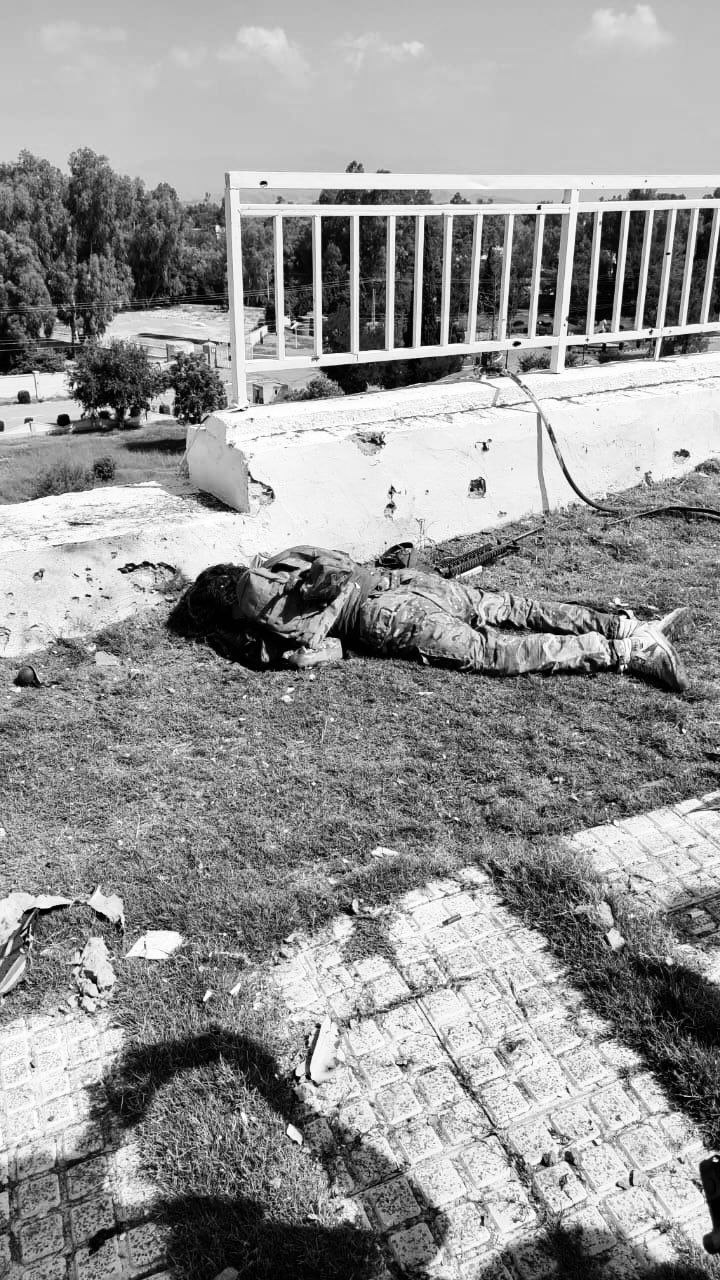
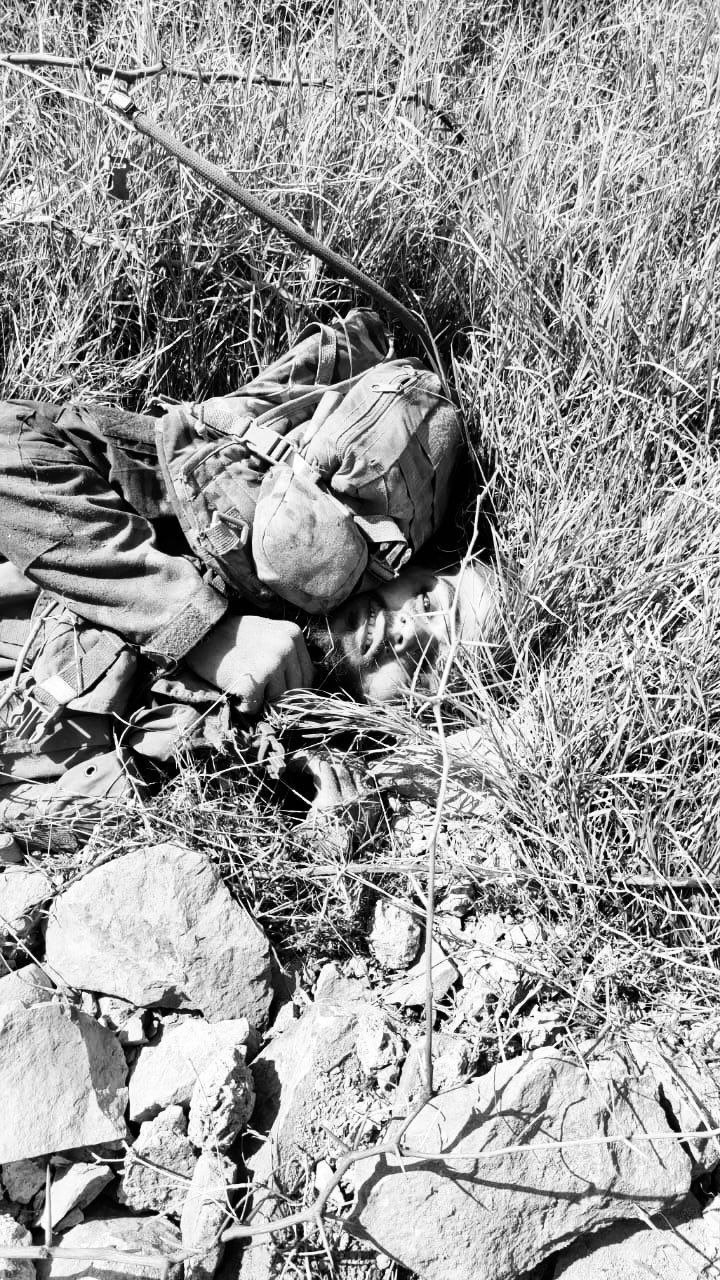
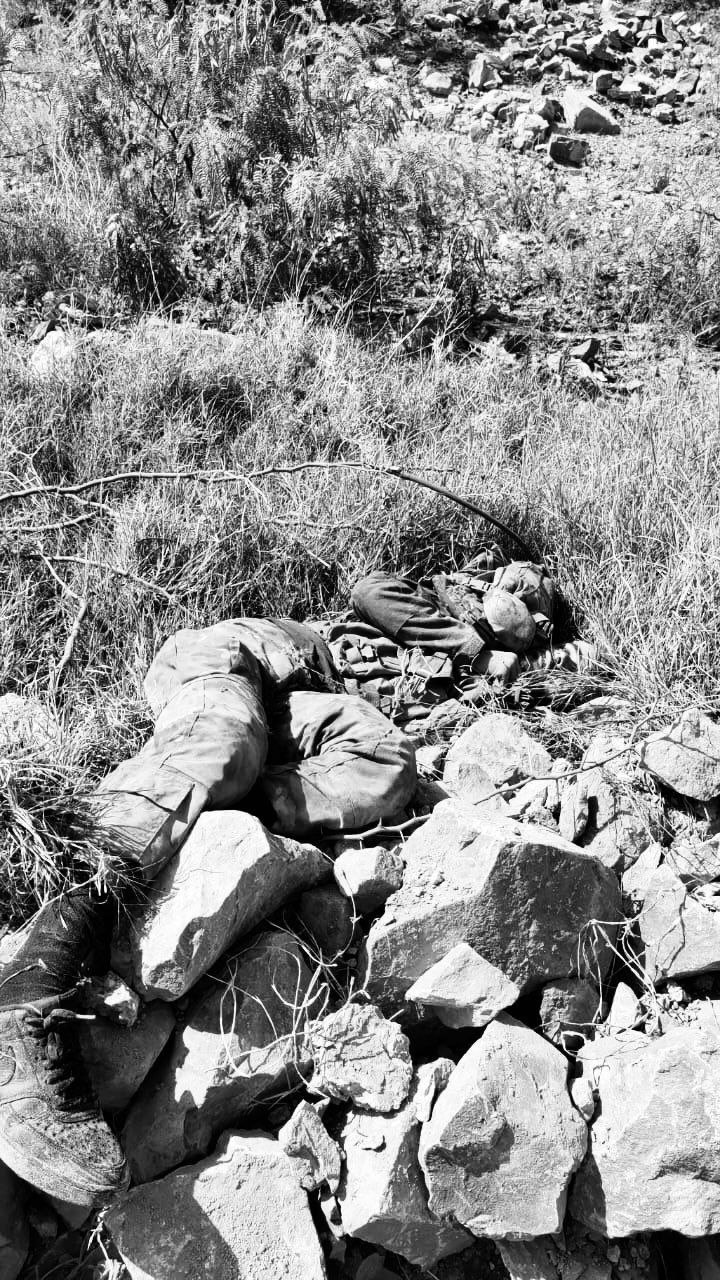
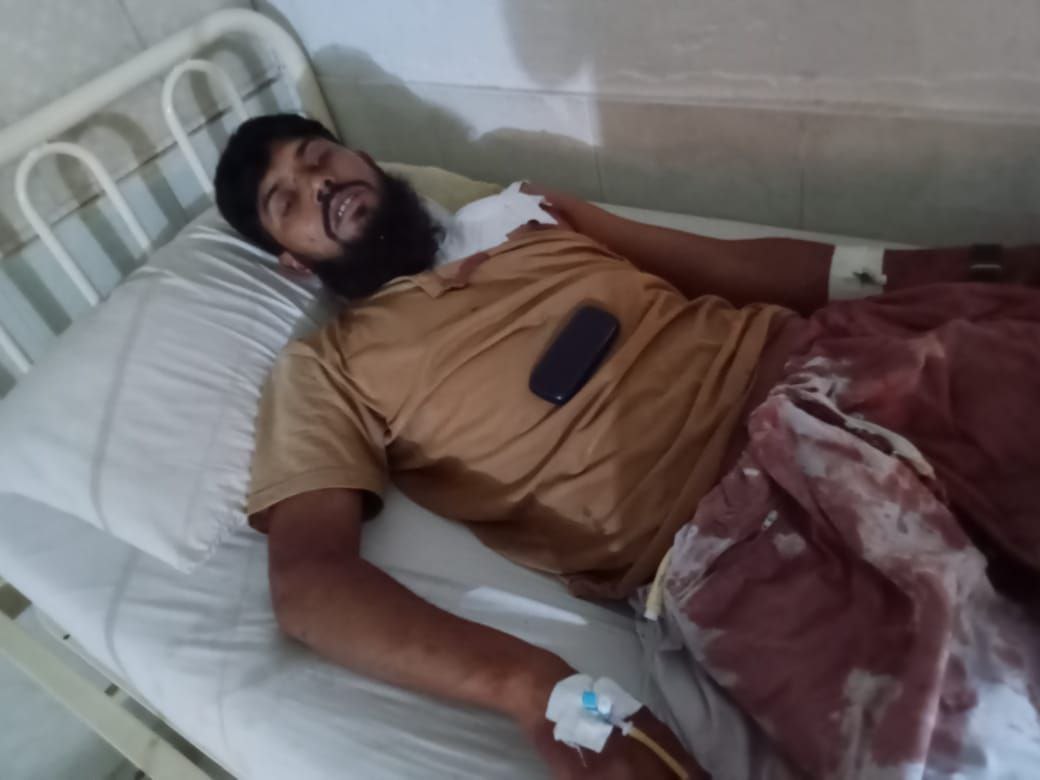
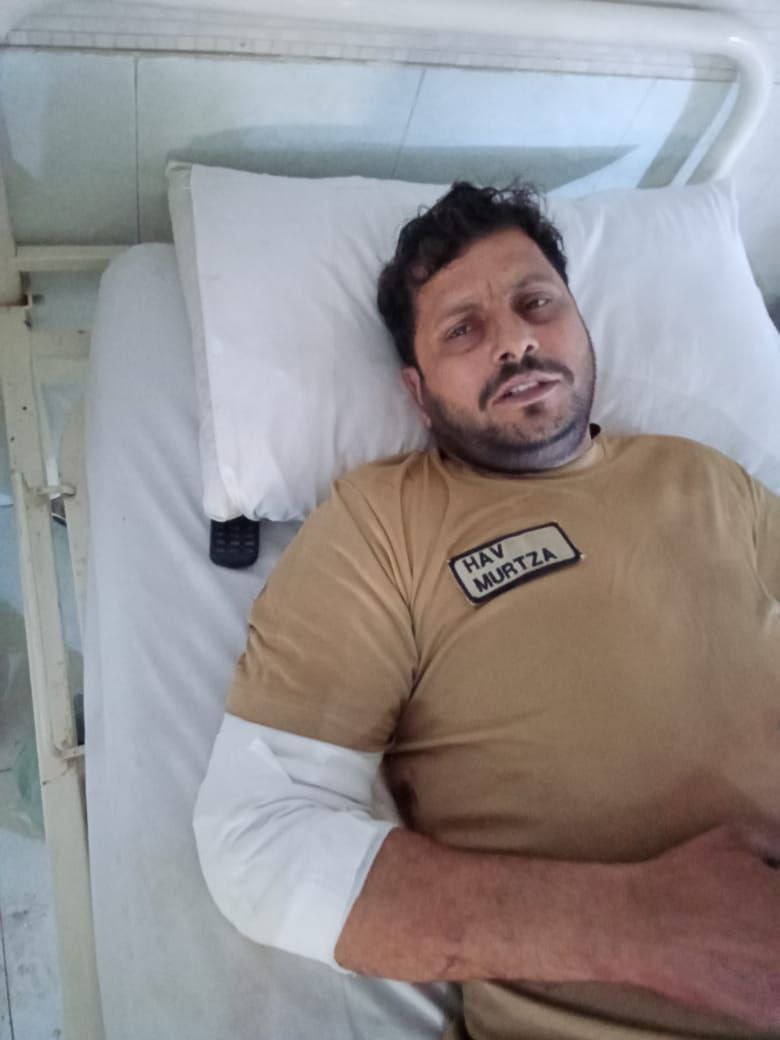
    ISWNews Analysis Group: As a result of the attack by militants of the Tehreek-e-Jihad Pakistan (a subsidiary of the Tehreek-e-Taliban Pakistan) on a Pakistani army base in the Zhob area of Balochistan province, 29 Pakistani soldiers and 5 militants of Tehreek-e-Jihad Pakistan were killed and wounded.

    This is the second lethal raid by militants of Tehreek-e-Jihad Pakistan (TJP) on a Pakistani army base in Balochistan province in less than four months.

    On May 12, militants of the group also assaulted a border military base of the Pakistani army in the town of Muslim Bagh, located in the Killa Saifullah District of Balochistan province, killing more than 30 Pakistani soldiers. During the raid some six militants from Tehreek-e-Taliban were also killed.

    Video: Clash of TJP militants with Pakistan Army
  • Siege Of Shia Muslims Tightened In Parachinar

    Siege Of Shia Muslims Tightened In Parachinar

    ISWNews Analysis Group: In continuation of the armed conflicts between Takfiris and Shia tribes in Parachinar town, hundreds of armed Taliban militants from Afghanistan as well as other Takfiri groups crossed the border areas of Mirzaki, Mangal Karkin and Mangal Aryon in Dand Aw Patan district of Paktia province to the Shia-populated area of ​​Pewar in the western parts of Parachinar town, the center of Kurram Agency, which is located in Kohat Division of Khyber Pakhtunkhwa province.

    Takfiri terrorists, who are mostly militants from groups affiliated to the Taliban both in Afghanistan and Pakistan, besieged the Shia-populated area of ​​Pewar from four sides, and attacked the area twice in less than 12 hours using light and heavy weapons. It seems that they are likely to be Lashkar-e-Jhangvi and al-Qaeda terrorist organizations, with approximately 1,000 to 1,500 armed members.

    A number of attacks by Takfiri terrorists on Shia tribes have also been reported in Karkala and Balish Khel regions.

    According to local sources, since the onset of the armed clashes between Takfiri groups and Shia tribes, at least 12 people have been killed and 42 others injured.

    Parachinar conflicts – click to view in full size

    It should be noted that recently the Tehrik-e-Taliban Pakistan (TTP) group denied involvement in the Parachinar clashes and its members’ involvement in this tension in a statement, emphasizing the existence of secret intelligence agencies behind these clashes.

    However, close relations between the Tehrik-e-Taliban Pakistan, an umbrella organization of various militant groups operating along the Afghan–Pakistani border has issued a statement, ruling out any involvement of the group and its members in the recent confrontations in Parachinar town.

    The TTP underlined that some intelligence agencies have been involved in the armed clashes; however, it denied accusations on the TTP militants’ close ties with the Taliban caretaker government and the dispatching of Taliban militants and other Takfiri groups from Afghanistan to Parachinar town. Despite the denial statement by the Tehrik-e-Taliban group, the likelihood of participation of the terrorist group’s elements in the Parachinar clashes has been increased to the highest possible level.

    Read more: 6 People Killed In Takfiri Terrorists’ Raid On Pakistan’s Parachinar

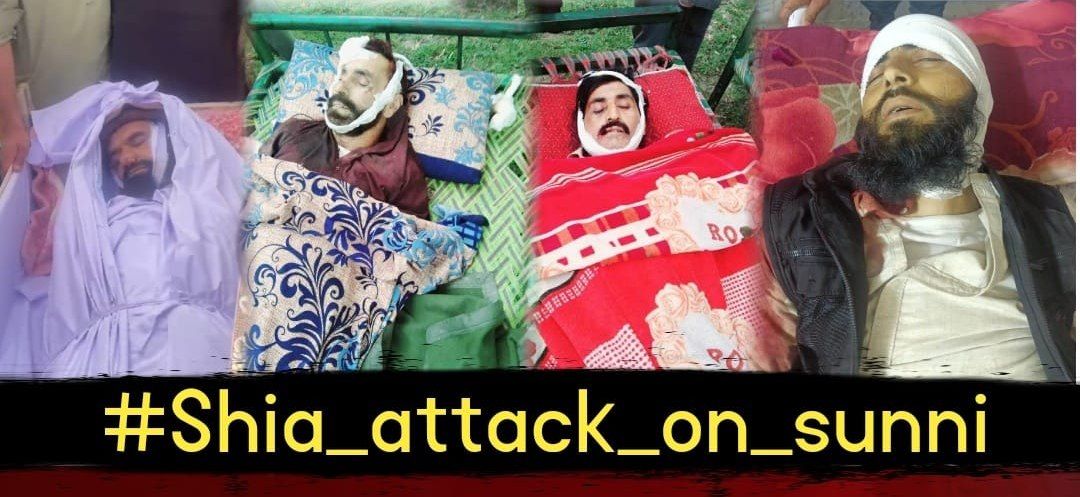
    A picture of the bodies of the Takfiris of Kurram Agency district who were killed in the counter attack of Parachinar Shiites. In their messages, the Takfiris have called Parachinar Shiites terrorists and claim that Shiites have attacked Sunni families! But in fact, they were the initiators of this conflict, and the published images prove the false claim about Shia attacks on Sunni women and children.
  • 6 People Killed In Takfiri Terrorists’ Raid On Pakistan’s Parachinar

    6 People Killed In Takfiri Terrorists’ Raid On Pakistan’s Parachinar

    ISWNews Analysis Group: As a result of the escalation of land disputes between the Shia and Takfiri tribes of Boshahreh Bangash and Dander, the Takfiris besieged the Shia village of Peywar at midnight on July 9 and targeted the residents of the village with light and heavy weapons, which ended up in the martyrdom of one of the residents of the village and injury of several others.

    Following the fatal incident, Shia militants also attacked Takfiri positions, where they killed and injured several Takfiri elements.

    Because of the increase in armed clashes, Taliban militants also crossed from mountainous regions around the Tri-Mangal border crossing in Paktia province in eastern Afghanistan and raided Shia areas in support of Takfiri militants.

    The Takfiri militants, due to unresolved land disputes and high casualties in their recent clashes with Shia forces, asked their elders to declare jihad (religious fight) against Shia people and seek help from the Taliban forces and Afghanistan.

    At present, the armed clashes have temporarily subsided (until the end of Monday, July 10) as a result of mediation by the local tribal council (Jirga-e-Qaumi).

    Nevertheless, there are serious concerns about the expansion of clashes between Shia and Takfiri forces as well as the resumption of crimes by Pakistani-Afghan Takfiri armed groups against Shia population in Parachinar, which is a small Pashtun town.

    On the other hand, the arrival of Zainabiyoun Brigade to defend Shia tribes in Parachinar can also add fuel to the fire of armed conflicts and be a strong reason for declaring jihad and sending Takfiris from the region to the town.

    Furthermore, the intervention of Pakistani-Afghan Takfiri militant groups in sectarian clashes in Kurram Agency would deal a devastating blow to Islamabad’s government and could be the opening of a sectarian confrontation in other parts of the country.

    Direction of clashes between Takfiris and Shiites of Parachinar in Kurram Agency – click to view in full size
  • Identification Of Formation And History Of Activities Of Tehrik-E-Taliban Pakistan

    Identification Of Formation And History Of Activities Of Tehrik-E-Taliban Pakistan

    In the early 1990s, Hafiz Muhammad Saeed and Abdullah Azzam, two of Osama bin Laden’s mentors, the leader of the Al-Qaeda terrorist group, created another terrorist group called Lashkar-e-Taiba, and Maulana Sufi Muhammad set up the Tehreek Nifaz Shariat-i-Muhammadi group in Pakistan. Members of the extremist group were sent to Afghanistan along with Al-Qaeda members to fight against the then Soviet Union.
    After the victory of the Mojahedin-e Afghan in Afghanistan, these groups found the opportunity to create military training bases on both sides of the Durand Line ( forms the Afghanistan–Pakistan border, a 2,670-kilometre international land border between Afghanistan and Pakistan in South Asia) and built dozens of training bases in those areas. The bases of extremist groups such as Lashkar-e-Taiba, Jaish-e-Mohammed and Al-Qaeda were located in the Muridke area of Lahore province, Pakistan, under the supervision of Pakistan’s Inter-Services Intelligence (ISI), which trained paramilitary forces and transferred them into Afghanistan.
    All members of these groups were involved in the conquest of Afghanistan, because of the fact that members of these groups had participated in jihad (fight) against the communist government of Afghanistan and had sacrificed for the success of the Taliban Islamic Emirate in the war-torn country. Eventually, in 2007 the foreign conquerors of the Afghan war, who were consisted of 13 Pakistani militant groups, reached a conclusion to unite and found Tehrik-e-Taliban Pakistan (TTP) umbrella organization.

    The examination and identification of the Tehrik-i-Taliban Pakistan movement is not possible without referring to the history of the Taliban in Afghanistan. Because on the one hand, these two groups are linked to each other in terms of political structure and beliefs, and on the other hand, their hideouts, human resources, spiritual and military leaders have close ties with each other along the Durand Line.

    The term “Taliban” was originally used to describe a political and ideological group that emerged in 1994 in the border town of Spin Boldak, Kandahar province, located in southern Afghanistan, having its roots in a Deobandi Islamic school of thought as well as the Wahhabi belief. They conquered the important city of Kandahar with a fatwa of jihad from their spiritual leader Mullah Mohammad Omar Mujahid and then, they set out for the city of Jalalabad and the capital of Afghanistan, Kabul, in a bid to overthrow the then communist government in the country.
    At a time when the Taliban were engaged in jihad to overthrow the communist government in Afghanistan and then, it clashed with the Mujahideen government composed of Tajiks, Hazaras, and Uzbeks, the tribal areas of Pakistan, including North and South Waziristan districts, were their safe route and arms supply line. Following the Taliban’s three years rule over Afghanistan and the terrorist attack in the United States on September 11, 2001, some Western countries led by the US and NATO kicked off invading Afghanistan with Pakistan’s green light. Simultaneously with the attack by the US and NATO forces on Afghanistan in 2001, radical members of the Afghan Taliban, including the Uzbek Taliban, the Islamic Movement of Uzbekistan (IMU), the Chechen immigrants, the East Turkestan Islamic Party, as well as several Arab members of the Al-Qaeda terrorist group took refuge in northern and northwestern Pakistan (North and South Waziristan districts).

    Pakistan’s cooperation with the US in attacking Afghanistan, along with former Pakistani Prime Minister Pervez Musharraf’s order to besiege Pakistan’s tribal areas and arrest Al-Qaeda fugitives despite coordination with tribal elders, turn into a headache for the Pakistani army.
    The Pakistani army entered South Waziristan District in 2003 after five decades and it continued the military operations to North Waziristan District in order to arrest Al-Qaeda members. The killing of tribal elders and spiritual figures in these areas by the Pakistani army led to the first clash between the Pakistani army and the Afghan Taliban, Al-Qaeda, Lashkar-e-Taiba, Jaish-e-Mohammed, and armed tribesmen from North and South Waziristan districts in 2004. Those clashes led to the withdrawal of the Pakistani army from Waziristan and the tribes took control of these areas.

    The failure of the plan to set up an Islamic government in Pakistan as well as the sectarian and ethnic structure, the educational system of religious schools based on Wahhabism sect, the dispatch of Pakistani jihadi forces to Afghanistan, economic and social disorder, especially in North and South Waziristan districts, foreign and domestic support by anonymous individuals and various groups are among the reasons for the formation of the Taliban group in Pakistan.

    However, the drone attack by the United States’ Central Intelligence Agency (CIA) on a religious school affiliated to Tehrik-e-Nifaz-e-Shariat-e-Mohammadi in Bajaur Agency (District) in 2206, which caused several casualties, was the main cause of the emergence of the Tehrik-e-Taliban Pakistan. For the reason that it prompted all armed and radical groups in Pakistan to declare jihad against the US and the Pakistani government.
    In 2007, numerous militants from 13 groups, including Mullah Nazir’s group in North Waziristan District, Tehrik-e-Nifaz-e-Shariat-e-Mohammadi led by Sufi Muhammad, Jaish-e-Mohammed, Lashkar-e-Taiba, Al-Qaeda, Afghan Taliban fugitives and other groups with different races led by Baitullah Mehsud from North Waziristan District founded the Tehrik-e-Taliban Pakistan. They declared their goal as defending Prophet Muhammad’s religion, fighting against the Pakistani and the US army, and establishing an Islamic emirate with the focus on the Pashtun people in Pakistan.
    In 2008, leader of the Afghan Taliban Mullah Mohammad Omar Mujahid dispatched a delegation led by Mullah Abdullah Zakir to Pakistan and asked for financial assistance from the Pakistani Taliban. Mullah Mohammad Omar Mujahid also asked the Pakistani Taliban to put aside their differences and to help him fight the US and NATO by sending troops.
    Baitullah Mehsud, Hafiz Gul Bahadur and Mullah Nazir who had a history of fighting in Afghanistan accepted the proposal of the leader of the Afghan Taliban and pledged allegiance to Mullah Mohammad Omar Mujahid; so, they formed a council of mujahideen union. However, this council did not last more than a year and did not have any specific performance.
    The clash between Tehrik-e-Taliban Pakistan and the army of the country was not very intense until 2007. But in 2007 to 2009, the volume of clashes intensified sharply. So, all military operations of armed groups against the Pakistani army from 2001 to 2007, which were about 30 operations and the volume of operations reached 269 attacks from 2007 to 2009. These clashes mostly took place in Khyber Pakhtunkhwa tribal areas and other border regions witnessed fewer tensions.

    The most important operation of the Pakistani Taliban can be considered the assassination of former prime minister and leader of the Pakistan People’s Party Benazir Bhutto. The assassination was carried out on December 27, 2007 by a suicide bomber named Karamatullah Bilal from Pakistani militants; he also had a history of membership in the Al-Qaeda terrorist group. After firing several bullets at Bhutto, he carried out a suicide operation and took the lives of 22 people, including Benazir Bhutto.
    However, Al-Qaeda denied any involvement in the suicide attack and eventually, Baitullah Mehsud, leader of the Pakistani Taliban, was identified as the first suspect in the assassination of Benazir Bhutto. In the following months, he was wanted by the government of Prime Minister Pervez Musharraf due to other terrorist attacks until he was killed in a drone operation by the US Central intelligence Agency (CIA) in North Waziristan in 2009.
    However, his death was not confirmed by the spokesman for the Tehrik-e-Taliban Pakistan and the cause of his death was stated as illness. Two days after the death of Baitullah Mehsud, the 42-member council of the Taliban appointed his deputy Hakimullah Mehsud as the leader of the group. He intensified jihadi operations against the army and government of Pakistan as well as the expanded attacks against Shia civilians. Then, he was killed in a drone attack by the US Central Intelligence Agency in North Waziristan District in 2013. After the death of Hakimullah Mehsud, the 42-member council of the Taliban also appointed Maulana Qazi Fazlullah Hayat as the leader of the Tehrik-e-Taliban Pakistan.

    The deadliest military operations of the Tehrik-e-Taliban Pakistan movement against the Pakistani army and government took place on December 16, 2014. In the attack, five members of the Pakistani Taliban entered the country’s Defense Ministry’s military university in Peshawar province, while wearing uniforms. As a result of the attack, 149 military students who were children of army soldiers were killed and 122 others were injured.
    After these attacks, the Pakistani army tried to enter into talks with the Tehrik-e-Taliban Pakistan movement. Following the first sessions of talks between government representatives and the TTP, Maulana Omar’s sect separated from the Tehrik-e-Taliban Pakistan movement to show their objection. At the end of 2014, Mehsud’s sect also announced its separation from the Tehrik-e-Taliban Pakistan movement and it established a branch of the Tehrik-e-Taliban in South Waziristan District. This separation dealt a heavy blow to the organizational structure of the Tehrik-e-Taliban Pakistan movement and even despite the joining of the Jamaat-ul-Ahrar group led by Omar Khalid Khorasani to the Tehrik-i-Taliban Pakistan movement, their situation did not improve much.

    Read more: Tehrik-i-Taliban Pakistan And The Jamaat-ul-Ahrar Group

    The most important operations against the Pakistani army positions can be considered as an attack on PNS Mehran Air Station in Karachi and a 15-hour-long clash with the military forces that resulted in the killing of 13 Pakistani soldiers and the destruction of several military aircraft. The second deadliest attack of the decade also took place in 2016. In this suicide attack, which was carried out by a member of Jamaat-ul-Ahrar terrorist group (a subsidiary of the Tehrik-e-Taliban Pakistan) at a ceremony honoring Christmas in an amusement park in eastern Lahore province, more than 70 Pakistani Christians were killed and injured.

    After Qazi Fazlullah Hayat was killed by the US forces in Kunar province in eastern Afghanistan and the second leader of the Tehrik-e-Taliban Pakistan movement Khalid Mehsud was killed by the American forces in Paktika province in Afghanistan in 2017, another commander of Tehrik-e-Taliban Pakistan named Noor Wali Mehsud from Mehsud tribe in South Waziristan District was appointed as the new leader of Tehrik-e-Taliban Pakistan movement.
    Noor Wali Mehsud was from Miran Shah town of South Waziristan District, who had studied religious lessons in Faisalabad area of Punjab province. He is one of the most radical leaders of Tehrik-e-Taliban Pakistan who participated in the war between the Afghan Taliban and the United Front or Northern Alliance (Ahmad Shah Massoud and …). After Noor Wali Mehsud was appointed as the leader of Tehrik-e-Taliban Pakistan, Mehsud’s sect also rejoined Tehrik-e-Taliban Pakistan movement after three years.

    Currently, Tehrik-e-Taliban Pakistan movement cooperates with various sub-branches militant groups throughout this country and foreign groups from the Haqqani Network to the Jaish ul-Adl. The active members of the group are estimated to be between 20k to 25k people, and 6 thousand of whom have been sent to help the Afghan Taliban.

    At the same time when the US forces withdrew from the war-stricken country of Afghanistan and the downfall of the Afghan government in Kabul on August 15, 2021, the Tehrik-e-Taliban Pakistan movement, which was under pressure from the Pakistani army, entered into talks with the government in Islamabad with the mediation of Sirajuddin Haqqani, leader of Haqqani Network.
    During these negotiations, representatives of the Tehrik-e-Taliban Pakistan movement demanded the implementation of the Islamic laws and traditions in Pakistan’s tribal areas as well as the release of prisoners affiliated to the Taliban sect, who have been arrested by the government forces. The requests were accepted by the Pakistani government and a short-term ceasefire was established following the negotiations. But shortly afterwards, the government in Pakistan did not take any action to implement the demands and then, the Taliban resumed their attacks and as a result of this situation, the attempts for reconciliations doomed to fail.

    In general, it seems that achieving a sustainable peace in Pakistan is a difficult path. Because the country’s society is still facing incorrect tribal cultures and the so-called Islamic government has not been able to meet the expectations and values of an “Islamic government” that was pursued by the groups such as the Tehrik-e-Taliban Pakistan movement. On the other hand, the Pakistani army has the first say in the country’s nationwide programs and their anti-terrorism plan has so far caused more than 18,000 casualties on the Tehrik-e-Taliban Pakistan movement and other groups. Given such conditions, talking about sustainable peace in Pakistan is nothing more than a slogan.

    Author: Ahmad Alavi, correspondent and analyst of Afghanistan and Central Asia
  • U.S. Drones Violated Russian-Syrian Drills Area, Almost Got Shot Down (Video)

    U.S. Drones Violated Russian-Syrian Drills Area, Almost Got Shot Down (Video)

    Russian fighter jets harassed American combat drones on an anti-ISIS mission over Syria, the U.S. military said late on July 5.

    “Earlier today at approximately 10:40 AM, Russian military aircraft engaged in unsafe and unprofessional behavior while interacting with US aircraft in Syria,” said Lieutenant General Alex Grynkewich, the US general responsible for air operations in the Middle East.

    According to Grynkewich, three MQ-9 drones were on a mission against ISIS targets when three Russian fighter jets began the harassment.

    The video published by the US CENTCOM

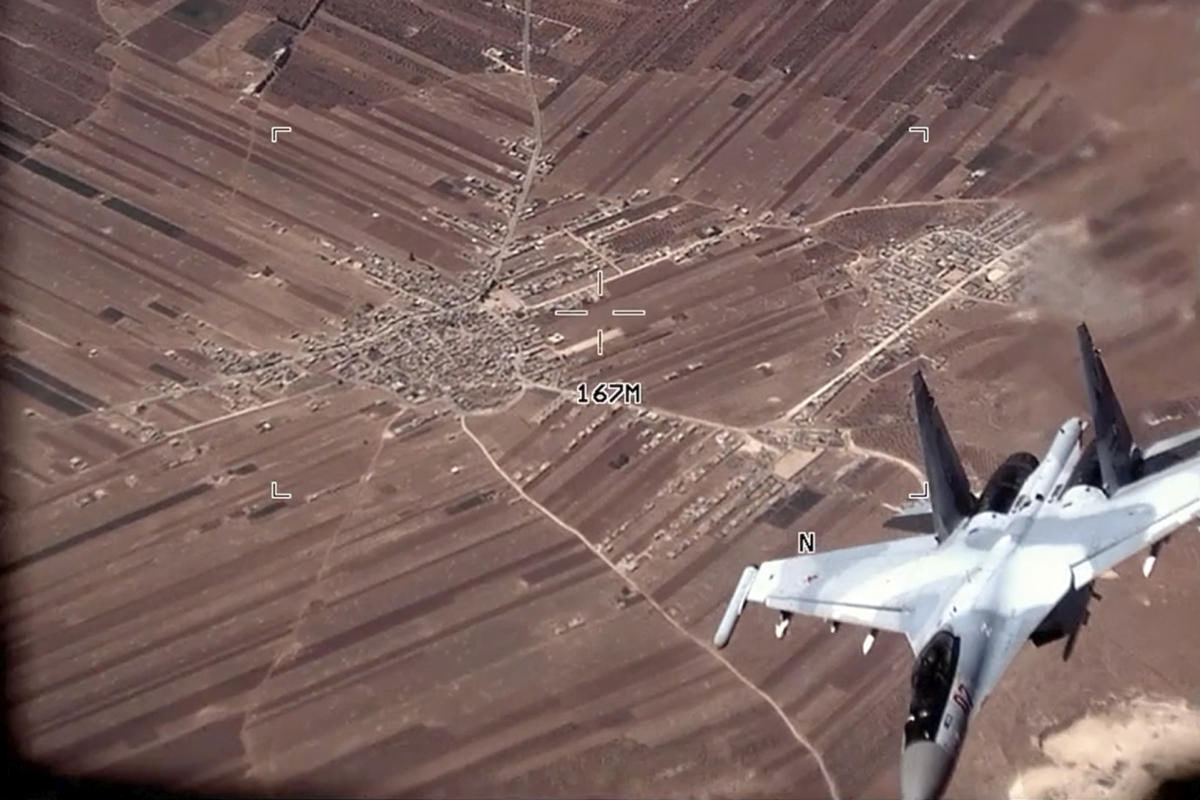
    Video footage released by the U.S. Air Forces Central showed Russian jets dropping multiple parachute flares in front of one MQ-9 , forcing it to conduct evasive maneuvers. One Russian pilot then positioned its fighter jet in front of a MQ-9 and engaged the afterburner, making it difficult for the drone to fly safely.

    “These events represent another example of unprofessional and unsafe actions by Russian air forces operating in Syria, which threaten the safety of both US and Russian forces,” Grynkewich said.

    The commander urged Russian forces in Syria to stop their “reckless behavior” and comply with standards of behavior expected of a professional air force “so we can resume our focus on the enduring defeat of ISIS.”

    Meanwhile, Rear Admiral Oleg Gurinov, deputy chief of the Russian Center for Reconciliation in Syria, said in a statement that U.S. drones flew over an area where joint Russian-Syrian drills five times in violation of flight safety protocols.

    According to the commander, the Russian side once again expresses concern over the violations of the protocols linked with the flights of the U.S.-led coalition’s drones.

    “During the day, twelve violations were reported, including five over an area that was closed for flights due to the joint Russian-Syrian drills in northern Syria. We remind that the Russian side bears no responsibility for the safety of flight of unmanned aerial vehicles, which were not agreed with the Russian side,” Gurinov said.

    The Russian and Syrian militaries launched joint aerial drills on July 5. The drills, which will go on for six days, will include actions by aviation, air defense forces and electronic warfare to repel air attacks. U.S. drones were likely spying on the drills, not conducting a mission against an ISIS target as the U.S. military claimed.

    Tensions between U.S. and Russian forces in Syria have been mounting since the start of the special military operation in Ukraine. Last month, the U.S. deployed F-22 Raptors from Langley Air Force Base to the Middle East as a part of efforts to expand operations over the war-torn country.

    Unlike Russia, the U.S. military presence in Syria is not sanctioned by Damascus. The country considers this presence to be an occupation.

    The U.S. attempts to expand its drone operations over Syria without coordinating with the Russian side will eventually lead to an incident.

    Source: SouthFront.org