Category: Central Asia – Pacific

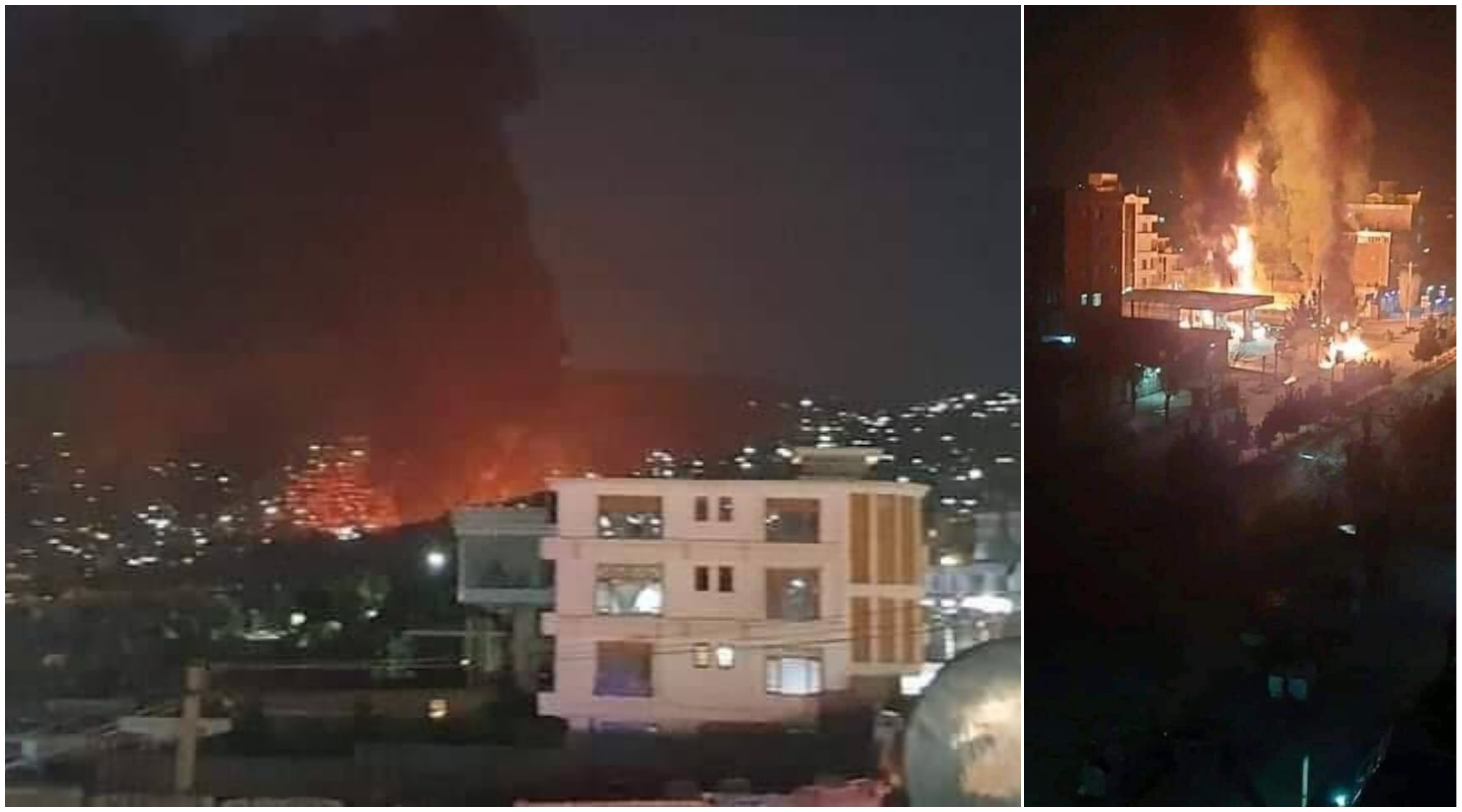
  • Terrorist explosion at Shia mosque in Kunduz + video

    Terrorist explosion at Shia mosque in Kunduz + video

    The ISIS terrorist group claimed responsibility for the terrorist attack by publishing a statement and a picture of its suicide bomber, Mohammad al-Uighuri. In the statement, ISIS stated that 300 people were killed in the attack.

    The blast tore through a crowded mosque in the city of Kunduz during Friday noon prayers, the highlight of the Muslim religious week. It was the latest in a series of ISIS bombings and shootings that have targeted Afghanistan’s new Taliban rulers, as well as religious institutions and minority Shiites since U.S. and NATO troops left in August.

    Earlier, on Wednesday, 6 October, an explosion in Afghanistan’s Khost city killed seven and wounded 15 others, reported Sputnik citing a source in security forces. The explosions across the country are coming at a time when Afghanistan is dealing with a socio-economic crisis amid Taliban rule after the group marched into the capital on August 15.

  • Chinese troops entered Bagram Airbase?!

    Chinese troops entered Bagram Airbase?!

    Local residents claim that spotlights of Bagram Airport runway were not turned on until Saturday night after the withdrawal of US and NATO troops, and this is the first time this has happened. Some residents also reported seeing Chinese troops around the base.

    Rejecting the news of the arrival of Chinese troops at the Bagram Airbase, Taliban Deputy Spokesman Bilal Karimi said that the troops of any country, including China, have no right to enter Afghanistan.

    Bagram is one of the largest military bases in Afghanistan with a wide range of facilities. The US and NATO troops evacuated the base on July 2 this year.

  • Heavy clashes between Taliban and ISIS in Kabul

    Heavy clashes between Taliban and ISIS in Kabul

    On Sunday evening, an explosion took place near the gate of the Eidgah Mosque in Kabul, where the mourning ceremony of the mother of Taliban spokesman Zabihullah Mujahid was being held, killing at least 12 people and injuring more than 30 others.

    After the attack, Taliban militants searched and discovered the hideout of the perpetrators of the attack, which, according to local sources, the hideout of the perpetrators of this terrorist attack was in the 17th district and the “Khair Khaneh” area.

    According to Taliban sources, three ISIS operatives were killed by the Taliban in the Khair Khaneh area. Clashes lasted for several hours.

    In recent days, ISIS has increased its attacks in the cities of Jalalabad, Kabul, Parwan, Kunar, etc. and is using the Taliban’s weakness in intelligence and security matters.

    Image: Taliban clashes with ISIS in Khair Khaneh area in Kabul city

  • Increased Russian air operations against ISIS

    Increased Russian air operations against ISIS

    In recent days, Russian air operations in the eastern deserts of Syria in the provinces of Homs, Deir Ezzor and southern al-Raqqa have increased dramatically. According to the latest field information, at least 20 ISIS members have been killed and many more wounded in more than 40 airstrikes in the past two days.

    Most airstrikes are carried out in areas such as the deserts around Ithriya, al-Rasafah, al-Sukhnah and the deserts around the city of Tadmur, as well as the eastern deserts of Deir Ezzor against ISIS gatherings, positions and hideouts.

    It is worth mentioning that so far, several clearing operations have been carried out by the Syrian army with the support of its allies in the desert areas of eastern Syria. Nevertheless, despite the efforts made, the threat of ISIS cells in the eastern deserts of Syria is still high, and we see attacks of ISIS against the personnel, armored vehicles and small posts of the Syrian army and the resistance forces in these areas on a weekly and monthly basis.

    Of course, this issue is not limited to the areas controlled by the Syrian government south of the Euphrates River, and the northern areas of the Euphrates River, where it is under constant surveillance by US and SDF forces, are not free of ISIS threats and witness daily and weekly movements and operations.

    In this regard, it seems that a special and long-term redesign and action plan is needed to clear the eastern deserts of Syria and to minimize ISIS activities in these areas; A plan to be implemented jointly by Iraqi and Syrian forces on both sides of the border.

    Click to see the full size map
  • Russian-Turkish dispute over the Idlib

    Russian-Turkish dispute over the Idlib

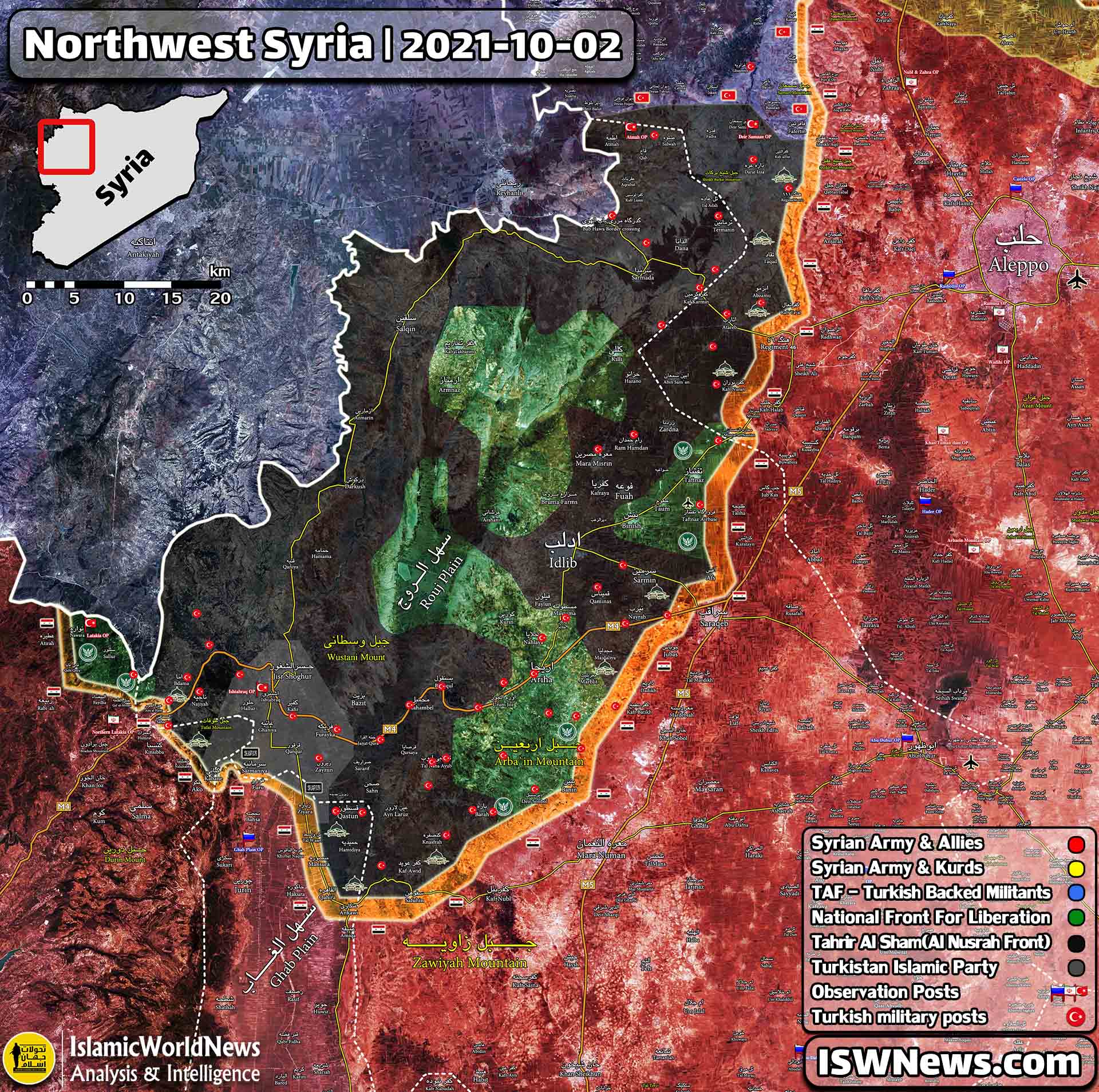
    A few days before Russian President Vladimir Putin met with Turkish President Recep Tayyip Erdogan in the Russian port of Sochi, Russian warplanes in a purposeful act bombed positions of Turkish-backed forces near the Turkish military posts in the Idlib region.

    The increase in Russian warplanes attacks on militant positions, and even near and around Turkish bases and checkpoints in Syria, is a clear warning to Turkey, and Ankara is well aware of this. Putin’s remarks during a meeting with Bashar al-Assad in the Kremlin show that Russia strongly opposes the continued presence of foreign forces in various parts of Syria, as well as the occupation of Idlib by militants. And this reinforces speculation about talks between Putin and Erdogan on the withdrawal of Turkish troops from Idlib and the cleansing of the province from the militants.

    On the other hand, in the past 48 hours, two well-equipped convoys of the Turkish army, including 20 vehicles carrying cement blocks and logistics equipment, entered the Syrian province of Idlib through the Kafr Lusin crossing and headed towards the southern areas of Idlib and the Syrian army contact lines.

    The differences between Russia and Turkey in the case of Idlib have caused the two sides to implement their plans and actions more quickly to put pressure on the other side. For this reason, it seems that the movements of different parties in the provinces of Idlib, Aleppo and Hama will increase more in the near future.

    The Turkish army is currently stationed in four observation posts and more than 50 military posts in western Aleppo and the Idlib region. Strengthening and increasing the number of these military posts by Turkey has become a challenging issue in the Idlib region. This issue, along with the continued presence of terrorist groups in the region, has made the future of the situation in northwestern Syria even more ambiguous and has dashed hopes for an end to the war in this part of Syria.

    Click to see the full size map
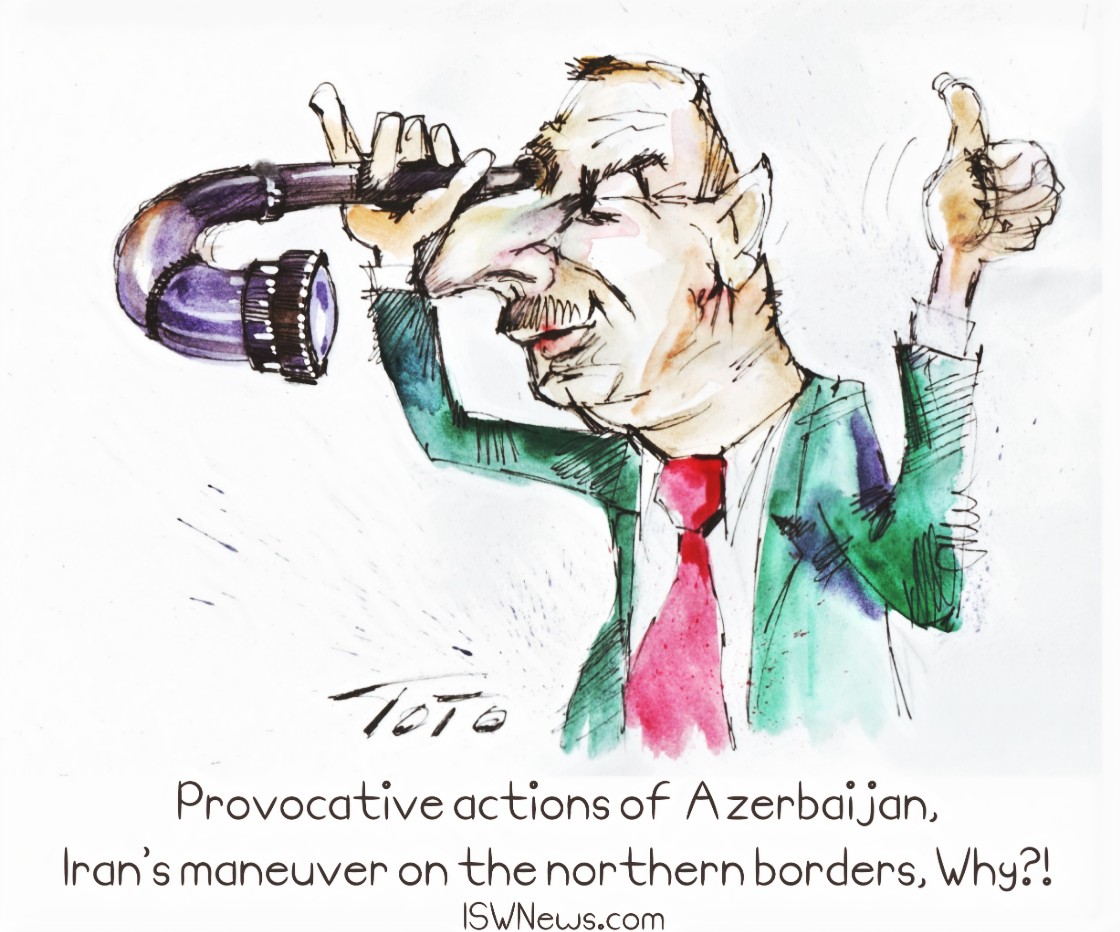
  • Provocative actions of Azerbaijan, Iran’s maneuver on the northern borders, Why?!

    Provocative actions of Azerbaijan, Iran’s maneuver on the northern borders, Why?!

    The joint military exercises of the Republic of Azerbaijan with Turkey and Pakistan in the last month, the interruption of the transit route of Iranian trucks and the arrest of their drivers and the sharp statements of the Azerbaijani officials against Iran are important issues in the Caucasus region.
    What are the goals of Aliyev and his main supporters (Israel and Turkey) in implementing this anti-Iranian project?

    The answer to this question is examined in several cases:

    1- The success of the Republic of Azerbaijan in the Second Nagorno-Karabakh War was due to the widespread support of Turkey and Israel, the will of the world powers, as well as the inability of the Armenian leaders. This victory has misled Aliyev and other officials in Baku to mistakenly have the illusion and feeling of power against Iran. Therefore, one of the reasons for these anti-Iranian actions of the leaders of the Republic of Azerbaijan is their misunderstanding of regional developments.

    2- The confrontation between the Republic of Azerbaijan and Iran is an unequal confrontation. Iran’s military and political power and position are in no way comparable to the Republic of Azerbaijan, even in the case of an alliance with Turkey and Pakistan. On the other hand, the countries of the region will not enter into tension with Iran because of Aliyev, and the harms of this tension far outweigh its benefits.
    We all know that there is always a political message behind military exercises. Exercise is more of a boast than a military threat, and it is done to prevent military conflict. The Republic of Azerbaijan’s recent exercises with Turkey and Pakistan also served as a warning not to interfere in the Zangezur issue, as well as to announce the support of countries in the region for Aliyev’s government against Iran.

    3- Israeli influence on Iran’s borders has always been an important strategy to counter Iran. Aliyev’s government has also entered into closer relations with Israel in recent years, and their debt volume has increased. Hence, the role of Israel in Aliyev’s rhetoric and their tensions cannot be ignored. Therefore, this tension is under the confrontation between the regions of Iran and Israel, and the choice of the name “Khaybar Conquerors” for the Islamic Republic of Iran’s drill on the northwestern borders of Iran is also a proof of this claim.

    4- The Republic of Azerbaijan opposes the general policy of Iran in the Caucasus region; And the Iran policy is the policy that pits “unity” against “separatism.”
    Iran, like Iraq, Yemen, Afghanistan and… opposes any changes in the borders of neighboring countries, including Armenia and the Republic of Azerbaijan. Iran also opposes Azerbaijan plot for the Zangezur area and its Zangezur Corridor, which jeopardize Iran’s economic interests. The detention of Iranian truck drivers on the Armenian border road is also an example of hostage-taking by Turkey and the Republic of Azerbaijan for the Zangezur corridor.
    In addition, it is said that the Republic of Azerbaijan, in cooperation with Turkey, intended to launch a surprise attack on the southern Armenian province of Syunik, which was thwarted by Iran’s allied policy, and the “Khaybar Conquerors” exercise is in line with this policy.


    In this regard, Baku’s actions can be seen as a multidimensional Zionist project, which includes: separatism (emphasis on the separation of Azerbaijani provinces from Iran), ethnicity (Pan-Turkism), security tensions (action against nuclear and political facilities), psychological and media operations, economic issues. (Affecting the economic relations between Iran and Armenia), etc.
    Given these circumstances, it must be said that if the weakness of Pashinyan and the Armenian authorities in the face of this project continues, their betrayal of Armenia is also certain, and Iran must act alone in the face of the Zionist project. However, considering the recent meetings between the Iranian and Armenian officials, the possibility of such an issue is low, and as the views of Iran and Armenia approach, we will see the opposite front turn to political talks.

    Given these circumstances, it should be said that if Armenia acts weakly against this project, Iran will not hesitate to confront the Zionist project and will take more active action. However, considering the recent meetings between the Iranian and Armenian officials and the approaching point of view between the two countries, we are witnessing the opposite front turning to political talks.

  • Bloody clashes between Taliban and ISIS in Kabul

    Bloody clashes between Taliban and ISIS in Kabul

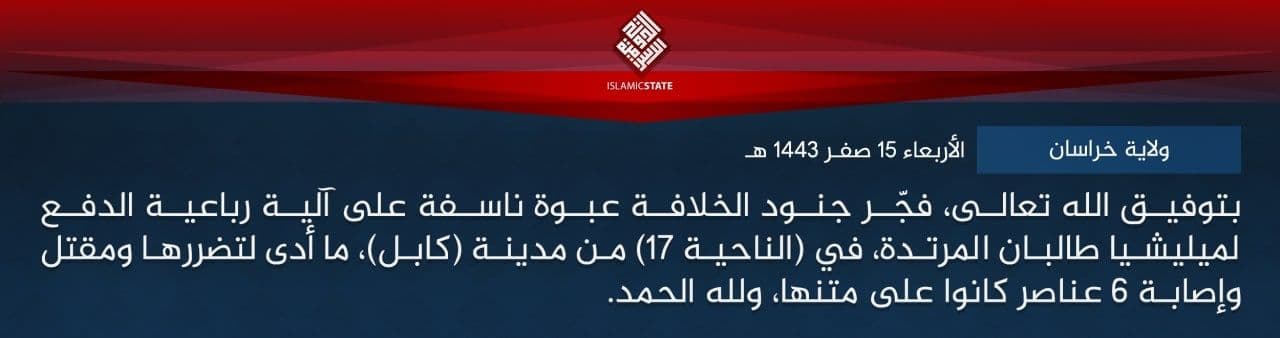
    A number of Taliban members were killed and wounded in a bomb blast on a Taliban military vehicle in the 17th district of Kabul yesterday. ISIS claimed responsibility for the attack, claiming that six Taliban members were killed and wounded in the attack.
    In response, the Taliban announced the identification of ISIS operatives and the killing of three people in Kabul Bazaar. Local sources claim that these people were shopkeepers in the bazaar and had no connection with ISIS.

    The attack was the fourth carried out by the ISIS terrorist group in recent days in Kabul and Nangarhar provinces of Afghanistan, killing and wounding a total of 22 people.

  • Latest Updates on Afghanistan and Pakistan, 19 September 2021

    Latest Updates on Afghanistan and Pakistan, 19 September 2021

    1- The United States has called on the United Nations to suspend sanctions on the Taliban for three months.

    2- Nangarhar:
    A roadside bomb blast on a Taliban vehicle in the city of Jalalabad has killed three people and injured one. In the past, ISIS has claimed responsibility for these attacks. This attack was probably also carried out by ISIS.

    3- Pakistan has announced a 40% reduction in exports to Afghanistan. This decrease is due to the closure of the Afghan banking system.

    4- The Pakistani Taliban in a statement rejected the government’s offer of amnesty and announced the continuation of struggle until the implementation of Islamic law in Pakistan.

    5- Pakistani Prime Minister Imran Khan in a tweet announced talks with the Taliban on the formation of an inclusive government involving Tajiks, Hazaras and Uzbeks.

  • Infographic: Statistics of casualties of world powers in Afghanistan

    Infographic: Statistics of casualties of world powers in Afghanistan

    The time period and losses are as follows:

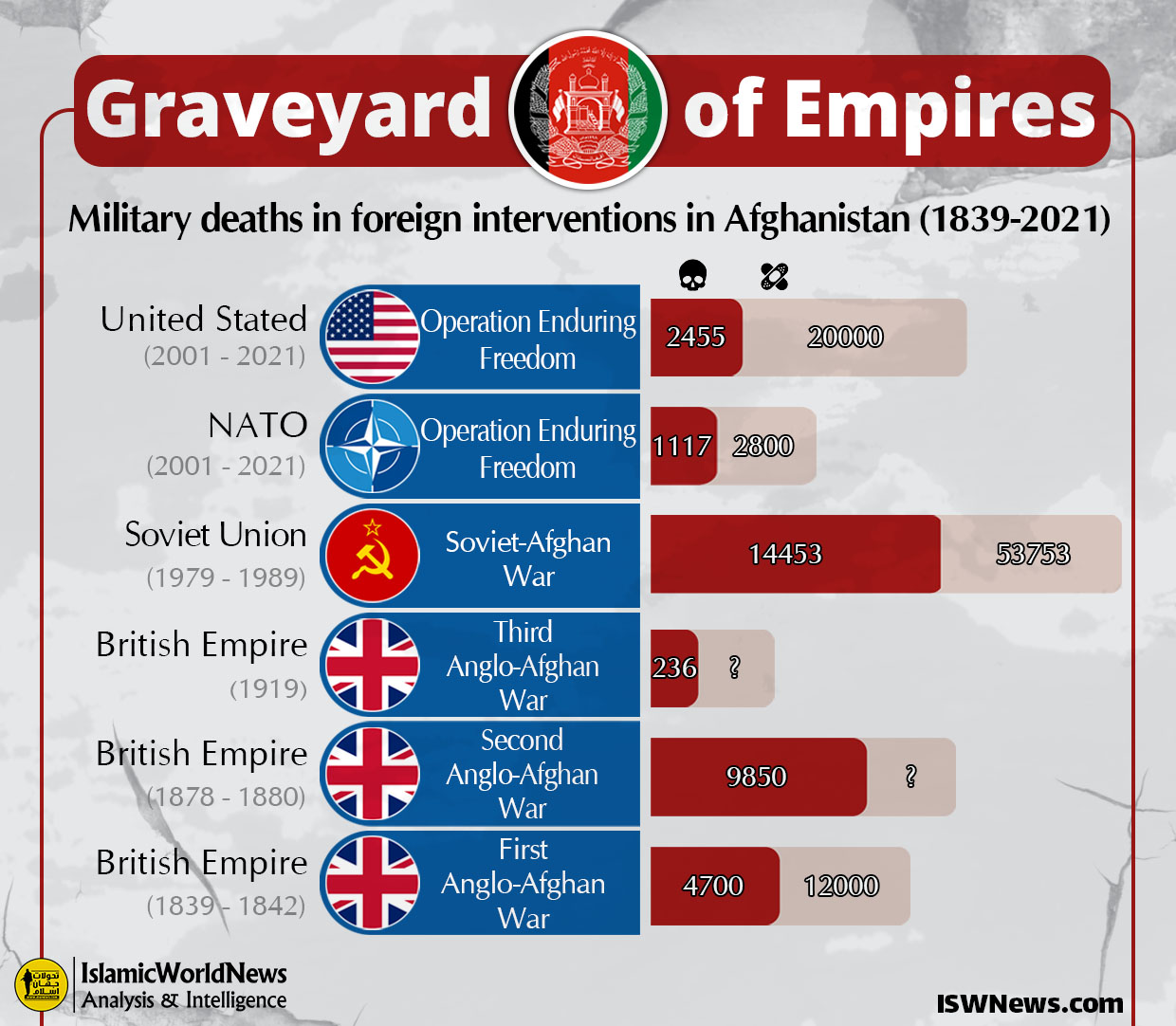
    1- The First Anglo-Afghan War: From 1839 to 1842, there was a battle between Shah Shujah Durrani and the British with Amir Dost Mohammad Khan Baloch (Barakzai), in which the British lost 4,700 troops and 12,000 were wounded. In this war, the British withdrew from Afghanistan.

    2- The Second Anglo-Afghan War: From 1878 to 1880, there was a war between Shir Ali Khan Barakzai and the British, which led to the consolidation of British control over areas in present-day Pakistan. The British casualties in this war are reported to be 9850.

    3- The Third British-Afghan War: It began in 1919 with the invasion of Amanullah Khan Barakzai and ended with the agreement of the two sides to recognize the independence of Afghanistan and the “Durand Line” as the border between India and Afghanistan. The British casualties in this war are 236 troops.

    4- The Soviet-Afghan War: This war lasted from 1979 to 1989. The casualties of the Soviet Union in this war are 14453 troops killed, 53753 troops wounded and 312 troops missing. The war eventually ended with the withdrawal of Soviet troops from Afghanistan.

    5- US and NATO invasion of Afghanistan: The US and NATO invaded Afghanistan under the name “Operation Enduring Freedom” and lasted from 2001 to 2021. The US casualties in this war are 2455 troops and more than 20 thousand troops are wounded. Also, 1,117 NATO troops were killed and more than 2,800 were injured.

    Click to see the full size image
  • Latest updates on Afghanistan, 15 September 2021

    Latest updates on Afghanistan, 15 September 2021

    1- EU parliament issuing a resolution regarding Afghanistan, demanded Ahmad Massoud invitation to session of the parliament and the Council of the European Union.

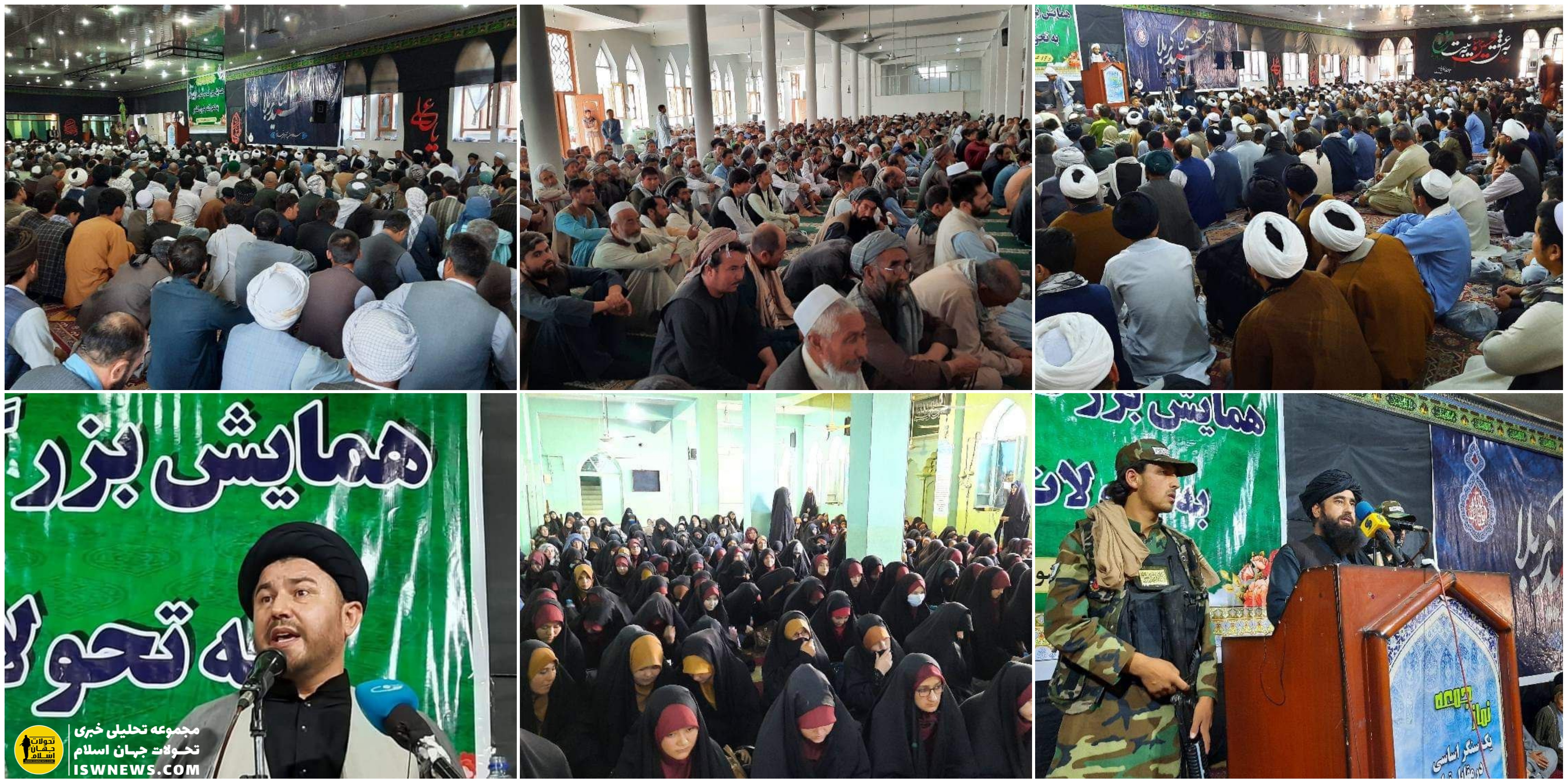
    2- Afghanistan Shia scholars committee in meeting with people of Balkh, thanking Taliban’s endeavors to provide security, asked everyone to cut the foreigner’s hand from Afghanistan, recognize Shia in the constitution, temporary government’s attention to people’s difficult livelihood, using clean and honest people in the positions and specialists from all tribes in the future government. The photo shows the summit.

    3- Panjshir:
    Taliban media reported to discover several ammo hideouts in Panjshir.

    4- Local sources releasing images claim that ammo is transported from Kunar province to Pakistan border.

    5- Qari Fasihuddin, chief of staff of Taliban:
    Disrupters will be surpassed and we won’t let civil war to happen in Afghanistan. Afghanistan soon will have a strong army to defend the country.

    6- The Red Cross international committee in a report: 80% increase of wounded in the war this year compared to last year and the number of wounded is more than 41 thousand.

  • Latest Updates on Afghanistan, 12 September 2021

    Latest Updates on Afghanistan, 12 September 2021

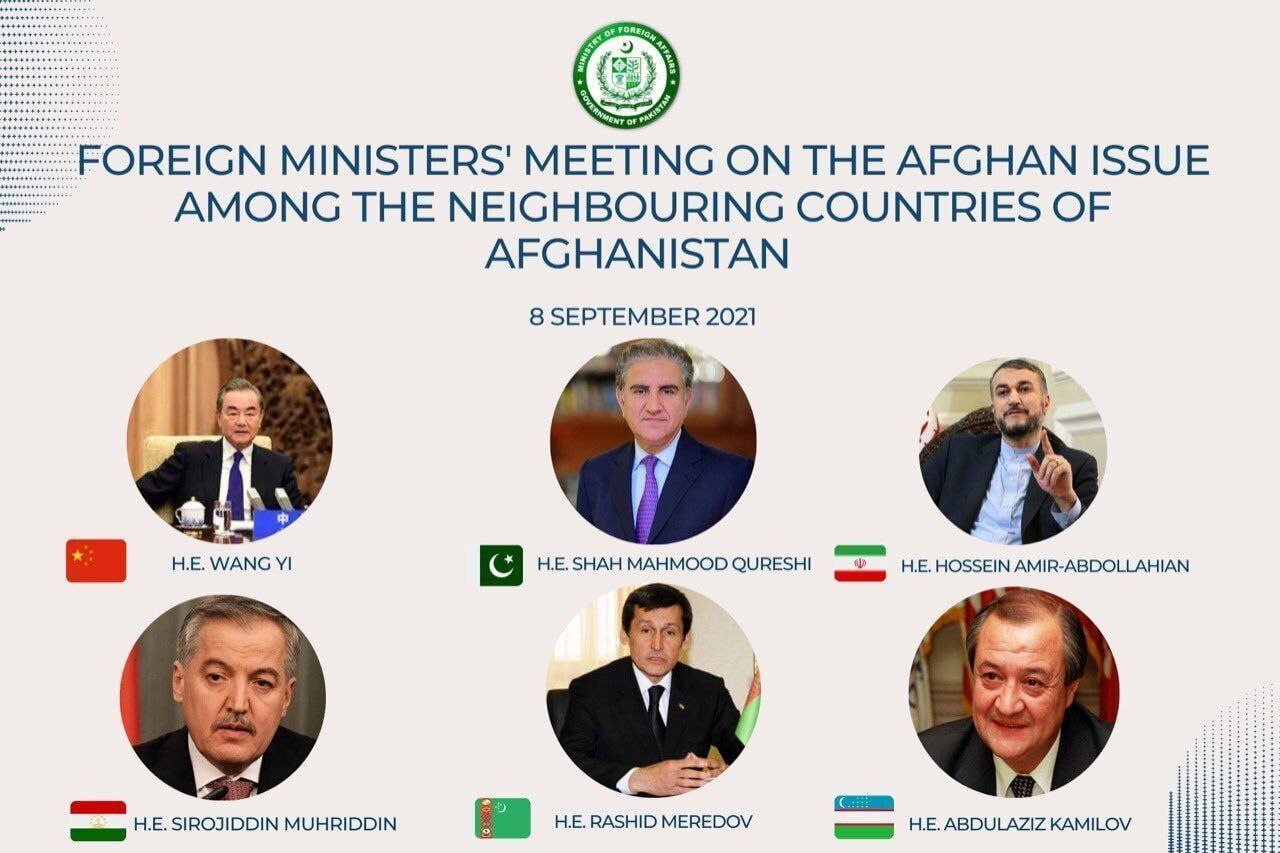
    1- Statement of the Virtual Meeting of the Foreign Ministers of the six neighboring countries of Afghanistan:
    After the complete withdrawal of foreign troops from Afghanistan, the people of Afghanistan must determine their future.
    It has also been agreed that these meetings will continue in rotation and the next meeting will be held in Tehran.

    2- The meeting of the heads and representatives of the intelligence agencies of Russia, China, Iran, Pakistan and some Central Asian countries on the security issues of Afghanistan has been held in Islamabad, the capital of Pakistan.

    3- A Qatari government delegation led by Foreign Minister Sheikh Mohammed bin Rahman Al-Thani arrived in Kabul and met with Taliban officials.

    4- Pakistan’s Foreign Ministry denies military involvement in the Panjshir war.

    5- Russia announced its non-participation in the announcement ceremony of the Taliban government.

    6- Clashes between Taliban militants and Pakistani forces at the Spin Boldak border crossing in Kandahar province resulted in the wounding of a number of forces on both sides.