According to Hamed Seifi, one of the commanders of Ahmad Massoud’s forces, clashes took place in the district of of Hesah Dowum in Kapisa province.
According to the ISWNEWS field source, five Taliban militants were killed and wounded in the clashes, and no details are available about the casualties of Ahmad Massoud’s forces.
Also, the alleged ISIS assailants assassinated a Taliban member in the Bagh Zakhira area of Kalafgan district in Takhar province. However some sources claimed that the assassination was carried out by the forces loyal to Ahamd Massud. “Ansarullah Ansari”, the head of information and culture of Takhar province, confirmed this incident and mentioned the name of the assassinated person as Hafez Abdulqadir.
According to local sources, Ahmad Massoud’s forces, under the command of Hamed Seifi, General Kouhestani, General Hasibullah and General Munib Amiri, are carrying out hit and run attacks against Taliban militants in the mountainous areas of Panjshir, Kapisa and Baghlan provinces.
Gagam Stepanian, an Armenian citizen and human rights activist from Nagorno-Karabakh told Armenian Radio: On Thursday, December 2, Azerbaijani forces opened fire on Armenian civilians near the contact line near the Karmirshuka town. The shooting began at 10:30 a.m. local time and lasted for 15 minutes.
Karmirshuka is located in the south of the Nagorno-Karabakh region and near the contact lines between the Azerbaijani and Armenian government forces.
Also on Friday, December 2, the Azerbaijani border guards fired on an Armenian civilian in Martuni province in Rayon Khojavand.
Siran Sarkisian, a 65-year-old Armenian civilian living in the town of Chartar, was shot and killed while grazing livestock near a border post.
Azerbaijani sources have remained silent on the matter, but unofficial sources identify the dead man as an armed militant who had intended to sabotage.
The Foreign Ministry of the Artsakh (De facto) government condemned the actions and said in a statement: “The action of the Azerbaijani government against Armenian citizens is against international law and human rights, and Azerbaijan is openly violating all bilateral agreements so that the Armenian people forced to leave their homeland.”
Exchange of prisoners with map of minefields
According to the Sochi agreement, the governments of Azerbaijan and Armenia exchanged prisoners and minefield maps with the mediation of the Russian Federation.
On Saturday, December 4, the Azerbaijani government released 10 Armenian prisoners of war taken hostage in the border clashes of November 16, and handed them over to the Russian mediating delegation. The released prisoners are Narek Yerimian, Araik Araklian, Serjik Amirkhanian, Georg Akopian, Robert Nalbandian, Harut Sarkisian, Artem Manasian, Eric Autisian, Armen Tusian, Tigran Akopian and were airlifted from Azerbaijan to Armenia.
According to Azerbaijani news sources, the Azerbaijani government is receiving a map of a number of minefields in the evacuated areas in Karabakh.
The Azerbaijani government has released a wounded Armenian prisoner in order to fulfill the agreements and has evacuated part of its forces from Mount Mets Ishkhanasar in the Syunik province of Armenia.
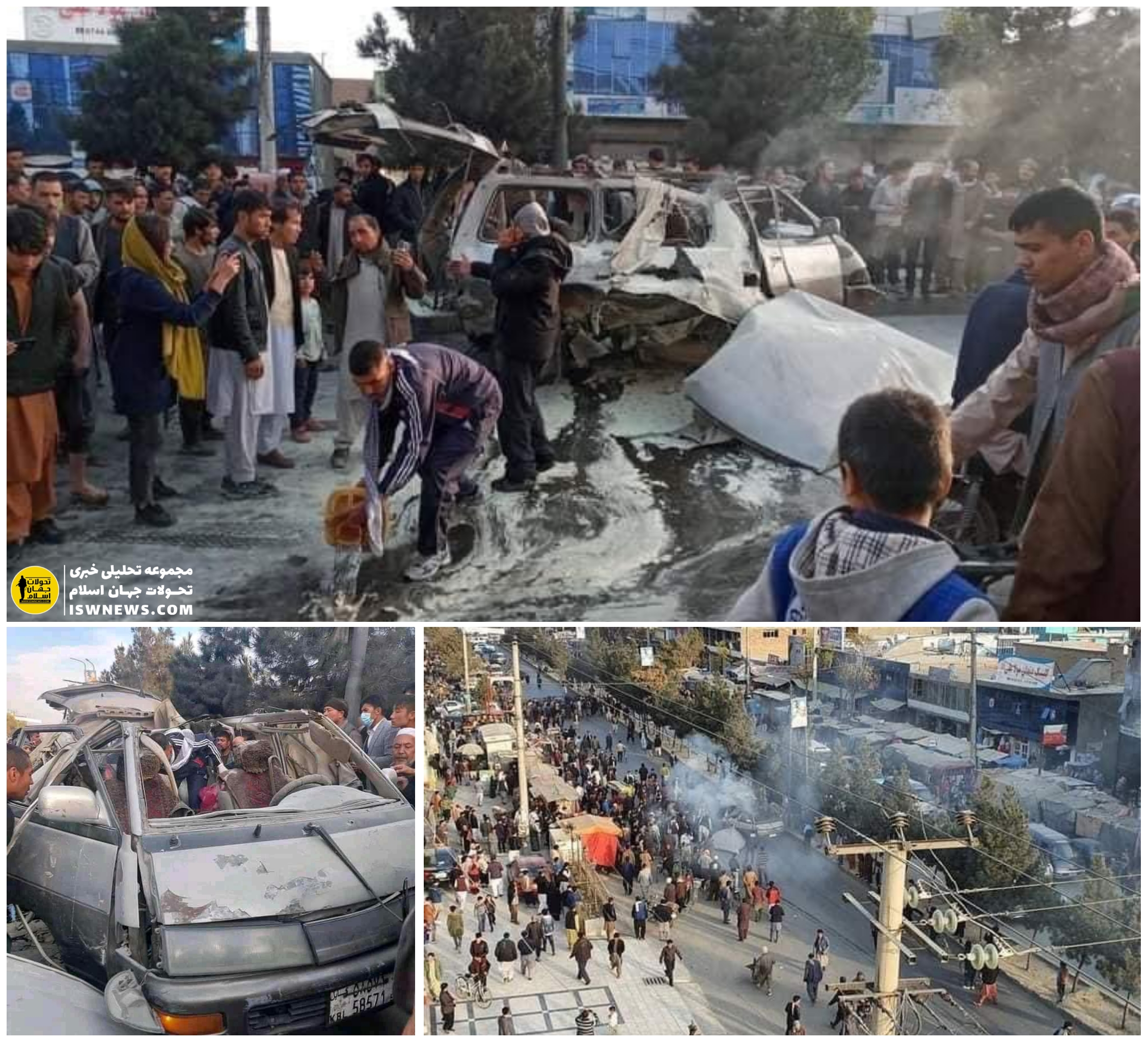
On December 4, ISIS targeted a vehicle belonging to Taliban militants with a roadside bomb in the Fifth Taimani Street area in downtown Kabul. The attack killed and wounded three Taliban members. But General Mobin Khan, spokesman for the Kabul Security Forces Command, denied that the Taliban casualties.
On the other hand, the assassination attempt on the car carrying the governor of Panjshir “Mawlawi Qudratullah” in the fourth district was another recent ISIS attack in Kabul. Despite the successful attack and destruction of the car, Taliban officials said the attack had “no casualties” and denied that the targeted attack on governor of Panjshir.
Despite some news, it is not correct to attribute this attack to Ahmad Massoud’s forces; Because these forces do not have the power and background to carry out such attacks. On the other hand, the type of this attack is consistent with the previous attacks of IS-KP, and the group has claimed responsibility for this attack by releasing videos and statements.
In recent weeks, roadside bomb attacks drastically have increased in Kabul city, and in the past week alone, there have been three roadside bombings by ISIS terrorists.
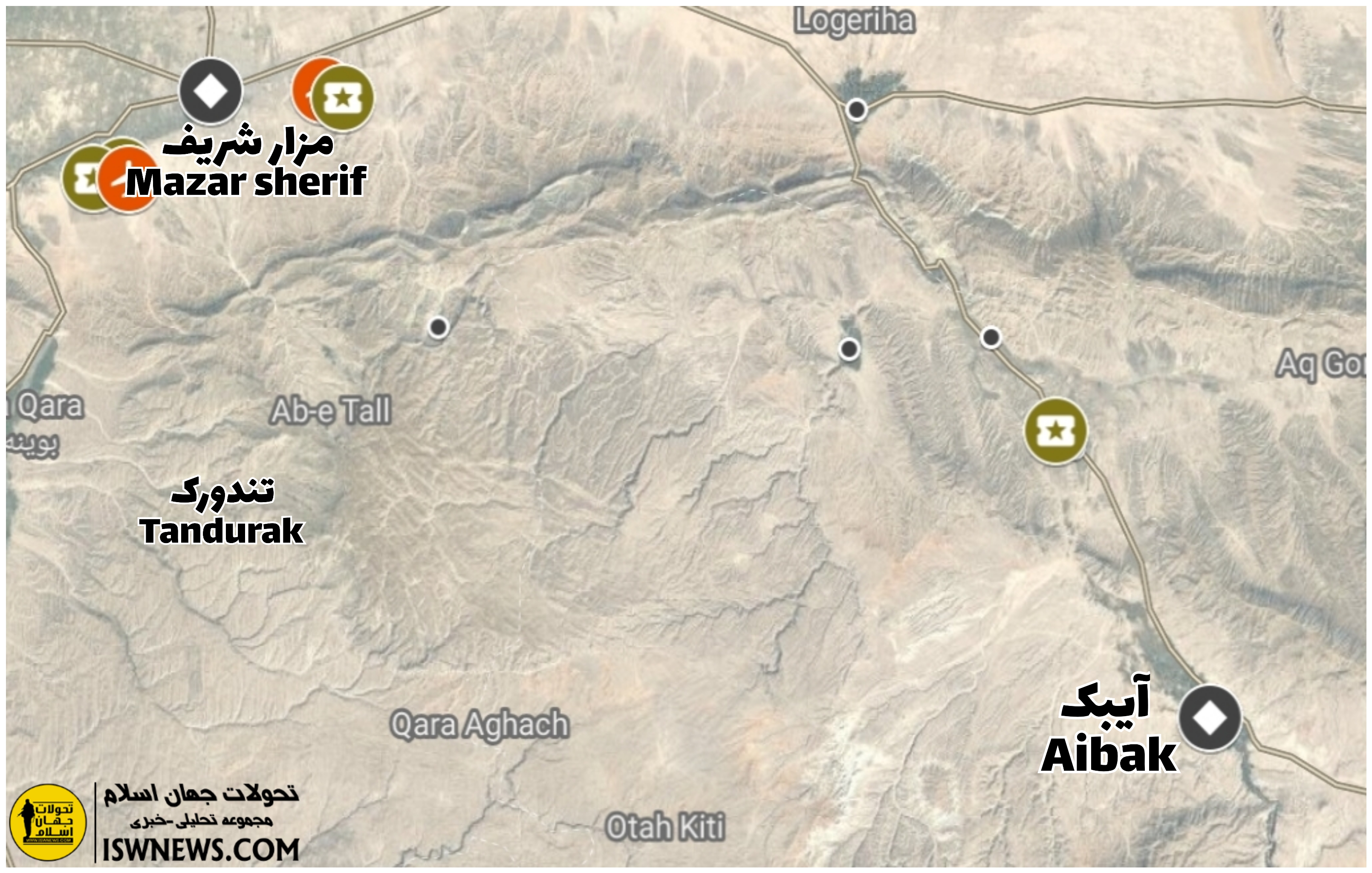
Two members of Ahmad Samangani’s forces and four Taliban militants were killed and another wounded in the clashes in the Tondorak mountainous region of Balkh and Samangan provinces.
In this regard, some media outlets have attributed the attack to “Ahmad Massoud” forces, which is not correct. According to our field source, “Ahmad Samangani” is one of the famous commanders of the National Islamic Movement under the leadership of General Abdul Rashid Dostum and he has not had any contact with Ahmad Massoud so far.
These individuals are among the Turkmen-backed extremist armed groups in northern Afghanistan that also have Turkish support.
With the escalation of armed conflict in northern Afghanistan, the groundwork is being laid for the presence of extremist groups such as ISIS in this part of the country.
At least two ISIS members were killed and another was arrested in the operation. During the operation, a large amount of light weapons, two suicide belts, 300 kilograms of gunpowder and several sticky bombs were discovered and seized.
According to an ISWNews field source, this is the Taliban’s first intelligence operation this week agaisnt the ISIS hideouts in eastern Afghanistan. However, ISIS activities in eastern and northern Afghanistan continue to increase. Yesterday, ISIS operatives attacked a checkpoint in the town of Sayad in the northern Afghan province of Sar-e-Pul, killing 15 Taliban members.
Clashes between Taliban and ISISAn ISIS element arrested by Taliban
After the fall of Ashraf Ghani government and taking the power by the Taliban, the ISIS activities drastically increased. During the Taliban’s rule, ISIS activities mainly happened in provinces of Kabul, Nangarhar, and Logar. Among these activities several attacks were performed against Shia mosques in northern and southern cities like Kunduz and Kandahar which resulted in horrendous massacres.
By examining the geography of these regions it becomes apparent that the main goal and target of ISIS is murdering the Shias of Afghanistan. Since that the ISIS in Afghanistan does not have enough manpower and instruments to fight the Taliban; and it faces powerful neighbours like Iran, Russia and China, Therefore ISIS does not plan to establish its caliphate or start territorial expansion. Creating a state of fear and insecurity by attacks, explosions and terror is one of the main plans of ISIS in Afghanistan.
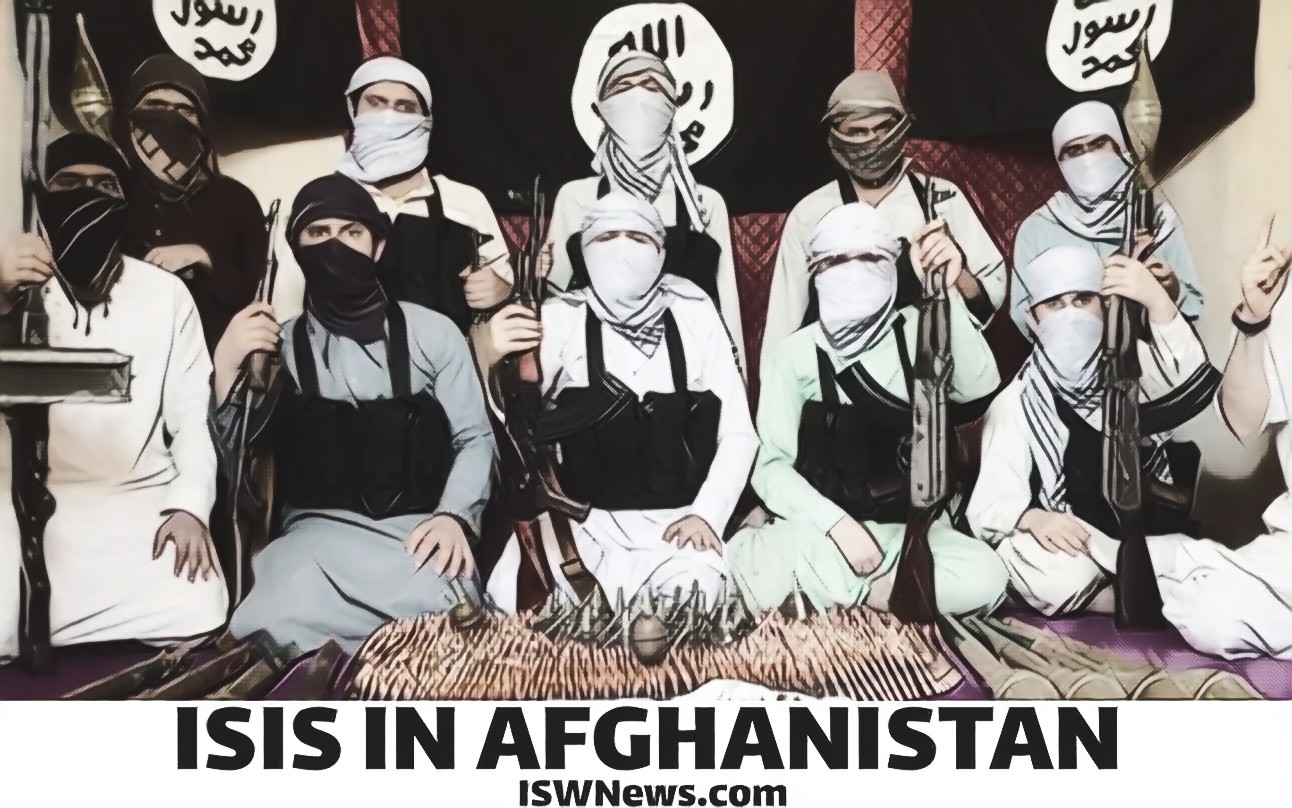
According to the reports, which were given to ISWNews by field sources in different cities of Afghanistan, ISIS-K elements are observing the region and secretly operating in some parts of northern Afghanistan. The list of these regions are is follows:
1- Observing the elements of ISIS-K with Turkmen and Uzbek race in town of Aqcha, located in province of Jowzjan 2- Town of Khurram and Sarbagh, Hazrati Sultan, Darah Sof in province of Samangan. 3- Town of Kuhestan in province of Sare Pol 4- Towns of Pashtun Kot, Bilcheragh, Darzab in province of Faryab which the elements of ISIS-K were spotted in roads between the two provinces of Faryab and Jowzjan.
Local sources of ISWNews have reported that the ISIS-K with the support of America, Israel and Turkey have started these activities, and their goal is to recruit soldiers from of Tajik, Turkmen, Uzbek, Pashtun, etc. ethnicities in Afghanistan. They mostly recruit their soldiers from the former government, anti Taliban, and anti Shia forces, because these people are suffering from the current economic crisis, and they can be recruited easily with promises of money, religious incentives, and other instruments.
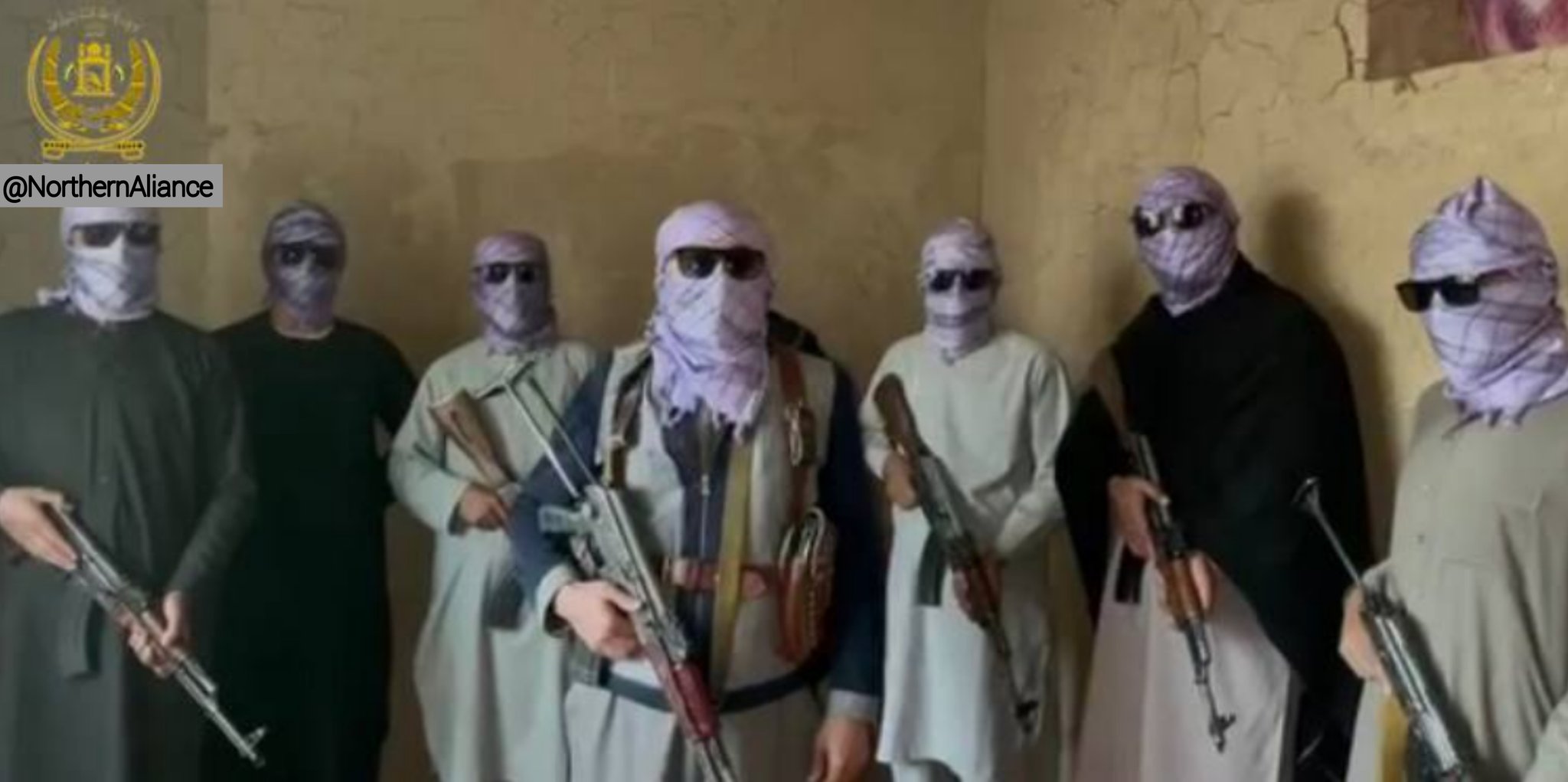
In light of these developments, videos are being published from northern cities which shows that militias with covered faces are introducing themselves as the supporters of the resistance with the leadership of Ahmad Massoud, and promising to Taliban that they will perform heavy offenses and will liberate the cities. Now with comparing the goals of these movements, it seems that these activities are in line with a massive media project, and that the use of ISIS-K from anti Taliban elements can have grave results for the people of Afghanistan.
Unknown gunmen announcing their support for the Resistance Front led by Ahmad Massoud in Jawzjan provinceUnknown gunmen announcing their support for the Resistance Front led by Ahmad Massoud in Kapisa province
The clashes began when Iranian farmers crossed security walls and were shot at by Taliban militants. Following this action, Iranian border guards also fired at Taliban positions, and the exchange of fire continued for an hour.
The clashes ended after an hour, and the issue was resolved after talks between representatives of the two sides and clarification of the situation for Taliban.
The Taliban militants, thinking that their territory extended to the security walls, harassed Iranian farmers and fired at them, prompting a quick response from the Iranian border guards.
These security walls were built on Iran’s soil to combat smugglers and miscreants, and the Taliban’s perception of invading Afghan territory stemmed from their lack of knowledge of the border lines and their misconceptions.
After the change of government in Afghanistan and the Taliban take control of Nimruz province, the majority of the Afghan border guards changed to Taliban militants, most of whom are not from Nimruz and are unfamiliar with these borders.
No reliable statistics or information have been released regarding the casualties on both sides, and the Taliban’s seizure of Iranian border checkpoints is incorrect. Some media outlets report that three Taliban members have been killed.
According to local sources in Hirmand county, the mentioned security wall was built by the Islamic Republic of Iran and is located in Iran. These lands are the farms of Iranian farmers and are not ruled by the residents of Nimruz province in Afghanistan.
Iranian border artillery fires at Taliban positionsfire exchange between Iran and Taliban The moment Taliban militants entered Iran’s soil
According to Mawlawi Tahir Mobarez, commander of the Taliban security forces in Jalalabad, clashes started this morning in the Zangavi area of Jalalabad and continued several hours. Three ISIS operatives and two Taliban members were killed and four others, including Qari Abdul Rahman, the ISIS operative in Nangarhar, were wounded in the clashes. Also during the conflict, one of the female members of ISIS carried out a suicide operation, as a result of which parts of the surrounding houses were destroyed or damaged.
On the other hand, another explosion took place this morning in the PD3 of Kabul city, injuring five people. According to Taliban Interior Ministry spokesman Saeed Khosti, the blast was caused by a bomb planted in a pot. He denied any casualties in the blast.
The shift in ISIS attacks from assassinations and bombings to armed conflict is another sign of the terrorist group’s growing power in Afghanistan. In addition to extensive intelligence and security measures, the Taliban appear to need structural changes in their security institutions to counter ISIS threats in Afghanistan.
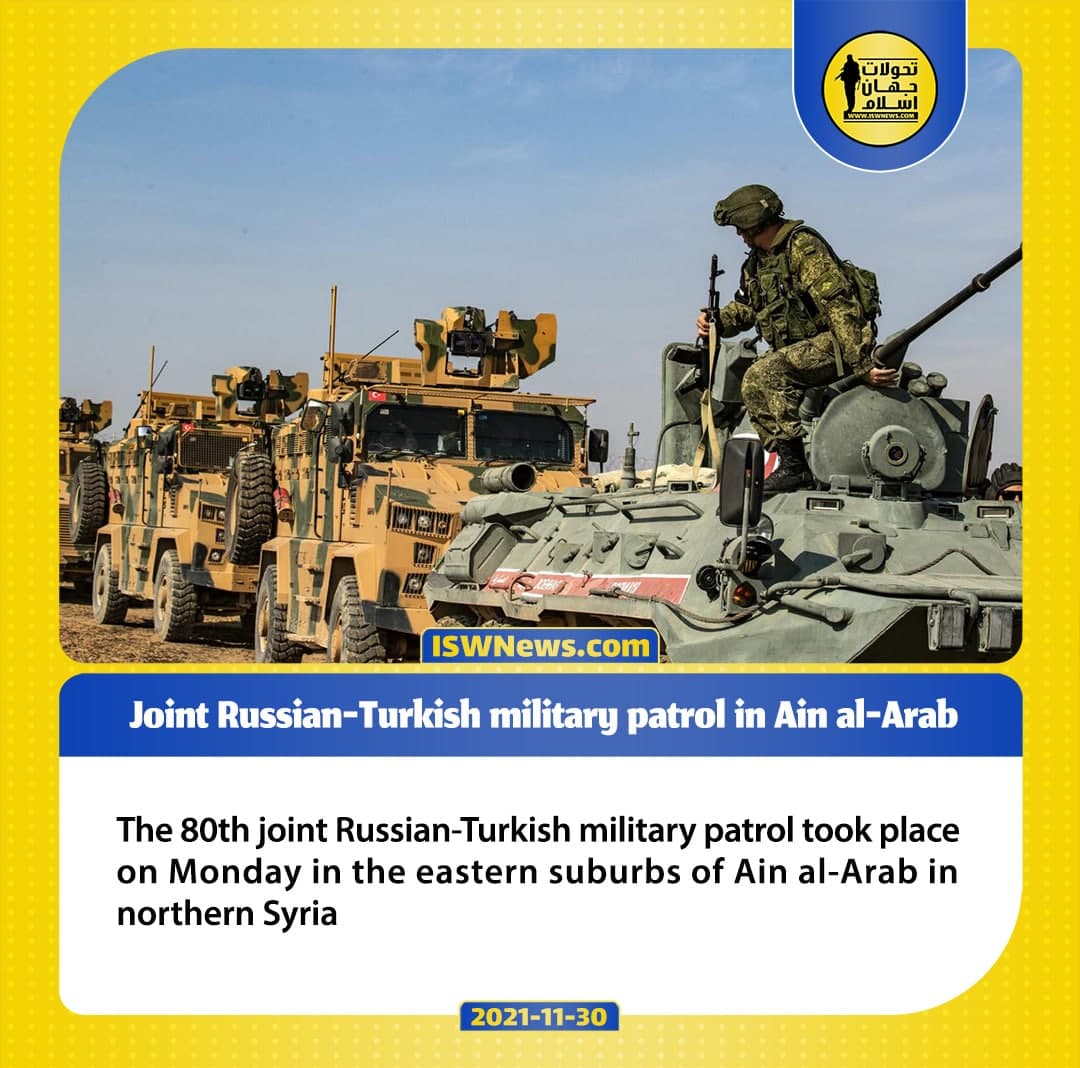
The convoy, consisting of eight Russian-Turkish military vehicles, began patrolling from the village of Gharib, 15 km east of Ain al-Arab (Kobani), escorted by two Russian helicopters. At the end of the patrol, Turkish troops returned to their bases on Turkish soil and Russian forces returned to their base in Sarin area, south of Ain al-Arab.
The last (seventy-ninth) joint military patrol of Turkey and Russia took place on November 22 in the western suburbs of Ain al-Arab.
The attacks of ISIS during the last week are as follows:
1- An IED blast in the path of a Taliban vehicle in the 17th district of Kabul killed one person and injured seven others. Date: November 19. 2- Assassination of a Taliban member in Logar province. Date: November 19. 3- An armed attack on a vehicle carrying Taliban militants in the first district of Jalalabad, resulted in the death of three Taliban members. Date: November 20. 4- Assassination of one of the soldiers of the former government of Afghanistan in the second area of Jalalabad city. Date: November 22. 5- An armed attack on a Taliban vehicle in the first area of Jalalabad city, resulted in the death of two occupants of the vehicle. Date: November 22. 6- Assassination of a Pakistani intelligence officer in Bajaur district in Khyber Pakhtunkhwa province. Date: November 23. 7- Assassination of a Shiite resident of Elias Kaluni area in Rawalpindi city. Date: November 23. 8- An IED blast in the path of a Taliban vehicle in the second district of Kabul, which according to Taliban sources wounded three people. Date: November 23. (Image) 9- An explosion in the path of a car carrying the governor of Warsaj district in Takhar province, killed one person. Two others including “Mawlawi Ansarullah Ansari”, the governor of Warsaj were injured. Date: November 24. ISIS has not yet claimed responsibility for the attack. But the type of attack is similar to previous attacks by ISIS.
The increased activity of ISIS in Afghanistan shows the weakness of the Taliban in Afghanistan. If this weakness continues and the activities of ISIS continue, which is accompanied by the recruiting from the all races in the Central Asian region, including the Tajiks, Uyghurs, etc., the resurgence of ISIS and the fall of areas in Afghanistan is not far off.
in the past 24 hours, the ISIS terrorists orchestrated several attacks in Kabul and Ghazni cities, the details of which are as follows: 1- A bomb exploded in the path of a civilian van in the third district of Kabul city in Dasht-e Barchi district, killing 4 people and injuring 2 others. 2- A bomb exploded in the 13th district of Kabul city at the intersection of Shahid Dehbouri district, according to local sources, one person was killed and 9 others were injured. ISIS in Khorasan (ISIS-K) claims in a statement that the attacks killed more than 20 people. 3- The third explosion occurred in Ghazni city. According to local officials, an unexploded bomb exploded in front of a shop, killing one child and injuring three others.
Meanwhile, the Taliban announced an operation by its special forces in northern Kabul, in which three ISIS members were killed.
According to surveys of ISWNEWS, ISIS has carried out more than five terrorist attacks in Afghanistan in the past week, targeting mosques and civilians. Increasing ISIS attacks in Afghanistan comes as Taliban officials have recently claimed that ISIS is weakened in Afghanistan. Amir Khan Muttaqi, the acting head of the Taliban’s foreign ministry, stated earlier that the ISIS group has been wiped out from the 70% of Afghanistan.
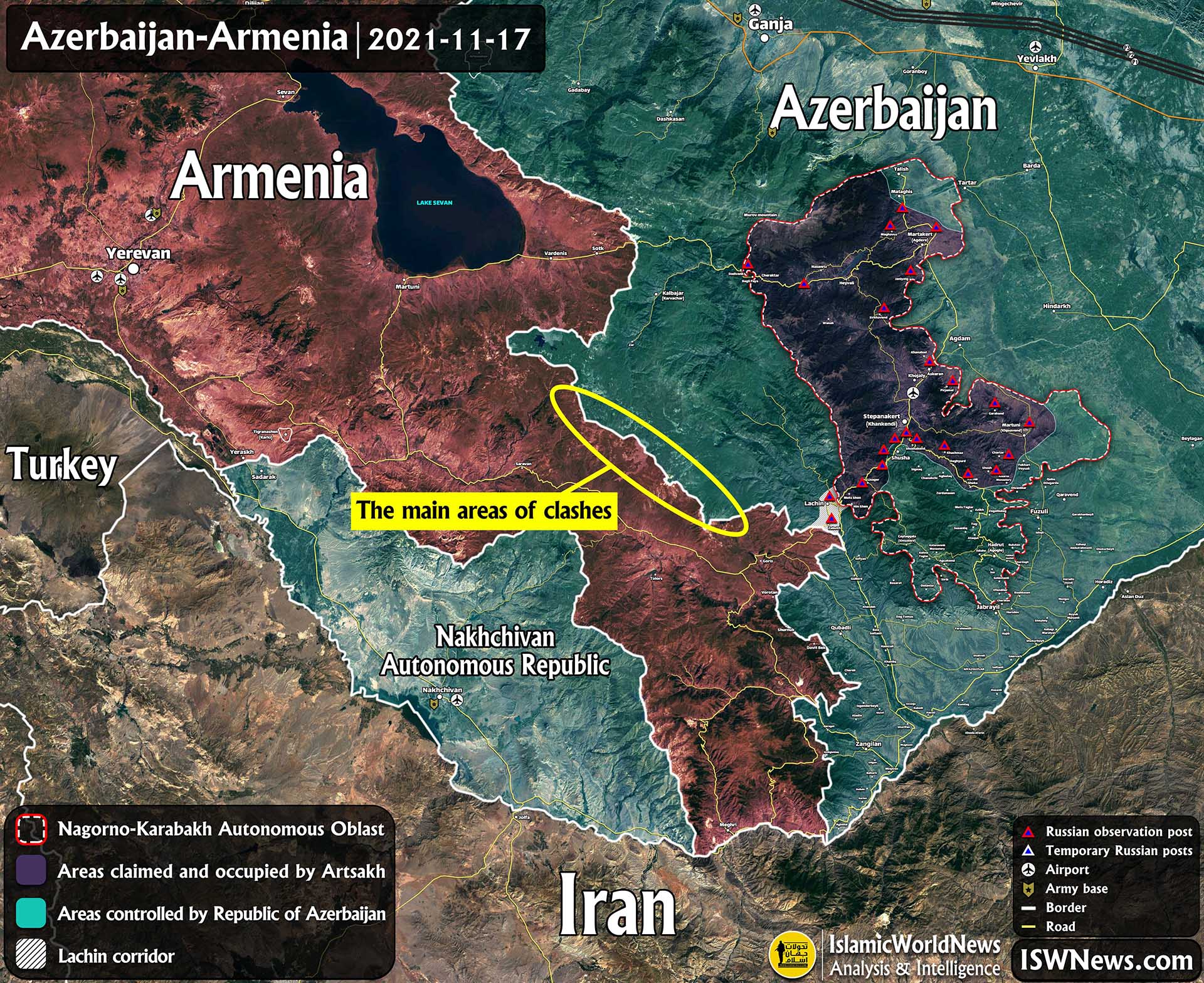
According to the field evidence, on November 16, the Azerbaijani military, in violation of the peace agreement advanced on several border points in the Armenian province of Syunik, But in the aftermath of the aggression, they faced a strong response by the Armenian military.
The clashes between Azerbaijan and Armenia started at about 1 pm and ended with the mediation of Russia and the declaration of a ceasefire at 5:30 pm (local time). During these conflicts, two Armenian military points were occupied by Azerbaijan.
According to a statement from the Armenian Ministry of Defense, one Armenian soldier was killed, 13 captured and 24 others were missing during the clashes. Also, according to the information provided by the Azerbaijan Ministry of Defense, 7 Azerbaijani servicemen were killed and 10 others were wounded.
Following the clashes, the Iranian Foreign Ministry, the Russian Ministry of Defense and the United Nations issued messages calling for restraint on both sides and the de-escalation of the clashes. While emphasizing respect for international borders, the Iranian Foreign Ministry spokesman announced Iran’s readiness to help resolve the disputes between the Republic of Azerbaijan and Armenia peacefully. In this regard, the presidents of Iran and Russia during a telephone conversation stressed the need not to change the political geography of the Caucasus region.
Armenian Security Council Secretary Armen Grigoryan also called for Russia’s protection of Armenian territory under the 1997 agreement in an interview. Grigoryan went on to say that if the crisis is not resolved through Russia and the CSTO, they will ask for help from other international partners.
This afternoon, in order to reduce tensions between Azerbaijan and Armenia, Deputy Commander of the Southern Military District of the Russian Federation and Commander of the Russian Peacekeeping Forces in Nagorno-Karabakh, Lieutenant General Rustam Muradov, transferred the body of the Armenian soldier who was killed in November 16th battles from Baku to Yerevan.
In the autumn of 2020, the Republic of Azerbaijan launched a large-scale military operation with the full support of Turkey and the Israeli regime with the aim of full control over the Karabakh. In a 44-day period from September 27 to November 10, Azerbaijan has managed to control about 50 percent of the territory, including parts of the south (inside) of the Nagorno-Karabakh Autonomous Region, as well as the occupied territories around the Nagorno-Karabakh Autonomous Region. Subsequently, in accordance with the peace agreement reached between Azerbaijan and Armenia, the regions of Aqdam, Kalbajar and Lachin were handed over to the government of Azerbaijan.
The Peace Agreement consists of nine main clauses; However, the different interpretations of Azerbaijan and Armenia from the ninth paragraph of this agreement have prevented the achievement of a lasting peace. By exploiting this clause, the Baku government is also trying to fulfill its illegitimate demands, using this issue as a pretext to create an illegal corridor called the Zangezur Corridor or to occupy the Armenian province of Syunik.