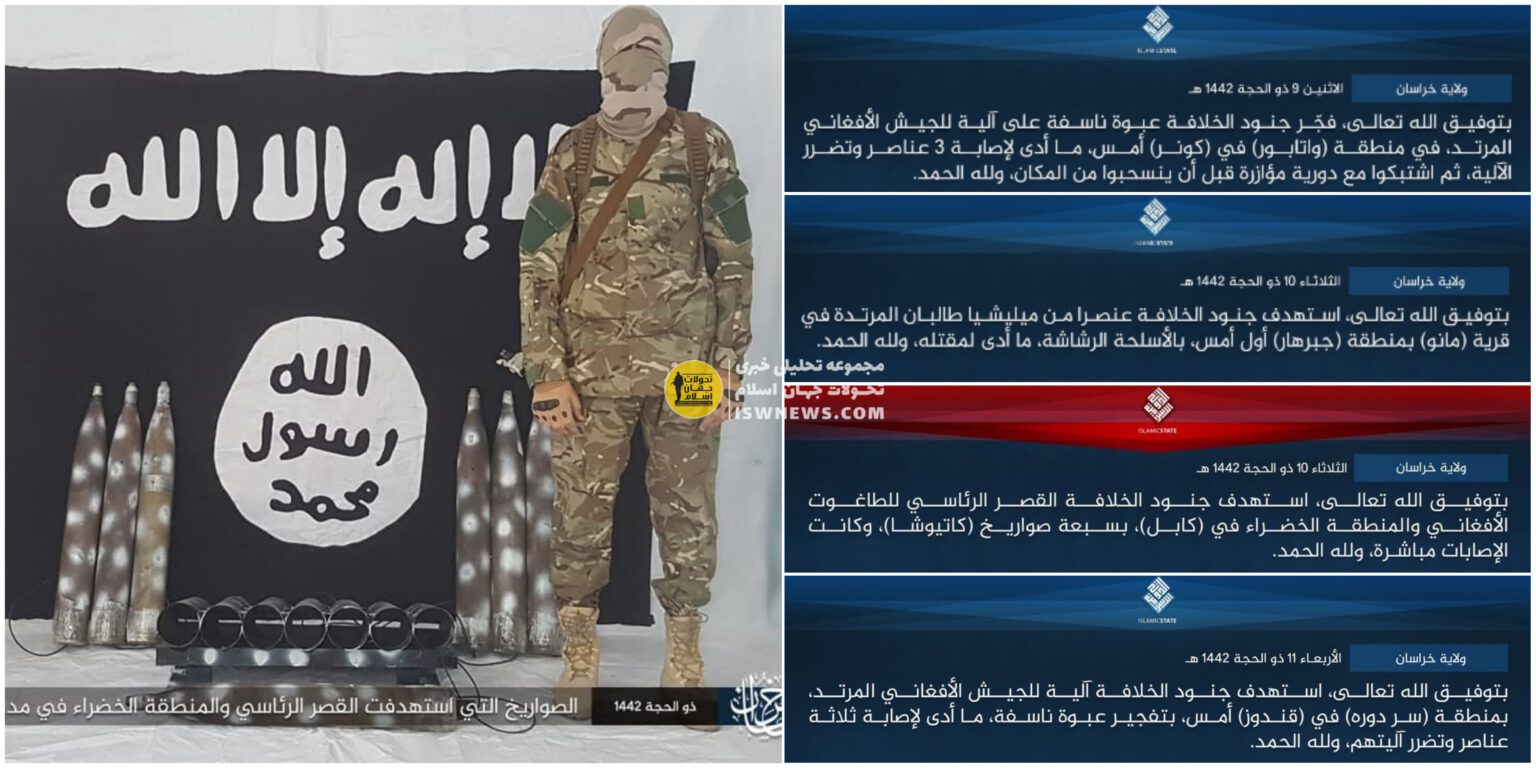
These attacks are as follows:
1- IED attack on the path of a government forces vehicle in Watapur area in Kunar province, on July 20.
2- Seven Katyusha rockets were fired at the Presidential Palace in Kabul on July 20.
3- Assassination of a member of the Taliban group in Chaparhar area in Nangarhar province, on July 21.
4- IED attack on the path of two military vehicles of the Afghan army in the city of Kunduz, on July 21.
Category: Central Asia – Pacific
-
Latest ISIS activities in Afghanistan
-
Aliyev threat, is another war on the way?
The anniversary of the summer clashes of July 14, 2020 and the martyrdom of 11 Azerbaijani servicemen, including Polad Hashimov, has entered the political calendar of the South Caucasus region. The event is considered the beginning of the September 27 military operation of the Azerbaijani coalition in occupied Nagorno-Karabakh against Armenian and Armenian separatists. Although the end of the dispute was signed on November 10 of this year after 44 days between the two parties, disputes over the implementation of the terms of the contract remain.
Hot summer July, Exclaves war!
July is still tense, and can still be considered the start point of another war. Especially since the media once again reported more than three major clashes between Armenian and Azerbaijani forces last week. The first clash on Friday, July 9 on the border of Azerbaijan’s Gadabay district and the northern part of the Nagorno-Karabakh region with Armenia’s Chambarak region was reported by the Ministry of Defense of Azerbaijan and the positions of these forces were shelled in Zamanli village.
The clashes took place near the Artsvashen (Bashkend) area which is Armenia’s exclave inside Azerbaijan. The 40-square-kilometer Artsvashen was occupied by Azerbaijani forces in 1992 after the start of the war between Armenia and Azerbaijan, and its Armenian inhabitants were displaced to Armenia.
The second clash took place on Tuesday July 13 in the town of Shusha in Nagorno-Karabakh (Artsakh) and near the Russian peacekeeping post. A disputed town which was inhabited by a mix of Armenians and Azeris before the Nagorno-Karabakh crisis began. The city was captured from Azerbaijan by Armenians in 1992 and came under Armenian control. Shusha (Shushi) was captured by the Azeri side in the last days of the war last year.
The third clash took place on Wednesday, July 14, coinciding with the anniversary of Hashimov’s death on the northwestern border of Nakhchivan with Armenia and near the town of Sadarak in the Nakhchivan Autonomous Republic. An Azerbaijani soldier was wounded and Azerbaijani Nakhchivan army forces exchanged fire with the Armenian side. This area is located near the borders of Turkey and Karki (Tigranashen) village which is Azerbaijan’s exclave inside Armenia. Karki was occupied by Armenia in 1992 and its Azeri inhabitants were displaced.
The fourth clash also took place on July 19 in the same Sadarak-Yersakh border area between the two sides which led to injury of several people including the head of Yeraskh community of Ararat region Rudik Ogikyan in Yeraskh village.
In addition, the Republic of Azerbaijan has two other exclaves in northern Armenia, which are part of the 1992 occupied territories. Barkhudarly and Sofolu (Barkhudarlu) areas of Rayon Ghazakh (Qazax) with an area of 22 square kilometers are located in the Tavush district , Armenia. Also, the Yukhari Askipara exclave (Azeri: Yuxarı Əskipara – Armenian: Verin Voskepar) is also located inside the Tavush district.
According to the terms of the ceasefire, all these areas shall be returned to their country and the displaced have the right to return to their place of residence.
Azerbaijan: Zangezur belongs to us!
Establishing a corridor connecting the mainland of Azerbaijan with its exclave territory in Nakhchivan is a major geopolitical challenge. According to the Moscow agreement, the Zangezur (Syunik) corridor between the mainland of Azerbaijan and the outskirts of Nakhchivan is to be established.
Of course, Azerbaijan’s interpretation of this corridor is slightly different, so that in addition to a transport corridor, it has officially made a territorial claim to the southern parts of Armenia. The Zangezur and Goycha regions claimed by Azerbaijan include the Meghri, Kapan, Sisian and Goris, which were ceded to Armenia during the former Soviet Union.

Click to see the full size map
The map above shows the military situation before and after the start of the Azerbaijani army operation in Nagorno-Karabakh. The Azerbaijani army took control of more than 50% of the occupied territories in the south of Nagorno-Karabakh in a 44-day period from September 27 to November 10. According to the peace agreement reached between Azerbaijan and Armenia, the regions of Aghdam, Kalbajar and Lachin were handed over to the Azerbaijani government. Armenian forces now control about 55 percent of the “Nagorno-Karabakh Autonomous Region.”Aliyev’s iron fist in Nagorno-Karabakh!
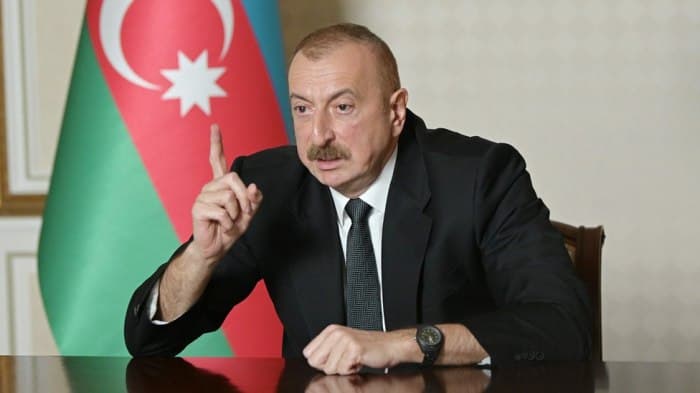
The President of Azerbaijan on Thursday, July 15, at a ceremony of handing over housing units and cars to the wounded and families affected by last year’s war in the town of Khojavand, Nagorno-Karabakh (Azerbaijani-controlled areas) explained Azerbaijan’s position on territorial policy and the issue of refugees.
Elham Aliyev spoke about the return of the Goycha and Zangezur regions to the rule of the Republic of Azerbaijan and the return of the Azeris of Armenia And he mentioned this issue as a necessary condition for the permanent implementation of the peace agreement with Armenia. (About 300,000 Azeris were displaced from Armenia from the Goycha and Zangezur and Yerevan regions between 1988 and 1991, causing Armenian-Azeri tensions. This group is known as the “Yeraz” and is part of the Aliyev family.)“When all communications are opened, we, the people of Azerbaijan, will return to their ancestral land, of course. The 10 November Trilateral Declaration states: all refugees must return to their homeland. Our native land is Zangezur; our native land is Goycha district, Iravan. We will definitely return there,” Azerbaijan President quoted Aliyev as saying.
He stated that the political solution is the most logical option for this position. Emphasizing his country’s determination to implement these cases, Aliyev warned the Armenian side to implement the terms of the ceasefire agreement before its military action and to hand over the construction of the Zangezur corridor to Azerbaijan.
The President of Azerbaijan also claimed the dissolution of Autonomous Republic of Nagorno-Karabakh and creation of the Nagorno-Karabakh Economic Zone. He stressed that the residents of this region must accept Azerbaijani citizenship or go to Armenia forever. Aliyev also said that if the Armenian authorities in Nagorno-Karabakh resist like last year war, he will hit them with an iron fist and will make them runaway like a dog!Does Aliyev send a message of war?
Elham Aliyev’s remarks in the Khojavend region, the southeastern territories of Nagorno-Karabakh and the proximity of areas controlled by Armenian forces can be seen as a signal to the other side. The remarks come as Armenia weakens after the war and is in a political and judicial crisis after the parliamentary elections. So another war between Azerbaijan and Armenia is not so unlikely and could happen again.
The Caucasus region, with a density of 80 ethnic groups and religions of Islam, Christianity, Jews and Zoroastrians, is one of the most tense military and security regions in the world. This geopolitical disorder is the result of the creation of small ethnic states where races live intertwined. -
Afghanistan: Latest updates on Kandahar front, 20 July 2021
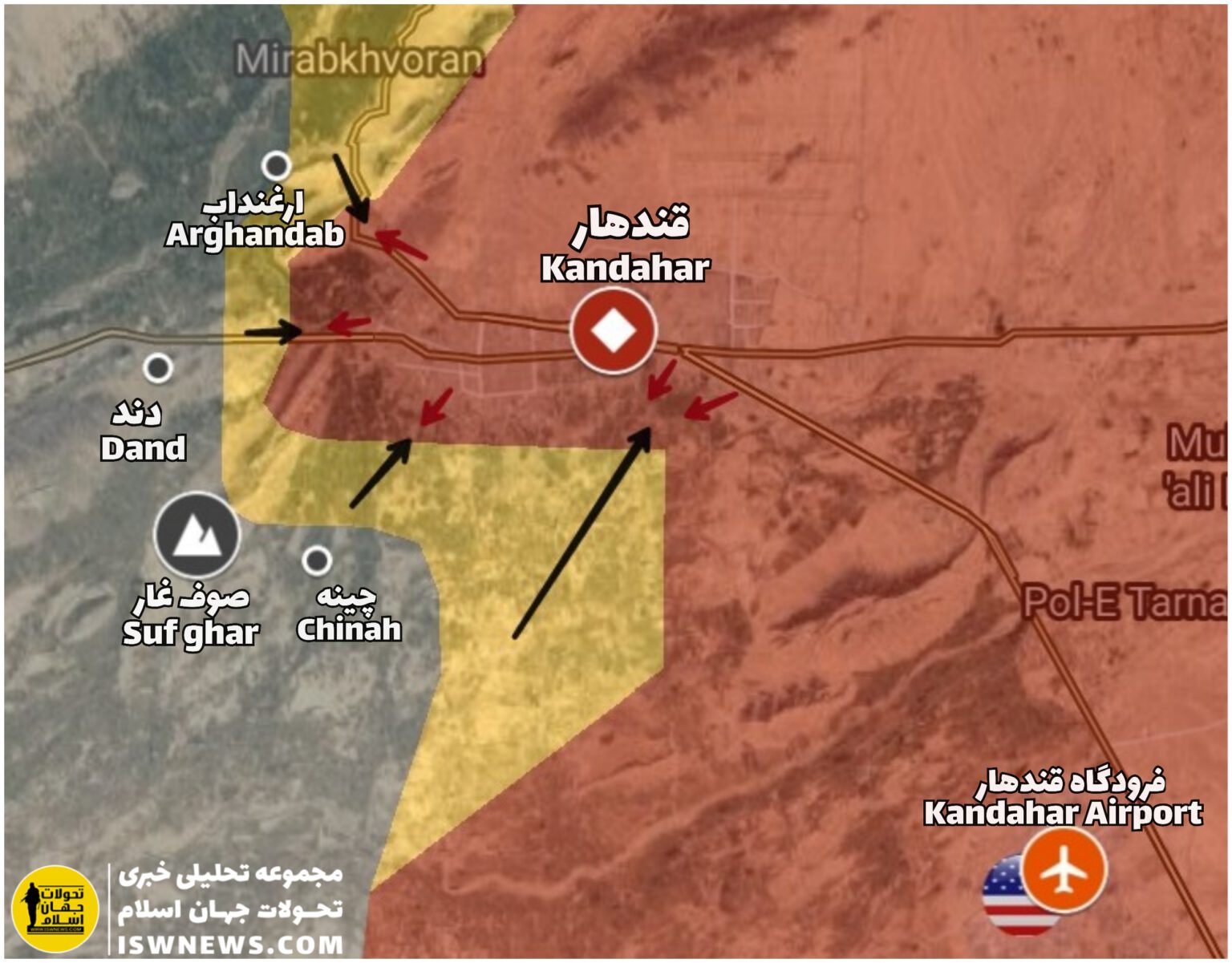
The Taliban have concentrated their attacks on the northern, western and southern entrances of the city, and in the latest clashes on July 19, the fifth district of Kandahar city has witnessed heavy clashes between Taliban militants and Afghan Army forces.
It is said that the northern road to Kandahar have been mined by the Taliban and civilians are unable to cross the main roads. In this regard, six civilians were killed and several others were injured in two mine explosions on the Kandahar-Arghistan road.
Taliban attacks on Kandahar have decreased since last night due to Eid al-Adha, and a new round of attacks is expected to begin in the coming days.
Aftermath of clashes between Taliban militants and the Afghan army in the fifth district of Kandahar -

ISIS activities increase in Afghanistan
The statistics of the activities of the ISIS terrorist group in Afghanistan in the last 48 hours are as follows:
1- IED attack in Aibak district, Samangan province, 18 July 2021.
2- An ISIS member was arrested in Nangarhar province, 18 July 2021.
3- A Tajik member of ISIS threatens in a footage released on 19 July 2021.
4- ISIS members in Afghanistan footage (image) released, 19 July 2021.
5- A security forces was assassinated in Khogyani area, Jalalabad city, 19 July 2021.According to UN report last year, due to ISIS terrorist attacks in Afghanistan, from February 2020 to February 2021, which includes planting IEDs, assassination, armed attacks, etc., 600 civilians martyred and 2500 security forces killed.
ISIS activities focus on districts Jalalabad, Kabul, etc., mainly, among the important ones is attack to Jalalabad prison on August 3, 2020. In this attack more than 300 ISIS terrorists fled from the prison. Afghanistan government never reported that they have been captured again. -

Taliban fighting with Afghanistan Air Force helicopters!
Zabihullah Mujahid, Taliban’s spokesperson, along with Taliban media claimed that another Black Hawk helicopter of the Afghan Air Force was destroyed in Kunduz Airport releasing footages.
It is the third helicopter to be destroyed by Taliban, they claim. However Taliban has released the evidences of destroying the first two helicopters but not the third one so far.
According to our investigation, Taliban has shot down six helicopters of Afghanistan Air Force so far:
1- One helicopter in Nahre Saraj district located in Helmand province, date: April 1.
2- One helicopter in Maidan Wardak province, date: June 9.
3- One helicopter in Deh Yek district located in Ghazni province, June 16.
4- Two helicopters at Kunduz Airport located in Kunduz province, July 11.
5- One helicopter at Kunduz Airport located in Kunduz province, July 16. -
Afghanistan: Latest updates on Kandahar, 15 July 2021
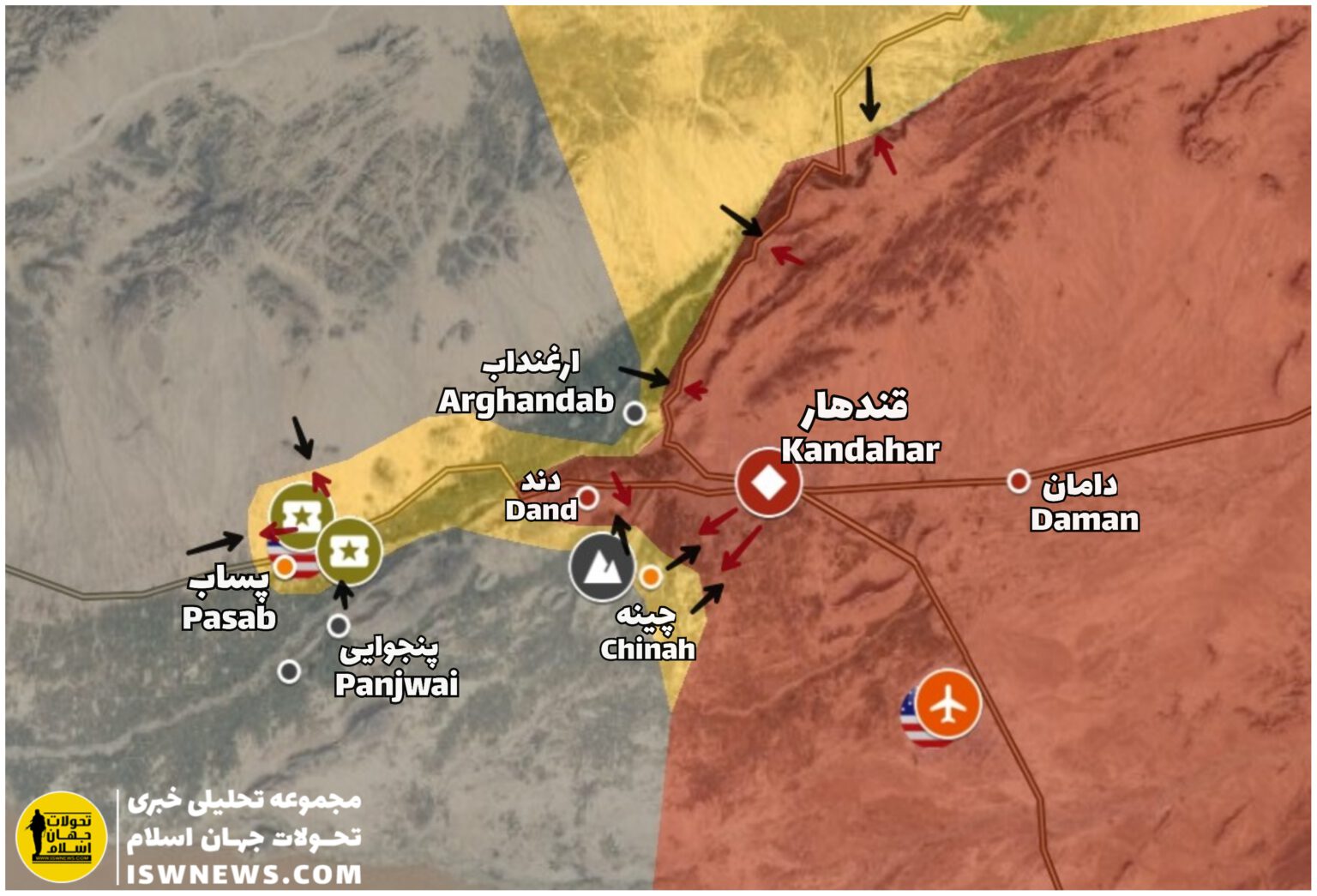
After days of heavy fighting on the fronts of Arghandab, Pasab, Dand and Chineh, the Taliban militants managed to take control of Arghandab city center on the outskirts of Kandahar city.
The government has relocated 240 prisoners to Kabul following an increase in the possibility of the fall of Kandahar and targeted Taliban attacks on the Kandahar prison.
In the south of the province, the Taliban have recently seized the town of Spin Boldak and its border crossing with Pakistan, and clashes have now shifted to the road leading to Kandahar. The Afghan army has also announced its readiness to retake Spin Boldak, but given the army’s past claims and excuses and the ineffectiveness of their attacks, it can be said that the Afghan army is currently unable to retake the lost areas.
In this regard, “Amrullah Saleh”, the first vice president of Afghanistan, said that the Pakistani army has officially informed Afghanistan that any Afghan military attempt to regain control of the Spin Boldak crossing will be met by a reaction from the Pakistan Air Force.Given the situation of the ground siege of Kandahar and the unpreparedness of the army to face the urban warfare and suicide attacks, it can be said that in the case of a serious Taliban attack on Kandahar city, the army will be the definitive loser of this battle. Despite this military superiority, the Taliban are at a disadvantage in terms of manpower and weapons, And this is evidenced by repeated attacks on prisons (Badghis and Kandahar) to free old fighters and attacks on weapons bases to collect weapons.
Map color: Gray = Taliban, Red = Afghan Army, Yellow = Disputed/Unknown
-

Afghanistan: Latest updates on Farah district, 13 July 2021
After the fall of Saghar, Taywara, Bala Buluk and Shindand in recent days, government forces in Pur Chaman were besieged by the Taliban. It is said that these forces repeatedly asked the central government for help after the siege, but their request was not heeded and they finally surrendered to the Taliban without any clashes.
300 government forces reportedly surrendered to the Taliban.
Map details:
Gray = Taliban
Red = Afghan Army
Yellow = Disputed/Unknown -
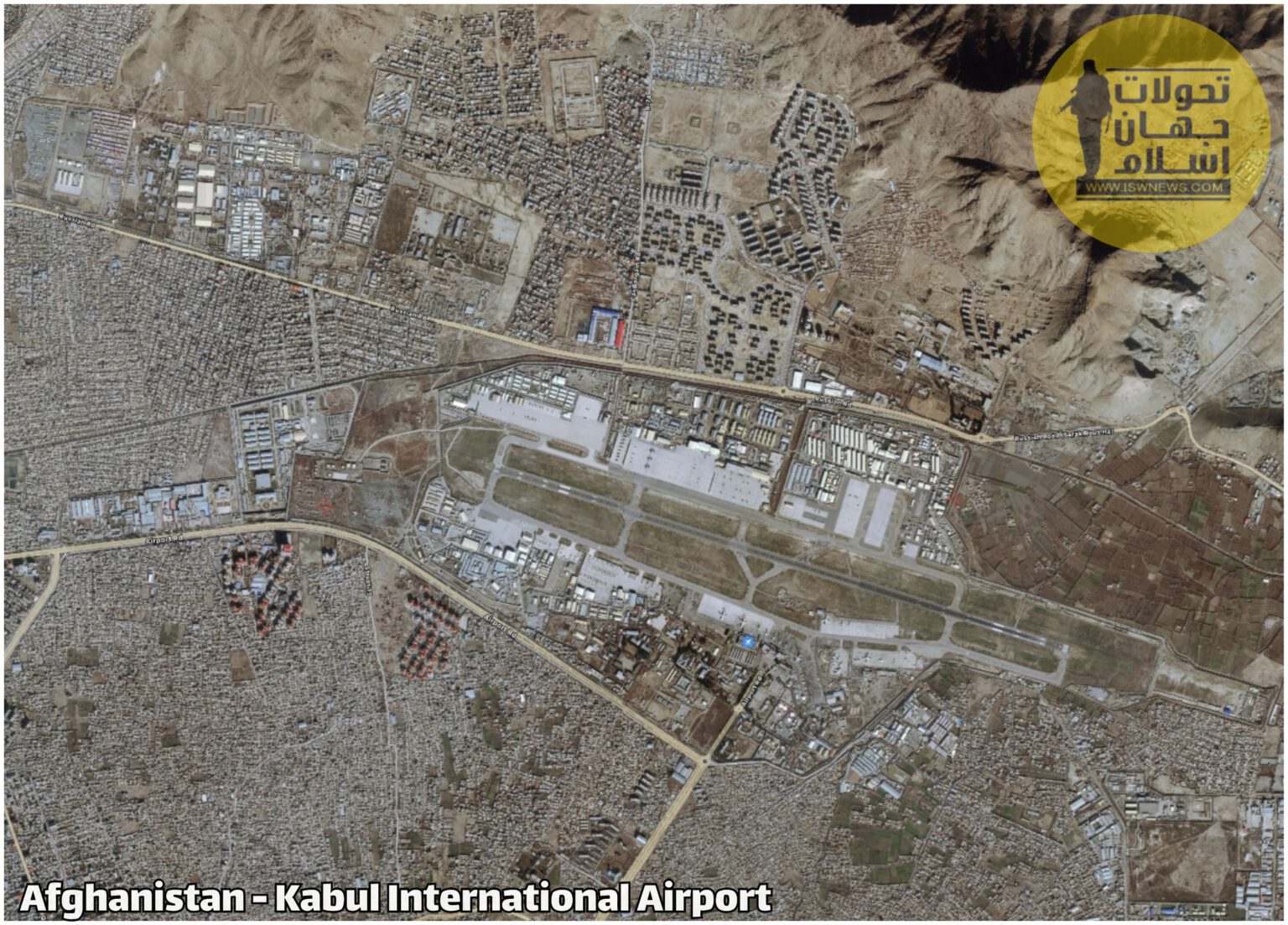
What is the story of the deployment of Turkish troops at Kabul Airport?
According to Turkish Defense Minister Hulusi Akar, the airport has been under Turkish military control for the past six years, and the main topic of recent US-Turkish talks on Afghanistan is their continued presence at Kabul Airport.
The United States recognizes the importance of Kabul Airport in maintaining the activities of foreign embassies, including its own. Turkish troops will also be deployed to secure the routes between these areas and the area around the airport.
Details and the number of Turkish troops have not been released, but some US officials stated that Defense Ministry officials have requested that 600 to 1,000 Turkish troops be stationed at Kabul Airport. It is also said that the provisions of this issue have been discussed and finalized with Turkey and the Government of Afghanistan and will be implemented in the coming weeks.The Afghan government has also welcomed the deployment of Turkish troops at Kabul Airport, but the Taliban have called the presence of foreign troops, including Turkey, unacceptable.
Kabul Airport is a well-equipped air base that, in addition to being able to accommodate more than 100 aircraft, has a large set of US and NATO military and intelligence bases. The airport was built by the Soviets in 1960 and has been developed by the United States over the last twenty years with funding from Japan and NATO.
Kabul Airport is the last stronghold of foreign troops in Afghanistan, and the increase in Turkish troops there is a cover to protect US intelligence and security interests in Afghanistan. -
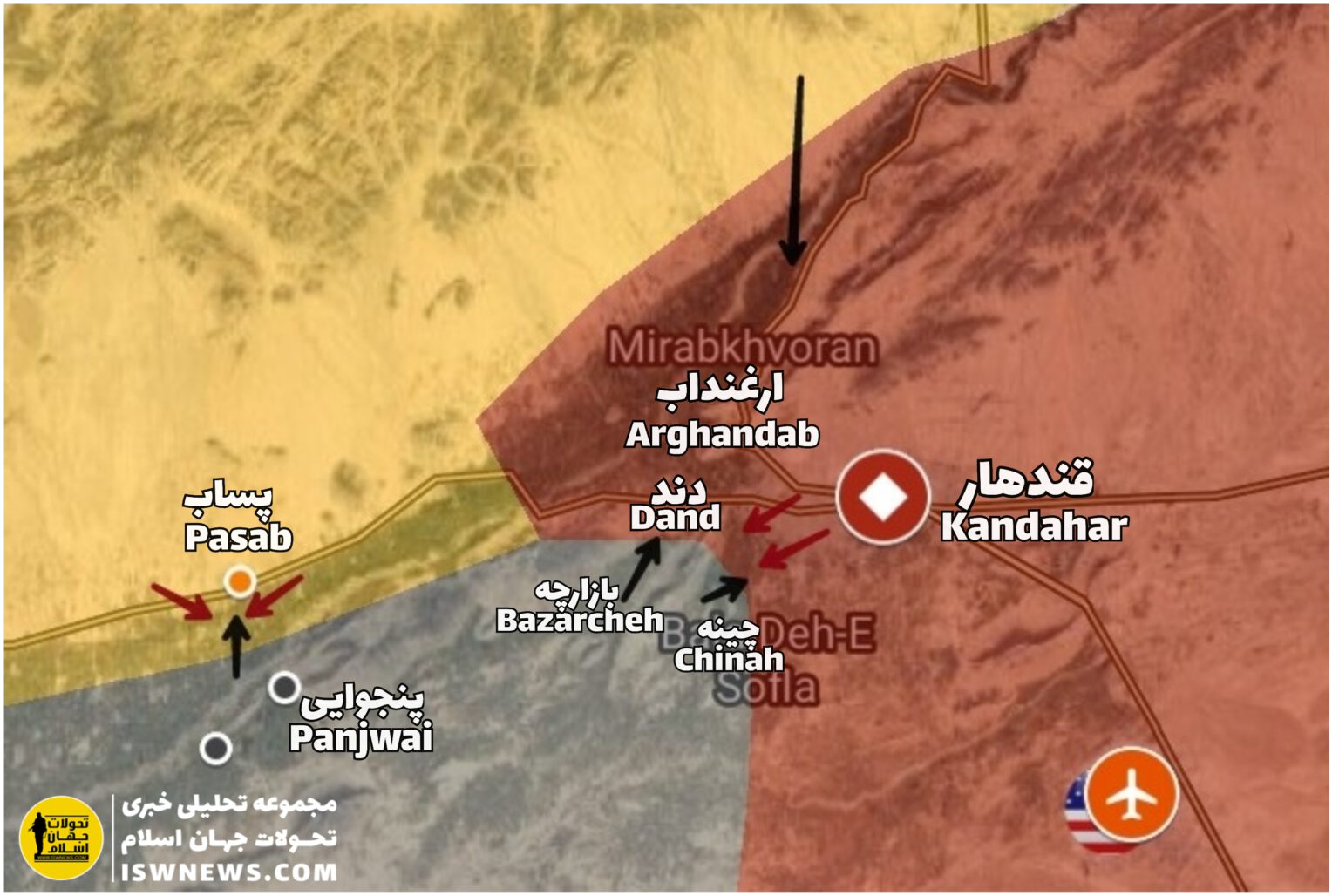
Afghanistan: Latest updates on Kandahar, 12 July 2021
With the escalation of calshes in Kandahar province, the Indian Ministry of Foreign Affairs has ordered the evacuation of the Indian consulate in Kandahar city.
Also, as a result of a terrorist explosion in Ghara Kly village located in Daman district, two civilians were martyred and three others were injured. The Afghan Ministry of Defense also reported 69 Taliban casualties in clashes in the Dand area, which the Taliban called the report “unrealistic”.
According to the Afghan Ministry of Defense, 271 Taliban militants were killed and 162 were wounded as a result of Afghan Army operations in Nangarhar, Maidan Wardak, Khost, Kandahar, Farah, Herat, Badghis, Sar-e Pol, Jowzjan, Nimruz, Helmand, Badakhshan, Kunduz, Takhar and Kapisa provinces during the last 24 hour.
Map details:
Gray = Taliban
Red = Afghan Army
Yellow = Disputed/Unknown -
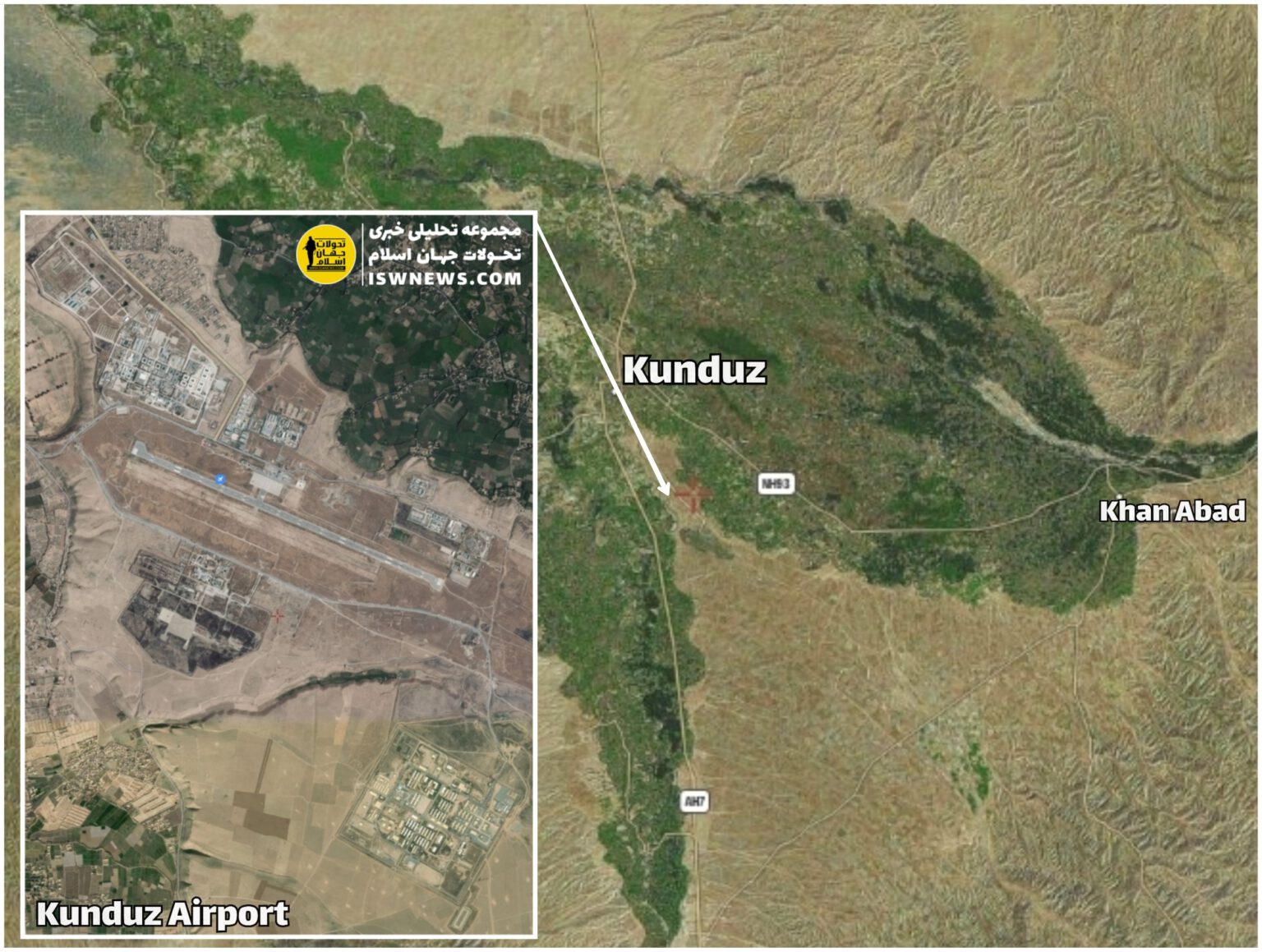
Taliban infiltration operation at Kunduz airport
A Taliban spokesman claimed that members of the group had destroyed two US-made Black Hawk helicopters at Kunduz airport during an infiltration operation. He did not provide further details about the operation.
It is worth mentioning that during the recent Taliban operation in northern Afghanistan, all districts of Kunduz province except the center of this province have been captured by the Taliban. The Afghan army has so far made no attempt to lift the ground siege of Kunduz province, and if the situation continues, it will be easy for the Taliban to capture the city.
-
What is happening in Afghanistan? Afghanistan developments, Taliban relations with Shiites and Iran
As the various dimensions of the recent Taliban activities become clearer and the positions of foreign and neighboring countries regarding the conflicts in Afghanistan become clearer, it is possible to examine the latest developments in this country:
1- The latest military situation in Afghanistan:
According to the latest news from the Afghan conflict, more than 90 other districts have been added to the Taliban-held areas since the beginning of the 1400 Solar Hijri year (since March 21), and clashes with the Afghan army are ongoing in many provinces of the country.
Taliban spokesman Zabihullah Mujahid said the group’s militants would not attack provincial capitals until September 11, the date of Joseph Biden’s administration withdrawal from Afghanistan, because of its adherence to the Doha agreement. Zabihullah Mujahid claim comes as most areas of Kunduz, Sar-e Pul, Takhar, Ghazni, Kandahar and Helmand provinces have been captured by the Taliban and Afghan Army bases have been besieged by the Taliban.
Now, with the rising tensions and clashes, the intra-Afghan talks have stopped and the leaders of different currents such as General Abdul Rashid Dostum, Atta Muhammad Nour, Muhammad Mohaqiq etc., are wearing military uniforms and are seeking to control the areas under their influence. Ashraf Ghani and Abdullah Abdullah have also been overshadowed by Western disregard, and their recent trip to the United States to seek the help and assistance of Joseph Biden has been fruitless.Among the reasons for the rapid advance of the Taliban are the government’s financial weakness in solving economic problems, the tactical weakness of the army, the lack of unity of the opposition tribes, the dissatisfaction of the people and the withdrawal of foreign troops, etc. Based on this, it seems that the Taliban will continue their progress in different provinces until the Americans leave Afghanistan, and during this period, they will force the government and currents of Afghanistan to accept their terms.
2- What is the solution to the problems and disputes in Afghanistan?
The roots of the Afghan war are mostly in ethnic and then sometimes religious differences. The common ethnicity of Taliban-minded individuals with the Pashtuns has strengthened the group in Afghanistan in recent years, and their differences with the Hazara and Tajik tribes, some of whom were Shiites, have shifted to a Shiite-Wahhabi religious war at some point in Afghanistan’s recent history. While not the Taliban are subject to Wahhabism nor are all Hazaras, Tajiks, etc., Shiites.
In the past, the main body of the Taliban group considered their religious ideas based on the Hanafi religion, and in the years of their rule, they followed the principles of this religion. But this group has different spectrums and extremist allies such as al-Qaeda, the Haqqani network, etc., And this has strengthened the image of a religious war in Afghanistan.Certainly the solution to such disputes is not military intervention nor the formation of a puppet government of a foreign power. Rather, it requires a series of solutions.
The following solutions are significant for solving Afghanistan’s problems:
A- The union of scholars of different religions and elites of Afghan society
B- Preventing the misuse of using the name of religious war for the ethnic-political war of the Taliban and ethnic currents
C- Stopping the war and calling it illegitimate throughout Afghanistan
D- Forming a parliament of all currents, ethnicities and religions And forming a government with trans-ethnic and trans-sectarian tendenciesOtherwise, Afghanistan will continue to fall prey to two factors, the difference between “ethnicity” and “religion”.
These solutions require international cooperation, especially in neighboring countries such as Iran, Pakistan and China. This is due to the cultural, economic and political capabilities and commonalities of these countries and, most importantly, the influence of these countries on Afghanistan.Some domestic and foreign media cite the permanent deployment of US and NATO forces in Afghanistan, the replacement of Chinese troops in Afghan military bases, the entry of Iran and the sending of Fatemiyun fighters to the war in Afghanistan, etc. as a way to end the war in Afghanistan, but in the reality they are making mistakes, and this mistake is due to their misinterpretation and lack of comprehensive understanding of the issues of Afghanistan in the last 50 years.
Some think tanks and media outlets have also talked about plans to divide Afghanistan into northern and southern parts, or the Afghan federal government. These issues cannot be properly addressed until the complete withdrawal of foreign troops from Afghanistan, the fall or survive of the central government in Kabul, the transparency of the role of neighboring countries in Afghanistan, etc., are finally determined.3- Relations between Afghanistan Shiites and Taliban:
Media stories about the Taliban massacre of Shiites, as well as Taliban claims that they did not attack Shiite areas of Afghanistan, are largely media taboo.
The Taliban’s views and confrontations with the Afghanistan Shiites are far more moderate than those of extremist groups in the region, such as ISIS, Sipah-e-Sahaba, the Al-Nusra Front, and others, but their differences with the Afghan Shiites are primarily “racial” and secondarily “political” and finally, it is “religious.”
The main discord between the Taliban and the Shiites of Afghanistan in recent years has been with two currents called the Unity Party (Hezbe Wahdat) led by Abdul Ali Mazari and its affiliates and the Islamic Movement of Afghanistan. The main cause of this discord was mostly the political positions of these currents in opposition to the Taliban and later the alliance with the Afghan Northern Alliance and ethnic differences with them.
These discords were exacerbated by the Taliban’s non-compliance with the peace agreement with the Hezbe Wahdat and the clashes in Kabul in 1994 and the subsequent assassination of the party’s leader, Abdul Ali Mazari. The extremist actions of some Taliban commanders in dealing with Shiites in different areas in the following years also led to deepening differences.However, although the Taliban’s clashes with Afghan Shiites are mainly based on racial and political differences, the Taliban have not left a brilliant record in dealing with Afghan Shiites, as evidenced by recent clashes in Balkh, Maidan Wardak, Ghazni and Bamyan, Kajran district in Daykundi province, the massacre of Mirza Olang village in Sar-e Pol province, etc. And this is a matter of great concern to the Shiites of Afghanistan.
Also, some erroneous analyzes have blamed the Hazara and Tajik Shiites for these differences and say that the resistance of the Shiites in Afghanistan has worsened the situation and caused some more acute problems, which is also wrong. The role of the Taliban extremist currents in shaping the religious process in Afghanistan has been more prominent than any other group; Because the Taliban, by allying with the terrorist group al-Qaeda, infiltrated the Wahhabi ideology in their commanders and forces, and the result was the rapid collapse of their government after the US invasion.
Nevertheless, in spite of all the existing problems, now in the face of this important issue, we must be more comprehensive than ever and find the causes and try to solve them. By examining the trend and behavior of the Taliban in recent years, the Taliban organization has somehow tried to change the Taliban’s bad view of the Shiites, and we generally see more balanced and controlled behavior than in the past of this group. During the recent large-scale Taliban operation, most parts of Afghanistan have been captured by the Taliban through compromise and agreement with the elders of the districts.
4- Iran-Taliban relations and Iran’s position on resolving Afghanistan disputes:
Iran considers the solution of the problems of Afghanistan in the consensus and unity of all races and religions of this country; Because, based on his experiences since the beginning of the Islamic Revolution, he knows the West’s tactic for waging war, and that is nothing but inciting “racial” and “religious” differences.In general, the reasons for the establishment of relations between Iran and the Taliban in recent years can be summarized as follows:
A- The Taliban, as the representative of a part of the people of Afghanistan, with whom it is necessary to communicate and talk in order to achieve peace and establish a comprehensive government in Afghanistan.
B. Countering terrorist groups such as ISIS, al-Qaeda, etc., which have become more active with the US presence in Afghanistan. (Although the Taliban themselves have carried out many terrorist acts in the past and present, they have shown that they are resilient and that they can be effective in countering major terrorist groups such as ISIS and repelling regional threats.)
C. Afghanistan is Iran’s eastern neighbor and communication with the Taliban is essential in order to establish security and control the eastern borders in parts that Taliban control.
D. Communication with the Taliban is important to prevent war between the two countries, and this issue became necessary during the attack on the Iranian consulate in Mazar-e-Sharif and the events that followed in 1998.
E) The issue of refugees and common economic interests, etc., including water resources, some of which are located in areas of Afghanistan controlled by the Taliban, and Iran must engage in dialogue and interaction with them to protect its interests.Despite the important reasons cited for the need for Iran’s relations with the Taliban, just as Iran had no role in creating the Taliban; and unlike Saudi Arabia and the UAE and Pakistan, Iran have never recognized the Taliban Islamic Emirate in Afghanistan and have not supported them militarily. Thus, the slander of Iran’s support for the recent movements of the Taliban and the overthrow of the central government is a baseless accusation by Westerners and Western figures, including Ashraf Ghani.
In addition, Iran has always informed the official government of Afghanistan of the details of relations with the Taliban and has made extensive and comprehensive efforts to establish peace and security in the country with all currents.
Thus, Iran’s relations with the Taliban are shaped by the sensitive situation in the region, and the pro-Western media tries to cover up the illegal actions of the United States and its allies, from invading and occupying Afghanistan to a unilateral agreement with one side (the Taliban) and ignoring other Afghan currents. And surely, they are trying to deceive the public opinion of the Afghan people and the people of the region to show Iran’s policy towards Afghanistan and the Taliban upside down. -

Afghanistan: Latest Updates on Herat, 9 July 2021
Taliban attacks in Herat province intensified on May 31 with the attack on Ghourian district. Gradually, these clashes escalated in other districts, and to this day, the districts of Gulran, Kushk, Kushke Kohneh, Ghourian, Zende Jan, Kuhsan, Adraskan, Shindand, Farsi, Chesht Sharif, Karokh, Pashtun Zarghun and Obeh have been captured by the Taliban. The districts of Injil, Gozara and Herat are also under government control and are under siege by the Taliban.
Recently, Mohammad Ismail Khan, one of the old jihadi commanders and the former ruler of Herat, entered the developments in the province and took a stand against the Taliban. He has fought the Taliban twice before, the first time being defeated and captured by the Taliban, and the second time on 2001, with the help of the Iran’s IRGC Quds Force, he liberated Herat from Taliban control.
Herat province has a population of about 600,000 and is inhabited by different ethnic groups in Afghanistan, from Pashtuns to Tajiks, Hazaras, etc.
Herat province is one of the most vital regions of Afghanistan, which has a high role in economic relations between Afghanistan and the region due to its common border with Iran and Turkmenistan. Therefore, the Taliban and the central government will make great efforts to control this province.
Map color: Gray = Taliban, Red = Afghan Army, Yellow = Areas of Conflict