Category: Gallery

  • Everything you need to know about the future of Turkey’s operations in the Idlib province of Syria + Map

    Everything you need to know about the future of Turkey’s operations in the Idlib province of Syria + Map

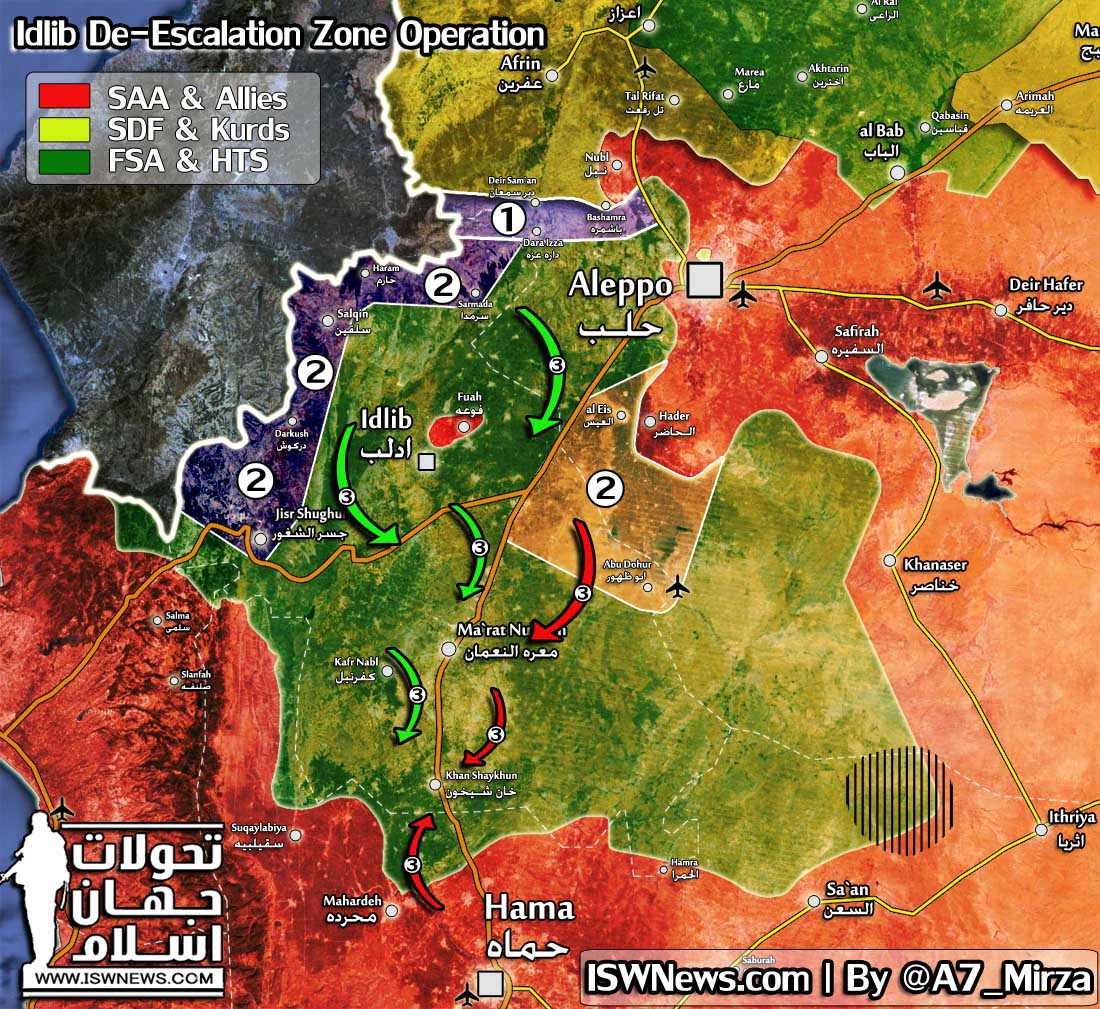
    After announcing the start of the operation in Idlib province by Erdogan on October 7th and executing another part of the Astana agreement known as “De-Escalation Zone Deal” , till now about 200 military equipment including military vehicles and personnel along with the Turkish army entered the province of Idlib.

    Turkey’s entry into the province of Idlib within the framework of the Astana peace agreement can be investigated.

    Apart from mentioned objectives of entering the province of Idlib by the Turkey, in the first phase, this event is included of the presence of Turkish troops in western side of Aleppo province along the Darat Izza, Jabal Sheikh Barakat, Dir al-Sam’an and the frontlines between militants(Such as FSA, HTS, etc) and the Kurds(SDF, YPG, etc) throughout the southern front of Afrin, from Bashamrah to Jandris.

    It should be noted that the Turkish troops will not cross the contact line of Afrin and by being in these areas, they will play as a buffer zone.

    In the second phase, Turkish troops will across border between Syria and Turkey. Therefore, Turkish troops will be deployed in areas of Darah Izza, Harim, Sarmada, Darkush, Atmah to Jasr al-Shughur.

    The purpose of this move is to close all militants`s supplying routes (weapons and personnel) from Turkey to Syria and vice versa.

    So far, there will not be any serious tension certainly.

    According to what our field & trusted sources have indicated that the Turkish and their militants (like Euphrates Shield, etc) will move from north and west towards the Aleppo-Hama highway, and on the other hand, the Syrian army and Resistance forces will move from the south of Aleppo and the Abu Dhohour area to the Aleppo-Hama highway.

    The final goal is to open the Aleppo-Hamah highway.

    In the next stage and third phase Turkish troops or Turkish backed forces will be distributed in areas along the highways like Saraqeb, Khan Sheikhun, Ariha, Murek, and they will enter the northern suburbs of Hamah from the north.

    From the southern side, the Syrian Army and Resistance forces as well as the Russian forces on the outskirts of Hama will move along the highway, and ultimately the Aleppo-Hamah highway will be fully liberated and active.


    Therefore, all that mentioned will be carried out in three general stages:

    The first stage is on the western suburbs of Aleppo
    The second stage in the northern and western suburbs of Idlib
    Third stage along the Aleppo-Hamah highway


    According to what is known, the city of Idlib will remain under the control of Tahrir al-Sham (HTS)

    Finally, due to the field changes and political changes, it will decided that the Turkish-backed forces will be distributed in more areas of Idlib and northern Hamah, or that the Turkish forces will be completely excluded from the area by clearing (setting) the situation of the armed forces and the city of Idlib.

    The details of this stage can include many options that domestic (national) reconciliation is one of them.


    It should be noted that the issues mentioned are based on field evidence and the parties’ plans(all sides), and given the dangerous nature of Erdogan and his sudden turns, there is a possible new scenarios.

    There is also no specific talk about the state of Fu`a and Kafraya it is not clear what kind of plans were intended for these settlements.

    Also, the situation of important areas such as al-Rashidin and al-Zahra in west of the city of Aleppo is unclear, and it is likely that these areas will also join the national reconciliations.
    HD MAP

  • Eastern deserts of Damascus were liberated completely, 8000 square kilometers.

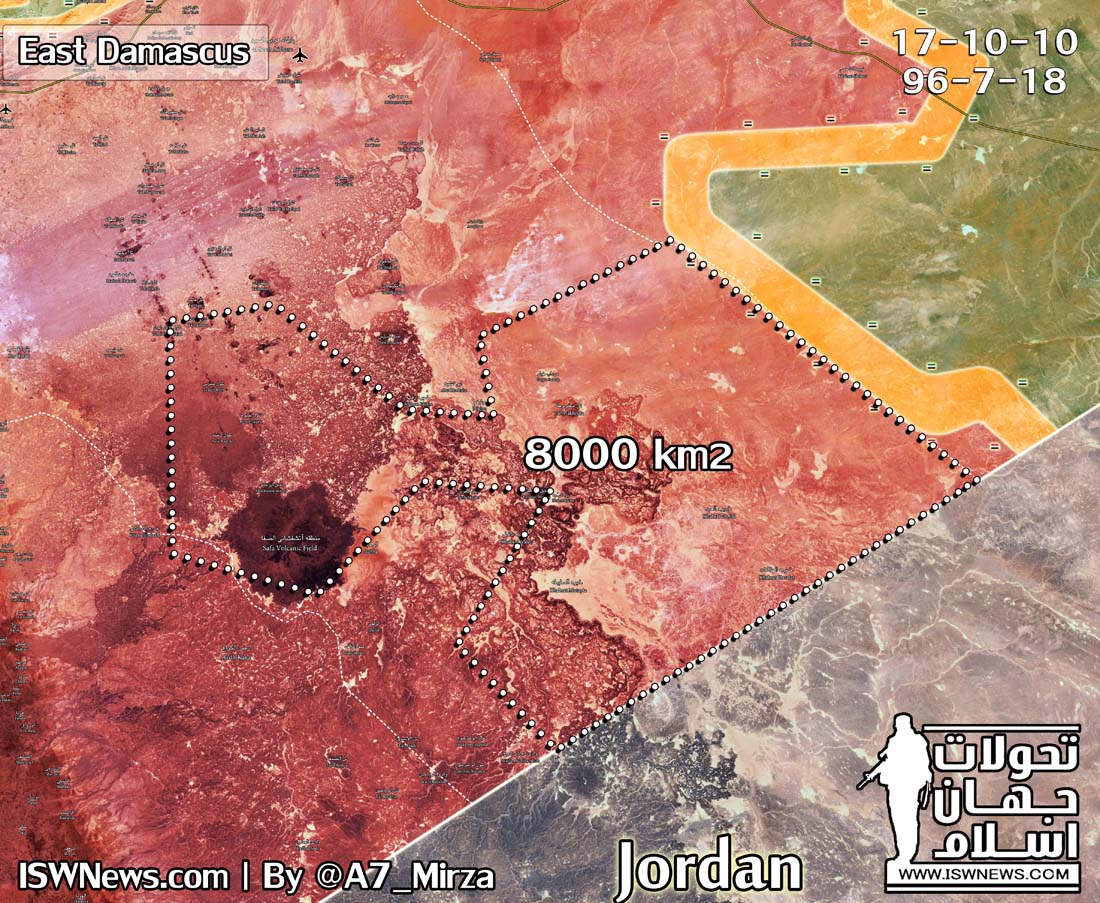
    Eastern deserts of Damascus were liberated completely, 8000 square kilometers.

    The achievement was gained while the Syrian army and Allied forces succeeded in moving forward in the eastern desert of Damascus and not only they liberated important points such as Tel-al-Dakwah, Jabal-Al Sis, Tel-al-Makhul, Tolul raqilah, Kharbah al-Ambashi and Jabal-el-Jarin they besieged the rebels in the central areas of the desert of Damascus.

    In the Following of the operation, since the middle of August, advances began to clear all border areas with Jordan and the illegal passageways that the militants used to transport weapons and logistics from Jordan to Syria, and in the first step, an area of ​​nearly 1,300 km Square of Suweida province and Damascus was liberated.

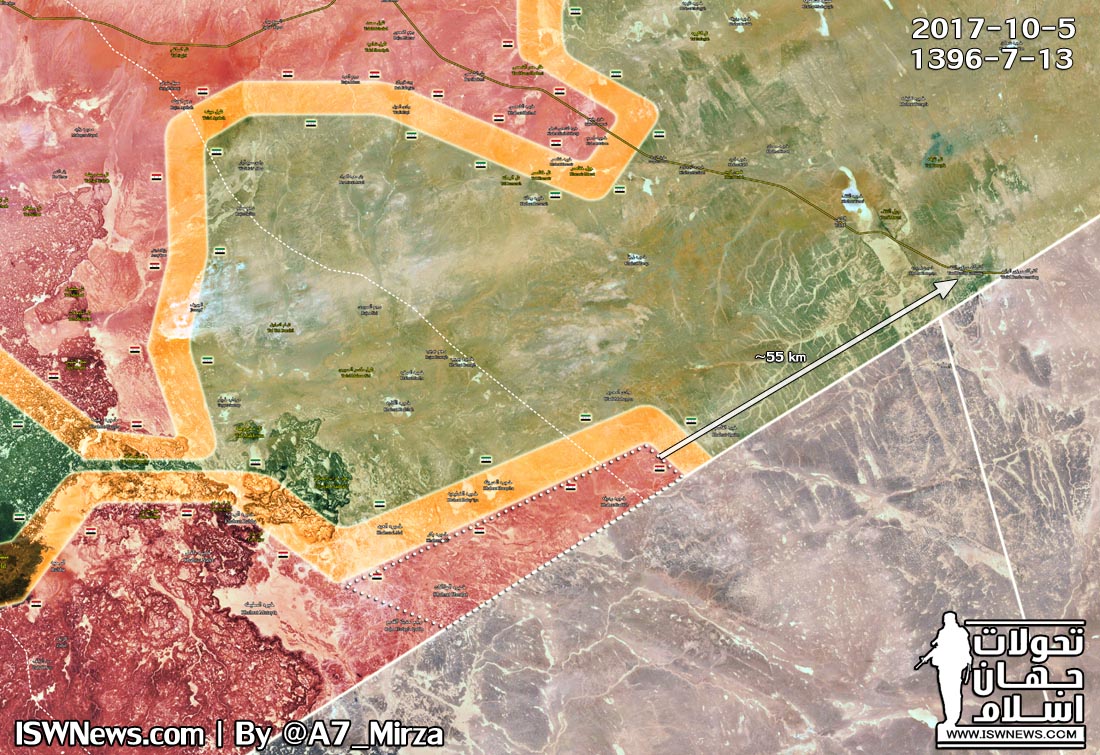
    The final phase of clearing the border with Jordan and the complete clearance of the deserts of Damascus in the last three months was slowly and without attracting attention and with least tension, and finally, with the arrival of the Syrian army at the border post of 204 at 55 kilometers to al-Tanf; the rebels had to retreat from the besieged areas and an area of ​​nearly 8,000 square kilometers was liberated from eastern Damascus, and rebels were thrown out completely from east of Damascus.

    HD MAP

  • More Details About ISIS Presence In Idlib And Northern Hama

    More Details About ISIS Presence In Idlib And Northern Hama

    For some observers this situation looked strange because ISIS and ISIS-affiliated groups had been rarely seen in maps and news reports about the situation in Idlib, southern Aleppo and northern Hama.

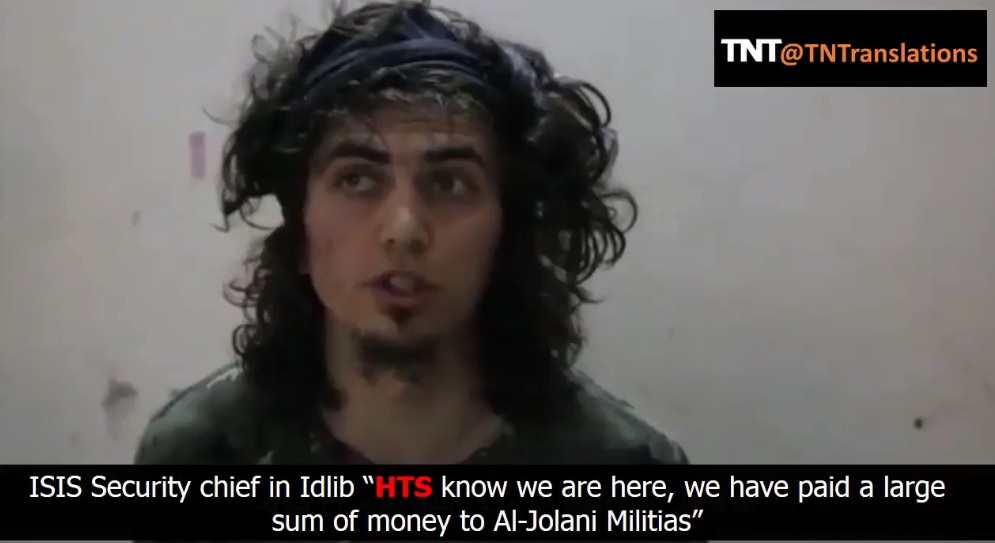
    However, the video above shows a detained ISIS security chief in Idlib, Abu Sulayman.

    He revealed that about 900 ISIS militants remain in Idlib province. Sulayman said that paying money to the Hayat Tahrir al-Sham (HTS) leadership, ISIS was able to supply its members in the “opposition-held area”. A part of ISIS forces in Idlib province is members of Jund al-Aqsa that has pledged allegiance to ISIS.

    Separately, Islamic World News also reported that about 200 militants affilated with ISIS sneaked from eastern Salamiyah to northern Hama in September 2017. These militants were members of the Davood Brigade and Jund al-Aqsa.

    A notable number of ISIS members still remains surrounded by government forces in a pocket east of Salamiyah. These militants will likely continue attempts to sneak to the area captured by ISIS in nortern Hama.

    Translation provided by SouthFront


  • Syrian Army Liberated Half Of Al-Mayadin City

    Syrian Army Liberated Half Of Al-Mayadin City

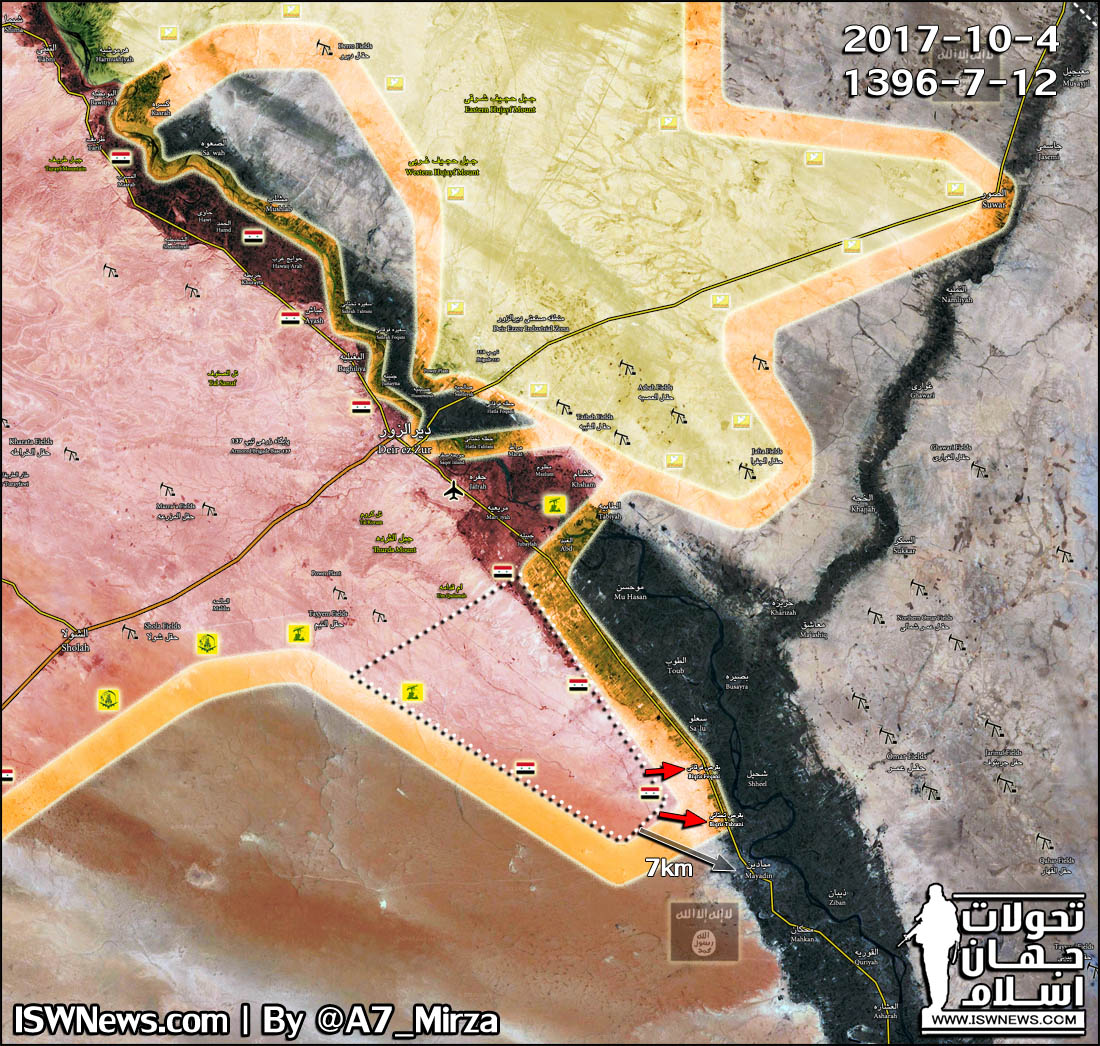
    Following a series of firefights with ISIS, the SAA has liberated Balum, Balout, the Electrical sub station, the Taybah school and other points in the southern and western part of the city.

    About a half of Mayadin is under the government control.

    Translation by SF

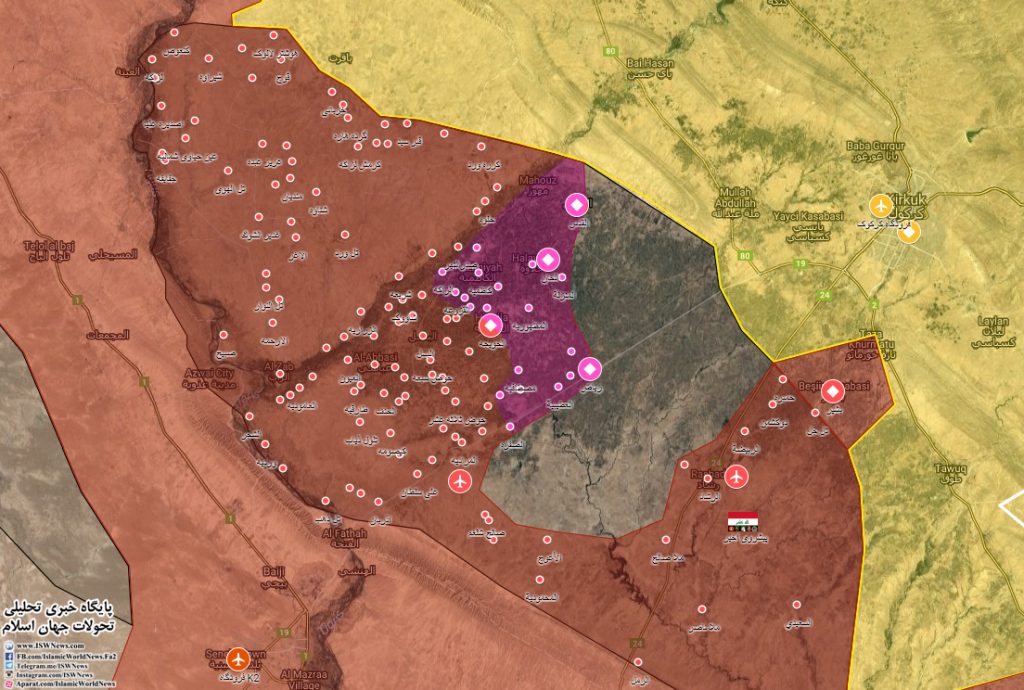
  • PMU’s Al-Abbas Fighting Division Finishes Its Tasks Within Al-Hawija Operation

    PMU’s Al-Abbas Fighting Division Finishes Its Tasks Within Al-Hawija Operation

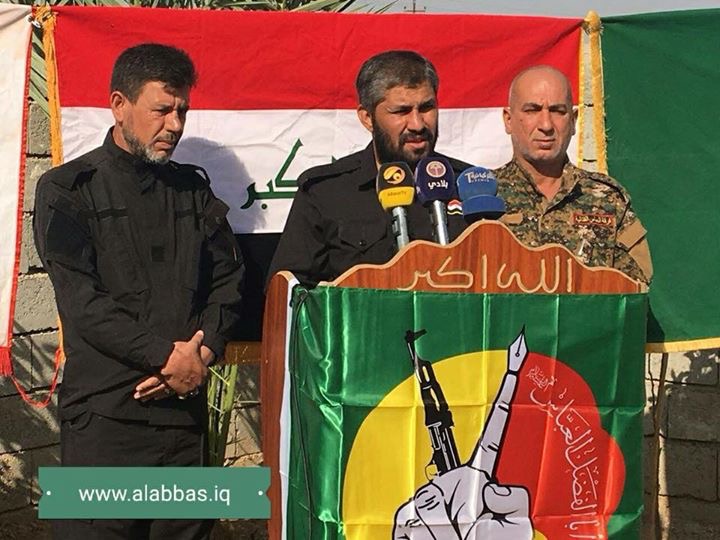
    The announcement was made at a press conference in Bashir city located south of the Kirkuk provincial capital on Monday.

    The Al-Abbas Fighting Division participated in the second phase of the Al-Hawija operation. The group contributed to liberation of Al-Riyadh city and an area north of it.

    During these operations Iraqi forces liberated 61 villages in a 246 square kilometers area, discovered ISIS mass graves and munition depots as well as neutralized a large number of explosive devises in the liberated area.

    Translation by SouthFront

  • Erdogan officially announced the launch of the operation of Turkish Army and the Euphrates Shields in Idlib.

    Erdogan officially announced the launch of the operation of Turkish Army and the Euphrates Shields in Idlib.

    It was also mentioned that air support will be provided by Russian fighters.
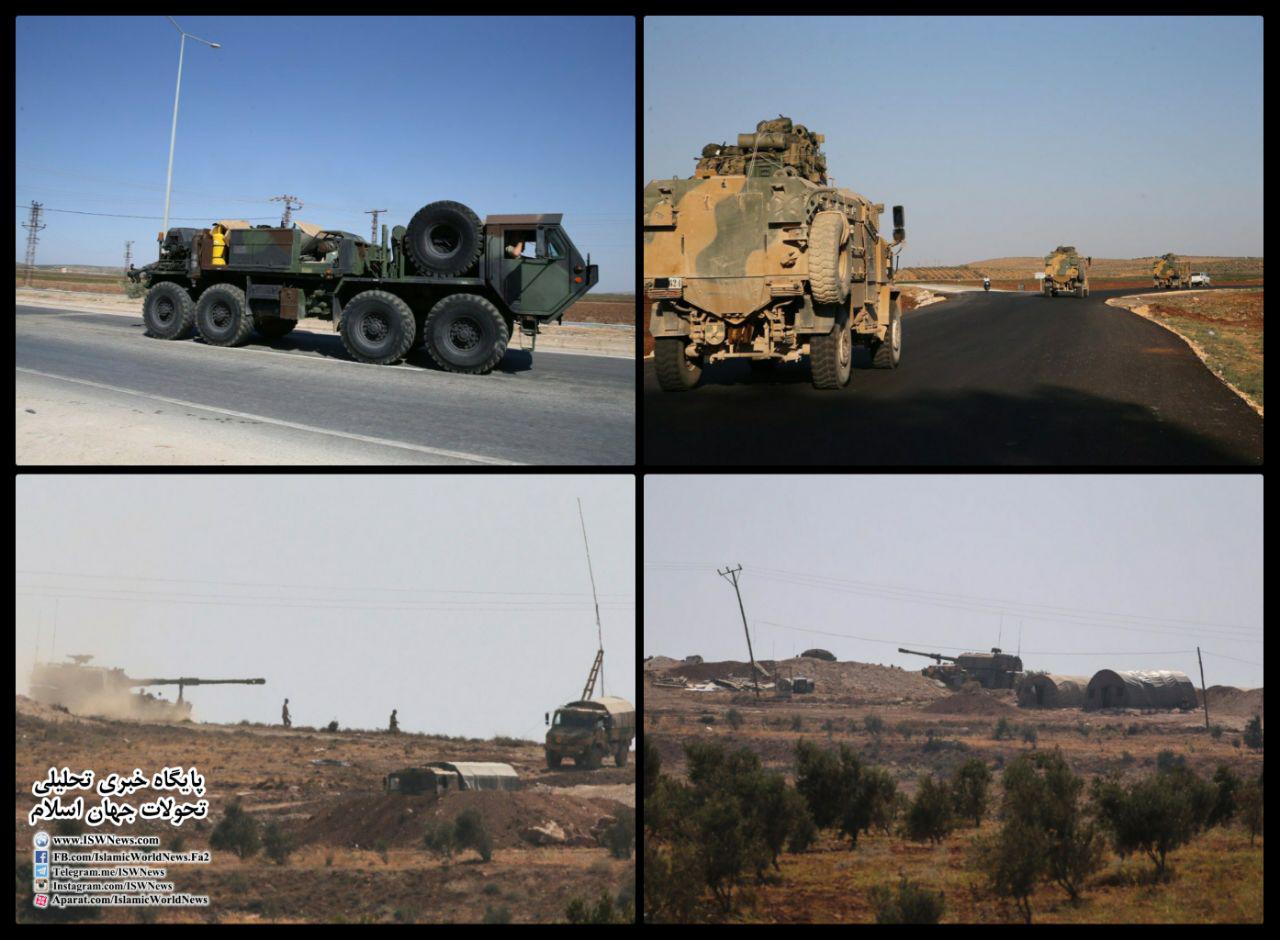
    Therefore, in the past days, we saw a large supply of heavy weapons and armored vehicles of the Turkish Army to the Bab Al-Hawa border crossing. The troops of the Ferghah al-hamazah of Euphrates shield have also been seen on this axis.

    It should be noted that the official announcement of this operation was made just after Putin’s trip to Turkey, followed by the trip of Recep Tayyip Erdogan to Iran and the meeting with the leader of Iran and the President Rouhani. So clearly, the plan has not started without the coordination of the three countries..
    The pictures above are related to the beginning of the Turkish operation in the province of Idlib

  • The latest situation of contact lines around the al-Tanf border crossing

    The latest situation of contact lines around the al-Tanf border crossing

    The Syrian Army and allies over the last few months, especially in the last month of the summer when other Syrian fronts were very active, began to slowly clear the borders of Jordan with the least amount of tension, and by liberating border posts one after the other they moved to the nearest point of the Al-Tanf border crossing.

    The progress in this area made while the Badia(dessert) armed forces and their masters, the United States and Jordan, lost the upper hand in the Al-Tanf crossroad when the Resistance forces, and the Syrian Army turned around it so they made the best use of this opportunity. They blocked large areas and routes that were considered as the main ways for supplying armed forces from Jordan to Syria in the past.

    At the same time as the advancements that were mentioned, the pressure for negotiations was also applied by Russia on the United States and Jordan to speed up the process of solving the problem of the al-Tanf area and liberating the southeastern regions of Syria. Therefore, as we said earlier, talks were held in Jordan during the summer (the quality and quantity of the talks are unclear) and the latest (unconfirmed) news of the decision of the United States and Jordan is to give the control of the Al-Tanf bordercorssing to the Syrian government.

    Basically, in the current situation and with considerable successes of the Syrian army and the resistance forces in Syria, the Badiah armed forces will not do anything and their presence will not help the armed forces and their goals, unless the Americans and Jordan directly enter into battle and declare war against Syria.

    Therefore, now it is the most logical way to give the region to the Syrian army.

    “The border between Syria and Jordan near the US base in al-Tanf has become a 100-kilometer” black hole, “said the Russian Defense Ministry’s deputy Igor Konashnokov, The Representative of Pentagon has repeatedly said that new Syrian forces are being trained under the supervision of the United States, Britain and Norway. Along with the new Syrian forces, ISIL forces emerge from that point, like the devil. ”

    These are sarcastic expressions to the recent attacks of ISIL on al-Qaryatain, or the Syrian-Iraqi military posts around the Al-Tanf border crossing, and according to the Russian Defense Ministry, these attacks could not be possible without American guidance or without allowing ISIS terrorists to pass.

  • Al-Qaeda Leader Criticizes Syrian Militants For Attempts To Distance Themselves al-Qaeda Name

    Al-Qaeda Leader Criticizes Syrian Militants For Attempts To Distance Themselves al-Qaeda Name

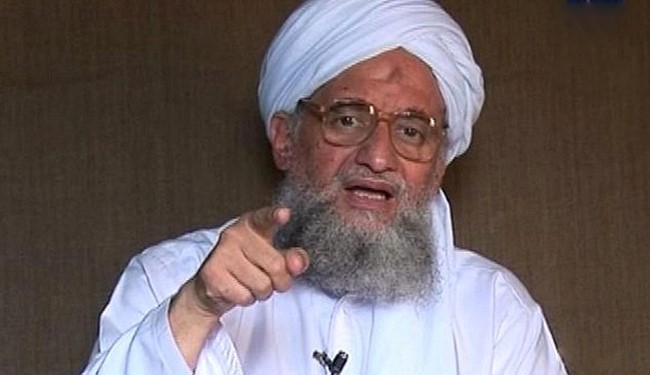
    In this message entitled “We will fight you so that there will be no Fitnah (sedition), God willing”, Al-Zawahiri even had to reiterate the religious nature of the allegiance to al-Qaeda leaders.

    Al-Zawahiri’s message came amid rumors that he was unable to control and manage various al-Qaeda branches.

    Sbelieve that Osama bin Laden’s son’s son, Hamza bin Laden, could be a serious competitor to Al-Zawahiri. Some supporters of the terrorist group believe that Hamza will be able to restore Al-Qaeda’s previous prestige.

    In particular, Hamza has recently called on militant groups in Syria to unite against their enemies and to avoid disagreements.

    Translate provided by SouthFront

  • The achievement of the seventh day of the Hawijah Operation

    The achievement of the seventh day of the Hawijah Operation

    Operation continued to the northern, eastern, and southeast areas on Thursday after the official clearing of the city of Hawijah, and another important achievement was made by the joint forces, and the city of Al-Riyaz liberated completely

    In today’s operations, more than 60 small villages and large areas of northern Hawijah were liberated.

  • The latest situation in the center and east of Syria; the Syrian army entered the strategic city of Al-Mayadin

    The latest situation in the center and east of Syria; the Syrian army entered the strategic city of Al-Mayadin

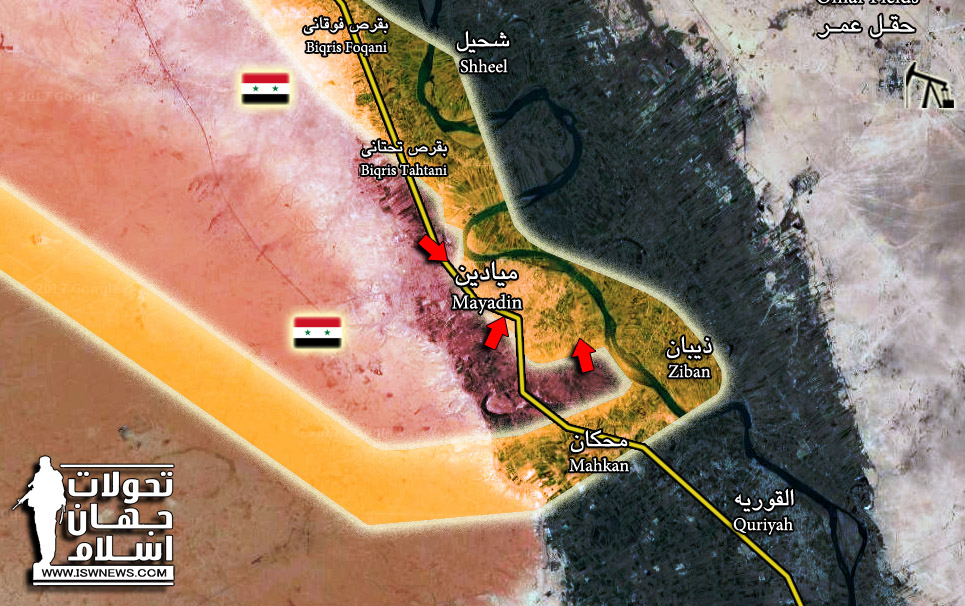
    Following the advances of the Syrian army in the eastern part of Deir Ezzor, the forces of Soheil Hassan reached to the Al-Mayadin, and liberated areas such as Bal`oum, Rahbah castle, Al-Mayadin silos and few other areas in the southern and western parts of the city.
    These advances took place after that the army forces succeeded in cutting off the western side of Al-Mayadin by their progress in Biqres
    Also, last night, army forces entered a part of the city’s districts, but because of al-Mayadin’s situation, the decision was made to retreat, and forces are now stationed at the western and southern entrances of the city, and the ISIL positions inside the city are being targeted by precise fire of artillery and Russian warplanes

    HD MAP

  • Deir Ezzor update: Syrian Army within striking distance of ISIS capital

    Deir Ezzor update: Syrian Army within striking distance of ISIS capital

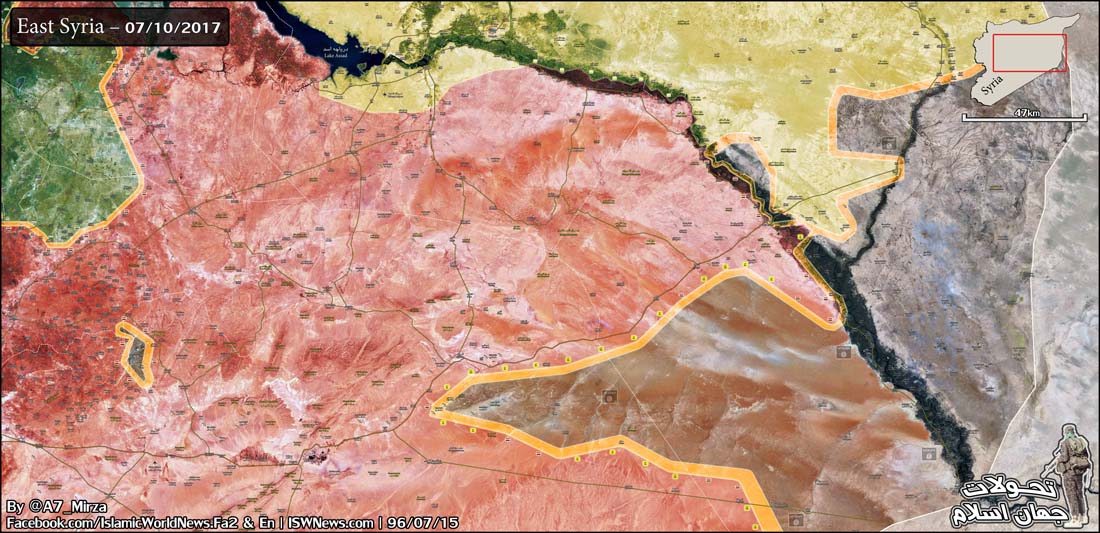
    Most recently, units from the Republican Guard, 4th Mechanized Division, and 5th Legion have made their way across several kilometers of territory south of the provincial capital, putting them within striking distance of Al-Mayadeen, the Islamic State’s new de facto capital in Syria.

    According to the latest Syrian military report, the SAA is only 6km away from Al-Mayadeen, marking the first time in years that the government forces have had any presence around this Deir Ezzor Governorate city.

    For ISIS, losing Al-Mayadeen might be a bigger loss than their imminent defeat in Raqqa City, as the former is located along the main road to the terrorist group’s most important Iraqi crossing at Albukamal.

    Albukamal is located directly west of the Iraqi city of Al-Qa’im, which is another terrorist stronghold in the Al-Anbar Governorate.

    HD Map

    Source

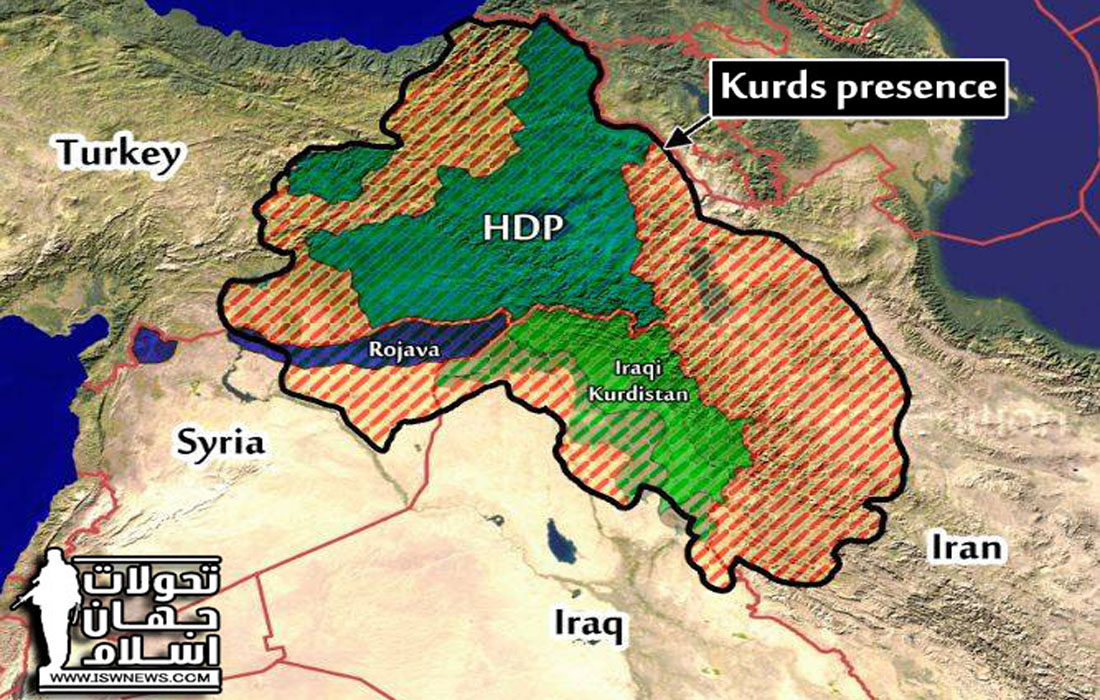
  • Three main reasons which bind all kurds to Iran

    Three main reasons which bind all kurds to Iran

    An important point in the history of the Kurdish struggles is the remarkable difference between the Kurdish riots in Iran compared to the riots in Turkey and Iraq. The Iraqi Kurds had bloody clashes with the Iraq(central government) for a long time. in Anfal operation , which was launched by the Saddam Hussein against the Kurds.especially in 1988 that 180 thousands Kurds lost their lives.

    The war between the PKK and the Turkish government, which has been taking place in the country since 1984, caused nearly 50 thousand dead.

    But the war between the Iranian government and Kurdish armed groups is far less extensive. This is the result of the less friction(struggle) of the Kurdish society with the government compared to the Kurds of Iraq, Turkey and Syria, which makes the Kurdish insurgent groups unable to attract people’s support like the insurgents in three other countries did. This issue has so many reasons that most notable reasons are these:

    1. Differences in the national identity in Iran with other countries with Kurdish population.

    National identity in Iraq and Turkey is defined by ethnicity. Turkey has based its national identity on Turkism, and Turkey’s name comes from the Turkish word. According to the Turkish Constitution, all citizens of this country are considered to be Turkish. Turkey gave the Kurds the title of “Turk of Mountain” and by 1991, the use of words such as Kurdistan and Kurd in this country was prohibited even in personal life.

    In Iraq, the Ba’ath Party was an Arab nationalist party, which established the country’s identity on Arabs.

    In Syria, the same is true about the Arab Ba’ath Party, and its official name is the Syrian Arab Republic. On the contrary, Iran has not defined its identity on ethnicity.

    In Iran, different ethnic groups have lived together for a long time and have formed kind of historical identity, while Turkey, Iraq, and Syria all founded after the First World War and after the fall of Ottoman caliphate, especially Syria and Iraq have a short historical identity as new founded countries . In addition, from the time of Safavids, Iranian identity has been defined based on the religion of Islam and Shiite religion, not ethnicity. That is why in Iran, the Shiite Kurds have not shown any ethnocentric tendencies, and almost all Kurdish ethnic struggles have occurred in the Sunni areas. However, it should be noted that the root of the ethnocentric struggles of the Sunni does not return to the differences between the two Shiite and Sunni religions. Basically, in the regions with Sunni population in Kurdistan, political Sunni Islam has little power(influence), and the vast majority of Kurdish armed groups follow a leftist(left wing)or nationalist ideology. The cause of the emergence of ethnic identity in the Sunni Kurdistan of Iran is that the people of these areas are not part of Shiite religion, which is one of the most important elements of the unity of the majority of the people of Iran. Of course, this does not mean ignoring other unifying elements of Islam, the Iranian historical identity, and linguistic and ethnic similarities. As we have seen and will see, these factors have made the Kurdish ethnic conflict less in Iran than the neighboring countries.

    2-The close relation of ethnic and racial identities of the Kurds to the rest of Iranians

    The race of Kurds are among the Aryan tribes. Kurdish is also one of the branches of Persian language in linguistic divisions and is similar to Persian language and local languages ​​in Iran. Like other Iranians, the Kurds celebrate Nowruz and also Kurds & Iranians have many common culture and myths .But there are no similarities between Kurdish language, culture, and myths with the language, culture and myths of Arabs and Turks.

    In Turkey and Syria, Nowruz was a political event and a sign of Kurdish ethnic identity. Because of that, for a long time, severe restrictions were imposed by the governments of these countries on this celebration, and in some cases, Kurds were killed by the security forces. But Nowruz throughout Iran is a national celebration that various ethnic groups of Iran celebrate along with the government. Because of these reasons, the sense of belonging to the Iranian identity among Kurds is far more than their solidarity with Turkish and Arab identities.

    3-The Cultural and Political Approach of the Iranian Government towards the Kurds

    Iran has chosen a more liberal cultural and political approach to its ethnic groups, including the Kurds. Unlike Turkey, the use of Kurdish or the use of words had not been forbidden in Kurdistan in Iran. Kurdish language has long been used in local media, and in recent years, the teaching of ethnic languages ​​in schools has also been provided. Also, the Shiite Kurdish politicians did not have any obstacle to reach the highest political and administrative positions. Such conditions have not existed for a long time in Syria, Turkey and Iraq, or still does not exist. Before the Syrian civil war, the government refused even to issue birth certificate for Kurd residents and to recognize their citizenship. There were also obvious discrimination against Kurdish citizens in Turkey and Iraq.

    Although some of the dissatisfaction and independency tendencies in the Sunni regions of Kurdistan of Iran can not be denied, these reasons, plus the political and security problems, except in the first two decades of the revolution, and especially in the early years, the activities of the Kurdish rebel groups were mainly limited scattered attacks on the border areas from inside of the Iraqi Kurdistan and these attacks were stopped at some points.

    PS: This map does not represent correct & exact boundaries, and it’s just the hypothetical range of Kurdish presence in region