Category: Iran

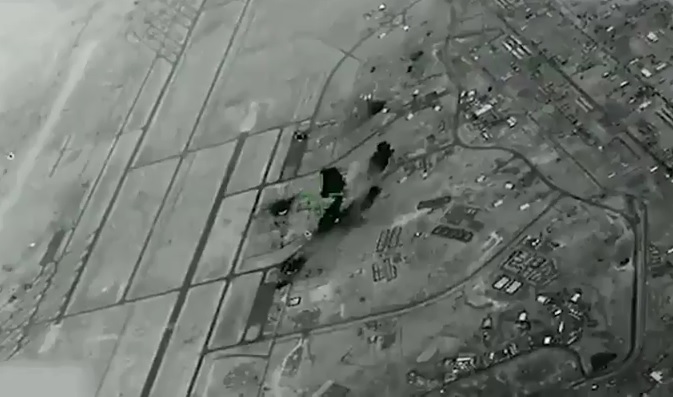
  • New declassified footage of Iran ballistic missile attacks on Ain Al Asad Base + ’60 Minutes’ documentary

    New declassified footage of Iran ballistic missile attacks on Ain Al Asad Base + ’60 Minutes’ documentary

    This footage used for ’60 Minutes’ documentary that aired on February 28.

    The documentary produced by the ’60 Minutes’ program is about the Iranian missile attack on Ain al-Asad Airbase, and for the first time shows footage of Iranian missile attacks on this base from the American drone camera.

    While this documentary trys to distort the facts about General Soleimani and his cowardly assassination, as well as the number of American casualties; However, interviews with US commanders and personnel at the Ain al-Asad base at the time of the attack, the US Operations Room, footage of a number of missile strikes, and some other important points and information are parts of this short documentary that can be interesting for viewers.

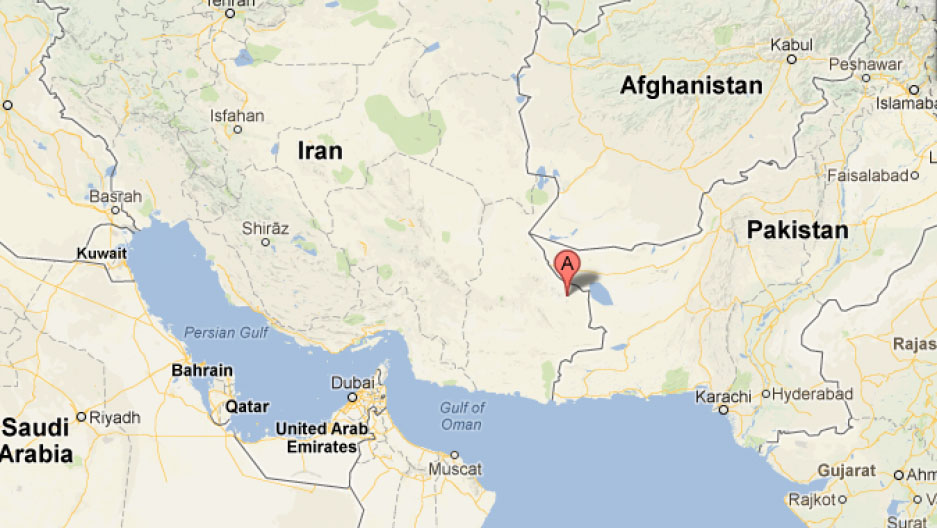
  • What is happening in Iran’s Baluchestan region?

    What is happening in Iran’s Baluchestan region?

    Local fuel bearers are the indigenous people of the region who, with the permission of government and military officials of Iran and Pakistan, move fuel between the borders of the two countries and earn money in this way and make living.
    Although this is a form of fuel smuggling, it is being done with the permission of government and military officials for the well-being of the local people.

    The interesting thing is, the tension in border areas is rising at the same time of unveiling the Iran’s plan, ‘Razzaq plan’ by the government and IRGC for opening a border passage in Baluchestan area to organize fuel bearers activities and secure their lives against any threats and provide for the indigenous people of the region.

    According to this plan, each person can carry a certain amount of fuel cross border. According to local people and fuel bearers estimate, each fuel bearer can earn between 8 to 10 million Iranian toman monthly which is now a good amount of money for a comfort living.

    But two main groups are against the Razzaq plan: Terrorists and the Fuel mafia.
    Since fuel trafficking is one of the main ways for terrorists to cross border and by Razzaq plan they have to go through the passage and get searched, terrorists are against the plan. Fuel mafia is also against the plan since they cannot transfer the fuel unlimited and they lose a lot of money when they cannot exploit the country’s resources.

    The result is that the mafia (not individual fuel bearers) starts a conflict with Pakistani and Iranian forces at the border and several of them are killed and wounded in Saravan border area. The enemy chain media like the MEK/MKO terrorist organization also come to the battle under support of terrorists whose hands are stained by people’s blood.

    The Western media and the enemies of Iran these days have mixed up the facts with lies and described the clashes between the people and the IRGC. While the Revolutionary Guards have been responsible for securing the borders and these areas for many years, they use the help of these people in the form of Basij bases.
    Projects such as Makran Coastal Development Project, Razzaq Economic Plan, construction of ports, etc. are among the projects that the Islamic Republic has considered in order to improve the situation in Sistan and Baluchestan, But Iran enemies uses the weaknesses of these plans, such as population displacement, weakening agriculture, etc., and incites the people by terrorist groups.

    Thus, the developments in the Baluchestan region seem to be more than a simple conflict between fuel fuel bearers and government officials, and more malicious motives are hidden behind these movements.
  • Iran’s ‘Kaman 22’ combat drone + Images

    Iran’s ‘Kaman 22’ combat drone + Images

    Iran’s Air Force commander visiting ‘Kaman 22 project’ said: This drone is armed with weapons, optical and ECM pods and is about to finish the production phase.

    It is the first wide body drone of Iran and has a flight duration of 24 hours and range of more than 3,000 km.
    It can carry 300 kg of payload. This drone resembles American drone MQ-9.

    General Nasirzadeh said recently that Iran’s Air Force used this drone to control and guide the drill fields lately.

    The previous model of Kaman, i.e., Kaman 12, was unveiled in 2018 which has a flight duration of 10 hours and range of 1,000 km. It was used in Iran’s army drill last year to control and observe the drill area.

  • Visit of the Head of the Judiciary of the Islamic Republic of Iran to Iraq

    Visit of the Head of the Judiciary of the Islamic Republic of Iran to Iraq

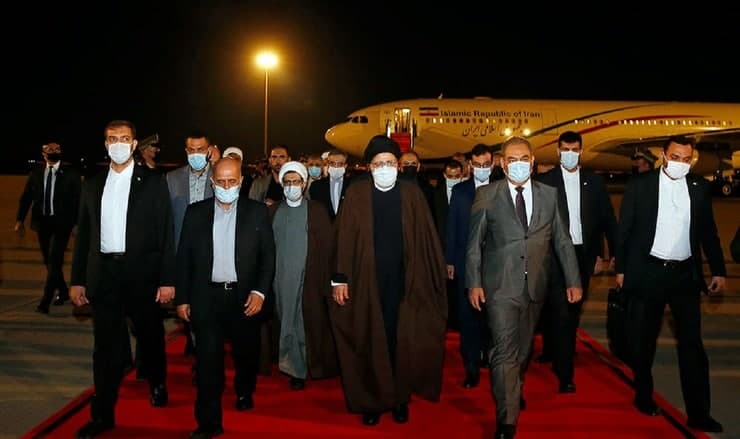
    Seyed Ebrahim Raisi was welcomed by Iraqi officials and people during his several-day trip to Iraq after arriving at Baghdad airport, and then attended at the martyrdom site of Haj Qassem Soleimani and Abu Mahdi al-Manhads and their companions near Baghdad Airport and in a speech praising the youth resistance against the United States and other foreign forces in the country said:
    “The martyrs Soleimani and Abu Mahdi al-Mohandes, with their sacrifices and blood, left security and stability for Iran, Iraq and the region.”

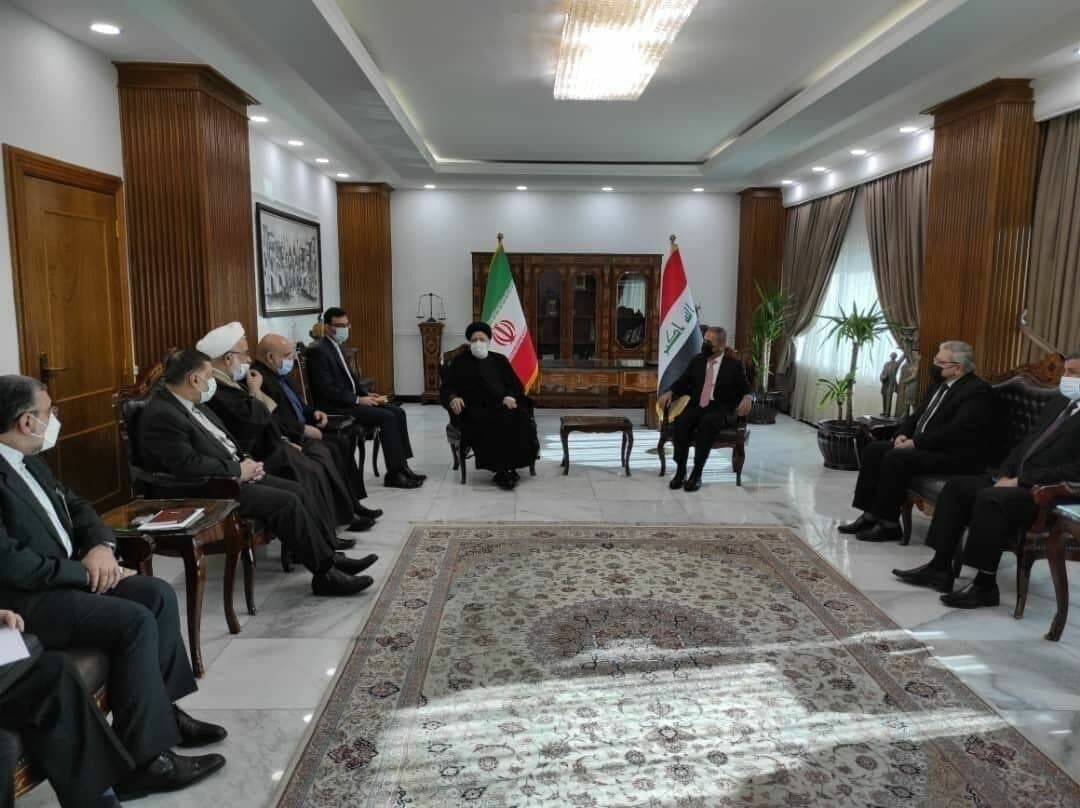
    During one of Seyed Ebrahim Raisi’s work plans in Iraq and meeting with the head of the Supreme Judicial Council, a memorandum of understanding was signed on fighting corruption and forming a joint committee to follow up on the legal problems of Iranian and Iraqi citizens.
    Also in a press conference after this meeting announced that the issue of the assassination of Martyrs Soleimani and al-Muhandis have been investigated.
    It is worth mentioning that before the visit of Seyed Ebrahim Raisi to Iraq, the head of the judiciary had said that the prosecution of the assassination of Martyr Soleimani is one of the goals of his visit to Iraq.

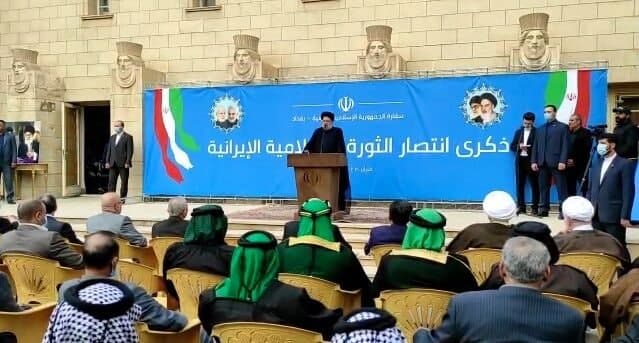
    On February 9, Mr. Raisi addressed a ceremony held by the Iranian Embassy in Baghdad to commemorate the anniversary of the victory of the Islamic Revolution of Iran and said: “Cooperation between the two countries to confront the ISIS is a true symbol of empathy and cooperation between the two nations. The bond between the two nations of Iran and Iraq is rooted in the beliefs and civilization of the two countries, and despite the will and efforts of the enemies, the relations between the nation and the government of Iran and Iraq are increasing.The Supreme Leader of the Islamic Revolution has repeatedly said that we think of a strong and independent Iraq.”

    The ceremony was attended by Iraqi officials, tribal elders, political and religious figures, and PMU commanders.

    On February 10, Seyed Ebrahim Raisi met with Iraqi Prime Minister Mustafa al-Kadhimi to discuss the expansion of relations between the two countries and the increase of cooperation in the judicial field. During this meeting, Mr. Raisi conveyed the message of the Leader of Irn to the Iraqi people and to the Prime Minister of Iraq.

  • Martin Griffiths trip to Iran and proposal about Yemen

    Martin Griffiths trip to Iran and proposal about Yemen

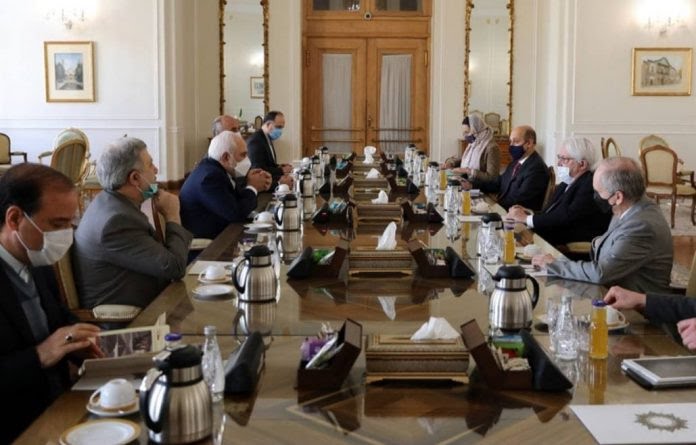
    He met with Iranian Foreign Minister Muhammad Javad Zarif, and talked about the situation in Yemen, how to achieve peace and form a government in Yemen.
    He also unveiled a two step proposal by UN to cease the war and deploy aid in the first step and negotiation to form a joint government in two years.

    It is said Martin Griffiths carried an important message on behalf of USA for Iran that in return for USA cutting supports for Saudi, Iran also stop supporting Ansar Allah.
    Zarif answered that until the war is ceased in Yemen Iran won’t ask anything from Ansar Allah. Zarif added that Ansar Allah demands Saudi coalition military operation against Yemen to stop and Ansar Allah will put Saudi Arabia as one of the sides in talks for reconstruction of Yemen.

  • Iran’s Army ‘Eqtedar 99’ drill + Photos

    Iran’s Army ‘Eqtedar 99’ drill + Photos

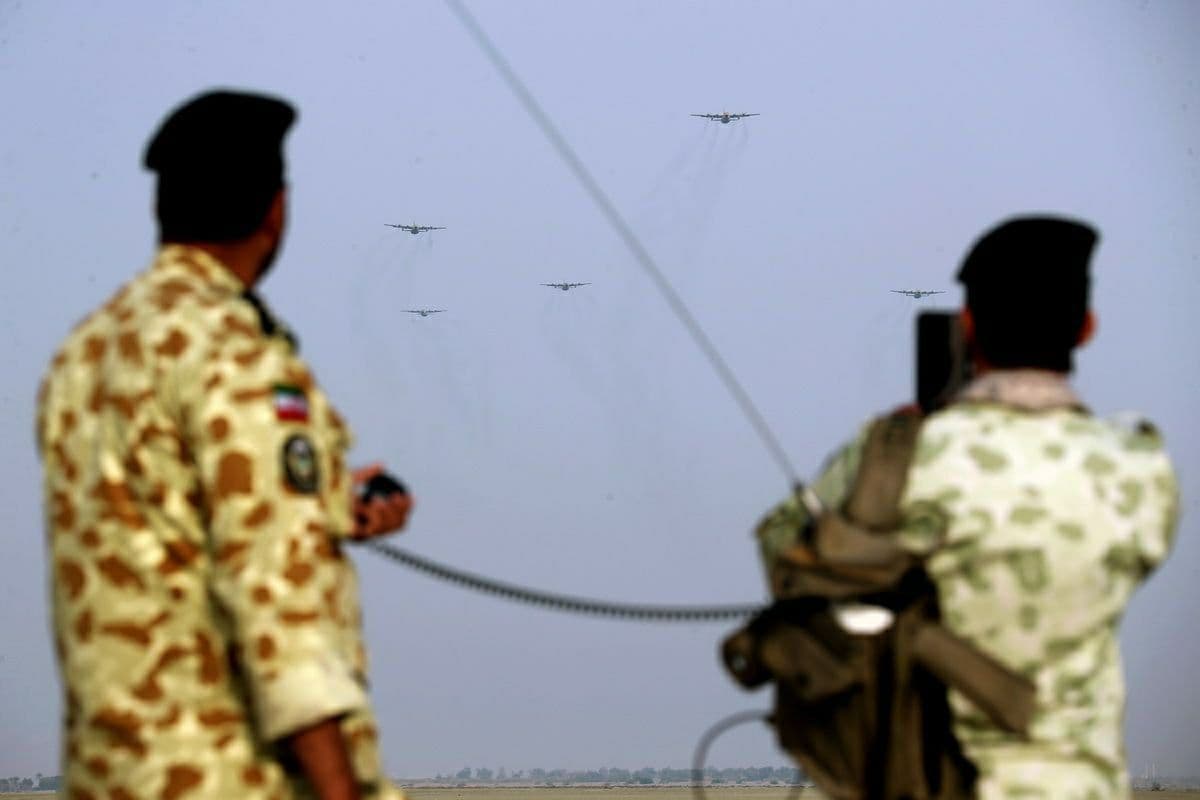
    At the beginning of the drill, General Sayyed Abdolrahim Mousavi, Commander-in-Chief of the Islamic Republic of Iran Army, General Kioumars Heydari, Commander of the Iranian Army’s Ground Forces and some of other commanders were present.
    The mission was to evaluate the combat operational level of different units and rapid transportation of troops from mainland to the battle and several different indigenous tactics of different special units were tested.

    General Kioumars Heydari, Commander of the Iranian Army’s Ground Forces said: Eqtedar 99 is launched with participation of 55th airborne, 65th special and 223rd rapid reaction brigades with support of cargo and attack units of airforce and army aviation.
    All the tactics used in the drill are complex and indigenous proportional to the new structure of the army.
    The weapons and equipment used are mainly built indigenously and the main goal of the drill is to evaluate the movement and aggressive capabilities of special and rapid reaction brigades and divisions.

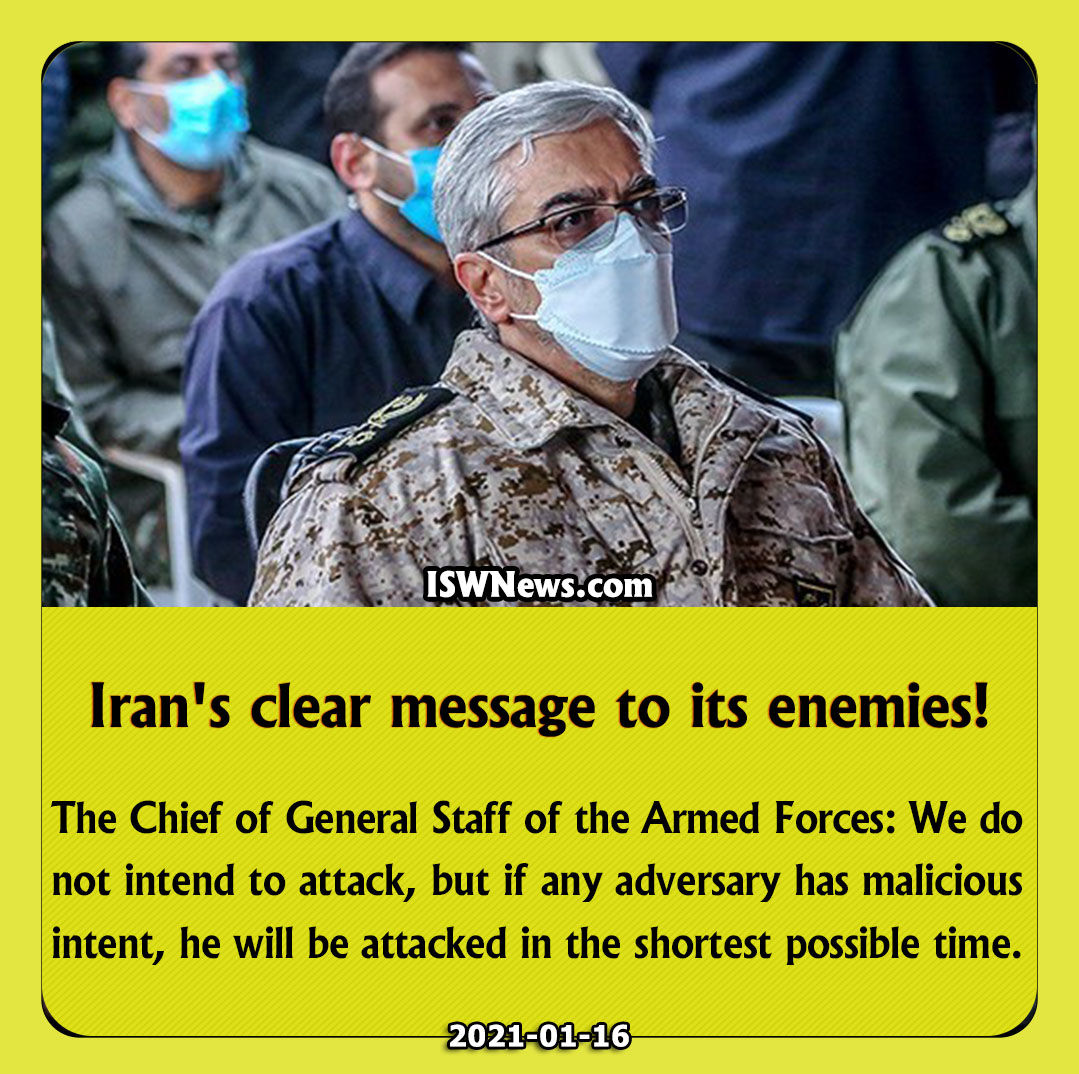
  • Iran’s clear message to its foes!

    Iran’s clear message to its foes!

    The Chief of General Staff of the Armed Forces of Iran, in a sideline of ‘The Great Prophet 15’ drill stated: “The selection of targets at a distance of more than 1800 km south of the Oman Sea and the beginning of the Indian Ocean is meaningful. The selection of large number of long-range missiles for naval purposes indicates that if the enemies have malicious intentions in the national interests of Iran, maritime trade routes and our territory, they will be targeted and destroyed by our missile action. Recent exercises demonstrate the extraordinary readiness of the Iran’s Armed Forces.”

  • Second phase of ‘The Great Prophet 15’ drill, attacks on naval targets with ballistic missiles + images

    Second phase of ‘The Great Prophet 15’ drill, attacks on naval targets with ballistic missiles + images

    Major General Bagheri, Chief of General Staff of the Armed Forces of Iran, said in this regard:
    “The selection of targets at a distance of more than 1800 km south of the Oman Sea and the beginning of the Indian Ocean is meaningful. The selection of large number of long-range missiles for naval purposes indicates that if the enemies have malicious intentions in the national interests of Iran, maritime trade routes and our territory, they will be targeted and destroyed by our missile action. Recent exercises demonstrate the extraordinary readiness of the Iran’s Armed Forces.”

    Major General Hossein Salami, Commander-in-Chief of the Islamic Revolutionary Guard Corps (IRGC) stated regarding the second phase of ‘The Great Prophet 15’ drill:
    “One of our main goals in defense strategies is to be able to attack enemy fleets, including aircraft carriers and warships, using long-range ballistic missiles. It is common to hit moving targets at sea using low-speed cruise missiles; But the use of ballistic missiles, because of the long distances from which we can target the moving targets in the ocean from the heart of our land, is a great defense achievement that has materialized and evolved in the IRGC Air Force.”

    Brigadier General Hajizadeh, Commander of IRGC Aerospace Force stated that missiles are a means of generating power and security for the Iranian nation, and emphasized:
    “If one day our enemies want to be mischievous, one part is the use of fixed and ground bases, which were practiced in the first phase of the exercise with a combination of the use of drones and surface-to-surface missiles; The second threat is the naval aspect, which was well met in the final phase of the exercise. Today, our goal was to destroy the enemy fleets in the northern Indian Ocean, at a distance of 1,800 km, and ballistic missiles were fired at this area, and precisely destroyed the targets.”

    He added: “If our enemies become ineffective within a radius of 2,000 kilometers, in fact, they will face definite inefficiency and will not be able to fire cruise missiles from their ships and the aircraft will no longer be able to take off from these aircraft carriers.”

  • Video: IRGC point-to-point missiles are a nightmare for Iran’s enemies

    Video: IRGC point-to-point missiles are a nightmare for Iran’s enemies

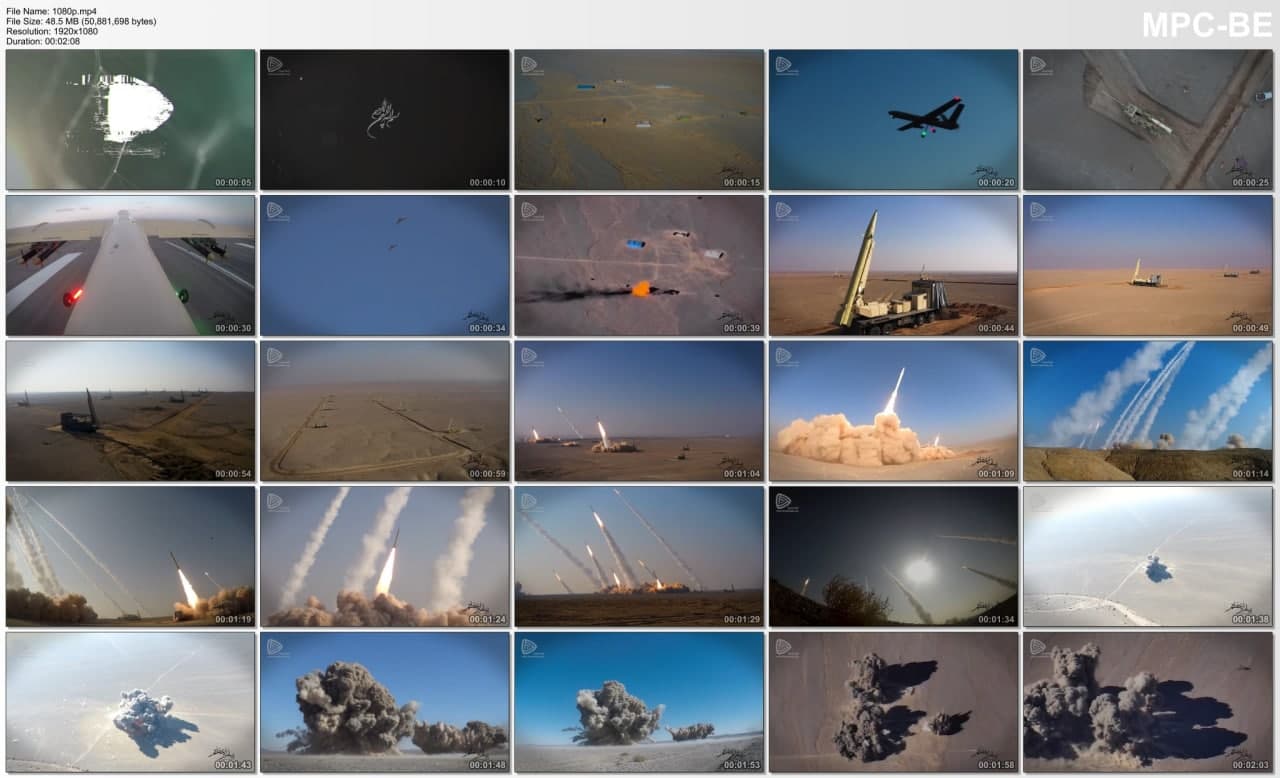
    The first stage of war game of Payambar-e Azam 15 (The Great Prophet 15) was held in the area of Central Desert of Iran on Fri. with the implementation of a combined missile and UAV operation of the IRGC Aerospace Force.

    The commander-in-chief of the Islamic Revolutionary Guard Corps (IRGC), General Salami described the launch of joint missile and drone operations in the first stage of the drill as a demonstration of the strong will of the Iranian people to defend their vital values.

  • Iran’s IRGC launches ‘The Great Prophet 15’ drill + images

    Iran’s IRGC launches ‘The Great Prophet 15’ drill + images

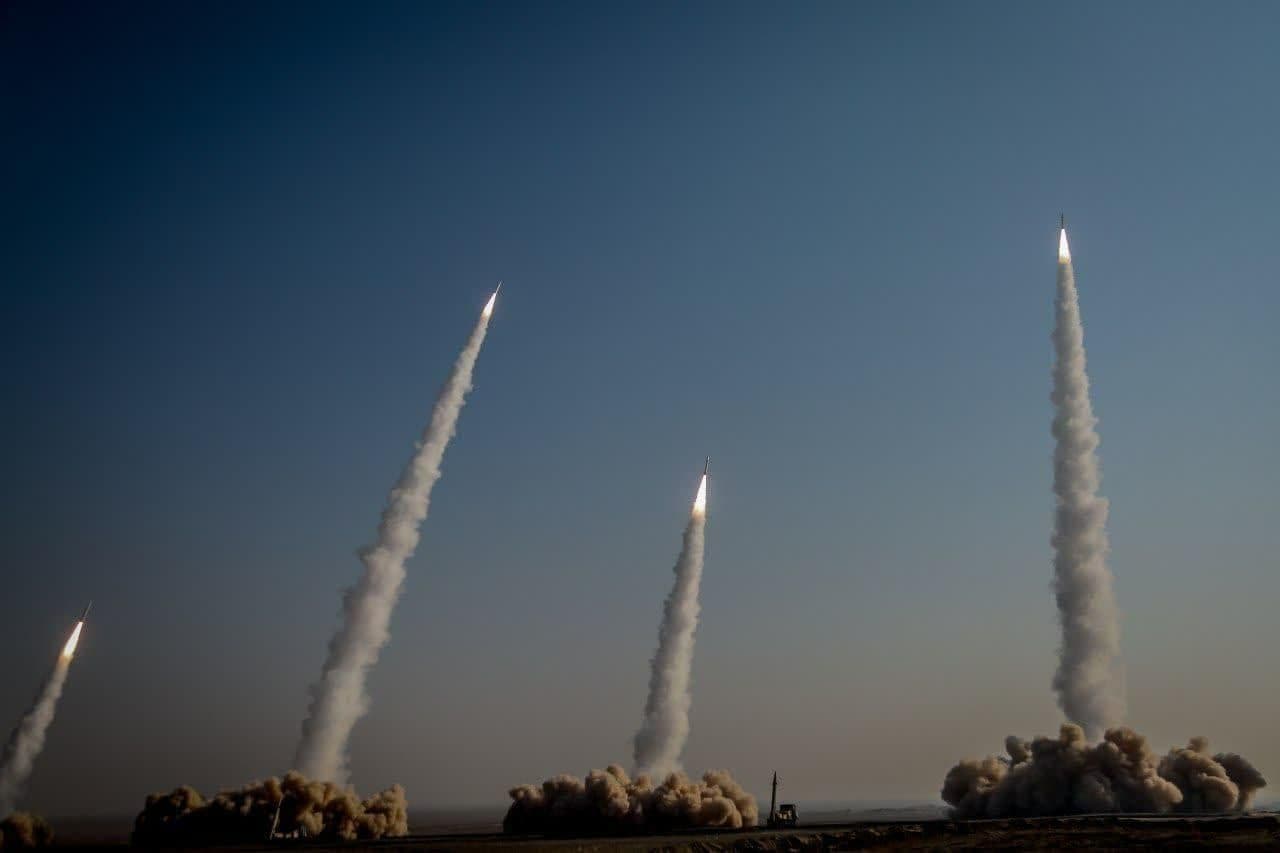
    At this stage, the new generation of IRGC ballistic missiles were fired in Zulfiqar, Zilzal and Dezful classes and successfully hit the targets. The mentioned missiles are equipped with detachable warheads and the ability to be guided out of the atmosphere, as well as the ability to disrupt and pass through the enemy missile defense systems.

    On the sidelines of the IRGC missile exercise, the IRGC Aerospace Force Commander, General Amir-Ali Hajizadeh said: “The missiles used today are a new generation of ballistic missiles and their capabilities are new, and the combination of these with drone operations and the use of achievements and technologies of artificial intelligence has created a new possibility and power.”

    The commander-in-chief of the Islamic Revolutionary Guard Corps (IRGC), General Salami also stated the successful test of new technologies in missile and UAV guidance and control systems and very precise command and control of the joint strategic operation scene as salient features of Payambar-e Azam 15 (The Great Prophet 15) Military Exercise.

    This morning, in the first phase of the IRGC’s “Payambar-e Azam 15 (The Great Prophet 15) drill, a combined operation of firing ballistic missiles of the new generation of the IRGC was carried out along with the combat, reconnaissance and suicide drones, which you can see in the following pictures.

    IRGC suicide drones diving on targets in “The Great Prophet 15) drill”


    According to the information provided by Gen. Hajizadeh, in this drill, the use of artificial intelligence is more on the agenda than the previous drills. An example of this can be seen in the formation of Shahed-161s. IRGC suicide drones have also become more effective using AI.

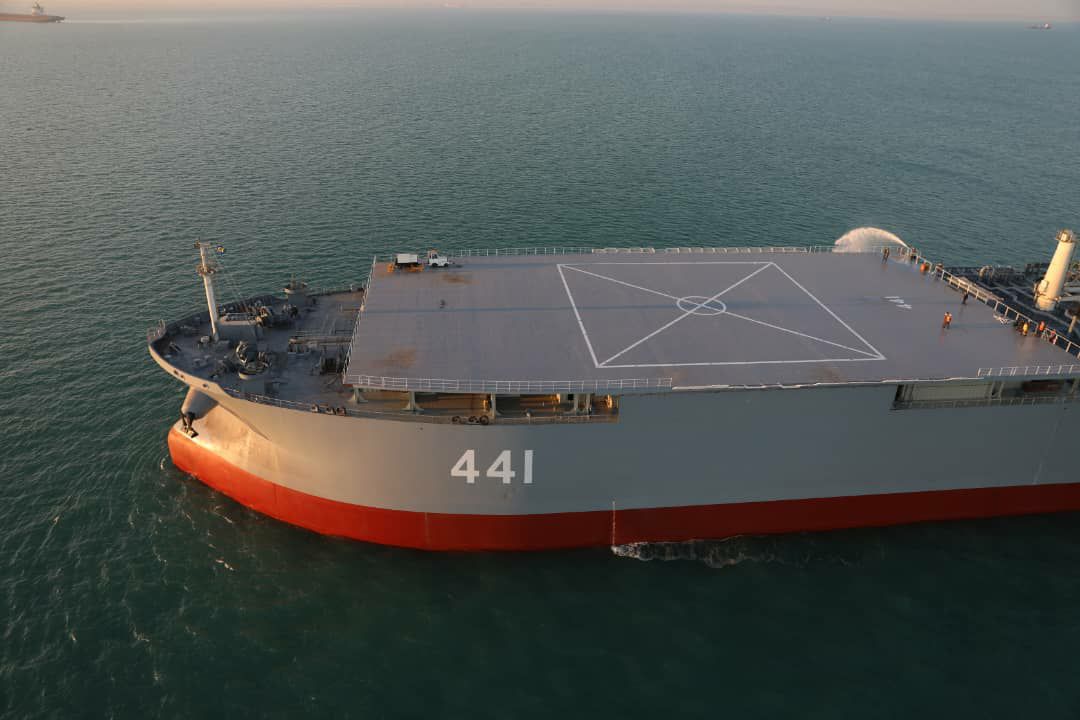
  • What is Iran’s purpose to build Makran Forward Base Ship? + Images

    What is Iran’s purpose to build Makran Forward Base Ship? + Images

    This vessel can deliver fuel to other vessels and conveying food, water, medicine, humanitarian aids and weapons.

    Makran can bring helicopters, drones and fast boats. With capabilities such as sailing in free seas, fighting with pirates, mine sweeping and anti-submarine can provide support for a large portion of Iran’s transportation fleet. In addition Makran has hospital and can provide maintenance for other vessels.

    The main purpose of Makran Forward Base is to provide support for Iran’s commercial fleet, which is very critical for Iran since Iran doesn’t have insurance for its commercial naval fleet.

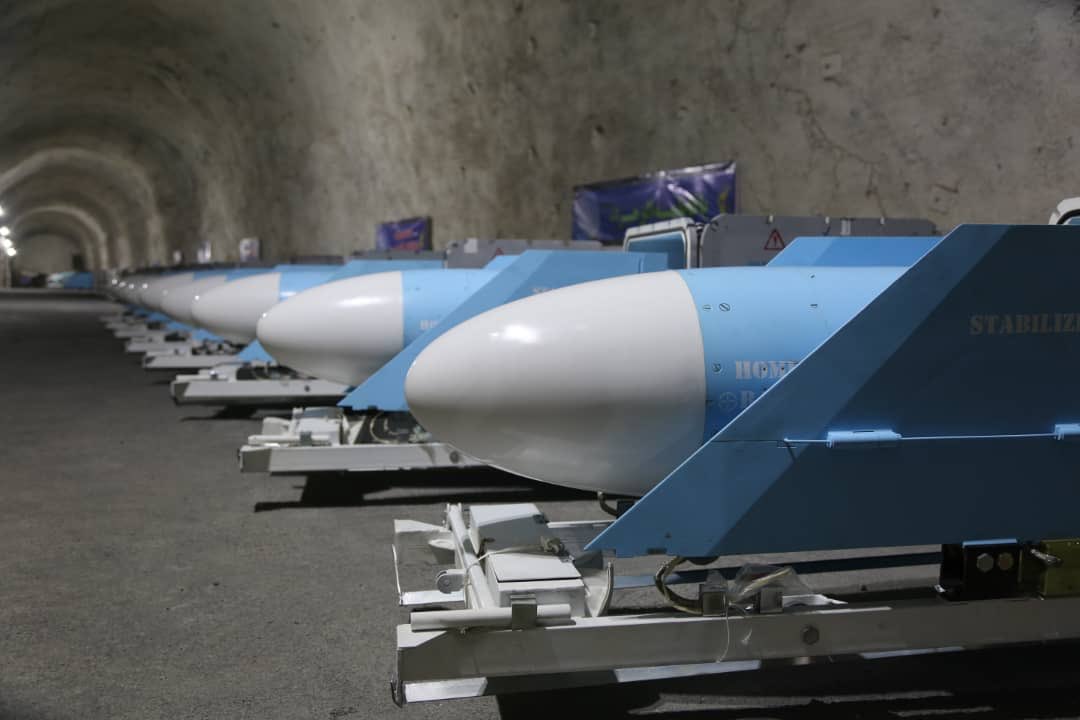
  • IRGC missile city on the shores of the Persian Gulf

    IRGC missile city on the shores of the Persian Gulf

    The unveiling ceremony of this missile base was held in the presence of Maj. Gen. “Hossein Salami”, Commander-in-Chief of the Islamic Revolutionary Guard Corps.

    Major General Salami said at the ceremony:
    “The complex is one of several facilities holding IRGC naval strategic missiles that house a column of missiles and launchers. IRGC naval missiles are among the most advanced missiles used in coast-to-sea, surface-to-sea and sea-to-sea battles.”