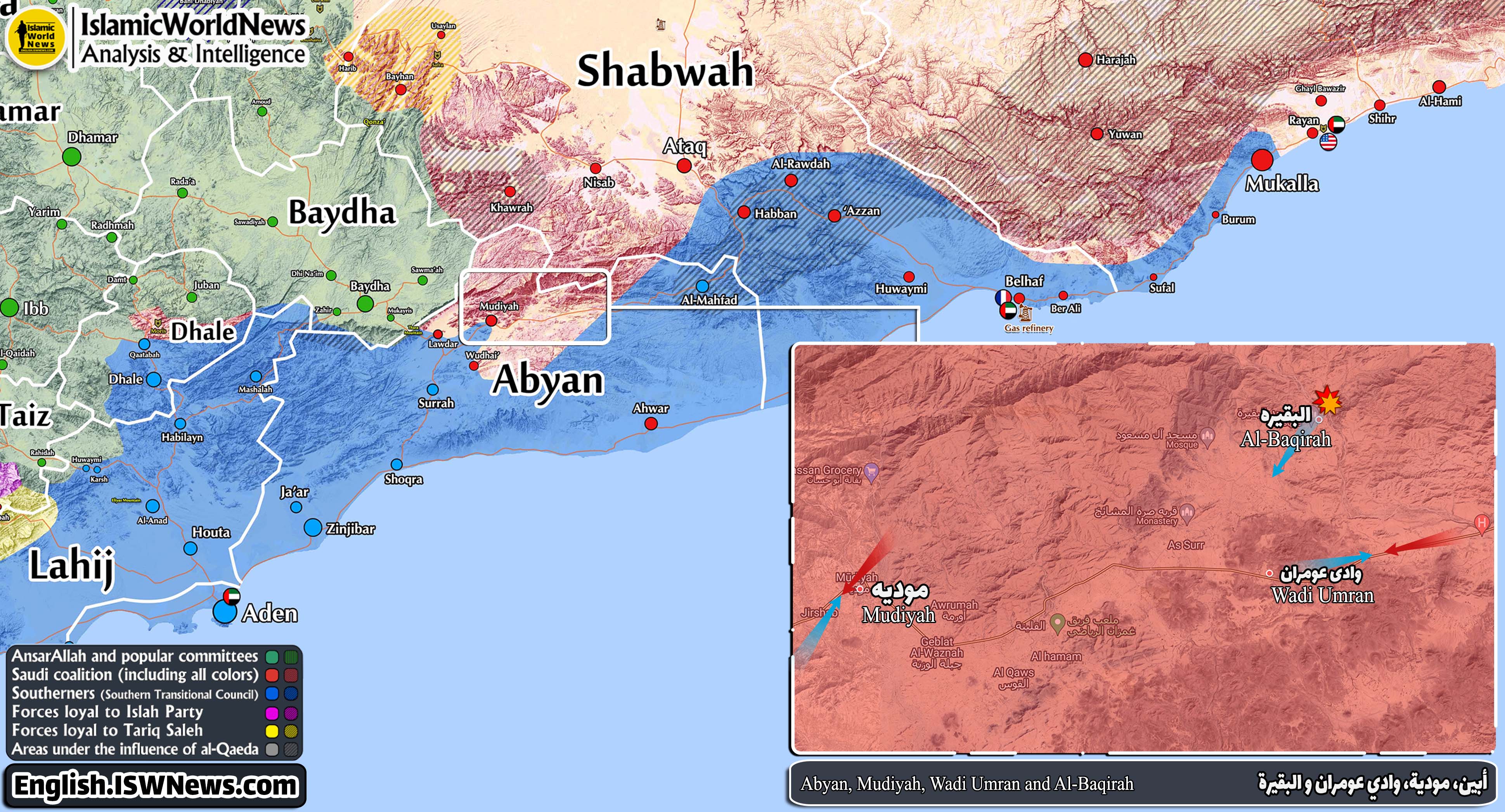
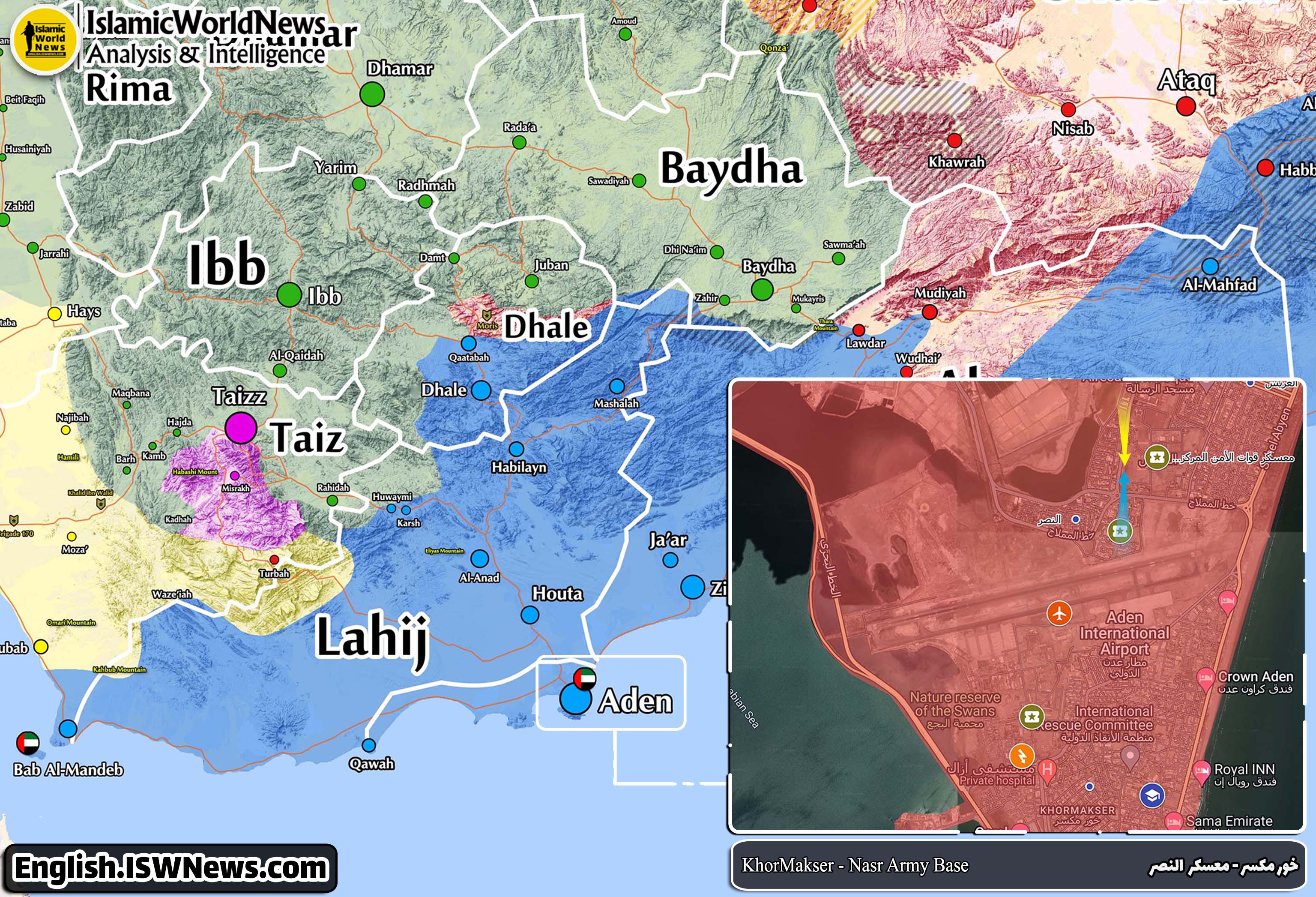
The Abyan-based tribes resumed their progress in the Mudiyah village as part of their clashes with the Southern Transitional Council. Following the raids, which began on Wednesday (February 15), the STC militants were forced to retreat from a checkpoint in Wadi Omran in Abyan’s Mudiyah village. The explosions of two roadside bombs on the way of a convoy of the Southern Transitional Council militants in Al-Baqira region left at least a military vehicle demolished and four militants killed and injured.
Guerrilla strikes on the STC also exacerbated in Lawdar town. In the last strike on February 18, a car carrying the STC militants was raided by unknown armed forces on the western road of Lawdar, which left some casualties among the STC militants.
The security state in the city of Aden has been exacerbated after the assassination of Badr Abdul Latif al-Qobli (the son of the Sheikh) by one of the STC militants at a checkpoint of the Hizam al-Amni militants (affiliated to the Southern Transitional Council) in KhorMaksar district. Badr Abdul Latif was Sheikh Abdul Latif al-Qubali’s son (one of the sheikhs of the Murad tribe and Brigadier General Abdul Hadi Al-Qabali’s brother who is one of the commanders of the Amaliqah Brigade, which is backed by the UAE and Tareq Saleh, Vice President of Yemen.
The followers of Sheikh Abdul Latif in the Murad tribe vowed to punish the assassins of Badr and take revenge on the Hizam al-Amni militants.
The surge in guerrilla raids and bombardments on the STC militants would end up in their retreat from several positions in the southern governorates of Yemen; however, there is still a major question on the groups who would replace them in those regions. At present, along with the Islah Party, al-Dara al-Watan and al-Qaeda terrorists, some tribes from Abyan and Hadhramaut governorates are fighting the STC militants, which would pose a threat to the existence of the Southern Transitional Council sometime.
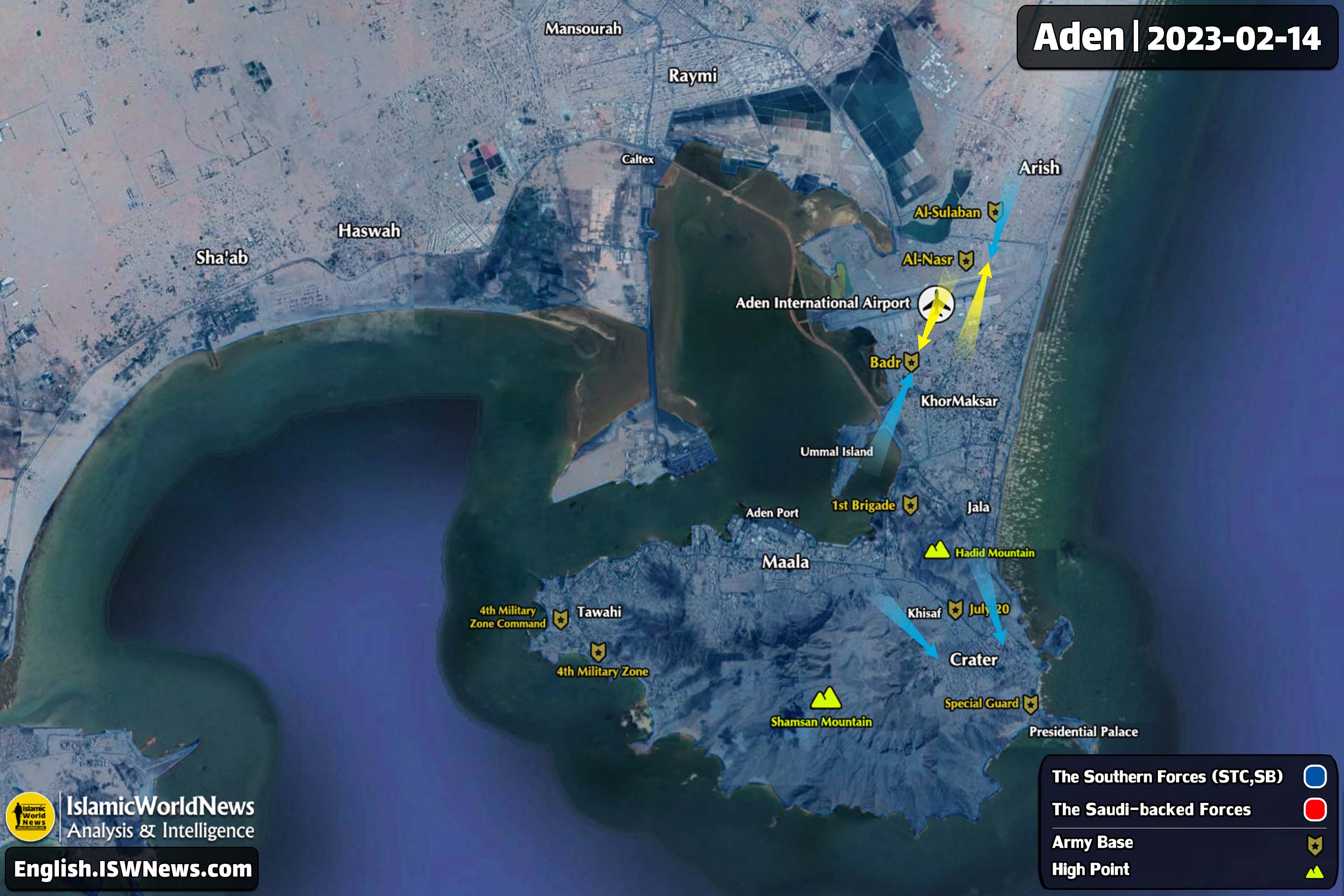
As a result of the UAE ambassador’s arrival to Aden and his attempt to mediate between the militants of Al-Dara Al-Watan and the Southern Transitional Council, the tension in the southern city has come to a halt for the time being. In spite of the cessation of the hostilities, the leaders of the Southern Transitional Council are still accumulating their military personnel and equipment in Aden. To this end, Mukhtar al-Nubi, one of the commanders of the Southern Transitional Council, has threatened that his militants will fight every force, who wants to enter the city from its eastern gates. Furthermore, the militants of the Southern Transitional Council are trying to enter the Crater district in a bid to surround Al-Maashiq Palace (the Presidential Palace).
Following the move by the STC, head of the presidential council of the resigned government Rashad Al Alimi as well as commander of the Amaliqah militants Abu Zar’ah al-Muharami, who are members of the presidential council of the resigned government, left Aden for Riyadh on February 11 with the aim of staying away from the tensions in the southern city.
On the contrary, one of the commanders of UAE-backed Hizam al-Amni called Ismail al-Sabihi joined the Al-Dara al-Watan militants, which led to weakening of the positions of the Southern Transitional Council in Al-Mansoura area. Moreover, four commanders of the Southern Transitional Council, who were stationed in Al Anad region along with some of their militants defected from the STC and joined the militants of Al-Dara Al-Watan. Some local sources said that the reason behind the defection of those militants from the Southern Transitional Council is that Saudi Arabia stopped paying their salaries, and they would be paid twice as much as they were paid, when they join the Al-Dara Al-Watan militants.
On February 12, the Al-Dara al-Watan militants moved to the Badr base in KhorMaksar district and asked Colonel Abdul Rahman Askar, commander of the Southern Transitional Council, to evacuate the base and hand it over to al-Dara al-Watan militants, but he rejected the demand. The Badr base is one of the important military garrisons of the Southern Transitional Council in KhorMaksar district, which is tasked to secure the Aden International Airport.
The resistance by the Southern Transitional Council to surrender the military bases in Aden forced Saudi Arabia to dispatch more forces to the city from the al-Wadiyah crossing in Hadhramaut Governorate. The command of the Saudi-led coalition ordered their affiliated tribes in Abyan Governorate to accelerate the formation process of Al-Dara al-Watan militants in the governorate.
Given the exacerbating trend of tensions in Aden, the chance of a confrontation between the militants of al-Dara al-Watan and the Southern Transitional Council is very likely. Saudi Arabia plans to take back the full control of Aden from the Southern Transitional Council, and the STC commanders also aim to dissuade the Saudis from the decision by demanding the United Arab Emirates (UAE) support and resorting to empty bluffs such as surrendering the strategic city of Aden and other fronts to the Ansar Allah movement, and issuing similar statements.
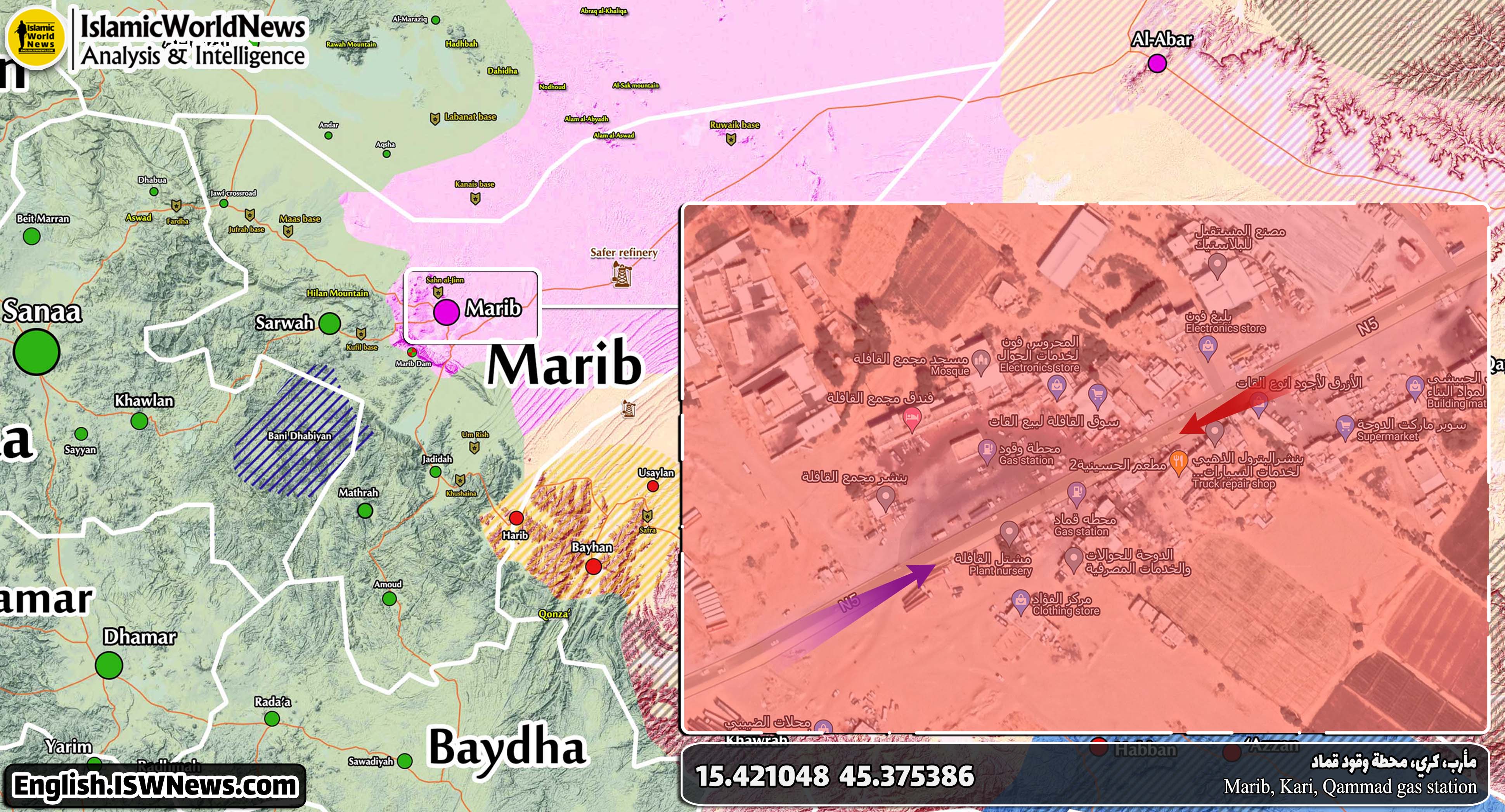
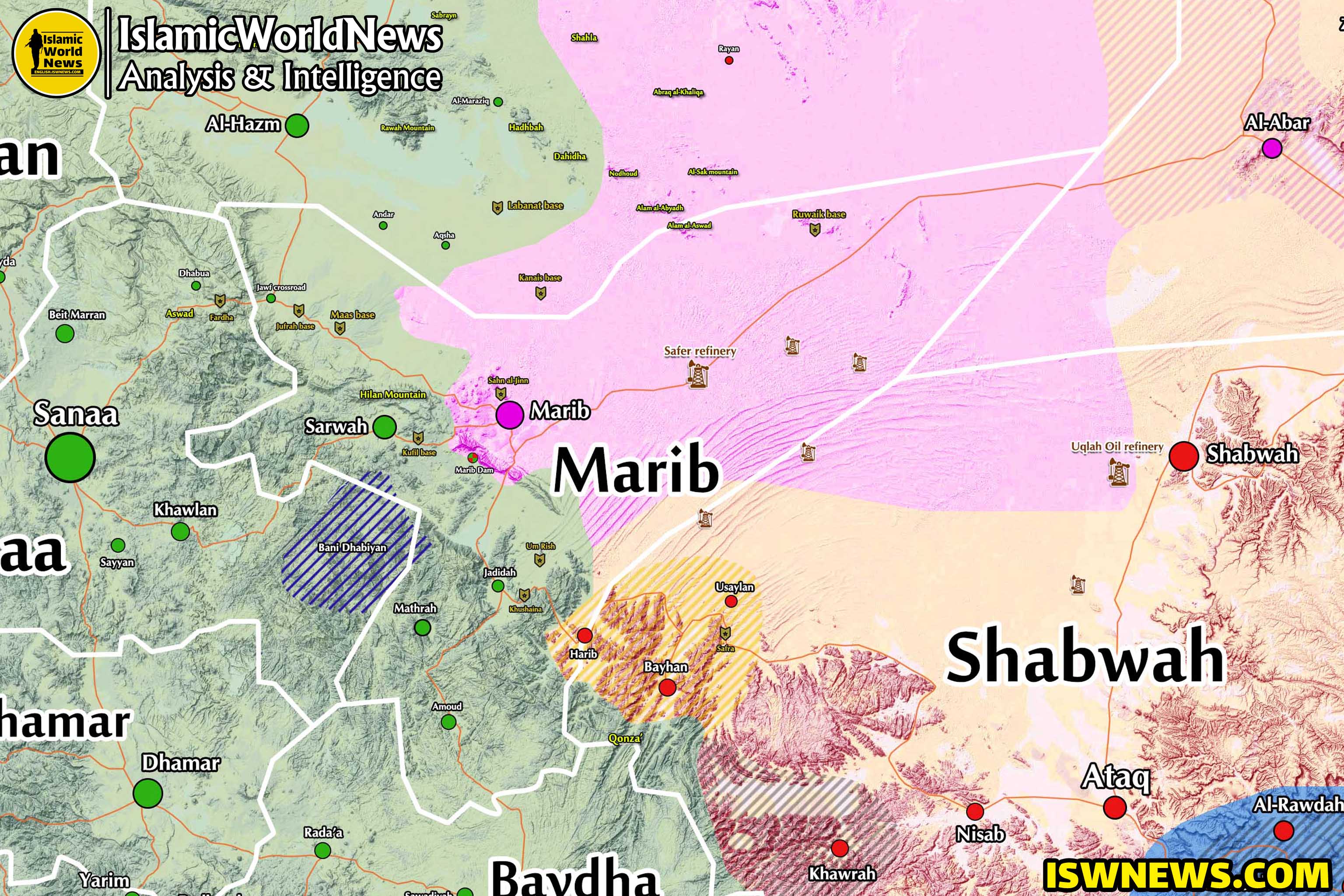
Amid the clashes between the militants of Al Qamad tribe and the Islah party in vicinity of a gas station belonging to the Al Qamad tribe in the Keri district of the eastern Marib, a tank and a military vehicle of the Islah party militants were demolished and at least five militants were killed and injured. Following the confrontation, the Islah Party militants raided the houses belonging to the Al Qamad tribe using Katyusha and artillery rockets.
The clashes erupt after the Islah Party deployed its militants and heavy military equipment on the eastern road to Marib with the aim of preventing the entry of Al-Dara Al-Watan militants into Marib and embarked on setting up checkpoints on that region’s paths.
The confrontations kickstarted on Saturday February 11 and came to an end following a five-day ceasefire arrangement, but the onset of the military drills by the Obaida tribes in Wadi Obaida on February 14 fueled the tensions between the tribes and the militants once again. As said by the local sources in Marib, the tribes kicked off the military drills of the tribes in Wadi Obaida region in a bid to take control of the regions as well as expel the Islah Party militants from Marib oil fields.
The root cause of the tensions come from the disputes between the officials of the resigned government of former Yemeni president Abd-Rabbu Mansour Hadi, and the leaders of the Islah party, which led to the withdrawal of the Islah party militants from Abyan Governorate and their retreatment from the city of Ataq in Shabwah Governorate. At present, the Islah Party is doing all-out efforts to uphold its positions in the north of Hadhramaut Governorate as well as the Marib city; thus, the resigned government of Yemen is attempting to decrease the power of the Islah Party backed by Saudi Arabia, where the militants of the Southern Transitional Council (STC) and al-Dara al-Watan.
After the surge of the recent tensions in the region, new UAE Ambassador to Yemen Mohammad Hamad Al-Za’abi arrived in Aden and held unremitting meetings and negotiations with the officials of the Southern Transitional Council as well as the commander of the Saudi-led coalition in the city to resolve the differences Al-Dara Al-Watan and the Southern Transitional Council. Despite the fact that the UAE has succeeded in containing the clashes between the two groups, some local media outlets reported the dispatch of the reinforcements of the Al-Dara Al-Watan from Hadhramaut Governorate to the eastern entrance of the city of Aden.
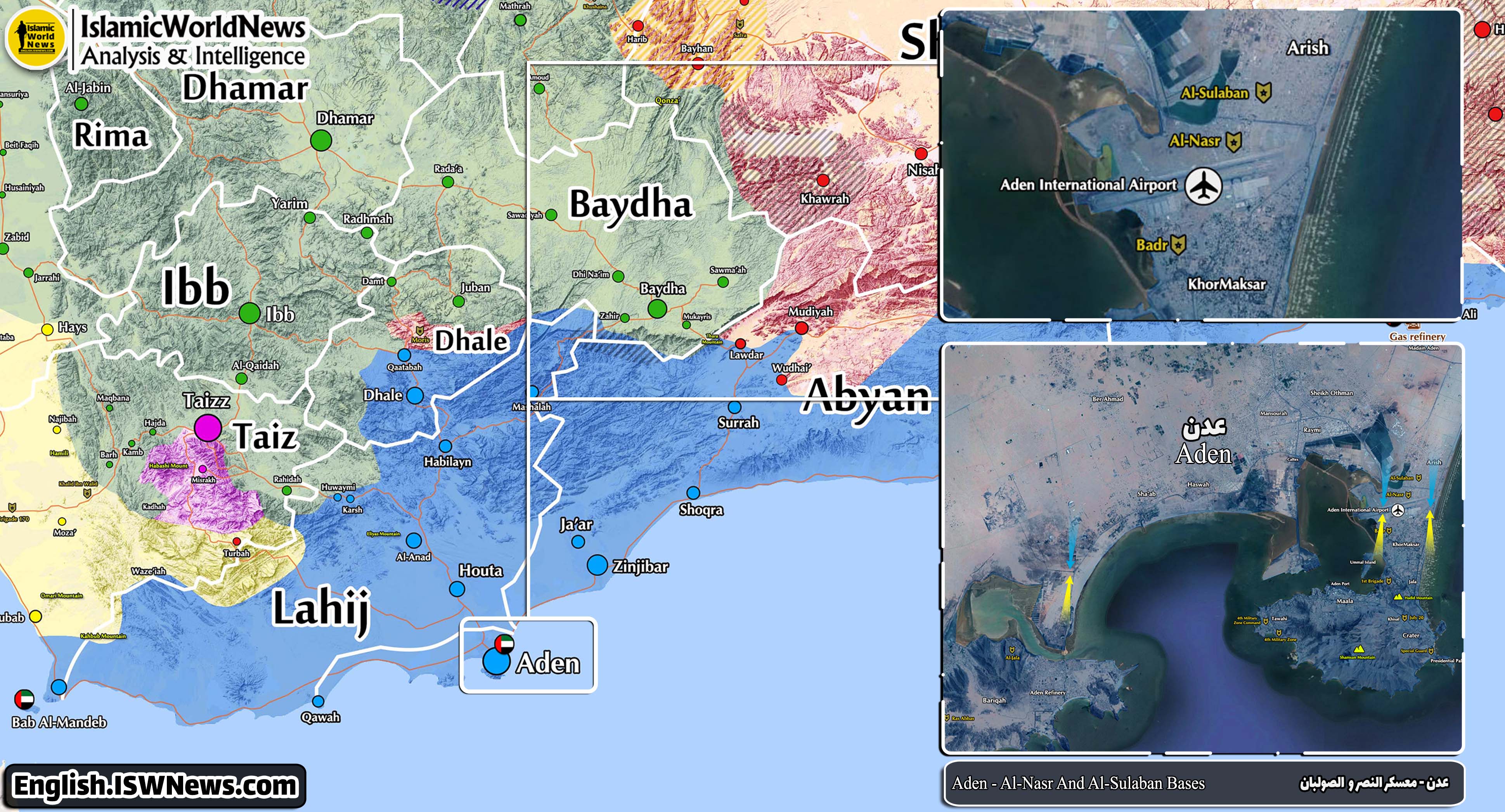
Local sources in Aden have reported that Al-Dara Al-Watan militants are at present stationed in some positions such as in the vicinity of Al-Maashiq Palace, the Aden International Airport, the Badr base and the garrison of the Saudi-led coalition forces in the Al-Bariqa military base.
The STC militants have still refused to hand over the al-Sulaban and al-Nasr bases on the basis of an order by President of the Southern Transitional Council Aidarus al-Zoubaidi, and they are accumulating armed forces and military equipment to overpower the al-Dar al-Watan militants.
The confrontation between the militants of Al-Dara al-Watan and the Southern Transitional Council formally initiated following the evacuation of Al-Anad military base on December 25, 2022, and the conflict spread to the city of Aden, where the main stronghold of the Southern Transitional Council is located, on February 4, 2023. The major forces of Al-Dara al-Watan militants are made up of the elements loyal to Tareq Mohammed Abdullah Saleh (a Yemeni military commander and the nephew of the late President Ali Abdullah Saleh) as well as the militants of the northern tribes from Hadhramaut Governorate, but the reason behind their relative superiority over the Southern Transitional Council militants is that Saudi Arabia aided and abetted the Al-Dara al-Watan, because the Saudis plan to decrease the might of the Southern Transitional Council.
After the announcement of the mobilization by the Abyan Tribal Affairs Coordinating Committee and the gathering of the armed men of these tribes against the Southern Transitional Council in the Mudiyah district on January 28, the Abyan tribes demanded the withdrawal of the armed members of the Southern Transitional Council from this province. But STC rejected this request and increased its military activities to strengthen military positions in Abyan province. Therefore, finally, the attacks of the Abyan tribesmen on the positions of the southerners in the Wadi Omran region officially started on the evening of Monday, 6th of February.
It should be noted that the Abyan armed tribesmen are equipped with military vehicles and light rocket launchers with the support of Saudi Arabia. Also, Sheikh Hassan Al-Sheikh, one of the elders of the Mudiyah tribes, has been assigned to form a new brigade of Al-Dara al-Watan forces in this region.
Following the fresh victories of Al-Dara’ al-Watan militants in light of supports made by Saudi Arabia and Tareq Mohammed Abdullah Saleh, a Yemeni military commander and the nephew of the late President Ali Abdullah Saleh, there are rumors about dispatching Al-Dara al-Watan’s militants to Marib with the aim of assisting Lieutenant General Sagheer bin Aziz, a Yemeni politician, member of parliament and military officer who is the current chief of the Yemeni Armed Forces Staff.
Such informal news stories have led to the formation of a checkpoint of Al-Islah Party militants at the eastern entrance of Marib as well as the supervision of traffic in the military front. It is also asserted that Al-Islah Party militants embarked on blocking the eastern roads of Marib city since Saturday February 4.
As a result of the exacerbation of the advances by Al-Islah Party militants in the eastern districts of Marib city, the militants of the Al Ma’ili tribe, who were displeased with the movements of Al-Islah Party in the past time, erected a checkpoint in Al-Ardamia district and engaged in confrontations with Al-Islah Party militants. The fighting between Al-Islah Party and Al Maiili tribe left a number of militants from both sides killed and injured.
The Saudi-led coalition’s failures in confronting the Ansar Allah fighters ended up in the surge of chaos in the occupied territories of Yemen, paved the way for different factions under the command of the Saudi-led coalition in particular the Southern Transitional Council and the Al-Islah Party to find an opportunity to seek more power. And nowadays, Saudi Arabia and the UAE are attempting to create a new pawn via training fresh mercenary forces such as Al-Dara’ Al-Watan and Al-Amaliqa militants in order to control older militant groups such as the Al-Islah Party and the Southern Transitional Council, and it is worth mentioning that the strategy has been effective so far.
Following the dispatch of a section of the Southern Transitional Council troops from Aden to Lahij Governorate, the Al-Dara’ Al-Watan (National Shield) militants attempted to take advantage of the proper opportunity and initiated new military pushes to take the control of positions and headquarters of the Southern Transitional Council’s forces in the city of Aden based on the order of the Saudi-led coalition command from Saturday on February 4.
As a result of the military advances, the Al-Dara’ Al-Watan militants headed towards the military strongholds of the Southern Transitional Council in Aden, and an armed confrontation erupted between the forces and the Southern Transitional Council’s militants at the Al-Nasr base in Khormaksar District as well as some other areas. To this point, the militants of the Southern Transitional Council deterred the Al-Dar Al-Watan military forces from trespassing into the base and stopped their advance in that area.
The militants of Hizam al-Amni (affiliated to the Southern Transitional Council) have started accumulating forces to repel a potential raid by Al-Dara’ al-Watan forces on Sheikh Osman district.
The southern city of Aden has witnessed unprecedented tensions among the Saudi-led coalition militants over the last few days. The Saudi kingdom is trying to diminish the military might of the Southern Transitional Council through forming a new alliance under the name of Al-Dara’ Al-Watan; so, the Southern Transitional Council makes all-out efforts to defend its main stronghold in southern areas of the war-stricken Arab country.
It is noteworthy that Al-Dara’ Al-Watan (Nation Shield) forces are militias that formed in November 2022, with the support of Saudi Arabia and the key role of Sagheer bin Aziz and Tareq Saleh, from the pro-Saudi tribal armed forces in Hadhramaut province, the forces of Al-Yaman Al-Saeed (subordinate to Saghir bin Aziz) and part of Pro-Tareq Saleh forces in the west of Lahij province.
Rashad Al Alimi, the head of the Presidential Council of the Saudi-backed government, approved the plan to form a new brigade for Al-Dara’ Al-Watan forces under the leadership of “Bashir Saif Al-Mazribi Al-Sabihi” on 30th of January. This plan was proposed in 2022 under the name of “Al-Amaliqa in the west coast”, but with the decision of the Saudi advisers, they joined the forces of Al-Dara’ Al-Watan.
It is noteworthy that Al-Dara’ Al-Watan (Nation Shield) forces are militias that formed in November 2022, with the support of Saudi Arabia and the key role of Sagheer bin Aziz and Tareq Saleh, from the pro-Saudi tribal armed forces in Hadhramaut province, the forces of Al-Yaman Al-Saeed (subordinate to Saghir bin Aziz) and part of Pro-Tareq Saleh forces in the west of Lahij province.
Al-Sabihi is one of the most prominent figures who was raised in the center of Yemen’s Salafis, i.e., in the Dammaj area of Saada, and is considered to be close to Abdul Rahman Abu Zara’ al-Mahrami, the commander of Al-Amaliqah forces. His area of influence and establishment is in the management of Madhariba and Ras al-Ara’ in Lahij province. He is also supported by the UAE and has fought with the Southern Transitional Council many times in the last few years in Aden or has been arrested in several occasions.
The increase in the power of the Southern Transitional Council and the decrease in the power of the Islah Party in the southern provinces of Yemen have forced Saudi Arabia to strengthen other forces from the groups under its support. Before this, the human resources of Al-Dara’ Al-Watan forces were provided from the northern tribes of Hadhramaut province and Tareq Saleh’s forces, and now the Salafis and extremists of the southern regions of Yemen have also been added to them. These forces were officially formed on December 21, 2022, and on December 24 , they took control of Al-Anad base on the orders of Saudi Arabia.
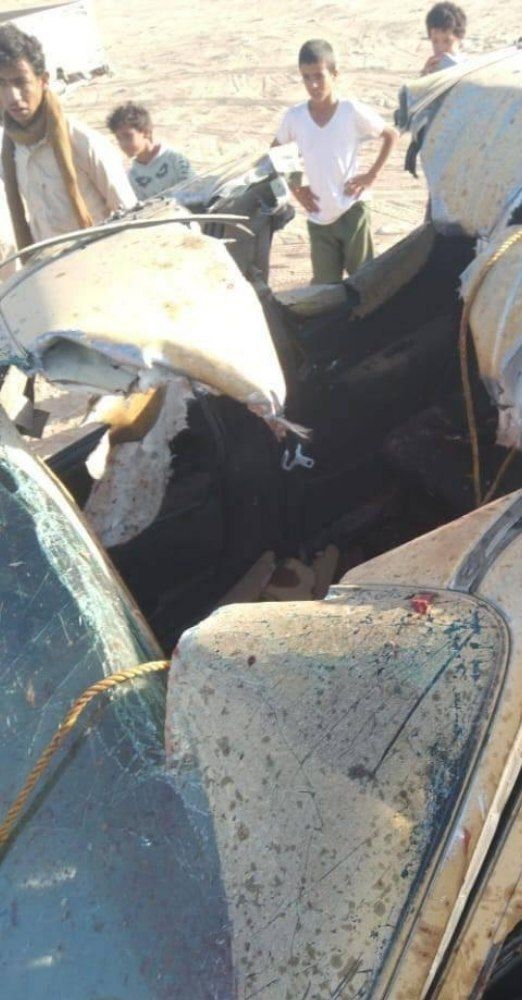
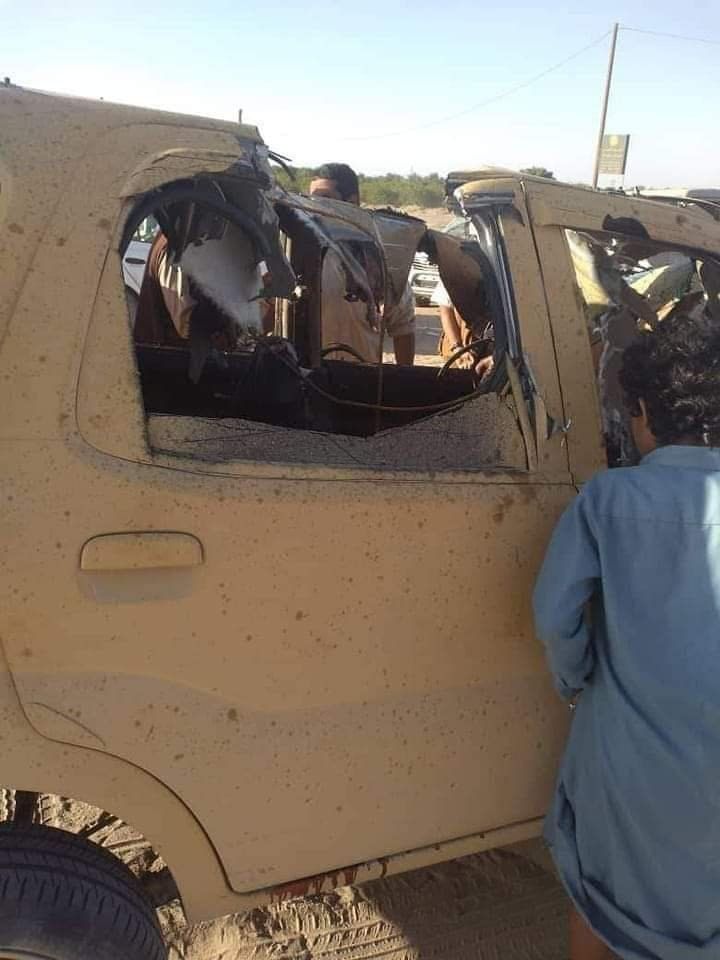
On January 30, a sedan vehicle was pounded by an offensive UAV in vicinity of Al-Haira gas station in Al Samdah area, on the road from Marib-Al Abar. Local sources reported that the vehicle was carrying three passengers, including Hasaan al-Hadhrami who was in charge of making bombs and explosives for the al-Qaeda terrorist group, as well as his brother Musa Hadbol, who were killed in the Monday airstrike.
Hasaan al-Hadhrami was a notorious member of the Al-Qaeda terrorist group and a Saudi national, who had been targeted in another drone strike on Al Hadba region on November 30, but the terrorist was injured and survived the airstrike.
According to the released photos of the vehicle of the Al-Qaeda terrorists and the continuation of drone airstrikes to assassinate the terrorists, it seems to be probable that such attacks have been carried out by the offensive drones of the US Army. Earlier, the US forces have conducted numerous airstrikes in Iraq, Syria and Afghanistan by the use of MQ-9 Reaper drones that are capable of carrying Hellfire missiles, including the R9X missile.
In the past decade, Britain was one of the most determining ultra-regional players in the crises and developments in the West Asia region. They have resorted to the crises in Syria, Iraq, Yemen and so on in line with their multilayered policy and actively intervened in that region. In the meantime, Yemen is of significant importance for the British rulers because of its key role in linking the waters of the Asia to Africa and Europe. They sold arms and provided Saudi Arabia and Iraq with military training by the use of exerting political pressures, misused diplomatic ties, and even played a mediator role in the early years of the conflicts in Yemen, Iraq, and Syria to pursue their own agenda silently. However, the policy changed in recent months and their military advisers played more active role in the region particularly in Yemen war.
What are Britain’s multifaceted policies?
– Political and Military Tools: Britain’s foreign policy is based on internationalism and contribution to allies or regional and ultra-regional powers, and it pursued the same policy in the face of the Yemen crisis. The Saudi-led coalition has time and again conducted air raids on Yemen’s cities by the use of Britain-manufactured arms, from the Euro Typhoon and Tornado fighter jets to different bombs and missiles in the war on Yemen. Furthermore, more than 280 military advisers of the Royal Air Force (RAF) are involved in training and assisting the Saudi military personnel in the Arab country. Britain continued the supports in spite of the violation of human rights (the manslaughter of Saudi journalist Jamal Khashoggi) as well as the arms embargo by certain European states on Saudi Arabia; so, the cooperation turned the Saudi kingdom into the largest purchaser of Britain’s weaponries.
– Field Military Presence in Yemen: On the other hand, the British military advisers and diplomats are actively present in the usurped regions of Yemen in particular in Al Mahrah and Aden governorates, and they overtly make decisions or influence the internal affairs of the Arab country. One of the most crucial issues that occurred recently and Britain played a key role was the 50% hike of the customs tariffs for the import of commodities in ports that are under the control of the Saudi-led coalition. The decision has been seemingly taken by the Supreme Economic Council of the so-called resigned Yemeni government, and British Ambassador to Yemen Richard Oppenheim embraced and supported the decision. Obviously, the decision was a response to Ansar Allah movement’s measures in hindering the illegal export of Yemen’s oil and the movement’s stress on the payment of the salaries of all Yemeni employees during the negotiations mediated by Oman and the United Nations; and the Ansar Allah movement amplified the resigned government’s taxes in order to respond to the proposal of 50% discount for the import of commodities from Al Hudaydah Port. The consequences of the next measures of the two sides are not clear in the economic war, and possibly the rivalry would be extended to the confiscation of fuel tankers and even a naval confrontation.
– The Control of the Asian Waterways to Africa and Europe: Britain follows up an internationalist policy and cooperates an international coalition in the Red Sea and the Gulf of Aden, which is known as “153 forces”, to control the regional waters. They contribute to the occupation of the Yemeni islands (Socotra, Mayun, Abd al- Kuri and so on) in cooperation with the UAE in a bid to benefit from the collaboration. The contribution to the coalition and mutual collaborations provides them with the opportunity to respond to the Ansar Allah’s strikes from the western coast of Yemen and also hinder the Iranians’ infiltration and the dispatch of Iran’s aid to the Arab country.
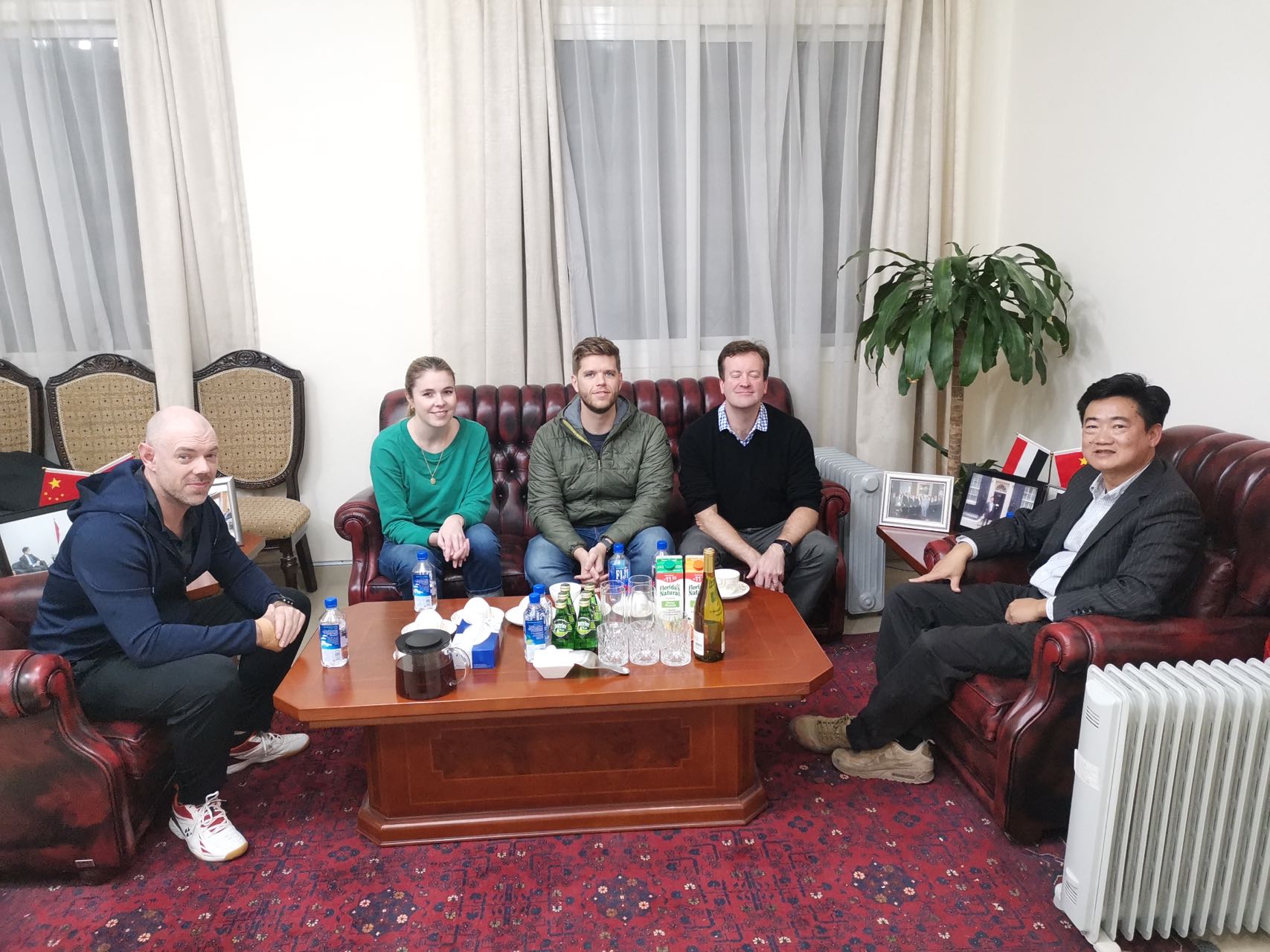
Britain also enters into a deal with ultra-regional powers in a bid to advance the multi-layered policy. For instance, the resigned Yemeni government faced a strict budget deficit following Ansar Allah prevented illegal export of Yemen’s oil by resorting to three drone attacks on Al-Dhabbah and Qena ports on the southern shores of the Arab nation. The British ambassador started consultations with his Chinese counterpart Shao Zheng to finance the resigned government via the oil sale and supply Yemen with basic commodities. The British and Chinese sides displayed the talks as they were playing ping pong (referring to the ping pong diplomacy between the US and China in the 1970s) at China’s diplomatic mission in Aden Governorate.
Richard Oppenheim and Shao Zheng meeting and playing ping pong at the Chinese Embassy in Yemen
As a whole, Britain is misusing and exploiting the crises created in the regional states particularly in the West Asia region through pursuing a multi-layered policy. The British policy-makers are fanning the flame of conflict by selling arms and dispatching military advisors to Arab countries, and they also loot the oil resources and wealth of a state under the pretext of being a mediating and peacemaking player. Britain’s actions in Yemen are a good instance of their dirty policy.
PS. “Ping-pong diplomacy” is a meaningful phrase in politics, which refers to the secret negotiations between the United States and China in the 1970s which resulted in opening the U.S.-PRC relationship, leading the U.S. to lift the embargo against China and the normalization of relations.
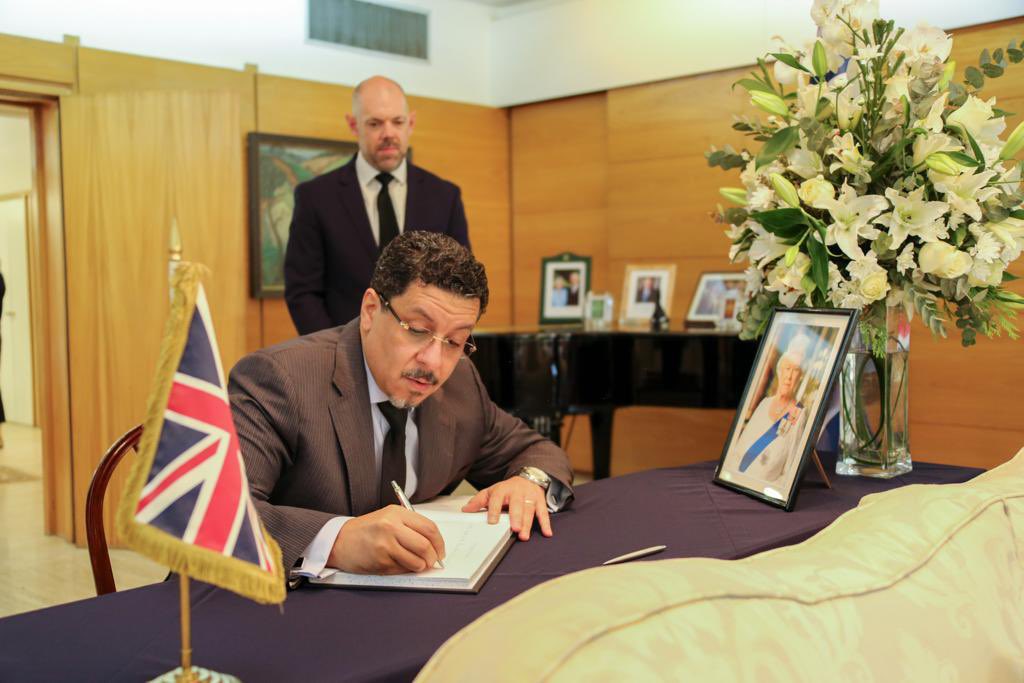
Image: The presence of Ahmed bin Awad Mubarak, the foreign minister of the resigned government of Yemen, at the British Embassy in Yemen to offer condolences on the occasion of the death of Queen Elizabeth II.
Saada: According to the ISWNews Analysis Group, the casualties inflicted by the Saudi coalition’s artillery and shelling strikes on the border districts of Saada Governorate have reached nine martyrs and 94 injured since January 1. According to the statistics, the attacks left eight martyrs and 45 injured, including one African migrant in Shada district as well as one martyr and 49 wounded, including 22 African migrants in Munbah district.
Hudaydah: – The Saudi coalition forces violated the ceasefire 114 times in the last 48 hours in this province. – In the last 48 hours, the drones of the Saudi coalition have bombed Ansar Allah’s positions in the districts of Hays and al-Jabaliya five times.
Aden: – Britain’s embassy in Yemen welcomed and backed a decision by the Supreme Economic Council of the resigned government of Yemen in order to surge the exchange dollar rate by 50% for the import of commodities in the ports supervised by the Saudi coalition. – The Government of National Salvation, Parliament and Ansar Allah officials have slammed the British embassy’s support for the resigned government and described the measure as another crime against the people of Yemen. – In response to the comments made by the UK’s Ambassador to Yemen Richard Oppenheim, former President of the Supreme Revolutionary Committee of Yemen Mohammed Ali al-Houthi pointed to the economic war between Russia and Europe, saying that we will also support Russia’s economic decisions against Britain and NATO member states. Notably, the resigned government of Yemen has been facing a harsh budget deficit after Ansar Allah blocked it from illegal export of Yemen’s oil and pushed them to pay salaries of all Yemeni workforces from the incomes.
Lahij: According to information released by local sources, Tareq Saleh’s forces dispatched a battalion of the Joint Forces (Quwat al-Mushtarika) subdivisions of the “Yemeni National Resistance”, and took control of the Ras al-Ara region on the coastal regions of Lahij Governorate on January 14.
Abyan: On January 18, a bomb blast on a road where a vehicle carrying the quick reaction forces of the resigned government (UAE-affiliated forces) in Mudiyah village in Abyan Governorate left major commander of the quick reaction forces Abdul Rahman Al-Makar along with two of his companions dead and several others wounded. The terrorist group named Ansar al-Sharia seems to be the main suspect of the guerrilla attacks and bombings in southern areas of Yemen recently.
Shabwah: On January 19, Ansar Allah artillery forces raided the hideouts of the Southern Transitional Council militants in response to their recent strikes on the Uqabat al-Qunza front in Shabwah Governorate. See on interactive map
Socotra: Local sources in the Yemeni city of Hadibu informed of the deployment of new UAE forces in vicinity of the Socotra Airport. The forces replaced the flag of the Southern Transitional Council with the UAE flag in military bases and outposts in Socotra Island.
Saudi Arabia: Major General Amer al-Shehri, commander of the ground forces of the Saudi Army in Khamis Mushait, lost his life because of a heart attack at Jizan hospital. Some media outlets attributed his death to a conflict with Ansar Allah fighters in Jizan, but the claim is not confirmable regarding an ongoing truce in Yemen’s war zones.
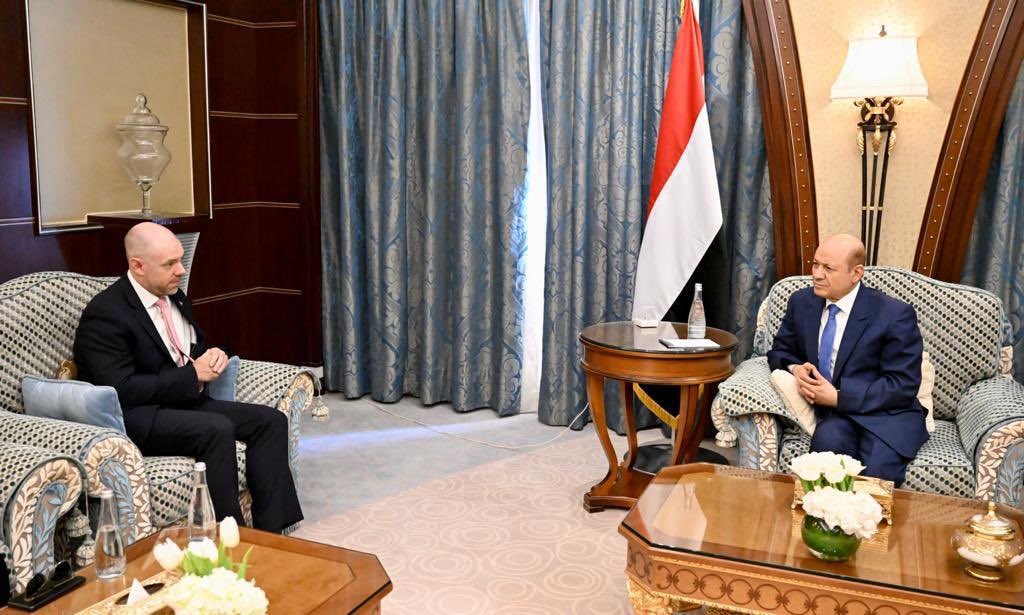
(Image: The recent meeting of Rashad Al Alimi, the head of the presidential council of the resigned government, with Richard Oppenheim, the British ambassador to Yemen.)
On January 22, the Shabwah Defence Forces, assisted by UAE drones, kicked off a military operation in the areas under the control of militants of the Islah Party in Nisab and Markhah As Sufla districts.
Following a recent failure attempt in the city of Ataq, the militants of the Islah Party succeeded in inflicting numerous casualties on the defending forces of Shabwah and the militants of the Southern Transitional Council by conducting hit-and-run assaults. The casualties can be considered as the root cause of the new operation by the UAE-backed militants in the west of Shabwah Governorate.
In spite of capturing Ataq city and most of the regions of Shabwah Governorate by the UAE-backed militants, Nisab and Markhah As Sufla districts in western Shabwah as well as Jardan and Arma districts in northern Shabwah Governorate are still under the control of Islah Party’s forces. After clearing the mentioned regions, the UAE would be able to mobilize its militants to seize the oil fields in northern Shabwah Governorate and eastern Marib Governorate.