The list and the latest details of Ansar Allah missile and drone attacks in the last 24 hours are as follows:
1- Drone attack on Saudi coalition positions in Khamis Mushait, located in southern Saudi Arabia: The Saudi coalition has claimed to have shot down an Ansar Allah drone in this attack.
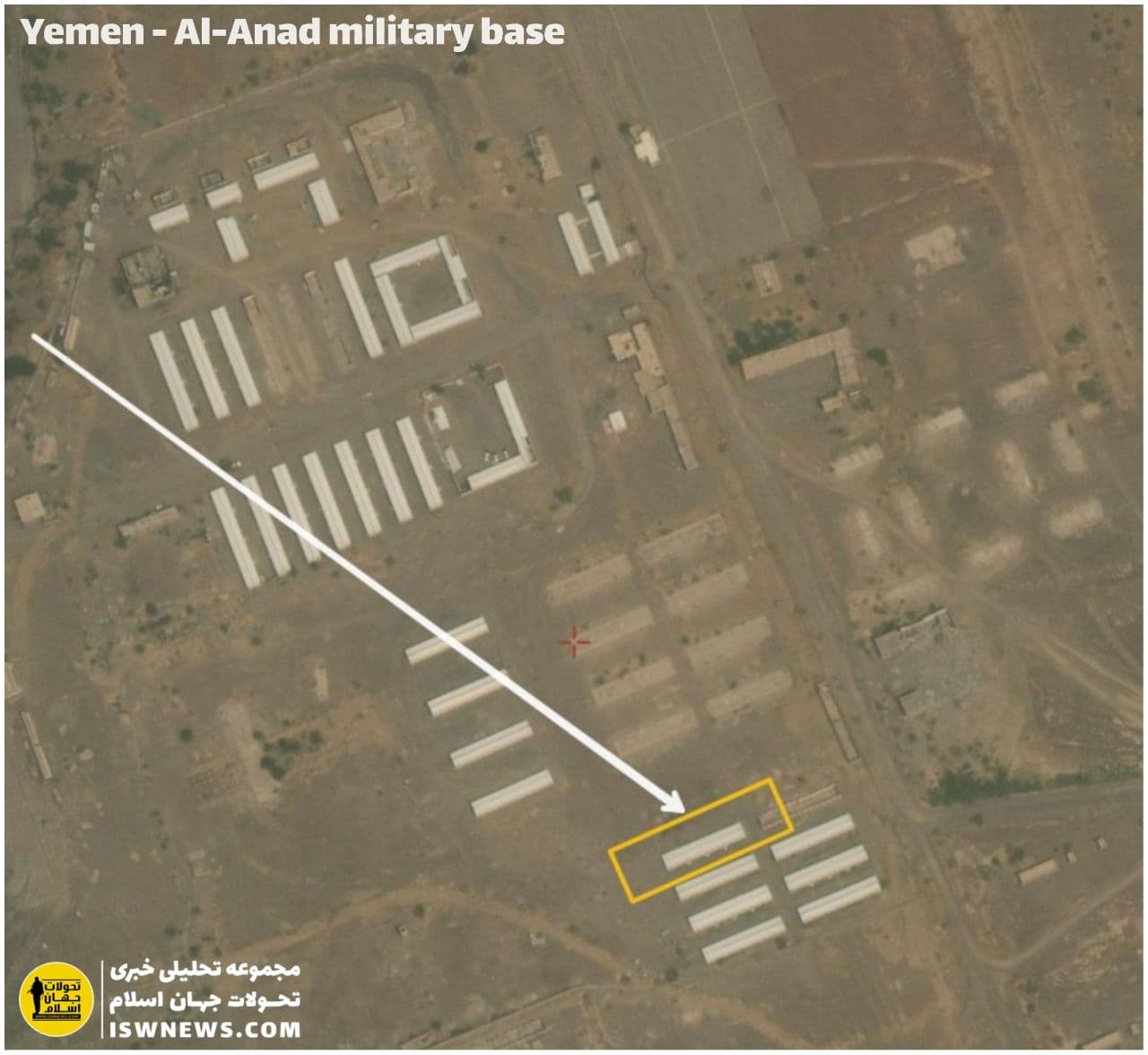
2- Missile attack on Saudi coalition positions at Al-Anad military base in Lahj province: During this attack, three missiles were fired from Taiz International Airport towards Al-Anad base, and as a result of the missile attack, according to the latest statistics, 43 Al-Amaliqah forces (affiliated to Mansour Hadi and the Saudi coalition) and Sudanese mercenaries were killed and more than 56 were injured. Parts of the base have also been completely destroyed.
3- Missile attack on Sahn al-Jinn camp in the north of Marib city: Local sources have confirmed that Ansar Allah missile hit this base.
4- Missile attack on Saudi coalition positions in the third military zone in the city of Marib: Local sources have confirmed the sound of explosions and missiles hitting Saudi coalition positions in this area.
5- Drone attack on Saudi coalition positions in Khamis Mushait: The coalition claims that Ansar Allah used three drones during the attack, all of which were shot down by the Saudi air defense systems.
6- Missile attack on the positions of the Saudi coalition in Jizan: The Saudi coalition claims to shot down a missile in the sky of Jizan.
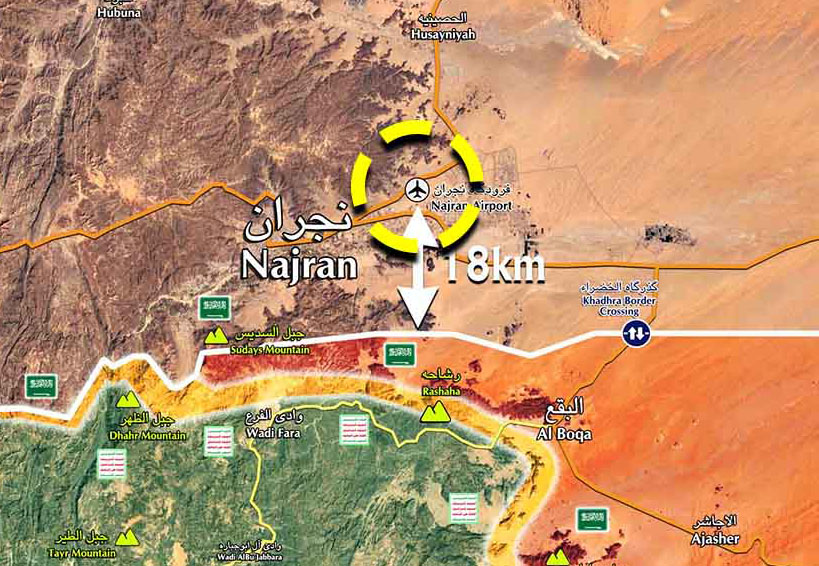
7- Missile attack on the positions of the Saudi coalition in Najran city: The Saudi coalition claims to shot down a missile in the sky of Najran.
Ansar Allah has intensified its attacks on Saudi coalition positions, while coalition airstrikes and artillery attacks on Yemen have increased in recent days. Negotiations in Oman have also entered an erosive period and have not made much progress.
The Saudi coalition claims to have shot down the missile in the skies of Najran.
This is Ansar Allah’s seventh airstrike on Saudi coalition positions in the past two days. Ansar Allah’s aim in such attacks seems to be to increase threats against Saudi Arabia. The implementation of large-scale deterrence operations against the Saudi coalition is not currently considered by the leaders and commanders of Ansar Allah movement.
During the attacks, Ansar Allah attacked three Saudi coalition positions in Khamis Mushait with three suicide drones (possibly Qasef 2K). Also this afternoon, a missile was fired at the city of Jizan, which the Saudi coalition has claimed to have shot down.
The Ansar Allah missile force attacked Al-Anad Airbase in center of Lahij province with several missiles. According to local sources, Ansar Allah fired three missiles from Taiz Airport at Al-Anad Airbase.
A spokesman for the Southern Transitional Council said more than 30 soldiers have been killed and more than 60 wounded in a missile attack on Al-Anad Airbase.
However, according to local sources the missile attack killed more than 43 members of the so-called Al-Amaliqah forces (affiliated with Mansour Hadi and the Saudi coalition) and Sudanese mercenaries, and wounded more than 56 others. Parts of the base have also been completely destroyed, and a video released from Al-Anad base shows the location of one of the missiles.
Location of the missile hit at Al-Anad military base
Casualties of the Saudi-led forces in the Ansar Allah missile attack on Al-Anad base
Ansar Allah appears to have used the Saeer or Qasim 2 missile in the attack, one of the latest missiles developed by the Yemeni armed forces.
On January 10, 2019, Yemeni Ansar Allah using a Qasef 2K suicide drone attacked gathering of Saudi coalition forces at Al-Anad Airbase, killing and wounding a number of high-ranking Saudi coalition commanders.
Warning: This video contains disturbing scenes and is not recommended for everyone.A video released from the site of one of the Ansar Allah missiles hit the Al-Anad military base, which identifies its location.
1- Al-Jawf: Clashes between Ansar Allah and Saudi-led forces were reported in the al-Shahla mountain. Ansar Allah has succeeded in pushing the Saudi-led forces back from these heights.
2- Marib: Scattered clashes between Ansar Allah and Saudi-led forces continued on the northern front of the Mass base, east of Sarwah district and also in north and east of Madghal district .
3- Saudi coalition air strikes: In the last 48 hours, the Saudi coalition warplanes bombed Sarwah district 7 times, Maheliyah district 4 times and Rahba district 4 times in Marib province. Al-Maraziq area 3 times in Al-Jawf province. Al-Rabuaa area 3 times in Asir province in southern Saudi Arabia. Nate district 2 times in Al-Baydha province. Shada area 2 times and Al-Dhaher area 2 times in Saadah province. Bakil Al-Mir area 1 time in Al-Hajjah province.
4- Al-Hudaydah: Saudi-led forces violated the ceasefire 558 times in the province in the past 48 hours.
5- Sheikh “Ali Salem Al-Harizi”, the head of the Reconciliation Committee of al-Mahra province, announced the activity of Israeli and US officers at Al-Ghaydha Airport. (image: Ghaydha Airport and base)
After the occupation of the western coast of Yemen by the UAE in 2017, various types of military equipment and explosive ammunition were deployed in the bases of the UAE and the militias under its protection, including the Mocha base. As Ansar Allah increased its attacks on UAE bases in the western coast, the UAE moved its weapons depots to Mocha port and civilian areas, and as expected the UAE mercenaries refused to cooperate with the UN sanctions commission on inspecting Mocha port.
Over the past few days, a UN delegation has traveled to the Mocha region to assess the economic situation, as claimed by the UAE and Tariq Saleh, and to provide humanitarian assistance. The delegation stated that a visit to the historic port of Mocha to ensure the safety of Emirati weapons and military equipment is a necessity for the providing of humanitarian aid.
Omar Ali al-Shazli, governor of Mocha district in Taiz province, said the Stockholm agreement agreed to transfer of the control of three ports of al-Hudaydah province to the Yemeni Coast Guard, which is what the (Ansar Allah’s) army and popular committees have done so far. Al-Shazli noted that the UAE and its mercenaries’ refusal to cooperate with the UN delegation reflects the fact that they have turned the port of Mocha into a warehouse for the storage of explosives and chemicals, which has a negative impact on trade and commerce. The economic activities of the people have perished in Mocha. Al-Shazli also called on Yemeni traders across Yemen to counter the conversion of the port of Mocha into an explosives and chemical depot; Because the aggressor countries seek to harm Yemen and do not abide by the international agreements and laws that criminalize the conversion of ports into military bases.
According to the Stockholm Agreement, control of the ports on the west coast of Yemen should be handed over to the Yemeni Coast Guard, after which it is illegal to prevent food and trade from entering Yemeni ports. But the Saudi coalition continues to block ships carrying fuel and humanitarian aid from entering the port of al-Hudaydah, despite inspections at sea and obtaining the necessary permits from the United Nations.
Report by: Ziad Al-Hassani, correspondent of Al-Alam Network and ISWNews in western Yemen
In recent days, Saudi coalition airstrikes on Yemen have intensified again, and in recent attacks, Saudi coalition warplanes have twice bombed the al-Qaladh area in the district of Bani Matar in Sanaa province. In response to these attacks, Ansar Allah has repeatedly targeted Saudi coalition positions in Khamis Mushait and Marib with drones and missiles.
The details of these attacks are as follows: 1- A drone attack on the positions of the Saudi coalition in Khamis Mushait at noon yesterday. 2- The second drone attack on the positions of the Saudi coalition in Khamis Mushait this morning. 3- A missile attack on the positions of the Saudi coalition in Al-Khashina camp located in the south of Marib province this morning.
The escalation of clashes between Ansar Allah and the Saudi coalition comes as negotiations between the two sides mediated by Oman, have entered an erosive phase.
Mohammed Abdul Salam, head of the Ansar Allah negotiating team said” “The presence of British forces in al-Mahra is nothing new and the presence of foreigners is rejected. That is why we believe that the Republic of Yemen has the right to oppose any military force that occupies our territory.
The operation of the army and the people’s committees in Marib districts continue extensively. The fighting on Marib and other fronts has not stopped and the aerial bombardment continues every day. Many Marib districts have been liberated and the area of these lands is larger than the two countries in the Persian Gulf!
The Saudi side does not want a political or humanitarian solution. They want the imbalance and the continuation of the crisis, and their proposals are irrational and unrealistic. Negotiations continue through Omani mediation in the transmission of ideas and messages, whether with the American side or the Saudi side or any other side. We believe that if the Saudis and the Americans were looking for a serious solution, they would agree to the Marib initiative, but they are not serious. We believe that Saudi Arabia’s rapprochement with Oman will not affect Oman’s historical and strategic role.”
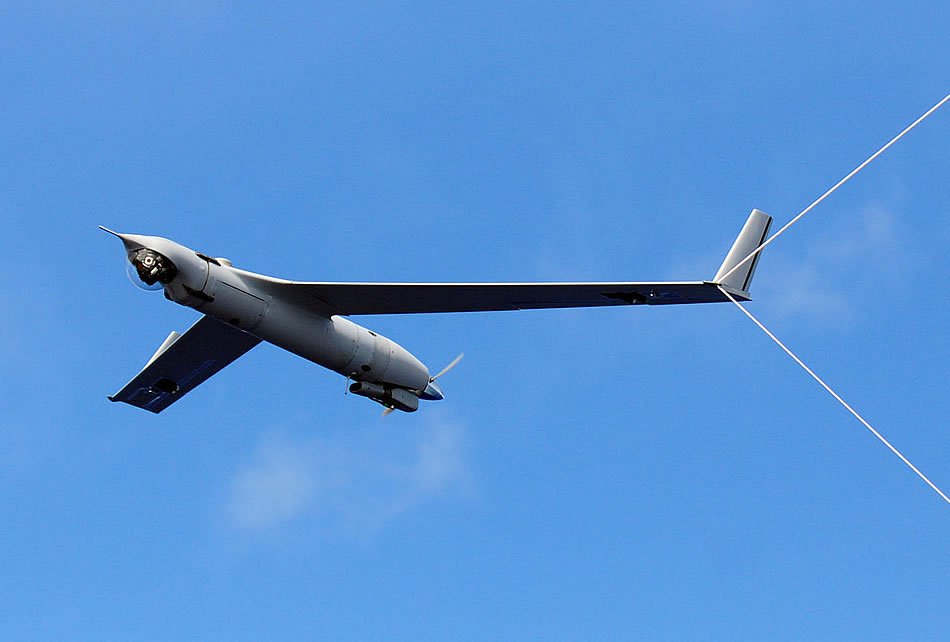
A statement from the Yemeni Armed Forces said that the spy drone was shot down by a Yemeni air defense air-to-air missile. This is the third US Scan Eagle drone to be shot down by Ansar Allah in Yemen. The first US Scan Eagle drone was shot down on June 19, 2021, and the second on June 21, 2021 at the important al-Mashjah heights in western Marib province.
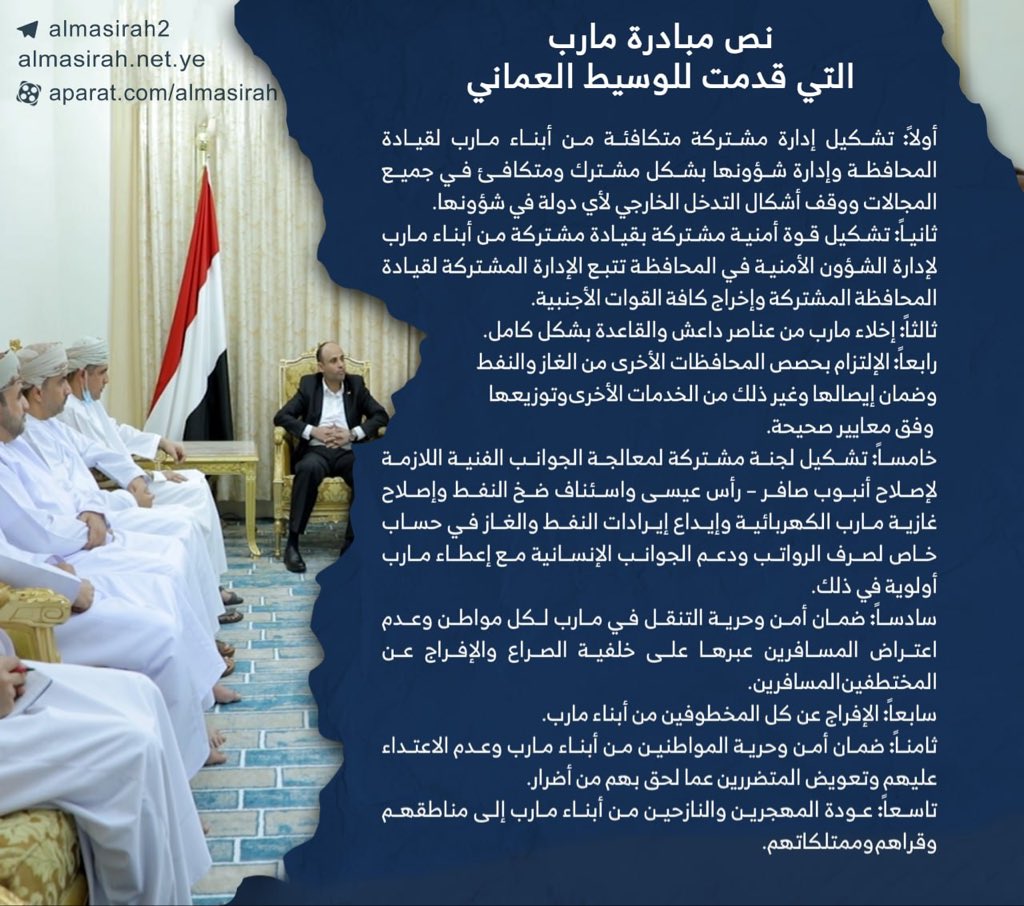
On June this year, a delegation from the Kingdom of Oman arrived in Sanaa to meet with Ansar Allah leader and Yemeni officials regarding the Yemeni war, along with Mohammed Abdulsalam, Ansar Allah’s spokesman and head of negotiations. These cases were not one-sided and unjust, and their aims met the conditions of peace in Marib.
Ansar Allah’s proposal was as follows: “Ansar Allah in the first and second paragraphs of this plan has emphasized the formation of joint management and security forces from the people of Marib province under joint command. The third paragraph emphasizes the expulsion of the terrorist groups ISIS and al-Qaeda, and the fourth paragraph deals with the reopening and operation of refueling centers, including gas stations, and the allocating the income of oil ships in Al-Hudaydah to pay salaries in Marib. In the fifth paragraph, Ansar Allah called for the formation of a joint committee to repair the Safer pipeline (in Marib) to “Ras Isa” (in al-Hudaydah). Other clauses also emphasize the security and freedom of Marib residents and the return of displaced people to their homes.”
The plan was not approved by Saudi Arabia despite the welcome of the Omani representatives, and Mohammed Abdulsalam finally announced the failure of the Omani mediation in the talks on June 19. Of course, in his recent interviews, Abdulsalam emphasized the openness of the way for the Omanis and praised their efforts.
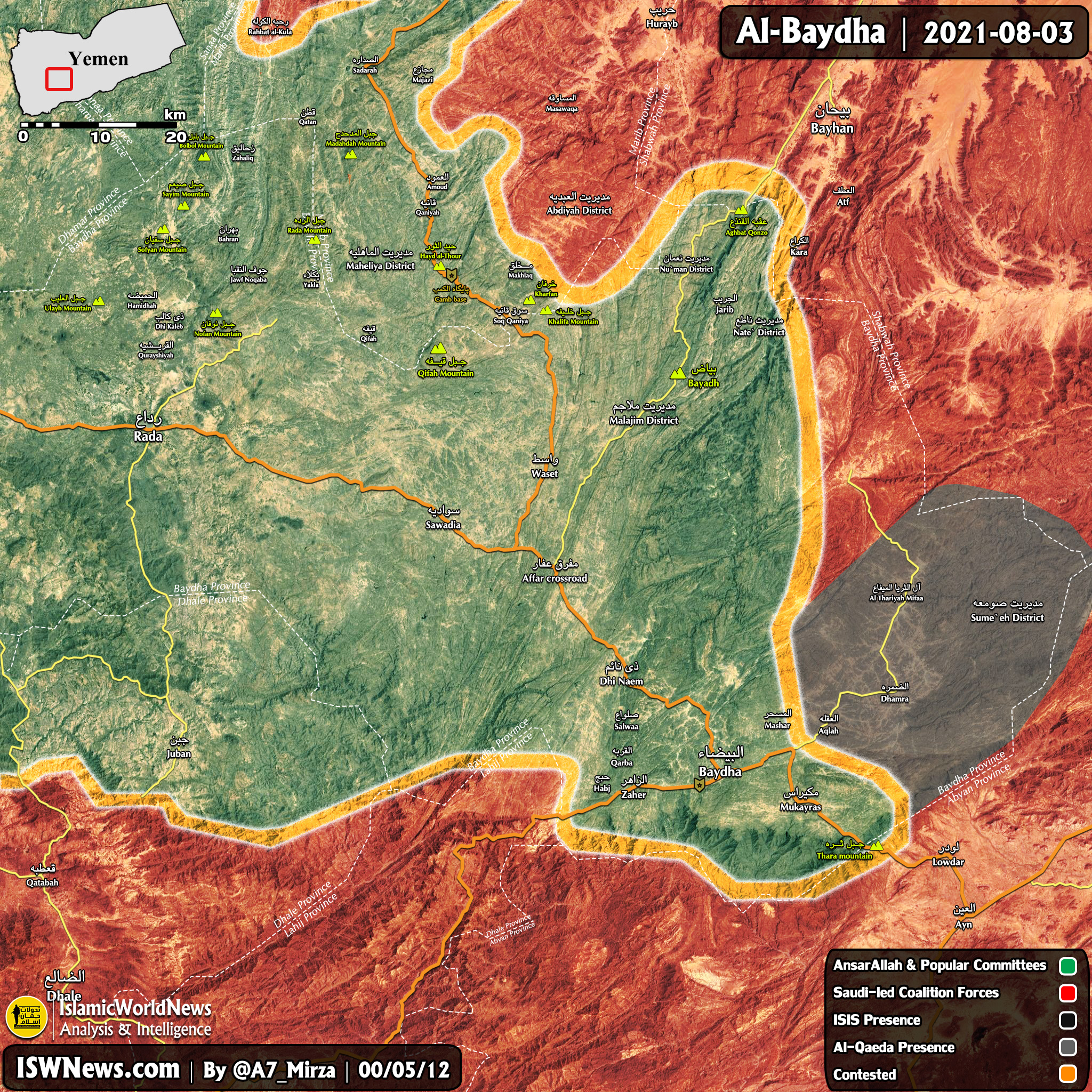
The liberation of important heights of Aqabat al-Qonzo’ in the north of al-Baydha province is the turning point of this operation. Aqabat al-Qonzo’ has complete overlook over the southern regions of Bayhan and can be considered as the gateway to the city of Bayhan.
On the other hand, in the south of al-Baydha province, an area of about 120 square kilometers in the districts of al-Sawma’ah and al-Zaher were liberated from the occupation of al-Qaeda terrorists.
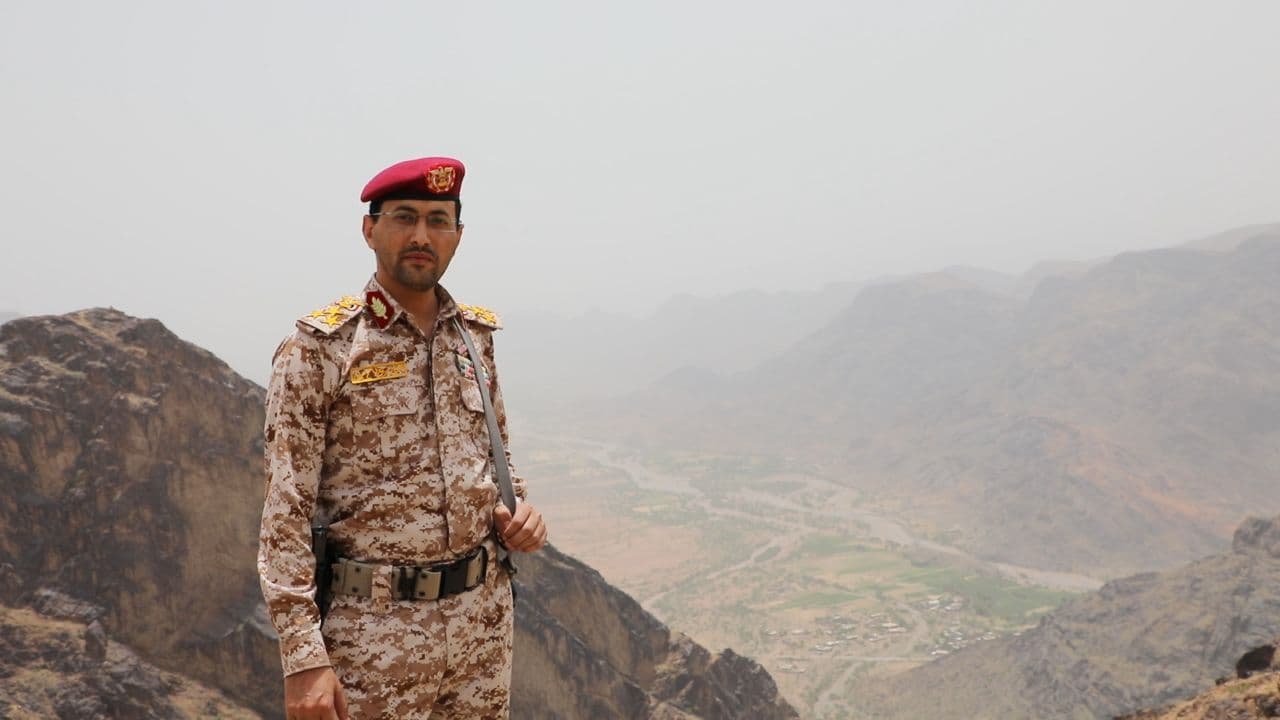
Yahya al-Sari, spokesman for the Yemeni Armed Forces at the strategic heights of Aqabat al-Qonzo’
It should be noted that Ansar Allah operations under the name of “Operation Al-Nasr Al-Mobin” in this province began after the Saudi coalition, armed the al-Qaeda terrorists and launched an operation with the aim of completely occupying al-Baydha province; However, this operation, like other operations of the Saudi coalition, was defeated by Ansar Allah, and of course, in the continuation, new areas were liberated by Ansar Allah counterattacks.
The operation launched by the Saudi coalition with the aim of completely occupying al-Baydha province led to the loss of more land for the Saudi coalition. Ansar Allah message is simple: If necessary, we have the ability to conduct military operations and advance, but we will wait. Do not test our patience!
Brigadier General Yahya al-Sari’ said in this press conference: “The second phase of Operation Al-Nasr al-Mobin led to the liberation of Nate’ and Nu’man administrations, as well as the infliction of heavy losses and the expulsion of takfiri elements associated with the coalition of enemies. Various quantities of weapons have been captured, and also large numbers of enemy mercenaries and takfiri groups have been captured, killed and wounded. Our forces are completely clearing Al-Bayda province of Takfiris. The operation, with the help of God Almighty, will continue until the end of the aggression, the lifting of the siege and the liberation of all the lands of the Republic of Yemen.”
The details of the second phase of Operation Al-Nasr Al-Mobin are as follows:
The second phase of Operation Al-Nasr al-Mubin began on July 20 and lasted several days. All the goals of the second phase have been achieved, the most important of which is the liberation of Nate’ and Nu’man administrations with an area of 380 square kilometers in Al-Baydha province.
Takfiri groups, including ISIS and al-Qaeda, have been severely damaged, and the number of Takfiri elements killed in the operation has risen to 160, with more than 200 wounded. Also, with the help of God, our forces have captured dozens of Takfiris. Dozens of military vehicles and armor have been destroyed and burned, and various quantities of weapons have been captured.
About 500 square kilometers of Al-Sawmaah, Al-Zaher, Nu’man and Nate’ districts were liberated during Operation Al-Nasr Al-Mobin.
The total casualties of takfiri groups in the two phases of Operation Al-Nasr Al-Mobin reached 510 people and injured 760 people.
Various units of our armed forces participated in the second phase of the operation, and the drones conducted 19 reconnaissance and offensive operations, and the missile force carried out 13 operations against the enemy using the Badr and Sa’ir missiles.
Security agencies and local officials worked with the Yemeni armed forces to restore life in the liberated areas. The crimes of takfiri groups against citizens and property have been recorded and documented .
The enemy coalition provided medium and heavy weapons and ammunition to the elements of al-Qaeda and ISIS, and provided full facilities for the access and deployment of the elements of ISIS and al-Qaeda in al-Baydha province.
During the second phase of Operation Al-Nasr al-Mubin, the coalition in support of the Takfiris carried out 67 airstrikes on our positions. After the defeat, the coalition moved the Takfiris to the occupied territories. We have all the documentary evidence to prove the connection between the coalition of enemies and the takfiri groups.
Our people are aware of the reality of the American plan implemented by the coalition of enemies and those involved in it, and what happened in Al-Baydha province is part of it. We appreciate the great role of the Al-Baydha tribes and their honorable sons in this battle, as well as the great role of the local authorities in the province. Our people will continue their jihadist path under the leadership of “Sayyid Abdul Malik Badruddin Al-Houthi” until they achieve sovereignty, independence and freedom of the lands of the Republic of Yemen. We say to the people that your armed forces will not hesitate to take the necessary measures to strengthen their defense capabilities and military position to prevent aggression and its mercenaries, and we seek to continuously carry out better military operations against the enemy than aggression until the aggression is stopped and the siege is lifted.