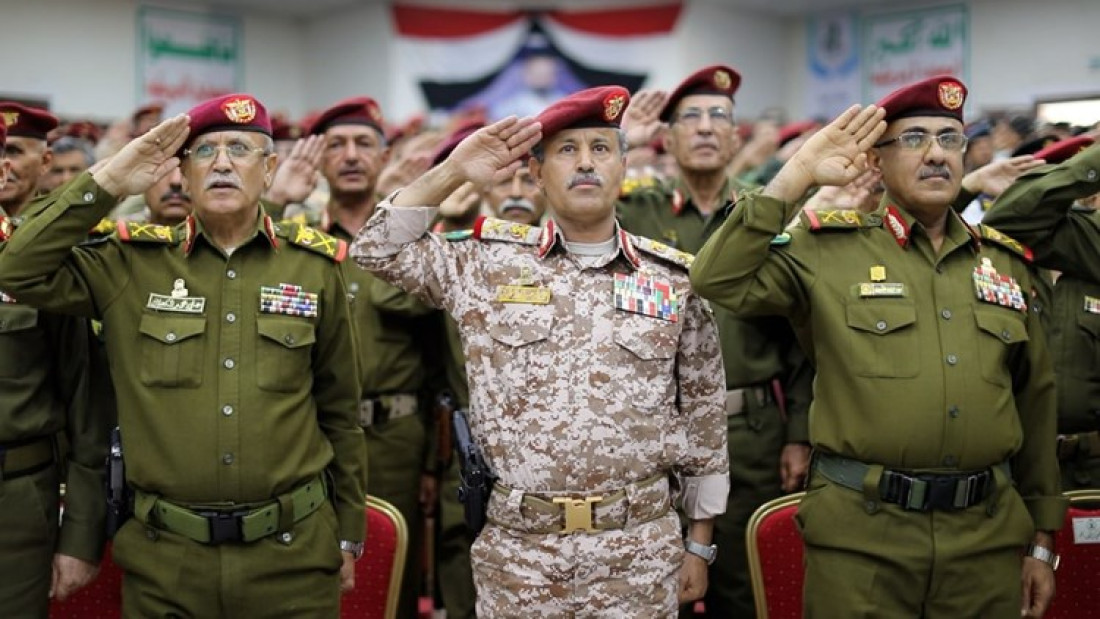
Major General Mohammed Nasser al-Atifi, the Defense Minister of the National Salvation Government of Yemen, met with the commanders and senior officers of the navy and coastal defense of the Yemeni army, announcing the successful missile tests and the production of new armaments for the navy of the country, including modern and advanced armed boats as well as advanced missiles.
Al-Atifi also congratulated the Yemeni army’s naval forces on the recent successes, saying that we have full capability to secure, protect and stabilize international shipping routes along all our territorial waters.
The illegal military presence of occupiers in Yemen’s waters will have a very high cost and any contract signed with any country or any regime regarding the establishment of any military or security facilities that affect our national sovereignty will be considered suspicious and they will be worthless, he warned.
The Ansar Allah movement plans to develop and advance the naval force of the Yemeni army, which is considered as one of the strategic goals of the axis of resistance in the Red Sea and the Gulf of Aden.
Arming the resistance forces with missiles and rockets as well as fast armed boats can open up more options for the resistance movement to respond to hostile and provocative actions by the Saudi-led coalition as well as a naval coalition led by the United States.
According to the Ministry of Defence of the Russian Federation, Ukrainian drones tried to attack some targets in capital Moscow early this morning (August 1, 2023).
Two drones were destroyed over the areas of Naro-Fominsk and Odintsovo in Moscow and the third drone was shot down by electronic warfare, and as a result of the operation, the third drone hit one of the towers of Moscow.
The building had also been attacked by Ukrainians two days ago.
The air-strike is the third drone attack by Ukraine on Moscow in the past ten days, but it has not resulted in severe casualties and damage.
Ukraine’s goal of repeating such attacks is to transfer more insecurity and threats into the Russian soil; so, to this end, Moscow seems to be the best target to pursue the objective.
Pictures of the place where the wreckage of the Ukrainian drone hit a building in MoscowThe moment the Ukrainian drone hit a building in MoscowThe moment the Ukrainian drone arrived in Moscow
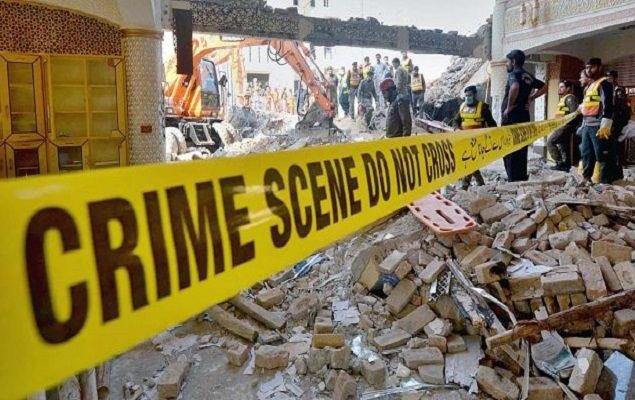
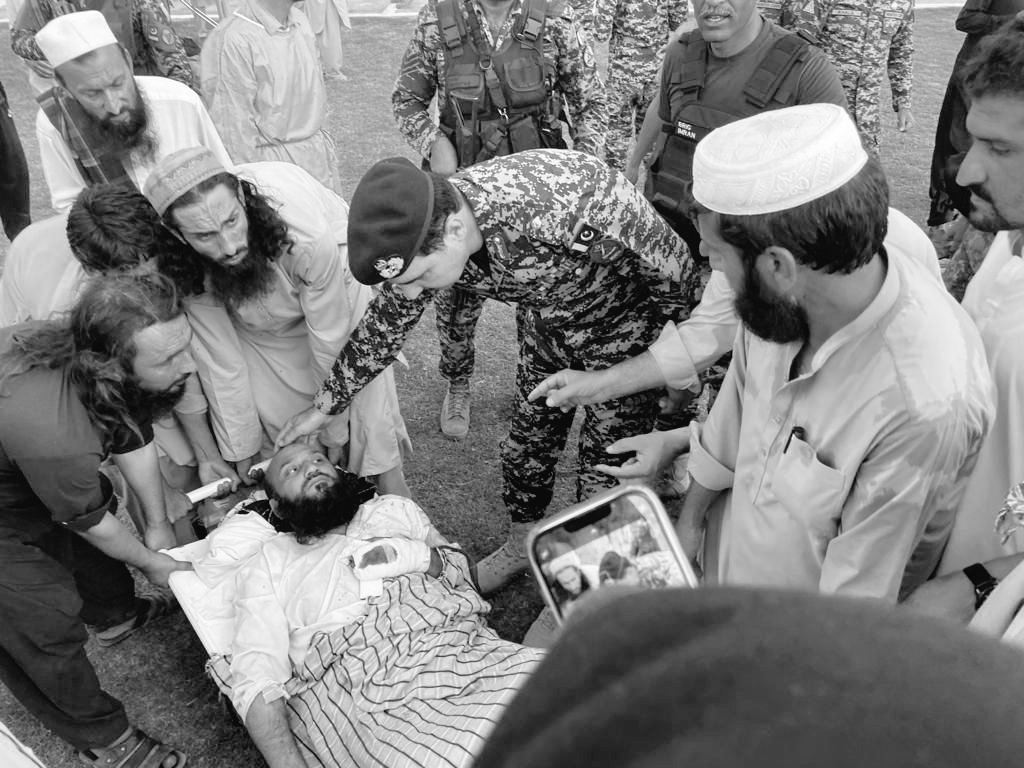
ISWNews Analysis Group: Following a terrorist attack at a public rally of the Jamiat Ulama-e-Islam Pakistan party, which is led by Maulana Fazlur Rehman, in Bajaur District of Malakand Division of Khyber Pakhtunkhwa province in Pakistan, 40 people, including Maulana Ziaullah Jan Haqqani who is one of the senior leaders of the Jamiat Ulama-e-Islam Pakistan party, were killed and more than 200 other civilians were injured.
Senior Pakistani officials and figures have condemned the terrorist attack.
Zabihullah Mujahid, spokesman for the Taliban caretaker government in Afghanistan, also strongly condemned the terrorist attack at the rally of supporters of the Jamiat Ulama-e-Islam Pakistan party in a statement and described the act as a crime against humanity.
Despite media speculation against Tehreek-e-Jihad Pakistan and even the ISIS terrorist group, none of these groups has yet claimed responsibility for the terrorist attack.
Moreover, some local and anti-government sources in Pakistan believe that such attacks have been orchestrated by the Pakistani army’s intelligence agency dubbed the Directorate-General for Military Intelligence of Pakistan with the aim of creating tension and separation among religious sects in the country as well as diverting the conflicts to Afghanistan.
The moment of the explosion in the gathering of Jamiat Ulama Islam in Bajaur districtImages from the terrorist explosion in Bajaur area
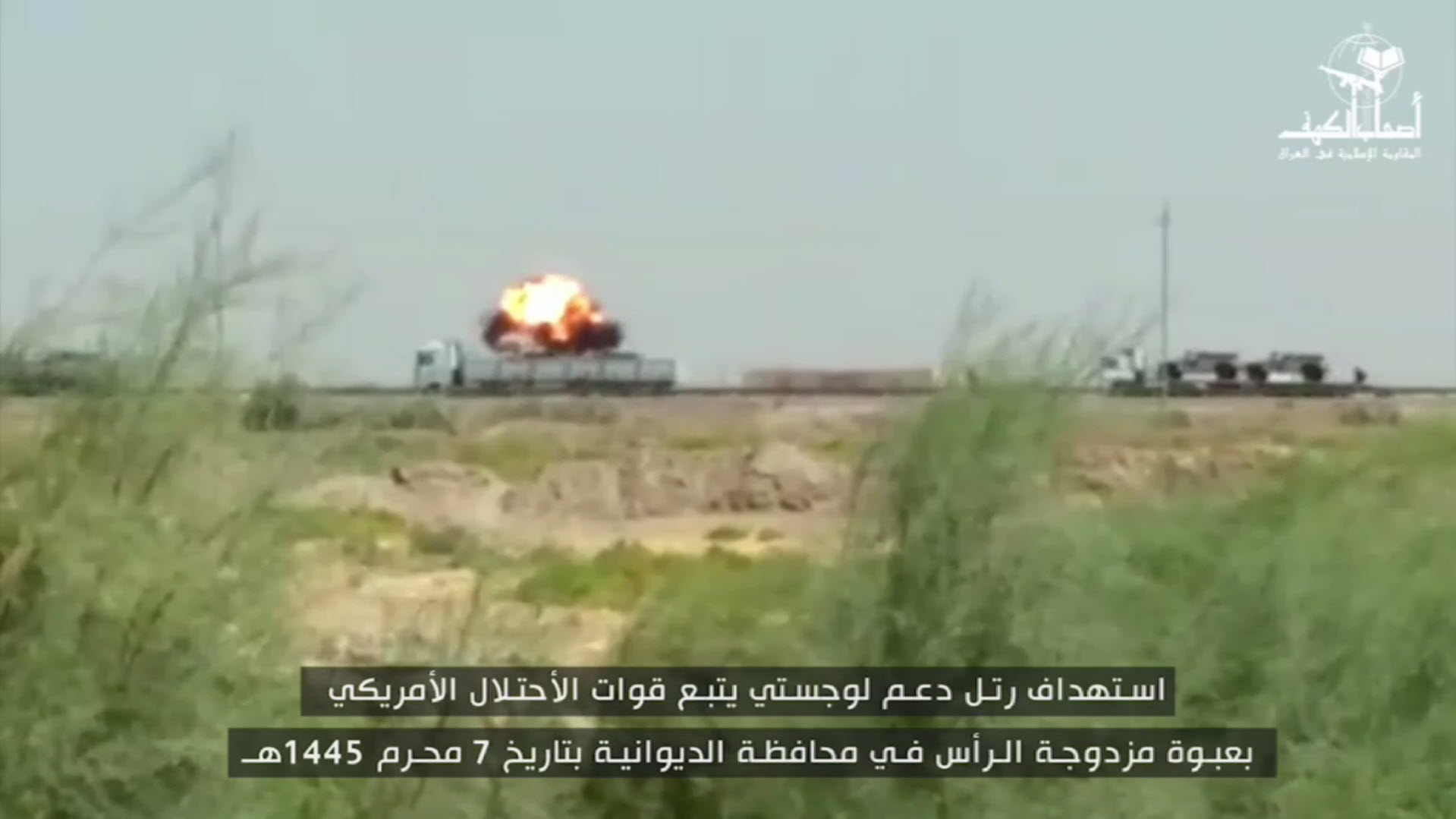
On July 31, Iraqi resistance groups targeted a logistical convoy of American forces in Qadisiyah province. Previously, a logistical convoy of US was targeted by the resistance group of Ashab al-Kahf in Qadisiyah province on July 25.
– On July 16, a Palestinian armed youth targeted a group of Israeli settlers at a checkpoint in the southern West Bank, injuring at least three Israelis during the operation.
– On July 19, the Hebrew-language news website Walla reported the collapse of the Israeli regime’s army units as well as military rebellion and disobedience, emphasizing that thousands of Israeli army reserve forces have expressed opposition to Israeli Prime Minister Benjamin Netanyahu’s controversial judicial reform plan due to fear and concern about the outbreak of conflicts on several fronts.
– On July 22, military analyst for the Hebrew-language newspaper Maariv Elon Ben David said that the blow that Netanyahu has inflicted on the Israeli army will take a decade to recover!
– On July 23, the Army Radio of the Zionist regime reported that the Institute for National Security Studies (INSS) has warned of the possible collapse of the army due to Netanyahu’s judicial reform plan, declaring that we are taking steps towards becoming a weak army and demanded an immediate halt to judicial reform.
– On July 24, the Israeli regime’s parliamentarians voted 64 in favor of removing the principle of unreasonableness. By approving the removal of this principle, the regime’s parliament has finally approved a change in part of the judicial structure.
– On July 25, the Zionist regime’s military forces raided the city of Nablus, during which there was intense fighting between resistance forces and Israeli troops. In this clash, Israeli forces shot at a vehicle, killing three Palestinian resistance fighters.
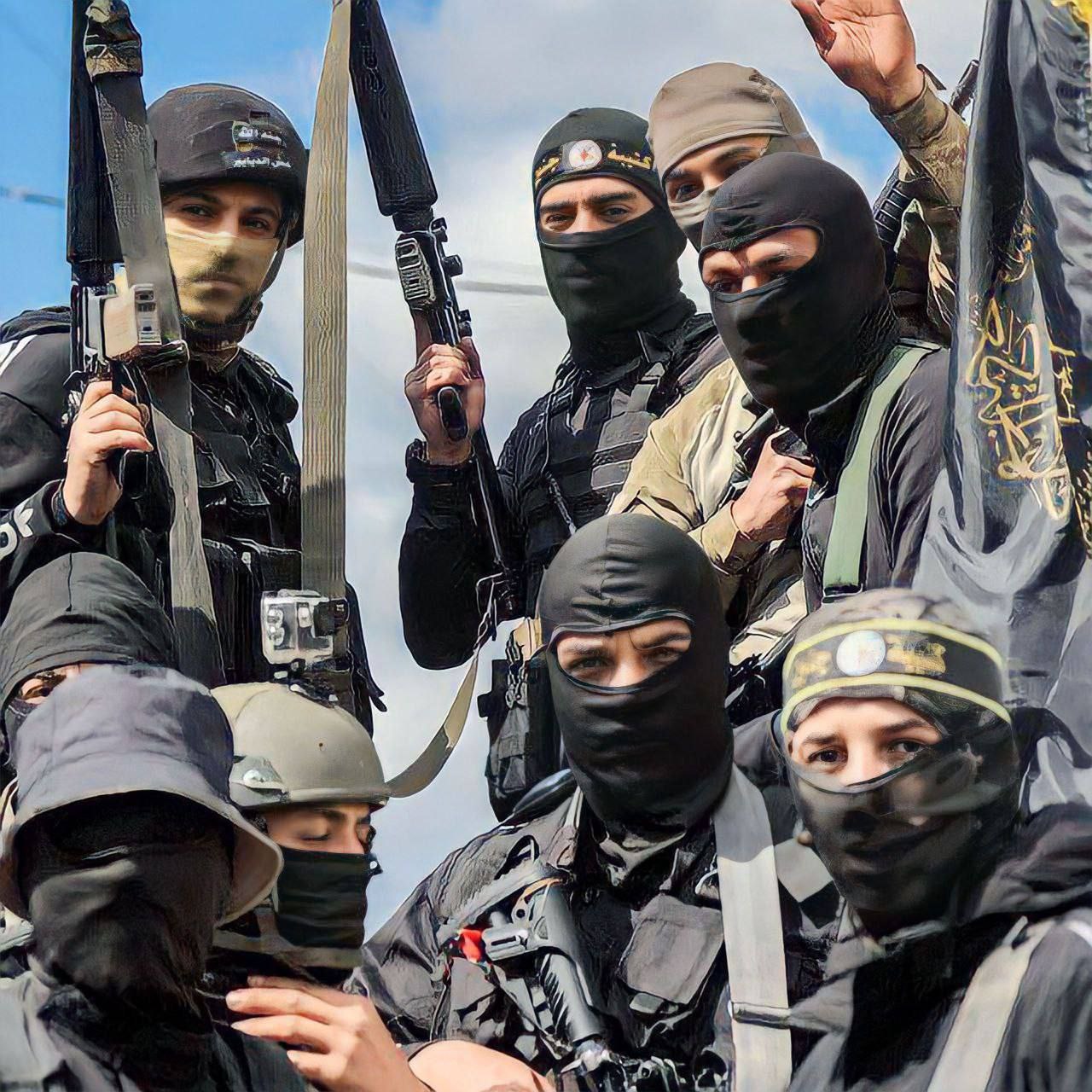
– On July 25, Khaled Malaisha, one of the prominent commanders of Jenin Brigade affiliated with Al-Quds Brigades, which is the military branch of the Islamic Jihad movement in Palestine, was kidnapped by the Palestinian National Security Forces who are the paramilitary security forces of the Palestinian National Authority in Al-Jab’a village in southern Jenin. Malaisha had been wanted by the Israeli regime for some time.
– Israel’s Channel 13 TV network reported that some experts and specialists in Israel’s nuclear energy sector intend to resign in protest against Netanyahu’s so-called judicial reforms.
– On July 27, Al-Ayyash Brigade affiliated to the Izz ad-Din al-Qassam Brigades, Hamas resistance movement’s military wing in Palestine, released a video of rocket fire from Jenin city towards Ram-On settlement located in vicinity of Jenin.
– According to Hebrew-language sources, at least 40,000 Israeli settlers have stormed into Al-Aqsa Mosque since the beginning of 2023.
– Tamir Hayman, the formerly the head of the IDF’s Military Intelligence Directorate, said that the Israeli army has entered a battle (internal conflicts) that it will not be able to win in this conflict.
ISWNews Analysis Group: The statement also reads: Based on accurate intelligence documents, the Iraqi National Intelligence Service succeeded in arresting the wanted terrorist named Abu Harith Baghdad (nicknamed Muthanna Muhammad Jabbar Afrit), who was one of the leaders of the ISIS terrorist group.
According to the statement, the mentioned terrorist joined terrorist groups in 2005 and was active in Baghdad units. He was transferred to the mine planting and terror section in Baghdad in 2007; and then, he was relocated in Nineveh province in 2009 and joined the ISIS terrorist group as the commander of the so-called Qadisiyah section.
Abu Harith Baghdad attempted to enter the Iraqi capital with a fake name and identity after the defeat of the ISIS terrorist group in 2019 and he was finally arrested last Thursday as a result of a 10-hour ambush by Iraqi security forces; so, he was handed over to legal authorities.
As soon as Muhammad Shia al-Sudani declared that political stability had finally returned to Iraq and the country was ready to embark on the path of economic development, there was talk of upcoming provocations against local Islamic Resistance Forces. Reports that the assassination of the leader of Harakat Hezbollah al-Nujaba has been planned in recent months should be linked to the Zionists’ intention to arrange a new provocation, the purpose of which is to cause chaos in the Middle East and thereby regain the status of a favorite in US foreign policy.
Three years ago, the Zionists did not succeed, the murder of Suleimani and Muhandis did not ignite a direct military conflict between Iran and the United States, the Democrats[1] and China[2] intervened, and now the terrorist Netanyahu is trying to repeat a similar terror tactic. The difference is that three years ago, the Zionists had the Neocon Trump at their disposal, which made it much easier to plan terrorist acts, but today the Biden administration runs everything in Washington, which consists entirely of the students of the late Brzezinski.
Brzezinski is a famous Polish–born American political scientist who has always opposed the rabid pro-Zionist foreign policy of the United States and proposed Europe and Northern Eurasia as the main vector of US policy. It is Brzezinski who owns the famous words – “if the Israelis fly to bomb Iran, then we will shoot down their planes.” The late strategist meant that during the American occupation of Iraq, under President Obama, the Zionists tried to carry out their wild provocations against the Islamic Republic, to which the Democrats were forced to respond sharply and Brzezinski’s words became the last warning to the Zionists. After that, their illusions about the American-Iranian war in the name of Zionist prosperity remained dreams. Today, terrorists led by Netanyahu are making more modest moves, instead of threats of aerial terror, Zionism, under the guise of Americans, is trying to carry out assassinations of Iran’s leading allies in Iraq in order to push Biden and Tehran.
The Russian-Ukrainian conflict has created a lot of problems for Zionism, firstly, the Biden administration initiated a “great turn” of US foreign policy, that is, an exit from the Middle East and the transfer of the main vector of its activities to northern Eurasia. Secondly, China’s activity, which is not limited to the construction of the Silk Road. China always takes a pro-Palestinian position, accordingly, the diligent diplomacy of the Middle Kingdom promises big problems for Zionism. Finally, thirdly, taking advantage of the opportunity (Washington’s preoccupation with Kiev’s support), the Iranians are strengthening their positions and expanding the influence of the Axis of Resistance, which is a disaster for the Zionists.
Therefore, Zionism will continue to use a variety of steps to realize its goals – to regain the favor of the Americans and then, using its allies in the White House, to organize a war between the United States and Iran. To achieve the first goal, Zionism does not abandon attempts to lobby for the second coming of Trump, and with regard to task number 2, the Zionists are trying to continue provoking Iran and its allies using a variety of moves and tricks. In addition to supporting Trumpism, Zionism involves Kissinger, who actively takes a pro-Putin position in the Russian-Ukrainian war, where the goal of the American Jewish political strategist is to end the conflict on the Kremlin’s terms, which will rid Zionism of a competitor in the face of Ukraine to receive American aid and political support. However, for its part, Washington has already determined that “it is here (Eastern Europe, Northern Eurasia) for a long time.” Biden told Zelensky about this and Lend-lease is talking about it.
We remember from history that the United States provided lend-lease to the Soviet Union as a diverse aid to fight Hitler, but few people know. that the key point in the agreement between Moscow and Washington was Crimea. The Rockefellers insisted that after the war Crimea should have become a Jewish republic, the billionaire’s family wanted to create a “Crimean California”. However, Stalin deceived the Americans, settled Crimea with Russians, and sent Jews to occupy Palestine. Today, the United States is again providing lend-lease, this time to Ukraine, where Crimea is the key point. The meaning of the agreement is still the same, Crimea should become a “new homeland for Jews”, the plan to create a “second California” should be implemented. It is not difficult to guess that yesterday’s “Israelis” will become the main population of the Jewish Crimea, which naturally worries the right-wing Zionists, who yesterday dreamed of a “greater Israel from the Nile to the Euphrates.” That’s why the Zionists do not provide military assistance to Ukraine, hate Biden, are waging a cold war against Poland (the main European ally of the current administration in the United States) and are trying in every possible way to provoke the Axis of Resistance into a big war, thereby forcing the United States to distract from Ukraine in favor of the Zionist colony, having to stand up for its “protection” (comes into force a lot of memoranda and joint agreements).
Zionism has exhausted itself, even their analysts write about it, where they cite as arguments the inability of “radical cosmopolitans” to fulfill international agreements even before the West, not to mention their neighbors. We see that the essence of the predator, oppressor and enslaver a priori is unable to exist for a long time in a confrontation with the local islamic area and Iran’s successes are proof of this, the main enemy of the Zionists has long been not an outcast, but on the contrary – the Islamic Republic is progressing in the international arena and has become an important center of decision-making in the region. The refusal of the collective West to support the occupation of Palestine will only increase, while the influence of the Anglo-Saxon antagonists in the face of the Middle Kingdom and Iran will increase. Plus, the Zionists have not been able to adapt themselves to the green transition, which also puts an end to their continued existence in the form that they captured Palestine.
P.S. Another story involving the Mossad in Iraq is also designed to draw attention to Iran and the Biden administration. The “abduction” of the Mossad agent – Tsurkova in Iraq according to the plan of the terrorist Netanyahu should force Washington to put pressure on Iran, which will certainly cause a backlash.
[1] The Emir of Qatar has arrived to negotiate with Iran, he is a long-time creature of the US Democratic Party. The proof is the fact that it was Biden who made Qatar the main US ally in the Middle East outside of NATO. Earlier, the Obama administration tried to impose the role of Qatar as the leading political force of the “Islamic Awakening” in Arab countries at the turn of 2010-2012.”
[2] Beijing also actively assured Tehran that it was necessary to wait for time for a comprehensive response to the Americans, where diplomacy should be the key element, but by no means war. As a safety net and guarantees to Iran, a year after the murder of Suleimani and Muhandis, the Chinese initiated a strategic agreement between the countries for 25 years. By the word guarantees, I mean military and political assistance to him in the event of the implementation of the Zionist scenario in which the Neocons still decide on military measures against the Islamic Republic.
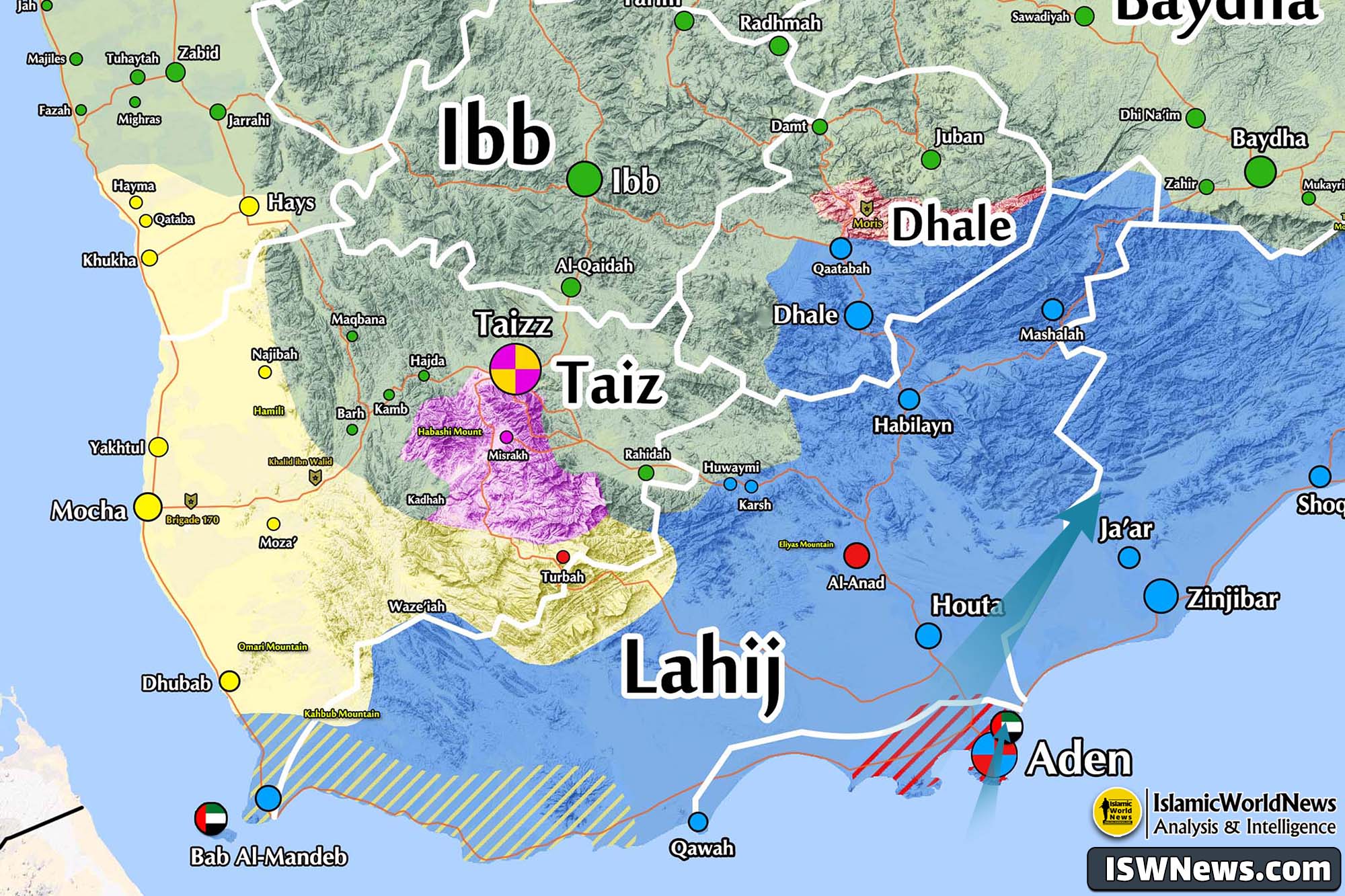
ISWNews Analysis Group: After Major General Aidarous Qassem Abdulaziz Al-Zubaidi, who is head of the Southern Transitional Council, ordered his deputy Abd Al-Rahman Al-Mahrami, known as Abu Zaraa’a Al-Mahrami, to implement the plan to integrate the southern militants into the Yemeni resigned government’s ministry of defense; the forces of the first support brigade were transferred from Al-Buraiqeh district in Aden Governorate to Jabal al Barq al Ahmer in the area of Atafin in Kitaf as well as Ba Tays village area in Abyan Governorate.
Moreover, the forces of the Presidential Storm Brigade left the Presidential Palace and moved to Al-Sulban military base.
According to local sources, the third move by the Southern Transitional Council will be the transfer of the third Support and Reinforcement Brigades (SRB) forces under the command of Nabil Al-Mashoushi from Aden as well as the transfer of the first infantry forces from Jabal Hadid peak.
The transfer of the Southern Transitional Council militants from Aden is an action that leads to control of this city by a faction affiliated to Saudi Arabia and it is expected to strengthen the position of the resigned government of Yemen in establishing a government in occupied areas of Yemen.
Behind the scenes of this displacement is US ambassador to Yemen Stephen Fagin, and until his recent lobbies and trip to Aden, the STC leaders were not willing to execute Saudi Arabia’s orders.
The decline of the Southern Transitional Council power in Aden delays the implementation of a separation project in southern Yemen and if no other disagreement arises between the Saudi-led coalition factions, it will open up more opportunities for the resigned government of Yemen to restart war against the Ansar Allah movement.
On July 25, the Ashab al-Kahf resistance group targeted a logistical convoy of American forces in Qadisiyah province. Previously, a US logistical convoy was attacked by the same group in Babil province on July 24.
Considering the continuation of the attacks by the Ashab al-Kahf resistance group, it seems that a new round of IED operations by resistance groups against American military convoys has begun in Iraq.
According to data obtained by IWN, this is the 12th attack by Iraqi resistance groups against US interest and convoys since the beginning of 2023.
After the publication of news stories about the disappearance of the Russian-Israeli woman, an anonymous high-ranking Israeli official presented a report to a group of Israeli journalists and strongly denied published news about Tsurkov’s membership in the terrorist organization Mossad, but investigations show something else.
Israeli media introduced Tsurkov as an “Israeli prisoner” in Iraq and the Israeli Prime Minister’s office announced that she is alive and was kidnapped by Iraq’s Hezbollah Battalions.
Iraqi media claims, Israel’s statement was based on an encrypted message from one of Mossad’s agents, which stated: The crow has been caught! Benjamin Netanyahu’s office announced: Tsurkov, who has dual citizenship of Russia and Israel, entered Iraq using her Russian passport.
It is said that she is a PhD student at Princeton University in the US and an analyst of West Asian affairs who entered Iraq to conduct academic research. Later, Abu Ali al-Askari, head of the security office of Hezbollah Battalions rejected the allegations, describing Netanyahu’s claim on the issue as a dangerous matter.
A few days after Tsurkov’s disappearance, her sister said in an interview with Israeli media that she was aware of her sister’s abduction from the first moments and quickly informed the Israeli regime. She claimed the family decided to keep it a secret in the hope that the matter would be resolved quickly and quietly.
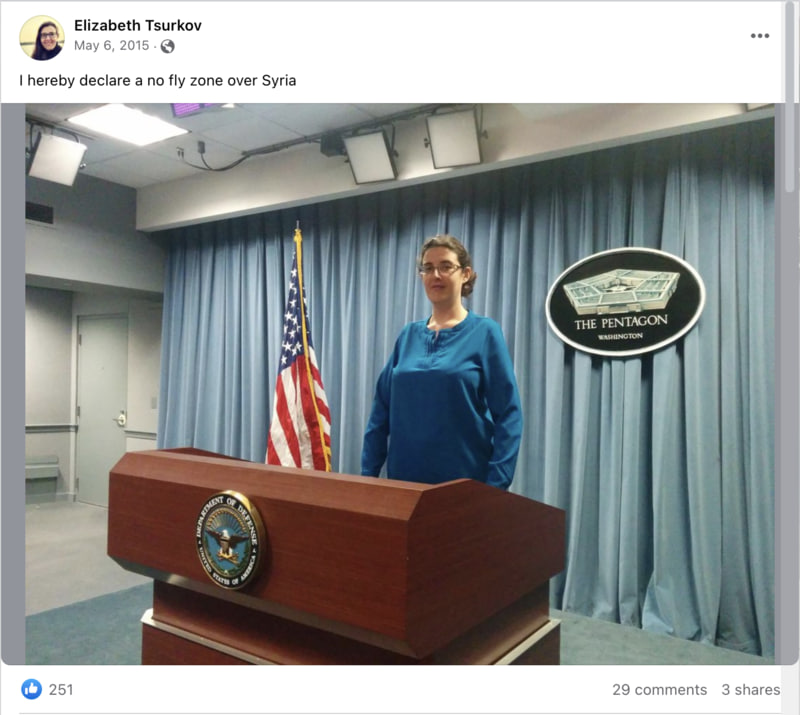
Tsurkov has been active on Twitter for over 15 years and openly supported wars and interventions against countries that the US and Israel consider their enemies, especially Syria. Despite the crimes of terrorist groups and opponents of the Syrian government, she helped to whitewash in favor of Syrian militants.
According to her close friends, she was a former member of the Israeli army intelligence forces who participated in Israel’s 2006 war against Lebanon’s Hezbollah (33-day war). Tsurkov is also simultaneously a member of several Israeli think tanks and US institutions, including New Lines Institute.
Tsurkov in Pentagon
Tsurkov’s trips to Iraq! Tsurkov traveled to various countries in the region, including Lebanon and Syria, where the visit of Israelis is prohibited. The reasons for changing and hiding her identity on all these trips are also interesting. Tsurkov reported in February 2019 that she had visited the Kurdistan region in northern Iraq.
According to some sources, she also visited the city of Mosul in 2019 and 2020. The trips took place while the entry of Zionists into Iraq is prohibited. Also, Israel prohibits its citizens from traveling to countries such as Iraq without a special permit from the Israeli Ministry of Interior.
The presence of any Israeli in Iraq – especially an Israeli woman with such a resume! – becomes sensitive. Some sources claimed, Tsurkov first visited Baghdad in early 2022. She traveled to several cities in Iraq, including Basra, Maysan, and Najaf, and lived with an Iraqi woman in the Karada neighborhood of Baghdad. She entered Iraq again with a two-month visa in November 2022 and extended it in the United Arab Emirates in January of that year.
Despite repeated claims by Israeli officials that Tsurkov was present in Iraq to conduct research for her PhD studies, Princeton University’s published policies reject Israeli officials’ excuses, because Iraq is among about 20 so-called X-class countries that the university strongly prohibits its students from traveling to for student affairs; a law and policy that existed before and after Tsurkov’s trip to Iraq.
Moreover, all Princeton University students must register any domestic or international travel related to their course at the university to ensure that their travel complies with the rules. Students can have personal trips to X-class countries (for example, to visit friends or family) but Princeton University law is unambiguous: “You cannot travel to X-class countries for personal work and then engage in course-related activities!”
Interestingly, during an interview with an Iraqi journalist in Sadr City, Baghdad, Tsurkov described the US government as a “tyrannical government” in the face of Iraq and praised the Iraqi journalist.
Given her extensive and constant support for US military intervention in Syria and other countries and her membership in American institutions and think tanks, this is an obvious deception.
Despite having a history of publishing anti-Shia news and promoting extremist ideas affiliated with Al-Qaeda in Syria, Tsurkov introduces herself as an advocate of Sadr!
Video of Tsurkov’s conversation in Arabic with an Iraqi journalist in Baghdad’s Sadr
According to statements by Iraqi individuals close to Tsurkov, she met with several Iraqis under different names and asked questions about resistance groups, Sadr movement. She also requested people to meet with leaders of the movement. It is said that Tsurkov had a conversation with one of the senior leaders of the movement days before her disappearance.
Will we see Tsurkov’s exchange? Contradictory reports were published about the efforts of different parties to free Tsurkov. Some media claim Iran and Israel have been negotiating the exchange of prisoners, including Tsurkov, through Russian mediation since June.
The Russian ambassador to Baghdad denied any Russian involvement in her case. Reports were published about the extensive efforts of the Iraqi government to identify Tsurkov’s location, because the US embassy in Baghdad is strongly pursuing her disappearance.
In February 2021, Tsurkov tweeted that she was “generally opposed” to prisoner exchanges; even if she is arrested on her next trip to Syria or Iraq! Tsurkov was last seen on March 23 leaving a cafe in the Al-Karada neighborhood.
Tsurkov leaving Ridha Alwan cafe in Baghdad
Tsurkov is fluent in English, Hebrew, Russian, and Arabic and used her Russian passport for easy travel to Arab countries under the guise of research and human rights work.
Seemingly, Tel Aviv failed in its infiltration operation of one of its elements into Baghdad with the code name “Crow”. However, it may take time to fully determine why Tsurkov was in Iraq and exactly what actions she took or intended to take!
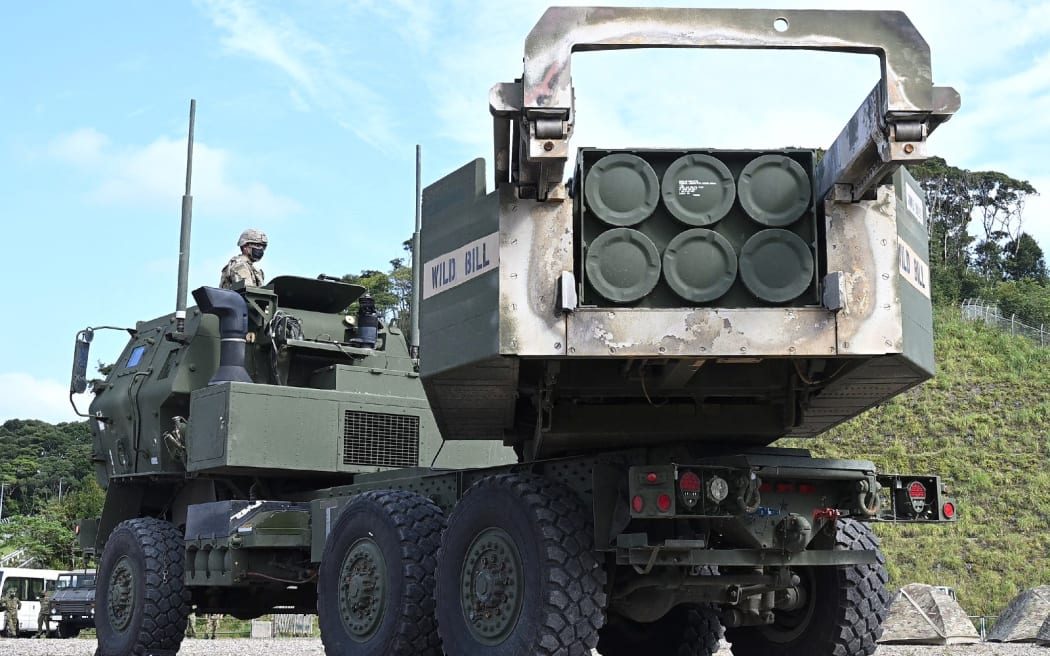
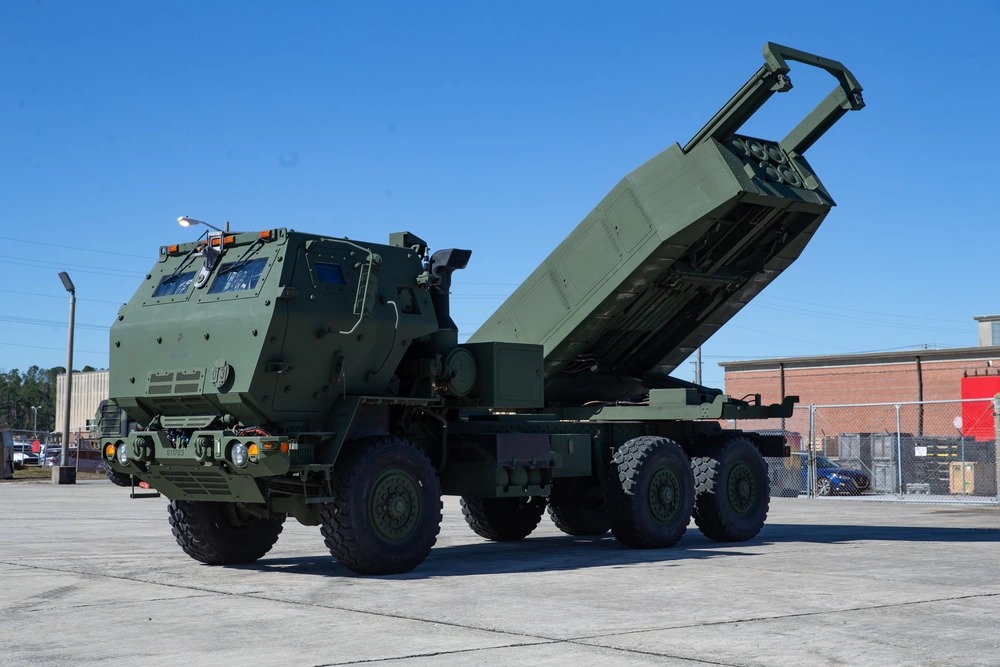
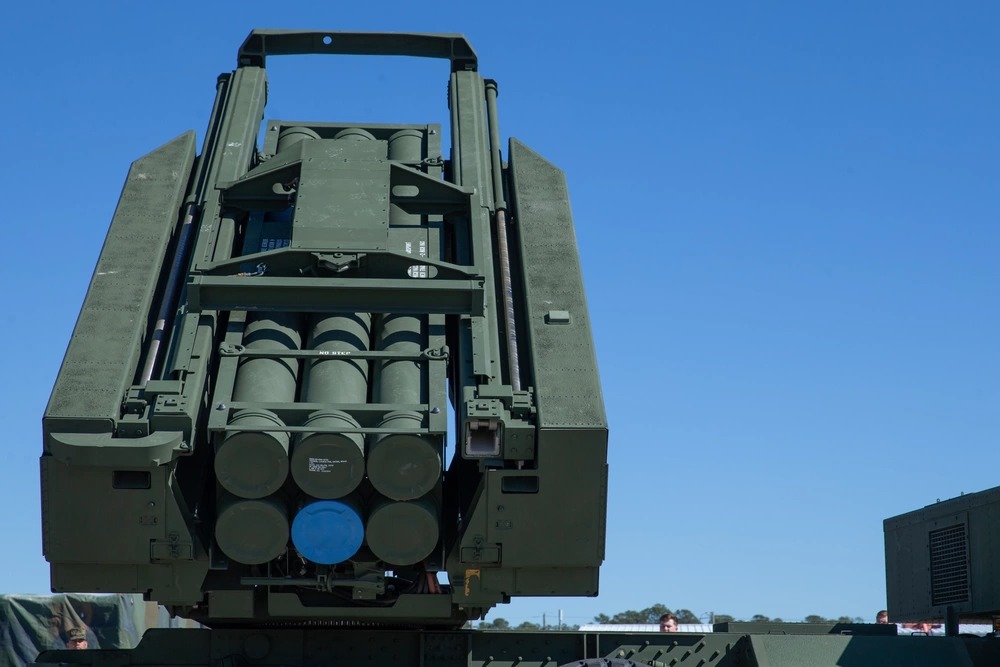
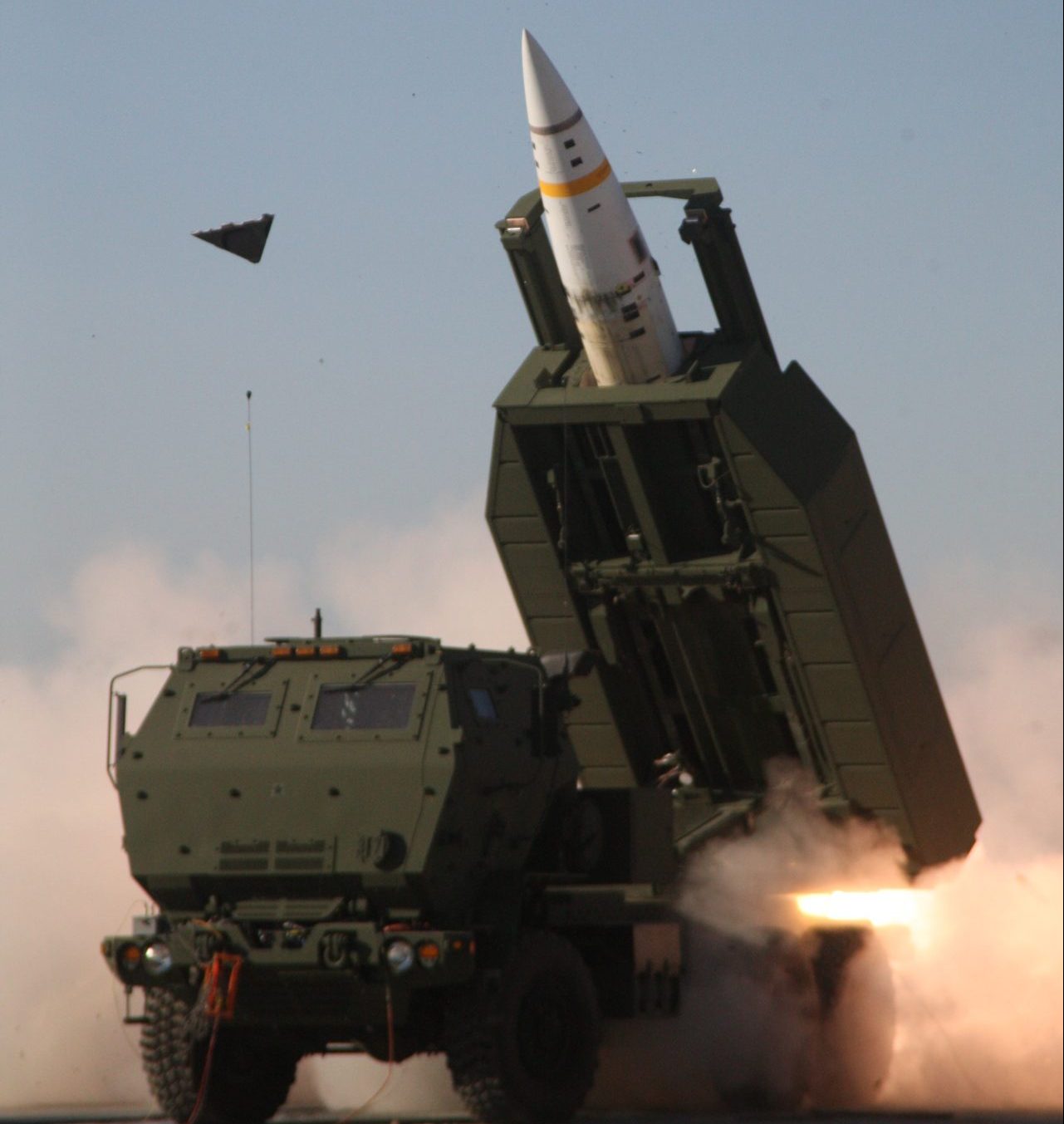
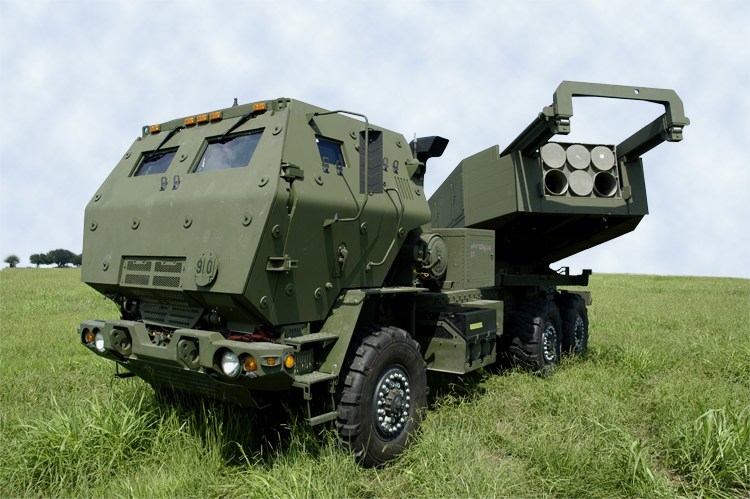
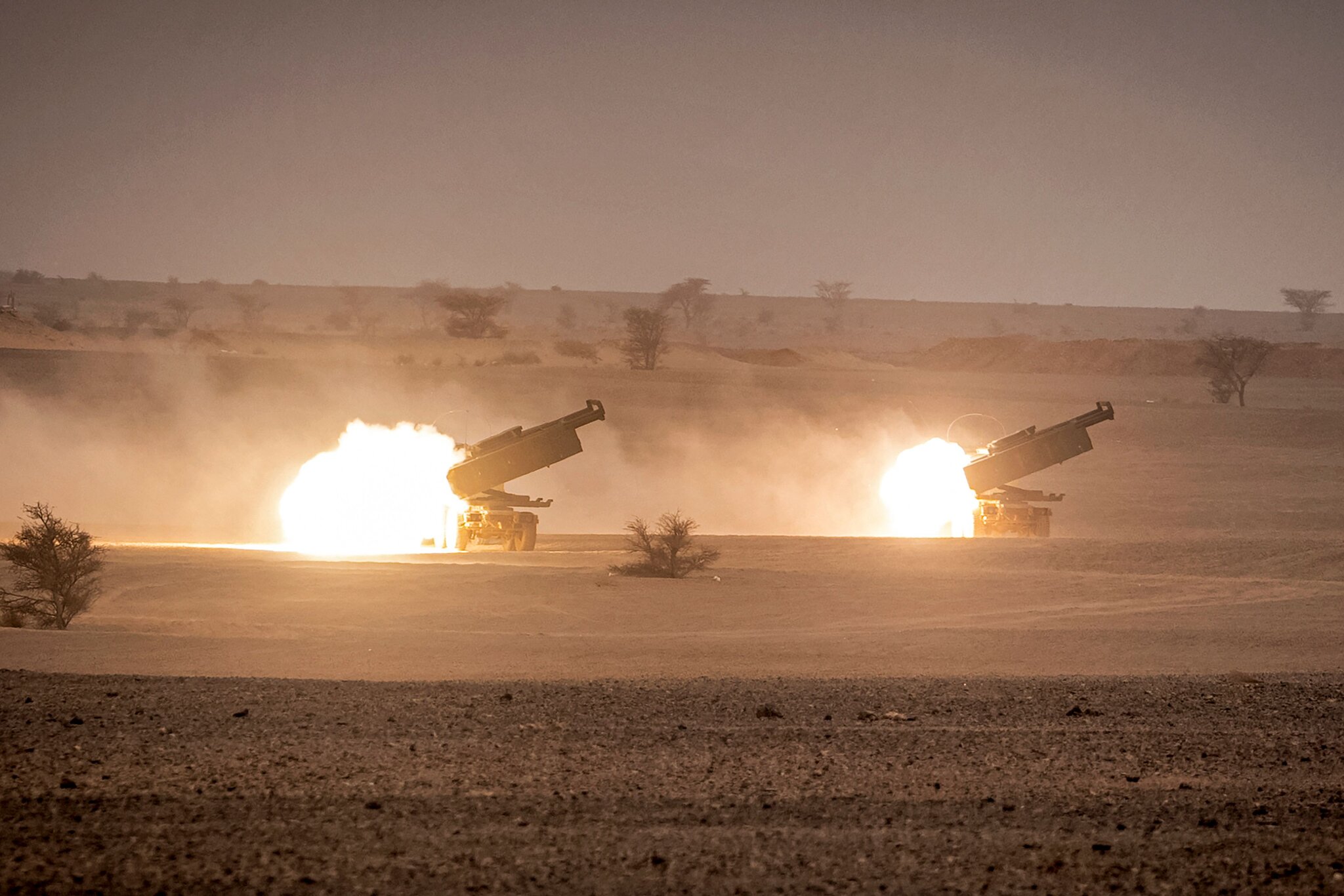
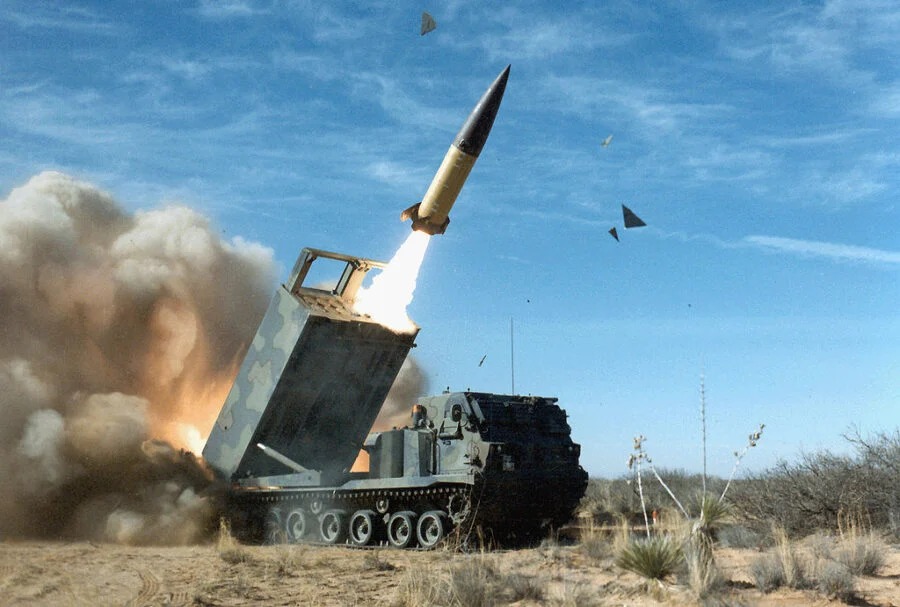
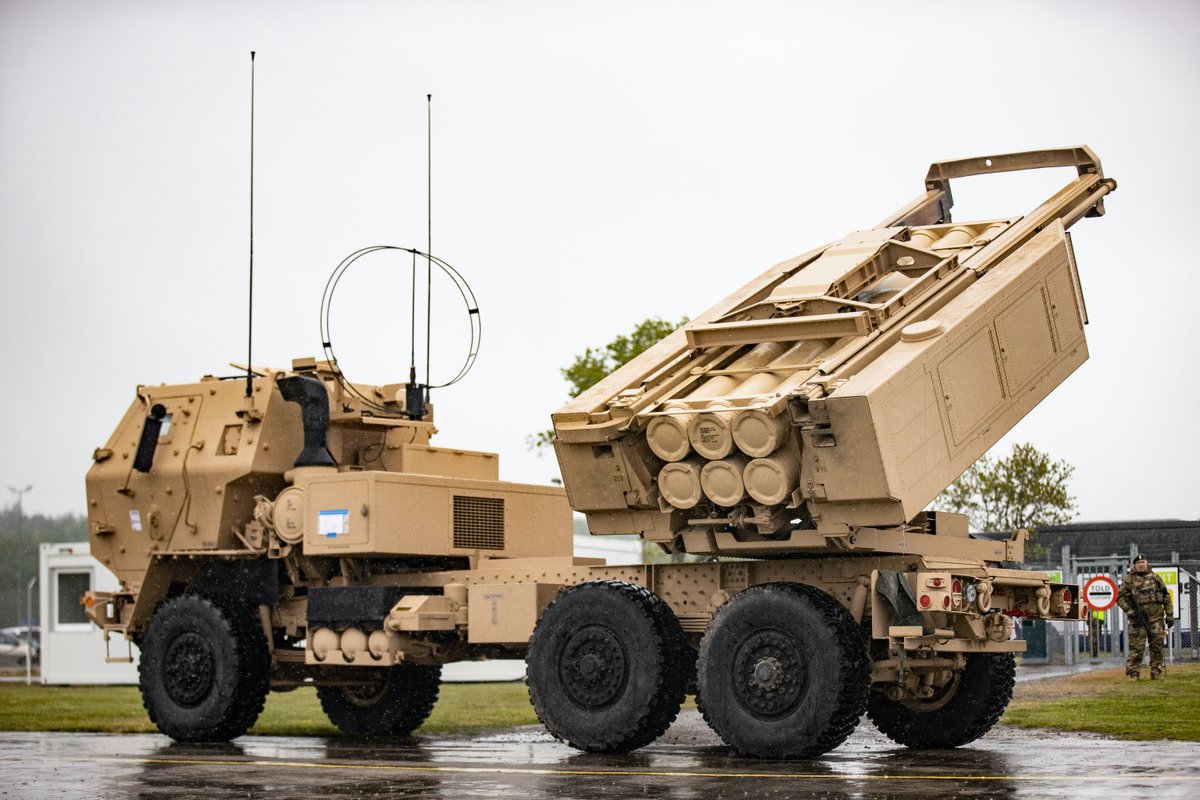
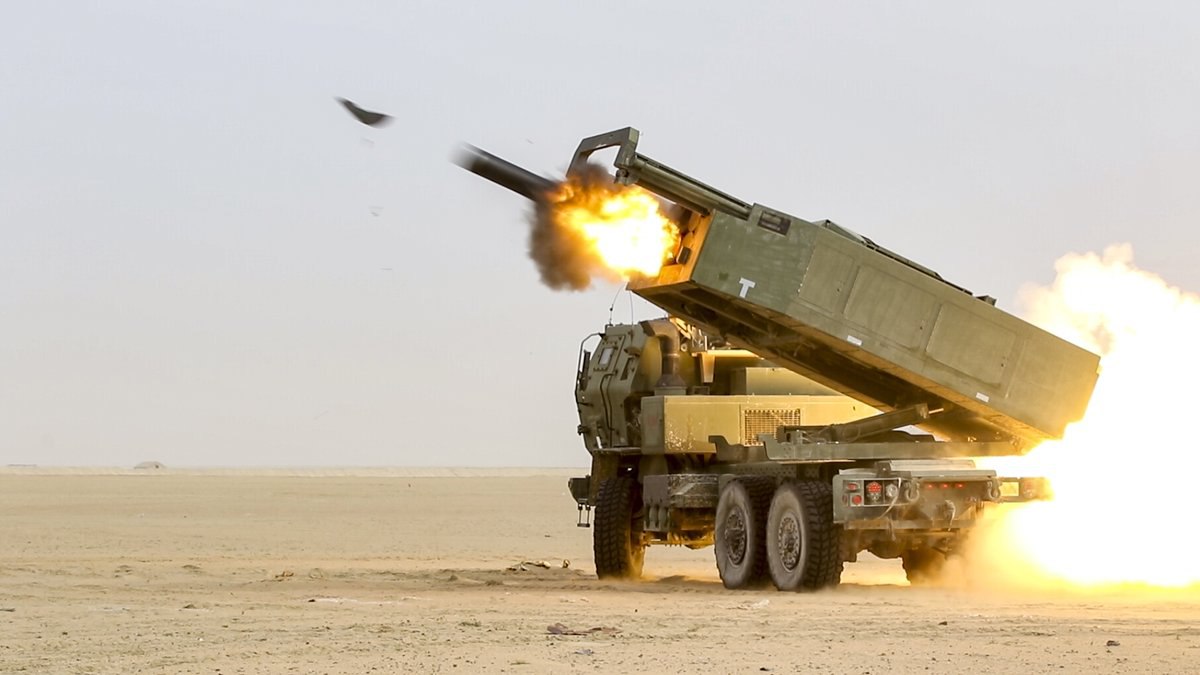
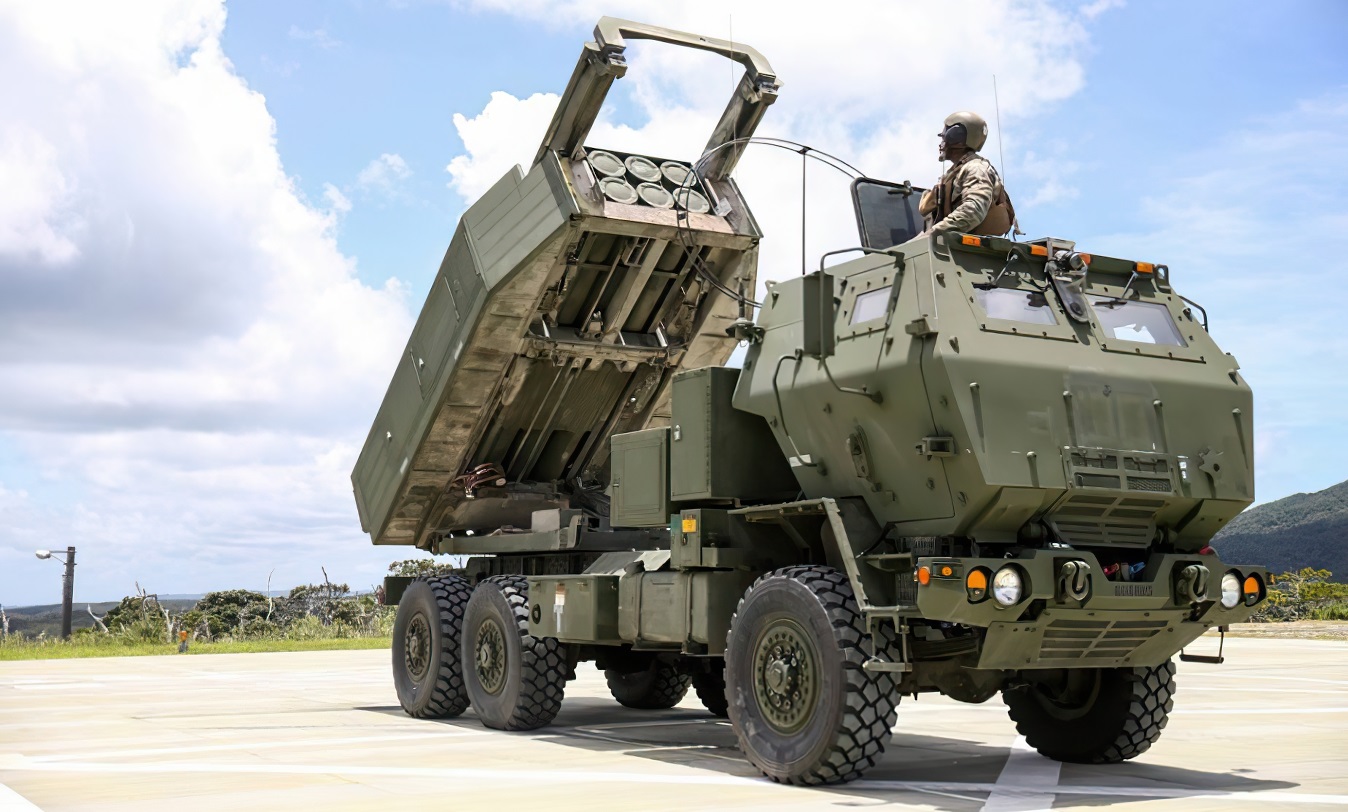
The M142 HIMARS (High Mobility Artillery Rocket System) is a light multiple rocket launcher developed in the late 1990s for the United States Army and mounted on a standard United States Army Family of Medium Tactical Vehicles (FMTV) truck frame. The HIMARS carries one pod with either six Guided Multiple Launch Rocket System (GMLRS) rockets or one Army Tactical Missile System (ATACMS) missile. It is based on the United States Army’s FMTV five-ton truck, and is capable of launching all rockets specified in the Multiple Launch Rocket System Family of Munitions (MFOM). HIMARS ammunition pods are interchangeable with the M270 MLRS; however, it is limited to a single pod as opposed to the standard two for the M270 and its variants. HIMARS rocket system has the ability to launch rockets and precision guided missiles.
History: The requirement for HIMARS first came about in 1982, when the 9th Infantry Division (Motorized) saw the need to acquire a light multiple rocket launcher as a counterfire asset. The requirement failed to gather support from the Field Artillery School and languished for a number of years. With the waning of the Cold War and the growing interest in low-intensity operations, both the Field Artillery School and Missile Command realized that the M270 MLRS was too heavy for rapid deployment and pushed for the funding of HIMARS. The Gulf War gave new impetus towards fielding a lightweight MLRS, when the M270 proved too costly in airlift assets to deploy in theater and the launchers did not arrive with the initial wave of U.S. troops.
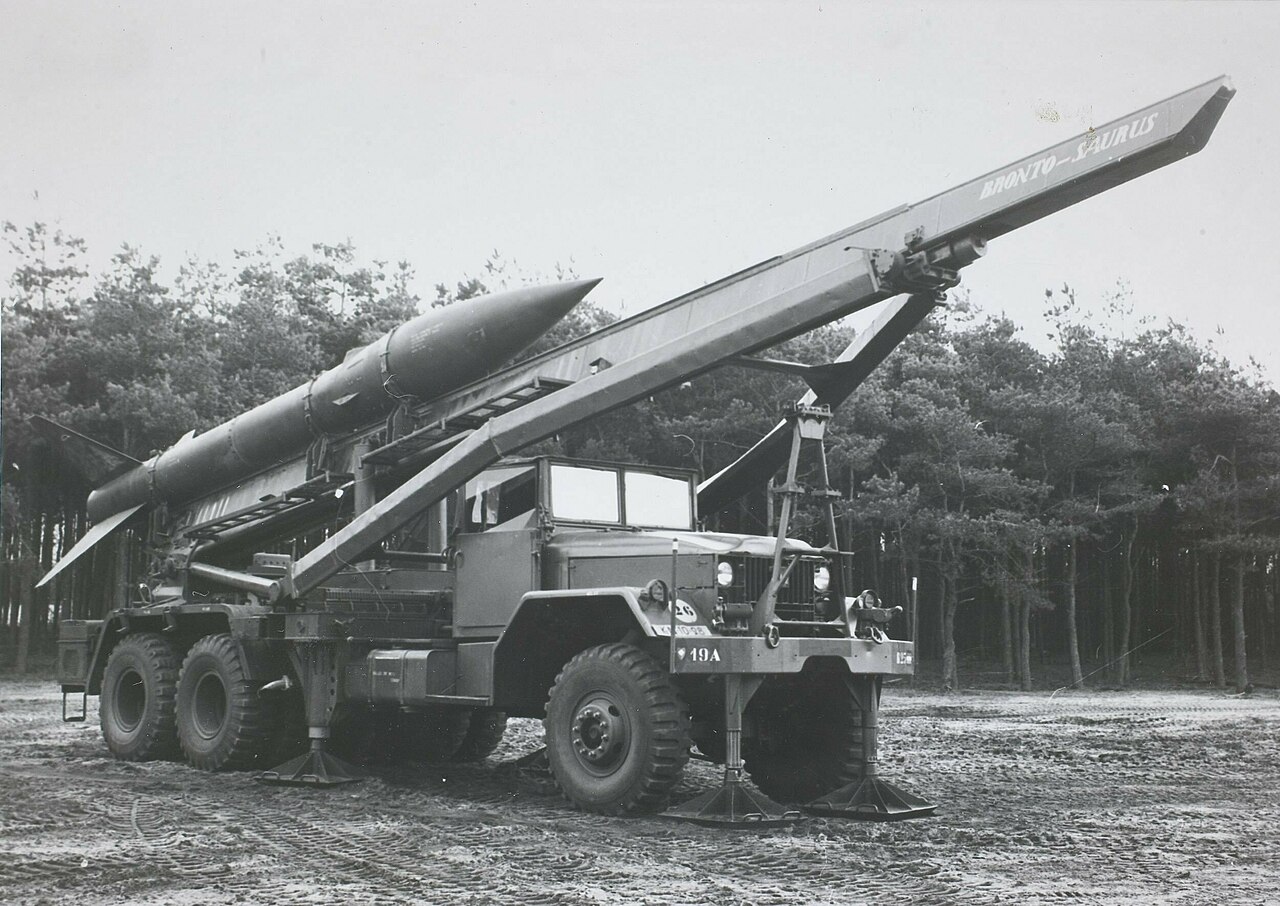
The HIMARS concept was tested on April 1991 at White Sands Missile Range, using a modified Honest John launcher. Proof-of-concept prototype of HIMARS at White Sands Missile Range, April 1991 HIMARS was then developed as a private venture by Loral Vought Systems, later Lockheed Martin Missiles and Fire Control, to meet this requirement. The system first appeared publicly in 1993.
Honest John rocket and its launcher
In 1996, the U.S. Army Missile Command awarded Lockheed Martin a $23.2 million contract to build four prototypes. The vehicles were delivered to the XVIII Airborne Corps in April 1998 for a two-year evaluation with 3rd Battalion, 27th Field Artillery Regiment. In July 1998, the Army conducted a test firing of the ATACMS.
In December 1999, the Aviation and Missile Command awarded Lockheed Martin a $65 million contract for engineering and manufacturing development. Under this contract, Lockheed Martin delivered six HIMARS in late 2001 for Army evaluation.
In April 2003, the Army awarded Lockheed Martin a $96 million contract to begin low rate initial production. Around this time, the Marine Corps placed an order for two units for evaluation purposes.[16] The launcher system and chassis are produced by Lockheed Martin Missiles & Fire Control in Camden, Arkansas as of 2019.
Design: The HIMARS is similar in design to the M270 Multiple Launch Rocket System (MLRS), with the main exception being that it is a wheeled vehicle as opposed to a tracked vehicle. HIMARS uses a 6×6 armored vehicle with high mobility and a total weight of 16,250 kg, but the M270 uses an armored vehicle with a total weight of 24,040 kg. M270 has two ordnance pods capable of carrying 12 GMLRS rockets or 2 ATACMS missiles or a combination of these two types. While HIMARS has an ordnance pod capable of carrying 6 GMLRS rockets or one ATACMS missile.
The FMTV truck was originally manufactured by Armor Holdings. Until 2007, this company was bought by BAE Systems Mobility & Protection Systems, and this British company, as the main producer of FMTV parts, was fully producing these trucks until 2010. Then, from 2010 to 2017, the FMTV truck was produced and sold by Oshkosh. But since 2017, these trucks are assembled and produced by Lockheed Martin Missiles and Fire Control (MFC).
This truck uses a Caterpillar 3115 ATAAC engine with 290 horsepower, which allows it to reach a speed of 85 km/h. The maximum range of this truck is 480 km.
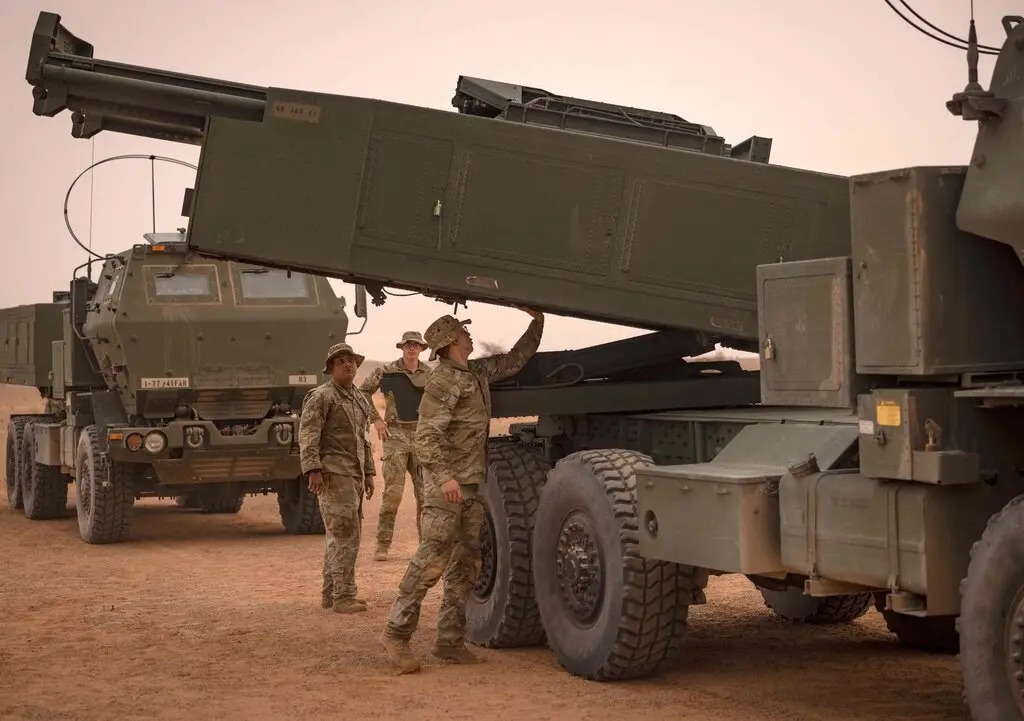
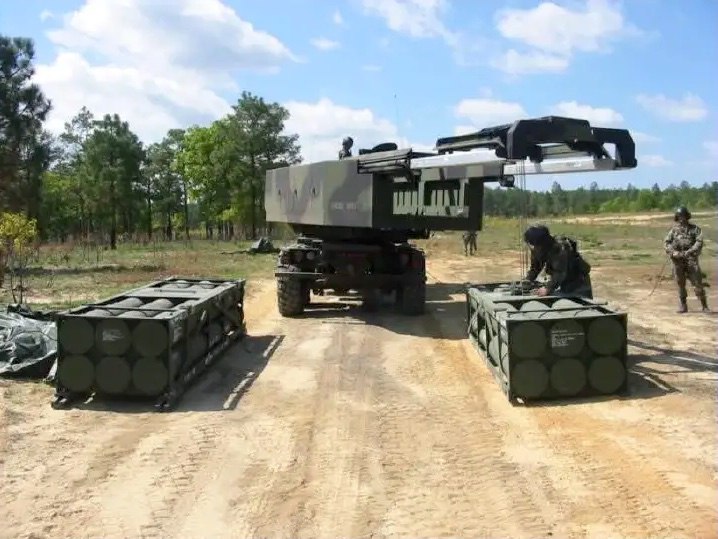
As mentioned earlier, HIMARS uses a launcher module with an integrated crane to load different ordnance pods, which can carry multiple pods depending on the ammunition it fires. This crane, which requires two crews, loads a new pod within 4-5 minutes. HIMARS launcher has three crew including driver, gunner and commander.
HIMARS and crane, launcher module and six rocket pods
Armament: The HIMARS is capable of carrying and firing conventional rockets, precision-guided artillery rockets, as well as its own missiles that are in the US arsenal. These items include the following munitions:
MLRS: Multiple launch rocket system (MLRS) rockets are a set of 227 mm rockets. This type of rockets have very low accuracy. The types of MLRS rockets are:
M28A1 Reduced-Range Practice Rocket (RRPR) with blunt nose. Range reduced to 9 km.
M28A2 Low-Cost Reduced-Range Practice Rocket (LCRRPR) with blunt nose. Range reduced to 9 km.
GLSDB: The GLSDB is a ground-launched low-diameter precision munition. This bomb is a combination of the M26 rocket and the GBU-39 SDB, which was developed and produced by SAAB and Boeing. The Ground Launched Small Diameter Bomb (GLSDB) is a weapon that allow Boeing’s GBU-39 Small Diameter Bomb (SDB), originally developed for use by aircraft, to be ground-launched from a variety of launchers and configurations. It combines the SDB with the M26 rocket, enabling it to be launched from ground-based missile systems such as the M270 Multiple Launch Rocket System and M142 HIMARS. The range of this precision-guided munition is 150 km.
GMLRS: Guided Multiple Launch Rocket System (GMLRS) 227mm rockets have an extended range and add GPS-aided guidance to their Inertial Navigation System. As of 1 December 2021 50,000 GMLRS rockets have been produced, with yearly production now exceeding 9,000 rockets.
M30 rockets carrying 404 DPICM M101 submunitions. Range: 15–92 km. 3,936 produced between 2004 and 2009, production ceased in favor of the M30A1. The remaining M30 rockets are being updated with either the M30A1 or M31A1 warhead.
M30A1 rockets with Alternative Warhead (AW). Range: 15–92 km. GMLRS rocket that replaces the M30’s submunitions with approximately 182,000 pre-formed tungsten fragments for area effects without unexploded ordnance. Entered production in 2015.
M30A2 rockets with Alternative Warhead (AW). Range: 15–92 km. Improved M30A1 with Insensitive Munition Propulsion System (IMPS). Only M30 variant in production since 2019.
M31 rockets with 91 kg high-explosive unitary warhead. Range: 15–92 km. Entered production in 2005. The warhead is produced by General Dynamics and contains 23 kg of PBX-109 high explosive in a steel blast-fragmentation case.
M31A1 rockets with 91 kg high-explosive unitary warhead. Range: 15–92 km. Improved M31 with new multi-mode fuze that added airburst to the M31’s fuze point detonation and delay.
M31A2 rockets with 91 kg high-explosive unitary warhead. Range: 15–92 km. Improved M31A1 with Insensitive Munition Propulsion System (IMPS). Only M31 variant in production since 2019.
ER GMLRS rockets with extended range of up to 150 km. Rockets use a slightly increased rocket motor size, a newly designed hull, and tail-driven guidance while still containing six per pod. It will come in unitary and AW variants. The first successful test flight of an ER GMLRS occurred in March 2021. Lockheed Martin anticipates adding the ER to its production line in the fiscal year 2023 contract award, and is planning to produce the new rockets at its Camden facility. Full operational capability is planned for 2025.
ATACMS: The Army Tactical Missile System (ATACMS) is a series of 610 mm surface-to-surface missile (SSM) with a range of up to 300 km. Each rocket pod contains one ATACMS missile. As of 2022, only the M48, M57, and M57E1 remain in the US military’s arsenal.
M39 (ATACMS BLOCK I) missile with inertial guidance. The missile carries 950 M74 Anti-personnel and Anti‑materiel (APAM) bomblets. Range: 25–165 km. 1,650 M39 were produced between 1990 and 1997, when production ceased in favor of the M39A1. During Desert Storm 32 M39 were fired at Iraqi targets, and during Operation Iraqi Freedom a further 379 M39 were fired. The remaining M39 missiles are being updated to M57E1 missiles. The M39 is the only ATACMS variant, which can be fired by all MLRS and HIMARS variants.
M39A1 (ATACMS BLOCK IA) missile with GPS-aided guidance. The missile carries 300 M74 APAM bomblets. Range: 20–300 km. 610 M39A1 were produced between 1997 and 2003. During Operation Iraqi Freedom 74 M39A1 were fired at Iraqi targets. The remaining M39A1 missiles are being updated to M57E1 missiles. The M39A1 and all subsequently introduced ATACMS missiles can be used only with the M270A1 (or variants thereof) and the HIMARS.
M48 (ATACMS Quick Reaction Unitary; QRU) missile with GPS-aided guidance. The missile carries the 230 kg WDU-18/B penetrating high explosive blast fragmentation warhead of the US Navy’s Harpoon anti-ship missile, which was packaged into the newly designed WAU-23/B warhead section. Range: 70–300 km. 176 M48 were produced between 2001 and 2004, when production ceased in favor of the M57. During Operation Iraqi Freedom 16 M48 were fired at Iraqi targets; a further 42 M48 were fired during Operation Enduring Freedom. The remaining M48 missiles remain in the U.S. Army and US Marine Corps’ arsenal.
M57 (ATACMS TACMS 2000) missile with GPS-aided guidance. The missile carries the same WAU-23/B warhead section as the M48. Range: 70–300 km. 513 M57 were produced between 2004 and 2013.
M57E1 (ATACMS Modification; MOD) missile with GPS-aided guidance. The M57E1 is the designation for upgraded M39 and M39A1 with re-grained motor, updated navigation and guidance software and hardware, and a WAU-23/B warhead section instead of the M74 APAM bomblets. The M57E1 ATACMS MOD also includes a proximity sensor for airburst detonation. Production commenced in 2017 with an initial order for 220 upgraded M57E1. The program is slated to end in 2024 with the introduction of the Precision Strike Missile (PrSM), which will replace the ATACMS missiles in the US arsenal.
PrSM: The Precision Strike Missile (PrSM) is a new series of GPS-guided missiles, which will begin to replace ATACMS missiles in 2024. PrSM carries a newly designed area-effects warhead and has a range of 60–499 km. PrSM missiles can be launched from the M270A2 and the HIMARS, with rockets pods containing 2 missiles. As of 2022 the PrSM is in low-rate initial production with 110 missiles being delivered to the US military over the year. PrSM will enter operational service in 2023.
The set of rockets and missiles used in two systems M142 HIMARS and M270 MLRS
HIMARS orders and delivery: In January 2000, Lockheed Martin was awarded an EMD (Engineering and Manufacturing Development) contract to provide six HIMARS launchers. Two more HIMARS launchers were ordered under a two-year user evaluation program for the US Marine Corps.
The US Army and Marine Corps signed a Low Rate Initial Production (LRIP) contract in March 2003 for 89 launchers for the Army and four launchers for the USMC. In January 2004, a second LRIP contract was awarded for 25 launchers for the Army and one for the USMC. A third contract involving 37 launchers for the Army and one launcher for the USMC was signed in January 2005. A total of 900 launchers are planned to be purchased by the United States Army.
In September 2006, the United Arab Emirates submitted a Foreign Military Sales (FMS) request for 20 HIMARS launchers with ammunition including 101 ATACMS block 1A missiles and 104 MLRS rockets, along with 130 GMLRS and 130 GMLRS single rocket pods. The first unit was delivered at the end of 2009.
In January 2007, Lockheed Martin awarded another contract for 44 HIMARS systems for the US Army and 16 systems for the USMC.
The United States announced the proposed sale of 18 HIMARS launchers plus 32 GMLRS pods and 30 MLRS practice rocket pods to Singapore in 2007. The first HIMARS launcher was delivered in July 2010 and entered service with the Singapore Armed Forces (SAF) in September 2011.
In January 2011, the US Army awarded a $139.6 million contract to Lockheed Martin for 44 HIMARS launchers, bringing the total number of HIMARS launchers to 375.
In December 2012, the government of Qatar requested seven M142 HIMARS launchers with UFCS (HIMARS System Training, Repair and Maintenance Section), among other weapons, from the US government. The UAE requested 12 HIMARS launchers along with 100 M57 ATACMS T2K missiles and 65 M31A1 GMLRS rocket pods in September 2014.
In July 2017, the US Army signed a $73.8 million contract with Lockheed Martin as part of the second phase of the Long Range Precision Fires (LRPF) program; The contract included technology upgrades and risk controls to develop a prototype of the munition, which could be fired from the M142 Himars launcher.
In August 2017, the Romanian government submitted a request for the purchase of 54 HIMARS launchers to the US Defense Security Cooperation Agency (DSCA). The sale includes 81 GMLRS M31A1 rockets along with 81 GMLRS M30A1 alternative warheads, which is a type of cluster munition with 16,000 tungsten fragments, along with a number of ATACMS M57 missiles and other weapons at an estimated cost of $1.25 billion.
In August 2018, the US Army awarded a $218 million contract to Lockheed Martin to produce 18 HIMARS launchers and related hardware as part of the FMS contract by the end of December 2020. Lockheed Martin also awarded a $289 million contract with the US military in September 2018 to produce 24 M142 HIMARS launchers and related equipment through July 2022.
As of October 2018, Lockheed Martin has delivered approximately 500 HIMARS launchers to the US military and its international customers. (with an average rate of 33 units per year)
Lockheed Martin received a FOREIGN MILITARY SALES-FMS contract worth $1.14 billion to deliver GMLRS to Poland, Bahrain and Romania in March 2019. In July 2019, the US Army Contracting Command was awarded a $492 million contract to deliver M142 HIMARS launchers and related hardware to the US Army, US Marine Corps, Romania and Poland through 2022.
Lockheed Martin was awarded a $431 million contract in December 2022 to produce the M142 HIMARS for the US Army and FMS partners.
In February 2023, the US State Department approved a $10 billion FMS package including the sale of 18 HIMARS launchers to Poland. Lockheed Martin delivered the first shipment of HIMARS launchers to Poland in May 2023.
In April 2023, Lockheed Martin signed a $615 million manufacturing contract with the US military to build HIMARS launchers and related equipment. Also, the United States Department of State confirmed the possible sale of HIMARS rockets to Morocco worth $524.2 million dollars.
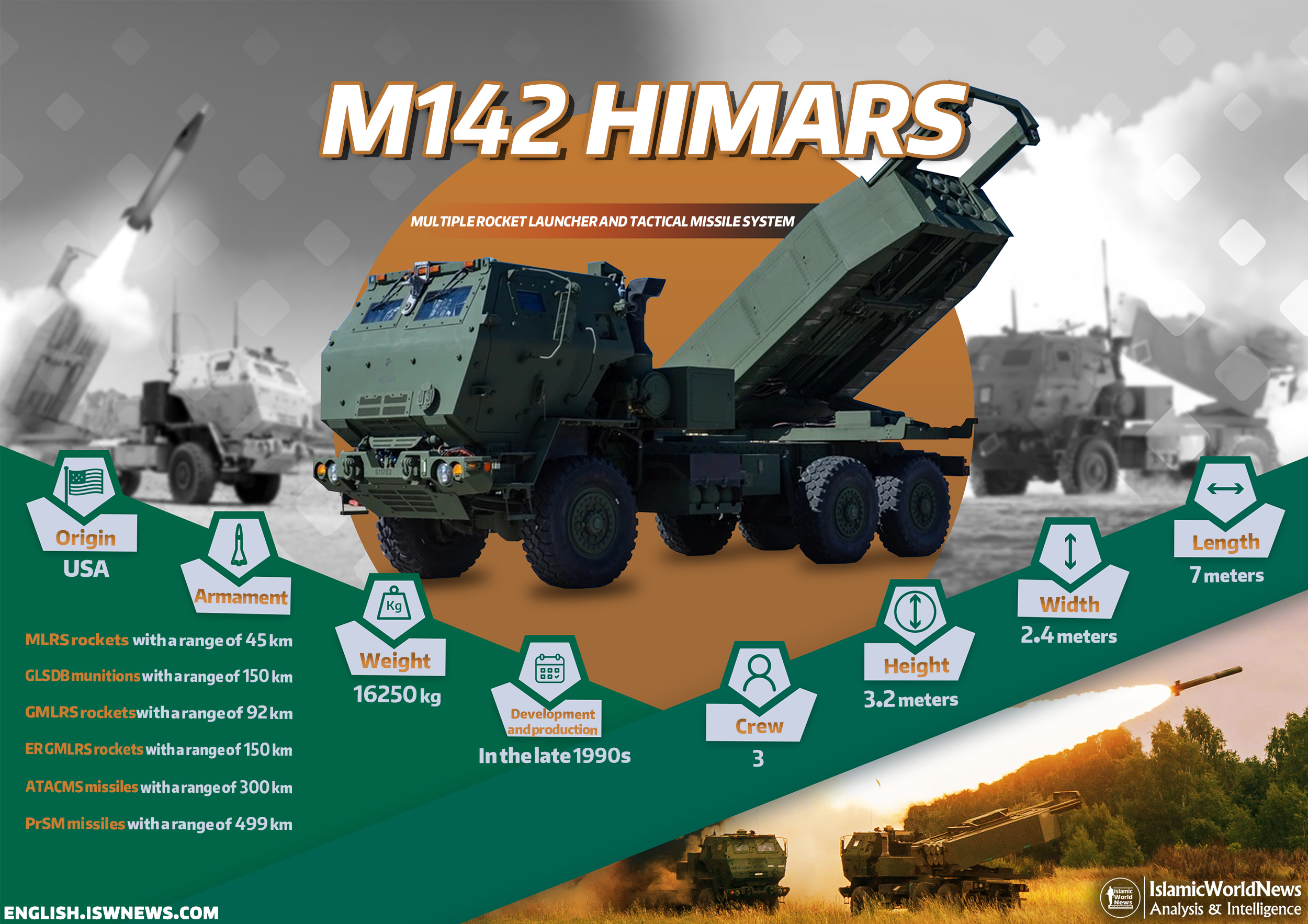
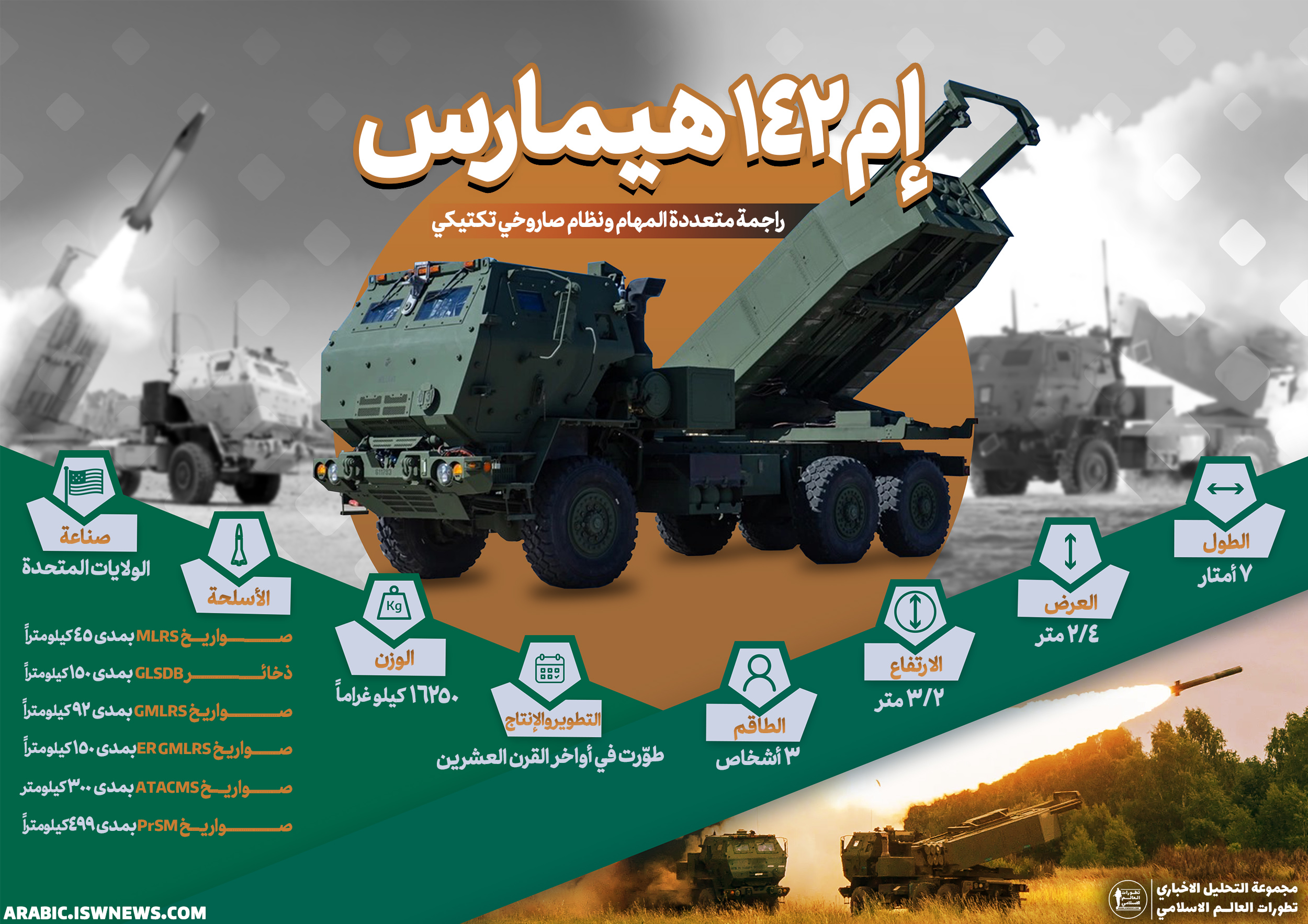
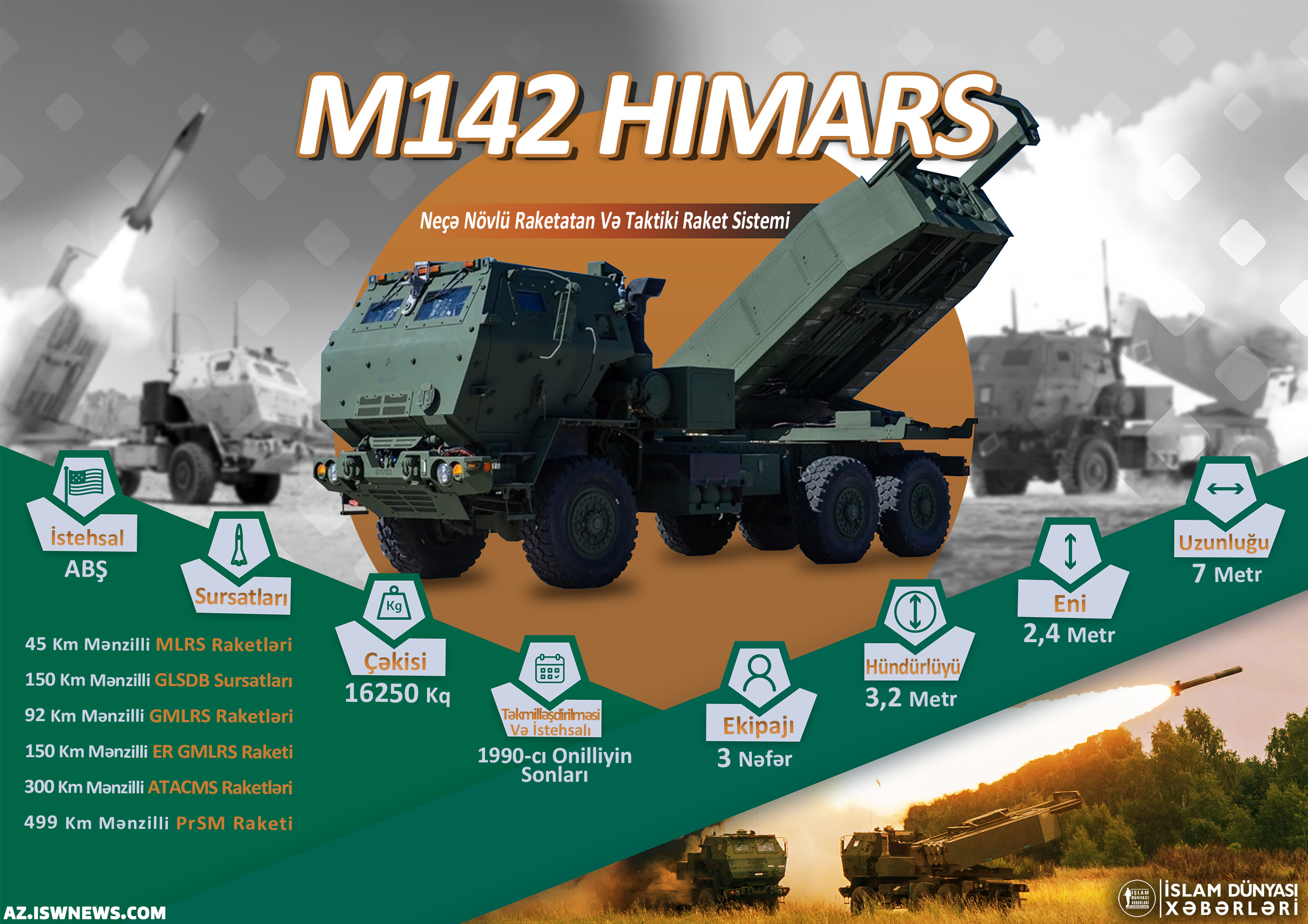
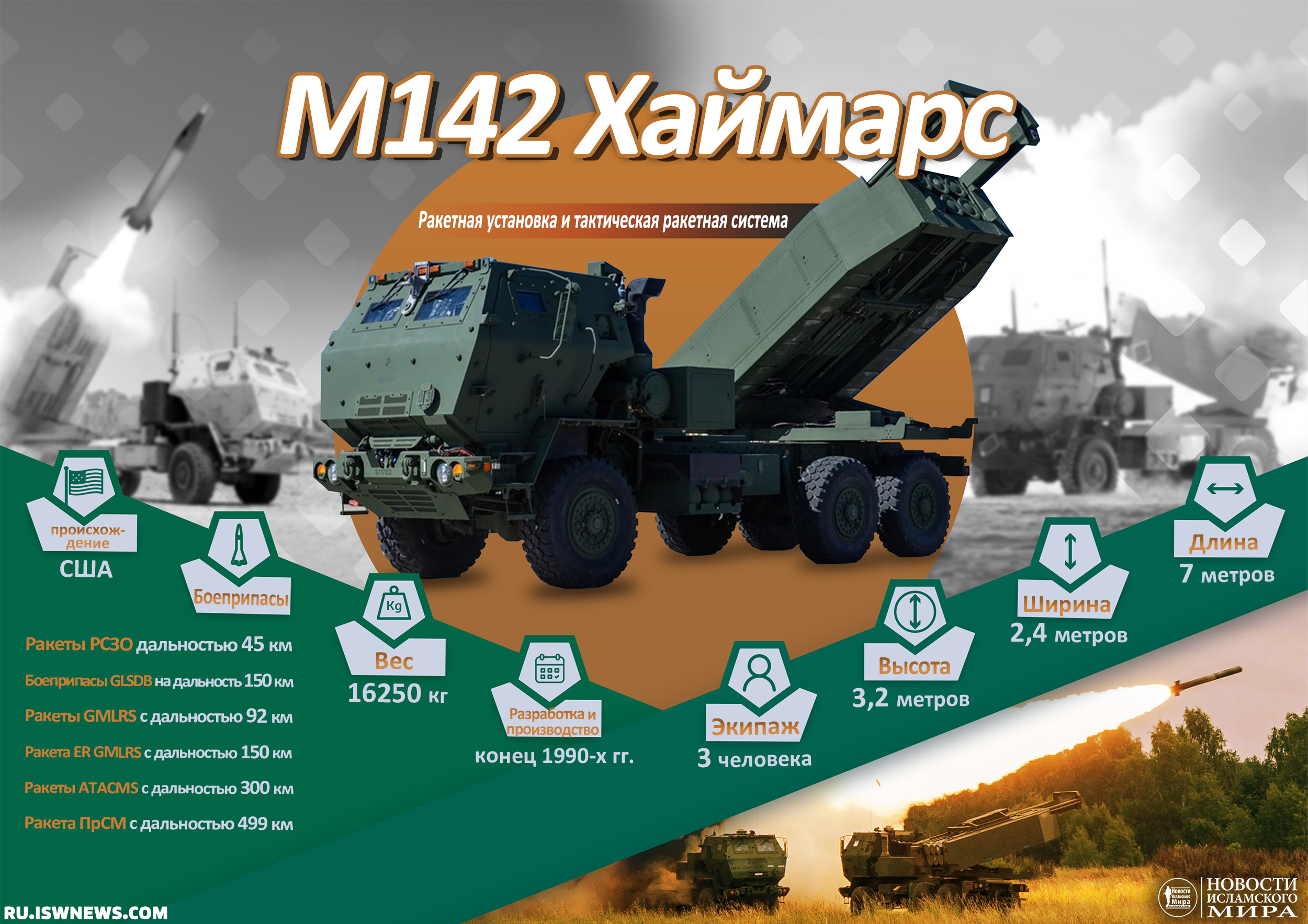
M142 HIMARS specifications: Type: Multiple Rocket Launcher and Tactical Missile System Length: 7 meters Width: 2.4 meters Height: 3.2 meters Crew: 3 people Weight: 16250 kg Armament: MLRS rockets with a range of 45 km GLSDB munitions with a range of 150 km GMLRS rockets with a range of 92 kilometers ER GMLRS rockets with a range of 150 km ATACMS missiles with a range of 300 km PrSM missile with a range of 499 km Development and production: In the late 1990s In service: Since 2010 Origin: USA
M142 HIMARS multiple rocket launcher – click to view full sizeClick to view full sizeClick to view full size
As a result of an IED attack on a vehicle carrying the field commanders of Southern Transitional Council in the Al-Baqira area, in the east of Mudiyah district, three STC commanders were killed: Saddam Al-Saadi, the commander of the 3rd brigade battalion, Aref Nasser Makani, the head of the Baqira Center in the Transitional Council, and Ghassan Al-Qadimi.
Considering the beginning of the new round of Al-Qaeda attacks on STC positions in Abyan province, which started on July 22, this assassination most likely Mudiyah-Abyanwas also carried out by the operatives of this terrorist group.