According to data obtained by ISWNews, this is the 22nd attack by Iraqi resistance groups on US logistical convoys in 2022.
Read more:
Infographic: Iraqi Resistance Groups Operations Against the US in 2021
Infographic: Iraqi Resistance Groups

According to data obtained by ISWNews, this is the 22nd attack by Iraqi resistance groups on US logistical convoys in 2022.
Read more:
Infographic: Iraqi Resistance Groups Operations Against the US in 2021
Infographic: Iraqi Resistance Groups

The first generation of explosive reaction armor belongs to Russia (Soviet Union), which was installed on the initial series of T-72 tanks.
This armor consists of two sandwich flat steel plates, the outer two layers of which are made of steel plates and the inner layer of which is made of insensitive plastic explosives (equivalent to 280 grams of TNT). Two sandwich panels are placed in a V-shape in each module and have the ability to reduce the effectiveness of single shaped-charge anti-tank missiles and rockets.
When a warhead hits the module and an explosive jet of shaped-charge (from a combination of molten copper) reaches the sandwich plates, the inner layer explosives will activate inside the plates and explode, and the steel plates will throw. Therefore, hitting the shaped-charge jet obliquely causes its deflection and reduces its effectiveness.
This armor is said to reduce the penetration of conventional anti-tank missiles such as the Konkurs by about 86 percent. However, Kontakt-1 armor is weak against dual-charge projectiles because anti-tank missiles and rockets in this method activate the Kontakt-1 armor with the primary warhead and open the way for the second warhead.


Ulu al-Azm resistance group claimed responsibility for the IED attack in Baghdad.
According to data obtained by ISWNews, this is the 21th attack by Iraqi resistance groups on US logistical convoys in 2022.
Read more:
Infographic: Iraqi Resistance Groups Operations Against the US in 2021
Infographic: Iraqi Resistance Groups
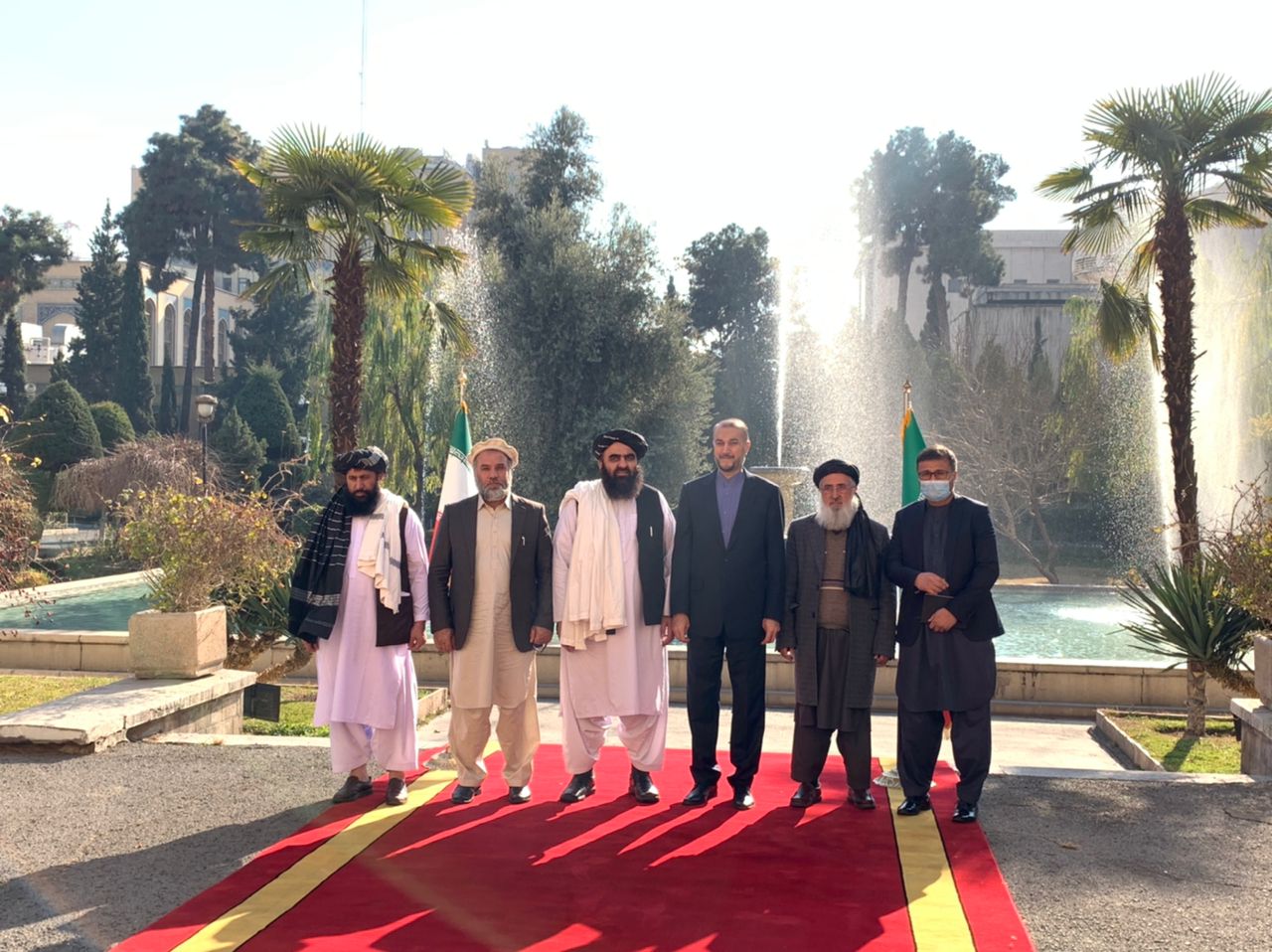
Taliban committee led by Amir Khan Muttaqi, Taliban FM, met with Ahmad Massoud, leader, and Ismail Khan, an official of Jamiat-e Islami party, met in Tehran with mediation of Islamic Republic of Iran.
No details have been released regarding the meeting but Taliban claims that they assure that Ahmad Massoud and Ismail Khan can come back to Afghanistan without any problem or threats.
These meetings took place during the trip of Amir Khan Muttaqi, Taliban FM, to Iran and his talk with Hossein Amir-Abdollahian, Iran FM. Both sides stressed on cooperations such as counter terrorism, drug trafficking, Iranian goods transit to middle Asia, humanitarian aids to Afghanistan, etc.
In summary, Iran is the closest and most reliable neighbor of Afghanistan and thus Afghanistan groups always welcome and appreciate efforts of their neighbor.
According to Iranian officials, Iran’s policy in Afghanistan is to help form a inclusive government which can hold peace and stability in Afghanistan. Considering the situation in Kazakhstan and serious threats in middle Asia, unity and cooperation of these countries including Afghanistan seems necessary.
Read more: Investigation of Afghanistan Major Problems, From Ahmad to Taliban!


According to Brigadier General Yahya al-Sari’, spokesman for the Yemeni Armed Forces, the drone is a Wing Loong type and was shot down by a surface-to-air missile.
According to data obtained by ISWNews, this is the seventh Wing Loong 1 or 2 drone to be shot down by Ansar Allah in Yemen.
Details of the shot down of the six drones are as follows:
1- UAE-owned Wing Loong in the Kholan region of Sanaa province, on September 26, 2016.
2- UAE-owned Wing Loong in Saada province, and on April 19, 2019.
3- Saudi-owned Wing Loong in the district of Hayran in Hajjah province, on November 30, 2019.
4- Saudi-owned Wing Loong in the north of Saada province, on May 21, 2021.
5- Saudi-owned Wing Loong in the district of Kataf in the north of Saada province, on September 13, 2021.
6- UAE-owned Wing Loong in the Usaylan district in Shabwa province, on January 5, 2022.
7- UAE-owned Wing Loong in the Ain district in Shabwa province, on January 11, 2022.
Read more:
Infographic: Saudi Coalition and US Aircraft Losses in Yemen War
Military Knowledge: Wing Loong 1 Drone
Military Knowledge: Wing Loong 2 Drone


The spokesman of the Saudi coalition, Turki Al-Maliki, in a press conference on January 8, presented a collection of images and videos, emphasizing the participation and widespread support of the Islamic Revolutionary Guard Corps (IRGC) for Ansar Allah. He claimed at the conference that all Ansar Allah operations against coalition merchant ships and navigation were planned and carried out by IRGC advisers in Yemen. The coalition also claims that one of Ansar Allah’s field commanders, Mansour al-Saadi, was responsible for seizing the Emirati ship Rwabee.
Al-Maliki continued the conference with statistics on Ansar Allah attacks, which include:
“The Houthis (Ansar Allah) fired 432 ballistic missiles, 25 cruise missiles, 865 UAVs, 248 naval mines, and 100 suicide boats from the port of Al-Hudaydah to strike navigation in the Red Sea.
The Houthis (Ansar Allah) carried out 13 attacks on merchant ships, including: ABQAIQ, ARSAM, Gladiolus, AGRARI, etc.
The Iranian ship “Saviz” is a military ship and has been transporting Iranian weapons to the port of Al-Hudaydah for the last four years under civilian cover.
Hasan Irloo, the former Iranian ambassador to Yemen, oversaw all naval operations by the Houthis. Al-Hudaydah port is the main point for receiving Iranian missiles, and we have pictures of its stockpile. The missiles are stored in tunnels near al-Hudaydah before being transported to Sanaa.
The Houthis (Ansar Allah) use Iranian-made “Noor” missile system to target ships.
The Houthis use Al-Salif port militarily and use civilians as human shields. They are conducting tests on boats in Al-Salif port.”


As part of the conference, Turki al-Maliki released a video as an “special video” of an Iranian missile assembly site at Al-Hudaydah port. But it soon became clear that the video was about a war documentary called Severe Clear. This big blunder by the coalition spokesman showed that not only the coalition’s claims about Iran and Ansar Allah are false, but also that the Saudi coalition is at a very weak level in terms of intelligence.
Also in another part of the conference, the Saudi coalition claimed that the naval ship was carrying medical aid, etc. for the victims of the storm on the island of Socotra. The ridiculous claim later exposed by Ansar Allah by publishing of images of the UAE sending weapons using the Rwabee ship.
The Emirati ship “Rwabee” was seized by Ansar Allah off the coast of Al-Hudaydah on January 3. The ship was carrying military weapons, including speedboats, armored vehicles, Humvees and other military equipment, which refutes the coalition’s claim to carry medical equipment. This showed that the Saudi coalition, in addition to weakness in the field of intelligence, is also lying to a great extent!
Read more: Ansar Allah confiscated a UAE ship in the Red Sea


The IED attacks took place in the provinces of Dhi Qar, Babil and Qadisiyah. Also two IED attacks took place in the Baghdad province.
The Thar al-Muhandis group claimed responsibility for the IED attacks in Baghdad province.
According to data obtained by ISWNews, this is the 19th attack by Iraqi resistance groups on US logistical convoys in 2022.
Read more:
Infographic: Iraqi Resistance Groups Operations against the US in the first six months of 2021
Infographic: Iraqi Resistance Groups

Saudi coalition warplanes attacked the al-Matlouh area on the outskirts of Saada four times today, killing two people and wounding a woman.
Meanwhile, Saudi coalition artillery attack on the Wadi Rasian in the district of Muqbanah in Taiz province killed four people, including two children and two women, and wounded two others.
In recent years, the Saudi coalition has repeatedly accused Ansar Allah of violations of international law and human rights abuses. This is while, the Saudi airstrikes, often target residential areas and civilian, and Ansar Allah attacks are generally carried out against military bases and Saudi economic facilities.


This infographic has been updated. Check out the latest update: Here!
1- Saudi F15S fighter on March 27, 2015, Gulf of Aden
2- Saudi AH-64D helicopter on May 7, 2015, Al-Boqa, Saada area
3- Moroccan F16C fighter on May 10, 2015, Wadi Nashur
4- Saudi Seeker400 UAV, July 3, 2015, Al-Boqa
5- Saudi AH-64D helicopter, August 5, 2015, Jizan
6- Saudi AH-64D helicopter, August 21, 2015, Jizan
7- UAE Schiebel Camcopter S-100, August 25, 2015, Makiras, Abyan Province
8- UAE Schiebel Camcopter S-100, October 25, 2015, Al-Abdiyah, Marib Province
9- Bahrain F16C fighter, December 30, 2015, Jizan
10- US MQ-1B Predator UAV, January 19, 2016, Sanaa
11- Saudi Selex ES Falco UAV, February 3, 2016, Midi, Hajjah province
12- UAE Schiebel Camcopter S-100, February 27, 2016, Dhubab, Taiz province
13- UAE Mirage 2000 fighter, March 13, 2016, Al-Bariqa, Aden
14- UAE AH-64D UAE helicopter, June 12, 2016, Gulf of Aden
15- UAE NSA407 helicopter, June 13, 2016, Al-Bariqa, Aden
16- Saudi AH-64D helicopter, July 25, 2016, Beer Al-Maraziq, Al-Jawf
17- Saudi Seeker400 UAV, August 16, 2016, Kataf, Saada province
18- UAE Wing Loong UAV, September 26, 2016, Kholan, Sanaa province
19- Saudi AH-64D helicopter, December 30, 2016, Najran
20- US V-22 Osprey Helicopter, January 29, 2017, Al-Baydha province
21- Saudi SA 365F Helicopter, January 30, 2017, Al-Hudaydah coast (on the Al-Madinah frigate)
22- UAE MQ-1B Predator UAV, February 14, 2017, Al-Manin, Marib province
23- Jordanian F16A fighter, February 24, 2017, Najran
24- Saudi S-70A helicopter, April 18, 2017, Marib province
25- UAE Schiebel Camcopter S-100, June 21, 2017, Dhubab, Taiz province
26- UAE AH-60L helicopter, August 11, 2017, Wadi Amaqin, Shabwa province
27- Saudi Seeker 400 UAV, August 15, 2017, Al-Boqa, Saada province
28- US UH-60M helicopter, August 25, 2017, Gulf of Aden
29- UAE AT-802U aircraft, September 11, 2017, Gulf of Aden
30- Saudi Eurofighter Typhoon fighter, September 13, 2017, Abyan province
31- US MQ-9 UAV, October 1, 2017, Sanaa
32- UAE AH-64D Helicopter, October 17, 2017, Khab and Shaaf, Jawf province
33- Saudi S-70A helicopter, November 5, 2017, Abha
34- Saudi Panavia Tornado fighter, January 7, 2018, Kataf, Saada province
35- Saudi F-15S fighter, March 21, 2018, Saada province
36- Saudi CH-4B UAV, July 12, 2018, Al-Rabu’ah
37- Saudi Panavia Tornado fighter, July 12, 2018, Asir
38- Saudi CH-4B UAV, August 30, 2018, Jizan
39- UAE Schiebel Camcopter S-100, September 2, 2018, Al-Jah, Hudaydah province
40- Saudi AH-64D helicopter, September 14, 2018, Al-Mahra province
41- Seeker 400 UAE UAV, November 26, 2018, Al-Jabaliya, Hudaydah province
42- Saudi CH-4V UAV, December 23, 2018, Saada province
43- US MQ-9 UAV, March 23, 2019, Hamdan, Saada province
44- Saudi CH-4B UAV, April 11, 2019, Hadhramaut province
45- UAE Wing Loong, April 19, 2019, Saada province
46- UAE RQ-1E Predator UAV, May 15, 2019, Bani Matar, Sanaa
47- UAE Schiebel Camcopter S-100, June 2, 2019, Hays, Hudaydah area
48- US MQ-9 UAV, June 7, 2019, Al-Zaafran, Hudaydah province
49- US MQ-9 UAV, August 20, 2019, Al-Dhamar province
50- UAE Shiebel Camcopter S-100, November 1, 2019, Raas Issa, Hudaydah province
51- Saudi AH-64D helicopter, November 29, 2019, Asir
52- Saudi Wing Loong UAV, November 30, 2019, Hayran, Hajjah province
53- Saudi Luna X2000 UAV, December 4, 2019, Saada province
54- Saudi Karayel UAV, December 30, 2019, Al-Salif, Hudaydah province
55- Saudi CH-4V UAV, January 7, 2020, Khab and Shaaf, Jawf province
56- Saudi Panavia Tornado fighter, February 14, 2020, Jawf province
57- Saudi RQ-20 UAV, August 2, 2021, Haradh, Al-Hajjah province
58- Saudi CH-4B UAV, December 21, 2020, Marib Province
59- Saudi Karayel UAV, January 6, 2021, Jawf province
60- Saudi CH-4B UAV, February 12, 2021, Marib province
61- Saudi Karayel UAV, March 7, 2021, Jawf province
62- Saudi CH-4B UAV, March 23, 2021, Sarwah, Marib province
63- Saudi Wing Loong UAV, May 21, 2021, Najran
64- Saudi CH-4B drone, May 23, 2021, Jawf province
65- US Scan Eagle UAV, June 19, 2021, Marib province
66- US Scan Eagle UAV, June 21, 2021, Marib province
67- US Scan Eagle UAV, August 14, 2021, Madghal, Marib province
68- Saudi Wing Loong UAV, September 13, 2021, Kataf, Saada province
69- US Scan Eagle UAV, September 27, 2021, Madghal, Marib province
70- Saudi CH-4 UAV, October 6, 2021, Jubah, Marib province
71- Saudi RQ-20 UAV, October 7, 2021, at the Jizan border
72- US Scan Eagle UAV, November 9, 2021, Al-Juba, Marib province
73- US Scan Eagle UAV, November 13, 2021, Al-Juba, Marib province
74- Saudi CH-4 UAV, December 1, 2021, in Al-Amshia area, Amran province
75- US Scan Eagle UAV, December 4, 2021, Al-Juba, Marib province
76- US Scan Eagle UAV, December 8, 2021, Al-Juba, Marib province
77- Saudi CH-4 UAV, December 8, 2021, Al-Wadi, Marib province
78- US Scan Eagle UAV, December 10, 2021, Sarwah, Marib province
79- Saudi CH-4 UAV, December 14, 2021, Usaylan, Shabwa province
80- US Scan Eagle UAV, December 16, 2021, Al-Wadi, Marib province
81- US Scan Eagle UAV, December 25, 2021, Yatmah, Khab and Al-Shaaf, Al-Jawf province
82- UAE Wing Loong UAV, January 5, 2022, Usaylan, Shabwa province
Read more:
Infographic: How many CH-4 drones were shot down by Ansar Allah?
Video: How Many Saudi coalition aircraft were shot down in Yemen?
“Saudi Coalition and US Aircraft Losses in Yemen War” collection of posters in Persian, Arabic, Kurdish, Azerbaijani, Russian for Social Media:


