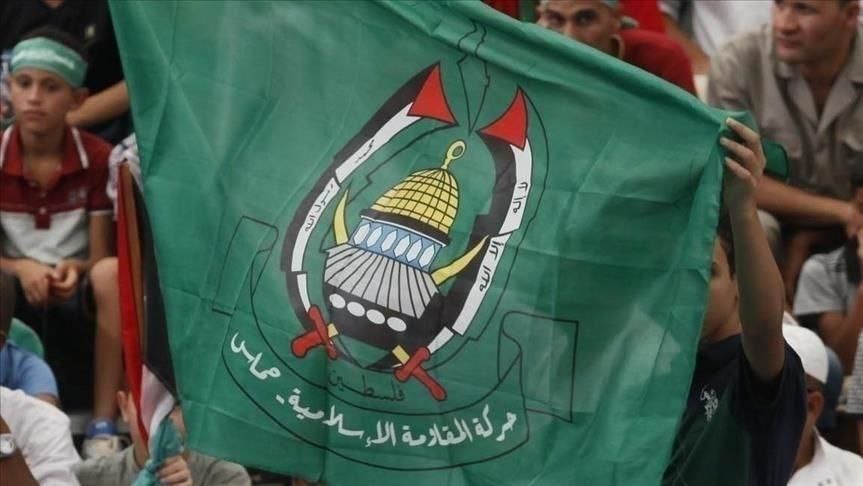
On August 30, Israeli forces targeted a building in Gaza in an attempt to assassinate Abu Ubaida. The strike killed at least 18 Palestinians, including him, despite the existence of a declared ceasefire at the time.
Huthaifa Samir Abdullah al‑Kahlout, known as Abu Ubaida, first appeared in 2006 announcing the capture of Gilad Shalit, and for 19 years until his martyrdom served as the charismatic voice of Palestinian resistance.
In his first address, the new spokesman of al‑Qassam vowed that Israeli attacks on Palestinians will not weaken the will of resistance. He emphasized that alongside sacrifice and heroism, popular mobilization and defensive actions will continue, with the brigades committed to protecting the people and responding to aggression.
Al‑Qassam also mourned the loss of several commanders martyred in Israeli airstrikes during the ceasefire breach:
Mohammad al‑Sanwar, Chief of Staff
Mohammad Shabana, Rafah Brigade Commander
Hakam al‑Issa, Training Chief
Sheikh Raed Saad, Military Industry Head
Abu Ubaida (Huthaifa al‑Kahlout Abu Ibrahim), Spokesman
The new spokesman reaffirmed the continuation of the resistance path and the revival of its spirit within the Palestinian nation.
The Palestinian news agency Samaa also reported that Hamas and Palestinian groups fully support the proposal offered by Egypt and Qatar for a ceasefire.
The proposal includes a pathway to reach a comprehensive agreement to end the war and will temporarily pause military operations for 60 days.
It is reported that 600 trucks of humanitarian aid will enter Gaza each day, and 1,700 Palestinian prisoners, including 1,500 from Gaza, will be released. Discussions to end the conflict are also scheduled to start during the 60-day ceasefire period.
According to four Israeli officials, following the October 7 attack on the occupied territories—which resulted in the death of over 1,200 Israelis and the taking of 250 hostages—artificial intelligence technologies were rapidly approved for field use. According to them, this led to cooperation between Unit 8200 and reserve forces in the “Studio” to swiftly develop new AI capabilities.
Over the past 18 months, the occupying regime has combined artificial intelligence with facial recognition software to match partially covered or injured faces with real identities. It has also used AI to compile lists of potential airstrike targets and developed an Arabic-language AI model to power a chatbot capable of scanning and analyzing text messages, social media posts, and other Arabic-language data.
In late 2023, the Zionist regime was attempting to assassinate Ibrahim Biari, the commander of Hamas’s Jabalia Central Battalion, who was allegedly involved in planning the October 7 attack. The regime’s military intelligence intercepted Biari’s communications with other Hamas members but was unable to pinpoint his exact location. Therefore, they turned to an AI-powered audio tool—one that analyzed various sounds such as sonic booms and airstrikes. After the approximate location of Ibrahim Biari’s communications was identified, Zionist military officials were warned that the area—which included several apartment complexes—was highly populated. They stated that to ensure Biari’s death, multiple buildings needed to be targeted in the airstrike. The operation was approved and carried out.
Since then, the regime’s military intelligence has also used this audio tool—alongside maps and images of Gaza’s complex underground tunnels—to search for hostages. According to two Israeli officers, the tool has improved over time to identify individuals with greater accuracy.
Tracking the location of individuals According to three informed Israeli and American officials (whose names were not disclosed in the report), Israeli officers turned to a new military technology integrated with artificial intelligence to track their targets. This technology had been developed about a decade ago but had not yet been used on the battlefield. The effort to locate Martyr Ibrahim Biari provided fresh motivation to enhance the tool. Engineers from Unit 8200—the occupying regime’s equivalent of the U.S. National Security Agency—rapidly integrated AI into the system.
Shortly afterward, the regime’s security personnel intercepted Mr. Biari’s phone calls and tested the AI-based audio tool, which identified the approximate location of his communications. Using this information, the Zionist regime ordered an airstrike on the area on October 31, 2023, resulting in the martyrdom of Ibrahim Biari.
According to a report by Airwars, a London-based conflict monitoring organization, due to the approximate nature of the AI-generated location, more than 125 civilians were also killed in the strike! Based on interviews with nine American and Israeli defense officials, the audio tool is just one example that demonstrates how the regime has used the Gaza war to test and rapidly deploy AI-supported military technologies on an unprecedented scale.
Behind-the-Scenes Companies and Reactions to the Committed Atrocities Many of these efforts resulted from collaboration between active-duty soldiers in Unit 8200 and reservists working at tech companies such as Google, Microsoft, and Meta. According to these individuals, Unit 8200 has established a central hub called the “Studio,” which serves as an innovation center and a place to connect experts with AI projects. Reservists from the aforementioned major companies are involved in this unit. The Studio’s primary mission is to rapidly adapt artificial intelligence technologies to meet military needs.
While the regime rapidly continued to develop its artificial intelligence arsenal, the deployment of these technologies has led to mistaken identifications, wrongful arrests, and civilian deaths. According to European and American defense officials, no other power has been as active as the occupying regime in testing AI tools in real battles. This situation provides an initial glimpse into how such technologies might be used in future wars, as well as a warning of how these technologies could malfunction or be misused, resulting in the killing of civilians.
Meta and Microsoft declined to comment on the killings carried out in the Gaza war using artificial intelligence, but Google, in an effort to clear itself of accusations, stated: “We have employees who serve as reservists for the regime in various countries around the world. The work these employees do as reservists is not related to Google.”
Avi Hasson, CEO of the nonprofit organization Startup Nation Central, which connects investors to companies in the occupied territories, said, “Reservists from Meta, Google, and Microsoft have played a vital role in advancing innovation in drones and data integration.” He added, “Reservists brought specialized knowledge and access to key technologies that were not available in the military.”
Avi Hasson
Artificial Intelligence in the Drone Manufacturing Industry The Israeli regime’s military soon began using artificial intelligence to upgrade its drone fleet. Aviv Shapira, founder and CEO of XTEND—a software and drone company collaborating with the regime’s military—said that AI-based algorithms have been used to develop drones capable of locking onto and tracking targets from a distance. “In the past, targeting relied on focusing on the image of the target. But now, AI can identify and track the object itself—whether it’s a moving vehicle or a person—with very high accuracy,” he said. Shapira added that his main clients—the occupying regime’s military and the U.S. Department of Defense—are aware of the ethical implications of using AI in warfare and are engaging in discussions about the responsible use of this technology.
Aviv Shapira
The Arabic Language: A Battleground for the Enemy to Influence Public Opinion According to three Israeli officers, one of the tools developed by the “Studio” was an Arabic-language artificial intelligence model, classified as a large language model. (This LLM was previously reported by the news site +972.) Developers had previously faced difficulties in creating such a model due to the lack of sufficient Arabic-language data to train the technology. Even when such data was available, it was mostly in standard written Arabic, which is far more formal than the dozens of different dialects used in spoken Arabic.
According to Israeli officers, the occupying regime’s military did not face this problem. The illegitimate government had access to decades’ worth of intercepted text messages, recorded phone conversations, and social media posts collected in colloquial Arabic. As a result, in the first few months of the Gaza war, Zionist elements developed the large language model and designed a chatbot capable of handling queries in Arabic. They integrated this tool with multimedia databases, enabling Zionist analysts to conduct complex searches across images and videos.
When the Zionist regime assassinated Sayyed Hassan Nasrallah in September, the developed chatbot analyzed reactions to his martyrdom across the Arabic-speaking world. The technology distinguished between different dialects within Lebanon to assess public sentiment and helped the regime determine whether there was pressure from public opinion to carry out a retaliatory strike.
It is also reported that, at times, the chatbot was unable to recognize certain modern slang terms and words that had been phonetically transliterated from English into Arabic. One of the officers stated that this required Zionist intelligence officers specialized in various dialects to review and correct the results.
The chatbot also occasionally produced incorrect results. For example, instead of returning an image of a weapon, it would display a picture of a pipe. Nevertheless, they stated that the AI tool significantly accelerated the process of research and analysis.
Facial Recognition and Identification of Individuals At temporary checkpoints set up between northern and southern Gaza following the October 7 attacks, the regime also deployed cameras capable of capturing high-resolution images of Palestinians and sending them to an AI-based facial recognition program. According to two intelligence officers from the regime, the system sometimes struggled to identify individuals whose faces were covered. This led to the detention and interrogation of Palestinians who had been mistakenly identified by the facial recognition system.
The regime also used artificial intelligence to process and refine data collected by intelligence officials about Hamas members. Prior to the war, the regime had developed a machine learning algorithm called “Lavender,” designed to rapidly sort through data and assist in identifying low-level militants. This algorithm was trained on a database of confirmed Hamas members and aimed to predict who else might be affiliated with the group.
According to reports, “Lavender” helped the occupying army compile a list of 37,000 human targets based on their association with Hamas. Although the system’s predictions were not flawless, the regime used it at the beginning of the Gaza war to assist in selecting targets for attack!
In recent years, Israeli military and security institutions have frequently reported the deaths of various resistance commanders, only for those claims to be later disproven when these commanders appear on the frontlines or before the cameras.
The fact that the Israeli regime relied on this intelligence for about eight months and believed the Hamas Beit Hanoun Battalion Commander was deceased highlights a significant intelligence failure. It is likely that similar reports regarding other resistance commanders in Gaza may also be proven incorrect in the coming weeks.
Hussein Fayyad, the Beit Hanoun Battalion Commander of the al-Qassam Brigades
On August 18, after days of negotiations, the Palestinian Islamic Resistance “Hamas” released a sharp statement, rejecting the terms of the ceasefire negotiations in Doha, the capital of Qatar.
After the assassination of Hamas leader Ismail Haniyeh in Tehran and Iran’s promise to respond to this assassination, all mediating parties, including the United States, have attempted to end tensions by implementing a ceasefire in the Gaza Strip as soon as possible to reduce and prevent the possibility of an all-out war. According to CNN, Washington has asked Tehran, through mediators, not to attack Israel, as there is a path to a Gaza deal.
This issue is of great importance for America, especially for President Biden, who is on the eve of the election. According to Axios, citing informed officials, President Joe Biden plans to finalize the Gaza ceasefire and the prisoner release agreement by the end of next week. However, there is still no clear prospect for peace.
The talks have been ongoing for days, but there is no sign of progress. Today, US Secretary of State Anthony Blinken arrived in Tel Aviv to meet with Israeli officials. Some believe he went to Tel Aviv to put pressure on Netanyahu and soften him in the ceasefire talks.
In his final statement, Blinken emphasized the urgency of reaching an agreement on Gaza and returning the Israeli prisoners. He stated that this may be the last chance to secure their return, and stressed that it is a critical moment for the ceasefire negotiations in Gaza.
Although there was no detailed information about the contents of the negotiations until yesterday, the different angles of the story are gradually becoming clear.
Based on the leaked information, these are some of the details proposed in the Doha ceasefire talks meeting:
⁃ The Israeli army will reduce its military presence in the Philadelphia axis (south of Rafah city and the Egyptian border), but will not withdraw from it. ⁃ The Palestinian National Authority must take over the management of the Rafah crossing under the supervision of Israel. ⁃ The Israeli army will fully monitor and control the refugees who return to the north of the Gaza Strip through the Netzarim Corridor. ⁃ A large number of Palestinian prisoners will be deported from the country after their release from prison ⁃ Israel’s veto right to refuse the release of at least 100 security prisoners.
According to the leaked information, it is evident that the Israeli government not only failed to abide by the terms of the previous agreement but also introduced new conditions, making it harder to reach a lasting ceasefire. Under the new terms, Israel intends to maintain control over the Netzarim corridor and other areas in the Gaza Strip, showing no willingness to withdraw from Gaza and offering no significant concessions to the other party.
On the other hand, the Palestinian resistance movement, Hamas, finally reacted to the non-constructive process of negotiations in Doha by issuing a statement on August 18 and rejecting the negotiations. Hamas believes that Netanyahu and his government are the main obstacles to a ceasefire agreement.
Hamas’ statement comes as follows:
“We cooperated with all the efforts made by the mediators in Qatar and Egypt, and showed flexibility concerning all the proposed suggestions to pave the way for reaching an agreement to halt the aggression against our nation as well as to finalize a prisoner swap deal.
After listening to the mediators’ proposals in the ceasefire talks, it became obvious to us that Israeli Prime Minister Benjamin Netanyahu continues to get in the way of reaching a truce agreement.
The new suggestions are in line with Netanyahu’s conditions and in the favor of the Zionist regime, especially because these proposals reject a permanent ceasefire and an all-out withdrawal of the Israeli regime’s military forces from the Gaza Strip.
Netanyahu set new conditions regarding the prisoner swap deal and withdrew from other clauses of the existing proposal in a bid to prevent the finalization of the prisoner swap deal.
We hold the Israeli prime minister fully responsible for hindering the endeavors made by the mediators as well as creating trouble in the way of achieving the ceasefire agreement and in respect of the lives of Israeli prisoners, who are exposed to the same risk to which the Palestinian people are exposed.
We reaffirm our commitment to whatever we agreed to on June 2 and call on the mediators to show that they are assuming their responsibility and to force the Israeli foe to implement what has been agreed upon regarding the ceasefire deal.”
The senior government officials of Egypt, the United States and Qatar will meet again, this time in the Egyptian capital Cairo before the end of this week to reach an agreement according to the terms proposed on Friday. Due to the failure of the Doha negotiations, the fate of the discussions in Cairo is likely doomed.
It was predictable that the ceasefire talks in Doha would fail. Due to Netanyahu’s challenging political and legal position inside and outside Israel, it’s unlikely that he will accept peace talks. Netanyahu’s political survival is closely linked to achieving a decisive victory in the Gaza Strip. The ongoing war on the northern front, the grave security situation in the West Bank, and the unstable political situation in the government in Tel Aviv have all significantly damaged Israel’s reputation. Tel Aviv is attempting to restore its lost status through any means.
The mediation efforts by the US, Egypt and Qatar to establish a ceasefire in the Gaza Strip in return for the release of the remaining 110 Israeli captives kicked off several months ago. Following different rounds of indirect talks held in Egypt and Qatar, the warrying sides have yet to reach a deal. The endeavors have not yielded any tangible result because of Netanyahu’s refusal to cease the genocidal war on Gaza.
The devastating war has left more than 40,000 martyrs and over 92,600 wounded in Gaza. The onslaught has created a dire humanitarian situation which is being deteriorated because of restrictions imposed by the Israeli regime on entry of food and medicine.
As a result of the irreconcilability of the Israeli occupiers in the ceasefire negotiations and the continuation of the massacres that the regime’s military forces commit in the Gaza Strip, the Palestinian Islamic Resistance Movement, Hamas, urged the international mediators to pursue the implementation of the terms agreed upon in the previous talks instead of starting new ones.
According to the Hamas statement, the Palestinian resistance calls on the mediators in Egypt and Qatar to put forward the terms agreed upon in the July 2 negotiations, and that the onset of new rounds of talks or the proposition of new proposals is only a cover to provide the Zionist regime with the opportunity to continue their aggression in Gaza.
Hamas took part in several rounds of talks and showed the essential flexibility and positive approach to pursue the interests of the Palestinian people in the prisoner swap deal.
In this regard, representative of the Hamas movement in Lebanon Osama Hamdan said that it was agreed upon the withdrawal of the Zionist regime’s military forces from the Philadelphia axis in the July 2 negotiations, and we welcomed the suggestion of US President Joe Biden and the resolutions of the United Nations Security Council, but the Israeli regime refuses to accept the proposal and tries to procrastinate.
It is worth noting that the three mediating countries, including the United States, Qatar, and Egypt, issued a joint statement in the past to call for the return of the Israeli regime and the Hamas movement to the negotiating table.
So far, the negotiations between Hamas and the Tel Aviv regime, which has been mediated by Egypt and Qatar and with the participation of the United States to pave the way for establishing a ceasefire in the Gaza Strip and the prisoner swap between the two warring sides, have not yielded any tangible result.
Some Israeli media outlets and analysts blame the Israeli regime’s Prime Minister Benjamin Netanyahu for the failure to implement the potential deal due to the fact that he tries procrastinate the negotiations and add new preconditions in the ceasefire talks.
The Palestinian resistance movement Hamas announced in a statement that Yahya al-Sinwar has been elected as the new head of the movement’s Political Bureau and the successor of the martyr Ismail Haniyeh. He was previously the head of Hamas’ Political Bureau in the Gaza Strip.
Yahya al-Sinwar and martyr Ismail Haniyeh
Who is Yahya al-Sinwar?
Yahya al-Sinwar is a Palestinian military commander who joined the Martyr Izz al-Din al-Qassam Brigades, the military wing of Hamas, since the beginning of the Palestinian Islamic Resistance Movement in Gaza, and in 2005, he assumed the position of commander of the Khan Yunis Brigade.
The Zionist regime considers Yahya al-Sinwar to be the mastermind of many guerrilla operations and have put his name on their terror list. Some sources also claimed that al-Sinwar was the founder of Hamas’ security service, known as al-Majd, which focuses on internal security cases.
Yahya al-Sinwar is one of those who fundamentally believes that it is not possible to defeat Israel unless its mercenaries are identified and destroyed. From the very beginning of his activities, he focused on this goal, and during the era of Sheikh Ahmed Yassin, the Hamas security apparatus was under his management, and a number of infiltrators and spies of the Israeli regime were also identified during this period.
Yahya al-Sinwar
The security apparatus under al-Sinwar’s leadership gradually grew so powerful that as a counterintelligence organization, it gained considerable control over the movements of the Israeli regime and its spies. It was this power and influence of Yahya al-Sinwar that led the Israelis to arrest him very quickly, which led him to spend 23 years of his life in Israeli prisons. It is worth mentioning that he was released unconditionally under the Gilad Shalit contract in 2011 with sentences of more than 430 years in prison.
Michael Koubi, the officer who oversaw al-Sinwar’s interrogation for the Shin Bet in 1989, described him as a man of command and charisma who spoke little and was quick to get angry. He was described as “a leader in and out of prison and a man of discipline.”
Israeli reports confirm that al-Sinwar was fluent in Hebrew, and this ability helped him track and analyze what was happening inside Israel. In fact, he was able to keep a close eye on Israeli society and read newspapers in addition to biographies of Israeli leaders.
After his release, al-Sinwar also succeeded in inflicting the largest military damage on the Israeli regime in the history of its occupation, and it is said that he has survived six failed assassinations in recent years.
A few months ago, the Hebrew-language media quoted a number of released Israeli prisoners as saying: In the first days of captivity, Yahya al-Sinwar, the head of Hamas’ political bureau in Gaza, appeared among the Israeli prisoners and addressed them in Hebrew without an accent: ‘Hello, I am Yahya al-Sinwar, you have the most protection here and nothing will happen to you!’
The Supreme Leader received both Palestinian officials in Tehran on Tuesday morning.
Ayatollah Khamenei addressed the two officials as saying that the Palestinian people and the residents of Gaza currently hold the most significant flag of Islam, and their resistance has paved the way for the spread of the holy religion.
He further stated that the growing inclination towards Islam at this time reflects the honor and strength of the Palestinian nation’s resistance and the people of Gaza.
The Leader also described the people of Gaza and the West Bank as the key contributors to this resistance’s glory, expressing hope that the almighty God will continue to bless the Palestinians and their resistance fighters.
This meeting took place prior to the inauguration of Masoud Pezeshkian, the newly elected Iranian President. Pezeshkian took the oath of office before Parliament at the Iranian parliament in Tehran on Tuesday afternoon.
Pezeshkian is the ninth president of the Islamic Republic following his victory in the July 5 run-off presidential election.
The inauguration ceremony was attended by over 70 foreign dignitaries and covered by 600 domestic and foreign journalists.
Hamas and Islamic Jihad movements have announced in a statement that head of the Hamas political Bureau Ismail Haniyeh and Secretary-General of Islamic Jihad in Palestine Ziyad al-Nakhala delivered the response of the resistance groups to the proposed ceasefire and prisoner swap initiative in a meeting with the Qatari Prime Minister Sheikh Mohammed bin Abdulrahman bin Jassim Al Thani. They also delivered their response to Egypt.
The statement emphasizes that the resistance groups considered the interests of the Palestinian people, the imperative necessity of a complete cessation of hostilities, and the full withdrawal of occupying forces from Gaza in the response to the proposal.
The statement further asserts that a Palestinian delegation, relying on a sense of national responsibility, expresses readiness for positive engagement to achieve an agreement that would bring an end to the ongoing war.
The two resistance movements said in a joint statement that they are ready to “deal positively to arrive at an agreement” and that their priority is to bring a “complete stop” to the regime’s assault on the besieged area.
Senior Hamas official Osama Hamdan told Lebanon’s Al-Mayadeen television network that the group had “submitted some remarks on the proposal to the mediators.”
A Hamas official also told Reuters that the response reaffirmed any agreement must end the Zionist aggression on Palestinian people, get the occupying forces out, reconstruct Gaza and achieve a serious prisoner swap deal.
The foreign ministries of Qatar and Egypt said in a joint statement that they were examining Hamas’ response and that they would continue their mediation efforts along with the United States until an agreement is reached.
White House National Security Spokesperson John Kirby said the US had also received and was evaluating the response.
US Secretary of State Antony Blinken visits the region to pursue Washington’s plan and discuss Zionist officials.
One of the officers of the paratrooper brigade of the Israeli army in an interview with Channel 12:
— Hamas forces have changed their war tactics compared to the previous times when we attacked the northern Gaza Strip.
— There are many ambushes in Jabalia and there have been many close-range shootings. Hamas fighters come out of the tunnels and take advantage of the destruction caused by our attacks in the area and get close to our forces.
— Hamas fighters are in no hurry to come out of their hiding places and confront directly; After a day or two, they come out of the tunnels and engage directly with our forces.
— We found many rigged houses with explosives in the Gaza Strip, which Hamas fighters managed to blow up some of them. They were checking where we were coming in and in what directions we were moving and some ambushes were executed on our way forward.
— Al-Qassam forces are firing RPG rockets at our forces.
During this meeting, the two sides discussed the latest developments in the war in Gaza in particular, and the current situation in the occupied territories and the various fronts of the resistance axis in general.
Resistance figures present at the meeting discussed the latest details of the ceasefire negotiations, the international political positions regarding the movement against Gaza, and the global student uprising in support of Gaza.
Sayyed Hassan Nasrallah and the Hamas delegation emphasized the need for taking unified stance and continuing efforts to achieve the goals of the Operation Al-Aqsa Storm as well as great victories and accomplishments despite all the sacrifices.
In response to the martyrdom of his family members, Ismail Haniyeh said: “I thank God for this honor that he bestowed upon us with the martyrdom of my three sons and grandchildren. The enemy is delusional if he thinks that by killing my sons we will change our positions. The blood of my sons is not more precious than the blood of our dear martyred people in Gaza, for they are all my sons.”
The moment Ismail Haniyeh learned about the martyrdom of his children