Tag: Idlib

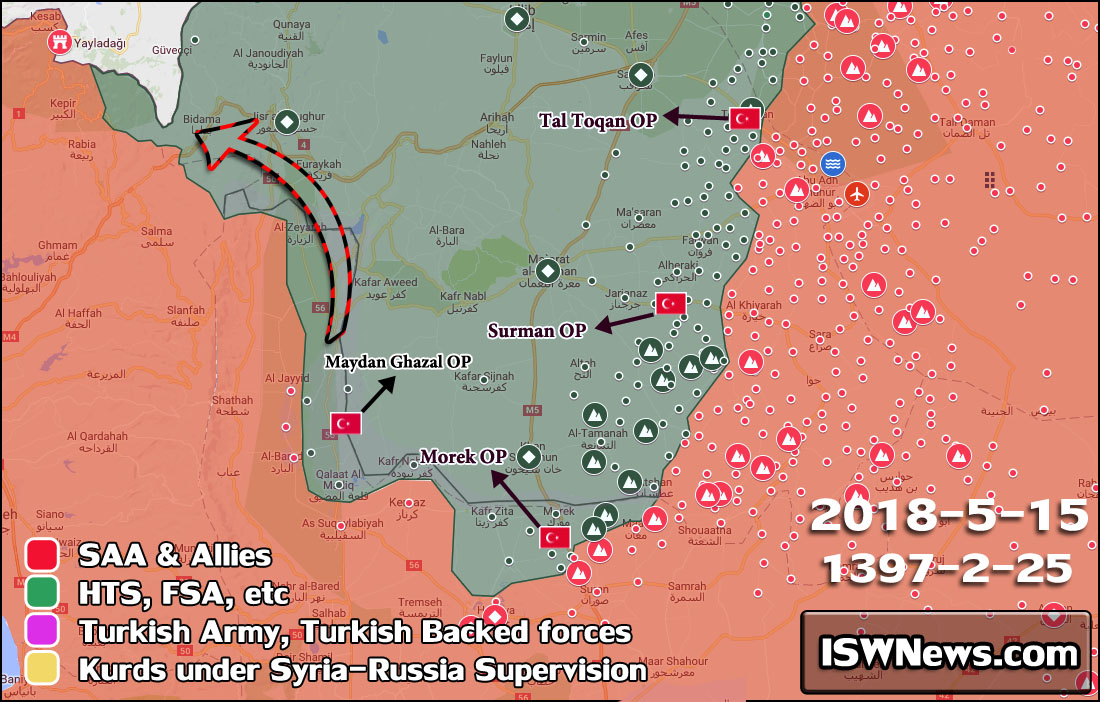
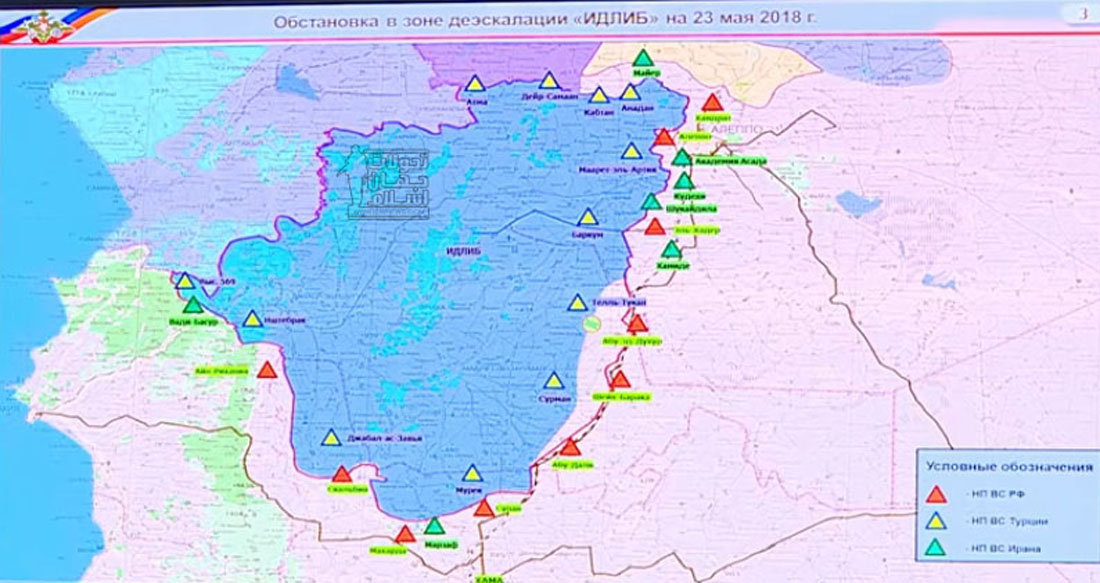
  • Map of Turkish-Russian-Iranian “Observation Posts” around the Idlib Province.

    Map of Turkish-Russian-Iranian “Observation Posts” around the Idlib Province.

    According to an agreement between Russia, Iran and Turkey in the Astana talks, known as “de-escalation zone” agreement; the Turkish forces officially entered western Syria on last October and started to build their “observation posts” around the Idlib province.


    Following this agreement, recently the Russian Defense Ministry released information on the “observation posts” of this three countries around the province of Idlib.

    Therefore, currently the Russian Army has 10 “observation posts” and Iran has 7 “observation posts” along the Idlib contact lines.


    Map: Download

    Interactive Map: Here


    If you’re able, and if you like our content and approach, please support the project. Our work wouldn’t be possible without your help:

    BTC: 1BvrWhL7UQQgv6BNwCiV56YMaMcxJy5T5A

    BCH: qpm7pgnypm0v070mh032s0vmgyl972zgk5atqtttnw

    ETH: 0x29722b2D6c64Bb1d83568d6a5026B02170E12460

  • Map of the “Observation Posts” of Iran and Russia Around the Province of Idlib.

    Map of the “Observation Posts” of Iran and Russia Around the Province of Idlib.

    According to an agreement between Russia, Iran and Turkey in the Astana talks, known as “de-escalation zone” agreement; Turkey has set up 12 observation post throughout the entire Syrian army and militants contact lines in the provinces of Aleppo, Idlib, Hamah and Latakia.


    Turkey officially entered western Syria from October 13, 2017 and built its last “Observation Post” in May 16, 2018 in the south of Jisr al-Shoghour.


    It seems that the construction of Turkish observation posts in the region have ended; Hence, following the implementation of the “de-escalation zone” agreement, the Russian Ministry of Defence on May 23, published the Russia and Iran”Observation Posts” map around the mentioned areas for the first time.


    According to the published map the Russian side organized 10 posts, Turkey 12, and Iran 7.

    They control ceasefire regime compliance by government troops and armed opposition.

    The posts are linked by stable communication. Servicemen are constantly exchanging information on situation and ceasefire violations; if necessary, measures are taken to prevent them and address conflicts.


    If you’re able, and if you like our content and approach, please support the project. Our work wouldn’t be possible without your help:

    BTC: 1BvrWhL7UQQgv6BNwCiV56YMaMcxJy5T5A

    BCH: qpm7pgnypm0v070mh032s0vmgyl972zgk5atqtttnw

    ETH: 0x29722b2D6c64Bb1d83568d6a5026B02170E12460
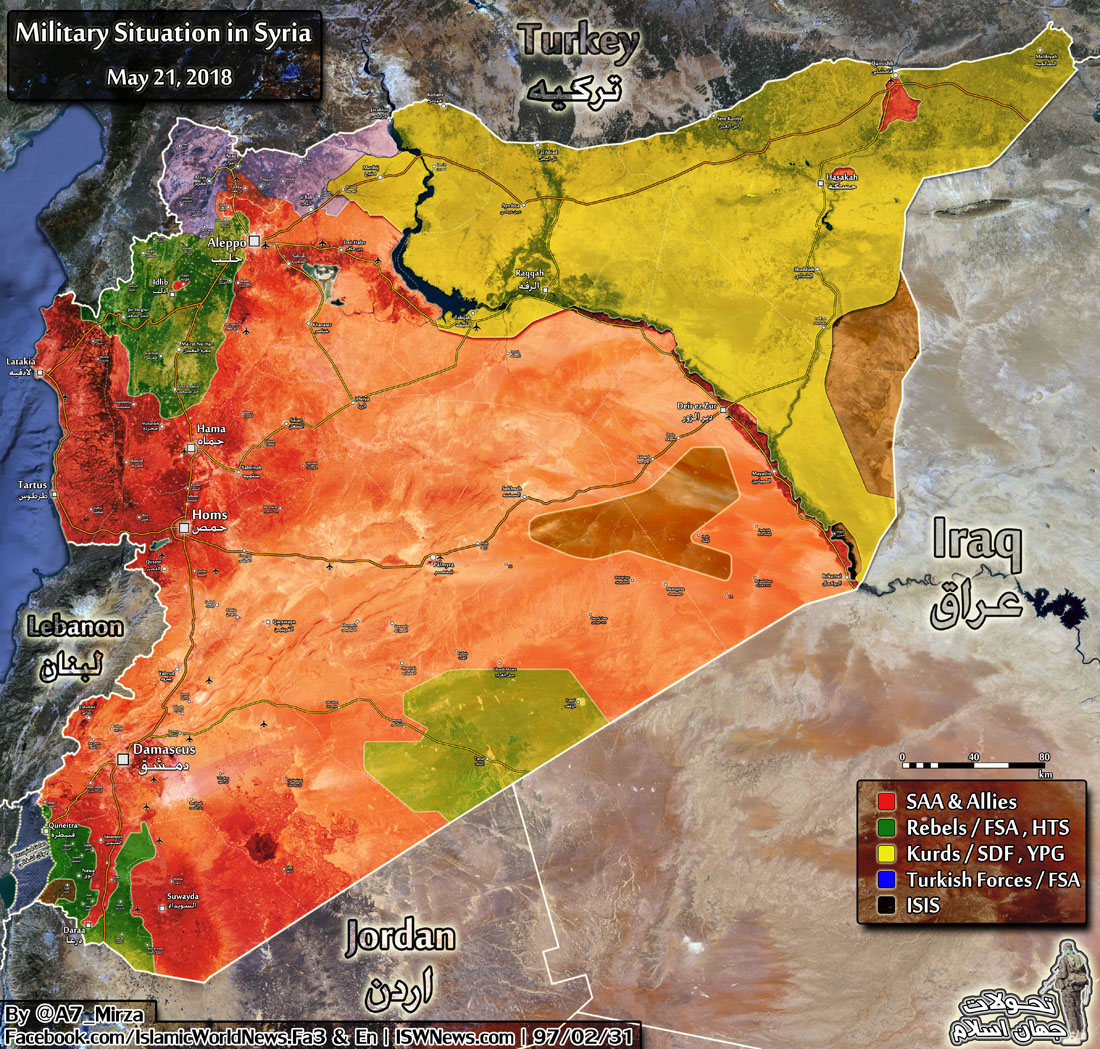
  • Latest Map of Fronts in Syria until May 21, 2018; Everything You Need to Know About the Past 97 Days

    Latest Map of Fronts in Syria until May 21, 2018; Everything You Need to Know About the Past 97 Days

    Latest HD map of fronts in Syria: Download

    The online map of Syria : Click here

    Map of 97 days ago for comparison: Here


    ? The most important changes in the past 97 days are as follows :


    Afrin region

    Without any doubt, the most important event and change in the northern part of Syria, is the occupation of “Afrin” region by the Turkish Army and Turkish-backed militias which are under the direct command of Turkey.

    In the recent writing of us, we mentioned briefly some of the reasons for the fall of “Afrin”; where the Turkey with opportunism and use of factors like, constraining Russia, the stubbornness and lack of discretion & foresight of the Kurds, and the low effect of the resistance axis forces, were successful and managed to kick the Kurds out of the northwest of Syria, and achieved its goals.


    With Russia giving an obvious green light to the Turks to fly their airforce freely over the “Afrin”, and the pigheadedness of the Kurdish commanders which were under the command of the United States, it was so clear and natural that the Syrian government and resistance axis forces hands would be tight in this matter. And the military & logistical donations of the resistance axis to “Afrin”, was the best attempt that they could do in that time. These supports in some periods could only decrease the pace of the Turkish army’s advances, nothing more.


    If we look back to the situation of Afrin a little while before the Turkey’s aggression, it wouldn’t be so hard to “make sense” of the “Afrin” event. where the operation of SAA was stopped at the gates of “Saraqeb” and the Turkish forces —with the green light that was given by the Russia—facing the resistance of the SAA and resistance axis to some extent, managed to deploy themselves in Al-Eis and its roundabouts.


    The Turkish forces, however, managed to capture Afrin city in March 17, 2018, 59 days after the initiation of “Operation Olive Branch”.

    Further more, with the militias advancing in southern Afrin, the “Shia” populated towns of Nubl & Al-Zahraa, were under the danger of a new siege, more than ever. Hence the resistance axis and SAA in an effective action, managed to gain control of some of the regions around these towns. With this move, practically, the “Operation Olive Branch” came to an end in northwest of Aleppo.


    About some of the most important achievements of Turkey in this operation, we can mention:

    The reconnecting of northern parts of Aleppo to Idlib;

    Expelling the Kurds(militias) out of northwest of Aleppo;

    Obtaining full control over the affairs of the people in the region;

    and finally gaining an important military & political leverage in order to use it against Syria in future negotiations.


    East of Syria

    In east of Syria, and in continuation of advances by US-backed forces, namely SDF, all of the oil wells in eastern part of Euphrates has fallen to the hands of SDF.
    Cooporating with Iraqi intelligence & military forces, SDF advanced on borderline and with capturing the Baghoz village, located in north of “border crossing” of al-Qaem-al-Bukamal, the SDF managed to encircle the remaining ISIS forces at eastern Euphrates in two northern & eastern pockets .

    Now continues the operation of US-led coalition & SDF against ISIS. The Syrian Democratic Forces, “SDF” are trying to capture “Hajin” village.
    The important village of “Hajin” which is said to be the main base for ISIS in east of Syria, is under the heaviest strikes from both air and ground forces.


    Also in southern part of “al-Mayadin” town, the SAA and its allies, in a series of intelligence operations, managed to liberate Al-Fayzat and Al-Tammah from ISIS.


    South of Syria

    “Liberating the entire Damascus and Rif Dimashq Governorate“, is something that in the eyes of the experts and people, was impossible.

    Yet the SAA with leaning to its allies & their victory’s outcomes and sacrifices of the warriors over all these years, thrived to achieve it over different battles and negotiations.


    On February 25, 2018, The SAA launched the final phase of its operation in eastern Ghouta of Damascus, which in the end led to clearing the eastern Ghouta completely.
    Making massive preparations and the vast presence of brigades & forces for this operation, shows the strong willingness of SAA and its allies to end the eastern Ghouta matter.

    Unfolding the will of the SAA and its allies, the so called “Internatonal Organizations” in order to make their final efforts to prevent the liberation of eastern Ghouta, have once attempted to make a 30 day ceasefire so that atleast it delays the SAA’s advances in eastern Ghouta.

    The Syrian Government, however, not only continued their operation, but also their will & determination strengthened even more.


    The speed of this operation was that high, that under the 30 days, about 75% of the eastern Ghouta was liberated and the militants were encircled in three separate region.

    Latest Updates on Eastern Ghouta of Damascus; the Ghouta is Divided into Three Parts!


    Ultimately, with SAA increasing its pressure, the militants of “Jaysh al-Islam” and other groups, were compelled to accept the “Compromise Agreement” and surrender to SAA.


    Hence the militants and those who didn’t want to stay in the region, in different stages and after surrendering their heavy and medium weapons, left eastern Ghouta.

    And in April 14, 2018, in an official statement of the armed forces of Syria, the SAA enetered “Duma” —the last den of terrorists in eastern Ghouta— and cleared it.

    Therefore after years, the security have once again returned to eastern parts of Damascus.


    How the SAA & Allies liberated Eastern Ghouta from Militants in their last operation in the area.


    It needs to be mentioned that with the liberation of eastern Ghouta, overall about 175,000 of southern Ghouta’s ihabitants left the region, including 21,000 militias and 40,000 of their families.


    After liberation of the eastern Ghouta of Damascus, other options for reconciliation and liberation, such as the siege of eastern Qalamoun, al-Dhumayr and the southern Damascus areas, were put on the government’s agenda.


    In the next stage, the militants of al-Dhumayr with accepting the “Compromise” left this region and the SAA aimed its attacks towards eastern Qalamoun regions and by going around of Al-Ruhaybah, the militias have once again came under pressure.

    Simultaneous with these events and alongside the operation in eastern Qalamoun, the operation in southern Damascus against ISIS, staterd.

    After the siege of “Al-Ruhaybah”, militants of eastern Qalamoun including the most important ones like, “Ahmad Al-Abdo”, “Aswad Al-Sharqia” (backed by United states-Jordan forces), and FSA, were compelled to accept the SAA’s suggested compromise agreement , and like other militias, give up their weapons and go to northern Syria.

    Therefore on April 25, 2018, Eastern Qalamoun was completely cleared of militias presence.


    After clearing Eastern Qalamoun, the southern Damascus was the last place which were occupied by the militias in Damascus province.
    The SAA with the help of its allies in April 19, 2018, started its operation to liberate the southern Damascus from the hands of ISIS terrorists.
    Because of the high density of wrecked buildings and the nature of ISIS, operation in this pivot continued with more difficulty and caution.

    It needs mentioning that the present militias in southern Damascus —with negotiations which was on in recent months, ultimately after the initiation of SAA’s operation against ISIS in southern Damascus— agreed on leaving the the region.

    Therefore the operation of evacuating the militias out of this region happened simultaneous with SAA’s operation against ISIS.


    The advances against ISIS in Hajar Al-Aswad & Yarmouk Camp were so “buidling to building”, that the ISIS terrorists were convinced that there is no way but to surrender. Heretofore the ISIS terrorists had rejected all the Syrian governemnt’s suggested compromises .


    Eventually, one month after the initiation of the operation in May 21, 2018, with an agreement, the ISIS terrorists managed to leave the southern parts of Damascus completely, hence with the liberation of southern Damascus all of Damascus and “Governorate of the Countryside of Damascus (Rif Dimashq Governorate)”, —after 7 years of different terrorist groups presence— were liberated.


    Latest Military Situation in Southern Damascus 21 May 2018; Yarmouk Camp Liberated, Rif Damascus Governorate Completely Liberated!


    West of Syria

    The siege of northern Homs (The al-Rastan pocket) was one of the other important middle parts of Syria, which was under the occupation of different militia groups, most notably Hay’at Tahrir al-Sham “HTS”.


    Liberating these regions returns the security to countrysides of Homs, Hama and Salamiyah in one hand, and would open the strategic “Hama-Homs’ road which was closed for years because of the presence of the militants, on the other hand.

    Also it would be a source for SAA’s manpower, and they could fight the terrorism in other parts of Syria.


    Because of the sensitivity of region, the peace talks failed many times, but ultimately—with massive deployments of SAA’s convoys to Homs, the news of SAA’s Imminent operation and militias fear of this matter— the militias accepted the agreement and left the region.

    For more information, look at this article: Reconciliation Agreement in Northern Homs or Military Operation?!


    From May 3, 2018, with militias giving up their heavy and medium weapons to SAA, the compromise agreement was executed officially.


    Generally, the operation for evacuating the militias from northern Homs, implemented in two stages:
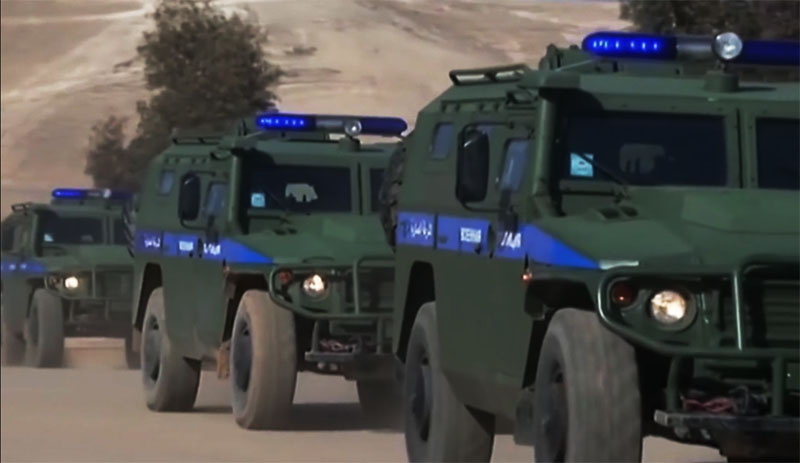
    1) The SAA’s forces and the Russia’s military police with their entrance in eastern part of the “al-Rastan pocket” and raising the flag of Syria.

    2) The western part of the “Siege of Northern Homs” with the entrance of SAA to every single of villages and raising the Syrian flag in them (as a sign of liberated regions),

    and therefore all the northern regions of Homs was cleared completely from the threat of militias.


    It needs mentioning that during the evacuation stages, about 35,000 of militias with their families evacuated from the northern Homs, towards north of Syria.


    If you’re able, and if you like our content and approach, please support the project. Our work wouldn’t be possible without your help:

    BTC: 1BvrWhL7UQQgv6BNwCiV56YMaMcxJy5T5A

    BCH: qpm7pgnypm0v070mh032s0vmgyl972zgk5atqtttnw

    ETH: 0x29722b2D6c64Bb1d83568d6a5026B02170E12460
  • Turkish Forces Established a New Observation Post in “Ishtabraq Mountain” South of Jisr al-Shughur + Map

    Turkish Forces Established a New Observation Post in “Ishtabraq Mountain” South of Jisr al-Shughur + Map

    As we mentioned in the recent article; with the defeat of the militants in Eastern Ghouta and southern Damascus, and also with the “soon to be achieved” defeat of ISIS in Yarmouk camp in southern Damascus– one of the probable goals of the Syrian government would be reinstating (law and) order in northwest of Syria, notably the northern Lattakia, al-Ghab plain and its northern part, namely, Jisr al-Shughur.

    So in accordance with these, the Turkish army extending its observation posts around al-Ghab plain, southwest of Idlib and northern Lattakia in order to get the upper hand in these regions and to prevent the advances of Syrian army in future.


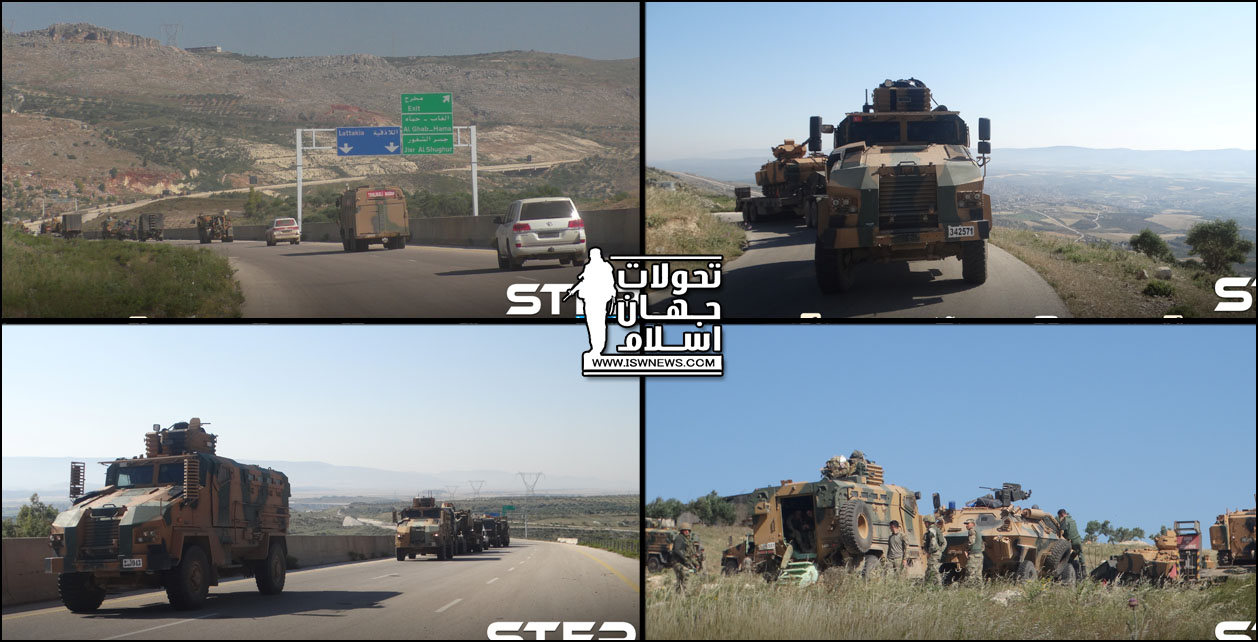
    So, after the construction of a new observation post in “Maydan Ghazal” in north of Qal`at al Mudiq, the Turkish army with sending another big military convoy including 50 armored vehicles, tanks, troop carriers and logistical equipment to south of Jisr al-Shughur, established its new observation post on “Ishtabraq Mountain”.


    Ishtabraq Mountain has a good firecontrol over the city of Jisr al-Shughur and al-Ghab plain.


  • Establishing A New Observation Post By Turkey in al-Ghab Plain; An Attempt to Create a New Military Structure in Idlib

    Establishing A New Observation Post By Turkey in al-Ghab Plain; An Attempt to Create a New Military Structure in Idlib

    According to the field sources, the Turkish army with sending a massive convoy including 100 armored and engineering vehicles to “Maydan Ghazal” in Sahl al-Ghab( al-Ghab Plain), established a new observation post in the mentioned region.


    Also recently, there has been activities from Turkish army in al-Rashedin region, just southwest of Aleppo.
    The Turkish forces have an active presence in these regions, and also it has been said that al-Rashedin has become a new observation post by the Turkish army.


    It also needs mentioning that from October 13, 2017 –the first official arrival of Turkish army in west of Syria– Turkey established around twelve “observation posts” in Aleppo, Idlib and Hama provinces.


    An interesting matter about the future of the regions which are under the influence of Turkey in northwest of Syria –Idlib, other parts of western Aleppo, Hama and northern Lattakia– is that they are creating a new “military structure”, including militias.

    According to field sources of militants, there will be a new “military structure” in mentioned provinces, a structure which the establishments of those “observation posts” in these provinces, is only the beginning.

    Though yet, some of the extremist groups like Tahrir Al-Sham, have not accepted this matter, but the history has proven itself that in long term, the nature of the situation in this region will push them towards this new particular structure.


    In fact on April 8, 2018, with the establishment of these new “observation posts” by Turkey in Hama and Morek region, there completes the establishment of observation posts in all contact lines between the Syrian army and militants from south Aleppo to north of Hama, and practically with this the SAA is completely blocked behind these lines and stopped from any further advances”


    In the past month –with the defeat of the militants in Eastern Ghouta and southern Damascus, and also with the “soon to be achieved” defeat of ISIS in Yarmouk camp in southern Damascus– one of the probable goals of the Syrian government would be reinstating (law and) order in northwest of Syria, notably the northern Lattakia, al-Ghab plain and its northern part, namely, Jisr Al-Shoghor.

    So in accordance with these, the Turkish army extending its observation posts around al-Ghab plain, southwest of Idlib and northern Lattakia in order to get the upper hand in these regions and to prevent the advances of Syrian army in future.

    The northern Lattakia, however, have been long under the intelligence and military control of the Turkey and we can say that the Lattakia’s observation post, have been established already.


    Recently, an official of the FSA, known as “Ibrahim al-Idlibi”, in an interview mentioned that “ The Idlib map and its surrounding regions will be drawn by Turkey’s observation post, and we can put it this way, that the war between SAA & militants in this region, have ended for ever.”

    According to the above explanation, the concept of “A New Military Structure” in northwest of Syria which is under the control of militants, becomes more and more obvious.

    A structure which encompasses extremist groups like Tahrir al-Sham within itself, and would integrate that region, creating another autonomous region in Syria.


    On May 15 and 16, 2018 , meetings were held in Astanah in order to finalize the “de-Escalation Zone Plan”, soon the map of the “Square” will be determined.

    Wait for the end of ISIS in southern Damascus and end of Ramadan…


    Map of Turkish observation posts in Aleppo, Idlib, Hama

  • Reconciliation Agreement in Northern Homs or Military Operation?!

    Reconciliation Agreement in Northern Homs or Military Operation?!

    Yesterday, Syrian government media reported a ceasefire agreement in al-Rastan pocket. The main conditions of the agreement are as follows:

    – Delivery of medium and heavy weapons to the Syrian army.

    – The settlement of the militants who wishing to settle.

    – Evacuation of the all terrorists with their families to Jarablus and Idlib.

    – Reopening of Homs-Hamah highway to facilitate agreement implementation.


    After the announcement of the agreement, the terrorist groups and the Tahrir-al-Sham (Jabhat al-Nusrah,al-Qaeda branch in Syria) group, which is  the main active group in the north of Homs, refused the agreement and the evacuation conditions.

    On the other hand, residents of some areas in northern Homs protested against the militants decision for refusing the government offers…


    In any case, there is still no comprehensive agreement between the Syrian army and the militant groups; negotiations continue.

    However, the Syrian army has set a deadline for the militant groups to announce their final decision in the coming days and if the agreement is not reached, a massive military operation will begin in northern Homs and western Salamiyah.


    It should be noted that in recent days, large convoys of the Syrian army have come from Damascus to Homs and are preparing themselves for a vast military operation.


  • Agreement at Yarmouk Camp in Southern Damascus; Evacuation of Tahrir al-Sham from Yarmouk Camp in Exchange of Evacuation from Fuah and Kafraya

    Agreement at Yarmouk Camp in Southern Damascus; Evacuation of Tahrir al-Sham from Yarmouk Camp in Exchange of Evacuation from Fuah and Kafraya

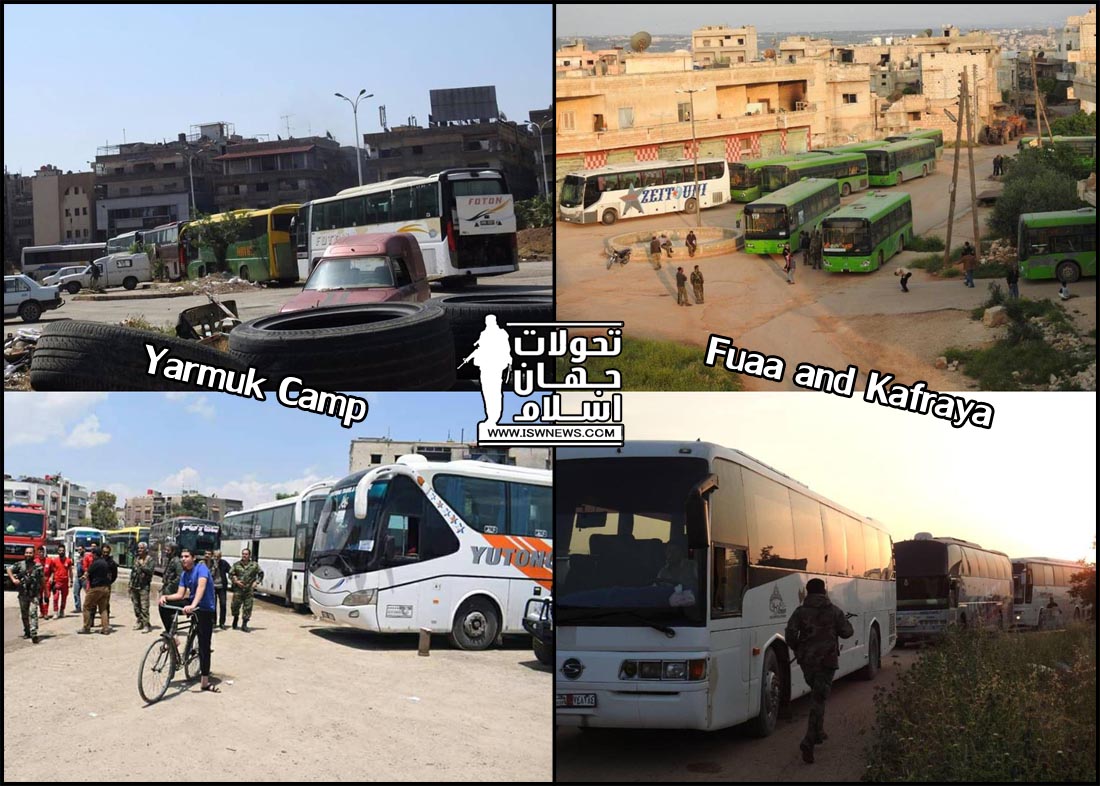
    This morning, 20 buses arrived in besieged towns of Fu’ah and Kafraya and according to agreement, between 1200 to 1500 people will leave Fu’ah and Kafraya towards the Aleppo.

    Also according to agreement, 85 person from the Alawite village of Ishtabraq, including women, children and the elderly, who were kidnapped by Takfiris in south of Jisr al-Shoghour in the past years, will be handed over to the Syrian government.


    On the other hand, the buses for carrying the Jabhat al-Nusra (Tahrir al-Sham, HTS) from southern Damascus to Idlib, entered the Yarmouk camp.

    Still, there is no precise information about the number of Tahrir al Sham militants and their families in the northern section of the Yarmouk camp, but according to unofficial statistics, the number of HTS members and their families in the area is hardly reach to 500.


    Regarding the military situation in southern Damascus and the agreements, it is likely that the Yalda, Babila and Beit Sahm residents will soon join the reconciliations.


  • Southern Part of Eastern Ghouta of Damascus is Liberated Finally! + Latest Map of Battlefield 31 March 2018

    Southern Part of Eastern Ghouta of Damascus is Liberated Finally! + Latest Map of Battlefield 31 March 2018

    Yesterday after implementation of the last step of evacuation of militia from Arbin, Zamilka, Jobar and Hazah and by entering of Syrian Army to the area, safety and security return to war-torn neighborhoods of Damascus after years.


    On the other hand, there are news that militia of Jaish al Islam who have control over Duma, after days of negotiation with Syrian Army agree to evacuate the region by giving Duma to governmental forces.


    The main reason that Jaish al Islam do not want to leave Duma is their reluctance to enter Idlib governorate. Where the strong opponent, i.e. Tahrir al Sham (ex-al Nousra Front, Al Qaeda branch in Syria), has influence and control over a wide area in Idlib and there is a high chance of engagement with this group.


    Thus, militia of Jaish al Islam demand to be relocated to another area other than Idlib which is accepted by Syrian Government; it is agreed that militia of Jaish al Islam with their families to be moved to border town Jarablus in northeast of Aleppo governorate which is under full control of Turkish Army.


    Should this news is confirmed, similar to what happened in southern part of Eastern Ghouta, the process of evacuation of militia from city Duma are done in several steps.


    HQ map

  • Ahrar al Sham and Nour al-Din al-Zenki fighting against Tahrir al Sham; rejection of Tahrir al Sham from west of Aleppo

    Ahrar al Sham and Nour al-Din al-Zenki fighting against Tahrir al Sham; rejection of Tahrir al Sham from west of Aleppo

    On 18 February Nour al-Din Zenki group and Ahrar al Sham by releasing a statement announce a new group “Syrian Islamic Liberation Front”.

    After it they fight against Tahrir al Sham group (Al-Nusra Front); heavy and sanguinary engagements which cover all Idlib and southwest of Aleppo.


    In these advances, the main units of Tahrir al Sham such as Jaish al Malahim(Jund al Aqsa) and Turkistan Islamic Party do not show much resistance.


    The pace of advances is so high that during a few days vast areas of Idlib and Aleppo governorates are out of control of Tahrir al Sham or some of groups which were allies of them, separate due to harsh situation of Tahrir al Sham.


    Some of important regions occupied by SILF(or SLF) are including Ma`rat al Numan, Ariha, Mastuma, Khan al Sobol, Many villages in  Zawiyah Mountain, Khan al Asal, Kafr Naha, 111th regiment, Ma`rat Misrin, Darat Izza, Atmah, Deir Semeon, …


    In recent advances by SILF all western parts of Aleppo governorates are occupied by them and militia groups in Andan, Kafr Hamra, Hayyan, Bayanun and Huraytan separate from Tahrir al Sham keeping their frontline with Syrian Army in Nubl and al Zahraa axis.


    Mediations by Abdullah al Muhaysini, the Saudi religious judge, between Zanky group and Tahrir al Sham are fruitless so far.


    Since Zanky group and Ahrar al Sham have better relations with Turkey than Tahrir al Sham and their figure is better than Tahrir al Sham (al Qaeda), SILF by occupying Tahrir al Sham’s lands are paving Turkey’s advances in northwest of Syria in future and reducing political pressure over Turkey due to alliance with al Qaeda.


    Is it possible that Turkey started this inter-militia fights to achieve their own goals?!


    Statement of “Syrian Islamic Liberation Front” establishment.


  • Russian game, Turkish opportunism and Iranian passivity in the north of Syria

    Russian game, Turkish opportunism and Iranian passivity in the north of Syria

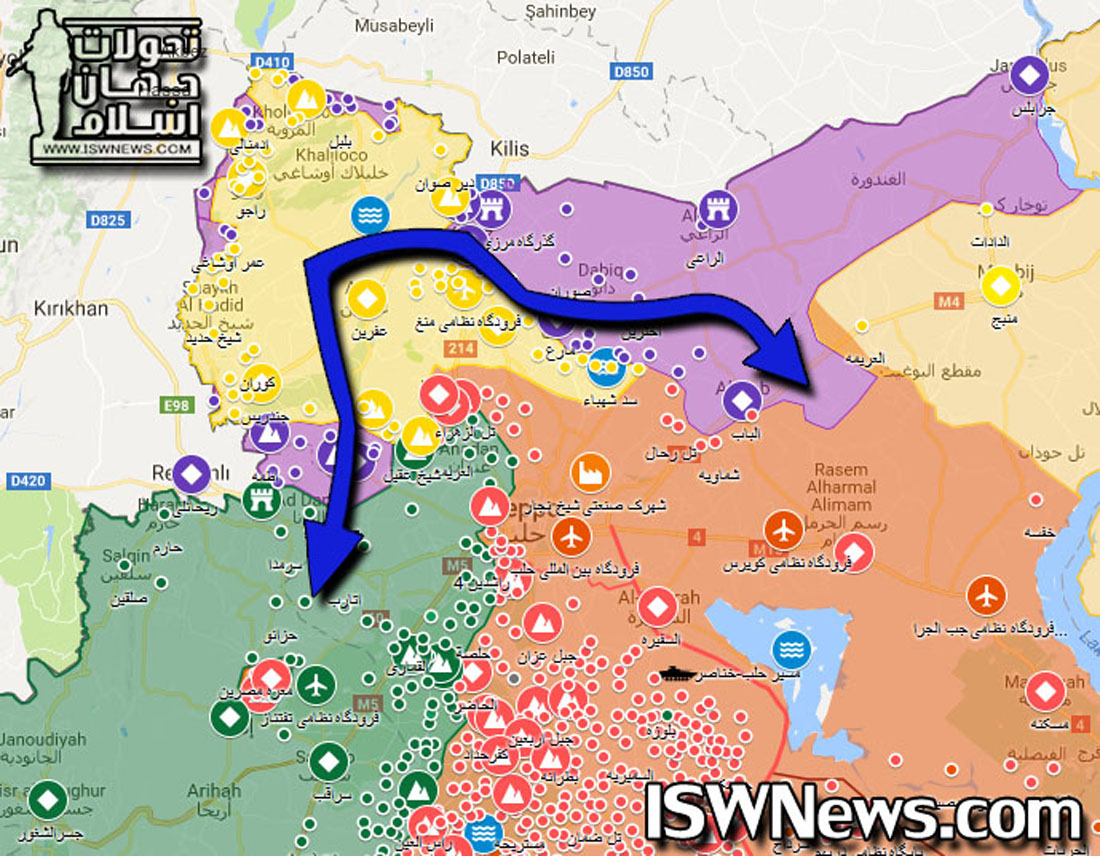
    It is nearly three months ago in the article “The new level in Syrian war/ emphasize on Kurds’ situation and end of ISIS” that with finishing war against ISIS in east of Syria, it is Kurds’ turn to see how their lands are divided between fighting sides in Syria.

    It is still observable that political agreements are shaping the military confront. Same as several months ago that the competition between east and west of Euphrates river in Deir al Zur is based on agreement between US and Russia.


    Today the story of Abu Dohur confront is to fulfil Astana 6 agreement. So the final border of forces in “Idlib De-escalation zones” will be the Hijaz railway (which is the current border) or at most Aleppo-Damascus highway.

    At this border inspection posts of all sides (Turkish-Russian-Iranian) are going to be established and a “Idlib De-escalation zones” will be sustained.


    Recent incidents in Al Eis area in south of Aleppo which includes the artillery fire exchange between Moghawemat and Turkey, is caused by a nuance disagreement in details that Turkey wants to erect watch posts in Al Eis and east of Aleppo-Damascus highway but Moghawemat front is against it; the reason is that Al Eis is very close to Fuah Kafrya and to liberate Fuah & Kafrya the forces should pass through Al Eis.

    This does not mean a determination or plan to reach Fuah & Kafarya in near future necessarily; but a pressure point and replacement plan to tell terrorists that occupying Fuah & Kafrya is expensive for them or consider it as Moghawemat reaching Idlib walls..


    The fact that Turkish Army enters Al Eis again even with warning shots is due to green light from Russia, otherwise it would not be possible.


    Nevertheless, the latest news approves Turkish watch post establishment in Al Eis. On the other side, during the last few days Suhail Hassan’s forces famous as “Tigers” are transported to east of Hama from Saraqeb front to finish the remaining ISIS militia in besieged region and liberate it entirely. This is also another sign of harmony between Russia and Turkey specially if we know that Hassan’s forces act under Russians’ complete intelligence.


    On the other side, Turkey attacks Afrin and some observers consider it as a taken of Astana 6 and Sochi summits (Abu Dohur for Afrin). This Turkish occupation although not very unlikely but also was not agreed on in any summit (not in Astana nor in Sochi) and such audacity from Turkey would not happen without other sides’ (Iran and Russia) confirmation.

    But the main reason that Turkey did such a move is nothing except the Russians’ game of power and passivity and indifference of Iran.


    In simple words, Russia expects that by increasing the seriousness of Turkey’s attack, Kurds would give some privileges in other areas (such as Deir al Zur, Tabaqa, Raqa and Manbij…) and on the other hand Russia would prevent Turkey’s attack and Russian and Syrian flags in Afrin would be raised.


    Iran and Syria did not dislike the plan or at least did not feel bad about it, since if Russians could not convince the Kurds to raise the central government, at least the load on the fronts in Idlib and Aleppo by forces led by Turkey would be reduced.

    But the predictions were not correct. US pressures Kurds’ politicians in Syria and SDF commanders to oppose Syrian flag to be raised.

    US objection was also very natural, since US doctoring is to divide and destabilize the region (specially using the Kurdish race) and in Syria to weaken Iran’s influence and Assad’s government, who is an ally of Iran.


    Syrian Kurdistan also looks at US as their benefactor and is natural to order to fight back in Afrin and to call it a brave and epic resistance, even though they know it is doomed to be defeated !!


    US political oppositions end when Turkey claim the operation is limited to Afrin only.

    Another prediction which proved to be false is the reaction of Tahrir al Sham, who are in complete alliance with Turkey.


    Now we just can sit and see how it goes, Does Turkey satisfy to a border band or wants to occupy Afrin completely and become neighbor of Aleppo, Nubl and Zahra (where is Iran’s base) or even to make a way between Azaz (Al Bab region) and Idlib?

    It seems that the second plan to be more plausible which causes Iran to react and demand to stop the Operation Olive Branch and to get more serious by Turkish advances and on the other side Kurds in Afrin will get more logistic supports to stop Turkish Army…

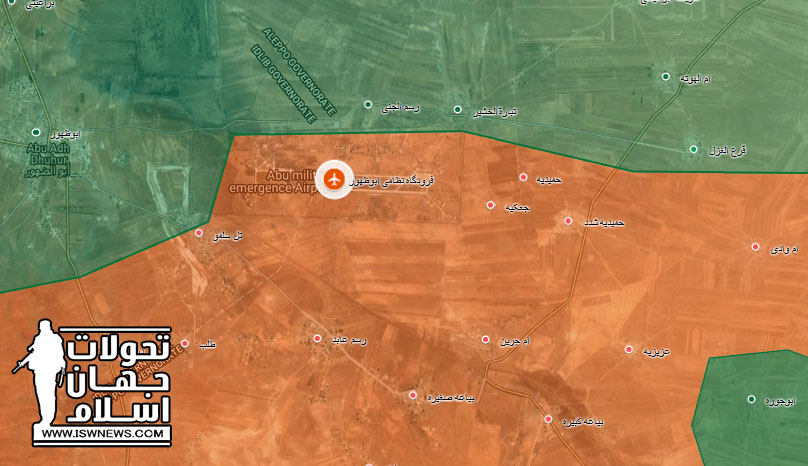
  • Abu Dhohur airbase is liberated finally; the importance of Abu Dhohur

    Abu Dhohur airbase is liberated finally; the importance of Abu Dhohur

    This airbase is besieged by rebels from 2012 and after three years of defense against their attacks, rebels use the opportunity of a sand storm and infiltrate in and by killing and capturing the defendants it falls in summer 2015.

    This liberation after more than two years revives the memories of heroes who defend their land until the last moments…


    Abu Dhohur strategic position is of great importance and having this airbase guarantees higher security of southern Aleppo and northern Hama and will play a crucial role in future advances in Idlib governorate.


    It is noteworthy that Abo Dhohur airbase is 23 km away from Saraqib which is one of rebels main bases in Idlib and in future will be used to support operation of liberation of Fua and Kafraya..

  • Everything you need to know about the future of Turkey’s operations in the Idlib province of Syria + Map

    Everything you need to know about the future of Turkey’s operations in the Idlib province of Syria + Map

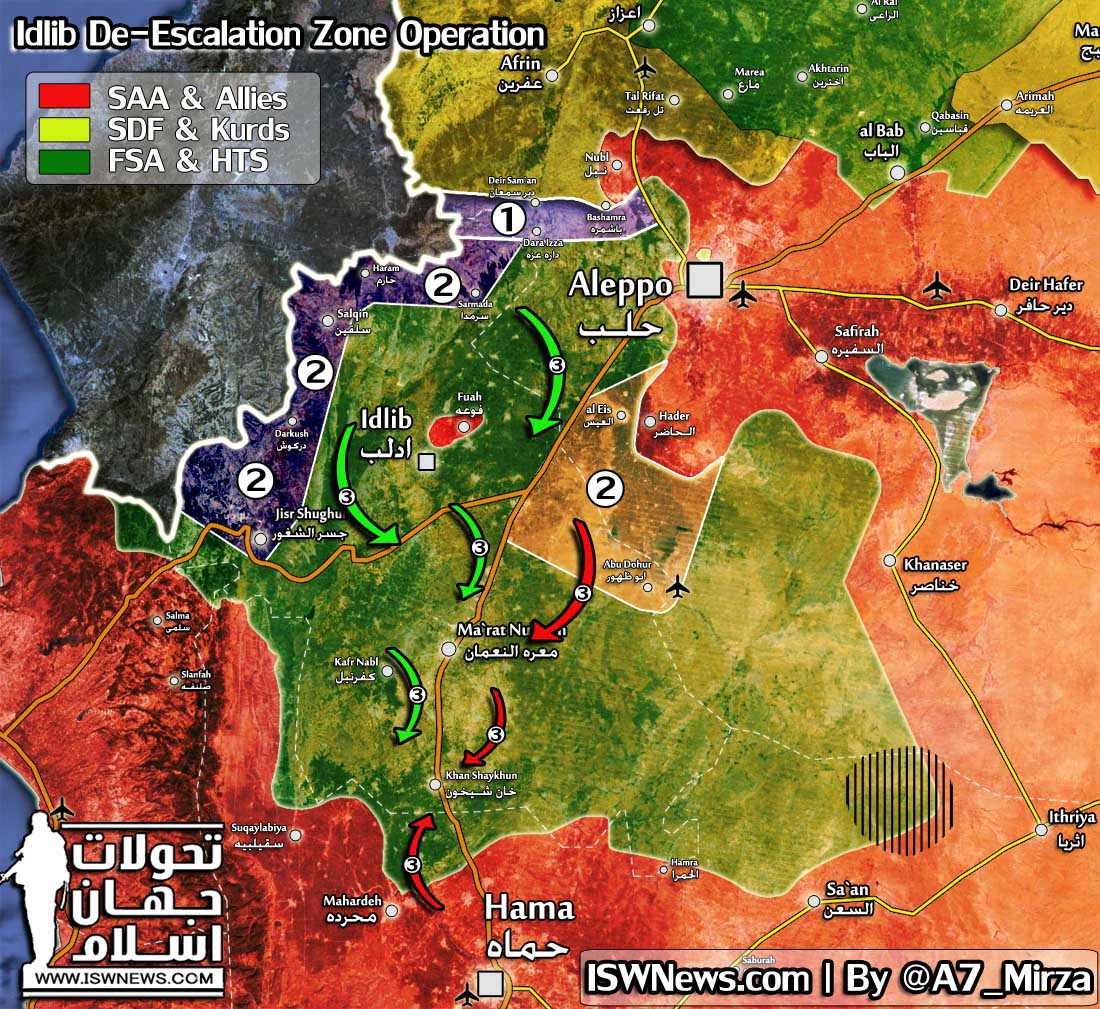
    After announcing the start of the operation in Idlib province by Erdogan on October 7th and executing another part of the Astana agreement known as “De-Escalation Zone Deal” , till now about 200 military equipment including military vehicles and personnel along with the Turkish army entered the province of Idlib.

    Turkey’s entry into the province of Idlib within the framework of the Astana peace agreement can be investigated.

    Apart from mentioned objectives of entering the province of Idlib by the Turkey, in the first phase, this event is included of the presence of Turkish troops in western side of Aleppo province along the Darat Izza, Jabal Sheikh Barakat, Dir al-Sam’an and the frontlines between militants(Such as FSA, HTS, etc) and the Kurds(SDF, YPG, etc) throughout the southern front of Afrin, from Bashamrah to Jandris.

    It should be noted that the Turkish troops will not cross the contact line of Afrin and by being in these areas, they will play as a buffer zone.

    In the second phase, Turkish troops will across border between Syria and Turkey. Therefore, Turkish troops will be deployed in areas of Darah Izza, Harim, Sarmada, Darkush, Atmah to Jasr al-Shughur.

    The purpose of this move is to close all militants`s supplying routes (weapons and personnel) from Turkey to Syria and vice versa.

    So far, there will not be any serious tension certainly.

    According to what our field & trusted sources have indicated that the Turkish and their militants (like Euphrates Shield, etc) will move from north and west towards the Aleppo-Hama highway, and on the other hand, the Syrian army and Resistance forces will move from the south of Aleppo and the Abu Dhohour area to the Aleppo-Hama highway.

    The final goal is to open the Aleppo-Hamah highway.

    In the next stage and third phase Turkish troops or Turkish backed forces will be distributed in areas along the highways like Saraqeb, Khan Sheikhun, Ariha, Murek, and they will enter the northern suburbs of Hamah from the north.

    From the southern side, the Syrian Army and Resistance forces as well as the Russian forces on the outskirts of Hama will move along the highway, and ultimately the Aleppo-Hamah highway will be fully liberated and active.


    Therefore, all that mentioned will be carried out in three general stages:

    The first stage is on the western suburbs of Aleppo
    The second stage in the northern and western suburbs of Idlib
    Third stage along the Aleppo-Hamah highway


    According to what is known, the city of Idlib will remain under the control of Tahrir al-Sham (HTS)

    Finally, due to the field changes and political changes, it will decided that the Turkish-backed forces will be distributed in more areas of Idlib and northern Hamah, or that the Turkish forces will be completely excluded from the area by clearing (setting) the situation of the armed forces and the city of Idlib.

    The details of this stage can include many options that domestic (national) reconciliation is one of them.


    It should be noted that the issues mentioned are based on field evidence and the parties’ plans(all sides), and given the dangerous nature of Erdogan and his sudden turns, there is a possible new scenarios.

    There is also no specific talk about the state of Fu`a and Kafraya it is not clear what kind of plans were intended for these settlements.

    Also, the situation of important areas such as al-Rashidin and al-Zahra in west of the city of Aleppo is unclear, and it is likely that these areas will also join the national reconciliations.

    HD MAP