Tag: Idlib

  • Latest Military Situation In Northwest Syria (Map)

    Latest Military Situation In Northwest Syria (Map)

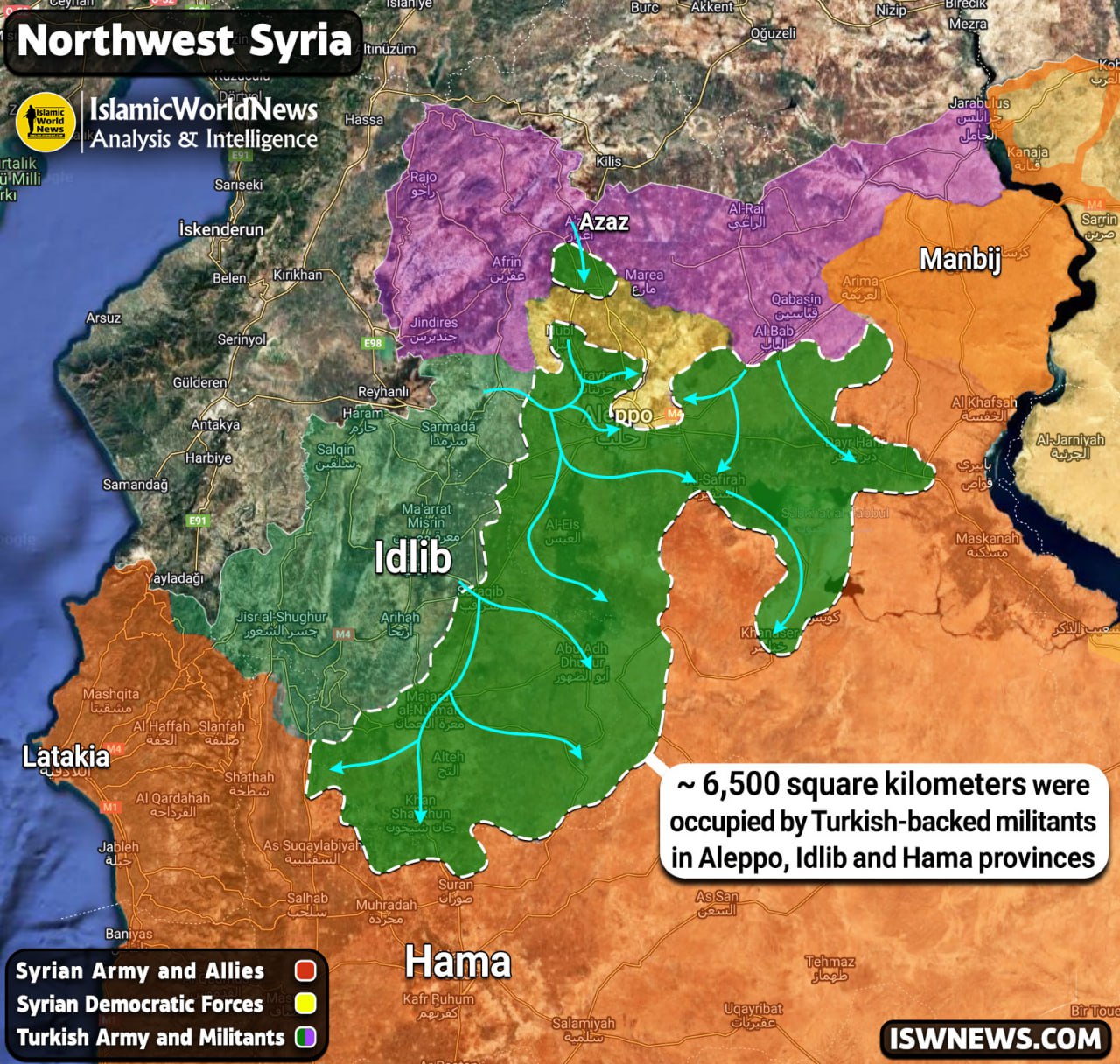
    The Syrian army has withdrawn from the southern areas of Al-Safira, and militants are also in control of the Khanaser area. The Syrian army has launched counterattacks in this axis.

    The Syrian army has lost control of several other areas in the northern suburbs of Hama, including key locations like Qalaat al-Madiq, Latamenah, and Souran. Intense battles are ongoing north of the Taibat al-Imam-Muhradah-Suqylabiya line. The militants’ use of FPV drones has provided them with a significant advantage, resulting in casualties among the Syrian army infantry and damage to armored vehicles.

    The turquoise blue area represents the territory occupied by the militants in the past 24 hours.

  • Latest military situation in northwest Syria:

    Latest military situation in northwest Syria:

    The northern half of Aleppo city is under the control of Kurdish/SDF forces and a few remaining Syrian army units, while almost half of the Sheikh Najjar industrial zone is controlled by militants.

    Reports suggest that the militants have proposed a safe corridor for the Kurds in exchange for evacuating northern Aleppo city and its northern suburbs.

    Al-Safira town is either under militant control or completely besieged. The militants have not yet entered the Al-Safira defense factories.

    The Khanasir area is under the control of militants.

    The militants’ advance in the northern outskirts of Hama city has been stopped in the Kafr Zita-Latmin-Morek triangle. The Syrian army is setting up defensive lines and preparing for counterattacks.

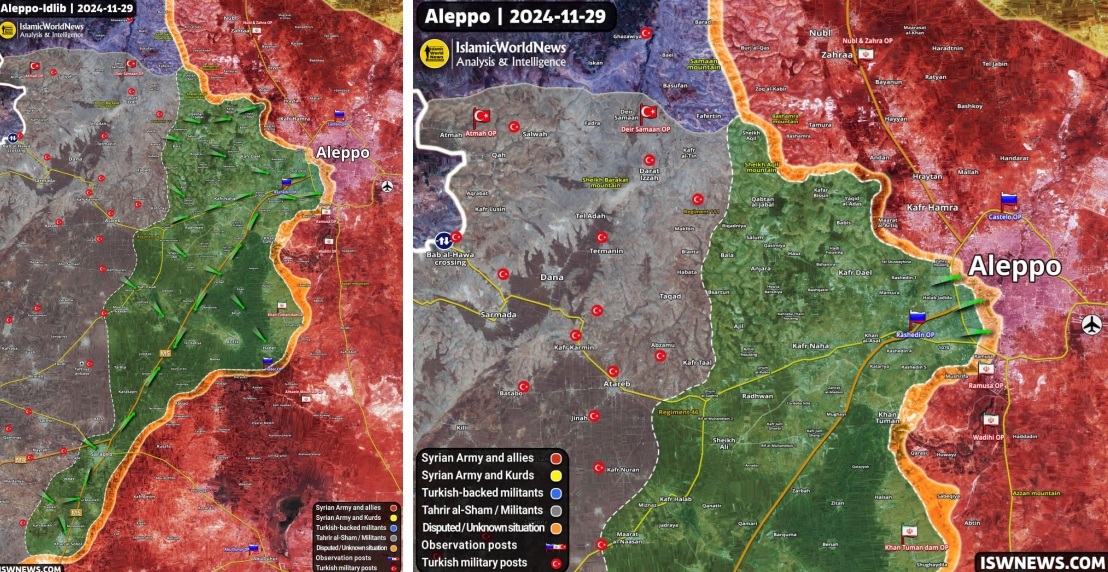
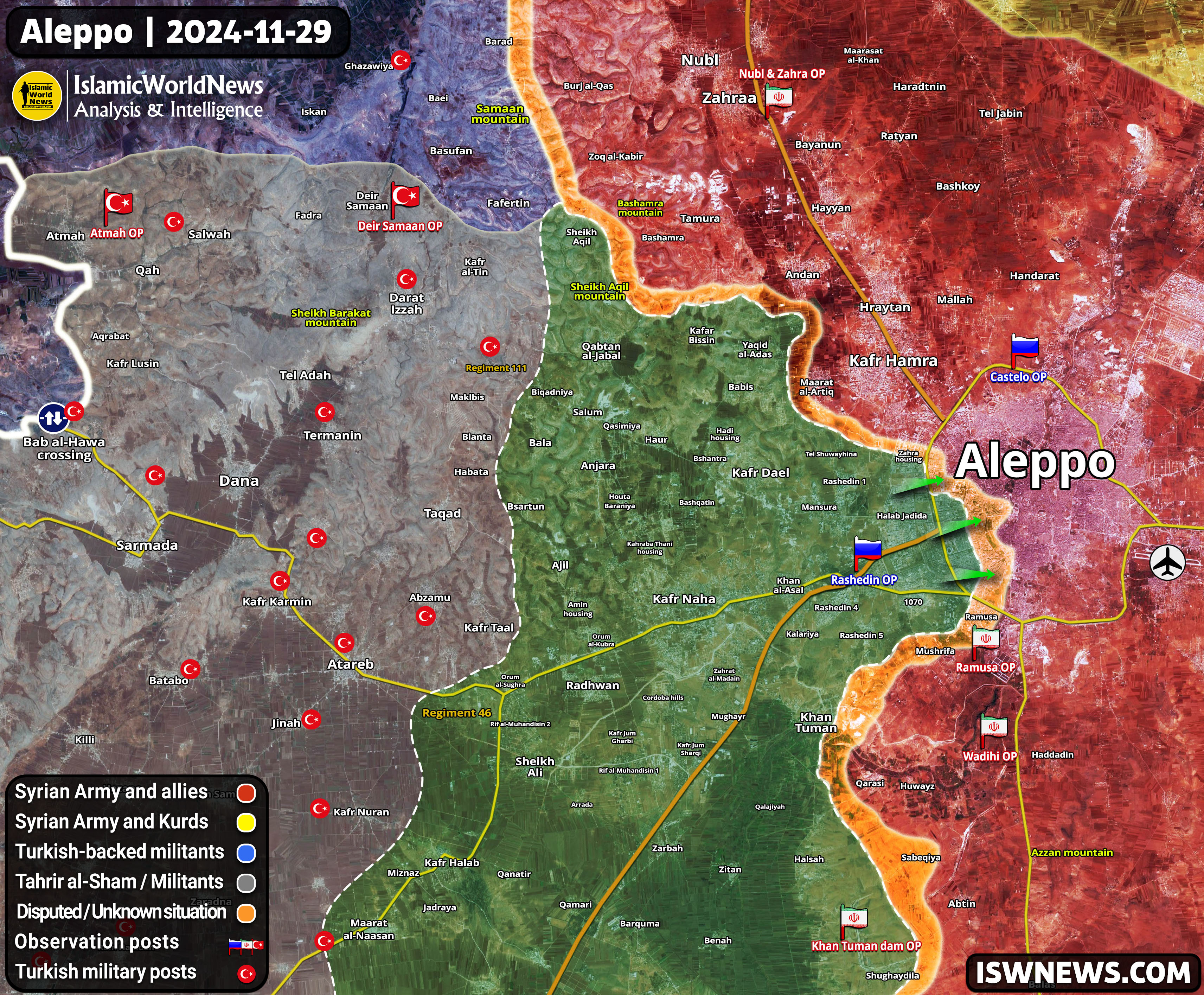
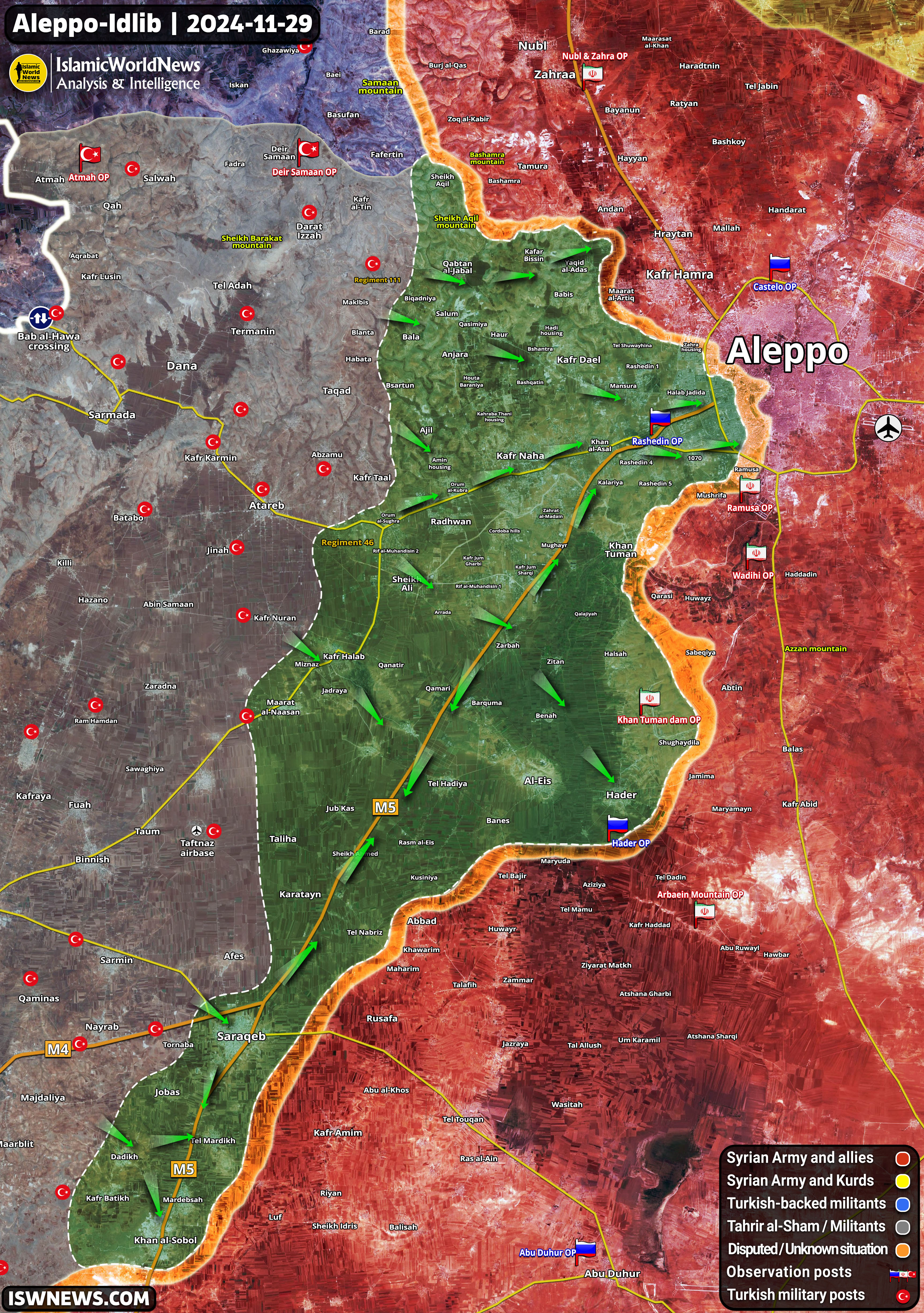
  • Latest Situation In Western Aleppo And Eastern Idlib; Terrorists Infiltrated Into Aleppo City!

    Latest Situation In Western Aleppo And Eastern Idlib; Terrorists Infiltrated Into Aleppo City!

    In eastern Idlib, the important town of Saraqib and several surrounding areas have also been captured by militants.

    Numerous areas and villages along the Aleppo-Damascus highway (M5) from southwest Aleppo to the Saraqib area have fallen to the militants. Key areas include the village of Hader and the strategic hill of al-Eis.

    The situation within Aleppo city is critical. Militants are advancing through Halab Jadida, Al-Assad Academy, and Project 3000, with reports of their presence in neighborhoods such as Al-Furqan, Al-Adhamiya, Al-Adha’a, Salah al-Din, Al-Sukariya, and even in Al-Kalasah and Al-Firdous and central areas of Aleppo city.

    If this trend persists, Aleppo could face total collapse.

  • Israeli Regime Carries Out Airstrikes On Syria’s Aleppo, Idlib

    Israeli Regime Carries Out Airstrikes On Syria’s Aleppo, Idlib

    According to information provided by a Syrian military source, the Israeli regime’s army conducted airstrikes on several points in the outskirts of Aleppo and Idlib governorates from the southeast of Aleppo around 00:45 a.m. (local time) on Saturday.

    This air raid resulted in the injury of several Syrian soldiers and caused material damage.

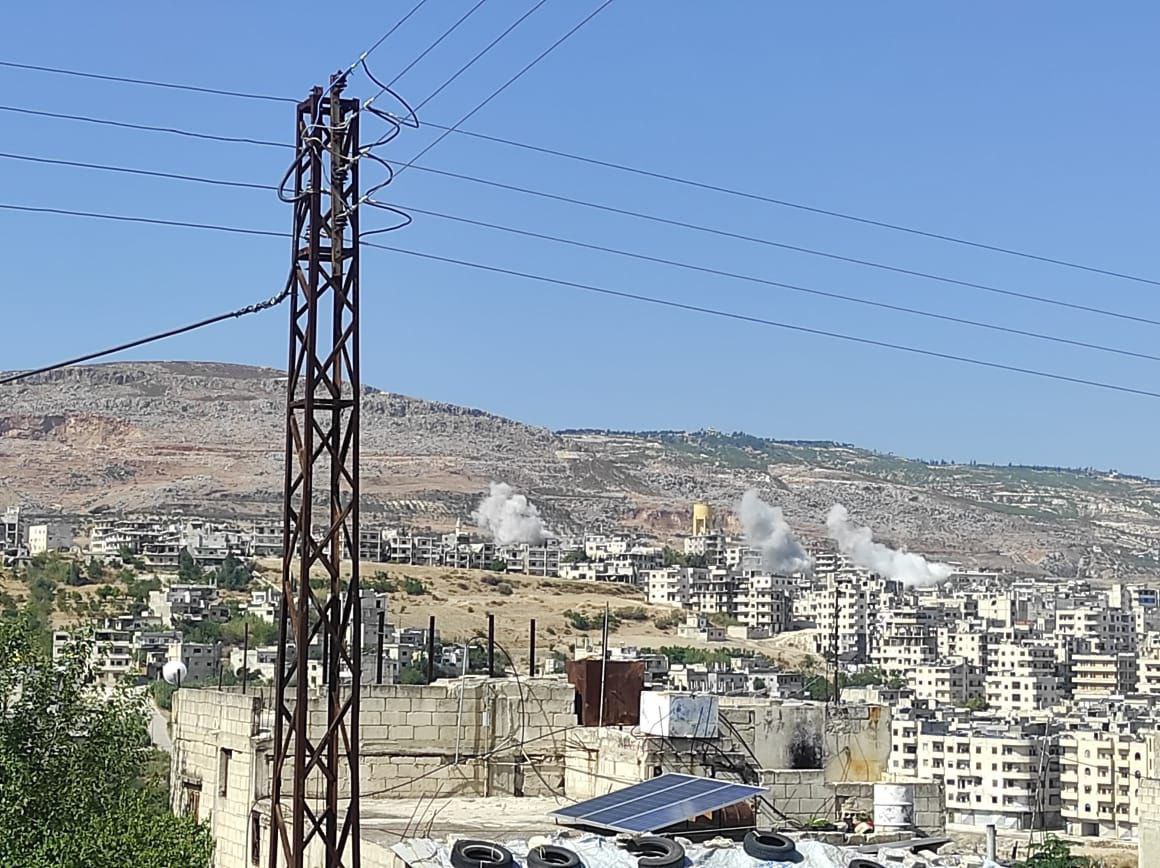
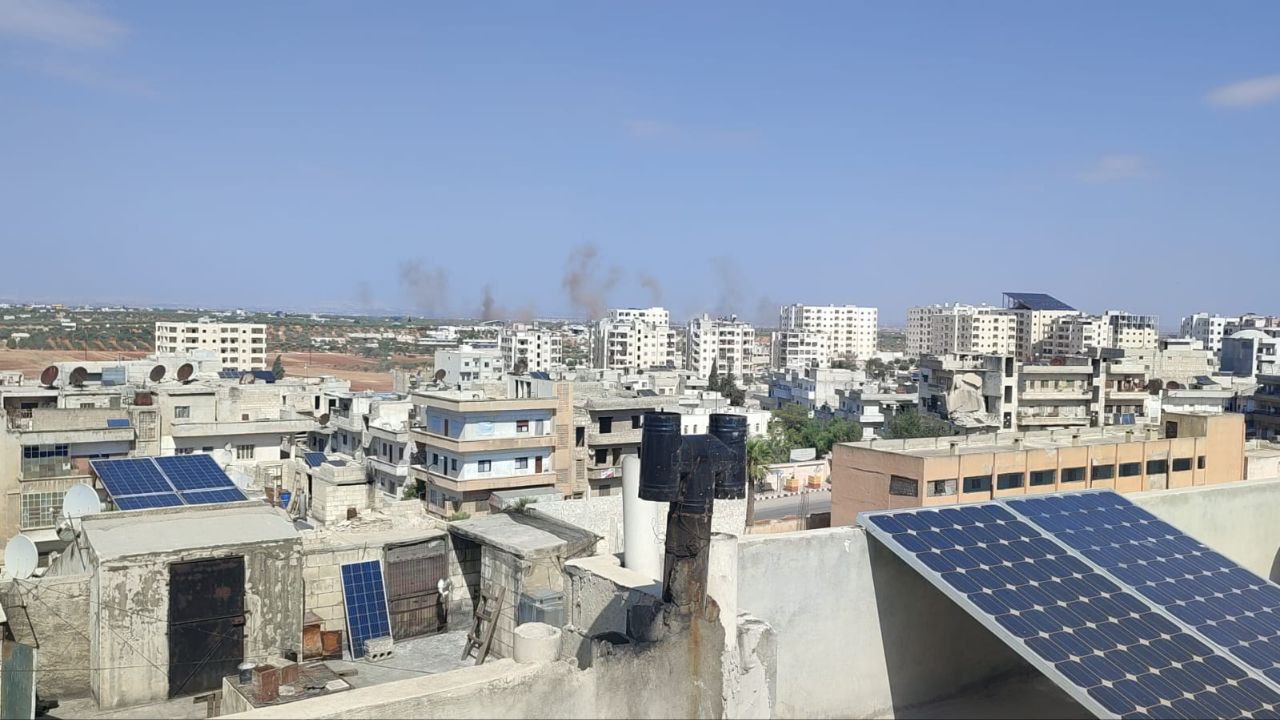
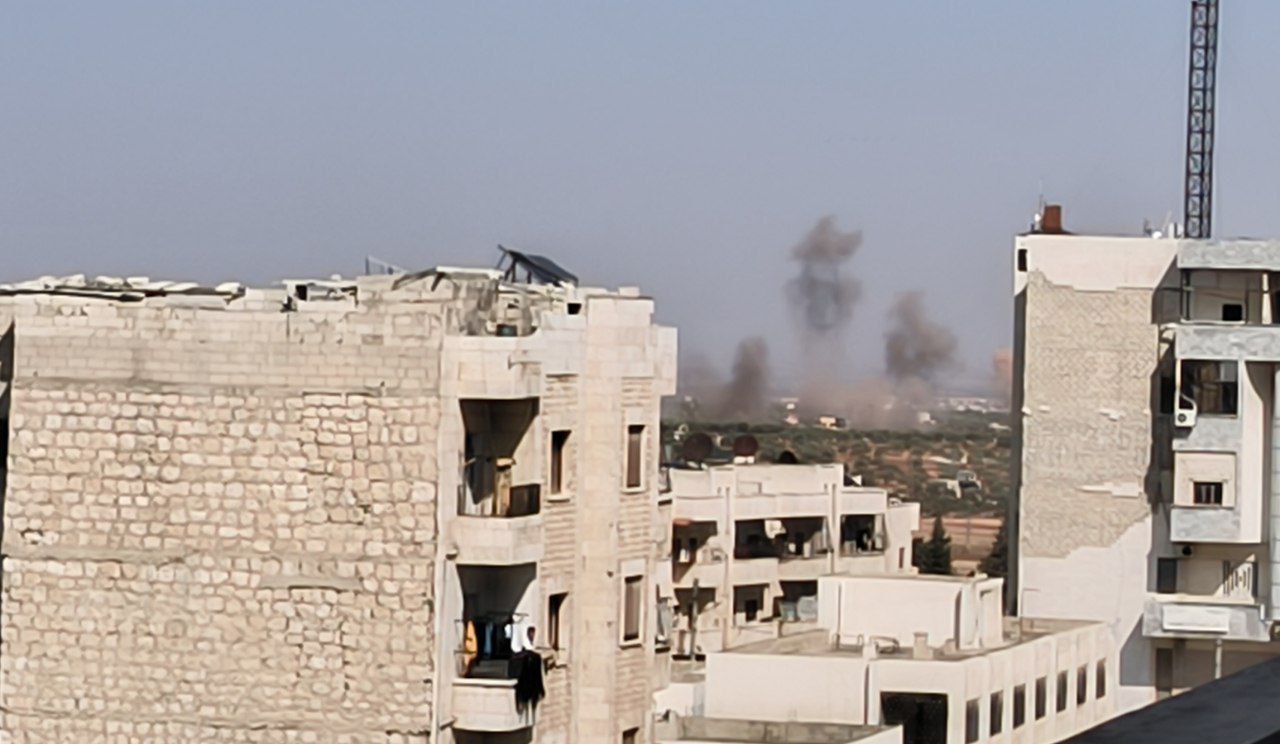
    It is reported that targets in the Al-Safirah city of Aleppo and the eastern outskirts of Idlib, in particular the city of Saraqib, were hit by the Israeli regime’s fighter jets.

    In recent years, in the absence and silence of international organizations and human rights legal institutions, the Israeli regime has frequently conducted missile and air strikes against Syria. Since the launch of the Al-Aqsa Storm operation and Syria’s logical support for the resistance axis, Israeli air strikes across various areas of Syria have significantly increased, especially in Damascus and Homs.

    Over the past year, Israel has conducted multiple strikes to assassinate senior resistance commanders and destroy the alleged support centers and ammunition depots, resulting in the deaths and injuries of hundreds of both military personnel and civilians across Syria.

  • US Assassinates Hurras Al-Din Field Commander In Syria’s Idlib

    US Assassinates Hurras Al-Din Field Commander In Syria’s Idlib

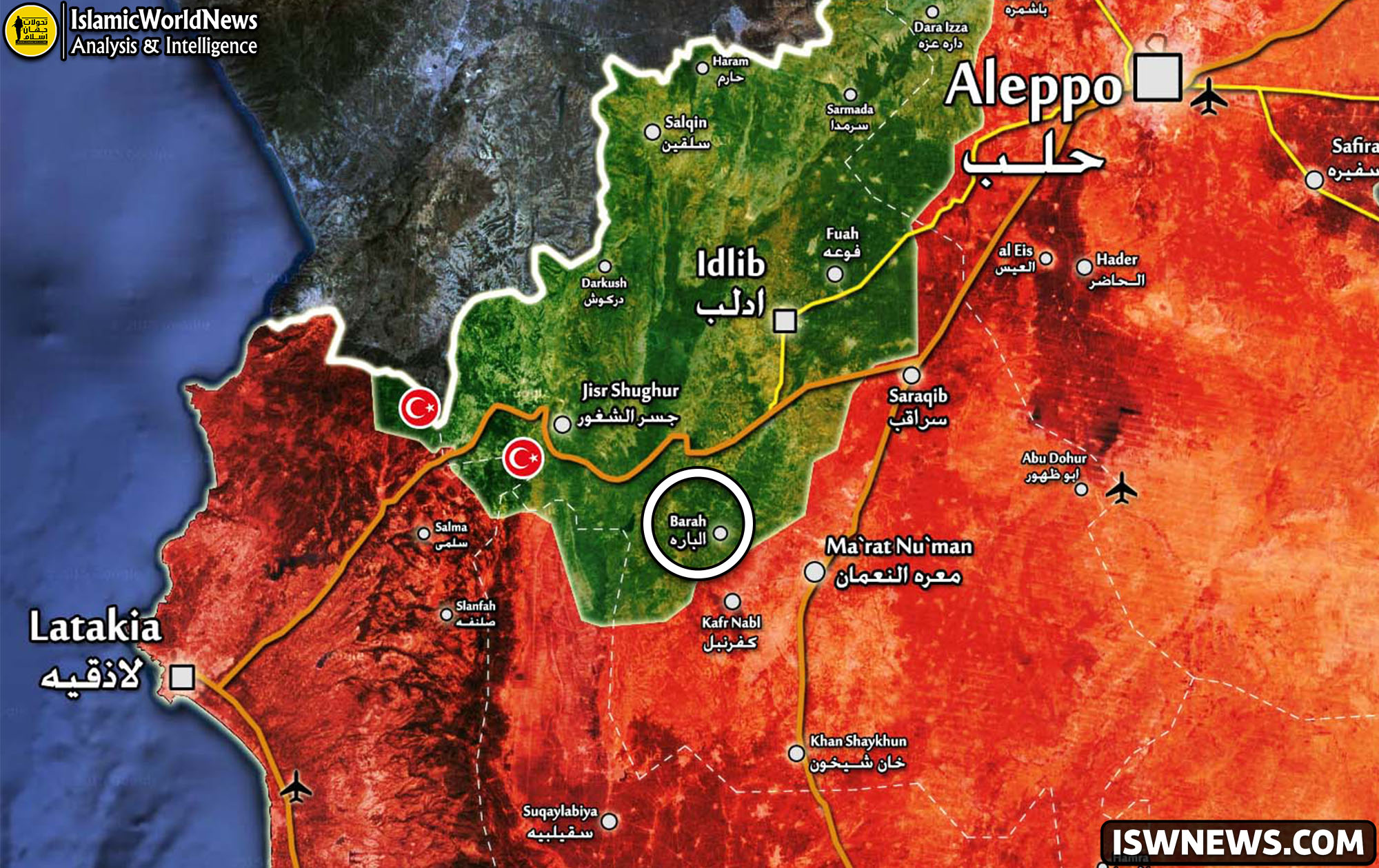
    On August 23, a MQ-9 drone belonging to the US-led coalition targeted a motorcycle on the al-Bara-Ehsim Road located in the south of Idlib Governorate.

    Hours after this strike, the terrorist US Central Command in the West Asia region (CENTCOM) issued an official statement declaring that its forces carried out a drone strike against a senior commander of the Hurras al-Din militant group, called Abu-’Abd al-Rahman al-Makki, in Syria.

    CENTCOM also claimed that the senior commander of the group was responsible for overseeing a number of its terrorist operations.

    Some local sources also reported that the strike was carried out using an AGM-114 Hellfire missile. It is said that Abu-’Abd al-Rahman al-Makki was cautious, when he wanted to use his cell phone, and that the commander was identified and pursued by field agents on the ground.

    This is the sixth targeted airstrikes by the US-led coalition in the north of Syria in the last three years. Previously, the US-led coalition conducted air strikes in certain regions of Idlib and Aleppo governorates, targeting a number of commanders of al-Qaeda (Hurras al-Din) and ISIS terrorist groups.

    Hurras al-Din has been identified as an Al Qaeda-associated terrorist group based in Syria that shares Al Qaeda’s global aspirations to carry out strikes against US and Western interests in the region. In the early years of the Syrian war, America used militant groups like this group to advance its goals in Syria. Now there is no need for them and the US assassinates their commanders.

  • Tahrir Al-Sham Ringleader Assassinated In Northern Syria

    Tahrir Al-Sham Ringleader Assassinated In Northern Syria

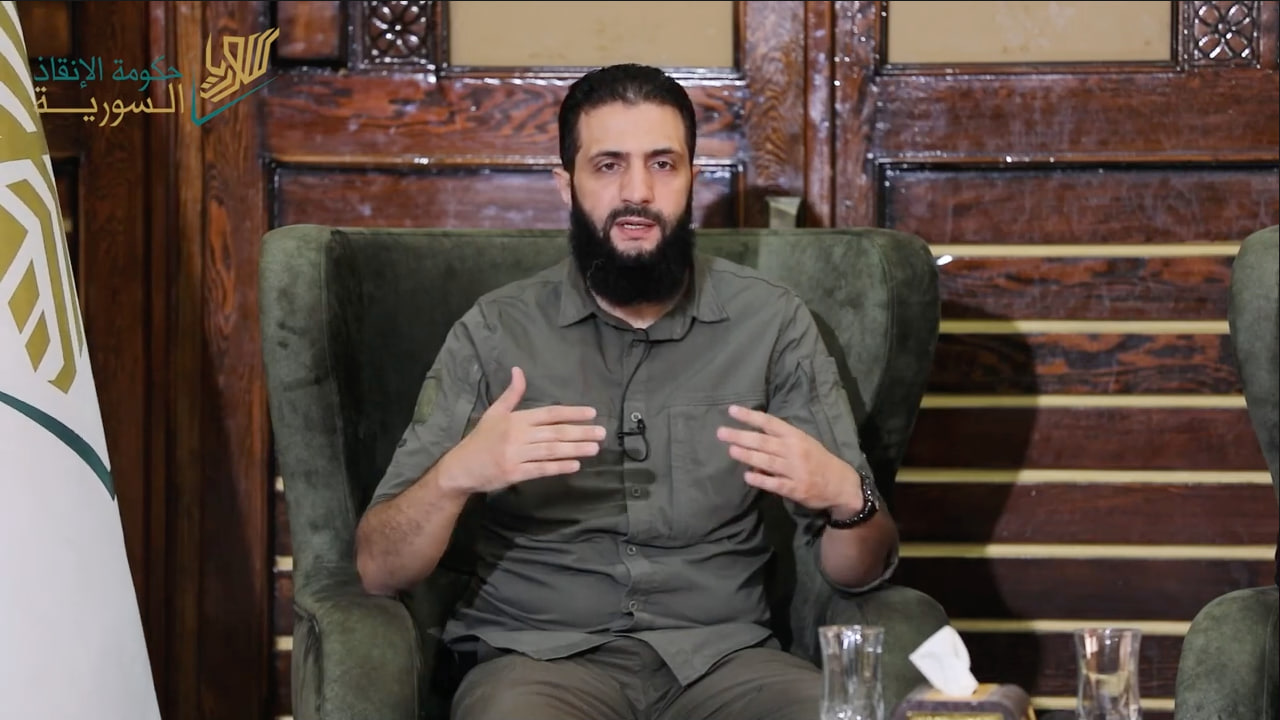
    On July 12, local sources announced that Abu Mohammad al-Jolani, the ringleader of Hay’at Tahrir al-Sham (formerly known as Jabhat al-Nusra), was assassinated the night before for the second time in recent weeks. This time he was assassinated in a hospital in the city of Sarmada in Idlib Governorate.

    A nurse reportedly planned to inject an unknown drug into the Hay’at Tahrir al-Sham ringleader, but was immediately arrested by forces from al-Jolani’s security team.

    Following the incident, a number of patients and medical staff were detained inside the hospital by security forces affiliated with the terrorist group Hay’at Tahrir al-Sham.

    It is worth noting that in June 2024, reports were published confirming that al-Jolani was poisoned. Sometime later, the security forces affiliated with Hay’at Tahrir al-Sham concluded that al-Jolani had been assassinated after drinking a poisoned drink.  

    In April, protests emerged in towns of Armanaz and Kafar Takharim in the countryside of Idlib Governorate, which are under the control of the Hay’at Tahrir al-Sham. Protesters demanded the overthrow of the ringleader of the terrorist organization.

    Demonstrators called for the disbanding of the “General Security” apparatus that the Hay’at Tahrir al-Sha had established under the directives of al-Jolani.

    Furthermore, protesters pointed to the increase in taxes imposed on residents and their deprivation from essential goods as motives behind their rallies.

    It is worth noting that, the prominent official of the terrorist group named Abu Maria al-Qahtani was killed in the city of Sarmada in early April. Al-Qahtani was killed when an explosive device planted in his residence was exploded, also killing other individuals accompanying the terrorist.

  • Syrian Army Eliminates Commander Of HTS Special Forces With FPV Drone

    Syrian Army Eliminates Commander Of HTS Special Forces With FPV Drone

    The commander, identified by Syrian opposition activists as Abu Abdullah Agha, was reportedly targeted by an FPV suicide drone near the frontline town of Kabani in the northern Lattakia countryside a few days earlier. Several other militants from HTS were reportedly killed or wounded in the strike.

    Agha, originally from the capital Damascus, was the commander of an elite special forces battalion in HTS’ Othman bin Affan Brigade. He was reportedly the mastermind behind several raids against SAA posts in the northern Lattakia countryside and other parts of the front around Greater Idlib.

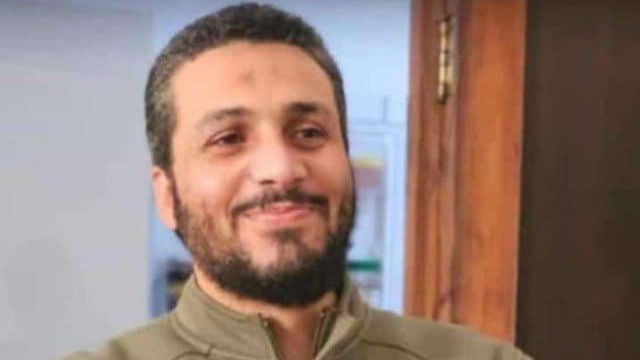
    Abu Abdullah Agha

    The use of FPV suicide drones by the SAA was first reported in September of last year. In the last two months, more than a 100 such drones targeted equipment, posts and militants from HTS and its allies in Greater Idlib. The rate of the strikes has been steadily increasing.

    The appearance of FPV suicide drones with the SAA is not surprising considering that they are cheap and easy to manufacture. It is very possible that the SAA received some support from Russia, who gained vast experience in mass producing and operating this type of drones following the start of the special military operation in Ukraine.

    Originally posted on SouthFront

  • Two New Groups Join Jaish Al Watani Militants In Syria

    Two New Groups Join Jaish Al Watani Militants In Syria

    Since the operational capabilities of the two aforementioned groups have not been the same as before, and there has not even been any news of their operations in recent months, it seems that their accession to the Jaish Al Watani as well as the media hype surrounding this issue, were only done with the aim of creating psychological warfare, showing power, and absorbing the number of subgroups.

    It is worth noting that Jaish al-Watani al-Suri is an offshoot of the so-called Free Syrian Army, which started its activities in Syria in 2017 with the support of Turkiye, and most of its members are Syrian Arabs and Turkmens.

    Jaish Al Watani is also known as TFSA (Turkish-backed Free Syrian Army) due to the direct support that it gets from Turkiye.

  • Syrian Army Attacks Militants In Idlib With FPV Drones, Precision Artillery (Videos)

    Syrian Army Attacks Militants In Idlib With FPV Drones, Precision Artillery (Videos)

    On February 10, a video surfaced online showing a recent attack with FPV suicide drone by the SAA that targeted militants near the town of Taftanaz in the eastern Idlib countryside. Six to 12 militants from HTS and other groups were reportedly killed in the attack, which took place last month. Several vehicles were also destroyed.

    The SAA began using FPV suicide drones last year. The Russian military reportedly provided technical support and training.

    Another video that surfaced on February 11, showed recent precision artillery strikes by the SAA that targeted fortifications and posts in an unspecified part of Idlib. The strikes were likely carried out using Russian-made Krasnopol laser-guided artillery rounds.

    HTS and its allies stepped up attacks in recent months in a blatant violation of the ceasefire in Greater Idlib which was brokered by Turkey and Russia more than three years ago.

    The situation in Greater Idlib remains tense. However, the SAA and its allies will not likely launch a ground operation in the region any time soon as this could lead to a dangerous confrontation with Turkey who keeps large forces there.

    Originally posted on SouthFront.Press

  • Retaliatory Attacks By The Syrian Army On Terrorists In Idlib And Aleppo

    Retaliatory Attacks By The Syrian Army On Terrorists In Idlib And Aleppo

    In response to the drone attack on the Homs Military Academy, which killed 89 people and wounded 277 people, the Syrian army launched retaliatory attacks against the positions of terrorist groups in Idlib and Aleppo provinces.

    A video of the Syrian army’s attacks on terrorist positions in Idlib

    According to local sources, until now the regions of Idlib, Jasr al-Shoghur, Benin, Al-Fatirah, Ma’rablit, Al-Hambushiyah, Deir Sonbal, Al-Ruwayha, Al-Bara, Afes, Al-Muwazirah, Sarmin, Majdaliya, Kafarlateh and Badama, as well as Darah Izza and some other areas In the west of Aleppo, has been targeted by artillery and air strikes of the Syrian army.

    A video of the Syrian army’s attacks on terrorist positions in Idlib

    According to the claims of the media close to the militants, as a result of these attacks, 13 people were killed and 62 others were injured.

    In continuation of these attacks, the Russian fighter jets also organized attacks against the headquarters of the militants in different areas of Idlib province, so far the details and the number of casualties of the militants have not been published.

  • Rocket Attack Against The SAA In Idlib

    Rocket Attack Against The SAA In Idlib

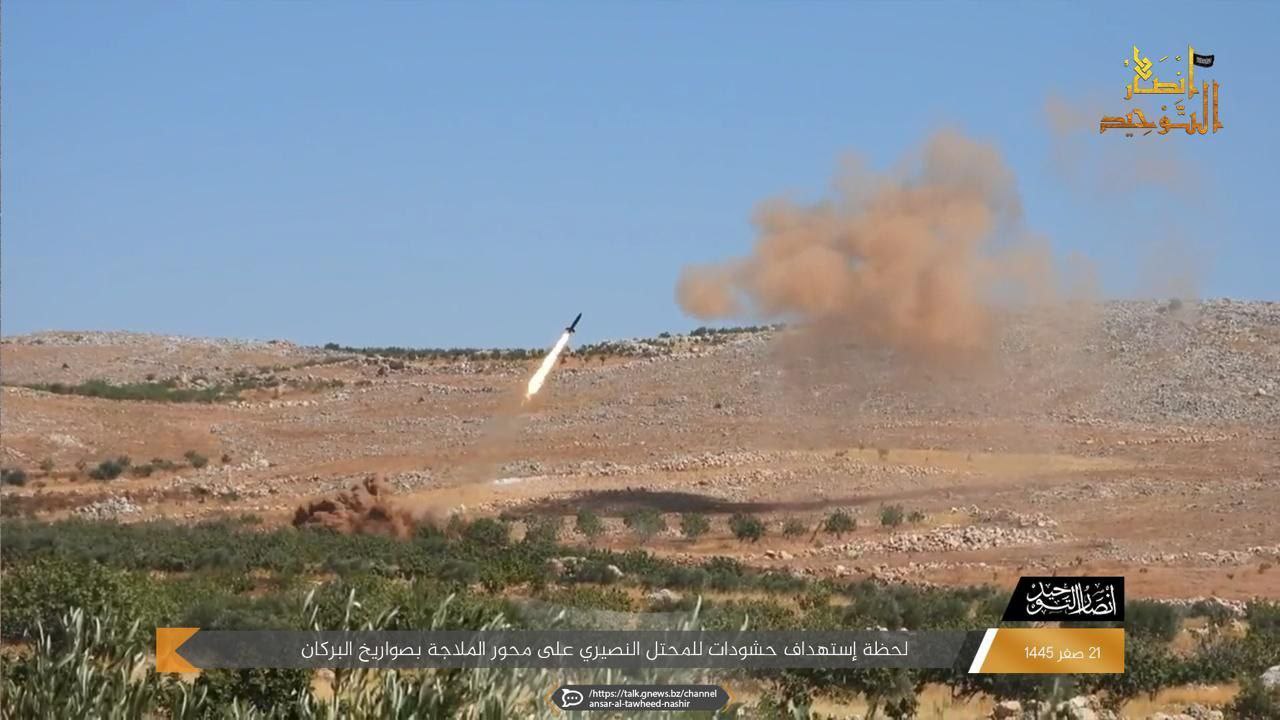
    In recent days, there has been a significant increase in the battles and artillery duels between the militants and the Syrian army along the front lines of Kafr Nubl.

    On August 26, militants affiliated to Ansar al-Tawhid group detonated a tunnel under the Syrian army headquarters in the al-Malaja axis, which resulted in the martyrdom and injury of several Syrian soldiers. Since then, sporadic clashes and the artillery duels between the SAA and terrorist groups has intensified.

    Read more: Six Syrian Soldiers Killed In Clashes In Southern Idlib

  • Iran-Made Ababil Drone Flies Over Militants’ Positions In Idlib

    Iran-Made Ababil Drone Flies Over Militants’ Positions In Idlib

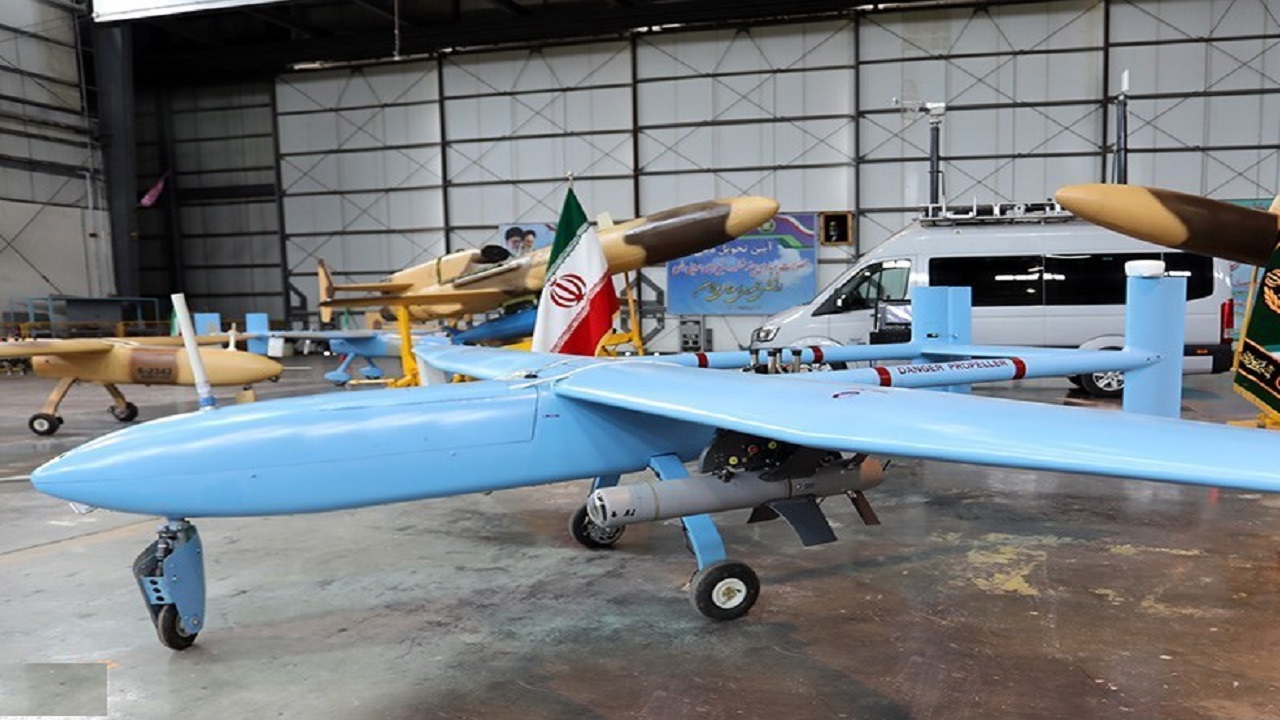
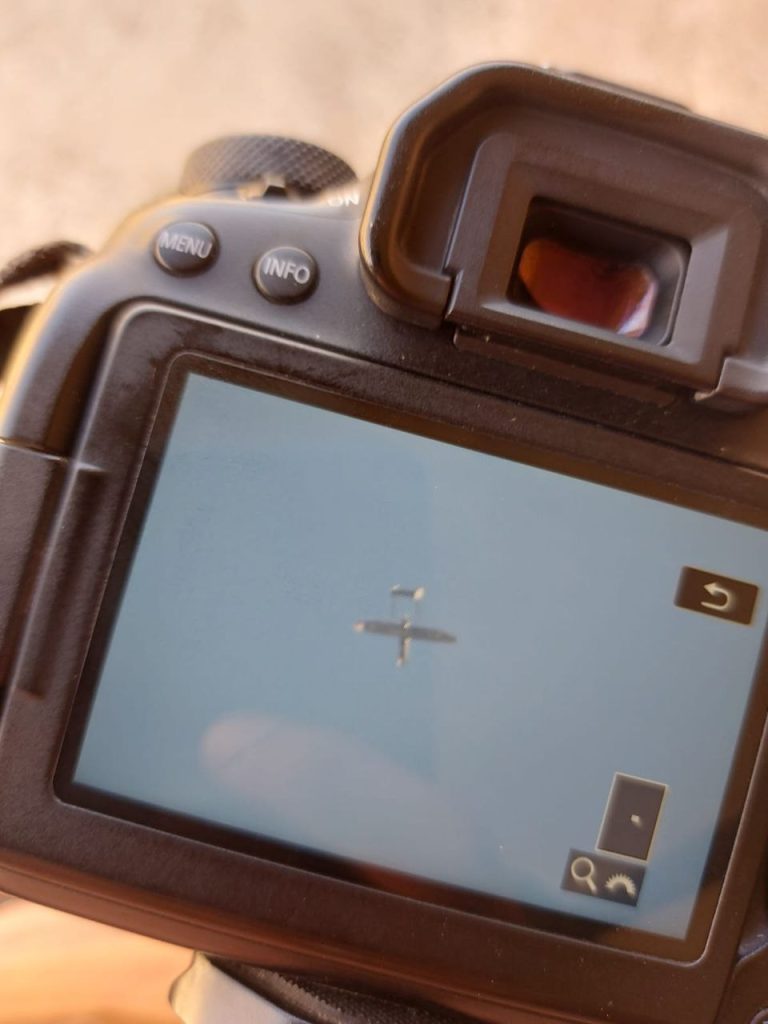
    Media outlets close to the militants released a video on September 5, showing the surveillance flight of an Iran-made Ababil-3 drone in the southern frontlines of the Idlib Governorate.

    According to the claims made by the militants, this drone flew over various areas of Al-Fatira, Kansafra, Kafr al-Uwayd, and Safuhen.

    Ababil-3 drone image published by the militants

    It appears that the Syrian armed forces employed this drone, because the Ababil-3 drone has been frequently used in recent years by the Syrian army to identify terrorist groups’ positions, guide artillery fire, and assist Russian helicopters in precise bombardment of militants’ headquarters in the Arab country.

    Read more: Military Knowledge: “Ababil 3” Surveillance and Reconnaissance Drone

    Ababil-3 drones have conducted tens of thousands of flight hours for the Syrian army to monitor and detect terrorist groups in various axes, including Hama, Idlib, and northern Latakia, since the peak of the Syrian civil war. And it is said that the Syrian army is largely satisfied with the performance of the Ababil-3 drone.

    It should be noted that the Ababil-3 drone appeared during the Great Prophet 5 military exercise of the Islamic Revolution Guards Corps (IRGC) in 2010 for the first time.

    The range of the Ababil-3 drone is 250 kilometers, and its flight endurance is 8 hours. The maximum flight altitude of the Ababil-3 drone is reported to be 16404.2 feet (5,000 meters), and its maximum speed is also stated as 200 kilometers per hour.