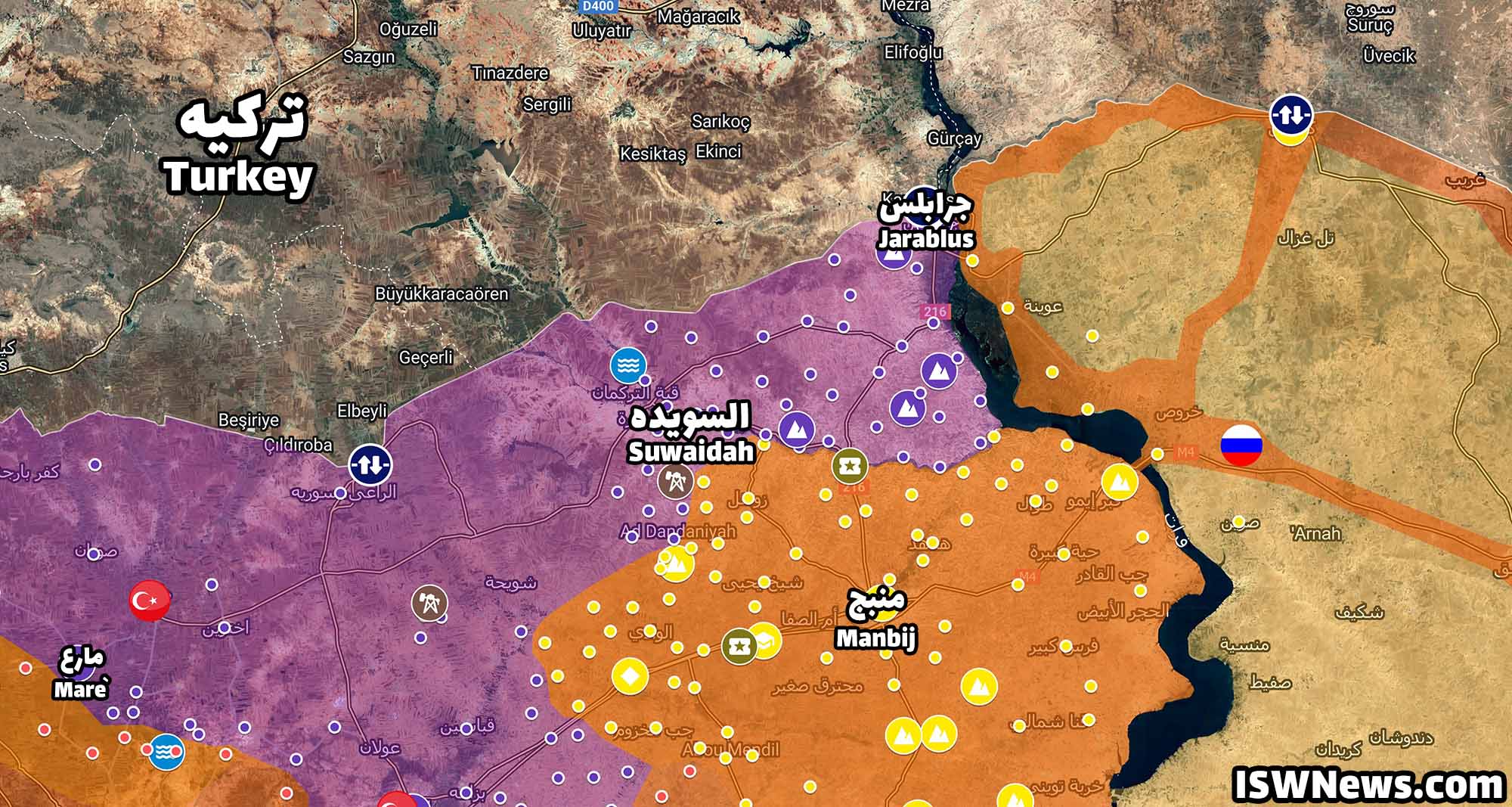
Early on Monday, the US-led coalition forces initiated an operation in southern As-Suwayda near Al Ghandour village in Aleppo Governorate, where one of the commanders of the ISIS terrorist group along with two other terrorists were killed.
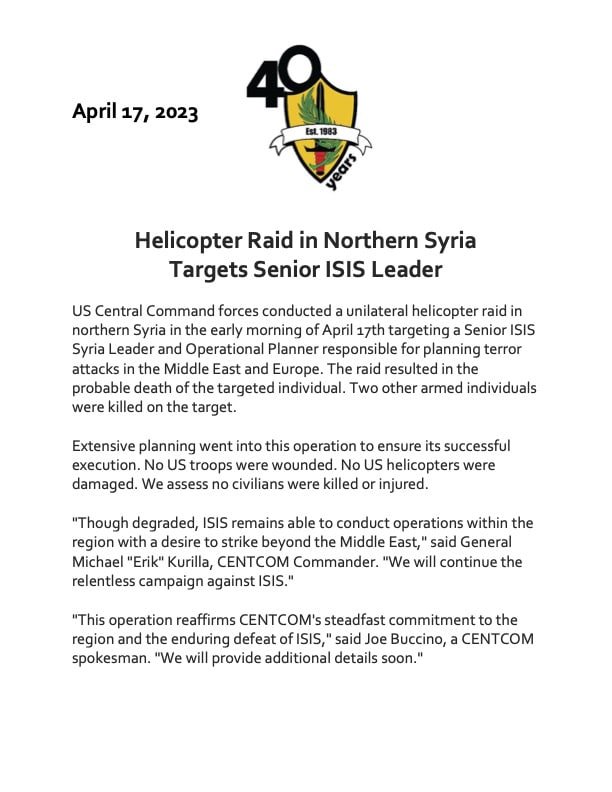
A few hours after the operation, the US terrorist headquarters in West Asia (CENTCOM) issued a statement, declaring that the CENTCOM forces carried out an operation in northern Syria early on April 17, which left an ISIS commander, who was in charge of plotting terrorist attacks in West Asia and Europe, along with two other terrorists killed. In the operation, no civilian as well as American forces and aircraft were damaged.
CENTCOM statement
It is worth mentioning that the US-led coalition’s drones pounded a farm in Keftin village in Idlib Governorate in northern Syria on April 3, 2023, which ended up in the killing of a top commander the ISIS terrorist group named Khalid Aydd Ahmad al-Jabouri, who was in charge of plotting terrorist attacks in Europe.
The flight of American helicopters over the southern As-Suwayda
Publishing infographics is one of the methods that extremist armed groups use in the best way to prove their existence. Meanwhile, it can be said that ISIS is both the pioneer and the most creative in this field. Every week, ISIS publishes an infographic of the results of its operations in the “Al-Naba” weekly newspaper, which seems to have a vital aspect for ISIS, because ISIS can say that it is still present in the field through this weekly constant infographic.
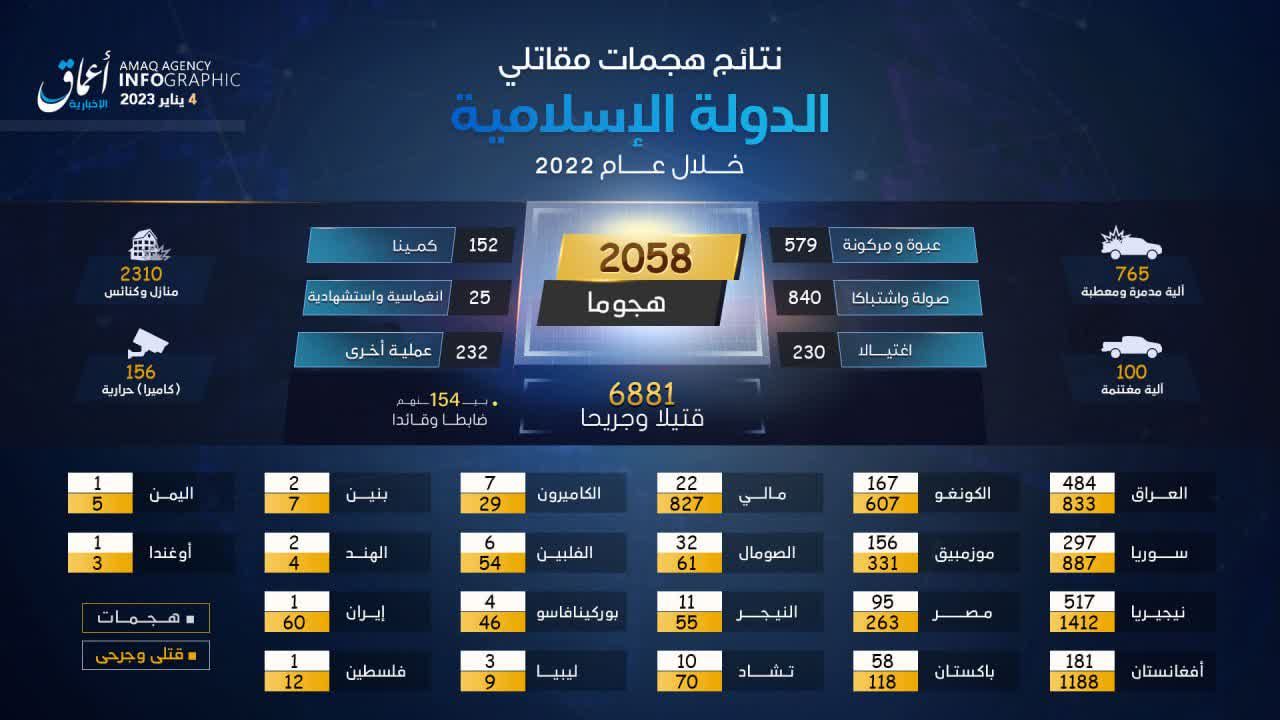
At the end of each year, one of the media activities of extremist groups is to publish annual statistics in the form of infographics. ISIS, as the leader of these groups, annually publishes a detailed infographic of its operations and their results, which can provide good information compared to previous years’ statistics. Accordingly, at the beginning of 2023, Amaq news agency (affiliated to ISIS) has published a detailed infographic of its operations during the past year (from 2022 to 2023).
According to the statistics, this terrorist group has carried out 2,058 terrorist operations in different regions of the world in 2022. These operations have killed and injured 6,881 people, including 154 officers and field commanders. The statistics included in this infographic are:
According to their types, ISIS operations include 579 bombing and roadside bombs, 840 attacks and armed conflicts, 230 assassinations, 152 ambushes, 25 inghimasi and suicide operations and 232 other types. Other results of these operations include the destruction and disabling of 765 vehicles, looting of 100 vehicles, the destruction of 2,310 houses and churches, and the destruction of 156 night vision cameras.
Most operations have been carried out in Nigeria, Iraq and Afghanistan. Its details by region are as follows: Nigeria: 517 operations, 1412 killed and wounded Iraq: 484 operations, 833 killed and wounded Afghanistan: 181 operations, 1188 killed and wounded Syria: 297 operations, 887 killed and wounded Congo: 167 operations, 607 killed and wounded Mozambique: 156 operations, 331 killed and wounded Egypt: 95 operations, 263 killed and wounded Pakistan: 58 operations, 118 killed and wounded Mali: 22 operations, 827 killed and wounded Somalia: 32 operations, 61 killed and wounded Niger: 11 operations, 55 killed and wounded Chad: 10 operations, 70 killed and wounded Cameroon: 7 operations, 29 killed and wounded Philippines: 6 operations, 54 killed and wounded Burkina Faso: 4 operations, 46 killed and wounded Libya: 3 operations, 9 killed and wounded Benin: 2 operations, 7 killed and wounded India: 2 operations, 4 killed and wounded Iran: 1 operation, 60 killed and wounded Palestine: 1 operation, 12 killed and wounded Yemen: 1 operation, 5 killed and wounded Uganda: 1 operation, 3 killed and wounded
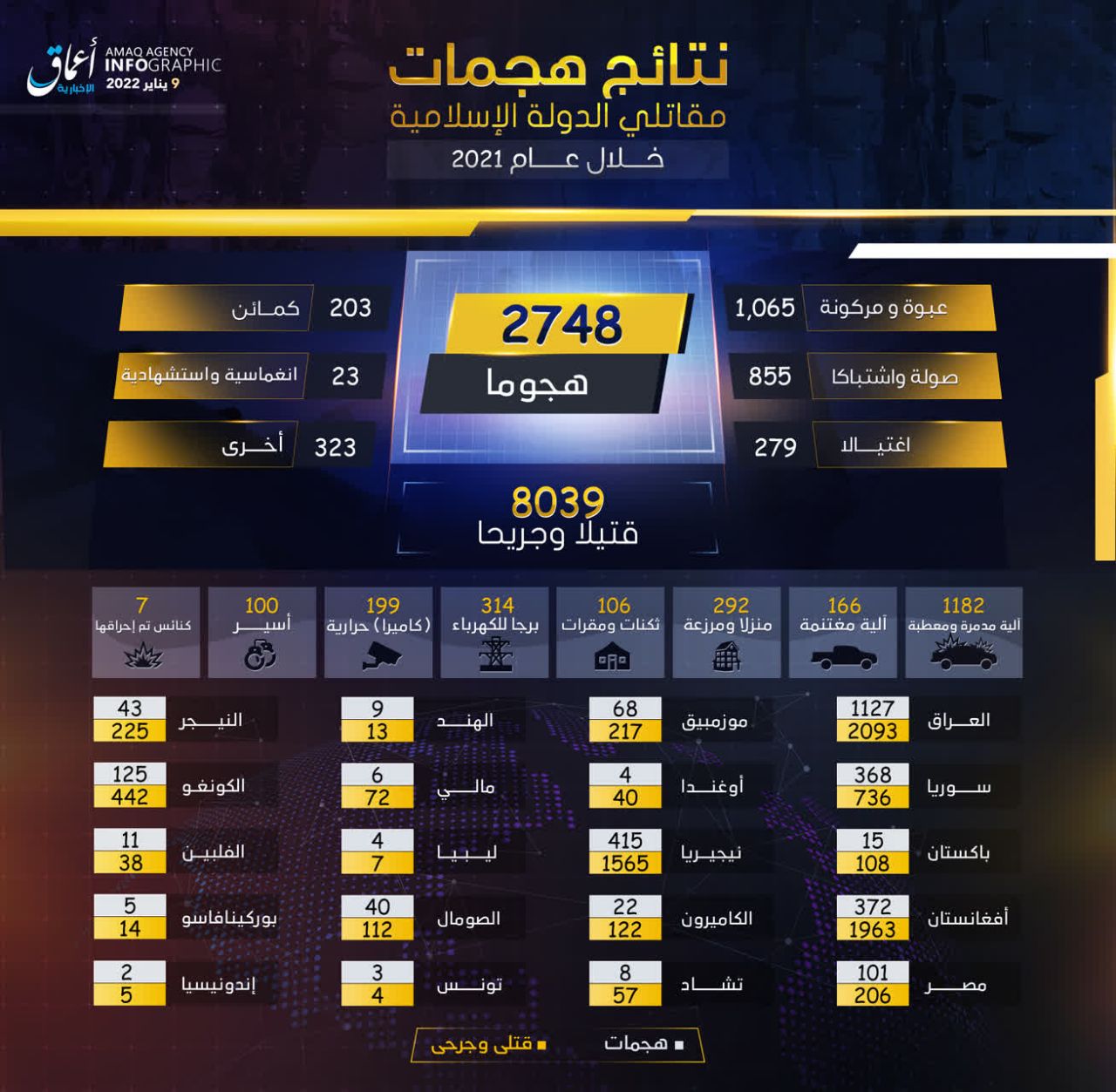
At the first look at the statistics of 2021 and 2022, we notice that the number of ISIS operations in 2022 is 690 less than in 2021, and this is a sign of the weakening of ISIS in 2022. Also, the number of ISIS victims in 2022 is 1,158 less than in 2021. This decrease also shows that not only the quantity but also the quality of ISIS operations has declined compared to last year.
ISIS statistics from 2021 and 2022
In the section of types of operations, we can see that ISIS had a better situation in various types of operations in 2021; The only thing in 2022 that is more than 2021 is the suicide and inghimasi operations, which are only two more. The most important difference in this section is the use of bombs and roadside bombs between 2021 and 2022. In 2022, ISIS used bomb and roadside bombs 486 times less than in 2021. This issue is worthy of consideration considering the significant reduction of ISIS operations in Iraq, because ISIS mostly uses roadside bombs in Iraq.
With the decrease of using roadside bombs by ISIS, it is natural that the number of vehicles destroyed by ISIS in 2022 will be much less than in 2021, a fact that is clearly visible when comparing the statistics of 2022 and 2021.
In the meantime, what attracts more attention, is the statistics of destroyed houses and churches in 2022. This increase is due to the targeting of Christians in Mozambique, Congo and Nigeria.
Another important aspects of the statistics about the regions is the significant reduction of ISIS operations in Iraq. Although ISIS operations in Iraq have increased in recent days, we can see that these operations have decreased in a long-term process. During 2022, ISIS has conducted 643 operations in Iraq less than in 2021. The number of ISIS victims in Iraq this year was 1,260 less than the previous year. This statistic clearly shows that the ISIS strength has decreased in Iraq.
It is noteworthy, although ISIS operations in Afghanistan, Syria and some other areas have decreased, but this trend has been insignificant. Therefore, the number of “operations” in Nigeria, and the number of “operations and victims” in Chad, Mozambique, Mali, Congo and Pakistan, and the number of “victims” in Syria, Egypt, the Philippines, Burkina Faso, and Libya have increased in 2022.
In the end, it should be said that despite the reduction of ISIS “operations” in Syria, the number of “victims” in Syria has increased, undoubtedly, this increase is due to ISIS operation on Ghuwairan prison in Hasakah and other ISIS operations against the Syrian Democratic Forces (SDF). The high number of victims in Mali and Burkina Faso is also due to the confrontation of ISIS with Jama’at Nasr al-Islam wal Muslimin and the overall increase of operations and victims in Mozambique, Congo, and Nigeria is also due to the new approach of ISIS to Sub-Saharan Africa, meanwhile, the increase of victims in Egypt and the increase of operations and victims in Pakistan is also interesting.
Molavi Mohammad Asif Zakir, the commander of the 2nd Brigade (Border Brigade) of the 203rd Mansouri Division, on January 12, announced in a letter to the intelligence department and other departments of this division that the ISIS terrorist group is planning to send 7,000 new troops to the Afghanistan’s northern provinces. These militants had trained in Pakistan’s Khyber Pakhtunkhwa province and will be transferred to Afghanistan individually and in groups.
The 203rd Mansouri Division of Taliban also announced that ISIS terrorists, led by a Pakistani named “Muslim Kut Wal” in the training centers built in the mountainous areas of Tira Rishgol, Koko Khel, Abijer and Gondeh Ghari located in the Khyber Pakhtunkhwa province, completed ideological-jihadi training courses. These militants are supposed to enter Afghanistan through Azra district in Logar province, Jaji district in Paktia province, Alishang district in Laghman province and Nangarhar province and then go to the northern provinces of Afghanistan to fight with the Taliban.
Following this report, the Taliban has ordered all the military personnel of the 2nd Brigade of the 203rd Mansouri Division to carefully check all people entering Afghanistan at the borders of Nangarhar, Logar, Paktia and Laghman provinces and not to allow ISIS members to enter Afghanistan.
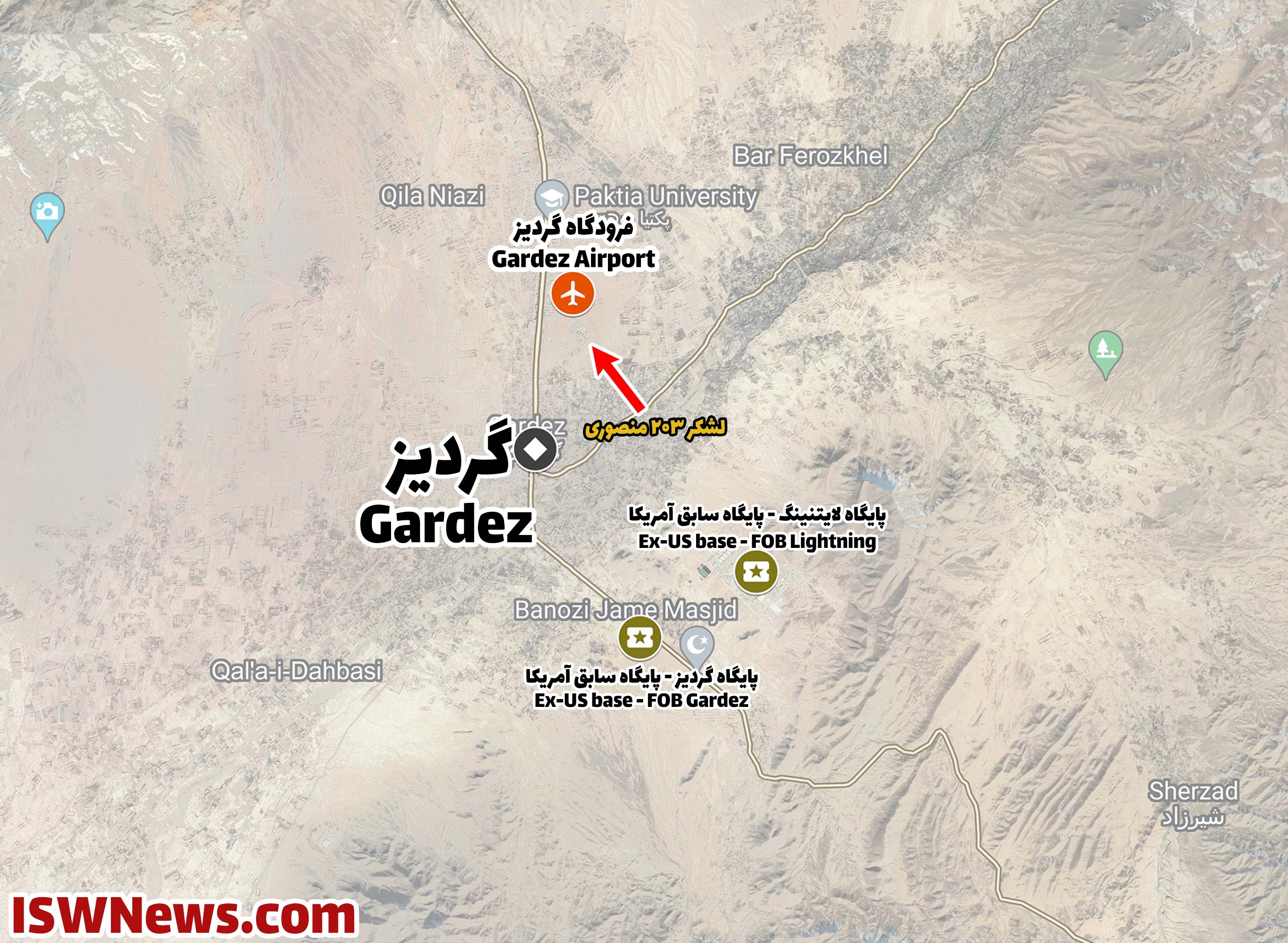
It should be noted that the main base of the 203rd Mansouri Division is located in the outskirts of Gardez Airport, the capital of Paktia province. This division is responsible for providing security in the southeastern regions of Afghanistan, and its second brigade is responsible for protecting the Durand border line (Afghanistan-Pakistan border). This base was attacked by unknown drones (probably American) on September 8, 2022.
The network comprised of three elements, who could not join the ISIS terrorists in the Sahel region; so, they focused their propaganda campaign on Morocco and Spain.
The Moroccan ministry announced that one of the elements was arrested in Chtouka Aït Baha province in central Morocco, and that the two others were nabbed in Almería city in Spain.
It is worth mentioning that Morocco publishes reports of dismantling terrorist networks in different occasions, declaring that the African country has identified and annihilated 200 terrorist networks in line with its strategy to fight terrorism as of 2003.
Moreover, the ISIS-affiliated networks have carried out different covert activities, including media and propaganda campaigns, in Spain over the last years.
The pro-ISIS group Muntasir Media translated the ISIS media products into Spanish and sometimes they published audio files in support for the ISIS. The media group also broadcast a wide footage of their militants’ trainings in Spain’s forests.
The SDF and the US coalition kicked off the Al-Jazeera Thunderbolt Operation in some villages and towns of the Syrian governorate under the pretext of fighting ISIS terrorists. More than 55 residents of these areas were detained in the operation.
A few days after the conclusion of the military operation, the SDF released only 20 of the inmates.
The Kurdish militias published some video footages and pictures of the arrest of civilians via their media outlets in order to frighten people. They also claimed that the operation has been conducted in a bid to fight ISIS terrorists.
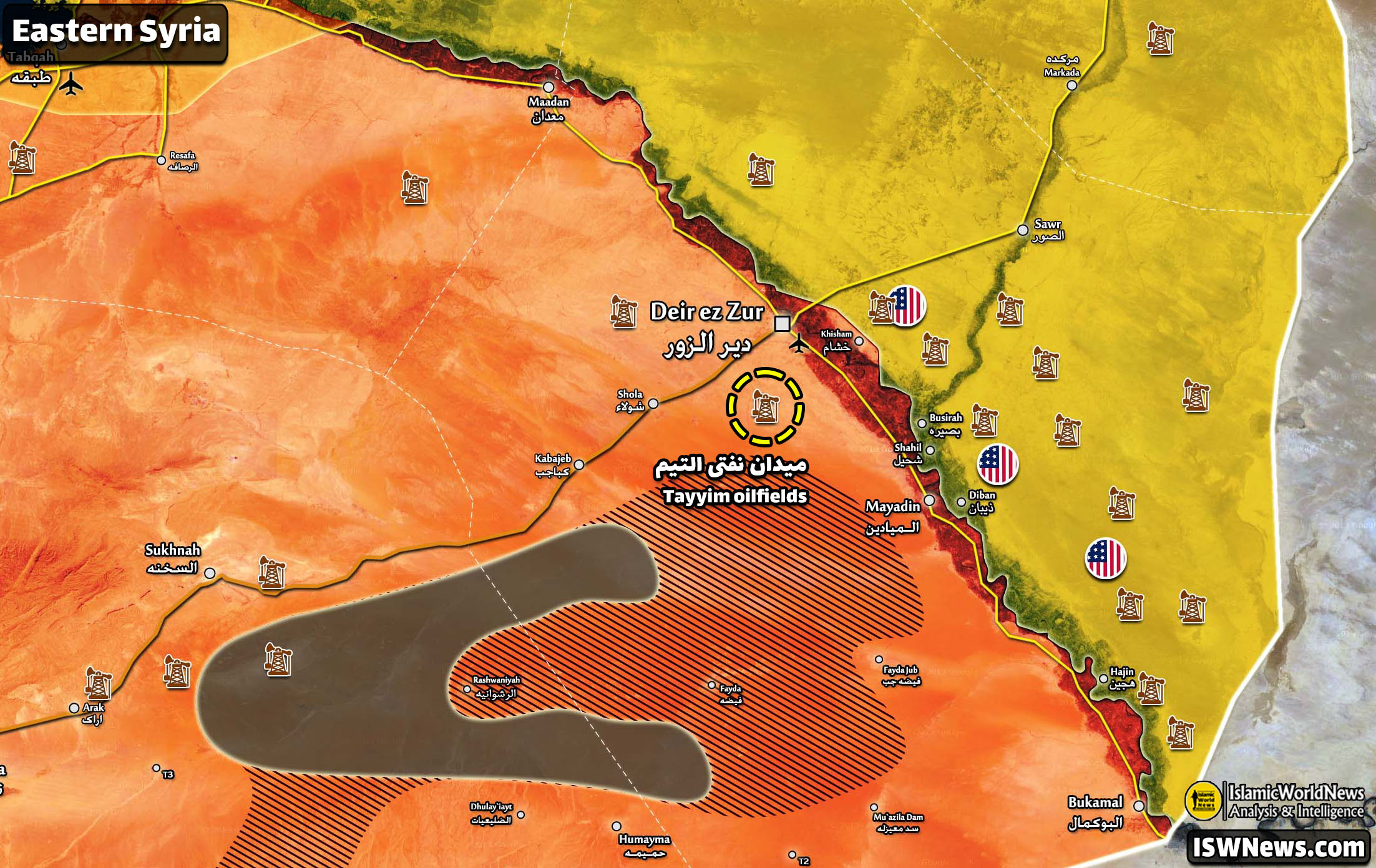
On December 30, at around 8:30 Friday local time, ISIS terrorists using the foggy weather of the region, carried out an attack against three buses carrying employees of Al-Tayyim oil field in south of Deir Ezzor city, and this terrorist operation led to the death of at least 10 oil workers.
According to the announcement by the Ministry of Oil of Syria, Nizal Nawiji, Hamad Al-Eisa, engineer Omar Farooq, Mohammad Al-Hamadi, Amer Al-Obeid, Hossein Hanan, Mohammad Hamadeh, Ammar Amin, Hisham Hossein were martyred, and Hamidi Al-Juma, Nizal Al-Jasim were also injured. Also, Hamidi al-Juma and Nizal al-Jasim are still missing.
Until now, the ISIS terrorist group has not issued a statement regarding this terrorist attack. This is the first ISIS attack using anti-armor guided missiles in the last two years in this region. Considering the recent activities of ISIS in Syria, it seems that the operations of this terrorist group have entered a new phase.
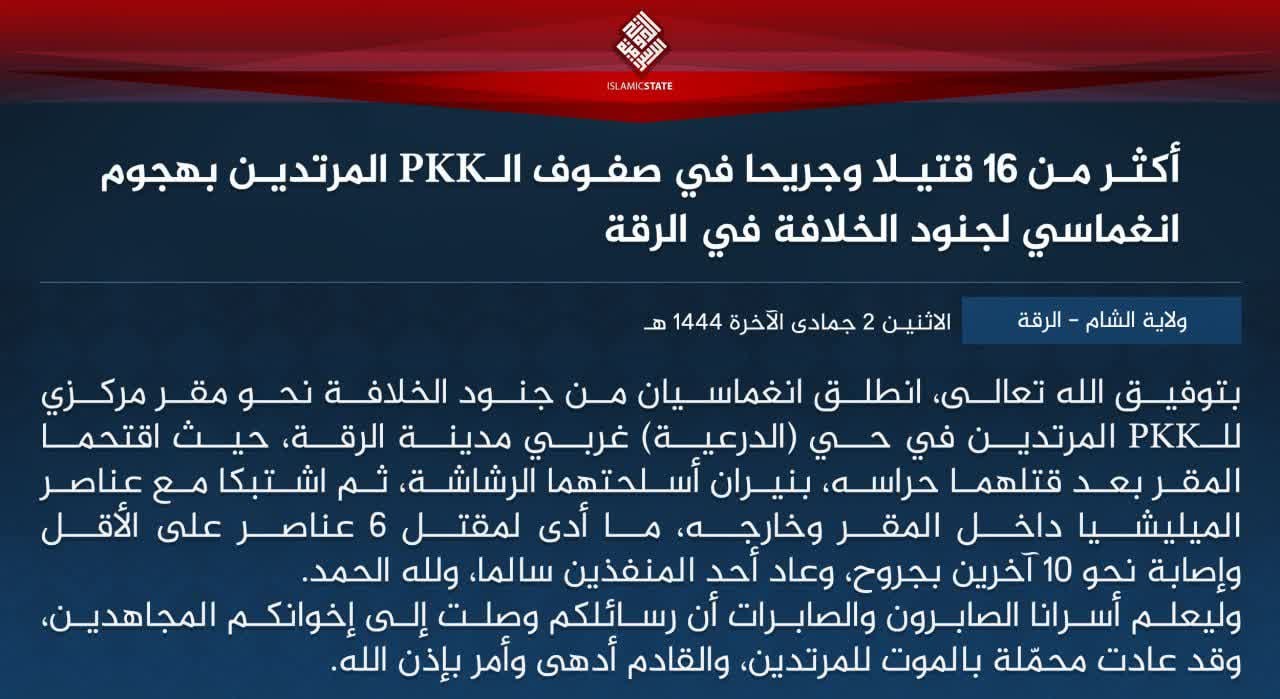
Mazloum Abdi, the Syrian Democratic Forces said in a statement that an IS cell had targeted military buildings in Raqqa city, killing six members of SDF and wounding an unspecified number of others.
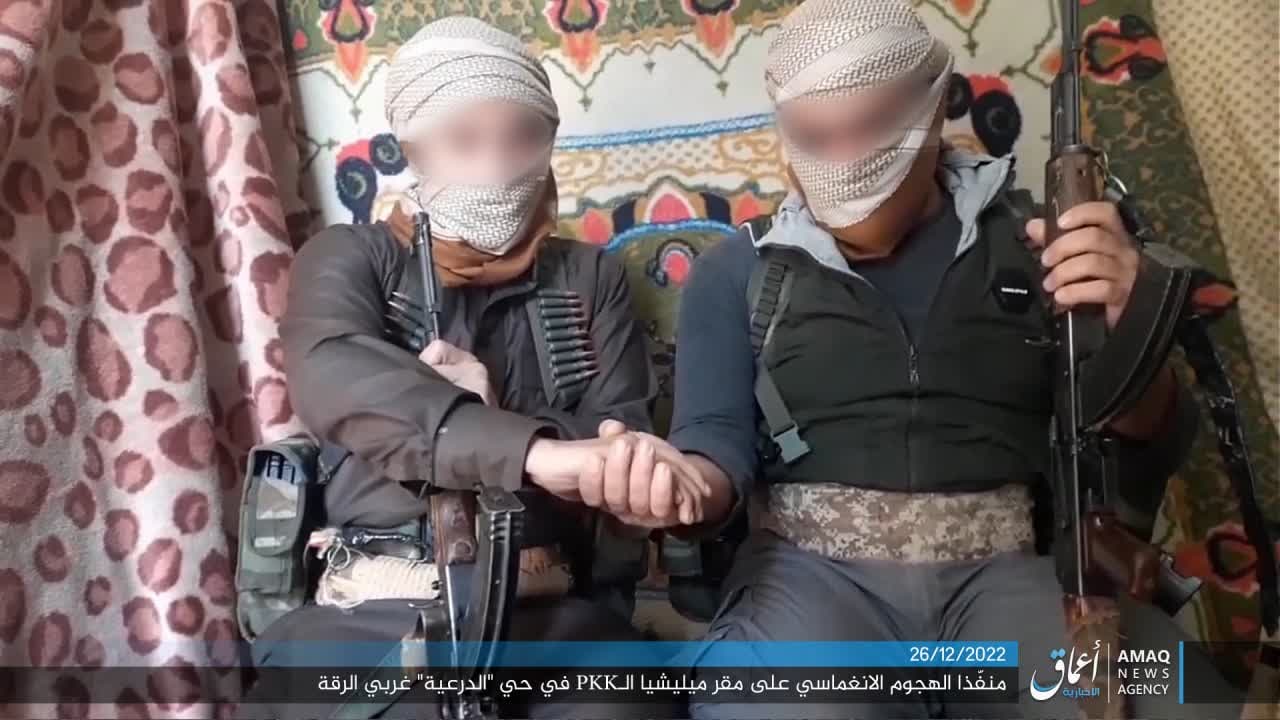
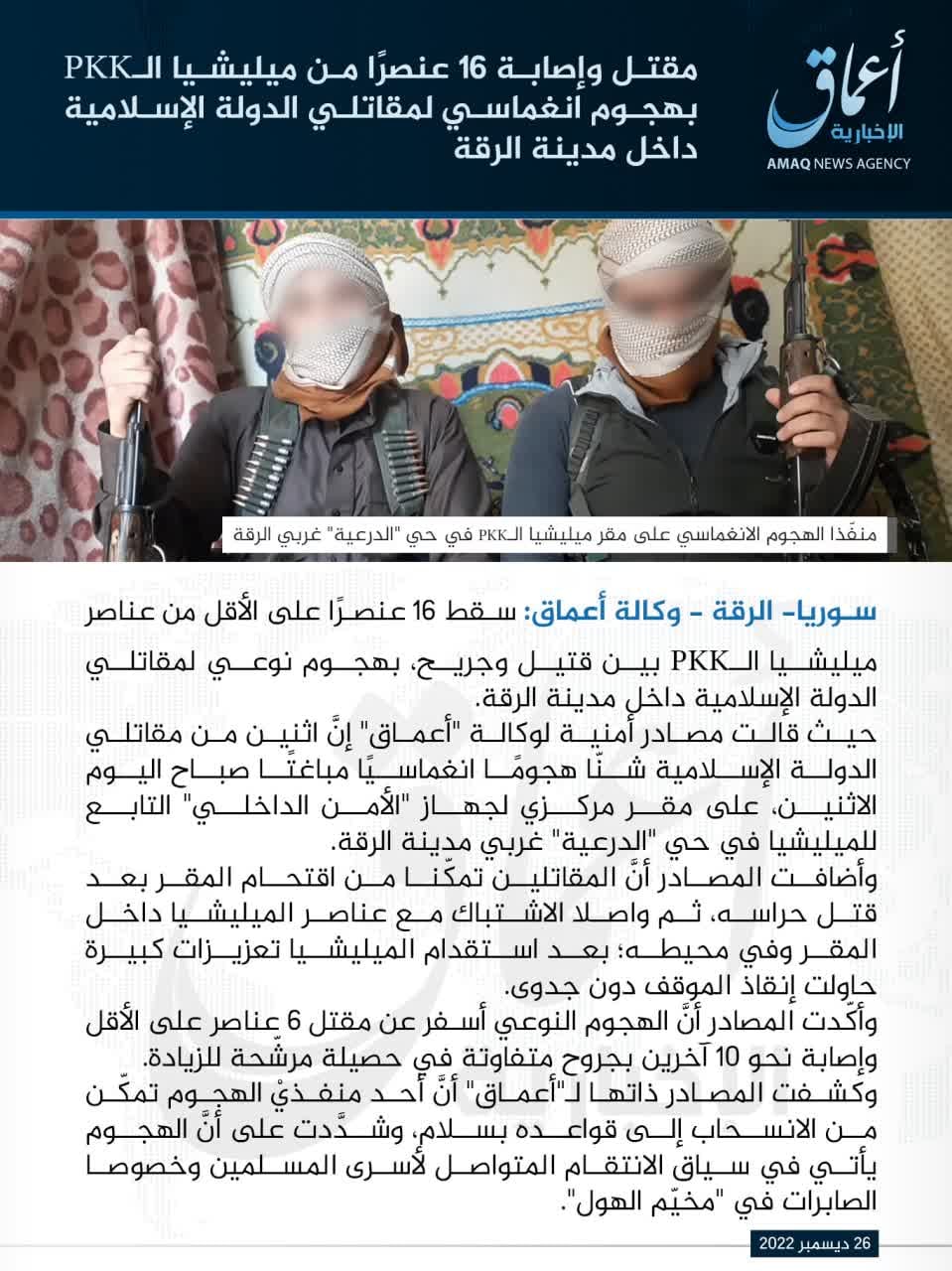
This attack took place on December 26, on SDF headquarters in al-Dari’yah neighborhood located in the west of Raqqa city, and during this conflict, 6 members of the Syrian Democratic Forces were killed. It is said that one of the elements of ISIS was killed during this conflict and the other person was arrested while wearing an explosive vest.
A few hours later, ISIS terrorist group took responsibility for this operation by publishing pictures of the perpetrator and claimed that 6 SDF servicemen were killed and 10 others were injured during this attack.
It should be mentioned that the Syrian Democratic Forces (SDF) started a security operation to identify and arrest other ISIS elements and possible support teams of these two ISIS members in the city of Raqqa, which is still ongoing.
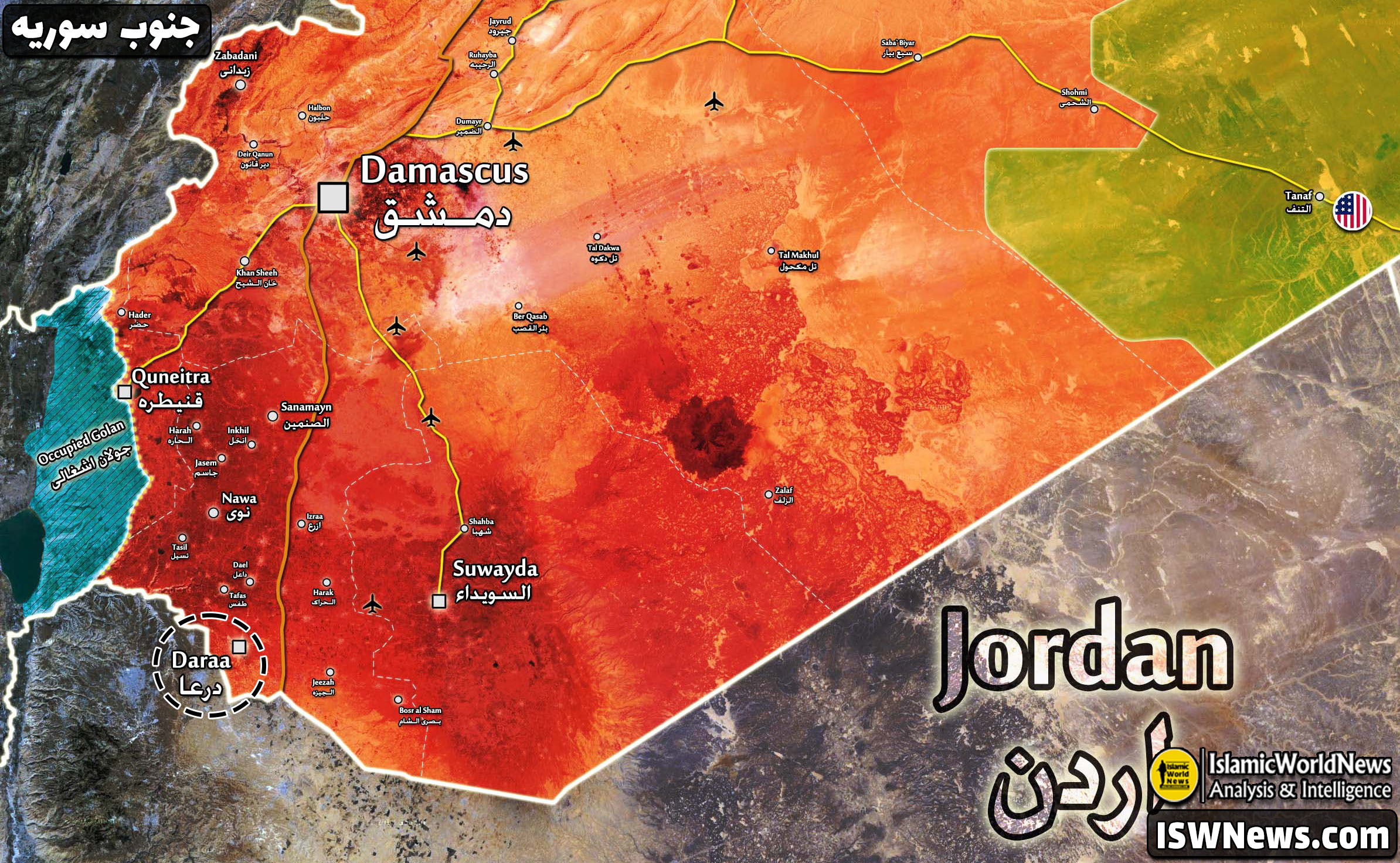
The audio message did not make it clear who killed the group commander or where, but according to a Syrian military source, Abul Hasan al-Hashemi who goes by the aliases “Abdul Rahman al-Iraqi” and “Sif Baghdad” was killed in the north of Jassim, located in Daraa province after the conflict with the Syrian security forces and local armed groups.
It is said that Abul Hasan al-Hashemi blew himself up with a suicide belt after the Syrian security forces encircled him.
After the release of the audio message, CENTCOM spokesman Colonel Joe Buccino announced in a statement that the leader of ISIS was killed in an operation conducted by The Free Syrian Army in Daraa province located in southern Syria. No further details have been mentioned in this statement.
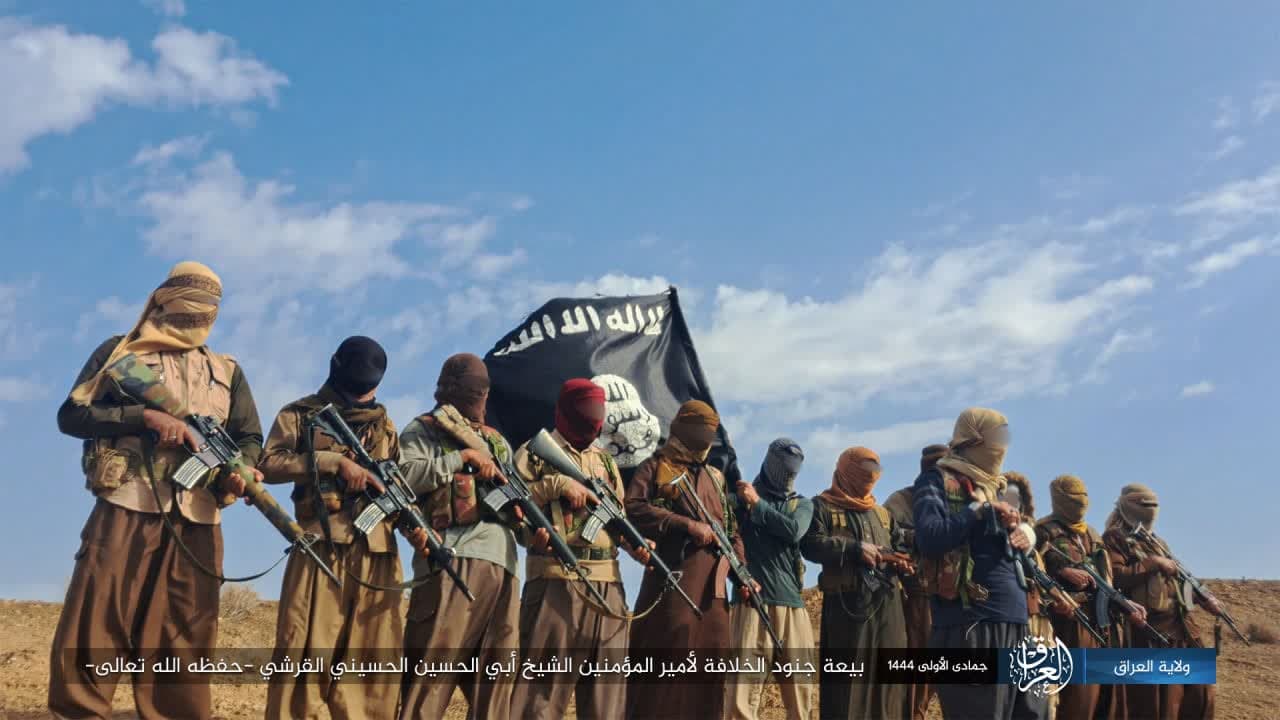
It is worth mentioning that considering the previous measures of ISIS and operations such as “Al-Tha’ar al-Sheikheen” which was carried out in revenge for the killing of its former leaders (Abu Bakr al-Baghdadi and Abu Hamza Al-Qurashi), it is likely that this terrorist group will take a series of retaliatory measures in the areas under its control, especially in Syria and Iraq.
A video that is said to be related to the clashes between the Syrian security forces and Abul Hasan al-Hashemi al-Qurashi, the former leader of ISIS, in the city of Jassim, located in Daraa province
After increasing the terrorist activities of the ISIS group in Daraa province, on October 31, the local gunmen bakced by Syrian army started a series of security operations against ISIS elements in “Al-Sadd” neighborhood of Daraa city.
During these operations, at least 30 ISIS field commanders were killed. On the other side, 8 members of the Syrian army and local gunmen, as well as two civilians were killed.
According to local sources, Al-Sadd neighborhood is now secured after the killing of ISIS elements and the escape of two of the field commanders of this terrorist group, named “Abrazham Moyed Harfoosh” nicknamed “Abu Tajah” and “Mohammed Masalamah” nicknamed “Hafu” from the city to al-Naimah town.
It is worth noting that the increase of the activities of ISIS elements in the city of Daraa in recent weeks caused the Syrian security forces to plan and implement an operation with the aim of arresting the elements of this terrorist group and cleaning the areas of the city of Daraa. Considering the insecurity situation and the spread of terrorist elements in Daraa province, it is likely that after the end of operations in Daraa city, the Syrian military will go to other cities of this province such as “Jasem” and “Al-Musayrafa” and will start a series of security operations aiming to confront illegal armed groups and terrorist elements.
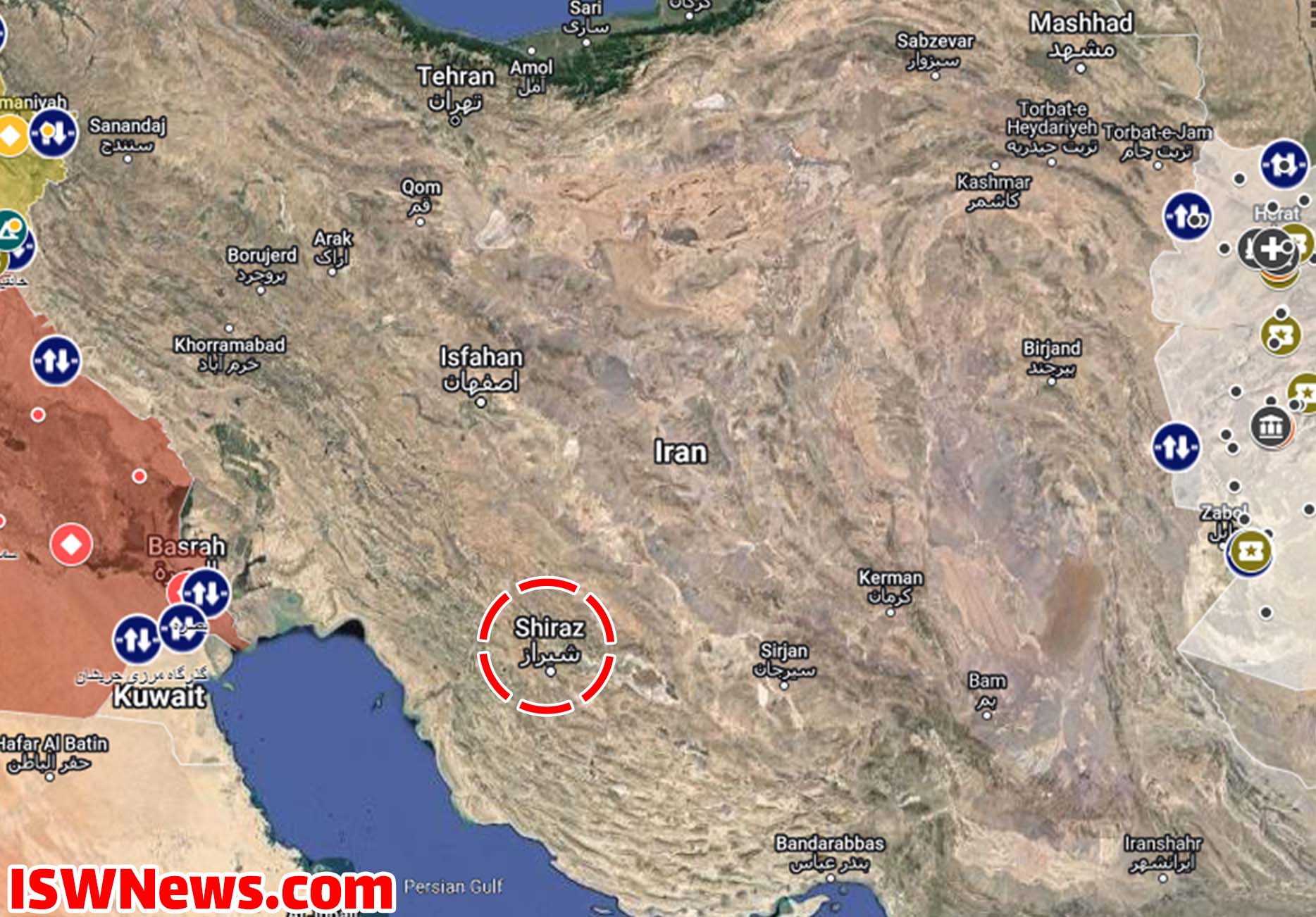
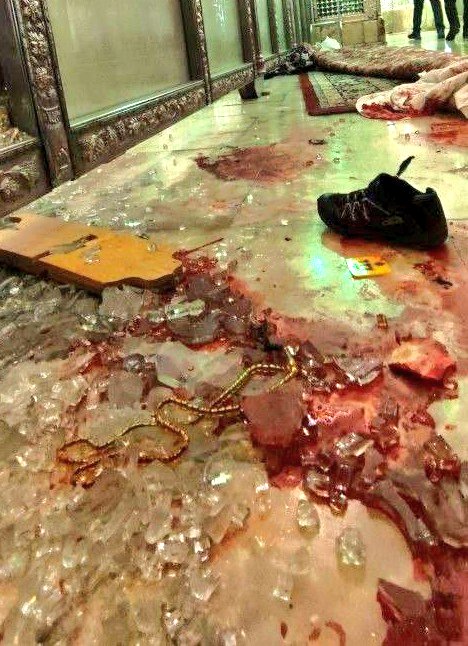
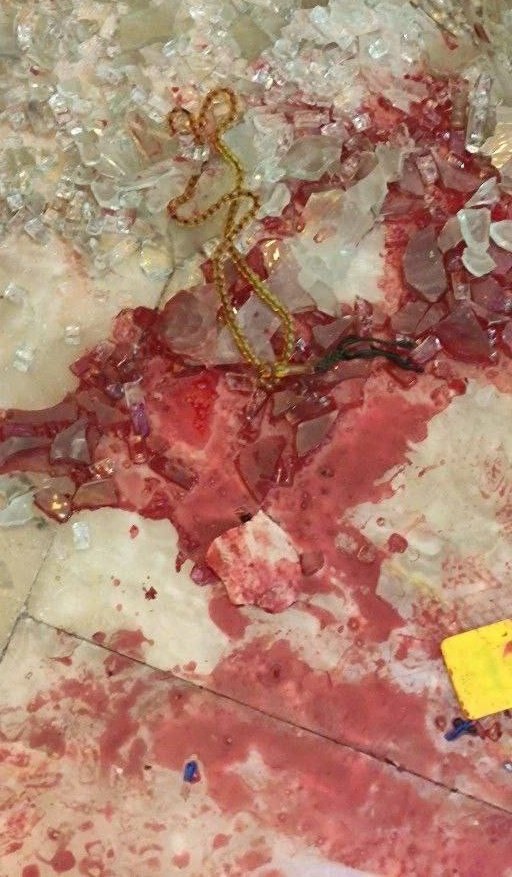
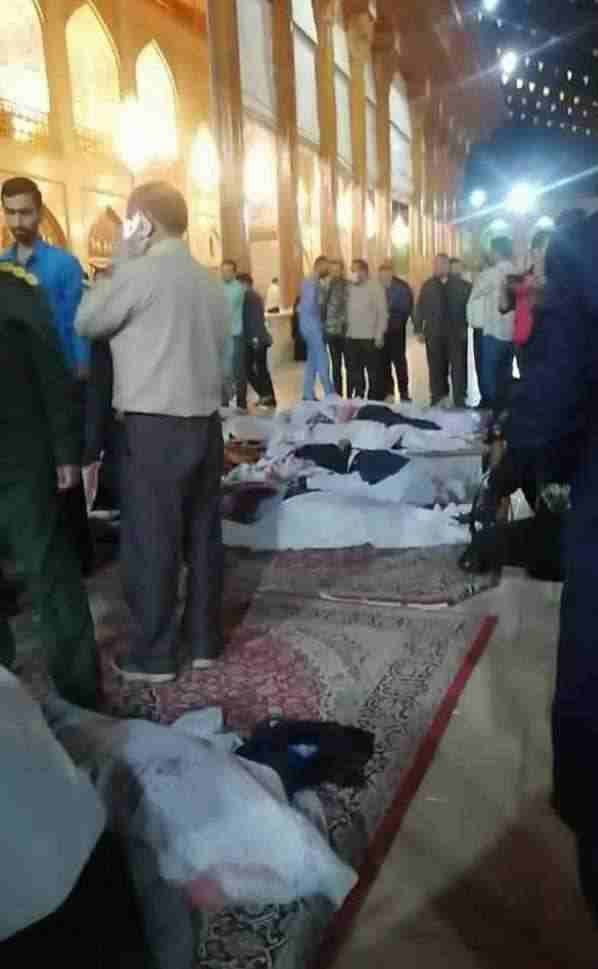
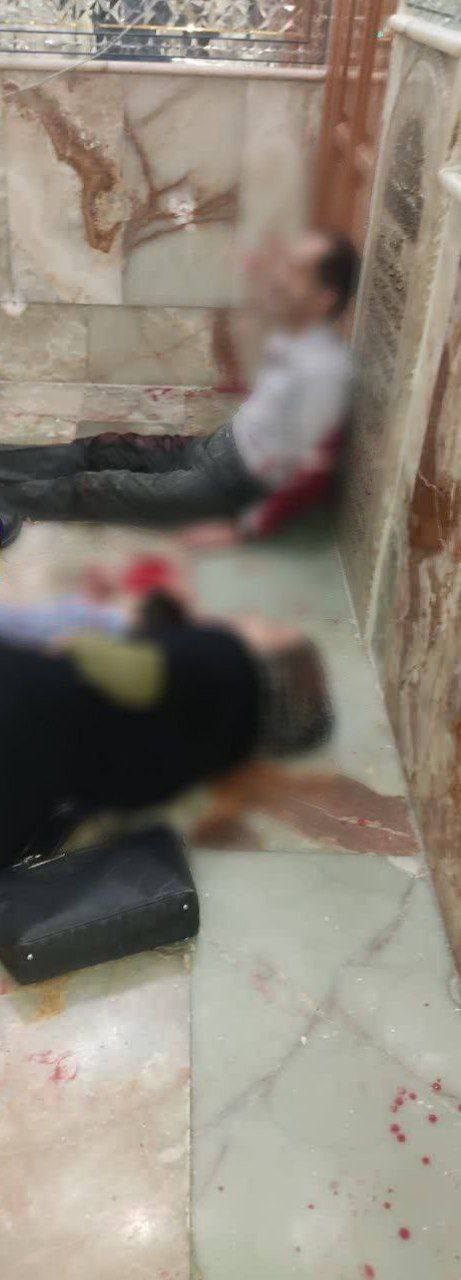
According to the initial statements of the authorities of Fars province, three gunmen entered the shrine area at 17:42 on Wednesday and shot at the shrine attendants and pilgrims.
A few hours later, the ISIS terrorist group released a statement and contrary to the statements of the authorities of Fars province, announced that this attack was carried out by an armed person who had a history of participating in the terrorist attack on the parade of the Iranian armed forces on September 22, 2018 in Ahvaz.
According to the available information, the perpetrator of this attack was a foreign national residing in Iran and after being arrested by the security forces, he was taken to a hospital in Shiraz for treatment. But despite the efforts of the medical team to keep him alive, he died due to the severity of his injuries.
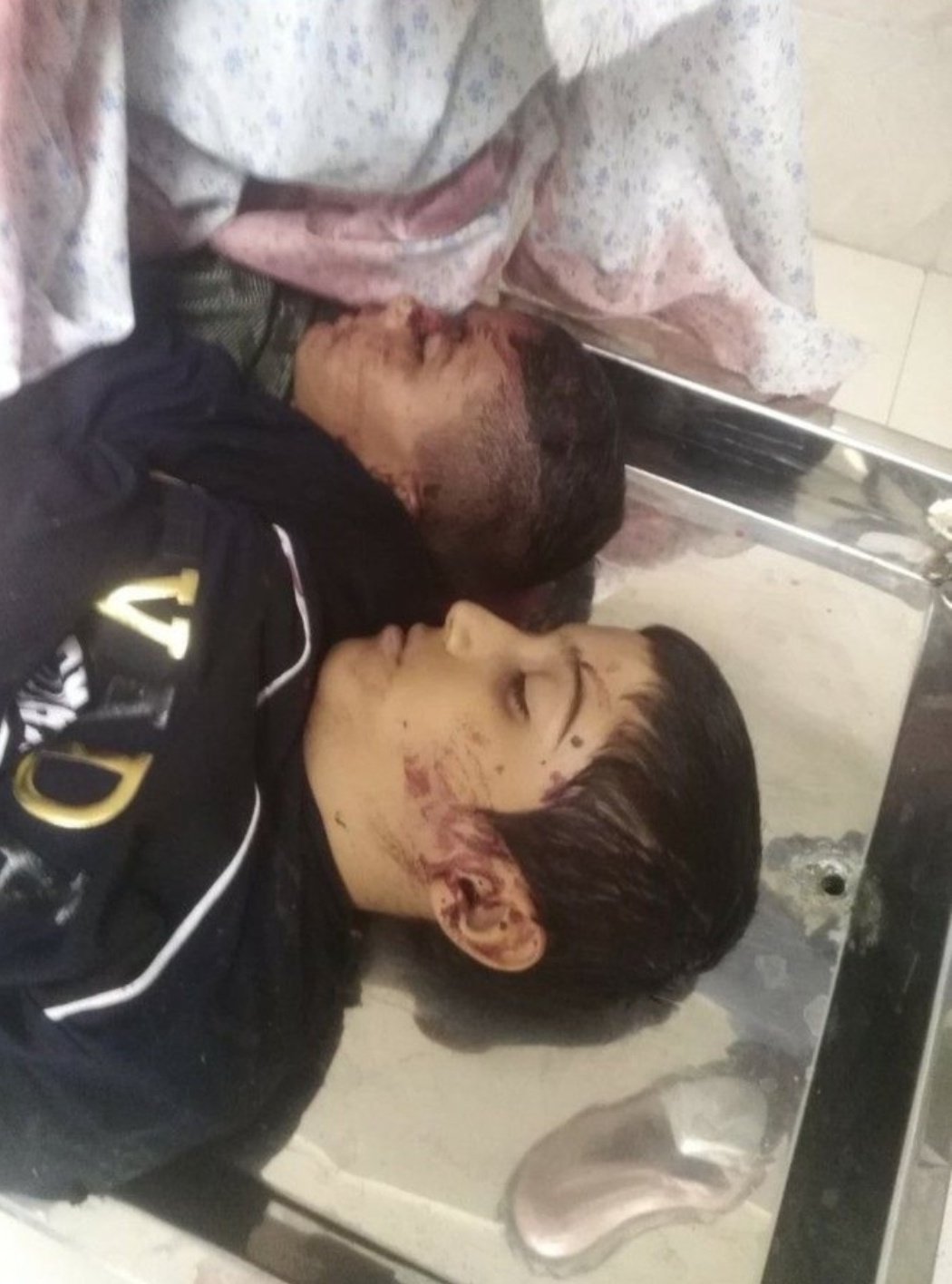
The spokesperson of Iran’s emergency department stated that 13 people have been martyred in this terrorist attack. It was also reported that the condition of two of the wounded was critical, and with the martyrdom of these two people on the morning of October 27, the number of martyrs increased to 15.
Following the terrorist attack, the presidents and officials of different countries, including “Vladimir Putin” the President of Russia, “Antonio Guterres” the Secretary General of the United Nations, Sultan “Haitham bin Tariq Al Said” the King of Oman, “Raja Pervaiz Ashraf” The Speaker of the National Assembly of Pakistan, Muhammad Ali Al-Houthi, the Chairman of the Yemeni Revolutionary Committee, Qais Khazali and Ammar Hakim, leaders of the Iraqi groups and the Foreign Ministry of Syria, Armenia and the Republic of Azerbaijan issued a statement and sent a message of condolence, condemning this terrorist act and expressed their sympathy with the people of Iran.
Shah-e-Cheragh (the shrine of the Lord of Light) is a funerary monument and mosque located in the city of Shiraz, where lies the tomb of Sayyed Mir Ahmad and his brother, Sayyed Mir Mohammad, the sons of the seventh Imam and brothers of the eighth Shiite imam, Imam Reza (AS).
CCTV footage of ISIS terrorist attack on Shah-e-Cheragh Shrine in ShirazImages of the terrorist attack on the sacred shrine of Hazrat Shahcheragh (AS) in Shiraz
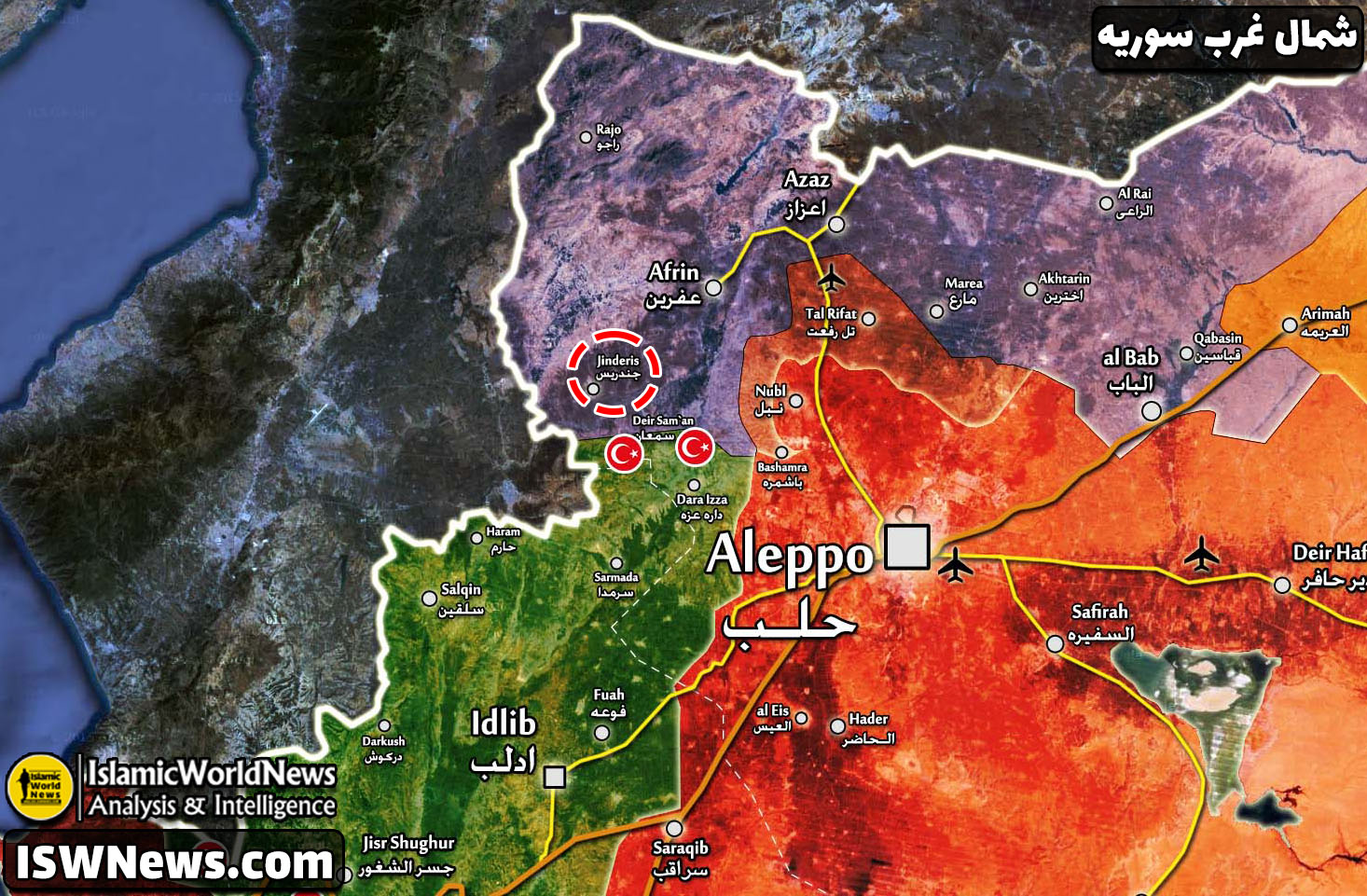
On July 22, the US drones targeted a motorcycle in the village of Khalitan in the outskirts of Jindires town, during which one person was killed.
Confirming this news, the US CENTCOM announced the killing of a person named “Maher al-Aqal”, one of the five main leaders of ISIS. Also, during this attack, one of the people close to Maher al-Aqal was also seriously injured. No information has been released about the identity of the injured person.
It is said that Maher al-Aqal nicknamed “Abu Al-Bara al-Shamali” has been active as the governor of the Levant and responsible for the coordination and development of ISIS terrorist cells outside of Syria and Iraq.
It is worth mentioning that since September of last year, the US coalition has carried out at least five drone attacks against the field commanders of the militants and ISIS, as a result of which five alleged Al-Qaeda commanders and one ISIS commander were killed.
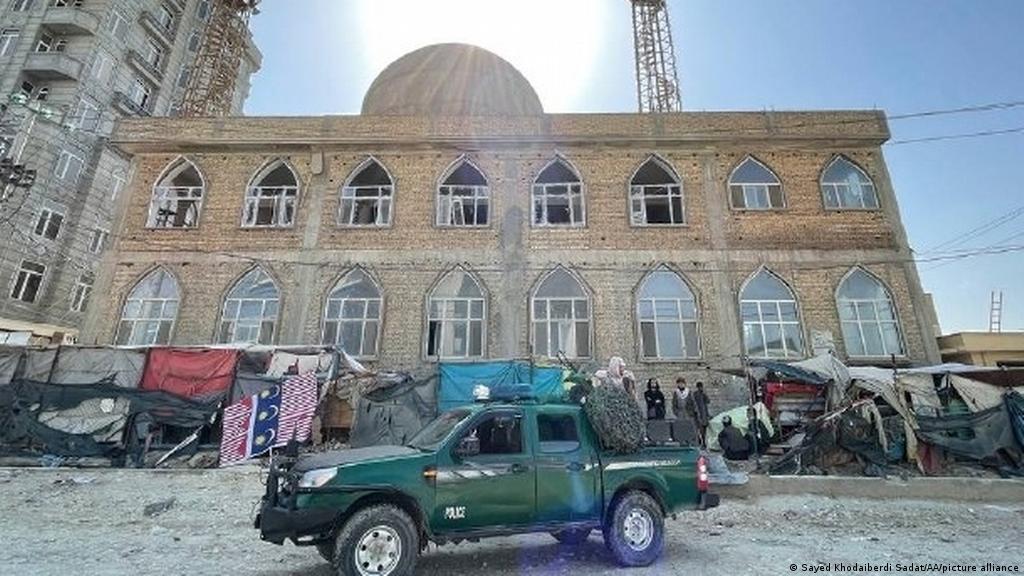
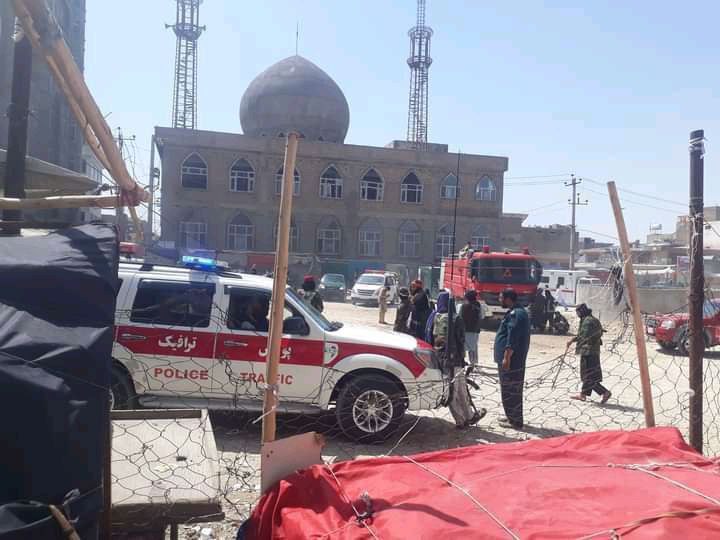
According to ISWNEWS sources in Mazar-e-Sharif, four minutes after the noon call to prayer, four explosions took place inside the Seh Kokan mosque belonging to the Shiites in Mazar-e-Sharif city. The number of martyrs and wounded is more than 40. Some local sources also put the death toll at 22 and more than 32 injured.
As usual, Taliban militants blocked reporters from covering the blasts, and details of the blasts are unclear.
Simultaneously with the explosion, two more explosions occurred on the route of a van on the outskirts of Kunduz city airport and a vehicle of Taliban militants in Khogyani district in Nangarhar province. As a result of the explosion in Kunduz, four civilians were killed and more than 18 were injured, and in the Khogyani explosion, four Taliban members were killed and another was wounded.
The ISIS terrorist group has claimed responsibility for the explosion in the Seh Dokan mosque of Mazar-e-Sharif city. With the start of a new round of terrorist attacks across Afghanistan, it is likely that recent attacks have also been carried out by ISIS terrorist group.