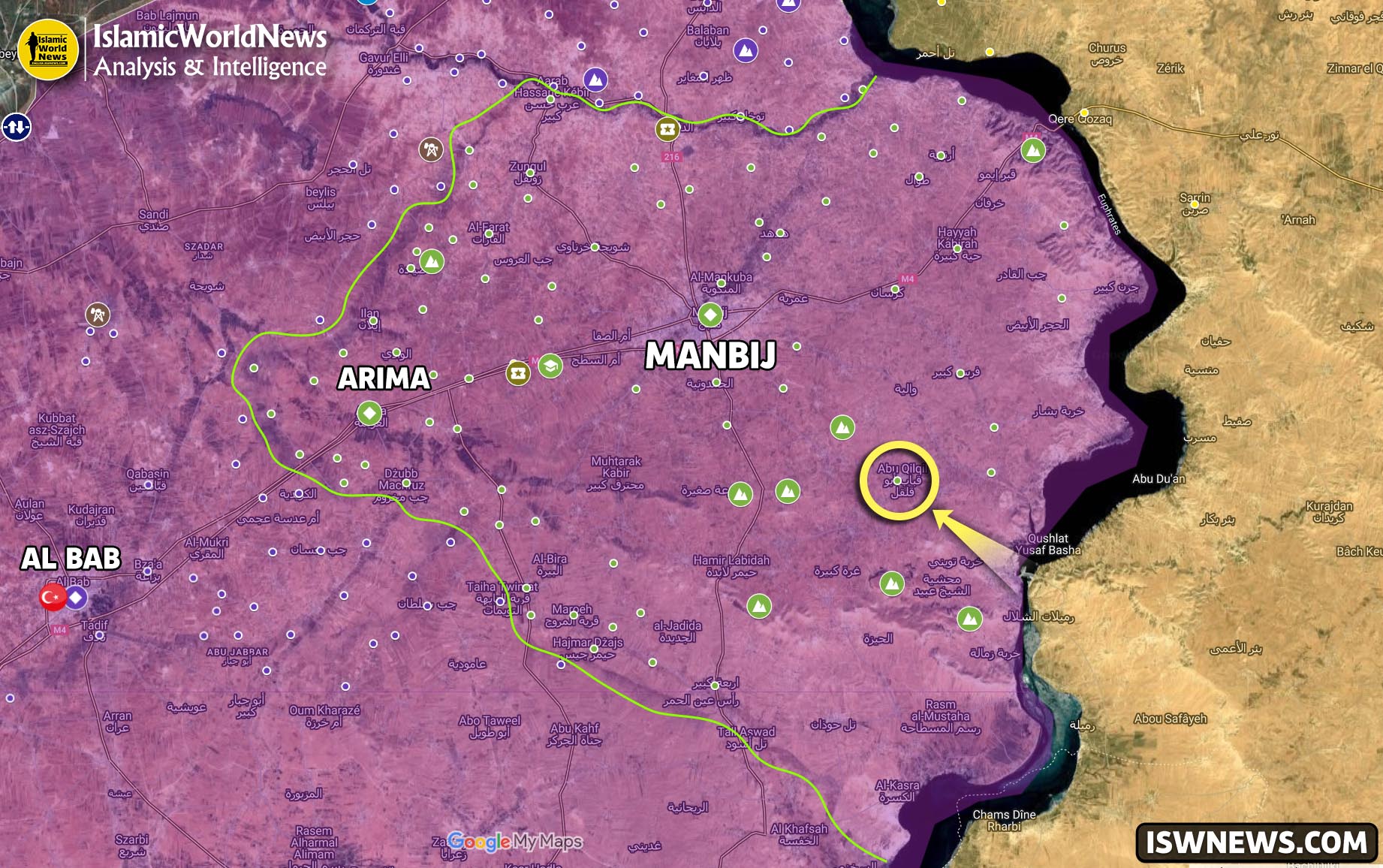
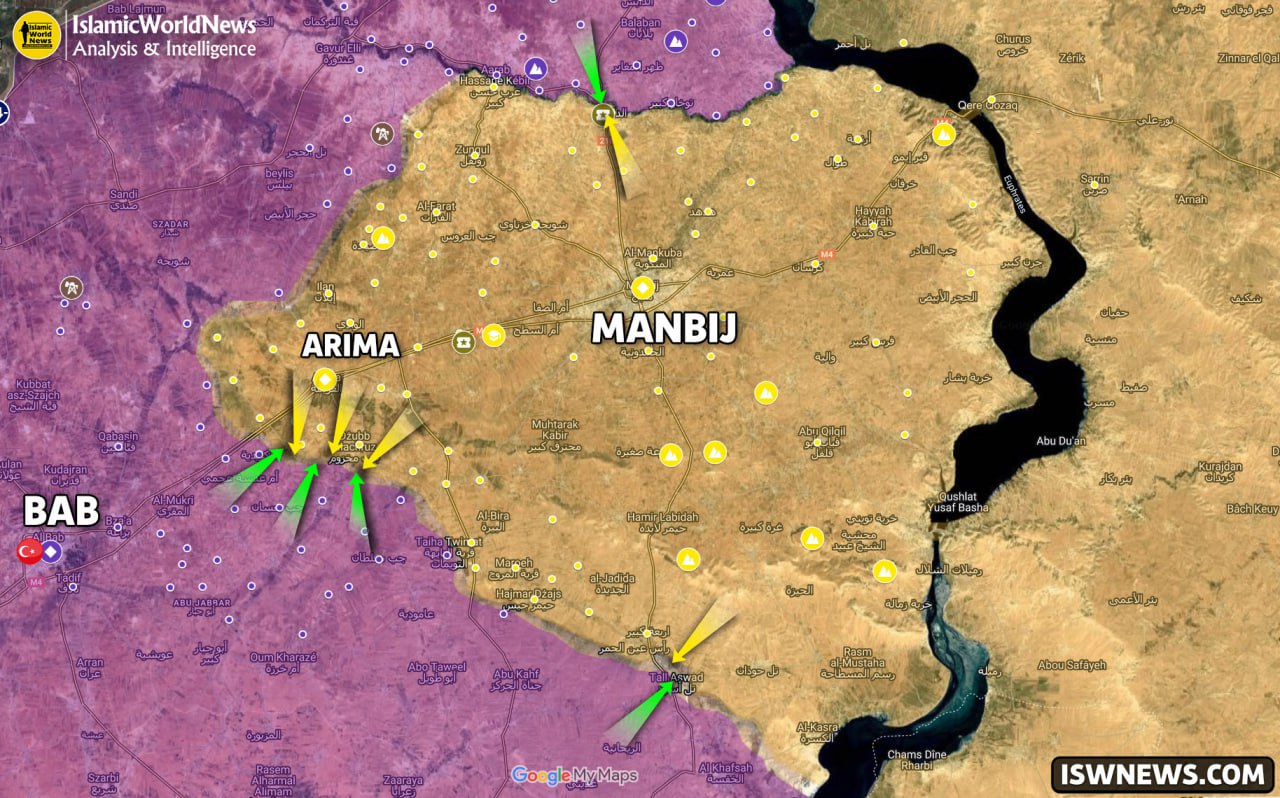
This progress comes after engaging in clashes with militants from the Jaysh al-Watani (Syrian National Army – SNA) and making advancements north of the Tishrin Dam.
Yesterday, artillery of Turkish-backed militants shelled areas around Abu Qalqal. This indicates that SDF forces remain in these areas and have not withdrawn behind the Tishrin Dam.
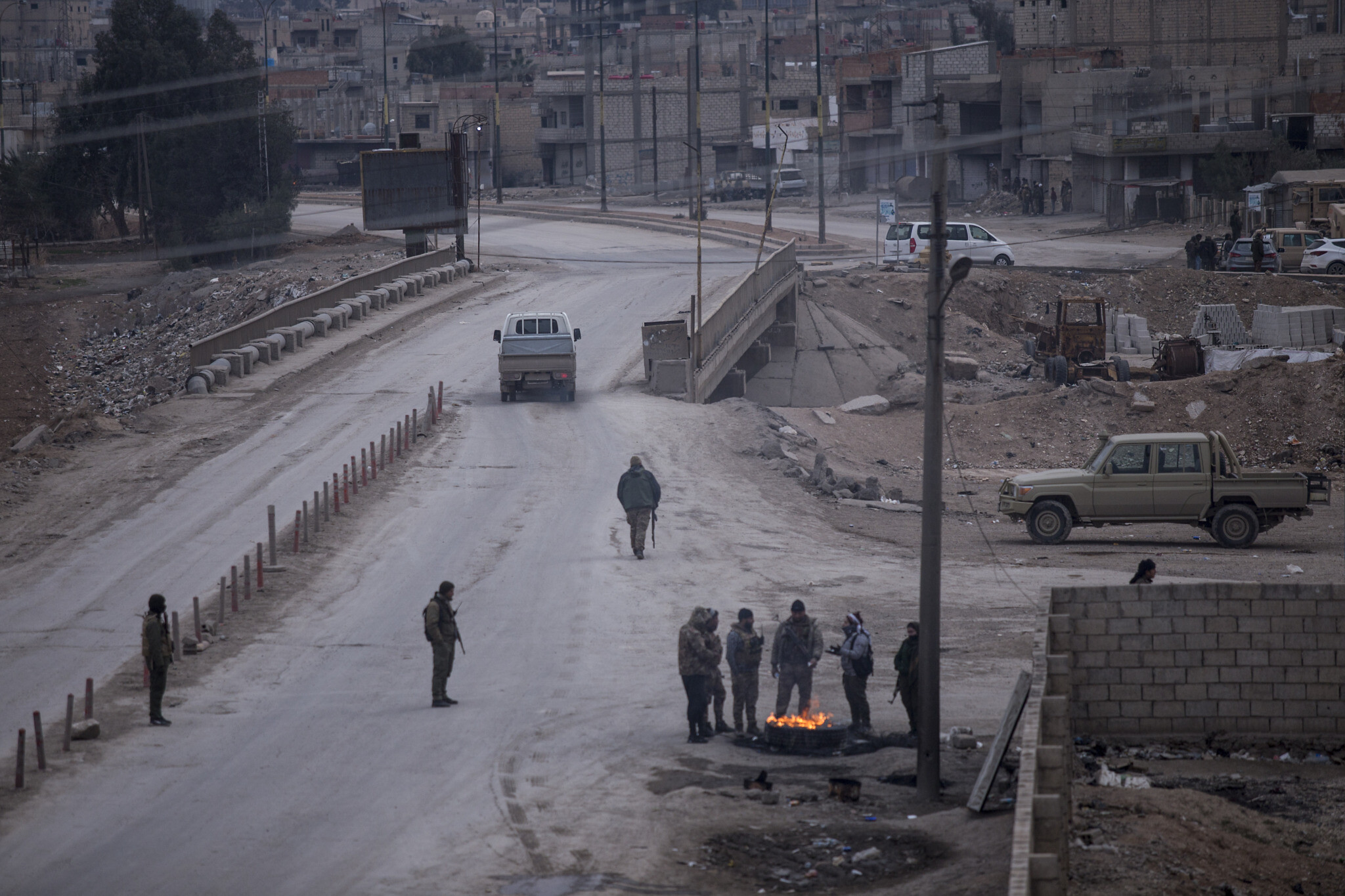
SDF forces near Abu Qilqil
Erdogan has vowed that Turkey will take decisive action to create a terror-free zone in northern Syria. By “terror-free zone”, he means northern Syria, without the presence of SDF and PKK. Turkish ground operations in northern Syria have not yet begun. Turkey seems to be waiting for the results of negotiations concerning the possible dissolution or integration of the SDF into a new Syrian army led by al-Julani. Additionally, Turkey is awaiting the outcomes of discussions between the central gov. & the SDF.
The ceasefire agreement in the Manbij region has been in effect since 5:00 PM on Thursday.
According to the terms of the ceasefire, remaining cells of the Syrian Democratic Forces will be allowed to withdraw from Manbij to the east of the Euphrates River along with their families.
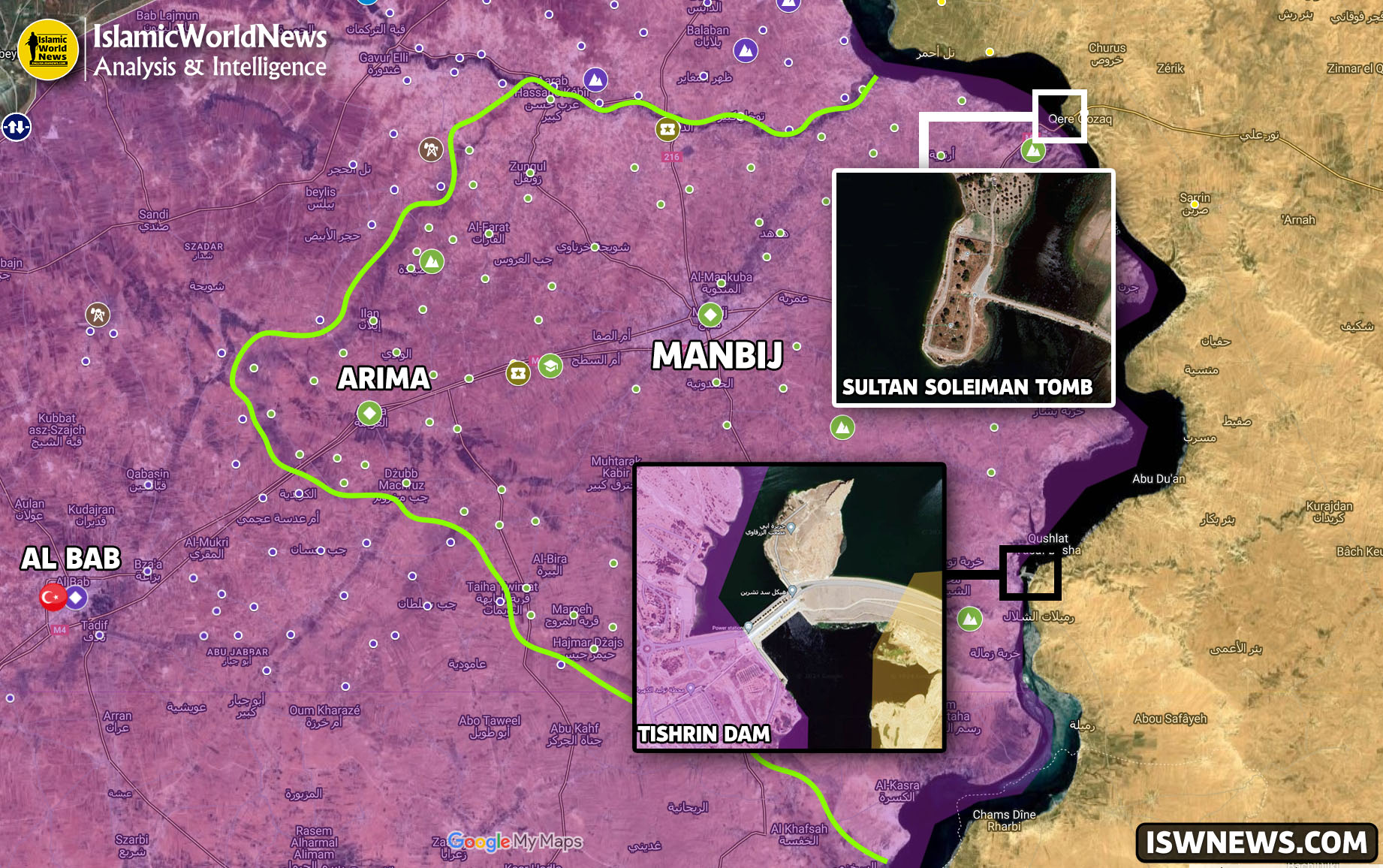
In return, the Syrian Democratic Forces will hand over control of the Tomb of Sultan Suleiman Shah and the surrounding areas to Jaysh al-Watani (SNA) militants. The Tomb of Sultan Suleiman Shah is located north of the Qara Qozagh Bridge, which connects the western and eastern regions of the Euphrates River and has witnessed intense fighting and exchanges of fire in recent days.
Both sides have agreed to withdraw their forces from the Tishrin Dam and its surrounding areas, restore electricity distribution and management services to their previous routine, and ensure that the people of the region can once again benefit from electricity services.
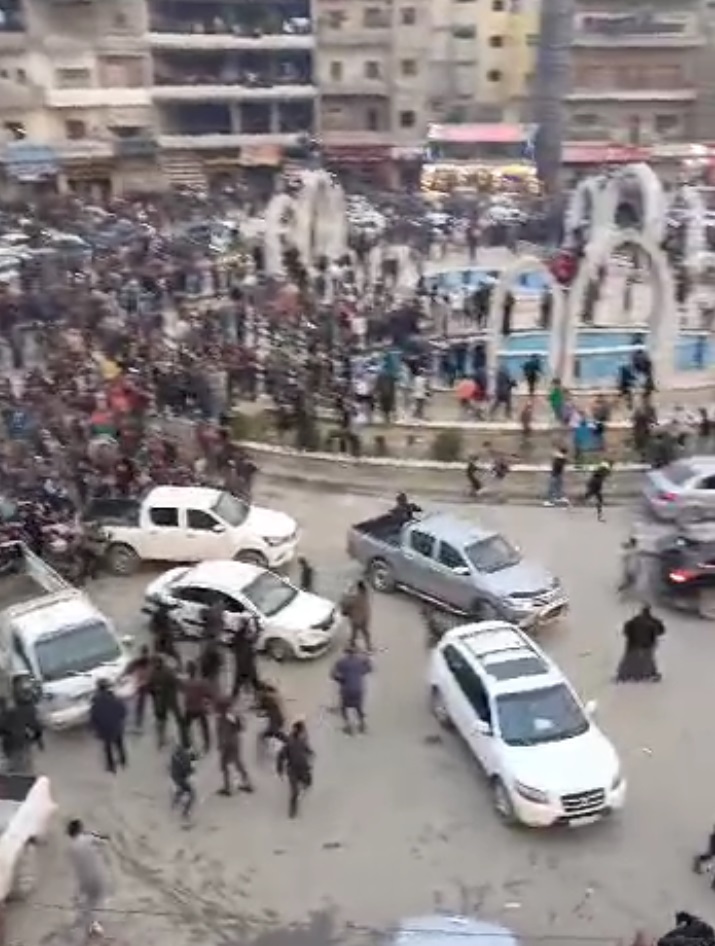
Reports indicate that at least two people were killed and 13 others injured during clashes between the pro-militants and the SDF. Sources close to the SDF claimed that today’s clashes began after unidentified gunmen opened fire on the SDF.
Demonstrations In Raqqa
The SDF media center condemned today’s unrest and called on Raqqa residents to avoid inciting armed conflict and clashes.
A similar demonstration took place in Hasakah against the SDF today, with militants’ supporters demanding the SDF’s withdrawal from the city. The demonstration in Hasakah also turned violent.
Following today’s events, the SDF declared a curfew in all SDF-controlled areas in the Jazira region until tomorrow morning.
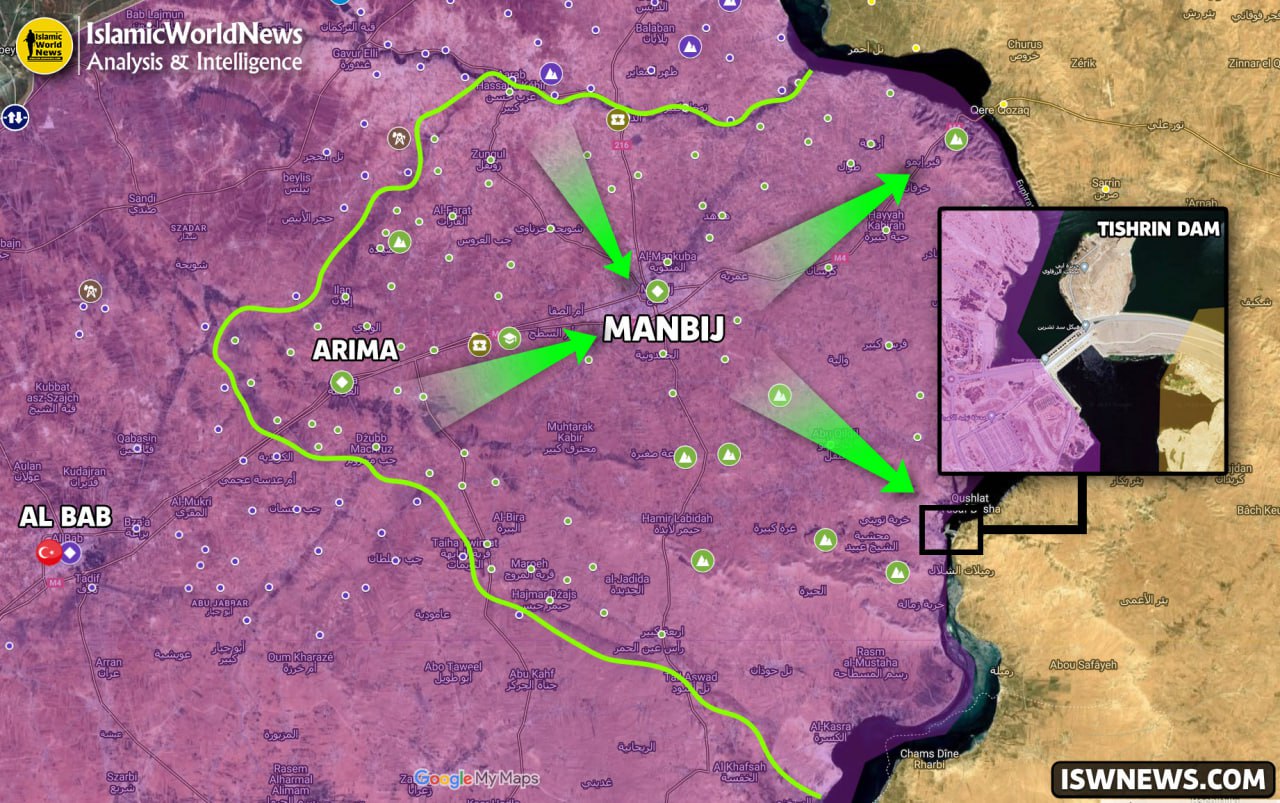
Turkish army drones played a crucial role in supporting the SNA militants, conducting numerous attacks on Manbij and its outskirts. Notably, the Qarah Qawzaq Bridge in eastern Manbij was targeted to prevent the Syrian Democratic Forces (SDF) from sending reinforcements to the city. These attacks effectively blocked the SDF’s supply route, leaving their forces in Manbij unable to sustain a long-term defense against the SNA.
Currently, sporadic clashes continue in some areas of Manbij between remaining SDF elements and SNA militants. However, the fate of Manbij has been sealed, as Kurdish media, citing Syrian Kurdistan authorities, have confirmed the defeat in Manbij.
Following their success in Manbij, SNA militants have shifted their focus to the eastern Euphrates region. They are attempting to capture the Tishrin Dam and advance through it into eastern areas of the Euphrates River. So far, SDF forces have repelled these attacks.
This morning, the SNA militants attacked the village of “Andabat” near the Al-Sajur crossing. After resistance from SDF forces, the SNA militants withdrew.
The Turkish army has conducted at least 20 drone strikes against SDF positions on the Deir Hafer axis and the Tabqa-Aleppo road.
The SNA militants attempted to infiltrate the villages of Jablat al-Hamra, Houta, Tal Turin, Jab Makhzoum west of Araima a few hours ago, but their attack was repelled by SDF resistance.
Turkish-backed militants also attacked the Tal Aswad area south of Manbij, attempting to advance on this axis.
According to the latest reports, there has been no significant change in the areas controlled by the parties, and clashes around Manbij continue.
The few remaining SDF forces in Aleppo are evacuating to SDF-controlled areas in Manbij and Raqqa. Some Kurdish residents of Sheikh Maqsoud have chosen to remain in Aleppo rather than leave their homes. Many other residents are in similar situations, preparing to live under the control of various armed groups and terrorists. It is not clear when Aleppo will be retaken…
The northern outskirts of Aleppo and the Shahba area have also been lost, and the militants are clearing these regions.
Al-Safira is under complete militant control and siege. About 3,000 displaced people from Nubl, Al-Zahra and Foa along with the city’s residents are in Al-Safira, awaiting a safe route for evacuation. The situation regarding water, food, and housing for the displaced is critical.
The Syrian defense factories in Safira likely evacuated completely, as the militants have not released videos of any spoils. It seems that evacuation plans were set during the first two days of the invasion.
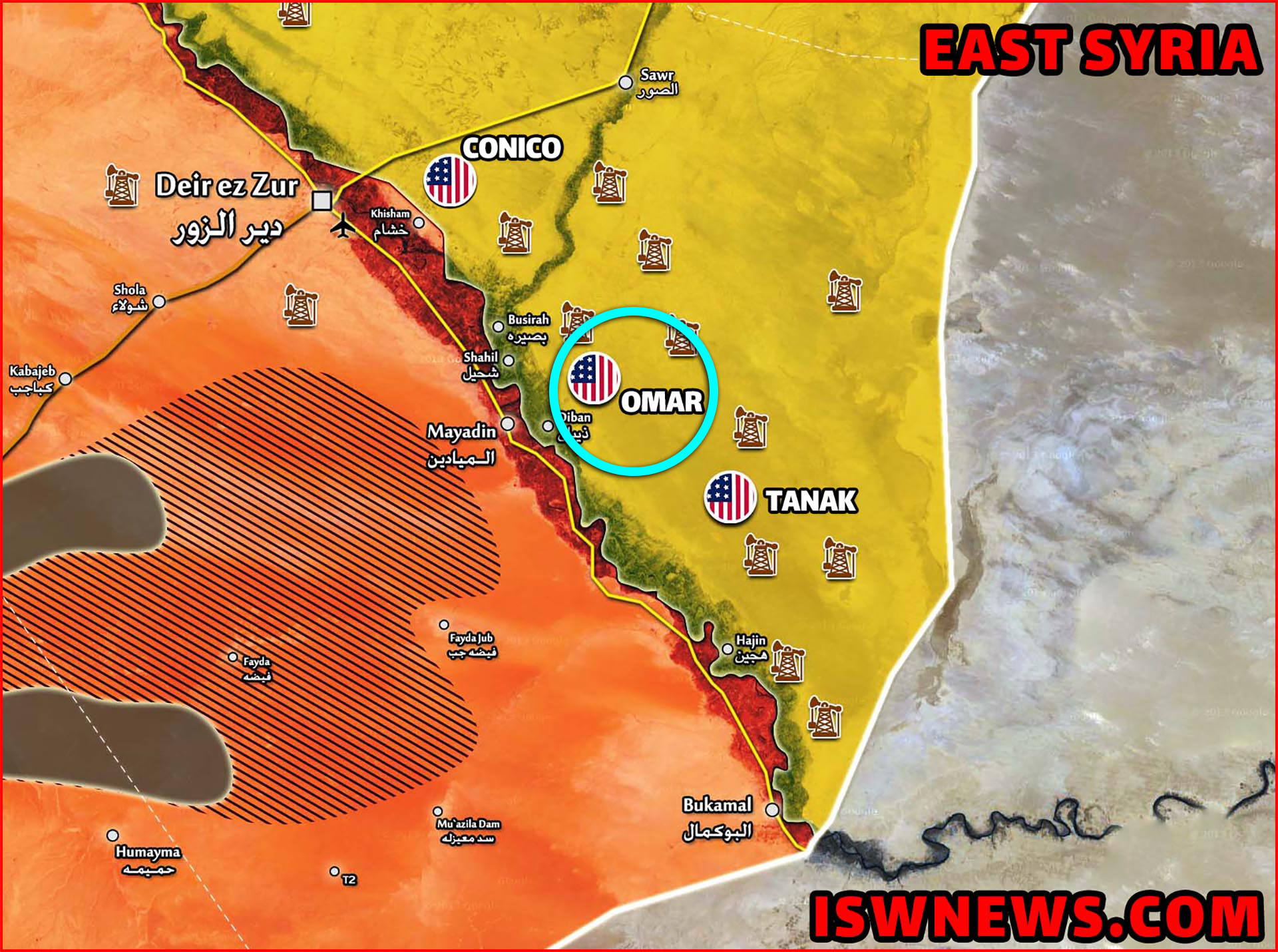
Posts were published on social media platforms last night about the intention of Syrian tribes to attack the positions of the Syrian Democratic Forces (SDF), which caused some residents of the areas of Jama, Dhiban and al-Hawaij to leave their homes.
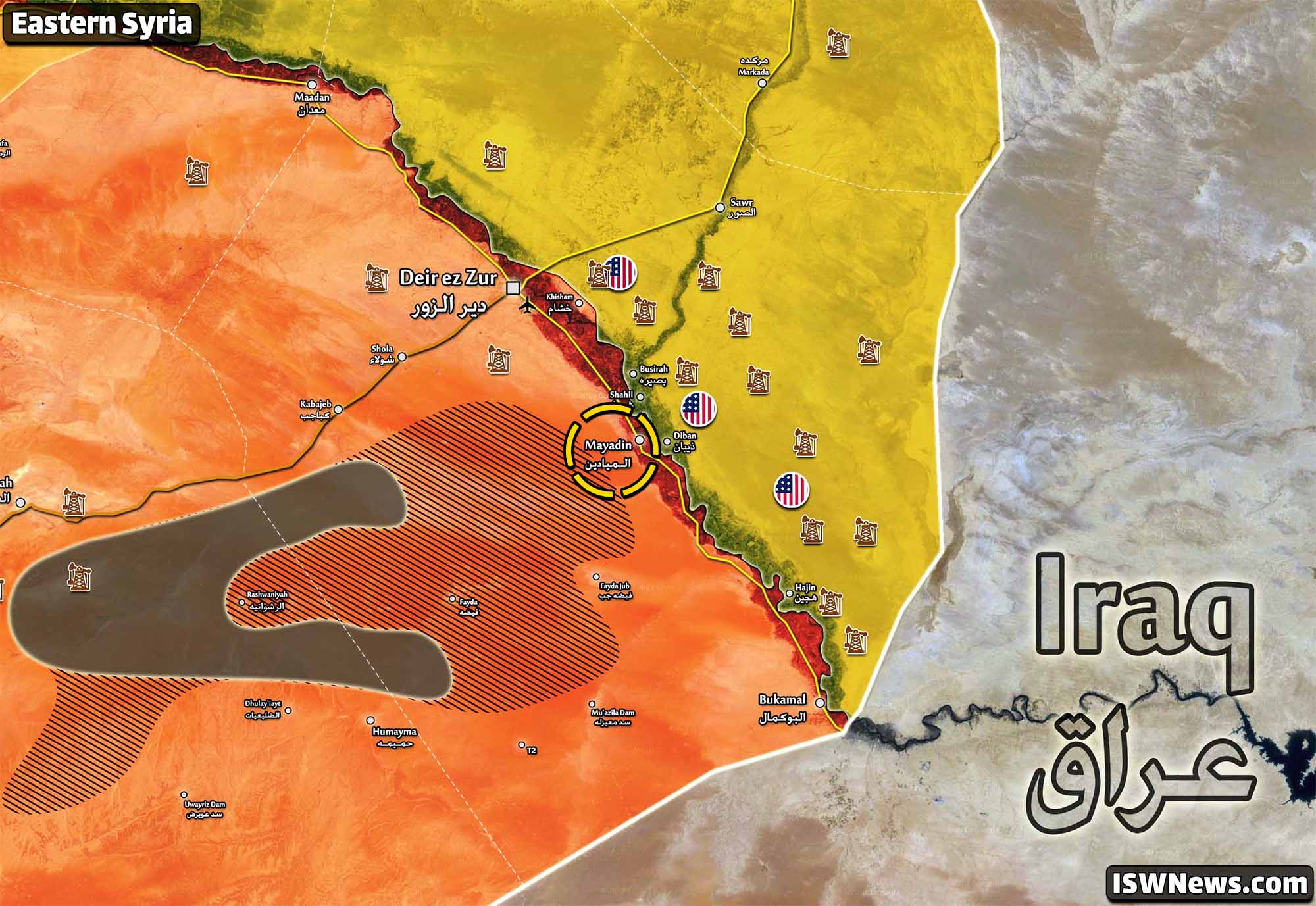
Hours later, the first clashes broke out in the Dhiban area between Syrian tribesmen and SDF militants. At the beginning of the clashes, a civilian named Imad Jalal al-Hattab was killed. After Dhiban, Syrian tribesmen also stormed the SDF headquarters in the town of Abu Hamam.
During the clashes, the SDF militants stationed in the town of al-Hawaij targeted areas in the city of al-Mayadeen with artillery fire.
Gradually, the clashes spread to the areas of al-Tayana, al-Basira and al-Subha, and after clashes with the SDF militants, the Syrian tribes took control of several SDF bases and checkpoints in the areas of Abu Hamam, Gharanij, Abu Hardoub and Al-Kishkiyah. Syrian tribesmen are said to have captured several SDF militants.
As the fighting intensified, SDF commanders decided to deploy reinforcements and equipment from the areas of al-Ma’mal and al-Shaddadi to the eastern areas of Deir ez-Zor. Some reinforcements sent from Al-Hasakah and Al-Raqqa have arrived in the eastern countryside of Deir ez-Zor. Also, due to the situation on the ground, the US forces stationed at the Conoco gas facility and the Al-Omar oil field were put on alert.
The IWN investigations show that since last night, the areas of Abu Hamam, Dhiban, Gharanij, Al-Tayana, Al-Sabkhah, Al-Harijiya and Al-Busayrah have witnessed clashes between Syrian tribes and the SDF forces.
Clashes in Tayana
In recent hours, SDF commanders sent a group of reinforcements from the al-Omar oil field to the Abu Hamam area. Local sources also reported that a convoy belonging to the US coalition headed from southern Al-Hasakah to the eastern areas of Deir ez-Zor.
According to preliminary information, at least 3 people were killed and 14 others were injured as a result of the clashes. Due to the intensity and continuation of the clashes, the SDF militants have declared a curfew in the areas of Dhiban and Abu Hamam.
The latest information received indicates that US coalition warplanes entered the fighting and targeted a group of Syrian tribesmen near the banks of the Euphrates River in the city of Dhiban an hour earlier.
Clashes continue in some areas, and US fighter jets flew over some of the conflict points in Deir Ez-Zor Governorate. Moreover, the news stories published about the domination of the Syrian tribes over the Al-Omar oil field is not true.
According to the Amaq News Agency’s report, a suicide bomber belonging to ISIS group managed to pass through the gate of an SDF training camp located in the village of Al-Atala in the Al-Baghuz town of northern Deir ez-Zor Governorate on Monday (June 3). The bomber then detonated his booby-trapped vehicle during the forces’ training session, resulting in the killing and wounding of 15 SDF members.
ISIS has claimed that this attack was carried out in retaliation for the events unfolding in the al-Hawl refugee camp situated in the Al-Hasakah Governorate.
Corroborating the incident, local news sources had also reported an explosion at the SDF training camp in the same day. However, the SDF forces denied any attack on their camp, attributing the explosion sound to the routine training of their personnel.
Notably, this suicide attack marks the second such incident in recent days, following the attack on Al-Shuhail city that had occurred a few weeks ago, which had resulted in 23 casualties.
The continued targeting of the SDF by ISIS elements underscores the persistent threat posed by the terrorist group, even as it has lost the majority of the territory it once controlled in Syria.
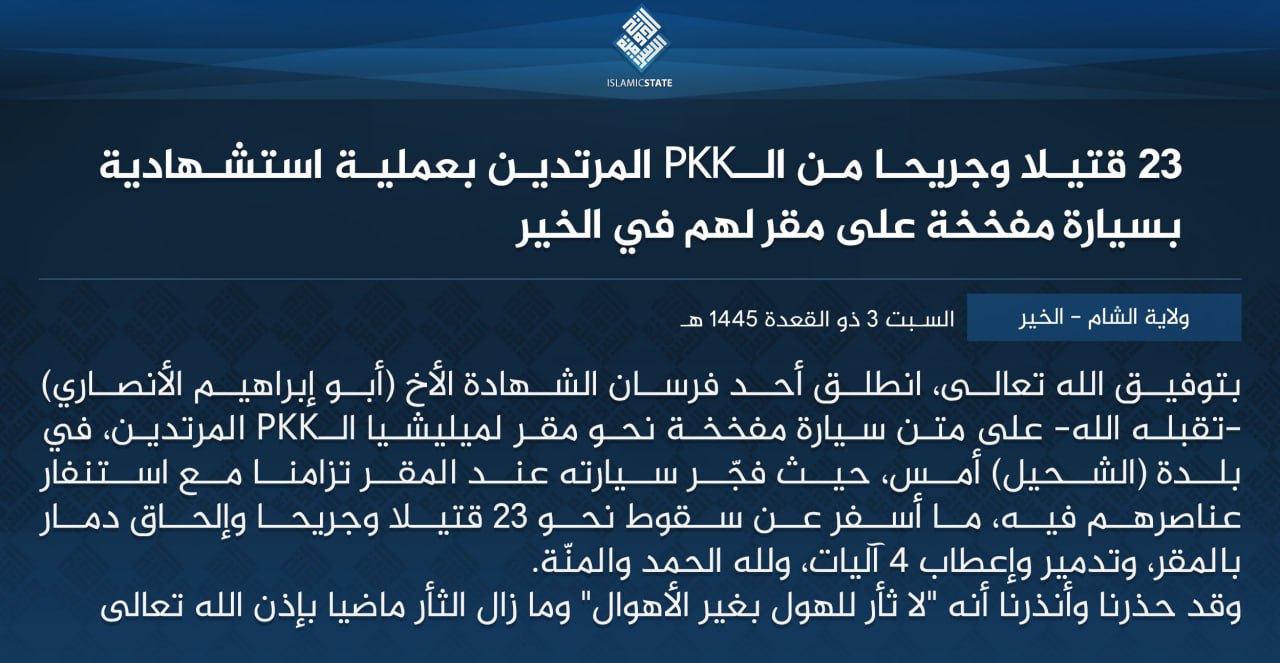
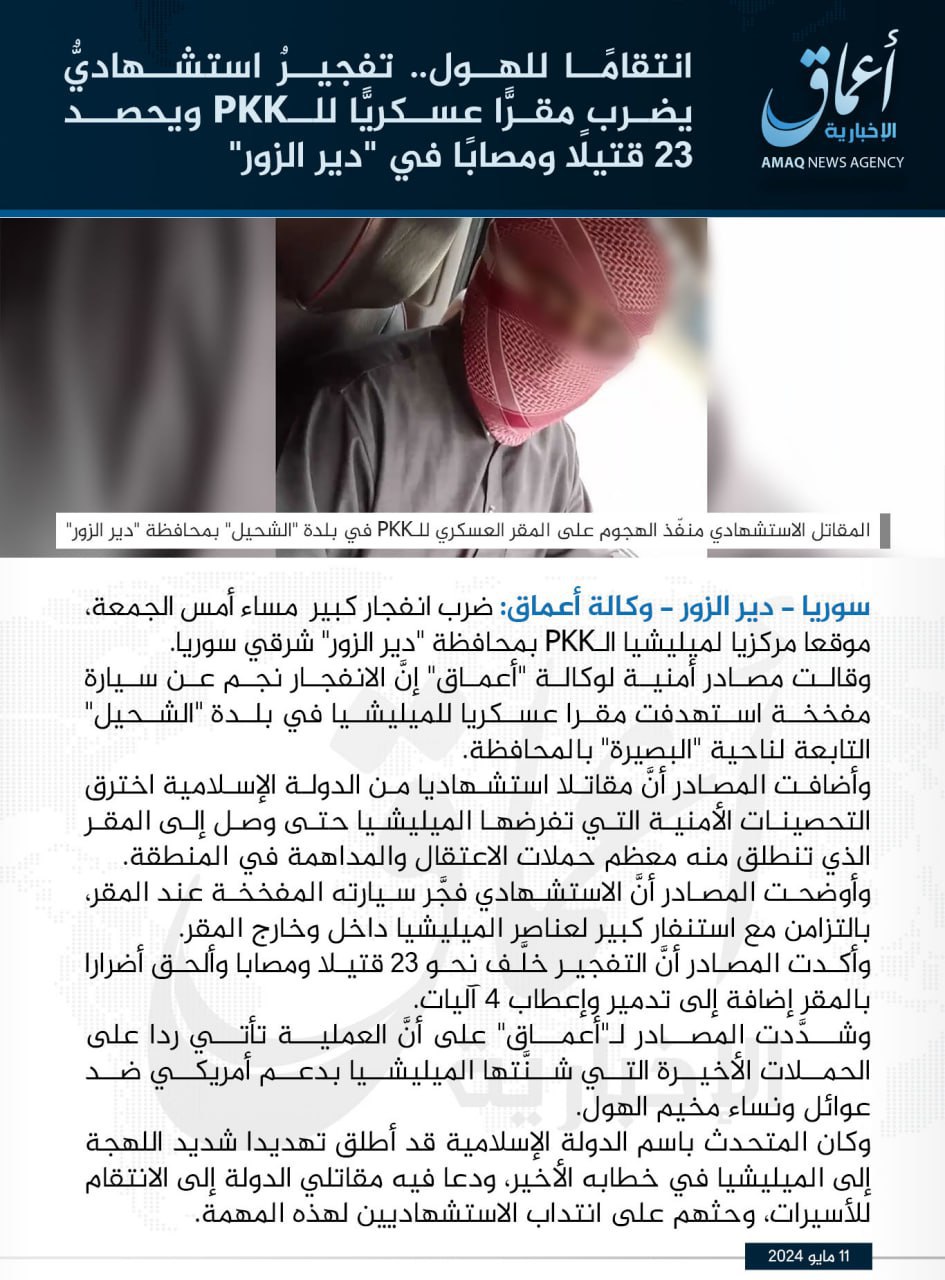
According to the ISIS affiliated Amaq news agency, an ISIS suicide bomber known as “Abu Ebrahim Al-Ansari” after crossing physical and military obstacles, detonated his car bomb on Friday, May 10, at the headquarters of the Syrian Democratic Forces in Al-Shahil town in Deir Ezzor province in eastern Syria.
In this attack, allegedly nearly 23 people were killed and injured, and four military vehicles were also destroyed or damaged.
ISIS considered this operation in revenge for the attack of the Syrian Democratic Forces on the al-Hawl camp in Hasakah province of Syria.
One civilian was martyred and 3 others were wounded after artillery shells were fired from the areas under the control of the Syrian Democratic Forces (SDF) to Al-Jaradiq area in the city of Al-Mayadeen in Deir Ez-Zor province.
It is said that this attack was carried out by the American coalition; And at the same time as this attack, an American drone was carrying out reconnaissance operations over Hawaij and Dhiban areas in the eastern suburbs of Al-Mayadeen. No further details have been released in this regard.
Hours later, Syrian Democratic Forces acknowledged the casualties and said: “We affirm our right to an appropriate military response to the source of the attack on the Al-Omar field.”
As mentioned before, it seems very unlikely that the US “so-called retaliatory attacks’ will have any effect in reducing or stopping the resistance attacks on the US bases in the region.
According to IWN assessment, this is the 28th attack on the American base in al-Omar oil field after the start of the war in Gaza.
According to ISIS media outlets, the terrorist group targeted a vehicle carrying SDF militants in the Al-Kasrah town with a machine gun, injuring at least one militant, on December 11.
The attack comes after a roadside bomb exploded near an SDF convoy in the outskirts of the town of Gharanij in Deir ez-Zor Governorate, causing no casualties.
On December 3, ISIS also claimed responsibility for attacking an SDF inspection post in the village of al-Hawayej in eastern Deir ez-Zor Governorate.