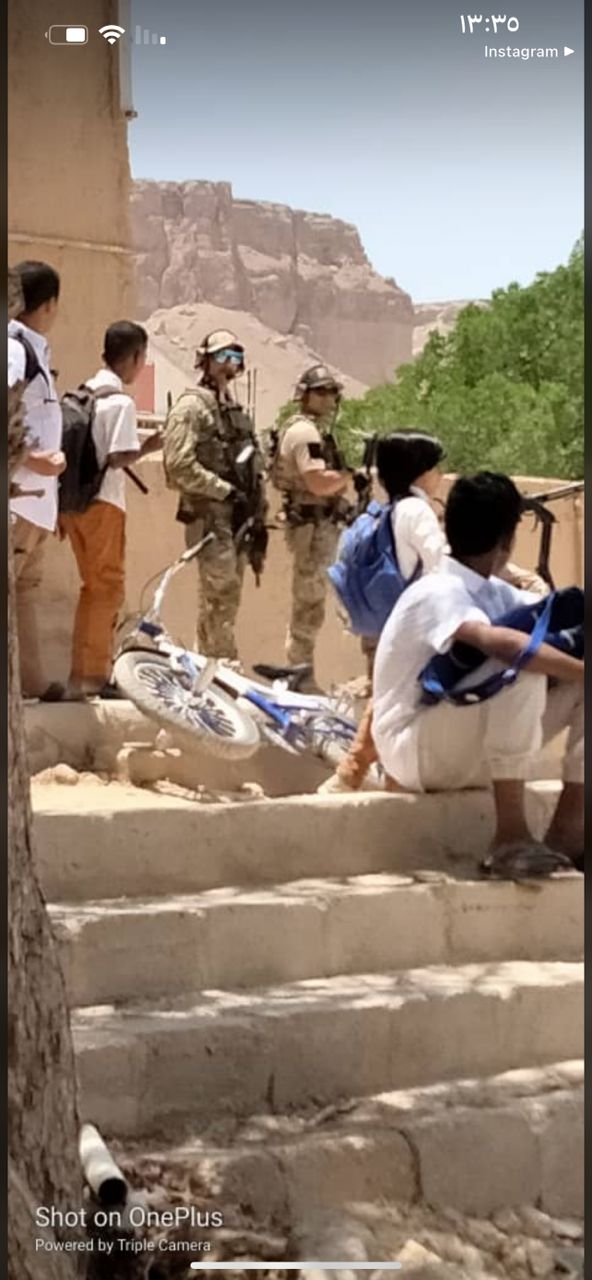
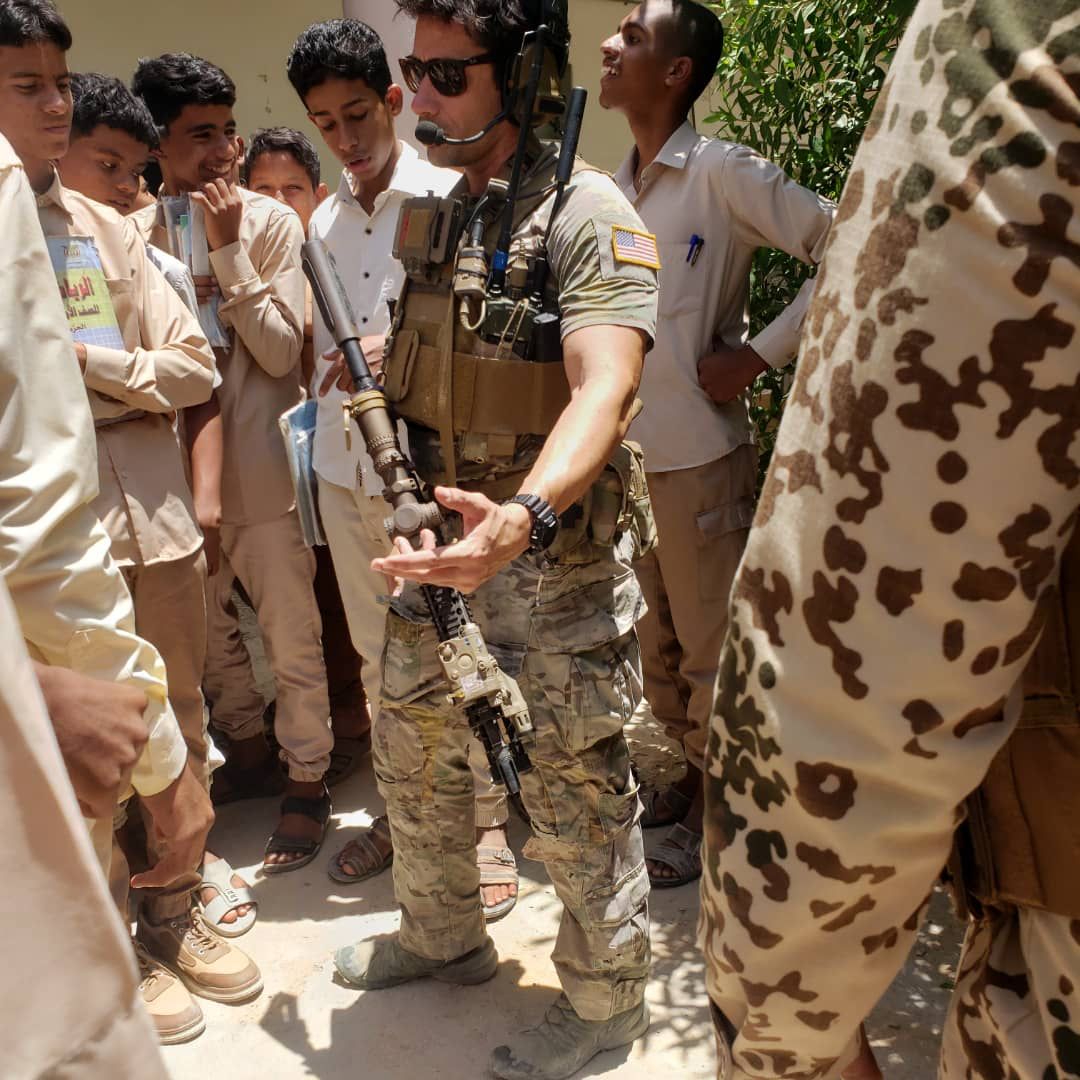
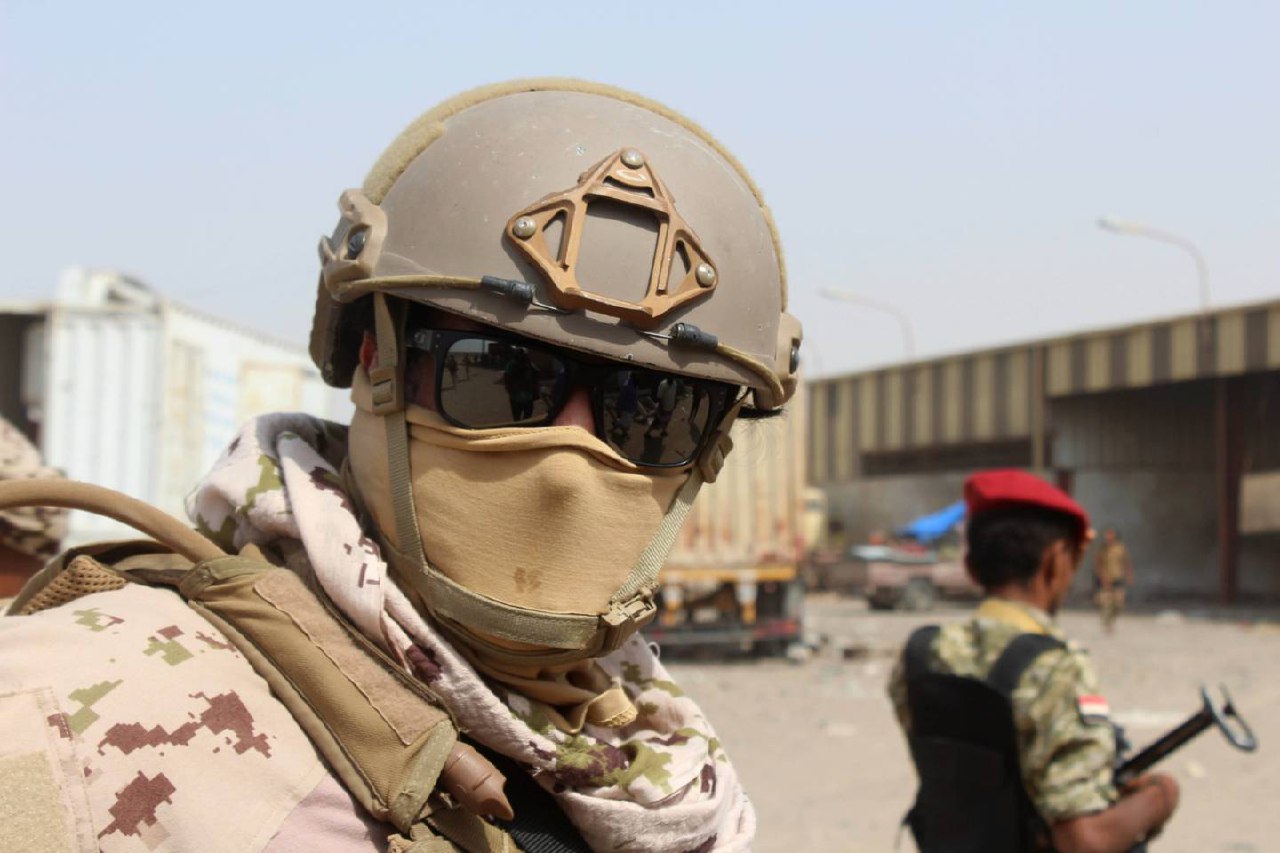
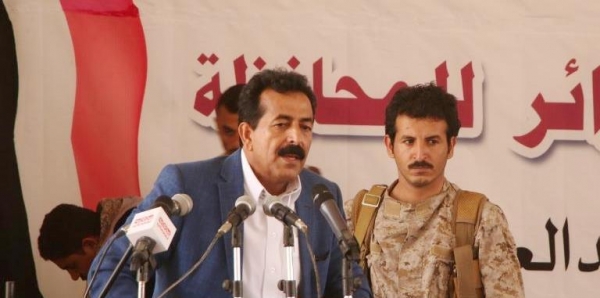
During the visit, U.S. advisors reportedly gathered detailed intelligence on the brigades’ structure, including personnel numbers, combat capabilities, weaponry, and deployment zones along active fronts against Yemeni armed forces.
It appears that the United States is preparing for a possible ground operation aimed at curbing the actions of Yemeni forces against Israel, with plans to utilize UAE-supported factions—particularly the Giants Brigades and loyalists of Tareq Saleh. This strategy has reportedly been under joint consideration by the U.S., UK, and Israel for several months.
One of the main reasons for the lack of success of the US-British coalition’s joint operation against Yemeni army attacks was that the coalition’s military fleet had no equipped land bases for support and relief operations in the vicinity of the Red Sea and the Gulf of Aden region.
Recently, news stories have emerged about the establishment or entry of American and Israeli forces into the islands of Mayun, Socotra, and Abd al-Kuri. Although there has been no visual evidence to prove this issue, the widespread publication of these news and the negative reaction of the residents of these islands indicate that the plan by the US and the Israeli regime to dominate these islands and establish a military presence and defense network is a serious and real scheme.
The Socotra archipelago at the entrance of the Gulf of Aden, located in the southeast of Yemen
The United Arab Emirates (UAE) also has a special participation in implementing this plan and has swiftly taken a series of actions with the help of the US and the Israeli regime. The UAE’s measures in line with this plan include:
1- The UAE Red Crescent embarked on distributing money among 156 families on Mayun Island. This organization has also offered Mayun residents the opportunity to visit the UAE by obtaining a visa. Furthermore, in past years, some residents of Mayun have vacated their homes in exchange for receiving a piece of land in the Yakhtul village (in the coast of the Taiz Governorate of southwestern Yemen) plus one million Saudi riyals in exchange of handing over their homes to the UAE.
2- The UAE initiated proposing to the resigned Yemeni government that Mayun Island be separated from the Taiz Governorate and annexed to the Aden Governorate.
3- The UAE started training hundreds of native young forces under the guise of security companies in Socotra Island.
4- The UAE began granting citizenship to Socotra residents and providing financial aids for travel, residency, education, healthcare, etc., in the UAE.
5- The UAE kicked off strengthening the influence of individuals affiliated with the Southern Transitional Council (STC).
6- The UAE started purchasing important lands in Socotra under the guise of investment.
7- The UAE also began influencing media outlets and influential individuals to justify the UAE’s suspicious activities in the Yemeni islands.
Alongside these activities by the UAE, the United States has also expanded some plans to deploy some forces on the Yemeni islands. Through the United States Agency for International Development (USAID) and under the guise of providing humanitarian aid, they recently sent a ship carrying food aid to Socotra! Additionally, reports have been published about the deployment of American and Israeli military personnel to Socotra Island, which has been met with serious reactions from the island’s residents.
Simultaneously with this colonial plan, prominent political and social figures of Socotra Island have condemned the presence of American soldiers and the establishment of Israeli air defense systems in the archipelago by issuing a statement, demanding the immediate withdrawal of foreign military personnel from the Yemeni archipelago.
In total, the opinion of the residents of the southern Yemeni islands does not have much impact on the implementation of the US and Israeli plan to control these areas, as everything on these islands is under the control of the UAE and Saudi Arabia as well as their figureheads in the resigned Yemeni government.
Undoubtedly, the United States aims to prevent the spread of the Ansar Allah movement’s operations in the Indian Ocean as well as the success of these attacks in the Gulf of Aden and the Red Sea by using the southern Yemeni islands and establishing defense systems and military ships in these areas. However, this move could lead to failure with the acceleration of Yemeni army attacks and the support of Iranian armed forces present in the Indian Ocean and the Gulf of Aden.
Locations of US forces deployment in Yemen – click to view in full size
The USS Cole bombing was a suicide attack by al-Qaeda against USS Cole, a guided missile destroyer of the United States Navy, on 12 October 2000, while it was being refueled in Yemen’s Aden harbor. Seventeen US Navy sailors were killed and thirty-seven injured in the deadliest attack against a United States naval vessel since the USS Stark incident in 1987.
After the Al-Qaeda attack on the US ship USS Cole in Aden port, and also the incident of September 11, 2001 in New York City, the then US administration concluded that it should take action against this terrorist group in Yemen as well as Afghanistan.
Following former US president George Bush’s decision to start attacking Al-Qaeda in Yemen, the US military and security agencies in coordination with the then Yemeni government led by Ali Abdullah Saleh began their attacks in this country. These attacks continued after popular protests in Yemen and the downfall of Ali Abdullah Saleh’s government, and after such developments, the eight-year battle between the Ansar Allah movement and the Saudi-led coalition continued.
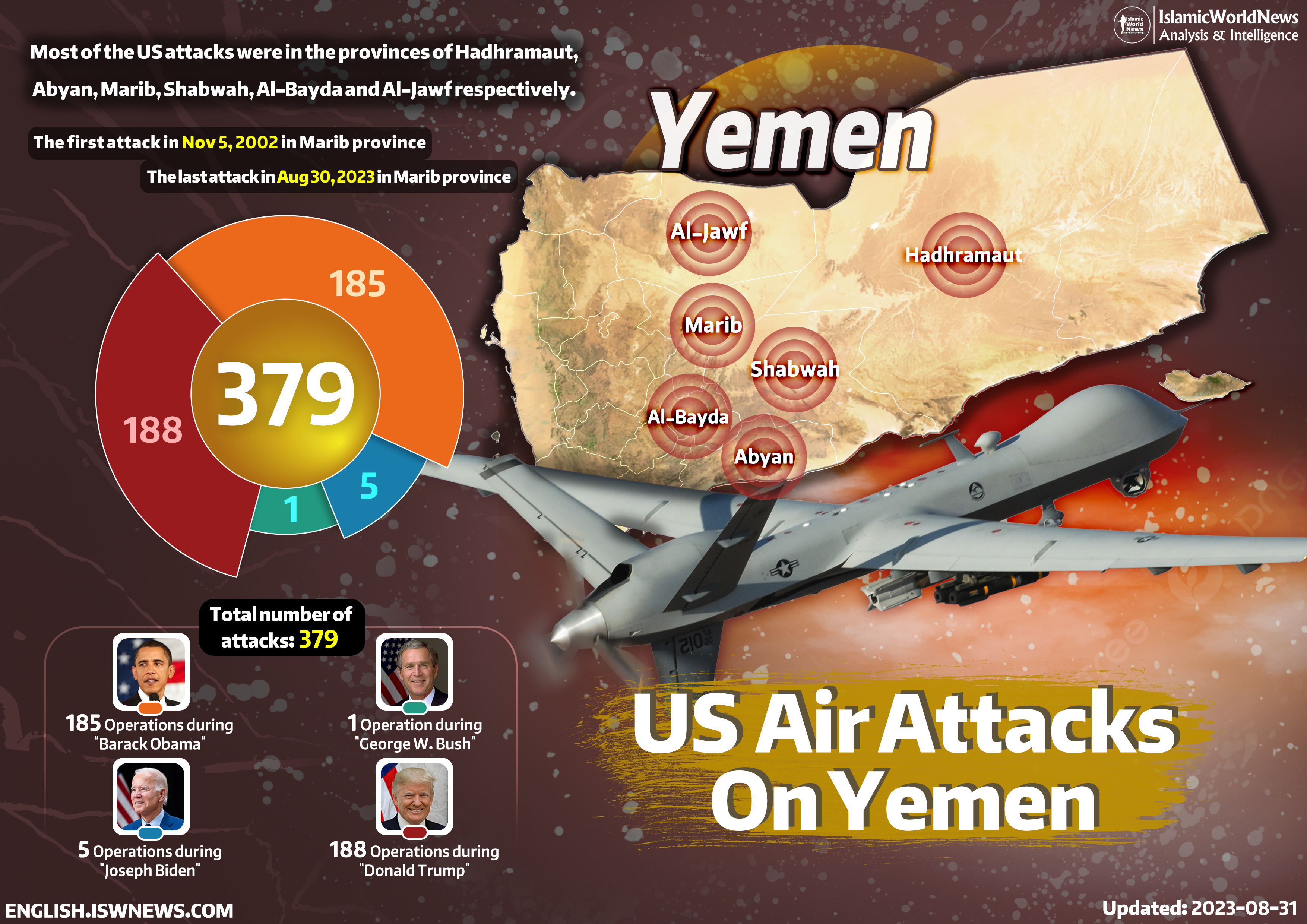
According to Western media reports, the US has so far carried out 378 attacks, including aerial (by fighter jets and combat drones), missile and ground attacks in this Arab country, which has resulted in the deaths of 1,400 to 1,800 people. So far, a large part of the details and information about these 379 operations have not been published, and the following list has been compiled based on the information available about drone operations that have been reported so far. The operation list is as follows:
1- The US MQ-1 Predator drone attack on the vehicle of al-Qaeda militants in Marib province, November 5, 2002. This attack resulted in the death of six members of al-Qaeda, including the leader Salim Sinan Al-Harethi, known as Abu Ali Al-Harethi (accused of helping to bomb the USS Cole in Aden).
2- The mistaken attack of the American drone on a gathering in Wadi Obayda in Marib province on May 24, 2010. This attack, instead of an al-Qaeda rally, resulted in the death of five people, including Jaber al-Shabwani, the deputy governor of Marib province, who was mediating between the government and the militants. This murder caused the bloodshed of the Shabwani tribes and their conflict with the government forces. They also attacked an oil pipeline in Marib twice.
3- The attack of the American drone on the car of two people suspected of being members of the Al-Qaeda group named Abdullah and Masad Mubarak on May 5, 2011. The aim of this attack was to kill Anwar al-Awlaki, a propaganda member of al-Qaeda, but he was not hit in this attack.
4- The attack of the American fighter jet or drones on the residence of Ali Abdullah Naji al-Harethi, a member of al-Qaeda, and several other suspects, including Ammar Abadah Nasser al-Waili in Zanjibar city on June 3, 2011. Al-Harethi was one of the companions of Abu Musab al-Zarqawi in Iraq and al-Waili was present in the war in Afghanistan and was ordered by Bin Laden to establish a training camp in Saada.
5- The attack of the American fighter jets or drones on a police station in the district of Mudiyah, located in the province of Abyan on July 14, 2011. The media and the Yemeni government at the time reported the casualties of this attack between 6 and 50 dead. Also, on the same day, the American drone targeted the car of Fahad al-Qasso, a senior member of al-Qaeda in Yemen, near the same area, and he survived the attack.
6- The attack of American drones with the participation of Yemeni army fighter jets on Al-Qaeda positions in the areas of Al-Wahda, Al-Amoudi and Al-Khamila in Abyann province on August 1, 2011. As a result of these attacks, 15 militants suspected of being members of Al-Qaeda, including Nasser al-Shadadi, one of the senior members of Al-Qaeda, were killed and 17 others were wounded.
7- American warplanes and drones attack suspected al-Qaeda positions in the outskirts of Zanjibar city in Abyan province on August 24, 2011. This attack killed 30 people and injured 40 others.
8- The American fighter jet attack on a mountain pass in Abyan province on September 21, 2011, which resulted in the death of four Al-Qaeda members. At the same time, seven Al-Qaeda fighters were killed in the coastal city of Shuqra.
9- American drone attack on Anwar al-Awlaki, one of the senior propaganda members of Al-Qaeda in Al-Jawf province on September 30, 2011. In addition to Al-Awlaki, three other people were killed in this attack, including Samir Khan, the American-born editor of Inspire magazine. This attack has been called the first attack in which the US military intentionally attacks its own citizens.
10- American drone attack on al-Qaeda hideouts in the east of Zanjibar, the capital of Abyan province, on October 5, 2011. This attack resulted in the death of five Al-Qaeda members.
11- American fighter jet or drone attack on an unknown mosque in Shabwa province on October 14, 2011. Some American media, quoting the Ministry of Defense of the Yemeni government at the time, claimed that seven Al-Qaeda members were killed in this attack, including Ibrahim Al-Banna, the media officer of Al-Qaeda (Egyptian origin), but this information is not correct, and currently the United States has offered a reward of 5 million to find Al-Banna.
12- In another attack on October 14, 2011, the American drone assassinated the 17-year-old son of Anwar al-Awlaki along with eight other people in Shabwa province.
13- American drone attack on the location of al-Qaeda members in the city of Jaar in Abyan province on December 22, 2011. In this attack, Abdulrahman al-Wahishi, a relative of Nasser al-Wahishi, the leader of al-Qaeda branch in Yemen, was killed along with eight others.
14- American drone attack on the gathering place of Al-Qaeda members near Lowdar city in Abyan province on January 31, 2012. During this attack, 11 al-Qaeda members were killed, including Abdul Moneim al-Fatani, one of the perpetrators of the attack on the USS Cole in October 2000.
15- The American drone attack on al-Qaeda’s hideout near Al-Bayda on March 9, 2012, which led to the death of Abdul Wahab al-Hamiqani, one of the local commanders of al-Qaeda, and 16 others.
16- American drone attack on the gathering of al-Qaeda militants in the city of Jaar in Abyan province between March 9 and 11, 2012. This attack killed 20 people suspected of being members of Al-Qaeda group.
17- American drone attack on Al-Qaeda weapons warehouse in Jaar city, between March 9-11, 2012. Three al-Qaeda members were also killed in this.
18- An American drone attack on a vehicle carrying Al-Qaeda militants in Al-Bayda province on March 14, 2012, which resulted in the death of four Al-Qaeda members.
19- American drone attack on the location of al-Qaeda militants in Lowdar city on April 11, 2012. This attack resulted in 14 deaths.
20- An American drone attack on the residence of Muhammad Saeed Al-Amdeh (Gharib al-Ta’zi), one of the senior members of al-Qaeda, in Al-Samadeh region, between Marib and Al-Jawf provinces on April 22, 2012.
21- American drone attack on the location of Fahd Muhammad Ahmed al-Qasu and another Al-Qaeda member in the south of Shabwah province on May 6, 2012.
22- The attack of an American drone on a wedding ceremony in the Radaa area of Al-Bayda province on December 12, 2013, which led to the death of 15 civilians. The US claims that 9 to 12 Al-Qaeda militants were killed in this attack, and the claim that civilians were killed is not true.
23- American drone attack on a car carrying two Al-Qaeda members in Al-Qatman area of Hadhramout province on January 8, 2014.
24- American drone attack on the car of al-Qaeda militants in Al-Mifaa area in Shabwa province on March 3, 2014. This attack killed three Al-Qaeda members, and it is believed that Mujahid Jaber Saleh al-Shabwani was one of the dead.
25- On April 20 and 21, 2014, American drones attacked al-Qaeda positions in southern Yemen, which, according to the Ministry of Defense of the resigned government of Yemen, led to the death of 22 members of this group.
26- American drone attack on the location of Nasser Abdul Karim Al-Wahishi, one of the leaders of al-Qaeda in Hadhramaut province (probably Al-Mukalla city) on June 12, 2015.
27- The attack of the American fighter or drones on the al-Qaeda camp in the Hajar region of Hadhramaut province on March 22, 2016. This attack led to the death of 40 to 50 members of this group.
28- American drones attacked the government intelligence headquarters in Zanjibar city and other positions of Al-Qaeda members in the areas of Naqeel Al-Haila and Al-Hazan in Abyan province on March 27, 2016. The casualties of al-Qaeda in these attacks have been announced as eight.
29- American fighter or drone attack on al-Qaeda positions in Shabwah province on October 4 and 18, 2016.
30- American fighter or drone attack on the location of Al-Qaeda members in Marib on October 21, 2016. Five Al-Qaeda members were killed in this attack.
31- The attack of American drones on unspecified areas in Al-Bayda province on January 21, 2017, which resulted in the death of three people. This attack was the first US airstrike in Yemen since the beginning of Trump’s presidency. The United States claims that one of the killed people, Abu Anis al-Abi, was one of the field commanders of al-Qaeda and two other members of this group, but local sources called them construction workers.
32- On October 2, 2017, American drones and fighters carried out 30 attacks on al-Qaeda positions in the three provinces of Hadhramaut, Shabwa and Abyan.
33- American drone attack on a car carrying al-Qaeda members in Shabwa province on July 6, 2018. This attack killed seven people.
34- American drone attack on the location of Jamal al-Badawi, one of the agents of the Al-Qaeda attack on the USS Cole in Marib province on January 1, 2019.
35- The attack of three American drones on al-Qaeda positions in Al-Bayda province on June 24, 2019. These attacks led to the death of 5 people suspected of being members of the Al-Qaeda group.
36- The attack of American drones on Jo Al-Nasim area in Wadi Obeidah and an unspecified place in the administration of Obeidah located in Marib province on January 25, 2020. The attack on Obeidah resulted in the death of an unknown person.
37- American drone attack on al-Hazmeh area in Marib province on January 27, 2020. During this attack, Abdullah al-Adani, a member of Al-Qaeda, was killed.
38- An American drone attack on a car at the Al-Qaeda checkpoint in the village of Hassoun al-Mashrif in the administration of Wold Rabi in Al-Bayda province on January 29, 2020. America claims that it killed Qasim Al-Rimi, the leader of al-Qaeda in Yemen, in this attack.
39- American drone attack on the car of al-Qaeda members on the eastern road of Marib on November 13, 2021.
40- American drone attack on the gathering of Al-Qaeda members in a house in Al-Hadba area in the northeast of Marib city on November 30, 2022. This attack led to the death of several people, including Abi al-Khair Abdulwahid al-Najdi, the person in charge of engineering and making explosives of Al-Qaeda group. Also, Hassan al-Hazrami and Ahmad Zaki, other prominent members of al-Qaeda, were also wounded.
41- An American drone attack on a vehicle carrying al-Qaeda militants near the Al-Haira gas station in the Al-Samada region on the Marib-Al-Abar road on January 30, 2023. In this attack, three occupants of the car were killed, including Yasir Abdullah Rashid Al-Amiri from the administration of Wasab Al-Ali in Dhamar province, Hossein Hadbol al-Makni (Hassan al-Hazrami) in charge of making bombs and explosives for al-Qaeda, and his brother Musa Hadbol (Mohed al-Hazrami).
42- American drone attack on a house in Al Jalal area, located in the east of Marib city, on February 26, 2023. This attack led to the death of Hamad bin Hamoud al-Tamimi (Abd al-Aziz al-Adnani), a Sharia official and one of the prominent commanders of al-Qaeda in the Arabian Peninsula, and one of his bodyguards.
43- American drone attack on a bus near Shaqman gas station in Hajba area, located in the south of Marib city on August 30, 2023.
Out of these attacks, one attack was carried out during George W. Bush’s tenure, 185 operations during Barack Obama’s presidency, 188 operations during Donald Trump’s era, and five attacks during the Joseph Biden administration.
It is worth mentioning that the main goal of the US attacks in Yemen was to prevent Al-Qaeda from gaining power in the Arab country. However, these attacks have not had any significant impact on the developments in Yemen, and Al-Qaeda still operates in the governorates of Hadhramaut, Shabwah, and Abyan. In contrast, the operations by Ansar Allah fighters in Saada, the northern governorate of Al-Bayda, Al-Jawf, Marib, and Sanaa have been more effective in combating terrorism in Yemen. Al-Qaeda terrorists’ presence in many of those areas has been eliminated for years.
It should be noted that the decision to use Al-Qaeda terrorists in the war against Ansar Allah was made by Saudi Arabia and the United Arab Emirates (UAE). This shows that the United States had no problem with the decision until the ceasefire between the Saudi-led coalition and Ansar Allah movement was established. Following the developments, they resumed their attacks on Al-Qaeda elements, especially in Marib.
Despite the direct attacks by the US, Al-Qaeda’s activities in Yemen continue, mainly concentrated in the governorates of Hadhramaut, Shabwah, and Abyan. They are heavily engaged in fighting with the militants affiliated to the Southern Transitional Council (STC) in northern Abyan and are trying to recruit more human resources in the Shabwah tribes. They have also disappeared into the desert areas of Hadhramaut. However, unlike their presence and influence in these areas, no area is entirely under their control. This situation has allowed them to maintain their presence in Yemen and keep their Takfiri rivals, especially ISIS, out of competition.
Finally, it should be asserted that unlike southern separatists and other secessionist movements in Yemen, Al-Qaeda has a broader view of this region and aims to control the Arabian Peninsula. However, this issue is limited to threats by their senior officials in speeches and has not yet been practically realized. Perhaps this trend has led the United States to reduce its attention to Al-Qaeda’s presence in Yemen, and their attacks have become more of a security and symbolic measure.
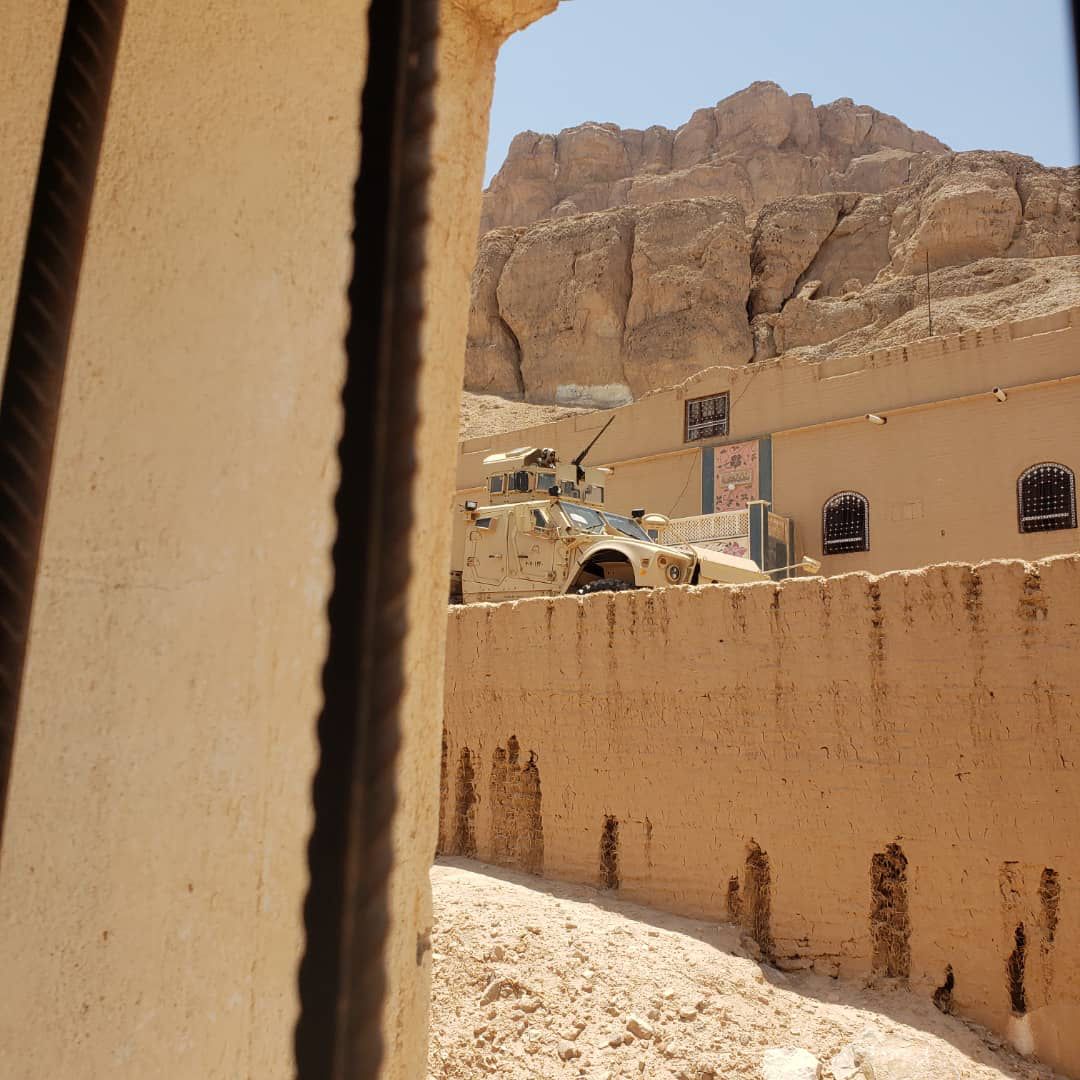
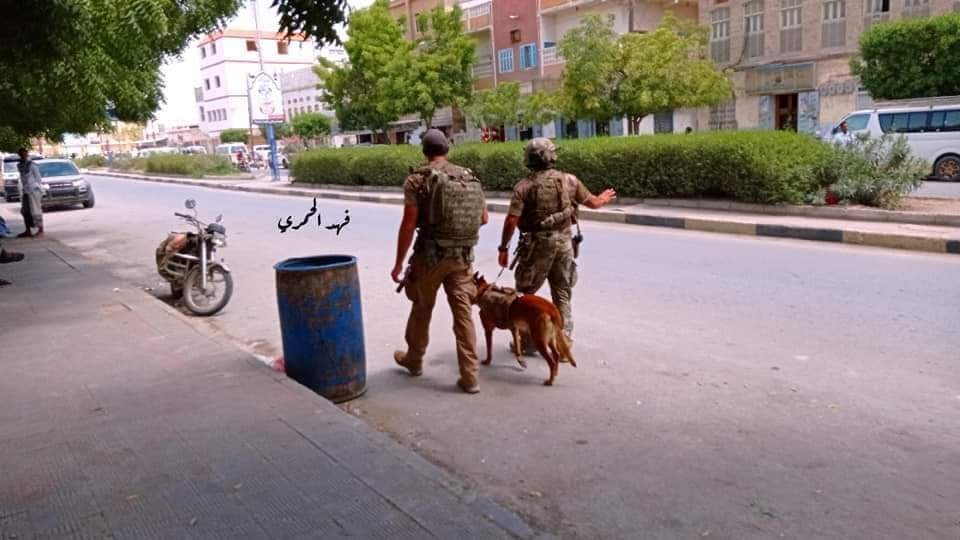
The US Marine occupying forces were stationed in the town of al-Ghurfa in the western suburbs of the city of Seiyun in Hadhramaut province. They have also taken control of the main streets and roads of this area and have deployed their military vehicles in them.
The US soldiers in the town of Ghurfa in the north of Hadhramout province
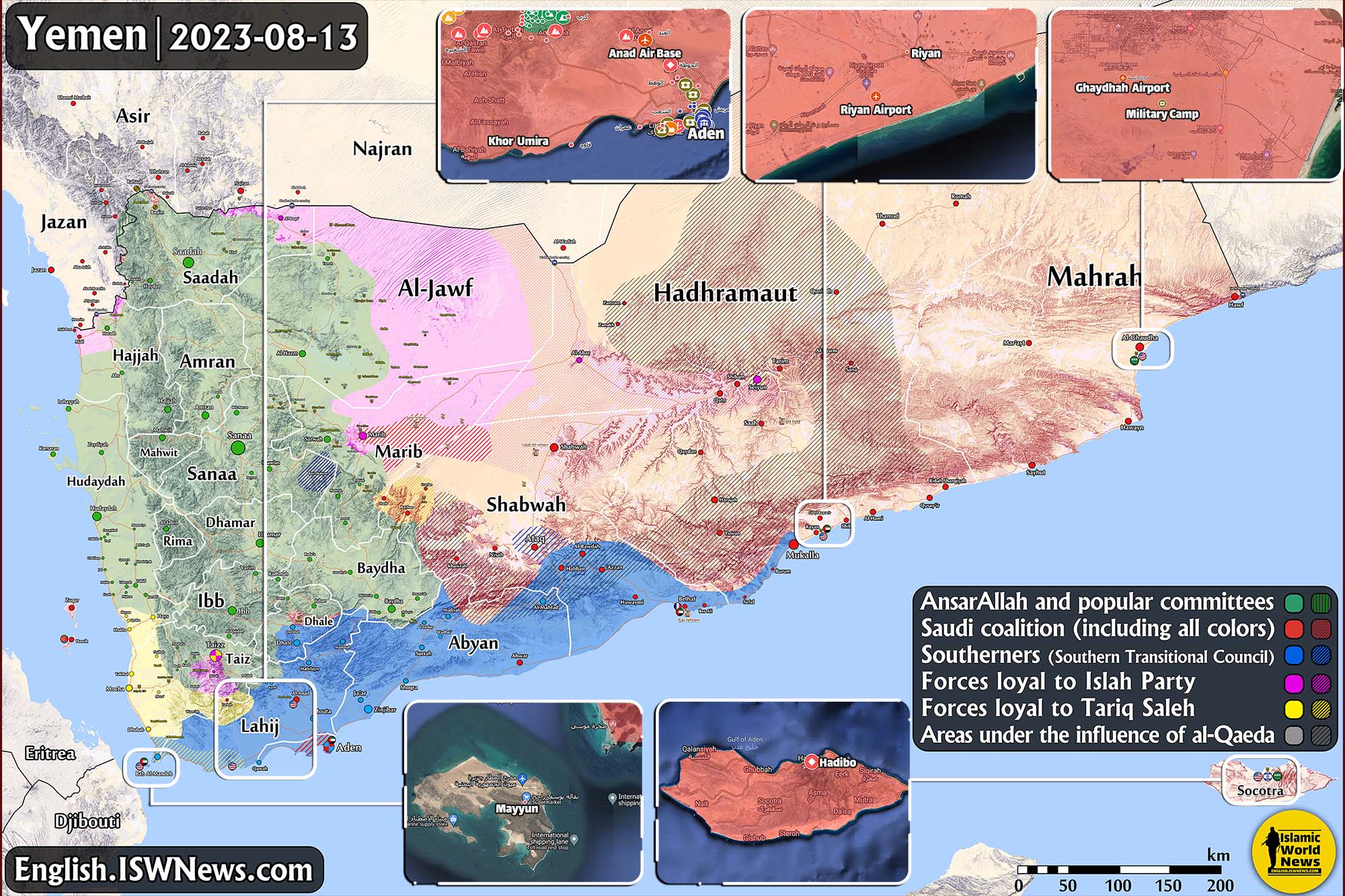
According to Ansar Allah officials, the Americans have been stationed in six places in Yemen. Al-Riyan airbase and Ghayl Ba Wazir are among the areas in Hadhramout province that have been under temporary or permanent occupation by the US military.
In a Twitter message, al-Qahoum said that the Yemeni capital Sana’a is closely monitoring the continuous movements of US military forces and their relocation in the Al-And base, the Khur Amira district on the coastal area of Lahij Governorate, Hadhramaut and Al-Mahrah areas as well as in Socotra and Mayyun Islands.
He also emphasized the independence and sovereignty of Yemen, as well as the ability of the Yemeni army to safeguard shipping process and combat terrorism.
The Ansar Allah member went on to say that the unjustified presence of US military forces in Yemen is a danger to the West Asia region, and the Americans’ actions to control and be present in Bab al-Mandab Strait, in addition to violating international laws, threaten international and regional security as well.
Al-Qahoum also concluded his message by warning that the Ansar Allah movement will not remain idle in the face of any conspiracy against Yemen and the region, adding that the presence of the US in the Arab country will not take long, and the people of this territory will stand against aggression towards Yemen as well as dangerous conspiracies against the region by the use of changing the rules of engagement and increasing military capabilities and industries.
The Ansar Allah movement’s repeated warnings come after an announcement by the US military to deploy three thousand military personnel along with two amphibious ships and an assault ship in the Red Sea and Bab al-Mandab Strait.
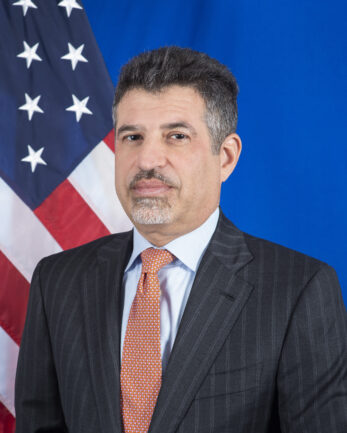
According to al-Qahoum’s statements and the movements made by the United States’ Ambassador to Yemen Steven Fagin, as well as other American advisors, US soldiers are stationed in six points in Yemen, including the Al-Anad base, the Khur Amira district on the coast of Lahij Governorate, Hadhramout region (Al-Rayyan Air Base), Al-Mahrah (perhaps Al-Ghaydah Air Base), as well as Socotra and Mayyun Islands.
The widespread deployment of American troops and their presence in those areas indicate that the US has planned to control the southern and southwestern coasts and islands of Yemen. The increase in US military presence in the Bab al-Mandab Strait and Hormuz Strait is aimed at controlling the passage of ships and monitoring Iran’s movements in this route.
The US officials are worried about the formation of an Iran-centered naval coalition in particular following the reconstruction of relationship between the Islamic Republic and regional Arab states; so, all these issues plus the Iranians’ support for Yemen have prompted the Americans to enter the maritime battlefield with the axis of resistance to maintain their position among the Arabs’ ranks.
US Troops Stationed In Six Points In Yemen – click to view full size
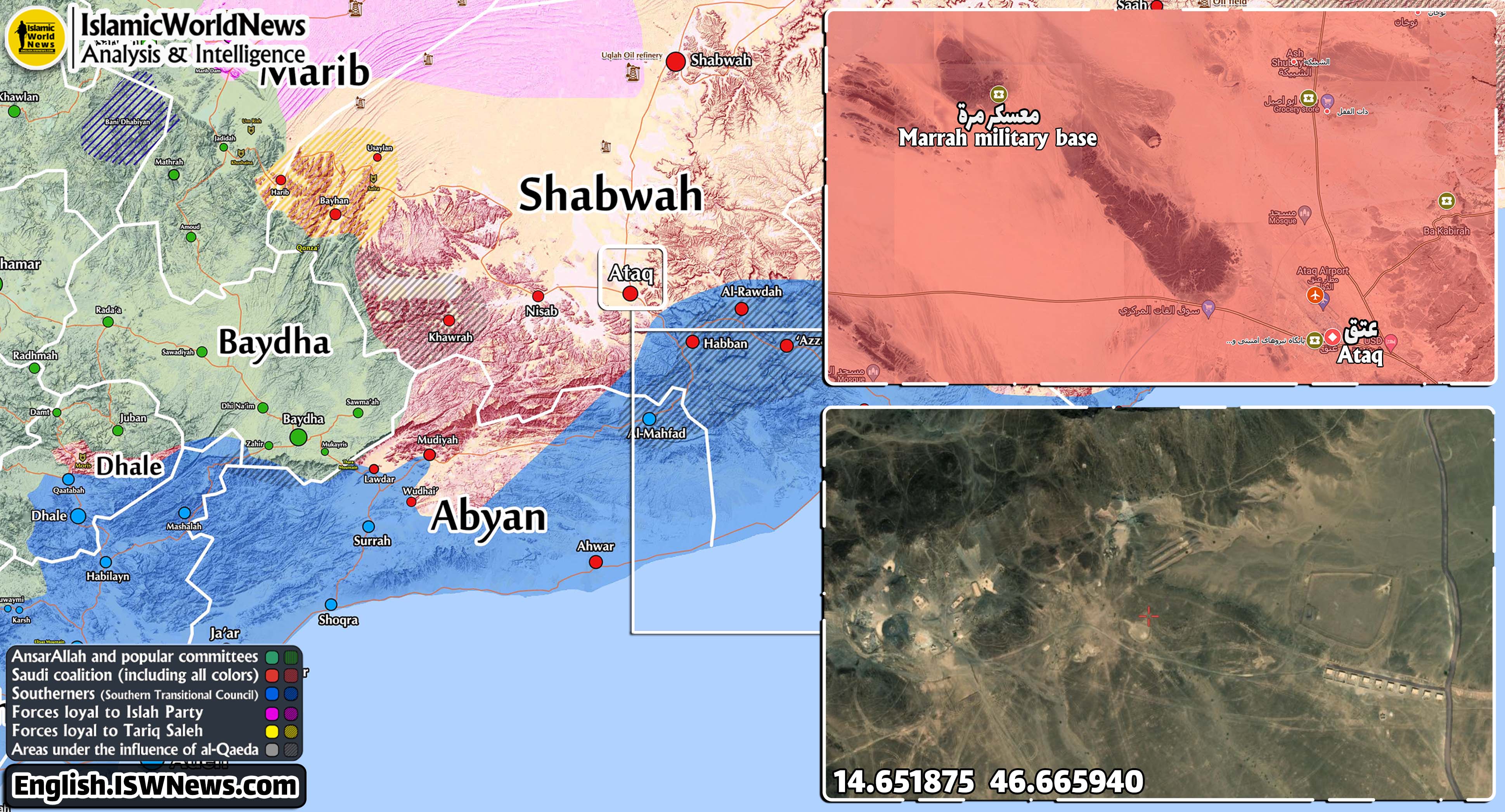
According to local sources in Shabwah province, an American serviceman was killed in the clashes after the verbal tension between the American and the Amaliqah forces at al-Marrah base located in the suburbs of Ataq city, the capital of Shabwah province. The conflict occurred after the Americans had a dispute with Salafi members of Amaliqah over the control of the audio system of the al-Marrah base prayer hall.
After this incident, the Saudi-backed government of Yemen has issued an order to arrest eight members of Amaliqa forces. Also, a helicopter has transferred the body of this American serviceman to a military ship in the Arabian Sea. However, the local authorities of Shabwah province have denied the occurrence of a conflict and the death of an American at the Marrah base.
Al-Marrah base is one of the military bases of the Yemeni army in Shabwah province, which is located in the northwest of Ataq city. This base is one of the places that was occupied by the American advisers after the expulsion of Islah Party militants from the city of Ataq, and it plays an important role in ensuring the security of this area.
According to sources inside Al-Jawf tribes, Al-Jawf governor Hossein al-Awadhi, during his meeting with US ambassador Steven Fagin on December 20, handed him a list of military leaders and tribes affiliated with the Islah Party And has accused them of preventing the work process of the Yemeni government in this province. This action has led to the relocation of the head of the Al-Jawf tribes and the senior members of the Islah Party in the city of Marib.
The appointment of Hossein Al-Awadhi to the post of Al-Jawf Governorate was made after the arrest of Sheikh Amin Al-Akimi in Saudi Arabia. Al-Awadhi is one of the prominent members of the People’s Congress Party and people close to Tareq Saleh, and his governorship is the result of Tareq’s close relations with the United Arab Emirates and the United States. In fact, Tareq Saleh has become the main lever of the US to advance its goals in Marib and Shabwa after settling in the southwest of Yemen.
It should be noted that the US military actions in Yemen in recent months have gone beyond the construction of bases, looting of oil resources and drone attacks, and their military advisors are training forces called “Border Guard” in the coastal areas of Hadhramaut and Al-Mahrah. The budget for the training and formation of this guard was provided by the United States, and the purpose of its formation is to help control and monitor the southern waters of Yemen.
Following the recent escalation of tensions and insecurity in the occupied areas of Yemen, the United States has increased its efforts to increase the security of its forces in the oil fields of eastern Yemen. In this regard, the United States and England have deployed dozens of military personnel in the military base on the outskirts of Al-Ghaydhah airport during the last month.
According to local sources, quoting the employees of Al-Ghaydhah airport, the US transferred more than 20 military personnel to this airport only on Tuesday, August 30. These forces are supposed to be sent to secure the oil fields of Hadhramout province, which is under US colonial rule.
Al-Ghaydhah airport expansion plan was launched since 2018, with the role of General Joseph Votel, Commander of the US Central Command, Francis Townsend, the former US President Donald Trump’s advisor, and US Ambassador to Yemen, Christopher P. Henzel, and Saudi Arabia’s investment. .This base was created to monitor and control the information and security of the eastern and central regions of Yemen and is used by the military and advisers of the United States, UK, and Saudi Arabia.
The US Navy says in a statement that one of its soldiers was killed and three others were wounded during an operation in Yemen. The statement did not specify the exact location of the operation, but the casualties were likely the result of clashes with al-Qaeda militants in southern Yemen.
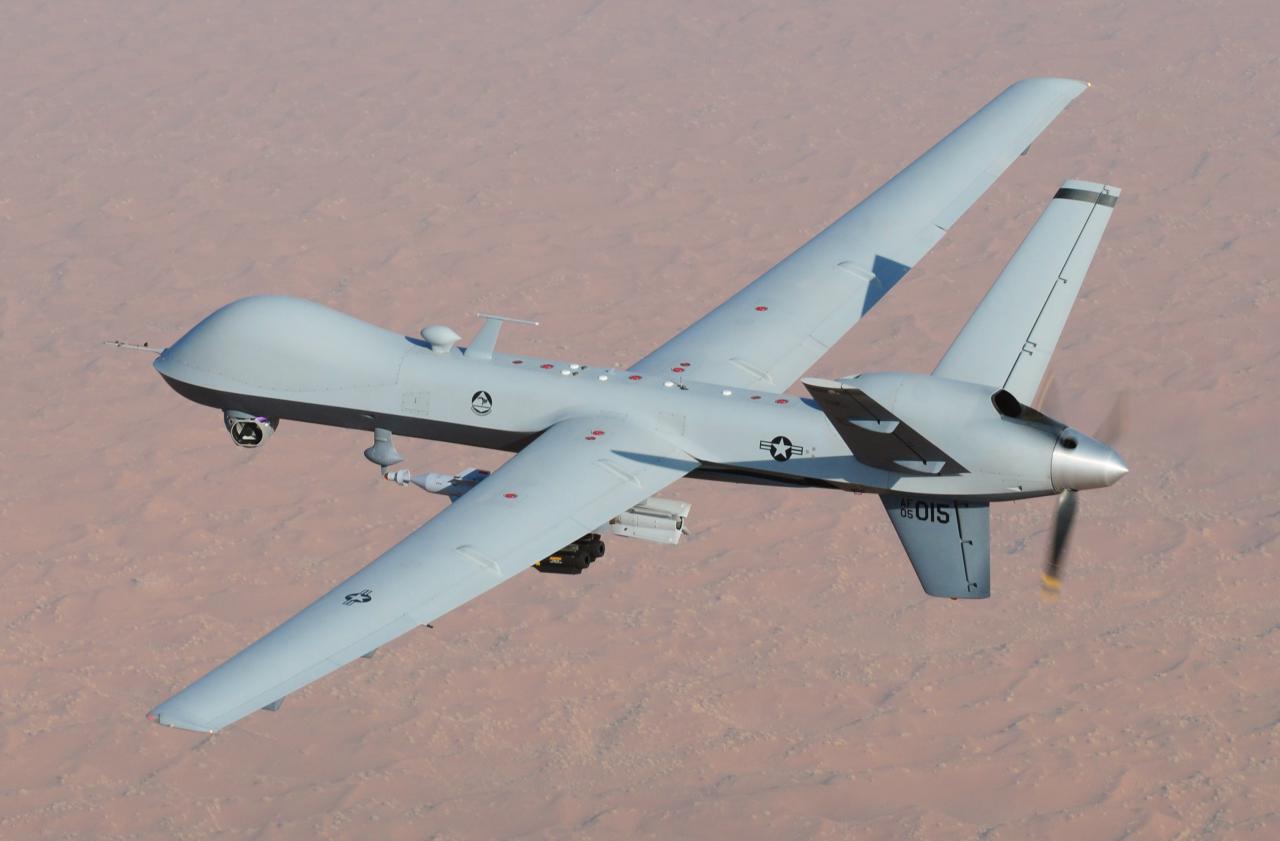
This is the fourth such drone to be shot down by Ansar Allah air defense in the Yemeni war. Ansar Allah has already shot down three MQ-9 drones in March 2018 and June 6, 2019 in al-Hudaydah province and August 21, 2019 in Dhamar province. It should be noted that in two operations, the Fatir 1 defense system was used.
In an interview with Al-Masirah, Abdulsalam stated: “The US envoy’s plan for a ceasefire in Yemen reflects the same views of the Saudis and the United Nations over Yemen over the past year. There is no talk of an end to the siege or a ceasefire in the US plan; Rather, it will diplomatically continue the siege of Yemen. One of the most important conditions in this plan is the issuance of permits for flights to Sanaa Airport by the aggressor coalition(Saudi) and issuing a passport from a place other than Sanaa. If the Americans were serious about stopping the aggressors and the siege of Yemen, they would have seriously announced the ceasefire and the end of the siege, and we would have welcomed this plan. It is unacceptable for an American representative to submit a plan less than what was previously presented by the UN representative.”
The United States recently presented a ceasefire plan for Yemen. The ceasefire plan comes as the Saudi coalition launched heavy attacks on the Ma’rib, Taiz and al-Hajjah fronts, and airstrikes continue in all areas under Ansar Allah control.
“What you have not achieved through war, you will not achieve through negotiation!” Mohammed Abdulsalam said. He added: “The hostilities and siege have not stopped for a single day in the last six years, so what do the Americans mean by a ceasefire and an end to the siege? By presenting the conditions of the Saudis in the form of a ceasefire offer, the Americans showed that they are openly behind the aggression and siege of Yemen. There is no real effort to end the war and lift the siege.”
Earlier, the US envoy to Yemen, Timothy Lenderking acknowledged Ansar Allah’s key role in Yemen and announced that he had presented a ceasefire plan to Ansar Allah. However, according to Ansar Allah’s spokesman, Lenderking proposal to Ansar Allah appears to be a repetition of previous illegitimate demands, and it is highly unlikely that Ansar Allah will agree to unilateral and unfavorable US and Saudi terms.
The Jerusalem Post reported on the construction of a US-Israeli military base on Mayyun (Perim) Island off the southwestern coast of Yemen and the strategic Bab al-Mandeb Strait.
Mayyun (Perim) Island is a Yemeni volcanic island that divides the entrance to the Red Sea into two eastern parts called “Alexander’s Strait” with a width of 3 km and a western part called “Dact-el-Mayun” with a width of 25 km and plays a very important role in controls maritime transit in the world. Mayyun was previously controlled by the UAE, and now the United States and Israel are plotting to take control of it.