However, Iraqi security sources stated that just one rocket fired at the security zone.
Iraqi resistance group, Asbat al-Thaireen took responsibility of the attack.
Author: Mirza
-
Breaking: Rocket attack on US Embassy in Baghdad
-

Latest Updates on Yemen, 11 August 2020
1. Baydha:
– Ansar Allah operation against ISIS and Al Qaeda positions in Qifah and Quraishiya continuing.
– Reclaiming the Nufan mountain by Al Qaeda is not correct.
– ISIS forces reached the front between AnsarAllah and Al Qaeda in Dhi Kalib. ISIS and Al Qaeda are practically united against Ansar Allah.
– Saudi coalition warplanes bombed Quraishiya fronts 6 times.
– Saudi coalition forces activated Zahir front to reduce Ansar Allah pressure in ISIS and Al Qaeda. Saudi coalition attacks in this front started from today morning but so far unsuccessful.
2. Marib:
– Ansar Allah liberated Camb base in Mahiliyah front.
– Ansar Allah missile attack to Saudi coalition base in Marib. Tadawin camp or Sahn al-Jinn base were targeted.
– Saudi coalition warplanes bombed front lines in Mahiliyah district five times.
3. Sanaa
A UN cargo plane carrying more than 39 tones of medical aids landed in Sanaa.
4. Al Hudaydah:
– Due to bombing Jah al-Ala area, Beit Faqih district, a person martyred and 11 including 6 children injured.
– Saudi coalition forces violated ceasefire 97 times in the province in the last 24 hrs.YOUR SUPPORT IS CRITICAL TO KEEP ISWNews ALIVE!
I’d like to thank readers for their confidence and support. Thanks to your support we can continue to perform our duty on reporting the important events in the region. So If you like our contents, please don’t feel embarrassed to contribute and help our project, for as little as 1 Dollar. Your contribution, however small, will help ensure our project continuity. Thank you.
-

Iraq: Turkish bombing of a meeting of Iraqi border commanders with PKK
According to local sources, the Iraqi border guards, who were shot at by PKK in the Bradost area last night, held a meeting with PKK today to coordinate and establish a base in the area, where vehicles and their meeting place with PKK were attacked by Turkish drones.
The commander of the Border Regiment and the commander of the 2nd Iraqi Border Brigade lost their lives in the bombing. -

Video: Another IED attack on US convoy in Iraq
Saraya Thorat Al-Ashrin Al-Thaniyah group claimed responsibility for the attack. As a result of this attack, one of the vehicles carrying American equipment caught fire.
On August 5, in a separate attack, the same group, Saraya Thorat Al-Ashrin Al-Thaniyah targeted a US-led coalition convoy with an IED in Tal al-Lahm area north of city of Nasiriyah.
Last night, another attack also took place against the US military vehicles near Kuwait border in Jarishan area by Ashab al-Kahf group.
Iraqi resistance forces appear to have intensified their attacks on US forces on Iraqi soil. -

Yemen: Saudi coalition helping ISIS and Al Qaeda
Saudi coalition supporting ISIS and Al Qaeda is not a new thing, since it has been done many times in Iraq and Syria and the only reason to mention it is to decry the accusation “Iran supports ISIS and Al Qaeda”.
Weapon and aerial support of Saudi coalition for ISIS and Al Qaeda in Yemen, specially in Baydha conflict, is yet another evidence of Saudi Arabia and UAE supporting terrorism. -

Breaking: Attack on a convoy of US forces on the Iraqi border + Video
It is worth mentioning that this border crossing is under the control of American terrorists and they use it to transfer their equipment between Iraq and Kuwait.
-

Yemen: Latest Updates on al-Baydha Front, 10 August 2020
According to the latest news from the clashes in the northwest of al-Baydha province, Ansar Allah has succeeded in clearing the village of Khabzah in the east of Alib mountain, al-Hatab and Nufan mountain in the east of Dhi Kalib, Aqaba Zaj, as well as cutting the Marib-Qifah route in the east of this region.
Ansar Allah artillery and drones have carried out several operations against ISIS and al-Qaeda positions in the region so far, but no casualties have been reported.
After the fall of Ali Abdullah Saleh’s government in the early months of 2014, Al-Qaeda and ISIS members intensified their activities in the Kitaf district in northern Saadah, Arhab district in Sanaa, Aden and the eastern deserts of Yemen. But eventually they have defeated in areas like Arhab, Kitaf and Bayhan by Ansar Allah and somehow managed to took control of some areas in the northwest of al-Baydha province. Now Ansar Allah and its allied tribes focused on the al-Byadha province to clean the remnants of these terrorists from the region.
Interactive map -
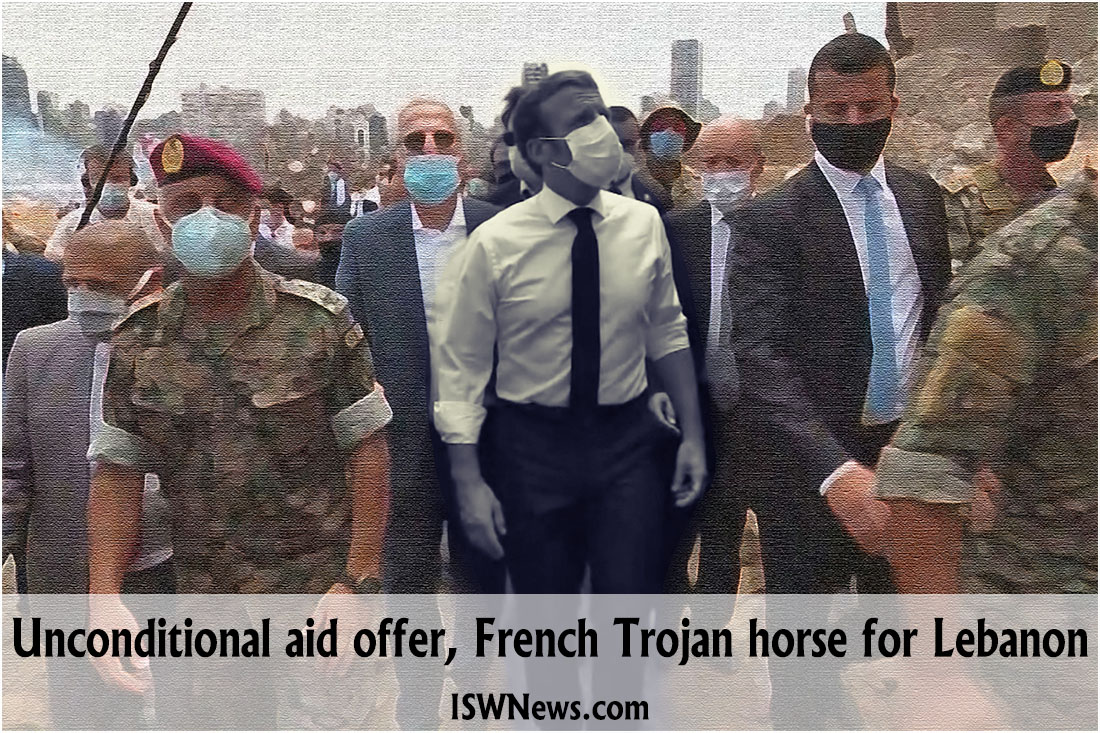
Unconditional aid offer, French Trojan horse for Lebanon
Lebanon today is the product of the decision of victorious sides in the World War I, France and Britain in territorial dividing as the two great colonizers of the lands of the defeated Ottoman Empire after the World War I.
Weakness of power structure, the heritage of the French colonial for Lebanon
The Britain even tried to take the Syria out of the hands of France by determination of Feisal, the older son of Sharif Mecca at that time as ruler, that after a short time of Feisal ruling on Syria, the Lloyd George’s plan was foiled. However, France was able to take guardianship of Lebanon and Syria, but lost the Palestinian guardianship that Lloyd George had selected it for the Zionists habitation. However, France was able to take guardianship of Lebanon and Syria, but lost the Palestinian guardianship that Lloyd George had selected it for the Zionists habitation.
After occupation of Lebanon by France and its trying for highlighting the Christians in Lebanon for increasing the infiltration and governing the colonial Lebanon easily, the political rivalry between Muslims and Christians began. In the one side, the Muslims emphasized on their Arab identity and even wanted to join an Arab country (the great Syria, or an super-Arab country including Iraq, Syria, Jordan, and current Israel); and in other side, the Christians that saw themselves powerful in the case of alliance with the Europeans, and some of them did not even accept being Arab; However, Lebanon under the guardnership of France, found an almost French structure, so that even after the declaration of independence in 1943, the French traditions remained in various parts of Lebanese sovereignty, especially in the economy part. Despite the conflict and civil war after the declaration of independence from France, the Lebanese were able to reach an agreement on their suitable political model in the Saudi city of Taif, after 15 years.
According to the Taif treaty, the Lebanese political system became a special kind of democratic governance that in it, in addition to the people votes, the religious dependences are also very influential in the hierarchy of political power; this method of governing is a subset of consensus democracy. In this agreement, it was stipulated that the presidency should be given to the Christians, the prime minister to the Sunni Muslims, and the parliament speaker to the Shiites. This system in division of the power, that emerged due to the civil war with the intervention of colonialism, was turned to a crisis for Lebanon; the issue that Lebanese president Michel Aoun also mentioned it in the recent crisis, and announced the solution for going out of it, as implementing some reforms in the structure of government and the quality of dividing the power.
Neglecting of economic development, among the political conflicts
The Lebanon’s economic structure is also defective, due to its inefficient political structure; in the one side, the dependent view of the March 14 fraction led by Saad Hariri in the economy field, and in the other side, the continuous political conflicts did not allow Lebanon to move towards the economic development. Therefore, Lebanon, despite its potentials in agriculture field and having oil and gas resources in its territorial waters in Mediterranean sea, has moved to foreign aid, including Saudi Arabia and the US, international loans and internal borrowing, and finally the tourism resources. And because of this, is almost a mere importing country.
Saudi aids, that had been almost cut off for imposing political pressure to change the Lebanese government’s approach to Hezbollah at the time of under prime minister of Saad Hariri, that was supported by Saudi Arabia and the US. On the other hand, the International Monetary Fund at the time of current Lebanese government headed by Hassan Diab, refused to lend to Lebanon, arguing that Lebanon debt is high and this country can’t repay its debts; that of course its main reason is rejecting of pressure for disarming the Lebanese Resistance.
Therefore, the shortage of exchange resources and increasing in foreign debt to more than 150% of GDP led to an economic and social crisis in Lebanon; the crisis that its range still continue. This economic crisis with happening the explosion in the port of Beirut in recent days, is leading this crisis-stricken country to a human crisis, because in addition to the lack of financial and industrial sources for replacing the destroyed items, there is no alternative port for importing the needed materials; also, it’s been announced that the financial damage of this fire is about 10 to 15 billion dollars.
The necessity of creating a land corridor for Iran’s entering to the flow of providing goods in Lebanon
Now, France has been the pioneer of aids, for full using of this situation in Lebanon and probably returning its traditional influence in this country; and Emanuel Macron the French president has announced during the visit to Beirut that he is ready to meet the Lebanon’s financial and commodity needs for reconstruction.
If the Lebanese government accepts the France suggestion for meeting its financial and commodity needs, it will naturally should accept their terms about putting pressure on the Resistance groups; and if it rejects the France suggestion, it will face with a great amount of financial and commodity needs, that if these needs won’t be met, they will face a human crisis. Therefore, the entering of Iran is necessary, for removing the pressure of public opinion from the Lebanese government and the Resistance.
Perhaps Iran’s entering to financial field be difficult, but it can help Lebanon in field of providing some goods and services, that this issue also depends on creating a safe corridor for transporting of goods. Because air transportation is not cost-effective for any kind of export, and also Iran is weak in this field because of sanctions against its aviation industry, creating a land corridor can be a good way for connecting Iran’s economy to Lebanon and other Mediterranean countries, including Syria. The studies show that the al-Bokmal crossing in east of Syria is currently controlled by Resistance forces. In the case of reviving, it can be a good land bridge for connecting Iran to the Lebanese economy and even the Europe and Africa by the Mediterranean. -

Military Knowledge: Ka-52 Alligator
The Ka-52 helicopter can destroy enemy armoured and unarmoured ground targets, low-speed aerial targets and personnel at the frontline and in tactical depth.
It is also deployed as a surveillance platform and aerial command post for a group of attack helicopters. The first Ka-52 helicopter was rolled out in December 1996.
The helicopter completed its first flight in June 1997. The serial production of Ka-52 began in 2008 at Progress Arsenyev Aviation plant in the Primorye region of Russia. Russia plans to equip its proposed Mistral Class amphibious assault ships with Ka-52K helicopters. Ka-52K is a naval variant of the Ka-52 Alligator.
Specifications:
Crew: 2
Length: 16 meters
Height: 4.93 meters
Empty weight: 7,700 kg
Max takeoff weight: 10,800 kg
Engine: 2 × Klimov VK-2500 turboshaft engines, 1,800 kW (2,400 shp) each
Main rotor diameter: 2× 14.5 m
Main rotor area: 330.3 m2
Max altitude: 5,500m
Max cruise speed: 300km/h
Climb rate: 12m/s.
Flight range: 460km
Ferry flight range: 1,110km
Guns: 1× mobile semi-rigid 30 mm Shipunov 2A42 cannon
Hardpoints: 6 under-wing hardpoints, plus 2 on wingtips for countermeasures or air-to-air missiles with a capacity of 2,000 kg
Rockets: 80 × 80 mm S-8 rockets and 20 × 122 mm S-13 rocket
Missiles: 2 × APU-6 Missile racks, able to accommodate a total of 12 × 9K121 Vikhr anti-tank missiles, Vympel R-73 air-to-air missiles, Kh-25 semi-active laser guided tactical air-to-ground missiles
Bombs: 4 × 250 kg bombs or 2 × 500 kg bombs -
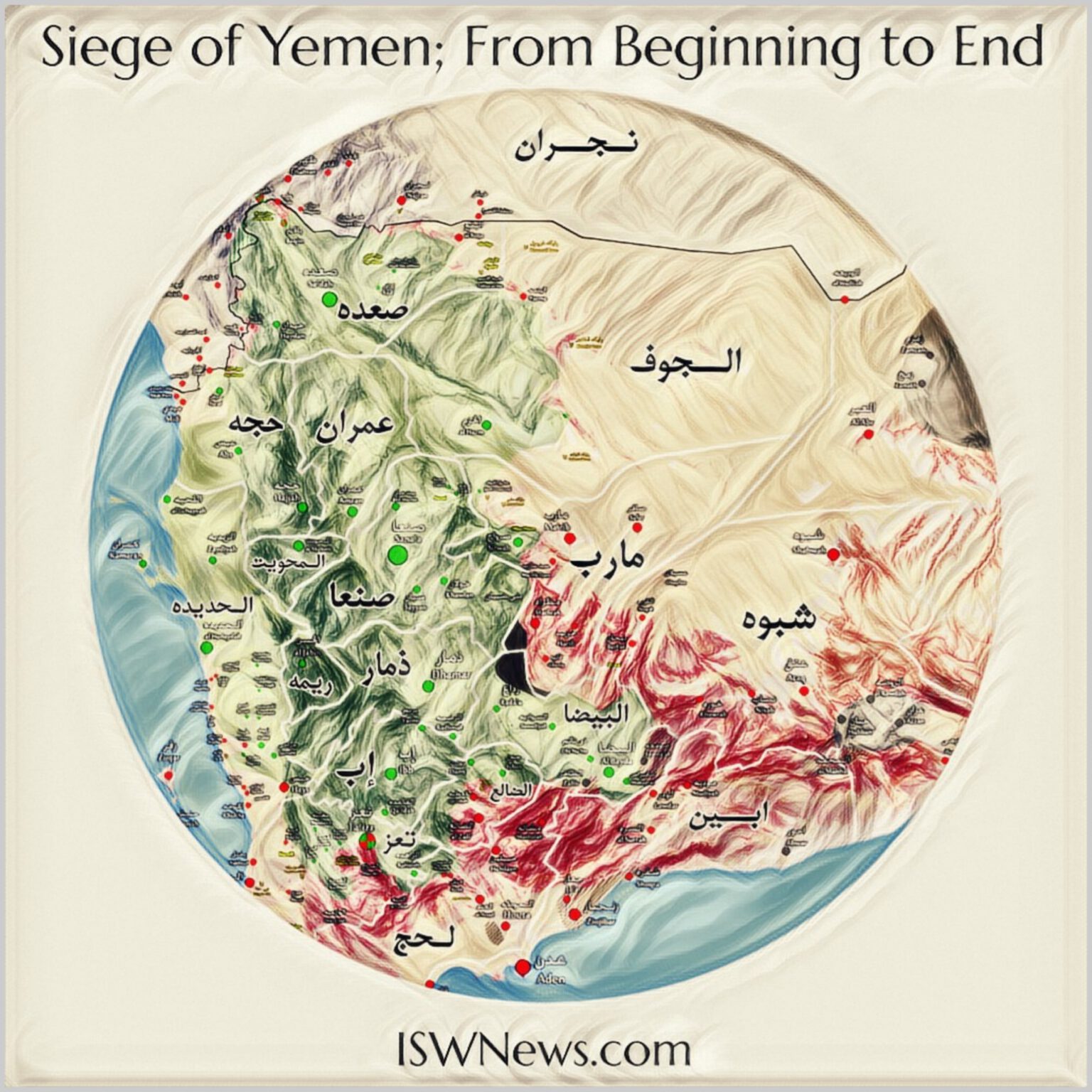
Opinion: Siege of Yemen, From Beginning to End
Arrival of Iranian tankers at Venezuelan harbors and breaching the embargo of the country is a huge leap in Iran’s foreign policy and a blow to US arrogance which can be helpful in future, specially about Yemen.
Yemen had become the main battlefield between the Resistance and the West and both sides are reluctant to accept defeat in this arena.
The Resistance could destroy the cores of terrorism in Syria, Lebanon, Iraq and Gaza with help of Iran and its allies and now the only active front with main threats is Yemen. Therefore Saudi Arabia and UAE besieged Yemen from all aspects to cut Iran’s helps to Ansar Allah from the beginning of the assault. They even controlled or formed allegiance with Somalia, Djibouti, Sudan and Eritrea which could be helpful for Iran to support Ansar Allah. Americans hindered Iran aids using political tricks. All these oppressing acts resulted in unfair siege of Yemen and its people in several years.
We examine some points regarding this topic:
1. Iran’s mistakes in foreign policy toward horn of Africa:
Sudan, Djibouti, Somalia and Eritrea were among states that Iran expanded relationship with to enhance maritime transportation safety in the Red Sea and Gulf of Aden.
After the start of Yemen war, these countries changed their course an incredible amount of 180° and against Iran’s interests, started to follow Saudi coalition on sieging Yemen.
Even though these countries cutting ties with Iran was considered as joke by many but it just shows Iran’s policy was not correct in horn of the Africa and resulted in Yemen full siege.
Iran’s mistakes are:
a) Ignoring US influence on horn of the Africa:
In addition to political and power influence, USA has a huge base “Camp Lemonnier” in Djibouti which hosts many warplanes and American soldiers.
b) Taking wrong stances toward Somalia civil war.
c) Media and political passivity against UN and Saudi Arabia accusations regarding transporting weapons to Somalia and training Ansar Allah troops.
d) Opening relationship with low level and weak politicians such as Omar al-Bashir.
2. Guarantee of Iranian politicians to the United States to stop sending aid to Yemen:
The only evidence is former US secretary of state, John Kerry, remarks at the council on foreign relations on Iran, on 24 July 2015 who said: “A few months – a couple of months ago, I guess it was, when you saw a convoy coming down out of Iran heading towards Yemen, I was on the phone in an instant to my counterpart, and made it very, very clear that this could be a major confrontation, that we were not going to tolerate it. And he called me back, indeed, within a short span of time and said, “They will not land, they are not going to unload anything, they are not going to go out of international waters,” and then they went home.”
In fact such decisions without strategy helped Yemen’s siege.
3. Ansar Allah negotiation with Saudi coalition to lift the siege:
Saudi coalition, who didn’t expect Yemen’s brave resistance, had to negotiate with Ansar Allah to achieve its political goals at the same time with military missions. The negotiations are:
a) In Geneva, June 2015.
b) In Muscat, September 2015.
c) In Switzerland, December 2015. Which were all unsuccessful.
d) In Saudi Arabia, spring 2016. It was the first negotiation in Saudi Arabia and was unsuccessful finally due to obstruction by resigned government of Mansour Hadi and Ali Abdullah Saleh.
e) Kuwait negotiation which was not successful due to assigning Ali Mohsen al-Ahmar as vice president of Mansour Hadi resigned government.
After failure of talks in Kuwait and rejection of US and UN plans by Mansour Hadi resigned government, the plans by Persian Gulf Cooperation Council and National Dialogue Conference were introduced which was accompanied by UN security council resolution 2216 which entails “forming a committee to monitor drafting the new constitution”, “timetable to hold general election” and “holding of a referendum”. National talk conference emphasized on forming a federal government of several areas by Yemeni groups agreement and resolution 2216 also accepting these two plans emphasized on political solution and ceasefire.
These plans failed as well and battle in west o f Yemen coasts from Bab al-Mandab Strait to south of Al Hudaydah and north of Hajjah province intensified.
On December 14, 2018, the resigned government and Ansar Allah agreed on ceasefire, exchanging POWs, lift of siege of Taiz and west of Yemen areas in Stockholm, Sweden.
In this agreement the control of Al Hudaydah harbors were left to local joint forces and the income of oil export from Marib oil field was done by Sanaa central bank and the siege of Sanaa airport and Taiz to be lifted. But due to political discord and UN passivity in supervising the obligations of Mansour Hadi resigned government, Ansar Allah limited their obligations on joint forces controlling the harbors.
After this, there were significant turn in the war by Ansar Allah’s drone and missile attacks on Saudi Arabia oil infrastructure, operations of north of Saadah and Al Jawf. After being passive and on weak side, Saudis started Muscat talks.
What has been released unofficially from Muscat talks, from delegates of both sides talks (Muhammad Abdulsalam and Khalid Bin Salman), Khalid Bin Salman direct call with Mahdi al-Mashat and UN convoys meeting with Ansar Allah officials, the following are topics of talks:
a) Ceasefire in southern border of Saudi Arabia and DMZ along border.
b) Lifting siege of Yemen and reopening Sanaa airport.
c) Limiting Ansar Allah’s drone and missile attacks to Saudi Arabia.
d) Ansar Allah cutting ties with Iran in return for Saudi support for Ansar Allah.
Ansar Allah leader in his meeting with UN special convoy Martin Griffiths, rejected cutting ties with the Resistance and conditioned any ceasefire to lift of siege of Yemen.
As Ansar Allah stopped attacking Saudi Arabia oil infrastructures in return for several medicine cargo planes landed in Sanaa and some ships conveying oil products released.
At the moment, most of the previous negotiations have failed which is due to the West pressure on Saudi Arabia, discord between Saudi coalition, continuation of air strikes and siege of Yemen.YOUR SUPPORT IS CRITICAL TO KEEP ISWNews ALIVE!
I’d like to thank readers for their confidence and support. Thanks to your support we can continue to perform our duty on reporting the important events in the region. So If you like our contents, please don’t feel embarrassed to contribute and help our project, for as little as 1 Dollar. Your contribution, however small, will help ensure our project continuity. Thank you.
-

Yemen: Ansar Allah operations against ISIS and al-Qaeda in northern al-Baydha
Al-Zahra, Al-Sharia, Al-Khabza and Jabal Al-Alib areas in the western part of Al-Qifa area were liberated during the operation today. Clashes continue on this fromt, and Saudi coalition warplanes have so far not provided support to ISIS and al-Qaeda.
In recent years, ISIS and al-Qaeda militants have always been active in the region against Ansar Allah and their allied tribes, and have sometimes committed killings and crimes against innocent people, which has ultimately led to Ansar Allah operations in the region. The operation is said to continue until the district of the Walad Rabi’ and al-Qurayshiyah is completely cleared of ISIS and al-Qaeda. -

Latest Updates on Iraq, 9 August 2020
– Prime ministry office: Al Kadhimi will travel to US next week per official invitation.
– Al Kadhimi selected 6 June 2021 as the date for early election. It is said Al Kadhimi will participate with a separate list.
– Kurdish controlled areas in north of Iraq were bombed by Turkish warplanes following the operation “Claw-Tiger” against PKK.
– Local sources: In the investigation of general Soleimani and al-Muhandis martyrdom by special committee, a cellphone company was giving information out of cellphone of a companions of martyr al-Muhandis to American command in Victory base, Baghdad airport.
– Several rockets launched toward US embassy in Baghdad security zone.
– Office of grand Ayatollah Sistani:
Marja sends his deepest condolences for the painful explosion in Beirut which resulted in death and disappearance of many people and several times more injured and tens of thousands lost their homes and the vast damage imposed on the buildings and public properties which was a painful image in the last several decades.
– Bombing terrorist groups Komala and the Democratic Party, north of Iraq, by Iran.
– Arresting wanted terrorist “Saffah Diyala” in Iraq who was accused of bombing in 2008 in Khan Bani Saad which resulted in martyrdom of 150 and injury of 300 people.
– ISIS last week attacks to Diyala, Salahuddin and Samarra to Iraqi forces positions resulted in martyrdom of several forces.
– John Bolton in an interview with Rudaw belonging to Nechirvan Barzani: I am convinced now that dividing Iraq is useful. Kurds should be ready for after US election.
– US coalition spokesperson in Iraq in a press conference in Description Sulaymaniyah city claimed that US army will open a new counselling center in Erbil (center of Iraq Kurdistan) to coordinate the coalition forces.
– Yahya Rasul, Iraqi chief of staff spokesperson, reported of collaboration between the government and iqlim Kurdistan to exchange information and fight terrorist group ISIS and to cover up security holes of some cities in Iraq.


