According to the US-Taliban peace agreement, intra-Afghan talks were to begin ten days after the signing of the Taliban-US peace agreement on February 29, 2020; But the process of releasing Taliban prisoners, a precondition for the Taliban to begin negotiations, has been delayed for more than seven months. Following the delay, representatives of the two sides finally met in Qatar last Sunday and officially resumed initial talks.
In the meantime, foreign countries have each had an impact on these negotiations, among which the United States has a greater influence and is directly involved in the negotiation process.
And according to the framework designed in these negotiations, it can be said that the Afghan government is not able to move forward without the approval and coordination of the United States.
“We agree with the Taliban that no foreign parties should be present in the negotiating room, but they may be needed at some point in the negotiations,” Abdullah Abdullah said in an interview before the initial talks with the Taliban.
Other important issues raised by the parties in the negotiations include the following:
1- Ceasefire: which Abdullah Abdullah has mentioned as the first issue in the negotiations with the Taliban and despite the reduction of violence agreed between the US and the Taliban, the clashes continue and the Afghan government strongly condemns this issue. Sustainable casefire is one of the main demands of the Afghan government.
2- Islamic system: which “Mullah Abdul Ghani Baradar” has mentioned as one of the main goals of the Taliban. Of course, most political currents in Afghanistan emphasize the implementation of the “Islamic system” in this country, but their definitions are different from this statement, and perhaps this is the most important reason for the continuing war in Afghanistan so far.
3- Provisional government: which is mostly mentioned by the Afghan media and has not been seriously discussed in the negotiation process so far. But it could become the Taliban’s newest and most important negotiating tool in the peace talks.
4 – Reduction of foreign forces: This issue is also one of the US commitments in the peace agreement with the Taliban, which according to the latest statements of US officials, the US is reducing the number of its troops from 8,000 to 4,500.
The US military withdrawal from Afghanistan, in addition to the triumphant gesture it portrays for the Taliban, will make some influential powers, such as Iran and Russia, more positive about the Afghan peace talks.
In fact, the US withdrawal from Afghanistan will alleviate some of Iran’s concerns about the security of its eastern borders, and with this, the level of hope for a full-fledged peace in Afghanistan will increase.
Another issue highlighted by the media in recent days was the shift of the Taliban negotiator from “Shir Mohammad Abbas Stanekzai” to “Mawlavi Abdul Hakim”, which was attributed to internal Taliban disputes. This change not only does not reflect the internal differences of the Taliban, but also shows the coordination and intelligence of the Taliban during the negotiations. Because Abdul Hakim is a more dominant figure in the field of negotiations with Afghan internal groups and more suitable for resolving disputes with them.
One of the reasons Stanekzai chose to negotiate with the United States was his fluency in English and foreign policy issues, but what matters to the Taliban in negotiating with Afghan groups is the ideology and thinking they have fought for years to differentiate themselves from other Afghan groups. According to Taliban officials, no one but Mawlavi Abdul Hakim is able to defend their positions in the internal negotiations.
In general, both the central government and the Taliban have come to the conclusion that war is not the right solution to the conflict, and that negotiation is the best way to bring peace to Afghanistan.
Based on past statements by Taliban officials and the change in the composition of the Taliban negotiating team, it can be said that the group does not intend to withdraw from its positions in the inter-Afghan talks from “forming a government” and it seems that issues such as “permanent ceasefire” And “severing ties with al-Qaeda” are Taliban’s tools for achieving this important goal.
Therefore, it is very likely that the Taliban will call for elections in Afghanistan in the negotiations, because they consider the majority of Afghanistan as their supporters. Also, the Taliban will definitely never approve of Ashraf Ghani’s government as the organizer of the elections and will demand the formation of an interim government or an independent election committee to hold the elections; Because they believe in fraud and manipulation of votes in the third and fourth presidential elections in Afghanistan and will not enter the predetermined land by the Westernist government of Afghanistan.
Category: Central Asia – Pacific
-
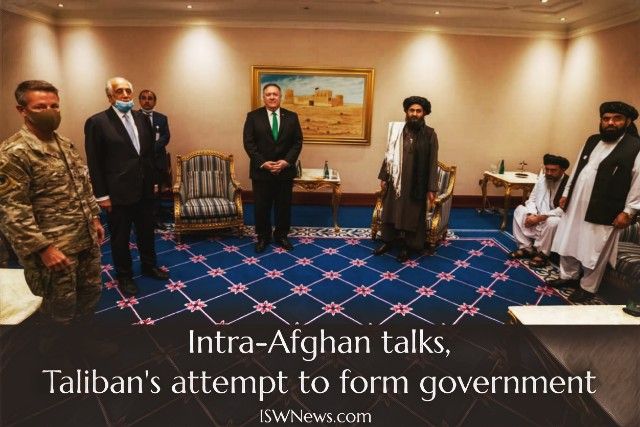
Intra-Afghan talks, Taliban’s attempt to form government
-
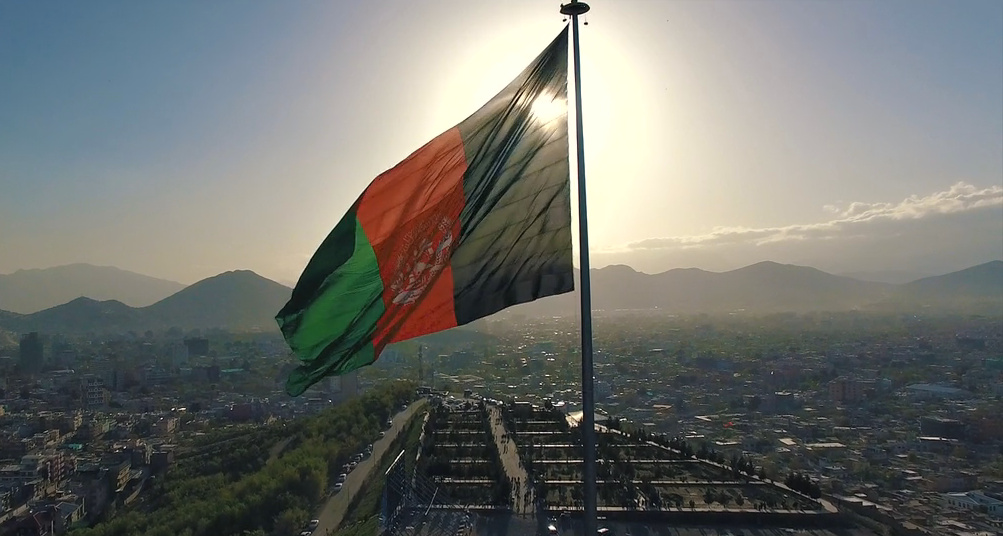
Latest updates on Afghanistan, 10 September 2020
1. General Kenneth F. McKenzie, terrorist commander of CENTCOM:
In the next two months the number of American soldiers will decrease from 8,600 to 4,500. Taliban did not cut ties with Al Qaeda, against the Doha agreement.
2. Kabul:
The death toll of terrorist blast en route vice president caravan reached 10 killed and 15 injured.
3. Herat:
Due to conflict between security forces and Taliban in Pashtun Zarghun district, six Taliban militants killed and four injured.
4. Balkh:
Due to aerial and ground attacks by security forces on Taliban positions in Balkh province, 13 killed and injured.
5. Badakhshan:
Due to Taliban’s last night attack to Arguy district, four of people’s immobilization forces martyred.
6. Afghanistan department of state:
Due to Taliban attacks in the last week, 49 civilians killed and 49 injured.
7. Pakistan:
Pakistan army shot down an Indian army quadcopter over Kashmir border.
This is the eleventh Indian quadcopter shot down by Pakistan army. -

Terrorist attack on the convoy of the Vice President of Afghanistan
So far, two people have been killed and 12 injured in the attack. The Taliban have denied responsibility for the attack, and ISIS is likely to take responsibility.
-

Important visit of the Russian delegation to Damascus
A high-level Russian delegation arrived in the Syrian capital, Damascus, on Monday headed by Russian Foreign Minister Sergei Lavrov and Russian Deputy Prime Minister Yuri Borisov.
During the meeting, possible new agreements between the two countries and the reduction of the effects of Western sanctions against Syria were discussed. -

US imposes sanctions on top international criminal court officials
According to US Secretary of State, Phakiso Mochochoko, the head of the ICC’s Jurisdiction, Complementarity and Cooperation Division, was also blacklisted for asset freezes and travel bans.
In November 2017, the prosecutor of the International Criminal Court, Fatou Bensouda, asked the judges of the International Criminal Court to issue the necessary permission to begin a formal investigation into the war crimes in Afghanistan, which include the US military, the Taliban and even the Afghan government. Since then, US officials have repeatedly used threats and sanctions against the criminal court and member states to prevent investigations.
Indeed, the question arises as to why the United States is so afraid of investigating war crimes in Afghanistan and throws itself into the fire and water to prevent the normal progress of the case ?! Is America afraid of revealing the facts?
The question arises why the United States is so afraid of investigating war crimes in Afghanistan and does its best to prevent the normal progress of the case ?! Is America afraid of revealing the facts?
There have been many reports in recent years about the possibility of war crimes being committed by the CIA and the US military in Afghanistan. According to one report, in 2003 and 2014, US military and intelligence agents tortured at least 61 detainees inside Afghanistan during the war in Afghanistan, committing war crimes.
Or in 2015, at least 42 people were killed and more than 30 were injured when a US military aircraft attacked the Kunduz Trauma Centre operated by Doctors Without Borders in the city of Kunduz in northern Afghanistan. -

Latest Updates on Afghanistan and Pakistan, 3 September 2020
1- Peace talks:
– The Afghan government has released 70 more Taliban prisoners.
– Hanif Atmar: The issues that have hindered the inter-Afghan talks have been resolved and the rest of the Taliban prisoners will be released.
2- Balkh:
– As a result of a car explosion in Balkh city, 11 people were martyred and 60 people were injured. The Taliban claimed responsibility for the attack.
– During the Taliban attack on a special forces base in Balkh, three Afghan forces were killed and 41 others were wounded.
3- Takhar:
– An Afghan Air Force Mi-17 helicopter crashed on the way from Kunduz to Takhar. The Taliban took the responsibility of the incident but the Ministry of Defense stated that the cause of the crash was a technical failure.
– Security forces liberated Nahrab village in Farkhar district from Taliban control. The village was captured by the Taliban last week.
4- Ghor:
Eight members of the security forces were killed in a Taliban attack on a security checkpoint in the town of Ghor.
5- Pakistan:
Three people were killed and four others were injured when unidentified gunmen attacked Pakistani troops in the south Waziristan region. -
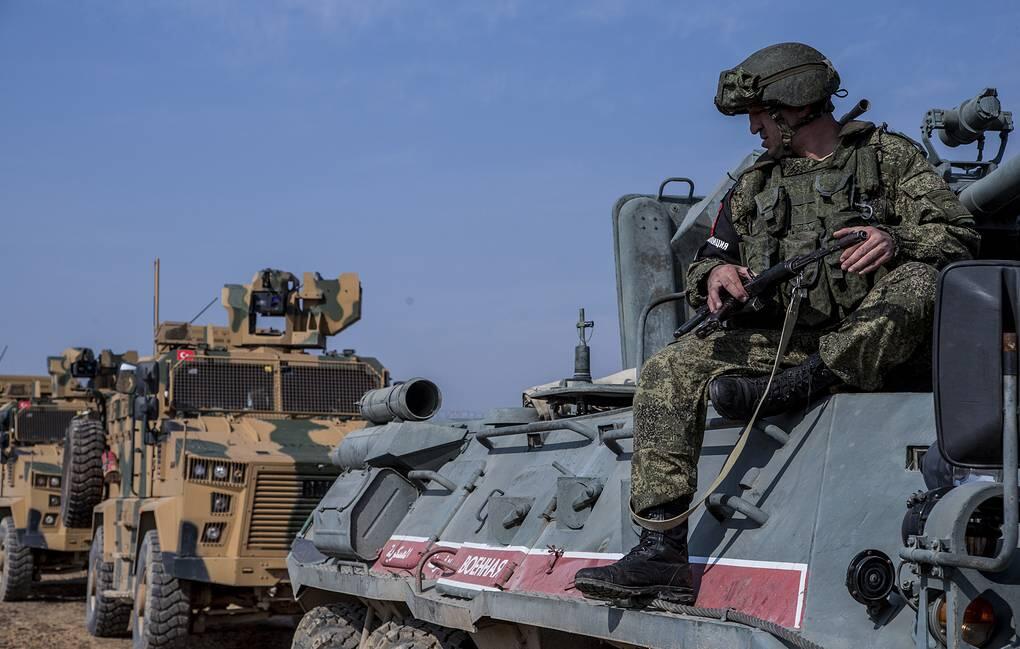
The first joint Russian-Turkish military exercise in Syria
According to the Hmeimim Center for Reconciliation in Syria, the joint military exercise was held in the Tarnbah area west of Saraqeb, with the aim of countering terrorist groups blocking the ceasefire process in the southern region of Idlib.
Exercises included joint fire targeting of sabotage groups affiliated with armed groups that refuse reconciliation, withdrawing damaged military equipment and providing medical assistance to the injured.
Recently, joint Russian-Turkish military patrols in southern Idlib have come under increasing suicide terrorist bombing and roadside bombs, and the Turkish and Russian armies have suffered casualties and material losses, and the continuation of these sabotages can completely destroy the ceasefire in the south of Idlib. -

Latest Updates on Afghanistan, 25 August 2020
1- High-ranking Taliban delegation travels to Pakistan
The Taliban Political Bureau called Pakistan’s move to fully implement UN Security Council Resolution 2255 sanctions against the group’s leaders an obstacle to the Afghan peace process.
The resolution, issued in 2015, referred to the freezing of assets, travel bans and arms embargoes on individuals, groups, companies and individuals linked to the Taliban.
Despite this decision, a high-ranking Taliban delegation led by Mullah Abdul Ghani Baradar, the group’s political bureau, recently traveled to Islamabad at the invitation of the Pakistani government.
2- Qunduz:
As a result of the Taliban attack on the security forces’ checkpoint in Imam Sahib district, this area fell into Taliban and the fate of 20 security forces is unknown.
3- Afghan Ministry of Defense: Dozens of Taliban members have been killed in clashes with security forces in Qunduz and Baghlan provinces.
4- Ghazni:
The governor’s office building in Dah Yik was destroyed after a car bomb exploded. During the terrorist explosion, three security forces, including the commander in charge of the area, were killed and nine others were injured.
5- Peace talks:
– The Taliban has appointed a 20-member delegation for inter-Afghan talks.
– Ahmad Zia Massoud: Ashraf Ghani has offered the Taliban a joint government and a 50% stake in the government.
6- Appointing a new police chief for Kabul city
The Afghan Interior Ministry said Kabul police chief Amanullah Wahidi had been fired after rising insecurity and terrorist attacks in the capital, and Juma Gol Hekmat was appointed as the new Kabul police chief.
In recent weeks, Kabul has witnessed a dramatic increase in terrorist operations such as bombings, assassinations and rocket attacks. -
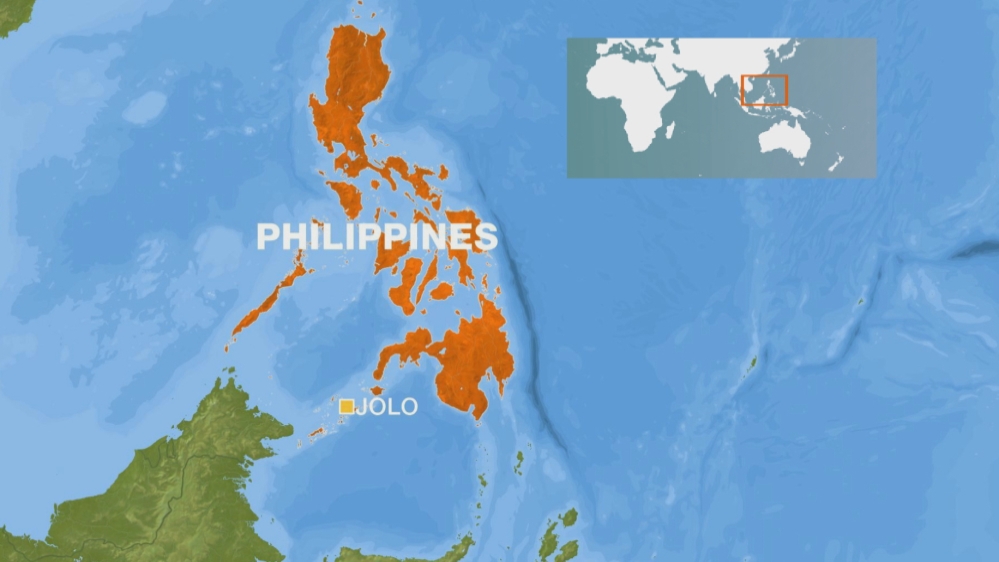
15 killed and 75 injured in blasts in Philippines
The first blast occurred around 12 noon and the second blast an hour later, 100 meters from the site of the first blast, with the aim of inflicting further damage on security forces and the crowd.
The first blast was caused by a motorcycle bomb near a parked military vehicle, killing a number of military personnel and civilians. The second blast was carried out by a female suicide bomber while security forces were investigating the area, and she blew up her suicide belt, killing a number of security forces.
No group has claimed responsibility for the attack, but it is believed that the attack was carried out by ISIS elements.
Last year, on January 27, 2019, more than 20 people were killed and more than 100 were injured in a similar bombing at Jolo Cathedral. The East Asian branch of ISIS claimed responsibility for the attack on the Julu Cathedral. -
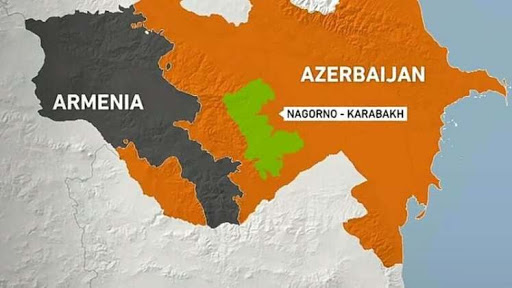
Azerbaijan on the break line!
Heydar Alireza oglu Aliyev, the third President of Azerbaijan, took office on October 3, 1993, to end the military defeat of the country against the Armenian army and Artsakh militias in the Nagorno-Karabakh war. The presence of Iranian advisers and Afghan fighters (Gulbuddin Hekmatyar’s Islamic Movement Party), Chechens, Kyrgyz and Uzbeks in the battles of this war was the result of his foresight to draw the other side to balance the battlefield. With the presence of these forces, the battles were stabilized in favor of the Azeri side and little progress was made on the battlefield of Karabakh. The number of troops trained for combat in the mountains and rugged terrain was even higher than before.
By changing the military situation, Azerbaijan was maneuvering on political options and trying to combine military and political victories. It is safe to say that the second half of 1994 was a miserable year for Haidar Aliyev, and that all his aspirations to draw new ground for battle were fading.
This time the new tactics of the Armenian army and guerrillas in the war were unveiled. The large-scale offensive, accompanied by armored attacks, heavy artillery fire, and heavy artillery attack and attacking to main supply roads created new conditions in the war.
The city of Aghdam fell with the same tactic and the Armenian forces reached the plains of Azerbaijan from the mountains and there was no significant obstacle in front of them to be able to stop their advance.
Wrong assessment of the Armenian advance into the interior of Azerbaijan led to the concentration of forces and equipment on the middle front of the battle to prevent them from continuing to advance in the central regions of the country. But the Armenian forces moved the war to the other side.The regiment of Armenian forces poured from the Agdam front to the south of Nagorno-Karabakh and the Rayons bordering Azerbaijan with Iran. About 10 months after the noisy election of Heydar Aliyev, this time it was the turn of Gabriel’s and Fuzuli defenders to test themselves against the attack of about 10,000 Armenian troops and about 5,000 Armenian guerrillas (Artsakh). The invading forces were supported by artillery fire and armored forces (tanks and personnel carriers), and their large presence led to a bloody battle. The battles in the forested areas and surrounding hills soon reached the town of Fuzuli, and between August 16 and 23, 1994, most of the Fuzuli district fell to Armenian forces and were occupied. Rayon Jabrayil suffered the same fate and in a short time Azerbaijan lost the rhyme on the battlefield. Air support only delayed the withdrawal of Azeri troops and guerrillas.
The advance of the Armenians was so rapid that the Azeri forces chose the option of delayed and retreating operations. About 20,000 civilians lost their homes and fled to the Iranian border and the Aras River. Of course, these people were the last ones who were willing to evacuate their homes due to the fall of the defensive positions. Military and paramilitary forces were also behind them, and Iranian territory was the only place they could take refuge. Governor of Fuzuli also came to Iran with these refugees. Horadiz-Mil Moghan Dam (joint dam) on Aras acted as a bridge to cross. In addition, trucks, small boats, horses, and mules transferred people through Aras into Iranian territory. After a while, the Horadiz dam was under siege and occupied by the joint forces of Armenia and Artsakh. But there were still other Azeris behind the border.
During all this time, the artillery fire of the Army of the Islamic Republic of Iran played an important role in evacuating the remaining civilians and the military so that they could cross the Aras River with BTR trucks, tanks, and military and civilian vehicles. Of course, news about the construction of floating bridges by army and IRGC engineering units on Aras was published unofficially. There are rumors about the martyrdom of Iranian Revolutionary Guards and Afghan Mujahideen in this battle, which has not been confirmed yet, and only the inscriptions of a few gravestones of the victims of the Nagorno-Karabakh war in Kheradlan (a city near Baku) show this fact.
After capturing northern Aras, Armenian forces attempted to blow up the Horadiz-Mil Moghan dam, which was opposed by Iran and the threat from the Iranian side caused them to withdraw from this action.
Relief aid from the Red Crescent and the Iranian Relief Committee in East Azerbaijan Province (according to the country’s divisions at the time) was sent to Azerbaijani refugees on Iranian soil. Rescue teams provided temporary shelter for the wounded by setting up tents and setting up a camp.Ambulances also transported the seriously injured to Ardabil and Tabriz hospitals. Azerbaijani President Heydar Aliyev upon entering Iran and visiting the refugee camp, blamed the Fuzuli governor and his military and paramilitary commanders for the defeat and called for the removal of incompetent personnel.
Azerbaijani military and paramilitary forces due to the dire situation on the battlefield, in the shortest time transferred to Azerbaijan with all their weapons via the corridor provided by Iran in the Bile Savar border crossing to prevent the advance of Armenian forces to the east (Imishli and Saatli Rayons). Dozens of Iranian trucks were also tasked with transporting refugees back.
The remarkable point in this battle and defeat was the loss of the communication line of Zangilan road and its only communication route was supplied from Iran and a population of 60,000 people was besieged.
Under these circumstances, Aliyev’s government was still needed Iran’s helpa. Of course, Azerbaijan planned an operation to retake the lost areas north of Aras, which was given the green light by Iran. Azeri planes entered the occupied territories from Iranian airspace and heavily bombed the area around Horadiz.
Even Iranian artillery units assisted Azerbaijan in the military operation against Armenian forces, and surveillance from the Iranian side caused heavy casualties to the Armenians. Joint Armenian forces withdrew from a significant part of Rayon Fuzuli, but the towns of Jebrayili and Fuzuli and the line of contact with Zangilan remained in their hands.Shortly afterwards, Zangilan fell and the process of displacing refugees to the Iranian border was repeated. Of course, the President of Azerbaijan later expelled the Iranian advisers who were training his country’s forces from Azerbaijan so that religious beliefs would not be formed among the armed forces of this country.
Heydar Aliyev’s political project led to a political defeat and a forced ceasefire after the Minsk summit. After the end of the war, his government turned to the economic strengthening of Azerbaijan, the extraction of oil and gas from the Caspian Sea and the distortion of the history of the Nagorno-Karabakh war, to the point that the recapture of the occupied territories of Fuzuli was only the result of efforts by the Azerbaijani armed forces. But most people in this country never forget about Iran’s humanitarian aid and military help to Azerbaijanis. -
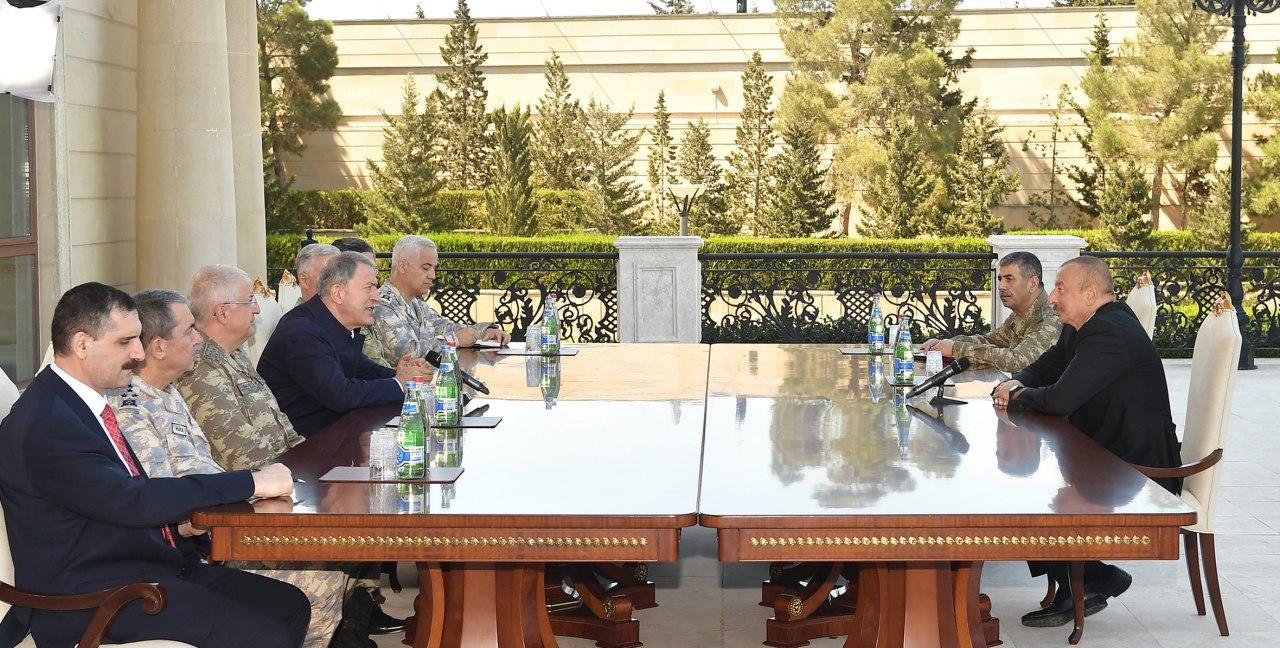
The end of the first phase of the joint exercise between Azerbaijan and Turkey
Ilham Aliyev, beside expressing the satisfaction with the development of relations between the two countries, noted that the recent military cooperation was not only limited to a usual exercise and the armed forces of the Republic of Azerbaijan were training under the supervision of commanders from the Republic of Turkey; that first step of these trainings was over today.
Aliyev also mentioned to removing some concerns of foreign countries about military activities of Turkey in Republic of Azerbaijan; that it seems to be a mention to phone call with Vladimir Putin on yesterday.
Also, Holusi Akar the Turkish defense minister, with expressing satisfaction and solidarity between the two nations, added that Republic of Azerbaijan will not be alone in difficult days.
In the critical days of the recent two months, Ilham Aliyev simultaneously dismissed some pro-Russian political figures and arrested some political figures close to Turkey. Today, his mentioning to removing concerns of Russia is also notable in its kind. -
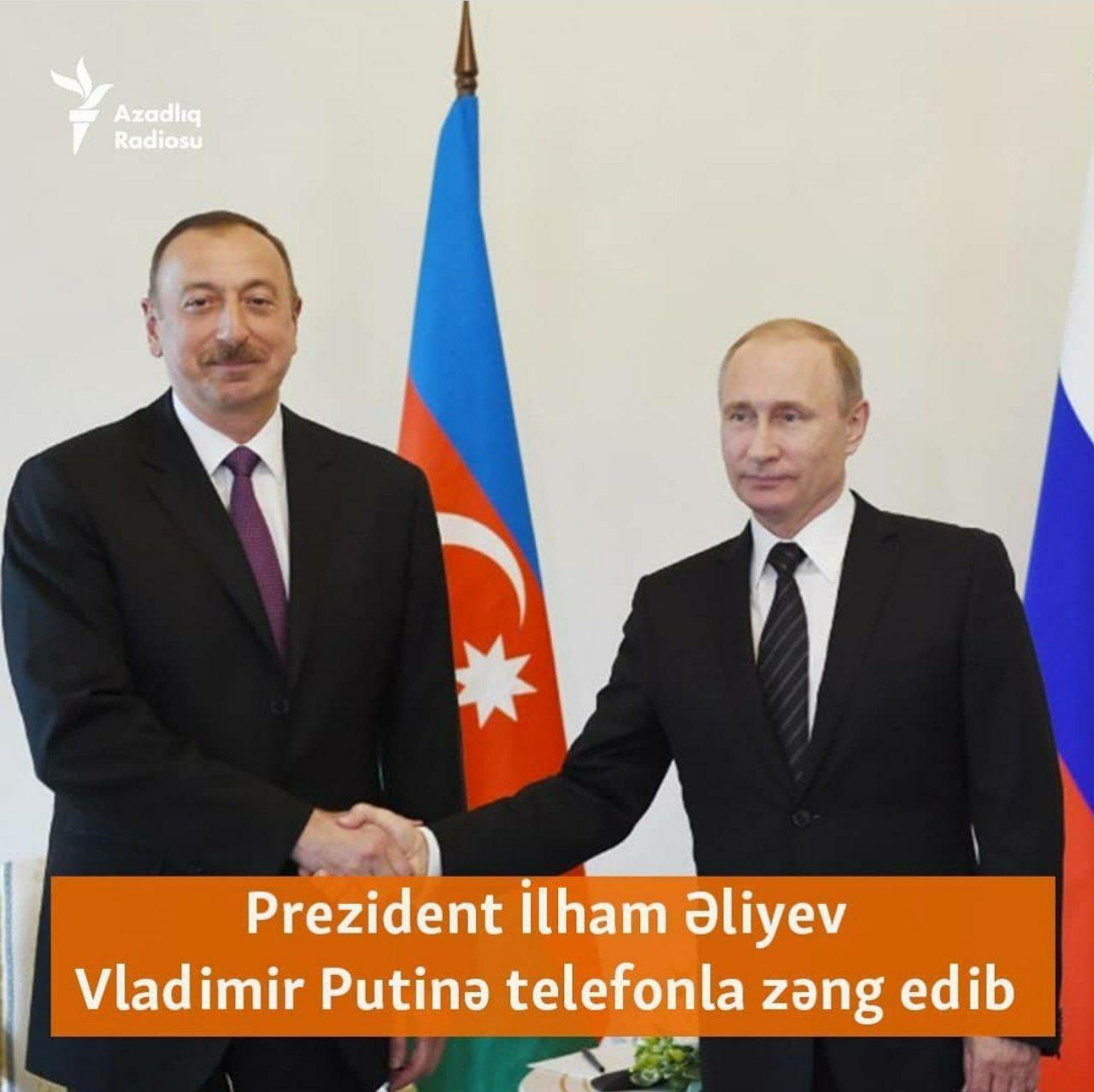
Russian president Vladimir Putin talked on phone with Azerbaijan president
As mentioned before, following the joint military drill of Turkey and Azerbaijan and dismissing pro-Russia officials in Azerbaijan, Baku needed to get confidence of Russia back.
Moscow rejected Yereavn ‘s proposal of a joint military drill a while ago.


