On May 23, Israeli warplanes fired several missiles from the Mediterranean Sea west of Banias, targeting some points in the central region.
In this regard, the Deputy Head of the Russian Center for Reconciliation in Syria, said: “On Friday evening, from 20:25 to 20:32 local time, six Israeli Air Force F-16 fighter jets without entering Syrian airspace fired 22 missiles at the Syrian Research Center facility in the area of Masyaf and the port of Banias. Syrian air defenses destroyed 16 missiles and a drone.”
He added: “As a result of Israeli airstrikes, three Syrian soldiers and two civilians were killed and two Syrian soldiers were wounded. The special equipment warehouses of the Syrian Research Center were also damaged.
Satellite images released from the Masyaf area show that at least two buildings were severely damaged and parts of them destroyed as a result of Israeli airstrikes.
A Syrian military source stated that, “About 8:20 p.m. this evening, the Israeli enemy carried out an air attack with bursts of missiles from the direction of the Mediterranean west of Baniyas, targeting some points in the central region (likely Hama province). Our air defenses confronted the aggression’s missiles and shot down most of them.” The source added that the aggression “led to the death of five, including one civilian, wounding seven citizens, including a child, and causing some material losses.”
The SANA news agency indicated that the Israeli aggression also resulted in the outbreak of several fires in the farms of Masyaf countryside in the western Hama, as a result of the fall of a number of hostile missiles in those areas.
It should be noted that on April 27 also, the Israeli warplanes fired missiles from Lake Tiberias at targets around the city of Damascus, killing four Syrian soldiers and wounding three others.
The outbreak of war in Ukraine has affected the world energy market. The most important event after the increase in oil and gas prices is the limitation and conditions of the new supply of energy to the EU market by Russia. This is why the European Union is thinking of reducing purchases from Russia to supply gas.
Europe, meanwhile, is thinking of countries that can meet this need. Europe’s strategy is to meet its needs from several sources so that it does not become dependent on one source.
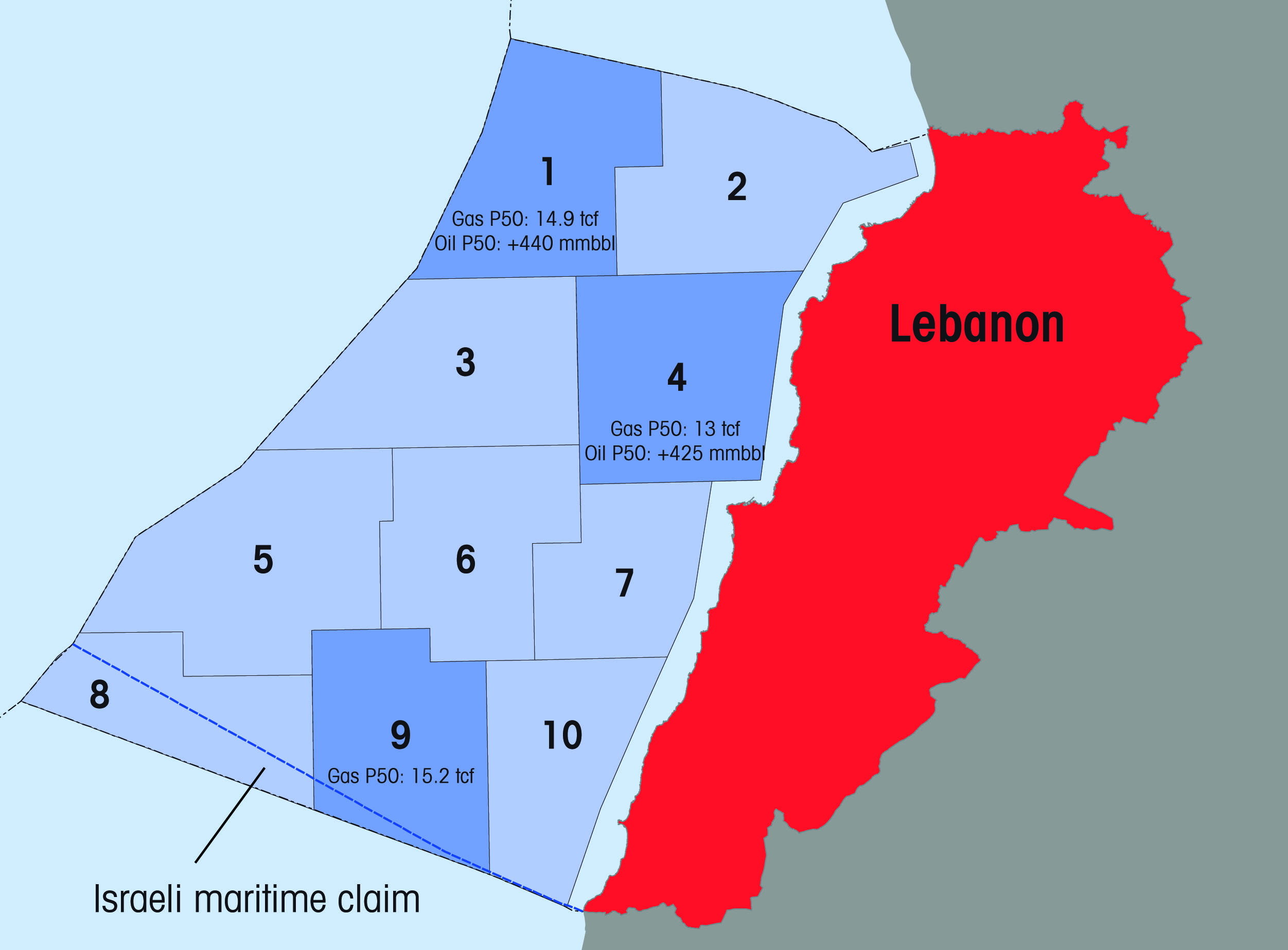
In addition to increasing oil and gas purchases from old suppliers, Europeans are also turning to new suppliers. Over the past month, news of Turkish-Israeli cooperation has shifted the focus of the energy market. The Leviathan and Tamar gas fields in the waters of occupied Palestine, as well as the oil and gas fields in the disputed EEZ between Lebanon, Israel and Cyprus in the eastern Mediterranean, are a new source of gas for Europe.
Lebanon’s oil and gas blocks and the disputed area
Turkey has no territory in this area, but continues its illegal exploration due to the occupation of the northern Republic of Cyprus and the formation of the de facto Turkish government of Northern Cyprus. The news of cooperation with Israel in these fields and the pipeline connecting the Turkish port of Ceyhan is a turning point in European strategy.
Gas pipeline from the Turkish port of Ceyhan to the occupied Palestinian gas fields
These fields are the closest point to the export terminal of Ceyhan port and Europe. From here, Turkey sends Baku-Tbilisi-Ceyhan oil and gas shipments to Europe. The security of this field is much higher than other fields in the Caucasus and Libya due to the military power of Israel and Turkey and the NATO base in Cyprus. The Russian Federation’s naval and air base in the port of Banias and Latakia are not efficient enough to cut it off, but it is a potential danger.
The current challenges for these pipes and fields are protests by the Lebanese and Cypriot governments, Iranian and Russian bases in Syrian ports, and pro-Iranian forces in Lebanon.
Cyprus’s European nature and de facto Northern Cyprus government also do not have much opposition to Turkish influence in this area. They are relinquishing their share, and the main challenge is on the eastern shores of the Mediterranean.
The Lebanese government’s opposition, due to the presence of Iranian supporters, including Shiite parties in the parliament and cabinet, is a serious and important issue that makes things difficult for Israel politically. They are a major obstacle to Israel, Turkey and the European Union, but the Lebanese government needs such a resource to get rid of its crisis-ridden economy. This reduces the share of other parties. In this case, the European Union is trying to attract the Lebanese cabinet with its own groups and negotiate with Iran.
EEZs in the eastern Mediterranean – Maritime disputes in Mideterenean
At around 3 am local time, the Israeli army fired several surface-to-surface missiles at targets near the town of Hadar, causing material damage.
Hours after sunrise, Israeli forces launched a second artillery attack on Syrian territory, targeting SAA 90th Brigades on the outskirts of Jabhat al-Khashab, near the occupied Golan Heights, but no casualties were reported.
Syrian officials and the Israeli regime have not yet commented on the attacks, but it is likely that in the coming days the Israeli army will claim that it carried out these attacks under the pretext of attack on Iranian-backed forces or Hezbollah.
This is the first Israeli attack on Syrian territory since Syrian President Bashar al-Assad’s visit to Iran.
The last attack of the Israeli regime on Syria took place on April 27 this year. Israeli warplanes fired missiles from Lake Tiberias at targets around the city of Damascus, killing four Syrian soldiers and wounding three others.
According to a Syrian military source, “at around 00:41 local time on Saturday, the Israeli enemy fired missiles from Lake Tiberias, targeting areas around the city of Damascus. The Syrian air defense intercepted and destroyed several enemy missiles. Four Syrian army soldiers were killed and three others were wounded in the attack.”
On April 14 also Israeli warplanes used the occupied Golan Heights to target parts of the western suburbs of Damascus. The attack did not result in any casualties.
Consecutive Israeli aggression and attacks on Syria continue while the United Nations and international organizations remain silent about the apparent violation of international law by Israel.
The so-called “recognition of Zionism” has reached such a stage that Iraq is in danger of disappearing as a country. The fact is that the separatist tendencies emanating from the ruling “Sunni” tandem Halbousi-Khanjar are directly related to the process of “normalization”, moreover, the colonialists are ready to plunge the Palestinians themselves into this provocation.
It is no secret that the current speaker of the parliament is a supporter of the creation of “Sunni autonomy” throughout Western Iraq, the same can be said about his former “main opponent” (Khanjar). According to media leaks, since 2016 Anbar has been being prepared for the resettlement of Palestinian refugees.
The division of Anbar into two parts , the Iraqi and the Palestinian, will be the most important condition for Iraq’s accession to the “deal of the century”. It is obvious that the forces of evil are planning to settle Palestinians in the Anbar desert mainly from the West Bank, thus Zionism is trying to “solve” the problem of local resistance and the revival of the intifada forever. Now it is clear why the special services and politicians of Jordan regularly meet with the Mossad and pay a visit to the heads of the Zionist colony, the parties discuss the stages of the implementation of the operation to “resettle” the Palestinians.
The scariest thing in this story is that in Iraq itself there are influential forces supporting the project of creating a “new homeland” for Palestinians in Anbar. For example, the former speaker of parliament Mahmoud al-Mashhadani said that in the so-called “triple alliance”, “Sunnis”1 and Kurds have no problems with “normalization” of relations with “Israel”. The Sunni politician also said that in addition to the Palestinians, it is planned to send more than 500,000 Iraqi Jews to Iraq!!
Actually, the creation of a new concentration camp for the Palestinians is one of the goals of the Zionists who move around Iraq under the guise of American occupiers.
1- The main actor from the “Sunni side” is Halbousi. It is his name that the Iraqisassociate with all the actions of the pro-Zionist direction.
This morning, after the Palestinian resistance fired several rockets at the Zionist settlement of Sderot, injuring four Zionists, the Israeli army retaliated by targeting several areas in the Gaza Strip.
At the beginning of the attacks, the “Isa al-Batran” base belonging to al-Qassam Brigades in the Nusayrat camp in the center of the Gaza Strip was targeted by Israeli drones. Israeli warplanes then fired about 10 missiles at the base, causing a large-scale fire in the area. Israeli tanks and artillery targeted resistance observation posts east of the Albridge camp. East of Khan Yunis was also targeted by the Israeli artillery.
In the second wave of Israeli airstrikes on the Gaza Strip, the “Obaida” base of al-Qassam Brigades near the al-Maghazi camp in southern Gaza was attacked. In this attack, Israeli warplanes fired three missiles at the base. Israeli airstrikes south of the Gaza Strip severely damaged Palestinian civilian homes, injuring one Palestinian.
Palestinian resistance fighters fired surface-to-air missiles at Israeli warplanes in the Gaza Strip. This is the third time the Palestinian resistance has used MANPADS to target Israeli aircraft.
It is expected that with the resumption of clashes in Al-Aqsa Mosque and the resumption of Zionist attacks on this mosque, tensions will increase and we will witness a new round of fighting between Palestine and the Zionist regime.
Images of Israeli airstrikes hitting targets in the Gaza StripThe Israeli army released a video of an attack on targets in the Gaza Strip.Failure of Iron Dom missiles hitting each other
According to initial reports, three rockets were fired by Palestinian resistance groups into the occupied territories, two of which landed in open areas on the outskirts of Sderot and another hit a house. As a result of this attack, four Israeli were injured.
Israeli warplanes targeted the al-Qadisiyah base belonging to Izz ad-Din al-Qassam Brigades, the military branch of the Hamas movement west of Khan Yunis, with eight missiles and an agricultural land between Deir al-Balah and Khan Yunis with one missile. There were no human casualties in the attacks.
The Palestinian resistance also responded by firing surface-to-air missiles using MANPADS at Israeli warplanes. In this regard, the military branch of the Hamas movement announced: “The fighters of Qassam Brigades responded at 01:35 am today (local time) by firing surface-to-air missiles at the hostile warplanes of the Zionist regime in the skies of the Gaza Strip.”
Hebrew media acknowledged that Israeli warplanes had been forced to flee following the missile fire. It is believed that Al-Qassam Brigades have used the Strela MANPADS to repel Israeli warplanes.
This is the second time the Palestinian resistance has used this weapon to target Israeli aircraft. Earlier, in January 2, 2022, Palestinian groups used Strela MANPADS to counter Israeli helicopters in the Gaza Strip.
Israeli fighter jets attack the Gaza StripIsraeli fighter jets attacks areas in the south of Gaza StripSurface-to-air missiles fired at Israeli warplanes over GazaVideo released by the Israeli army of an airstrike this morning in the southern Gaza Strip
As a result of this rocket attack, the alarm sounded in the Israeli areas around Gaza. An Israeli army spokesman said the Iron Dome system had intercepted a rocket.
Following the attack, mediators are expected to begin consultations to reduce tensions and prevent a new war.
This is the first Palestinian rocket attack on the occupied territories after the recent attack by the Israeli military and settlers on Al-Aqsa Mosque. Palestinian resistance groups had recently warned Israeli officials that the Israeli government was responsible for any consequences of the attack on Al-Aqsa Mosque.
Shaukat Kamal Abed, a 17-year-old Palestinian teenager who was shot by Zionist forces in clashes two days ago in the village of Kafardan on the outskirts of Jenin, was martyred due to the severity of his injuries.
After Friday prayers at Al-Aqsa Mosque, Israeli troops stormed the area and clashed with Palestinians. Despite the Israeli military attack on Al-Aqsa Mosque, the second Friday prayer of the holy month of Ramadan was held in Al-Aqsa Mosque with the participation of about 50,000 worshipers. Palestinian youths attacked the Israeli police headquarters in Al-Aqsa Mosque following clashes and after Israeli troops opened fire on Palestinians. At the same time, residents of the West Bank and other parts of the Gaza Strip rallied in support of Al-Aqsa Mosque.
In this regard, the spokesman of the Ministry of Foreign Affairs of the Islamic Republic of Iran strongly condemned the brutal Zionist attack on Palestinian holy sites and the attack on fasters and worshipers in Al-Aqsa Mosque during the holy month of Ramadan and and expressed Iran’s deep concern of the continuing brutal and terrorist acts of the occupiers in Jerusalem and occupied Palestine.
The Palestinian resistance has told mediators that a new battle will break out if the Israeli occupiers continue their actions. Ismail Haniyeh, head of the political bureau of the Hamas Islamic Resistance Movement, called on the Egyptian intelligence service to investigate the latest situation in Al-Aqsa Mosque.
In the West Bank, clashes between Palestinian and Israeli forceswere reported, and so far 20 people have been wounded by Zionist forces in the towns of Bita, Beit Dejan and Kafr Qodum.
Given the conflict and despite the efforts of the mediating parties, a new war may begin at any moment between Palestine and the Zionist regime.
This morning, Israeli troops attacked the Al-Aqsa Mosque and used plastic bullets and tear gas against Palestinian worshipers, injuring 213 people. The health condition of some of them is reported to be serious.
During the raid, Israeli military surrounded a large number of worshipers inside the al-Aqsa prayer hall, and more than 400 worshipers were arrested. Eight Israeli soldiers were also wounded during the attack on Al-Aqsa Mosque, three of whom were taken to hospital.
The Palestinian Islamic Jihad Movement declared: “Attacking Palestinian worshipers in Al-Aqsa Mosque is a crime with all the consequences on the Zionist enemy, and the Zionist occupiers will understand that the fire that broke out in Al-Aqsa Mosque will finally engulf them.”
Israeli forces raid Al-Aqsa Mosque and attack worshipersPalestinian worshipers arrested at Al-Aqsa Mosque by Zionist forcesIsraeli troops attacks al-Aqsa prayer hallIsraeli military attacks Palestinian worshipersIsraeli military attacks Palestinian worshipersIsraeli military attacks Palestinian worshipers