Category: Lebanon

  • 13 Killed, Including Children, in Israeli Bombing of Ain al-Hilweh (Video)

    13 Killed, Including Children, in Israeli Bombing of Ain al-Hilweh (Video)

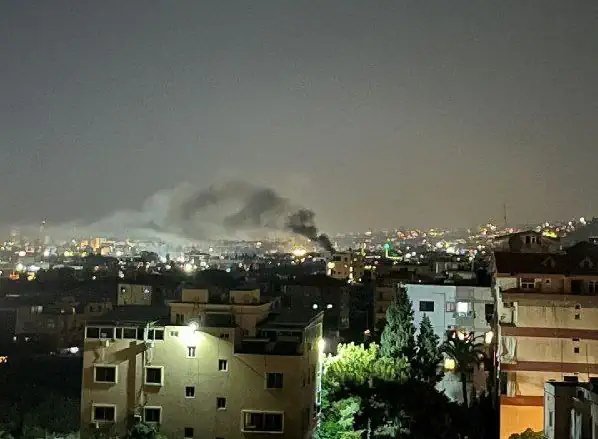
    In this attack, Israeli aircraft used three bombs. The Israeli military released a video of the strike, claiming it targeted a gathering of Hamas members with precision weapons and aerial surveillance.

    Contrary to Israel’s claims, this terrorist strike has so far resulted in the death of 13 people, including several children.

    Reports indicated that the attack was aimed at assassinating Munir al-Maqdah, a senior commander of the al-Aqsa Martyrs Brigades, the military wing of the Palestinian Fatah movement. However, despite Israeli media claims, Munir al-Maqdah survived the assassination attempt, and the operation failed.

    Munir al-Maqdah, a senior commander of the al-Aqsa Martyrs Brigades, the military wing of the Palestinian Fatah movement

    It should be noted that this was Israel’s second attempt to assassinate Munir al-Maqdah. Their previous strike on Ain al-Hilweh camp on October 1, 2024, was unsuccessful. Furthermore, Khalil al-Maqdah, Munir’s brother, was killed in an Israeli airstrike on Sidon on August 21, 2024.

    13 Killed, Including Children, in Israeli Bombing of Ain al-Hilweh
  • Hezbollah’s Open Letter and Warning to Lebanese Authorities!

    Hezbollah’s Open Letter and Warning to Lebanese Authorities!

    “The ceasefire agreement, based on UN Security Council Resolution 1701, required the disarmament of areas south of the Litani River and Israel’s withdrawal behind the Blue Line. With the implementation of this stage at 4 a.m. on November 27, 2024, all operations by Hezbollah and Lebanese resistance groups, as well as Israeli attacks by land, air, and sea, were supposed to stop. However, Israel has continued to violate the ceasefire and carry out attacks, ignoring calls to halt its aggressions and confronting the Lebanese government with new conditions and demands.

    Lebanon’s rushed move to disarm the resistance was a mistake, intended to show goodwill and gain favor with the enemy. Instead, it was exploited to push the broader issue of disarming the resistance across all of Lebanon.

    Israeli actions target Lebanon as a whole, making national unity and dignified resistance essential to preserve Lebanon’s sovereignty and honor.

    The traps set by the enemy in negotiations pose serious risks to Lebanon’s sovereignty and existence. The government must stop Israeli attacks and pressure Israel to comply with the ceasefire agreement.

    The resistance, as one of Lebanon’s founding forces, affirms its legitimate right to resist occupation and aggression, standing alongside the army and the people. Legitimate defense is not subject to decisions of peace or war.”

    The issuance of this statement serves as Hezbollah’s final warning to the government and people of Lebanon regarding the key issues at stake: implementing the ceasefire, disarmament, and the possibility of renewed war with Israel. In recent weeks, Israeli and American officials have conducted field assessments along the northern front of occupied Palestine and held meetings to discuss new strategies concerning Lebanon.

  • Israel Ceasefire Violations: Strikes Targeted Southern Lebanon

    Israel Ceasefire Violations: Strikes Targeted Southern Lebanon

    Last night, another civilian car was struck in Houmine al-Faouqa, north of Nabatieh.

    Since the ceasefire began on November 27, 2024, in southern Lebanon, more than 360 Hezbollah members have been assassinated in drone strikes.

    Israel justifies these attacks and ceasefire violations under the pretext of “eliminating threats against the Israeli state.” In practice, Israel interprets the ceasefire agreement with Lebanon as granting it the right to carry out operations against Hezbollah members and positions! By this logic, every Hezbollah member is considered a threat and must be targeted. This same approach has been observed in Gaza as well. Thus, the ceasefire effectively becomes a tool in Israel’s hands to maintain maximum pressure on its adversaries.

  • Israeli Media Frames Weapons Transfers as Pretext for Future Strikes in Lebanon

    Israeli Media Frames Weapons Transfers as Pretext for Future Strikes in Lebanon

    Israeli military sources told Haaretz that Iran, acting as Hezbollah’s logistical backer, has shifted part of the group’s weapons supply network from Syria to Iraq, allowing equipment to be transferred through Syrian territory into Lebanon.

    The report states that this process is gradually turning Iraq into a new logistical corridor for the Axis of Resistance—a role previously played by Syria. According to Israeli claims, the shipments include precision-guided missiles, drone components, and advanced communications systems.

    Such reports in Israeli media typically serve as a pretext to justify future military operations against Hezbollah targets in Lebanon or resistance groups in Iraq. By asserting that Iran is expanding its influence in Iraq, Tel Aviv seeks to prepare domestic and international public opinion for potential offensive actions. Presenting Iraq as a weapons transit route can also be seen as an effort to increase political pressure on the Iraqi government and legitimize possible Israeli or American strikes against resistance groups inside Iraq. Similar narratives in the past have preceded Western drone and missile attacks on positions held by the Popular Mobilization Forces (PMF).

  • Ceasefire Violations and Israeli Drone Strikes Against Lebanon Continue

    Ceasefire Violations and Israeli Drone Strikes Against Lebanon Continue

    As a result of these strikes, two Hezbollah members were reportedly assassinated.

    Lebanese government officials and Hezbollah have yet to respond to the escalating ceasefire violations and targeted killings of both military and civilian individuals under disputed accusations. Analysts suggest that Israel may be intensifying its operations with the aim of provoking a new conflict in Lebanon.

  • Israel Violates Ceasefire Agreement with Lebanon, Kills Lebanese Civilian

    Israel Violates Ceasefire Agreement with Lebanon, Kills Lebanese Civilian

    Despite Hezbollah’s acceptance of the ceasefire, Israeli drone strikes against its forces continue, largely unchecked by the Lebanese government’s passive stance.

    To halt these violations, Hezbollah faces two options: either enhance its military capabilities to counter Israeli aerial incursions or pursue a unified political response through the Lebanese government, formally protesting the ceasefire violations to international mediators.

  • Syrian-Lebanese Officials Meet in Beirut to Reset Ties

    Syrian-Lebanese Officials Meet in Beirut to Reset Ties

    The meetings focused on strengthening bilateral cooperation in political, economic, and security fields, as well as addressing regional developments and shared interests. Both sides emphasized the need to rebuild ties that had been strained in recent years.

    This visit marks a renewed commitment by Syria’s interim government and Lebanon to restore and expand their partnership, reflecting the broader regional shifts following Syria’s political transition.

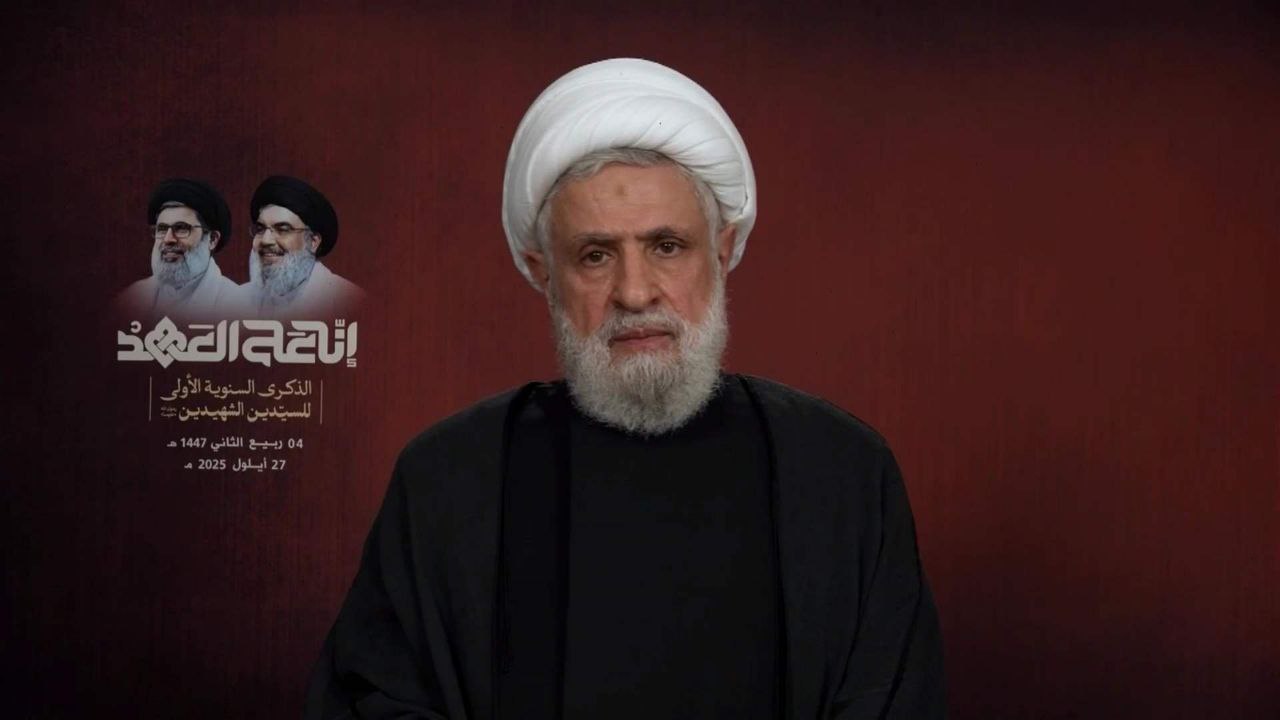
  • Hezbollah’s Sheikh Naim Qassem Vows Continued Resistance at Memorial Ceremony

    Hezbollah’s Sheikh Naim Qassem Vows Continued Resistance at Memorial Ceremony

    “We will not abandon our weapons or our land,” Qassem declared. “As Sayyed Nasrallah taught us, we will never forsake the path of Hussein (AS).”

    The ceremony also honored martyr Haj Ali Karaki, who assumed command after the death of Fouad Shukr and was martyred alongside Sayyed Nasrallah. Sheikh Qassem described the recent conflict as a “global war” waged by Israel with U.S. and European backing, aimed at dismantling the resistance and advancing the vision of a Greater Israel. Despite targeted assassinations and battlefield pressure, he said Hezbollah regained the initiative and halted enemy advances.

    “If pager attacks and assassinations of leaders and commanders had occurred along with the war, any army or militia group would have collapsed. But we regained the initiative and stopped the enemy army’s advance on the battlefield”, He said.

    Addressing U.S. policy, Sheikh Qassem criticized Tom Barrack’s remarks about disarming Hezbollah and the US refusing to arm the Lebanese army against Israel, “We will not allow the U.S. to dictate Lebanon’s defense strategy,” he said. “Any plan that serves Israel, even if disguised in national colors, will be met with resistance.”

    Sheikh Qassem also called on the Lebanese government to allocate resources for reconstruction and reaffirmed support for the Taif Agreement, which emphasizes full liberation of Lebanese territory. He endorsed holding parliamentary elections on schedule and emphasized unity with the Lebanese army against external threats.

    “The land watered with the blood of martyrs will never belong to the Zionists,” he said. “To the people of resistance: no one can defeat you. Together, we will expose the failure of the enemy’s project. This anniversary is a testament to our loyalty.”

  • Larijani Visits Beirut, Urges Regional Unity Against Israeli Threats

    Larijani Visits Beirut, Urges Regional Unity Against Israeli Threats

    Upon arrival, Larijani praised Lebanon’s role as a “strong barrier” against Israel, stating that the legacy of martyr Nasrallah has become increasingly evident. He condemned the recent Israeli attack on Doha, calling it a clear sign of the regime’s aggressive nature.

    During his visit, Larijani is expected to meet with senior Lebanese officials to discuss bilateral ties and regional developments. Speaking to the media, he emphasized the importance of regional cooperation: “Our hope is for strong, independent governments. In the face of Israeli conspiracies, countries in the region must work together and set aside their differences.”

    He also voiced support for Sheikh Naim Qassem’s outreach to Saudi Arabia, describing it as a constructive step for Lebanon’s stability. “Saudi Arabia is a brotherly Muslim nation, and we’ve held consultations. Sheikh Qassem’s initiative is aimed at easing tensions and improving conditions for the Lebanese people.”

    Responding to claims of Iran’s continued support for Hezbollah, Larijani dismissed the accusations as politically motivated. “I believe Mr. Barak made that statement out of anger. Hezbollah is strong enough not to depend on external arms.”

    Larijani criticized U.S. involvement in Lebanon’s internal affairs, asserting that decisions should be made by the Lebanese themselves. “Would a proud Lebanese citizen accept losing their interests under American pressure? That’s for the people of Lebanon to decide.”

    On the possibility of conflict, Larijani warned that Iran is prepared for any scenario. “I don’t think the Israelis would act recklessly. But if they attack Iran, they will receive a firm response.”

  • Israel Shatters Ceasefire with Deadly Strikes on Lebanon

    Israel Shatters Ceasefire with Deadly Strikes on Lebanon

    Tensions escalated sharply in Lebanon as the Zionist regime carried out multiple deadly strikes across the country within 48 hours.

    On Monday, Israeli warplanes launched six airstrikes targeting mountainous areas near Hermel in northeastern Lebanon. According to local sources, the strikes killed four Lebanese citizens and one Syrian national. Israel claimed the attacks were aimed at Hezbollah missile and drone facilities.

    Israeli airstrikes targeting mountainous areas near Hermel

    Just a day later, an Israeli drone targeted a civilian vehicle in the Barja area, north of Sidon. The strike occurred near the town of Jiyeh, approximately 30 kilometers south of Beirut. The vehicle was completely destroyed, and Lebanese army units quickly secured the scene.

    Israeli drone targeted a civilian vehicle in the Barja area

    These incidents mark a significant escalation in Israeli operations deep inside Lebanese territory, raising concerns over renewed conflict and civilian safety. The Israeli regime once again showed that it does not adhere to any international laws or humanitarian principles and continues its acts of terror and actions that undermine regional stability and perpetuate a climate of violence.

  • Ceasefire in Name Only: Southern Lebanon Under Fire

    Ceasefire in Name Only: Southern Lebanon Under Fire

    This attack comes despite the ceasefire agreement reached in Nov 2024, under which Israel was obligated to halt all military operations and withdraw from southern Lebanon. However, since the ceasefire took effect, Israel has repeatedly violated it over 3,700 times, including through airstrikes, artillery shelling, and the occupation of border positions.

    International organizations and human rights groups have repeatedly warned about Israel’s continued strikes on civilian areas, the destruction of vital infrastructure such as water facilities, and the obstruction of displaced Lebanese citizens returning to their homes. These actions have not only undermined the ceasefire but have also worsened the humanitarian crisis in southern Lebanon.

  • Thomas Barrack’s Trip to Southern Lebanon Canceled Amid Public Outrage

    Thomas Barrack’s Trip to Southern Lebanon Canceled Amid Public Outrage

    The backlash came after Barrack’s controversial remarks during a press conference, where he told Lebanese journalists to “act civilized” and “don’t be animals,” sparking outrage.

    In response, residents of Khiam staged a protest early this morning, writing slogans like “America is the Great Satan” and “Barrack is an animal” on the ground, effectively blocking his visit.

    This incident adds tension to an already fragile ceasefire between Hezbollah and Israel, especially as Barrack plays a key role in U.S. efforts to influence Lebanon’s security and political landscape.