Category: West Asia

  • Israeli airstrikes on the Gaza Strip + video

    According to initial reports, Israeli warplanes targeted the Palestinian resistance bases in al-Qadesiyah and al-Quds, west of Khan Yunis. The Palestinian resistance air defenses have also opened fire on Israeli warplanes.

    The attack was carried out in response to the sending of incendiary balloons from Gaza to the occupied territories, according to the Hebrew media outlets.

    The moment of targeting the “Al-Qadesiyah” base belonging to al-Qassam Brigades, the military branch of the Hamas movement, west of Khan Yunis.
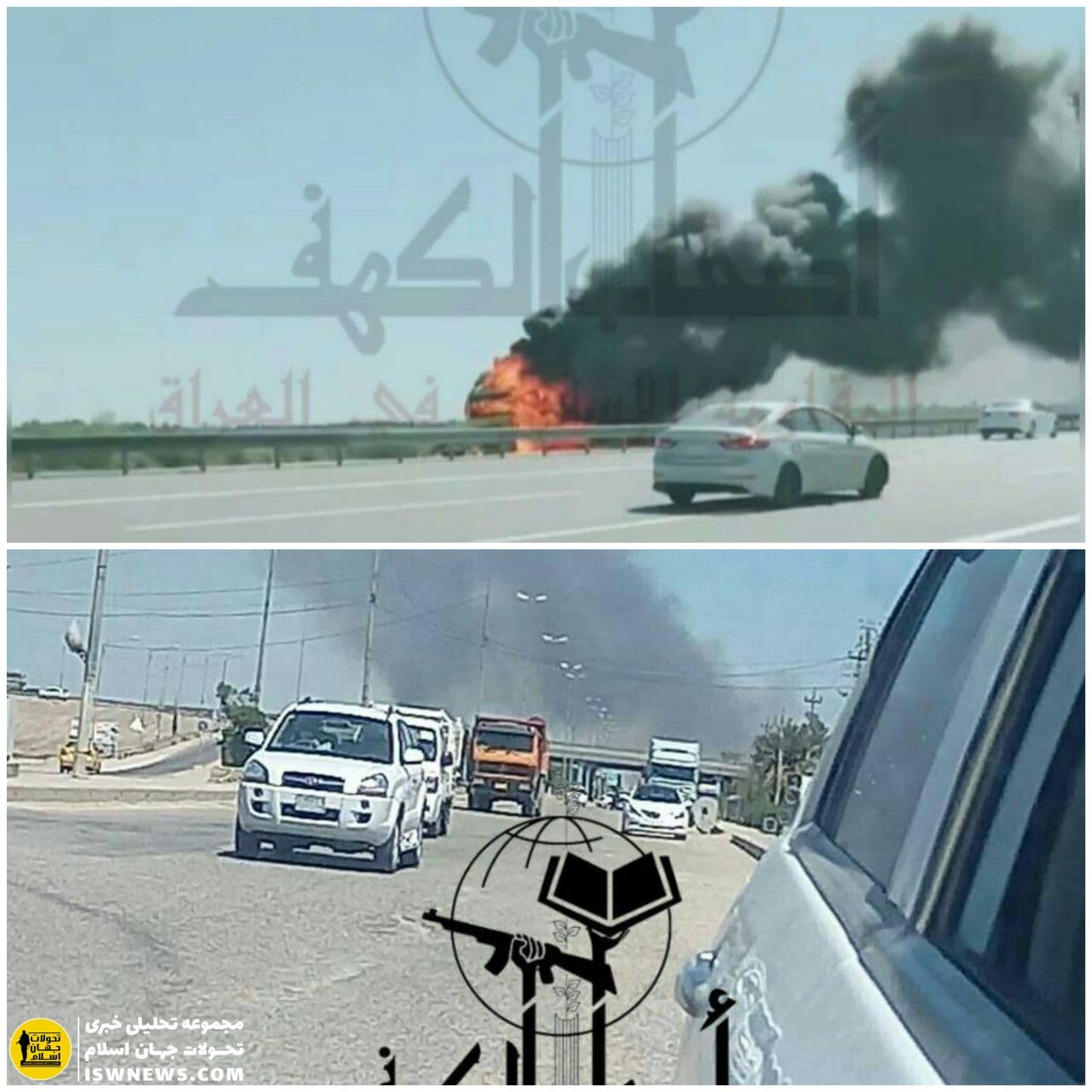
  • Breaking: IED attack on US convoy in Iraq

    The Ashab al-Kahf resistance group claimed responsibility for the attack.

    According to data obtained by ISWNews, this is the 136th attack by Iraqi resistance groups on US logistical convoys since March 21. Of these, 36 attacks were carried out in Babel province.

    The Ashab al-Kahf resistance group released a video of their attack on the logistical convoy of the US forces in Babel province
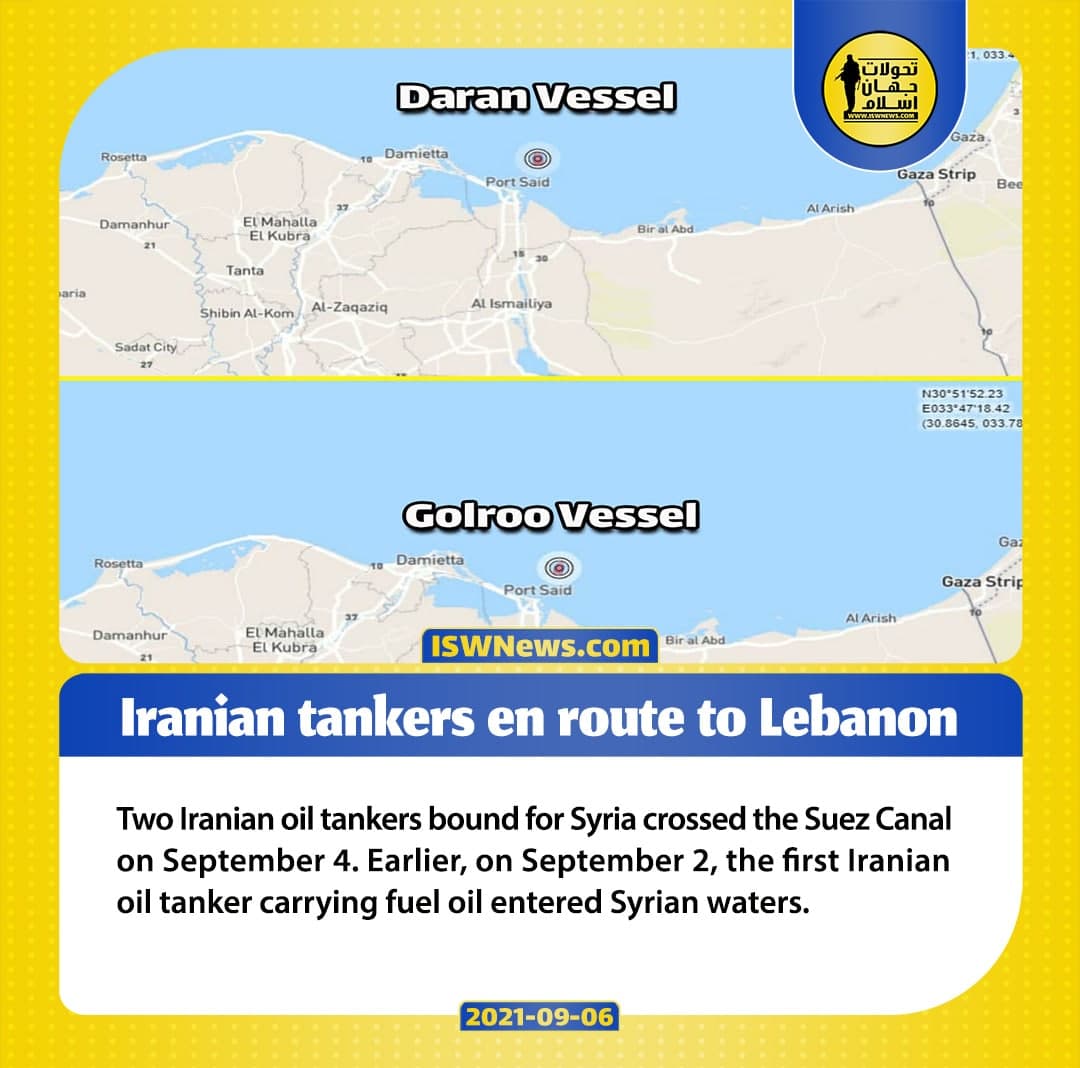
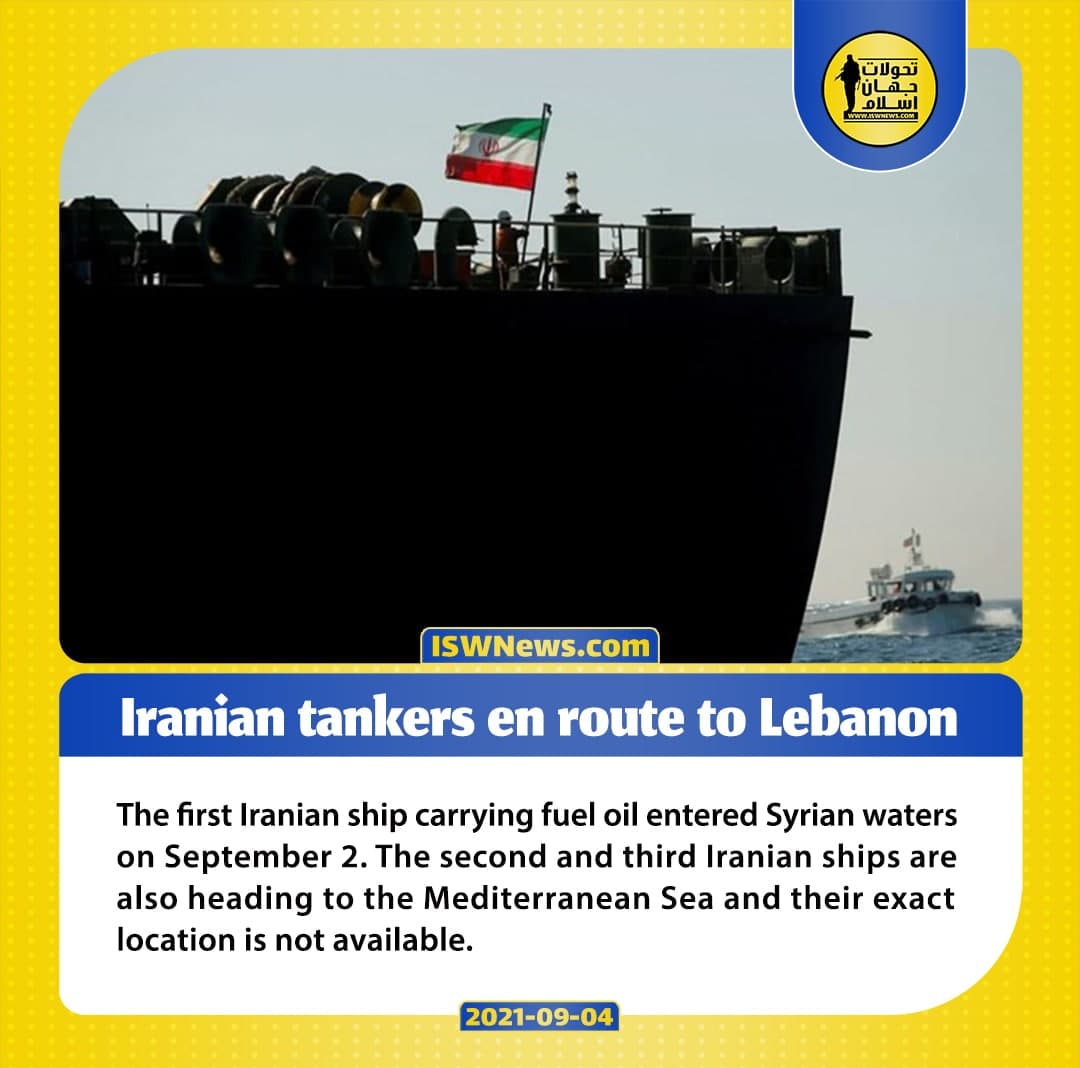
  • Iranian tankers en route to Lebanon

    Iranian tankers en route to Lebanon

    It should be noted that the cargo of these ships was purchased from Iran at the suggestion of Lebanese Hezbollah and by Lebanese Shiite traders to solve the Lebanese fuel crisis, and will eventually be sent directly or possibly from Syria to Lebanon.
    Lebanon does not have an active oil refinery, and crude oil is first processed in Syria and then shipped to Lebanon.

  • Another ceasefire agreement in the city of Daraa!

    Another ceasefire agreement in the city of Daraa!

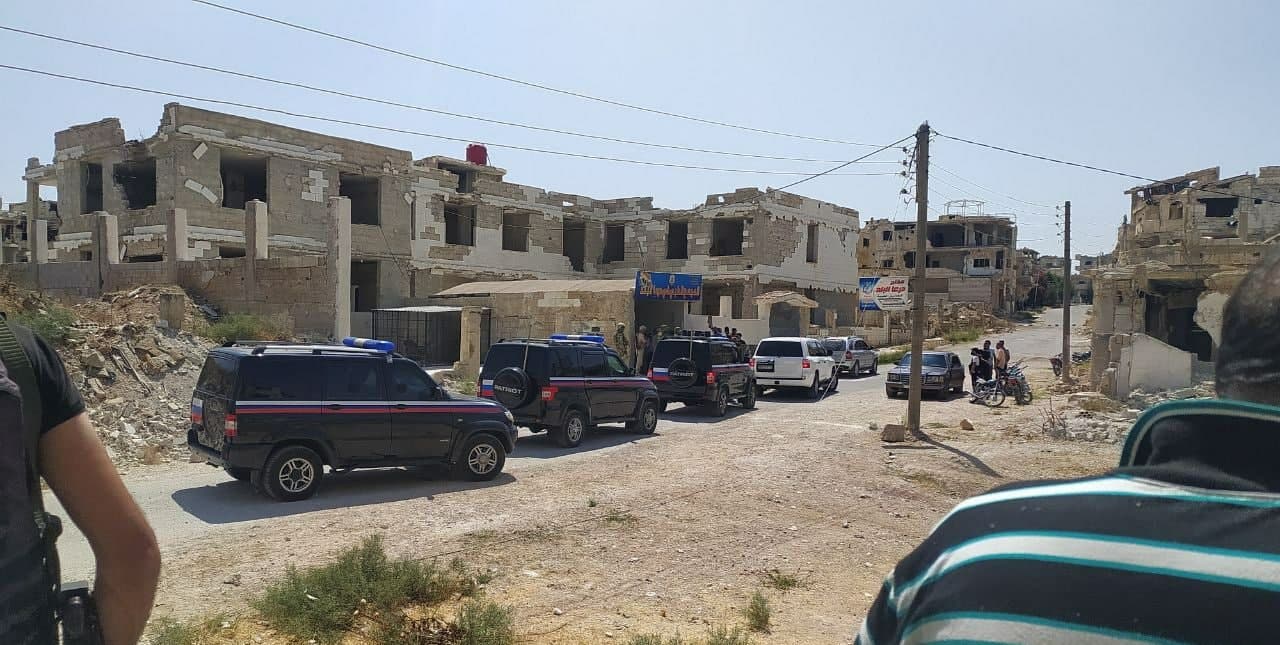
    Coinciding with the Syrian army’s artillery attacks on militants and ground clashes on the outskirts of the Daraa al-Balad neighborhood, the Daraa Central Committee (affiliated with the militants) met with Syrian Army officers and Russian delegations at the Daraa Stadium, along with elders of the Daraa tribes. At the end of the meeting, the parties present at the meeting agreed to implement a new comprehensive ceasefire in the city.

    At this meeting, the Central Committee of Daraa (militants) was warned that if the conditions of the Syrian government are not accepted and the clashes continue, the Russian military will take part in future attacks against the militants in Daraa al-Balad. The militants were also asked to determine as soon as possible the situation of those who are oppose to the agreement in Daraa al-Balad and to prepare for their transfer to northern Syria. Because one of the reasons for the violation of the ceasefire and the continuation of the clashes is the presence of a number of militants who oppose the agreement with the Syrian government.

  • Iraq: 13 Iraqi soldiers killed by ISIS

    Iraq: 13 Iraqi soldiers killed by ISIS

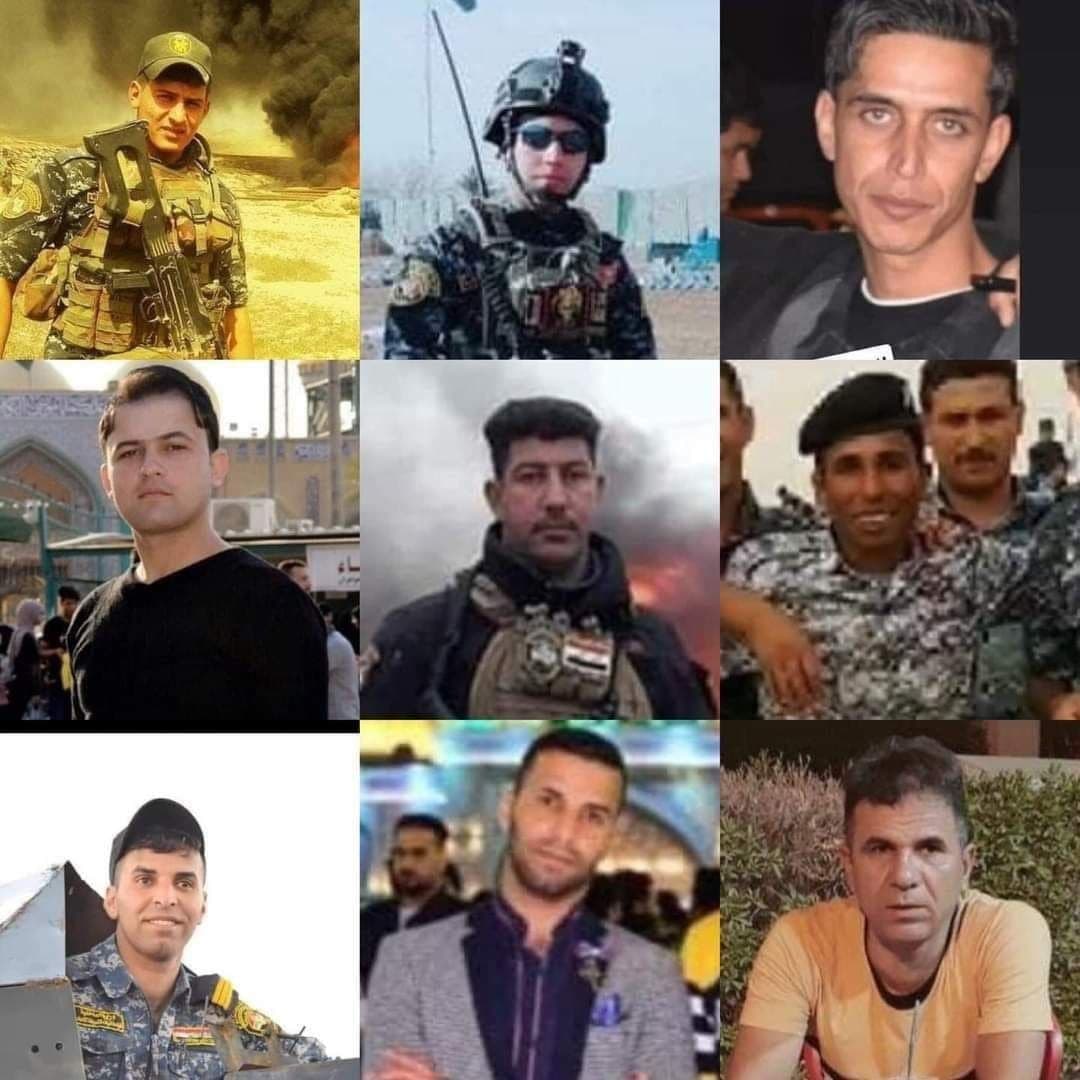
    This morning (September 5), ISIS terrorists attacked the headquarters of the 19th Federal Police Brigade in the Tal Satih village of al-Rashad region. 13 Iraqi forces were killed and five others were injured in this attack. An Iraqi force is also missing, which may have been captured by ISIS.

    ISIS also booby-trapped the transport routes to the village of Tal Satih, making it difficult for Iraqi Army to send reinforcements.

    Terrorist attacks by ISIS have increased in recent weeks, and that’s because the most of the hidden elements of ISIS are in Kirkuk province. Meanwhile, this is while Iraqi forces, including Hashad al-Shaabi, the Iraqi army and police, carry out clearing operations against ISIS operatives on a weekly basis in various Iraqi provinces and regions.

  • Latest updates on Daraa, 5 September 2021

    Latest updates on Daraa, 5 September 2021

    Although the Daraa Central Committee (affiliated to the militants) agreed with Russian representatives on Wednesday on the implementation of the ceasefire in Daraa al-Balad, a number of militants refused to accept the terms of the ceasefire, which eventually led to the ceasefire violation and resuming clashes in the city of Daraa.

    At 10 pm last night, just minutes after the elders of the Daraa tribes left the Daraa al-Balad neighborhood, artillery and rocket attacks by the Syrian army against the militants began in Daraa al-Balad. As of this morning, the Syrian army has launched ground attacks from several directions to advance in this neighborhood, and clashes are currently continuing in Daraa al-Balad.

  • Statement by the Yemeni Armed Forces on Operation “Seventh Deterrence Balance”

    Statement by the Yemeni Armed Forces on Operation “Seventh Deterrence Balance”

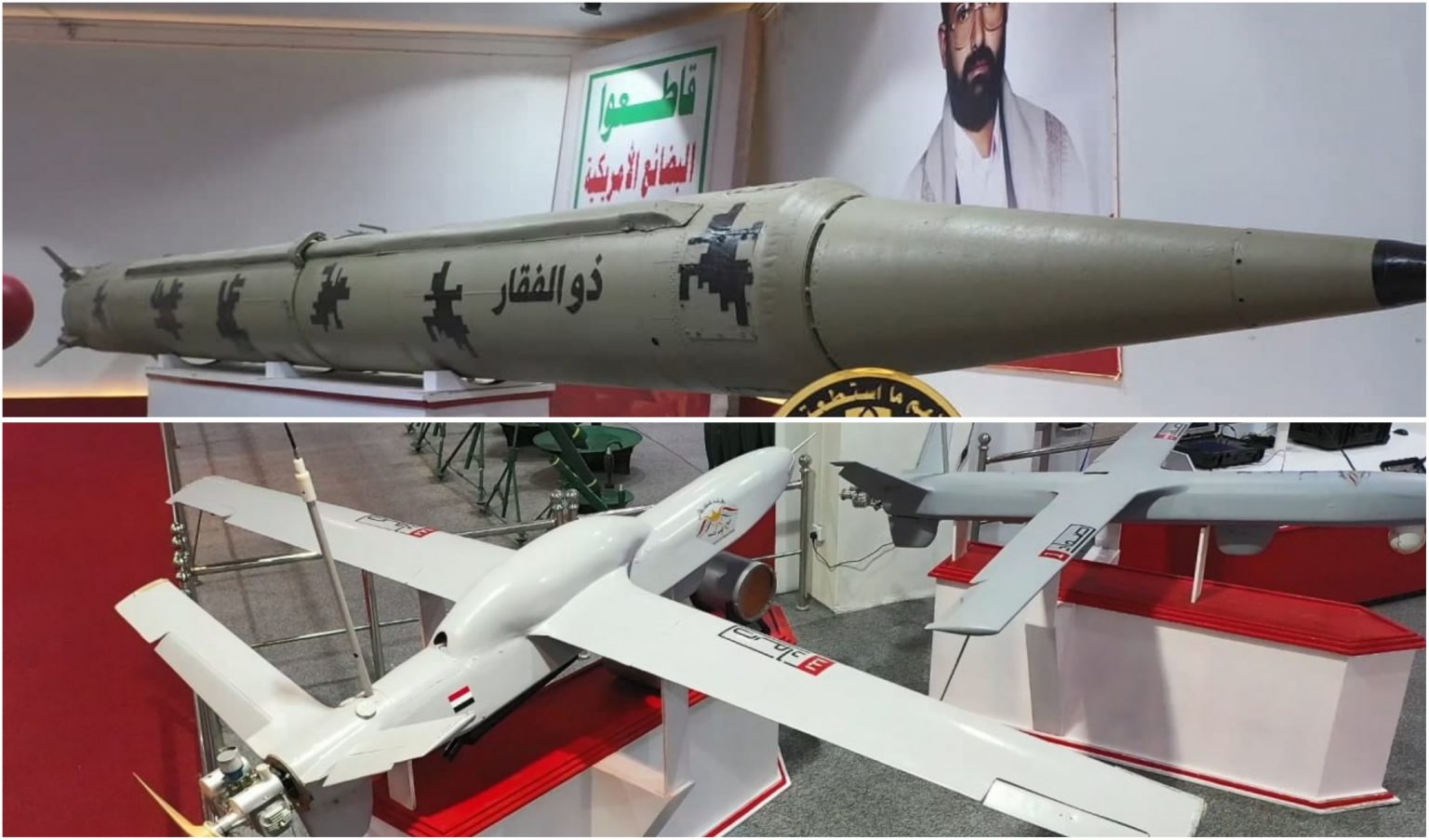
    According to the Yahya al-Sari’, during the operation, Ansar Allah targeted the Aramco facility at the Raas Tanura in Dammam with eight Sammad-3 drones and one Zulfaqar missile. Aramco’s facilities in Jeddah, Jizan and Najran have also been targeted with five Badr missiles and two Sammad-3 drones.

    As we mentioned earlier, Ansar Allah used the Zulfaqar short-range missile and the Sammad-3 drone in this operation, as in the past series of Deterrence Balance Operations.

  • Ansar Allah missile and drone attacks on eastern and southern Saudi Arabia

    Ansar Allah missile and drone attacks on eastern and southern Saudi Arabia

    The Saudi coalition claims to have intercepted and destroyed three missiles and three suicide drones in the skies of Dammam, on the southern coast of the Persian Gulf.
    The extent of the casualties is unknown, but coalition claims that two people were injured and several houses were damaged due to the collapse of one of the missiles.

    Two other missiles were also fired at the cities of Najran and Jizan in southern Saudi Arabiab which Saudi coalition claims to have destroyed them.

    Based on Ansar Allah’s past similar operations, it is possible that Ansar Allah used Zulfaqar missile and Sammad 3 drones to target the city of Dammam.

  • Breaking: Two IED attacks on US convoys in Iraq

    Breaking: Two IED attacks on US convoys in Iraq

    The Ashab al-Kahf resistance group claimed responsibility for the attacks.

    According to data obtained by ISWNews, this is the 135th attacks by Iraqi resistance groups on US logistical convoys since March 21. Of these, 30 attacks were carried out in Qadesiyah province and 35 attacks were carried out in Babel province.

  • Latest situation of Iranian oil tankers on the way to Lebanon

    Latest situation of Iranian oil tankers on the way to Lebanon

    With the escalation of the fuel crisis in Lebanon in recent weeks, at the suggestion of Hezbollah, a number of Lebanese Shiite traders bought fuel from Iran and Iranian tankers left the country for Lebanon ports. After Lebanese Hezbollah Secretary General Sayyed Hassan Nasrallah said in a speech on the seventh night of Muharram, “Gasoline and diesel will definitely be imported from Iran,” many Lebanese and even Hezbollah opposition parties thanked Hezbollah and Iran.

    According to Sayyed Hassan Nasrallah, the first Iranian ship carrying fuel oil entered Syrian waters on Thursday, September 2nd. The second and third Iranian ships are also heading to the Mediterranean Sea, and their exact location is unknown, and they do not appear to have crossed the Suez Canal.

    Since one of the tankers has already docked in Syria, it is likely that other Iranian ships, including crude oil, will dock in Syrian ports and the fuel will be transported by land to Lebanon. It is worth noting that Lebanon does not have an active oil refinery and is forced to use final products such as gasoline and diesel. For this reason, crude oil will be refined at the Banias or Homs refinery in Syria, and then the final product will be sent to Lebanon.

    Purchasing fuel from Iran and sending it quickly to Lebanon caused the Western officials, who had not paid much attention to the Lebanese fuel crisis and the suffering of the Lebanese people, to suddenly think of a solution to solve this problem!
    Therefore, four US senators traveled to Beirut to meet with Lebanese officials in order to prevent Iranian fuel from entering Lebanon as much as possible. In this regard, the Minister of Foreign Affairs of the Israeli regime also considered the sending of Iranian ships carrying fuel to Lebanon as “actions contrary to Israel’s national security”!

    Given the fuel crisis in Lebanon, the deployment of Iranian ships to improve the fuel situation in the country is considered Iran’s strong response to sanctions and changing the regional equations and has an important impact on the balance of power. Predicting the hostile actions of foreign parties, Sayyed Hassan Nasrallah has also stated that from the moment Iranian ships start moving, we will consider it as Lebanese territory, And this means any action against Iranian ships in the international seas equals aggression on Lebanese soil and, as a result will cause Hezbollah’s reciprocal response to Israel.

  • Latest updates on Syria, 4 September 2021

    Latest updates on Syria, 4 September 2021

    1- Aleppo:
    Russian military police and Turkish Army carried out a joint patrol near the city of Ain al-Arab.

    2- Daraa:
    On August 31, after several days of heavy fighting and the SAA artillery attacks on the militants in the Daraa al-Balad neighborhood, the militants finally agreed to the conditions of the Syrian government and reached an agreement to implement the ceasefire.

    3- Deir Ezzor:
    – On the morning of September 1, the US military base at the Conoco gas facility in northern Deir Ezzor was targeted by rockets fired by unknown individuals.
    – A US Bombardier E-11A aircraft was spotted over the border town of Al-Bukmal.

    4- Idlib:
    Russian warplanes attacked militant positions on the outskirts of the village of Kansafra, south of Idlib.

    5- Hama:
    Syrian Army artillery attacked militant positions in the village of Al-Ankawi in the al-Ghab Plain in the western suburbs of Hama province.

    6- Hasakah:
    The US coalition forces carried out a patrol in the outskirts of Malekiyah town, northeast of Hasakah.

    7- Raqqah:
    Russian warplanes attacked ISIS hideouts near the Rasafah southwest of Raqqa.

    8- According to deputy head of Russian reconciliation center in Syria, at around 1:30 a.m. on September 2, four Israeli F-15 fighter jets fired 24 missiles at targets on Syrian soil, using Lebanese airspace, of which 21 of the 24 missiles fired were destroyed by Buk-M2E and Pantsir-S1 systems.

    9- According to the Russian Center for Reconciliation in Syria, the militants violated the ceasefire 35 times in the Idlib region, including 1 in Aleppo province, 11 in Latakia province, 4 in Hama and 19 in Idlib province.

    Download HQ map

  • Syrian Army missiles land in Israel!

    Syrian Army missiles land in Israel!

    On April 22, an explosion near the Dimona nuclear power plant in occupied Palestine caused panic among residents around the plant, prompting alarms in the Negev.

    Zionists living in the area around the Dimona power plant, unaware of the cause of the incident, believed that the explosion was due to rockets fired by the Palestinian resistance, but minutes later it became clear that no rockets had been fired from Gaza into the occupied territories.
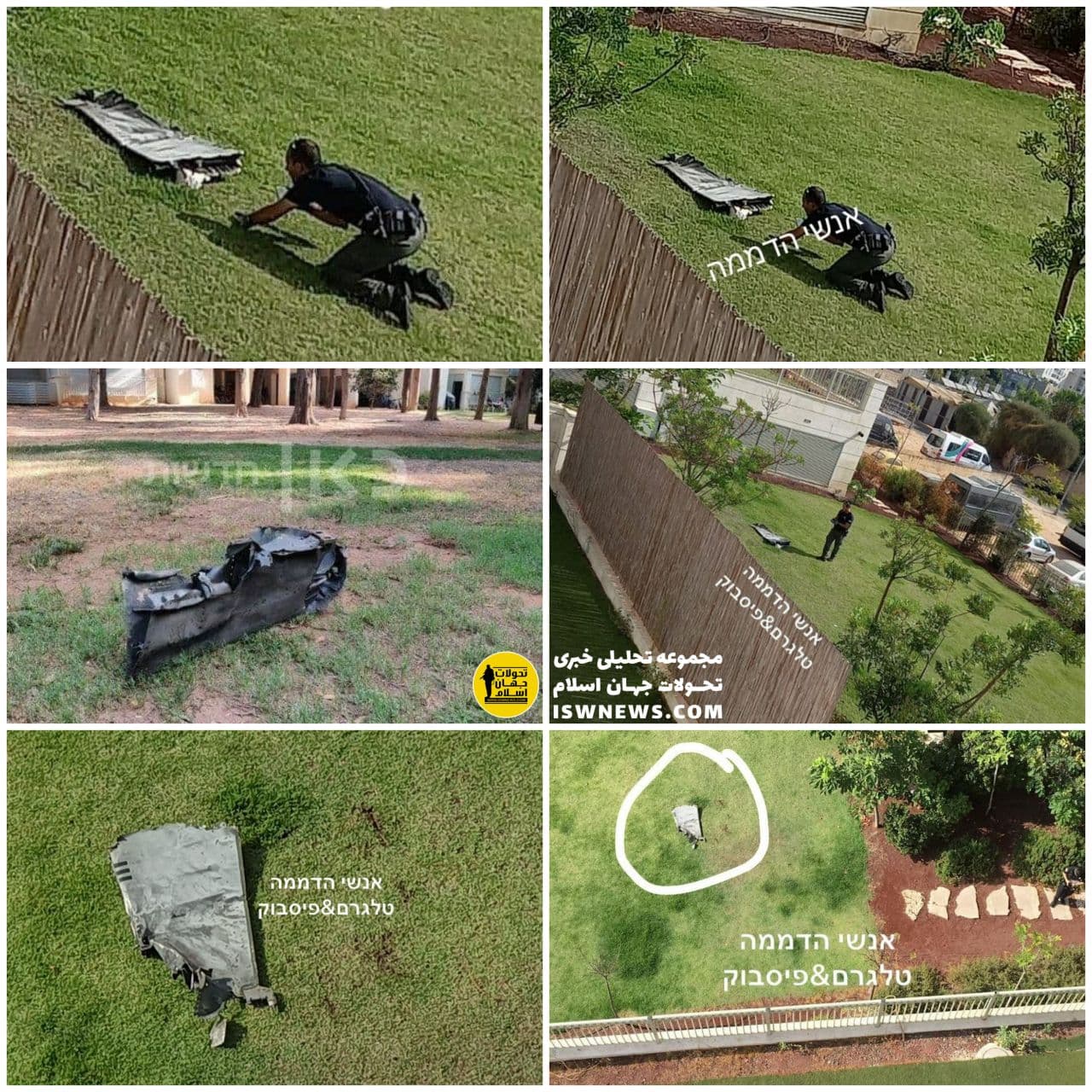
    It was later revealed that the cause of the explosion was a Syrian air defense surface-to-air missile that struck near the village of Abu Qarinat, a few kilometers from the Dimona nuclear power plant.

    But the important and significant issue is how the Syrian missiles passed through the Israeli defense ring and landed near one of the most sensitive places of the Zionist regime?

    Israel’s defense system has repeatedly shown that it is unreliable contrary to what claimed by regime officials, and has failed numerous times, including rocket attacks by the Palestinian resistance, Lebanese Hezbollah reconnaissance drone operations in Operation Ayub, landing of Syrian defense missiles in occupied Palestine, etc. And is easily vulnerable. In addition to these problems, some Israeli defense systems, such as David’s Sling, have been and are vulnerable to cyber attacks.

    On September 2, after the Israeli missile attacks to Damascus, the Syrian air defense missiles pass through the defensive ring of Israeli systems and traveled about 200 kilometers without any obstacles to hit points in the occupied territories and even reached the capital of the Israel which was shot down in the Tel Aviv skies.

    These issues have led the Israeli regime to decide to further strengthen and deploy defense systems in its critical and strategic locations, and to strengthen the air defense systems around the Dimona nuclear power plant and the port of Eilat for fear of rocket and drone strikes.

    The weakness of the US-made defense systems in Saudi Arabia and other countries in the region has been well exposed so far, and the Israeli regime can not provide its security even with the help of the US! However what is clear is that, the Israeli-made defense systems, or a joint US-Israeli product, are far more vulnerable than what Zionist and Western officials claim.