The Baghdad-based media “BaghdadToday.news” quoted the US-based Cradle Magazine as saying that the resistance groups in Iraq have halted their raids against the American military personnel with the aim of supporting Iraqi Prime Minister Mohammed Shia’ Al Sudani.
BaghdadToday website also mentioned that in secret negotiations, the Iraqi premier promised the resistance groups that he will make diplomatic efforts to force the American armed forces to withdraw the Arab country.
In the negotiations, the Iraqi resistance groups informed Al Sudani that they will resume their attacks on the positions and personnel of the United States’ military missions in Iraq if they refuse to leave the Arab state.
The ISWnews’s review of the Iraqi resistance groups’ strikes on caravans and positions of the US occupiers indicates that after the premier came to power in Baghdad, the number of attack by the resistance groups against the American forces reduced or stopped in the first months of his tenure, but after a while, the Iraqi resistance groups resumed their raids on the United States’ terrorist forces.
Statistics show that the digit of attacks made by the Iraqi resistance groups against the US military forces stood at 264 cases from March 21, 2021 to March 20, 2022. But the number of attacks decreased to 56 cases from March 21, 2022 to March 20, 2023. Thus, the meaningful decline in the number of attacks made by the Iraqi resistance groups against the United States’ military forces strengthens the speculations on the potential accord between Al Sudani and the resistance groups.
It is noteworthy that Mohammed Shia’ Al Sudani, the Iraqi Prime Minister and the Commander-in-Chief of the Iraqi Armed Forces, said in an interview with Aljazeera TV network that Iraq still requires the collaborations and presence of foreign military forces at the level of security and training issues as well as the exchange of information, and that Baghdad is trying to organize the matter in the framework of bilateral cooperation.
On April 28, Iranian media aired video footage documenting the seizure of the Marshall Islands-flagged oil tanker Advantage Sweet. The footage showed masked Iranian navy commandos boarding the United States-bound tanker from a helicopter on April 27 as it was sailing in the Gulf of Oman. The seizure was first announced by the U.S. Naval Forces Central Command, which demanded Iran to immediately free the tanker.
Tehran said that the tanker was seized after colliding with an Iranian fishing boat. However, reports that appeared later revealed that the tanker was captured in retaliation to the recent seizure of an Iranian oil shipment by the U.S.
Iranian media aired video footage documenting the seizure of the Marshall Islands-flagged oil tanker Advantage Sweet
Maritime security company Ambrey said that the U.S. seizure took place at least five days before Iran’s action in the Gulf of Oman. “Ambrey has assessed the seizure by the Iranian Navy to be in response to the U.S. action,” it said in an advisory to clients.
“Both tankers were Suezmax-sized. Iran has previously responded tit-for-tat following seizures of Iranian oil cargo,” the company concluded.
The sources familiar with the matter told the Reuters news agency that Washington took control of the oil shipment aboard the China-bound Marshall Islands tanker Suez Rajan after securing an earlier court order. The tanker’s last reported position was near southern Africa on April 22, ship tracking data showed.
Iran seized tankers in retaliation for western countries targeting its oil shipments on several occasions in the past. In 2019, Iran seized two British-flagged tankers shortly after the UK impounded an Iranian vessel that had stopped at Gibraltar en route to Syria. Later in 2022, Iran also took two Greek-flagged vessels in the Strait of Hormuz after Greece had allowed the U.S. to seize an oil shipment from an Iranian tanker in Greek waters.
The new seizures will further escalate tensions between the U.S. and Iran. The Persian Gulf remains one of the focal points of the years-long standoff between the two sides.
According to local sources in Al-Mahrah province, on April 29, a member of Yemeni Coast Guard was shot and killed by the British Navy in Ras Fartak area located on the coast of Al-Mahrah province.
These sources added that the British forces shot at the Yemeni boatman after an argument and left the scene.
This action is a continuation of British occupation actions in the eastern coast of Yemen and in line with the militarization of this region after the construction of several coastal bases in eastern Yemen. The British and their other allies (CMF-153) have occupied the eastern and southern coasts of Yemen claiming to fight against smuggling and also to prevent the shipment of Iranian weapons to Yemeni resistance. They have also prevented the fishing of the people of Sayhut, Haswayn, Nishtun, etc., and have seized the boats of Yemeni fishermen many times.
The report, which was released on April 29, said that seven of the terrorist group’s attacks took place in the eastern Homs countryside, two in the southern Raqqa countryside, nine in the western Deir Ezzor countryside, four in the eastern Hama countryside and one was in the southern countryside of Aleppo.
The London-based monitoring group said that the victims of ISIS attacks included 46 Syrian service members and pro-government fighters as well as 38 civilians.
Nearly all the civilian victims were impoverished civilians hunting for expansive desert truffles to secure an additional income.
The deadliest attack by ISIS cells in central Syria during April took place in the eastern Hama countryside on the 16th of the month. The terrorists killed at least 26 people who were collecting truffles near the town of Duezin. Back then, it was alleged that ten of the victims were pro-government fighters.
ISIS didn’t claim responsibility for any of the recent attacks in central Syria, which its terrorists clearly carried out to loot and plunder.
Syrian government forces and their allies deployed additional reinforcements in the central region, mainly in the eastern Hama countryside and the eastern countryside of Homs, in the last few months to counter ISIS cells. Few small-scale combing operations were also conducted in the region. Larger operations will likely be launched once the weather has improved.
Despite the recent increase in ISIS attacks, all strategic roads in central Syria and key urban centers remain safe and secure.
The Maritime and Coastguard Agency (MCA) alleged on Friday that three boats carrying three or four passengers raided a ship off the Port Nishtun, which is located in Al Mahrah Governorate, Yemen.
It is worth mentioning that the region is under supervision of the resigned government of Yemen; so, some reports by certain media outlets on the Ansar Allah movement’s potential involvement in the mentioned attack are not correct.
The British entity has not yet released more information on the allegation. However, it called on the trade ships and boats sailing in this area to observe the protection and security issues.
The Maritime and Coastguard Agency is a military entity, which has been established by Britain’s army to carry out the coordination and the data exchange in the Arab Sea. It also informs news stories concerning piracy incidents in that region.
The coastal areas of Yemen have been under total siege during the eight-year war imposed by the Saudi-led coalition.
The heavy blows inflicted on the naval fleets of the Saudi-led coalition led to the deployment of another international coalition forces under the title of Combined Maritime Forces (CMF-153) in the Red Sea.
The latter coalition resorts to propagating unofficial news stories, which are sometimes fake news, on the so-called shipment of Iran-made weaponries to Yemen as well as drug trafficking in a bid to justify the Combined Maritime Forces’ presence in the Red Sea, Bab al-Mandeb and Gulf of Aden.
According to an informed military source in Syria, the Zionist enemy fired a few missiles towards certain targets in Homs city from northern Lebanon at 00:50 a.m. local time, but the Syrian air defense succeeded in destroying most of the missiles.
The air raid led to injuries of three civilians as well as explosion of a gas tank and damages of a number of trucks, the source added.
More information has not been released yet, but it is said that positions of the Syrian army in Shinshar Village, located in southern areas of Homs province, were pounded in the air strike by the Israeli fighter jets.
The new aggression of Israel on Syria is the sixth attack of its kind by the Zionist regime against the Arab country over the past two weeks.
It is worth mentioning that the fighter jets of the Israeli regime’s army fired a number of missiles to hit certain targets in southern Syria in response to a rocket attack from the Syrian soil towards the occupied Golan Heights on April 9, 2023.
Armenia’s Hraparak daily, the media outlet affiliated to the opposition of the government in Yerevan, has reported a shocking news story for the Azerbaijan Republic. According to the newspaper, the Russian government has made a decision to replace Major General Andrey Volkov, who was the Commander of the Russian peacekeeping contingent in Nagorno-Karabakh, and recall him to capital Moscow.
The new commander of the peacekeeping forces is a skillful lieutenant general, who took part in Russia’s wars. He is considered as a competent military commander among the staff of the Ministry of Defense of the Russian Federation. He is trusted by Minister of Defense of the Russian Federation Sergei Shoigu, and is cooperating with the minister for a long period. The new commander comes to organize the circumstances and Volkov is getting ready to leave Nagorno-Karabakh in the coming days.
The news story of the Armenian daily has been published on the prominent website of Sputnik, which is the media outlet of the Ministry of Defense of the Russian Federation.
Andrey Volkov, the former commander of the Russian peacekeeping forces in Karabakh
New commander of Karabakh peacekeeping forces
The skillful military commander is named Colonel General Alexander Ivanovich Lentsov, who is also an advisor to the current minister of defense in Russia. Lentsov played the roles of being a member of military service as well as commanding Russian wars in Afghanistan, Chechnya, Bosnia and Syria.
The colonel general was deputy commander of the Russian air forces from 2009 to 2013 and he served from 2013 to 2020 as deputy commander of the Russian Ground Forces. He was promoted to Lieutenant General in 2011 and Colonel General in 2014. Since 2020, he has served as an advisor to the Minister of Defense. On April 25, Lentsov was appointed commander of the Russian peacekeeping forces in Nagorno-Karabakh region.
Alexander Lentsov, the new commander of the Russian peacekeeping forces in Karabakh
The speculations on the 4th commander
Colonel General Alexander Ivanovich Lentsov is the fourth commander of the Russian peacekeeping contingent, which has been deployed in Nagorno-Karabakh region since 2020 up to now. Prior to the commander, three lieutenant generals named Rustam Muradov, Gennady Anashkin and Andrey Volkov have not been so much successful in carrying out their mission to implement truce in Nagorno-Karabakh region.
The Russian government is determined to use the powerful commander with the aim of force all sides to implement the provisions of the tripartite Nagorno-Karabakh ceasefire agreement, which was signed in Moscow on November 9, 2020, and regain the Russians’ lost influence in the region following the blockage of Lachin Corridor, a mountain road that links Armenia and Nagorno-Karabakh.
The challenges of Volkov’s tenure
Major General Andrey Volkov’s tenure as commander has been full of tension. He could not get in the way of the violation of ceasefire as well as military advances by Azerbaijan’s armed forces in eastern, western and southwestern lines of contact, where he was tasked to observe the peacekeeping mission.
The major challenge during his tenure was the gatherings by environmental activists, who are supporters of Azerbaijan Republic’s President Ilham Aliyev, as well as the closure of Lachin Corridor in Shusha, the advances by Azerbaijan’s armed forces, the blockage of roads to alternative routes under the pretext of fighting arms smuggling, and the construction of a checkpoint in borderline with Armenia, which is located in the start of the path to the Lachin Corridor.
This system was seen for the first time at the IRGC achievements exhibition in 2014, and at the time of its unveiling, it had a range of 75 kilometers; After receiving the necessary upgrades in the field of missiles and radar, it reached a range of 200 km. Sevom Khordad system has expanded its operational capability to a wide range of targets by receiving the 9 Dey missile. This fully mobile system can be used as a suitable replacement for the Russian S-200 system and even it’s better than it.
The image of the prototype of the Sevom Khordad system, which was unveiled in 2014 at the IRGC Achievements Exhibition.
The Sevom Khordad carrier chassis: Sevom Khordad, Raad, Tabas, Alam Al-Hodi and 9th of Dey systems are all from the same air defense family and use the same carrier chassis. Sevom Khordad carrier chassis looks similar to the carrier used in Buk-M2EK and 9K332 Tor-M2 defense systems. Both of these systems use MZKT-6922 manufactured by MZKT.
The first unveiling of the carrier of the Sevom Khordad missile system took place in December 2012 for the Raad system. But the Iranian model is seriously different from the MZKT-6922 version. The first difference is the length of the truck; The Iranian model is shorter and according to the published images, the engine installation location is in front of the truck, while the engine of the Belarusian model is at the end of the truck. For this reason, the only access door for the operator to the electronic systems in the Iranian example is from the side, and the access doors have different numbers and shapes. Also it seems that the height has increased a little, and two hydraulic jacks have been added in the area between the two axles of the truck for the stability of the system during firing. Considering the presence of three missiles instead of four and the modifications made, it can be said that this truck has better offroad power than the Belarusian model.
According to these explanations, it seems that Iran made this carrier truck based on the model of Belarus; There is also a possibility that this new chassis was developed with the help of Belarus and produced in Iran.
9K332 Tor-M2 air defense systemBuk-M2EK air defense systemRaad air defense systemEngine installation location at the front of the truckThe difference between the carrier chassis of the Raad system and other systems – (click to view full size)
Sevom Khordad radar: As mentioned, Sevom Khordad system has received many updates in the field of missiles and radar. For a better review, we will look into the radar systems used in Sevom Khordad.
Sevom Khordad and Tabas systems were unveiled simultaneously in 2014. Tabas was introduced as an inexpensive supplement to Sevom Khordad system; Initially, both systems, as a high-altitude and medium-range system, had the ability to engage at an altitude of 25 to 27 km and a range of 50 km, but Sevom Khordad has an active phased array radar and Tabas has a flat reflector radar with limited rotation power. The declared altitude of fire was exactly the same as the range of Buk-M2EK system, i.e. 50 km, which raises the suspicion that the systems are the same. But the differences in the carrier chassis that we reviewed earlier and the use of three missiles in the Iranian systems instead of four missiles in the Russian system, rejected this suspicion. Also, the installation location of the middle fin of Buk missile and Taer missile is different. In the Taer missile, the middle fin is near the end of the missile, while in the Buk missile, the middle fin is located in the middle of the missile.
Reflective radar of the Tabas air defense systemSeveom Khordad phased array radarThe difference between Taer and Buk missilesClick to view full size
In order to better examine the Sevom Khordad radar systems, we must start with the evolution of this system and from its starting point, the Raad system. Contrary to what was seen at the time of the unveiling of Raad system, Raad 1 and 2 systems were installed on commercial trucks. Probably, the reason for using commercial trucks was that the capacity of production line for the prototype was not enough or that the unveiled model was under development. The investigation of the primary radars used in the Raad system shows that Raad used pulse doppler radars and its combination with its optical systems, and the whole system was mounted on a commercial truck. So, it seems that the chassis developed for Sevom Khordad was not supposed to be used for the Raad system at all; Rather, the Raad system could be a system similar to Sevom Khordad but for urban and passive warfare; which has used a commercial truck for the carrier for better camouflage, and has the ability to link to TEL variant that only carry missiles.
Raad 2 system mounted on a commercial truckElectro-optical system and special radar for Raad system, installed on a commercial truckThe electro-optical system and special radar of Raad system from a close-up viewRaad 1 system with a commercial truck as a missile carrierImages of Raad system as a passive system of the Sevom Khordad- click to view full size
Alam al-Hoda system is another system related to Sevom Khordad. Alam al-Hoda system is actually a complementary system for the whole collection. Although the exact image of the Alam Al-Hoda radar is not available and its exact range has not been announced, the radar of this system is similar to the Nebo-UE radar. The Nebo-UE radar is a 3D radar in the VHF band with a range of 310 km; But the radar used in the Alam Al-Hoda defense system is a fire control phased array radar in the VHF band. Nevertheless, it is noteworthy that after several years since the unveiling of Alam Al-Hoda radar, quality images showing the operationality of such a system have not been published. Therefore, probably, the Alam Al-Hoda system has not been widely implemented or used.
There are two possibilities for this system: 1- Considering that Iran has the experience of building the Keyhan mobile radar with a range of 2000 km, the Alam A-Hoda radar is also a very long range radar with a detection range of 500 km and more, which, unlike the nature of VHF band radars, has a very accurate detection capability to detect stealth targets from long distances and is linked with the Sevom Khordad system or any other system and acts as a long-range radar for the Sevom Khordad battalion. 2- The second possibility is that the Alam Al-Hoda system was actually a development plan for the Sevom Khordad system, which was later led to the use of Bashir radar. Bashir radar can detect cruise and stealth targets and other long-range targets at a range of at least 350 km.
Banner of the Alam al-Hoda radarNebo-UEradarImage of Alam Al-Hoda radar (left) and Nebo-UE radar (right) – click to view full size
In general, the Sevom Khordad system consists of three components: Transporter Erector Launcher Radar (TELAR), Transporter Erector Launcher (TEL) and Bashir long range radar for early detection of hostile targets.
The TEL version of the Sevom Khordad systemThe TELAR version of the Sevom Khordad systemClick to view full size
Until now, not so many images of the Sevom Khordad radar system have been published, and reliable information about the height of the conflict and its range has not been provided by the official authorities; But what is clear is that this radar has continuously developed since its unveiling in 2014. According to the available information, this radar is an active phased array (AESA) radar in the X band with 1700 elements, which can simultaneously detect 4 targets and guide 8 missiles (two missiles for each target). The altitude of fire for this radar can be estimated up to 30 km, and the range of this radar has probably reached more than 200 km. The reason for this is the presence of Sevom Khordad long-range (Taer-3) missile with a range of 200 km, which was unveiled at Iranian Armed Forces parade on commemoration of the Sacred Defense Week on September 22, 2022.
Bashir radar: The Bashir radar, which is one of the important components of the Sevom Khordad system, is a 3D phased array radar with linear antenna arrays that operates in the L and S bands and is capable of detecting cruise and stealth targets. The maximum range of Bashir radar is 350 km. This radar, which was unveiled and used in the Welayat 97 military exercise in February 2019, is installed on a truck and is placed at a certain height by opening jacks and then rotates to cover 360 degrees. Evidence that Bashir radar has the ability to be used as a fire control radar has not been obtained to date; Therefore, the previous assumption that the main radar of the Sevom Khordad has a maximum range of more than 200 km, can be correct.
The way Bashir radar is set up and the very short time it takes for this radar to start working
In the Sevom Khordad system, the entire complex, i.e., missiles, radar, and control station, are all mounted on one vehicle, so Sevom Khordad is able to perform missions completely independently. But its main radar, which is responsible for detecting and locking on the target and then intercepting and guiding the missiles, can only operate in one direction and does not have the ability to engage in four directions at the same time. This is the main weakness of the Sevom Khordad system, and if it is used independently, it will be surprised and vulnerable to attack from several different directions. Therefore, Bashir radar, as a very important part of this system, is an important factor in the stability of the Sevom Khordad system in the battlefield, to detect cruise and stealth targets and to constantly monitor the environment around the Sevom Khordad system. With the presence of Bashir radar in this system, it is possible to monitor the surrounding environment in 360 degrees, and by using four Sevom Khordad systems in one battalion, surprise and destruction of the system is prevented.
Each battalion of the Sevom Khordad missile system includes a control station that is responsible for coordinating the Bashir radar and four TELARs of the Sevom Khordad system. Bashir radar is also responsible for 360-degree scanning of the surrounding environment in the battalion. Each TELAR vehicle can also coordinate with two TELs in the battalion, in addition to coordinating with Bashir radar and control station. As a result, each battalion includes a control station, a Bashir radar, four Sevom Khordad systems (TELAR) and eight TELs, with a total of 36 missiles serving a Sevom Khordad air defense system battalion.
The Sevom Khordad (Taer-3) long-range missile with a range of 200 km in the parade of the armed forces on September 22, 2022The main radar of Sevom KhordadBashir radarAn air defense battalion consisting of all components of the Sevom Khordad systemClick to view full size
The number of missiles used in the Sevom Khordad missile system is varied. These missiles include: Taer-2, Taer-2A, Taer-2B, Sayyad-2, Sayyad-2C, Sayyad-3, 9 Dey and the Sevom Khordad (Taer-3) long-range missile. The existence of this number of missiles in different ranges can be considered one of the distinctive aspects of this system, because it gives the Sevom Khordad system the ability to perform various missions. In fact, the Sevom Khordad missile system today is not a BUK class system, but an S-300 class system. The comparison between the two may seem far-fetched, but by looking at the S-300 system, we will realize that this system also uses a large number of missiles with different ranges and different altitudes of fire. Only the 40N6 missile that used in the S-300 PMU-3 or S-400 air defense system, has a longer range than the Sevom Khordad missiles. So practically today, the Sevom Khordad system has capabilities close to the S-300.
Regarding the 9 Dey missile, it is necessary to mention that this missile, unlike other missiles of the Sevom Khordad system, is launched from a box launcher that is specially made for the 9D missile. Therefore, sometimes this launcher is mistakenly considered another independent systems under the title “9 Dey Air Defense System”, which is not true. Rather, this system is the same as the Sevom Khordad system, but with a special box launcher for launching 9 Dey missiles.
A special box launcher for launching 9 Dey missiles in the Sevom Khordad missile system
Range and flight ceiling of active missiles in the Sevom Khordad system
The range and flight ceiling of active missiles in the Sevom Khordad system are: Taer-2: with a range up to 50 kilometers and flight ceiling of 27 kilometers Taer-2A: with a range up to 75 kilometers and a flight ceiling of 27 kilometers Taer-2B: with a range up to 105 kilometers and a flight ceiling of 27 kilometers Sayyad-2: with a range up to 75 kilometers and a flight ceiling of 27 kilometers Sayyad-2C: with a range up to 120 kilometers and a flight ceiling of 27 kilometers Sayyad-3: with a range up to 150 kilometers and a flight ceiling of 30 kilometers 9 Dey: with a range up to 5 to 30 kilometers and a flight ceiling of 20 kilometers Taer-3 (Sevom Khordad): with a range up to 200 kilometers and a flight ceiling of 30 kilometer
The first missile of this system is the Taer-2 missile, this missile and the Taer-2B missile are the first missiles that have been seen on the Sevom Khordad, Tabas and Raad system. After that, Sayyad-2 and then Sayyad-3 were adopted for Sevom Khordad system, and until Taer-3 was produced, the longest range missile of this defense system was Sayyad-3 with a maximum range of 150. Finally, with Taer-3 (Sevom Khordad) missile, with a range up to 200 km, this missile became the longest-range missile of the Sevom Khordad system.
Taer family missiles used in the Sevom Khordad systemMissiles of the Sayyad family used in the Sevom Khordad systemSevom Khordad long-range missile (Taer-3)9 Dey missileCollection of missiles used in the Sevom Khordad system – click to view full size
As for the missiles used in the Sevom Khordad system, there are two missile families: the Taer family and the Sayyad family. The difference in the appearance of these two families, as shown in the picture, is more evident in the middle fin; Of course, there are differences in the fin at the end of the missile. But in each generation, the middle fin has a fixed shape, the main reason for which was the pattern of each missile at the time of its design and construction.
In the Sayyad family, the missile is modeled after the standard missile, and in the Taer family, the missile is designed and built based on the model of the BUK family. The middle fin of the Sayyad missile is a trapezoid, both edges of which are angled and extends to the body of the missile. But in Taer, the shape of the middle fin is a trapezoid, one edge of which is vertical and the other edge of which is angled. Due to this difference in appearance, we classify the Sevom Khordad (Taer-3) missile in the Taer family.
Another point is that the Taer missile has a radar to detect targets in the last stage. However, there is still no information about the presence of such a radar in Sayad-2, Sayad-2C and Sayad-3 missiles. It means that the Taer missile is likely to have the ability to detect the target independently, and the Sayyad missile needs to be guided until the moment of impact.
BUK missile system (top image) and standard missile system (bottom image)The shape of the fin of the Sayyad missile (top image) and the shape of the fin of the Taer missile (bottom image)Taer missile’s radarClick to view full size
The next subject about Taer family missiles is that the radome part of the missile is made separately. This feature makes it possible to build a missile with different guidance capabilities at the lowest cost; This has led to the construction of the Taer-2 passive guided missile for the Sevom Khordad system. There is also a version of the Sevom Khordad system that provides the possibility of passive missile guidance at the same time as radar guidance. It is not clear exactly how passive guidance is implemented in the Sevom Khordad system and how it works.
The RADOME of Taer missileThe passive version of the Taer missileThe passive system used in Sevom Khordad systemClick to view full size
The sea-based version of the Sevom Khordad system was seen for the first time on the Shahid Siavashi ship of the IRGC along with the passive version of this system. Also, the IRIS Shahid Roudaki was unveiled along with the Sevom Khordad system; Therefore, it is possible to make this system operational with Shahid Roudaki.
A version of the Taer missile was displayed in the National Aerospace Park of Iran, which identified its various components separately, for example, the location of the missile warhead is located behind the missile’s radar. Also, the Taer missile warhead was displayed, which is a high explosive fragmentation (HE-FRAG) warhead.
Testing the passive guidance version of the Taer missileThe HE-FRAGwarhead of Taer missileDifferent sections of Tayer-2 missile;Click to view full size
The missiles used in the Sevom Khordad system have another feature, which is the use of proximity sensors such as the Meteor air-to-air missile. This sensor allows the missile to explode near the target and minimizes the need for a direct missile hit. Proximity sensors in the form of strips have been seen on all 9 Dey, Sayyad-2, 2C and 3 missiles as well as Taer 2 and 3.
Taer missiles have a special flight profile, and in the published footage of how this system works, two points are noteworthy for these missiles. The first point is the flight profile of the Taer missile to deal with cruise missiles, which flew at a distance of several meters from the surface, and this type of flight is very practical. The next point is the missile hit with targets with a higher height. In the published images, the missile hits the target from above, and as stated, with the presence of proximity sensors intended for the missile, this missile does not need a direct hit.
The flight of the Taer missile at a distance of a few meters from the surface to counter the cruise missileA Taer missile before hitting a moving target with high precisionThe flight profile of the Taer missile from above towards the targetClick to view full size
The control station in the TELAR launcher of the Sevom Khordad system is located beneath the missiles and behind the engine of the carrier vehicle, which is an equipped and fully digital station. Each Sevom Khordad system is connected to a Bashir radar and control station to perform the task of aerial surveillance with greater accuracy.
Sevom Khordad system control stationThe control station of the TELAR vehicle of Sevom Khordad
The possibility of linking Sevom Khordad with other systems: Since Sayyad missiles links to the Sevom Khordad radar, it seems that other systems that currently use Sayyad missiles can also link to the Sevom Khordad system; Such as the Najm-802 radar, which is used for the early warning radar of the Talash system and 15 Khordad as the user of the Sayyad missile. Of course, another possibility can be proposed for the Sevom Khordad system, and that is to link this system with the Bavar-373 system so that Taer missiles can also be used in the Bavar system. Although what was said about the coordination of the Sevom Khordad system is only speculation, but considering the background of the mentioned systems, the use of Sayyad missiles on the Sevom Khordad is also not far from the mind.
The final combination of missiles in the Sevom Khordad system: It seems that the combination of missiles operating in the Sevom Khordad system has reached a smaller set today, which shows the independence of the system in the field of production, service and operation in the IRGC combat organization. In its evolution, the Sevom Khordad system has reached three missiles, which are perfectly suitable for three types of conflicts. The first missile is the 9 Dey missile, which is suitable for engagement in the last ring of defense and a range of 5 to 30 km, and its engagement height is 20 km; The ability to fight at this level is excellent. But the second missile is the Taer-2 missile, which has a range of 30 to 105 km at an altitude of 25 to 27 km. The third missile, the Taer-3 missile, as a long-range missile of this system, gives the Sevom Khordad system the ability to fight from a range of 100 to 200 km. The Sevom Khordad missile system achieves a very good operational efficiency with such a combination. Of course, it is still possible to use Sayyad family missiles on Sevom Khordad.
Weaknesses of the Sevom Khordad system: The only problem that the Sevom Khordad system has in the missile section is a missile suitable for targeting ballistic missiles. By adding such a missile to this system, as well as correcting the radars for engagement with ballistic missiles, this system will be a powerful and much more efficient system. Of course, it has been said that this system has the ability to engage targets up to 1000 km/h, which is a very good number. Another weakness of this system (if it is used independently) is the lack of 360 degree coverage, which is largely solved by the Bashir radar.
The main composition of missiles of the Sevom Khordad system – From right to left: 9Dey, Taer-2, Taer-3 missiles
Operational history of Sevom Khordad: On June 20, 2019, Sevom Khordad missile system managed to shoot down an American RQ-4A Global Hawk drone over the Strait of Hormuz and near Mubarake Mountain. RQ-4A drone was detected by the early warning radar at a distance of 490 km and at a distance of 120 km, Sevom Khordad did a radar lock on it and finally the missile hit the RQ-4A at a distance of 75 km and at an altitude of 14 km and destroyed it. It should be noted that the Sevom Khordad air defense system became known as the “Vulture Hunter” after shooting down the US RQ-4A.
The location of the radar system in Abu Musa IslandThe Kill Mark of RQ-4A on Sevom Khordad systemA video of Sevom Khordad air defense system that hunted the US RQ-4A drone
Specifications of Sevom Khordad air defense system: Type: Fully mobile high-altitude long-range missile defense Length: 8.9 meters Width: 2.5 meters Height: 2.5 meters Range: 200 km Altitude of fire: 30 km Number of simultaneously engaged targets: 4 targets Number of simultaneously guided missiles: 8 missiles Missiles: Taer-2, Taer-2B, Sayyad-2, Sayyad-2C, Sayyad-3, 9 Dey, Taer-3 Fire-control radar: The name is not specified with a range of more than 200 km and installed on the TELAR vehicle Search radar: Bashir radar with a range of 350 km
9 Dey missile (with a special launcher): Range: 5 to 30 km Altitude of fire: 20 km Length: 3.8 m Diameter: 25 cm Weight: ~ 240 kg
Taer-2 missile: Range: 30 to 105 km Altitude of fire: 25 to 27 km Length: 6.10 m Diameter: 40 cm Weight: ~ 1000 kg
Taer-3 missile: Range: 100 to 200 km Altitude of fire: 27 to 30 km Length: 6.55 m Diameter: 47 cm Weight: ~ 1400 kg
Sevom Khordad air defense system – click to view full size
More images of Sevom Khordad air defense system:
Click to view full size
The collection of posters of Sevom Khordad air defense system in Russian, Arabic, Farsi, Azeri, Kurdish:
The drone flied over Tajikistan’s airspace to carry out the Monday attack.
The Shire wa Mandre village is located in a mountainous region between Chal district in Takhar province and Khost wa Firing city in Baghlan province, northern Afghanistan.
The mountainous region is under the control of the armed forces of Taliban caretaker government, but militants supervised by Haji Fateh Khan Mubarez, one of the commanders of the popular mobilization forces in the previous government, as well as militants commanded by Ahmad Massoud, leader of the National Resistance Front, are stationed in that area and the militants confront with the Taliban forces in some occasions.
Despite the fact that Taliban have not released any information and the exact number of human losses as a result of the strike so far, but media outlets affiliated to the National Resistance Front reported that the attack left at least more than 10 dead and injured.
Due to the effective role of the Taliban military base in preventing commutations and activities of the forces affiliated to the National Resistance Front in the mountainous region of Shire wa Mandre village, the drone strike on the military base has been most likely carried out by Tajikistan or the United States in order to support forces loyal to the National Resistance Front commander Ahmad Massoud.
It is worth mentioning that unidentified drones targeted the positions of Taliban-affiliated forces in Darqad and Khajeh Bahauddin cities in Takhar province on September 2, 2022, which left several dead and wounded among the Taliban forces. That attack of the previous year was probably carried out by the United States or Tajikistan.
The sensational Turkish military company Bayraktar does not cease to capture new markets for the sale of its UAVs. After success in Ukraine, Syria, Karabakh and Africa, Bayraktar decided to establish his branch in Azerbaijan. At the moment, it is known that the company Bayraktar Teknoloji Azerbaycan LLC has been established in Azerbaijan, the official representative of the company is a Turkish citizen Topuz Huseyn. Bayraktar Technology Azerbaijan intends to work in the field of research and development of robotic unmanned systems with artificial intelligence, platforms of unmanned systems, maintenance at the factory level, piloting of unmanned systems, training of technicians and maintenance, technical support on the ground, logistics coordination. Earlier in Kazakhstan, Turkish Aerospace signed a memorandum of cooperation in the production of UAVs on the basis of one of the companies “Kazakhstan Engineering”.
With regard to Azerbaijan, the feeling is twofold, because on the one hand, dictator Aliyev’s pro-Zionist inclination can use Turkish UAVs for certain provocations against the interests of the Islamic Republic of Iran, on the other hand, Turkish weapons are an excellent competitor for the Zionist arsenal, which the Aliyev regime buys in excess.
Of course, many Muslims are happy for Turkey and many would like Bayraktar to help them in the fight against the invaders, terrorists and other forces of imperialism, but Ankara’s policy of exporting military goods does not cause admiration for the Turkish military corporation. It is obvious that the aerospace industry of Turkey is completely subject to the external course of the country’s ruling alliance, but the chaotic sale of military drones to “anyone” only once again raises the question of the “Islamic character” of the Erdogan government. Only three areas of Bayraktar’s military actions are associated with the common victory of Muslims – the successes of the Libyan revolutionaries in the fight against Haftar, attacks against Kurdish separatists in Syria and the success of the Azerbaijanis in Karabakh.
But there are plenty of reasons to worry about the future use of key Turkish UAVs. For example, the readiness to sell Turkish drones to Serbia, Britain, and the UAE raise disturbing questions, because the first two are still at war against Muslims, the Serbs against Bosnia, the British as a whole against the Islamic World, and the UAE has long been pursuing a pro-Zionist policy in the region, so the armament of the Emirates army promises the transfer of Turkish UAVs into the hands of various Abu Dhabi’s negative proxy. At the same time, we do not hear Baykar Makina seeking to put its drones in the ranks of the Palestinian resistance. Such conversations have never appeared at all, although Turkey regularly expresses support for the actions of Hamas, we do not hear that Erdogan or the army generals sought to somehow help the Al-Qassam Brigade in terms of military equipment.
In the history of excellent Turkish drones, we have a strange story, on the one hand, Ankara has actually made progress in its own military activities and is now making good money on it, but on the other hand, the sale of Bayraktars to the enemies of the Ummah and vice versa, the lack of supplies to those in need (the Palestinians), frankly put Turkey in a contradictory form. Of course, the lawyers of the Turkish side will tell a funny story that Hamas “does not have experience”* in using such weapons, but even if it were true, why does Ankara not seek to alleviate the difficult situation of the Palestinian resistance in the besieged Gaza? In Libya and Syria, the Turks are quickly adapting, the Turks are building factories for the production of UAVs in the Turkic countries of Central Asia, so why not figure out how to help the Palestinian brothers who are fighting for the third shrine of Islam? Representatives of AK Parti(for example Muhammed Durmaz), of course, actively write posts on Twitter or make loud statements on local TV, where they dream of “Bayraktar strikes against Zionists,” but we must understand that this is just the election rhetoric of members of Erdogan’s party and nothing more.
* Hamas and other Palestinian groups have a great experience in using a variety of UAVs. The Palestinian resistance can still teach the same Turks a lot in terms of conducting a drone battle.
Early on Tuesday after the end of the ninth day of clashes in Sudan, Blinken declared that the heads of the Sudanese Armed Forces and the Rapid Support Forces (RSF) have agreed to establish a three-day-long truce. The US official also warned against the presence of the militants of the Wagner Private Military Company as well as Head of the Wagner Group Yevgeny Prigozhin in Sudan.
Prigozhin has recently written an open letter, expressing his readiness to broker a consensus between the two Sudanese groups to establish a ceasefire. The Russian influential figure mentioned: I am Yevgeny Prigozhin. I stayed for a long time in Sudan and I had connections with all decision-makers in the country. The United Nations and many other parties want to spill the blood of the Sudanese people and I personally wish peace for the nation. Now what is taking place in Sudan is not what we trained the Sudanese for taking arms, because we trained them to defend their border areas in the face of enemies.
The three-day-long ceasefire in Sudan has been established with the mediation of the United States in a situation that the country is facing growing crisis and different countries started withdrawing their diplomats and citizens from the African country.
Ben Wallace, Secretary of State for Defence of the United Kingdom, said that the military operation of evacuating diplomatic staff and foreign nationals from capital Khartoum was carried out in a vast cooperation among 1,200 military forces from Britain and other allied states. Sky News quoted local sources as saying that the UK army dispatched a group of its military forces to a port in eastern Sudan with the use of a large military transport aircraft Boeing C-17 in order to conduct reconnaissance and evacuation mission of the British nationals.
The immediate evacuation of foreign nationals from Sudan indicates the dire situation in the country and it seems that the African nation would experience more painful developments in the coming days.
Evacuation of foreign citizens from Khartoum airport and eastern ports of Sudan
Even though that the truce has been established in Sudan, the confrontation is still ravaging in Khartoum and certain points in the country. The Sudanese Armed Forces’ fighter jets pounded positions of the Rapid Support Forces in several areas such as Al-Jarief, Kafouri, Khartoum Bahri (Khartoum North) and Al-Maouna road in northern districts of the capital city on Monday. The Sudanese Armed Forces also claimed that they succeeded in mopping up the RSF paramilitary group in Al Abyad city in southern Sudan.
In western Sudan, heavy clashes kicked off in Al Junaynah, a city in the West Darfur province, but there has not been reported any special advances of the warring sides.
Furthermore, a diplomat, who was the administrative attaché at the embassy of Egypt, was killed in Khartoum during the last day conflicts. Egypt’s Foreign Ministry and the Sudanese Armed Forces issued statements to confirm the death of the Egyptian diplomat. The Sudanese Armed Forces claimed in its initial declaration that the Egyptian diplomat was a military advisor, but it apologized in its second account for the mistake and announced that the diplomat was an administrative attaché, who was killed in a raid by the Rapid Support Forces.
Over the last 11 days, Sudan turned into the scene of bloody clashes between the Commander of the Rapid Support Forces paramilitary group Mohamed Hamdan Dagalo, generally referred to as Hemetti and the Sudanese Armed Forces supervised by General Abdel Fattah Abdelrahman al-Burhan. The climax of the civil war happened in Khartoum, Al Fashir, Al Junaynah and Merowe, which still continues.
The Russian-language service of the BBC paid heed to the issue in a report titled prisoners of war in Azerbaijan; terrorists or negotiation tools.
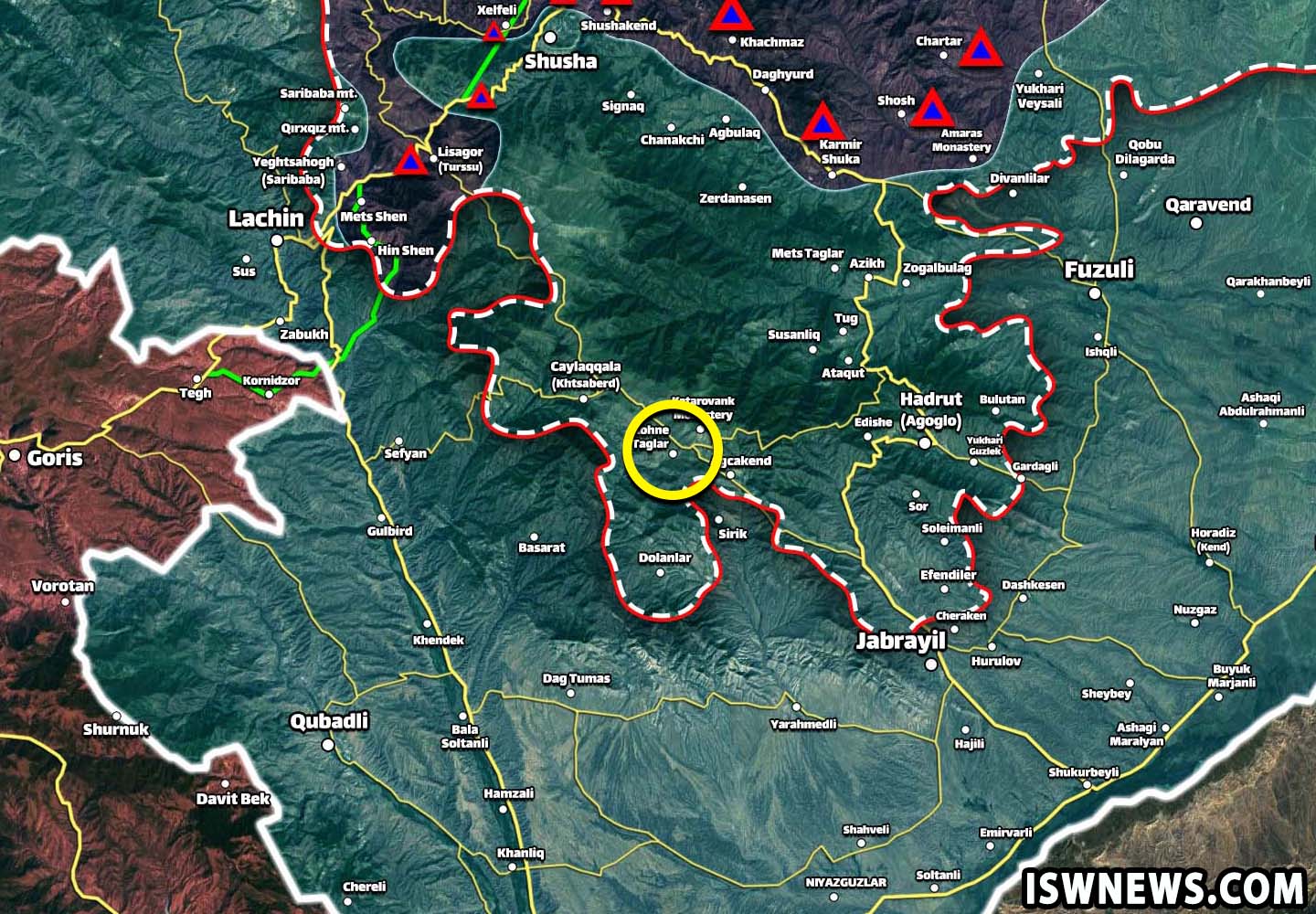
Following the signing ceremony of a tripartite statement among Russia, Republic of Azerbaijan and Armenia on November 9, 2020 and the official conclusion the Second Nagorno-Karabakh War, Azerbaijan’s army besieged and arrested Armenian soldiers, who were stationed in Hin Tagher village in the disputed region of Nagorno-Karabakh. The village is called Kohne Taghlar in Azerbaijani language and in accordance with Azerbaijan’s administrative division is part of the Khojavend County. At the time, when the Armenian soldiers were arrested, the areas controlled by any warring side were not clearly identified; so, the Armenian forces were besieged and then arrested.
In summer 2011, the Azerbaijan Republic sentenced 13 Armenian prisoners of war to six years behind bar on charges of terrorism, keeping and transporting of illegal arms as well as forming unlawful armed organization.
The government in Baku announced that only 33 prisoners of war are in custody. Siranush Sahakian, lawyer representing Armenian POWs in the European Court of Human Rights, believes that in addition to the mentioned number, there are also 90 other Armenian prisoners of war in Azerbaijan.
Arman Tatoyan, human rights defender in Armenia, said that the trial of the Armenian prisoners of war in Azerbaijan was held in contradiction to the international regulations.
Arif Yunusov, human rights activist in Azerbaijan, is of the opinion that the trial was held hastily and without paying heed to the prisoners’ cases. All knew that the people will turn into a case for exchanging and bargaining with Armenia, the United States, Syria and Lebanon. There are two Armenian nationals of Syria among the 13 trialed prisoners of war. Azerbaijan needs the prisoners of war in order to take advantage for different political postures. Earlier, Azerbaijan released 15 Armenian prisoners of war, when an American official visited Baku.
The BBC went on to say that the signing of peace deal between Azerbaijan and Armenia has been tied to the issue of supporting the rights of Armenians in the mountainous region of Nagorno-Karabakh. The Armenian nationals of the Nagorno-Karabakh region are worried about their security, because the Azerbaijani authorities foment hate speeches against the Armenians of the country.
According to the ISWnews, some Armenian sources said that Head of Communication and Prevention Programs at the Armenian Office of the International Committee of the Red Cross Zara Amatuni has released other news stories on the conditions of the Armenian prisoners of war with the of military and paramilitary background, who were active in the Hin Tagher village. The Azerbaijani government allowed Amatuni to meet Vigen Oljakchian, a Lebanese Armenian national, who was imprisoned in Baku. Oljakchian could have a phone conversation with his family members for the first time since the time when he was arrested by Azerbaijan. The Armenian national paramilitary force refused to give any information to the representative of the Red Cross.
The volunteer Armenian national paramilitary forces that came from different countries cooperated with the Armenian armed forces as well as other paramilitary forces during the Second Nagorno-Karabakh War against Azerbaijan’s army. The foreign Armenian national paramilitary forces are those, whose ancestors were massacred or displaced by the Ottoman Empire during the World War I.