Kizilelma’s history:
After Turkey was excluded from the F-35 production and delivery program by the United States, it commenced developing an advanced drone with a phased array radar and artificial intelligence capabilities in 2018 through Baykar.
The Turkish Air Force aimed to purchase between 110 and 120 F-35A CTOL aircraft. However, Turkey’s official order was for only 6 aircraft, of which one, identified as 0001-18, was delivered in Texas, and a Turkish pilot was trained in the United States. Following Turkey’s acquisition of the S-400 missile system, the US Senate passed legislation on June 18, 2018, prohibiting the export of the F-35 fighter to Turkey.
Prior to the US sanctions, the Turkish Ministry of Defense had shown interest in the vertical take-off variant of the F-35. Due to the delivery issues with this fighter, it announced that the Turkish Navy would instead utilize domestically produced unmanned aerial vehicles (UCAVs), such as the Bayraktar TB3, in the short term.
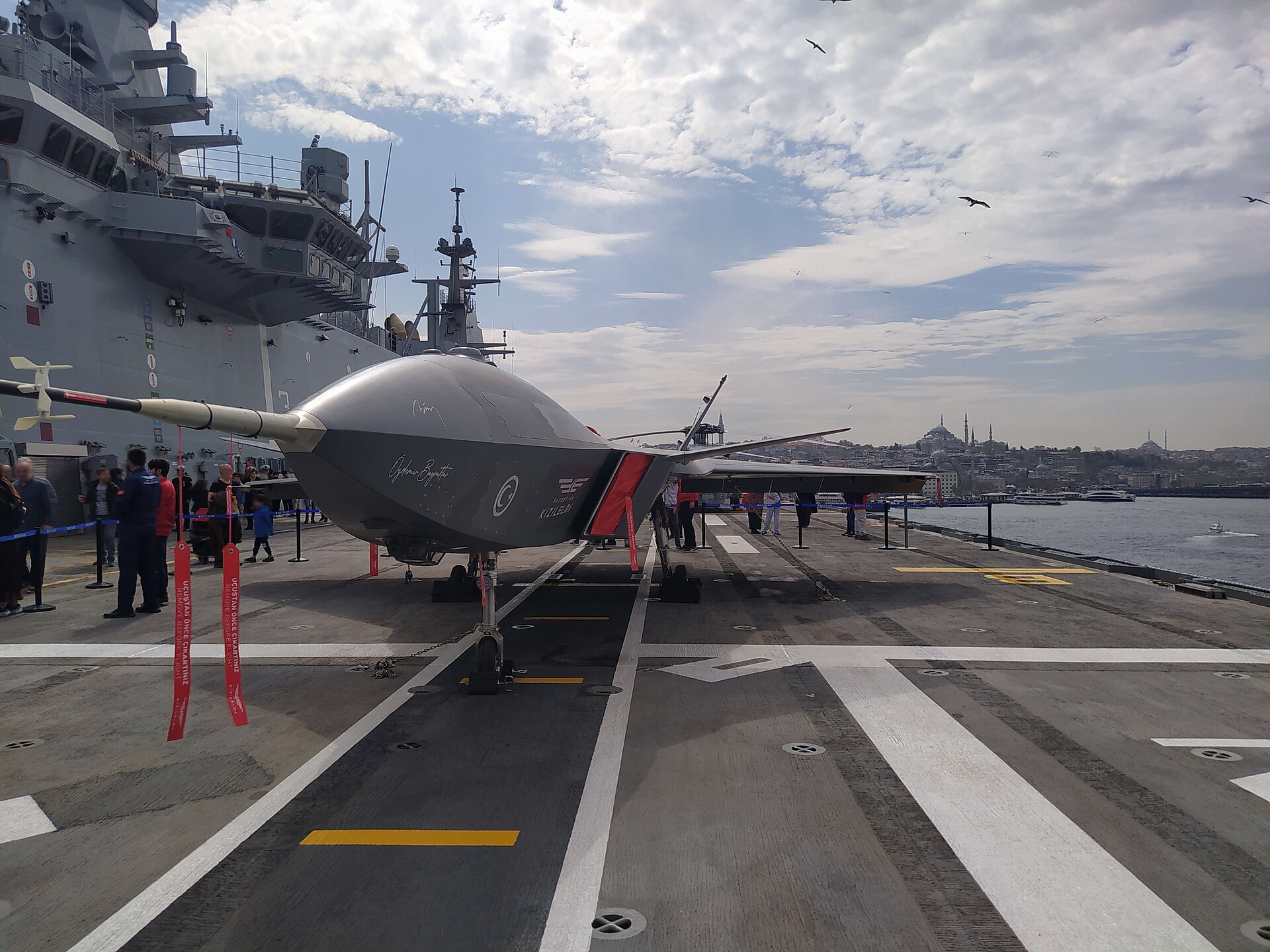
At that time, Turkey was planning to construct a helicopter carrier to support ground operations, which was intended to operate with the F-35B fighter. This vessel is now in service under the name Anadolu and has been adapted to operate the Kızılımla drone.
Despite Turkey being removed from the F-35 parts supply and the cancellation of the fighter jet sale, it had been producing key airframe and engine components for the F-35 program until 2022. Capitalizing on the partnership and the technology transferred, Turkey aimed to develop a stealth drone, leveraging most available components.
For the drone’s engine, two Ivchenko-produced turbofan engines, the AI-25TLT and AI-322F, were chosen, with the AI-25TLT powering the prototypes. Engine integration was completed successfully on September 29, 2022, and two months later, on November 20, 2022, the taxi test was also successful.
The Red Apple (Kızılımla) achieved its first successful flight 13 days after the taxi test, on November 3, 2022. Baykar shared a video on March 15, 2025, showcasing the flight test of its newest model, the Kızılımla. The video highlights minor modifications to the Kızılımla when compared to earlier versions.
In October 2024, Baykar President Selçuk Bayraktar announced that mass production of the Kızılımla had begun and that one drone had been produced. The company plans to produce more than 10 units by 2026. Efforts are ongoing to develop and optimize the drone, including its radar and sensors.
Kızılımla’s design:
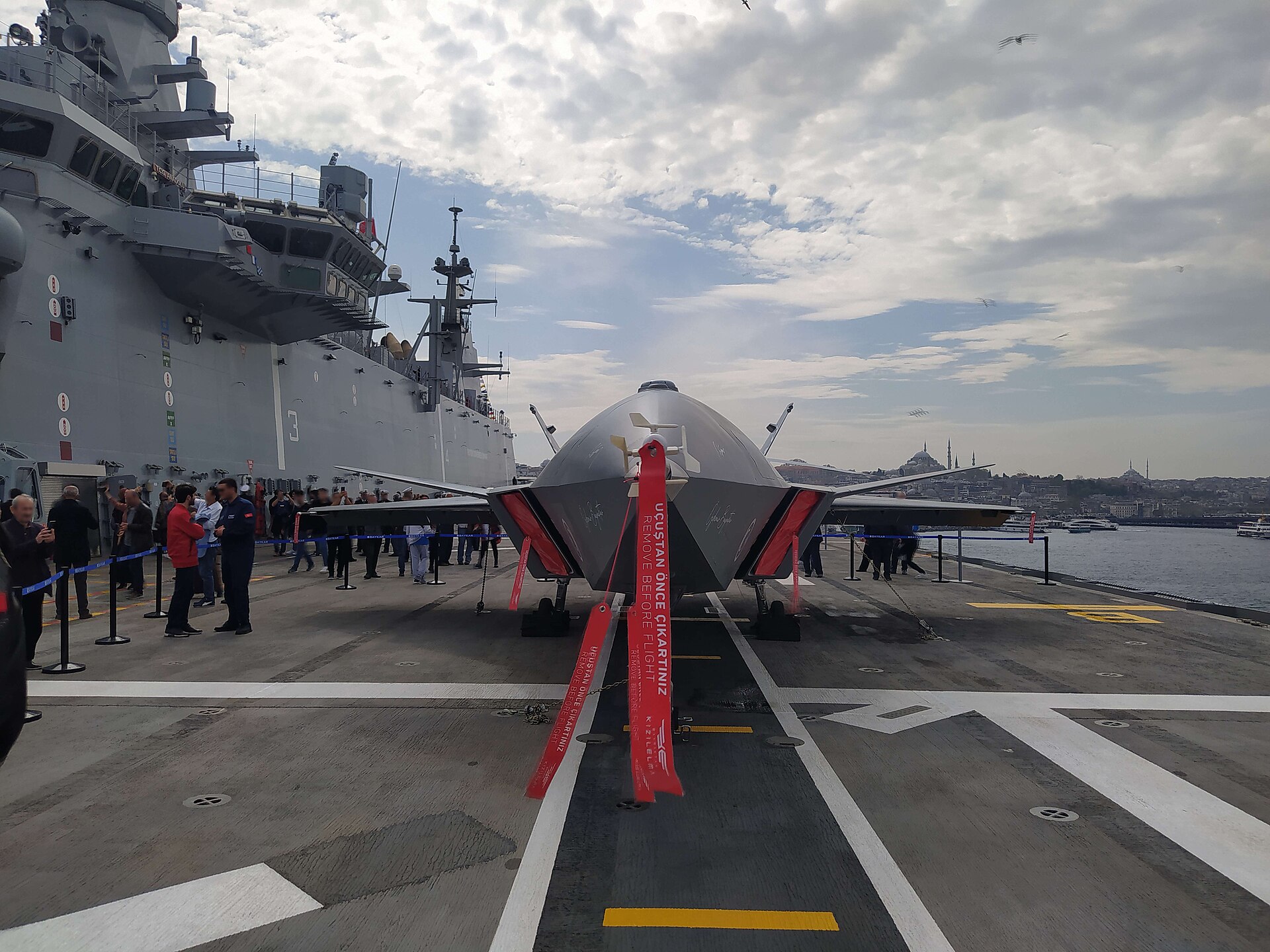
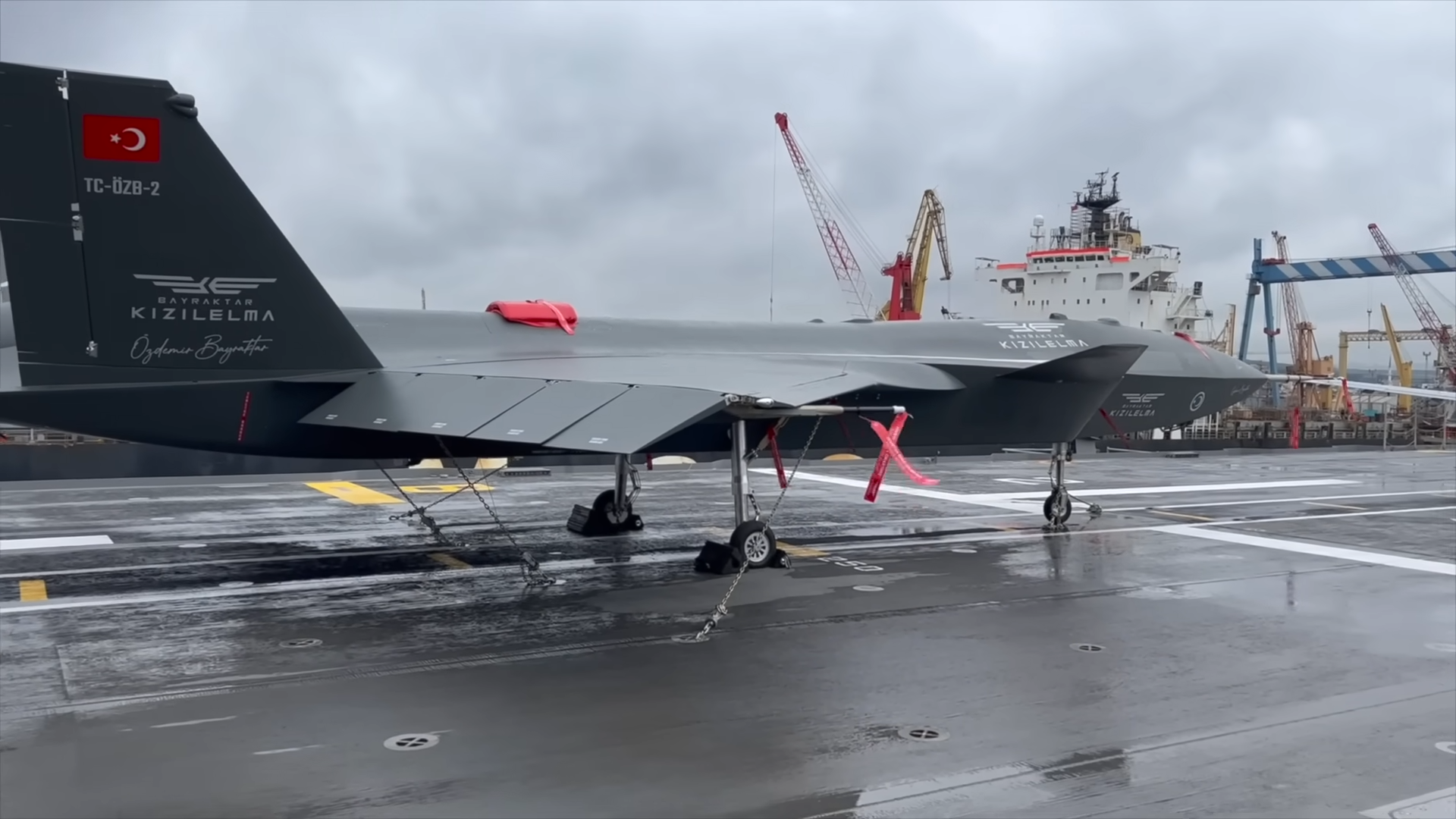
The Kızılımla drone features a lightweight body made of carbon composite thermoplastic materials and incorporates a stealthy design. It is powered by a Ukrainian turbofan engine. The Kızılımla includes two air intakes positioned on the fuselage’s sides and a trapezoidal wing structure situated at the fuselage’s center.
To enhance maneuverability, two canards are positioned at the drone’s nose. Additionally, it has two vertical rudders arranged in a V-shape at the rear for improved control, while the horizontal rudder at the back has been eliminated.
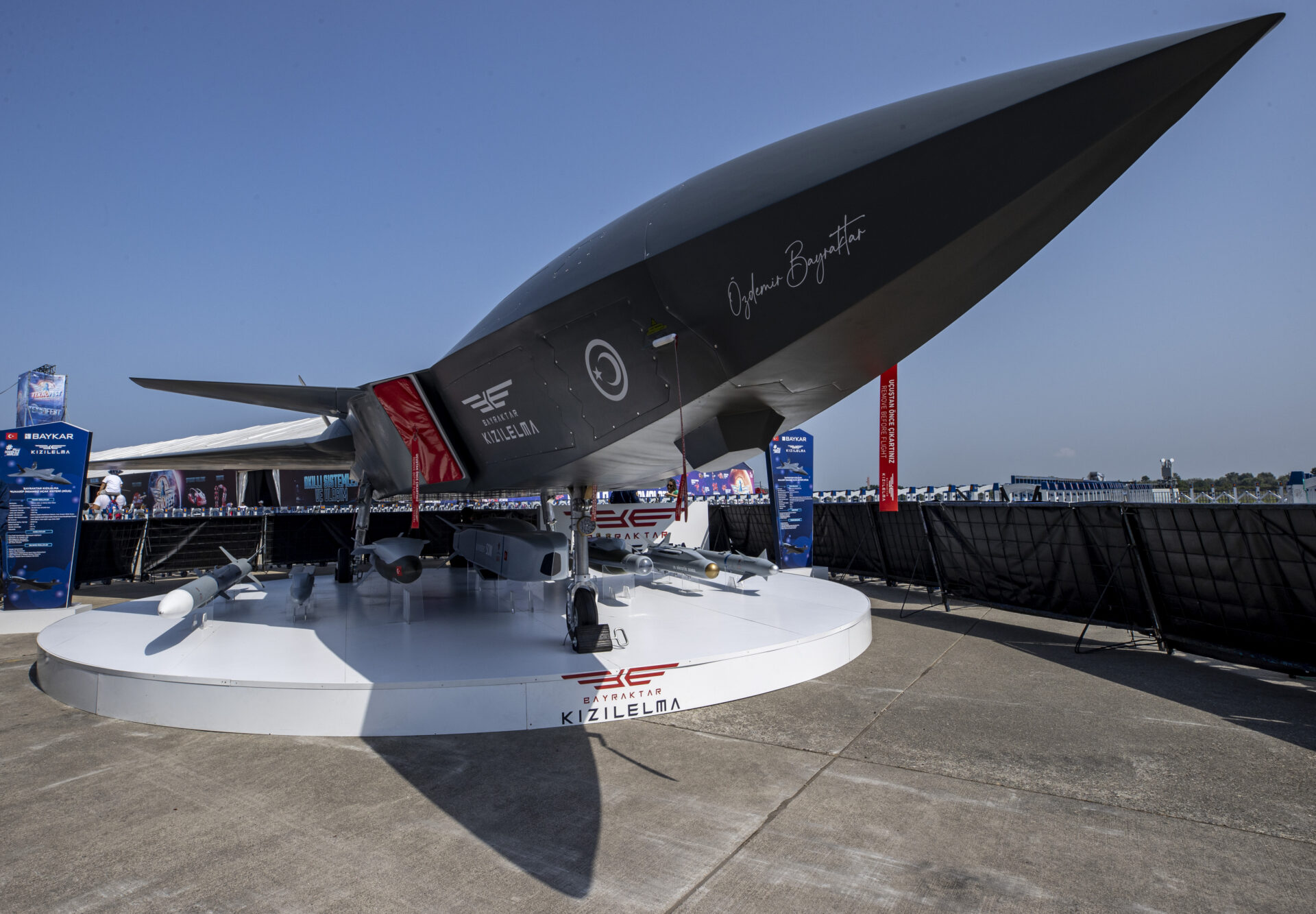
This drone is equipped with an internal weapon compartment containing two weapon racks, along with three hardpoints under each wing, providing the Kızılımla a total of six hardpoints for ordnance.

The Kizilelma drone serves as both a combat drone (UCAV) and a wingman drone. A wingman drone operates alongside the main fighter jet, equipped with a radar to gather battlefield data before the fighter jet engages. In this role, the wingman drone can sacrifice itself to shield the manned fighter jet from unexpected attacks. Typically, wingman drones are engineered for air-to-air combat, benefiting from stealthy designs.
The Kizilelma drone is built for a variety of missions, including air-to-air combat, strategic strikes, close air support (CAS), suppression of enemy air defenses (SEAD), destruction of enemy air defenses (DEAD), and interception and communication disruption (SIGINT/ELINT).
Additionally, the Kizilelma drone can take off from short runways (LHD) or from drone carriers such as Anadolu and other aircraft carriers.
Kizilelma’s Engine:
Two types of engines have been introduced for the Kizilelma drone, which, according to the infographic published by Baykar, will be used to build three types of this drone.
- Kizilelma Drone Version A: This version is equipped with an AI-25TLT turbofan engine that does not have an afterburner.
- Kizilelma Drone Version B: This version features an AI-322F turbofan engine with an afterburner.
- Kizilelma Drone Version C: This version is equipped with two AI-322F turbofan engines, both with afterburners.
These three versions will differ in terms of speed, range, and flight altitude. According to the available information, all three types will be developed over time, with Version A still under development.
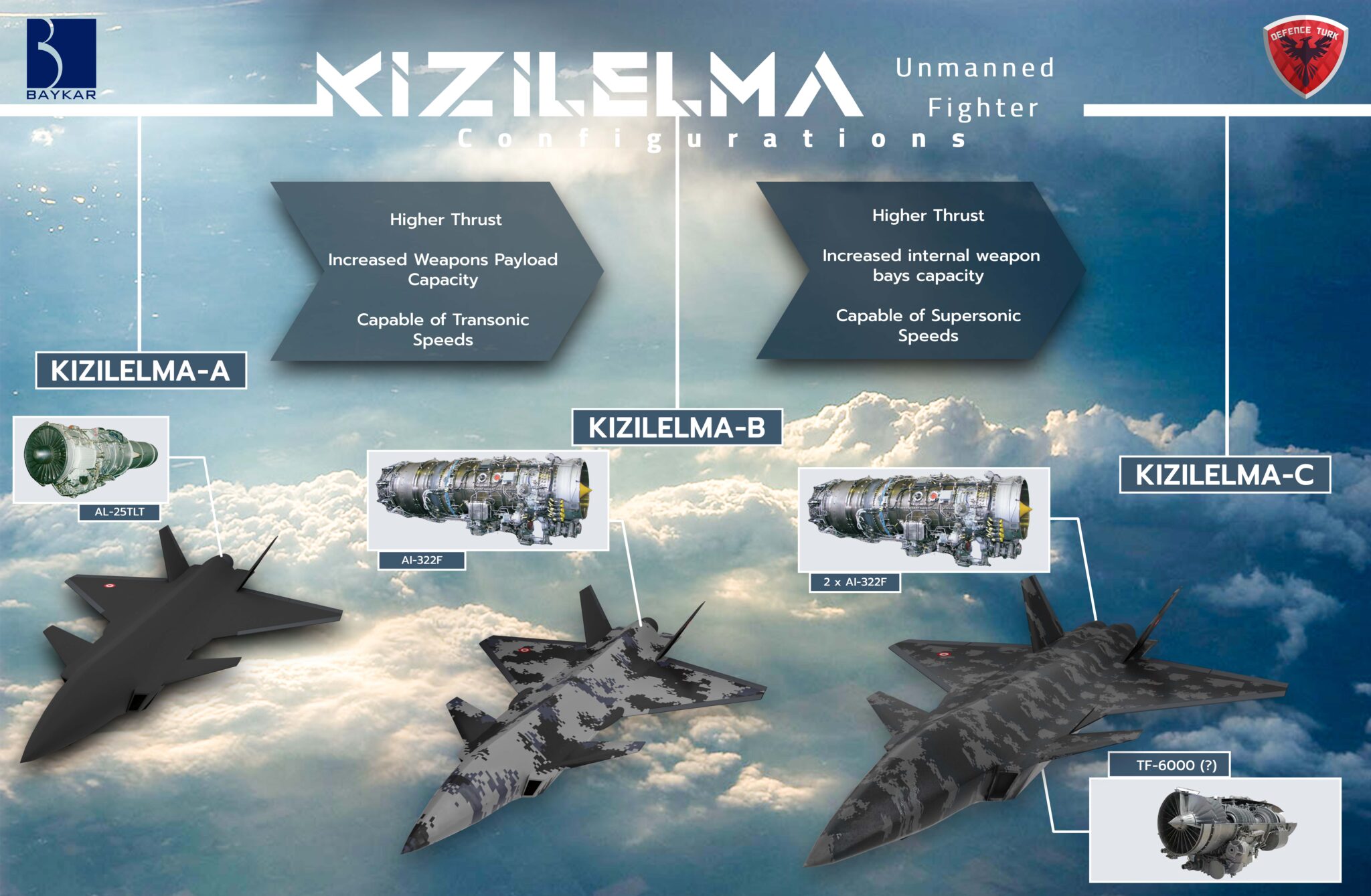
The infographic indicates that the ongoing development project incorporates the AI-25TLT turbofan engine, which does not feature an afterburner. This military engine was initially created by the Ivchenko OKB in Soviet Ukraine and is now manufactured by the Sich company, based in Zaporizhzhia. Beyond the AI-25TLT, Sich also produces engines for aircraft and helicopters, in addition to turbines and industrial gas installations for marine use.
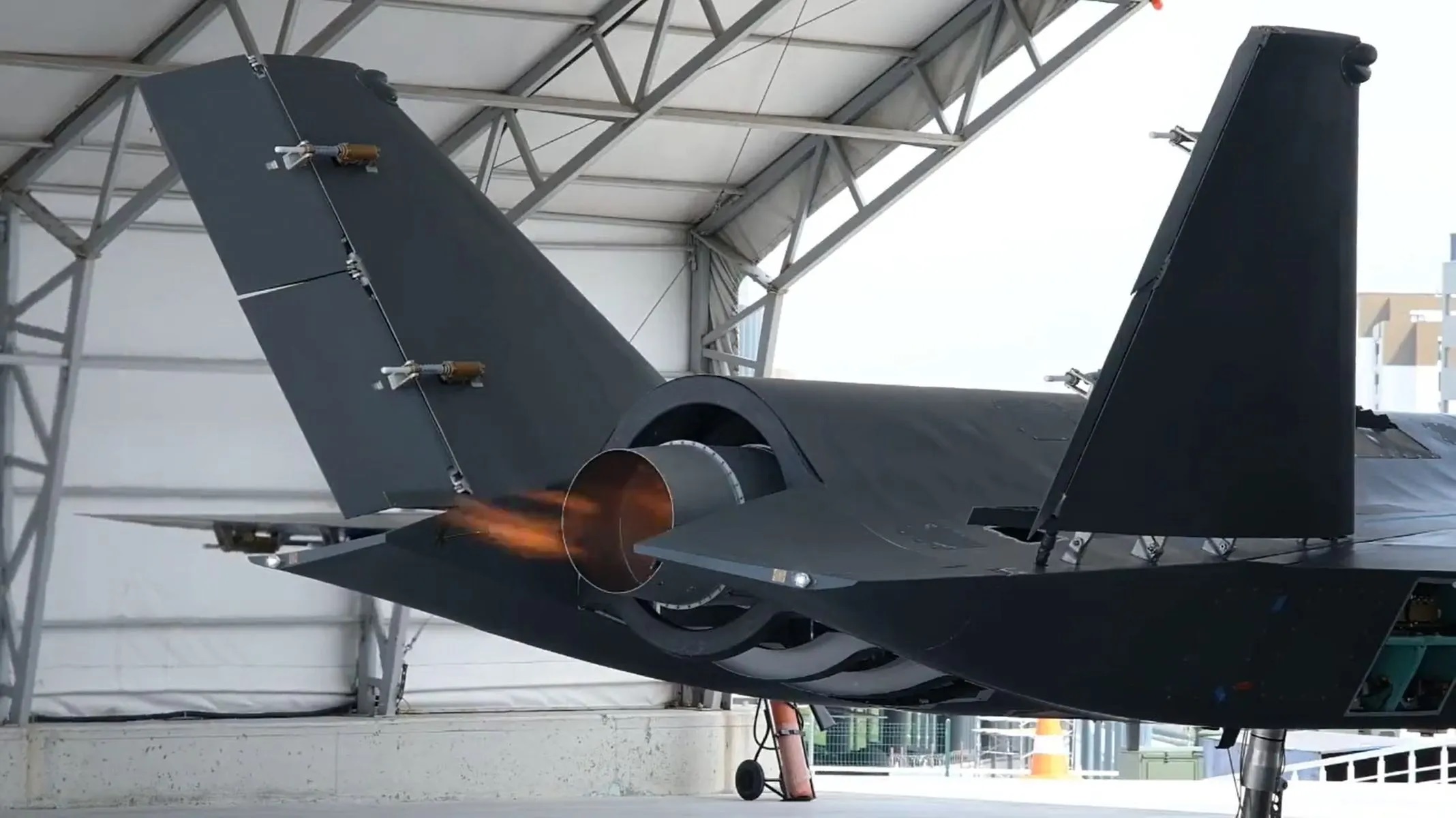
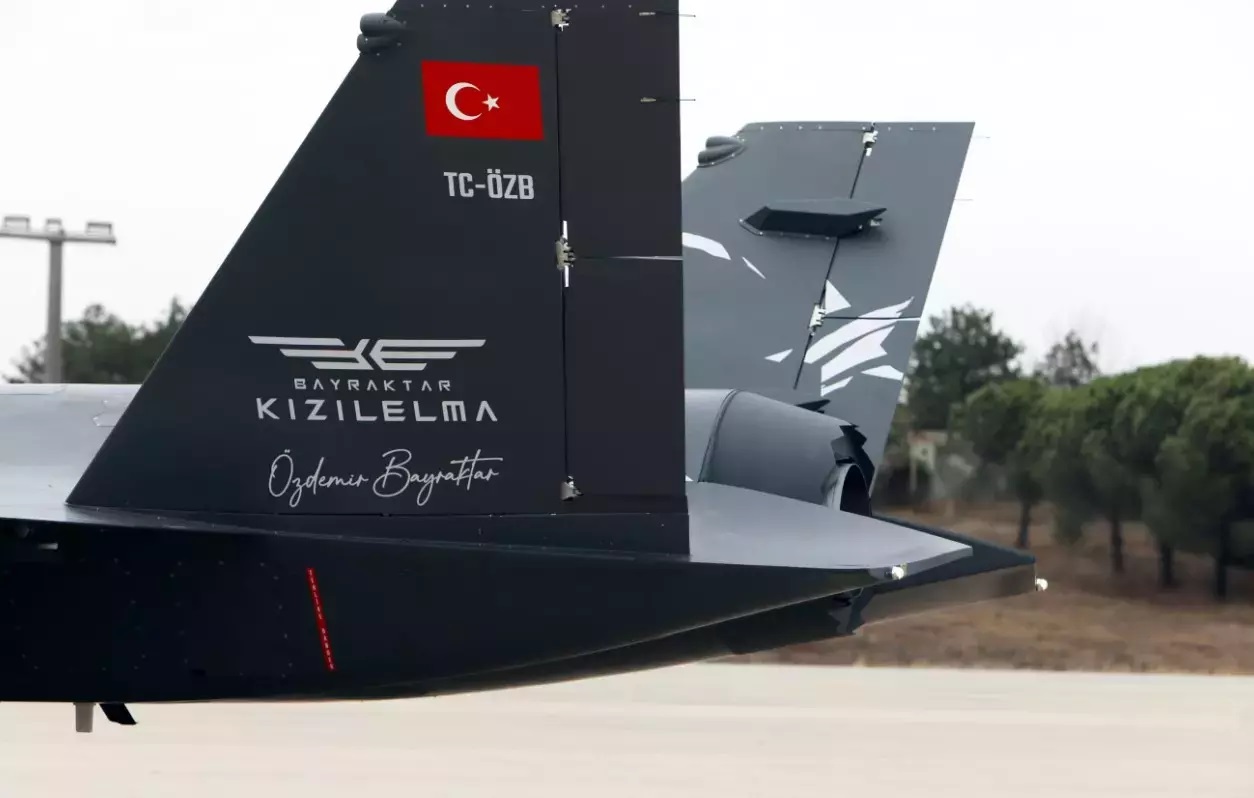
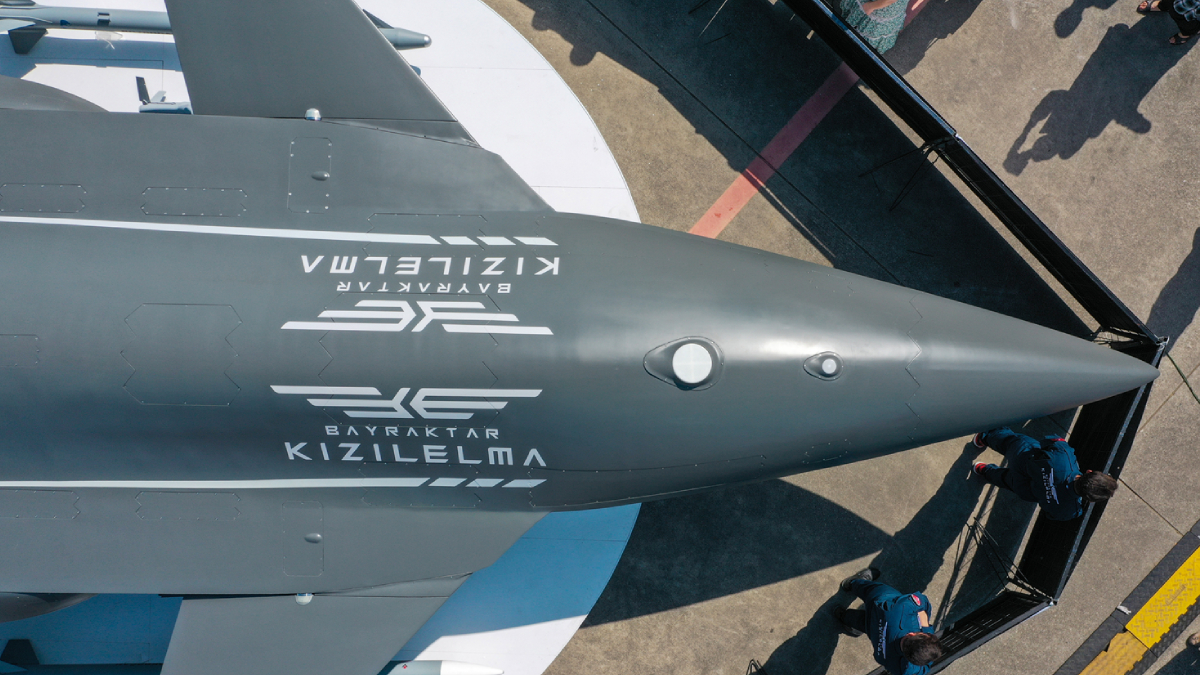
The Kizilelma features a camera located beneath its nose and a phased array radar produced by ASELSAN. The specific details of the camera and radar have not been disclosed. Nonetheless, the images available suggest that the camera is seamlessly integrated into the body, helping to minimize the drone’s radar cross-section. Additionally, this drone is equipped with a sophisticated electronic warfare system.
This drone appears to incorporate the Israeli-made ADA-O anti-jamming system, which ensures GPS functionality for ground platforms amidst electronic warfare targeting GPS signals. The system is compatible with various armored platforms, vehicles, artillery, and different aerial platforms. Generally, it aims to counter jamming of GNSS on a global scale. It has also been deployed on Israeli Hermes and Eitan drones. This evidence suggests that alongside American technologies utilized in the Ukrainian airframe and engine, an Israeli system was integral to the development of this drone.

Armament:
The Kizilelma drone is capable of carrying 1.5 tons of ordnance, including laser-guided bombs, TEBER and Lacin precision-guided bombs, Gökdoğan and Bozdoğan air-to-air missiles, and SOM-J, HGK, LGK, and Minyatür Bomba air-to-surface cruise missiles.
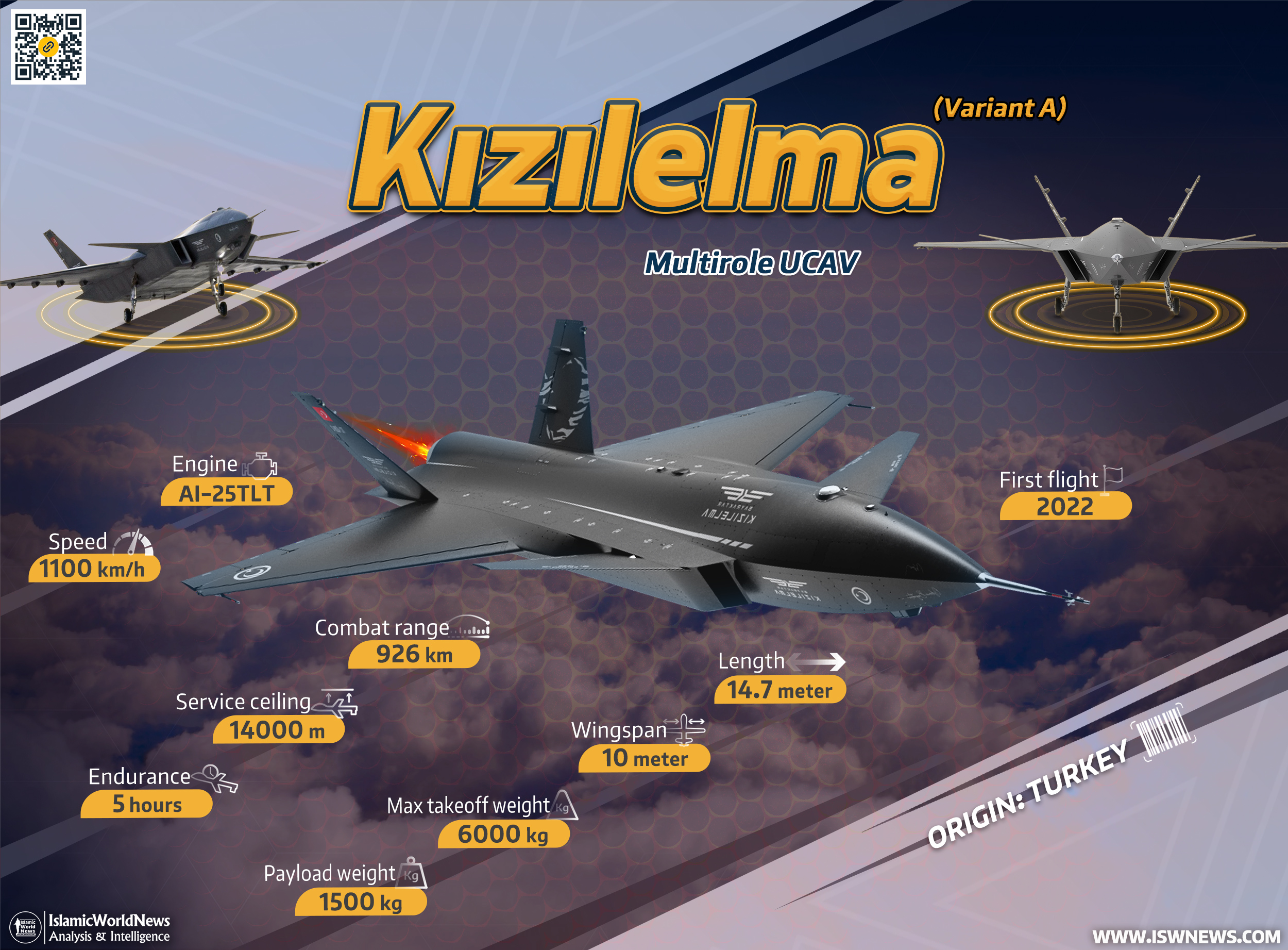
Specifications of the Kızılelma multirole combat drone (Kızılelma-A model):
Type: Multi-role combat drone
Manufacturer: Baykar Defense
Manufacturer: Turkey
First flight: 2022
Length: 14.7 m
Wingspan: 10 m
Height: 3.3 m
Engine:
One AI-25TLT turbofan engine in Kızılelma-A
Two AI-322F turbofan engines in Kızılelma-B
Combat Range: 926 km
Maximum Speed: 1,100 km/h (Mach 0.9)
Cruise speed: 735 km/h (Mach 0.6)
Altitude: 45,000 ft (14,000 m)
Endurance: 5 hours
Maximum takeoff weight: 6,000 kg
Weapon payload: 1,500 kg
Radar: Active phased array (AESA)
Armament:
– Two hardpoints in the internal weapons bay and six hardpoints under the wings (three on each wing)
Cruise missiles SOM, LAÇİN Kit Guided Freefall Bombs, Turkish Miniature Bombs, GÖKDOĞAN (Shahin) Air-to-Air Missile, and BOZDOĞAN or Merlin Infrared Air-to-Air Missile

Sources:
Bayraktar KIZILELMA
Bayraktar KIZILELMA Unmanned Combat Aircraft System
” Kızılelma ” 2023’de semalarda olacak!
Baykar Bayraktar Kizilelma
UAV Bayraktar Kizilelma: New Generation Turkish Combat Drone
Bayraktar KIZILELMA ilk motor entegrasyon testini başarıyla tamamladı
Kızılelma takes to the sky!
Bayraktar Kızılelma
IAI Unveils ADA-O to enable land platforms deal with GNSS anti-jammers