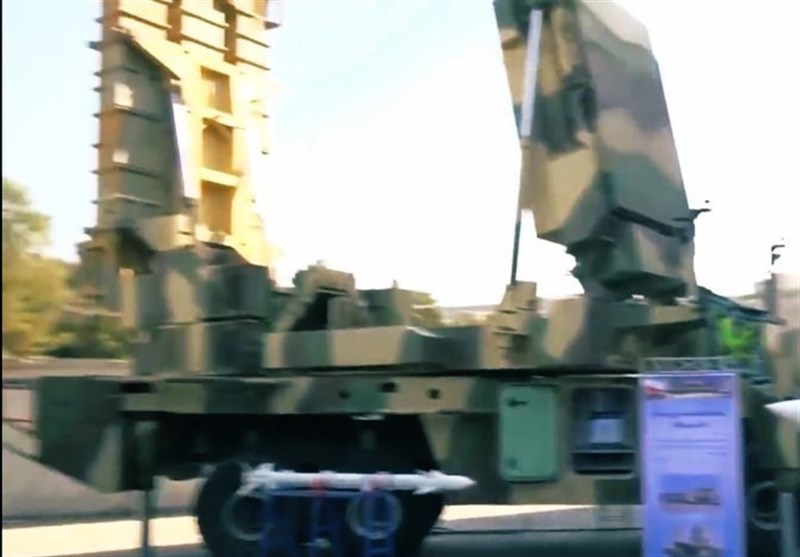
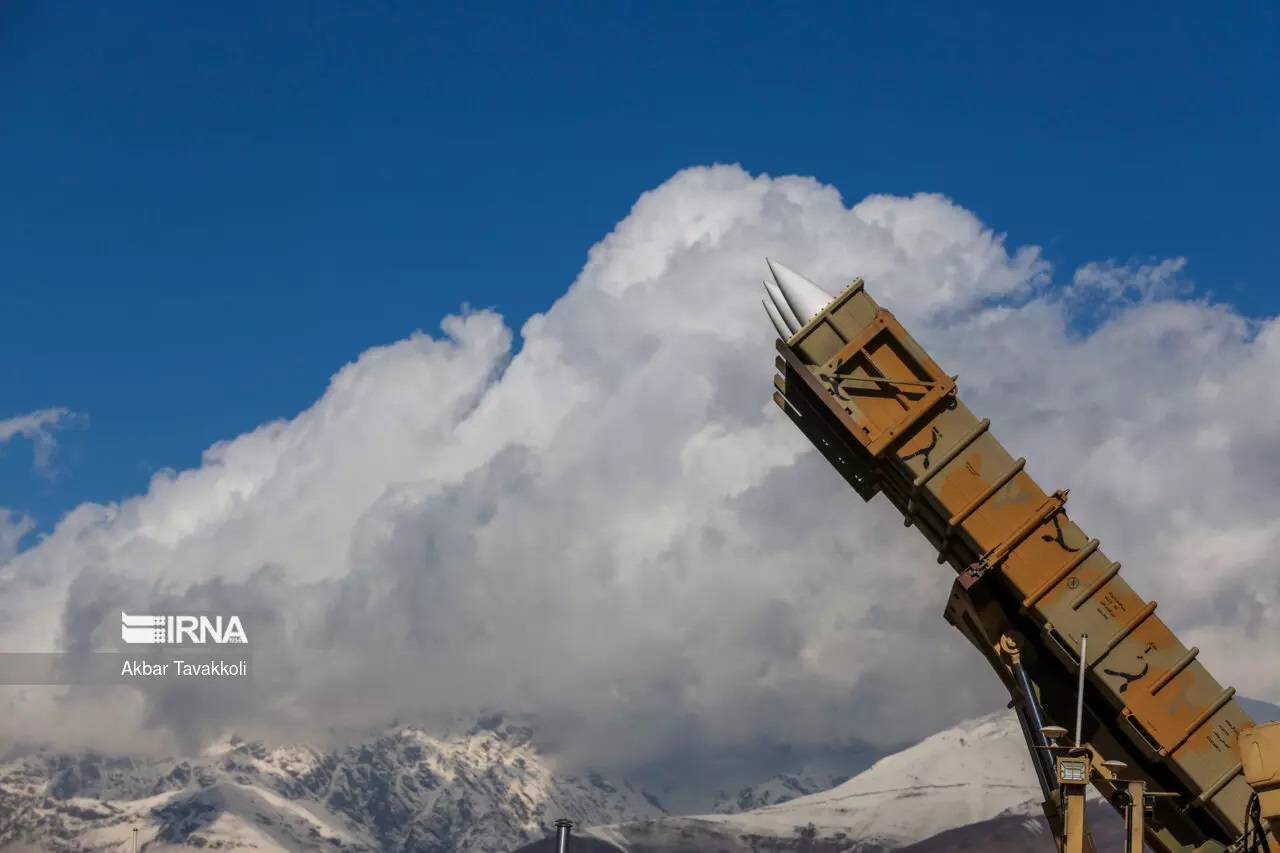
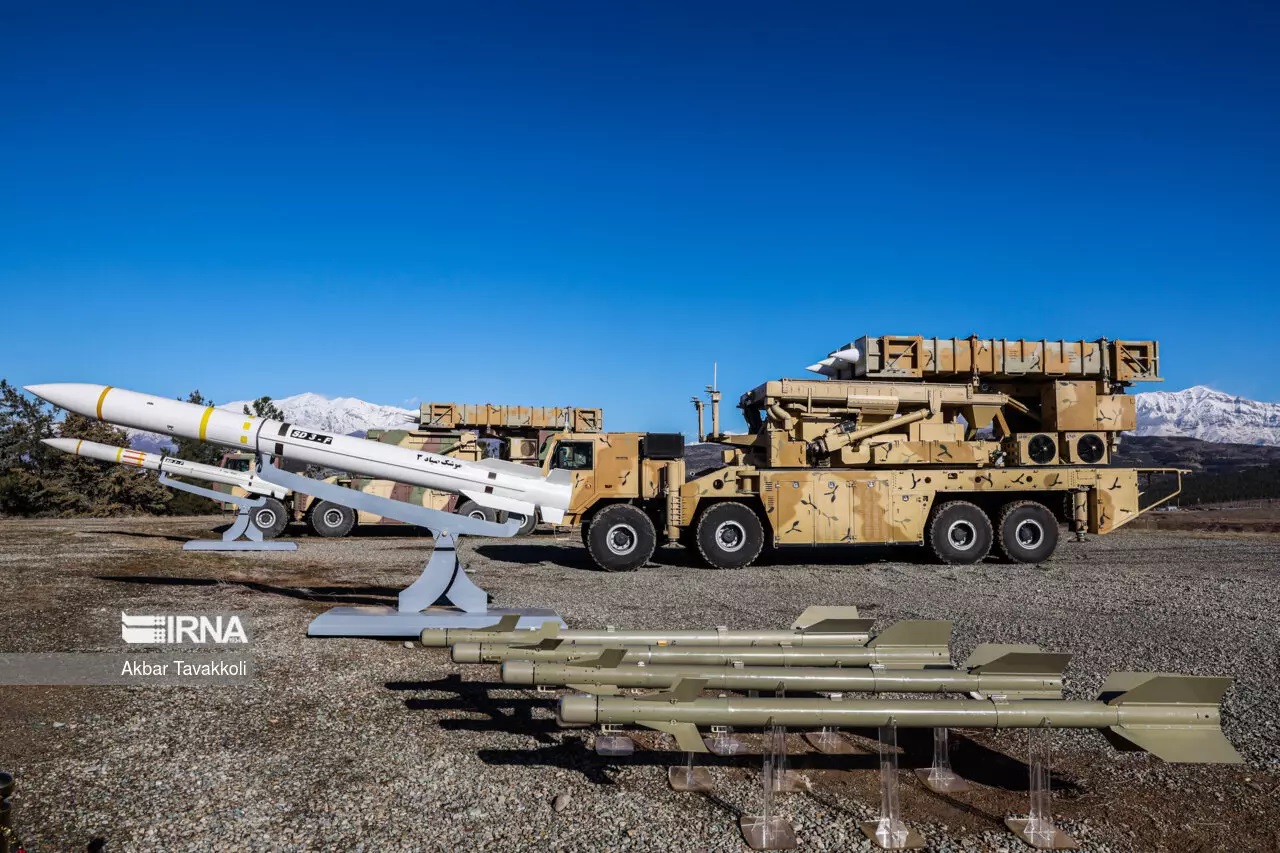
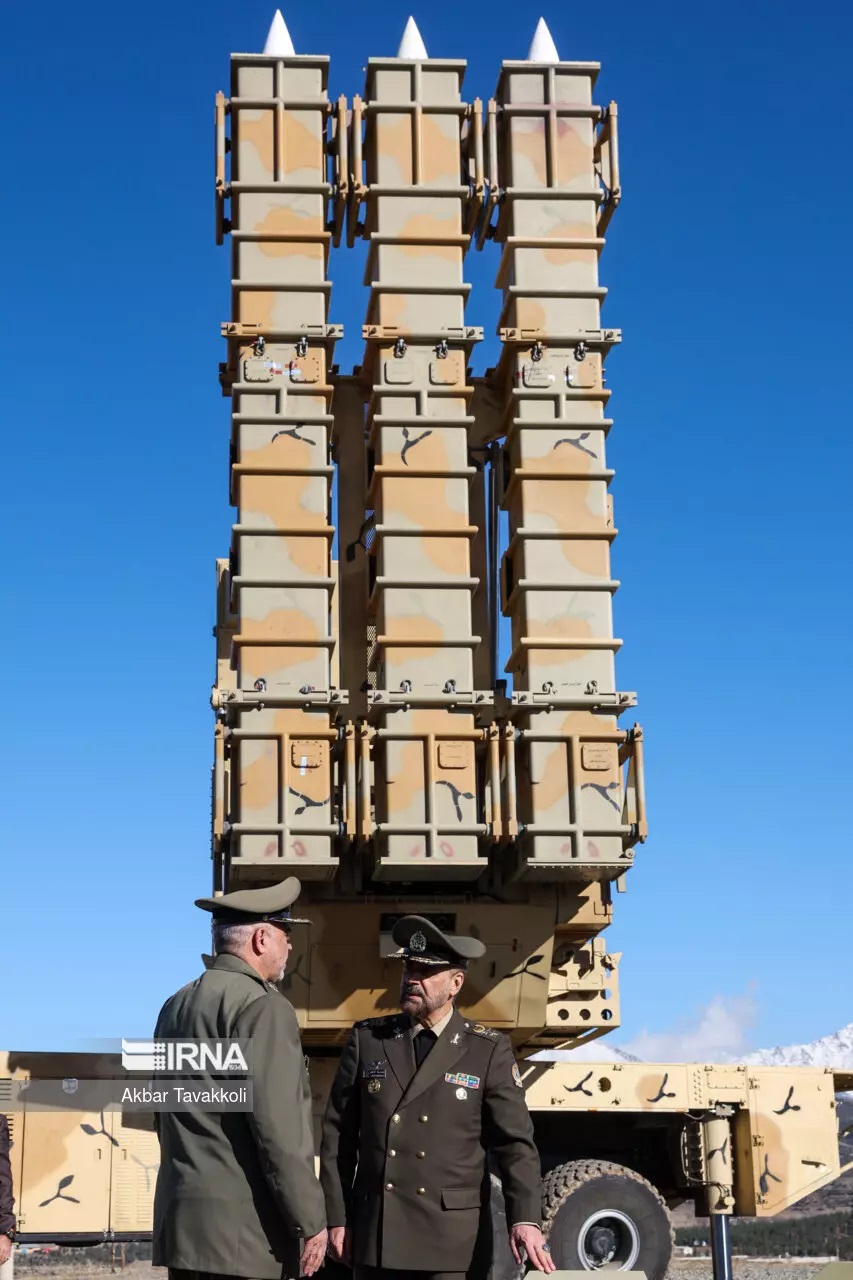
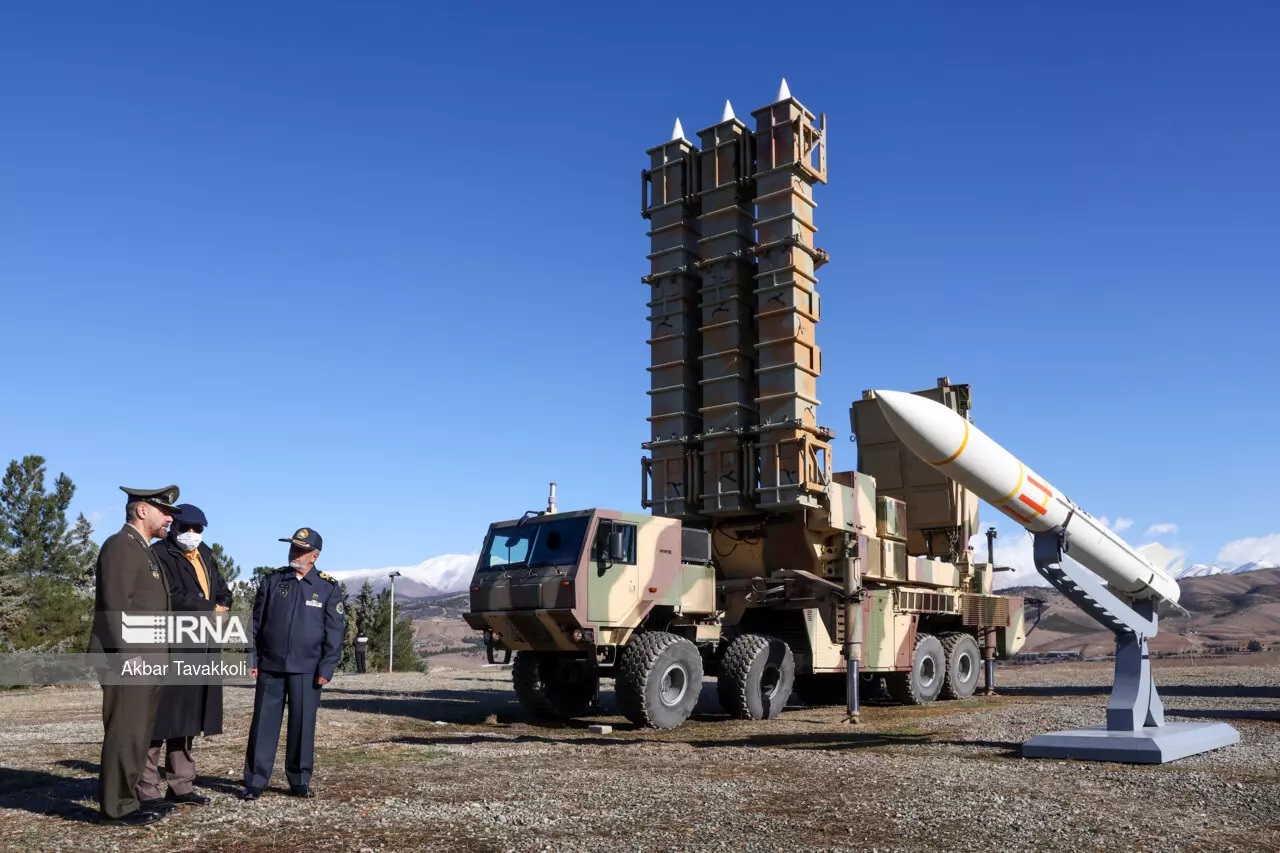
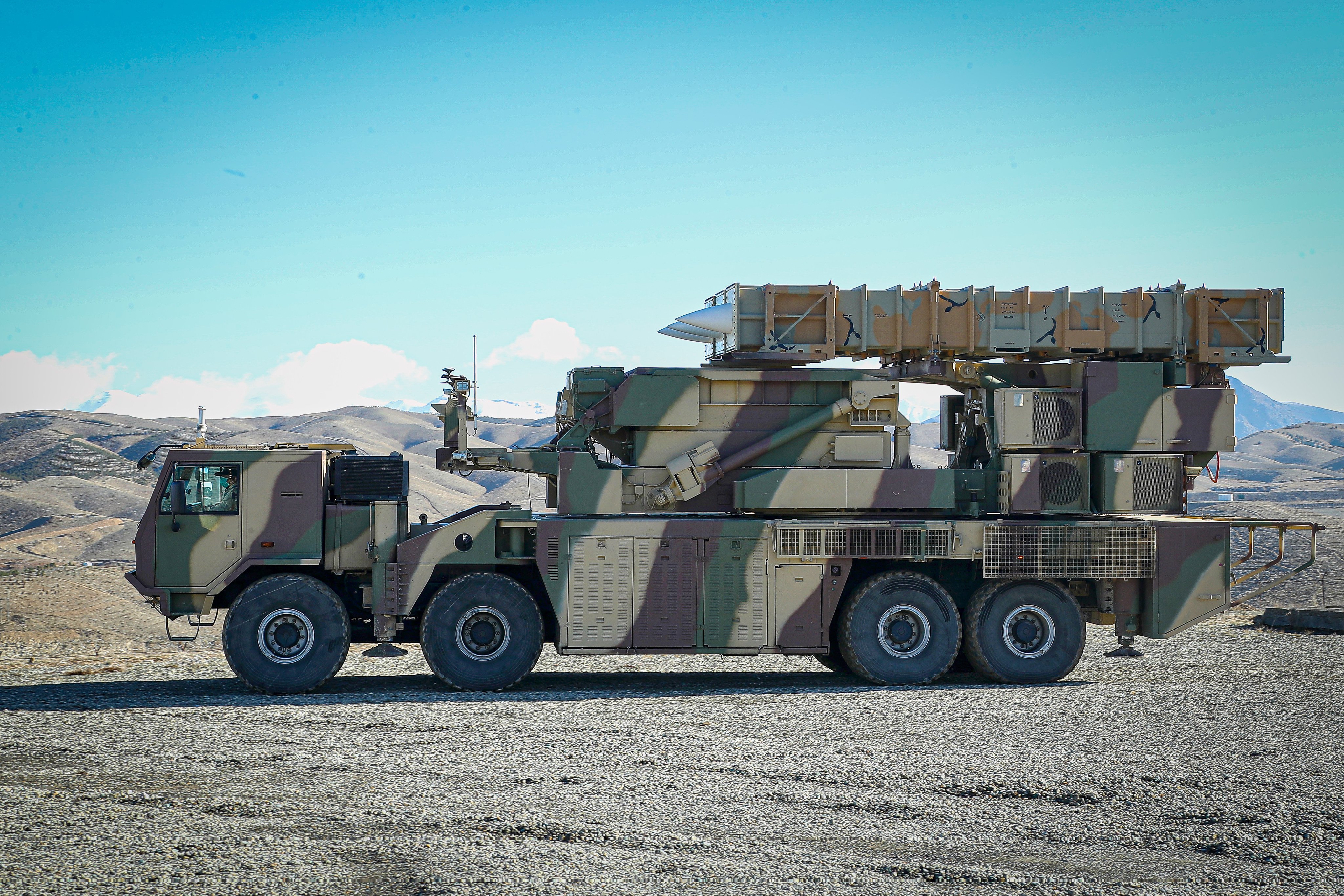
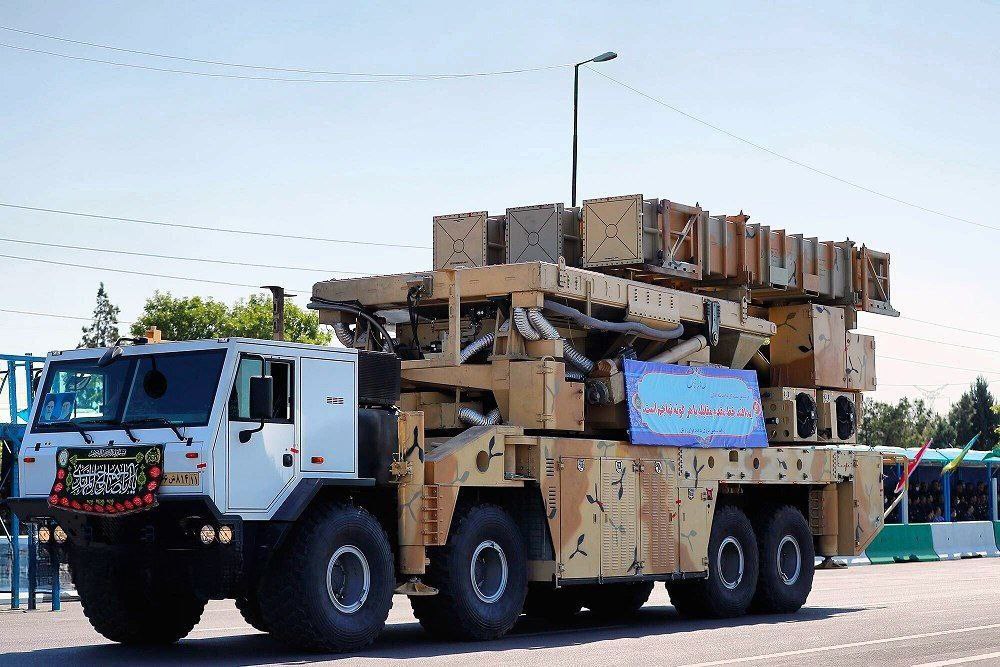
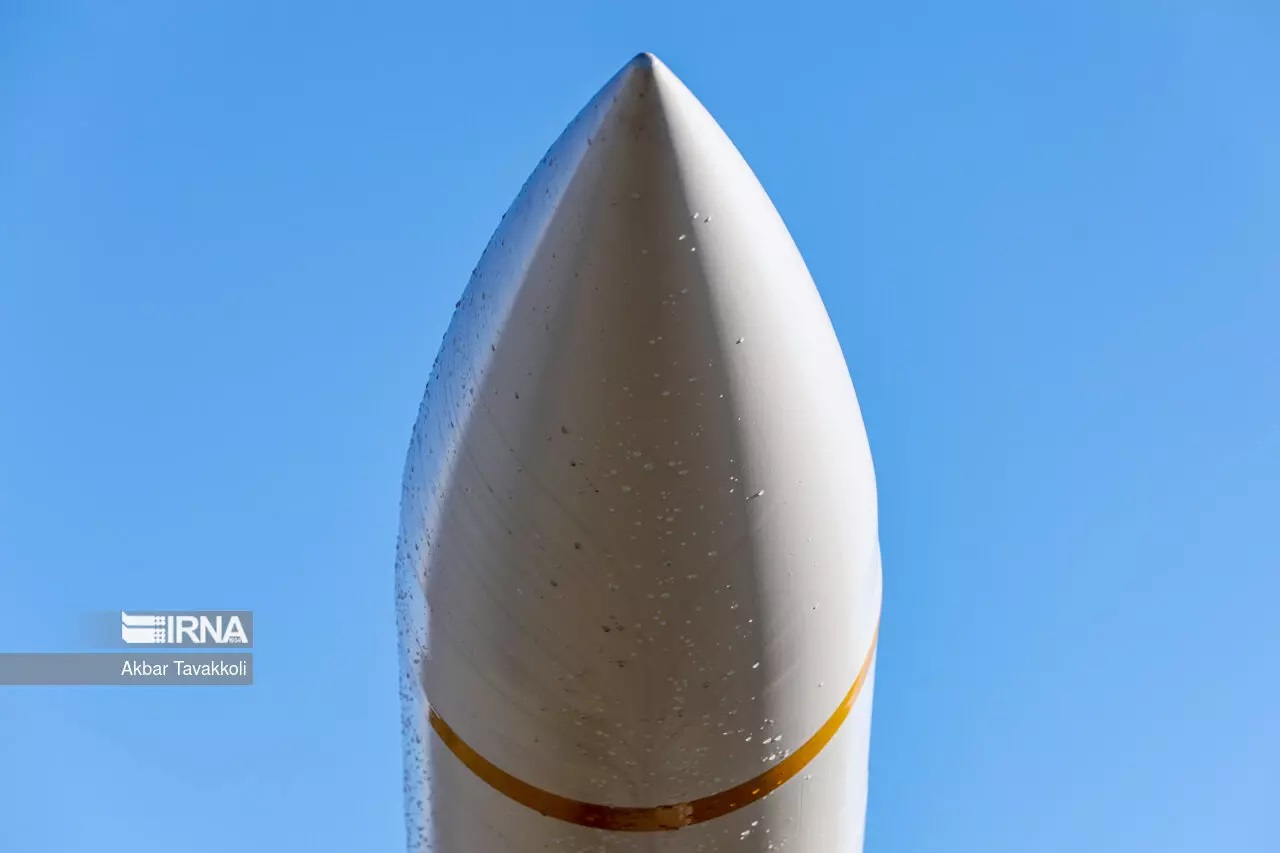
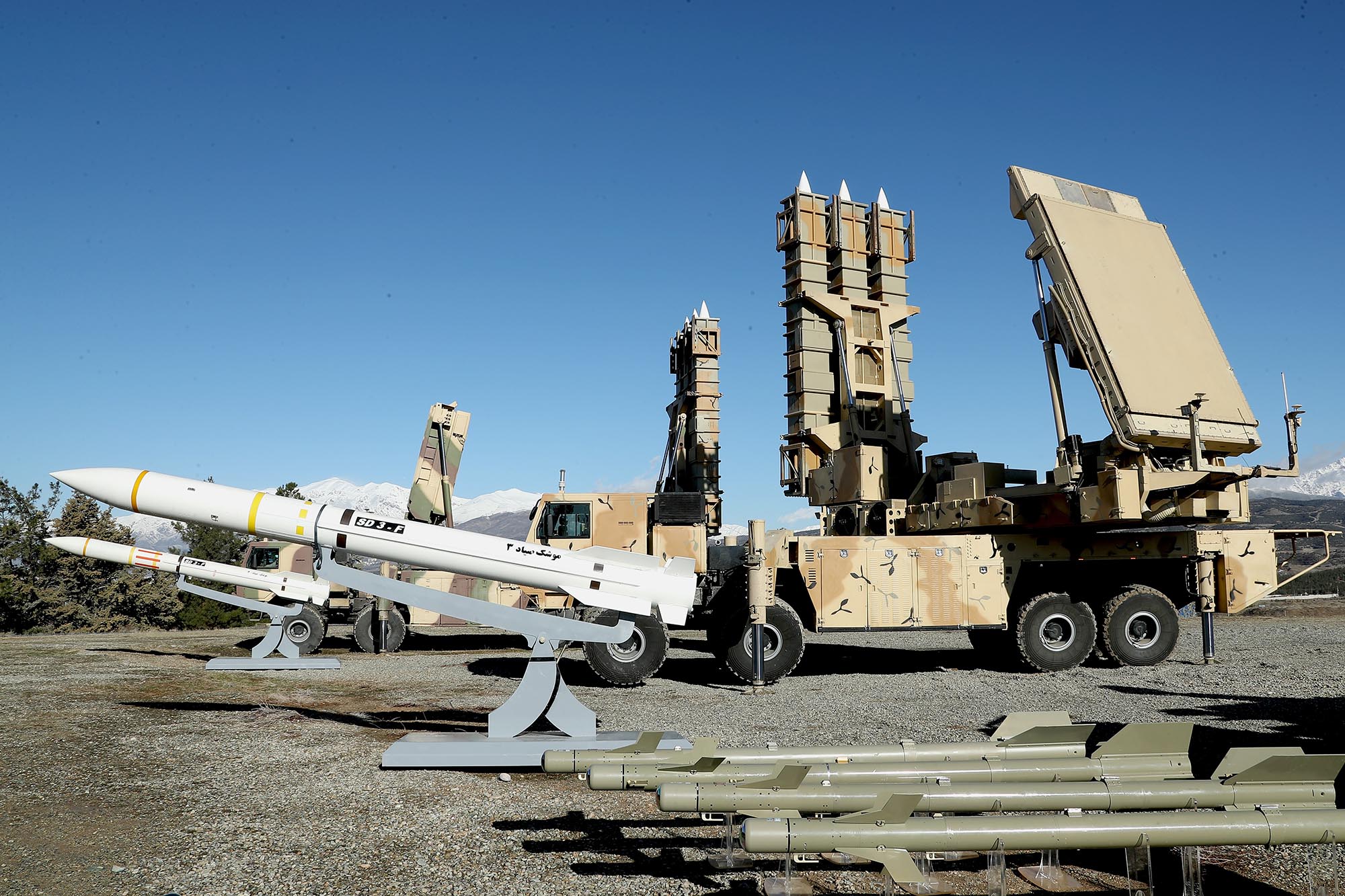
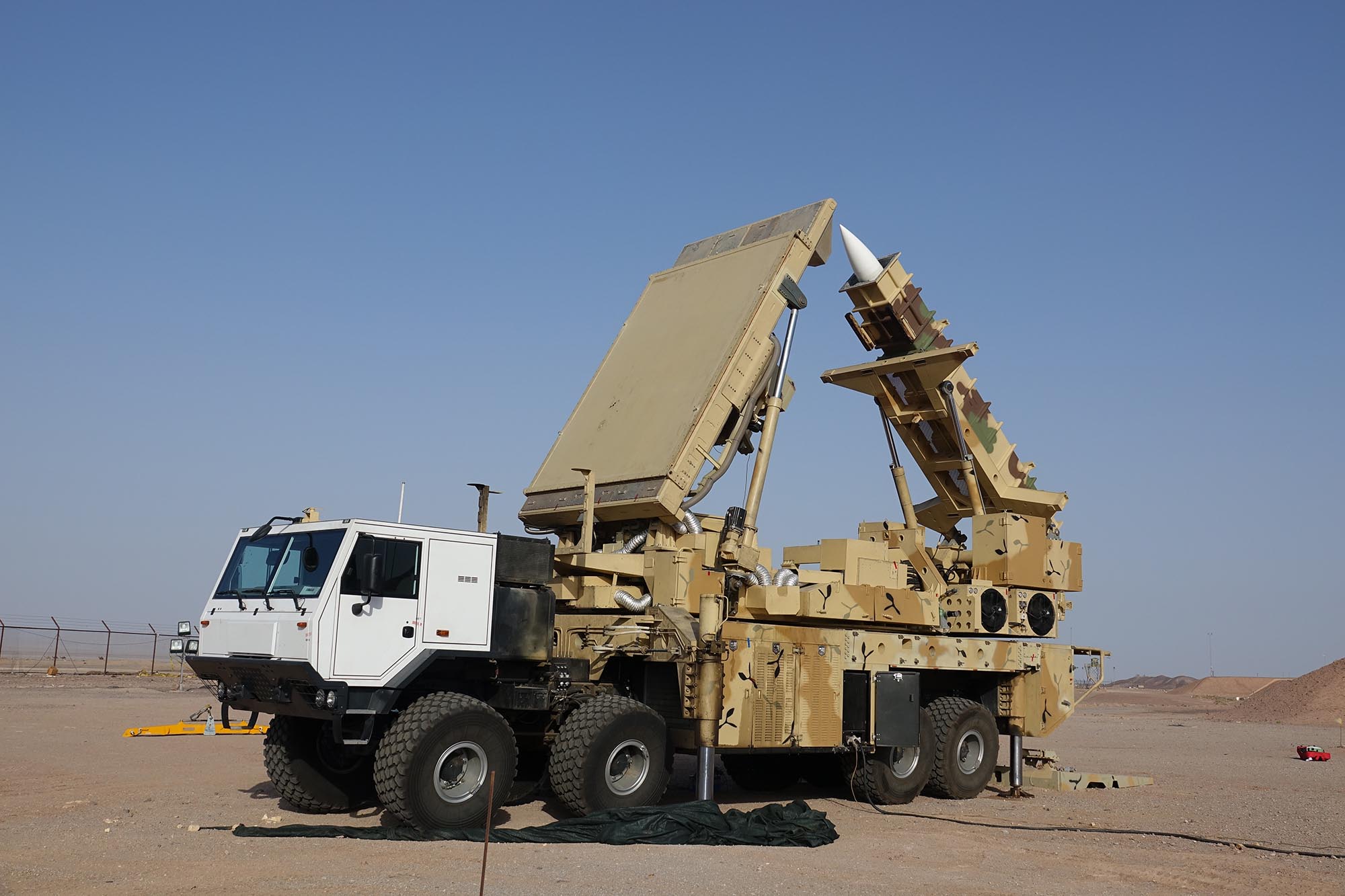
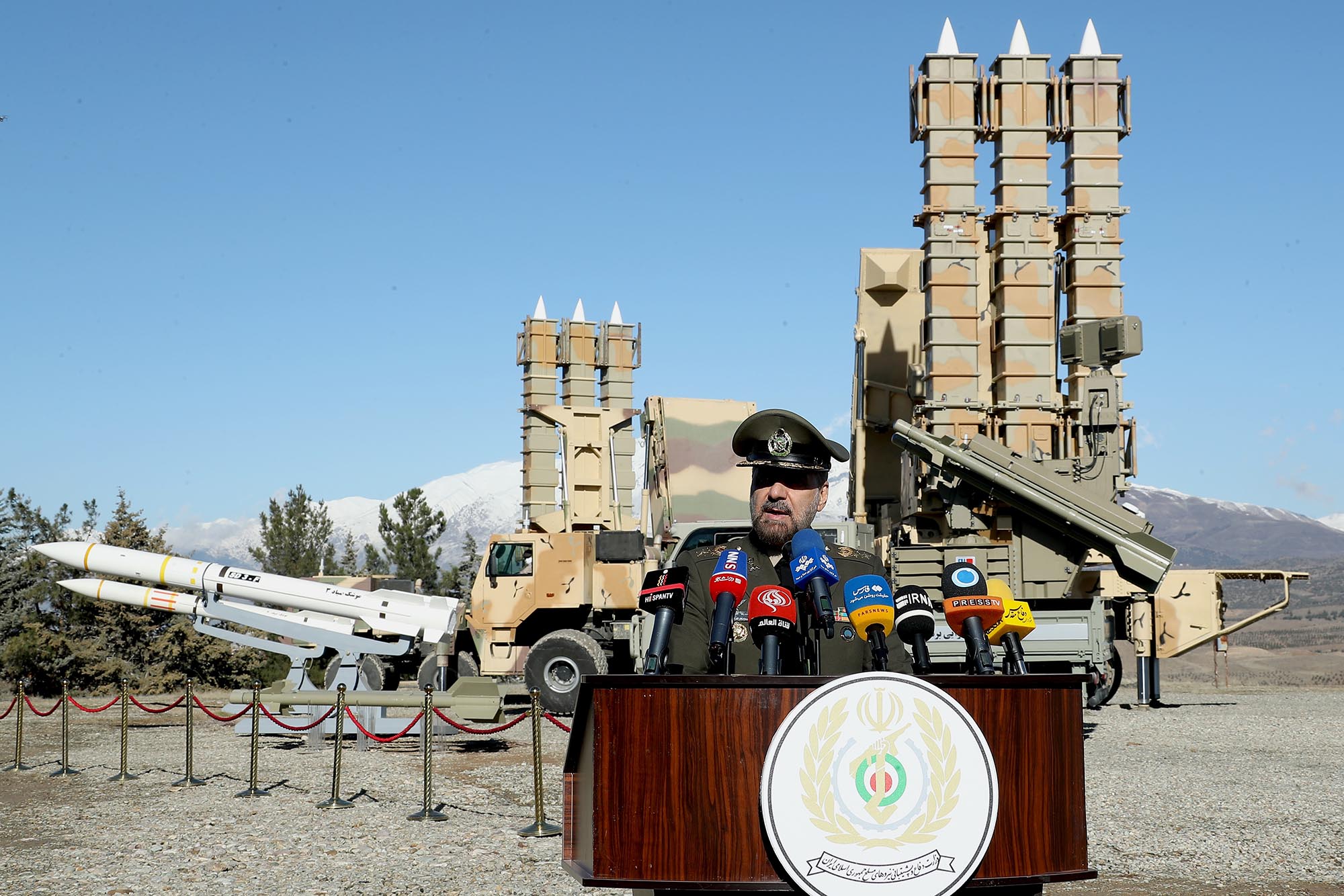
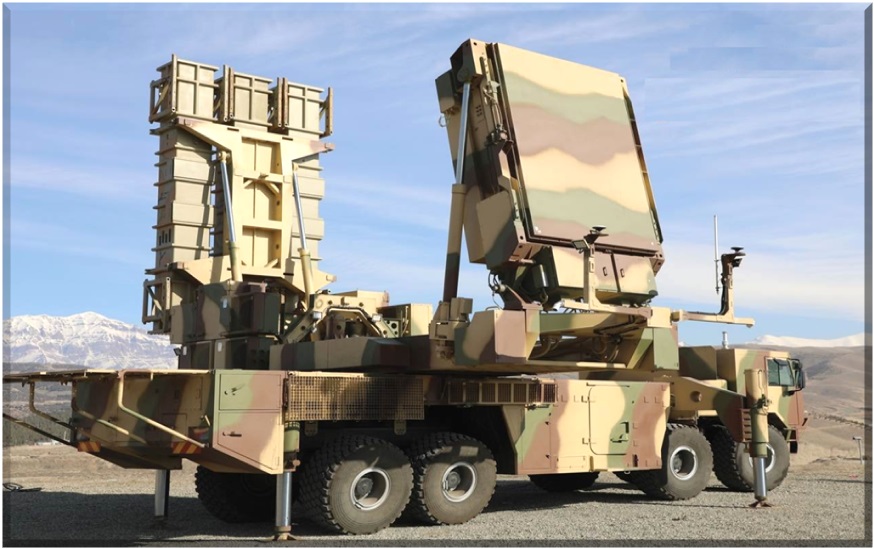
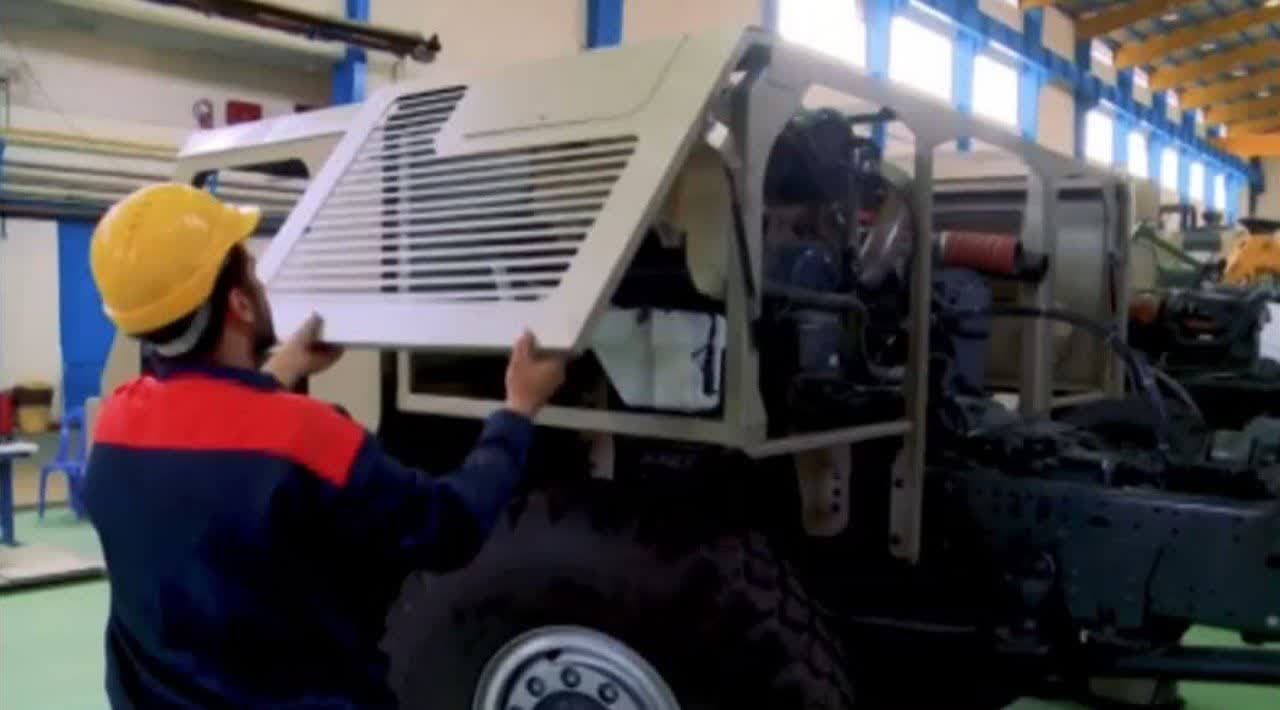
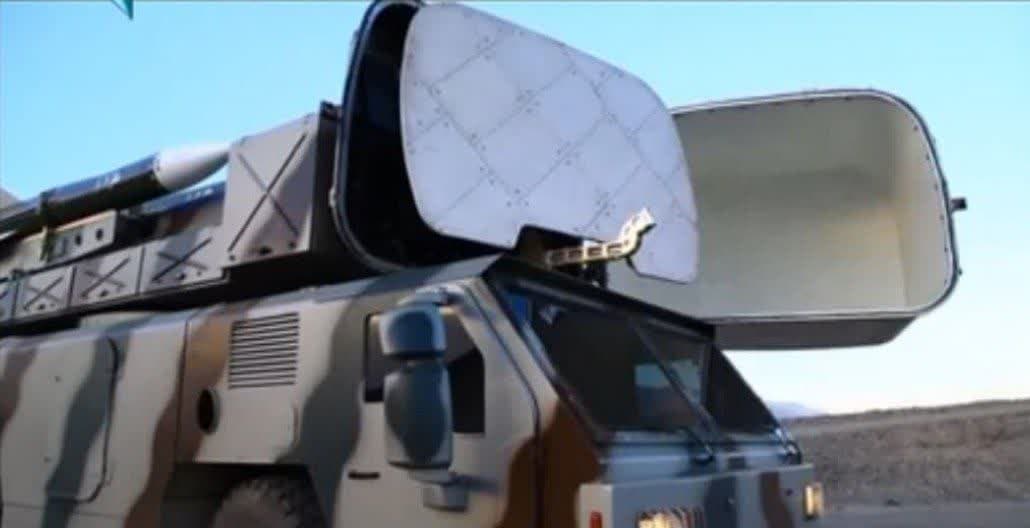
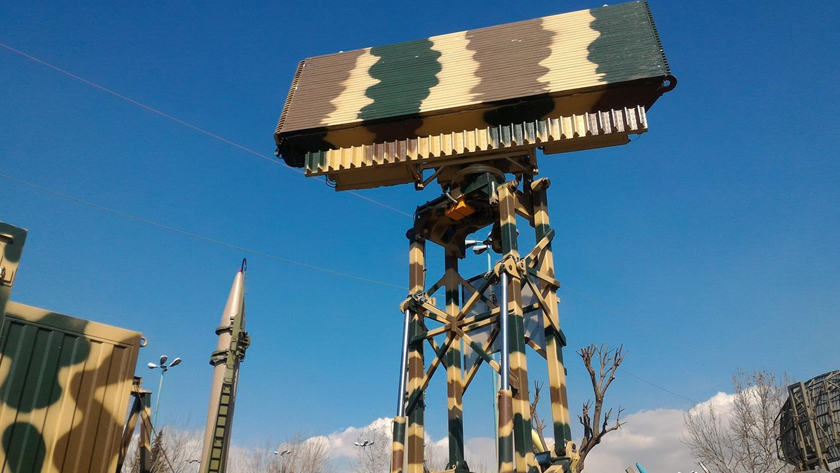
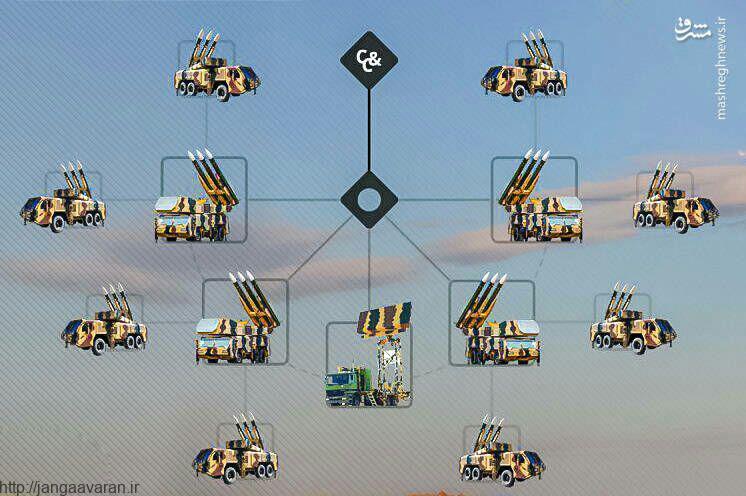
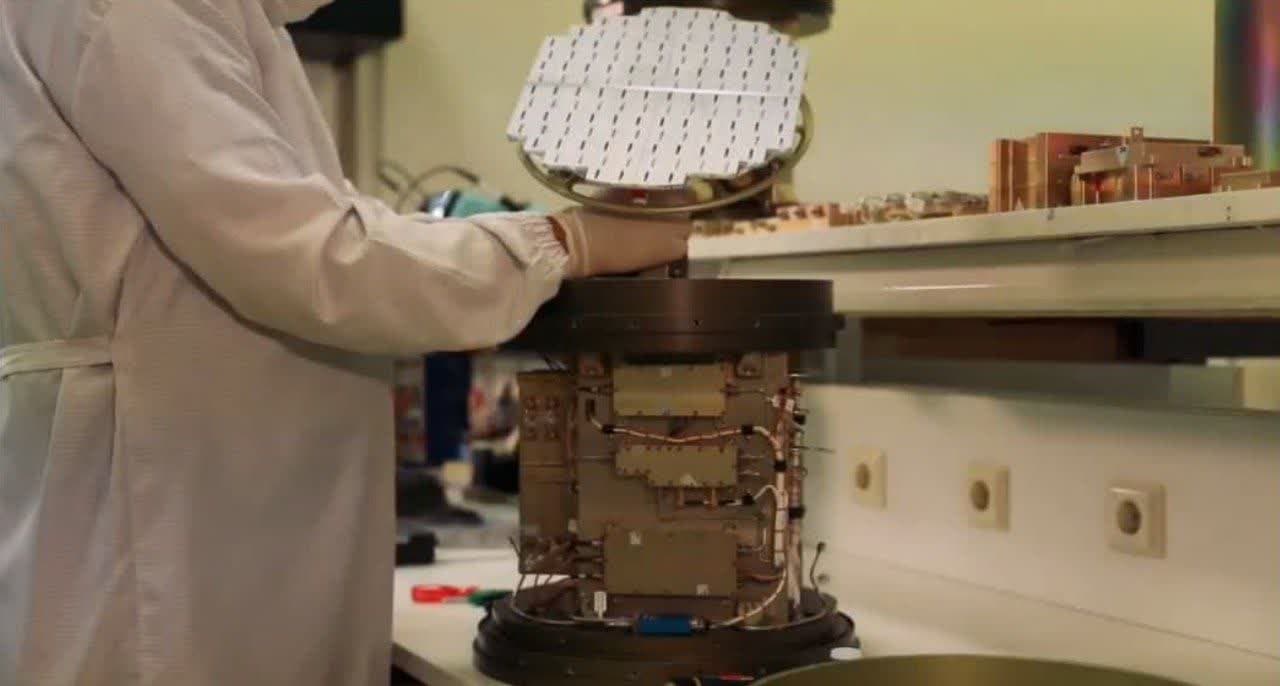
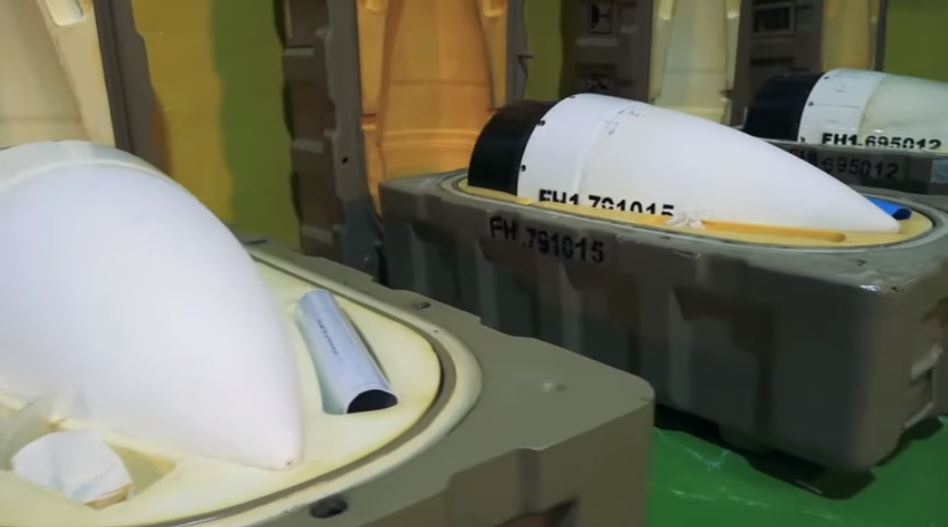
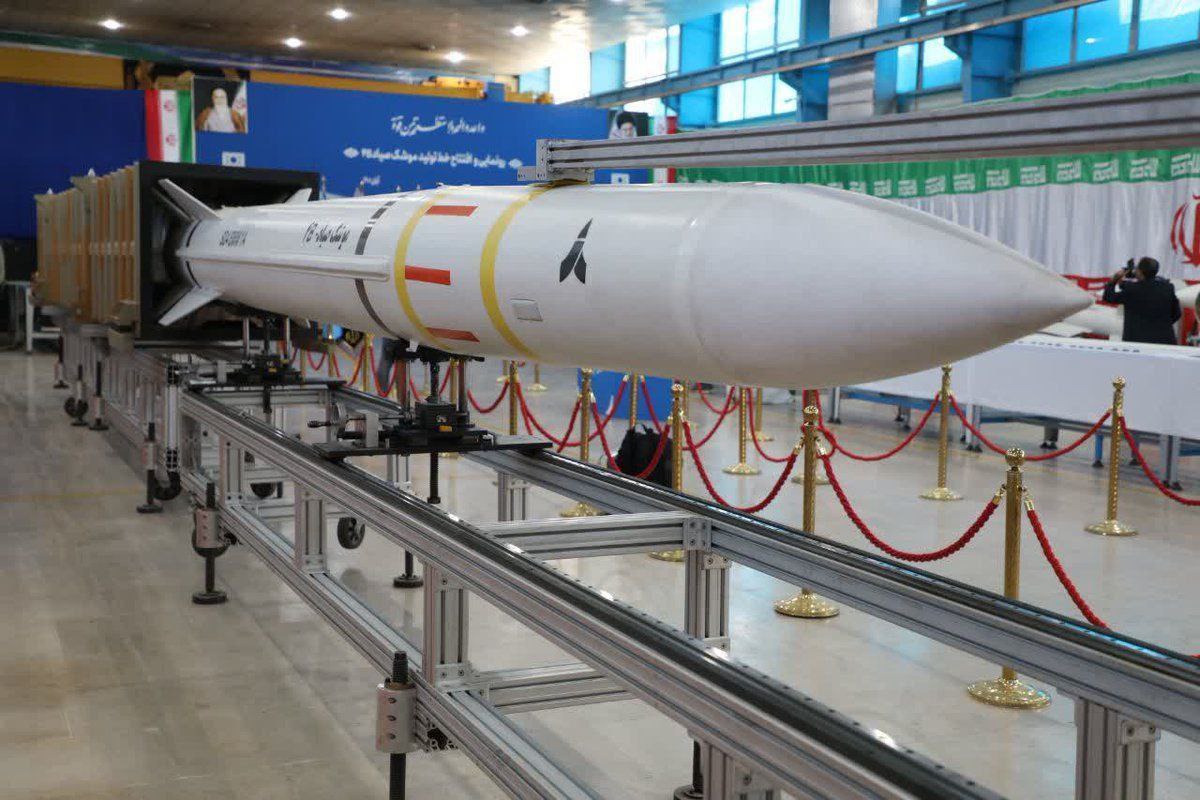
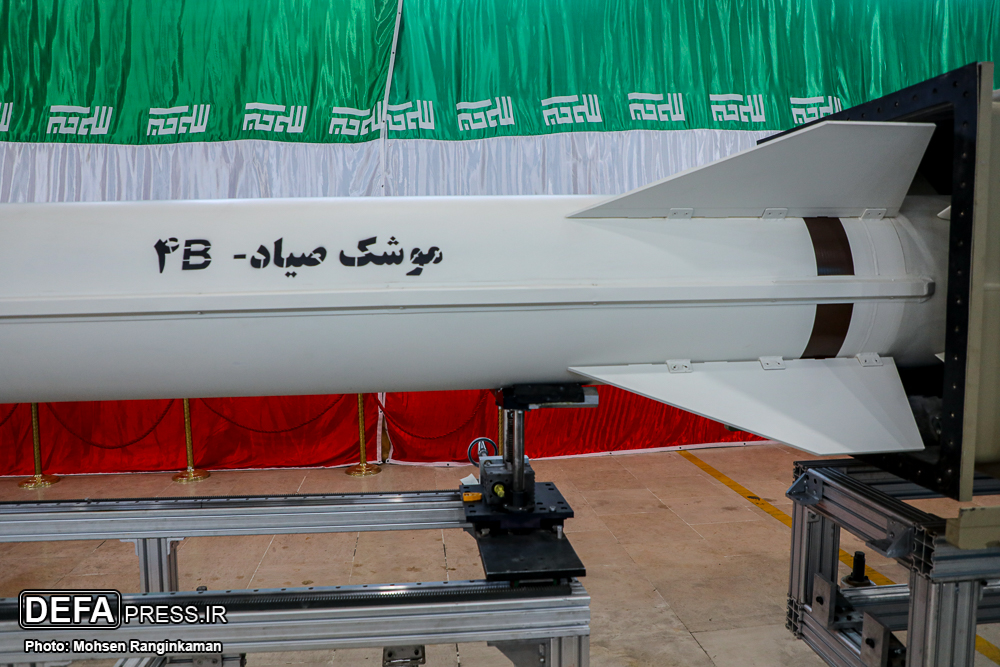
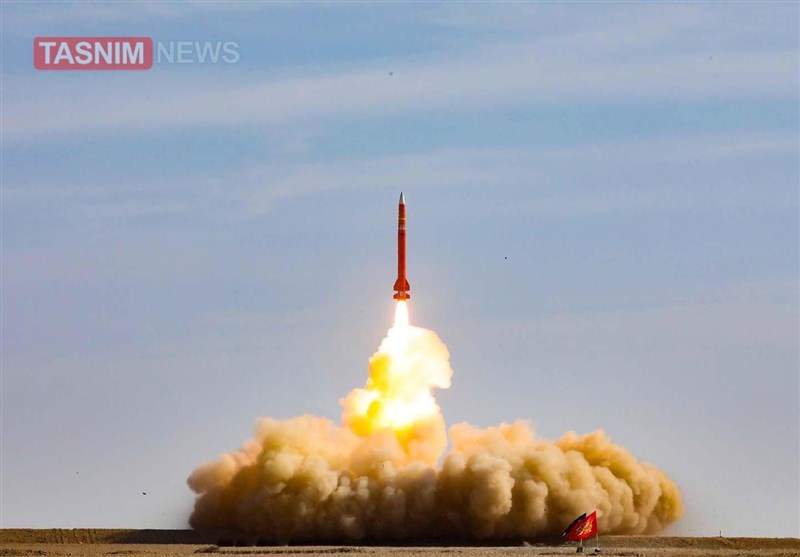
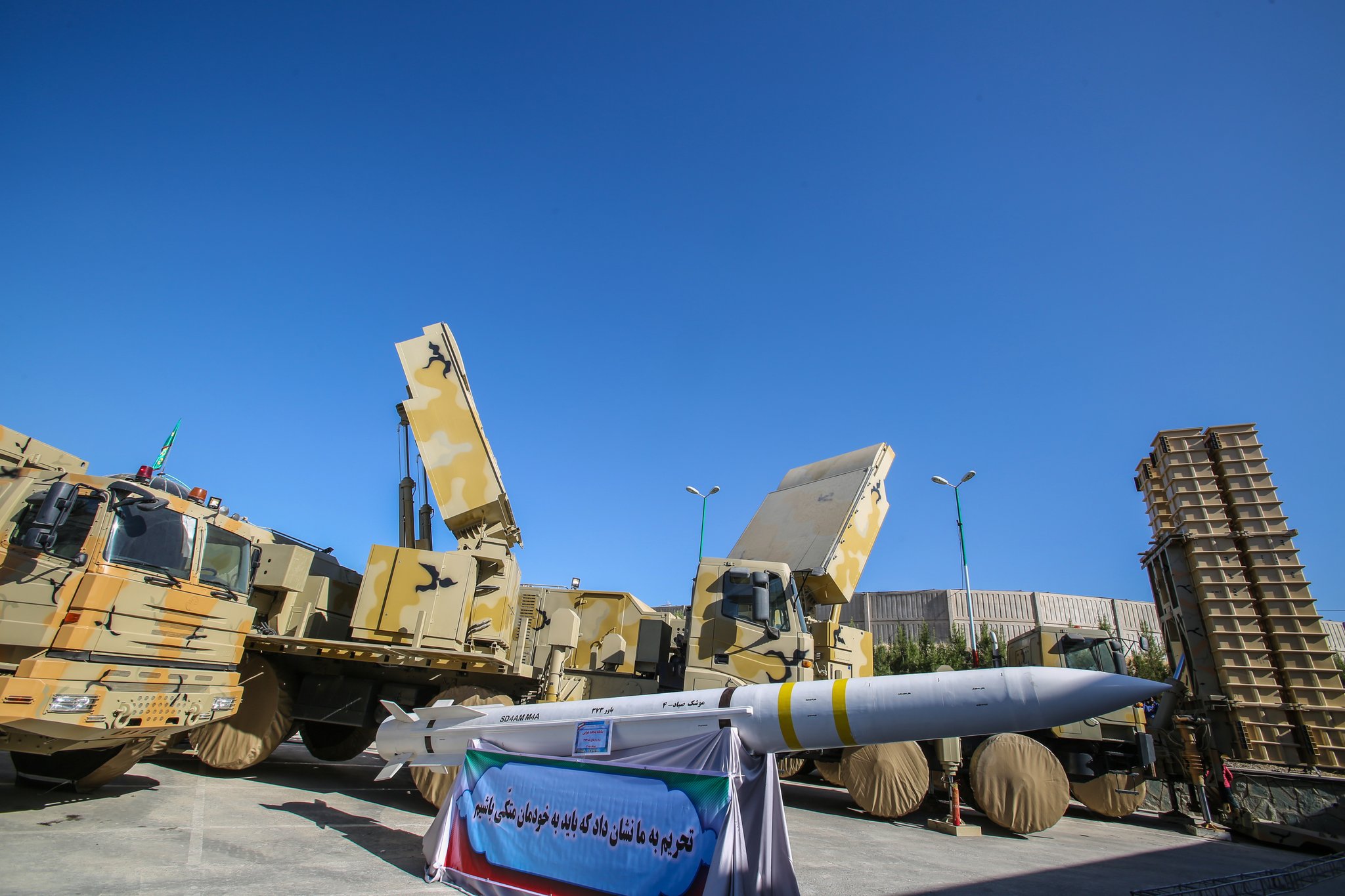
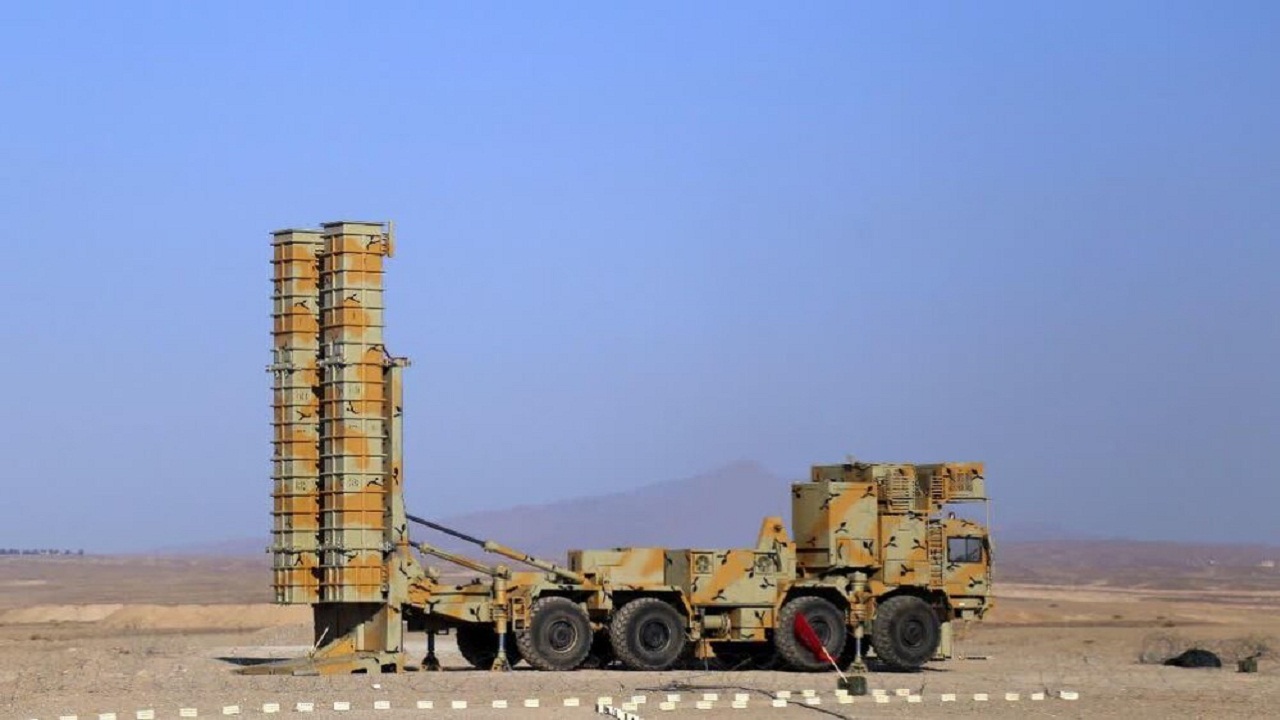
The Arman air defense system is a fully mobile air defense system, previously known as the Tactical Sayyad air defense system, observed during a military parade in April 2022. It’s worth noting that the export version of this system was showcased at the Russia’s ARMY-2023 Expo in capital Moscow under the name Tactical Sayyad air defense system.
This air defense system was renamed from Tactical Sayyad to Arman missile system to honor and preserve the memory of the martyr Arman Aliverdi.
A key innovation in the design of the Arman air defense system is the integration of radar and missile launchers in a single vehicle. This design, known as Transporter Erector Launcher and Radar (TELAR), along with the 360-degree coverage angle, increases the overall system’s agility and enables a quicker response to emerging threats. As a result, one unit of the Arman air defense system consists of a radar-carrying vehicle and three vertical missile launchers.
This air defense system is available in two variants, equipped with an active electronically scanned array (AESA) radar for the Islamic Revolutionary Guard Corps (IRGC) Aerospace Force and a passive electronically scanned array (PESA) radar for the Islamic Republic of Iran Air Defense Force. The active phased array radar of this system belongs to the Najm-804 radar family, and the passive phased array radar seems to be of the Joshan radar system.
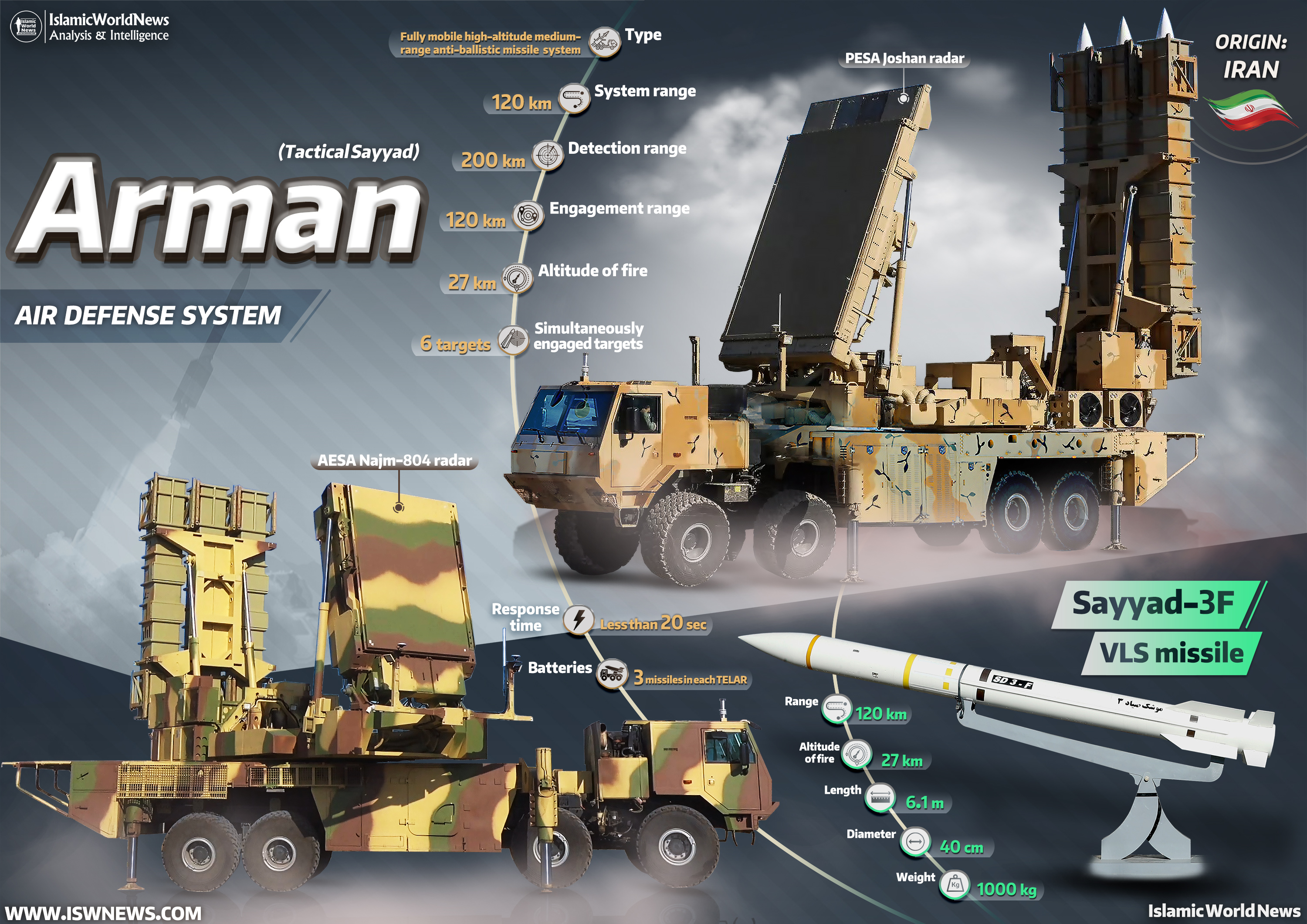
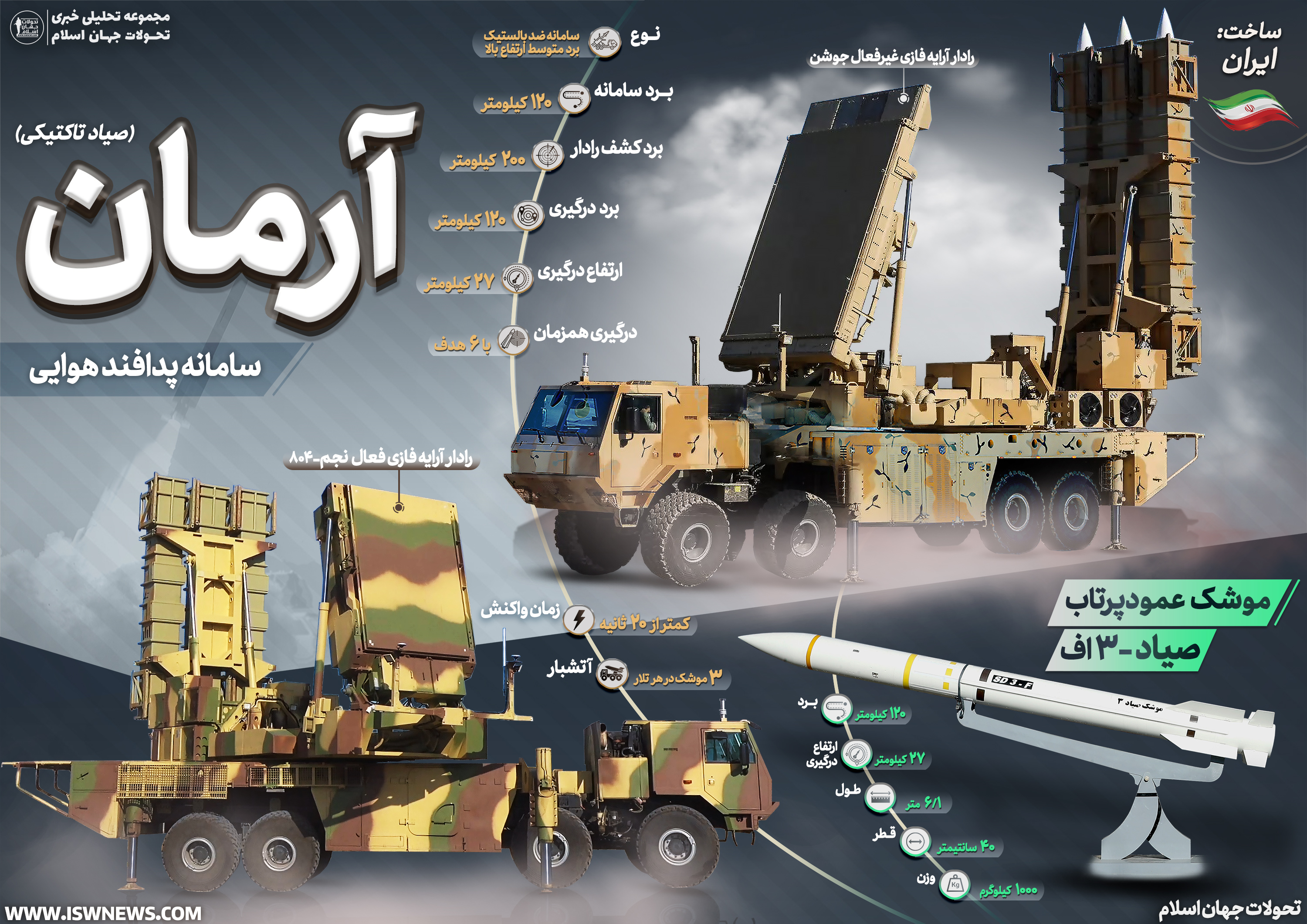
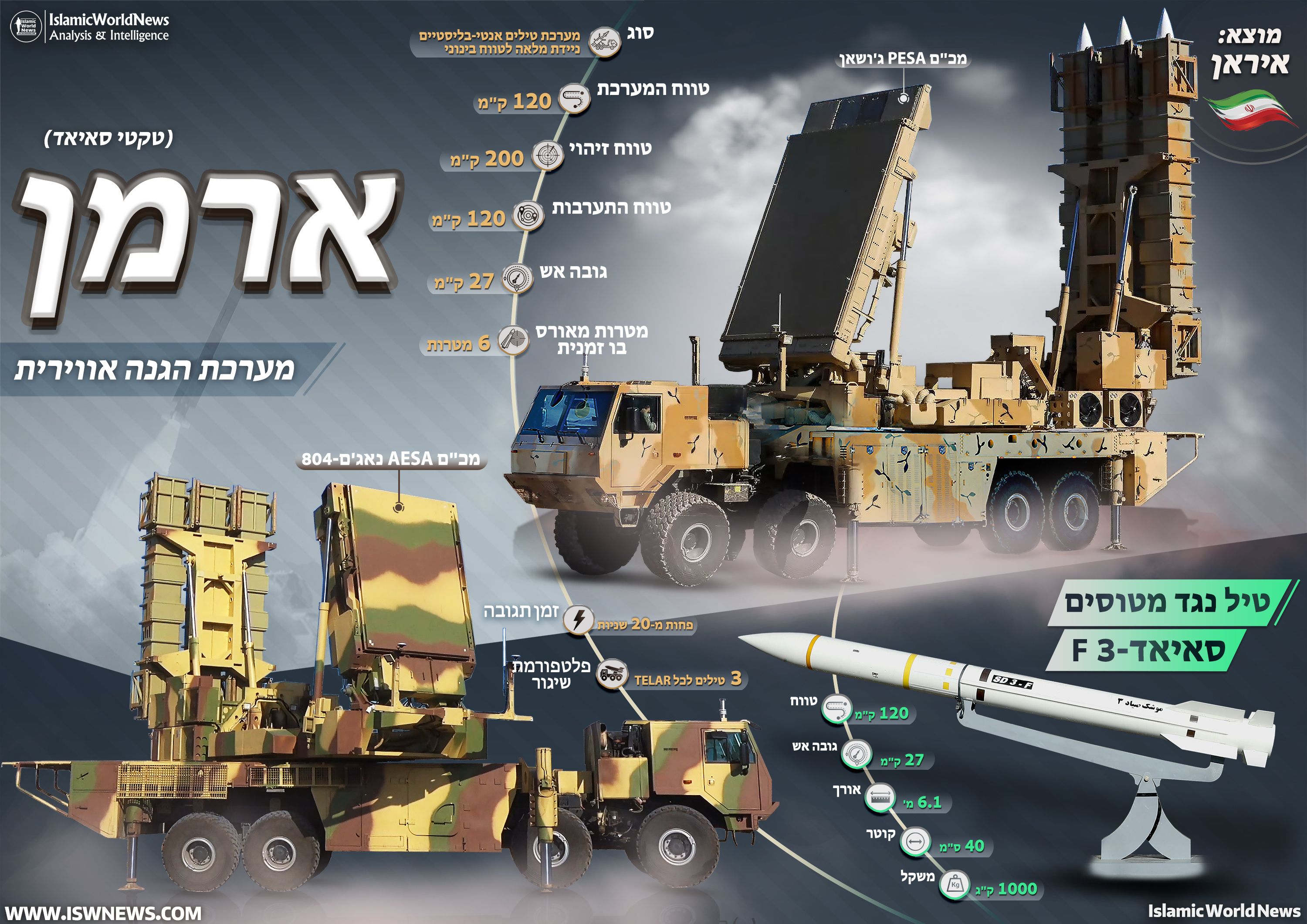
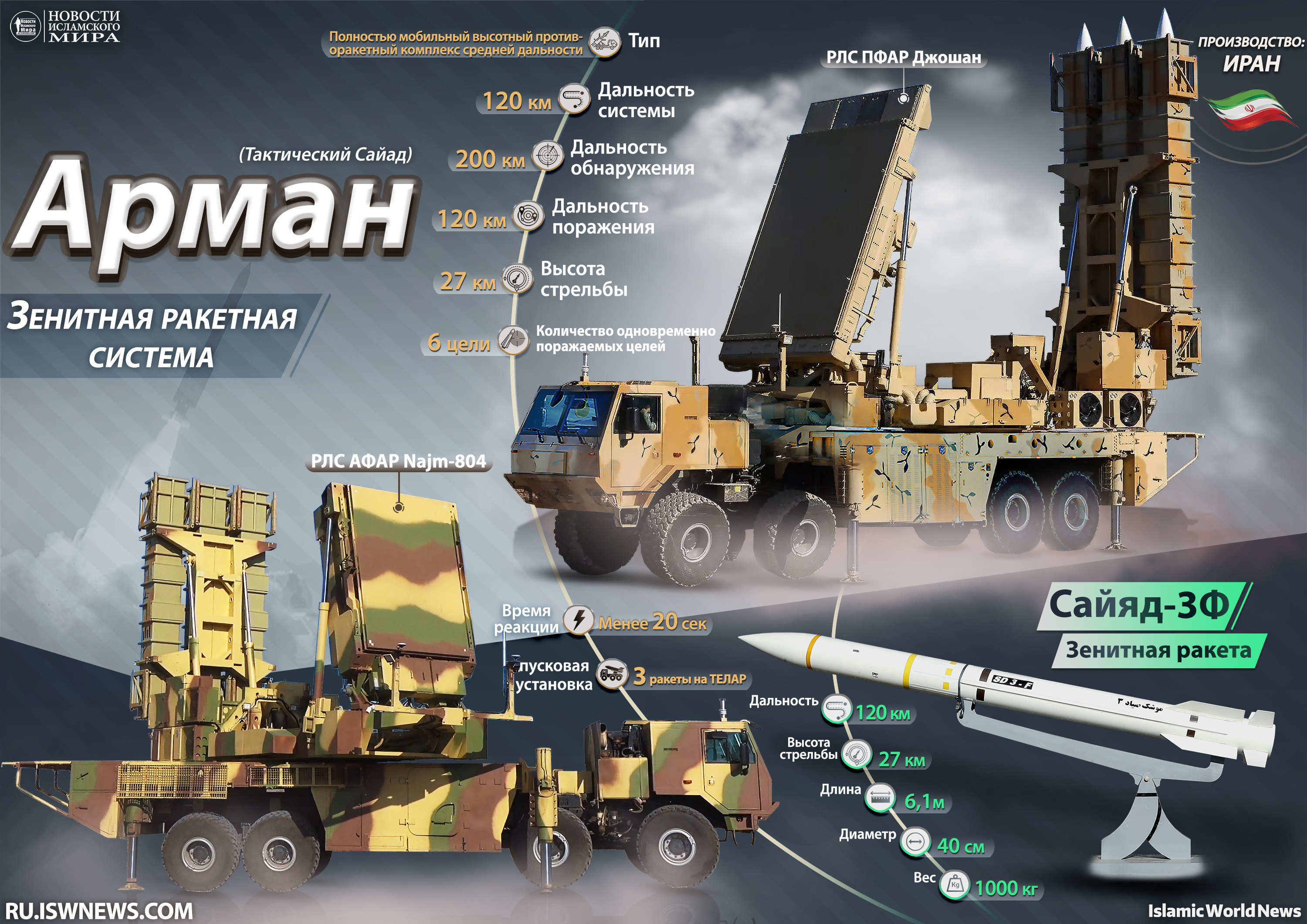
The Arman air defense system, with the mentioned radars, is capable of detecting 24 targets within a range of 180 to 200 kilometers. It intercepts targets at a range of 160 kilometers and engages with targets at a range of 120 kilometers. The maximum engagement altitude of this radar is 27 kilometers, and it has the capability to engage up to 6 targets simultaneously.
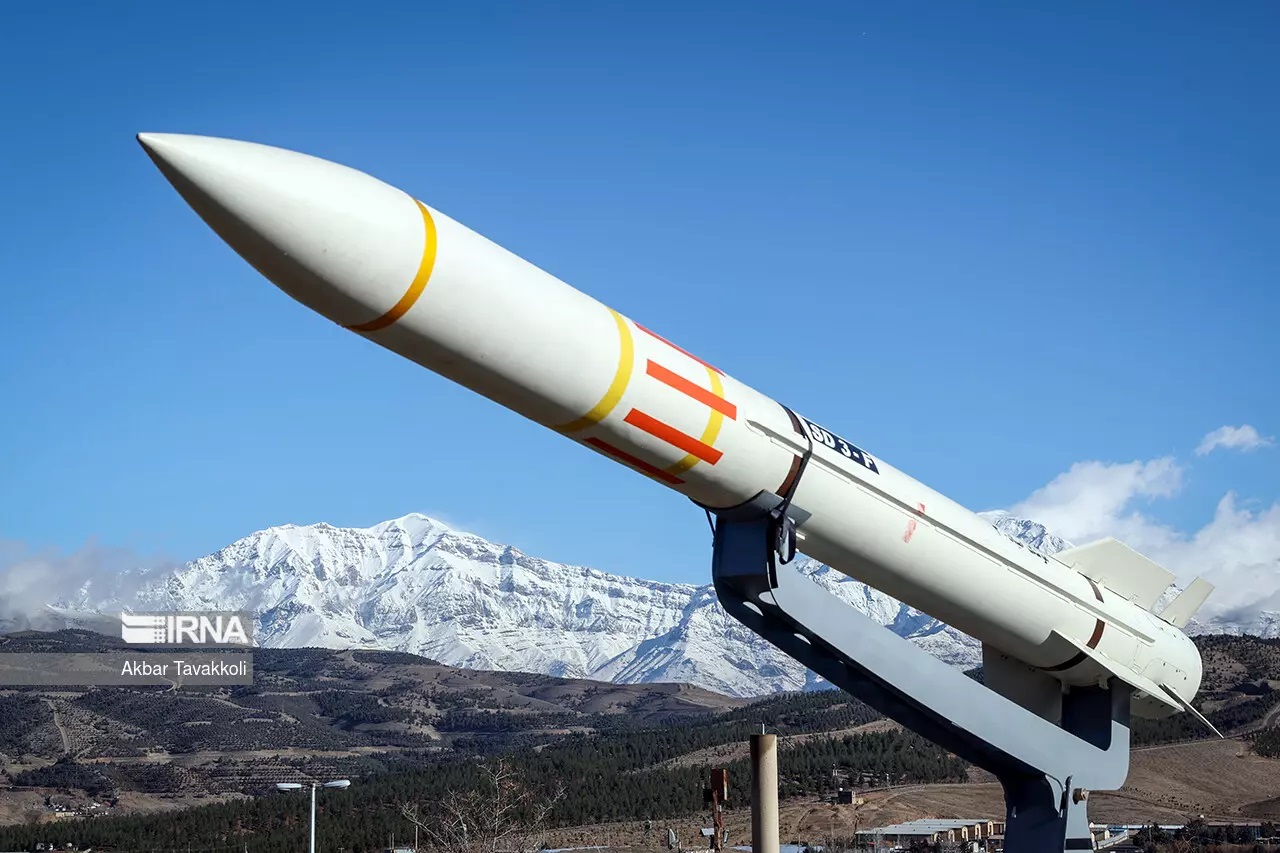
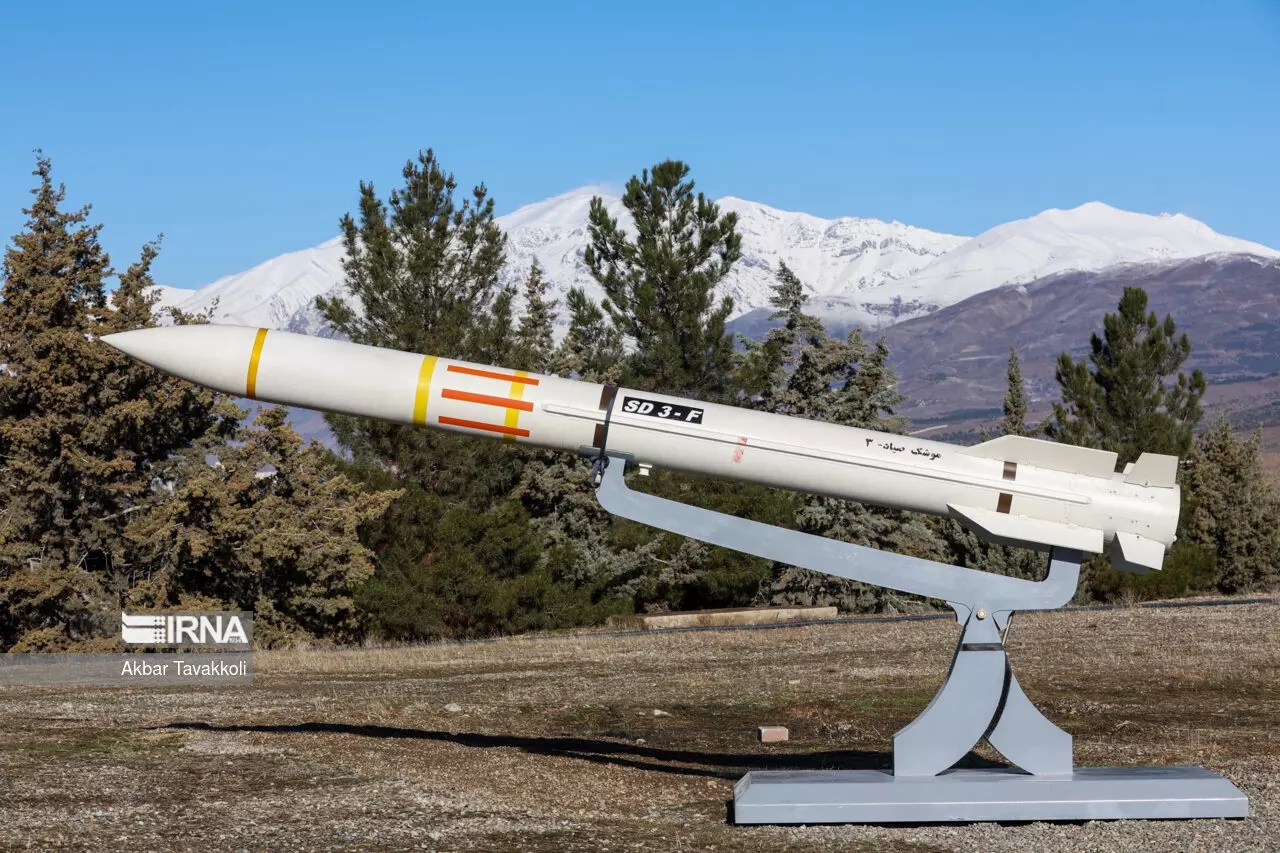
As evident from the images, the Arman air defense system uses a triple missile launcher. According to available information, the Arman air defense system utilizes Sayyad-3F missiles, which are the vertically launched variant of the Sayyad-3 missile. The length of the Sayyad-3F missile is 6.1 meters, its diameter is 40 centimeters, and it weighs approximately 1000 kilograms. This missile has a range of 120 kilometers and a maximum engagement altitude of 27 kilometers.
The vertical launch capability in this system allows it to fire missiles without the need to change the angle and rotate the launcher towards the target, significantly increasing the air defense system’s responsiveness to threats.
Additionally, the air defense system has the capability to increase the number of missiles. By default, one unit (TELAR) of the Arman air defense system is equipped with three vertical-launch missiles. However, the air defense system can be connected to one or two missile carrier vehicles without radar (TEL), equipped with 6 vertical-launch missiles.
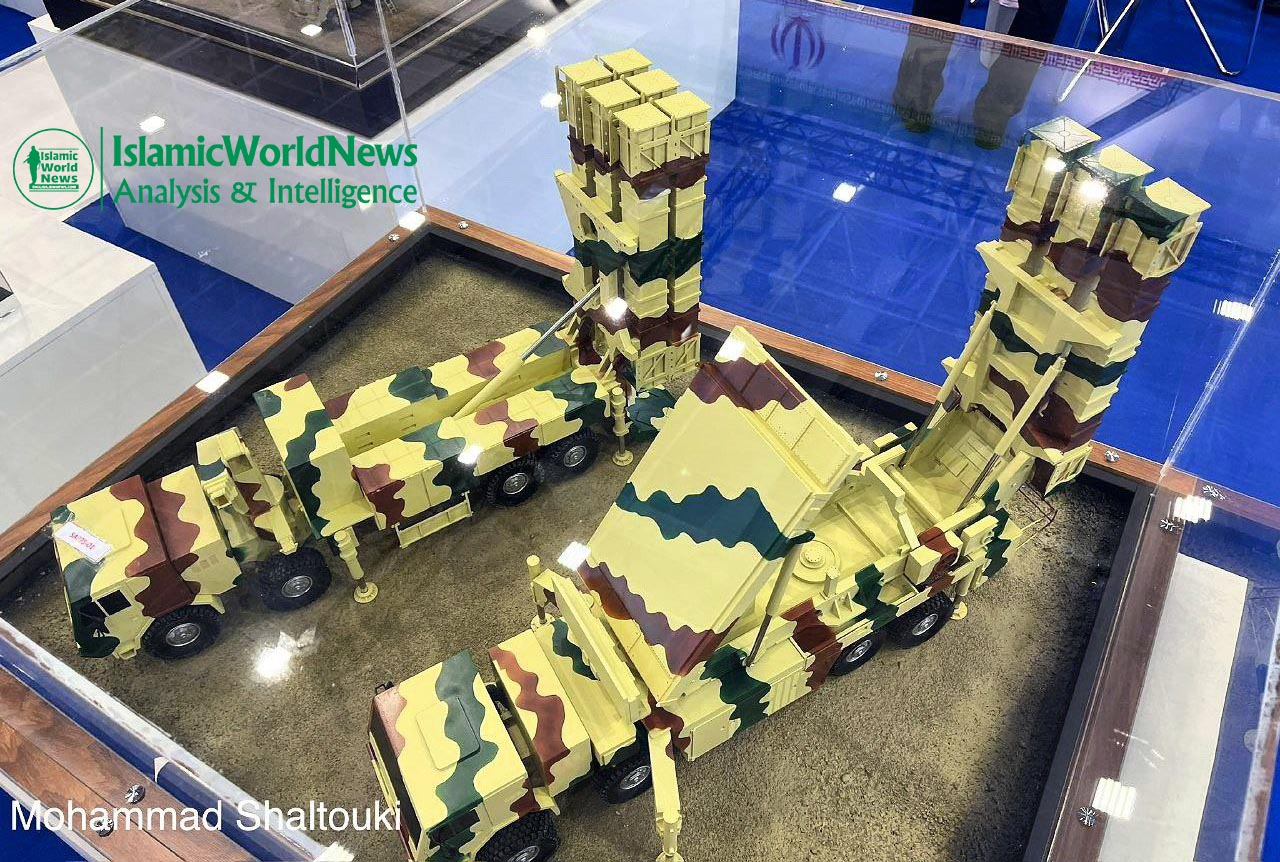
Replica of the Arman missile system (Tactical Sayyad) in two modes: TEL version with the capacity of carrying 6 missiles and TELAR version with the capacity of carrying 3 missiles
One notable feature of this air defense system is its “self-protection mechanism” against threats, which represents a significant advancement compared to previous air defense systems such as the Khordad-3 and Khordad-15 air defense systems. According to available information, the integrated protection in this air defense system allocates one of the canisters specifically for this purpose. In fact, the Arman air defense system is equipped with another short-range air defense system in one of its canisters, providing protection against low-altitude threats such as cruise missiles and air-launched bombs.
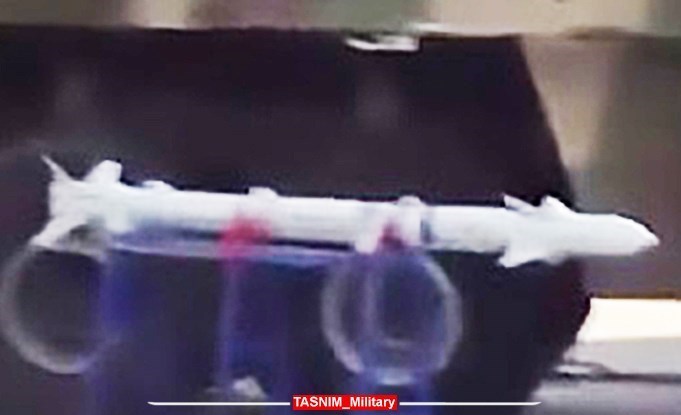
According to an estimation by the Tansim News Agency defense desk, the small and unidentified missile, which was observed alongside the Tactical Sayyad air defense system or the Arman air defense system at an exhibition in September 2022, is likely to be arranged in a quad-pack, meaning four missiles placed together in one of the canisters, providing the Arman air defense system with the ability to engage targets within a few kilometers range.
A possible missile for the self-defense system embedded in the Arman defense system
Specifications of Arman air defense system: Type: High-altitude medium-range anti-ballistic missile system Origin: Iran Producer: Aerospace Industries Organization (AIO) Unveiled: 17 February 2024 System range: 120 km Altitude of fire: 27 km
Radars: Najm-804 AESA radar and Joshan PESA radar Detection range: 200-180 km Interception range: 160 km Engagement range: 120 km Altitude of fire: 27 km Maximum target detection: up to 24 targets Number of simultaneously engaged target: 6 targets Reaction time: less than 20 seconds Batteries: 3 missiles on each TELAR (expandable to 6 in TEL version)
Missile: Sayad-3F (SD3-F) vertically launched missile Range: 120 km Altitude of fire: 27 km Length: 6.1 meters Diameter: 40 cm Weight: 1000 kg Speed: Mach 4.5 – 5.1
Arman Air Defense System – Click to view full sizeClick to view full size image
Infographics of Arman air defense system in Russian, Hebrew and Farsi:
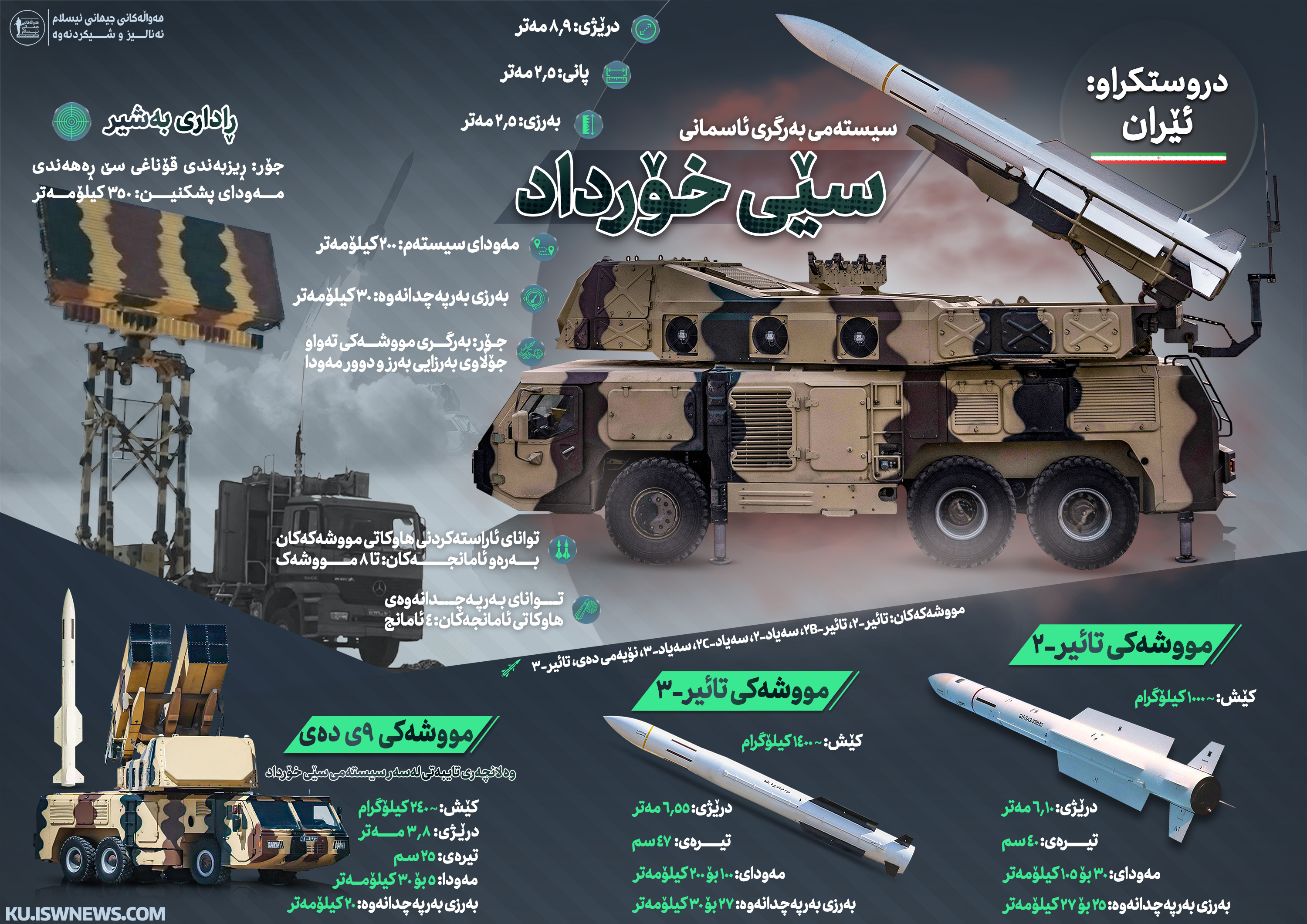
This system was seen for the first time at the IRGC achievements exhibition in 2014, and at the time of its unveiling, it had a range of 75 kilometers; After receiving the necessary upgrades in the field of missiles and radar, it reached a range of 200 km. Sevom Khordad system has expanded its operational capability to a wide range of targets by receiving the 9 Dey missile. This fully mobile system can be used as a suitable replacement for the Russian S-200 system and even it’s better than it.
The image of the prototype of the Sevom Khordad system, which was unveiled in 2014 at the IRGC Achievements Exhibition.
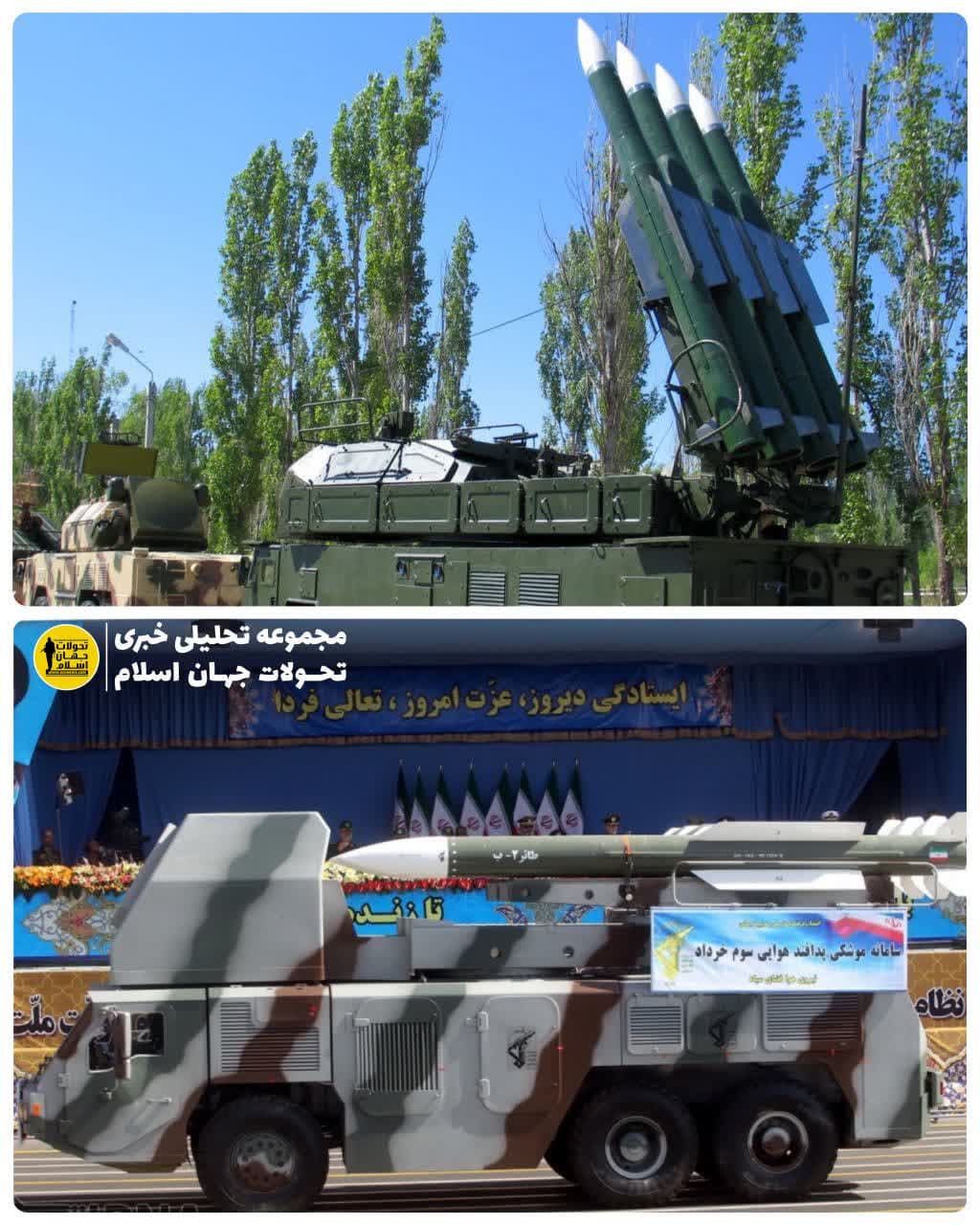
The Sevom Khordad carrier chassis: Sevom Khordad, Raad, Tabas, Alam Al-Hodi and 9th of Dey systems are all from the same air defense family and use the same carrier chassis. Sevom Khordad carrier chassis looks similar to the carrier used in Buk-M2EK and 9K332 Tor-M2 defense systems. Both of these systems use MZKT-6922 manufactured by MZKT.
The first unveiling of the carrier of the Sevom Khordad missile system took place in December 2012 for the Raad system. But the Iranian model is seriously different from the MZKT-6922 version. The first difference is the length of the truck; The Iranian model is shorter and according to the published images, the engine installation location is in front of the truck, while the engine of the Belarusian model is at the end of the truck. For this reason, the only access door for the operator to the electronic systems in the Iranian example is from the side, and the access doors have different numbers and shapes. Also it seems that the height has increased a little, and two hydraulic jacks have been added in the area between the two axles of the truck for the stability of the system during firing. Considering the presence of three missiles instead of four and the modifications made, it can be said that this truck has better offroad power than the Belarusian model.
According to these explanations, it seems that Iran made this carrier truck based on the model of Belarus; There is also a possibility that this new chassis was developed with the help of Belarus and produced in Iran.
9K332 Tor-M2 air defense systemBuk-M2EK air defense systemRaad air defense systemEngine installation location at the front of the truckThe difference between the carrier chassis of the Raad system and other systems – (click to view full size)
Sevom Khordad radar: As mentioned, Sevom Khordad system has received many updates in the field of missiles and radar. For a better review, we will look into the radar systems used in Sevom Khordad.
Sevom Khordad and Tabas systems were unveiled simultaneously in 2014. Tabas was introduced as an inexpensive supplement to Sevom Khordad system; Initially, both systems, as a high-altitude and medium-range system, had the ability to engage at an altitude of 25 to 27 km and a range of 50 km, but Sevom Khordad has an active phased array radar and Tabas has a flat reflector radar with limited rotation power. The declared altitude of fire was exactly the same as the range of Buk-M2EK system, i.e. 50 km, which raises the suspicion that the systems are the same. But the differences in the carrier chassis that we reviewed earlier and the use of three missiles in the Iranian systems instead of four missiles in the Russian system, rejected this suspicion. Also, the installation location of the middle fin of Buk missile and Taer missile is different. In the Taer missile, the middle fin is near the end of the missile, while in the Buk missile, the middle fin is located in the middle of the missile.
Reflective radar of the Tabas air defense systemSeveom Khordad phased array radarThe difference between Taer and Buk missilesClick to view full size
In order to better examine the Sevom Khordad radar systems, we must start with the evolution of this system and from its starting point, the Raad system. Contrary to what was seen at the time of the unveiling of Raad system, Raad 1 and 2 systems were installed on commercial trucks. Probably, the reason for using commercial trucks was that the capacity of production line for the prototype was not enough or that the unveiled model was under development. The investigation of the primary radars used in the Raad system shows that Raad used pulse doppler radars and its combination with its optical systems, and the whole system was mounted on a commercial truck. So, it seems that the chassis developed for Sevom Khordad was not supposed to be used for the Raad system at all; Rather, the Raad system could be a system similar to Sevom Khordad but for urban and passive warfare; which has used a commercial truck for the carrier for better camouflage, and has the ability to link to TEL variant that only carry missiles.
Raad 2 system mounted on a commercial truckElectro-optical system and special radar for Raad system, installed on a commercial truckThe electro-optical system and special radar of Raad system from a close-up viewRaad 1 system with a commercial truck as a missile carrierImages of Raad system as a passive system of the Sevom Khordad- click to view full size
Alam al-Hoda system is another system related to Sevom Khordad. Alam al-Hoda system is actually a complementary system for the whole collection. Although the exact image of the Alam Al-Hoda radar is not available and its exact range has not been announced, the radar of this system is similar to the Nebo-UE radar. The Nebo-UE radar is a 3D radar in the VHF band with a range of 310 km; But the radar used in the Alam Al-Hoda defense system is a fire control phased array radar in the VHF band. Nevertheless, it is noteworthy that after several years since the unveiling of Alam Al-Hoda radar, quality images showing the operationality of such a system have not been published. Therefore, probably, the Alam Al-Hoda system has not been widely implemented or used.
There are two possibilities for this system: 1- Considering that Iran has the experience of building the Keyhan mobile radar with a range of 2000 km, the Alam A-Hoda radar is also a very long range radar with a detection range of 500 km and more, which, unlike the nature of VHF band radars, has a very accurate detection capability to detect stealth targets from long distances and is linked with the Sevom Khordad system or any other system and acts as a long-range radar for the Sevom Khordad battalion. 2- The second possibility is that the Alam Al-Hoda system was actually a development plan for the Sevom Khordad system, which was later led to the use of Bashir radar. Bashir radar can detect cruise and stealth targets and other long-range targets at a range of at least 350 km.
Banner of the Alam al-Hoda radarNebo-UEradarImage of Alam Al-Hoda radar (left) and Nebo-UE radar (right) – click to view full size
In general, the Sevom Khordad system consists of three components: Transporter Erector Launcher Radar (TELAR), Transporter Erector Launcher (TEL) and Bashir long range radar for early detection of hostile targets.
The TEL version of the Sevom Khordad systemThe TELAR version of the Sevom Khordad systemClick to view full size
Until now, not so many images of the Sevom Khordad radar system have been published, and reliable information about the height of the conflict and its range has not been provided by the official authorities; But what is clear is that this radar has continuously developed since its unveiling in 2014. According to the available information, this radar is an active phased array (AESA) radar in the X band with 1700 elements, which can simultaneously detect 4 targets and guide 8 missiles (two missiles for each target). The altitude of fire for this radar can be estimated up to 30 km, and the range of this radar has probably reached more than 200 km. The reason for this is the presence of Sevom Khordad long-range (Taer-3) missile with a range of 200 km, which was unveiled at Iranian Armed Forces parade on commemoration of the Sacred Defense Week on September 22, 2022.
Bashir radar: The Bashir radar, which is one of the important components of the Sevom Khordad system, is a 3D phased array radar with linear antenna arrays that operates in the L and S bands and is capable of detecting cruise and stealth targets. The maximum range of Bashir radar is 350 km. This radar, which was unveiled and used in the Welayat 97 military exercise in February 2019, is installed on a truck and is placed at a certain height by opening jacks and then rotates to cover 360 degrees. Evidence that Bashir radar has the ability to be used as a fire control radar has not been obtained to date; Therefore, the previous assumption that the main radar of the Sevom Khordad has a maximum range of more than 200 km, can be correct.
The way Bashir radar is set up and the very short time it takes for this radar to start working
In the Sevom Khordad system, the entire complex, i.e., missiles, radar, and control station, are all mounted on one vehicle, so Sevom Khordad is able to perform missions completely independently. But its main radar, which is responsible for detecting and locking on the target and then intercepting and guiding the missiles, can only operate in one direction and does not have the ability to engage in four directions at the same time. This is the main weakness of the Sevom Khordad system, and if it is used independently, it will be surprised and vulnerable to attack from several different directions. Therefore, Bashir radar, as a very important part of this system, is an important factor in the stability of the Sevom Khordad system in the battlefield, to detect cruise and stealth targets and to constantly monitor the environment around the Sevom Khordad system. With the presence of Bashir radar in this system, it is possible to monitor the surrounding environment in 360 degrees, and by using four Sevom Khordad systems in one battalion, surprise and destruction of the system is prevented.
Each battalion of the Sevom Khordad missile system includes a control station that is responsible for coordinating the Bashir radar and four TELARs of the Sevom Khordad system. Bashir radar is also responsible for 360-degree scanning of the surrounding environment in the battalion. Each TELAR vehicle can also coordinate with two TELs in the battalion, in addition to coordinating with Bashir radar and control station. As a result, each battalion includes a control station, a Bashir radar, four Sevom Khordad systems (TELAR) and eight TELs, with a total of 36 missiles serving a Sevom Khordad air defense system battalion.
The Sevom Khordad (Taer-3) long-range missile with a range of 200 km in the parade of the armed forces on September 22, 2022The main radar of Sevom KhordadBashir radarAn air defense battalion consisting of all components of the Sevom Khordad systemClick to view full size
The number of missiles used in the Sevom Khordad missile system is varied. These missiles include: Taer-2, Taer-2A, Taer-2B, Sayyad-2, Sayyad-2C, Sayyad-3, 9 Dey and the Sevom Khordad (Taer-3) long-range missile. The existence of this number of missiles in different ranges can be considered one of the distinctive aspects of this system, because it gives the Sevom Khordad system the ability to perform various missions. In fact, the Sevom Khordad missile system today is not a BUK class system, but an S-300 class system. The comparison between the two may seem far-fetched, but by looking at the S-300 system, we will realize that this system also uses a large number of missiles with different ranges and different altitudes of fire. Only the 40N6 missile that used in the S-300 PMU-3 or S-400 air defense system, has a longer range than the Sevom Khordad missiles. So practically today, the Sevom Khordad system has capabilities close to the S-300.
Regarding the 9 Dey missile, it is necessary to mention that this missile, unlike other missiles of the Sevom Khordad system, is launched from a box launcher that is specially made for the 9D missile. Therefore, sometimes this launcher is mistakenly considered another independent systems under the title “9 Dey Air Defense System”, which is not true. Rather, this system is the same as the Sevom Khordad system, but with a special box launcher for launching 9 Dey missiles.
A special box launcher for launching 9 Dey missiles in the Sevom Khordad missile system
Range and flight ceiling of active missiles in the Sevom Khordad system
The range and flight ceiling of active missiles in the Sevom Khordad system are: Taer-2: with a range up to 50 kilometers and flight ceiling of 27 kilometers Taer-2A: with a range up to 75 kilometers and a flight ceiling of 27 kilometers Taer-2B: with a range up to 105 kilometers and a flight ceiling of 27 kilometers Sayyad-2: with a range up to 75 kilometers and a flight ceiling of 27 kilometers Sayyad-2C: with a range up to 120 kilometers and a flight ceiling of 27 kilometers Sayyad-3: with a range up to 150 kilometers and a flight ceiling of 30 kilometers 9 Dey: with a range up to 5 to 30 kilometers and a flight ceiling of 20 kilometers Taer-3 (Sevom Khordad): with a range up to 200 kilometers and a flight ceiling of 30 kilometer
The first missile of this system is the Taer-2 missile, this missile and the Taer-2B missile are the first missiles that have been seen on the Sevom Khordad, Tabas and Raad system. After that, Sayyad-2 and then Sayyad-3 were adopted for Sevom Khordad system, and until Taer-3 was produced, the longest range missile of this defense system was Sayyad-3 with a maximum range of 150. Finally, with Taer-3 (Sevom Khordad) missile, with a range up to 200 km, this missile became the longest-range missile of the Sevom Khordad system.
Taer family missiles used in the Sevom Khordad systemMissiles of the Sayyad family used in the Sevom Khordad systemSevom Khordad long-range missile (Taer-3)9 Dey missileCollection of missiles used in the Sevom Khordad system – click to view full size
As for the missiles used in the Sevom Khordad system, there are two missile families: the Taer family and the Sayyad family. The difference in the appearance of these two families, as shown in the picture, is more evident in the middle fin; Of course, there are differences in the fin at the end of the missile. But in each generation, the middle fin has a fixed shape, the main reason for which was the pattern of each missile at the time of its design and construction.
In the Sayyad family, the missile is modeled after the standard missile, and in the Taer family, the missile is designed and built based on the model of the BUK family. The middle fin of the Sayyad missile is a trapezoid, both edges of which are angled and extends to the body of the missile. But in Taer, the shape of the middle fin is a trapezoid, one edge of which is vertical and the other edge of which is angled. Due to this difference in appearance, we classify the Sevom Khordad (Taer-3) missile in the Taer family.
Another point is that the Taer missile has a radar to detect targets in the last stage. However, there is still no information about the presence of such a radar in Sayad-2, Sayad-2C and Sayad-3 missiles. It means that the Taer missile is likely to have the ability to detect the target independently, and the Sayyad missile needs to be guided until the moment of impact.
BUK missile system (top image) and standard missile system (bottom image)The shape of the fin of the Sayyad missile (top image) and the shape of the fin of the Taer missile (bottom image)Taer missile’s radarClick to view full size
The next subject about Taer family missiles is that the radome part of the missile is made separately. This feature makes it possible to build a missile with different guidance capabilities at the lowest cost; This has led to the construction of the Taer-2 passive guided missile for the Sevom Khordad system. There is also a version of the Sevom Khordad system that provides the possibility of passive missile guidance at the same time as radar guidance. It is not clear exactly how passive guidance is implemented in the Sevom Khordad system and how it works.
The RADOME of Taer missileThe passive version of the Taer missileThe passive system used in Sevom Khordad systemClick to view full size
The sea-based version of the Sevom Khordad system was seen for the first time on the Shahid Siavashi ship of the IRGC along with the passive version of this system. Also, the IRIS Shahid Roudaki was unveiled along with the Sevom Khordad system; Therefore, it is possible to make this system operational with Shahid Roudaki.
A version of the Taer missile was displayed in the National Aerospace Park of Iran, which identified its various components separately, for example, the location of the missile warhead is located behind the missile’s radar. Also, the Taer missile warhead was displayed, which is a high explosive fragmentation (HE-FRAG) warhead.
Testing the passive guidance version of the Taer missileThe HE-FRAGwarhead of Taer missileDifferent sections of Tayer-2 missile;Click to view full size
The missiles used in the Sevom Khordad system have another feature, which is the use of proximity sensors such as the Meteor air-to-air missile. This sensor allows the missile to explode near the target and minimizes the need for a direct missile hit. Proximity sensors in the form of strips have been seen on all 9 Dey, Sayyad-2, 2C and 3 missiles as well as Taer 2 and 3.
Taer missiles have a special flight profile, and in the published footage of how this system works, two points are noteworthy for these missiles. The first point is the flight profile of the Taer missile to deal with cruise missiles, which flew at a distance of several meters from the surface, and this type of flight is very practical. The next point is the missile hit with targets with a higher height. In the published images, the missile hits the target from above, and as stated, with the presence of proximity sensors intended for the missile, this missile does not need a direct hit.
The flight of the Taer missile at a distance of a few meters from the surface to counter the cruise missileA Taer missile before hitting a moving target with high precisionThe flight profile of the Taer missile from above towards the targetClick to view full size
The control station in the TELAR launcher of the Sevom Khordad system is located beneath the missiles and behind the engine of the carrier vehicle, which is an equipped and fully digital station. Each Sevom Khordad system is connected to a Bashir radar and control station to perform the task of aerial surveillance with greater accuracy.
Sevom Khordad system control stationThe control station of the TELAR vehicle of Sevom Khordad
The possibility of linking Sevom Khordad with other systems: Since Sayyad missiles links to the Sevom Khordad radar, it seems that other systems that currently use Sayyad missiles can also link to the Sevom Khordad system; Such as the Najm-802 radar, which is used for the early warning radar of the Talash system and 15 Khordad as the user of the Sayyad missile. Of course, another possibility can be proposed for the Sevom Khordad system, and that is to link this system with the Bavar-373 system so that Taer missiles can also be used in the Bavar system. Although what was said about the coordination of the Sevom Khordad system is only speculation, but considering the background of the mentioned systems, the use of Sayyad missiles on the Sevom Khordad is also not far from the mind.
The final combination of missiles in the Sevom Khordad system: It seems that the combination of missiles operating in the Sevom Khordad system has reached a smaller set today, which shows the independence of the system in the field of production, service and operation in the IRGC combat organization. In its evolution, the Sevom Khordad system has reached three missiles, which are perfectly suitable for three types of conflicts. The first missile is the 9 Dey missile, which is suitable for engagement in the last ring of defense and a range of 5 to 30 km, and its engagement height is 20 km; The ability to fight at this level is excellent. But the second missile is the Taer-2 missile, which has a range of 30 to 105 km at an altitude of 25 to 27 km. The third missile, the Taer-3 missile, as a long-range missile of this system, gives the Sevom Khordad system the ability to fight from a range of 100 to 200 km. The Sevom Khordad missile system achieves a very good operational efficiency with such a combination. Of course, it is still possible to use Sayyad family missiles on Sevom Khordad.
Weaknesses of the Sevom Khordad system: The only problem that the Sevom Khordad system has in the missile section is a missile suitable for targeting ballistic missiles. By adding such a missile to this system, as well as correcting the radars for engagement with ballistic missiles, this system will be a powerful and much more efficient system. Of course, it has been said that this system has the ability to engage targets up to 1000 km/h, which is a very good number. Another weakness of this system (if it is used independently) is the lack of 360 degree coverage, which is largely solved by the Bashir radar.
The main composition of missiles of the Sevom Khordad system – From right to left: 9Dey, Taer-2, Taer-3 missiles
Operational history of Sevom Khordad: On June 20, 2019, Sevom Khordad missile system managed to shoot down an American RQ-4A Global Hawk drone over the Strait of Hormuz and near Mubarake Mountain. RQ-4A drone was detected by the early warning radar at a distance of 490 km and at a distance of 120 km, Sevom Khordad did a radar lock on it and finally the missile hit the RQ-4A at a distance of 75 km and at an altitude of 14 km and destroyed it. It should be noted that the Sevom Khordad air defense system became known as the “Vulture Hunter” after shooting down the US RQ-4A.
The location of the radar system in Abu Musa IslandThe Kill Mark of RQ-4A on Sevom Khordad systemA video of Sevom Khordad air defense system that hunted the US RQ-4A drone
Specifications of Sevom Khordad air defense system: Type: Fully mobile high-altitude long-range missile defense Length: 8.9 meters Width: 2.5 meters Height: 2.5 meters Range: 200 km Altitude of fire: 30 km Number of simultaneously engaged targets: 4 targets Number of simultaneously guided missiles: 8 missiles Missiles: Taer-2, Taer-2B, Sayyad-2, Sayyad-2C, Sayyad-3, 9 Dey, Taer-3 Fire-control radar: The name is not specified with a range of more than 200 km and installed on the TELAR vehicle Search radar: Bashir radar with a range of 350 km
9 Dey missile (with a special launcher): Range: 5 to 30 km Altitude of fire: 20 km Length: 3.8 m Diameter: 25 cm Weight: ~ 240 kg
Taer-2 missile: Range: 30 to 105 km Altitude of fire: 25 to 27 km Length: 6.10 m Diameter: 40 cm Weight: ~ 1000 kg
Taer-3 missile: Range: 100 to 200 km Altitude of fire: 27 to 30 km Length: 6.55 m Diameter: 47 cm Weight: ~ 1400 kg
Sevom Khordad air defense system – click to view full size
More images of Sevom Khordad air defense system:
Click to view full size
The collection of posters of Sevom Khordad air defense system in Russian, Arabic, Farsi, Azeri, Kurdish:
Bavar-373 is an Iranian long-range air defense system build to engage with hostile air targets at a range of more than 300 kilometers. The Bavar-373 missile system can be prepared for launch easily. It features anti-stealth capability that allows it to detect hidden targets with a very low radar cross-section. This system was unveiled for the first time in 2016 And later in 2019, it was added to the Air Defense Force of the Iranian Army. The Ministry of Defense of Iran has unveiled an upgraded missile of the Bavar-373 defense system dubbed Sayyad-4B. With this update, the range of Bavar-373 air defense system increased to more than 300 km.
The Bavar-373 missile system is more advanced than its Russian counterpart S-300 long-range surface-to-air missile system. Several studies and tests conducted by the Iranian military showed that the system is superior to the US Patriot PAC-3 air defence system.
After the American invasion of Iraq, Iran analyzed the US’s operational measures and then according to the needs and deficiencies it had in the field of defense systems, made extensive purchases in the field of air defense systems. The purchase of several types of radar and detection systems, electronic warfare system and short-range defense systems such as TOR-M1 and BUK-M2 and the purchase of the long-range S-300 PMU1 system were among Iran’s measures to fill the gaps in its air defense systems.
It should be noted that before 2016, some of these purchases entered Iran, and some others were not delivered to Iran by Russia under the pretext of Western and American sanctions against Iran. For this reason, Iran began to reform the air defense structure and seriously started the domestic production of air defense systems.
The process of production and localization of air defense systems first started with the update of S-200, And Iran started to modify and localize the missile of this system. The efforts of Iran’s military industry in this field resulted in the production of Taer missiles. Following the localization of missiles of air defense systems, missiles of the Sayyad family such as Sayyad 1, 2 and 3 and a wide range of indigenous air defense systems such as Sevom Khordad, Tabas and Talash reached the operational level.
In radar, with the purchase of Gamma radar, Iran started the production and localization of phased array radars. According to the commander of Iranian Army’s Air Defense Force, this was the result of the studies between the Air Defense Force, the Ministry of Defense and some universities, which despite all the ups and downs it had reached the stage of test firing in 2018 and finally in 2019, it was handed over to the Air Defense Force of the Iranian Army.
To name this system, “belief in internal power” was shown in the word “belief” (Bavar) and “373” is the Abjad letter of “Ya Rasulullah”.
Operational test of Bavar-373 system
Introduction of units of Bavar-373 system:
Bavar-373 is an impenetrable, anti-hacking surface-to-air missile defence system comprising a vertical launching system, two acquisition and engagement radars, Sayyad-4 missiles, and a command-and-control center. The design minimises the need for additional support equipment and systems. The vertical launching system features square launchers that are identical to the launchers utilised by naval warships for air defence.
Each Bavar-373 battalion has a command, control and communication unit, which, as the brain of Bavar-373, is responsible for managing and establishing communication between the system’s components, in addition to communicating with the country’s integrated defense network. One battery of this system has four Sayyad-4 transporter erector launchers (TELs) ready-to-launch missiles and has the ability to destroy targets at a range of 300 km. Also, instead of a Sayyad-4 TELs, the other TELs of Sayyad missile family can also be used.
Bavar-373 control and command unit
Meraj-4 radar is the longest range radar of this system. This radar works similar to the large 64N6E2 radar in the S-300 system, but has superior features. For a better comparison, we will first describe the specifications of the 64N6E2 radar, and then we will discuss the Meraj-4 radar:
64N6E2 is a 3D S-band air surveillance radar that has a maximum range of 300 km and the ability to detect 200 targets. The interceptor radar is also capable of intercepting 12 targets at the same time and assigns these targets to the engagement radar for targeting. The S-300 system is capable of engaging targets at a distance of 200 km.
Meraj-4 radar is a long-range 3D active electronically scanned array (AESA) radar made of 40 rows of waveguides. The research, development and production of this radar has been done in Shiraz Electronics Industries (SEI). Meraj-4 can track up to 300 targets simultaneously. The maximum range of this radar is 450 km, the maximum detection height is 130 km and the maximum range for ballistic targets is 1200 km.
Meraj-4 radar
The engagement radar of this system also belongs to Shiraz Electronics Industries. This radar is an active electronically scanned array (AESA) type with a low probability of interception (LPI). The maximum detection range of this system is 320 km and the detection height is 65 km. It has the ability to detect up to 300 targets simultaneously and has the ability to intercept up to 60 targets and engage with 6 targets and simultaneously guide two missiles towards one target.
The engagement radar of Bavar-373
The Hafez multipurpose and phased array radar is also available as a search and tracking radar for low-altitude scanning, which has track while scan (TWS) capabilities. Its maximum range is 300 km and has the ability to detect up to 100 targets.
Hafez acquisition radar
Another radar of Bavar-373 system is the Alim radar, which is a passive radar. Passive radars are used to resist electronic warfare and increase the detection range of stealthy targets. These types of systems passively track 3D waves of aircraft systems, such as Link 16, identification friend or foe waves (IFF) and waves from aircraft navigation systems (GPS). In case of interference in the interception on the radars, existing passive systems have the ability to accurately track or help to track the hostile aircraft or identify the source of the interference, which, by finding the source, provides the possibility to attack and eliminate the interference.
Alim radar
The Saegheh electronic warfare system is an enhancement system for Bavar-373 that operates in the X and Ku bands and is used to detect specific targets such as AWACS radars, classify the waves emitted by airborne radar and disrupt fire control radars and ground tracking radars that is used in cruise missiles and all types of aircraft. This Saegheh system effectively increases the possibility of dealing with enemy AWACS radars.
Saegheh electronic warfare system
The tactical vehicles used in Bavar system are of two types Zafar and Zoljanah. However, it seems that Zoljanah was excluded from the Bavar-373 system over time.
Zafar-8824 heavy tactical vehicle is 8×8 carrier truck, And it has 4 moving axes and its maximum load carrying capacity is 24 tons. The chassis of this truck is similar to MAZ-537 truck. The Zafar truck has been used as the carrier of the radars and command and control equipment of Bavar-373 system. Also, in the new tests of Bavar-373 system, it has been used as a carrier of two box launchers.
Zafar-8824 heavy tactical vehicle
Zoljannah heavy tactical vehicle is a 10×10 carrier truck. Like the Zafar truck, this truck uses the MAZ-537 chassis. Its maximum load capacity has not been announced, but due to the change in the chassis and the addition of an axle, it should be able to carry more weight than Zafar. The important point is the controllability of the last axis of Zoljanah, which provides the possibility of better maneuvering in difficult conditions. Zoljanah is used to carry Sayyad-4 launcher. Zoljanah will be more expensive than Zafar due to its complexities.
Zoljanah tactical vehicle
Sayyad-4 launcher is another component of Bavar-373 system. This launcher, unlike the Russian models that have round tubes, is designed similar to the Patriot system launchers. Each Zoljanah vehicle can carry four Sayyad-4 launchers.
Sayyad-4 launcher
Bavar-373 can use several types of missiles. This capability allows Bavar-373 to cover the range and altitude of different targets like the S-400 system. Nevertheless, so far only the Sayyad-4 missile has been officially introduced for use in the Bavar-373 system, but the use of Sayyad family missiles such as Sayyad 2 and 3 is also very likely.
The Sayyad-4 missile can engage targets at a range of 200 km and up to an altitude of 27 km, similar to the 48N6E2 missile of the S-300 system. Sayyad-4 missile uses stabilizer fins and thrust vector control system, which has significantly increased the maneuverability of the missile. These features have made the Sayyad-4 missile similar to the S-400 48N6DM missile, which has anti-ballistic properties. The main difference between the Sayyad-4 missile and the 48N6DM missile is the fins of the thrust vector control system. In Sayyad-4, these fins protrude from the body, and this causes more changes in the exhaust gases of the missile, and as a result, creates a sharper angle for the missile to turn. So, the high turning power shows that the missile has a high G-pressure tolerance. When the missile gains altitude and enters the thin atmosphere, the control fins at the end of the missile lose their effectiveness, and this is another reason for using the thrust vector control system.
Sayyad-4 missile
The Sayad-4 missile has the ability to engage targets at a speed of 4800 m/s. Meanwhile, the 48N6E2 missile has the ability to engage targets at a speed of up to 2800 m/s. It is interesting to know that the Antey-2500 anti-ballistic system missile can engage targets with a speed of 4500 m/s.
As the numbers show us, the Sayyad-4 missile is superior to the S-300’s missiles and Antey-2500 in terms of anti-ballistics and is near to the S-400’s 48N6DM missile. It also has the ability to engage targets such as fighter jets and cruise missiles. Another type of Sayyad-4 missile called Sayyad-4B has been introduced lately, which has a range of up to 250 km. In the latest tests, the Sayyad-4B missile has managed to hit targets at a distance of 304 kilometers.
Sayyad-4B missile
Considering that the Bavar system is modeled after the S-300, the guidance method of the Sayyad-4 missile should also be similar to the S-300 system. The desired guidance method is Track-via-missile. In this guidance method, the missile combines the characteristics of semi-active radar homing (SARH) and radio command guidance. This method has been used on a number of long-range surface-to-air missiles (SAMs), including the MIM-104 Patriot.
In an interview with the commander of the Iranian Army Air Defense Force in 2022, it was said about the “300 km test”:
“Bavar 373 system in this test detected the target at a distance of 450 km. When this target is detected, the initial lock is performed at a distance of 400 km and a stable lock is performed at a distance of 360 km. It takes a minute to hit it. In this test, we chose a UAV with a small cross-sectional area, and by this we wanted to say that this system is able to identify and destroy the smallest target with a very small cross-sectional area, which it succeeded in destroying at a range of 304 km. The target drone, which was produced by a joint effort by the Ministry of Defense and Air Defense of the Army, reached a height of 43,000 feet (13,716 km) in this test, and was hit by the Bavar-373 system. If other countries want to produce a system with this capability, sometimes they need up to 20 years, but we were able to improve this system over time until we achieved a range of more than 300 kilometers; Immediately after this shot, we also conducted the ballistic test, of course, if we had not been obsessive in this test, we could have destroyed the target at a range of 320 km.”
The cases mentioned by the then commander of Iranian Army Air Defense Forces show that the upgrade in Bavar-373 was not limited to the Sayyad-4 missile, but all the subsystems were also upgraded to perform complex operations and hunting ballistic missiles, and the speed of the Sayyad-4B missile was also increased.
Bavar-373 Long Range Air Defense System specifications: Range: + 300 km Number of missiles: 4 missiles Missile variants: Sayyad-4 and Sayyad-4B Radars: – Meraj-4 active phased array radar with a range of 450 km – SEI active electronically scanned array radar – Hafez multipurpose phased array radar – Alim passive radar Carrier chassis: Zafar or Zoljanah tactical vehicle In service: Since August 22, 2019 Target types: Warplane, helicopter, drone, cruise missile, ballistic missile Origin: Iran
Sayyad-4 missile specifications: Range: + 200 km Speed: Unknown Altitude of fire: 27 km Diameter: 515 mm Length: 7.5 meters Warhead weight: 180 kg
Sayyad-4B missile specifications: Range: + 300 km Speed: Mach 6.1 Altitude of fire: 32 km Diameter: 515 mm Length: ~ 8 meters Warhead weight: Unknown
Click to view full sizeClick to view full size
The poster collection of Bavar-373 long-range air defense system in Farsi, Russian, Arabic, Azeri and Kurdish:
According to Brigadier General Qader Rahimzadeh, Commander of the ‘Modafe’an-e Aseman-e Velayat’ drill; The exercise was held with the aim of improving combat readiness, increasing the air defense capability of the Armed Forces in conditions close to the actual combat situation and in areas larger than half of the country.
Brigadier General Rahimzadeh added: “In this exercise, which will be held in the form of a joint network-based operation with the aim of coordinating the air defense of the Armed Forces, a variety of indigenous missile systems, radar, reconnaissance information, electronic warfare, communication systems and visual surveillance network of Army and IRGC, will practice under the operational guidance and control of the country’s air defense base and under the direct supervision of experts and evaluators of the central base of Hazrat Khatam al-Anbiya (PBUH), confronting various types of air threats at low, medium and high altitudes and remote targets in fully combat conditions and based on real battlefield.”
Also in this drill, for the first time, a new generation of completely indigenous equipment and weapons will be used, and the new air defense tactics that have been achieved through continuous monitoring of the enemies will be practiced in real conditions.
In this drill, the Iran’s defense forces use advanced equipment such as the 3rd Khordad, Tabas, 15 Khordad, Mersad defense systems, local surveillance radar and other indigenous missile systems, reconnaissance information, radar, electronic warfare, and so on.