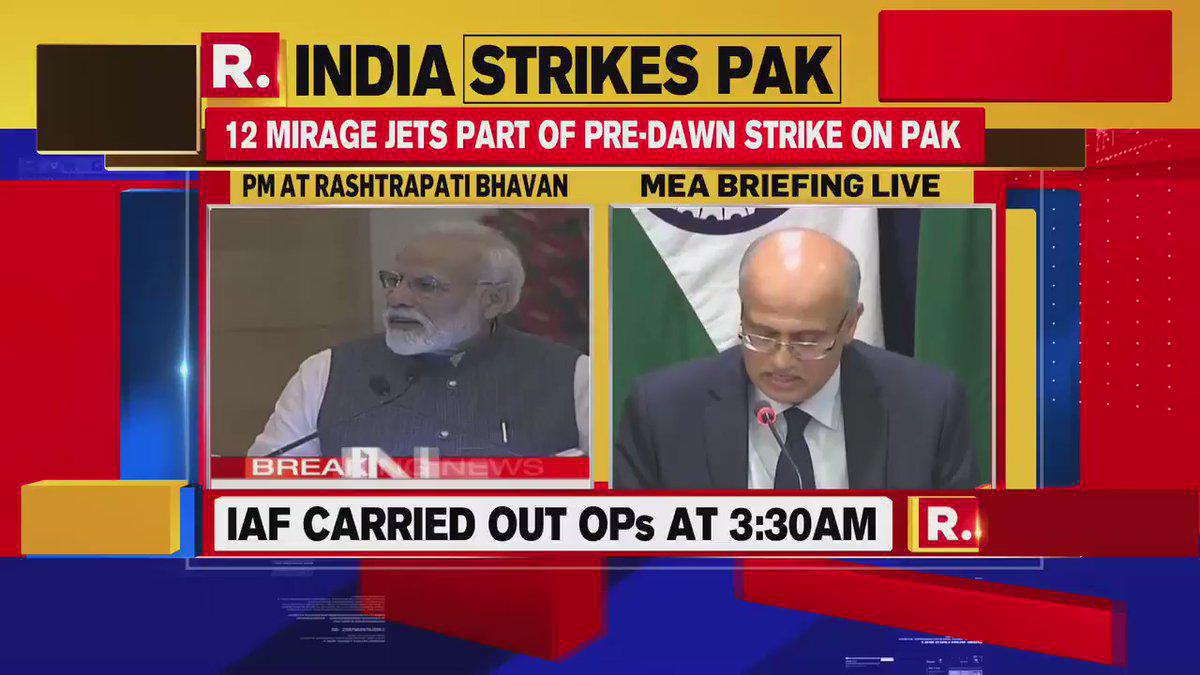
It is said that there are two regions under the name “Balakut”; one is a the border which is empty of Jaish Muhammad group and the second one is deep inside Pakistan. It is unclear that which one of the regions were attacked by Indian Airforce.
Indian officials considered their air raids preventing suicide attacks in future.
Pakistan Foreign Minister, Shah Mehmood Qureshi, in response to the attacks said: “People need not to be concerned as defendants of the country are ready and will answer any adventure.”
Pakistani Army Spokesperson emphasizing on answering India’s attacks and airspace violation, reported Indian fighters fled once Pakistani alert fighters flew.
Jaish Muhammad group took responsibility of the recent suicidal attack in Jammu and Kashmir which resulted in death and injury of more than 44 Indian soldiers.
This group following Jihadi and Salafi idealogies along with Lashkar Taibah and Sepah Sahabah have anti-India and anti-USA trends demanding dependance of Kashmir.
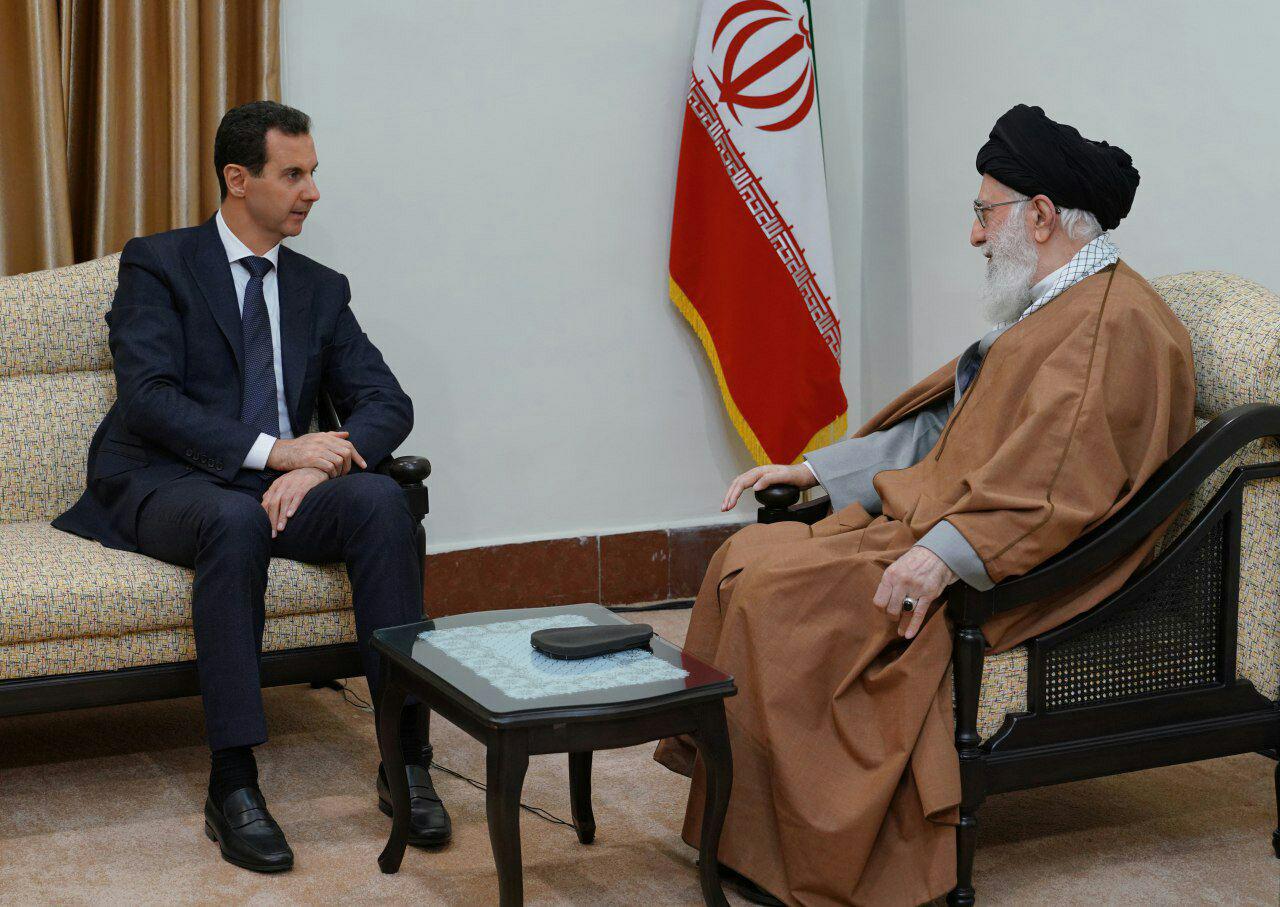
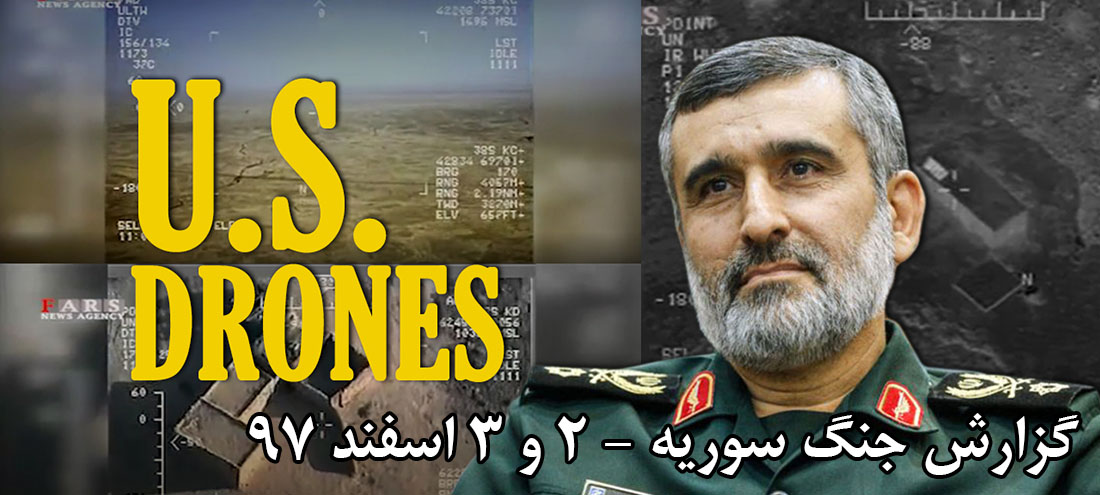
Leader of the Islamic Revolution Ayatollah Seyyed Ali Khamenei said that the Islamic Republic is honored to support Syria and considers it as equal to supporting the entire resistance front.
He mentioned resistance of Syrian president and people as the main reason behind the defeat of the United States and its regional mercenaries.
The leader added, “Through resistance and cooperation of Syrian people, Syria managed to stand fast against a big coalition consisting of America, Europe and their allies in the region and emerge triumphant from this crisis.”
Ayatollah Khamenei said that the Islamic Republic of Iran will continue to stand by the Syrian nation.
Bashar Assad for his part, lauded Iran’s unbridled support for his country, saying that the Syrian war was similar to the eight-year Iraqi imposed war against Iran during 1980-88.
He added, “Iran and Syria are two nations with identity and ideology and although current achievements were gained through much suffering, they are certainly a result of steadfastness of the resistance front.”
1. British soldiers killed by Ansar Allah:
Some media close to Ansar Allah reported that 9 British soldiers were killed in engagements of north of Saadah,Najran border. Their identities and images have not been reported yet.
Saudi Coalition from the beginning of the Yemen war so far has used ex-military from other countries (European, North and South American) and military firms for consultation and battle, so this is not the first time that there are foreigners among casualties.
Some AnsarAllah media reported there were three Pakistani soldiers killed in the same battle.
We are waiting for details such as images, their IDs or Saudi Coalition confirmation.
2. Yemeni Armed Forces Spokesperson:
– Saudi Coalition violated ceasefire in al Hudaydah 842 times in the last three days.
– Saudi Coalition fighters attacked 55 times other provinces of Yemen.
3. AnsarAllah fired a Badr-1P missile to Boqa’military camp.
AnsarAllah reported it hit accurately and more than 40 troops of Saudi Coalition were killed or wounded.
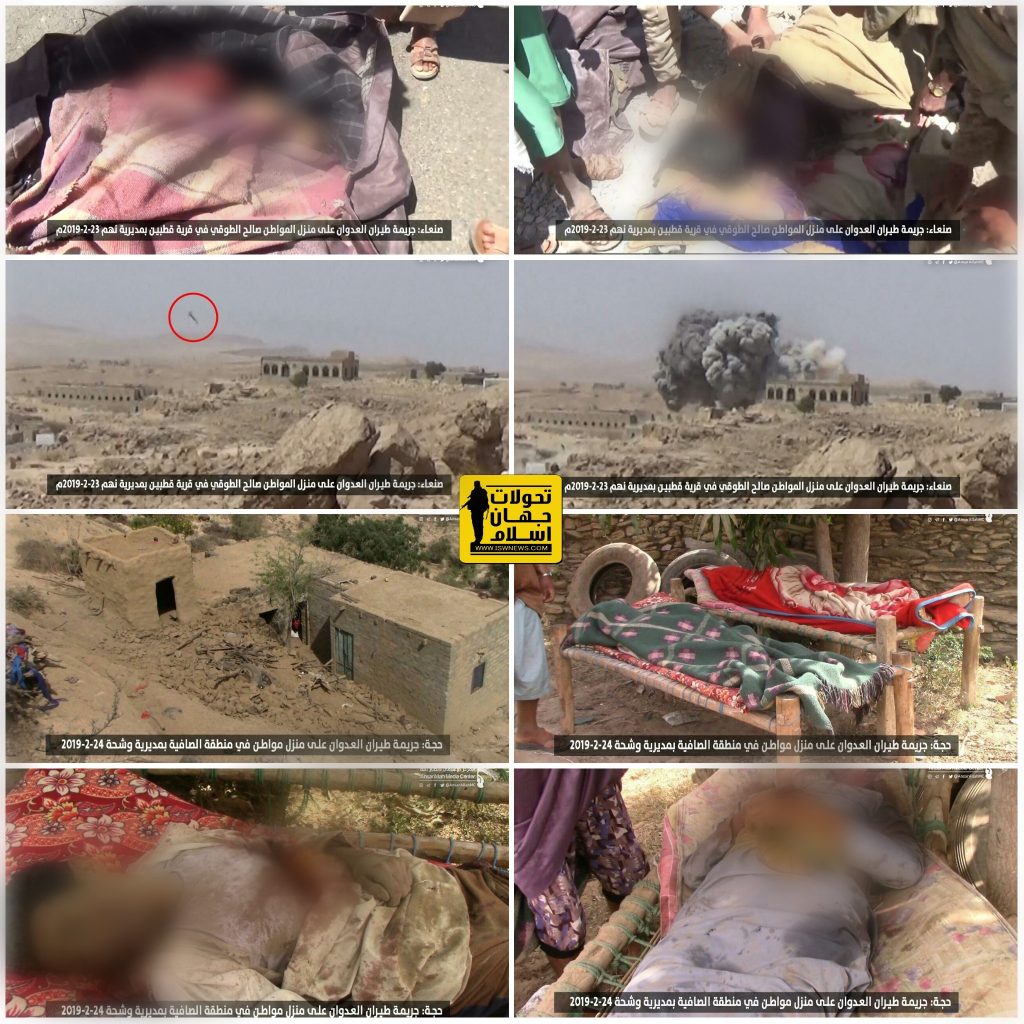
4. Bombing residents in Washhah district, Hajjah province and Nihm district, Sanaa province resulted in martyrdom of 2 civilians in Hajjah and 3 women in Sanaa.
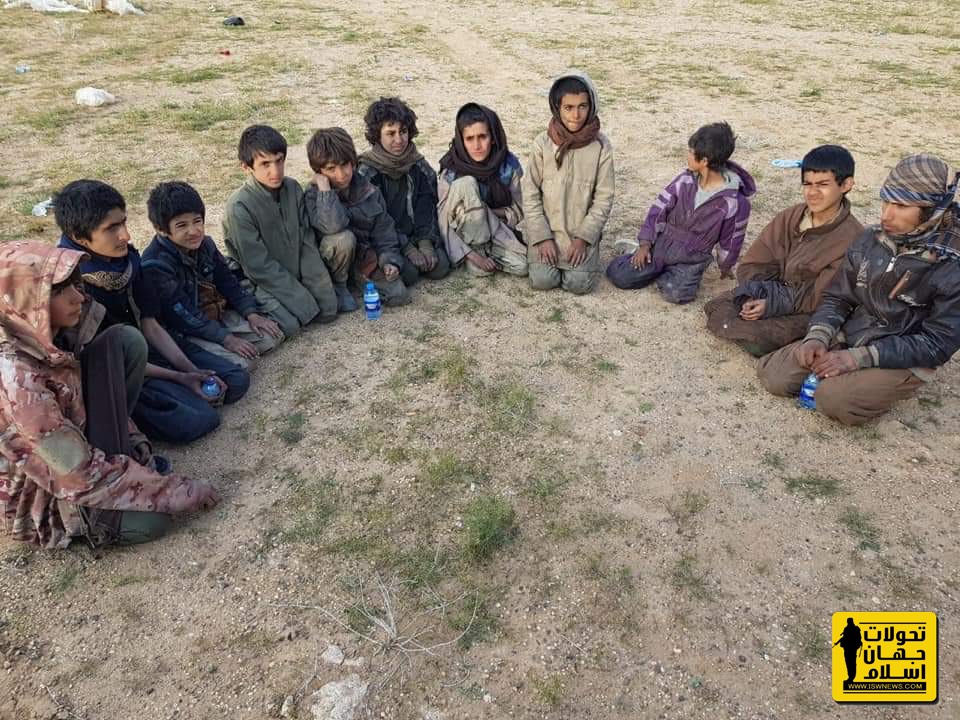
They added that in following days they will be delivered to Iraqi and Sanjar officials to find their families.
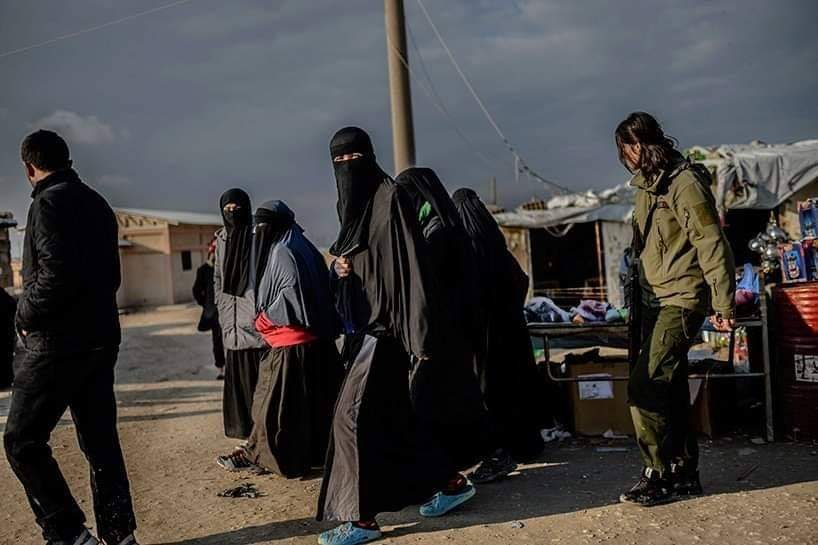
It is noteworthy that on 3rd August 2014 ISIS terrorists attacked Sanjar, west of Mosul and occupied the city and surrounding villages very quickly. During the attack and occupation, several thousand people were killed and several thousand women and girls were abducted as sex slaves by ISIS.
The ceasefire provides an opportunity for ISIS families to leave the surrounded area. According to local sources, most of their families have transported to Al Houl refugees camp, Hasakah province.
AnsarAllah’s operation in Nate’ axis against the Coalition and Mansoor Hadi’s forces resulted in reclaiming some points and three local commander of Mansoor Hadi’s Army “Ahmed Sayf Buhaybih”, “Abdullah Ab Asha” and some other soldiers killed.
2. Jawf:
AnsarAllah’s operation in Maslub and Khalifayn district and Khab in Shaaf district against Saudi Coalition.
It was done in three axes of Wadi Waqaz , Zarqa and Sadah.
3. Dhale’:
– AnsarAllah’s operation in Damt suburbs against Saudi Coalition forces.
– Engagements in Hasha region, Tahun district.
4. Hajjah:
– The Coalition’s operation in eastern and southern axes of Al Nar were repelled by AnsarAllah and frontlines have not moved.
– Engagements continuinging between AnsarAllah and Hajur tribe, Kashar district. Saudi Coalition fighters attacked Ubaysah area eight times to support Hajur tribes.
5. Al Hudaydah:
Bombing residential, airport, university, 16 km, Khamseen street and north of Hays by Saudi Coalition fighters.
– AnsarAllah operation at Najran border resulted in death of 13 and wound of 30 Saudi Army soldiers.
Saudi Coalition confirming the news, stated it was a convoy from Malik Abdul-Aziz Brigade.
– AnsarAllah’s operation in western branch of Rashaha Gharbi(north of Saadah), Jahfan mount and east of Dud against Saudi Coalition.
2. Al Hudaydah:
According to Al Masirah, Yemeni sides negotiations and the first stage of Sweden’s Agreement agreed that AnsarAllah retreats from Salif and Raas Issa harbors by 5 km and Saudi Coalition to retreat from 7 km toward east (Red Sea) by 1 km.
Both sides in the second stage have agreed to deploy joint forces in al Hudaydah province.
At the moment, they have not agreed on the schedule, implementation procedure, selection of joint force and how to provide security for al Hudaydah in future.
3. Jawf:
AnsarAllah engaging the Coalition and Mansoor Hadi’s forces in Mahashima and Khalifayn fronts, Khab and Shaaf districts.
The Coalition proclaim to have controlling over the heights in the region but AnsarAllah rejecting the Coalition advances has cut the Coalition route in Astar area.
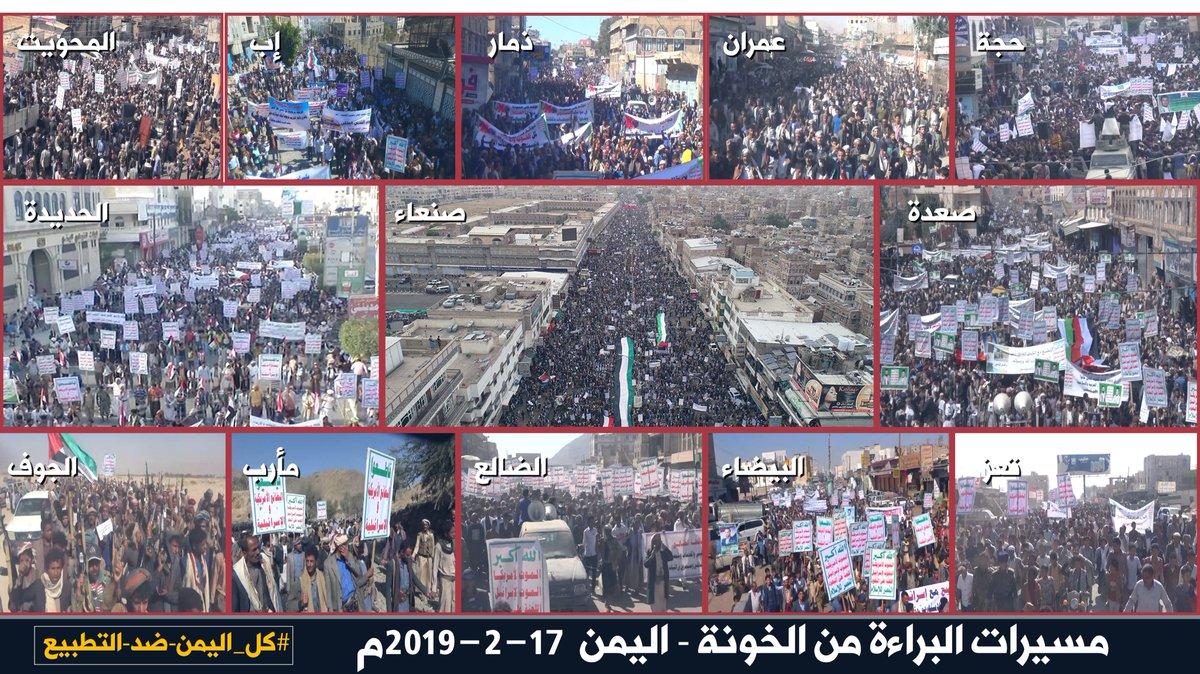
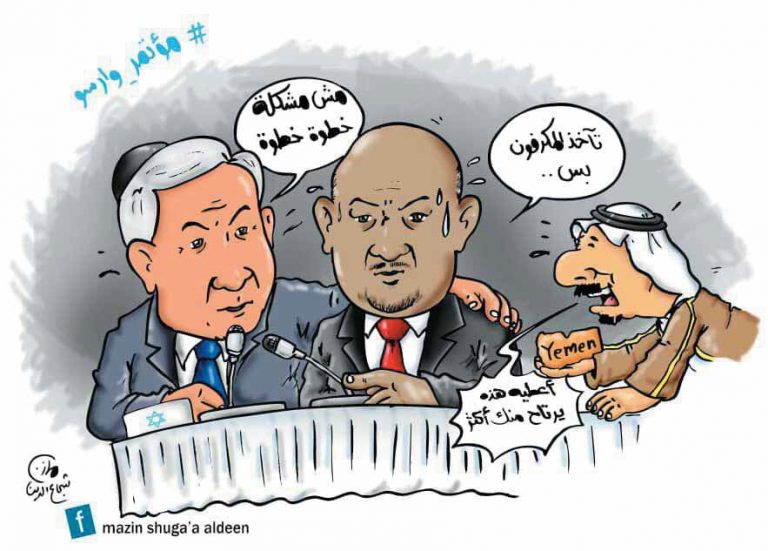
? Images showing Yemenis protesting “Avoiding Betrayers and Invitation to AnsarAllah’s Leader in different cities in opposition to Mansoor Hadi’s resigned administration officials participating in Warsaw Summit and sitting beside Netanyahu.
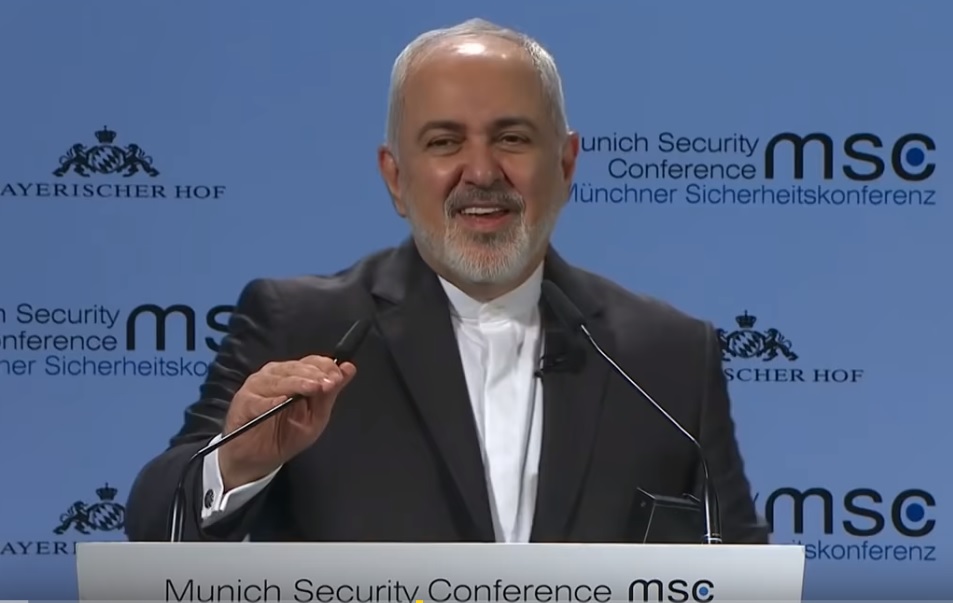
Iran’s Foreign Minister Mohammad Javad Zarif accused Israel of looking for war and warned that its behavior and that of the United States was increasing the chances of a clash in the region.
“The risk (of war) is great. The risk will be even greater if you continue to turn a blind eye to severe violations of international law,” he said.
Zarif added “Israeli behavior is putting international law on the shelf, US behavior is putting international law on the shelf.”
Zarif said the U.S. had an “unhealthy” and “pathological obsession” with Iran and accused Pence of trying to bully his allies.
“All in the name of containing Iran, the U.S. claims, and some blindly parrot, that it is Iran that is interfering in the region, but has it been asked whose region?” Zarif said.
“Look at the map, the U.S. military has traveled 10,000 kilometers to dot all our borders with its bases. There is a joke that it is Iran that put itself in the middle of U.S. bases.”
Zarif, who said Iran was committed to the 2015 nuclear deal with world powers for now, also noted that France, Britain and Germany of not doing enough to ensure Tehran received the economic benefits of that accord.
What follows is the full text of Zarif’s speech at the MSC 2019:
In the name of God, the Compassionate, the Merciful
Ladies and Gentlemen,
This past Monday, millions of Iranians gathered for mass rallies to mark the 40th anniversary of the Islamic revolution; an earthquake that collapsed a pillar of US domination in West Asia.
We’ve never been forgiven by the United States for having exercised our right to self-determination. As a result, we have long been the target of an unhealthy fixation—an obsession—which continues to this very day.
The demonization of my country has been a convenient cross for seven consecutive American presidents to bear—and a smokescreen for America’s regional clients to hide behind. It is long overdue for the United States to dismantle this malign institution, for it has today morphed into one of the greatest threats to even its own interests—and of course international peace and security.
In the past two years, the US has taken its animus towards Iran to a new extreme, as epitomized by its unlawful and unilateral abrogation of its commitments under the painstakingly-negotiated Joint Comprehensive Plan of Action, which was unanimously endorsed by the UN Security Council. To gain accomplices in its lawlessness, the US is now even labouring to force others to violate that Resolution, which explicitly calls for normalization of economic relations with Iran.
At the recent meeting of “the unwilling” and “the openly-coerced” in Warsaw, the US Vice President and the Secretary of State both blasted Europe for even attempting—albeit without much practical success—to abide by its obligations under the JCPOA and Security Council Resolution 2231. Yesterday – right here in Munich – Vice President Pence repeated this farce when he arrogantly demanded that Europe must join the US in breaking its commitments while undermining its own security. His hateful accusations against Iran—including his ignorant allegation of anti-Semitism against the heirs of a man described as ‘Messiah’ in the Torah for saving Jews – is both ridiculous and dangerous.
This malign obsession with Iran is imposing costs on others—and especially in our region, which has for 40 years suffered the consequences of US insistence on making wrong choices.
Driven by its pathological obsession with Iran, America has long encouraged reckless and destructive adventurism on the part of its clients: from arming Saddam Hussein in his attack against Iran to supporting the propagation of extremism; from aiding and abetting the ruining of Syria and bombing of innocents in Yemen to whitewashing the incarceration of a Prime Minister and dismemberment of a journalist. In parallel, the US has systematically shielded Israel’s constant aggression against Palestinians, while insulating its severe violations of the sovereignty of Lebanon and Syria.
And all in the name of “containing” Iran.
Ladies and Gentlemen,
The US claims—and some blindly parrot its accusation—that it is Iran which is interfering in the region. But has it ever been asked whose region? Just glimpse at a map. The US military has travelled 10,000 kilometres to dot all our borders with bases. Meanwhile, it has milked the region of its resources through vast arms sales. According to the most conservative estimate, the GCC’s military spending alone will reach a record high of $100 billion this year—almost seven times that of Iran.
So, who is really exporting insecurity to our region?
What is it that threatens the region more?
The unfathomable arsenals used to terrorize the people of Yemen? Or Iran’s defensive missiles, which have only ever been used against ISIS terror in self-defence?
Is it Iran that threatens the annihilation of others—or is it Mr Netanyahu—Israel’s wolf-crier-in-chief—who openly threatens my country’s obliteration while standing next to his nuclear bomb factory?
No theatrics here—including the show put on by Vice President Pence—can obscure these realities.
Indeed, more and more nations are becoming explicit about the fact that the United States is now the single biggest source of destabilization in our neighbourhood. As we speak, Iraqi lawmakers are demanding the withdrawal of US forces from their land. And after more than 17 years of failure in Afghanistan, the US is now negotiating with the Taliban to withdraw the American military.
In contrast, our standing with the peoples of Iraq and Syria to counter terrorism has put ISIS on the verge of extinction, with both countries enjoying levels of peace and stability not seen in years.
I arrived here in Munich from Sochi, where President Rouhani continued his dialogue with his Russian and Turkish counterparts on how to further promote peace in Syria. Prior to that, I visited Lebanon and Iraq for 7 days of discussions with government officials, as well as with political, community and business leaders on how to work together to strengthen stability and advance mutual economic opportunity in our region.
But the reckless US obsession with Iran is threatening these hard-won victories.
On another front, Iran’s continued full implementation of the JCPOA—despite the US’ abrogation—has played a major role in decreasing tension and promoting regional and global stability. But Iran cannot foot the entire bill for vital global security achievements – whether it is the nuclear accord, or the combatting of drug and human trafficking to Europe. Europe needs to invest too. Many around the world—and particularly on this content—speak eloquently about multilateralism. But they also need to walk the walk. For instance, INSTEX falls short of the commitments by the E3 to “save” the JCPOA. Europe needs to be willing to get wet if it wants to swim against the dangerous tide of US unilateralism.
While we have shown our desire for engagement, we don’t depend on others for our security, stability, prosperity and progress. We solely depend on our own people. That is why 40 years of so-called “maximum pressure”—namely demonization, war, sanctions and terror—including the heinous foreign-sponsored terrorist bombing in my country on Wednesday—has failed to “bring Iran to its knees”; nor has it affected our people’s decision-making calculus.
Distinguished Friends,
Iran’s foreign policy is designed to further the goal of creating a strong region that precludes the emergence of hegemonic aspirations by any power – regional or global.
A strong region simply means more confidence, more trade and more interaction between and among the countries in the region, than with external powers.
It requires home-grown political and territorial stability; reliance on the populace as the source of legitimacy, security and prosperity; harmonization of national identities and regional citizenship; participation of all in ensuring peace; and the exercising of strategic self-restraint.
Ladies and Gentlemen
In spite of all the ignorant hate-speech by American officials, let me remind you that we Iranians are proud to be the inheritors of a great civilization. The entirety of humanity is today riding in the same boat and we either sail together; or sink together. Our renowned poet, Sa’adi, testified to this truth over 900 years ago:
The bombing, claimed by the so-called Jaish al-Adl terrorist group, also injured 13 others IRGC forces.
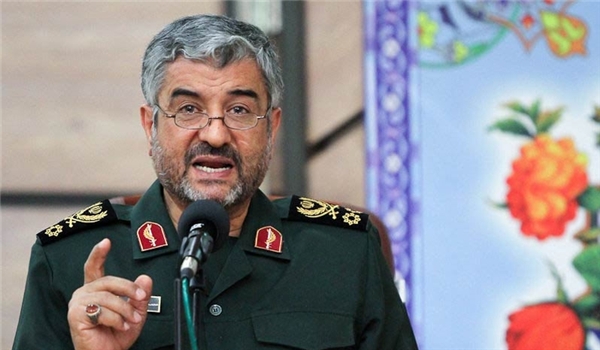
Major General Mohammad Ali Jafari, commander of the Islamic Revolution Guards Corps warned certain regional countries behind a deadly terror attack in east Iran that the country’s patience is not unlimited and criticized Pakistan for providing shelter for the terrorists and warned Pakistan to crack down on armed group Jaish al-Adl.
He said, “From now on, the patience that the (Iranian) establishment used to exercise in the face of such conspiracies and reactionary governments of the region, especially Saudi Arabia and the United Arab Emirates, which are acting at the behest of the US and the Zionist regime, will be different,” and he added that his forces will definitely take retaliatory measures against such attacks in the future.
1. Al Hudaydah:
Saudi Coalition spy drone shot down over Nana square.
2. Saadah:
AnsarAllah’s operation in Jahfan resulted in claiming some points in east of the area.
3. Dhale’:
AnsarAllah’s operation in Beit Yazidi and Damt suburbs against Saudi Coalition and Mansoor Hadi’s forces.
4. Hajjah:
Saudi Coalition media reported an operation against AnsarAllah is started in north of Hajjah and to connect to Hajur tribes.
Hajur tribes engaged with AnsarAllah after one tribe engaged with AnsarAllah resulted in more difficulties for AnsarAllah in this axis. Saudi Coalition claim that they support this tribe and helping them with airstrikes…
5. Haaretz:
– Israel is ally to Saudi and Emirates Coalition in war against Yemen unofficially.
– An Israeli firm is training some soldiers who fight under Emirates in al Hudaydah.
– Private corporations and ex-CIA officers giving Saudi and Emirates, intelligence and military consultations.
6. Yemeni Armed Forces Spokesperson:
– Saudi Coalition violated ceasefire in al Hudaydah 508 times in the last three days.
– Saudi Coalition fighters attacked other provinces 64 times.