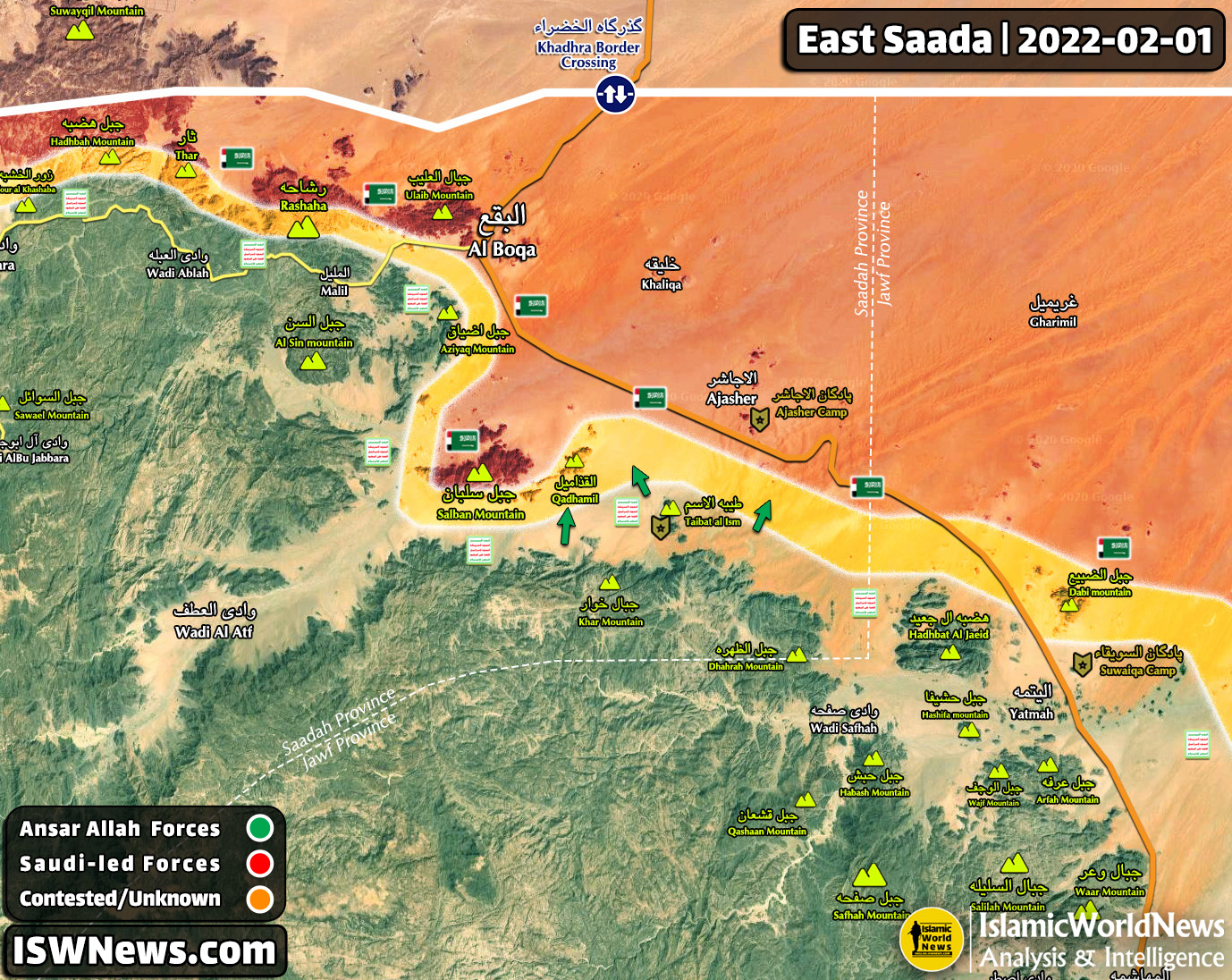
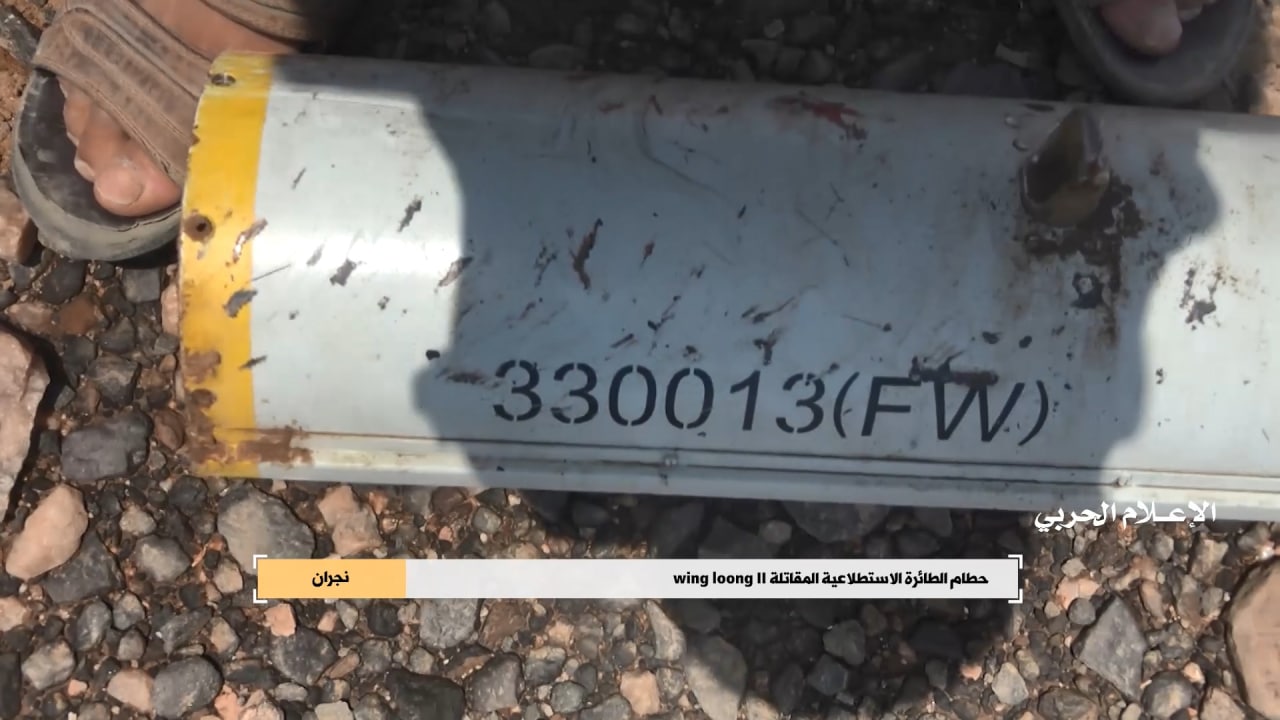
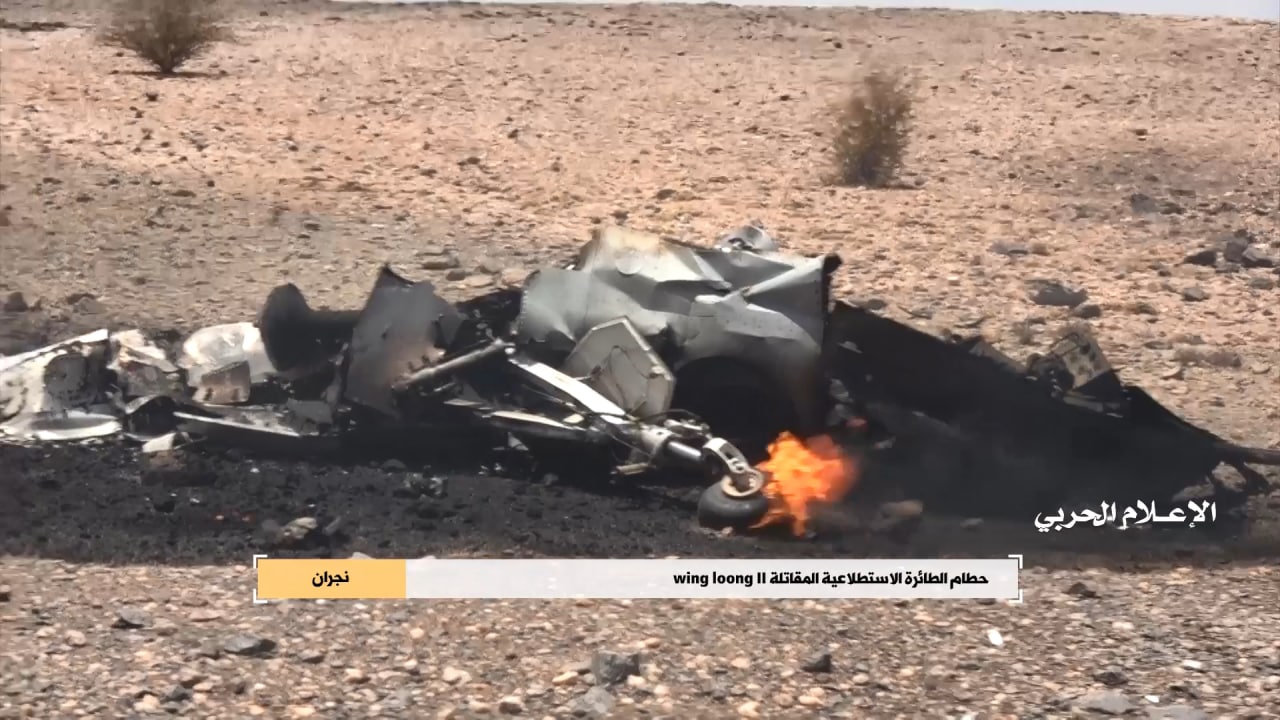
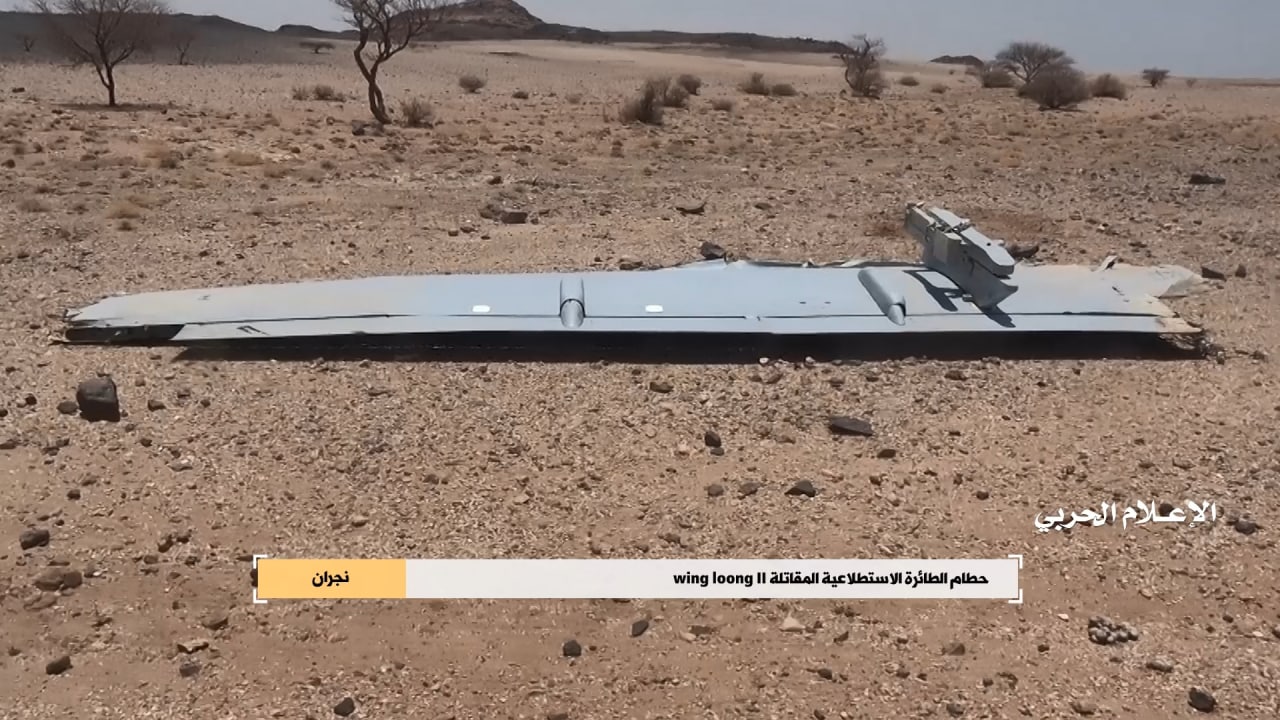
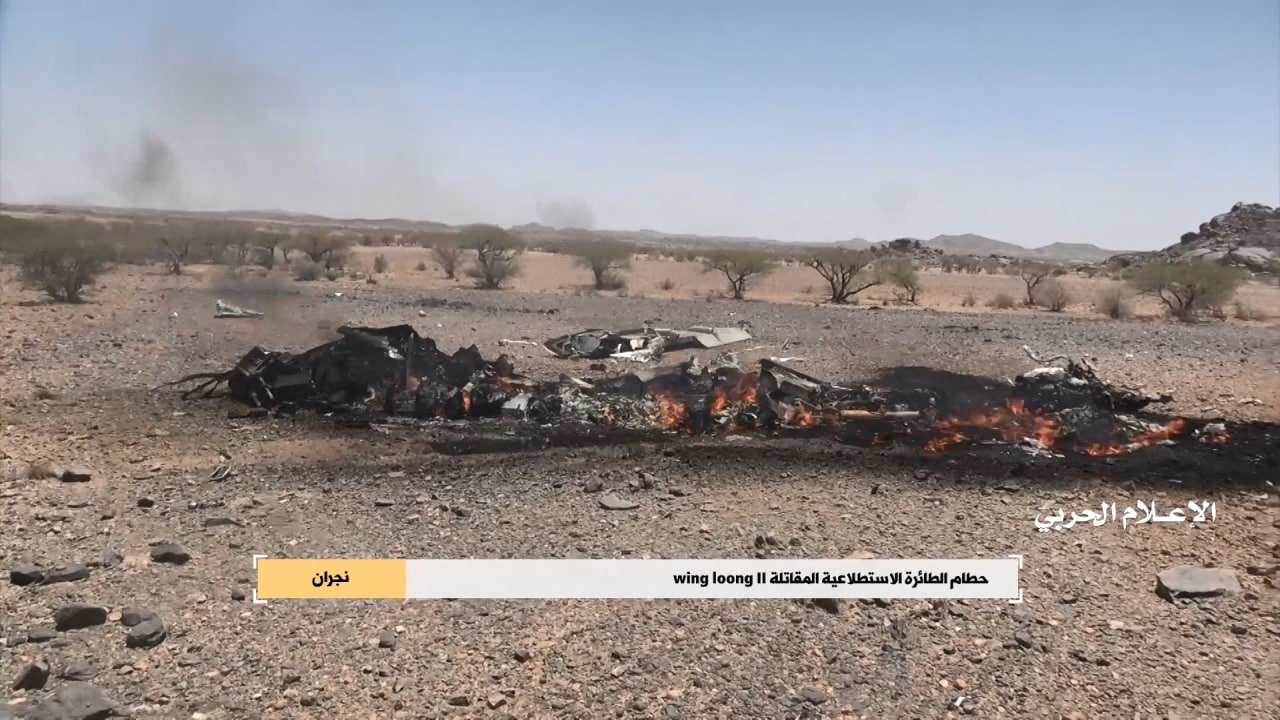
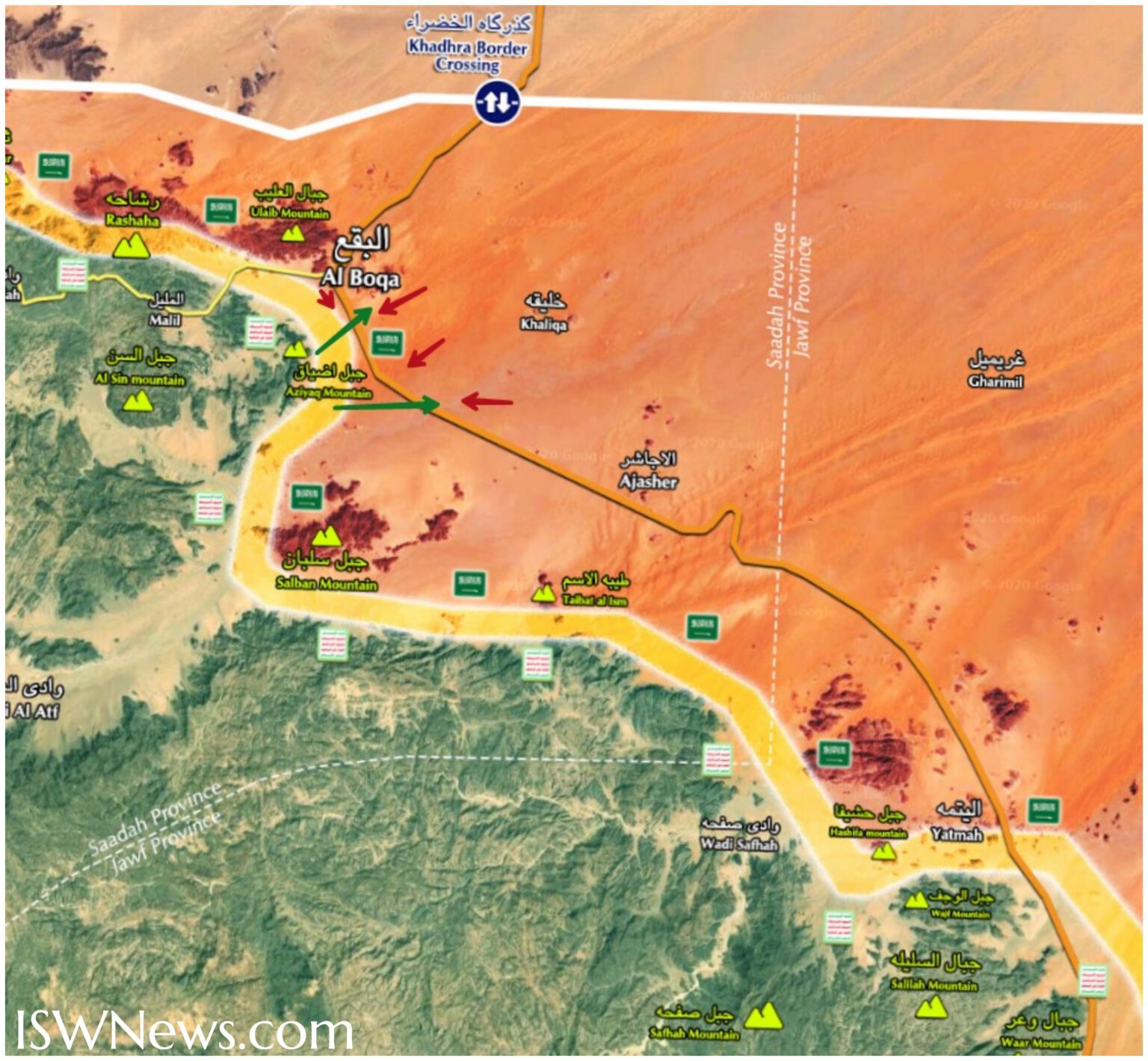
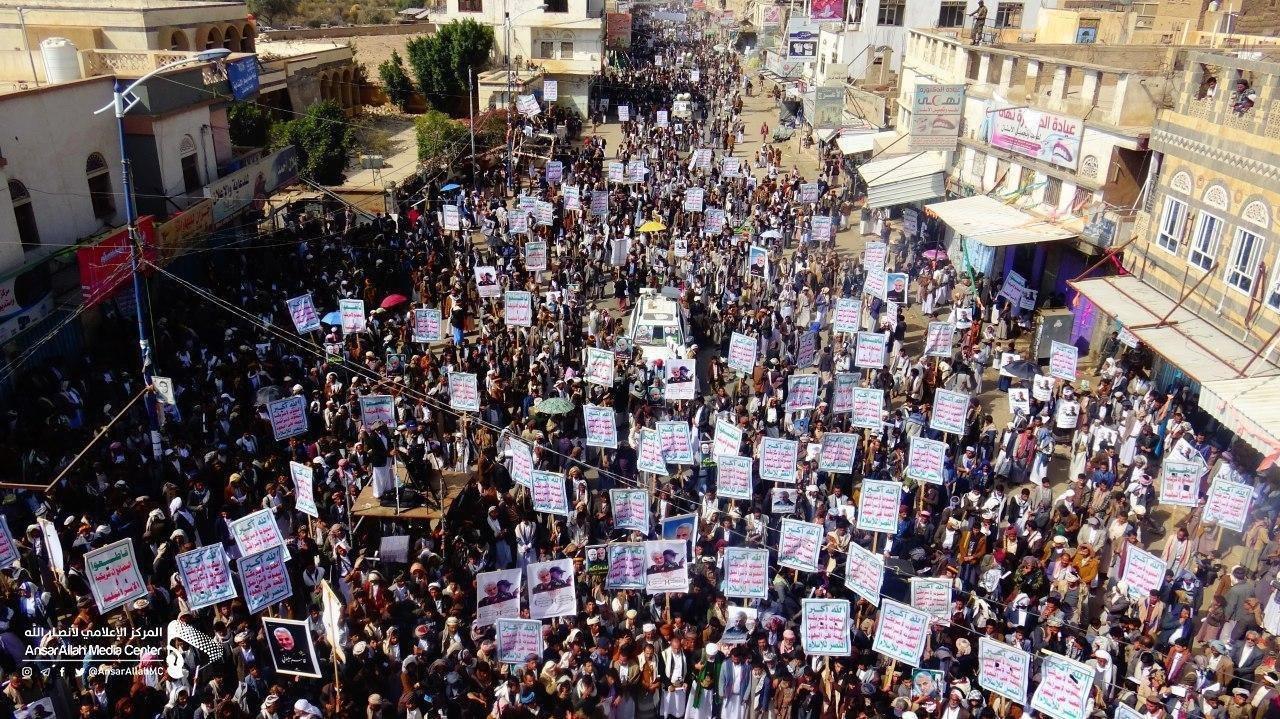
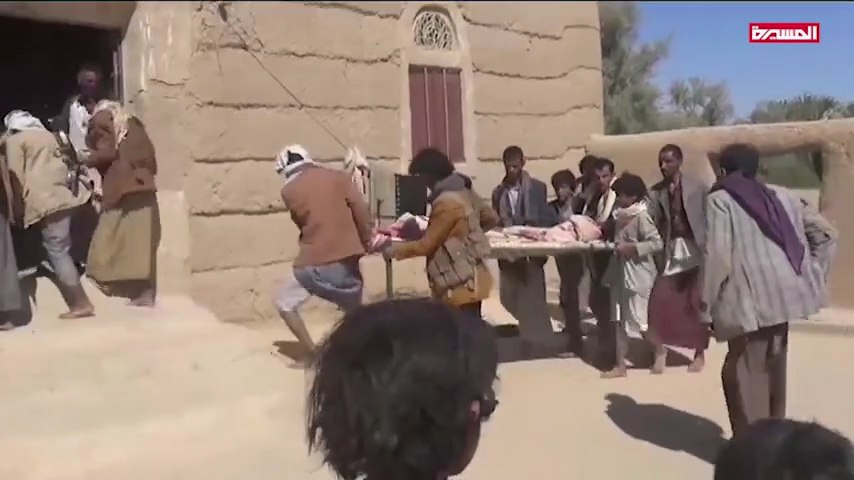
During the operation, Ansar Allah liberated the Taibat al-Ism camp, Qadhamil heights, Qahira, al-Rabaa, al-Ramla al-Sawda and al-Mahour from the control of the Saudi coalition.
Prior to the operation, Ansar Allah had liberated the town of Yatmah and its suburbs during Operation Fajr al-Sahra on December 24, 2021. Considering the direction of Ansar Allah progress in these areas, it seems that Ansar Allah’s goals in these operations are the following:
1- Clearing the mountainous areas north of al-Jawf province and the border areas of Saada province from the control of the Saudi coalition. 2- Ensuring the security of areas and roads leading to small towns such as: Kataf, Yatmah, etc. 3- Reducing the pressure from other fronts and disrupting the focus of the Hadi government on the battles of Marib. 4- Increasing pressure on the border areas with Saudi Arabia, which will force the Saudi coalition to deploy more forces in these areas.
AnsarAllah’s possible goals in future operations in the region could be to move to al-Atfin area, al-Ajasher base, al-Boqa town, and finally the al-Khadhra border crossing and enter Saudi territory.
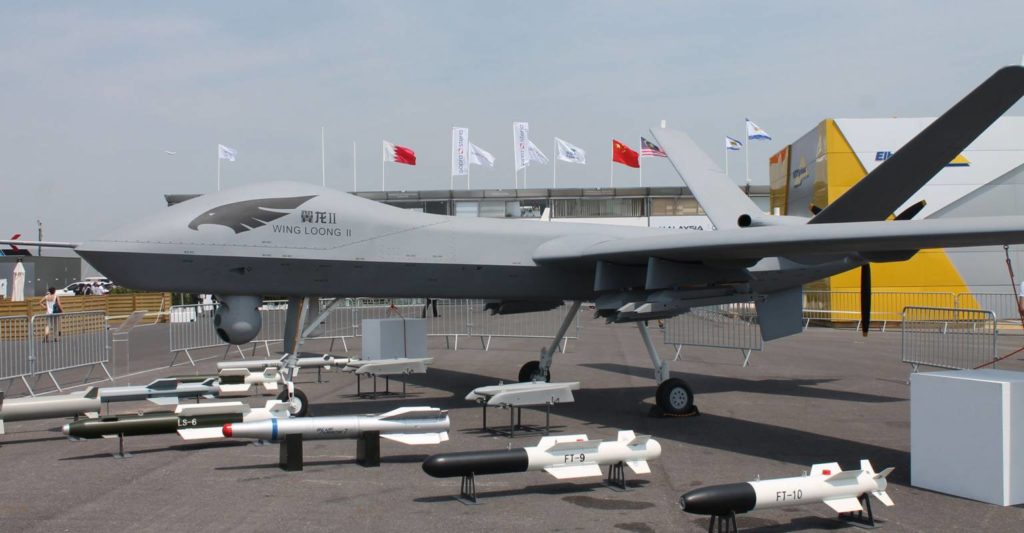
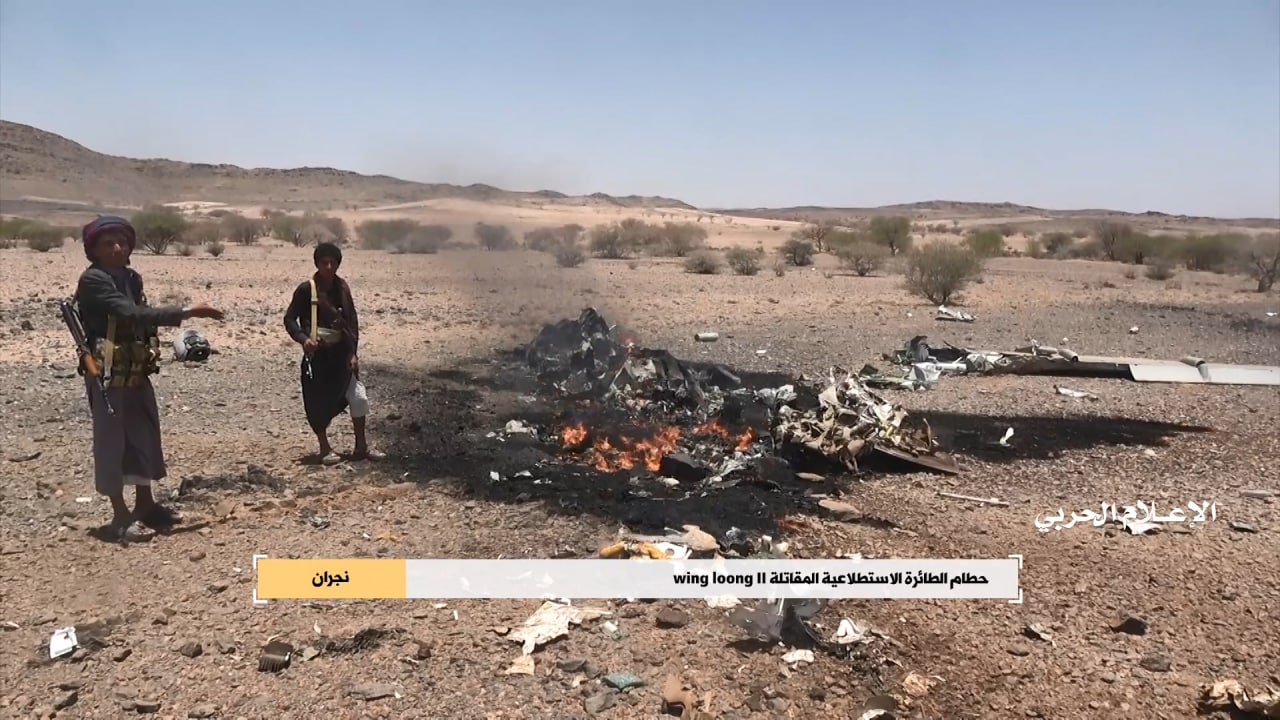
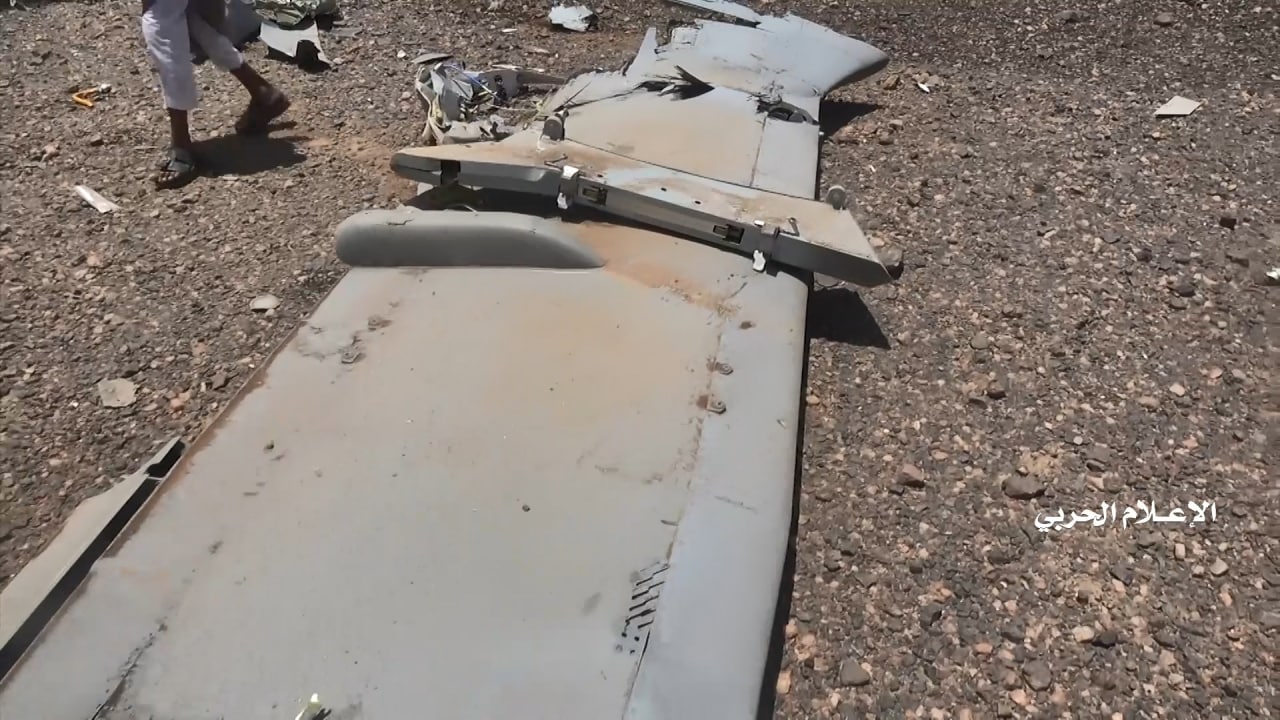
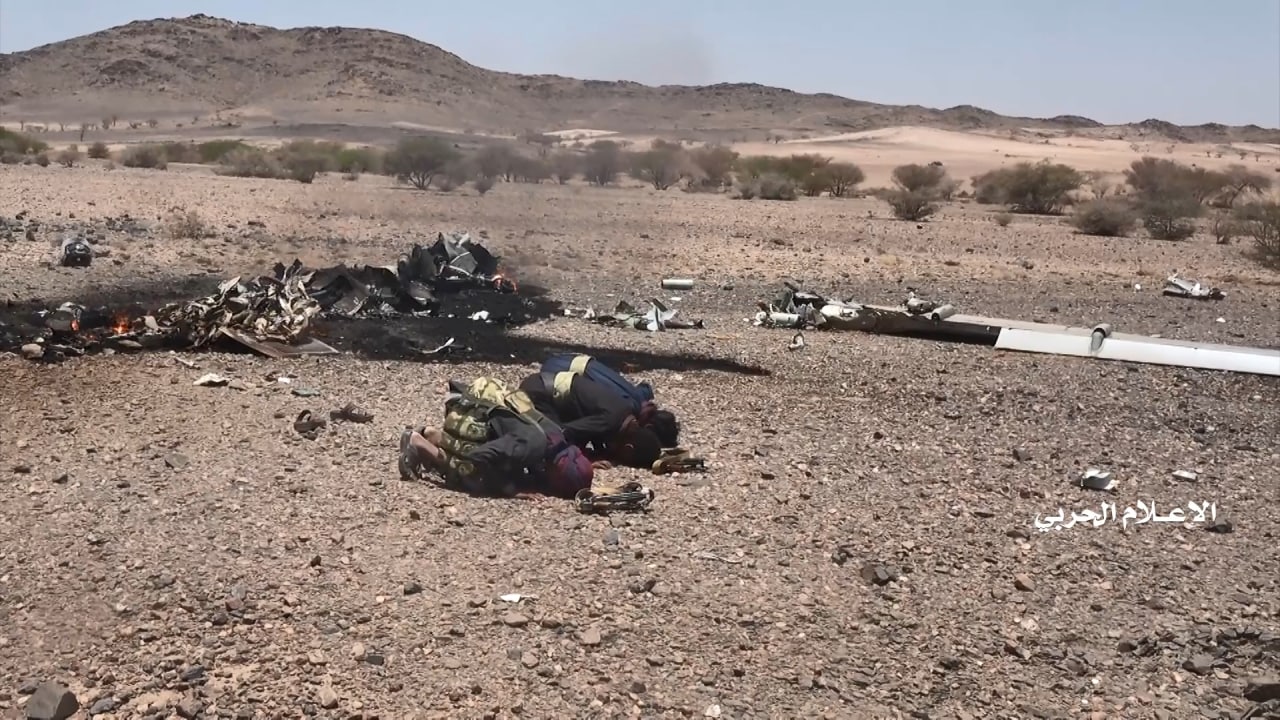
According to data collected by ISWNews, this is the fifth Chinese Wing Loong drone belonging to the Saudi coalition to be shot down by Ansar Allah in the skies of Yemen.
1- UAE Wing Loong UAV, September 26, 2016, Kholan 2- UAE Wing Loong UAV, April 19, 2019, Saada 3- Saudi Wing Loong UAV, November 30, 2019, Hayran, Hajjah province 4- Saudi Wing Loong UAV, May 21, 2021, Najran 5- Saudi Wing Loong UAV, September 13, 2021, Kataf, Saada province
During this operation, which took place in the western border areas of Saadah and south of Saudi’s Jizan, the Al-Khobah-Wadi Jara axis was the main focus of this operation, and other areas were secondary and complementary axes.
During the operation, Ansar Allah succeeded in liberating the areas of Tuwailiq, Tabbat al-Jaish, Qaem al-Saiyab, Tabbat al-Bayda, MBC mountain, Qanbura, al-Asasiyah, al-Sayyabah, Kamala, al-Hataimi, al-Qamameh, al-Shabaka, al-Batul, al-Amoud, al-Sabah, al-Malahit , Tabbat al-Qannas, Safeiyah, Sayyad, Al-Alam, Zahr Al-Hamar, Al-Manzalah, Al-Salam, Al-Kamb, Al-Dafaa Heights, Al-Dabira, Amer mountain, Tabbat Al-Hamra, Jabal Al-Sarkha and Tabbat Al-Soda, which have an area of about 150 square kilometers.
The Saudi coalition had already succeeded in advancing the Al-Zahir administration in Saada province on August 14, 2018, and this progress continued until November 2018 in the Marran Heights. However, due to Ansar Allah’s resistance and the special role of Ansarullah’s engineering units and sniper units on these fronts, the coalition forces failed to stabilize their advance and eventually retreated to the Malahit area and the border heights. Now, with a limited ground operation, these areas, in addition to the Jizan border heights, are under Ansar Allah control.
The difference between this operation and previous Ansar Allah operations is that the Ansar Allah missile, drone and intelligence forces did not have a significant role in the operation and in fact there was no need for their participation; Because Ansar Allah needed a series of false-attacks and ground attacks in this situation, which was well done. Of course, the UAVs have been monitoring the areas and provided them the info they need, but their role is limited, and this victory can be attributed to the Ansar Allah ground forces and it is another masterpiece in the Yemeni war.
Saudi coalition forces fleeing and avoiding to confront Ansar Allah fighters in MBC area during Jizan operationThe moment of the escape of one of the Saudi coalition forces in front of the Ansar Allah fighters, which led to his death by not surrendering and his escape againOne of the heavy ambushes of Ansar Allah, which shows the use of surprise element during the Jizan operation.Destruction of one of the personnel of the Saudi coalition by Ansar Allah engineering unit during Jizan operation.Ansar Allah fighters set fire to Saudi coalition military vehicles during Jizan operation. During this operation, more than 29 military and armored vehicles were destroyed by Ansar AllahAl-Khobah town located in Jizan province from Ansar Allah camera.Another scene of Saudi coalition forces fleeing and avoiding to confront Ansar Allah fighters. The clash took place in the Tuwailaq area during Jizan operation.During the operation, more than 80 Saudi coalition forces with Saudi, Sudanese and Yemeni nationalities were killed and wounded, some of which can be seen in this video.A number of Saudi coalition airstrikes on Ansar Allah positions in Wadi Jarah, al-Amoud mountain and other areas on the outskirts of al-Khoba town, which were liberated during Jizan operation.
Ansar Allah operation in Jizan frontClick to see the full size map
According to Brigadier General Yahya al-Sari’, a spokesman for the Yemeni Armed Forces, the drone was shot down by a Ansar Allah air defense surface-to-air missile this morning, and details will be announced soon.
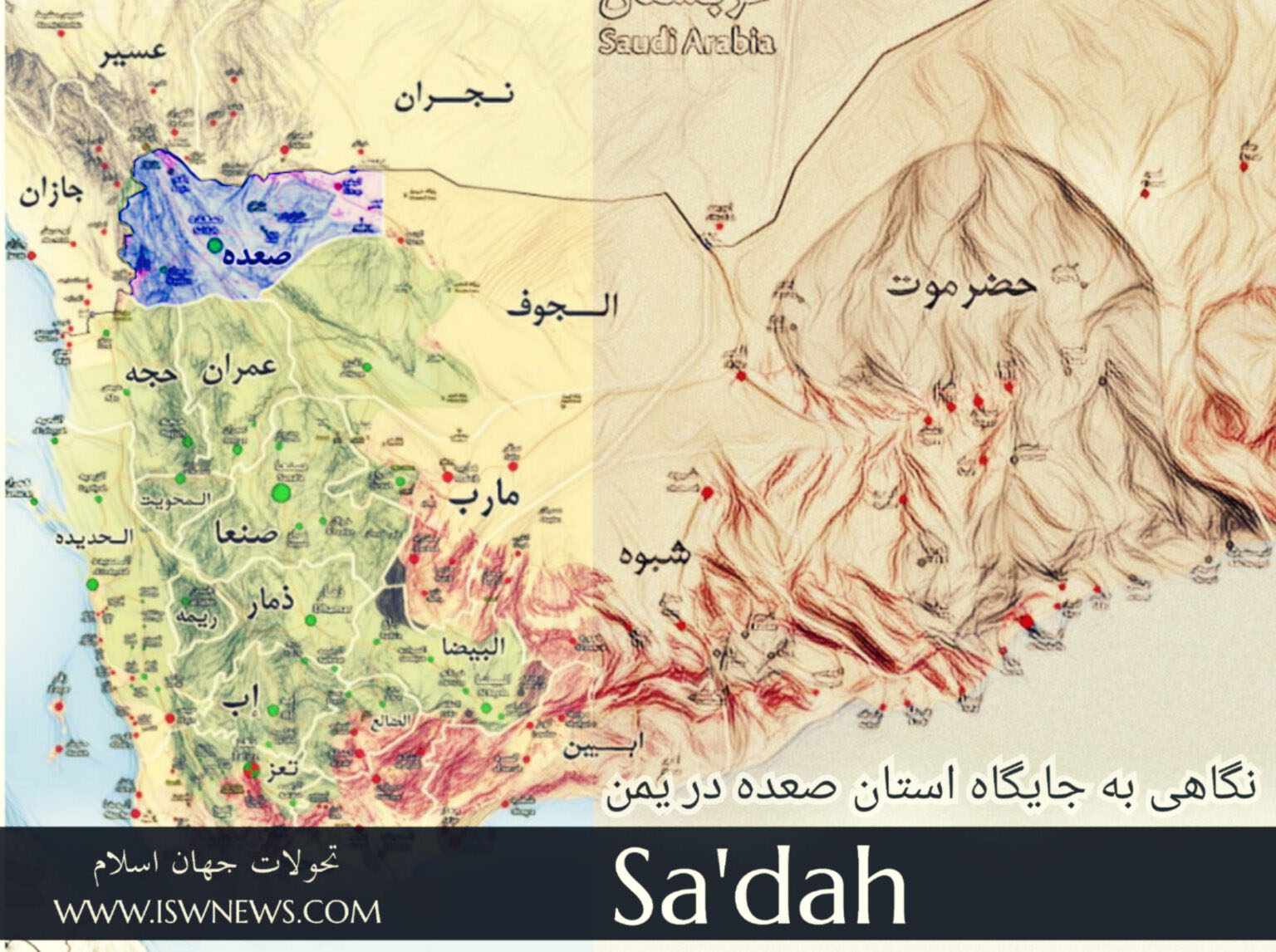
Saadah is a northern province in Yemen with more than 700 thousand population and 11,375 km2 area. The province has 15 districts including Hashwah, Safra, Zaher, Baqim, Hidan, Razih, Saqin, Saher, Shada, Saadah, Ghamar, Qatabar, Kitaf, Mujiz and Munbah. Agriculture and herding are the occupation of most of the people. Handicrafts and minerals in Saadah brought business opportunities for inhabitants of Saadah. Most of western part of the province are suitable for agriculture and has mines due to heights and suitable weather. The eastern part is desert and dry, in which herding is more suitable.
Saadah districts
Saadah used to be en route to Yemeni Hajj and trade caravans thus, had economic boom, cultural and art development. Saadah has several old bazaars including Soq al-Talh, Soq al-Qadin and Soq al-Asbu’ei, each of which has a daily trade schedule such as handicrafts, coffee, fruits, etc.
Saadah is important in controlling the northern part of Yemen and its northern heights are obstacles for enemy’s invasion. During the Zaidi ruling, Saadah was their capital.
Notable people of Saadah include martyr Sayyid Hussein Badreddin al-Houthi who is recognized as the leader and founder of Yemen’s revolution. Sayyid Hussein had a key role in enlightening and expanding the Islamic resistance idealogy in Yemen. He is among the founders of Ansar Allah in Yemen in 1986 as “Believing Youth Union” (اتحاد الشباب المؤمن). This movement founded under leadership of Shia scholar Salah Ahmed Falitah and pioneer youths such as Sayyid Muhammed Badreddin al-Houthi (Sayyid Hussein’s brother) and then in 1990 had Muhammed Yahya Azzan and then Sayyid Hussein Badreddin al-Houthi as secretary general.
The expansion of the movement was known with the name of Sayyid Hussein Badreddin al-Houthi, thus it was famous as Houthis and after his martyrdom and leadership of Sayyid Abdul-Malik Badreddin al-Houthi and his strong management, it was called Ansar Allah Movement.
Sayyid Hussein martyred on September 10, 2004 in heights of Saadah after several years of fight with Ali Abdullah Saleh since 1990. His body delivered to Ansar Allah after several years and buried in Marran heights, northwest of Hidan, which was bombed by Saudi coalition warplanes in 2015.
Sayyid Hussein Badreddin al-Houthi tomb in Marran heights bombed by Saudi warplanes
Important tribes of Saadah are three: Khulan, Bakil and Hashed, which have important role in fighting against Saudi coalition. In early years of Yemen’s revolution, Wahhabist immigrants of Dammaj village, southeast of Saadah, assaulted Ansar Allah. The intrigue was expelled by exiting Wahhabists from Saadah in early 2014. Al Abdin tribe also had conflict with Ansar Allah outskirts of Saadah which finished by victory of Ansar Allah.
Since the invasion of Yemen started, Saadah become a main axis for Saudi coalition. Saudi coalition operation to occupy Saadah was launch from three axes: 1. Northern axis (Alab-Saadah road in Baiqm district) 2. Eastern axis (al-Boqa to Kitaf) 3. Western axis (Malahit to Marran heights), which almost all of Saudi coalition operations were expelled by Ansar Allah so far. Among the reason of this defeat are the heights of north and special terrain of Saadah, Ansar Allah’s dominance on the region, Ansar Allah’s resistance and tactics against Saudi coalition, among which operation “Nasr Min Allah” is a famous example.
In this attack several AFVs and military vehicles were destroyed and several Saudi-led forces killed and injured. Ansar Allah forces returned to their position in Aziyaq mountain after the successful attack.
Currently liberation of Yatmah and al-Boqa is not difficult for Ansar Allah but it seems Ansar Allah left the area of north of al-Jawf and Saadah open to drain Saudi coalition strength and impose heavy casualties and damage to them.
These attacks took place in areas Sudays, Souh, Boqa height, Barakin, Sufyan Rashaha Gharbi and Shabaka. These areas located in north of Saadah province at the border with Najran. These heights were a formidable hinder against Saudi coalition assaults in the war.