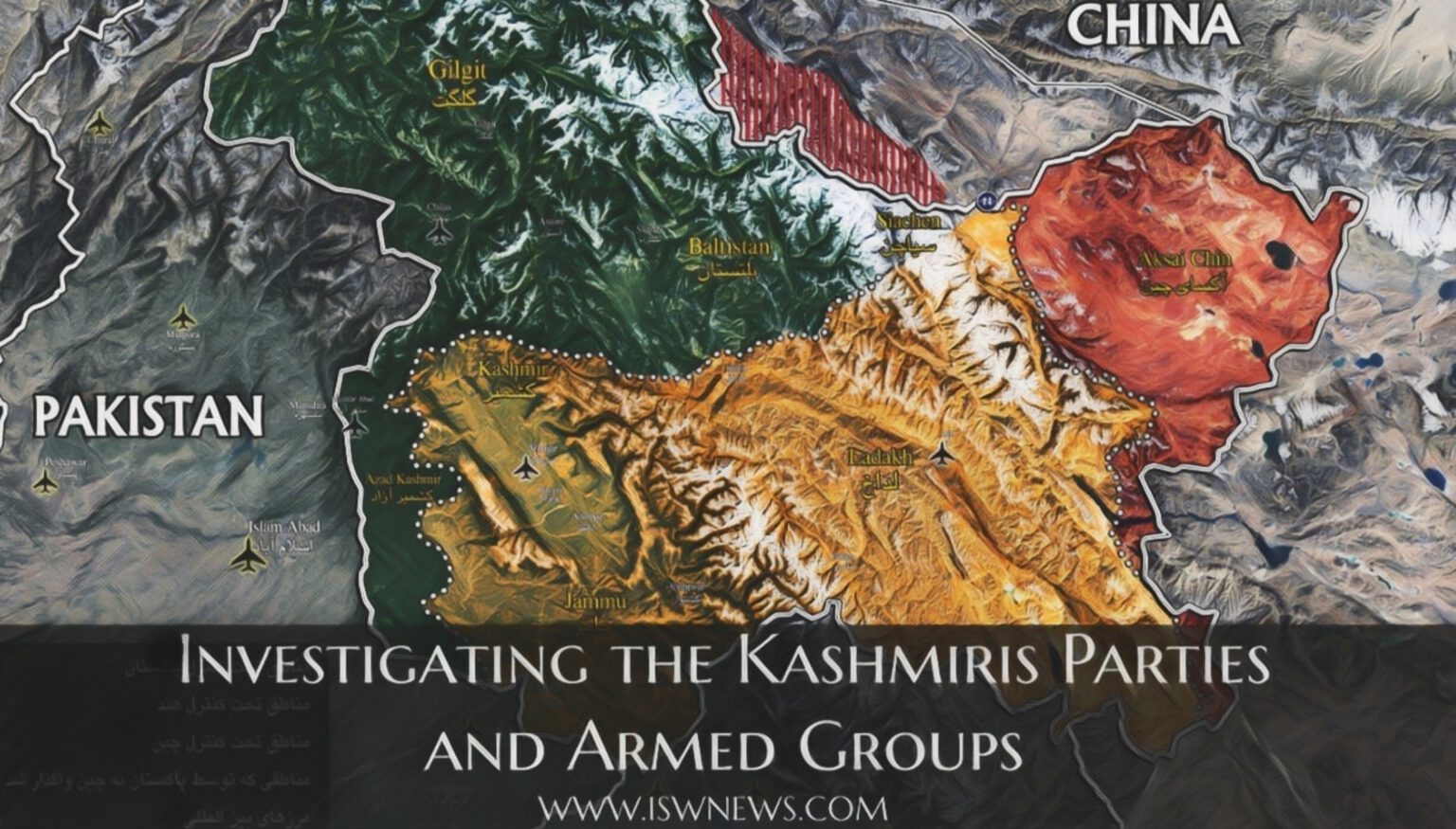
Gowkadal massacre happened on 21 January 1990 on Gowkadal bridge located in southeast of Srinagar town during which Indian soldiers massacred Kashmiri protesters.
After an Indian governor, Jagmohan Malhotra was assigned in Kashmir state in 1990, Indian soldiers attacked houses of people on 19 January to search for Kashmiri militants and weapons and arrested hundreds of people.
Several thousand people gathered in streets of Srinagar the following day and demanded freedom of the prisoners and independence of Kashmir. Indian governor Malhotra ordered curfew.
On January 21, people moved toward Gowkadal bridge chanting independence slogans. Security forces intended to close to brigade and engaged with protesters and tens of Kashmiris killed and wounded by Indian soldiers bullet. In this massacre, which is the worst in Kashmir contemporary history, between 50 to 280 people lost their lives, according to local sources.
Kashmir parties divide into two categories: 1. Political parties 2. Jihadi militias
1. Political parties divide into three subcategories: A) Parties endorsing annexation to India with mainly nationalism and secularism ideologies. They include: – Jammu & Kashmir National Conference party under leadership of Dr. Farooq Abdullah who believe Kashmir is part of India but should be self-goverend. – Indian National Congress party which is not very far from Jammu & Kashmir National Conference party and have less popularity.
B) Parties which want independence, including: – Jammu Kashmir Liberation Front under leadership of Yasin Malik was established in 1965 and its members reside in both India and Pakistan. The party is only political with no military activities. – People’s Conference party under (ex-)leadership of Abdul Ghani Lone which has a military branch and less popular in Kashmir. – Jammu and Kashmir Democratic Freedom Party led by Shabir Ahmad Shah which demands referendum to be accepted by everyone. The party has a military branch Muslim Janbaz with minimal activity.
C) Parties endorsing annexation to Pakistan and their policy is to divide Kashmiri parties and so far could gather 31 parties. These parties reached consensus “All Parties Hurriyat Conference”(Tehreek e Hurriyat) on 9 March 1993 which is a united front of Kashmiri movements against Indian government and mainly active in politics. In recent years, the Hurriyat Conference had internal conflicts and has two main factions, one of which is currently led by Syed Ali Shah Geelani and the other by Mirwaiz Umar Farooq. Farooq’s faction opposes Gilani’s faction. Umar Farooq’s faction is very popular in the city of Srinagar, and its military wing is known as the Umar al-Mujahideen. Syed Ali Shah Geelani and Mirwaiz Umar Farooq and other party leaders have a tough competition to lead the Hurriyat Conference. The main parties of the consensus include:
– Jamaat-e-Islami founded and led by Abul A’la Maududi with political activities and Islamic education to Kashmiri people. – All Jammu and Kashmir Muslim Conference was founded in 1987 by Sheikh Muhammad Abdullah and Chaudhry Ghulam Abbas with mission of liberating Kashmir from India and annex to Pakistan. – Rabet al-Mujahideen party currently led by Nusrat Alam and its military branch by Ishtiyaq Ahmad. – Anjuman-e Shar’i Shi’ayan was founded by a Shiite scholar Sayyid Yusef Musavi and currently led by Sayyid Hasan Musavi Safavi, mainly concerned with Islamic issues of Shias. – Other parties such as Muslim League(Farooq Rahmani), Muslim League(Sheikh Abdul Aziz), Muslim Union led by Mulawi Abbas Rahhmani which is mostly supported by Shias, Public movement led by Farid Behnaji, Jamiat Ahl al-Hadith led by Mawlana Taheri, Harakat Tahrir Jammu and Kashmir led by Saadallah Tantari, People’s Resistance Movement led by Ghulam Ahmad Mir which has secular ideology, also want annexation to Pakistan.
2. Militia groups fighting India for Kashmir and Jammu independence and are mainly supported by Pakistan (ISI). They include: – Hizbul Mujahideen: Hizbul Mujahideen is among the largest militia groups in Kashmir which fights for the independence against India. It was founded in September 1988 by Muhammad Ahsan Dar with HQ in Muzaffarabad town in free Kashmir. India, USA and EU put this group in blacklist of terrorist groups but Pakistan and Turkey have close ties with it. In despite of their mission “peace and justice”, declined the negotiation and chose military action to end India’s occupation. – Lashkar-e-Taiba: This Salafi Jihadi group was founded in 1987 by Hafiz Saeed. They are accused by India for terrorist attacks to India parliament in 2001 and Mumbai in 2008 (In three days of attacks in Mumbai the militants bombed, fired and took hostages in 10 different locations such as malls, railway station, hospitals, etc., which resulted in 195 people killed and more than 300 injured.). The group is in blacklist of terrorist groups by Russia and western countries. – Harakat al-Mujahideen or Harakat Ansar: It was founded in 1986 and their forces were trained by al Qaeda bases in east of Afghanistan during Taliban reign over Afghanistan. – Jaish-e-Mohammed: It was founded in 2000 by Masood Azhar in Karachi with activities in Kashmir only. This group is in close relationship with Lashkar-e-Taiba and other Salafi groups of Pakistan. – Al-Badr group: This group separated from Hizb-ul-Mujahideen but is not active much in Kashmir. – Ansar Ghazwat-ul-Hind: Separated from Hizb-ul-Mujahideen which was founded by Zakir Rashid Bhat and follows al Qaeda with discords with Pakistan and Kashmir group coalition. – Islamic State of Jammu and Kashmir: This group had limited activities so far and India believes they are related to ISIS thus subdued them severely.
1. Due to engagement between Indian soldiers and Kashmiri militia in Shopian town, south of Srinagar, nine militia and four Indian soldiers were killed. Indian police announced the killed militia members of Hizbul Mujahideen. (images)
2. Police reported of killing a commander of a militant group in Anantnag town, southeast of Srinagar.
3. Since beginning of 2020 so far 94 inhabitants of Jamu and Kashmir were killed by Indian soldiers, from which 32 were militants and 19 civilians.
4. Indian warplanes flight sorties increased over Srinagar and other parts of Kashmir.
5. Kashmiri militia threw grenades toward Indian soldiers station in Rajpora area, Pulwama. Police didn’t release the details of possible casualties.
1. India called two Pakistani diplomats unacceptable and expelled them from India.
2. Following recent tensions in Kashmir, Chinese army deployed 12 warplanes in bases Hotan and Gargunsa in Aksai area near border of Siachen and Ladakh to perform air patrol missions.
3. Indian official: From 28 May 2020 so far, 10 militants were killed by Indian soldiers in Jamu state.
4. In engagement between Indian army and Kashmir militants in Tral area, southeast of Srinagar, two militants were killed.
5. Pakistan army shot down an Indian spy drone over Kashmir border.
1. General Qamar Javed Bajwa, Pakistan army commander: – We won’t allow India to change Kashmir situation and annex it to their soil. – Situation of Kashmir has not been decided. No one can decide it alone. If we have to, we’ll use force to stop India from occupying Kashmir.
2. Pakistan army shot down an Indian spy drone at the border. This is the eighth drone being shot down in the past year.
3. Kashmir militants and Indian soldiers conflict subsided in Srinagar.
4. Ansar al-Ghazwah murdered two militants of Mujahidin party in Kalgam area.
5. Indian police neutralized a bombed vehicle in Rajpora area.
6. Indian police used tear gas to disperse protesters.
1. In Kashmiri rebels attack in Ganderbal region in north of Srinagar, 2 Indian border guards were killed. The Kashmiri Resistance front has claimed responsibility of this attack.
2. The Indian soldiers arrested six people in the Lulab village, in north of Kashmir.
3. During the attacks of Kashmiri Resistance front in the Pulwama region, one Indian policeman was killed and two others were wounded. During Indian security forces attack on Karim Abad village in the suburb of Pulwama, 9 people have been wounded.
4. Indian Army fighter jets over the Kashmir. These flights are for finding the Kashmiri rebels gatherings and bombardment of their positions.
5. The Indian Army forces started an operation for searching and clearing the Radwani Bala region, in south of Kashmir.
7. The Indian Army claimed that have arrested 2 Mujahedin party members in the Taral and Awanti Poura regions, located in southeast of Srinagar.
– During the clashes between Indian army and armed rebels in the Navakdal region, located in the suburb of Srinagar city, 2 Indian soldiers were wounded and two al-Mujahedin party militants were killed. During the clashes, 15 homes have been damaged.
– Junaid Sehrai, one of the Mujahedin party commanders was between the casualties of these clashes. He’s the son of Mohammad Ashraf Sehrai, the head of Hurriat movement party(Tehreek e Hurriyat) of Kashmir.
– During the clashes between Indian police and protesters, 4 civilians and 3 policemen were wounded.
Two residents of north of Kashmir were arrested in accusation of collaboration with the al-Mujahedin party.
– Internet disconnection in Kashmir reached to 290 days. Telephone lines have had also disruption in recent week.
The exchanging of fire between Indian and Pakistani border guards in the Poonch region
According to Kashmir locals, this is the latest situation in Kashmir after the cancellation of Kashmir autonomous:
1- Prohibitation of gatherings and ritual ceremonies: Ritual ceremonies such as celebration for birthday of Prophet Muhammad (PBUH) in Kashmir mosque or any kind of Kashmirian traditional gatherings in mosque prohibited.
2- Changing the names of the places and areas in Kashmir: The Indian government has in the past renamed Srinagar the capital of Kashmir. The names of stadiums and other areas of Kashmir have also changed in recent days.
3- Sayed Ali Shah Geelani, one of Kashmir leaders, in a letter to Pakistani Prime Minister Imran Khan, called for cancellation of Shimla and Lahore treaties. Geelani has also called for Pakistan to sue India at the UN.
Curfew took place in Kashmir from late July this year. The abolition of Kashmir’s autonomy was also announced on August 5 by Indian Prime Minister Narendra Modi on the pretext of fighting corruption in Kashmir and the future of India. Following these decisions, the border clashes between India and Pakistan have intensified. Pakistan, Iran and Turkey have supported Kashmir so far.