Sudan has once again returned to global headlines following intense and bloody clashes in Al-Fashir, the capital of North Darfur. While many have asked what’s happening in Sudan. The answer lies not in recent weeks but in the long-standing instability and unresolved crises that have plagued the country for years, occasionally erupting into headline news.
In brief, Omar al-Bashir was ousted in April 2019 after 30 years in power during what were described as popular protests. The military took control and transferred authority to a transitional government led by Abdalla Hamdok. Two years later, in October 2021, the Sudanese Armed Forces (SAF) under Abdel Fattah al-Burhan and the Rapid Support Forces (RSF) led by Hemetti staged a coup against the transitional government and seized full control. Another two years later, in April 2023, tensions between Burhan and Hemetti escalated, leading Hemetti to rebel against Burhan and take control of parts of Sudan. Since then, sporadic clashes between SAF and RSF have continued across the country.
On the ground, the latest battles center around Al-Fashir, the capital of North Darfur in southwestern Sudan, which was recently captured by RSF forces after months of siege. Al-Fashir was the last stronghold of the Sudanese Armed Forces (SAF) in Darfur. Over the past two years, RSF repeatedly attempted to seize the city but were repelled each time. The final takeover and the videos released from the scene point to a brutal massacre. It is estimated that at least 2,500 civilians were executed or killed by RSF fighters during the capture of Al-Fashir.
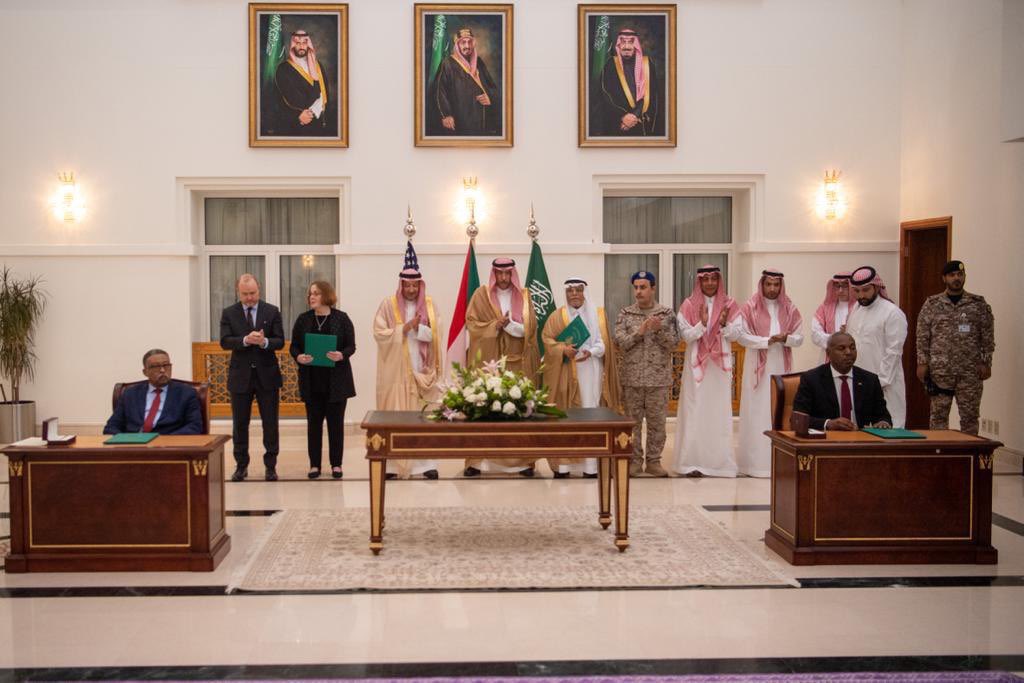
Despite the fact that negotiations between delegations of the Sudanese army and the RSF paramilitary group have been ongoing in the Saudi Arabian city of Jeddah since May 6, some Western media have been citing certain American diplomats as saying for several days that the Sudanese warring parties will soon ink a ceasefire agreement. Conversely, the text of the Jeddah statement does not mention a comprehensive truce.
Given the history of such talks and internal agreements in Sudan, the appearance of this agreement seems to be also similar to their last year agreement, which led to the current dispute in the African nation. The fresh agreement is also expected to pave the way for the second phase of the negotiations, which will again be possible with the mediation by Saudi Arabia and the United States. In addition to the issue, the news stories on an accord in Jeddah indicate other important points:
1- No reconciliation has been made over the disputed issues; so, the new agreement is just a move to create optimism concerning the decline of the internal and external process of the crisis in Sudan.
2- The warring parties in the negotiations put forward their own conditions for the cessation of hostilities based on the viewpoint that each of the sides has the upper hand in the Sudanese developments; however, the US and Saudi mediators halted the discussions and called on the parties to conclude a ceasefire agreement and open safe corridors to allow the dispatch of humanitarian aid. That means the settlement of the dispute in Sudan is also subject to wishes of Saudi Arabia and the United States, while other foreign rivals such as the United Arab Emirates (UAE), Egypt and so on, who have a say in the Sudanese developments, have been sidelined.
What are the conditions of the Sudanese warring parties?
According to statements issued by the Sudanese army officials, the army’s conditions for the cessation of hostilities with the Rapid Support Forces and the opening of safe corridors to dispatch humanitarian aid are as follows:
1- The withdrawal of the Rapid Support Forces from central districts and government buildings of the capital city of Khartoum, including the Khartoum Electricity Distribution Department, the Aljaili Petroleum Refinery as well as residential areas
2- The clearing of trenches and the removal of fronts created during the recent clashes
3- The gathering of the Rapid Support Forces at an agreed military base on the outskirts of Khartoum, which is agreed upon by the Sudanese Armed Forces. The RSF paramilitary group must remain at the military base until a decision is made on their integration into the official armed forces.
The commanders of the RSF paramilitary group also proposed their own conditions:
1- The payment of salaries of the personnel of the Rapid Support Forces by the Sudanese Ministry of Finance
2- The suspension of military flights by the Sudanese Armed Forces as well as the deployment of foreign observers to monitor the cessation of hostilities
3- The assurances for a safe exit route for the commanders and personnel of the Rapid Support Forces from Khartoum to a predetermined destination
4- The authorization to assemble all paramilitary forces, military equipment from the positions of the Rapid Support Forces even in areas where they were stationed before the onset of the recent confrontations
5- The permission for the deployment of the Rapid Support Forces in all positions that they control at present and the provision of medical services to the RSF injured personnel at hospitals
What is the framework of the Jeddah statement?
The delegates of the Sudanese Armed Forces as well as the Rapid Support Forces issued a joint statement dubbed “Jeddah Statement” on May 12 after six days of negotiations in the presence of representatives from the United States and Saudi Arabia.
In the Jeddah Statement, the Sudanese warring parties agreed upon guaranteeing safety of lives and properties of civilians, protecting civilian facilities, creating safe humanitarian routes as well as preserving sovereignty and integrity of Sudan. International organizations are also expected to monitor the implementation of the warring sides’ commitments by the use of satellites, field reports and news stories come from social media networks.
The Jeddah Statement does not mention a comprehensive end of hostilities; however, the American authorities called it a first step toward reaching a ceasefire agreement.
In general, the statement or agreement is not sufficient and effective to pave the ground for resolving the current crisis in Sudan because of the lack of an all-inclusive truce and assessing the implementation of the parties’ conditions as well as the precise monitoring of the warring side’s commitments.
In 28 days of civil war in Sudan, more than 500 people lost their lives and 3,000 others were injured, while tens of thousands were also displaced and foreign countries evacuated their nationals and diplomats from the African country.
The mentioned issues along with Sudan’s economic and political woes indicate a looming crisis that will not be simply resolved even with the complete cessation of hostilities and the formation of an all-inclusive government.
Twenty-one days after the military clashes erupted in Sudan, the power struggle between the Sudanese Armed Forces and the Rapid Support Forces (RSF) continues in Khartoum and other cities in the African state.
Since the onset of the conflict, ceasefire agreements brokered by the United States and Saudi Arabia have been unstable and have not been respected by either party.
At present, the Saudi kingdom and the US are resorting to mediation efforts in a bid to direct negotiations on a stable ceasefire and dispatching humanitarian aid to the Sudanese people; so, the first round of such negotiations was held on May 6, in Jeddah port city on the Red Sea.
National Security Advisor to the President of the United States Jake Sullivan has also traveled to Saudi Arabia since Friday and has welcomed the negotiations between the Sudanese warring sides in a joint statement with the Saudi officials.
Many foreign nationals and diplomats left the war-torn country.
The living conditions of the Sudanese people have been reported to be dire and most government agencies have become a battleground between the army and the paramilitary forces. The Sudanese people hardly have access to food, water, medicine and fuel.
Communication services have also been fully cut off as a result of power outages and generator failures.
The United Nations Children’s Agency (UNICEF) and other human rights organizations of the international body warned against the massacre of civilians. And the US and some European states called for an urgent meeting of the Human Rights Council (HRC) to review the situation in Sudan.
Recent conflicts in Sudan have occurred as a result of power struggles and disagreements between the Sudanese Armed Forces led by General Abdel Fattah al-Burhan and the Rapid Support Forces led by Mohamed Hamdan Dagalo, also known as Hemeti or Hemedti.
During the 2019 coup, the Sudanese Armed Forces toppled the country’s then leader Omar al-Bashir, and Abdallah Hamdok was chosen as the prime minister of the transitional government for three years.
Additionally, a transitional council was also formed, consisting of 11 military and political figures (along with the army), with one seat left empty due to the absence of a representative from eastern Sudan.
The transitional government of Hamdok was formed in August 2019 with the participation of the army and the political coalition of the Forces Freedom and Change (FFC), but it faced a new military coup in October 2021. Despite the detention of members of the Hamdok government, he continued as prime minister until January 2, 2022, and was succeeded by Osman Hussein as the interim prime minister. The second coup and its aftermath were faced with protests by supporters of the transitional government and political parties, but there was no progress until political and military groups in Sudan agreed to a 24-month transitional period under the leadership of the senior army commanders on December 5, 2022.
However, the process also faced another power struggle and conflict between Hemeti and Burhan, and the fate of Sudan is still subject to changes.
Who is Mohamed Hamdan Dagalo (Hemedti)? How were the Rapid Support Forces formed?
General Mohamed Hamdan Dagalo is one of the powerful individuals of the Rizeigat tribe in the Darfur region of Sudan, who was appointed as the commander of the forces in 2010, which were formed from a group of armed tribal allies with Omar al-Bashir.
The forces were initially made up of Janjaweed fighters, a Sudanese Arab militia group, and did not have a structured organization, and their organization was resembling a paramilitary group.
However, in the following years with the help of Omar al-Bashir’s government, they developed and became a regular force under the command of Hemeti. The Rapid Support Forces played an important role in the April 2019 coup and the overthrow of the Omar al-Bashir’s government; then, the RSF commander Hemeti was appointed as the Deputy Chairman of the Transitional Military Council.
Hemeti collaborated with General Abdel Fattah al-Burhan in the 2021 coup against the government of Abdullah Hamdok, but after a while he opposed General Burhan and ultimately rejected the results of an agreement between civil groups and the military governing council to resolve the political crisis in Sudan on December 5, 2022, especially regarding the integration of the Rapid Support Forces into the Sudanese armed forces; thus, he engaged in conflict and tension with the Sudanese Armed Forces from April 15, 2023.
Who is Abdel Fattah al-Burhan?
Abdel Fattah Abdel Rahman al-Burhan is one of the senior generals of the Sudanese Armed Forces, who was appointed as the commander-in-chief of the army in February 2018. He previously held the positions of inspector general of the Sudanese Armed Forces and the Deputy Chief of Staff of the Ground Forces Operations.
General al-Burhan came to this position and also became the head of the Transitional Military Council following the coup against Omar al-Bashir’s government in 2019, led by Ahmed Awad Ibn Auf, the former Commander-in-Chief of the Sudanese Armed Forces.
With the cooperation of General Hamidti, he ousted the interim government led by Abdullah Hamdok and removed members of the Sudan’s Transitional Sovereignty Council in 2021, forming a new council with other members. Al-Burhan’s unilateral and self-oriented actions led to conflicts with Hamidti and ultimately triggered recent military clashes.
Current military situation in Sudan
According to the latest news stories from the confrontations in Sudan, most cities and military bases in the provinces of Western, Central, Southern, and Eastern Darfur are under the control of the Rapid Support Forces. Parts of the southern North Darfur and parts of the North and West Kordofan provinces are also under the influence of the Rapid Support Forces.
In capital Khartoum, the precise control lines of each side are unclear due to the ongoing clashes. However, most of the northern areas of Khartoum, such as Al-Juraif, Darduk, Kafouri, Khartoum Bahri (North) and Omdurman are under the influence of the Rapid Support Forces.
The Sudanese army has also been successful in consolidating its positions in the east and north of the Arab country, and the movements of the Rapid Support Forces have been limited to scattered clashes and harassment attacks. Army bases in the cities of Al-Fashir, Al-Obaid, Al-Junaynah and Merowe have been preserved; therefore, the two warring sides continue the ongoing clashes in these cities.
In the eastern parts of Sudan, after the occupation of the cities of Kassala, Al-Qadarif, and Port Sudan on April 16, 2023, the Sudanese Armed Forces succeeded in fully stabilizing the situation and the Rapid Support Forces did not have any further advances in the eastern areas of the war-stricken country.
Early on Tuesday after the end of the ninth day of clashes in Sudan, Blinken declared that the heads of the Sudanese Armed Forces and the Rapid Support Forces (RSF) have agreed to establish a three-day-long truce. The US official also warned against the presence of the militants of the Wagner Private Military Company as well as Head of the Wagner Group Yevgeny Prigozhin in Sudan.
Prigozhin has recently written an open letter, expressing his readiness to broker a consensus between the two Sudanese groups to establish a ceasefire. The Russian influential figure mentioned: I am Yevgeny Prigozhin. I stayed for a long time in Sudan and I had connections with all decision-makers in the country. The United Nations and many other parties want to spill the blood of the Sudanese people and I personally wish peace for the nation. Now what is taking place in Sudan is not what we trained the Sudanese for taking arms, because we trained them to defend their border areas in the face of enemies.
The three-day-long ceasefire in Sudan has been established with the mediation of the United States in a situation that the country is facing growing crisis and different countries started withdrawing their diplomats and citizens from the African country.
Ben Wallace, Secretary of State for Defence of the United Kingdom, said that the military operation of evacuating diplomatic staff and foreign nationals from capital Khartoum was carried out in a vast cooperation among 1,200 military forces from Britain and other allied states. Sky News quoted local sources as saying that the UK army dispatched a group of its military forces to a port in eastern Sudan with the use of a large military transport aircraft Boeing C-17 in order to conduct reconnaissance and evacuation mission of the British nationals.
The immediate evacuation of foreign nationals from Sudan indicates the dire situation in the country and it seems that the African nation would experience more painful developments in the coming days.
Evacuation of foreign citizens from Khartoum airport and eastern ports of Sudan
Even though that the truce has been established in Sudan, the confrontation is still ravaging in Khartoum and certain points in the country. The Sudanese Armed Forces’ fighter jets pounded positions of the Rapid Support Forces in several areas such as Al-Jarief, Kafouri, Khartoum Bahri (Khartoum North) and Al-Maouna road in northern districts of the capital city on Monday. The Sudanese Armed Forces also claimed that they succeeded in mopping up the RSF paramilitary group in Al Abyad city in southern Sudan.
In western Sudan, heavy clashes kicked off in Al Junaynah, a city in the West Darfur province, but there has not been reported any special advances of the warring sides.
Furthermore, a diplomat, who was the administrative attaché at the embassy of Egypt, was killed in Khartoum during the last day conflicts. Egypt’s Foreign Ministry and the Sudanese Armed Forces issued statements to confirm the death of the Egyptian diplomat. The Sudanese Armed Forces claimed in its initial declaration that the Egyptian diplomat was a military advisor, but it apologized in its second account for the mistake and announced that the diplomat was an administrative attaché, who was killed in a raid by the Rapid Support Forces.
Over the last 11 days, Sudan turned into the scene of bloody clashes between the Commander of the Rapid Support Forces paramilitary group Mohamed Hamdan Dagalo, generally referred to as Hemetti and the Sudanese Armed Forces supervised by General Abdel Fattah Abdelrahman al-Burhan. The climax of the civil war happened in Khartoum, Al Fashir, Al Junaynah and Merowe, which still continues.