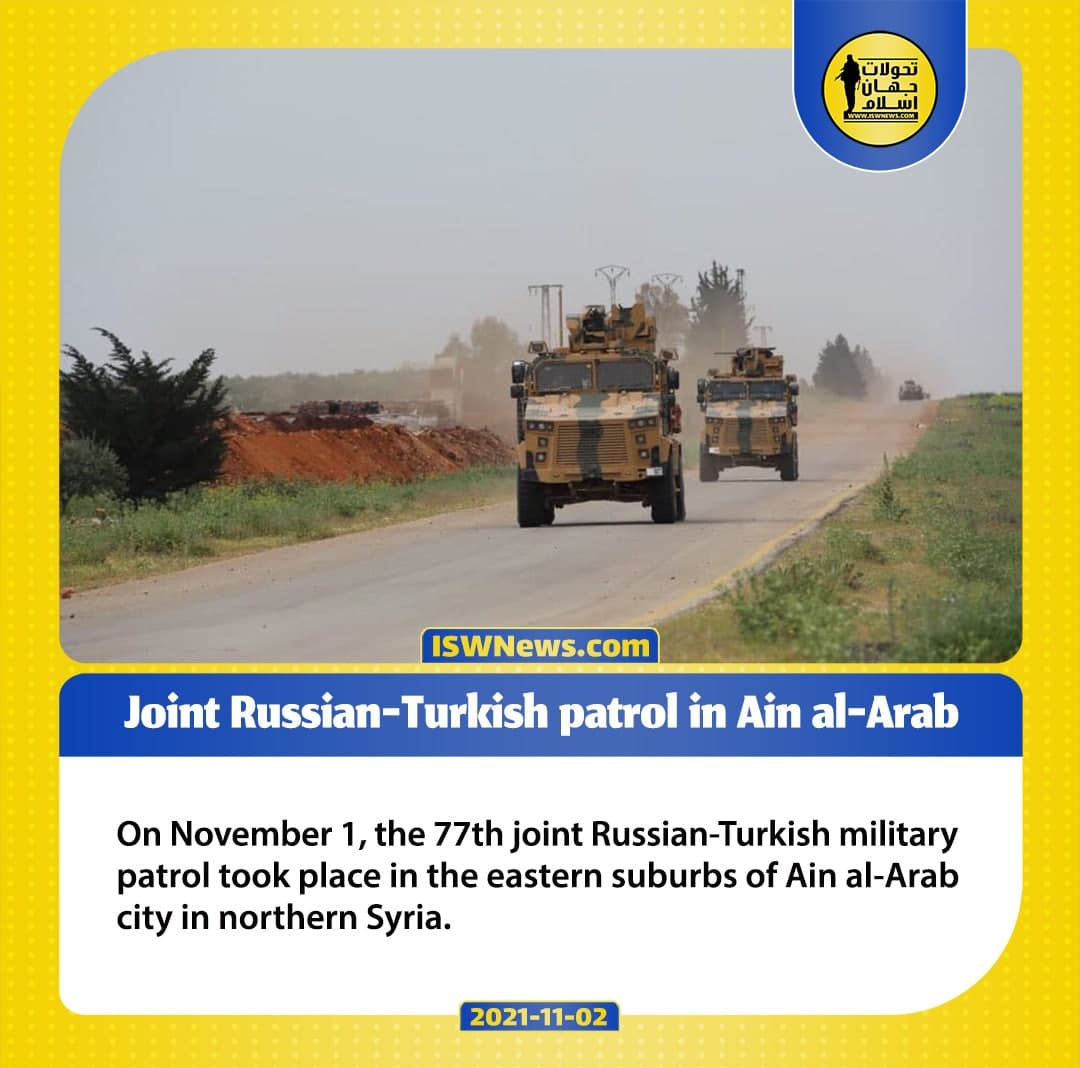
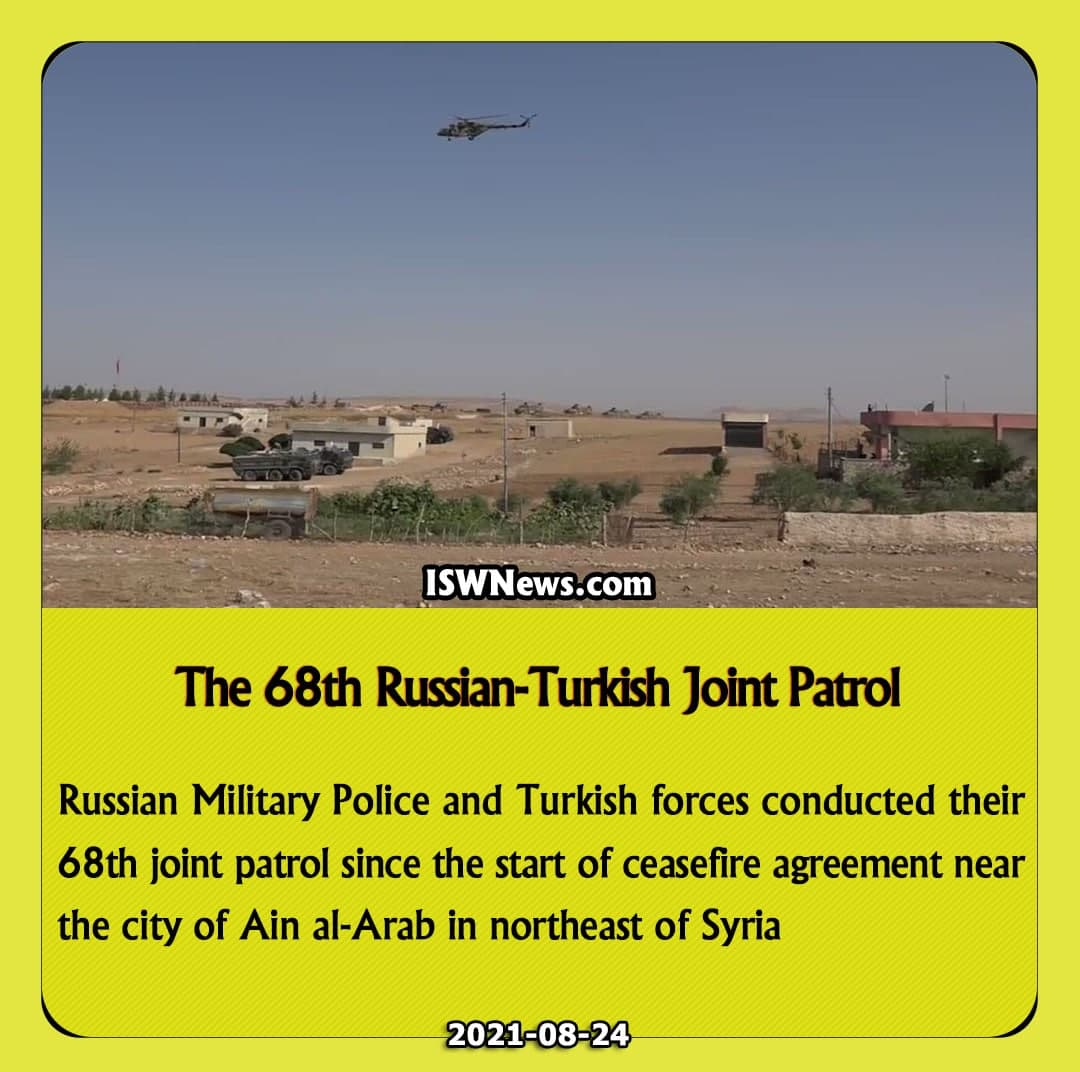
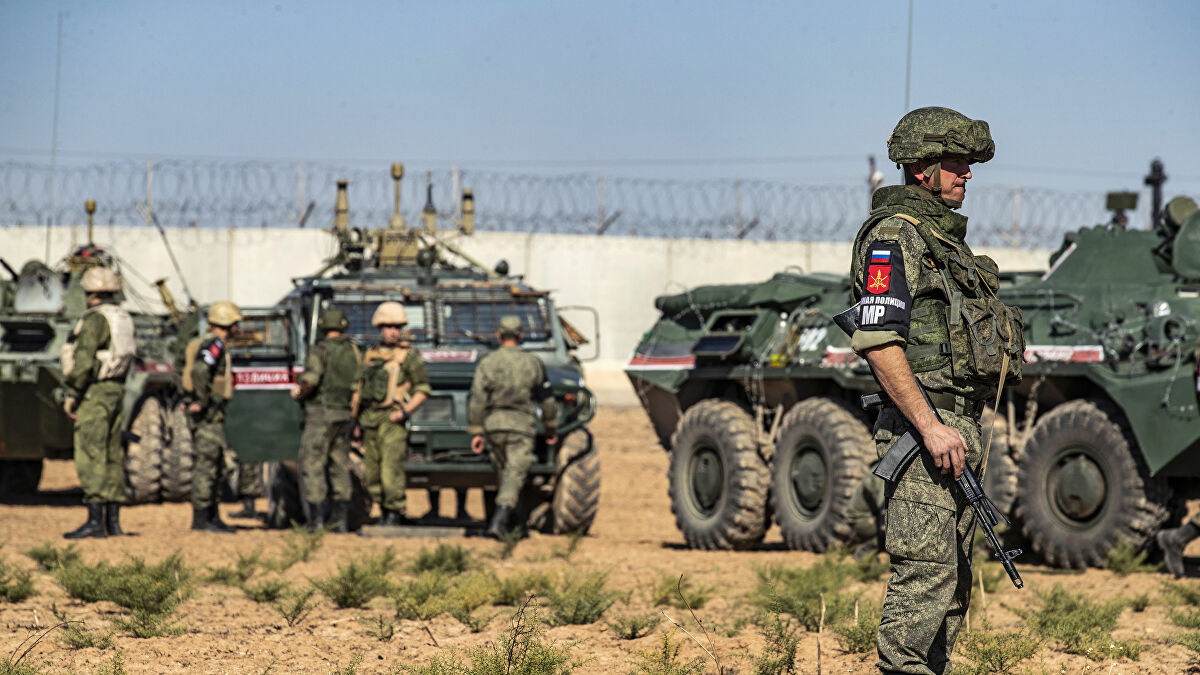
The convoy, consisting of eight Russian and Turkish military vehicles, began patrolling the village of Gharib, 15 km east of Ain al-Arab (Kobani), escorted by two Russian helicopters.
On October 25, the Russian military police canceled a joint patrol with the Turkish military due to protests of residents of the city of Ain al-Arab because of Turkish airstrikes on the city and Russia’s non-compliance with its obligations to maintain security and protection of the city of Ain al-Arab. .
The last (seventy-sixth) joint Turkish-Russian military patrol also took place on October 18 in the eastern suburbs of Ain al-Arab.
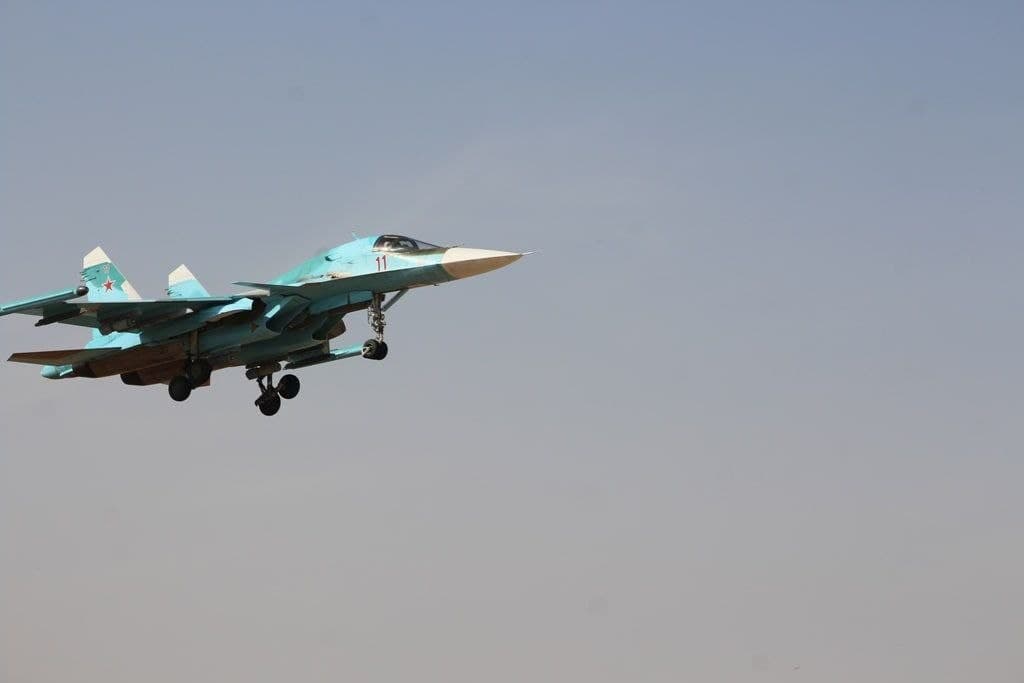
On October 31, 12 Su-34 bombers and 5 Su-35 multirole fighters, which have been stationed in Qamishli airport, conducted air raids on pre-assigned targets. 12 Mi-8 and 5 Ka-52 helicopters also stationed in Sarin area. Sarin was occupied by Americans before and was one of US largest bases in Syria which was used for logistics for American coalition due to its long runway.
Syrian air defense also drilled to confront enemy drones.
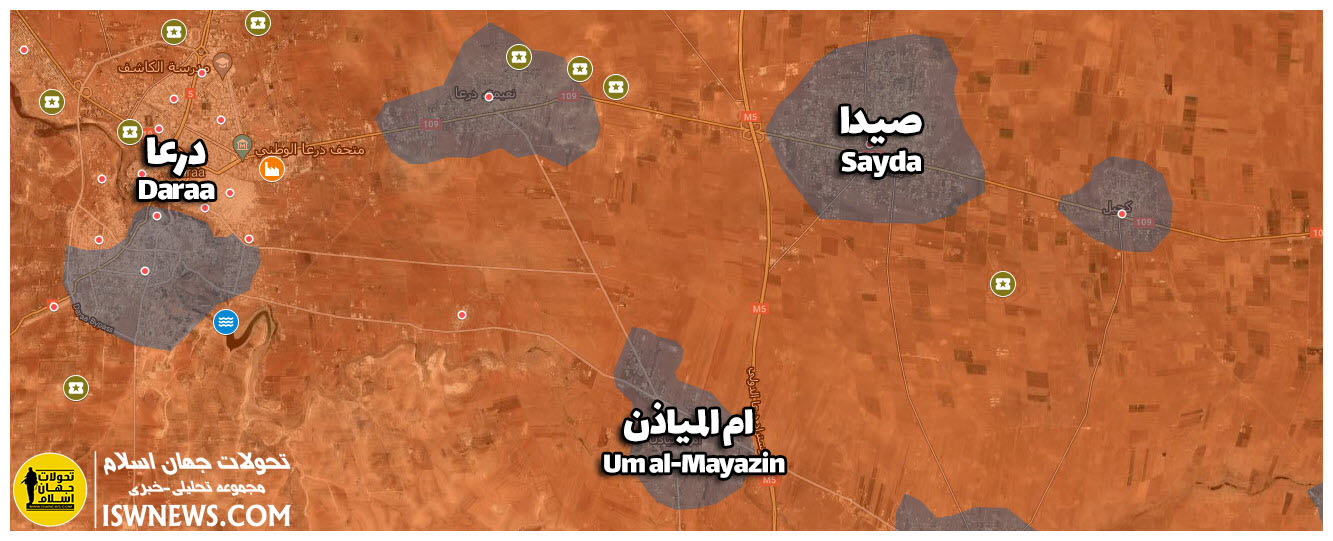
Due to the opposition of some militants to the national reconciliation plan, it is likely that the number of attacks against Russian and Syrian patrols and convoys in Daraa province will increase. Earlier, a number of militants declared that “those who join the reconciliation plan are traitors and deserve punishment and we continue operations against Syrian and Russian troops in Daraa province.”
Russian warplanes attacks on ISIS positions and hideouts in the Syrian desert began on Sunday, October 17th. In the last 48 hours, 55 airstrikes have been carried out against ISIS, killing at least 15 ISIS terrorists.
The ground operations of the Syrian army and its allies with the air support of Russian and Syrian aircraft continue in the Syrian desert against the ISIS cells. These efforts made while the ISIS activities such as IED attacks and surprise attacks on the SAA positions and other types of hostile actions continue in the area.
In recent days, Russian air operations in the eastern deserts of Syria in the provinces of Homs, Deir Ezzor and southern al-Raqqa have increased dramatically. According to the latest field information, at least 20 ISIS members have been killed and many more wounded in more than 40 airstrikes in the past two days.
Most airstrikes are carried out in areas such as the deserts around Ithriya, al-Rasafah, al-Sukhnah and the deserts around the city of Tadmur, as well as the eastern deserts of Deir Ezzor against ISIS gatherings, positions and hideouts.
It is worth mentioning that so far, several clearing operations have been carried out by the Syrian army with the support of its allies in the desert areas of eastern Syria. Nevertheless, despite the efforts made, the threat of ISIS cells in the eastern deserts of Syria is still high, and we see attacks of ISIS against the personnel, armored vehicles and small posts of the Syrian army and the resistance forces in these areas on a weekly and monthly basis.
Of course, this issue is not limited to the areas controlled by the Syrian government south of the Euphrates River, and the northern areas of the Euphrates River, where it is under constant surveillance by US and SDF forces, are not free of ISIS threats and witness daily and weekly movements and operations.
In this regard, it seems that a special and long-term redesign and action plan is needed to clear the eastern deserts of Syria and to minimize ISIS activities in these areas; A plan to be implemented jointly by Iraqi and Syrian forces on both sides of the border.
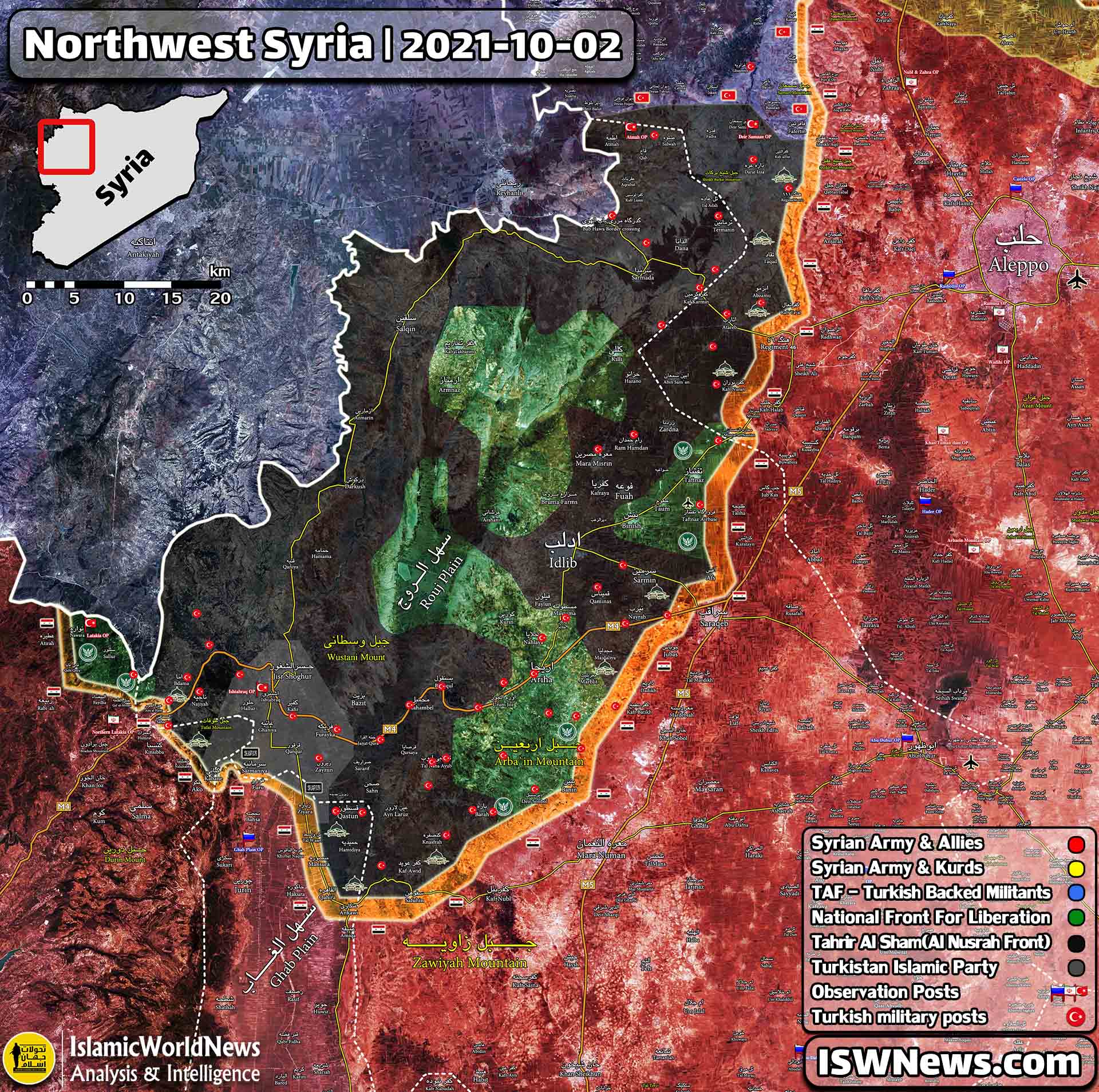
A few days before Russian President Vladimir Putin met with Turkish President Recep Tayyip Erdogan in the Russian port of Sochi, Russian warplanes in a purposeful act bombed positions of Turkish-backed forces near the Turkish military posts in the Idlib region.
The increase in Russian warplanes attacks on militant positions, and even near and around Turkish bases and checkpoints in Syria, is a clear warning to Turkey, and Ankara is well aware of this. Putin’s remarks during a meeting with Bashar al-Assad in the Kremlin show that Russia strongly opposes the continued presence of foreign forces in various parts of Syria, as well as the occupation of Idlib by militants. And this reinforces speculation about talks between Putin and Erdogan on the withdrawal of Turkish troops from Idlib and the cleansing of the province from the militants.
On the other hand, in the past 48 hours, two well-equipped convoys of the Turkish army, including 20 vehicles carrying cement blocks and logistics equipment, entered the Syrian province of Idlib through the Kafr Lusin crossing and headed towards the southern areas of Idlib and the Syrian army contact lines.
The differences between Russia and Turkey in the case of Idlib have caused the two sides to implement their plans and actions more quickly to put pressure on the other side. For this reason, it seems that the movements of different parties in the provinces of Idlib, Aleppo and Hama will increase more in the near future.
The Turkish army is currently stationed in four observation posts and more than 50 military posts in western Aleppo and the Idlib region. Strengthening and increasing the number of these military posts by Turkey has become a challenging issue in the Idlib region. This issue, along with the continued presence of terrorist groups in the region, has made the future of the situation in northwestern Syria even more ambiguous and has dashed hopes for an end to the war in this part of Syria.
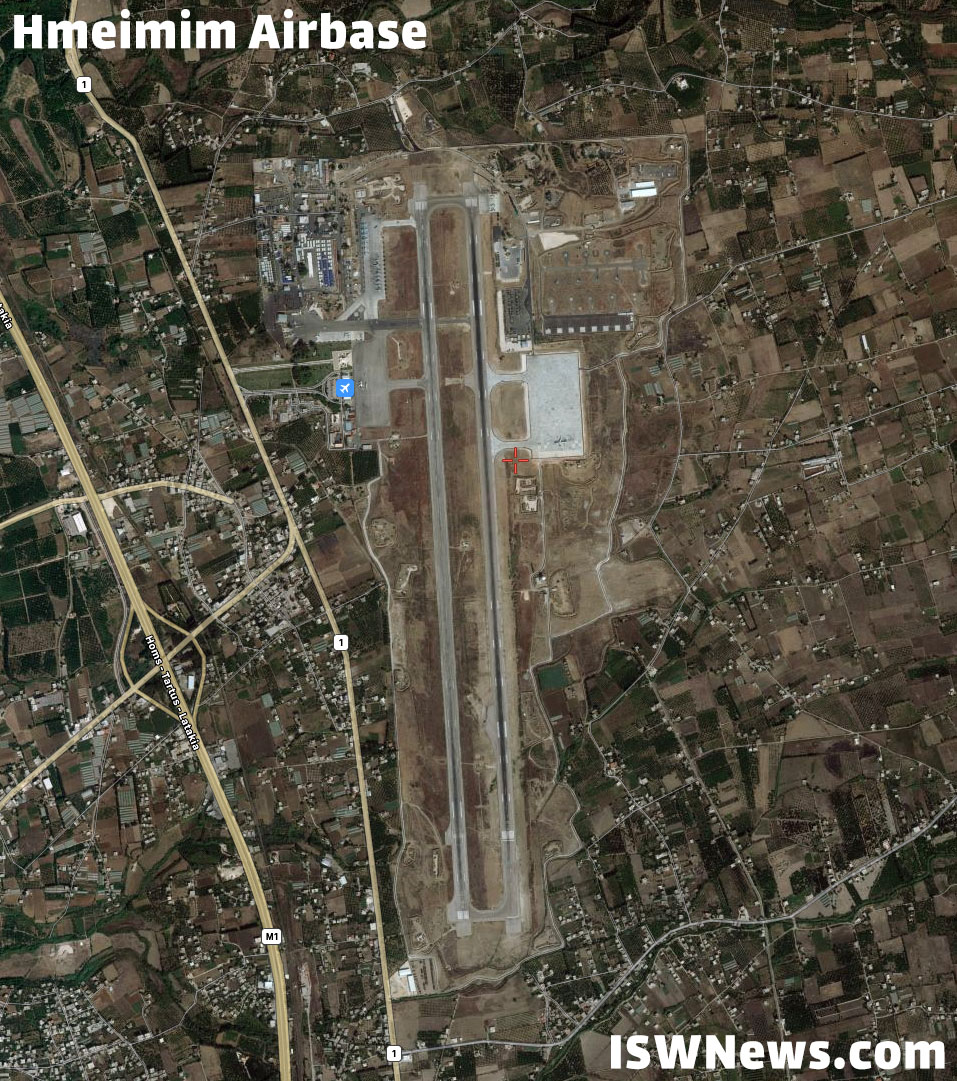
Following the reconstruction of the second runway at Hmeimim Air Base, the air base in Syria will be able to accept a variety of Russian military aircraft, including heavy aircraft. The surface and length of the runway of this base have been completely changed and new lighting and radio equipment has been installed. After completing the reconstruction of the new runway, for the first time, three Russian Tu-22M3 bombers were sent to the base and stationed there. The bombers are to be used in an exercise over the Mediterranean Sea.
Russia is using the base to provide air support to the Syrian army and its allies in the fight against terrorists and militants. According to available information, there are currently dozens of fighter jets and helicopters, two S300 and S400 defense systems and Pantsir missile system at the Hmeimim airbase in Latakia province.
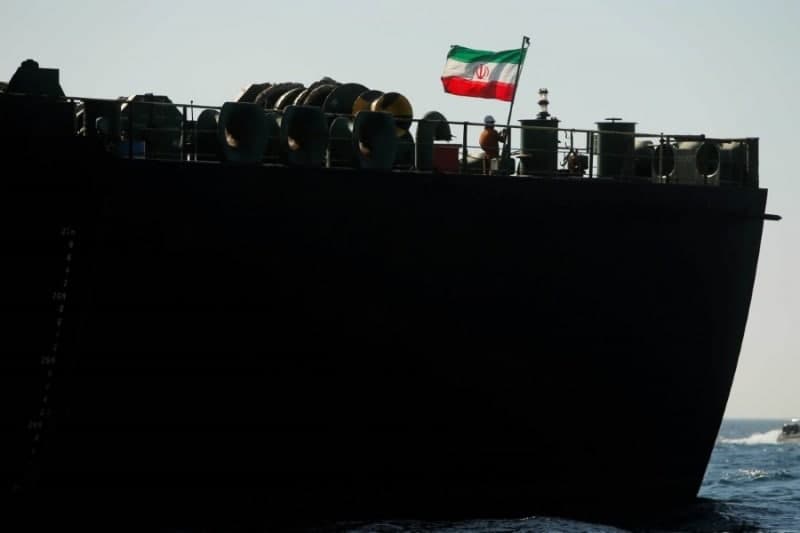
An agreement was reached after intensive meetings between Syrian, Russian and Iranian officials to establish a joint operations room to counter the maritime threats in the Mediterranean; according to which, the Russian fleet protects Iranian oil tankers as well as ships carrying Iranian food and raw materials to Syria.
Russian warships escort Iranian tankers after crossing the Suez Canal and entering Mediterranean waters, protecting them from any possible threat or attack until they reach Syrian territorial waters. Russian ships will continue their mission to protect Iranian ships at least until the end of this year.
This agreement shows that in the near future, we will see more Iranian oil tankers being sent to Syria and an increase in oil sales to Syria.
The agreement comes after the media and some Israeli officials reported in recent months that the Israeli army had attacked Iranian ships bound for Syrian ports in the Mediterranean.
Also, another major goal of this agreement is to counter the US sanctions against the Syrian people. Following the US and Western sanctions against Syria, known as the “Caesar Act”, various sectors of the Syrian economy are facing problems. The country is also experiencing a severe fuel crisis due to delays in the arrival of oil resources and problems in the oil industry. With the arrival of oil tankers, ships carrying Iranian food and raw materials to Syrian ports, the Syrian market will be largely relieved of the existing problems and its positive effects will be visible in the near future.
The Russian convoy consists of 55 military vehicles, 200 Russian military police, electronic equipment and jamming systems. The convoy entered the city of Tabqah, which is controlled by the Syrian Democratic Forces (SDF), and will soon move towards Syrian Army positions in the Ain Issa area.
Also on Monday, Russian forces sent reinforcements from their base in the city of Tal Tamar to the 93rd Brigade of the Syrian Army, located south of the town of Ain Issa.
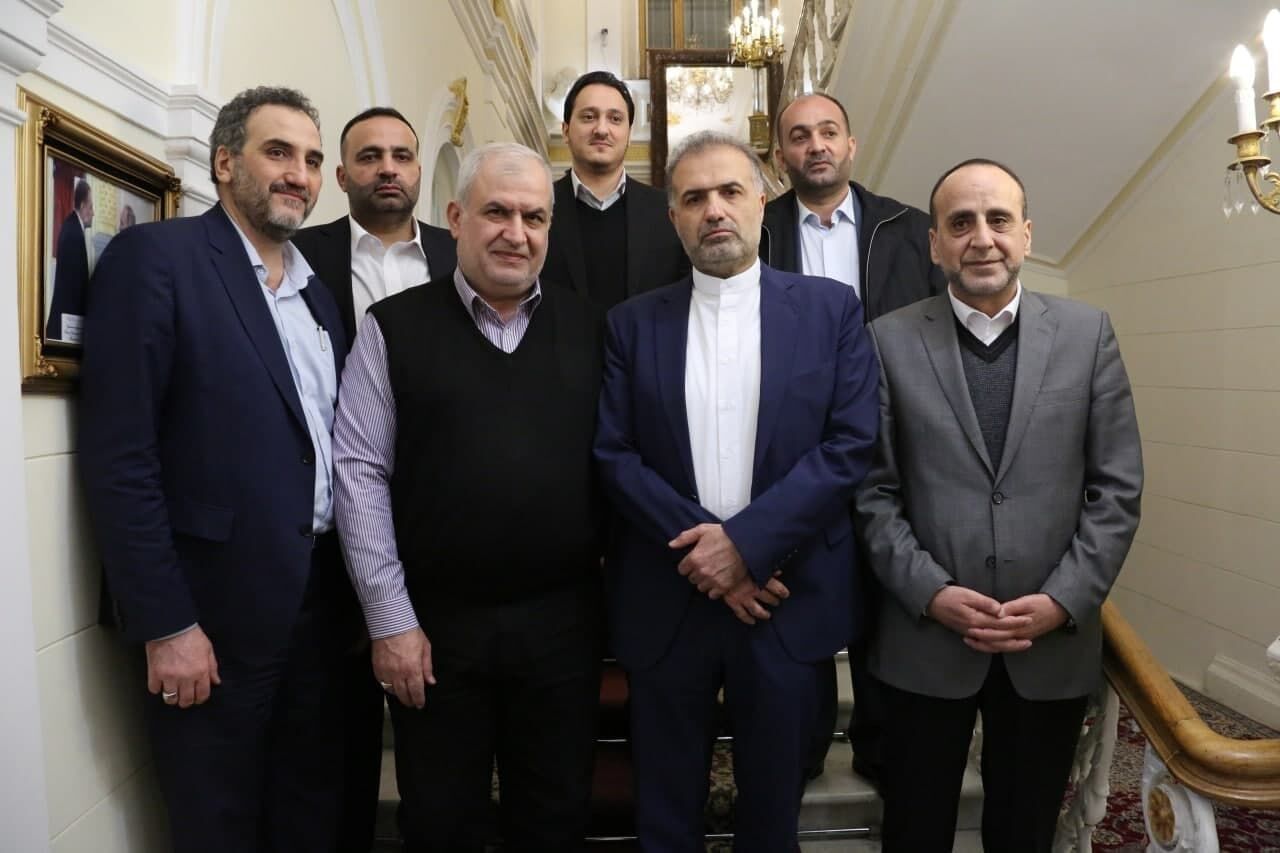
The committee met with Lebanese ambassador the first thing. This trip takes three days and the Hezbollah delegation is scheduled to meet with officials from the Russian Foreign Ministry, the Federal Council and the Russian Duma.
The committee met with Iranian ambassador and appreciated Islamic Republic helps and supports for Lebanese Resistance.
Hezbollah’s delegation to Russia includes Ammar Mousavi, Hezbollah’s head of Arab and international relations, his deputy, Ahmad Mohana, and Hezbollah media adviser Ahmad Haj Ali.
The main reason of inviting a committee of Hezbollah to Russia has not been stated but since both fight in the same front in Syria against terrorism and Russia’s stance against Zionist Regime violation of Lebanon’s air and maritime borders and political and financial crises in Lebanon, the key points can be talks over the regional incidents, lack of new government in Lebanon, Syria battle, preventing tension between Lebanon and Israel and expanding bilateral relations. In the meeting between the committee and Russia’s FM, Sergey Lavrov, forming the government in Lebanon, regional incidents and fighting terrorism were covered.
Hebrew papers Yedioth Ahronoth claimed that Gabi Ashkenazi, Zionist Regime FM, will meet Lavrov in Moscow on Tuesday.
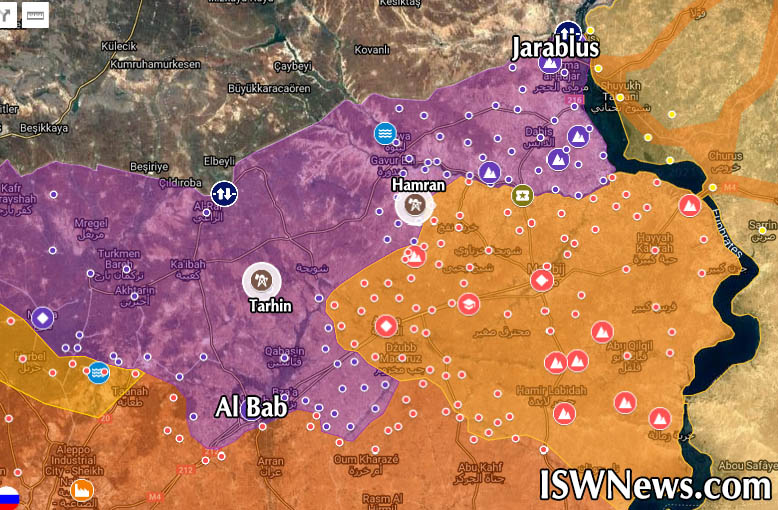
According to local sources, the Tarhin area, one of the main locations of illegal oil reservoirs and oil smuggling in the northern suburbs of Al-Bab, have targeted by three Russian ballistic missiles. The illegal oil reservoirs in the village of al-Hamran, northwest of Manbij, have also targeted by long-range missiles.
The pro-militant media have cited the Hamimim base as the source of the missiles, while others have said that they were fired from a Russian ship in the Mediterranean. According to unofficial sources, these missiles were of the Alexander type.
It should be noted that these areas is occupied by Turkish-backed militants.
On February 10, Russia fired several surface-to-surface missiles from the Hmeimim base in Latakia, targeting illegal oil reservoirs near the village of Tarhin, north of al-Bab.