Category: Image

  • Over 300 People Injured And Killed In Series Of Taliban Bombings Across Afghanistan

    Over 300 People Injured And Killed In Series Of Taliban Bombings Across Afghanistan

    The attacks took place in the following areas:

    • Paktia: 41 killed and 158 injured
    • Ghazni: 30 killed and 55 injured
    • Wardak:  2 killed and 2 injured
    • Jalalabad: 1 killed and 2 injured
    • Kabul: 1 killed and 5 injured

    Taliban-linked media outlets called the attack on Gardez city in Paktia province which resulted in the alleged death and injury of 200 Afghan soldiers and civilians a warning to the US and foreign troops and the government.

    Translation by SouthFront

  • Israel’s Strategic Ambitions Thwarted in Iraqi Kurdistan and Will be in Syria’s Deir ez-Zor

    Israel’s Strategic Ambitions Thwarted in Iraqi Kurdistan and Will be in Syria’s Deir ez-Zor

    We live in extraordinary times. The narrative of the “fight against Islamic State” that holds sway in Western society comes from a fantasy land in which nothing is as it seems; these “certain truths” have as much reality as a rainbow, while reality is distorted or obscured behind it.
    Across the “credibility gulf” we may see everything as it is, but speak a different language; no-one over there in the Western bubble can understand what we say, or even recognise it as language. A declaration that should shock this complacent and self-possessed “civilised world” to the core – that the US is fighting with the Islamic State – simply cannot be understood or accepted, regardless of evidence.

    Since the coordinated operation by Al Qaeda groups in Idlib attempted to kidnap a group of Russian military police on September 17th, it has become evident that the US military really is actively supporting and coordinating with terrorists fighting the Syrian Government. Following further attacks, including particularly the assassination of Lieutenant General Valery Asapov in Deir ez-Zor, Russia now evidently has no remaining doubts about the US “fight against ISIS”; there is no such fight.

    So now we are faced with an intolerable paradox. The US and its coalition partners in Syria are actively engaged in lethal attacks on the Syrian army and its allies within sovereign Syrian territory, both directly and in cooperation with ISIS. At the same time these Western countries’ sole stated pretext for entering Syrian territory without UN authorisation has been to fight ISIS terrorists, while the threat of Wahhabi terrorist attacks at home has been ruthlessly exploited to gain support for these foreign military actions from their domestic audiences.

    Not that this apparent US collaboration with ISIS and Al Qaeda in Syria is anything new, but long-held suspicions – now confirmed – constitute a substantial body of evidence. Events such as the transit of ISIS convoys across the Syrian desert without interference from US coalition planes, or the free pass for the tanker-pipeline taking ISIS Oil out through Turkey can also now be seen as acts of facilitation rather than merely a failure to act.

    But nothing now constitutes clearer proof of collusion than the direct and lethal attack on the Syrian Army outpost protecting Deir ez-Zor airport from ISIS fighters, conducted by both US and Australian planes. This attack of September 17th 2016 has now been revealed as a key part of the US coalition plan, as it is fought out in this same area a year later. What is more, with the strangely coincident events over the border in Iraq, where the plan by the Kurdistan Regional Government to sequester the Kirkuk oilfields out of Baghdad’s control has just been thwarted, another player in the game has come into view – Israel.

    It is almost as if Israel has finally broken, and can no longer contain itself at the sight of its own project for Syria going adrift. And it seems as though the “Kurdistan Project” was a central part of this. Following the Kurdish referendum – which even the US purported to oppose – Israel was the first to voice solidarity with this new “democratic state” in the making, that was presented as sharing its values. Notwithstanding that the ethnically-defined Kurdistan can like Israel only pretend to be democratic.

    Israel’s championing of Kurdistan as the most Western-friendly entity in the region can however be seen chiefly as opportunist, and related to its desire to obstruct Iran’s economic and cultural influence. It also betrays the considerable investment made by Israel into the development of Iraqi Kurdistan, dating back to before the first [Persian] Gulf war. While the original plan to bring oil from Kirkuk via pipeline directly to Israel was thwarted, Israel’s strong presence in Erbil, as well as its close involvement in the handling of Syrian oil stolen by ISIS and exported via Turkey has served the same purpose.

    Allegations that Israel was ‘laundering’ ISIS oil, with the profits being returned as weapons and ammunition for the terrorist Caliphate, were made at the time that Russia bombed the guts out of the IS oil tanker convoys. Natural scepticism that this accusation was just Israel bashing now look too cautious, and instead provide additional evidence of Israel’s criminal involvement and deceptions over the war on Syria.

    But something strange is operating here. So great is Israel’s influence on Western media and perceptions that it is those Western observers who are protesting Israel’s innocence of colluding with terrorist groups in Syria. They fail to notice that neither ISIS nor Al Qaeda never criticise Israel or threaten a campaign to “liberate” Al Quds from its Zionist occupation. Nor do they ever appear upset by Israel’s provision of medical care and sanctuary for terrorists escaping the Syrian Army.

    Even when Israeli leaders proclaim support for these Wahhani mercenaries, including the launching of missile strikes at Syrian army posts that threaten them, Israel is excused. In Western eyes Israel is always the victim.

    Well perhaps this is about to change, as it must. Last month Israeli jets fired missiles at a Syrian factory from Lebanese airspace, which they routinely violate. The vacuous claim that they were targeting a factory producing chemical weapons and missiles for Hezbollah was their justification for this act of war, which took place during major military exercises in Northern Israel. Syria was unable to respond to that provocation, but when Israeli jets flew into Lebanese airspace on the Syrian border on Monday, Syria fired missiles at the planes, forcing them to retreat.

    Proclaiming Israel’s right to self-defence – even when engaged in acts of armed aggression beyond its borders – Israeli jets subsequently bombed the Syrian defensive missile battery. As Netanyahu put it:

    “Today there was an attempt to harm our aircraft — this is unacceptable to us. The air force acted quickly and accurately to destroy what needed to be destroyed,” Netanyahu said.

    The timing is also clear – Russia’s Defence Minister Sergei Shoigu is visiting Israel this week. We would hope that Russia’s patience with Israel is wearing just as thin as it has with the US, and that the next time Israel pushes its luck with Syrian air defences it will be dodging Russia’s feared S400 missiles instead. Not only that of course – Israel’s excuse that it is targeting Iranian infiltration and weapons shipments to Hezbollah can no longer cut any slack with Russia, for whom Iran is now a major military and economic ally.

    The recent “intemperate remarks” about the Iranian Nuclear deal by Donald Trump, echoed immediately by Netanyahu only strengthen these ties; who could not gasp at those delusionary claims from two of the world’s most dangerous nuclear weapons states, whose only real concern is that their stranglehold on global power with the threat of nuclear annihilation might be weakened?

    Well at least Iran is under no misconceptions. As reported by the Guardian – “Ali Akbar Velayati, a senior foreign policy adviser to the Iranian supreme leader, praised the Iraqi army’s move to capture Kirkuk, framing it as a blow to Israel’s strategic ambitions.

    “With the defeat of the Kurds in Kirkuk, Barzani’s conspiracy against the region’s security was foiled. Barzani’s aim and Israel’s covert aim were to seize Kirkuk’s oilfields to serve the Israeli interest. In the Kurdistan region, they raise the flag of Israel and this means if Kurds gain independence in Iraq, we will share a border with Israel,” Velayati said, according to the IRGC-affiliated Tasnim news.

    News that the Iraqi army has retaken control of both Kirkuk and Sinjar and their oil resources, on behalf of all the Iraqi people, is welcome indeed – except in Tel Aviv. We await similar news from Deir ez-Zor.

    Source
  • Summary: Operation of the Federal Government of Iraq in disputed areas with the Iraqi Kurdistan Region

    Summary: Operation of the Federal Government of Iraq in disputed areas with the Iraqi Kurdistan Region

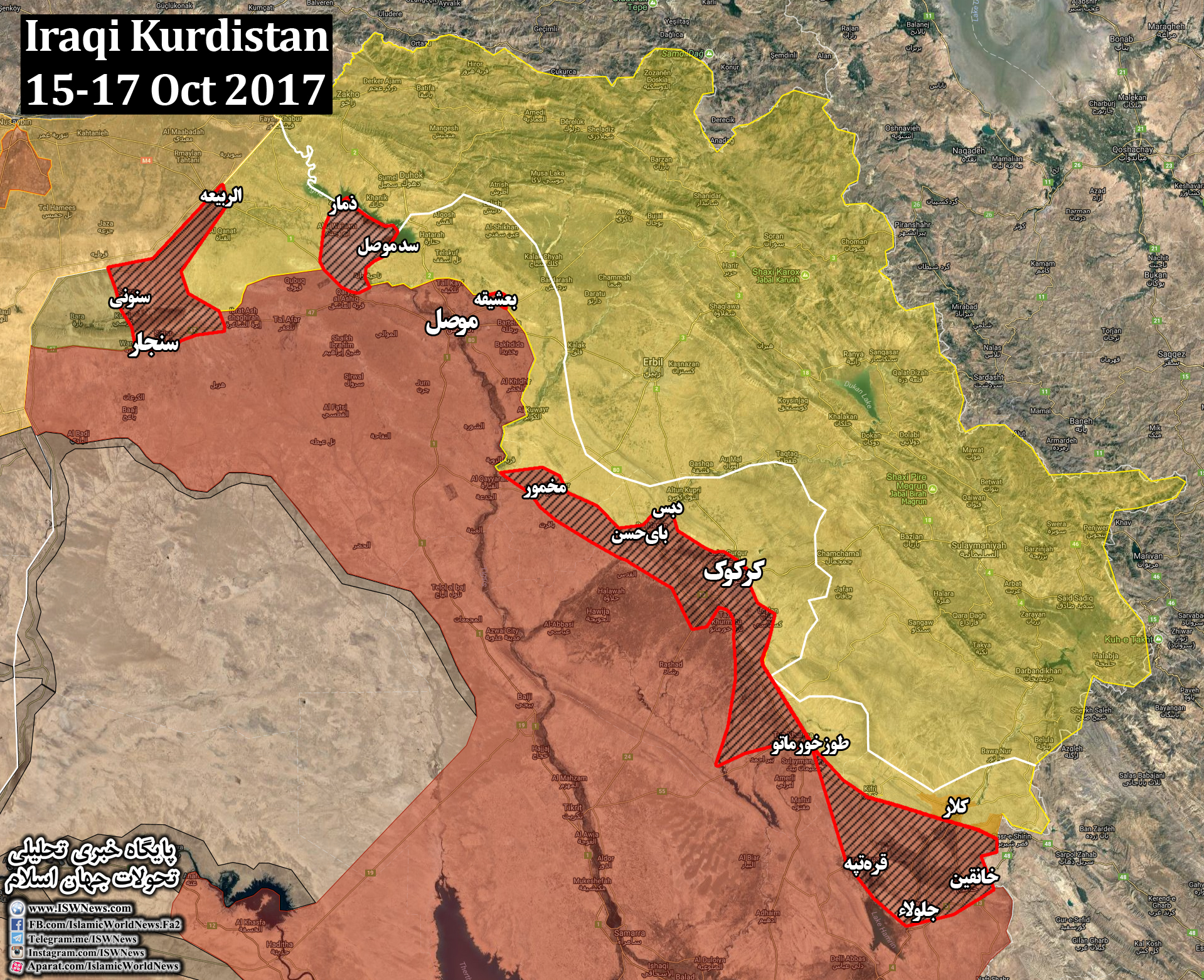
    In the first stage, anti-terrorism forces succeeded in entering and dominating in the general area of ​​the city of Kirkuk following the dispersal conflicts with the Peshmerga and PKK forces. On the same day, other federal police forces managed to dominate the North Oil Refinery.

    The results of the first day are these : the domination of the central government on the city of Kirkuk as well as the oil wells and oil facilities of the region.

    On the second day of the operation, the withdrawal of various forces from various Kurdish parties was obvious. The forces succeeded in domination over the various regions on five axes.

    First axis: Diyala province

    In this axis, the forces managed to dominate the cities of Jalola, Khanaqin and Qarat-Tepa. The Khosrawi border crossing was also controlled by Iraqi central government forces.

    Second axis: Kirkuk province

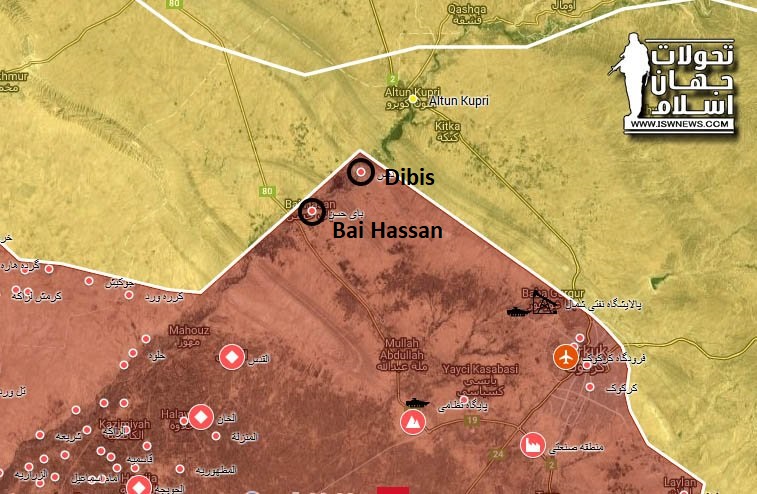
    In this axis, the forces managed to advance towards the important village of Bai Hassan and Debs. The importance of this village is located on the shore of the Zab River, as well as facilities and oil wells around the area.

    Third axis: Nineveh province, Mosul area

    In this axis, the forces succeeded in dominating the city of Ba`shiqah. The news of the troops’ arrival to Tel Oskof and Betnai is not confirmed.

    Fourth axis: Nineveh Province, Sinjar area

    In this axis, due to the large presence of PKK forces, the forces succeeded in dominating the city of Sinjar and part of its northern mountains, in order to control the important village of Senoni and the central al-Rabi`ah borderway . In this axis, the cooperation between the Izadi(Yazidi) forces and the central government of Iraq was very close and friendly.

    Fifth axis: Ninewa province, Mosul dam area

    In this axis, the Iraqi Army’s 16th Army Corps managed to control the Mosul Dam, the strategic city of Dhamar and  Aski village.

    Now with the withdrawal of various Kurdish forces has spread across the south of Diyala to the north of Sinjar, it must be seen that the forces under the Barzani control(KDP), will accuse PUK(Patriotic Union of Kurdistan) as a traitors! Or just the withdrawal of PUK forces was betrayal,and the retreat of the KDP forces was their tactics to prevent conflict and bloodshed!?


    HD MAP

  • PMU Leaders, Army Commanders Discuss Upcoming Anti-ISIS Operation At Syrian-Iraqi Border

    PMU Leaders, Army Commanders Discuss Upcoming Anti-ISIS Operation At Syrian-Iraqi Border

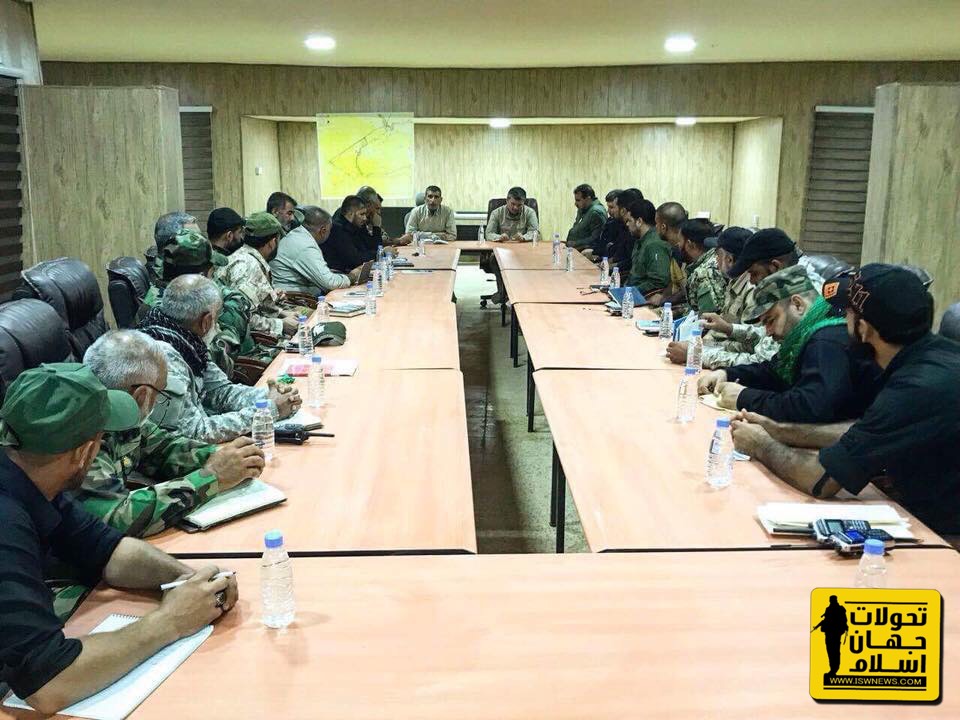
    The sides discussed the necessary coordination for the upcoming operation to liberate the Iraqi cities of Al-Qa’im and Rawa still remaining under ISIS control.

    Abu Mahdi al-Muhandis a head of the PMU military operations also visited region few days ago.

    Meanwhile, the Iraqi Air Force has already launched a bombing campaign against ISIS in the border area with Syria.

    If the army and the PMU launches a military operation to retake al-Qaim and Rawa from ISIS, the Syrain Arab Army (SAA) and its allies will gain additional options to combat ISIS on another side of the border.

    Translation by SouthFront

  • Latest map update of Deir Ezzor battle

    Latest map update of Deir Ezzor battle

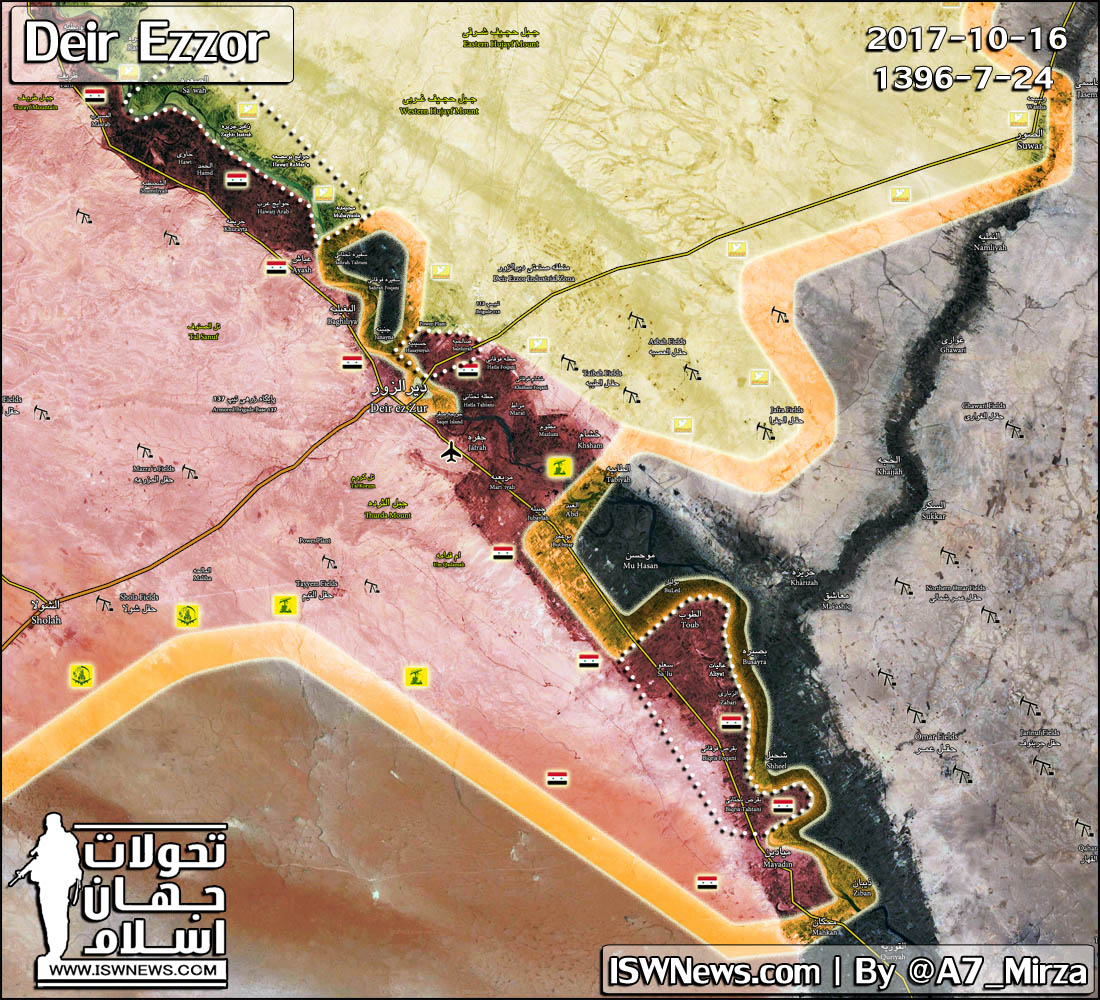
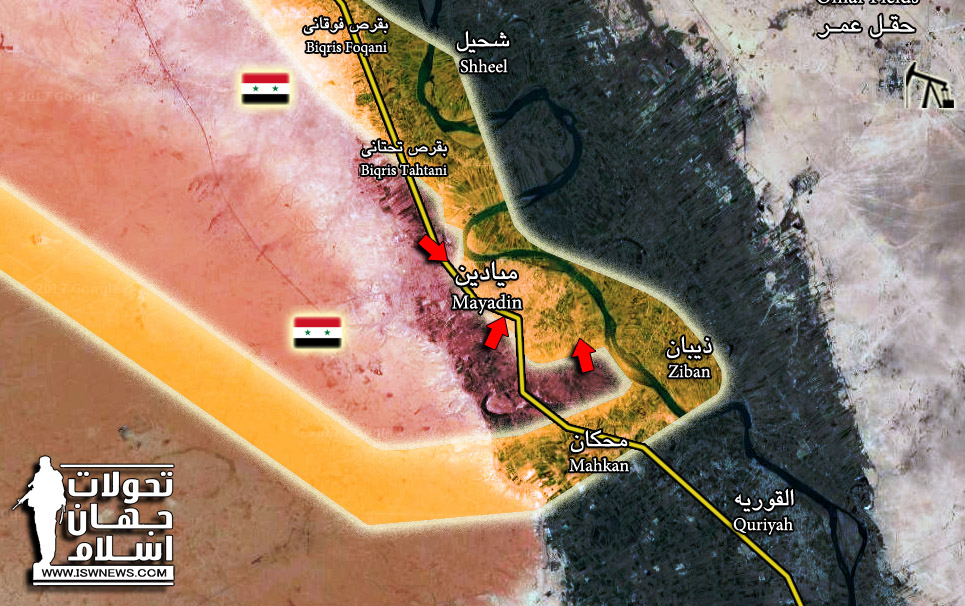
    Led by the Tiger Forces, the Syrian Arab Army (SAA) continued their advance around Al-Mayadeen in a bid to clear the remaining Islamic State pockets in the area.

    As a result of this attack, the Syrian Arab Army was able to liberate at least six villages near Al-Mayadeen, clearing a path along the strategic Mayadeen-Deir Ezzor Highway.

    While the highway is not yet open, the Syrian Arab Army should have it completely cleared of the Islamic State in the coming weeks, as they continue operations near Al-Mayadeen.
    HD MAP

     Text provided by AlMasdar
  • ISIS Attacked Iraqi Forces Restoring Government Control Over Areas In Kirkuk Countryside

    ISIS Attacked Iraqi Forces Restoring Government Control Over Areas In Kirkuk Countryside

    Dibis and Bai Hassan are the important villages located on the contact line between the Kurdish-held areas controlled by the Patriotic Union of Kurdistan (PUK) and Barzani’s Kurdish Democratic Party (KDP).

    The PUK allegedly cooperated with the Iraqi government during government forces operation in Kirkuk area allowing army troops to enter the city.

    The Zab River is the common border between the KDP-held and PUK-held regions. Especially Bai Hassan which is located on the Kirkuk-Erbil road and near the Kirkuk oil pipeline.

    On October 17, Iraqi troops repelled the ISIS attack and restored control over Dibis.

    Now, government forces area further developing momentum in the area in the direction of the administrative border of the Iraqi Kurdistan Region.
    Translation By SF

  • Everything you need to know about the future of Turkey’s operations in the Idlib province of Syria + Map

    Everything you need to know about the future of Turkey’s operations in the Idlib province of Syria + Map

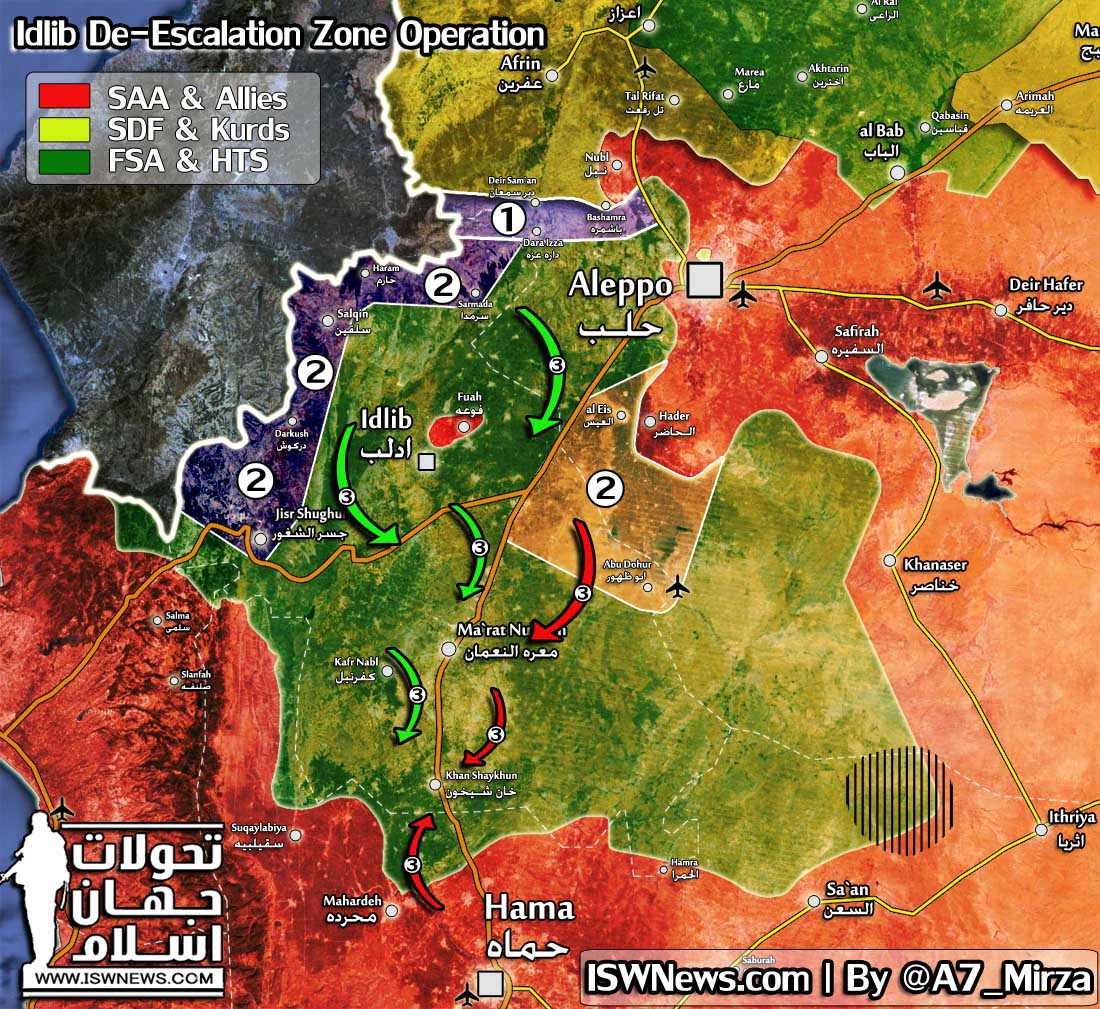
    After announcing the start of the operation in Idlib province by Erdogan on October 7th and executing another part of the Astana agreement known as “De-Escalation Zone Deal” , till now about 200 military equipment including military vehicles and personnel along with the Turkish army entered the province of Idlib.

    Turkey’s entry into the province of Idlib within the framework of the Astana peace agreement can be investigated.

    Apart from mentioned objectives of entering the province of Idlib by the Turkey, in the first phase, this event is included of the presence of Turkish troops in western side of Aleppo province along the Darat Izza, Jabal Sheikh Barakat, Dir al-Sam’an and the frontlines between militants(Such as FSA, HTS, etc) and the Kurds(SDF, YPG, etc) throughout the southern front of Afrin, from Bashamrah to Jandris.

    It should be noted that the Turkish troops will not cross the contact line of Afrin and by being in these areas, they will play as a buffer zone.

    In the second phase, Turkish troops will across border between Syria and Turkey. Therefore, Turkish troops will be deployed in areas of Darah Izza, Harim, Sarmada, Darkush, Atmah to Jasr al-Shughur.

    The purpose of this move is to close all militants`s supplying routes (weapons and personnel) from Turkey to Syria and vice versa.

    So far, there will not be any serious tension certainly.

    According to what our field & trusted sources have indicated that the Turkish and their militants (like Euphrates Shield, etc) will move from north and west towards the Aleppo-Hama highway, and on the other hand, the Syrian army and Resistance forces will move from the south of Aleppo and the Abu Dhohour area to the Aleppo-Hama highway.

    The final goal is to open the Aleppo-Hamah highway.

    In the next stage and third phase Turkish troops or Turkish backed forces will be distributed in areas along the highways like Saraqeb, Khan Sheikhun, Ariha, Murek, and they will enter the northern suburbs of Hamah from the north.

    From the southern side, the Syrian Army and Resistance forces as well as the Russian forces on the outskirts of Hama will move along the highway, and ultimately the Aleppo-Hamah highway will be fully liberated and active.


    Therefore, all that mentioned will be carried out in three general stages:

    The first stage is on the western suburbs of Aleppo
    The second stage in the northern and western suburbs of Idlib
    Third stage along the Aleppo-Hamah highway


    According to what is known, the city of Idlib will remain under the control of Tahrir al-Sham (HTS)

    Finally, due to the field changes and political changes, it will decided that the Turkish-backed forces will be distributed in more areas of Idlib and northern Hamah, or that the Turkish forces will be completely excluded from the area by clearing (setting) the situation of the armed forces and the city of Idlib.

    The details of this stage can include many options that domestic (national) reconciliation is one of them.


    It should be noted that the issues mentioned are based on field evidence and the parties’ plans(all sides), and given the dangerous nature of Erdogan and his sudden turns, there is a possible new scenarios.

    There is also no specific talk about the state of Fu`a and Kafraya it is not clear what kind of plans were intended for these settlements.

    Also, the situation of important areas such as al-Rashidin and al-Zahra in west of the city of Aleppo is unclear, and it is likely that these areas will also join the national reconciliations.

    HD MAP

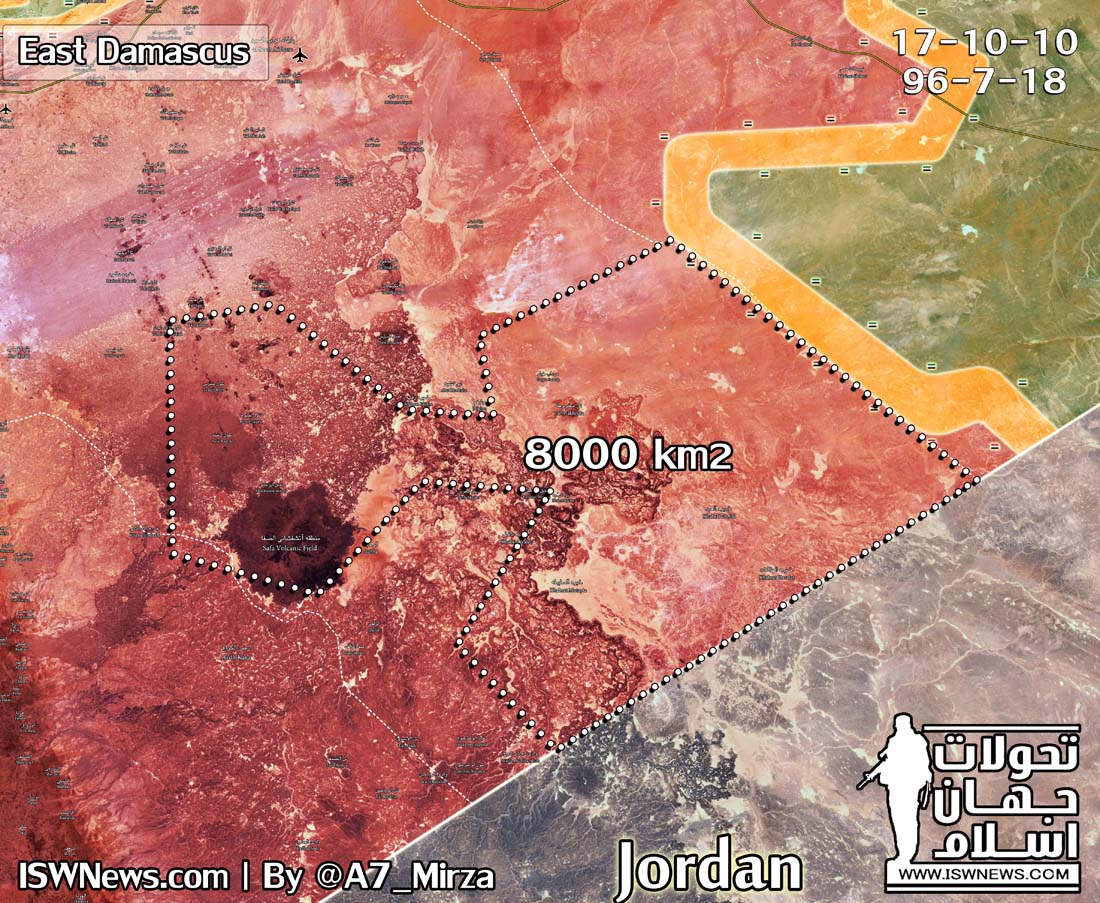
  • Eastern deserts of Damascus were liberated completely, 8000 square kilometers.

    Eastern deserts of Damascus were liberated completely, 8000 square kilometers.

    The achievement was gained while the Syrian army and Allied forces succeeded in moving forward in the eastern desert of Damascus and not only they liberated important points such as Tel-al-Dakwah, Jabal-Al Sis, Tel-al-Makhul, Tolul raqilah, Kharbah al-Ambashi and Jabal-el-Jarin they besieged the rebels in the central areas of the desert of Damascus.

    In the Following of the operation, since the middle of August, advances began to clear all border areas with Jordan and the illegal passageways that the militants used to transport weapons and logistics from Jordan to Syria, and in the first step, an area of ​​nearly 1,300 km Square of Suweida province and Damascus was liberated.

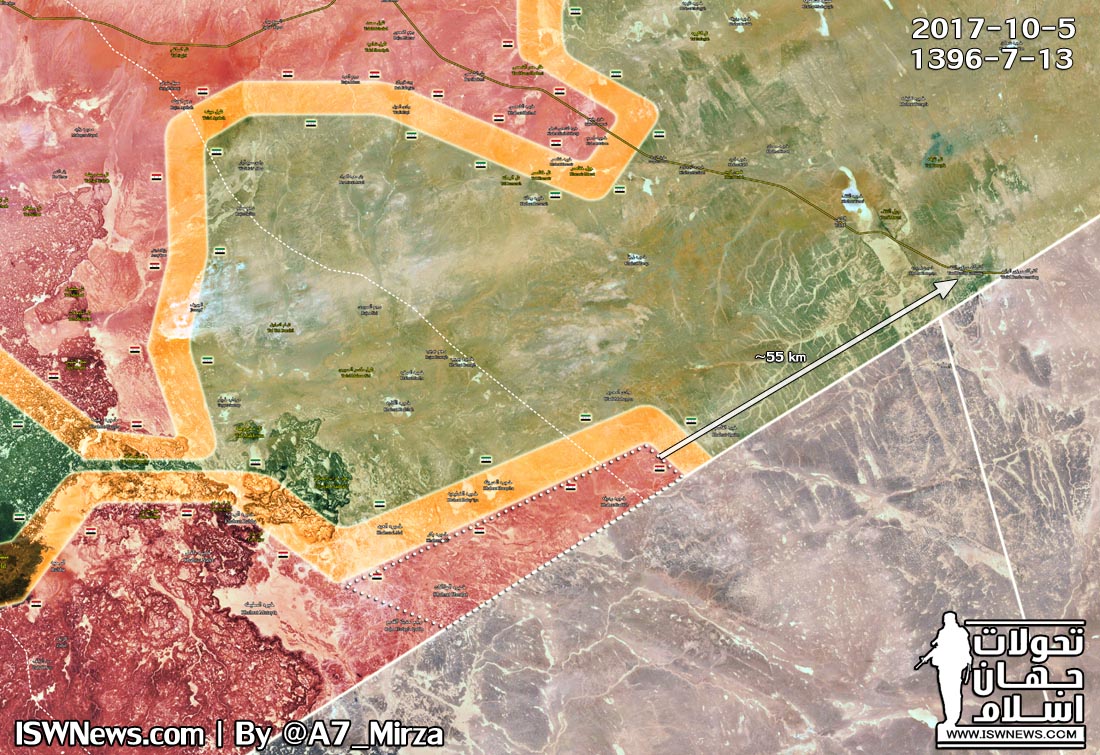
    The final phase of clearing the border with Jordan and the complete clearance of the deserts of Damascus in the last three months was slowly and without attracting attention and with least tension, and finally, with the arrival of the Syrian army at the border post of 204 at 55 kilometers to al-Tanf; the rebels had to retreat from the besieged areas and an area of ​​nearly 8,000 square kilometers was liberated from eastern Damascus, and rebels were thrown out completely from east of Damascus.

    HD MAP

  • Syrian Army Liberated Half Of Al-Mayadin City

    Syrian Army Liberated Half Of Al-Mayadin City

    Following a series of firefights with ISIS, the SAA has liberated Balum, Balout, the Electrical sub station, the Taybah school and other points in the southern and western part of the city.

    About a half of Mayadin is under the government control.

    Translation by SF

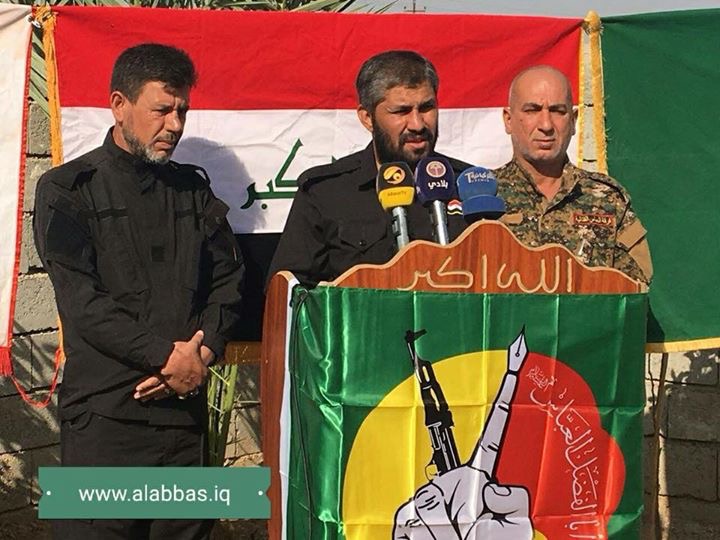
  • PMU’s Al-Abbas Fighting Division Finishes Its Tasks Within Al-Hawija Operation

    PMU’s Al-Abbas Fighting Division Finishes Its Tasks Within Al-Hawija Operation

    The announcement was made at a press conference in Bashir city located south of the Kirkuk provincial capital on Monday.

    The Al-Abbas Fighting Division participated in the second phase of the Al-Hawija operation. The group contributed to liberation of Al-Riyadh city and an area north of it.

    During these operations Iraqi forces liberated 61 villages in a 246 square kilometers area, discovered ISIS mass graves and munition depots as well as neutralized a large number of explosive devises in the liberated area.

    Translation by SouthFront

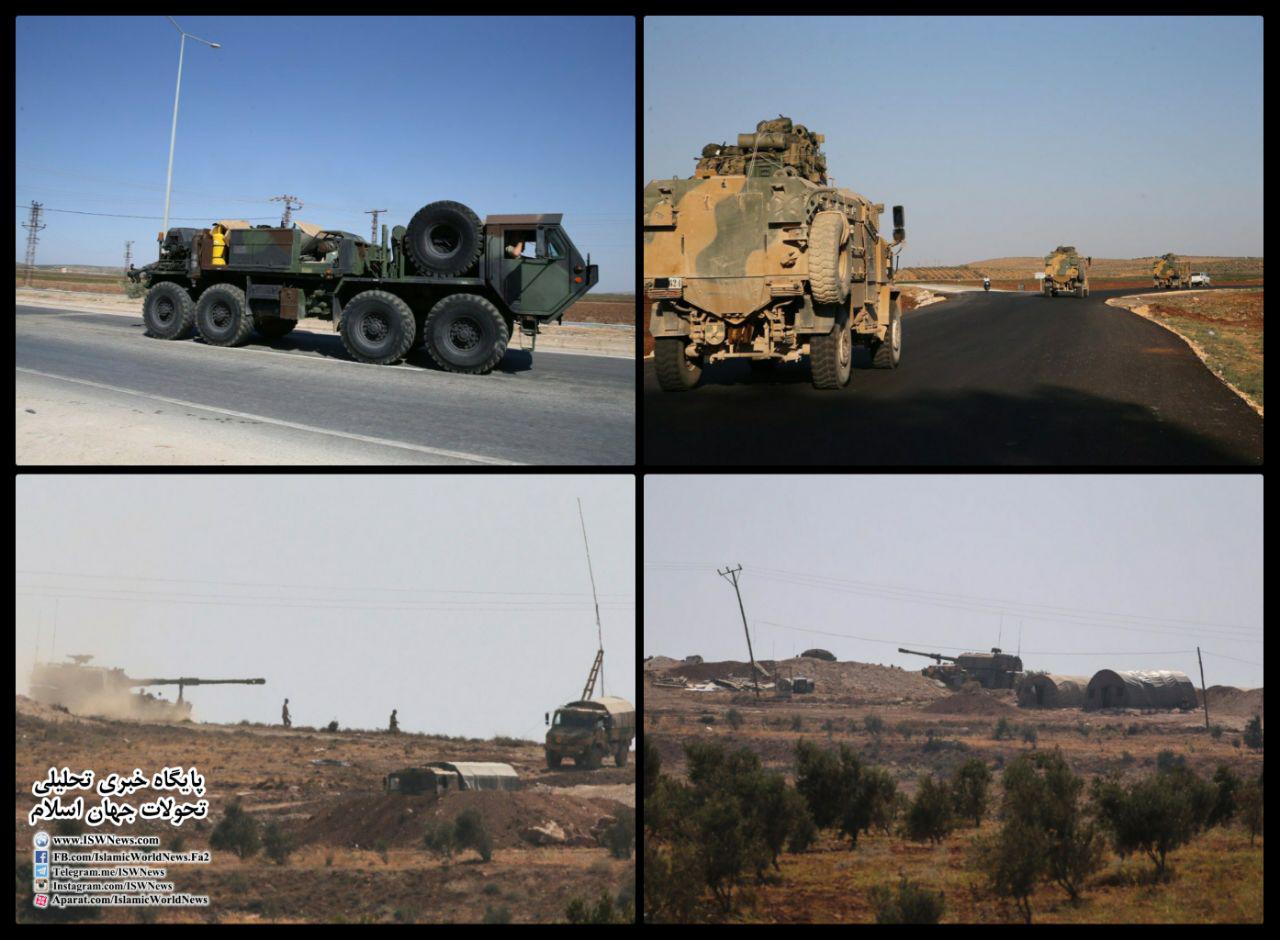
  • Erdogan officially announced the launch of the operation of Turkish Army and the Euphrates Shields in Idlib.

    Erdogan officially announced the launch of the operation of Turkish Army and the Euphrates Shields in Idlib.

    It was also mentioned that air support will be provided by Russian fighters.
    Therefore, in the past days, we saw a large supply of heavy weapons and armored vehicles of the Turkish Army to the Bab Al-Hawa border crossing. The troops of the Ferghah al-hamazah of Euphrates shield have also been seen on this axis.

    It should be noted that the official announcement of this operation was made just after Putin’s trip to Turkey, followed by the trip of Recep Tayyip Erdogan to Iran and the meeting with the leader of Iran and the President Rouhani. So clearly, the plan has not started without the coordination of the three countries..
    The pictures above are related to the beginning of the Turkish operation in the province of Idlib

  • The latest situation of contact lines around the al-Tanf border crossing

    The latest situation of contact lines around the al-Tanf border crossing

    The Syrian Army and allies over the last few months, especially in the last month of the summer when other Syrian fronts were very active, began to slowly clear the borders of Jordan with the least amount of tension, and by liberating border posts one after the other they moved to the nearest point of the Al-Tanf border crossing.

    The progress in this area made while the Badia(dessert) armed forces and their masters, the United States and Jordan, lost the upper hand in the Al-Tanf crossroad when the Resistance forces, and the Syrian Army turned around it so they made the best use of this opportunity. They blocked large areas and routes that were considered as the main ways for supplying armed forces from Jordan to Syria in the past.

    At the same time as the advancements that were mentioned, the pressure for negotiations was also applied by Russia on the United States and Jordan to speed up the process of solving the problem of the al-Tanf area and liberating the southeastern regions of Syria. Therefore, as we said earlier, talks were held in Jordan during the summer (the quality and quantity of the talks are unclear) and the latest (unconfirmed) news of the decision of the United States and Jordan is to give the control of the Al-Tanf bordercorssing to the Syrian government.

    Basically, in the current situation and with considerable successes of the Syrian army and the resistance forces in Syria, the Badiah armed forces will not do anything and their presence will not help the armed forces and their goals, unless the Americans and Jordan directly enter into battle and declare war against Syria.

    Therefore, now it is the most logical way to give the region to the Syrian army.

    “The border between Syria and Jordan near the US base in al-Tanf has become a 100-kilometer” black hole, “said the Russian Defense Ministry’s deputy Igor Konashnokov, The Representative of Pentagon has repeatedly said that new Syrian forces are being trained under the supervision of the United States, Britain and Norway. Along with the new Syrian forces, ISIL forces emerge from that point, like the devil. ”

    These are sarcastic expressions to the recent attacks of ISIL on al-Qaryatain, or the Syrian-Iraqi military posts around the Al-Tanf border crossing, and according to the Russian Defense Ministry, these attacks could not be possible without American guidance or without allowing ISIS terrorists to pass.