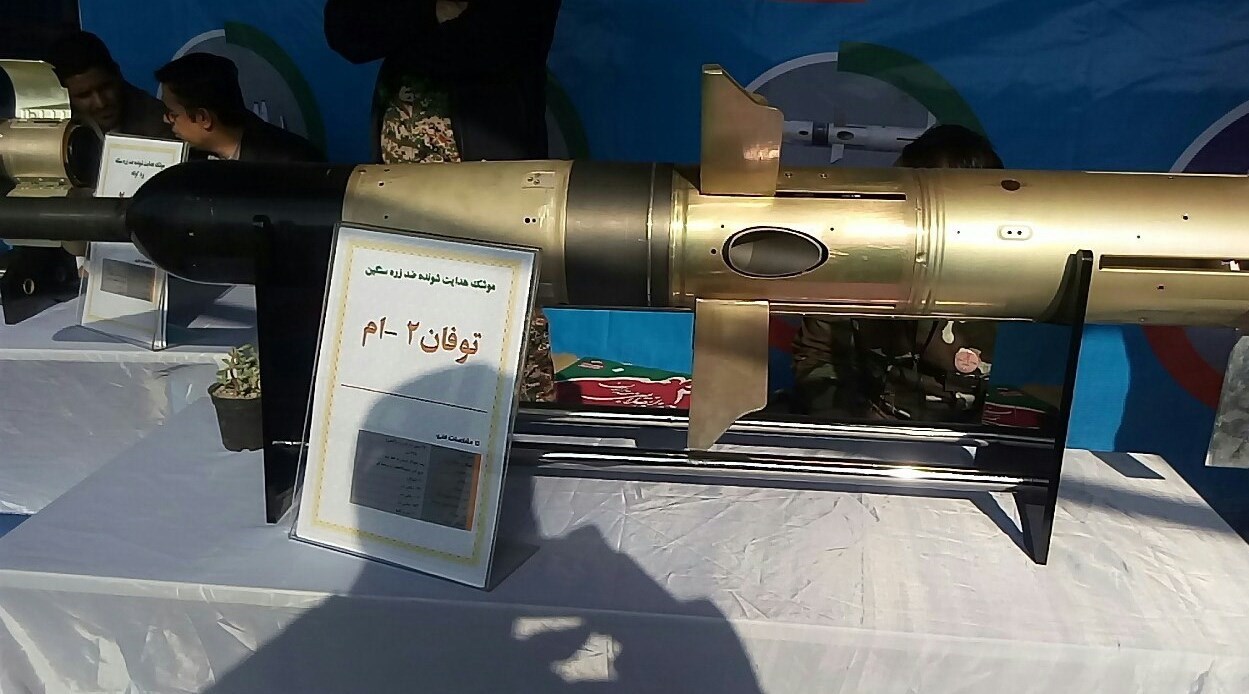
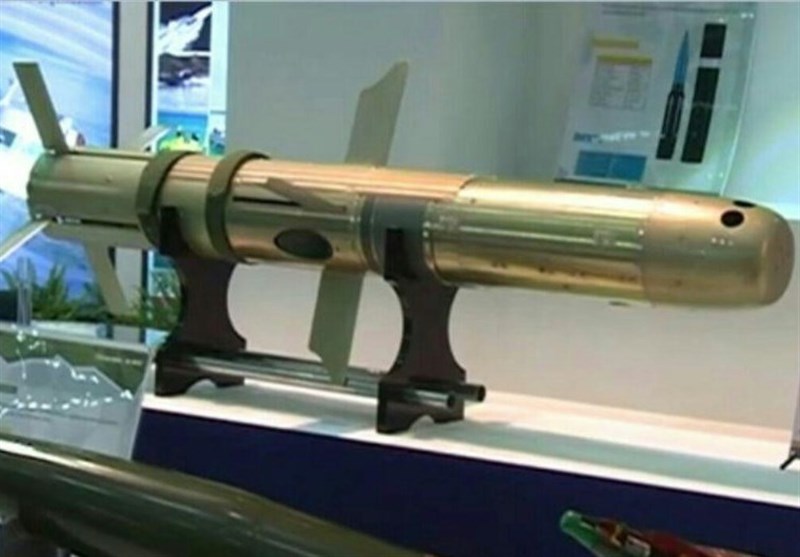
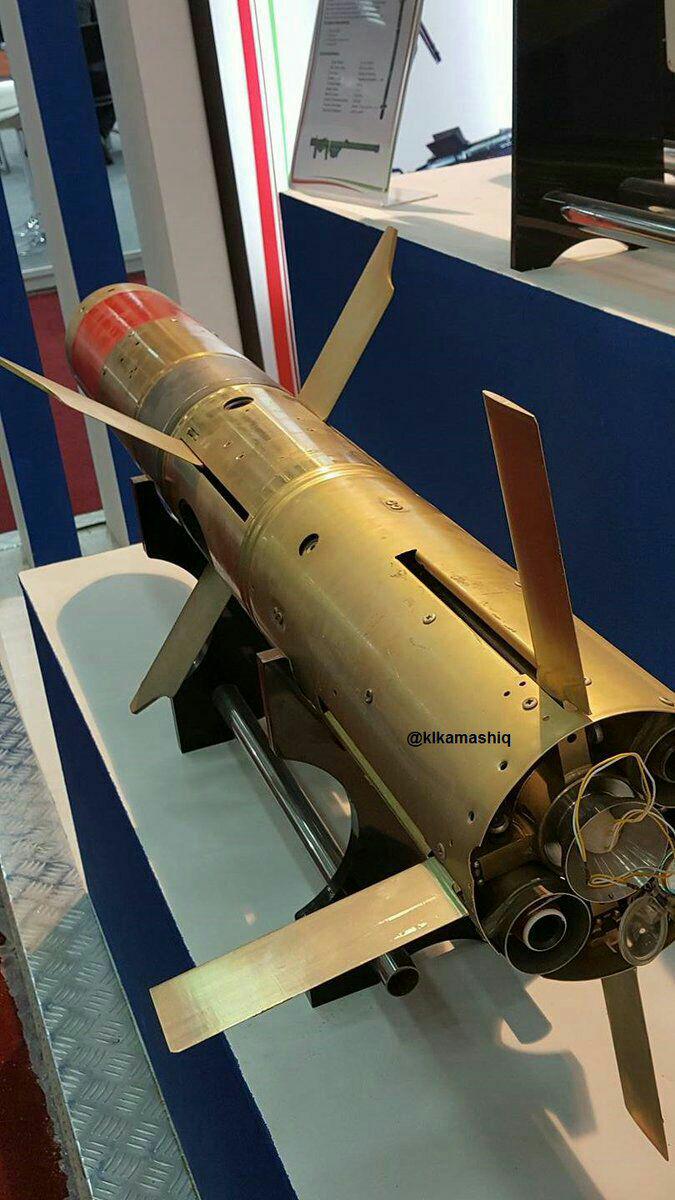
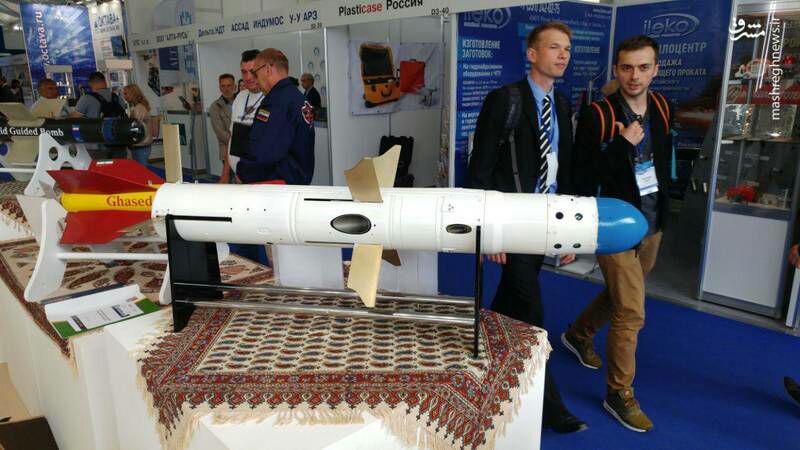
Geran-2 (Russian: Герань) is a version of Shahed-136 suicide dorne, which was sold to Russia under a contract with the production line before the start of the Ukrainian war.
The loud noise of the engine of the Geran-2 drone, apart from creating psychological warfare and terror among the enemies, could alert the defense forces and make them able to identify its location, as well as the ground observer had the possibility to shoot at it with light or heavy weapons.
Despite the fact that due to the unique design of the fuselage of the Geran-2 drone, it is not possible to shoot it down with conventional weapons; although, the damages caused by bullets could affect its precision.
Recently, videos have been released showing that the Russians turn off the engine of the Geran-2 drone before it is hit in order to compensate for some of the noise problem.
As shown in the video, this move causes the drone to be seen somehow later. Although the noise problem still exists, turning off the engine before reaching the target somewhat gets in the way of the opponent’s action and ultimately the drone destroys its target without serious damage with high precision.
According to the released video regarding the usage and deployment of the Mutabar 1 system, this air defense system consists of three main parts. The first part is the missile launch base, the second part is the missile, and the third part is the guidance system and target acquisition.
Missile Launch Facility:
The missile launch facility of the Mutabar-1 air defense system is designed as a single launcher to reduce its weight and allow for the use of cheaper and more accessible components. This launch base has a 360-degree rotation capability around its axis and can adjust the angle between 20 to 70 degrees. This movement enables adequate coverage for performing air defense operations in the vicinity of the air defense system.
The missile launch base of Mutabar-1 (Motbir) air defense system
Missile of Mutabar-1 Air Defense System:
The missile, as the second component of the Mutabar-1 air defense system, has a very simple design. In fact, this missile is a rocket with similar components to ground-to-ground rockets and its explosive fuse is designed for direct impact. Control fins that fold together are used for guiding this missile in its final section, which are secured with plastic ties.
The white plastic ties at the end of the missile are clearly visible
Stabilizing fins are not used in this missile because tube-shaped launchers similar to mini Katyusha rockets are intended to be used. The reason for using ties to hold the control fins is that the necessary technology to design these fins to open them after launch does not exist. Therefore, it is not possible to use folding control fins in the front section either. If folding control fins were present in the front section, ties would have to be used, which would complicate the loading of the missile.
The overall shape of the missile on its launcher is clearly visible and appears to be very similar to the tail end of laser-guided bombs such as the Basir and Krasnopol.
Russian Krasnopol munitionPatch designed for Mutabar-1 air defense systemClick to view full size image
The fuel of the missile also appears to be the same solid fuel used in ground-to-ground rockets. In that case, the maximum altitude of fire should be considered as 7.5 kilometers and the engagement range would likely be limited to around 6 to 8 kilometers.
Target tracking and missile guidance:
The use of thermal and infrared cameras for guidance is completely ruled out as the missile’s nose cone does not carry such cameras. In the video, it is evident that guidance is performed from a control center, but the components of this center are not clear. Considering the presence of an impact fuse at the tip of the missile and its shape, independent guidance has not been utilized. Therefore, the guidance to the target will be entirely carried out by another system, referred to as a nest seeker method.
Based on the absence of thermal and infrared cameras, it can be speculated that both active and passive radar search methods are used.
The missile fuel also appears to be the same solid fuel used in ground-to-ground rockets. In this case, the maximum engagement altitude should be considered as 7.5 kilometers, and the engagement range will likely be limited to around 6 to 8 kilometers.
Considering the Israeli regime’s military might in suppressing air defense, finding and conquering radar in the Gaza Strip will be easy. For this reason, the most likely method of tracking would be using passive radar, as finding this type of radar is very difficult. Also, placing a wave collection dish at one point and its powerful computer system elsewhere practically makes its destruction impossible. Based on the mentioned reasons above, it can be claimed that the air defense missile guidance in the Muteber-1 air defense system must be in the form of passive radar seeker guidance.
One noticeable point in the released video is the firing of two air defense missiles with very little distance and almost simultaneously, which could have two possibilities. The first possibility is that the system has the ability to guide two missiles for one target. The second possibility is that the system has the ability to engage two targets simultaneously.
Although this system may not seem very advanced at first glance, but creating a short-range and low-altitude air defense system with the mentioned specifications is a great achievement for Palestinian resistance. It gives Palestinians the ability to shoot down various Israeli aircraft at low altitudes.
The introduction video of Mutabar-1 system published by Palestinian war media
Specifications of Mutabar-1 Air Defense System: Type: low-altitude short-range air defense system Producer: Al-Qassam Brigades Origin: Palestine Unveiled: October 2023 Crew: 4 people (2 gunners and a commander and a radar officer) Engagement range: 6 – 8 km Radar: probably passive radar Radar detection range: maximum 10 – 12 km Altitude of fire: 6 – 8 km Number of simultaneous engaged targest: 1 or 2 Battrey: Each unit is fixed and carries one missile Missile: Length: ~ 2.5 meters Diameter: ~ 107 mm Weight: ~ 50 kg Range: ~ 6 – 8 km Altitude of fire: ~ 7.5 km
Specifications of PzH 2000 self-propelled howitzer: Type: self-propelled gun Manufacturer: KMW and Rheinmetall Origin: Germany Designed: 1987–1995 In service 1998–present Crew: 5 (commander, driver, gunner, and two loaders) Length: 11.7 meters Width: 3.6 meters Height: 3.1 meters Engine: MTU MT881 Ka-500 Operational range: 420 km Speed: up to 67 km/h and 45 km/h off-road Mass: 55.8 tons Main armament: Rheinmetall 155 mm L52 artillery Gun Secondary armament: 7.62 mm MG3 machine gun Ammunition capacity: 60 shells and up to 1200 bullets
Specifications of Leclerc tank version XXI: Type: Main Battle Tank (MBT) Unveiled: prototype in 1986 – prototype XXI in the late 1990s Production: 2003 to 2008 Manufacturer: Nexter Origin: France Length: 9.87 meters (6.88 meters without gun) Width: 3.60 meters Height: 2.53 meters Mass: 57.4 tons Crew: 3 Main armament: GIAT CN120-26/52 120mm tank gun with 40 rounds (1 round ready to fire in the chamber, 22 rounds inside the autoloader magazine with additional 18 rounds cylinder in the hull) Secondary armament: 12.7 mm coaxial M2HB machine gun (1,100 rounds) And 7.62 mm machine gun (3,000 rounds) Armor: replaceable composite armor in the SXXI version including titanium and semi-reactive layers Engine: 8-cylinder V8X SACM diesel (Wärtsilä) with 1500 horsepower Speed to weight ratio: 27.52 horsepower per ton Suspension system: hydropneumatic Fuel capacity: 1300 liters (1700 liters with additional tanks) Operational range: 550 km with fuel and 650 km with external fuel Speed: 71 km/h on road and 55 km/h off road
History: The Soviets were looking for a new trainer fighter to replace the Aero L-29 Delfín and Aero L-39 Albatros trainer jets. The Soviet Air Force, after reviewing the five submitted designs of Sukhoi S-54, Myasishchev M-200, Mikoyan MiG-AT, and Yakovlev Yak-UTS, in 1991, selected two MiG-AT and Yak-UTS designs for prototype production and competition.
MiG-AT training fighterPrototype Yak 130 with number 01
The development of Yak-UTS began in 1991, but with the collapse of the Soviet Union on December 25, 1991, there were not enough funds to continue the work, so in 1993, the Yakovlev company agreed with the Italian company Aermacchi to jointly develop this aircraft.
Aermacchi was responsible for the financial and technical support of the project and the name of the project was changed from Yak-UTS to Yak/AEM-130. The first prototype of this training fighter was built by the Sokol company (manufacturer of MiG fighters) named Yak-130D and unveiled in June 1995. Yakovlev company managed to make the first flight of this fighter from Zhukovsky airport on April 25, 1996, piloted by Andrey Sinitsyn.
In 1996, it was reported that the development of the fighter and the construction of four prototypes cost 500 million dollars.
Iran also unofficially participated in this plan in 1998. Iran proposed a fighter named Shafaq. But due to the continuous efforts of America to prevent Iran from being equipped with fighter jets, Russia soon removed Iran from the plan under the US pressure. But the fruit of Iran’s short-term cooperation with Russia in this field led to the unveiling of the Shafaq project in 2007. The overall design of the Shafaq fighter jet was similar to the Yak 130, but it used a V-shaped tail with modified wings.
Shafaq fighter which was presented as a mock-up
In 2000, following political pressure from the United States, the Aermacchi partnership also ended with Russia and Alenia Aermacchi continued the M-346 Master design with a Ukrainian engine. This new design made its first flight in 2004. This fighter jet was used by the Air Force of Italy, Israel, Singapore, Greece, Turkmenistan and Poland.
The Alenia Aermacchi’s M-346 Master fighter jet; very similar to Yak-130
The Yak-130 production line at the Sokol Aircraft Plant in Nizhny Novgorod, known as Naz Sokol, has been active since 2003, and its first production was numbered in April 2004. The trials of entering the service of this fighter began in 2005 and ended before the delivery of the first flight group in 2009. This fighter entered the service of the Air Force of Russian Federation in July 2009 at the Military Pilot Training Academy in Krasnodar and was exhibited at the MAKS 2009 air show.
Design: The Yak-130 trainer uses a classic swept-wing design. This fighter is made of light alloy with carbon fiber surfaces and uses Kevlar protection for the engines, cockpit and fighter compartment. The use of Fowler flaps has helped a lot in reducing drag and increasing the maneuverability of the fighter. This fighter is also optimized for landing and takeoff from short or unprepared runways. Yak-130 uses a wireless flight control system, flight safety system and automatic flight control system. The Yak-130 fighter uses an air brake located on the fuselage and near the vertical tail. This device helps this training fighter to land on short runways.
Yak-130 air brake
In the Yak-130 fighter, it is possible to close the main air intake and open the upper air intake to prevent Foreign Object Damage (FOD). This hatch ensures the safety of the fighter taking off from the runways.
A view of the closed air intake. The upper air intake is open.
Yak-130 uses 9 hardpoints to carry weapons up to 3000 kg. Two weapon hardpoints are placed on the tips of the wings and six hardpoints are placed under the two wings and one hardpoint is placed under the fuselage. The fuselage hardpoint cannot host large equipment because it is placed between the landing gear hatches.
Yak-130 hardpoints
In export versions of Yak-130, the flight control system ‘Avionica’ is used. This flight control system belonging to the American company Avionica and is used in fighters such as F15, F16, F18, Mirage 2000, Typhoon, Rafale and F35, and even in the export versions of Sukhoi 27, Sukhoi 30 and MiG 29.
Yak-130 is equipped with zero-zero K-36LT3.5 seats manufactured by NPO Zvezda. Pilots have 360 degree vision. The front cabin has a visibility of -16 degrees and the rear cabin has a visibility of -6 degrees.
zero zero K-36LT3.5Glass cabin with 360 degree vision
The all-digital Yak-130 avionics cockpit passes the Mil Standard 1553 defined by the United States of America and can be adapted to customer needs. This all-glass cabin allows both pilots to use a night vision camera and is equipped with three color liquid crystal displays measuring 24.15 cm by 20.32 cm. A Head Up Display (HUD) is used in the front cabin of the Yak 130 so that the pilot can see the target and flight information by looking at it.
Yak-130 front cabinYak-130 rear cabin
The pilot’s helmet in the front cabin is equipped with a special display for determining the target, and the cabin is also equipped with an audio warning system and an internal and external communication system, produced by Popov Plant.
This training fighter jet provides the possibility of choosing the type of training flight and simulating the tactics of combat aircraft for easier training of pilots. Yak-130 supports the navigation system including laser gyroscope and global positioning system of Russian GLONASS and American GPS.
The internal fuel tanks of the Yak-130 fighter include one tank in the body and two tanks under the wing. This fighter can carry fuel tanks under the wings on hardpoints close to the body. External fuel tanks have a capacity of 450 liters each, which brings the total portable fuel to 2650 liters. The possibility of aerial refueling is also available for this fighter, but it is installed on it as a custom.
Armament: The advanced architecture of the Yak-130 avionics complex allows a wide range of Western weapons to be compatible with it. Western air-to-air weapons such as the AIM-9L Sidewinder and Magic 2 or weapons such as the AGM-65 Maverick are examples of these weapons.
Yak-130 uses eastern weapons such as Vikhr laser guided missile, R73 infrared air-to-air missile, Kh-25 ML air-to-surface missile, KAB series free-falling bombs weighing up to 500 kg, S8 rockets and cluster bombs.
This fighter does not have a cannon by default and uses a GSh-23 pod instead, which is usually installed in the fuselage hardpoint.
Image of Yak 130 ammunition – click to view in full size
Yak-130 radar: The Yak 130 combat training fighter uses a radar with a power of 8 to 12.5 GHz called BARS-130 produced by NIIP Zhukovsky. This radar is capable of detecting air targets with a cross section of 5 square meters at a distance of 85 km and locking at a distance of 65 km. In addition, it has the ability to identify friend from enemy (IFF), air combat, detect sea and land targets, and also synthetic-aperture radar (SAR).
BARS 130 radar catalogBARS 130 radar catalogAn image of the BARS 130 radarAn image of the BARS 130 radarClick to view full size
Engine: Yak-130 in the prototype used the DV-2 engine produced by the Slovakian Povazske Strojarne company belonging to the Slovak Republic with a power of 2200 kg (21.58KN). In later examples, the Yak 130 fighter used the Al-222-25 engine with a power of 2,520 kg of force (24.7KN) made by the Ukrainian company Motor Sich, Zaporozh’e Progress Design Bureau and the Russian company Moscow Salyut Motor Building Production Enterprise.
The Al-222-25 engine was also used by the Italian fighter M-346 Master.
Russia produces Al-222-25 engine named RD-35M with 28.45KN power. Today, DV-2S engine with 24.5KN power is also produced, which is used for export purposes in the production of Yak 130.
DV-2S engineAl-222-25 engineClick to view full size
Exports: Algeria, as the first customer of this fighter, placed an order for 16 of them in 2006, and succeeded in receiving these fighters in 2011.
In 2010, Libya ordered 6 aircraft and Vietnam ordered 8 Yak 130 training fighters. In December 2012, Belarus managed to purchase four Yak-130 fighter jets, which it received in 2015. The Belarusian Air Force received four more in 2016 and four more in May 2019.
The Myanmar Air Force received three Yak-130 training fighters in late 2016. The country took delivery of another 6 planes in December 2019. Algeria is the user of 16 Yak 130 training fighters.
Syria also bought 36 Yak 130, which should have been delivered to this country by the end of 2016. But this was postponed due to the war in this country.
In 2019, Vietnam signed a $350 million contract to purchase 12 Yak 130s, which were delivered to Vietnam in November 2021.
On December 2, 2023, Iran received two Yak 130 fighters. The number ordered by Iran is not known. According to reports related to the purchase of Sukhoi 35 fighter by Iran, the Yak 130 can be considered as a training fighter for Sukhoi 35.
Images of Yak-130s delivered to Iran – click to view in full size
Specifications of Yak-130 combat training fighter: Role: Fighter trainer an light combat aircraft Producer: Yakovlev Origin: Russia First flight: 1996 Entered service: 2010 Crew: 2 pilots Length: 11.49 meters Wingspan: 9.84 meters Height: 4.76 meters Wing cross section: 23.52 square meters Empty weight: 4600 kg Gross weight: 7250 kg Maximum take-off weight: 10290 kg Engine: 2× Ivchenko-Progress AI-222-25 turbofan engines, 24.52 kN (5,510 lbf) thrust each Maximum speed: 1060 km/h Cruise speed: 887 km/h Maximum range: 2100 km Operational range: 555 km Flight ceiling: 12500 km g limits: +8.0 −3.0 Rate of climb: 65 m/s Trust to weight ratio: 0.7 Armament: Hardpoints: 9 (1 on each wingtip, 3 under each wing, and 1 under the fuselage) with a capacity of up to 3,000 kg (6,614 lb), with provisions to carry combinations of: Rockets: 80mm S-8 rocket, S-25 rocket Missiles: R-73 infrared-homing air-to-air missiles Bombs: FAB-M62, ZB-500, KAB-500Kr
Yak-130 combat training fighter – click to view full size
More pictures of Yak-130 combat training fighter:
Click to view full size
Infographics of “Yak-130 combat training fighter” Persian, Russian, Azeri:
The Majid Air Defense System is named in memory of the Iranian martyr Majid Ghorban-Khani. This air defense system has been produced by the Defense Industries Organization (DIO) of the Ministry of Defense and Armed Forces Logistics of the Islamic Republic of Iran in a bid to upgrade short-range and low-altitude defense capabilities and it has high mobility and passive guidance for better survival in the battlefields of the today’s world.
History: After the end of the 8-year war imposed by the Iraqi Baath regime on Iran as well as the studies conducted in the Islamic Republic, there was a strong feeling of need for more coherent defense potential against flying targets that were flying at low altitudes. The presence of close air support fighter jets that flew at low altitudes and bombed the front lines during the Sacred Defense (Iraq-Iran war) showed that the quality of systems like Rapier surface-to-air missile system and their small number is not enough to confront enemy fighter jets and create a safe sky. For this reason, in the 1990s, the Islamic country started buying and developing air systems like Ya Zahra air defense system.
After the first [Persian] Gulf War and the United States’ extensive use of various types of cruise missiles, the Islamic Republic of Iran decided to buy systems such as Tor Soviet-era air defense missile system from Russia to confront the threat of cruise missiles. The process of development and study in the field of dealing with cruise targets continued until the 2010s and nowadays a wide range of missile systems and anti-aircraft canons have been produced and utilized to deal with various targets such as drones, cruise missiles, helicopters, and close air support fighter jets.
In 2020, the then deputy Minister of Defense and Armed Forces Logistics of the Islamic Republic of Iran announced the completion stages of a system called Majid, but no other details were published. The Majid Air Defense System was unveiled and introduced for the first time in the parade on April 18, 2021. The air defense system included two missiles and an airborne radiation detection system installed on an Aras 2 vehicle.
Some specifications of the Majid Air Defense System were released in a video introducing the Alborz three dimensional phased-array radar and the Borhan weapons control and command system on September 1, 2021. In this video, an image of the Borhan control screen was seen, indicating the specifications of the Majid Air Defense System as well as the ability of this system to be linked to the Borhan control and command system.
The video of the unveiling of Alborz radar and Borhan system, here is a picture of the linking of Majid system to Borhan system.
Design: The fully mobile short-range Majid Air Defense System consists of two main parts. One part is its missiles and the other part is an electro-optical detection and tracking system, both parts are installed and used on an Aras 2 tactical vehicle. All parts of the system are located in the vehicle’s cargo section.
The weapon station includes four AD-08 missiles (capable of being increased to eight) on both sides and an electro-optical system in the center. The weapon station has a 360-degree rotation capability, and the electro-optical system also has a 360-degree rotation capability independent of the weapons station. This system is also installed on a 4×4 Iveco Daily truck in addition to the Aras 2 tactical vehicle.
The reason for such a change in a truck could be to create better camouflage during movement and a lower chance of detecting this system.
Majid system on Iveco Daily truckMajid system on Aras tactical vehicleClick to view full size image
Carrier Vehicle: The Aras 2 tactical vehicle is a 4×4 tactical vehicle manufactured by Iran’s Ministry of Defense. This vehicle offers high mobility, high speed, and off-road capability. The Aras 2 tactical vehicle is a 4×4 tactical vehicle manufactured by Iran’s Ministry of Defense. This vehicle offers high mobility, high speed, and off-road capability.
This provides the Majid system with the ability to ambush or quickly relocate after tracking a target. The Iveco daily truck is a light 4×4 commercial truck made by the Italian company IVECO. This truck has a greater transport capacity than Aras 2 tactical vehicle and has probably been used to carry more missiles. Another possibility is better camouflage by the Iveco daily truck due to more space on the truck so that it can easily move on roads.
Electro-optical tracking and targeting system: The electro-optical tracking and targeting system used in the Majid Air Defense System includes two cameras that are placed on top of each other and in the center of the weapon station.
The electro-optical tracking and targeting system has a continuous 360-degree rotation capability independent of the weapon station. This system includes a daytime camera and a thermal camera, capable of operating at all times of day and night and in all types of weather.
The electro-optical tracking and targeting system used in the Majid Air Defense System can detect targets at a maximum range of 15 kilometers and guide four missiles simultaneously towards targets, allowing it to simultaneously protect itself from four different directions.
Electro-optic system cameras belonging to Majid air defense system
In normal mode, electro-optical systems rotate towards the target and guide a missile that has been fired until it hits.
In this state-of-the-art mode, the electro-optical system only tracks one target and merely guides one missile. But with continuous rotation of the electro-optic system, it is possible to find different targets in all directions and then give a firing order.
In this mode, the camera can continuously monitor its surroundings, and to a great extent it can reduce the possibility of being surprised as well as the destruction of the system. In this guidance method, the electro-optic system becomes a search and targeting system capable of finding several targets that can guide several missiles.
In this video, the missile is fired at the same time as the electro-optical system rotates. This means that the system does not need a lock on the target.
The AD-08 missile: The missile used in the Majid Air Defense System is a short-range missile with a thermal imager. This missile is sealed inside a tubular launcher and four of them are installed on the weapon station.
Given the presence of electrical connectors on each launcher, another launcher can be placed on top of the previous one. As a result, the Majid Air Defense System will be able to use eight missiles.
A graphic image of the Majid air defense system with 8 missiles (credit @marshallmo26 on X)
The missile has four stabilizing fins at the end and four control fins near the nose cone. The fins on the missile are foldable, allowing the missile to be placed inside a canister.
The Majid Air Defense System missile uses smokeless solid fuel. This type of fuel reduces the chance of detecting the launch site and increases the surprise of the enemy. Also, the AD-08 missile uses a thermal imaging camera at its nose cone, which guides and hits the target using this camera.
The electro-optical system issues a firing command after detecting the target. The missile moves towards the point announced by the system and then searches for the target by the use of its camera, locks onto it, and moves towards the target to destroy it. This method is the same as the fire-and-forget method, and as a result, the system can move immediately after firing. The use of a passive or non-active detector and the main system’s capacity to avoid locking onto the aim misleads the target.
The target will not be aware of thermal locking until the missile locks onto it. Also, being smokeless makes it impossible for the enemy to determine the path of movement of the missile and calculate information such as collision direction, speed, and so on to detect the launch location of the missile, which will take a long time.
In addition to this fact, due to using fire-and-forget capability, it has quick relocation capability. Therefore, if an enemy uses a decoy to detect the location of the system, given the mentioned conditions, the Majid Air Defense System does not leave much trace for detection and greatly increases its survival.
Types of Majid Air Defense System Missiles:
After examining published images of missiles and Majid Air Defense System, it seems that there may have been two versions of this missile: The initial version of the Majid Air Defense System was seen in the test footage, and the second version was showcased at ARMY-2023 exhibition and Doha Qatar exhibition.
Initial Version: The missile in the initial version has two sections in terms of diameter. The nose section has a smaller diameter, as well as the middle and end section, which have a larger diameter. A thermal camera is located in the nose cone, then there are control fins, warhead, and fuel compartment and in the end, there are stabilizing fins and engine are located at end.
The prototype of the missile has a nose with a smaller diameter than the new model
New Version: In the new or perhaps original version, the missile has three sections in terms of diameter. The location of the thermal camera is in the missile nose cone, which has the maximum diameter for placement in the canister. After that, there are control fins and a warhead, where the missile has a reduced diameter and appears to be the same as the original missile nose.
After the warhead, the missile diameter increases from the middle to the end and it appears to be the same as the missile tip. This section contains missile fuel, stabilizing fins, and a missile engine, which seems to be the same as the initial version.
Also, the final or original version of the missile has a uniform and integrated appearance generally in terms of body section and exterior. This missile has a different camera from the initial version in the camera section as well.
The new version of the AD-08 missile, which missile diameter increases from the middle to the end
The pictures below show the new model of the AD-08 missile, which was showcased for marketing at the Russian ARMY2023 exhibition. In the pictures, it is clear that a different camera is used than the prototype.
Pictures of the new model of the AD-08 missile at the ARMY2023 exhibition
Systems linked to Majid air defense system:
Borhan weapons control and command system: As mentioned earlier, the Majid system has the capability of linking to the Borhan system. The Borhan system is a command and control center for low-range and low-altitude weapons, which acts as the last level of command to create integration between systems in the last layer of defense.
This system can receive information from electro-optical and radar systems. After receiving and analyzing the information from all the sources, Burhan transfers them to the command and gives orders according to the type and nature of the target to all types of low-altitude systems available in the scene.
An image of the linking of the Borhan and Majid systems
Kashef 99 Radar: Kashef 99 radar is a 3D phased array radar capable of detecting small flying targets. This radar is designed to detect targets with low radar cross section, low altitude and short range such as quadcopters. Kashef 99 can simultaneously detect 300 targets within a range of 12 km. Kashef 99 is installed on a Toyota vehicle, which increases its mobility. It seems that there is a possibility of installing this radar on other vehicle as well. Due to the high power in detecting small birds, the Kashef radar is probably a part of the Battlefield Management System for the last layer of defense.
Kashef 99 radar with the ability to detect 300 small drones at a distance of 12 km
Prominent Features: – The speed and agility of the Majid Air Defense System – The ability to use various carriers – The Fire-and-forget capability – The Fire-and-forget capability – The use of smokeless missiles resulting in better camouflage – The ability to link with Borhan radar and system – The independent operation in ambush mode – The ability to operate within an integrated defense network – The ability to develop and enhance system capabilities
Specifications of Majid short-range air defense system: Type: Short-range air defense system Producer: Ministry of Defense of the Islamic Republic of Iran Origin: Iran Unveiled: April 18, 2021 In service: since 2021 Crew: Unknown Carrier vehicle: Aras 2 tactical vehicle and Iveco Daily truck Weight: unknown System range: 18 km Range of engagement: 8 km Altitude of fire: 6 km Maximum target speed: Mach 2 (2450 km/h) Number of simultaneously engaged targets: 4 targets Response time: 3 seconds Battery: each battery capable of firing 4 missiles (can be increased to 8 missiles)
AD-08 missile: Length: 2.67 meters Diameter: 156 mm Warhead weight: 14 kg Missile weight: 75 kg Range: 8 km altitude of fire: 6 km Guidance: Passive IR homing Speed: more than Mach 2
Majid Short-Range Air Defense System – click to view full size
More images of Majid short-range defense system:
Click to view full size
Infographics of Majid air defense system Russian(Маджид Система Защиты Ближнего Действия), Hebrew(מג’יד מערכת הגנה אווירית), Persian(سامانه مجید) and Azeri(Məcid Qısa Məsafəli Müdafiə Sistemi):
In January 2020, the US Department of Defense established the joint counter-small unmanned aircraft systems office to test more than 40 counter-UAS systems. Finally, this office proposed a solution in the form of FS-LIDS and M-LIDS for fixed and mobile missions to deal with micro-UAVs.
This system has two types: FS-LIDS stands for Fixed Site-Low, Slow, Small Unmanned Aircraft System Integrated Defeat System and M-LIDS stands for Mobile-Low, Slow, Small Unmanned Aircraft Integrated Defeat System. As their names suggest, FS-LIDS are fixed and M-LIDS are a mobile system; But both systems have common components.
This system is made of a combination of AN/TPQ-50 air surveillance radar or KuRFS radar, as well as an anti-drone electronic warfare system, an electro-optical and infrared camera, and Coyote drones. All these parts help the system to identify small drones that are moving at a low altitude, classify them and act to destroy and shoot them down.
It should be noted that any of the fixed FS-LIDS models or the mobile M-LIDS models can use the aforementioned radars.
Electro-optical system used in LIDS systemThe set of radar, EW, camera and other components related to FS-LIDS version provided by SRC for this systemClick to view full sizeCoyote-2 UAV shot from FS-LIDS ground fixed system
The M-LIDS has a 30 mm automatic cannon that is mounted on the Oshkosh armored vehicle. Due to the possibility of synchronizing the radar with the 30 mm cannon, it is possible to use this cannon to repel UAV attacks in the last layer.
30 mm cannon fire in the M-LIDS system
Also, in another model of this system, the ground-based model of the Phalanx close-in weapon system known as C-RAM has been used. In fact, the C-RAM anti-aircraft system is an independent protective layer that can be used in the last layer of interception.
C-RAM system, Coyote block 2, KuRFS radar (Ku-720-1 version) and electro-optical system in M-LIDS model installed on the Oshkosh armored vehicle
AN/TPQ-50 air surveillance radar: The AN/TPQ-50 is a lightweight counter-fire phased array radar manufactured by the American company SRC Inc. This radar, which was developed based on the AN/TPQ-48 radar, was made to detect artillery and mortar shells, rocket launcher systems such as MLRS, and to detect the firing location of all types of artillery. This radar provides continuous 3-D, 360 degree surveillance along with the ability to identify targets from a distance of 10 to 15 kilometers. This radar can be easily installed on armored vehicles or fixed tripods in the shortest possible time.
AN/TPQ-50 radar is installed and used on the FS-LIDS and M-LIDS system, which, due to its high detection power in detecting small artillery targets, also has a good detection ability in finding small drones.
AN/TPQ-50 radar
KuRFS air surveillance radar: KuRFS radar, short for Ku-band radio frequency system, is produced by Rayton company. This radar is a multi-mission, 3-D and 360-degree radar with continuous operation capability. This radar is designed to defend against rocket, artillery and mortar attacks and has been tested and used in the battlefields such as Iraq and Afghanistan wars. Today, the KuRFS radar is also used as an anti-drone air system radar. The radar is compatible with several weapon systems, including the C-RAM weapon system, 50-caliber cannons and 30 mm cannons, as well as support for high-energy lasers and Coyote drones.
The KuRFS radar uses a radar sensing technique called the Ku-band active electronically scanned array (AESA). This feature provides high resolution imaging and is an important part of tracking smaller flying objects. This radar uses many small antennas instead of one powerful antenna to allow better control. The KuRFS radar is deployed within 30 minutes, either at a fixed location or on a vehicle.
KuRFS radar (Ku-720-1 version) on the M-LIDS systemKuRFS radar (Ku-720-1 version) in the mobile version (M-LIDS) and installed on the Oshkosh armored vehicleKuRFS radar (original version) in mobile version (M-LIDS) and installed on FMTV truckKuRFS radar (original version) for use in fixed and ground-based (FS-LIDS) systemsClick to view full size
Coyote drone: Raytheon Coyote is a small, expendable, unmanned aircraft system with the capability of operating in autonomous swarms or used as part of a group of drones to perform missions such as electronic warfare, surveillance. This UAV is manufactured by Raytheon Company and is produced in three blocks 1, 2 and 3.
Coyote-1 has a weight of 5.9 kg, a warhead of 1.8 kg of kinetic energy, as well as a proximity fuse and a fragmentation explosive, a length of 60 cm and a wingspan of 1,473 meters, and with the use of an electric motor, the speed is equal to 130 km/h.
Coyote Block 1 – click to view full size
In Block 2 version or Coyote-2, a jet engine has been used instead of an electric engine, which has increased the speed of this drone to 555 km, its range to 15 km, and the flight ceiling to 30,000 feet (if the weather is favorable). As a result, Coyote-2 can neutralize threats at longer ranges and higher altitudes.
Turbine engine used in Cayote 2Coyote Block 2 – click to view full size
In Block 3 version or Coyote-3, a different and non-kinetic warhead is used. This type of warhead reduces the possibility of collateral damages and unlike the previous models which are disposable, it provides the possibility of recovery and reuse for Coyote 3. In fact, the Coyote 2 has a more traditional design similar to conventional drones with conventional wings. Coyote-3 uses an electric motor like the first version, but it is bigger than Coyote-1 in terms of dimensions and size.
A video of FS-LIDS and M-LIDS systems and how to destroy targets by Coyote 2 drones (Block 2)A conceptual image of the use of LIDS systems for short-range defense of an area or base
Export In 2022, the US State Department announced Qatar’s request to purchase this system. According to the available information, Qatar is looking to purchase 10 LIDS systems, which include 200 Coyote drones, electronic warfare platforms, radars and other equipment of this system with the support of American contractors. The value of this contract is estimated at 1 million dollars, and the US Defense Security Cooperation Agency has stated that the main contractors of this contract will be Raytheon, Northrop Grumman and R&D SRC. In this way, Qatar became the first country to purchase the LIDS anti-aircraft system from the United States.
Technical specifications of FS-LIDS and M-LIDS system components: Coyote 1: Length: 60 cm Wingspan: 1,473 meters Speed: 130 km/h Weight: 5.9 kg Warhead: 1.8 kg Engine: Electric Coyote 2: Length: 0.91 meters Wingspan: 1,473 meters Speed: 550 km/h Warhead: 1.8 kg Coyote range: 15 km Flight altitude: 30,000 feet (6,000 meters) Engine type: Jet KuRFS radar: Role: determining the coordinates of the enemy’s artillery position, controlling the airspace in the form of an anti-UAV system Target detection range: against small drones up to 16 km and 100 km to detect aircraft and helicopters Radar type: continuous 3D and 360 degree phased array radar Operating frequency: 14.5 to 16 GHz Radar frequency: Ku AN/TPQ-50 radar: Role: determining the coordinates of the enemy’s artillery position, controlling the airspace in the form of an anti-UAV system Radar frequency: L Target detection range: up to 10 km (effective), up to 15 km (maximum). Launch position detection accuracy: 50 meters at a distance of up to 15 km, depending on the type of weapon and trajectory, the accuracy may deteriorate. Target tracking: Multiple targets in 3D Support for IP networks: Yes Power required: AC 110/240V, 3000W, 50-400Hz or 24V DC supply. Power consumption: 1200 watts Weight: less than 500 pounds (< 227 kg) Height: more than 2 meters (on a tripod) Diameter: about 102 cm
The M-LIDS mobile system – click to view full size
History: Due to Iran’s armored requirements and the increasing advancement of anti-armor weapons and armor technology throughout the world, there was a need for a tank at the level of modern tanks in the Islamic Republic of Iran Armed Forces. Despite allocation of limited budget, the armed forces embarked on upgrading the existing T-72S tank. Although in the past, Zulfiqar 1 and 3 tanks had been built as prototypes in the country, they were never widely adopted due to the inability to produce them in large numbers given the country’s budget limit.
The Karrar tank was unveiled on March 12, 2017, in a ceremony attended by the then-Minister of Defense, General Hossein Dehghan. It was emphasized in the ceremony that the production line for the Karrar tank is also located in the Bani Hashem Armor Industrial Complex in Doroud County, Lorestan province. However, the introduction of this tank into service began slowly several years later. The production line was reopened in August 2020, and since then, the delivery process has been faster than before. The operational version of the Karrar tank differs from the unveiled version.
Design: The Karrar tank features a welded and modern turret with a 125mm gun and a remote-controlled 12.7mm machine gun, as well as a coaxial 7.62mm machine gun.
There are 12 smoke grenade launchers with an 81mm caliber on both sides of the turret, with six launchers on each side. The use of smoke grenades on both sides of the tank provides a larger range for creating smoke screens to disrupt laser-guided missiles
12 grenade launchers installed on Karrar
The Karrar tank includes a fire control system that consists of various components such as a muzzle reference system and a weather station. The muzzle reference system consists of two pieces, one at the beginning of the gun and one at the mouth of the gun, which detects the smallest angle of the gun that is not visible to the naked eye. As a result, the accuracy of direct gun fire is greatly increased.
The weather sensors, by performing calculations on variables such as wind speed, humidity, air temperature, etc., increase the accuracy of ballistic shots. The Karrar tank uses a Vaisala WXT536 weather station belonging to a US company.
Muzzle reference system and its two main partsVaisala WXT536 weather systemClick to view full size image
The Karrar tank uses a day and night vision system in front and back of the tank. This system includes an IR/EO day and night vision camera in the front left window of the driver’s hatch and a day and night vision camera at the back of the tank between the external fuel tanks.
The all-around surveillance system (360-degree periscope) of the commander of the tank is another available system on the Karrar tank. This system includes seven fixed periscope windows installed in the commander’s hatch. The all-around surveillance system provides the ability to install eight periscopes, but one of the positions is occupied by the remote-controlled machine gun base and it has been blinded, so no periscope is installed there.
The Karrar tank utilizes a surveillance and targeting system for the gunner, which is located on the turret of the tank. The two doors of this surveillance system are manually operated and they do not have remote control. In addition, this surveillance and targeting system does not have a washer or snow remover, which is a major weakness. In war conditions, there is a possibility of dirt and snow accumulating on it, which will disrupt the performance of the surveillance and targeting system without a cleaning system.
Karrar tank surveillance and targeting system collection
Armament: As it was mentioned before, the main weapon of the Karrar tank is the 2A46 series 125mm cannon, which is the same cannon used in T72 and T90 tanks. This cannon can fire various anti-armor and anti-structure ammunition. It also has the ability to fire laser-guided missiles. The first version of the Karrar tank contained armor for the cannon, which was located at the connection point of the cannon to the body precisely on the cannon. The mentioned armor provided significant protection for the cannon against post-impact bullet cracks on the body.
The secondary weapon of the Karrar tank is a remote-controlled 12.7mm machine gun. This weapon has its own day and night vision sight and is guided by the tank commander. It is not clear whether this machine gun can be independently guided by the gunner or not, but the possibility of its guidance by the tank gunner is not unlikely.
Remote controlled 12.7 mm machine gun
Armor protection: In addition to the main armor, the Karrar is also equipped with reactive armor in the front part of the chassis to protect itself. According to the available images, in this section, Karar uses Kontakt-1 reactive armors that are produced in Iran.
In this section, the Karrar tank uses 11 separating blades to separate the reactive armor blocks on the front slope of the chassis. In addition to separating the blocks from each other and preventing the transfer of explosive effects to the adjacent blocks, these blades also cause the blocks to be arranged more regularly. Because the effect of explosion of the reactive armor blocks (explosion wave, heat and shrapnel) is more lateral, the separation blades are also placed laterally.
In side protection, the Karrar tank uses armor similar to the Relikt plates. This section is a combination of 5 layers: two middle layers of vulcanized rubber, two steel layers reinforcing the rubber layer and a thicker steel layer, which is the last layer closest to the tank.
11 blades separating the reactive armor blocks in the front slope of the chassisThe side armor of Karrar tankClick to view full size image
In terms of turret protection, the design is very similar to the T-90MS tank. In this section, reactive armors with more resistance and similar to Relikt or Kontakt-5 reactive armor are used. The main difference between the Karrar design and the T-90MS in this section is the dimensions of the reactive armor. These plates are installed on the turret with a steep slope, the thickness of which increases in the end part. The number of blocks used in the Karrar tank turret is 58. 32 blocks are located on the front and side of the turret, which use different dimensions, and 15 blocks are used to cover the side edges of the front slope of the roof and 11 blocks are used to cover the central part of the roof.
The main challenge to fully cover the turret is related to covering the part connecting the gun to the turret, the armor used must be able to move up and down along with the gun. It seems that this part of Karrar tank does not have enough protection.
Arrangement of reactive armor blocks on the roof of the Karrar tankThe arrangement of the side blocks of the turretClick to view full size image
Karrar tank uses cage armor (or slat armor) in the end parts of the body and turret. These armors cause early activation of the anti-armor missile warhead, and due to the distance they have from the main body and tank armor, it reduces the explosive effect of the missile warhead, which ultimately leads to a decrease in missile penetration. In addition to being cheap, this type of armor is a suitable option for use in areas that are less threatening, i.e. the back of the tank.
In the rear part of the tank chassis, there are two barrel fuel tanks as external fuel tanks. This part of the tank does not have cage armor. The lack of armor in this section is due to three reasons: one is due to the low probability of hitting in open environment battles, and the second reason is the presence of external fuel tanks itself on Karrar, which does not allow the installation of cage armor, and the third reason is the possibility of cage armor hitting the ground and causing damages.
It would have been better to install flexible cage armors based on the T72B3 tank. These armors can be moved in the presence of external fuel tanks, and when the fuel tanks are not installed, they provide the required protection for the tank. It is also possible to use armors that are flexible and do not have the problem of hitting the ground by modeling the cage armor of the Challenger-2 tank.
The cage armor of the Challenger-2 tank, flexible when hitting the groundKarrar tank – fuel tanks and the cage armorRetractable cage armor in T72B3 tankClick to view full size image
One of the weaknesses of the T-72 series tanks, which is caused by its initial design, is the poor protection of the bottom part of the tank chassis. This issue still exists in the main chassis of the Karrar tank and no action has been taken to fix it. This issue becomes more important when we know that the tank’s main ammunition is stored in the floor of the chassis by means of the automatic loading system and in case of a mine explosion, the probability of the explosion of these ammunition is also very high. To fix this defect, this part can be strengthened by adding resistant and anti-shock plates in the front and lower parts, which are more sensitive.
The bottom of the Karrar tank chassis, which does not have additional armor
Protection system: Karrar tank uses a protection system with Soft Kill mechanism. This system, which is equipped with a laser beam detector and an infrared disruptor, includes four modules, in such a way that two modules are placed in the front part of the turret and two modules are placed in the rear part of the turret, and each one covers a specific angle.
The laser beam detector used in the protection system module reacts to the radiation of the laser beam from the guidance system and to the laser beam of the range finder system and warns the crew. When the crew received the warning, they threw smoke grenades and created a smoke screen, causing disruption of the laser beam reflection from the tank body.
The infrared disruptor used in the protection system module has a COB (Chip On Board) lamp with a 17×17 array. This system, by imitating xenon light radiation or thermal illuminator used at the end of anti-armor missiles, causes errors in missile guidance by the missile guidance system. This infrared disruptor has a general field of view of 60 degrees, a near infrared emission wavelength (Near IR), a preparation time of 60 seconds, a working continuity of up to 6 hours, a lifetime of 800 working cycles (each cycle includes 6 hours of work and one hour of shutdown), the power consumption is less than 80 watts and the working temperature is -20 to +55 degrees Celsius.
This system is presented to disrupt the performance of missiles such as TOW and M47 Dragon or second generation armored missiles in general, but it will also be effective against missiles such as 9K111 Fagot, 9M113 Konkurs, etc. by making modifications.
Karrar tank Soft Kill protection system
Engine power and mobility: The maximum possible weight of the Karrar tank is stated to be 48.5 tons, and according to the evidence of the use of an engine with a power of 1000 horsepower on the tank, the ratio of power to weight of this tank is 20.6 horsepower per ton, as a result we see an increase in the mobility of the Karrar compared to the T72-S version.
The type of Karrar tank engine has not been announced, but considering its 1000 horsepower and the fact that the T-90A model uses a V-92 engine with 1000 horsepower. It can be assumed that the Karrar tank engine is the same V-92 that was imported through Russia.
Karrar tank specifications: Type: Main Battle Tank Produced: Since March 12, 2017 Manufacturer: Bani Hashem Armor Industrial Complex Origin: Iran Length: 6.8 meters (hull) – 9.53 meters (with gun) Width: 3.6 meters Height: 2.23 meters (without remote-controlled gun) Mass: 46 to 48.5 tons (exact weight not announced) Crew: 3 (driver, commander and gunner) Engine: Enhanced engine with 1000 horsepower Speed: 60-70 km/h Operational range: 550 km (plus with 200-280 km more from fuel tank) Main armament: 125 mm 2A46M/M-2/M-5 smoothbore gun with stabilizer Secondary armament: Coaxial 7.62mm machine gun and a remotely controlled 12.7mm machine gun / 14.5mm machine gun
Karrar Main Battle Tank – click to view full size image
More images of Karrar tank:
Click to view full size image
Infographics of Karrar tank in Russian(Каррар танк), Arabic, Hebrew(טנק קאראר), Azeri(Kərrar Tankı) and Farsi(تانک کرار):
The Vikhr (whirlwind) missile was designed and developed in the Soviet Union in the 1980s to replace the 9K114 Shturm (AT-6 Spiral) missile by the “KBP” Instrument Design Bureau. This missile was able to deal with western tanks of its time such as Abrams and Leopard and conventional explosive reactive armor.
The Vikhr missile was first publicly displayed at the Farnborough Airshow in 1992. This missile was used in the early 2000s on the Su-25T close air support fighter and the Ka-50 Black Shark helicopter.
Vikher missiles are fired from APU-6 and APU-8 launchers. APU-6 rack supports 6 missiles and is used in Ka-50 helicopters. The APU-8 rack supports 8 missiles and is used in the Su-25T fighter.
The 9K121 Vikhr missile has a maximum range of 8 km if fired from a helicopter, and if fired by a fighter, its range is 5 km at night and 10 km during the day.
A picture of the APU-6 rack, which contains 6 Vikhr 9K121 missiles
The missile is placed in a pod, the front hatch of the pod is opened before firing, and the rear hatch is removed by the crew during loading. The 9K121 Vikhr missile has wings in the front part that fold into the body, and the missile engine is located in the middle part of the body. At the end of the missile, there are control fins that are folded to the side and gathered around the missile. This missile rotates around its longitudinal axis during flight.
First, the target is marked by a helicopter or fighter or by a laser beam, then the missile receives the beam reflected from the target and moves towards it using a laser detector placed at its tip.
A picture of the end part of the Vikhr missileA picture of the front part and retractable wings of the Vikhr missileA picture of the Vikhr missile and its carrier podClick to view full size
Vikhr missile uses a two-stage warhead to pass through reactive armor and also uses two types of impact and proximity fuses. This design allows the use of missiles on different platforms. Vikhr’s proximity sensor allows it to detonate and engage within 5 meters of an air target moving at a maximum speed of 500 meters per second. This versatility is a differentiating point compared to the 9M120 Ataka missile, which is sometimes confused with the Vikhr missile.
The high supersonic speed of this missile (up to 610 m/s) reduces the vulnerability of the helicopter during attack and allows it to engage several targets in a short period of time. The Vikhr missile travels a distance of 4 kilometers in 9 seconds.
Vikhr-1 missile: The Vikhr-1 missile is an improved version of the Vikhr missile manufactured by the Kalashnikov company. In 2013, the Russian Ministry of Defense signed a contract worth 13 billion rubles with the Kalashnikov company for the production of Vikhr-1. Delivery of orders began in 2015 and ended in 2016. This contract was considered the biggest government contract for Kalashnikov at that time.
Vikhr-K missile: The Vikhr-K missile is the naval version of the Vikhr missile. This missile can be used against light sea targets such as fast boats and low-speed air targets up to a range of 10 km.
9K121 Vikhr specifications: Manufacturer: KBP Instrument Design Bureau Origin: Russia Weight: 45 kg Length: 2.8 meters Diameter: 130 mm Warhead weight: 8-12 kg Maximum penetration in rolled steel: 1000 mm Maximum speed: 600 meters per second
Following the unveiling of the Mohajer-10 drone, in addition to adding a new member to the Mohajer drone series, a new UAV has also been added to Iran’s 2000-kilometer drone series, which will increase the diversity of drone product baskets and consequently increase the combat power of Iran’s armed forces.
A video of the unveiling of the Mohajer-10 UAV and its flight test
Design: Various organizations, including the Islamic Republic of Iran Army, the Qods Aviation Industries, and Iran Aviation Industries Organization (IAIO) have participated in the manufacturing of Mohajer-10 drone. According to one of the officials of the Ministry of Defence and Armed Forces Logistics, this drone has been designed and developed based on the needs announced by the armed forces, especially the ground and naval forces of the Islamic Revolution Guards Corps (IRGC) and the Islamic Republic of Iran Army.
At the first glance, the fuselage of this drone has similarities to the United States’ MQ-9 Reaper fuselage. There are also similarities between the body of Mohajer-10 and Kaman 22 (UAV) of the Islamic Republic of Iran Army. The front part and the nose of Mohajer-10 drone is similar to Kaman 22, which is where satellite communication antenna is located.
Similarity of nose between Kaman 22 and Mohajer 10
Mohajer-10 drone also has a similar tail to Kaman 22 and uses a combination of three wings. Two V-shaped wings are located on top of the fuselage near the engine and a smaller wing is located under the body.
Similarity of the tail between Kaman 22 and Mohajer 10
The main difference between Mohajer-10 and Kaman 22 is in the shape of their wings. In Kaman 22, wings have a special bend and twist in design but in Mohajer-10 wings have a simpler appearance and more stretch.
The main point about Mohajer-10 is its landing gear. The rear landing gear on Mohajer-10 drone in the unveiled version is foldable like Shahed-129 drone landing gear. The rear and front landing gear on Mohajer-10 are folded backward and are placed inside the fuselage during flight. The folding landing gear reduces drag during flight, and it reduces fuel consumption and increases flight range.
Similarity of the rear landing gear of Shahed-29 and Mohajer-10
However, in a video released of test flight of Mohajer-10 drone, this drone uses fixed rear landing gear. This simple landing gear that was also used in Mohajer-6 drone consists of a metal wire buckle and a flexible holder. The way it works is that due to flexibility of landing gear, metal wire prevents excessive opening of landing gear and flexibility also reduces pressure on structure at the time of landing. Therefore, there are two possibilities: The first possibility is that the published video is related to the initial (prototype) and experimental version of Mohajer-10 and it has been completed later. And the second possibility is that the Mohajer-10 drone has two cheap and expensive versions. In the cheap version, it uses simple landing gear and weaker optics, and in the expensive version, it uses foldable landing gear and a stronger camera (the camera used in Shahed-149).
The prototype version of the Mohajer 10 UAV that uses a fixed landing gear
Mohajer-10 drone also has the ability to carry a parachute for emergency landing, which seems to have inherited this capability from Mohajer-6 drone. This emergency parachute is located in a separate location behind satellite equipment and its straps are tied in two sections at the tail of the drone and near the engine.
The parachute for emergency landing
Given the similarities among Mohajer-10 drone, Kaman 22 UAV and Shahed-129, as well as the participation of the Iranian army among the manufacturers and developers of Mohajer-10 drone, it seems that this drone has benefited from the experience of building capabilities of the IRGC and the Ministry of Defense; so, the cooperation provides Iran’s armed forces with a high-quality and affordable version of the drone series. Most likely, this drone will enter service in bulk in the IRGC and army by repeating the successful experience of Mohajer-6 drone, and it will replace Mohajer-6 and Shahed-129 drones.
Dimensions: The dimensions and size of Mohajer-10 have not been officially announced, but based on available images, we can obtain the dimensions of Mohajer-10 drone. Based on images, which have been released so far, Mohajer-10 will have a length of 9 meters and a height of 2.4 meters, and its wing length will be 14 meters.
Camera and sensor system: Mohajer-10 drone uses a high-quality camera that was previously used on Shahed-149 (Gaza) drone. This system, which is one of Iran’s most advanced electro-optical systems, has a thermal imaging camera and laser rangefinder in addition to a day vision camera with a zoom power of at least 100 to 120 times as well. One of the highlights of this system is the use of catadioptric telescopic lens that multiplies magnification. Using this camera will significantly increase the quality of filming and photography of drones, which is considered a great advantage. In general, electro-optical systems are considered one of the main parts or perhaps the most important part of the drone.
The electro-optical systemsand ammunition used in Mohajer-10 drone
Armaments: Mohajer-10 drone has four hardpoints under its wings for carrying ammunition. This drone was carrying three Ghaem-5 precision-guided bombs with optical (TV) guidance, anti-armor Almas missile, and Arman guided air-launched bomb at the time of unveiling (image above). It seems that this drone can carry up to a maximum of eight bombs and missiles.
Mohajer-10 can carry various types of Ghaem series bombs, various types of Sadid series bombs, Almas anti-armor missile, Arman air-launched glider bombs, and so on.
Arman guided air-launched bombs are the latest type offered from this class of bombs that have been lightened and optimized for carrying by drones. Given the development of this drone on previous platforms such as Kaman-22 and Shahed-129, there is also a possibility to carry a wide range of weapons on Mohajer-10 such as: electronic warfare pods developed for Kaman-22 drone, Kaman-12 drone, Mohajer-6 drone, Sadid series bombs.
4 hardpoints under the wings to carry up to 8 missiles and bombs
Mohajer-10 drone has a flight endurance of 24 hours at an altitude of seven thousand meters and an operational radius of 2 thousand kilometers, and it benefits from a maximum speed of 210 kilometers per hour. The maximum fuel capacity of this drone is 450 liters and its maximum payload weight is 300 kilograms.
Specifications of Mohajer-10 drone: Role: Combat and reconnaissance drone Unveiled: 22 August 2023 Origin: Iran Producer: Qods Aviation Industries, and Iran Aviation Industries Organization (AIO) Length: 6.5 meters Height: 4.2 meters Wingspan: 18.2 meters Operational range: 2000 km Speed: 210 km/h Flight ceiling: 7000 meters Engine: Piston Maximum take-off weight: ~ 1000 kg Weapon payload: 300 kg Fuel weight: 450 kg Hardpoints: 4 under the wings, capable carrying up to 8 missiles and bombs Armament: Ghaem series bombs, Sadid series bombs, Almas anti-armor missile, Arman air-launched glider bombs, electronic warfare pods, etc.
Mohajer 10 long-range drone – click to view full size
More images of Mohajer 10 drone:
Click to view full size
Infographics of Mohajer 10 UAV in Russian(Мохаджир 10), Arabic(مهاجر 10), Farsi, Azeri(Mühacir 10) and Hebrew(מוהאג’יר 10):
History: In the Advanced Attack Helicopter (AAH) program, the United States Department of Defense wanted a helicopter with more firepower, performance and range than the AH1-Cobra, and the new helicopter should also be able to fly at a very low altitude (nap-of-the-earth). -NoE) as well. So the Apache helicopter was developed to replace the AH-1 Cobra helicopter.
Proposals were submitted by Bell, Boeing Vertol/Grumman team, Hughes, Lockheed, and Sikorsky. In July 1973, the U.S. Department of Defense selected finalists Bell and Hughes Aircraft’s Toolco Aircraft Division (later Hughes Helicopters).
Each company built prototype helicopters and went through a flight test program. Hughes’ Model 77/YAH-64A prototype first flew on 30 September 1975, while Bell’s Model 409/YAH-63A prototype first flew on 1 October 1975. After evaluating the test results, the Army selected Hughes’ YAH-64A over Bell’s YAH-63A in 1976. Reasons for selecting the YAH-64A included its more damage tolerant four-blade main rotor and the instability of the YAH-63’s tricycle landing gear arrangement.
YAH-63YAH-64A
The AH-64A then entered phase 2 of the AAH program under which three pre-production AH-64s would be built, additionally, the two YAH-64A flight prototypes and the ground test unit were upgraded to the same standard. Weapons and sensor systems were integrated and tested during this time, including the laser-guided AGM-114 Hellfire missile. Development of the Hellfire missile had begun in 1974, originally known by the name of Helicopter Launched, Fire and Forget Missile (‘Hellfire’ being a shortened acronym), for the purpose of arming helicopter platforms with an effective anti-tank missile.
In 1981, three pre-production AH-64As were handed over to the U.S. Army for Operational Test II. The Army testing was successful, but afterward it was decided to upgrade to the more powerful T700-GE-701 version of engine, rated at 1,690 shp (1,260 kW). The AH-64 was named the Apache in late 1981, following the tradition of naming Army helicopters after Native American tribes. It was approved for full-scale production in 1982. In 1983, the first production helicopter was rolled out at Hughes Helicopter’s facility at Mesa, Arizona.
YAH-64A equipped with a Hellfire missile
Hughes Helicopters was purchased by McDonnell Douglas for $470 million in 1984. The helicopter unit later became part of The Boeing Company with the merger of Boeing and McDonnell Douglas in August 1997. Today, MD Helicopters, a subsidiary of Boeing, is responsible for the production of AH-64 Apache helicopters.
Since 1984, some aerospace companies such as AgustaWestland have produced a number of parts for the Apache. Teledyne Ryan Aeronautical was the manufacturer of the Apache fuselage, which was handed over to Korea Aerospace Industries in 2004. This change in fuselage manufacturer led to a long legal dispute between Teledyne Ryan and Boeing.
Design: The AH-64 Apache has a four-blade main rotor and a four-blade tail rotor. The crew sits in tandem, with the pilot sitting behind and above the co-pilot/gunner. Both crew members are capable of flying the aircraft and performing methods of weapon engagements independently.
The AH-64 is powered by two General Electric T700 turboshaft engines with high-mounted exhausts on either side of the fuselage. Various models of engines have been used on the Apache; those in British service use engines from Rolls-Royce. In 2004, General Electric Aviation began producing more powerful T700-GE-701D engines, rated at 2,000 shp (1,500 kW) for AH-64Ds.
The crew compartment and rotor blades are designed to sustain a hit from 23 mm (0.91 in) rounds. The airframe includes some 2,500 lb (1,100 kg) of protection and has a self-sealing fuel system to protect against ballistic projectiles. This compartment also incorporates a transparent blast shield between the pilot and gunner seats so that at least one crew member can survive in the event of a direct hit, but the canopy and windows are otherwise unrated against ballistic threats.
The aircraft was designed to meet the crashworthiness requirements of MIL-STD-1290, which specifies minimum requirement for crash impact energy attenuation to minimize crew injuries and fatalities. This was achieved through incorporation of increased structural strength, crashworthy landing gear, seats and fuel system.
On a standard day, when temperatures are 59 °F (15 °C), the AH-64 has a vertical rate of climb of 1,775 feet per minute (541 m/min), and a service ceiling of 21,000 feet (6,400 m). However, on a hot day, when temperatures are 70 °F (21 °C), its vertical rate of climb is reduced to 1,595 fpm (486 m/min), and service ceiling is reduced to 19,400 feet (5,900 m) due to less dense air.
One of the revolutionary features of the Apache was its helmet mounted display, the Integrated Helmet and Display Sighting System (IHADSS); among its capabilities, either the pilot or gunner can slave the helicopter’s 30 mm automatic M230 Chain Gun to their helmet, making the gun track head movements to point where they look.
The M230E1 can be alternatively fixed to a locked forward firing position, or controlled via the Target Acquisition and Designation System (TADS). On more modern AH-64s, the TADS/PNVS has been replaced by Lockheed Martin’s Arrowhead (MTADS) targeting system.
British Apache pilot with IHADSS
U.S. Army engagement training is performed under the Aerial Weapons Scoring System Integration with Longbow Apache Tactical Engagement Simulation System (AWSS-LBA TESS), using live 30 mm and rocket ammunition as well as simulated Hellfire missiles. The Smart Onboard Data Interface Module (SMODIM) transmits Apache data to an AWSS ground station for gunnery evaluation.
The gunner’s position in the AH-64D Longbow Apache.
The AH-64’s standard of performance for aerial gunnery is to achieve at least 1 hit for every 30 shots fired at a wheeled vehicle at a range of 800–1,200 m (870–1,310 yd). British Apache pilot with IHADSS The AH-64 was designed to perform in front-line environments, and to operate at night or day and during adverse weather conditions.
Various sensors and onboard avionics allows the Apache to perform in these conditions; such systems include the Target Acquisition and Designation System, Pilot Night Vision System (TADS/PNVS), passive infrared countermeasures, GPS, and the IHADSS.
Additional avionics and sensor improvements includes an extended-range radar capable of detecting small ships in littoral environments, software adaptions to handle maritime targets, and adding Link 16 data-links for better communications with friendly assets.
Variants:
AH-64A: The AH-64A is the original production attack helicopter. The crew sit in tandem in an armored compartment. It is powered by two GE T700 turboshaft engines. The A-model was equipped with the −701 engine version until 1990 when the engines were switched to the more powerful −701C version. U.S. Army AH-64As are being converted to AH-64Ds. The service’s last AH-64A was taken out of service in July 2012 before conversion at Boeing’s facility in Mesa, Arizona. On 25 September 2012, Boeing received a $136.8M contract to remanufacture the last 16 AH-64As into the AH-64D Block II version and this was planned to be completed by December 2013.
AH-64B: In 1991, after Operation Desert Storm, the AH-64B was a proposed upgrade to 254 AH-64As. The upgrade would have included new rotor blades, a Global Positioning System (GPS), improved navigation systems and new radios. U.S. Congress approved $82M to begin the Apache B upgrade. The B program was canceled in 1992. The radio, navigation, and GPS modifications were later installed on most AH-64As via other upgrades.
AH-64C: Additional funding from Congress in late 1991 resulted in a program to upgrade AH-64As to an AH-64B+ version. More funding changed the plan to upgrade to AH-64C, which would include all of the changes to be included in the AH-64D except for mast-mounted radar and newer −700C engine versions. However, the C designation was dropped after 1993. With AH-64As receiving the newer engine from 1990, the only difference between the AH-64C and the AH-64D was the radar, which could be moved from one aircraft to another; thus the decision was made to simply designate both versions as AH-64D.
AH-64D Apache Longbow: The AH-64D Apache Longbow is equipped with a glass cockpit and advanced sensors, the most noticeable of which being the AN/APG-78 Longbow millimeter-wave fire-control radar (FCR) target acquisition system and the Radar Frequency Interferometer (RFI), housed in a dome located above the main rotor.
AN/APG-78 fire control radar mounted on the main rotor of an Apache helicopter
The radome’s raised position enables target detection while the helicopter is behind obstacles (e.g. terrain, trees or buildings). The AN/APG-78 is capable of simultaneously tracking up to 128 targets and engaging up to 16 at once; an attack can be initiated within 30 seconds. A radio modem integrated with the sensor suite allows data to be shared with ground units and other Apaches, allowing them to fire on targets detected by a single helicopter.
The aircraft is powered by a pair of uprated T700-GE-701C engines. The forward fuselage was expanded to accommodate new systems to improve survivability, navigation, and ‘tactical internet’ communications capabilities. In February 2003, the first Block II Apache was delivered to the U.S. Army, featuring digital communications upgrades. The Japanese Apache AH-64DJP variant is based on the AH-64D; it can be equipped with the AIM-92 Stinger air-to-air missiles for self-defense.
Interior view of the AH-64D Apache Longbow helicopter and its radar screen
AH-64E: Formerly known as AH-64D Block III, in 2012, it was redesignated as AH-64E Guardian. It has improved digital connectivity, the Joint Tactical Information Distribution System, more powerful T700-GE-701D engines with upgraded face gear transmission to handle more power, capability to control unmanned aerial vehicles (UAVs), full IFR capability, and improved landing gear. New composite rotor blades, which completed testing in 2004, increase cruise speed, climb rate, and payload capacity. Deliveries began in November 2011. Full-rate production was approved on 24 October 2012, 634 AH-64Ds will be upgraded into AH-64Es.
Changes in production lots 4 through 6 include a cognitive decision aiding system and new self-diagnostic abilities. The updated Longbow radar has an oversea capacity, potentially enabling naval strikes; an AESA radar is under consideration. It will have a L-3 Communications MUMT-X datalink in place of two older counterparts, communicating on C, D, L, and Ku frequency bands to transmit and receive data and video with all Army UAVs. Lots 5 and 6 will have Link 16 data-links.The AH-64E is to be fit for maritime use. The U.S. Army expressed interest in extended-range fuel tanks for greater endurance. As of April 2020, 500 AH-64Es have been delivered.
AH-64F: In 2014, Boeing conceptualized an Apache upgrade prior to the introduction of the U.S. Army’s anticipated attack version of the Future Vertical Lift (FVL) aircraft, forecast to replace the Apache by 2040. The conceptual AH-64F would have greater speed via a new 3,000 shp turboshaft engine from the Improved Turbine Engine Program, retractable landing gear, stub wings to offload lift from the main rotor during cruise, and a tail rotor that can articulate 90 degrees to provide forward thrust. In October 2016, the Army revealed they would not pursue another Apache upgrade to focus on funding FVL; the Army will continue buying the Apache through the 2020s until Boeing’s production line ends in 2026, then FVL is slated to come online in 2030. In 2014, Boeing conceptualized an Apache upgrade prior to the introduction of the U.S. Army’s anticipated attack version of the Future Vertical Lift (FVL) aircraft, forecast to replace the Apache by 2040. The conceptual AH-64F would have greater speed via a new 3,000 shp turboshaft engine from the Improved Turbine Engine Program, retractable landing gear, stub wings to offload lift from the main rotor during cruise, and a tail rotor that can articulate 90 degrees to provide forward thrust. In October 2016, the Army revealed they would not pursue another Apache upgrade to focus on funding FVL; the Army will continue buying the Apache through the 2020s until Boeing’s production line ends in 2026, then FVL is slated to come online in 2030.
Compound Apache: In October 2018, Boeing began testing the AH-64E Block 2 Compound, a compound helicopter design which added a larger fixed wing and a pusher propeller to the Apache airframe to provide additional lift and thrust, respectively. In addition, the engine exhaust was redirected downwards. Collectively, the modifications were anticipated to improve speed to 185 kn (343 km/h; 213 mph), range to 460 nmi (850 km; 530 mi), payload to 5,900 lb (2,700 kg), and fuel economy. A 30% scale model completed wind tunnel testing in January 2019. The Compound Apache has been pitched as an interim replacement for the Apache before its replacement under the Future Vertical Lift program.
Sea Apache: During the 1980s naval versions of the AH-64A for the United States Marine Corps and Navy were examined. Multiple concepts were studied with altered landing gear arrangements, improved avionics and weapons. The USMC conducted a two-week evaluation of the Apache in September 1981, including shipboard operation tests. Funding for a naval version was not provided; the USMC continued to use the AH-1.
The Canadian Forces Maritime Command also examined naval Apaches. In 2004, British Army AgustaWestland Apaches were deployed upon the Royal Navy’s HMS Ocean, a Landing Platform Helicopter, for suitability testing; there was U.S. interest in the trials. During the 2011 military intervention in Libya, the British Army extensively used Apaches from HMS Ocean. In 2013, US AH-64Ds were tested on several U.S. Navy ships.
Deployment and flight of the AH-64D helicopter from the helicopter carrier HMS Ocean
Export Apaches: Several models have been derived from the AH-64A, AH-64D and AH-64E for export. The British-built AgustaWestland Apache (assembled from kits purchased from Boeing) is based on the AH-64D Block I with several different systems, including more powerful engines, folding rotor blades, and other modifications for operation from Royal Navy vessels.
A picture of an AgustaWestland Apache on the landing pad of the helicopter carrier HMS Ocean
Specifications of AH-64E Guardian helicopter: Role: Attack helicopter In service: since 1986 Origin: USA Manufacturer: Boeing Defense, Space & Security Crew: 2 Length: 14.68 meters Height: 4.72 meters Rotor diameter: 14.63 meters Engine: 2 General Electric T700-GE-701 Speed: 279 km/h Ascent rate: 853 meters per minute Weight: 6838 kg Maximum take-off weight: 10432 kg Combat range: 480 km Maximum range: 1896 km Flight ceiling: 6096 meters Armament: 1× 30mm M230 Chain Gun with 1,200 rounds 4× hardpoints under the wings
AH-64 Apache helicopter – click to view full size
More pictures of the Apache attack helicopter:
click to view full size
Infographics of Apache AH-64 attack helicopter in Arabic, Russian, Persian, Azeri and Kurdish:
History: The Islamic Republic of Iran, as the first purchaser of the BGM-71 TOW missile in 1971, launched a repair and assembly line for BGM-71TOW and FGM-77A Dragon missiles in cooperation with Emerson Energy Systems and Hughes Missile Systems at the Iran Electronics Industries (IEI). In May 1975, the project of joint production of BGM-71TOW and AGM-65 Maverick missiles were stalled due to disagreements over pricing issue. Following the victory of the Islamic Revolution in 1979, negotiations were completely halted and the United States did not allow technology transfer to the Islamic Republic of Iran.
During the Holy Defense (Iran-Iraq War of 1980 to 1988), the Islamic Republic had a great need for anti-tank missiles to counter the massive armor of the Ba’athist Iraqi army. Iran’s initial inventory of anti-armor missiles was TOW missiles, which was added to by purchasing Malyutka (9M14 Malyutka) missiles from the black market. The Iranian fighters were very satisfied with TOW missiles and they stated a success rate of 95%. Therefore, Iran proceeded to reverse engineer TOW missiles.
The Toophan missile and the experiences gained from this missile were used in the Sadid-1 missile and afterward, this success continued in the Sadid and Ghaem precision-guided bomb families.
Design: As stated, the Toophan missile is designed and manufactured based on the US-made BGM-71 TOW anti-armor missile. The Toophan anti-armor missile is packaged inside a disposable tube and this tube is loaded onto the launcher at the time of firing. Toophan can be fired from two types of ground-based and air-based missile launchers.
The ground-based missile launcher is installed on various vehicles, armored personnel carriers, tanks and vessels and it consists of a tripod, electro-optic sight, missile-containing tube, and command center. The electro-optic sight consists of two lenses; one for the daytime camera to detect targets during the day and the other for thermal vision to track the xenon lamp at the end of the Toofan missile. The daytime camera can be replaced with a night vision or another thermal camera to detect targets at night as well.
The Toophan anti-armor missile family uses semi-automatic command to line of sight (SACLOS) guidance. In this type of guidance, the operator must keep the camera on the target until the missile hits the target. The presence of a xenon lamp is for determining the position of the missile and in this way, the thermal lens determines the position of the missile and the main camera determines the position of the target and both pieces of information are sent to the control center (Digital Missile Guidance Set-DMGS); then, this center processes the received information. It sends the necessary commands for path correction via wire to the missile and the missile also corrects its path based on those commands.
Click to view full size
As mentioned, the Toophan missile has an air-based launcher platform. Some AH-1J International helicopters of the Islamic Republic of Iran Air Force have the ability to carry and launch TOW missiles, which are known as Tow-Cobra. This helicopter needs an electro-optic sight called M65 or Telescopic Sight Unit for firing TOW missiles, which has a 13x zoom capacity and is installed in the nose of the helicopter. This sight actually has the same application as an electro-optic sight mounted on a ground tripod. The helicopter’s electro-optic sight first targets and then aims, and also sends information needed for path correction via wire to TOW by tracking missiles. In Iranian Toophan variant, exactly these steps are observed.
Electro-optical site installed on AH1-J helicopter
Types of Toophan missiles: As it has been mentioned above, the Toophan missile family was planned to produce 11 types of missiles in the industries of the Ministry of Defense of the Islamic Republic of Iran, and we managed to find 10 specifications of the missiles, which are being explained underneath. Regarding the eleventh type of Toophan missile, we think it was a heavy upgrade based on the Spike model and the missile was renamed, which we will deal with at the end.
Toophan Anti-Tank Missiles – click to view full size
1- Toophan-1 missile: It is a reverse-engineered BGM-71 TOW version B missile. The US variant has a range of 3,750 km and a penetration rate of 430 mm, while the Iranian Toophan-1 missile has a range of 3,850 km and a penetration rate of 550 mm.
Published specifications of Toophan-1
Specifications of Toophan-1 missile: Maximum range: 3850 meters Minimum range: 70 meters Effective range: 3.5 km Effective range at night: 2.5 km Missile weight: 18.5 kg Warhead weight: 3.6 kg Type of warhead: HEAT shaped-charge Package weight: 42 kg Missile length: 117 cm missile diameter: 15.3 cm Armor penetration rate: 550 mm
2- Toophan-2 missile: Toophan-2 was developed with the aim of increasing penetration rate, And by adding a penetrating extended probe and a heavier two-stage warhead, it not only gained the power to penetrate 760 mm rolled armor, but also has the ability to pass through all types of reactive armor. The extended probe in Toophan 2 missile has a small warhead to destroy the reactive armor so that the main warhead engages with the main armor. The extended probe is inside the missile, after firing it comes out of the tube, opens and is placed in its place as the missile head.
Published specifications of Toophan-2
Specifications of Toophan-2 missile: Maximum range: 3850 meters Minimum range: 70 meters Effective range: 3.5 km Effective range at night: 2.5 km Missile weight: 19 kg Warhead weight: 4.1 kg Type of warhead: Tandem HEAT shaped-charge Missile length: 117 cm Length of missile with the extended probe: 145 cm Missile diameter: 15.3 cm Armor penetration rate: 760 mm
3- Toophan-2M missile: Iran’s defense industry sought to upgrade and develop the Toophan-2 missile, this led to the production of the Toophan-2M variant. This upgraded missile had the ability to penetrate 900 mm of armor. In the overall design of the Toophan-2 missile, the existence of an extended probe and a two-stage warhead has been preserved. The new missile has a larger nose diameter than its previous model due to carrying more explosives. The specifications of Toophan-2M have not been published in full, but due to its similarity with the Toophan-2 variant, its specifications can be guessed to some extent.
The diameter difference between Toophan-2 and Toophan-2M missiles
Specifications of Toophan-2M missile: Maximum range: 3850 meters Minimum range: 70 meters Effective range: 3.5 km Effective range at night: 2.5 km Missile weight: 21 kg Warhead weight: 6.1 kg Type of warhead: Tandem HEAT shaped-charge Missile length: 117 cm Length of missile with the extended probe: 145 cm Missile diameter: 15.3 cm Armor penetration rate: 900 mm
4- Toophan-3 top attack missile: Toophan-3 is a special member of the Toophan anti-armor missile family. This missile attacks armored targets from above and attacks the weakest point of tanks. Top Attack anti-armor missiles have two mechanisms, the first type is diving on the target and the second type explodes on top of the target, which Toophan-3 is of the second type.
The Toophan-3 missile flies at a height of 2 to 3 meters above the ground and when it passes over the target, the missile’s sensors detect the target and give the command to detonate the Explosively Formed Penetrator (EFP) warhead. The EFP is a special type of shaped charge that deform a metal plate into a slug or rod shape and accelerate it toward the target.
The advantage of using top attack missiles like Toophan-3 is that they can attack targets behind hills or obstacles.
Toophan-3, like other members of the Toophan anti-armor family, uses line-of-sight guidance (SACLOS) and uses wires to transmit course correction information.
Published specifications of Toophan-3. The picture also shows how Toophan-3 works.
Specifications of Toophan-3 missile: Maximum range: 3500 meters Minimum range: 650 meters Effective range: 3.5 km Effective range at night: 2.5 km Missile weight: 19.1 kg Warhead weight: 1.7 kg Warhead type: EFP Missile length: 117 cm Missile diameter: 15.3 cm Armor penetration rate: at least 80 mm in armor
5- Toophan-3M top attack missile: Like the Toophan-3 missile, this missile is a top attack missile and uses the EFP warhead and SACLOS guidance. The range of this variant has increased to 3,750 meters and the minimum penetration power has increased from 80 mm to 150 mm.
Specifications of Toophan-3M missile: Maximum range: 3750 meters Minimum range: 100 meters Effective range: 3.5 km Effective range at night: 2.5 km Missile weight: 21.5 kg Warhead weight: 4 kg Warhead type: EFP Missile length: 117 cm Missile diameter: 15.3 cm Armor penetration rate : at least 150 mm in armor
6- Toophan-4 missile: Toophan-4 is the first member of the Toophan anti-armor family that is equipped with a thermobaric warhead. This variant also uses SACLOS method for guidance. Toophan 4 missile was displayed for the first time at the Baghdad Defense Exhibition in 2017.
Published specifications of Toophan-4 and how it works
Specifications of Toophan-4 missile: Maximum range: 3750 meters Minimum range: 100 meters Effective range: 3.5 km Effective range at night: 2.5 km Missile weight: 20 kg Warhead weight: 3.5 kg Warhead type: Thermobaric Missile length: 117 cm Missile diameter: 15.3 cm
7- Toophan-5 missile: Like the Toophan-2 missile, Toophan-5 is designed to penetrate explosive reactive armor (ERA). This missile also has an extended probe containing explosives and a larger warhead to be able to penetrate reactive armor and pass through the main armor. But Toophan-5 uses a type of laser beam riding for guidance. Another difference between Toophan-5 and previous missiles is that it has three rows of fins, one row is located in the beginning of the missile and near its tip, and the other two rows are placed in the middle and end of the missile like other types of Toophan. The presence of this type of fins makes the missile react faster and make it more stable during flight. It seems that the main reason for using three fin rows is for its type of guidance.
An image of the Toophan-5 missile, which clearly shows three rows of fins.
Due to the type of guidance in Toophan-5 missile, a different launcher is used to fire and guide this missile. This launcher uses three types of lenses. One is for the day vision camera, which is used to find targets during the day. The second lens is for the thermal vision camera, which is used for targeting at night or for targeting after a smoke screen. The third lens is intended to shine the laser beam to the end of the missile during flight and guide it towards the target; This beam is irradiated to the center of the target selected by the operator.
Special launcher for launching Toophan-5 missile
It is worth mentioning that the wire guidance type of Toophan-5 missile was also displayed at the Baghdad International Exhibition in 2017, which indicates that the cheaper version the missile is also in production line.
A picture of the Toophan-5 missile in the Baghdad exhibition, where the wire spindle and xenon lamp can be seenPublished specifications of Toophan-5Click to view full size image
Specifications of Toophan-5 missile: Maximum range: 3500 meters Minimum range: 100 meters Effective range: 3.5 km Effective range at night: 2.5 km Missile weight: 23 kg Warhead weight: 6.2 kg Type of warhead: Tandem HEAT shaped-charge Missile length: 117 cm Length of the missile with the extended probe: 145 cm Missile diameter: 15.3 cm Armor penetration: 900 mm
8- Toophan-6 missile: Toophan-6 was first unveiled at the 2017 Baghdad International Exhibition. Like Toophan-4, this missile uses a thermobaric warhead and wire guidance. Toophan-6 uses a 5 kg warhead, but Toophan-4 uses a 3.5 kg warhead. This missile can be fired from the conventional tripods, all types of vehicles and helicopters.
Specifications published about the Toophan-6 missile
Specifications of Toophan-6 missile: Maximum range: 3500 meters Minimum range: 100 meters Effective range: 3.5 km Effective range at night: 2.5 km Missile weight: 21 kg Warhead weight: 5 kg Warhead type: Thermobaric Missile length: 117.2 cm Missile diameter: 15.3 cm
9- Toophan-7 missile: Toophan-7 is the third thermobaric member of the Toophan family, which was introduced after Toophan-4 with 3.5 kg and Toophan-6 with 5 kg of explosives. Toophan-7 with a thermobaric warhead and shrapnel fragment capability has 5.6 kg of explosives. The missile uses semi-automatic command-to-line-of-sight (SACLOS) guidance by wire.
Specifications published about the Toophan-7 missile
Specifications of Toophan-7 missile: Maximum range: 3500 meters Minimum range: 100 meters Effective range: 3.5 km Effective range at night: 2.5 km Missile weight: 21 kg Warhead weight: 5.6 kg Warhead type: thermobaric Missile length: 117 cm Missile diameter: 15.3 cm
10- Ghaem anti-helicoptermissile: Ghaem or Qaem anti-helicopter missile is a semi-heavy guided missile that is intended for use against UAVs and low flying or stationary helicopters. This missile looks very similar to the Toophan-1 missile and it is difficult to distinguish it. The exact specifications of this missile have not been revealed, but it is said that it’s a laser-guided missile and is resistant to electronic warfare.
Ghaem anti-helicopter missile
Ghaem-M missile: This missile, like the Ghaem missile, is an anti-helicopter missile and has the ability to destroy air targets with low speed and low altitude, especially attack helicopters. with the difference that this missile uses several proximity fuses that improve its performance. Also, in this variant, a fragmentation warhead with 500 shrapnels and a weight of 1.7 kg was used. These two changes have been made in order to cause more damage if the missile does not hit the target directly. In the published images, it seems that the engine gas output in the middle part of the missile has become larger, which indicates the possibility of using a larger engine to reach a range of 6 km. Also, there is a laser beam receiver at the end of the missile, which confirms the laser beam guidance method like Tofan-5 missile. Unfortunately, the altitude of fire is not mentioned in the published information about this missile. But if the altitude of fire is 5 km, it will be able to deal with most drones and helicopters.
The front part of the Ghaem-M missile, whose sensors are clearly visible.The end part of the Ghaem-M missile, which has a laser receiving lensClick to view full size
Specifications of Ghaem-M missile: Maximum range: 6000 meters Minimum range: 500 meters Missile weight: 19.5 kg Warhead weight: 1.7 kg Type of warhead: Fragmentation (500 shrapnels) Missile length: 116 cm Missile diameter: 15.3 cm Maximum speed: 310 meters per second Average speed: 240 meters per second
11- Almas anti-tank missile: Almas missile is an anti-armor missile that has always been considered as an independent category. However, when it comes to looking at the configuration of the Almas anti-tank missile, we will realize the great similarity in the essence of the Almas missile and the Toofan missile. Both Toophan and Almas missiles have two rows of wings and an engine in the middle section, with hot gas from the engine coming out next to the middle wings.
In Almas missile, the middle wings are closed forward while in Toophan missiles these wings are closed backward. In Almas missile, the middle wings have a simple shape, but in Toophan missile, the shape of the middle wings is special.
Almas anti-tank missile is a top-attack missile with fire and forget capability. The guidance method of Almas missile is similar to the first type, using a camera on a tripod, tracking and targeting are accomplished and then the missile is fired towards a target and the missile independently goes towards the target and attacks it from above.
It seems that with the addition of this generation and its very significant changes compared to the base model of Toophan, it was necessary to change its name and end the Toophan missile project.
Almas fire-and-forget top attack missile
More images of Toophan ATGMs:
Click to view full size image
Infographics of Toophan anti-armor missiles in Arabic (صواريخ طوفان المضادة للدروع), Russian (Противотанковые ракеты Туфан), Kurdish, Azeri (Tufan Anti Zireh Raketləri), Persian (موشک ضد زره توفان) and Hebrew (טופאן טילים נגד טנקים):