Category: Military knowledge

  • Military Knowledge: D9 Armoured Bulldozer

    Military Knowledge: D9 Armoured Bulldozer

    History:
    The D9 bulldozer has been produced by the Caterpillar company in America since 1954. This bulldozer uses one blade in the front and several splitting blades in the back. Caterpillar does not produce any armored version of this bulldozer. The D9 bulldozer was first used by the United States to clear forests during the Vietnam War. This bulldozer in the commercial version is continuously upgraded and different versions of it have been presented till date.

    The D-9 bulldozer received many upgrades in the IDF and participated in the Sinai War (1956), the Six Day War (1967), the Yom Kippur War (1973) and Operation Peace for Galilee (1982). In 1980, according to previous war experiences, armor was installed on the D9L bulldozer, and in 1990, an improved version of the armor was installed on the D9N, in the service of the apartheid regime of Israel.

    Since 2000, a new version of the D9R was purchased from the American company and entered service after being equipped with a reinforced armor. In 2005, another new armor was introduced and installed for the D9R, which was upgraded according to new threats. Most of these experiences were obtained as a result of the terrorist attacks of the Israeli apartheid regime on the residential areas of the Palestinian people.

    Design:
    The main modification carried out by the Israeli regime on this bulldozer includes the installation of an armor package in its various parts such as mechanical systems and the crew cabin, bulletproof glass for the cabin and adding shelf armor especially to the cabin to create maximum protection.

    The CAT D9 bulldozer was heavily modified by the Israeli military and aerospace industries to withstand heavy attacks.

    In commercial mode, the D9 uses a 360-degree camera, which is available as an option. This camera is also equipped with a display inside the cabin. There is also an optional electric ladder that facilitates the movement of the bulldozer crew.
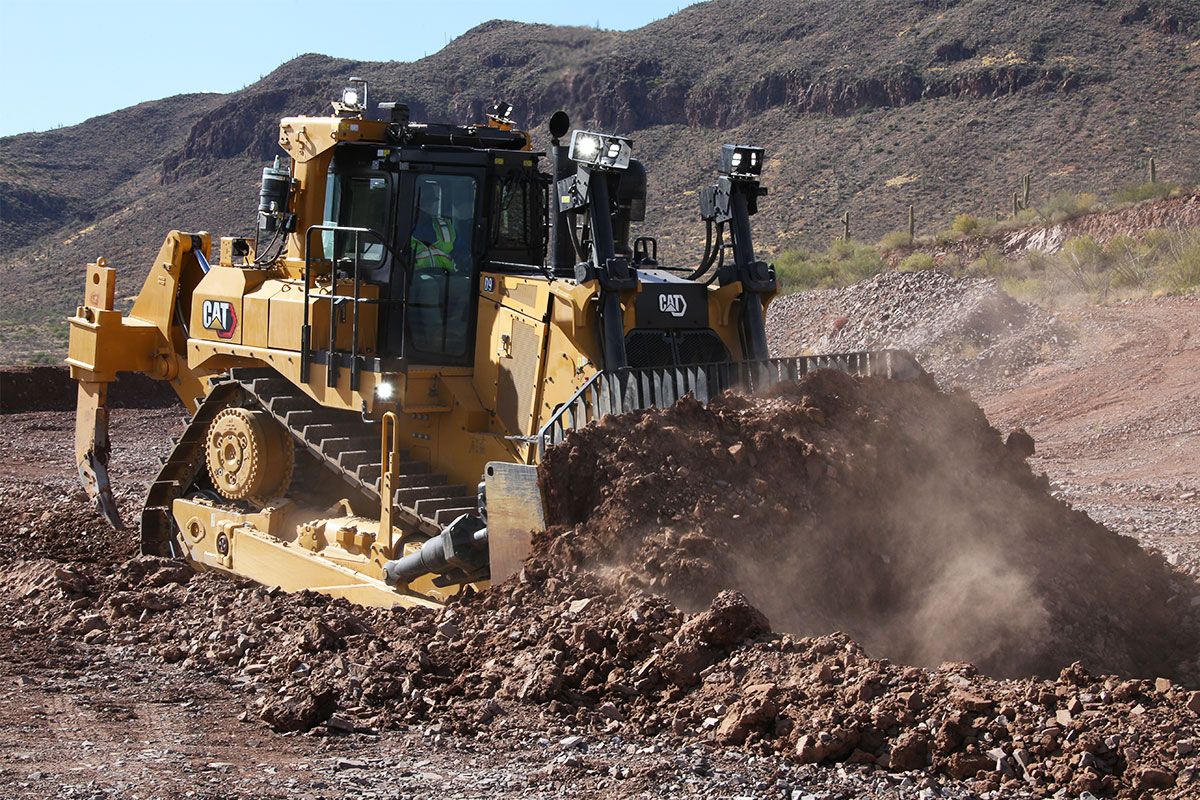
    Commercial version of Caterpillar D9 bulldozer

    The D9R bulldozer, the latest variant of Caterpillar D9 bulldozers in the service of the Israeli army, uses an 18-liter turbocharged 3408C diesel engine with a power of 474 horsepower and a drawbar pull of 71.6 metric tons (about 702 kilonewtons), and has three front gears and three reverse gear.

    The cabin and armored sections have the ability to protect the crew against bombs, standard and medium bullets. Also, new additional armor provides the possibility of resistance against rocket-propelled grenades (RPG). It is also possible to install a gun on the roof or a grenade launcher on it.
    This military version has two crew members including the driver and commander. A hatch is installed in the roof for the commander, which allows the use of a 7.62 mm machine gun.
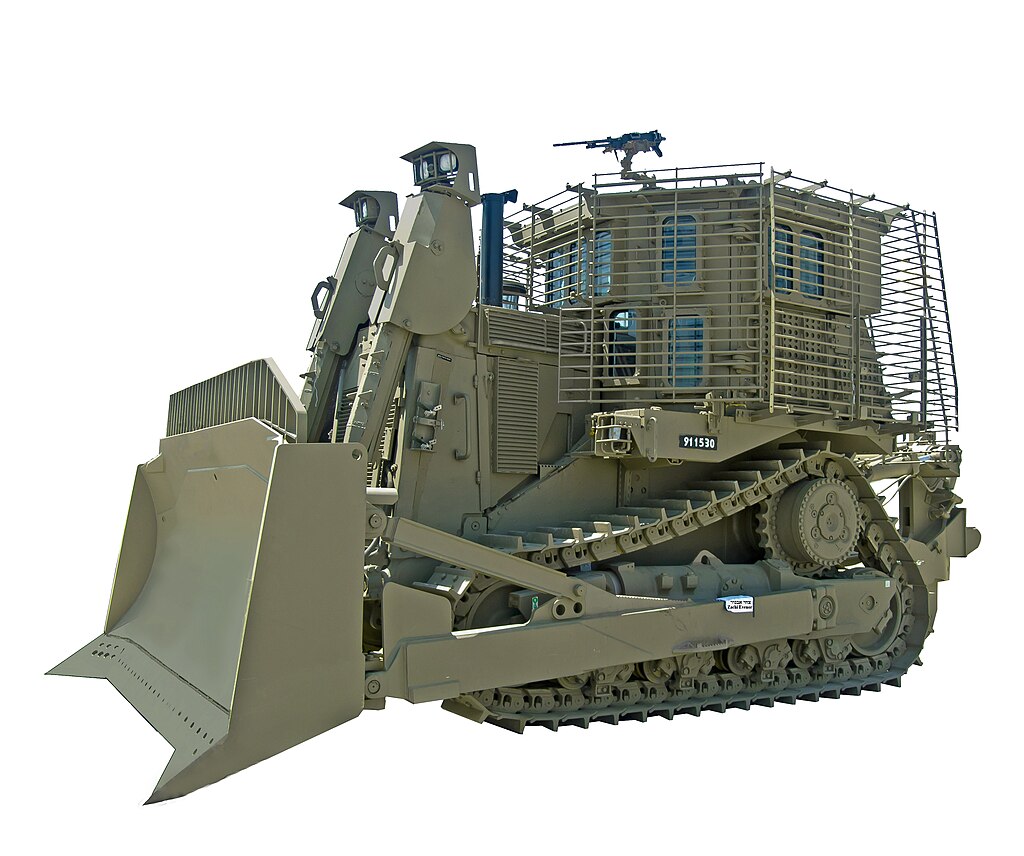
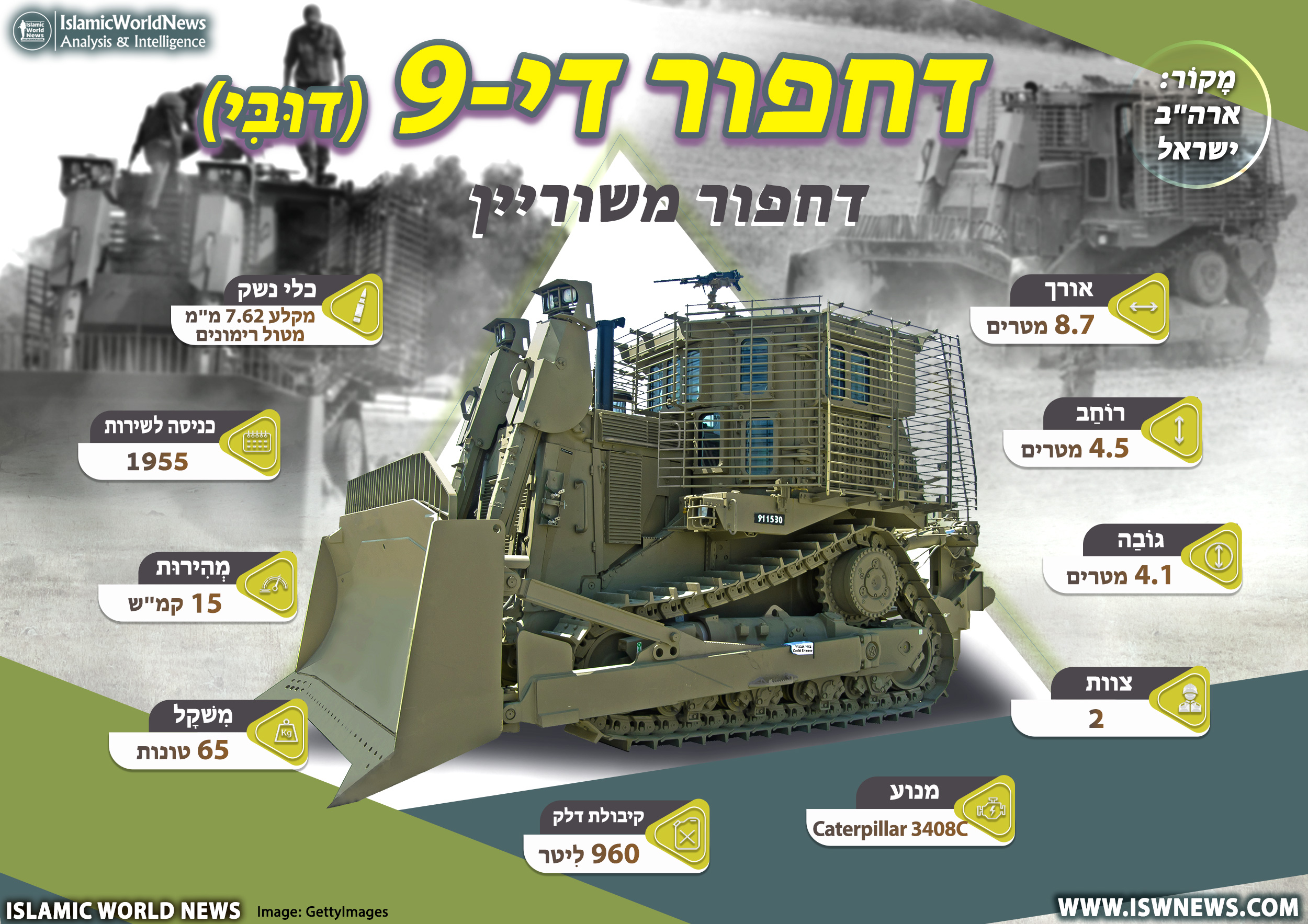
    Bulldozer D9 (Doobi) fully armored, which a 7.62 mm machine gun is mounted on the roof of a the Bulldozer

    Armored equipment added to the bulldozer adds approximately 15 tons to its weight, bringing the weight to 65 tons. Due to the D9’s durable construction and added armor, this bulldozer is able to withstand landmines, IEDs, and roadside bombs. This armored bulldozer can tow armored vehicles weighing up to 70 tons.

    The Doobi armored bulldozer is used for a wide range of combat engineering tasks such as digging trenches, building fortifications, creating roads, rescuing overturned or damaged armored vehicles, clearing minefields, detonating various types of explosive traps, clearing ground obstacles for ground forces.

    Israeli regime also operates armored remote-controlled D9N bulldozers, called “Raam HaShachar”. The remote-controlled bulldozer is used when there is a great risk for human life, mainly when opening dangerous routes and detonating explosive charges.

    Armored D9R and D9N bulldozers played important role in the Second Lebanon War (2006) and Operation Cast Lead (2008–2009). Both bulldozer types were involved in opening routes, clearing explosives and IEDs, building sand mounds to protect AFVs and infantry camps, and demolishing structures such as rigged buildings, HQs, warehouses, outposts, bunkers and tunnels.
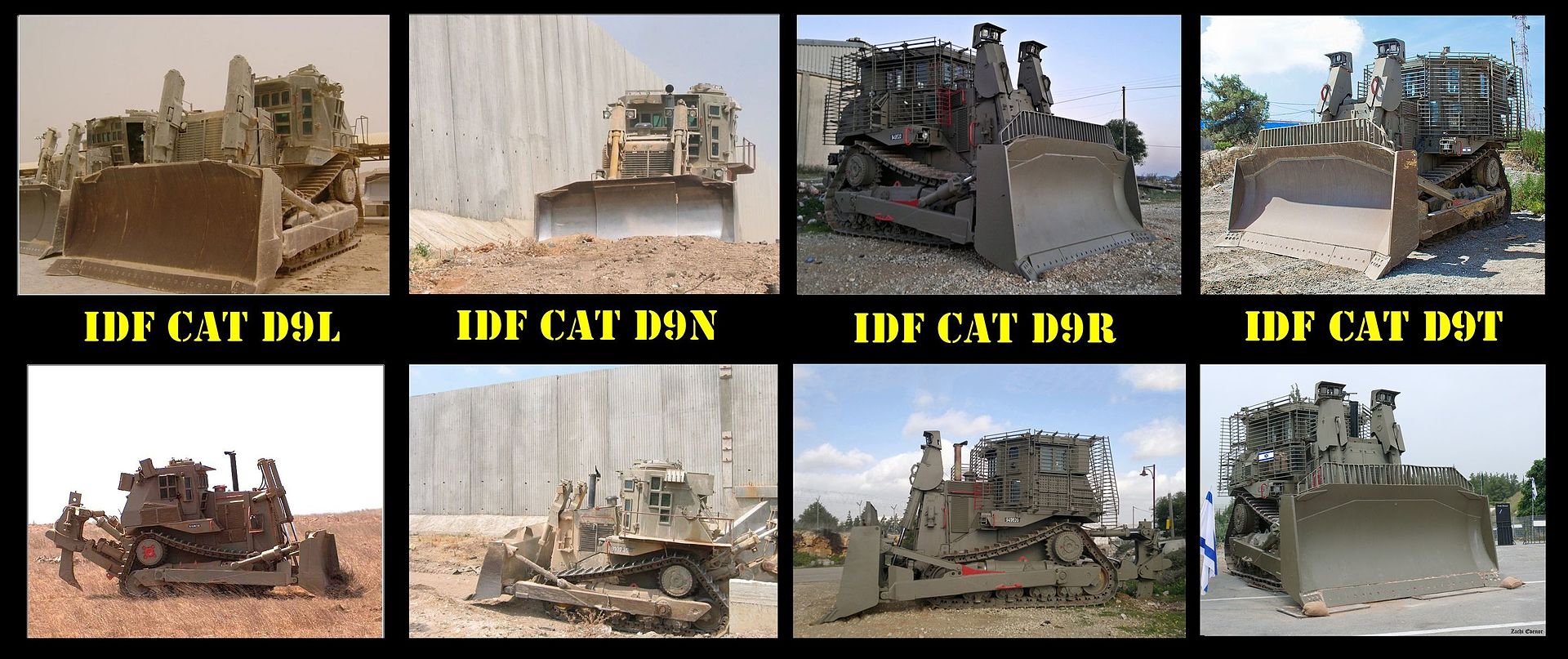
    Different versions of D9 bulldozers that have been made to date.

    In 2014, the Doobi bulldozer was recorded in the Guinness Book of Records as the world’s most armored bulldozer.

    In 2018, a version of the D9 armored bulldozer named “Panda” from the Caterpillar D9T series was introduced, which is the remote control version of this bulldozer. Also in 2019, Elbit Systems won the IMOD contract to install the Iron Fist active protection system on the Israeli army’s D9 armored bulldozers to protect them from anti-tank missiles. There is no information about the fate of installing the Iron Fist defense system on this bulldozer.

    Specifications of D9 armored bulldozer (Doobi):
    Type: Armored bulldozer
    Manufacturer: Caterpillar and Israel Defense Industries
    Year of manufacture: since 1954
    Entry into service: since 1955
    Crew: two (commander and driver)
    Length: 8.7 meters
    Width: 4.5 meters
    Height: 4.1 meters
    Engine: Caterpillar 3408C diesel with 474 horsepower
    Fuel capacity: 960 liters
    Speed: 15 km/h
    Weight: 65 tons (fully armor)
    Weapons: 7.62 mm machine gun and grenade launcher
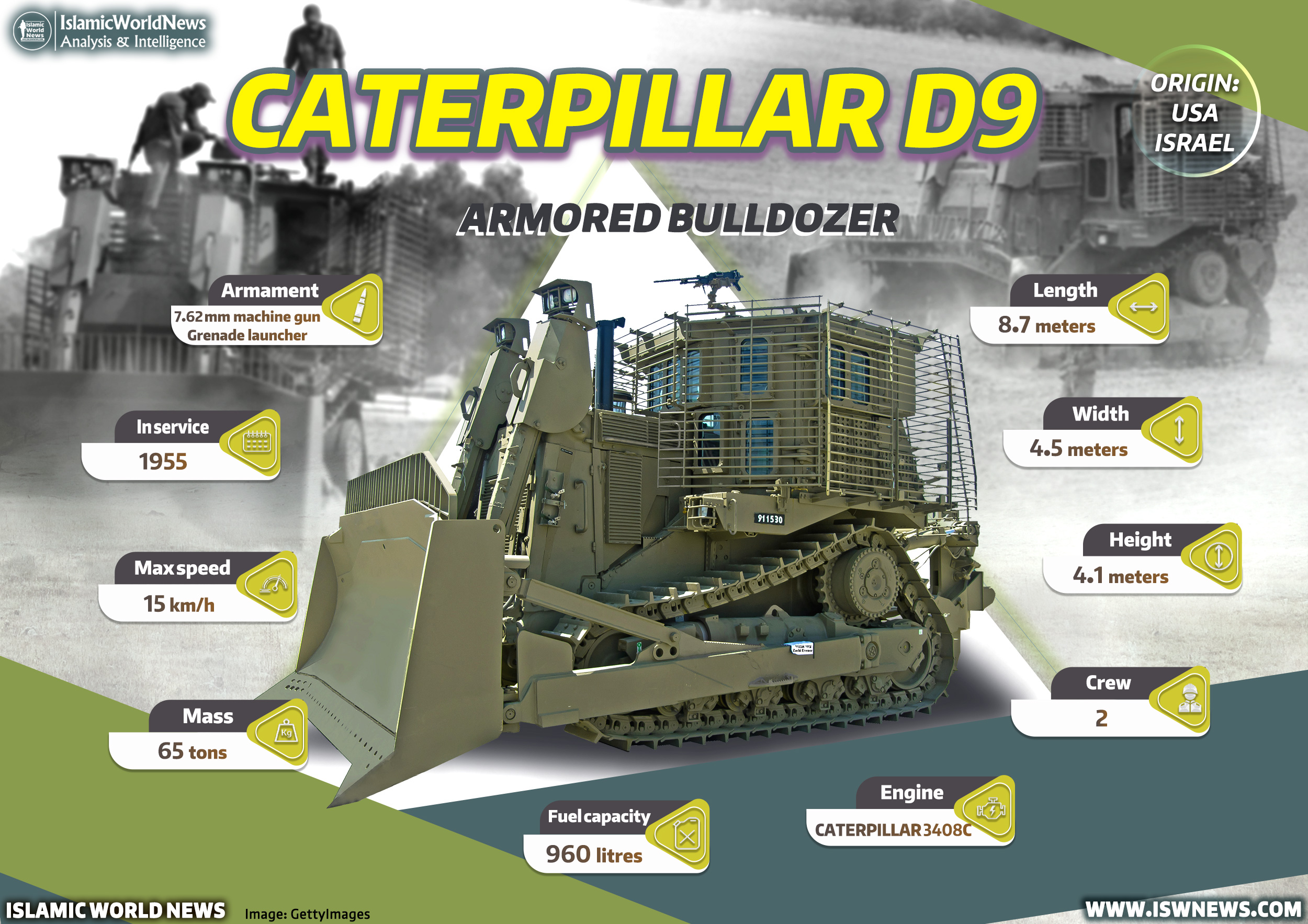
    D9 Armored Bulldozer – click to view full size

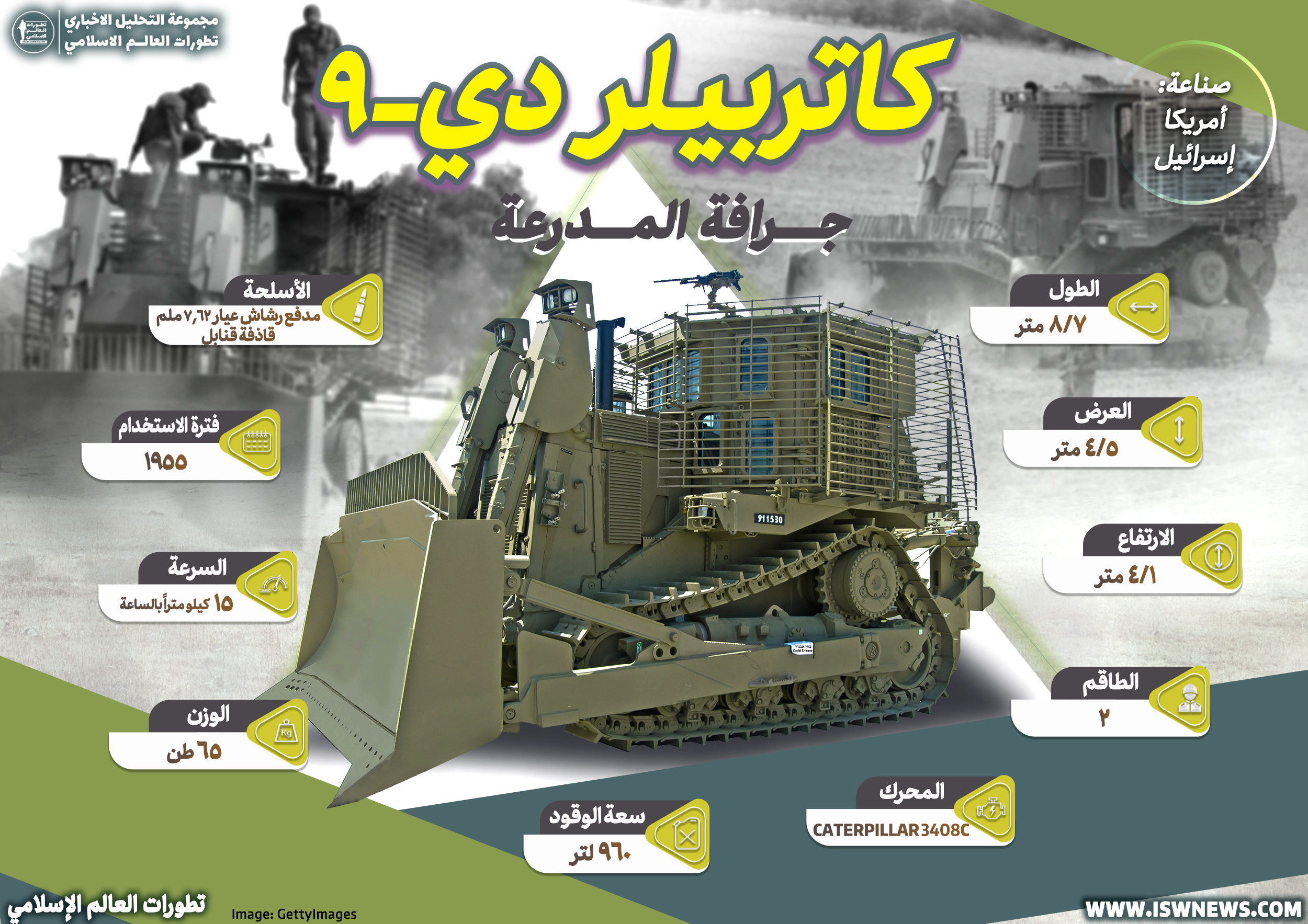
    D9 armored bulldozer posters in Russian, Arabic, Farsi and Hebrew languages:
    Sources:
    Caterpillar D9 Armored bulldozer
    Large Dozers D9
    Israel Defense Force uses armored Caterpillar D9 bulldozers to destroy IEDs
    IDF Caterpillar D9
  • Military Knowledge: Almas Missile

    Military Knowledge: Almas Missile

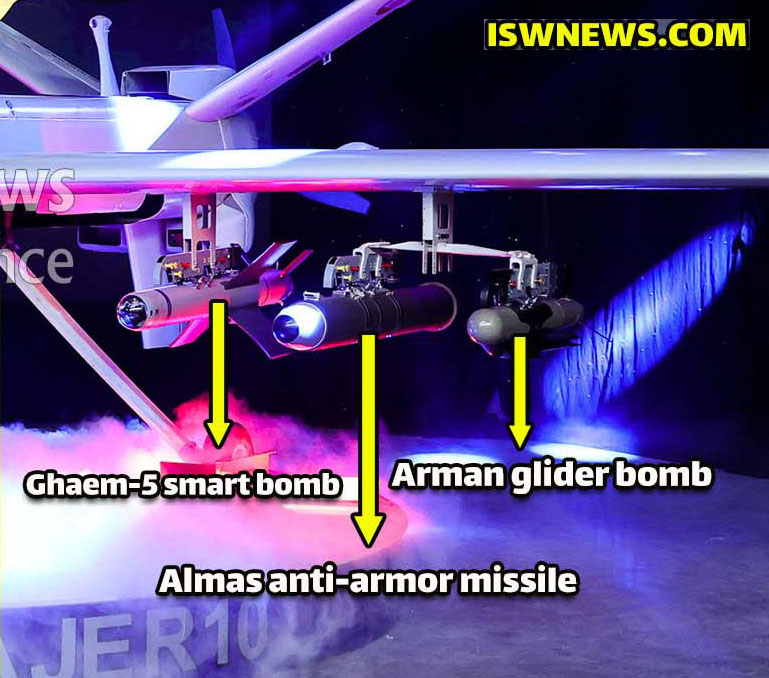
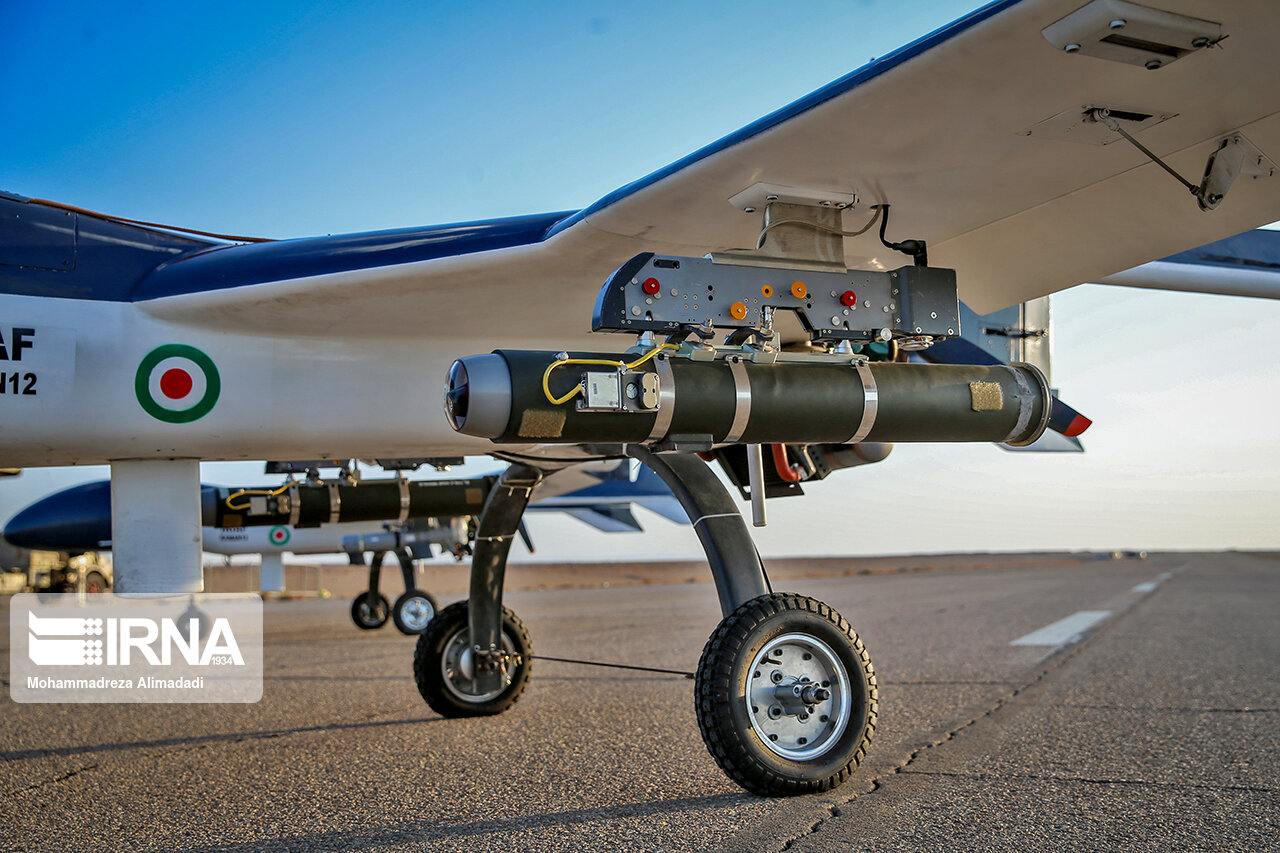
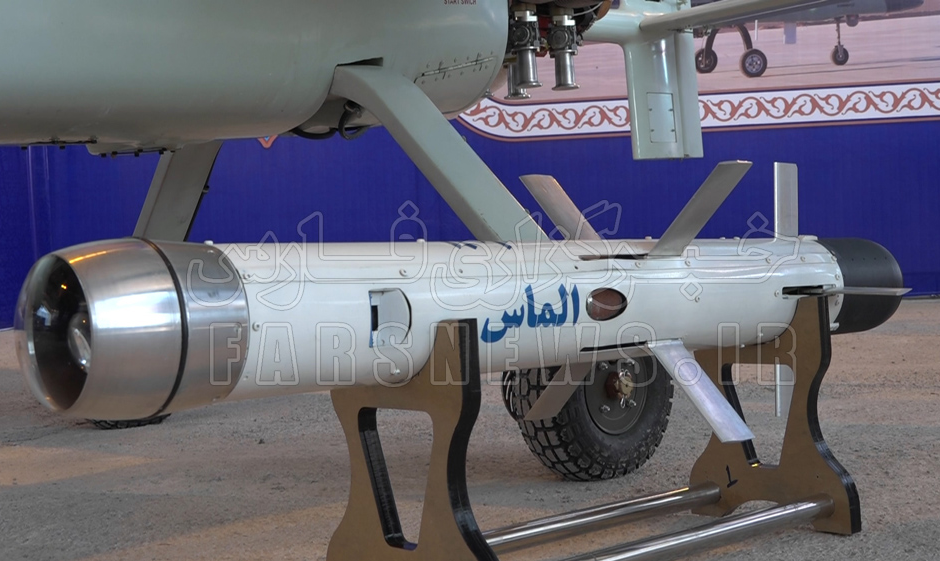
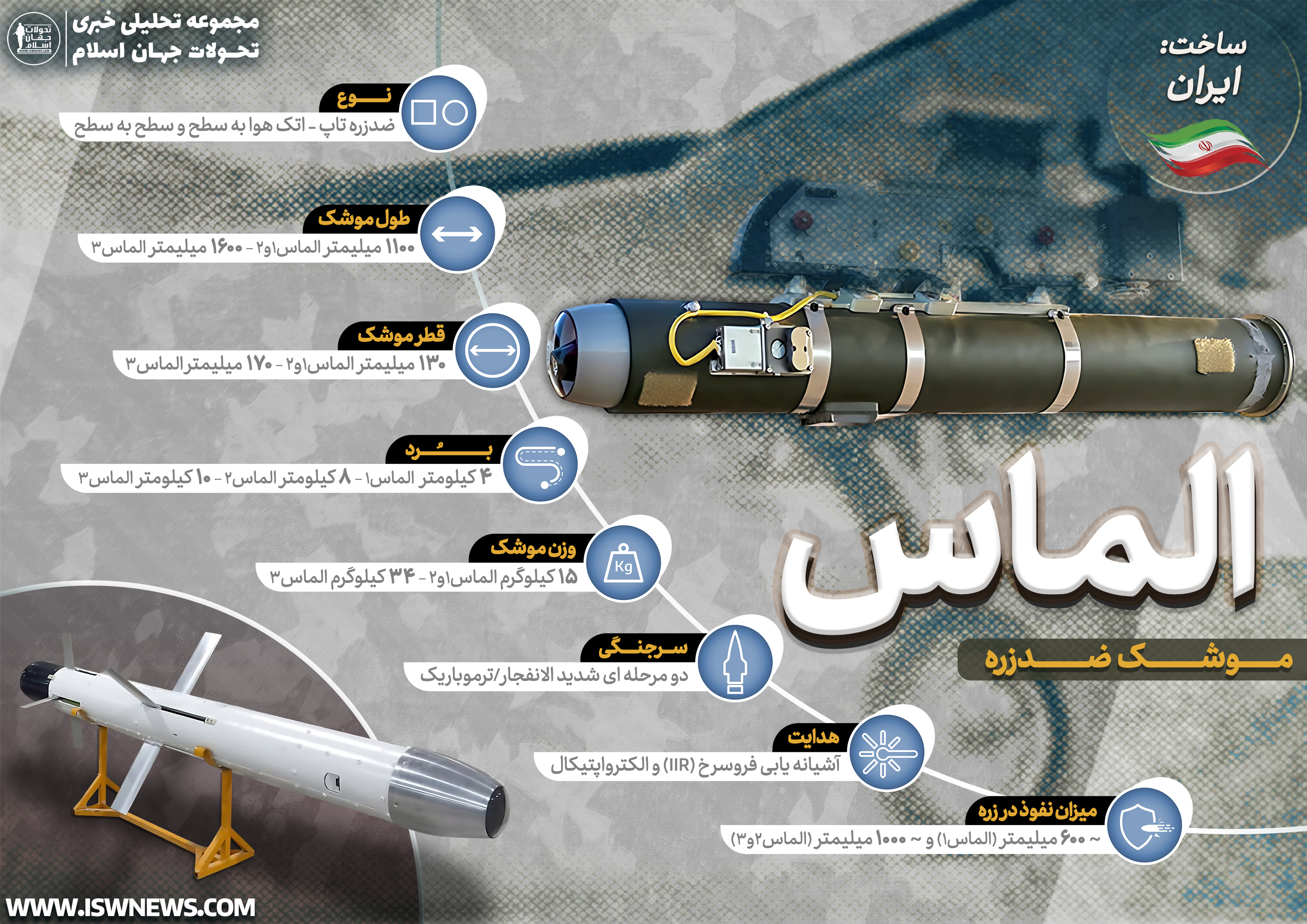
    Almas anti-armor missile is an Iranian air-to-surface (air-launched) and surface-to-surface (ground-launched) missile, which is produced in three variants Almas-1, Almas-2 and Almas-3.

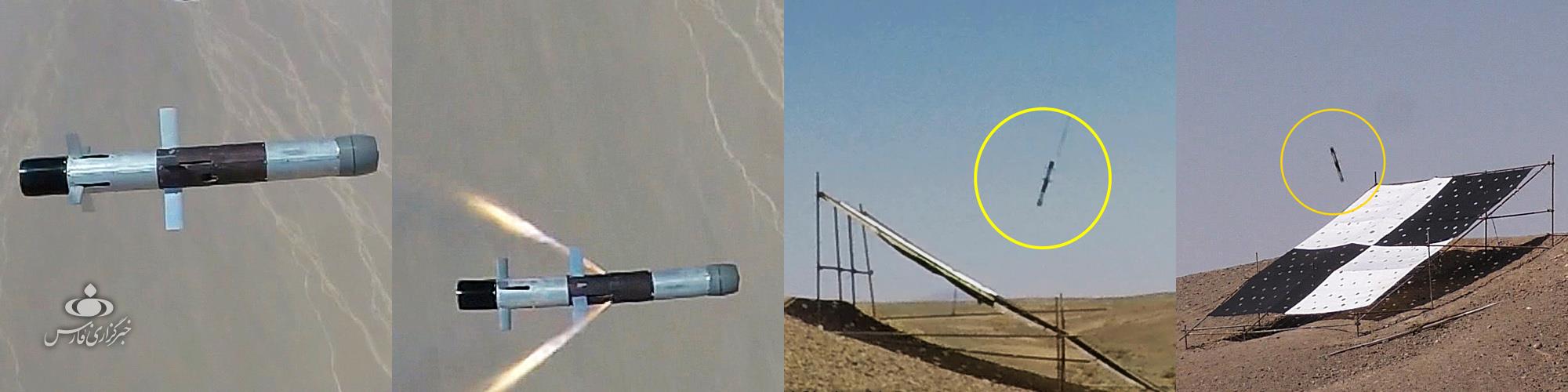
    Almas missile was seen for the first time in spring 2020 during the mass delivery of UAVs to the Islamic Republic of Iran Army and was officially unveiled and fired by the Ababil 3 UAV during the army’s UAV exercise in the following January.

    After the unveiling of the Almas missile and its similarity with the Israeli “Spike” missile, the attention of many military experts was drawn to this missile. Some experts believe that after the 2006 Israel–Hezbollah War, a number of Spike missiles fell into the hands of resistance fighters and these missiles were transferred to Iran, and Iranian experts reverse-engineered this missile and produced the Almas family of missiles.

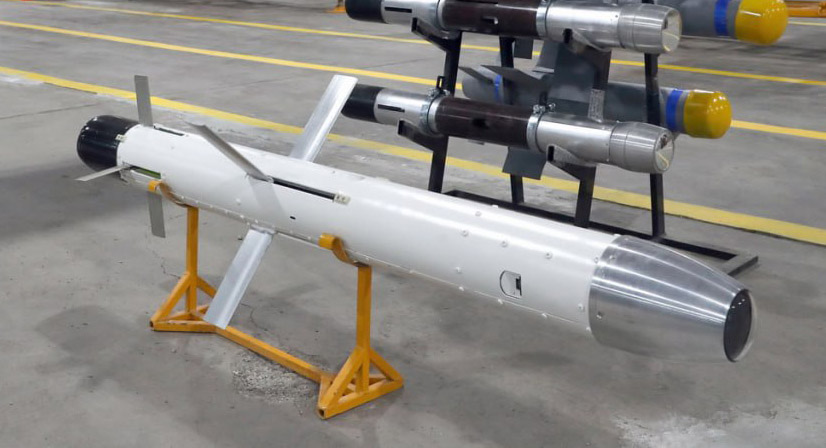
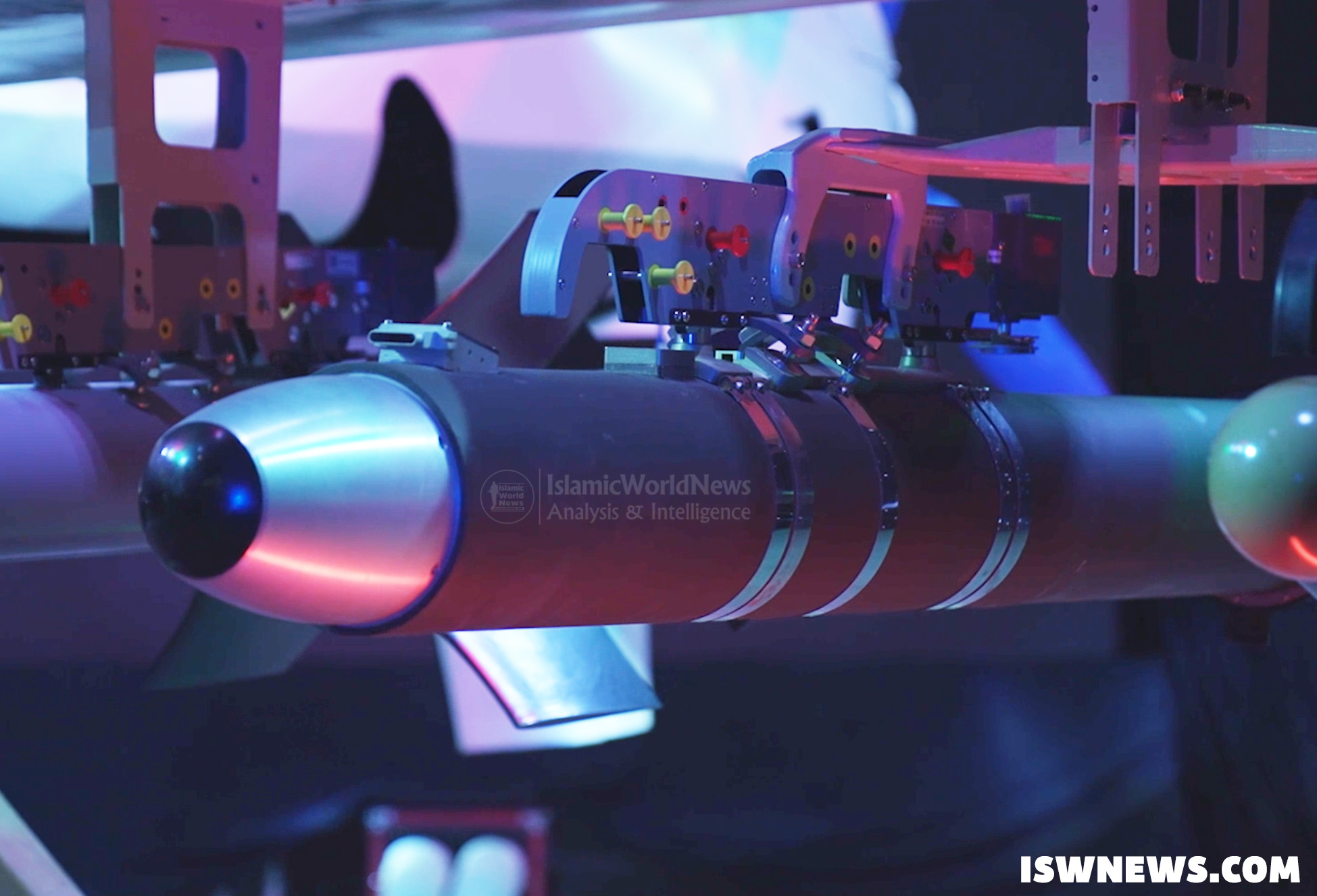
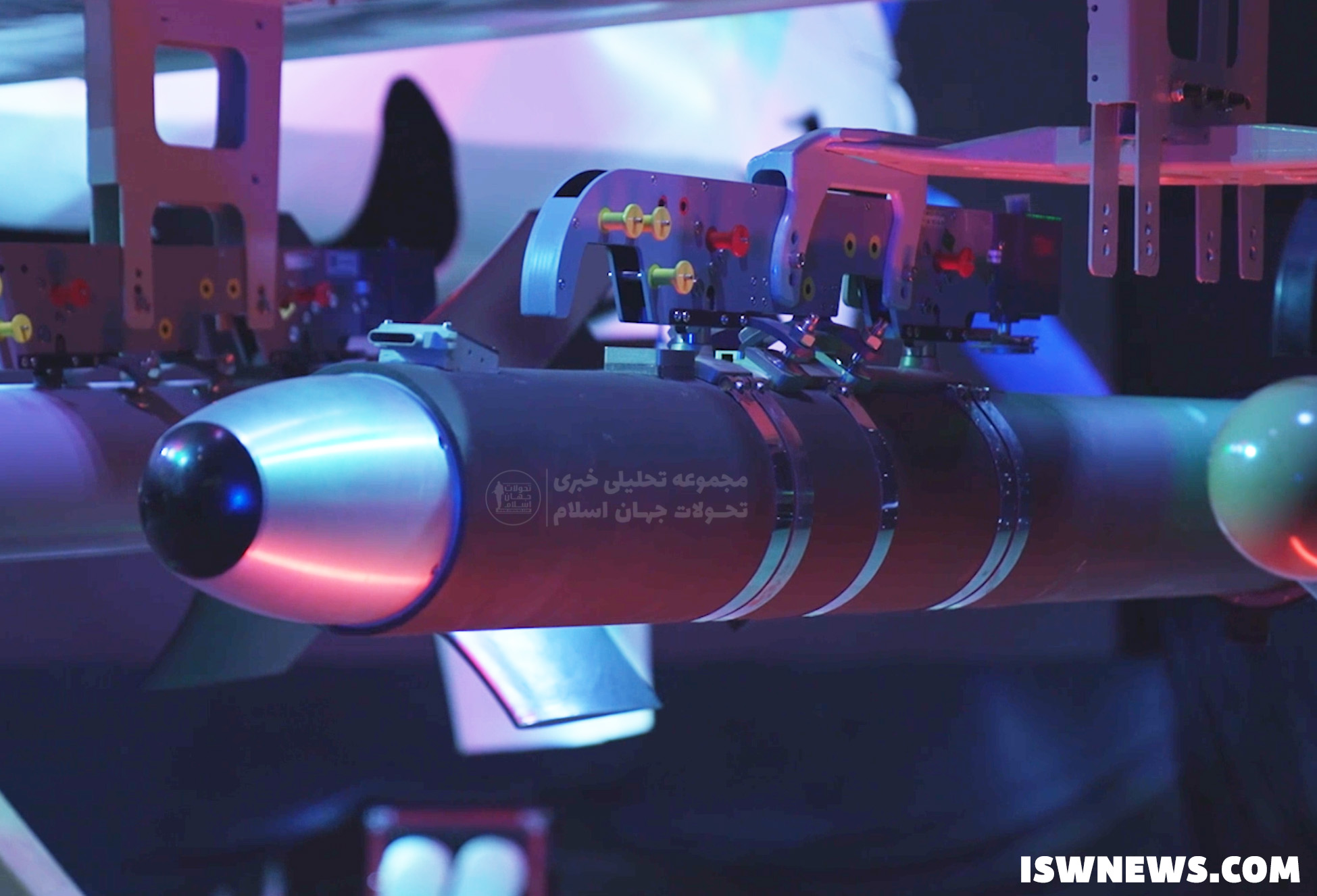
    Almas family missiles use a tandem-charge high-explosive anti-tank (HEAT) or thermobaric warhead. The Almas warhead is located just behind the camera at the tip of the missile. Almas missile guidance system is based on image infrared homing (IIR) and elctro-optical sensors.

    The Almas missile is a top-attack missile and hits the weakest point in the armor from above and damages them. This greatly increases the efficiency of this missile. In addition, the Almas missile has a “fire and forget” capability; This helps in reducing the damage to the missile crew.

    Due to the increase in defense technologies in modern battle tanks and the development of various active defense systems to deal with anti-tank missiles, the destruction of tanks has become more difficult. Israel is also a leader in this field with Trophy active protection system. By installing the Trophy active protection system on its most important tank, the Merkava Mark-4, Israel has made it difficult to destroy this tank with an anti-tank missile.

    Read more: Military Knowledge: Trophy Active Protection System

    The first solution to deal with the active protection system is to launch two anti-armor missiles in a short time interval to prevent the proper functioning of the defense system. Dehlavieh dual missile launcher is one of the smart solutions to counter and defeat the trophy active defense system produced by Iran. This system is produced in Hezbollah’s combat unit under the name of the Tharullah system, which has a function completely similar to the Dehlavieh dual missile launcher.

    Read more:
    Military Knowledge: Dehlavieh Dual Missile Launcher
    Lebanon’s Hezbollah Unveils Tharallah Anti-Tank System (Video)

    One of the other ways to deal with active defense systems is to attack the battle tank from above (top-attack) because most of the active defense systems do not have the ability to react against such attacks. Therefore, top-attack missiles are a good option to deal with these systems. For this reason, Iran started building and designing Almas missile by taking the example of Israeli Spike anti-armor missile.

    Almas-1 missile:
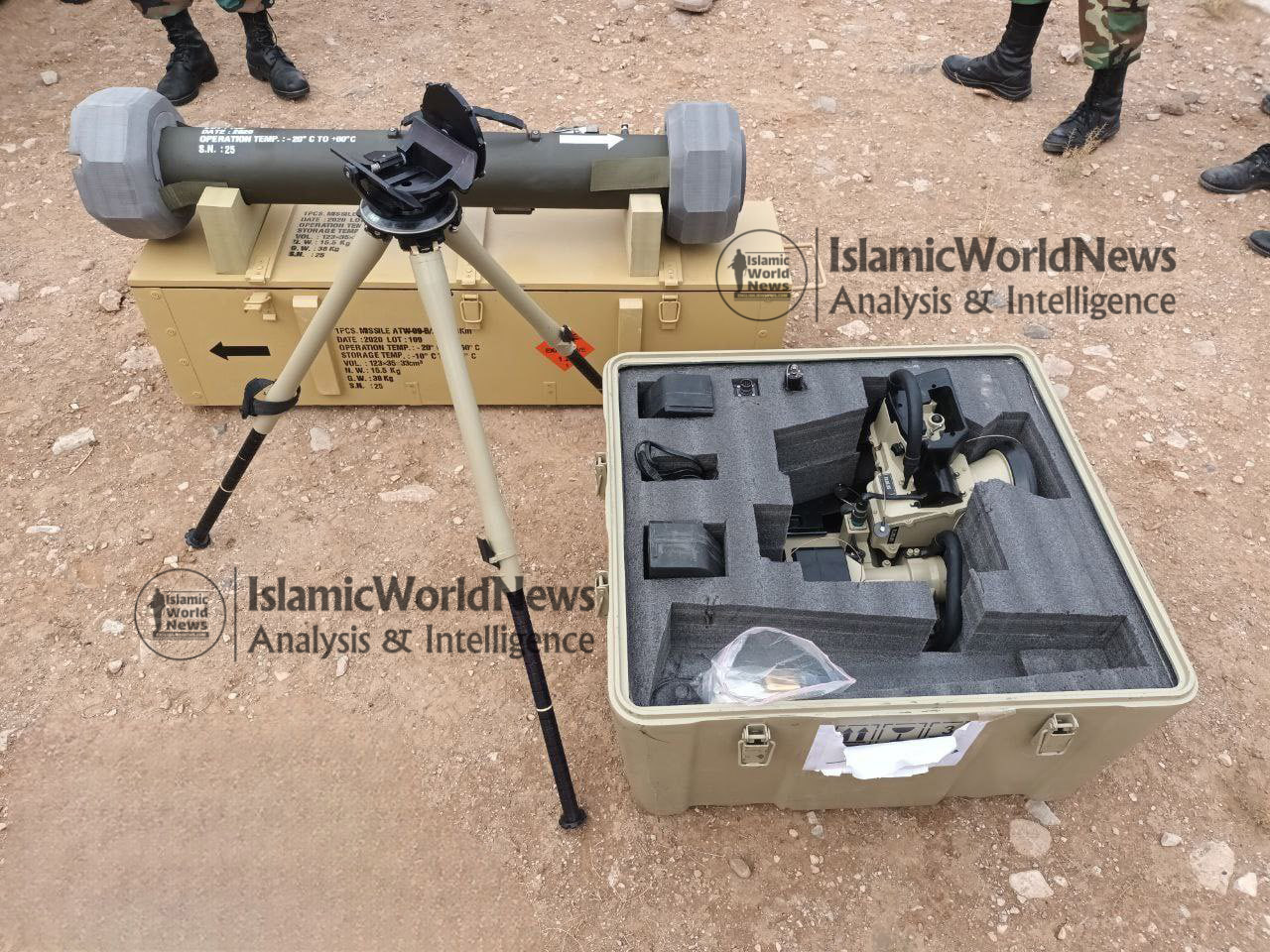
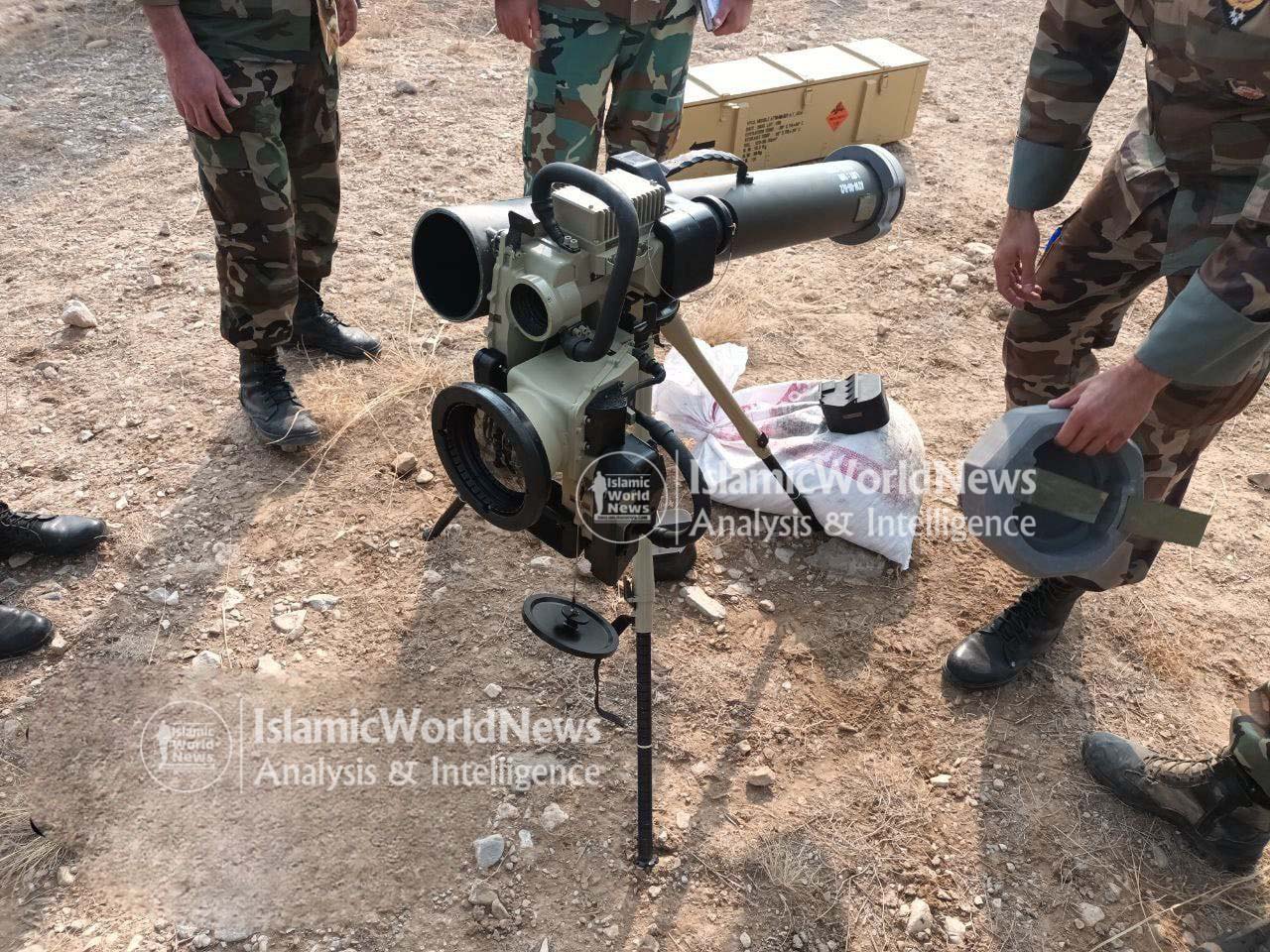
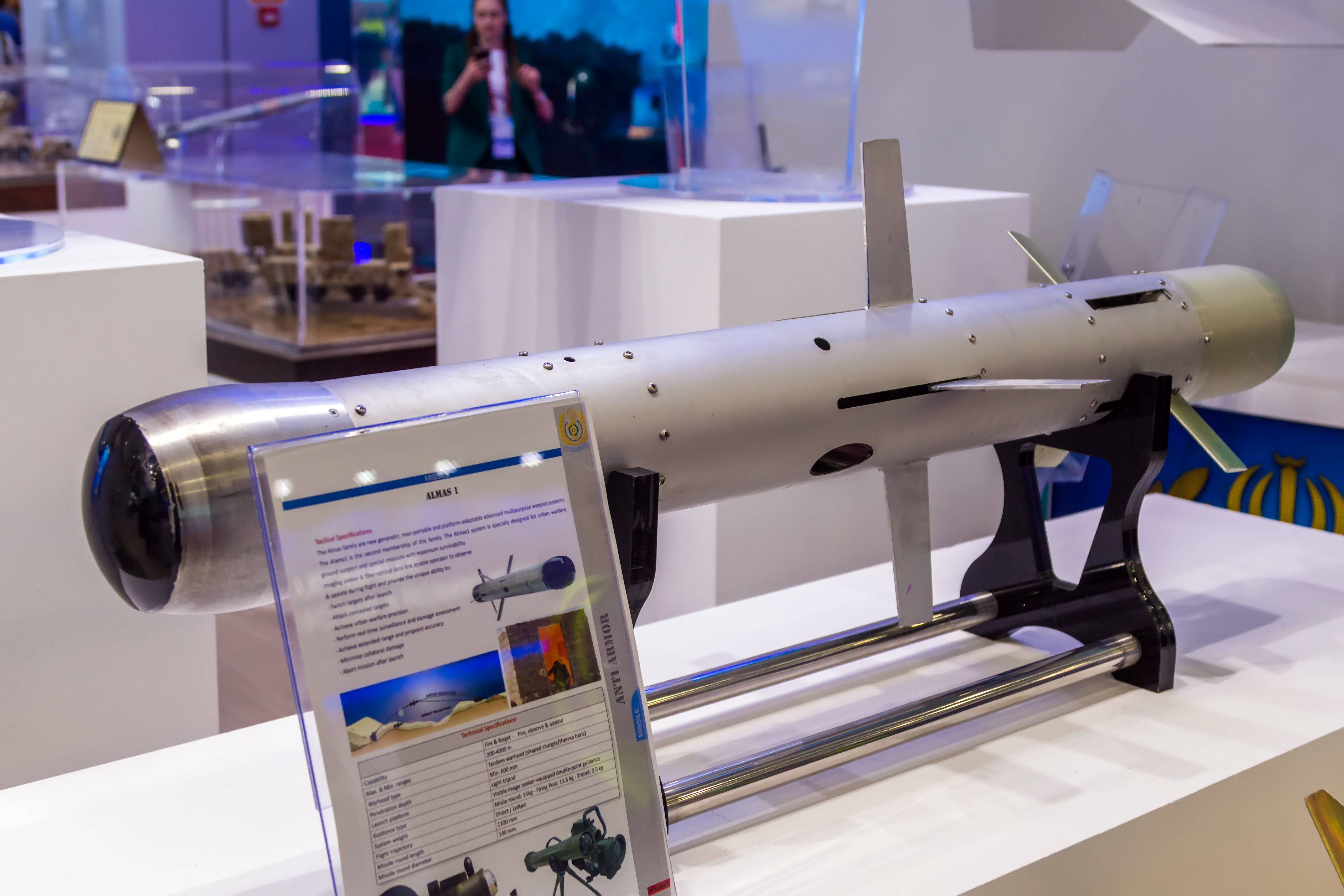
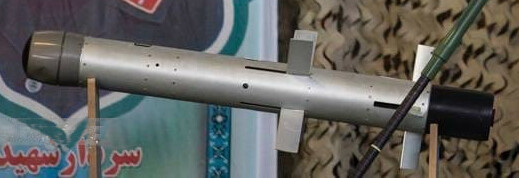
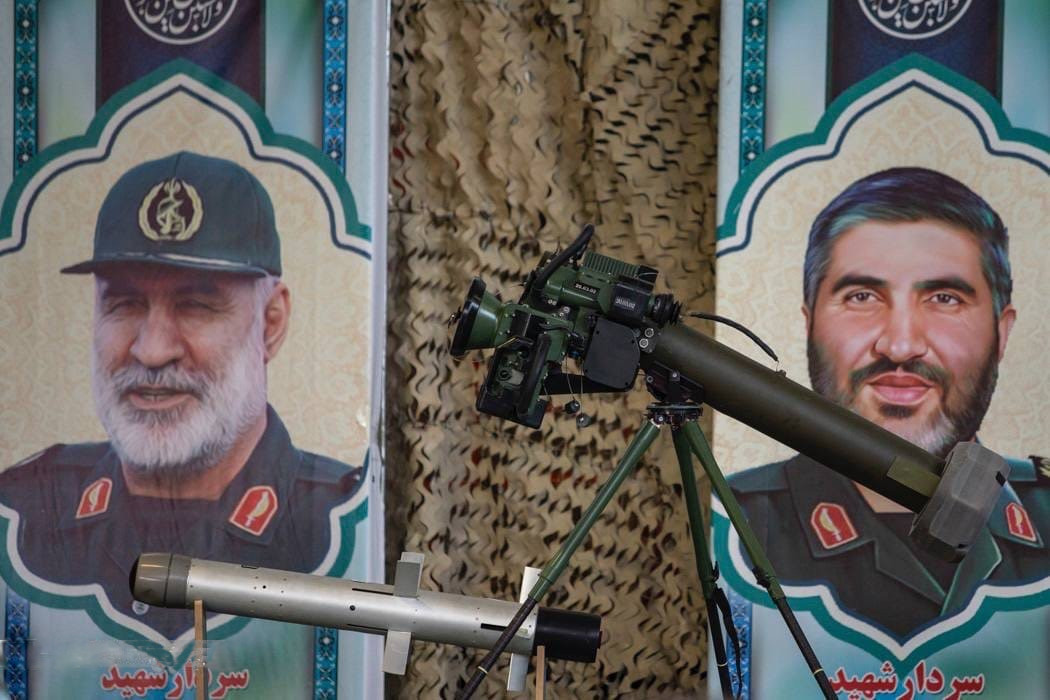
    Almas 1 missile is very similar to Spike LR anti-armor missile in terms of design and specifications. Almas-1 uses four fins with the same combination as the Toophan missile. In the Almas missile, a solid fuel engine with a hot gas outlet similar to the Toophan missile can be seen on its body. According to the images and announced specifications, this missile uses an image seeker and fiber-optic wire to find and destroy targets. The range of this missile is 4000 meters and it weighs 15 kg.

    Almas-1 ATGM missile

    Almas-1 anti-armor missile live test

    Almas-2 missile:
    Almas 2 missile is a more advanced version of the Almas 1 missile, and its range has been increased to about 8,000 meters when fired from a ground-based launcher. This missile has the ability to penetrate 1000 mm of armor. Like Almas 1, this missile can be fired from ground and air launchers.

    Almas-2 missile test

    Almas-3 missile:
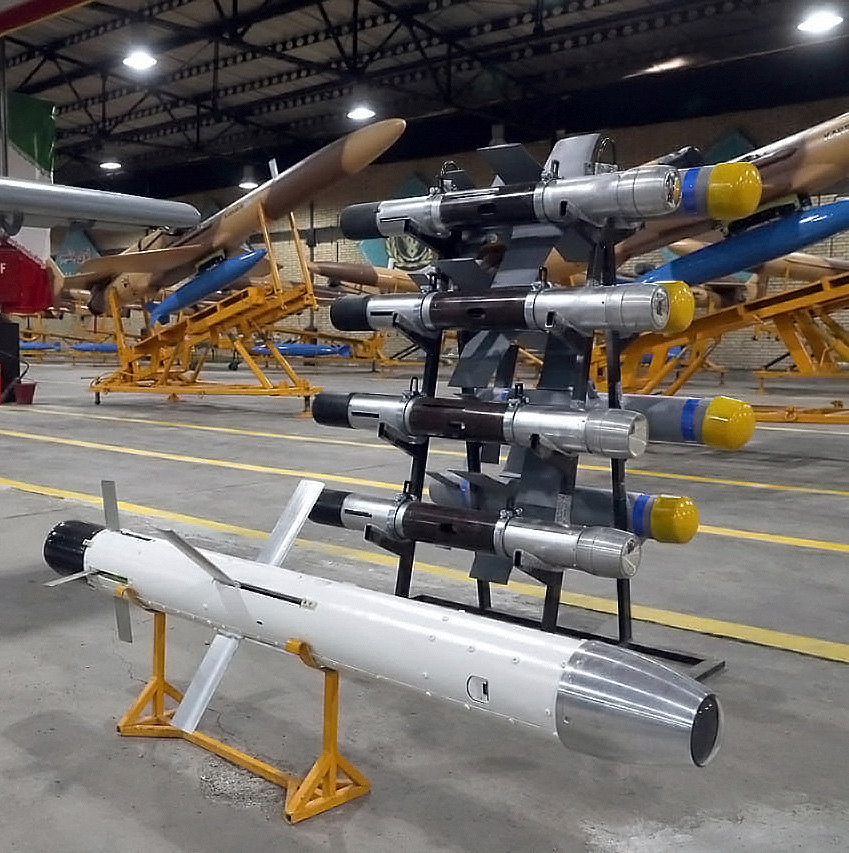
    Almas 3 missile is the latest and newest version of the Almas family of missiles. Almas-3 is larger than Almas 1 and 2 and seems to have been sampled from the Spike ER missile. Considering that the configuration of Almas 3 and Spike ER are very similar to each other, it is likely that their specifications are also close to each other. Hence, Almas-3 probably has a range of about 10 km. The warhead of this missile is a two-stage high-explosive or thermobaric type, and it uses an infrared and electro-optical seeker for guidance and has the ability to penetrate 1000 mm of armor. Also, if the fiber-optic wire is replaced with RF link to guide this missile and fire it from aircraft, a range of about 16 km is envisioned for the Almas-3 missile.

    Almas-3 and Almas-2 missiles in the background

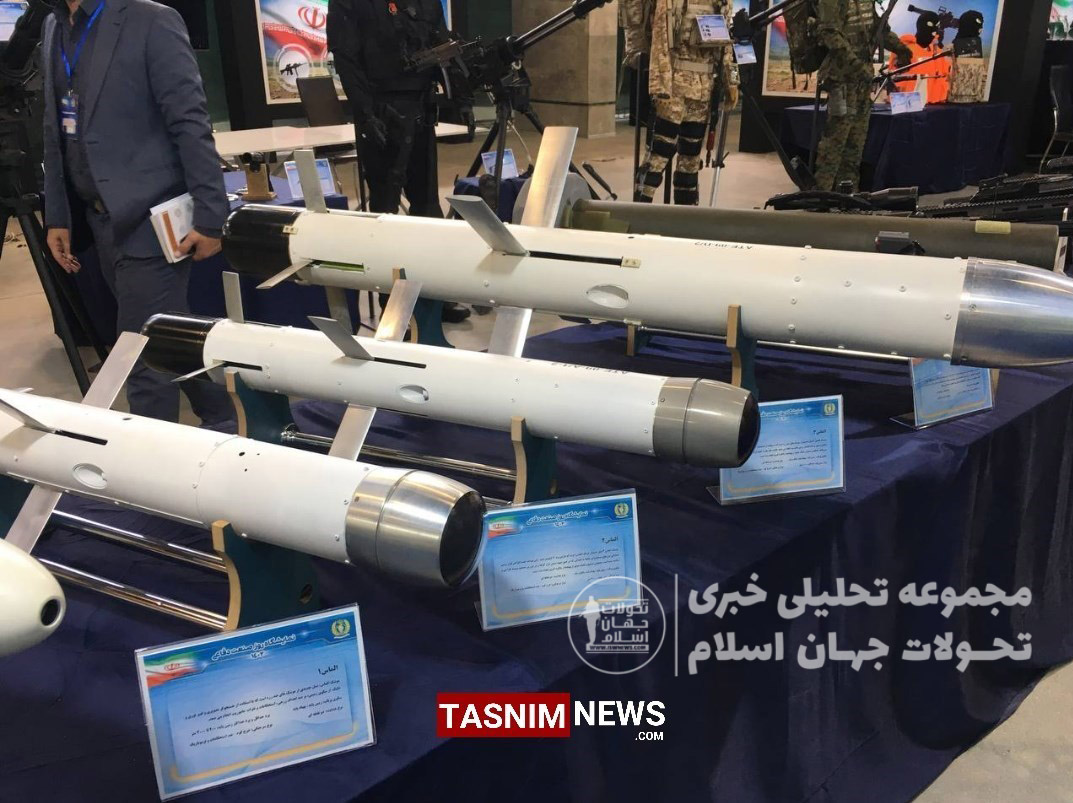
    In the picture below, you can see the family of Almas missile in a frame. From left to right, the missiles are Almas-1, Almas-2 and Almas-3. In this picture, the similarity of appearance and dimensions of Almas 1 and 2 variants and the difference of their dimensions and appearance with Almas-3 missile are clearly visible.

    From left to right, Almas-1, Almas-2 and Almas-3 missiles

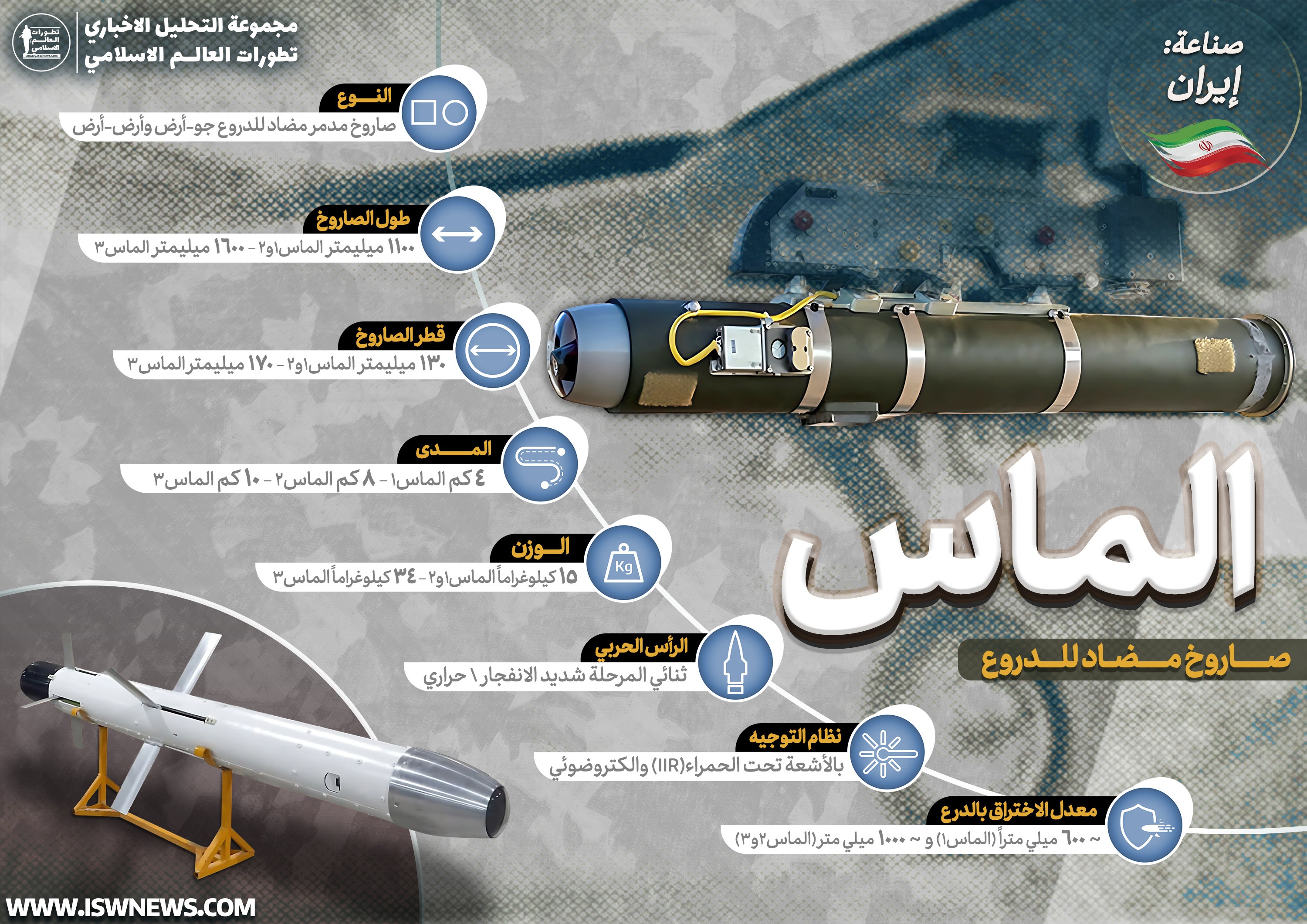
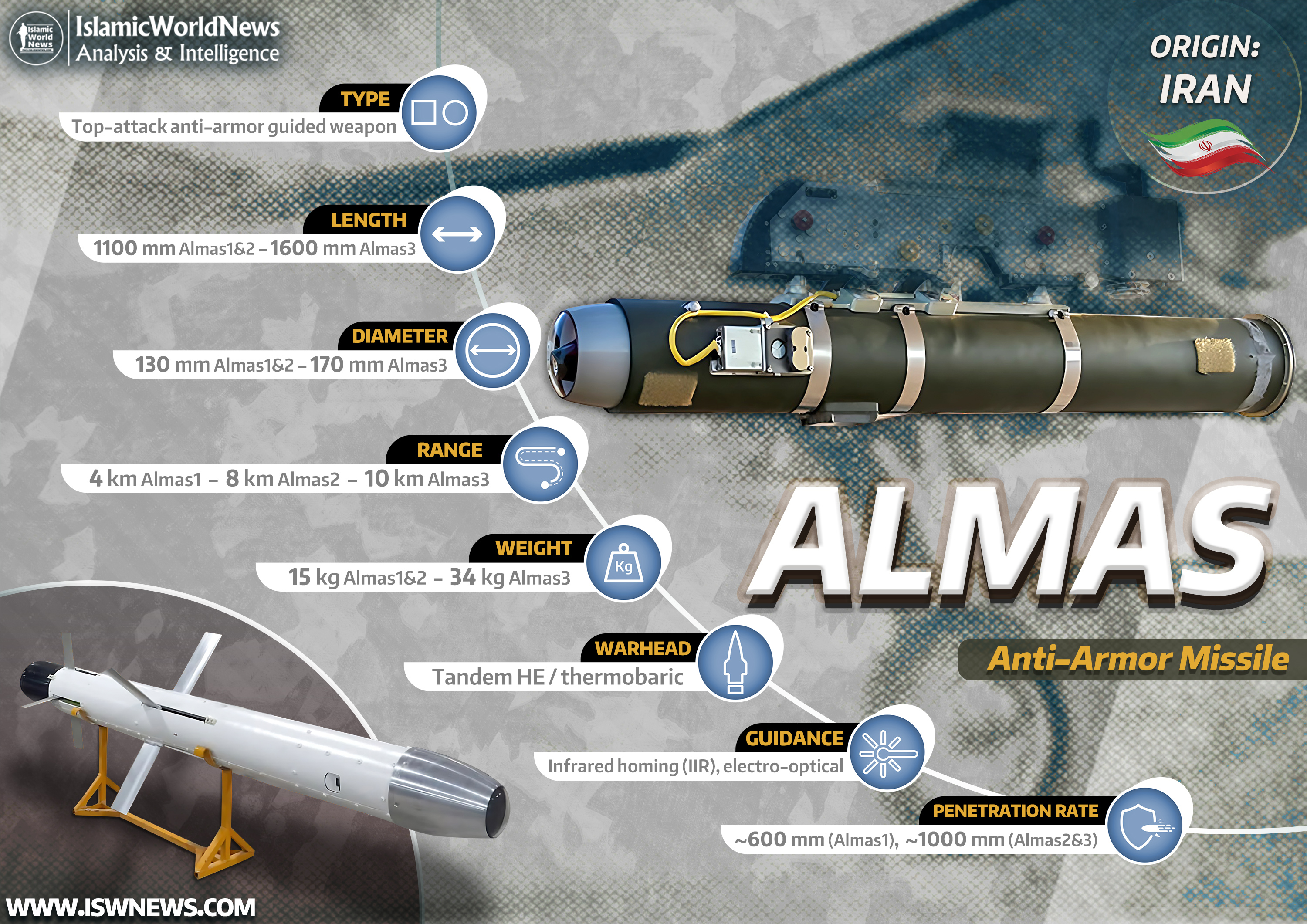
    Almas missile specifications:
    Type: Air-to-surface and surface-to-surface anti-armor missile
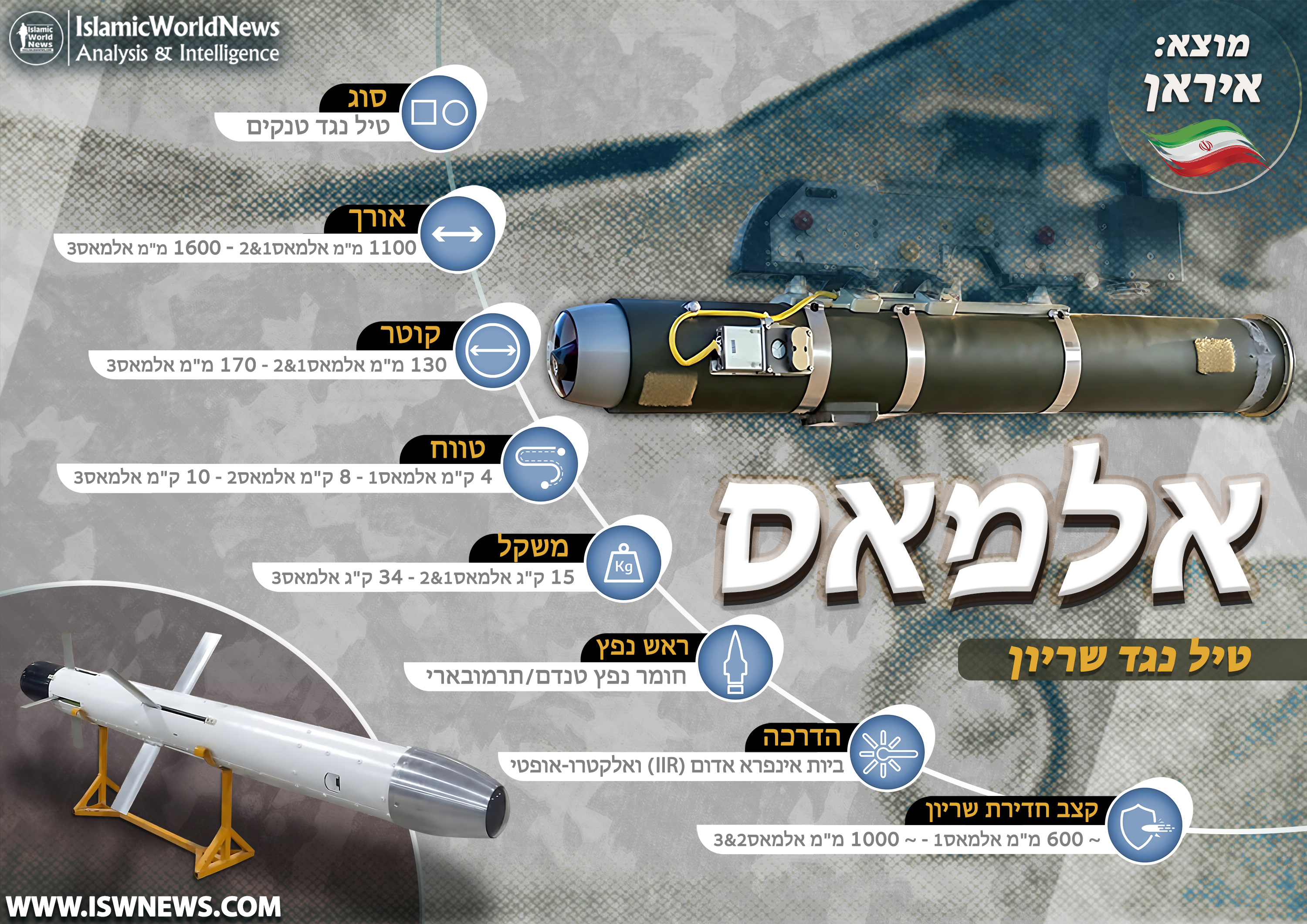
    Length: 1100 mm Almas1&2 – 1600 mm Almas3
    Diameter: 130 mm Almas1&2 – 170 mm Almas3
    Range: 4 km Almas1 – 8 km Almas2 – 10 km Almas3
    Weight: 15 kg Almas1&2 – 34 kg Almas3
    Warhead: tandem-charge high-explosive/thermobaric
    Armor penetration rate: ~ 600 mm (Almas1), ~ 1000 mm (Almas2&3)
    Engine: Solid-propellant rocket
    Guidance: Infrared homing (IIR) and electro-optical
    Launch platform: ground-based launchers and aircraft
    Origin: Iran

    Almas Anti-Armor Missile – click to view full size

    Infographics of Almas missile in Russian, Farsi, Arabic and Hebrew:

  • Military Knowledge: Sa’ar 6-Class Corvette

    Military Knowledge: Sa’ar 6-Class Corvette

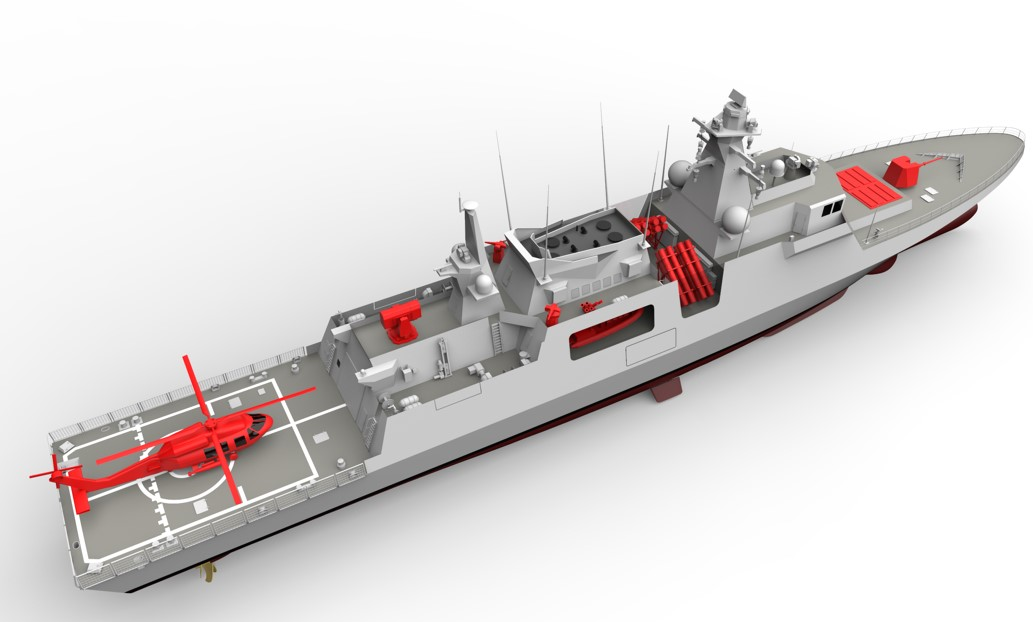
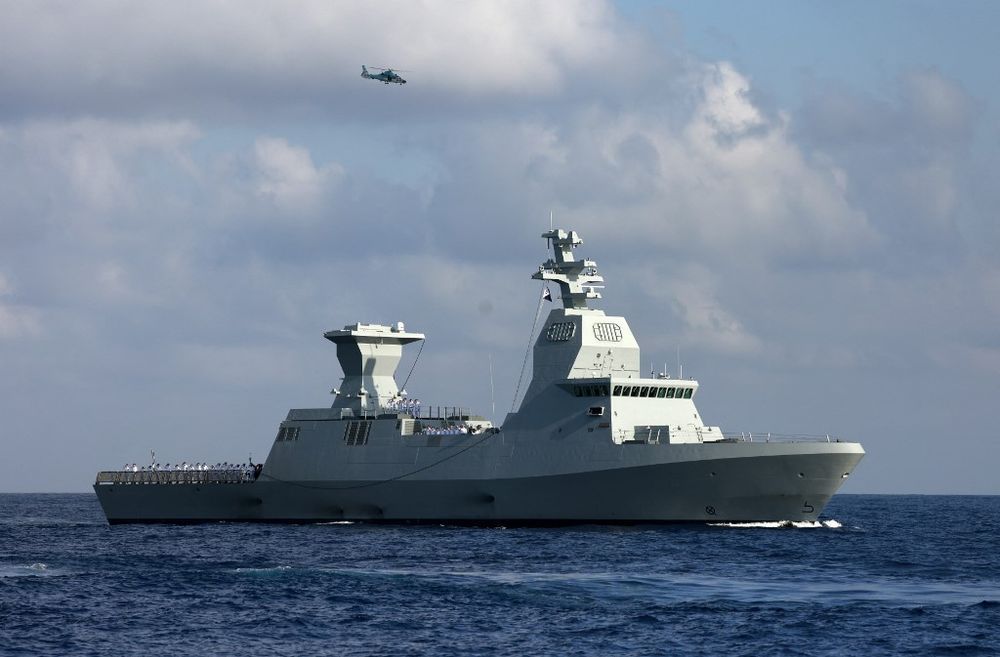
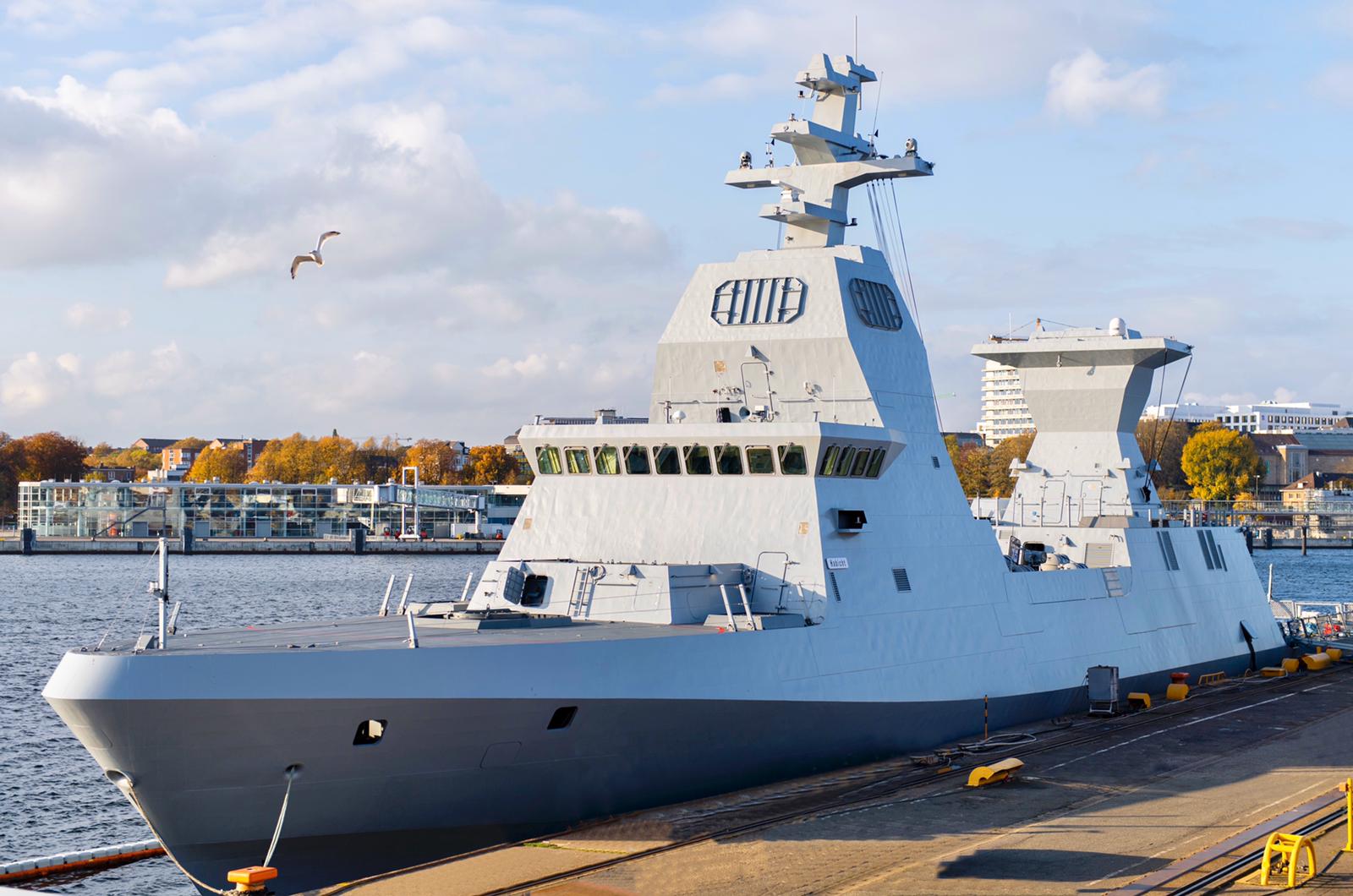
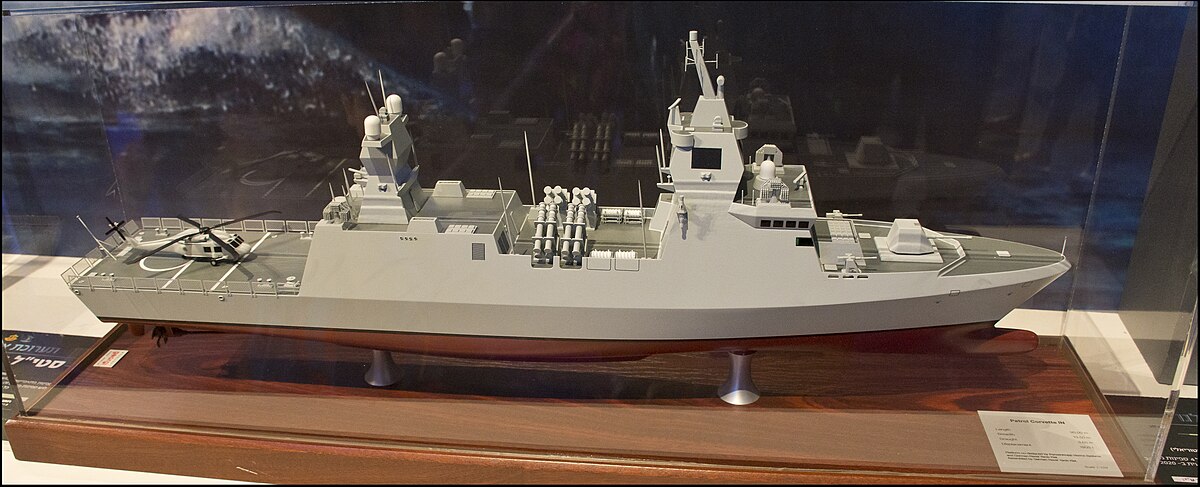
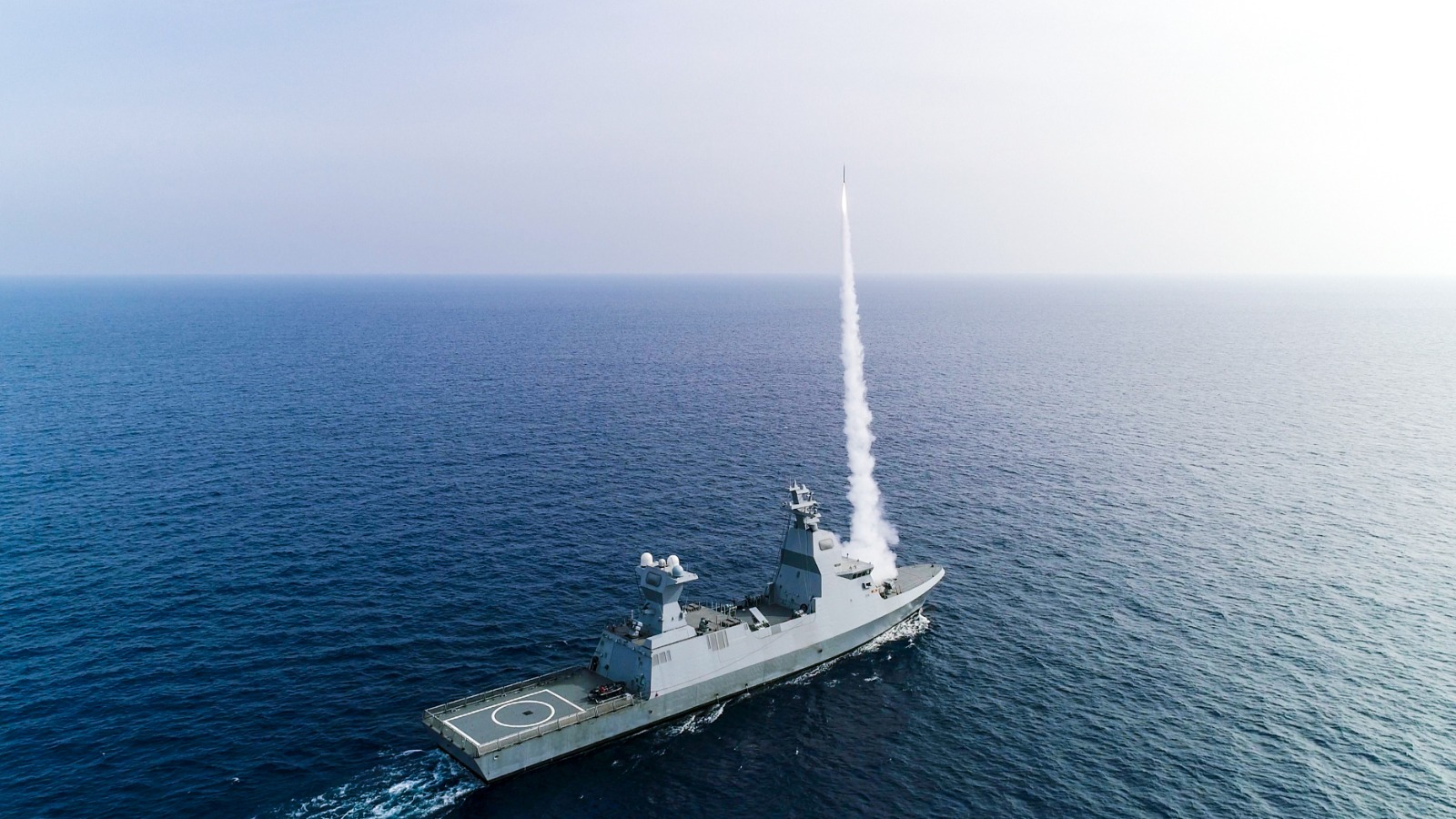
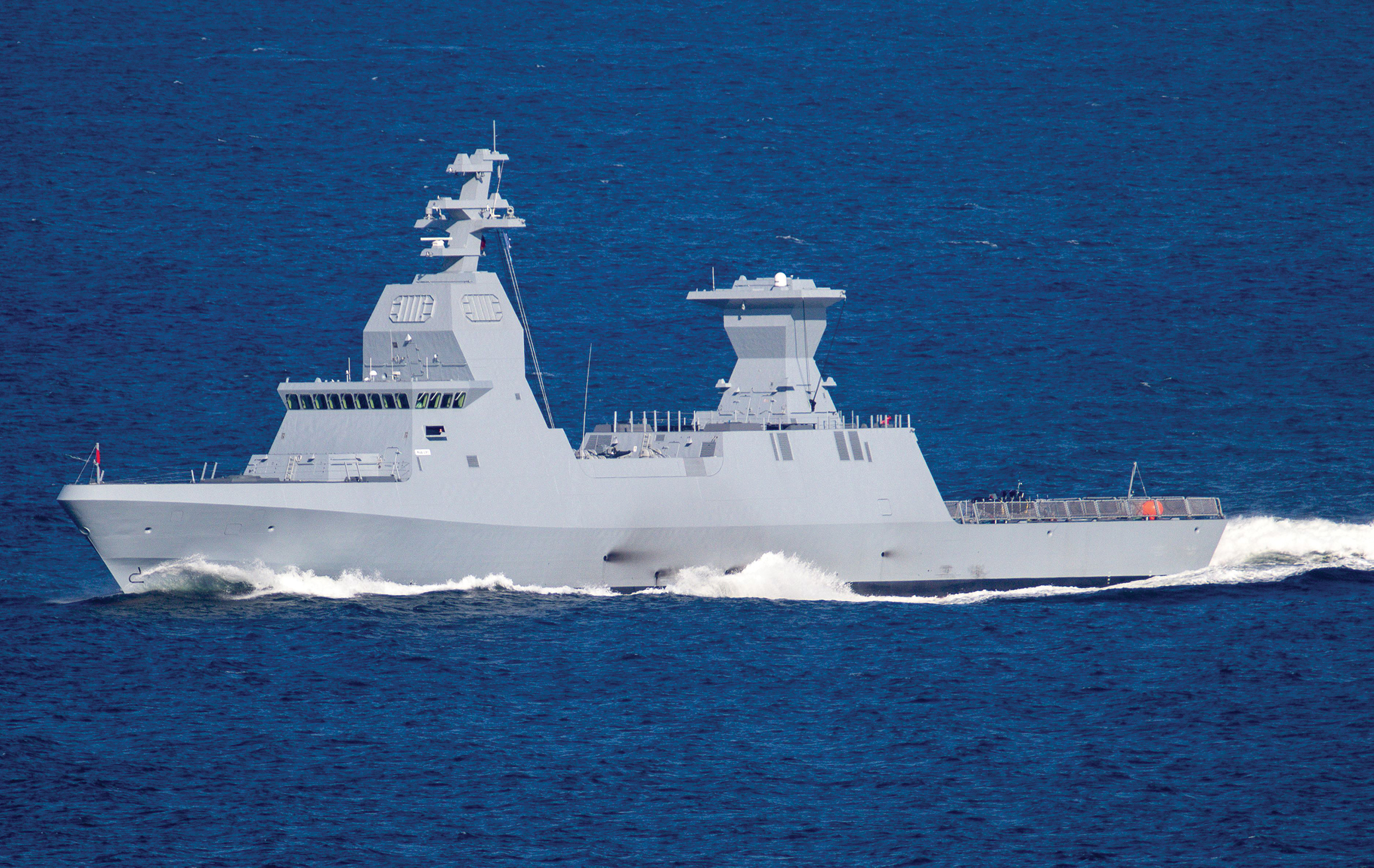
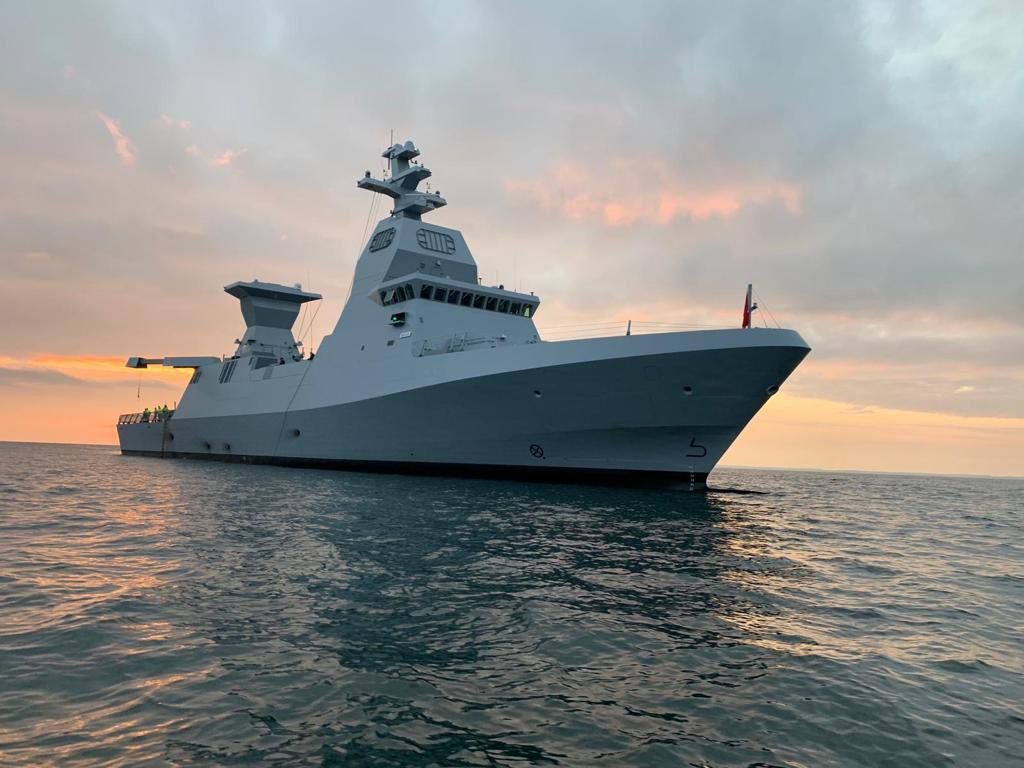
    In 2015, the Israeli army ordered four Sa’ar-6 warships to Germany. Although this ship is generally known in the world as an Israeli warship, the Saar-6 class was built in Germany by the German company ThyssenKrupp Marine Systems based on the design of the German Braunschweig class warship. However, to adapt Israeli systems and missiles such as Barak-8 and the Iron Dome defense system (marine version), changes have been made on this corvette, and this part was done by Israel. It is said that the Israeli company Elbit Systems has been awarded the contract to design and build the electronic warfare suites for the ships.

    In 2020, the first Saar 6 class warship named Magen was delivered to the Israeli Navy. Three more corvettes, OZ, Atzmaut and Nitzachon, were delivered during 2021 but were not operational. These four warships entered the service of the Israeli navy until 2023 and after the completion of various parts. Currently, these corvettes are the largest and most equipped warships in the service of the Israeli navy.

    It should be noted that the Sa’ar 6 corvettes will complement the old Sa’ar 5-class corvettes. Sa’ar 5 corvettes have also been built in the United States of America in the past years on the order of the Israeli regime. Sa’ar 6 corvettes are larger than Sa’ar 5 corvettes and carry more missiles. Also, the radar cross section of Sa’ar 6 has been reduced.

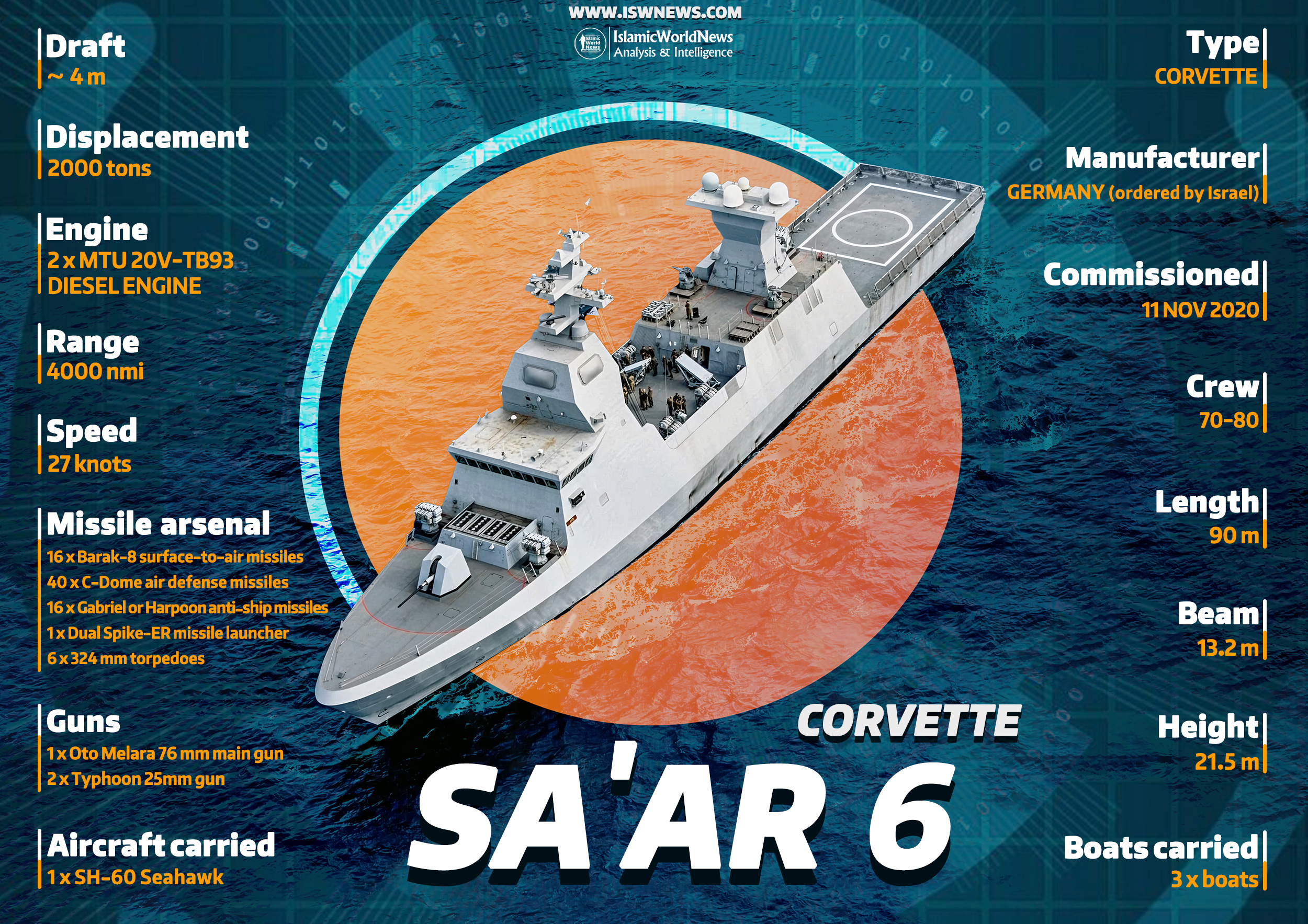
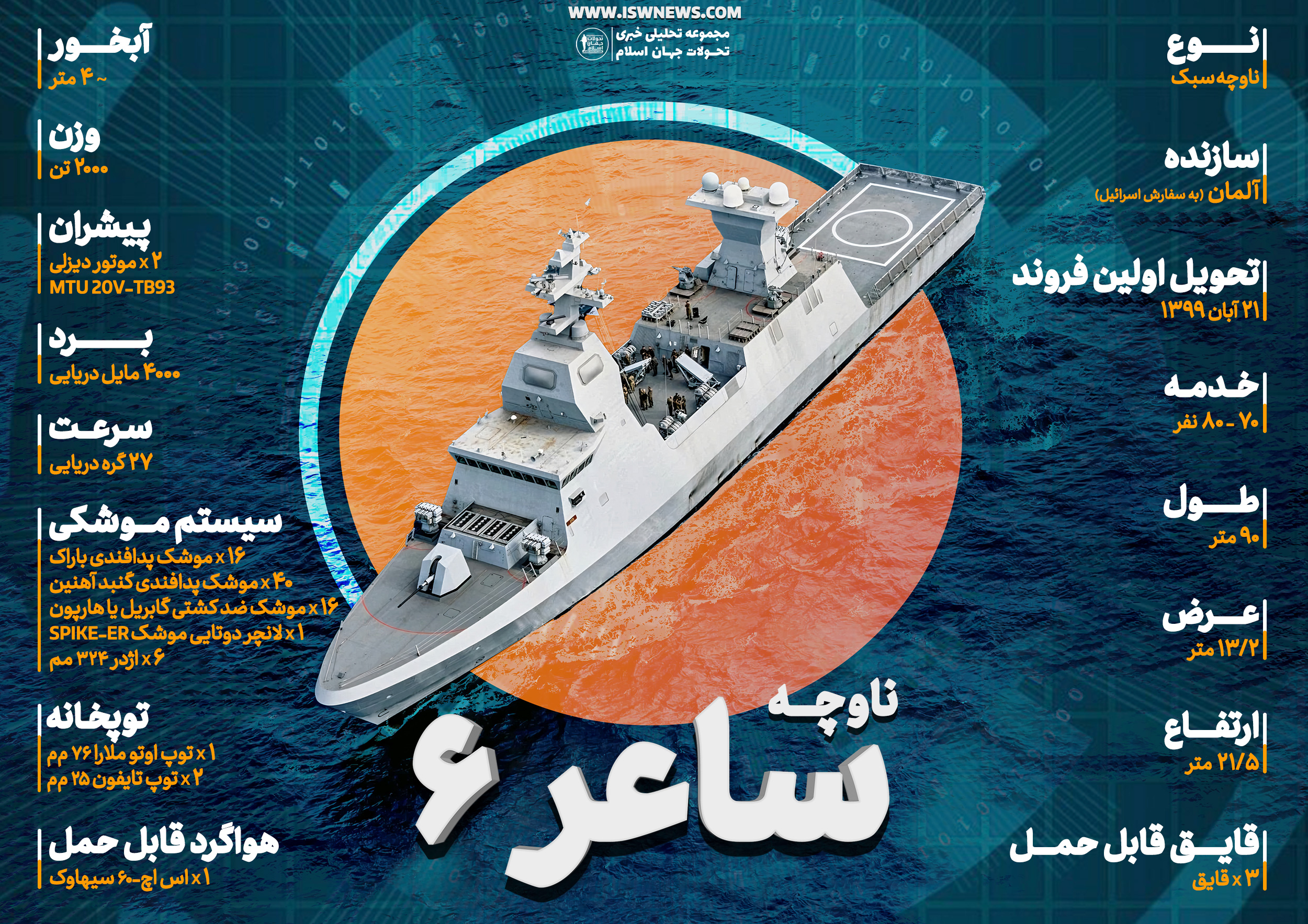
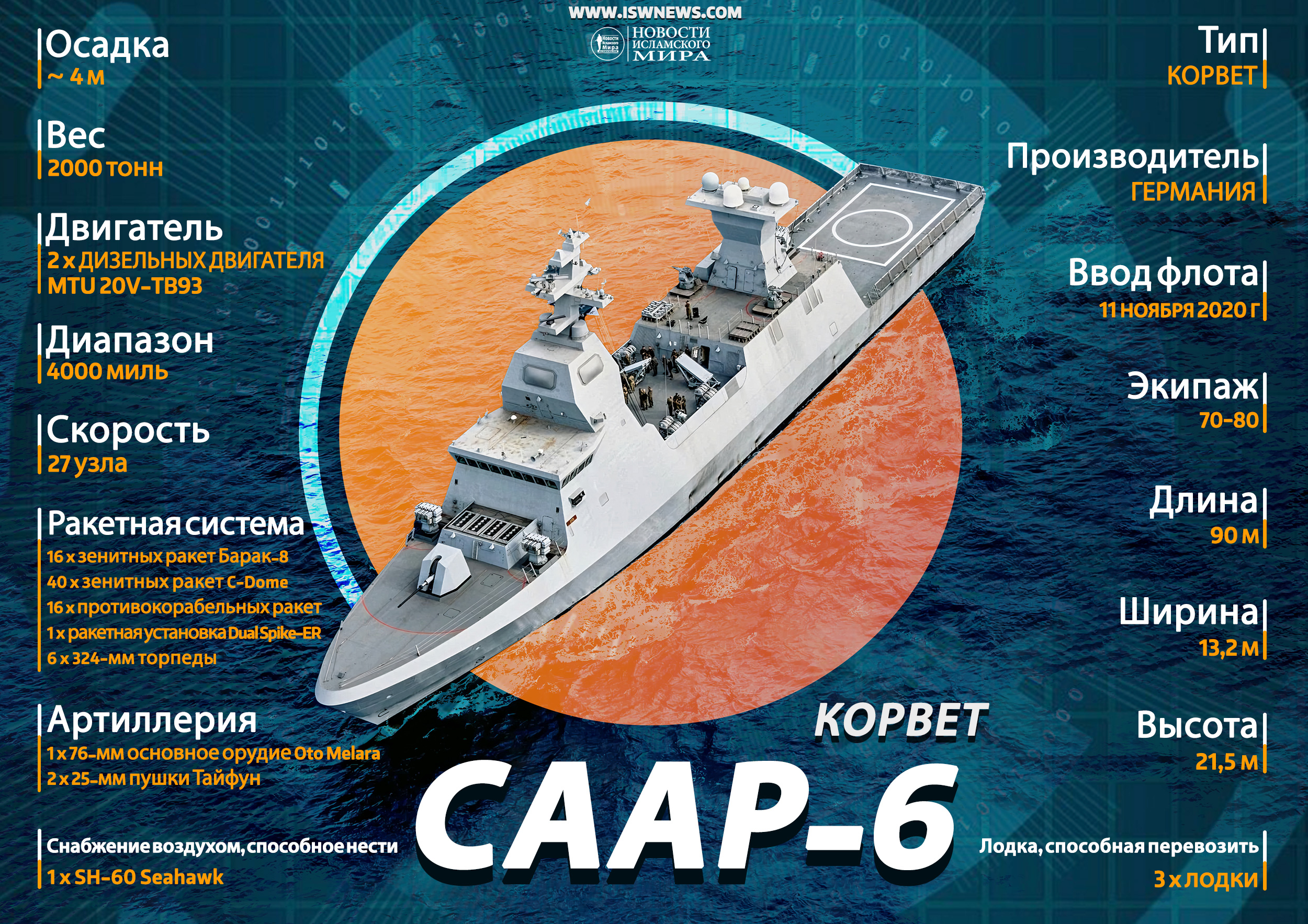
    Saar-6 corvette is 90 meters long, 13.2 meters wide (beam) and 21.5 meters high. Also, the displacement of this corvette is about 2000 tons and it has between 70 and 80 crew members.

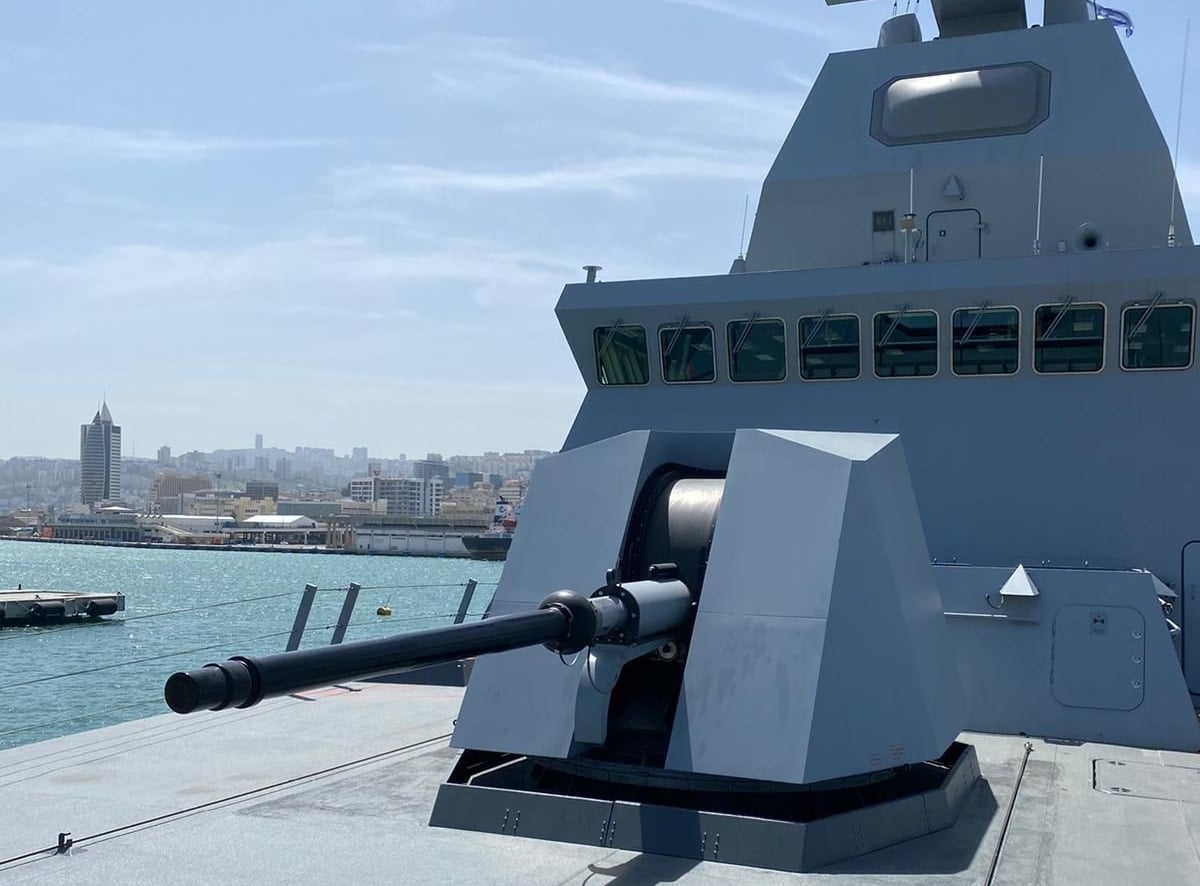
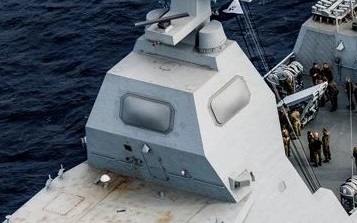
    Sa’ar 6 corvettes are armed with one Italian Oto Melara 76 mm cannon and two Typhoon 25 mm remote-controlled cannons. The Oto Melara cannon can engage surface targets, warships, air targets, and even missiles approaching the ship.

    76 mm Oto Melara cannon

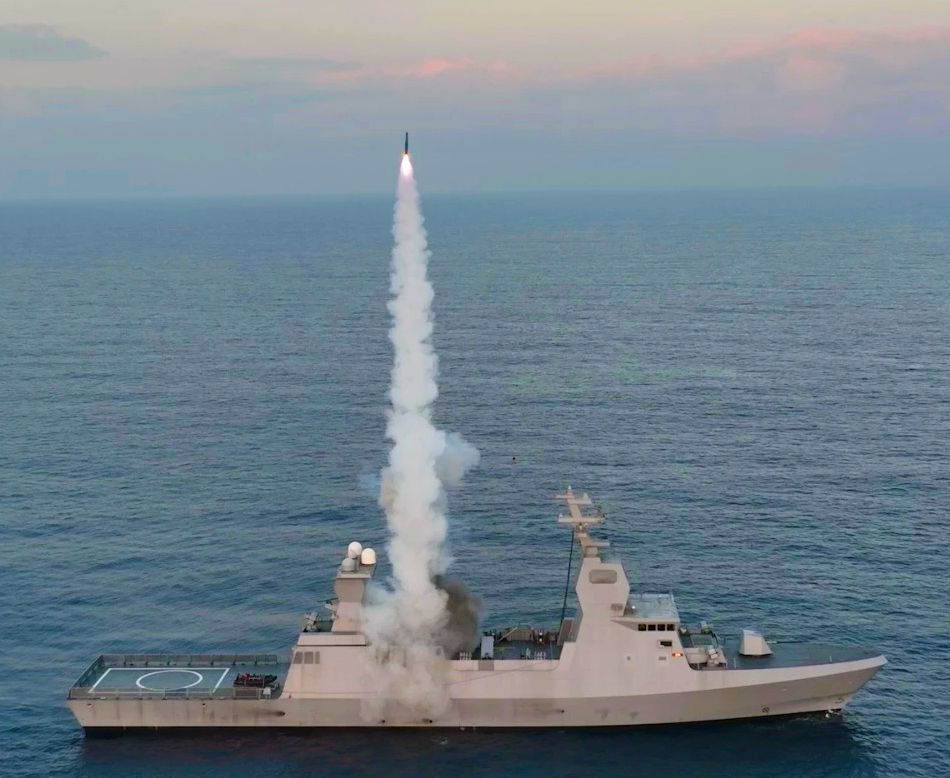
    Sa’ar 6 is equipped with 16 Barak-8 air defense missiles LRAD version with a range of 70 km, 40 Iron Dome air defense missiles (C-Dome), 16 Israeli Gabriel Mark 6 anti-ship missiles with a range of 400 km or American Harpoon Block 2 with a range of 124 km. Also, a dual Spike-ER missile launcher and two 324 mm torpedo launchers are available in this vessel.

    According to the missile systems installed in this warship, it can be seen that Sa’ar 6 is a defensive warship and is mostly used to protect other naval platforms or land installations against missile and air threats. Therefore, this warship will be used to perform maritime patrol duties to protect gas platforms, shipping lines and other strategic assets of the Israeli regime in the Mediterranean Sea and the Red Sea.

    The hangar and helicopter deck at the stern can be used to accommodate a medium multi-mission maritime helicopter such as SH-60 Seahawk.

    In terms of propulsion, Saar 6 light frigates use two MTU 20V 1163 TB93 diesel engines with a power of 9924 horsepower and a total of 19848 horsepower. With the help of these engines, Sa’ar 6 reaches a speed of 27 knots (50 km/h) and can travel up to 4,000 nautical miles (7,400 km).

    In terms of radar, the ELM-2248 Multi-Function Surveillance, Track And Guidance Radar (MF-STAR) multi-function active electronically scanned array (AESA) radar on board the Saar-6-class corvettes will track enemy targets under severe environmental / jamming conditions with a 360° coverage. The maximum range of this radar is up to 450 km.

    Multi-Function Surveillance, Track And Guidance Radar

    Sa’ar 6-class corvette specifications:
    Type: Corvette
    Manufacturer: Germany (ordered by Israel)
    Commissioned: 11 November 2020
    Crew: 70-80
    Length: 90 meters
    Beam: 13.2 meters
    Height: 21.5 meters
    Draft: ~ 4 meters
    Displacement: 2000 tons
    Engine: 2 x MTU 20V 1163 TB93 diesel engine with a power of 9924 hp (total 19848 hp)
    Range: 4000 nautical miles (7400 km)
    Speed: 27 knots (50 km/h)
    Missile arsenal:
    16 x Barak-8 surface-to-air missiles
    40 x C-Dome air defense missiles
    16 x Gabriel or Harpoon anti-ship missiles
    1 x Dual Spike-ER missile launcher
    6 x 324 mm torpedoes
    Guns:
    1 x Oto Melara 76 mm main gun
    2 x Typhoon 25mm gun
    Aircraft carried: 1 x SH-60 Seahawk
    Boats carried: 3 x speedboats or drone boats

    Sa’ar 6 corvette – click to view full size

    Infographics of Sa’ar 6-class corvette in Russian and Farsi:

    Sources:
    Sa’ar 6-class corvette
    Sa’ar 6 class
    EL/M-2248 MF-STAR
    Sa’ar 6 corvette of Israeli Navy
    Sa’ar 6 Class Corvettes

    MTU 20V-1163-TB93 9924 HP

  • Military Knowledge: Harop Suicide Drone

    Military Knowledge: Harop Suicide Drone

    A loitering munition, also known as a suicide drone or kamikaze drone is a kind of aerial weapon with a built-in munition (warhead), which can loiter (wait passively) around the target area until a target is located; it then attacks the target by crashing into it. Loitering munitions enable faster reaction times against hidden targets that emerge for short periods without placing high-value platforms near the target area and also allow more selective targeting as the attack can be changed mid-flight or aborted.

    History:
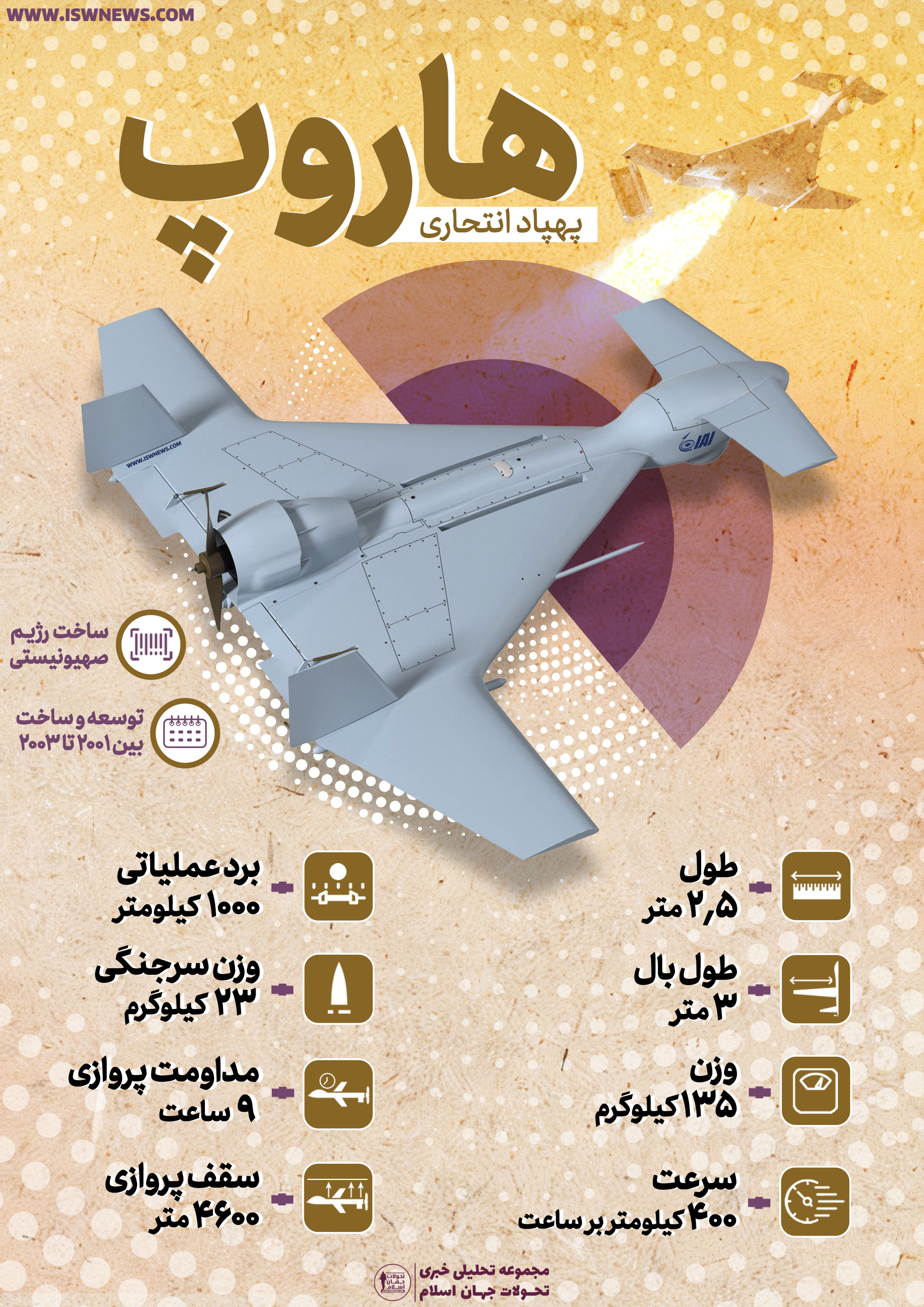
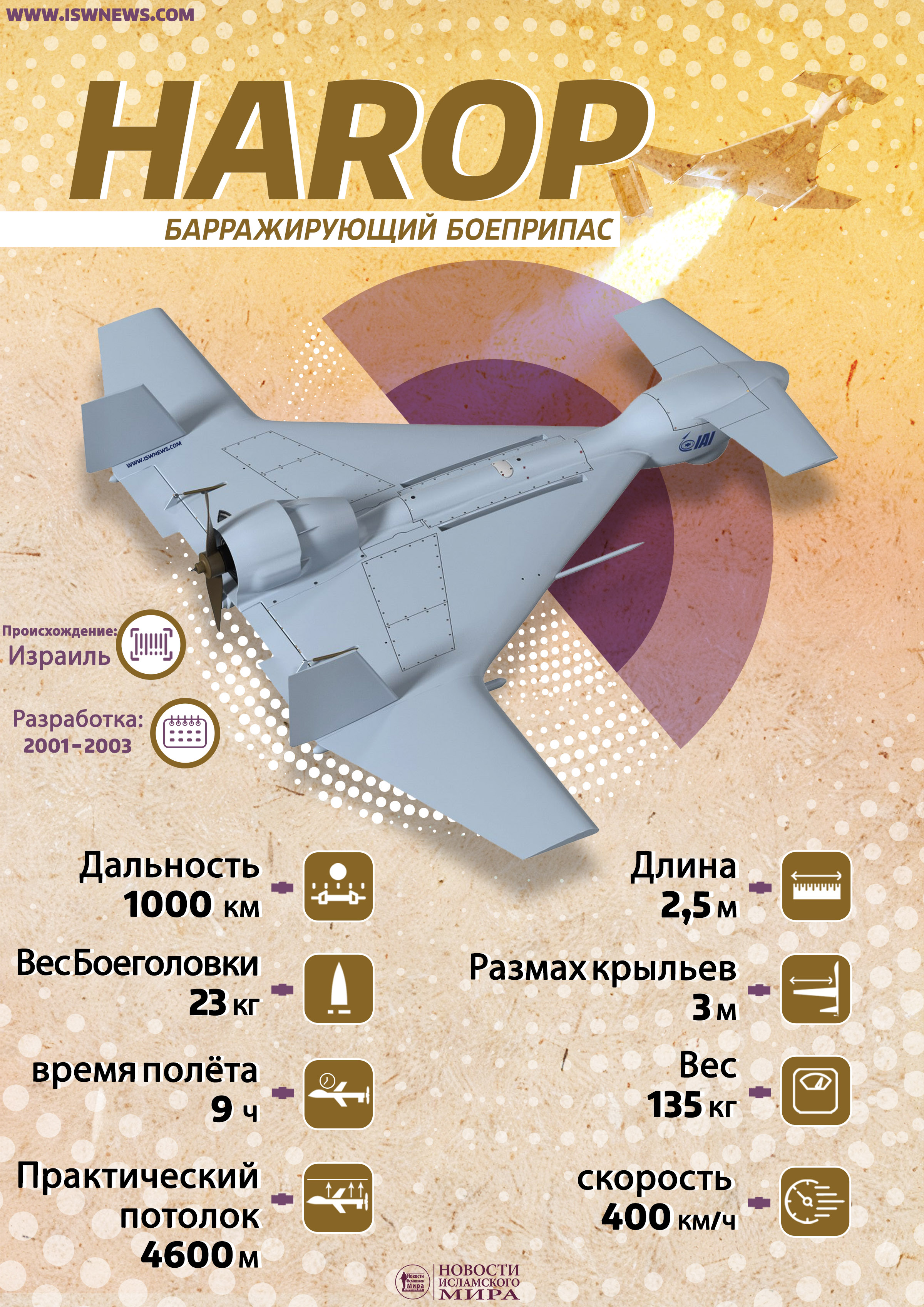
    The Harop suicide drone was designed and built by Israel Aerospace Industries (IAI) between 2001 and 2003. This drone was first publicly displayed in 2009 at the Indian Air Show. In the same year, the Indian Army signed a contract worth 100 million dollars to receive 10 Harop drones. The details of this contract have not been published. But the announced figure for each drone in this contract is 10 million dollars, which seems very expensive.
    The multinational company MBDA showed interest in this loitering ammunition, but the contract was not concluded due to political reasons. Although the German version of the Harup was developed in collaboration with Rheinmetall Defense to meet the specific needs of the German military in 2009, this drone only progressed to the testing stage and was never put into operation by the German military.

    Morocco, Azerbaijan and Singapore are other buyers of Harop suicide drones. This drone was used by Azerbaijan in the Nagorno-Karabakh war and destroyed several buses carrying Armenian forces. There are also evidences of targeting Armenian S-300 defenses in the Second Karabakh War.

    Design:
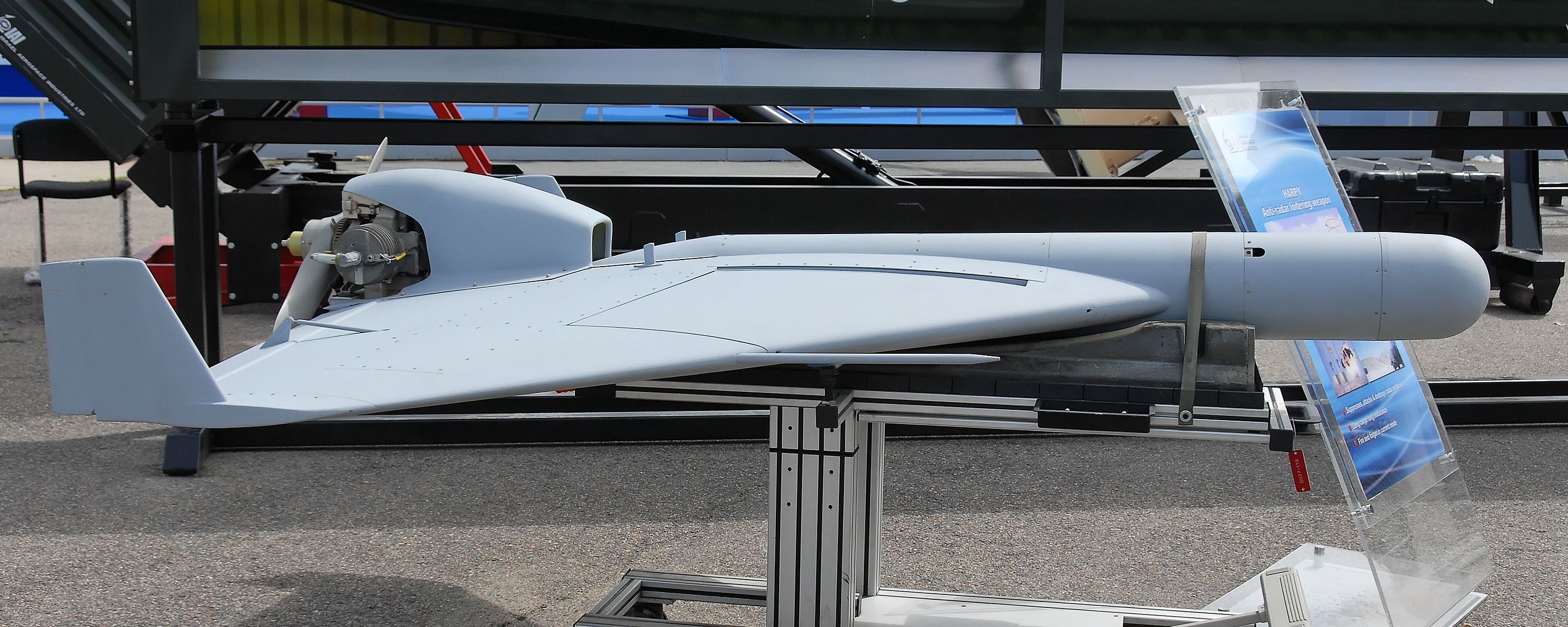
    The Harop UAV is actually a developed version based on the Harpy suicide drone (IAI Harpy), which made its first flight in 1989. The Harop drone is designed and built with the same features as the Harpy.

    Harpy drone at Paris Air Show 2007

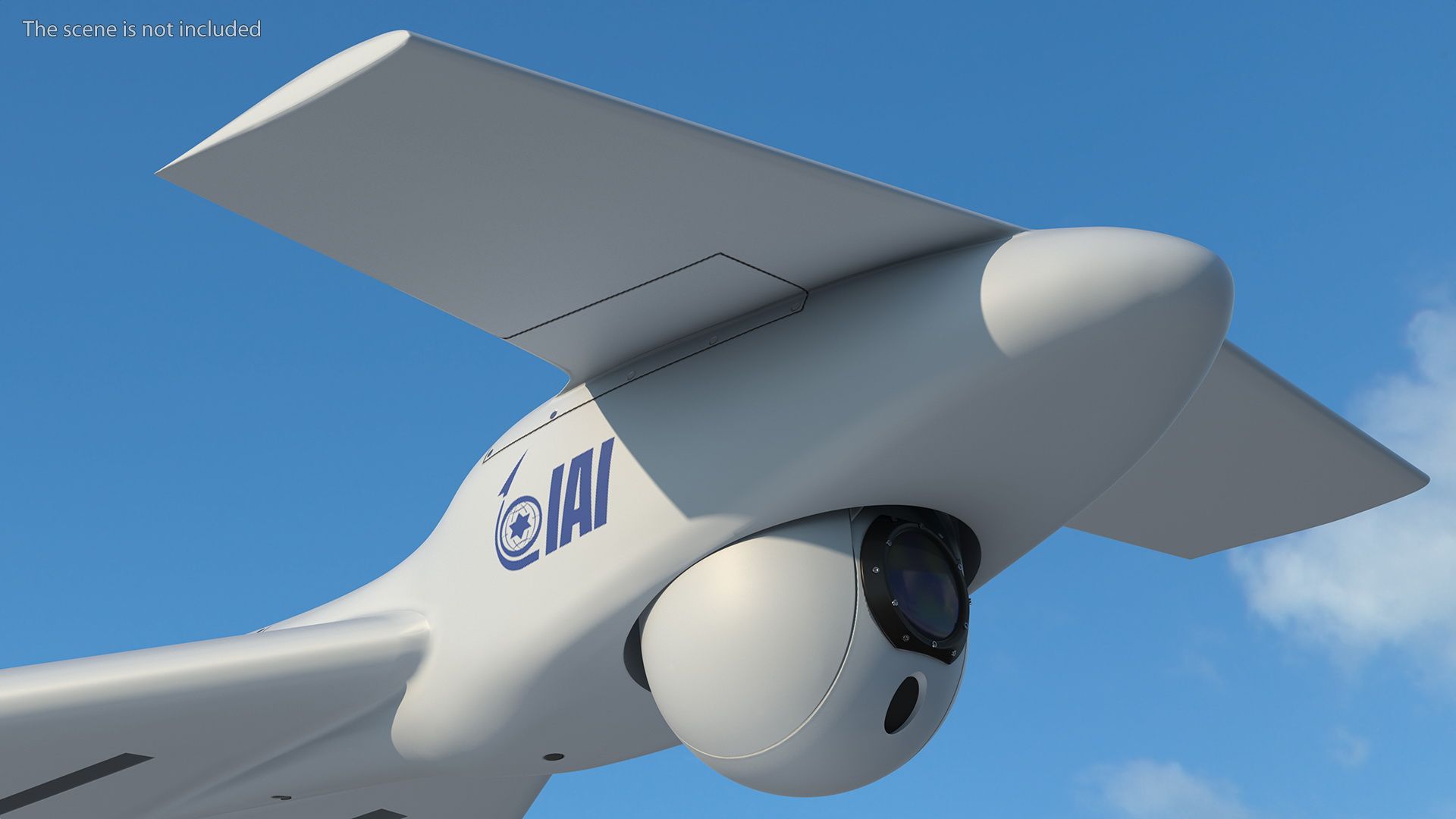
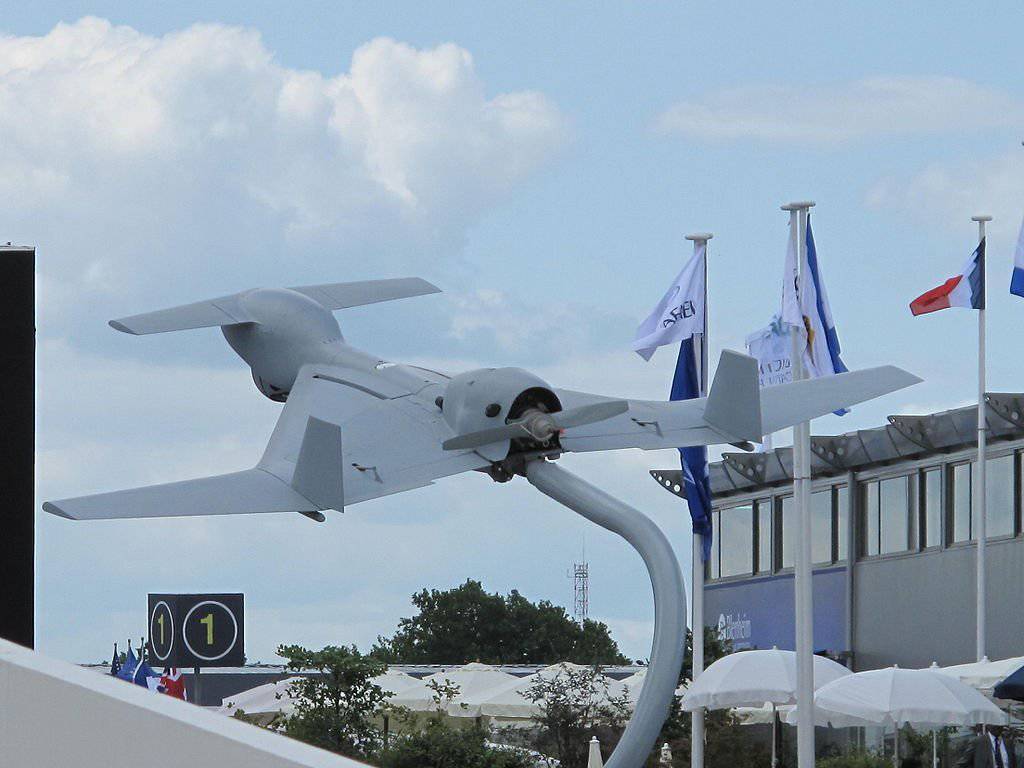
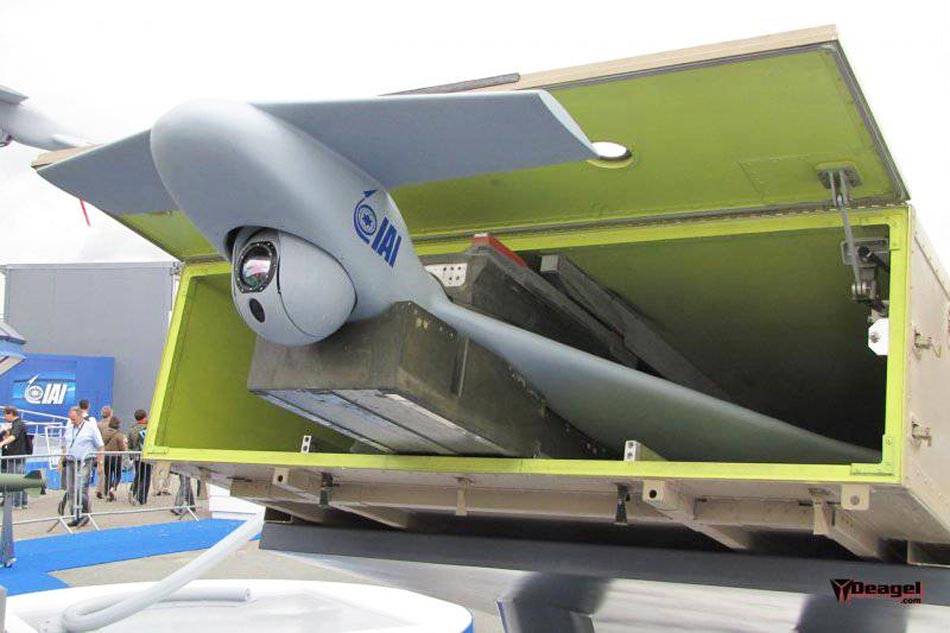
    Harop uses a carbon fiber body that reduces its weight and radar cross-section. The diameter of the nose is greater than the diameter of the body. A forward-looking infrared (FLIR) camera with automatic tracking and 360 degree rotation is installed under the nose. The infrared camera is suitable for use at night and day and in all weather conditions such as fog and dust.

    The camera used in the Harop drone

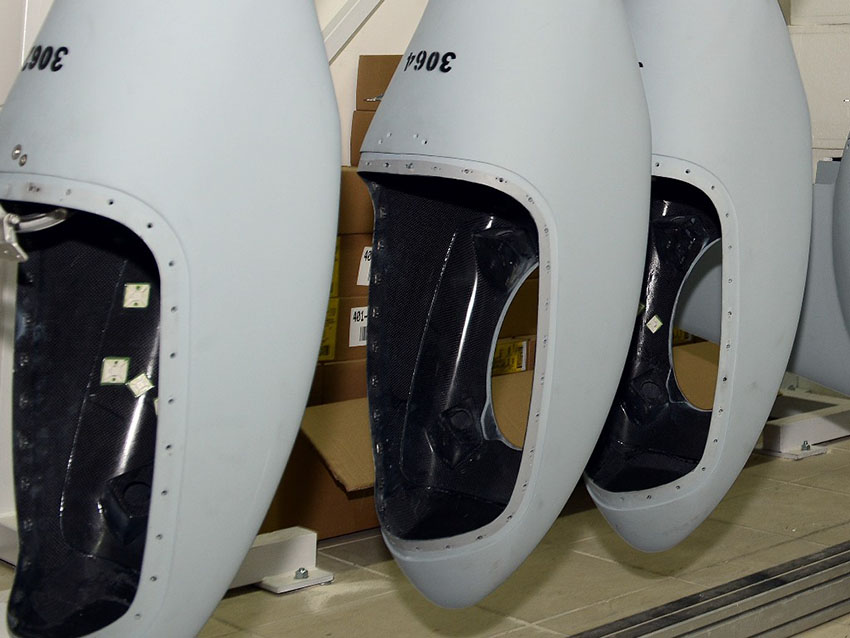
    The nose has a very large empty space that allows the installation of a camera and some guidance equipment. There are two fins on the upper part of the nose. These fins provide enough lift for this heavy nose.

    The empty space in the nose to install communication equipment, cameras and fins

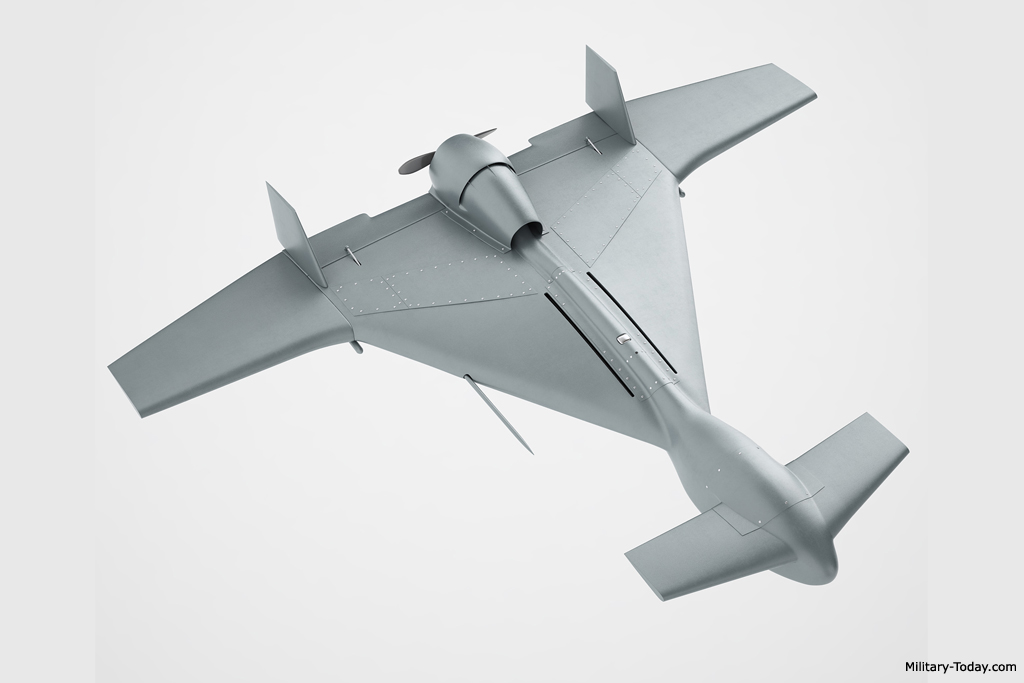
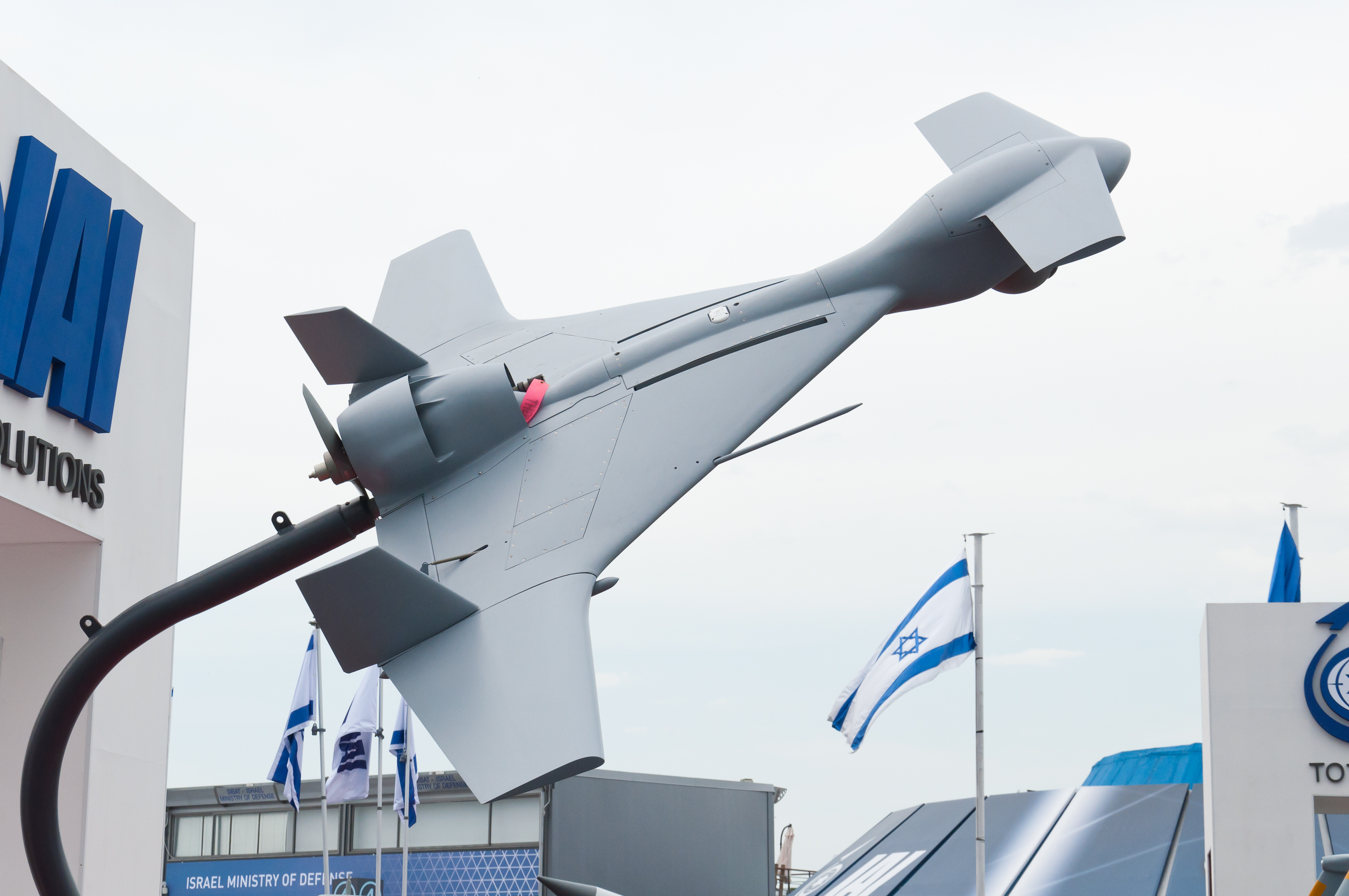
    The wing is designed as a trapezoid and extends from near the nose to the end of the body and is connected to the main cylindrical body. The wings are thinner at the end of the body and are designed perpendicular to the body to create the maximum lift force. This part of the wing is made with the ability to be folded so that the drone can be placed in special rectangular launchers.

    Two vertical fins with the ability to rotate are placed at the end of the body and on the wing, which provides the possibility of changing the direction of the drone during flight.

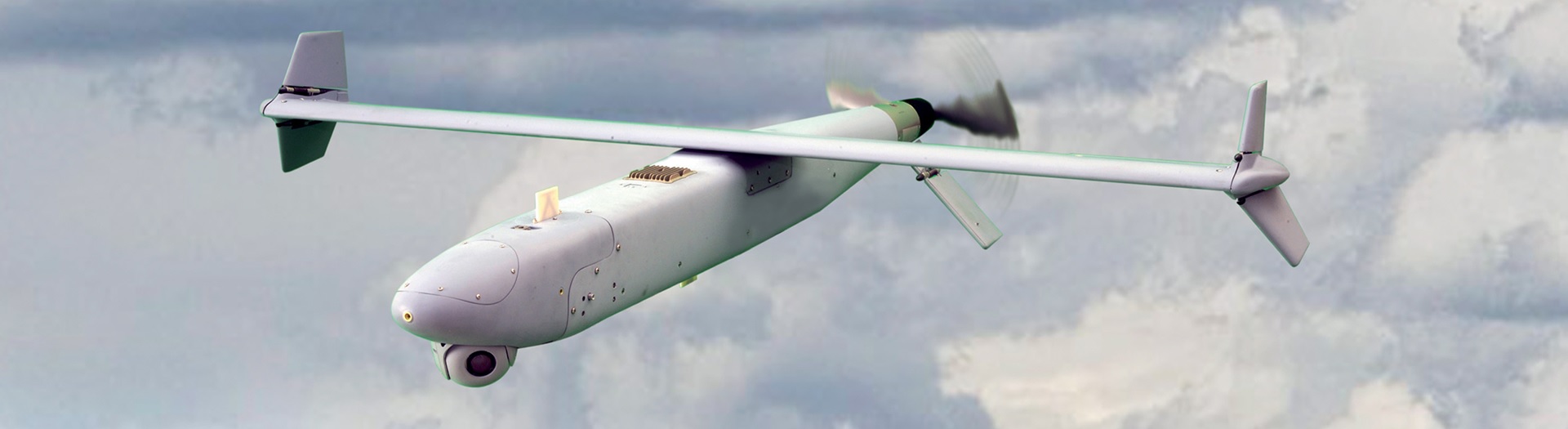
    Harop drone

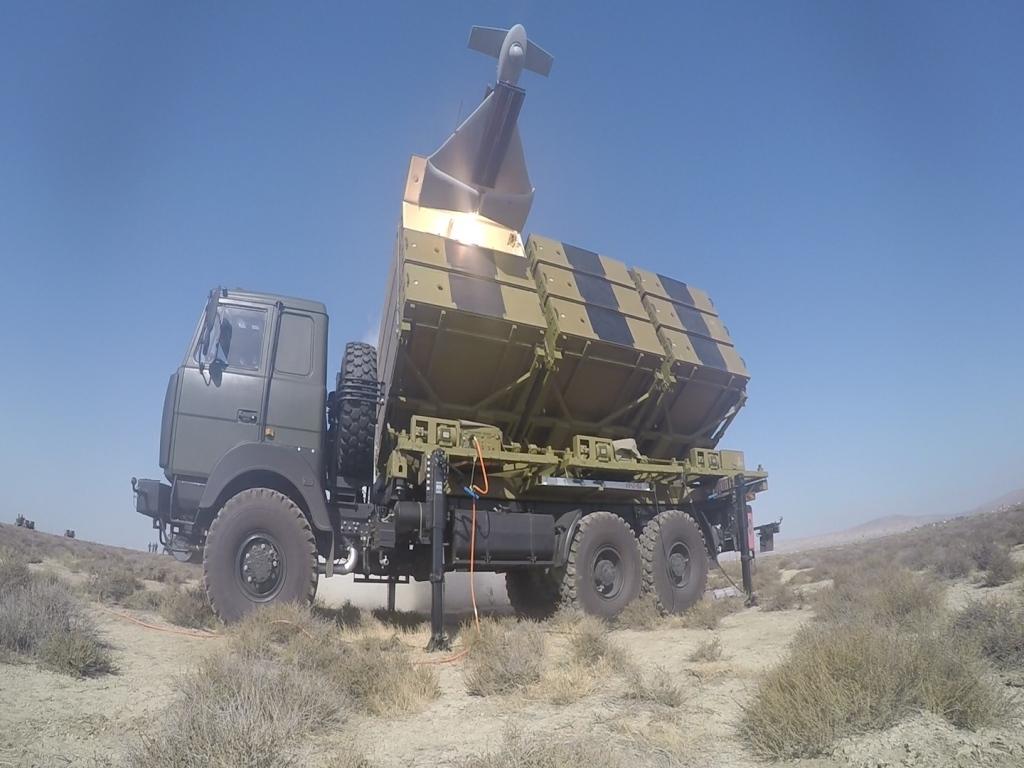
    One of the Harop launcher systems is a box launcher that is placed on a commercial truck or any other truck. The wings of the Harop suicide drone fold down to fit into the box. In this way, the drone occupies the least possible space.

    Harop drone launch from MAZ-631705 truck in the service of Azerbaijan army. In this picture, it is clear how the wings are folded

    A solid fuel booster is used to launch the Harop in the first stage, which allows the Harop, and after reaching a sufficient height and speed, the UAV’s main engine is activated.

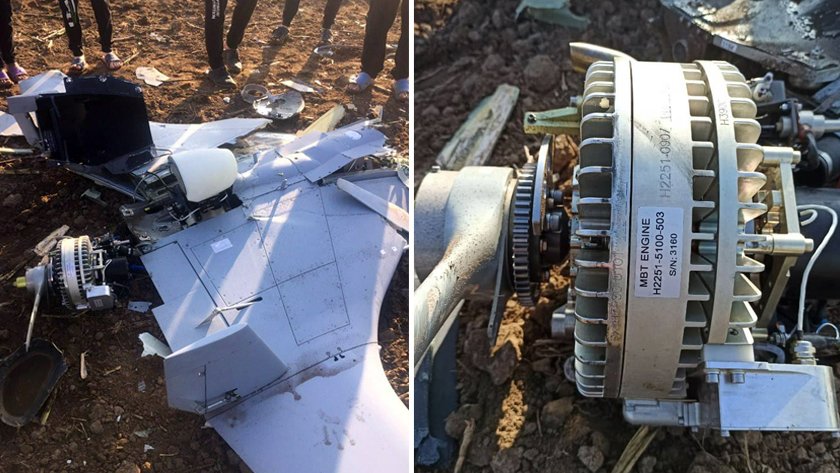
    The Harop UAV uses a Wankel MBT ENGINE H2251 engine, which is connected to a two-bladed propeller. This engine brings Harop to a maximum speed of 400 km/h and a maximum height of 4500 meters.

    The wreckage of the Harop UAV that fell during the Second Karabakh War in the northern borders of Iran. On the engine, its type and name are known.

    Harop suicide drone has a flight duration of 6 hours and a range of 1000 km. As mentioned, this drone is launched from land and sea from box launchers. But it is also possible to configure the drone to be launched from the air by aircraft.

    The Haroop UAV uses the Human-in-the-Loop (HITL) method for guidance and targeting. In this method, crews work together with machines to perform tasks, combining their abilities to make the best results in every situations. New experiences and decisions are stored in the decision cycle to increase the autonomy of the UAV in similar conditions.

    The operator can select static or moving targets detected by the UAV camera. It is also possible to select static targets before the operation and flight, by entering the target information into the system.

    It should be noted that a smaller type of drone called Mini-Harop or Green Dragon has also been made with a flight duration of 2 to 3 hours and a warhead of 3 to 4 kg.

    Mini-Harop drone

    The Mini-Harop UAV, which uses an electric motor, is suitable for monitoring and targeting enemy personnel and equipment with a low level of protection. Considering the high price of each version of the Harop drone, the Mini-Harop seems to be built to fill the void of a low-cost drone and reduce operational costs for destroying less important targets.

    Specifications of Harop suicide drone:
    Type: Suicide drone (loitering munitions)
    Manufacturer: Israel Aerospace Industries
    Origin: Israeli regime
    Development: between 2001 and 2003
    Length: 2.5 meters
    Wingspan: 3 meters
    Range: 1000 km
    Communication range (ground station): 200 km
    Radar cross section: less than 0.5 square meters
    Speed: 400 km/h
    Flight ceiling: 4600 meters
    Flight endurance: 9 hours
    Warhead weight: 23 kg
    Weight: 135 kg

    Harop Suicide Drone – click to view full size

    Infographics of Harop loitering munitions in Russian, Hebrew, Farsi:

    Source:
    Harop Loitering Munitions UCAV System
    IAI Harop Loitering munition
    IAI Harop
    Loitering munition

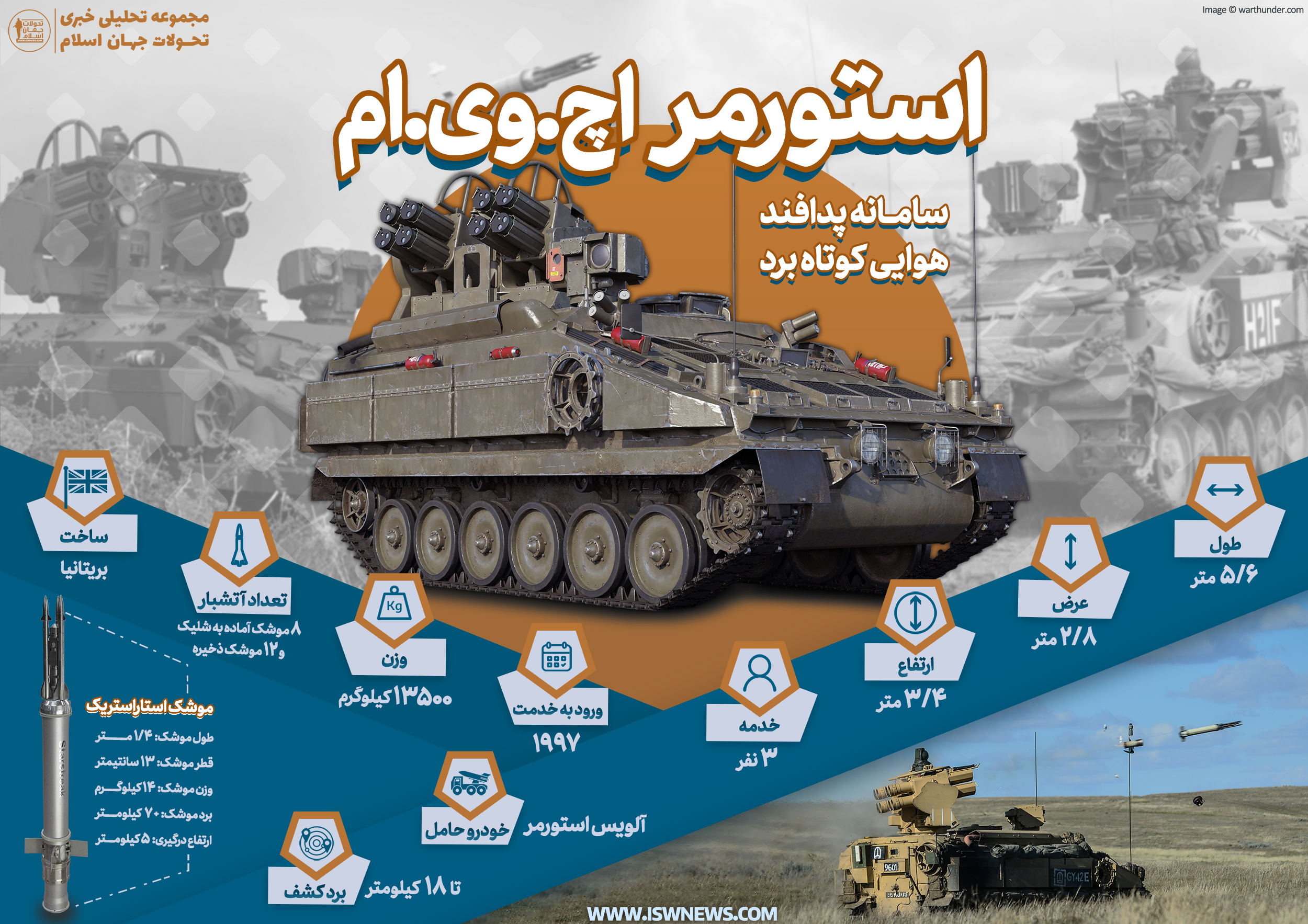
  • Military Knowledge: Stormer HVM Short-Range Air Defense System

    Military Knowledge: Stormer HVM Short-Range Air Defense System

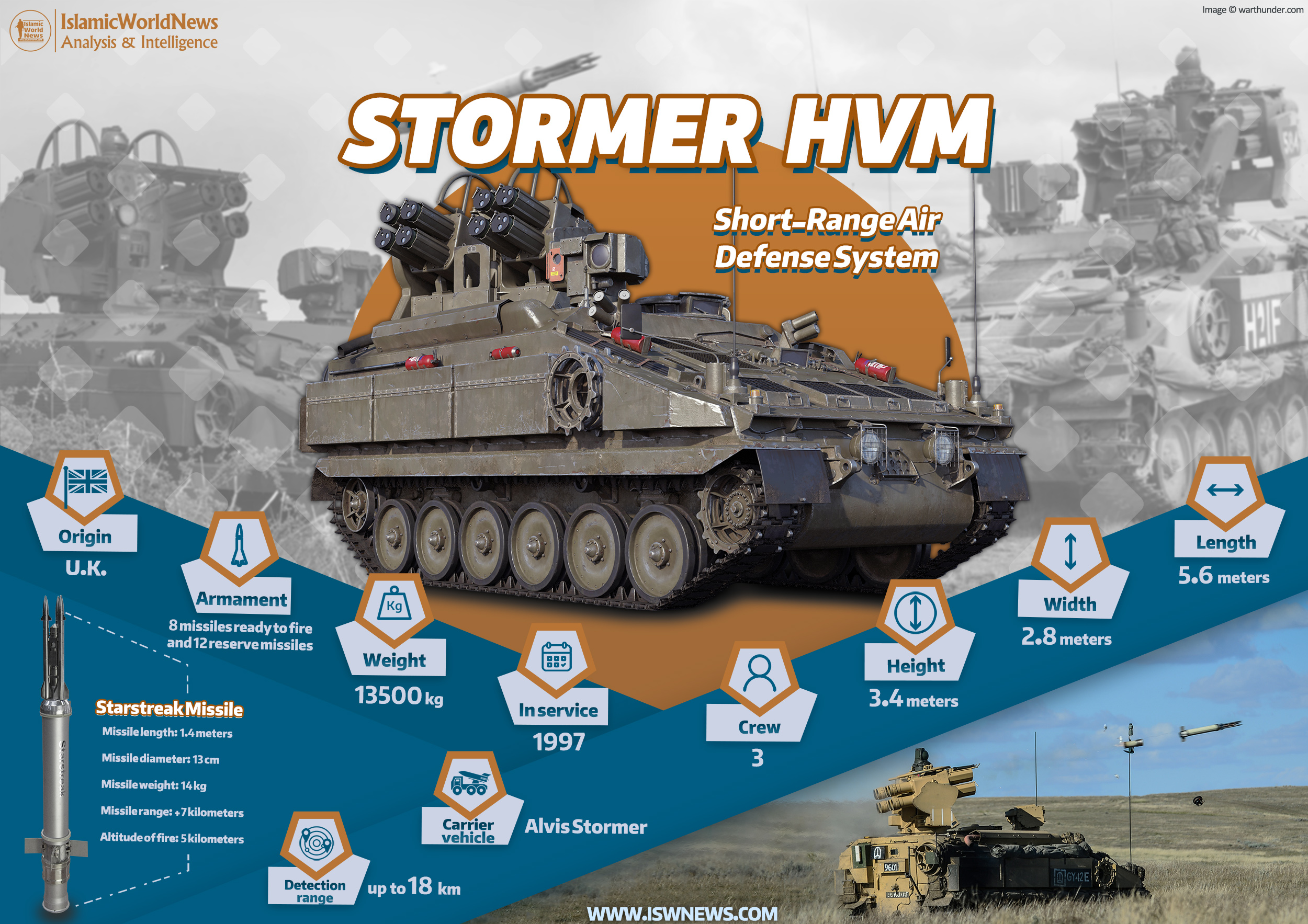
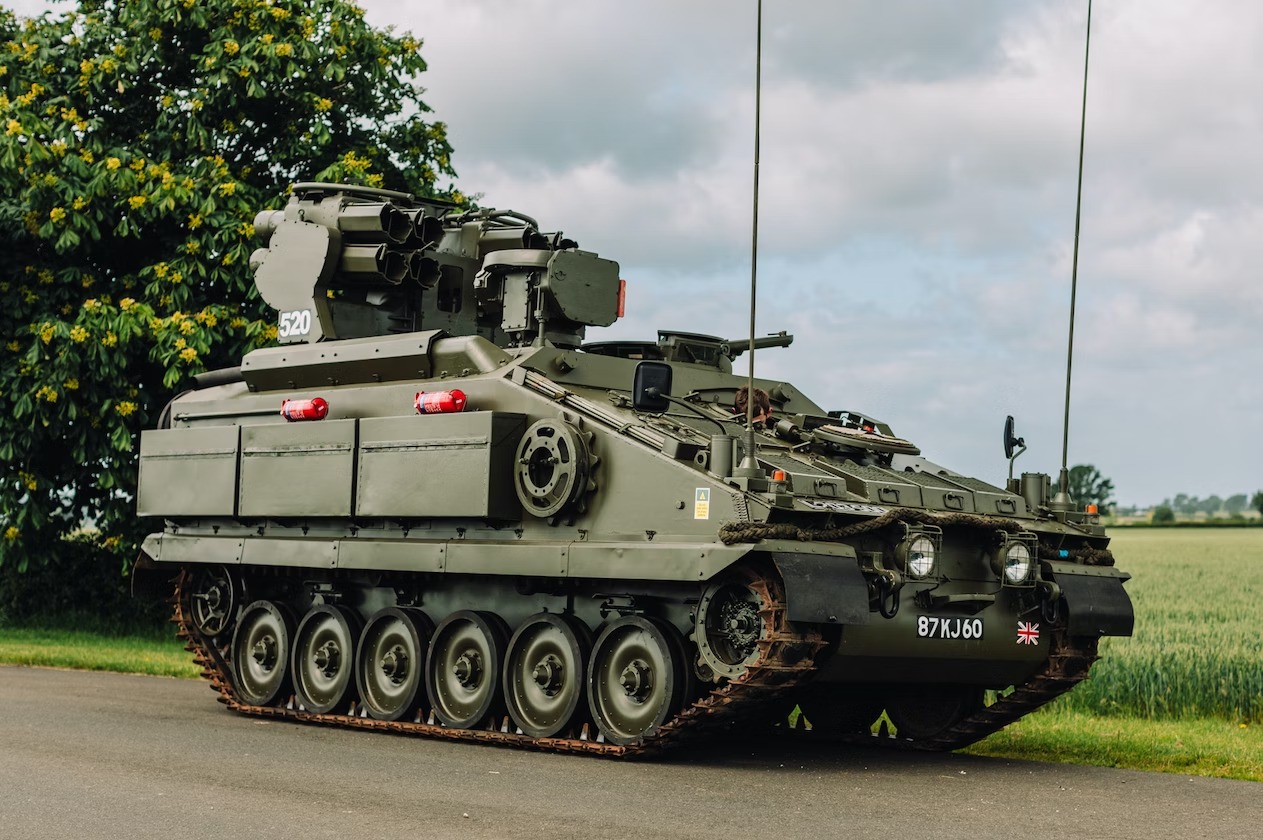
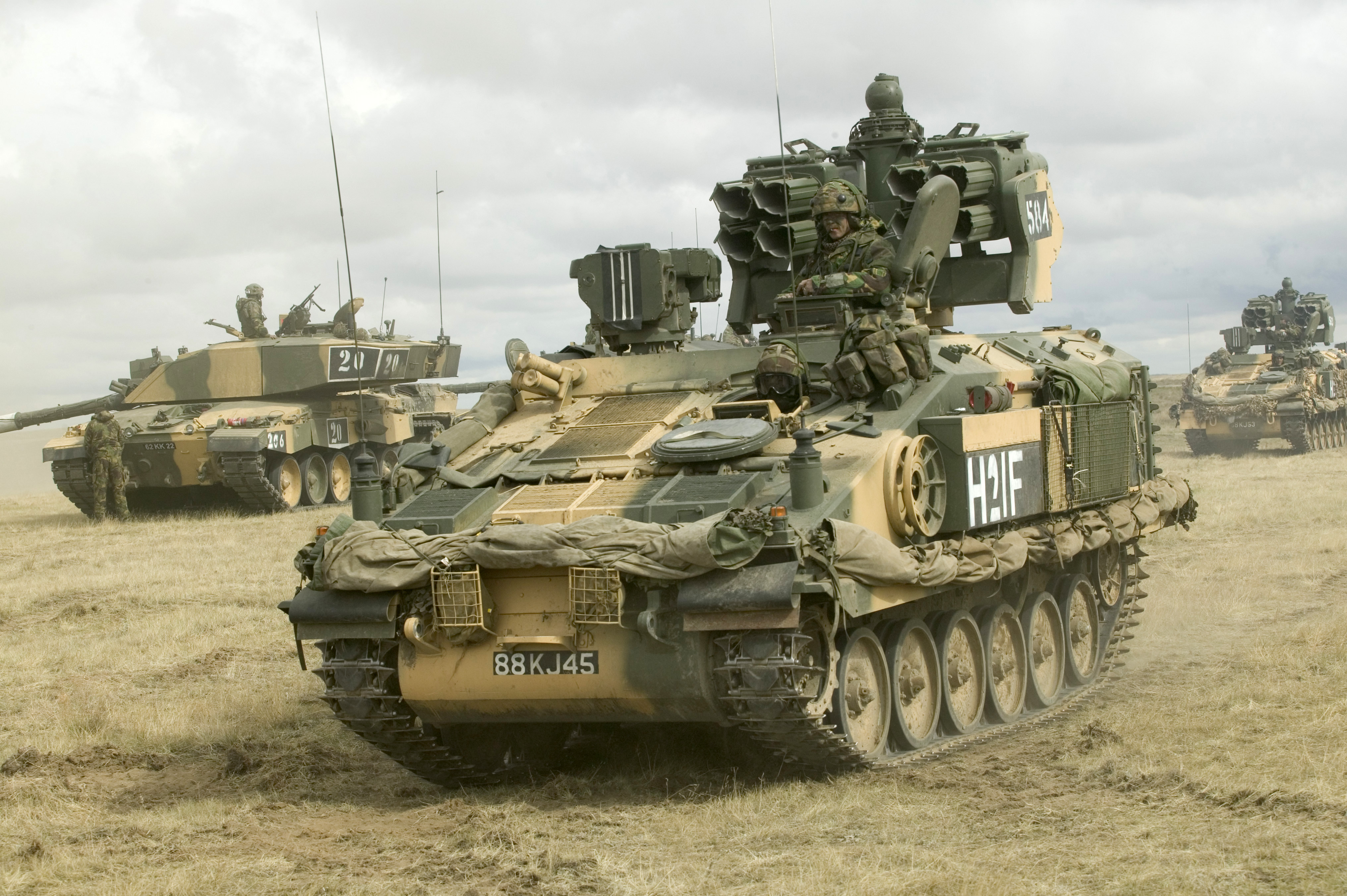
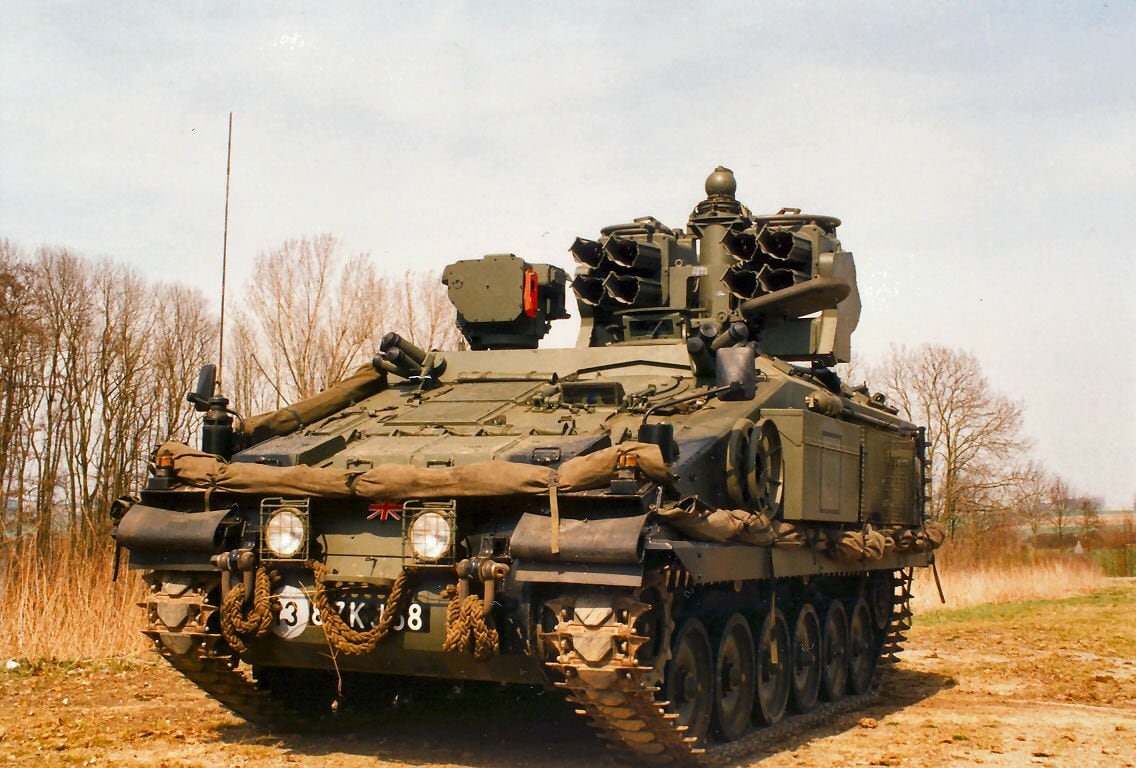
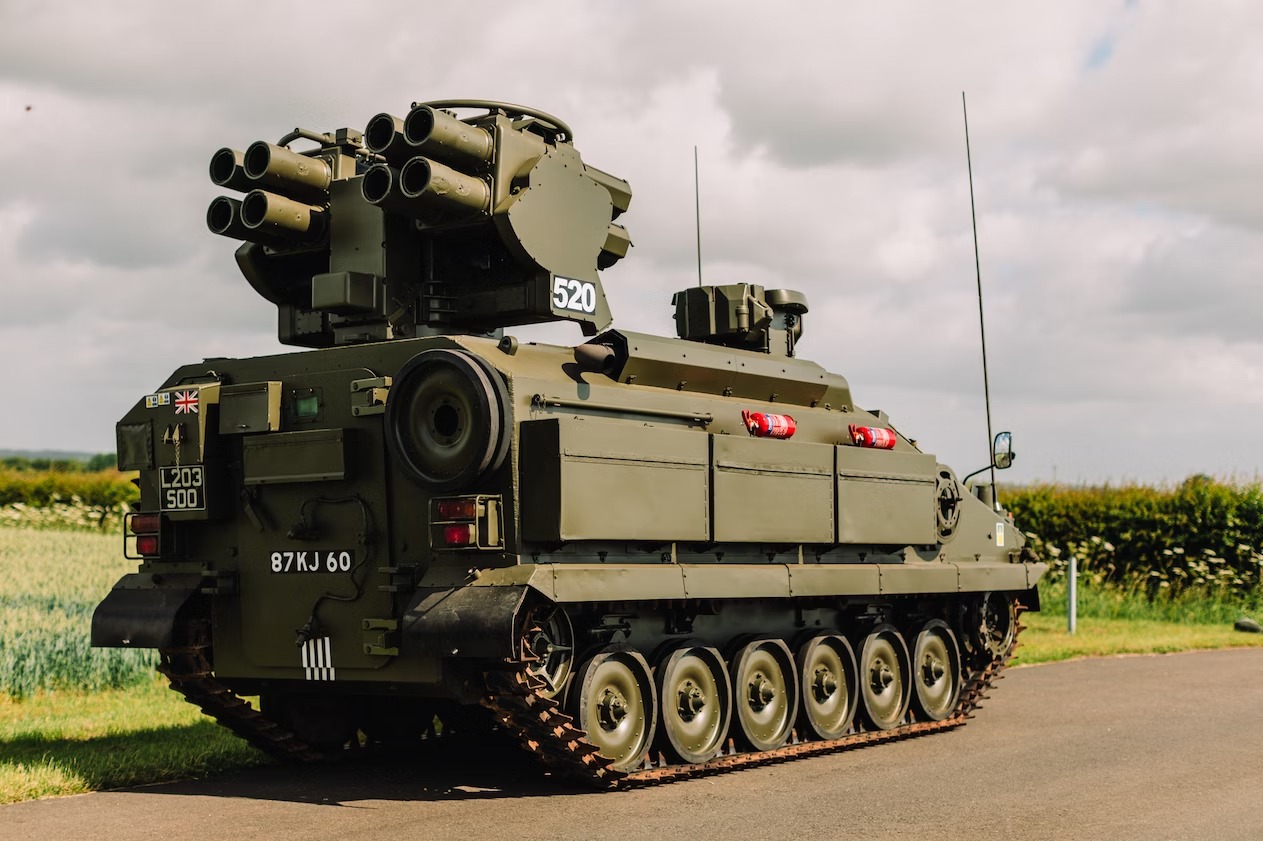
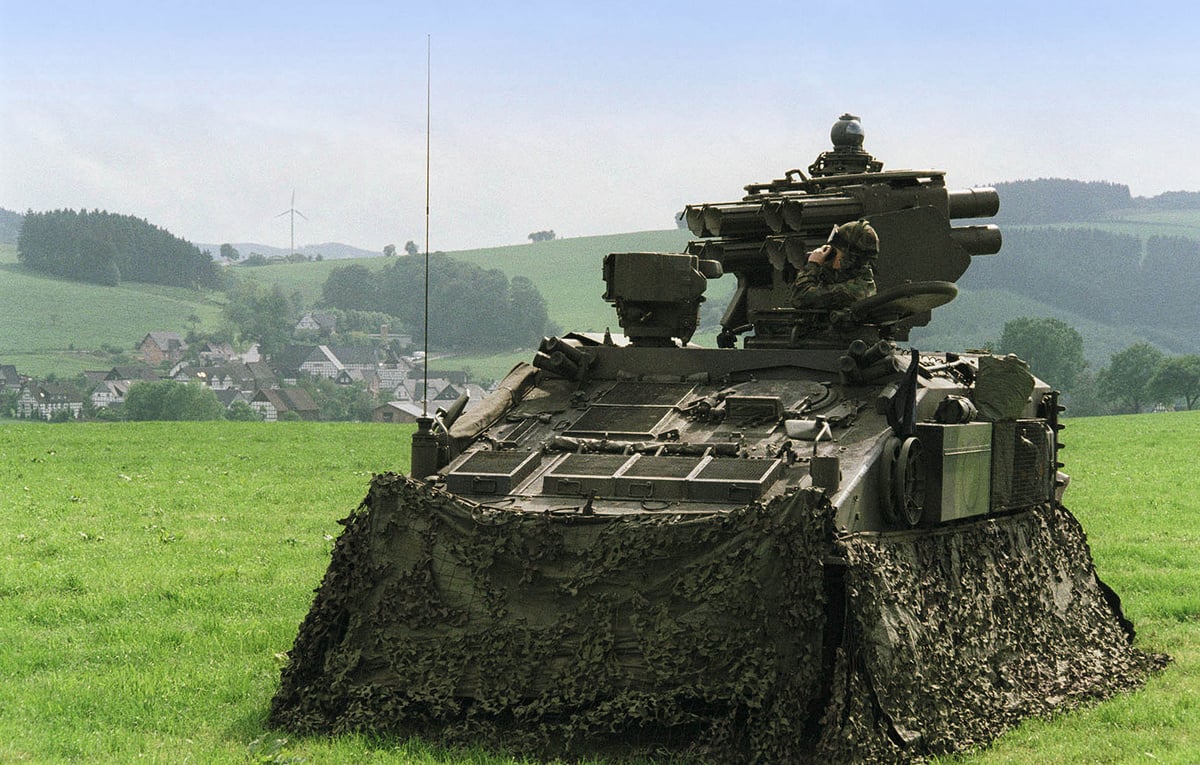
    The Stormer HVM system is a high-mobility short-range air defense system that combines the Alvis Stormer armored vehicle with the Starstreak short-range surface-to-air missile. This system is manufactured by the British company Alvis Vickers, now BAE Systems Land & Armaments.

    The main role of the Stormer HVM is to protect ground forces and key installations against low-altitude fighter jets, helicopters and UAVs. This system is an important part of the British Army’s air defense system for the low-altitude air threats. The term HVM stands for High Velocity Missile and represents the missile used in the system.

    Alvis Stormer armored vehicle

    This car has a maximum speed of 80 km/h on the road. Also, having a fuel tank with a capacity of 454 liters, it can travel a distance of 600 km.

    Starstreak HVM

    The Starstreak air defense missile is a British short-range missile manufactured by Thales Air Defence in Belfast, Northern Ireland. This missile can be used as a man-portable air-defence system (MANPADS). Starstreak HVM has a range of 7 km and an altitude of fire of 5 km, and is capable of engaging various types of missiles, drones, helicopters and other low-altitude flying targets.

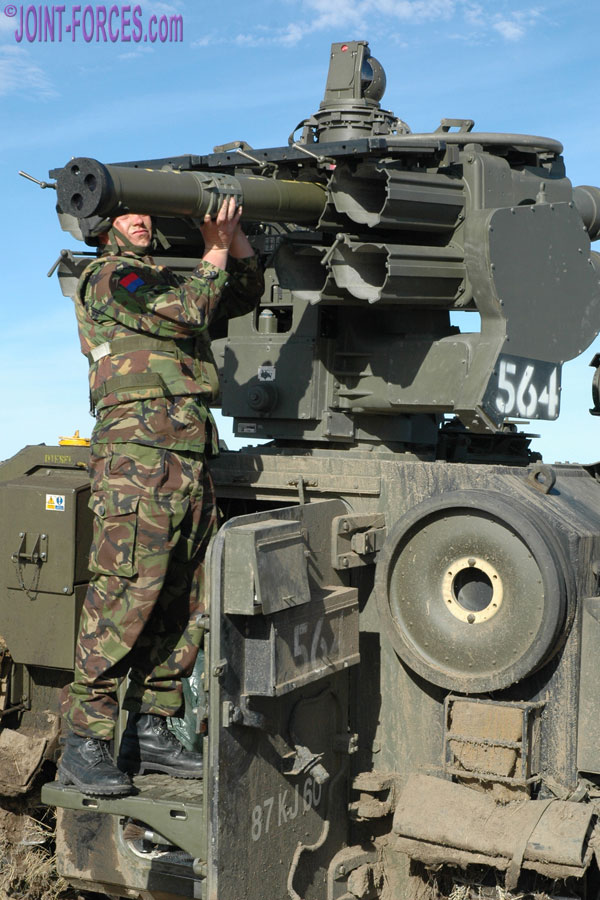
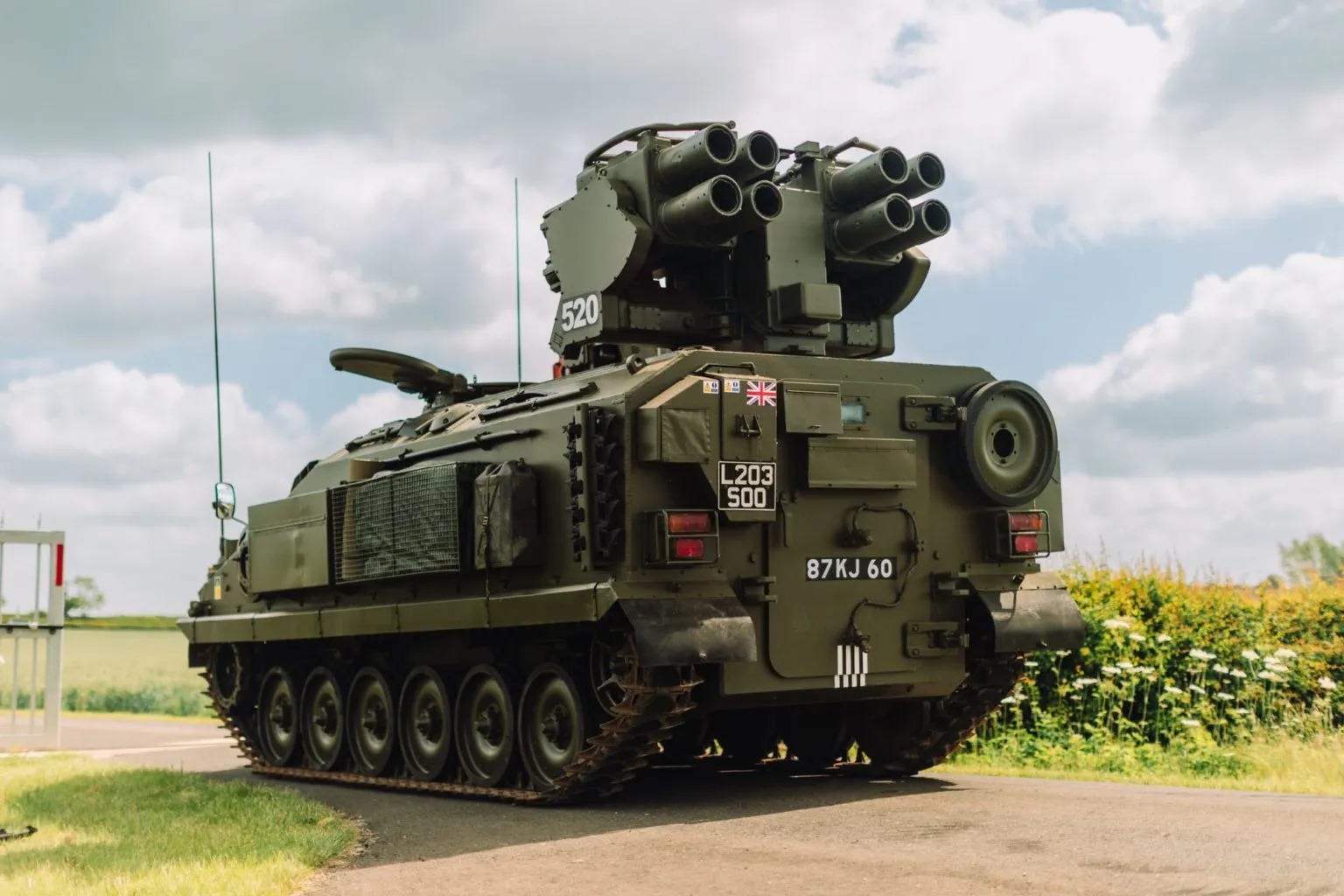
    The missiles are placed on a turret with the ability to rotate 360 degrees, in number of 8 (4 on each side of the turret). In addition to eight missiles ready to fire, 12 other missiles are stored inside the vehicle for reloading. These missiles are sealed in the production line after preparation. STARStreak HVM is loaded into the system pod with the same factory seal.

    Placing the missile in the Stormer HVM system

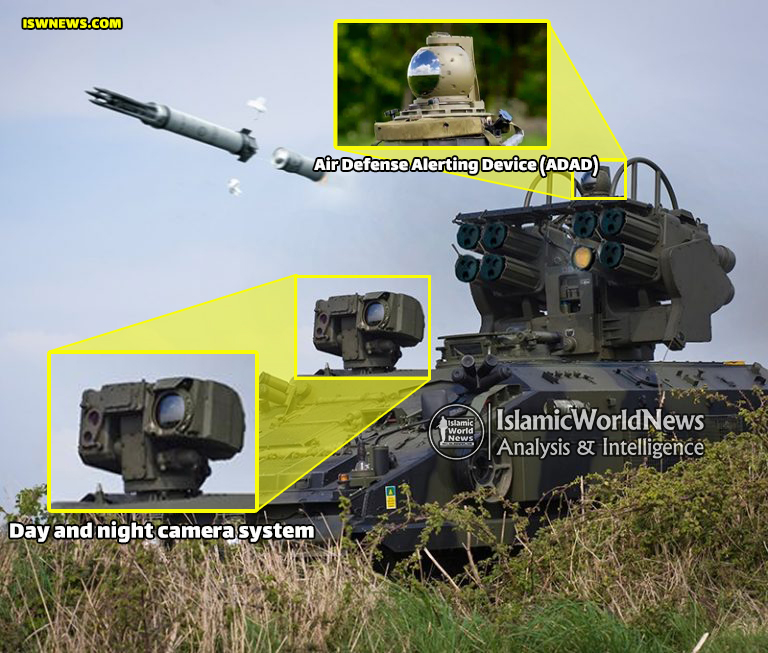
    An Air Defense Alerting Device (ADAD) is also installed on the turret to detect air targets. This system uses an infrared thermal camera. The ADAD system can detect a fighter jet at a distance of 18 km and a helicopter at a distance of 8 km. Also, the system uses a laser range finder to accurately determine the distance to the target and guide the missile.
    In addition to ADAD, the Stormer HVM system is equipped with an advanced day and night vision camera that enables thermal imaging for low-light conditions. In some systems, a laser range finder is used to accurately measure the distance to ensure accurate missile guidance.

    ADAD system and day and night vision

    The Alvis armored vehicle is equipped with eight smoke grenade launchers (four on each side). These grenades are used to create a smoke screen. The Stormer HVM air defense system uses a communication system that allows the crew to communicate with other air defense units and the chain of command. This system uses three crews including commander, driver and gunner.

    In addition to the STARStreak missile, there are also reports of using the Martlet missile on this missile. The manufacturer of two missiles is Thales Air Defense and the coordination of the system with this missile is likely.

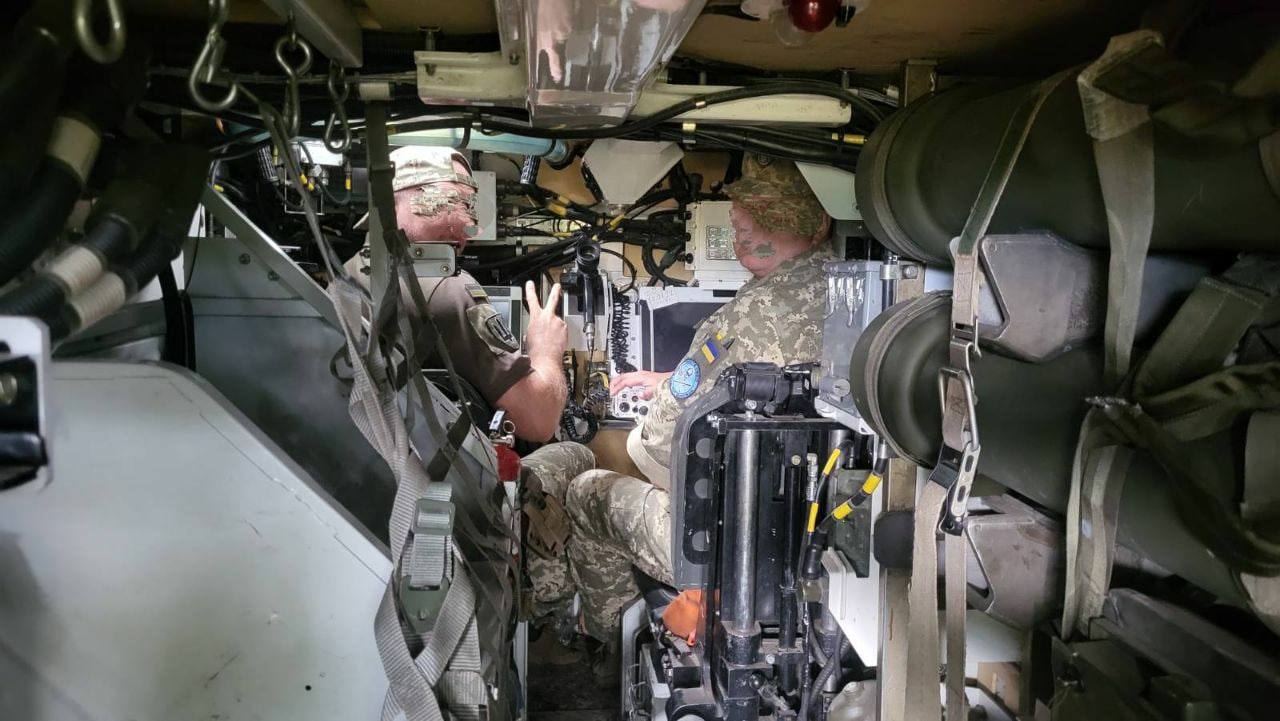
    Internal view of the Stormer HVM in service with the Ukrainian Army

    This system has been exported to Oman to serve in the Royal Army of this country. Indonesia is another user of this system. Also, in 2023, a number of this system has been donated to Ukraine.

    Specifications of Stormer HVM system:
    Type: Short-range defense system
    Manufacturer: Missile: Thales Air Defense – Armored Vehicle: BAE Systems Land & Armaments
    Origin: United Kingdom
    In-service: 1997
    Length: 5.6 meters
    Width: 2.8 meters
    Height: 3.4 meters
    Crew: 3
    Carrier vehicle: Alvis Stormer
    Weight: 13.5 tons (the whole system) – 20 kg (missile weight)
    System range: 7 km
    Target detection: Air Defense Alerting Device (ADAD)
    Detection range: 8 to 18 km (depending on the type of target)
    Engagement range: 7 km
    Armament: 8 ready-to-fire missiles and 12 stored missiles
    Missile: STARStreak HVM
    Missile length: 1.4 meters
    Missile diameter: 13 cm
    Missile weight: 14 kg
    Missile range: 5.5 to 7 km (depending on the type)
    Altitude of fire: 5 km

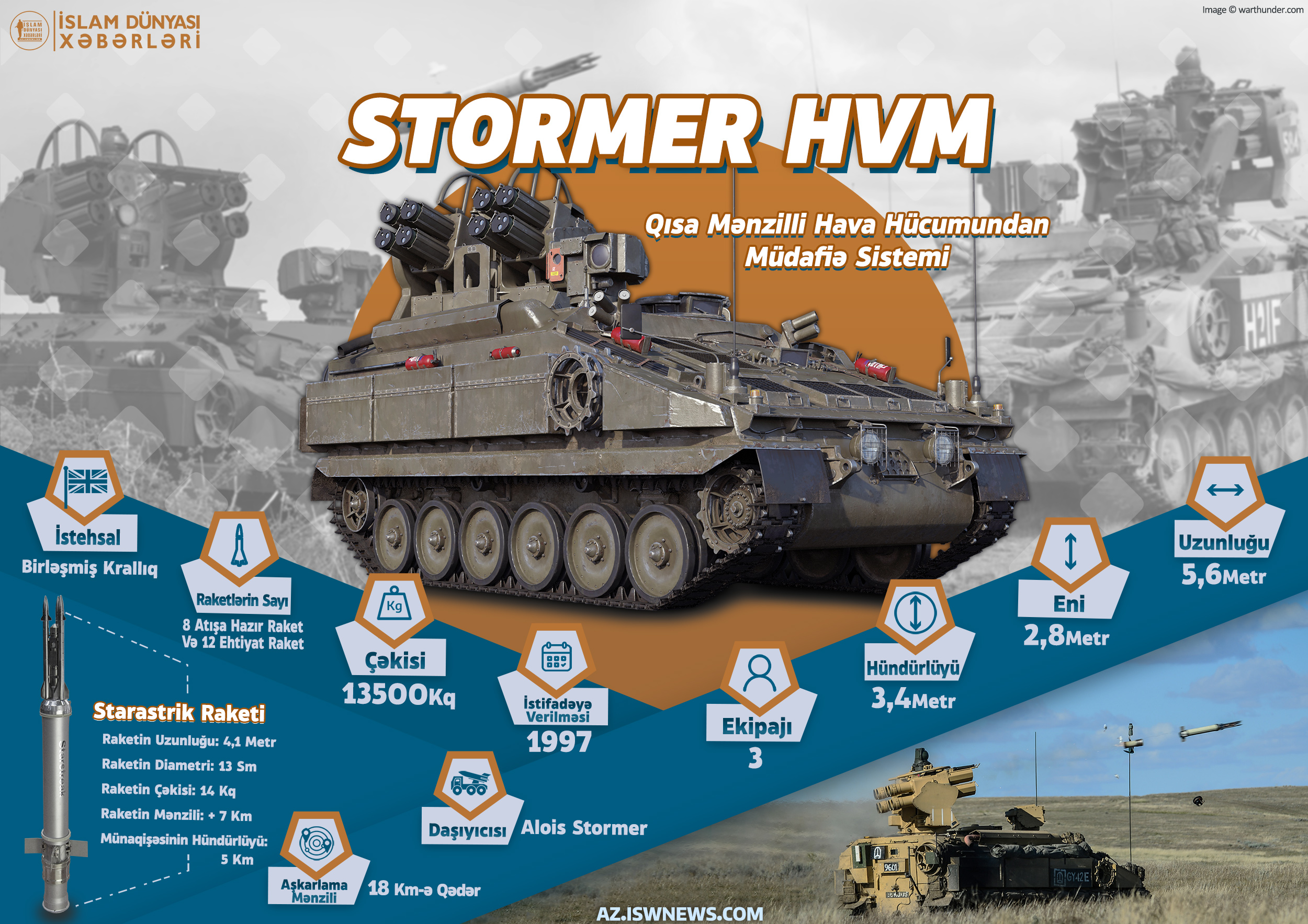
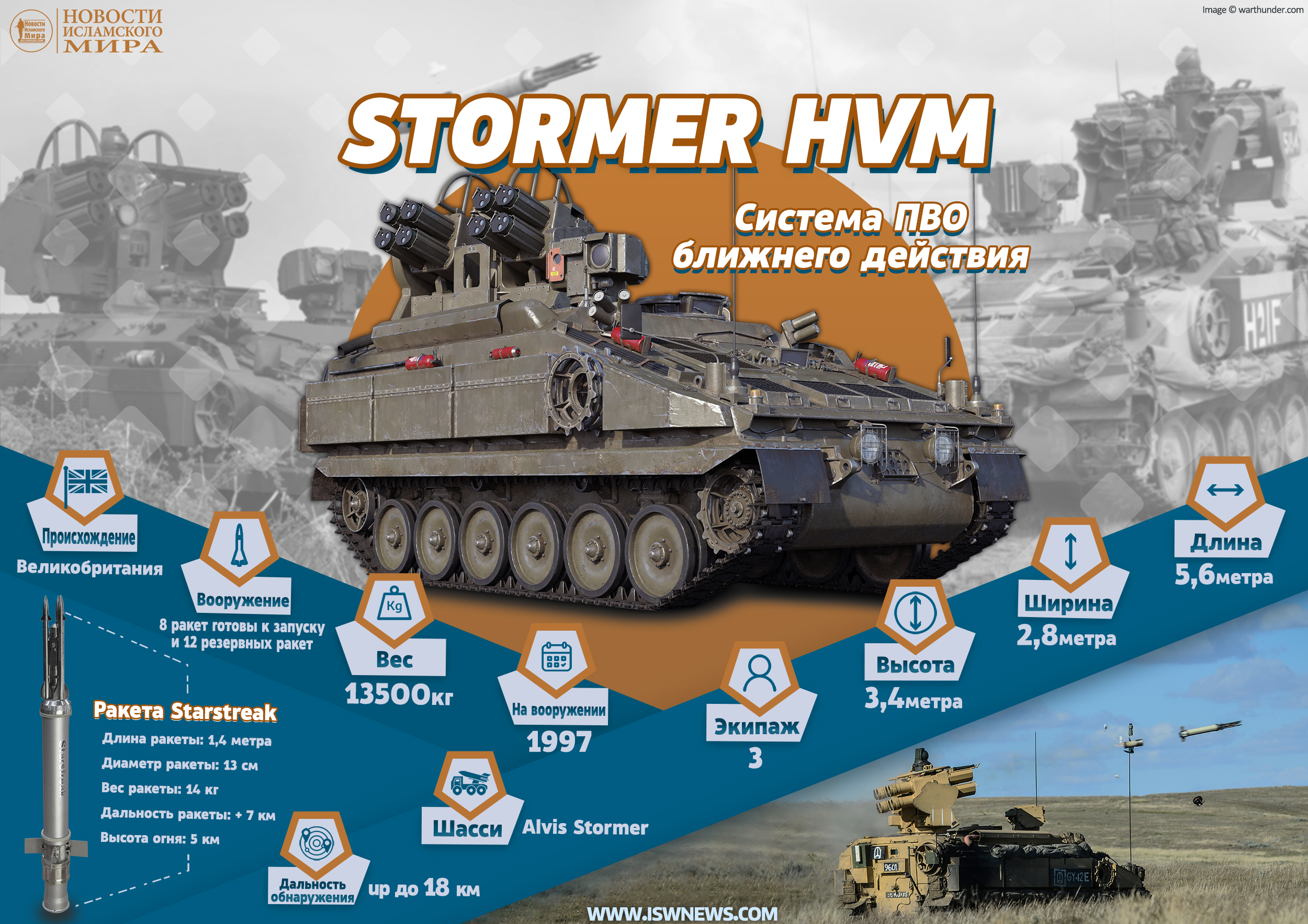
    Stormer HVM air defense system – Click to view full size image

    Infographics of Stormer HVM system in Russian, Farsi and Azeri:

    Source:
    Alvis Stormer
    Stormer HVM
    Short-range mobile air defense missile system – United Kingdom
    Stormer HVM – British mobile air defense system for the Armed Forces

  • Military Knowledge: Zulfiqar Main Battle Tank

    Military Knowledge: Zulfiqar Main Battle Tank

    History:
    The first prototype of the Zulfiqar tank is known as Zulfiqar-1. This tank was first introduced in 1994. According to studies, the design and construction of the tank were carried out by Brigadier General Mir-Younes Masoumzadeh, the first head of the Research and Self-Sufficient Jihad organizations of the Ground Forces of the Islamic Republic of Iran Army. It is likely that the design and construction of this tank took place from 1988 to 1994. Brigadier General Masoumzadeh maintained the position of presiding the Research and Self-Sufficient Jihad organizations until his retirement in 1999.

    The Shahid Kolahdooz Industrial Complex was inaugurated in 1988. This military industrial unit was affiliated with the Ministry of Defence and Armed Forces Logistics and its main goal was to produce armored equipment, especially the Zulfiqar tank. Despite its main goal, this complex also produces various types of railway wagons and heavy equipment due to its high industrial capacity. However, despite the main goal of creating this industrial center for the production of the Zulfiqar tank, the number of Zulfiqar tanks seen in service is not high at all. Some sources claim that 100 units of Zulfiqar-1 tanks have been produced; however, because the military industry is not being publicized, it is not easy to verify this number outright. 

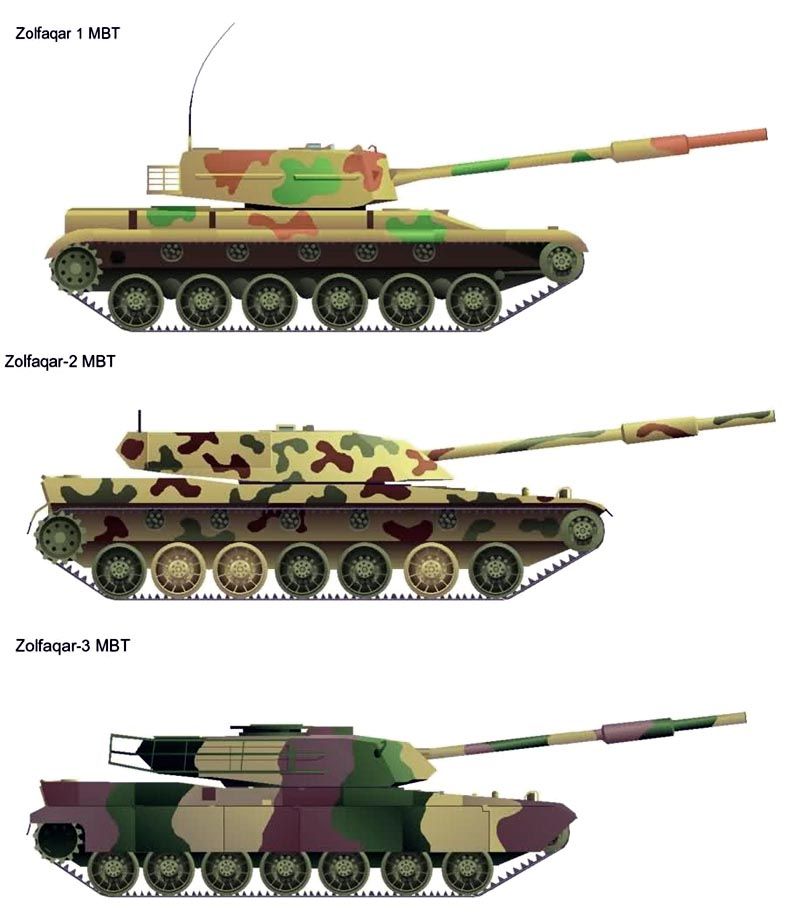
    The information about the timing of the introduction of the Zulfiqar-2 tank is not complete and the available data is unclear. However, based on the existing research, it is likely that the Zulfiqar-2 tank was introduced between 1999 and 2004. High-quality images of the Zulfiqar-2 tank are not available. The turret of the Zulfiqar-2 has undergone significant changes and is longer in comparison to the initial version. At least one wheel has been added to the chassis of the Zulfiqar-2 compared to the initial version. It is likely that significant changes were made to the turret and crew size during the purchase, production, and deployment of T-72 tanks in the mid-1970s. The Zulfiqar-2 tank likely uses a similar automatic loader to the T-72 tank and the crew size has been reduced to 3 personnel.

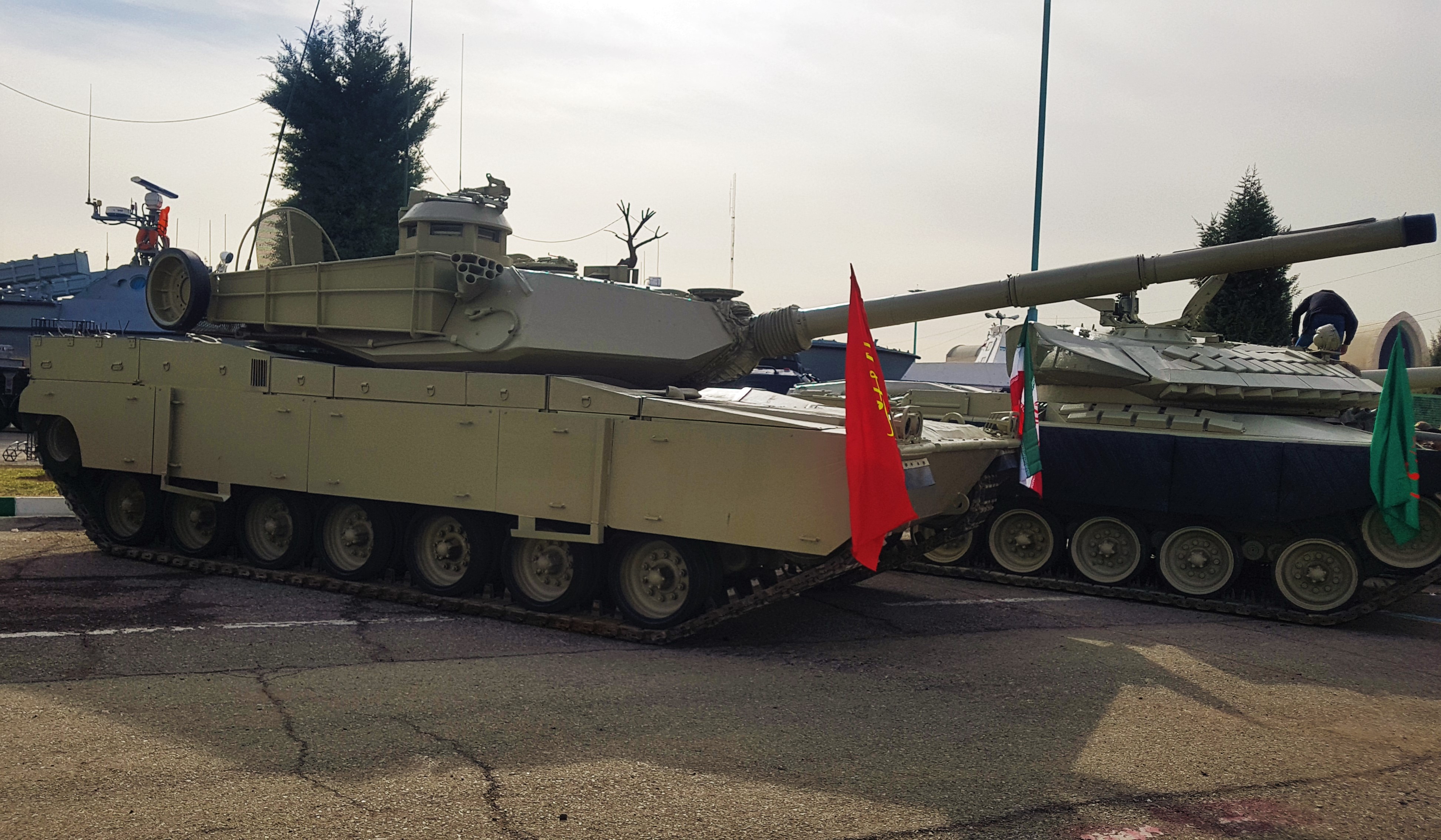
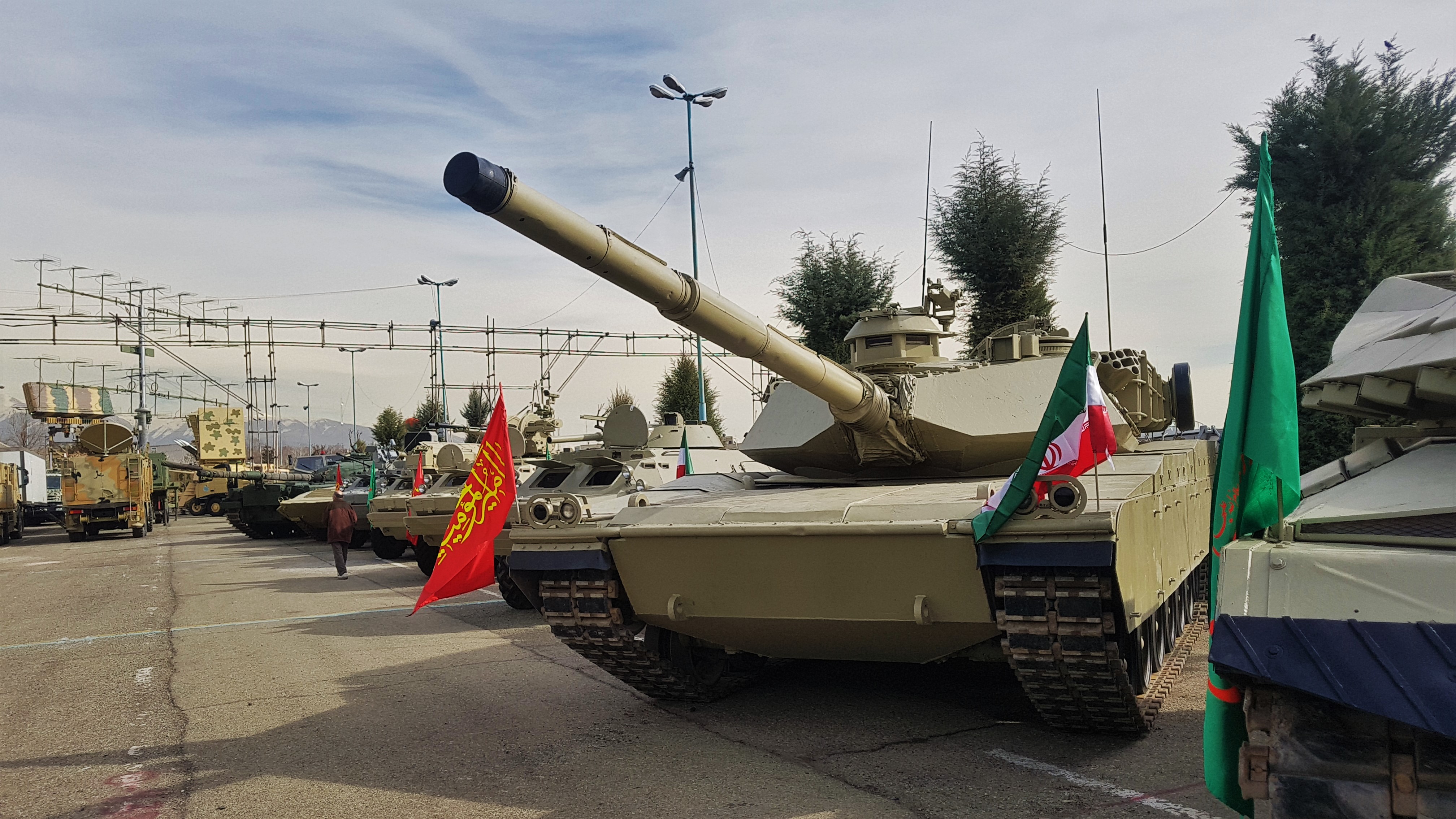
    The Zulfiqar-3 tank was first seen during the military parade in April 2011. This tank also uses the chassis of the Zulfiqar-2 and its turret has a strong resemblance to that of the Zulfiqar-2. In 2016, changes were made to the Zulfiqar-3, mainly related to the design of the front part of the turret. The version unveiled in 2016 is also referred to as Zulfiqar-3E.

    Design:
    As mentioned in the history section, the Zulfiqar-1 has fewer wheels in comparison to later versions. Despite claims that the chassis of the Zulfiqar-1 is similar to the M60 or M48, a closer examination of the chassis reveals that it enjoys an independent designation.

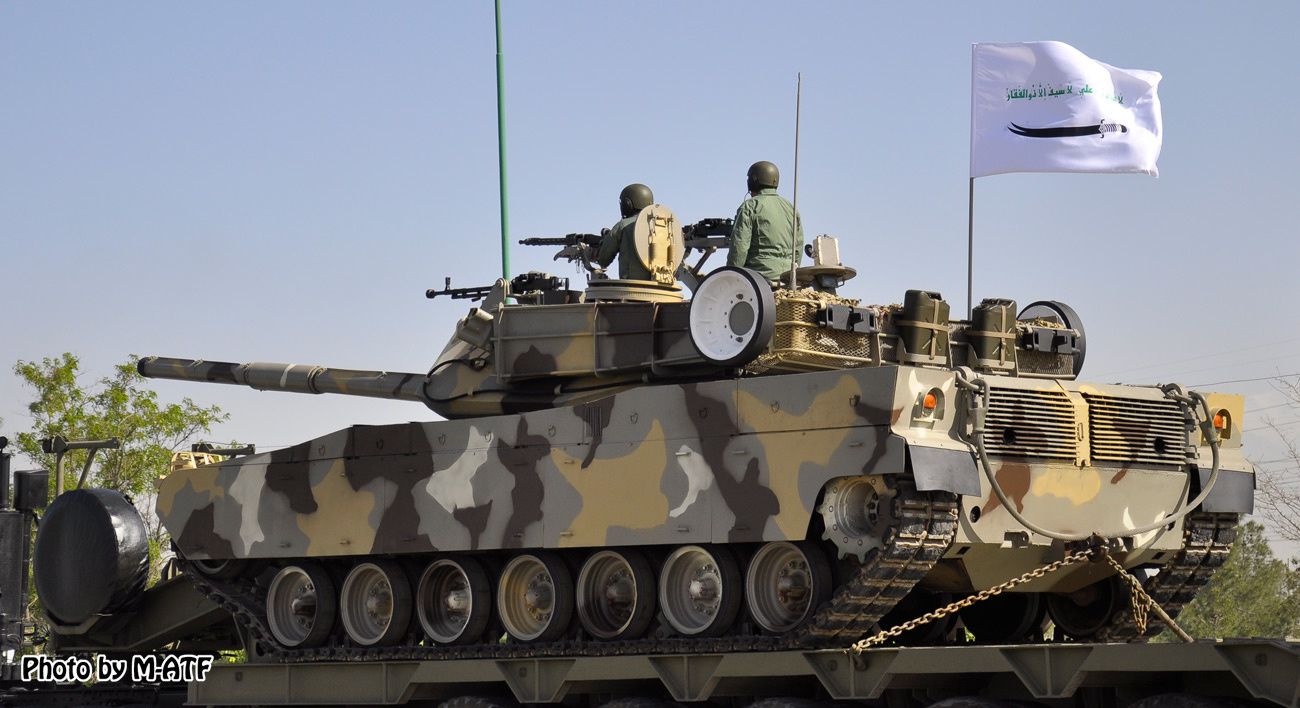
    A graphic image of three Zulfiqar tank models, in the new models, the chassis is longer and a wheel has been added to it.

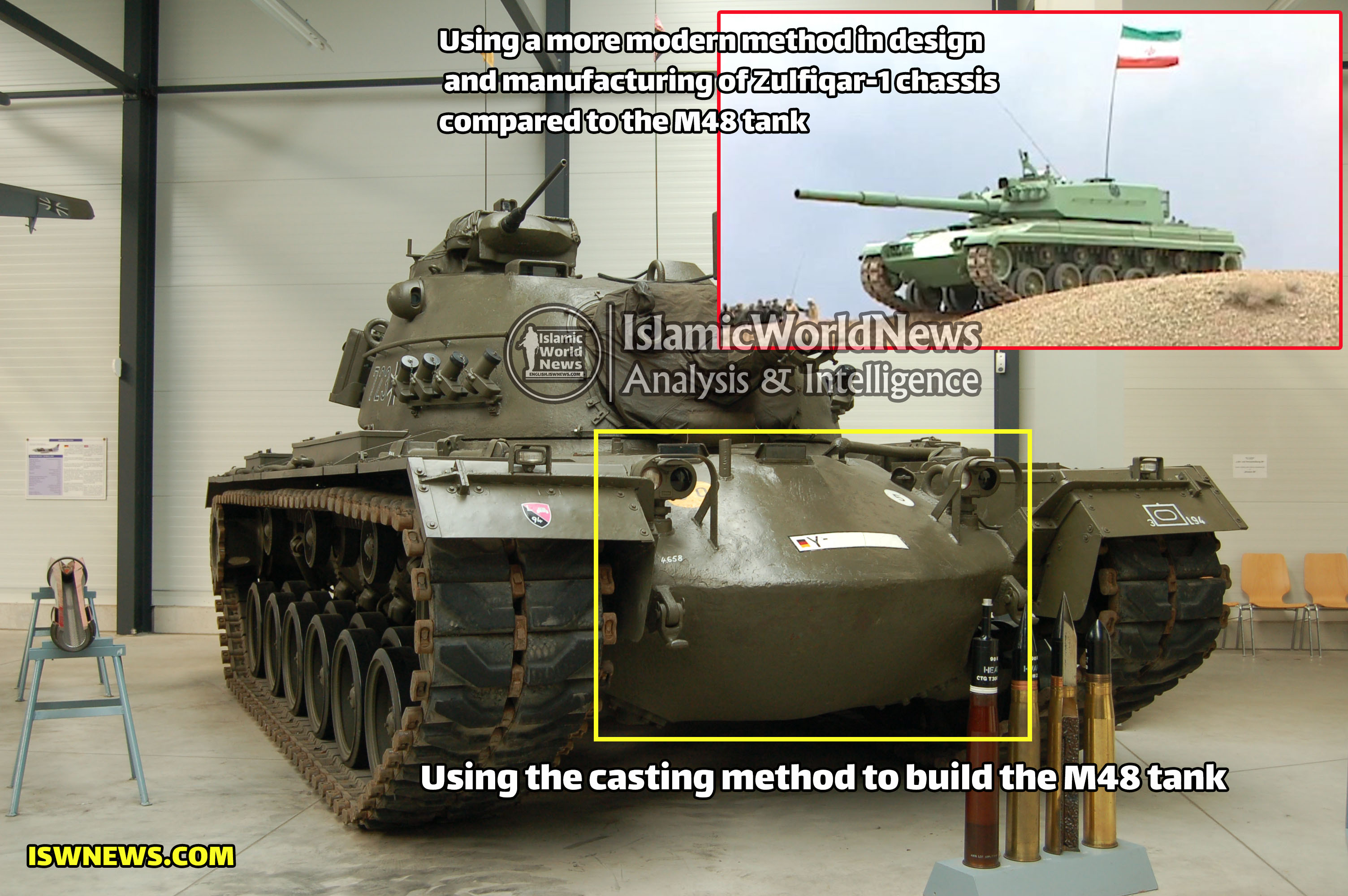
    The Zulfiqar-1 chassis uses a more modern design than the M48, and the only similarity between the Zulfiqar chassis and the M48 is the number of wheels, which is 7. The chassis of M48 is made by casting method and at a glance, the difference between Zulfiqar and M48 chassis is obvious.

    The difference between the two chassis is quite evident

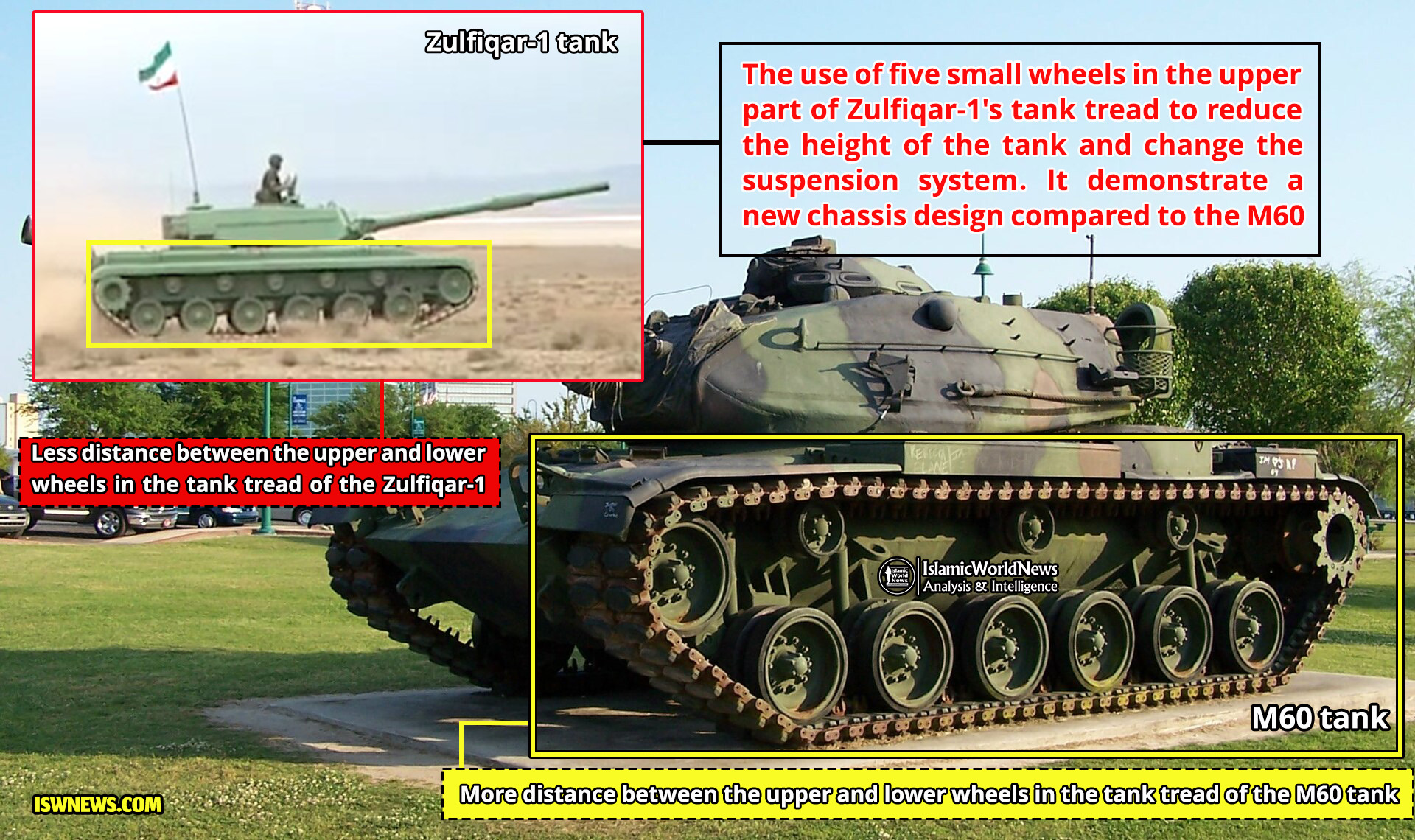
    Regarding the similarity of the Zulfiqar-1 tank with the M60 tank, it can be said that the most similarity can be seen in the chassis of these two tanks. Both have the same number of wheels and the same shape in front of the chassis. However, the chassis height of the Zulfiqar tank is less. For this reason, five wheels have been used instead of three supporting wheels above, so that the reduction of the chassis height does not interfere with the performance of the wheels and chains on rough roads. The reduction in height and the applied changes can also indicate a change in the suspension system. According to the mentioned points, the Zulfiqar-1 chassis, despite its similarity with the M60, has used an independent design.

    Due to the similarities between Zulfiqar-1 and M60 designs, many experts believe that the AVDS-1790 engine with 1000 horsepower belonging to the M60 tank was used in Zulfiqar.

    The difference in the height of the tank chassis and the number of tank tread wheels in the M60 and Zulfiqar-1 tanks

    The designers of the Zulfiqar-1 tank have paid attention to reducing the height of the chassis to achieve greater stealth. For this purpose, small wheels are used more in the top of the tank tread. The reason for this is to prevent the interference of the wheels and chains on the roads with high unevenness and also reduce the damage of the wheels or chains during the movement.

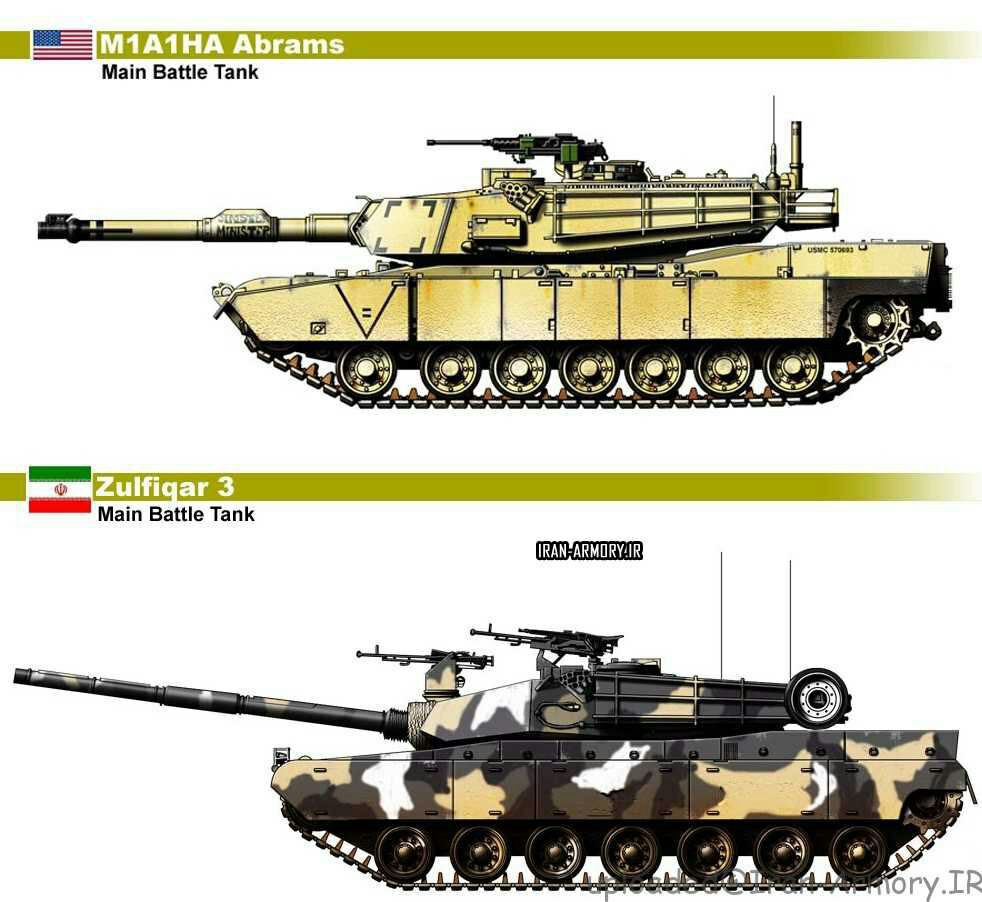
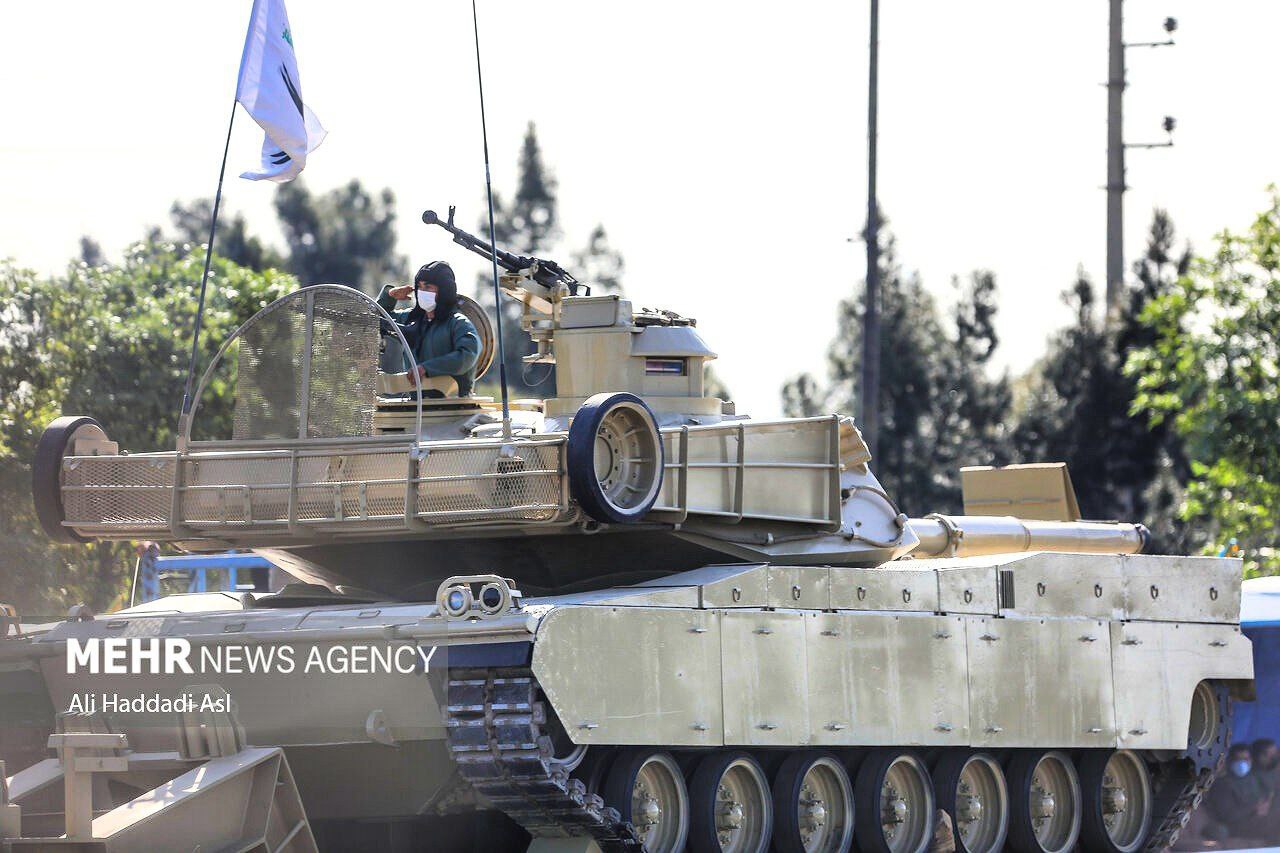
    The design of the Zulfiqar 2 and 3 chassis is very similar to the American Abrams chassis at first glance. It seems that in the process of designing the Zulfiqar 2 and 3 chassis, an attempt has been made to present a modern design based on the Abrams chassis.

    Comparison of Zulfiqar-3 and Abrams tanks, which are similar in appearance.

    Review of Zulfiqar-3 tank:
    Zulfiqar-3 tank is an Iranian main battle tank. This tank is the result of eight years of holy defense experience and the construction of Zulfiqar-1 tank in 1993.

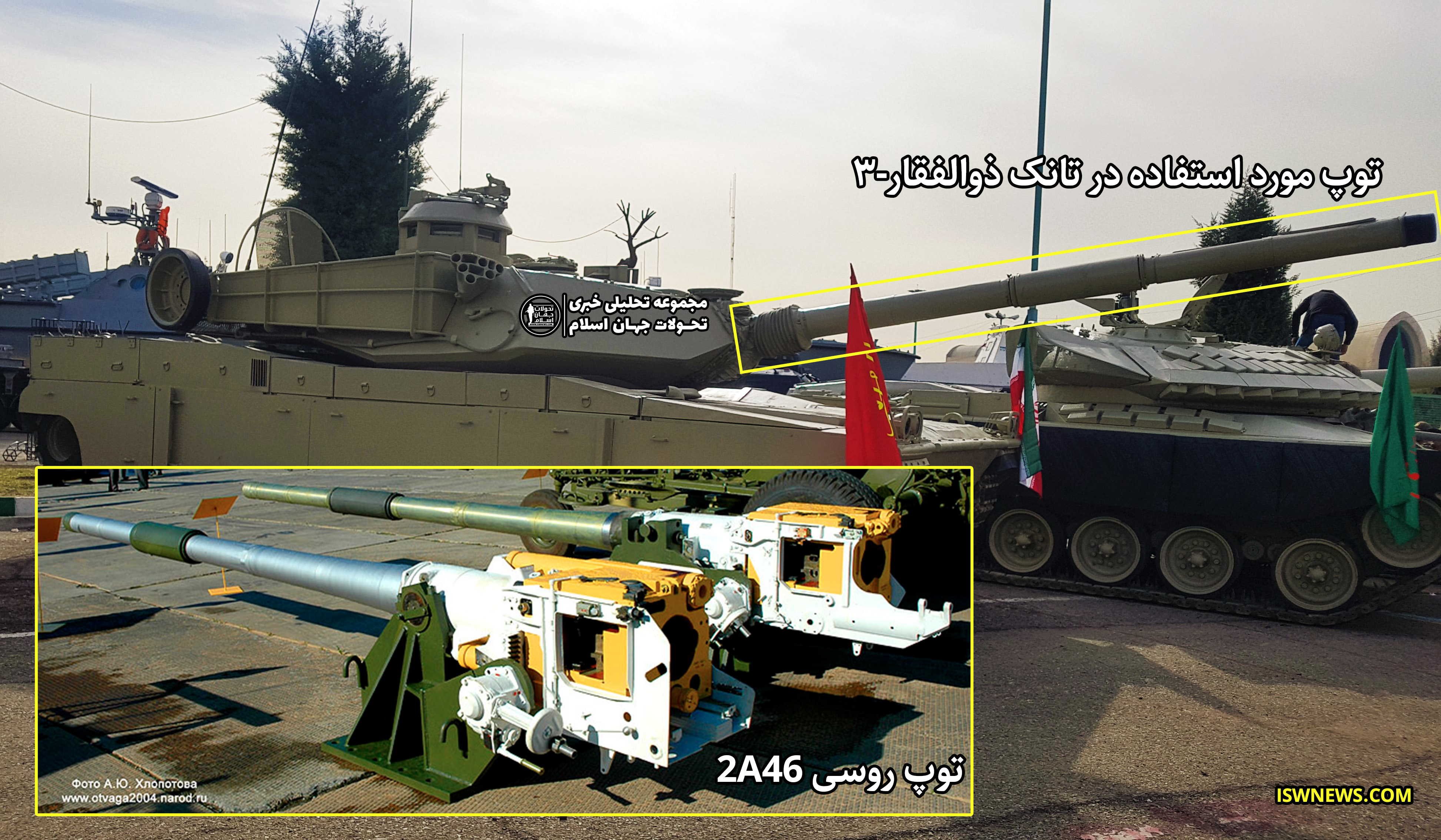
    Zulfiqar-3 tank uses 125mm 2A46 gun. According to the image documents, this gun was also present on Zulfiqar-1 from the very beginning. Most likely, at first, Iran tried to buy western types of guns, because the combat organization of the Iranian army is based on western tools, But due to Western sanctions against Iran, the Russian 2A46 125 mm gun was used. This gun was available on the captured tanks of the Iraq war, and considering the economic conditions of Russia after the collapse of the Soviet Union, it was possible to buy it from Russia.

    In the mid-1990s, Iran succeeded in buying and producing the T-72 tank from Russia. This tank was imported into the country as a kit and assembly operations were carried out in Iran. This caused Iran to use the automatic loading system of the T-72 tank in addition to the 125 mm gun in the next samples of Zulfiqar. Today, Iran itself is the producer of 125mm 2A46 gun under Russian license.

    The effective range of the gun used in the Zulfiqar-3 tank is about 3000 km. To increase the accuracy of this gun, the KAT-72 fire control system made in Iran has been used. This fire control system is the result of technology transfer and production of Slovenian EFCS-3-55 system. This system enables the Zulfiqar tank to shoot at a moving target at a distance of 2000 km while the Zulfiqar tank itself is moving. Also, the KAT-72 fire control system allows the Zulfiqar-3 tank to hit the first shot at a distance of 2,200 meters in a stationary state.

    This tank uses a laser range finder produced by SAIRAN company, which can measure the distance up to 10,000 meters with high accuracy. The fire control system also uses wind sensor, temperature sensor and gun deviation sensor.

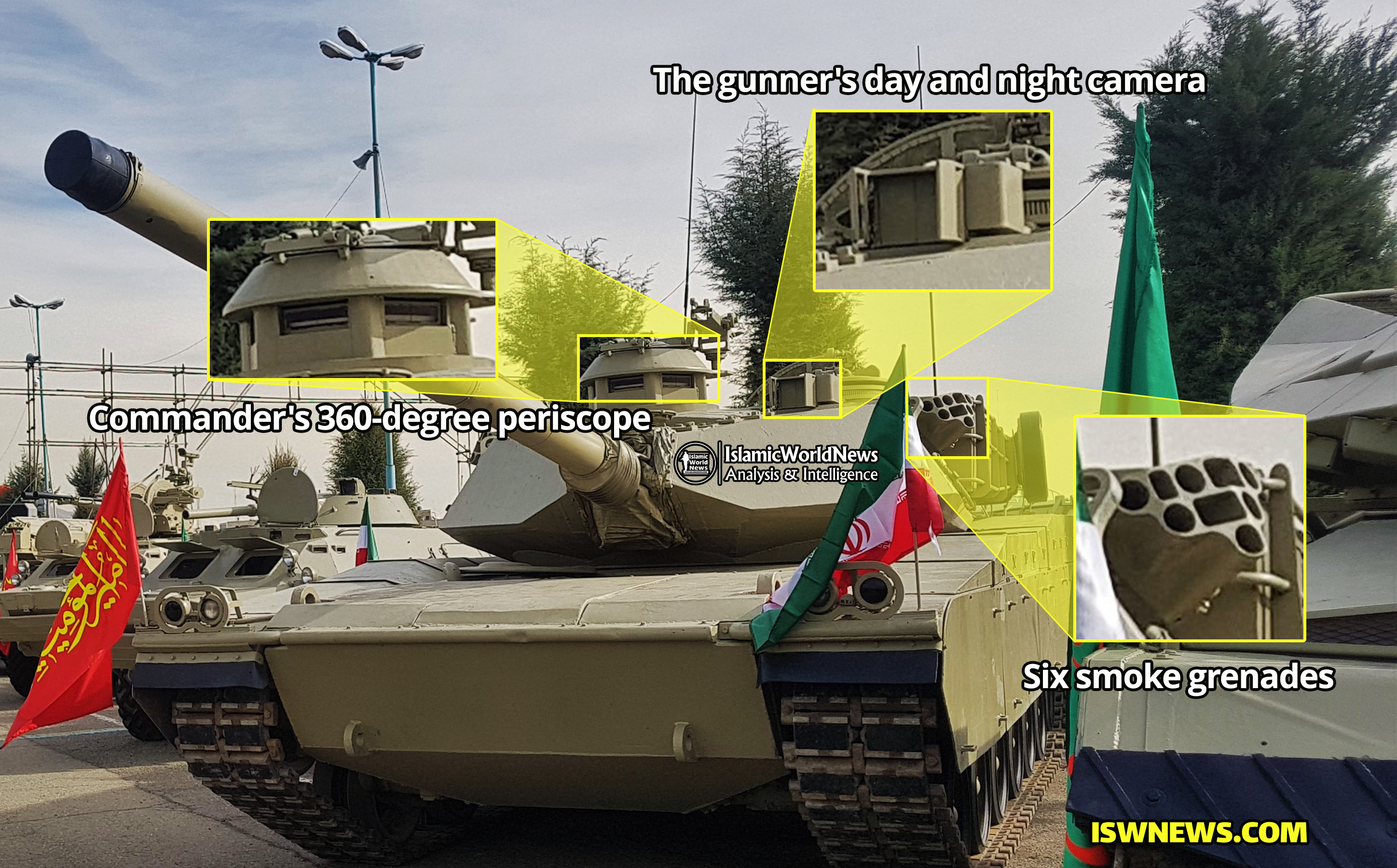
    The Zulfiqar-3 tank uses a 360-degree periscope for the commander, a day and night vision site for the gunner, and a periscope for the gunner. Also, the tank includes 12 smoke grenade launchers (6 on each side).

    Different parts of Zulfiqar-3 tank

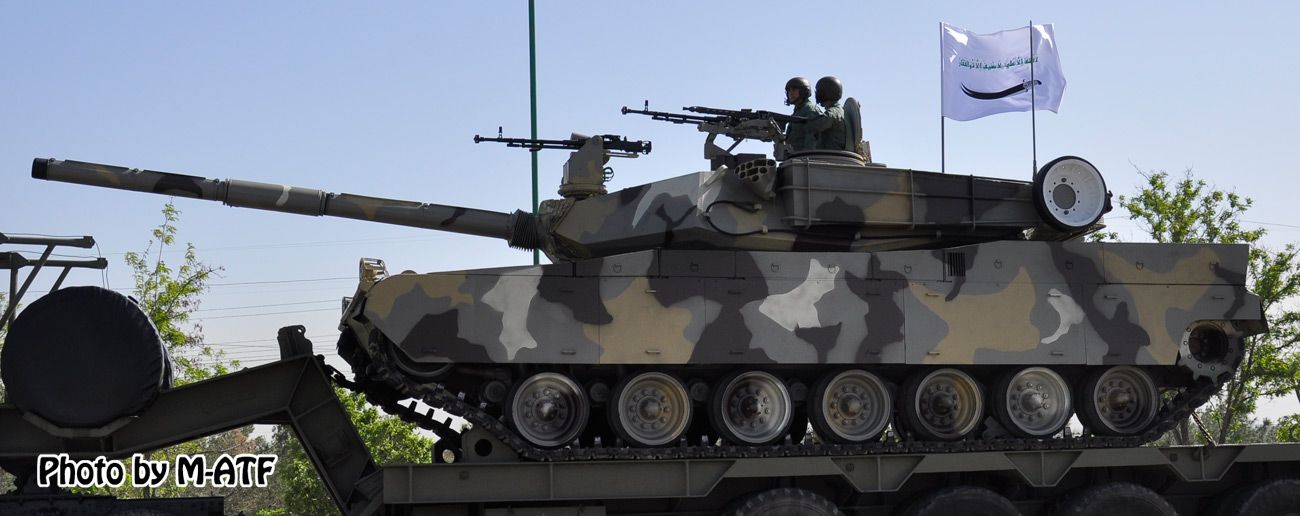
    In the prototypes, in addition to the main 125 mm gun, a 12.7 mm Dshk machine gun for the commander and a 7.62 MG3 machine gun for the gunner are installed as secondary weapons on the tank. The machine guns have no remote control and the tank crew must get out of the tank to use them. But in more advanced models of Zulfiqar 3, a Dshk machine gun with remote control capability has also been added to this section.

    The point that attracts attention in this section is the use of three machine guns on the tank. In general, using this number of machine guns on today’s modern tanks is not customary and is considered excessive. Also, remote controlled machine guns are used in modern tanks today. Having a remote controlled machine gun for the gunner and commander in urban warfare can be much more practical than the current arrangement. Because it keeps the crew away from the enemy’s direct fire and provides a large volume of fire without rotating the turret in several directions.

    The machine guns used on the Zulfiqar-3 tank

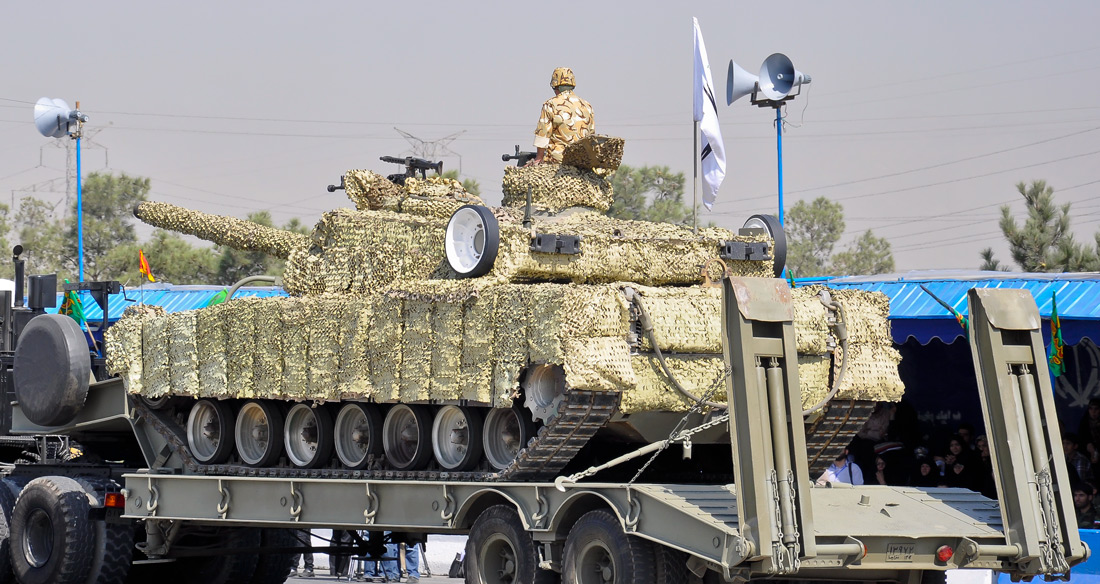
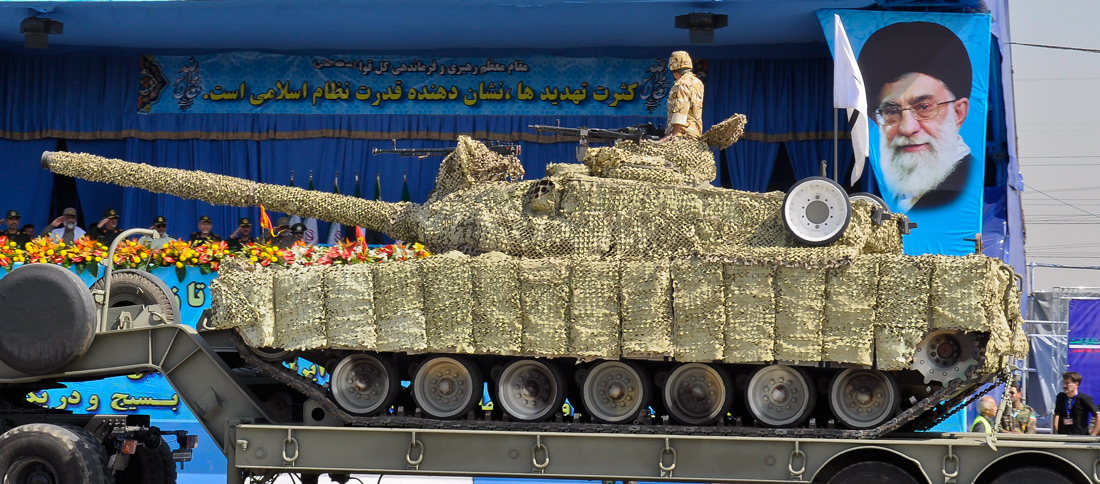
    In some published images of the Zulfiqar-3 tank, thermal camouflage nets have been used for greater concealment and to increase the degree of protection.

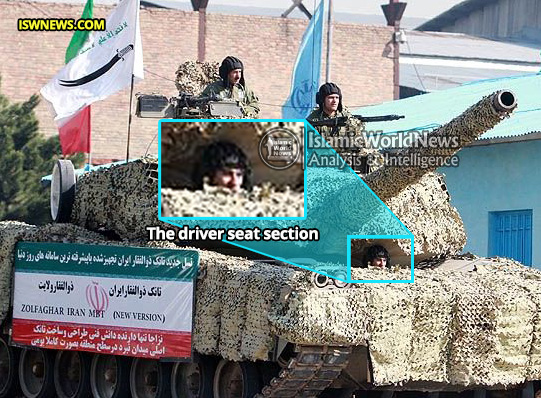
    The driver in the Zulfiqar-3 tank is located in the middle and almost below the junction of the gun and the turret. This location is similar to the location of eastern tanks. Regarding the periscope or surveillance camera for the driver, there is no item on the tank, but it is possible to install and use these items, similar to the Karrar tank.

    Read more: Military Knowledge: Karrar Main Battle Tank

    Thermal camouflage nets and the location of the Zulfiqar-3 tank driver

    The exact specifications of the engine used on the Zulfiqar-3 tank are not available. But speculation predicts the existence of an engine with a minimum power of 1000 horsepower. Based on the power of 1000 hp, the M60 tank engine named AVDS-1790 and the Ukrainian 6TD engine with a maximum power of 1200 hp and the Russian V92 engine with a power of 1000 hp (used in the T-90A) are available for the Zulfiqar-3 tank.

    Zulfiqar-3 engine with 1000 horsepower and 52 tons of weight gives this tank a thrust to weight ratio of 20 horsepower per ton, which is a desirable number.

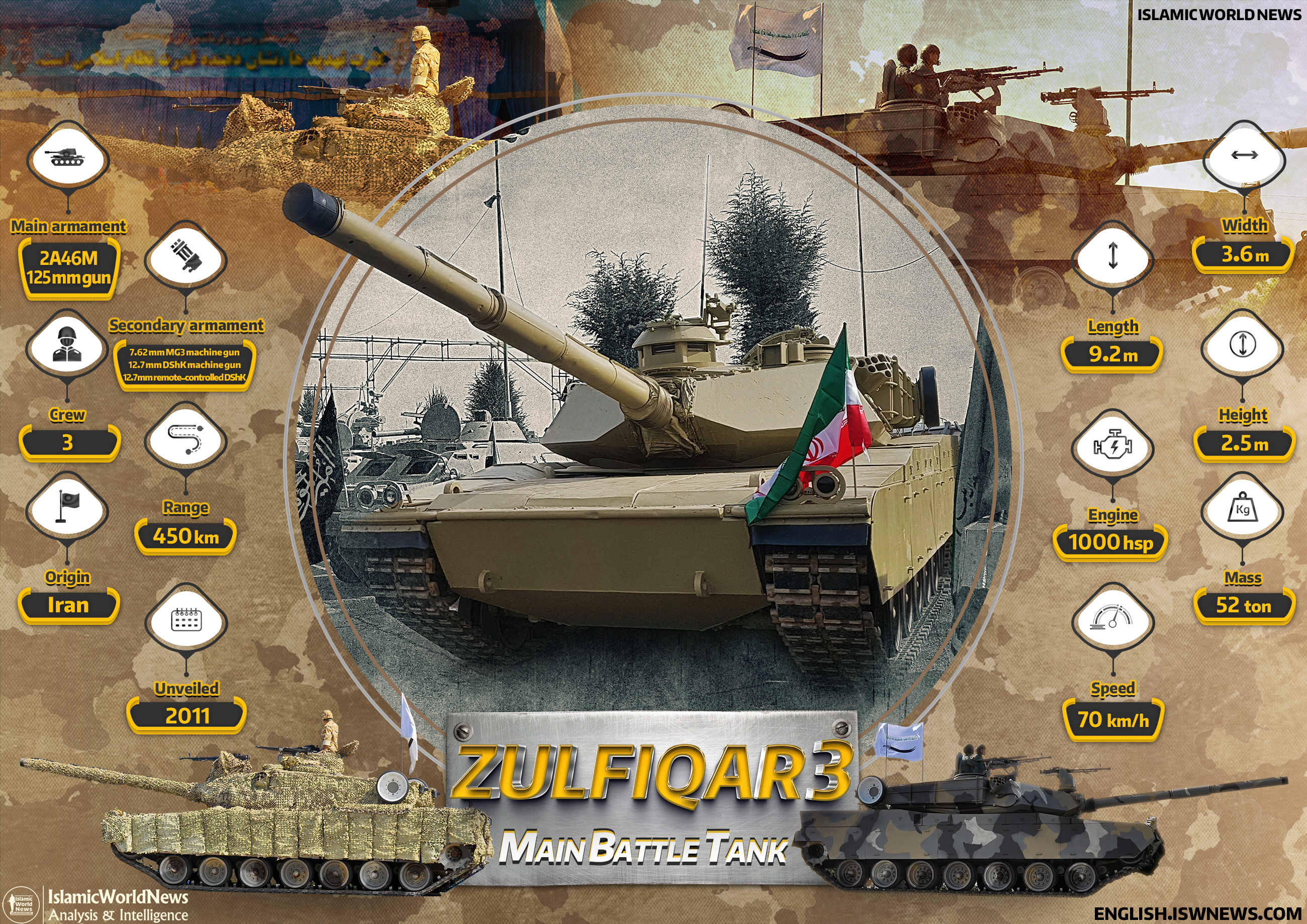
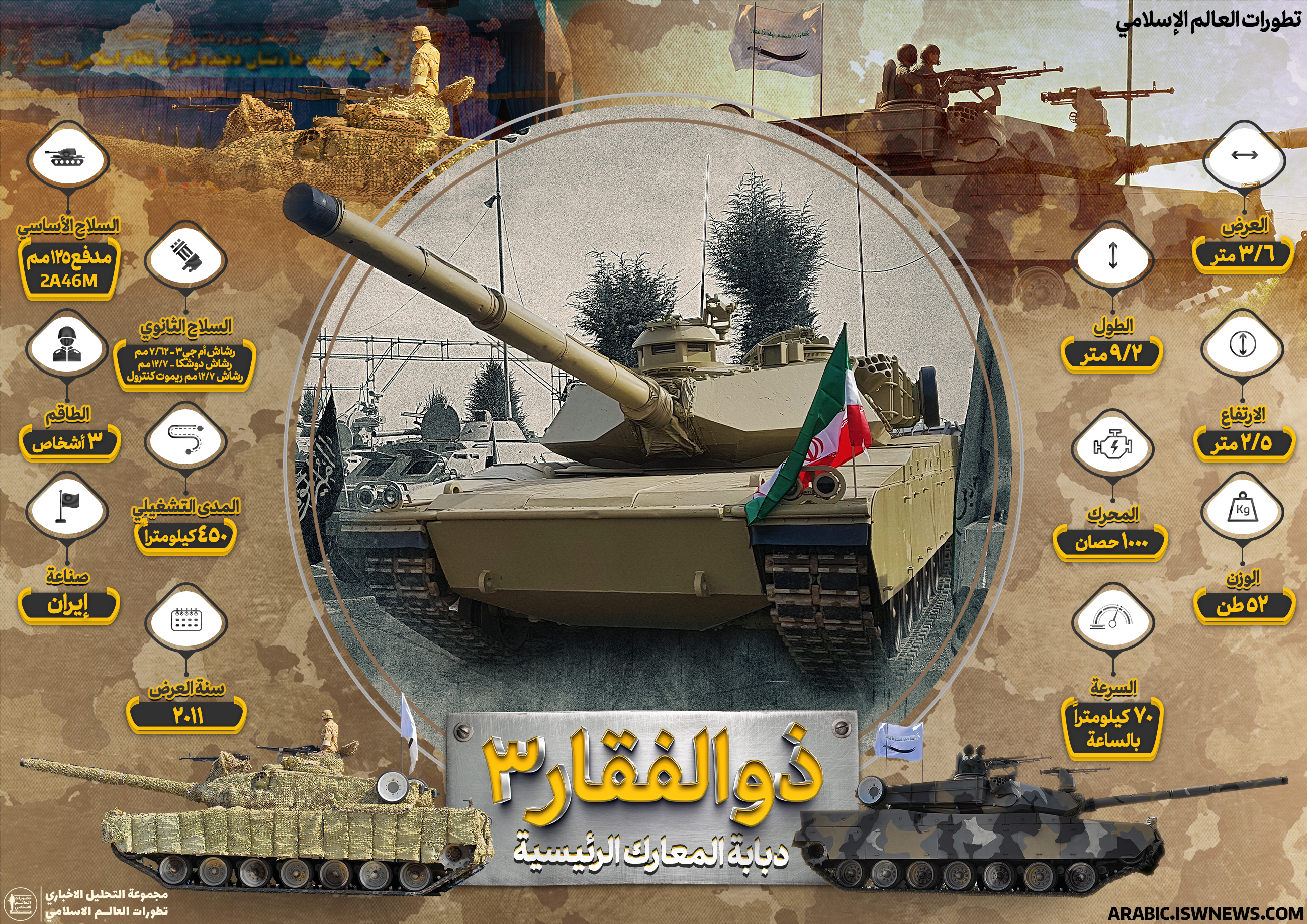
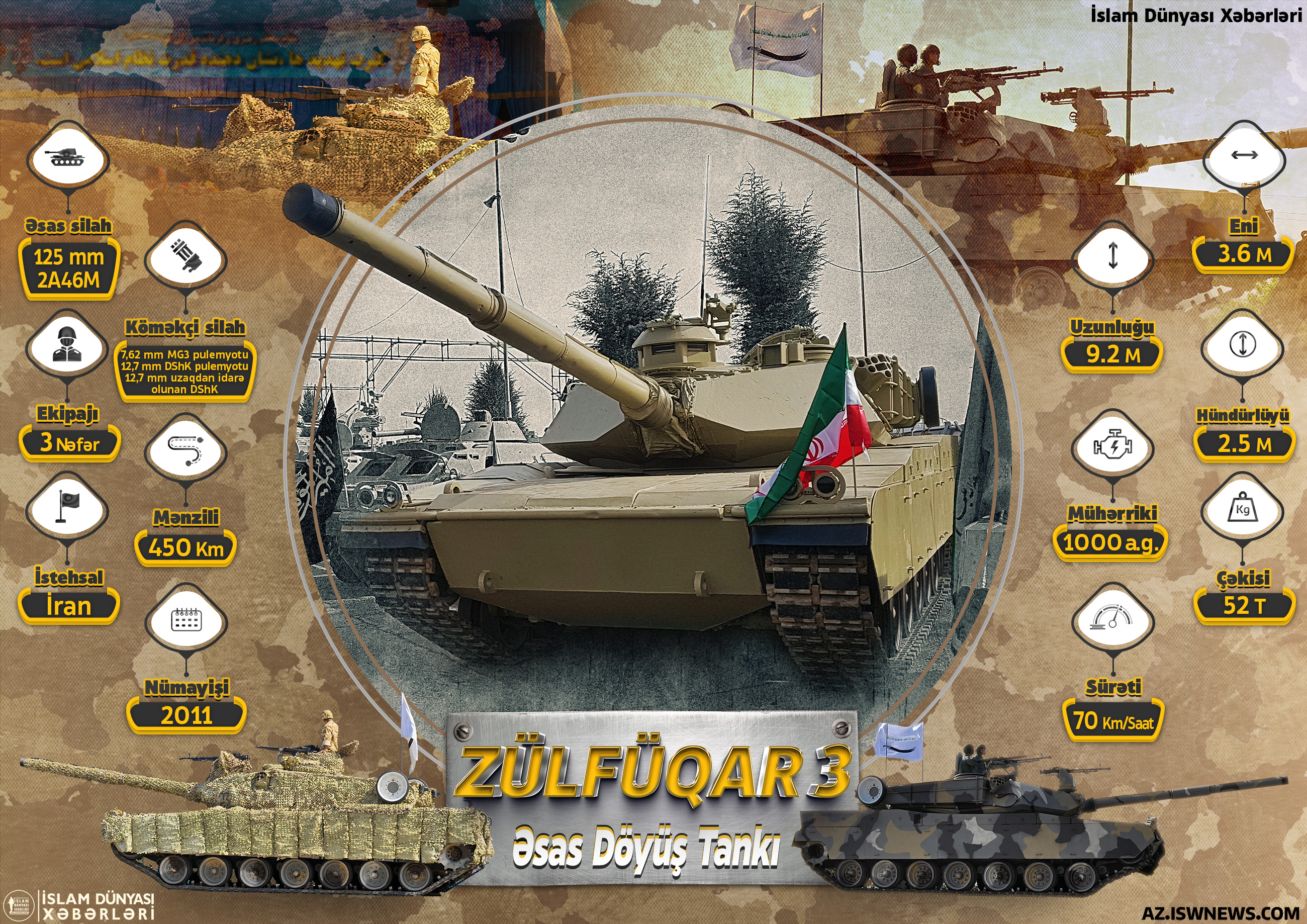
    Specifications of the Zulfiqar 3 tank:
    Type: Main Battle Tank
    Country of Origin: Iran
    Producer: Jihad self-sufficiency of the ground forces of the Islamic Republic of Iran Army
    Unveiled: 2012
    Crew: 3 (driver, commander and gunner)
    Length: 9.2 to 9.7 meters (including the gun barrel)
    Width: 3.6 meters
    Height: 2.5 meters
    Engine: 1000 horsepower
    Operational range: 450 km
    Speed: maximum 60 to 70 km/h on the road
    Mass: 52 tons
    Main weapon: 125mm 2A46M gun with stabilizer
    Secondary weapon: one 7.62 mm MG3 machine gun – one 12.7 mm Dshk machine gun – one 12.7 mm Dshk machine gun with remote control capability

    Zulfiqar-3 Tank – click to view full size

    More images of Zulfiqar-3 tank:

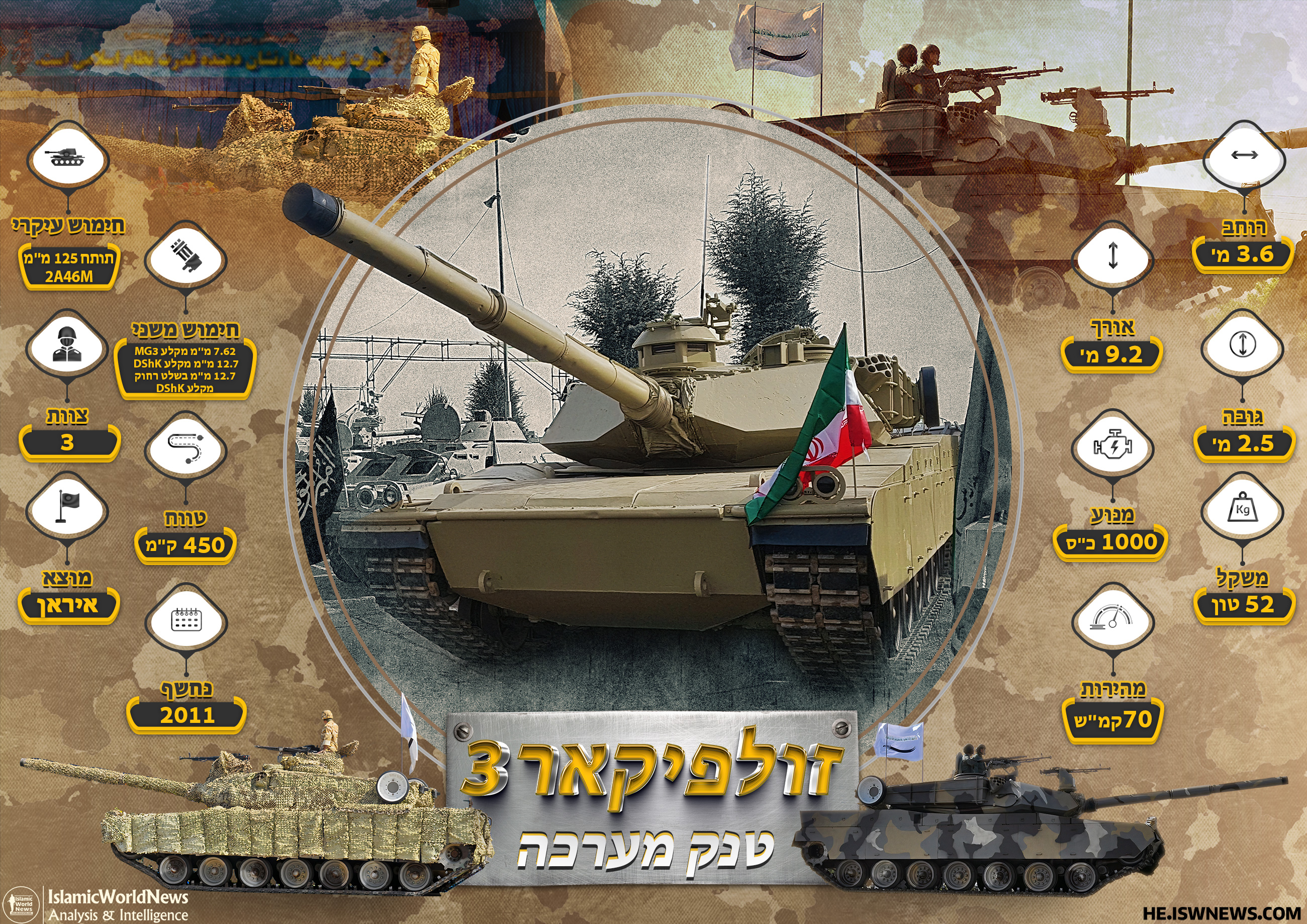
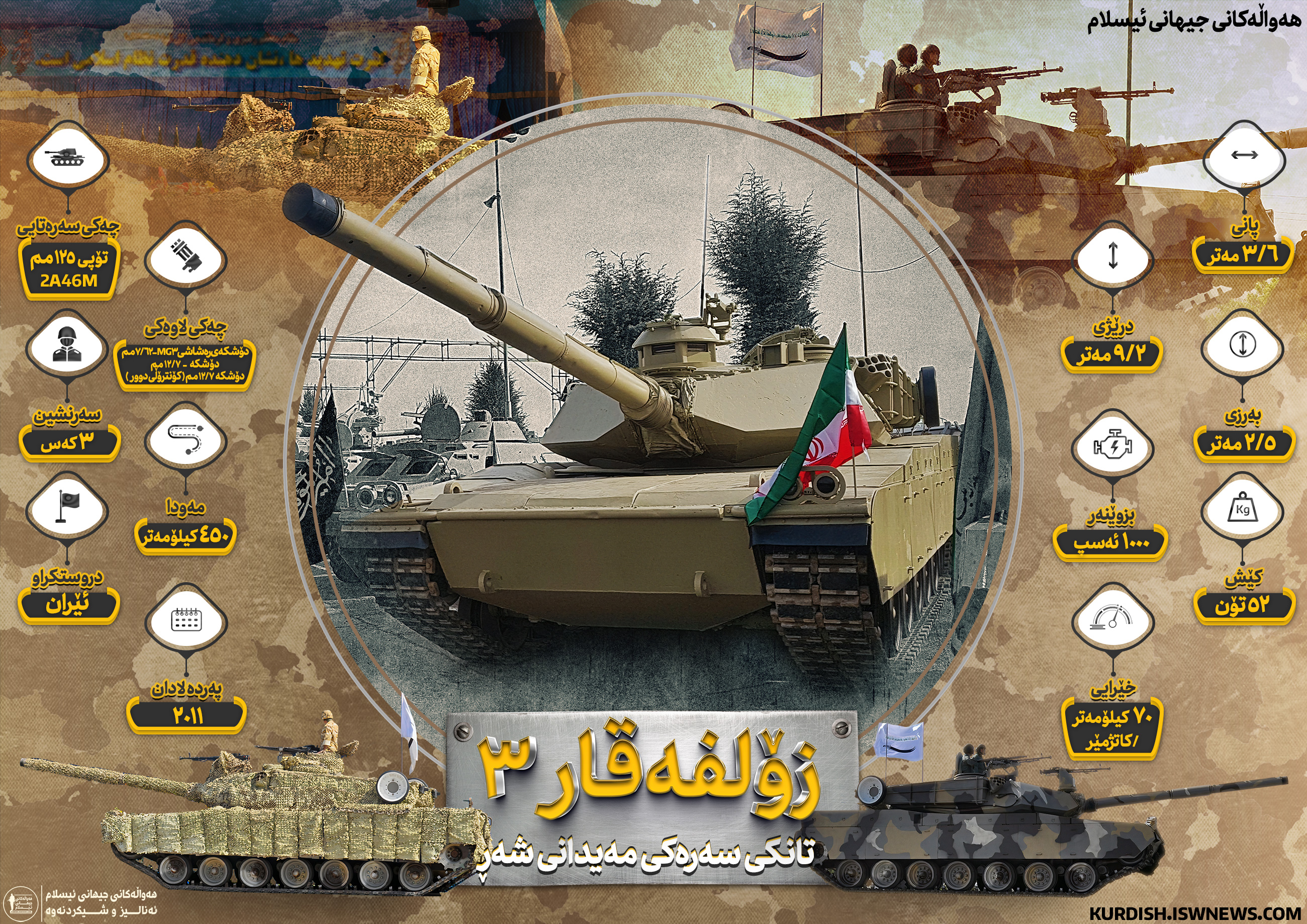
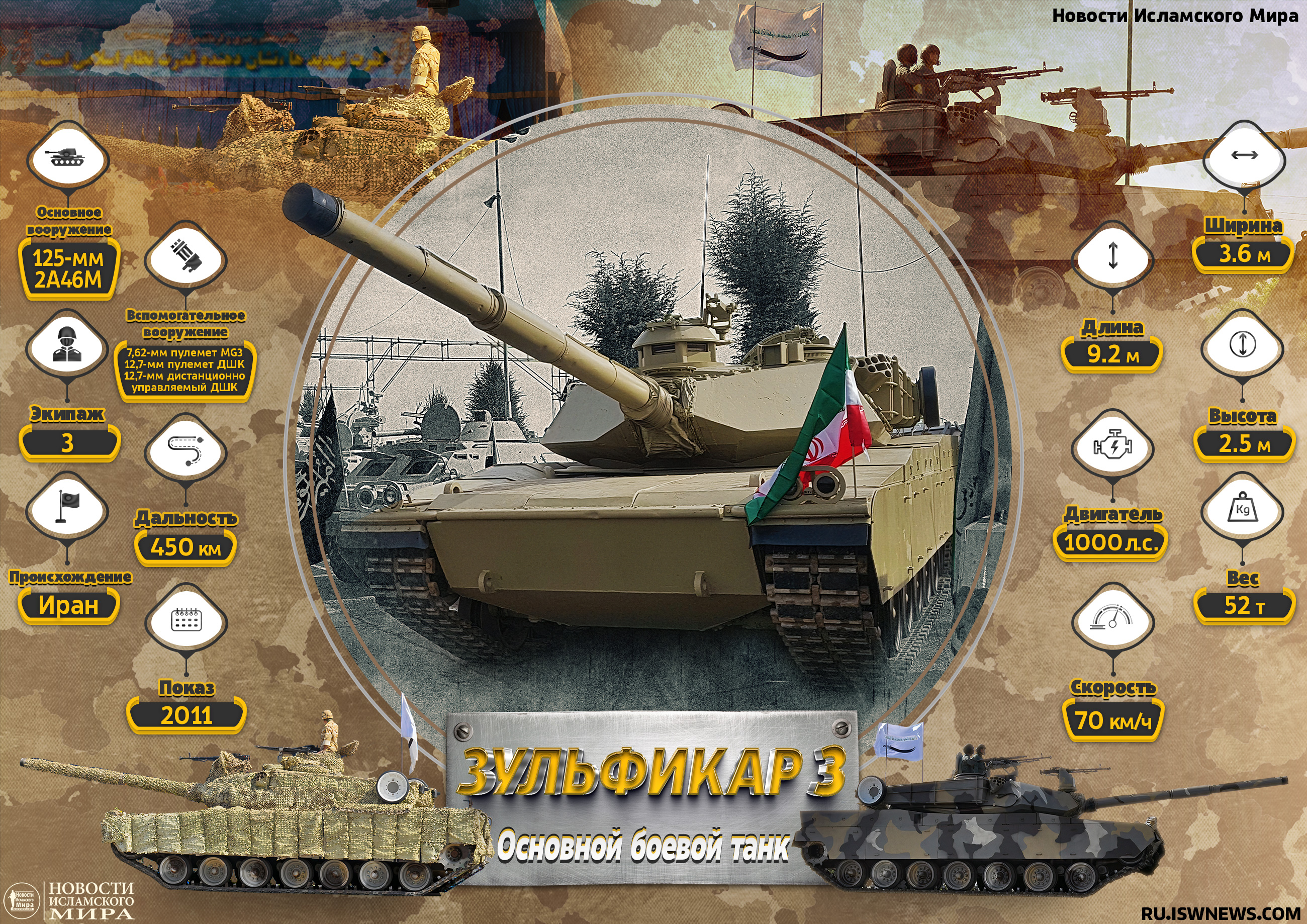
    Infographics of Zulfiqar-3 tank in Russian, Arabic, Hebrew, Kurdish, Azeri and Farsi:

    Sources:
    ویژگی های نسل جدید تانک ذوالفقار+عکس
    Zulfiqar (1993)
    بدانیم که … (سایت دستاوردهای ارتش)
    تانک ذوالفقار

  • Military Knowledge: Fattah-2 Hypersonic Missile

    Military Knowledge: Fattah-2 Hypersonic Missile

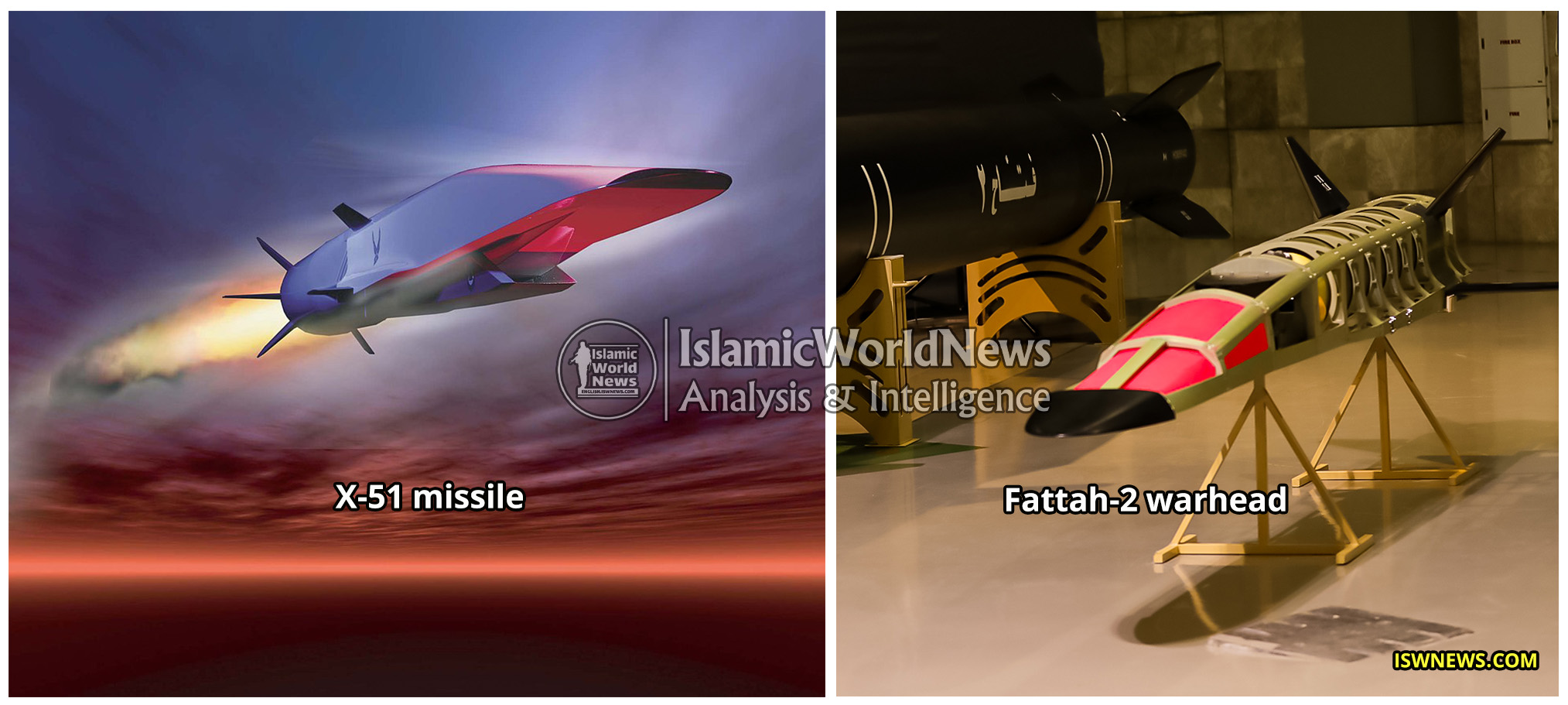
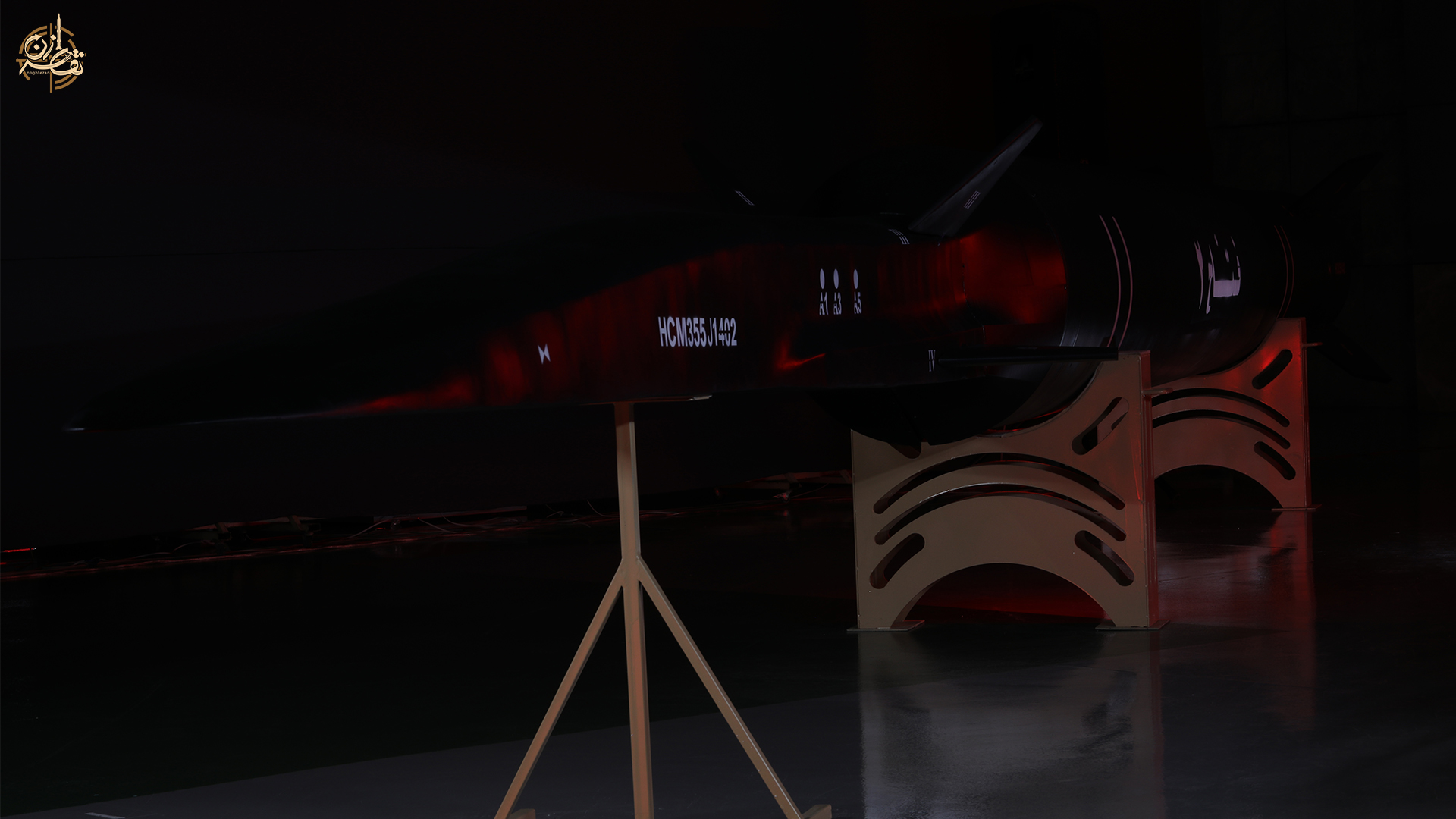
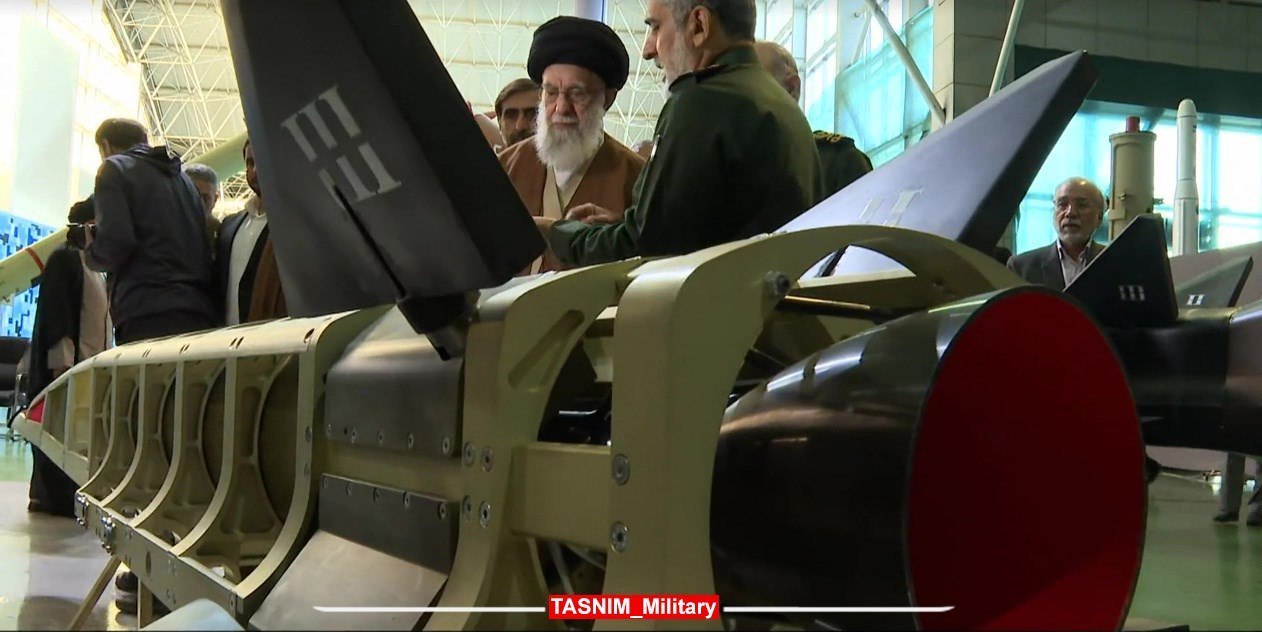
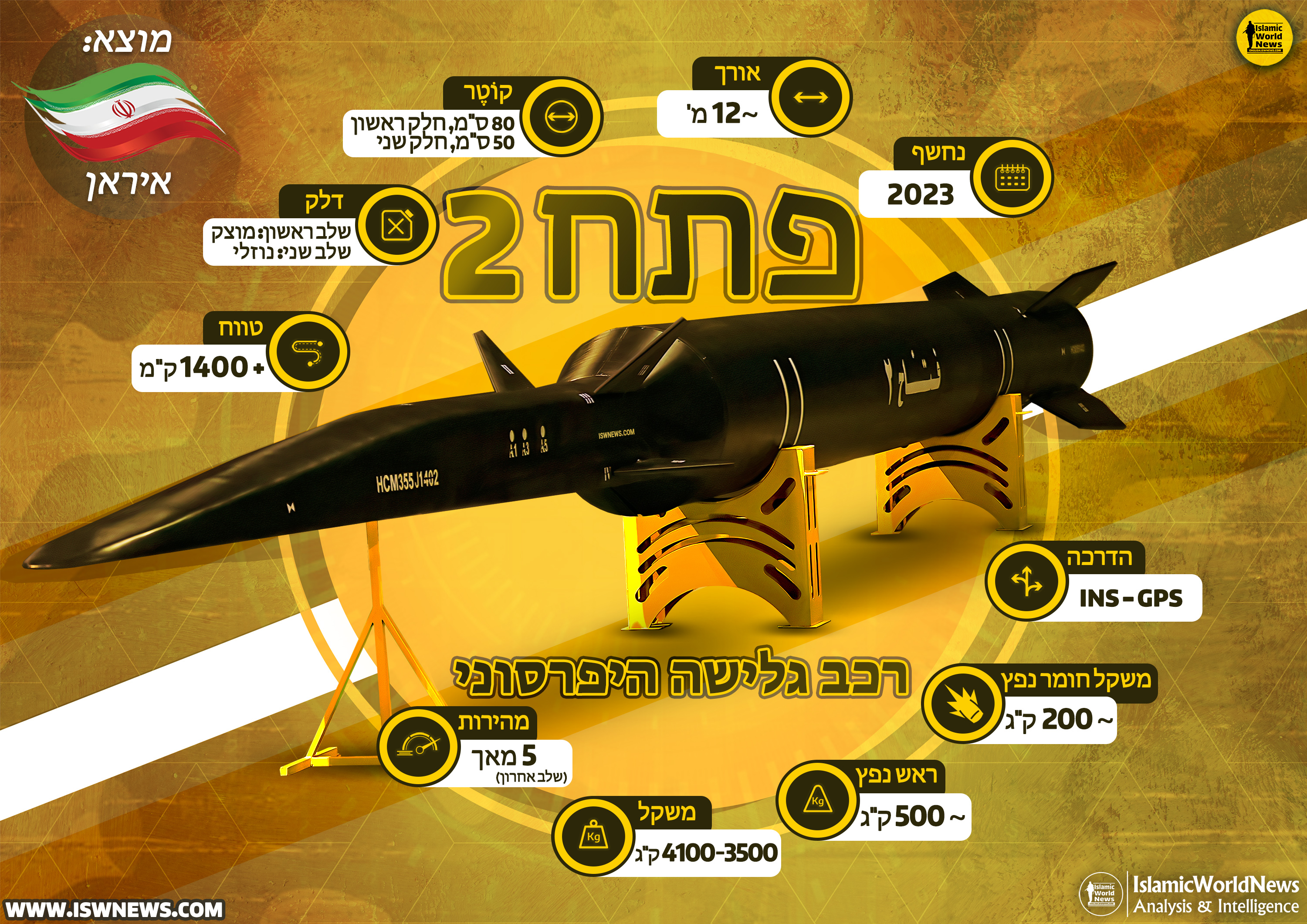
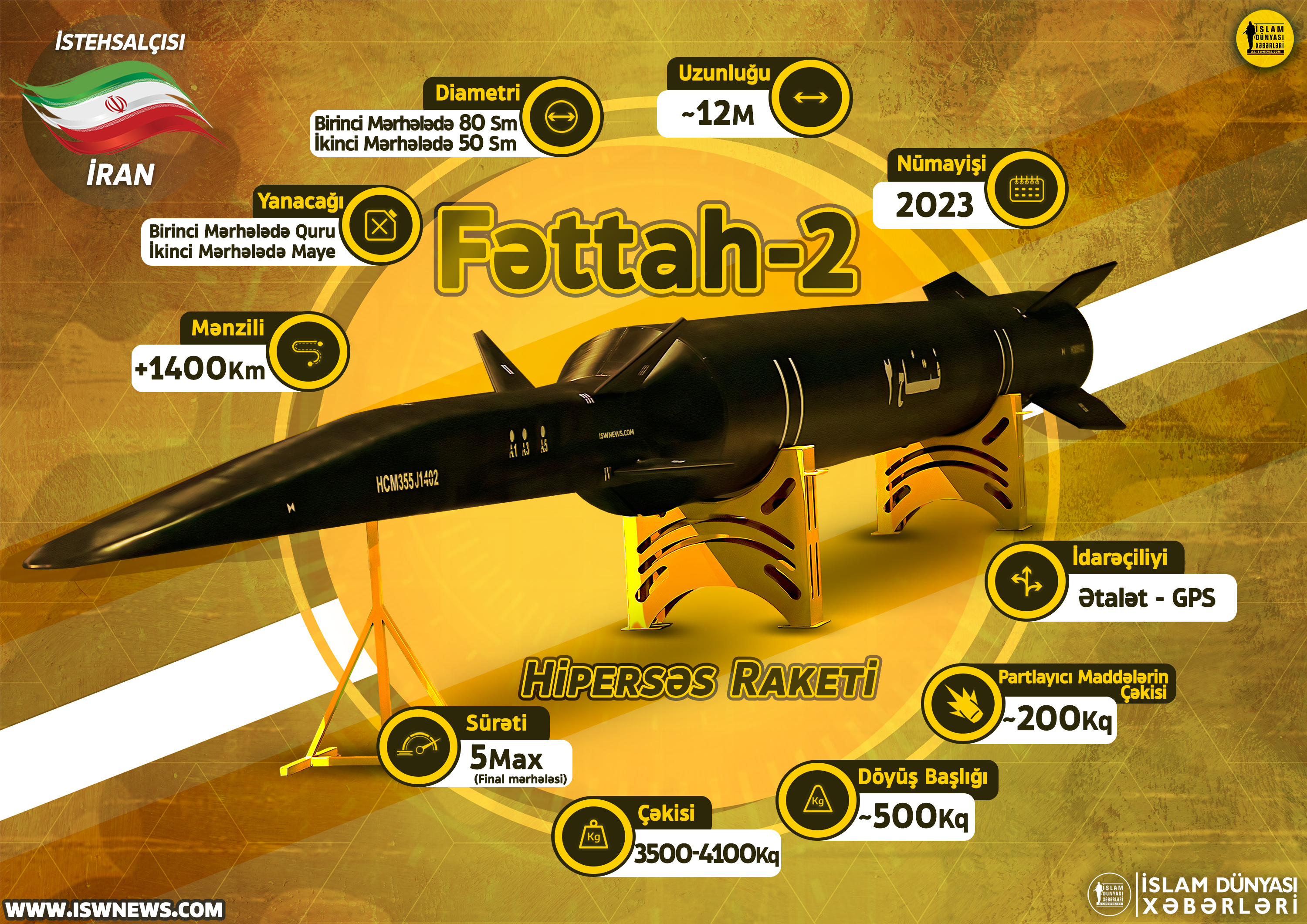
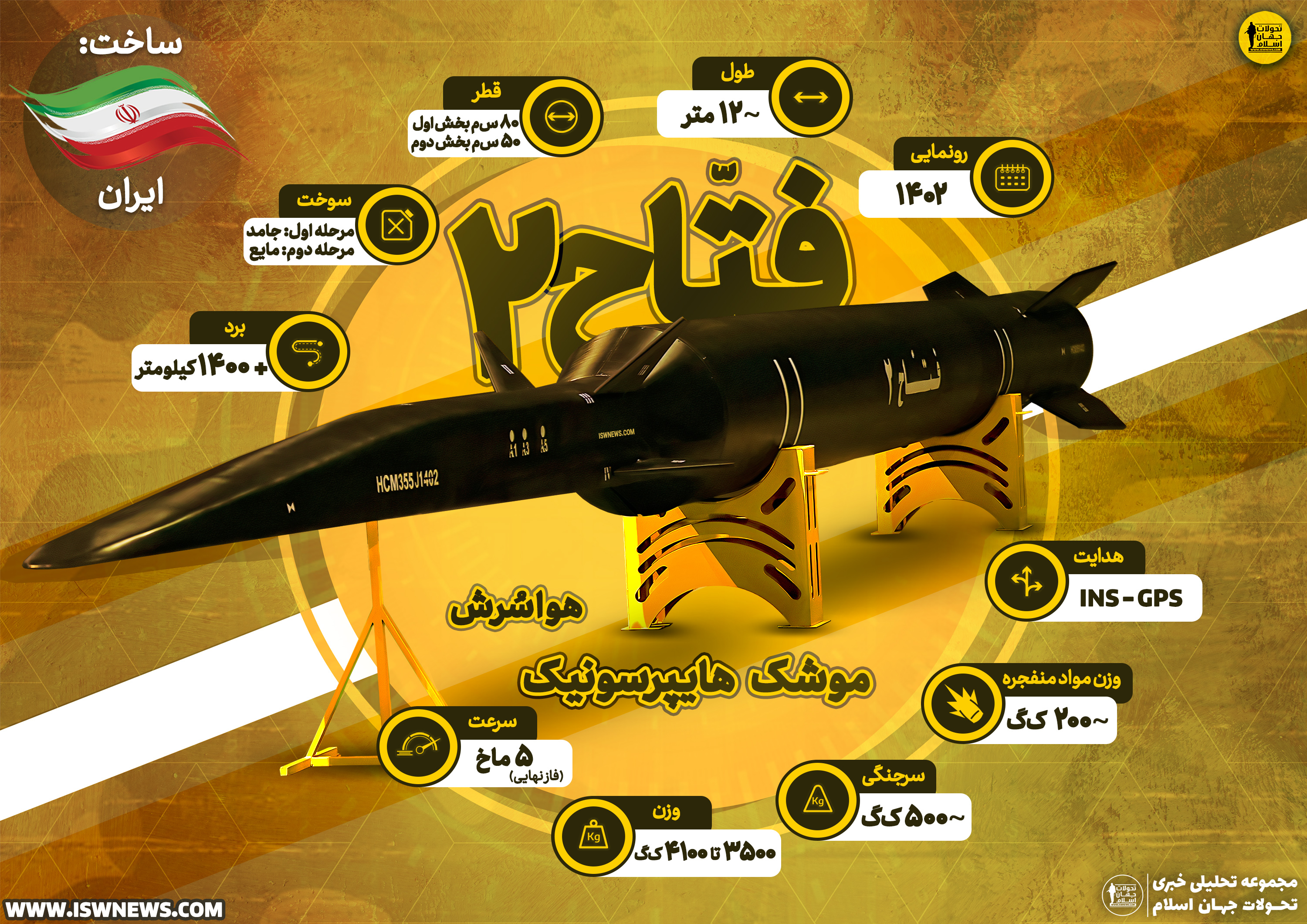
    The Fattah-2 missile utilizes the configuration of hypersonic cruise missiles. The acronym HCM, which stands for Hypersonic Cruise Missile, is written on its nose cone. The shape and combination of the nose cone is similar to the X-51 hypersonic cruise missile. However, the X-51 missile uses a ramjet engine that requires air intake, whereas in the Fattah-2 missile, air intake and ramjet engines are removed, and instead, a liquid fuel rocket engine is used. This will not affect the missile’s performance.

    Phrase “HCM” meaning hypersonic cruise missile on Fattah-2 body

    Design:
    The Fattah-2 missile consists of two parts. The first part is the Fattah solid fuel booster, which has not changed from the initial version. The second part is the gliding warhead, which separates from the booster and has a liquid fuel rocket engine.

    The overall shape of the Fattah-2 gliding warhead is very similar to the Boeing X-51 missile, but with the difference that its air intake has been eliminated and a rocket engine is used instead of a ramjet engine.

    Similarity of Fattah-2 and X-51 warheads

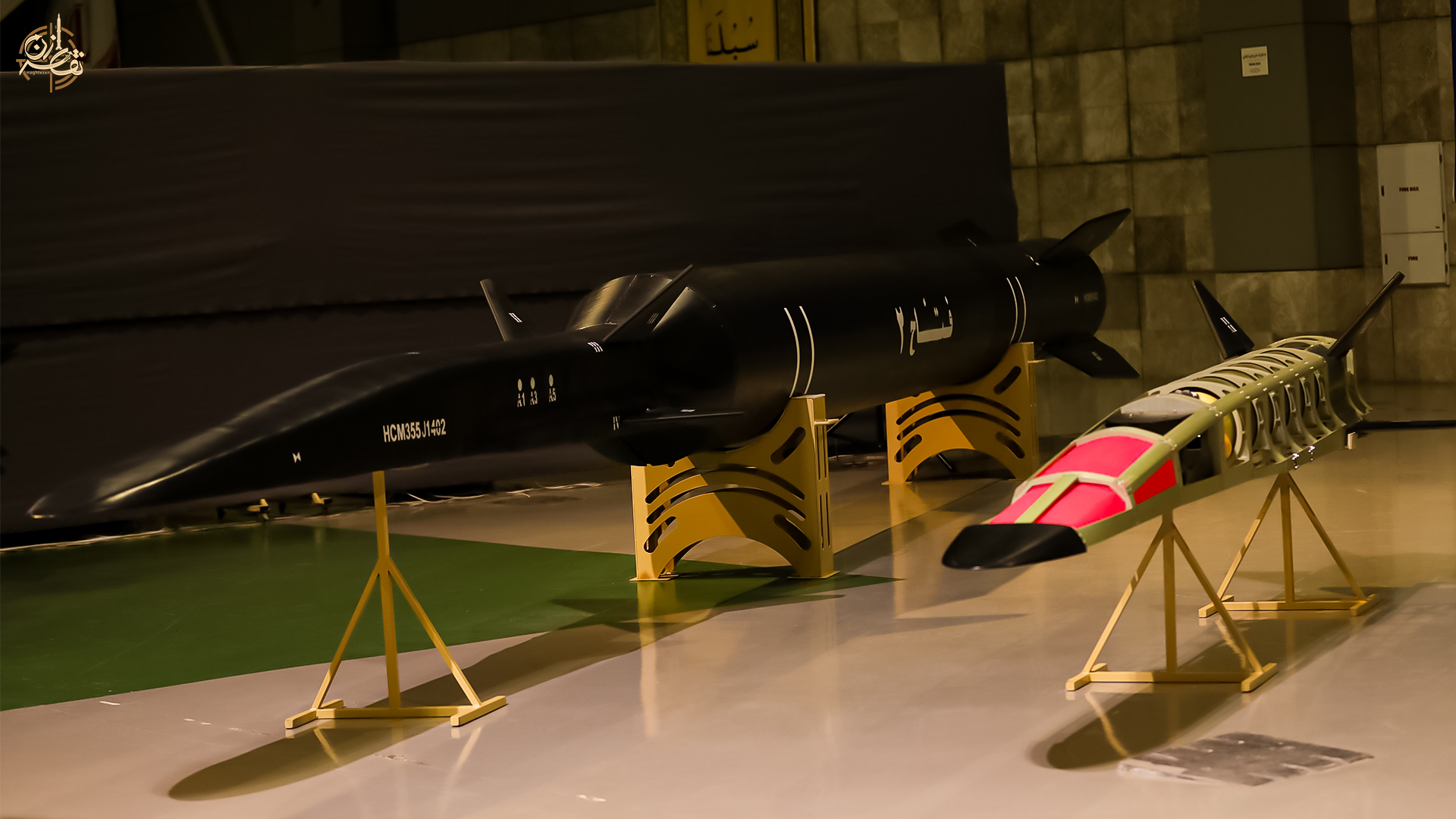
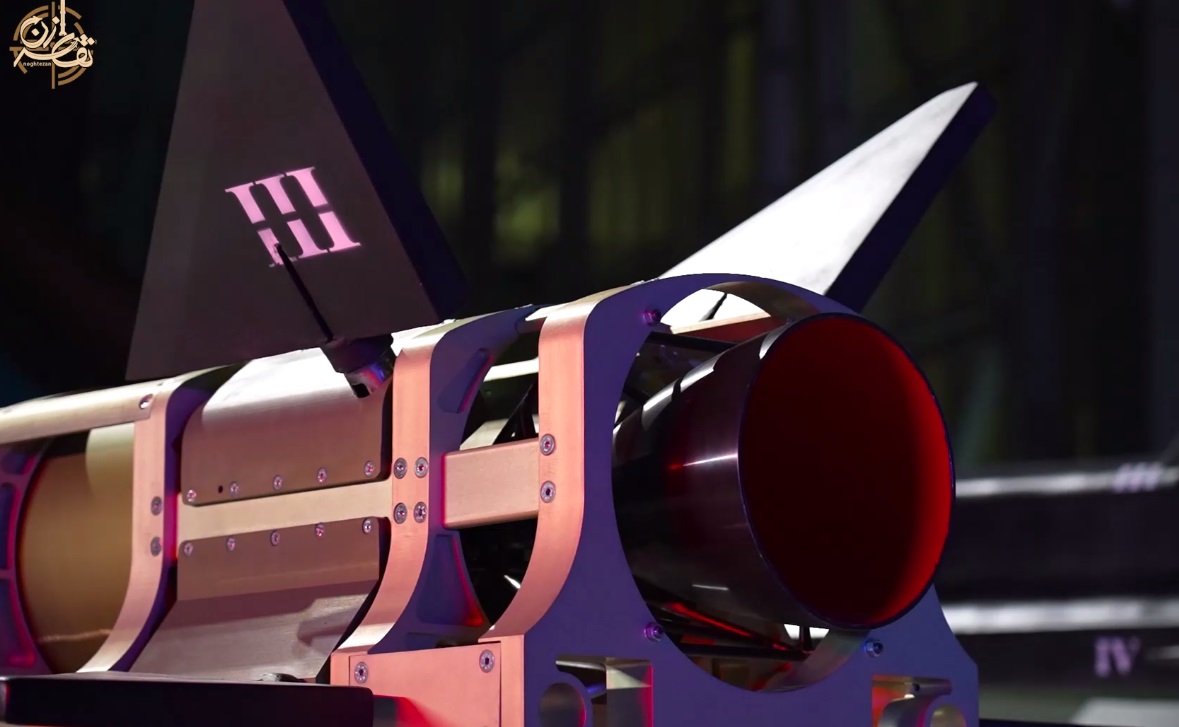
    The explosive material is located at the beginning of the warhead, followed by an inertial guidance and GPS system along with a computer that is responsible for guiding the warhead to the final stage of impact. After the guidance system, there is a detonator container (yellow piece), followed by a liquid fuel tank and an oxidizer tank, and finally a rocket engine that appears to have the ability to change the missile’s trajectory.

    Various components of Fattah-2 warhead

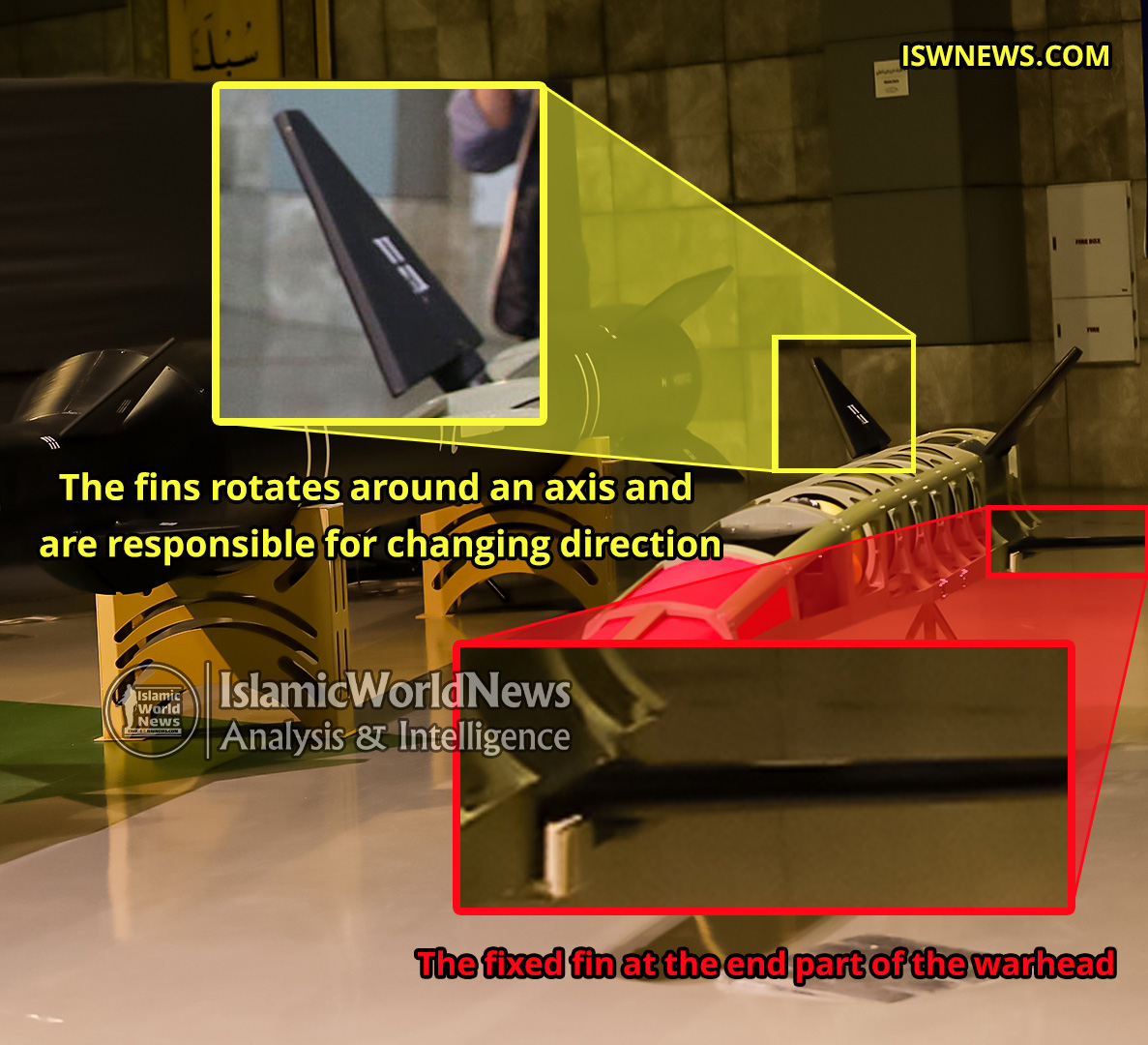
    At the end of the warhead, there are four fins, two of which form a line with the bottom of the warhead and are fixed, responsible for producing lift force. The other two fins are designed to change direction and have the ability to rotate around an axis connected to the body.

    Four fins, two of which are fixed and two other fins with the ability to change the direction

    The speed of this missile is stated as Mach 10 in some sources, but it is unclear for how long this speed can be sustained. However, it can be assumed that the speed exceeds Mach 5 at the moment of impact.
    The range of the missile has been reported as 1500 to 1800 kilometers by some news agencies, but it is unlikely that the range will be significantly different from that of the Fattah-1 missile, and a range of less than 1400 kilometers does not seem reasonable for Iran’s operational needs.

    Read more: Military Knowledge: Fattah Hypersonic Ballistic Missile

    The operation of the Fattah-2 missile:
    The solid fuel booster of the Fattah-2 missile carries it to a certain altitude from space, and then the warhead separates from it and moves towards the atmosphere. In this state, the missile will travel at a fast falling rate until it reaches the atmosphere, and then, like an HGV (Hypersonic Glide Vehicle), it will glide to the ground in the atmosphere at an altitude of less than 100 kilometers. Considering the high speed announced for the Fattah booster in Fattah-1, it must be more than Mach 15 at the time of entering the atmosphere. Therefore, due to the high lift force of the Fattah-2 warhead, it must spend a considerable amount of time gliding in the atmosphere and continuously reduce its altitude.

    In a part of the middle stage and at the end of the warhead, it drastically reduces its altitude and its speed also decreases. In this stage, the rocket engine embedded in the warhead turns on and stabilizes the warhead’s speed at Mach 5 or higher. The Fattah-2 warhead spends a lot of time at low altitudes and will cruise through the final stage of its path like cruise missiles thanks to its engine. A significant point is the amount of drag force and tolerance for high-speed entry into the atmosphere because aerodynamically, the warhead is not designed for such speeds.

    Conventional designs of hypersonic cruise missiles use a booster for initial speed and a ramjet engine for further movement along their path, and they are often launched from aircraft. These engines have a risk of reducing their speed to less than Mach 5 at their maximum range due to fuel shortages. However, Fattah-2 uses a solid fuel ballistic missile booster for movement in a part of its path and reaching an initial speed of more than Mach 15, which provides the missile with a considerable speed for a long time. Then, at the end of its path or near the point of impact, it uses an engine to compensate for the speed reduction and stabilize its speed at Mach 5. This is an interesting and very creative idea that has been implemented by Iranian experts. This initiative eliminates the limitations of HGVs for the Aerospace Force of the Islamic Revolution Guards Corps (IRGC).

    Unlike conventional HGV versions, the Fattah-2 warhead is more suitable for flying at low altitudes. Most HGVs travel much of their path at an altitude of less than 100 kilometers and more than 30 kilometers, where air density is lower. However, the Fattah missile can fly in an altitude of less than 12 kilometers due to its aerodynamic shape, but it seems to try to maintain itself at an altitude between 12 and 30 kilometers to experience less speed reduction. Overall, the Fattah-2 missile is more of a hypersonic glide vehicle than a hypersonic cruise missile. However, its performance includes both types of hypersonic missiles.

    It can be said that the operation of the Fattah-2 missile is a completely unconventional definition compared to other conventional hypersonic missiles, and the Fattah-2 missile has created a new classification and standard in this field: Hypersonic Cruise Glide Vehicle (HCGV).

    It should be mentioned that the feature of not using a ramjet engine does not exclude this warhead from the hypersonic category. Also, using a rocket to start flight and fly into space cannot prevent the cruise flight of intermediate and final stages. Iran’s technology in making ramjet engines for use in long-range hypersonic weapons has not yet reached its final evolution. Therefore, having all the components available and the ability to mass-produce Fattah-2 is a suitable and creative solution to overcome the current technological gap. Clearly, this technological bottleneck will also be resolved in the near future.

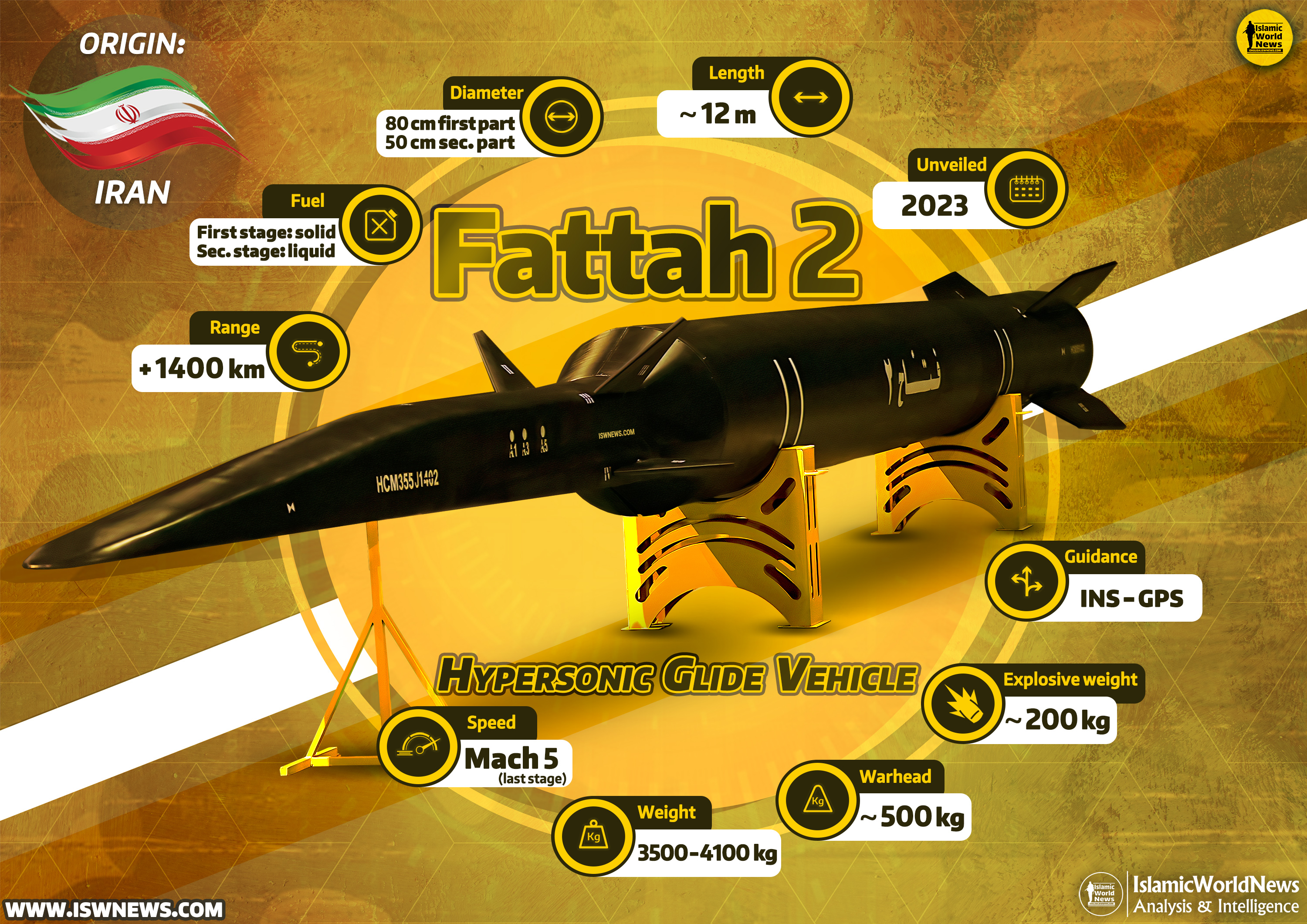
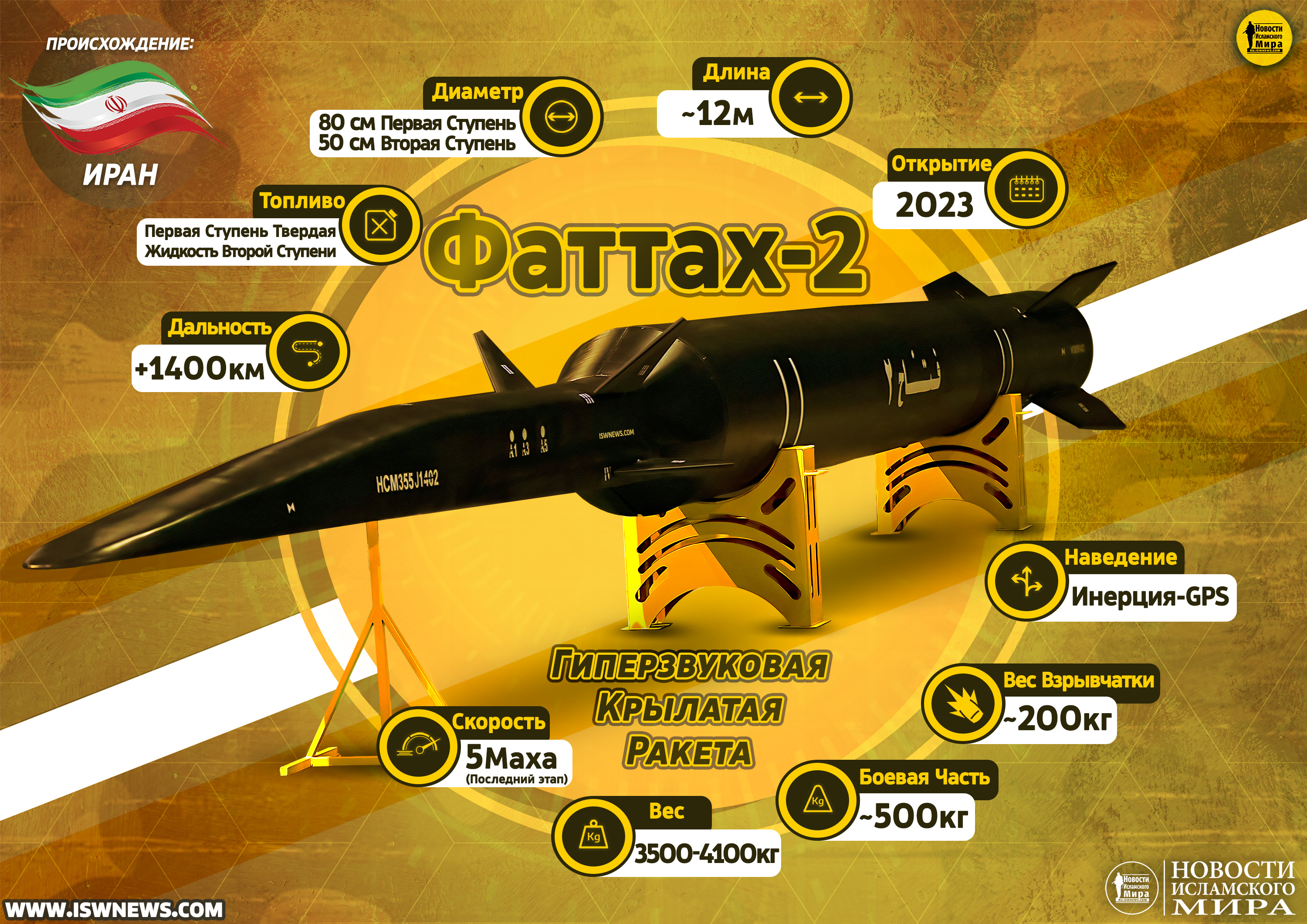
    Specifications of Fattah-2 hypersonic missile:
    Type: Hypersonic Glide Vehicle (HGV)
    Country of Origin: Iran
    Producer: IRGC Aerospace Force
    Unveiled: 2023
    Length: ~ 12 meters
    Diameter: 80 cm first part, 50 cm second part
    Fuel:
    First stage: solid
    Second stage: liquid
    Range: more than 1400 km
    Speed: ~ Mach 5 (in the last phase), ~ Mach 15 (in the first phase)
    Weight: 3500 to 4100 kg
    Warhead: ~ 500 kg
    Explosives weight: ~ 200 kg
    Guidance: combination of INS and GPS

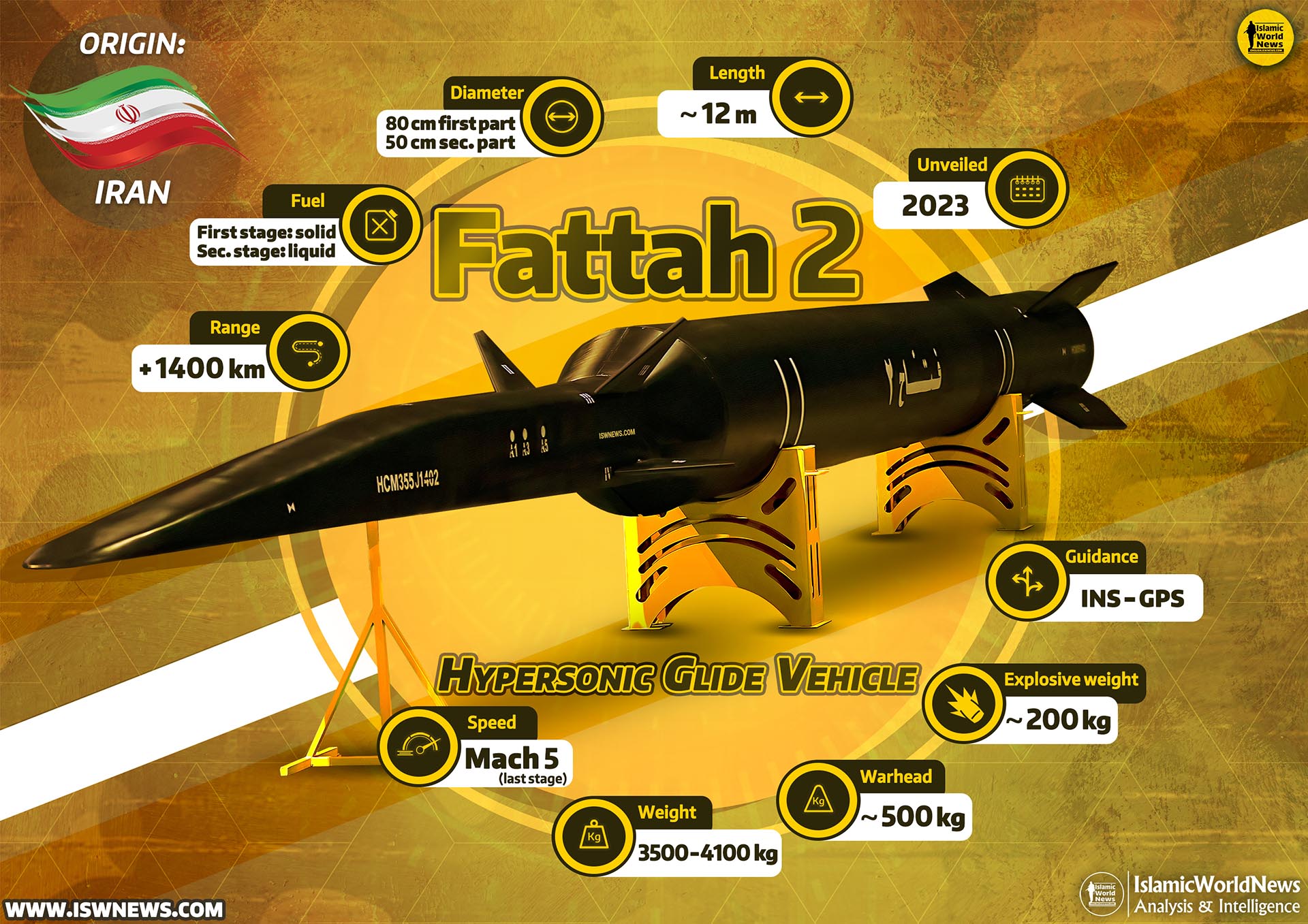
    Fattah 2 hypersonic missile – click to view in full size

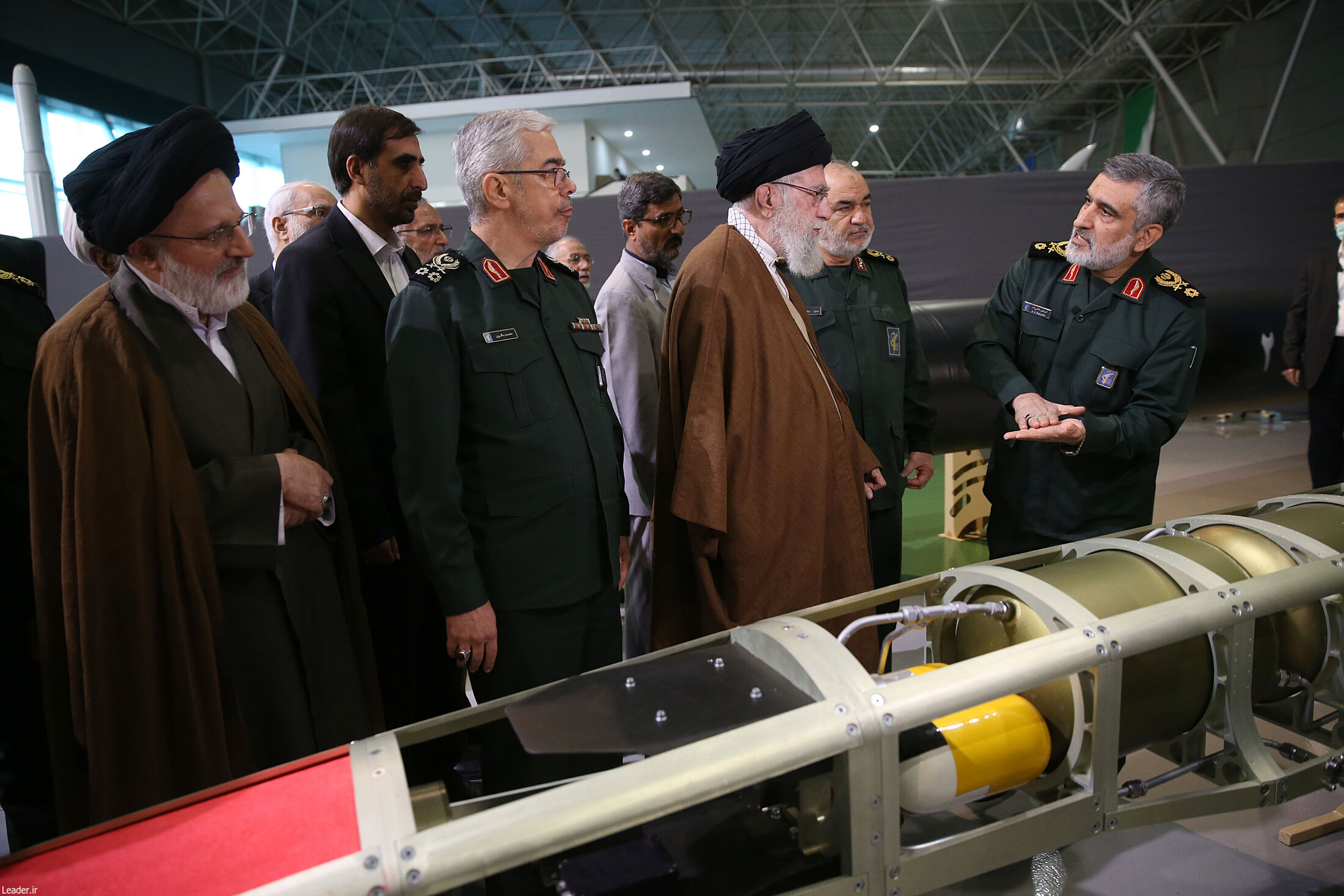
    More images of Fattah-2 missile:

    Infographics of Fattah-2 hypersonic glide vehicle in Russian, Hebrew, Farsi and Azeri:

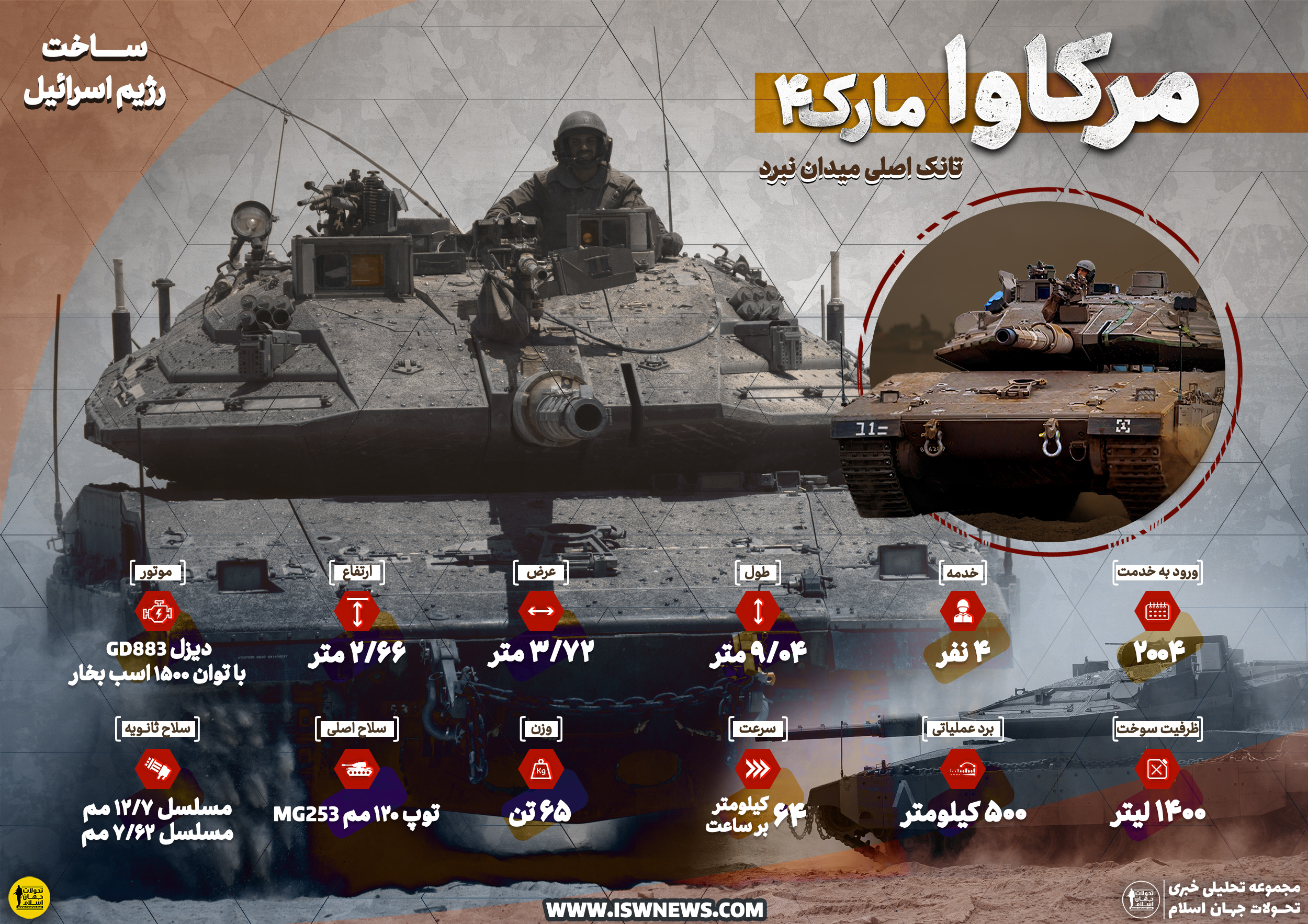
  • Military Knowledge: Merkava Main Battle Tank

    Military Knowledge: Merkava Main Battle Tank

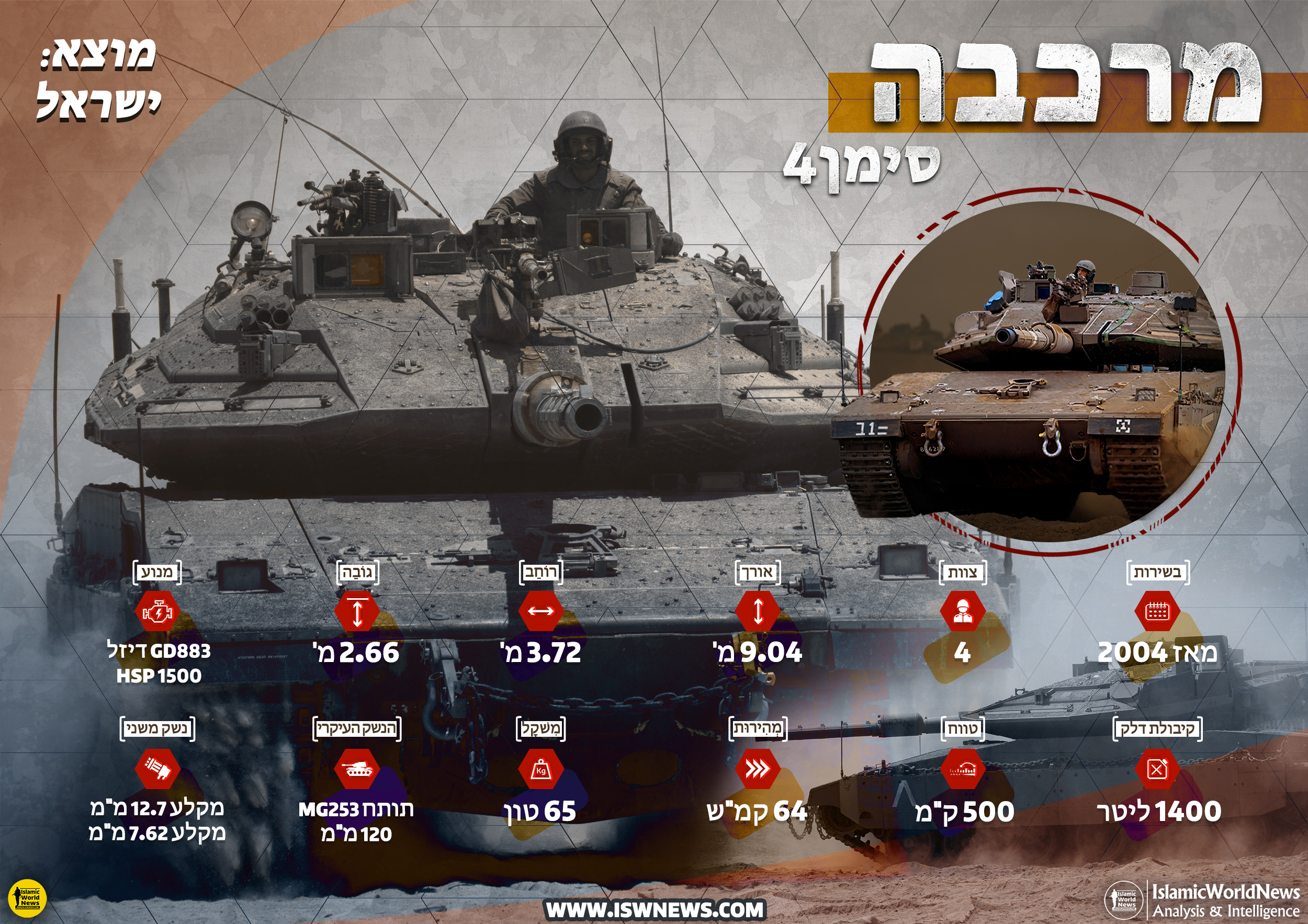
    The Merkava tank is a series of main battle tanks (MBT) made by Israel, which forms the backbone of the armored corps of this regime. The word Merkava means “chariot” and is derived from the “holy chariot” in the Torah. This tank is developed in the “Merkava and Armored Combat Vehicles Division” of the Israeli Ministry of Defense, and most of its parts are manufactured in Israel.

    The development of Merkava set began in 1970, and it has been produced and put into service in four original versions and several updates. Merkava Mark 4 Barak is the latest version of this tank that entered service from 2023.

    Specifications of Merkava Mark 4:
    Type: Main Battle Tank
    Origin: Israel
    Manufacturer: MANTAK
    Unveiled: 1999
    In service: since 2004
    Crew: 4 (tank commander, driver, gunner, loader)
    Length: 9.04 meters (including gun barrel), and 7.60 meters (excluding gun barrel)
    Width: 3.72 meters
    Height: 2.66 meters
    Engine: GD883 diesel engine with 1500 horsepower
    Fuel capacity: 1400 liters
    Operational range: 500 km
    Speed: 64 km/h on road, and 55 km/h off road
    Mass: 65 tons
    Main weapon: MG253 120 mm smoothbore gun
    Secondary weapon: 12.7 mm machine gun and 7.62 mm machine gun

  • Military Knowledge: Kaman-19 Drone

    Military Knowledge: Kaman-19 Drone

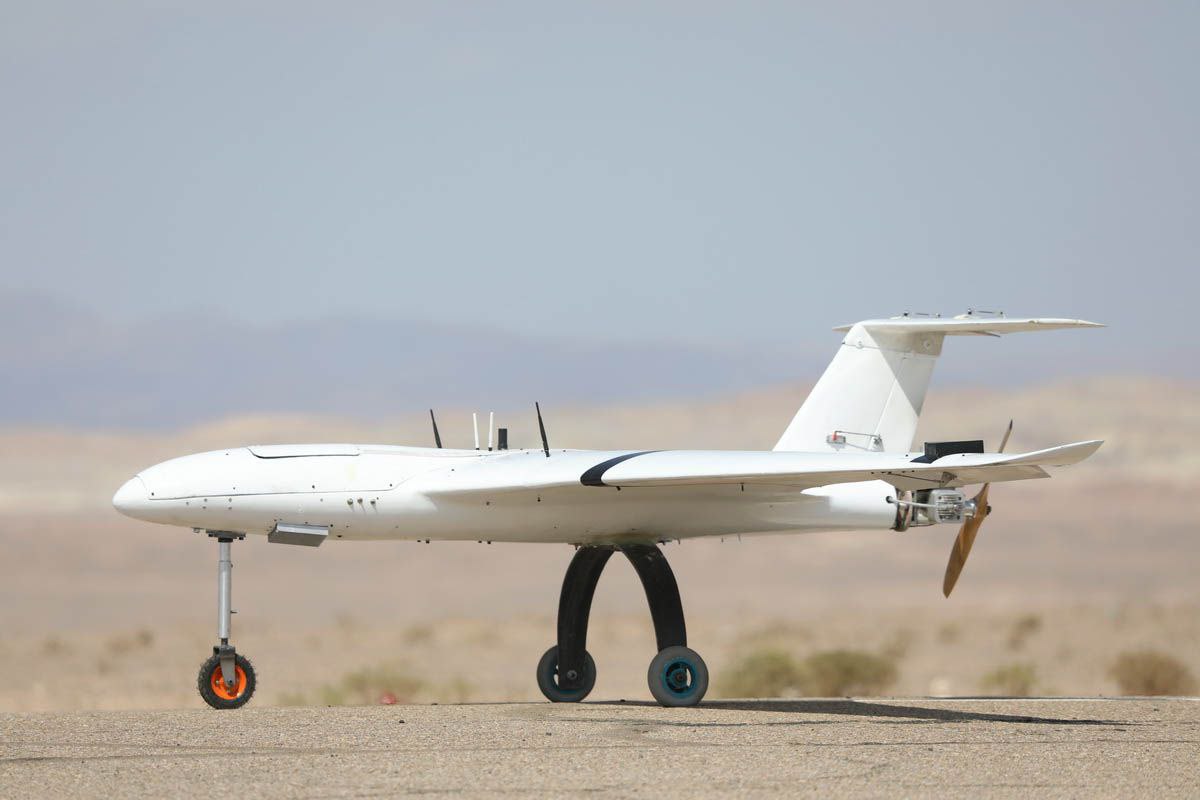
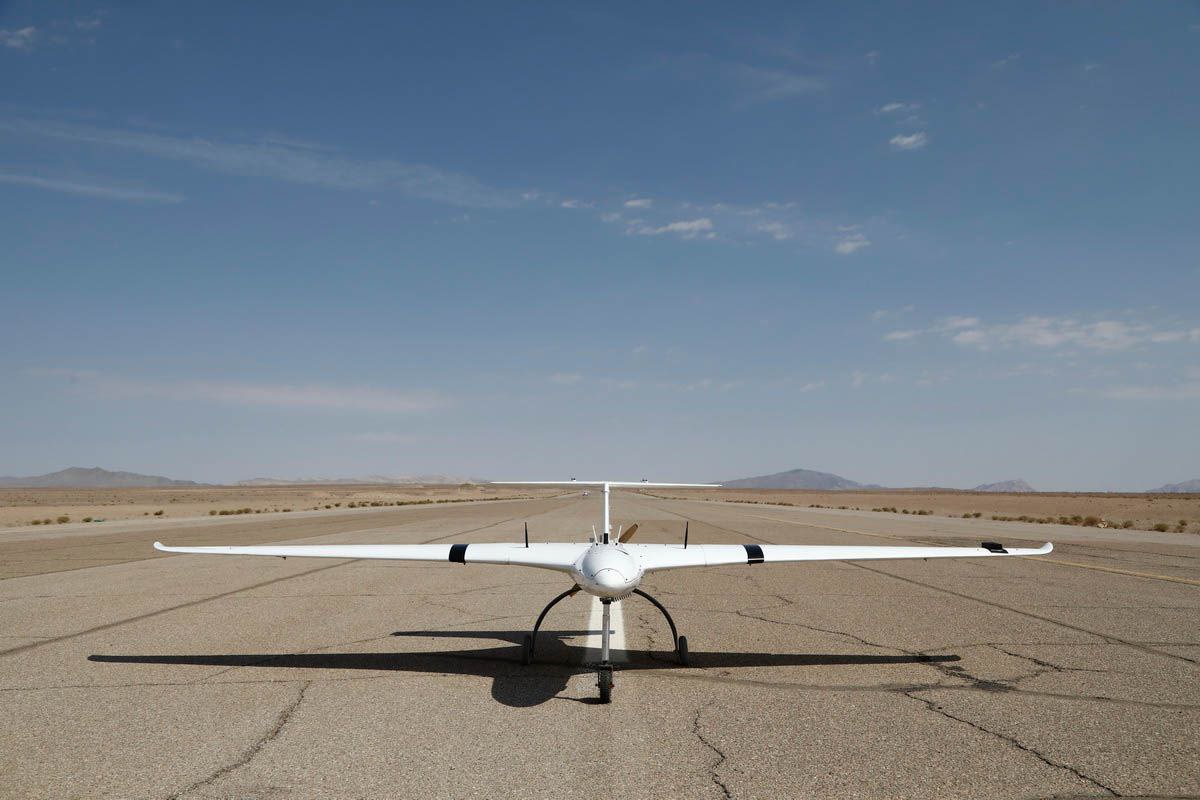
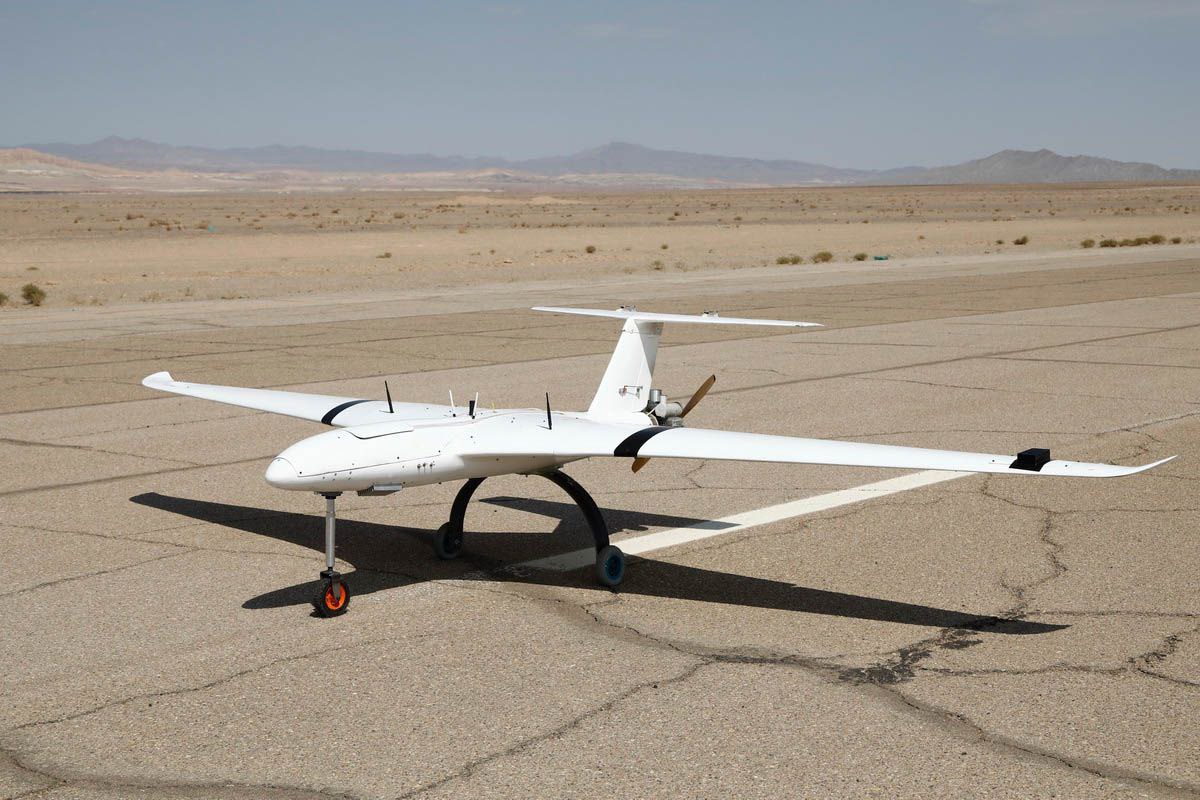
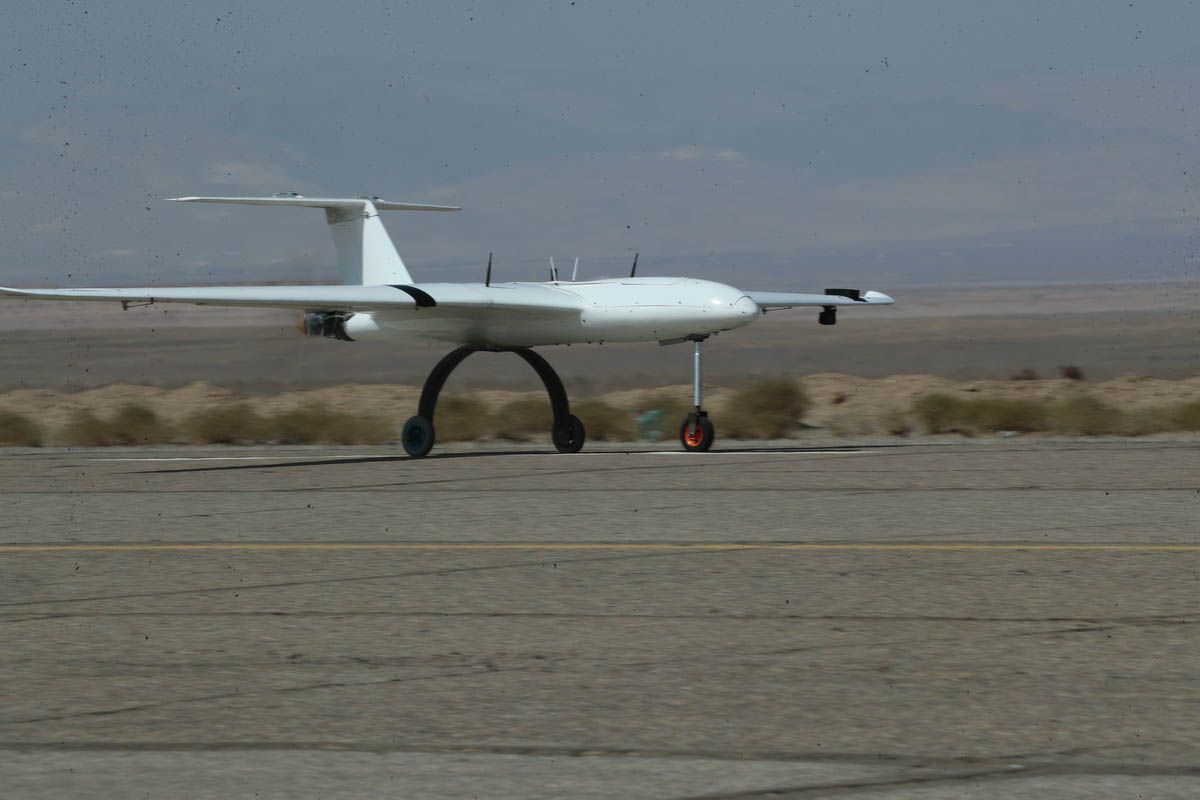
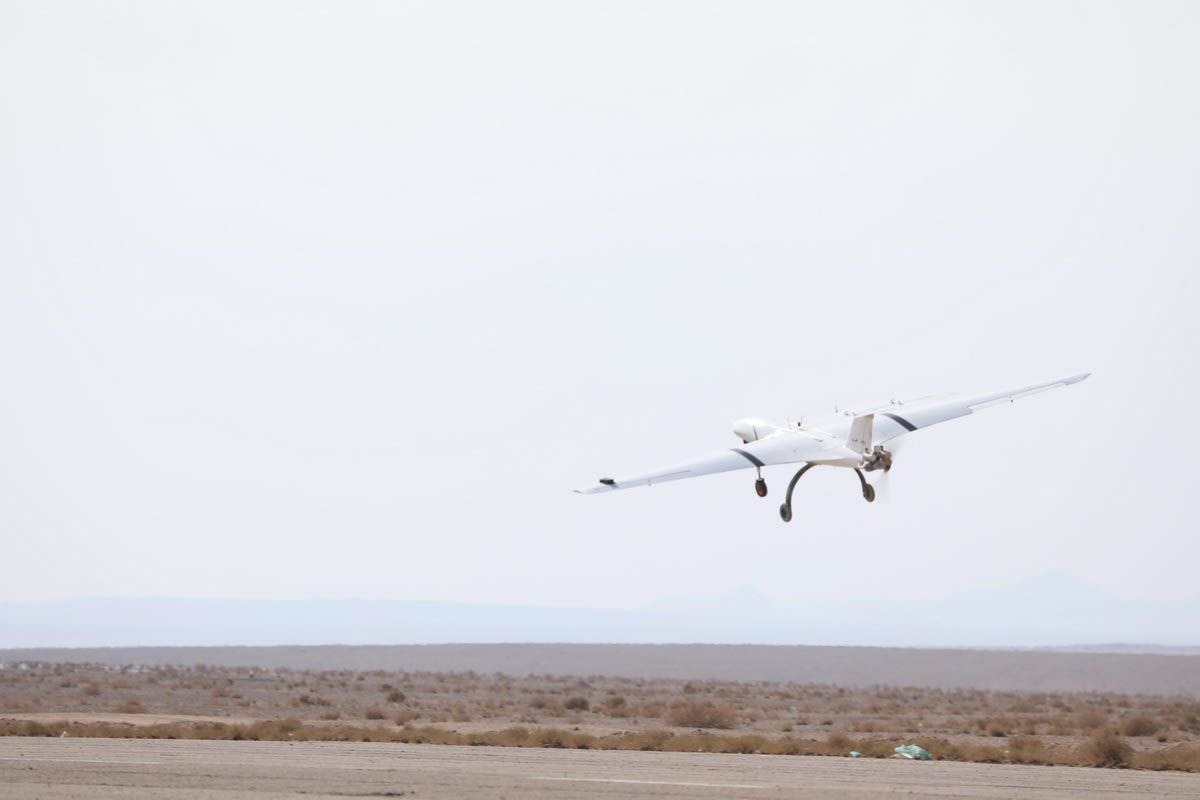
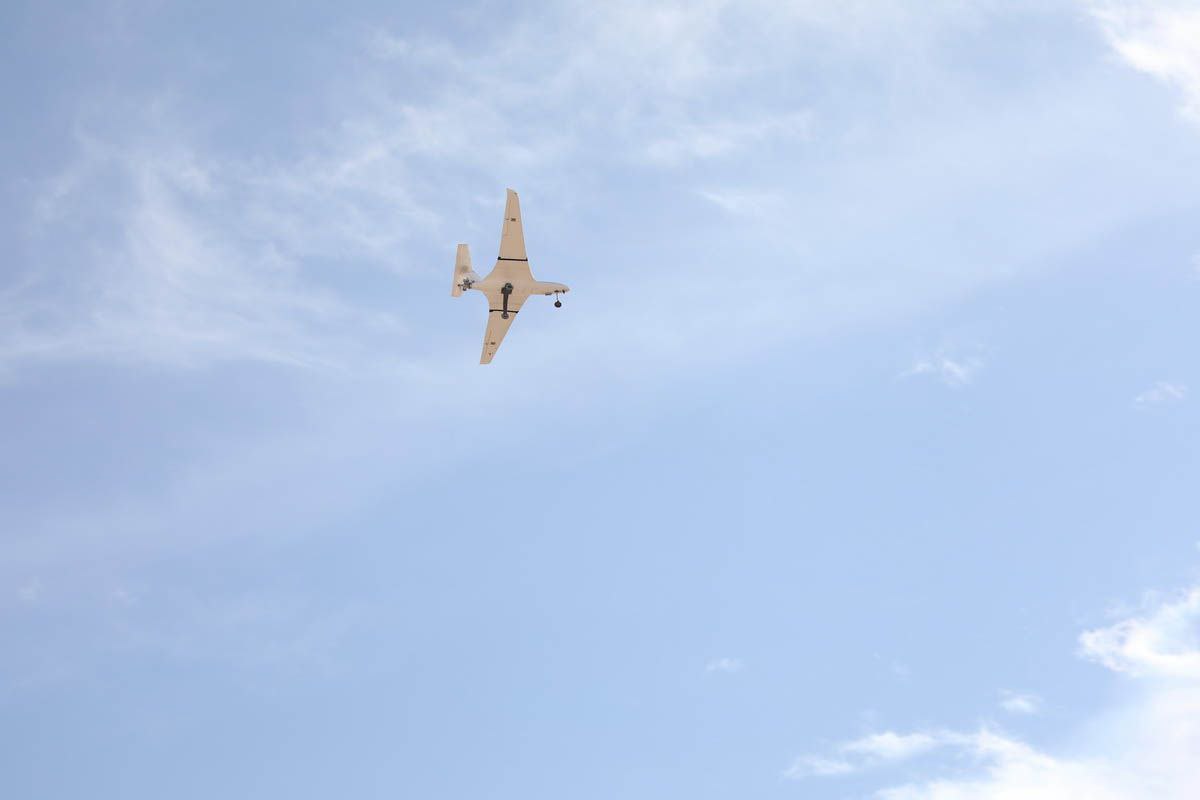
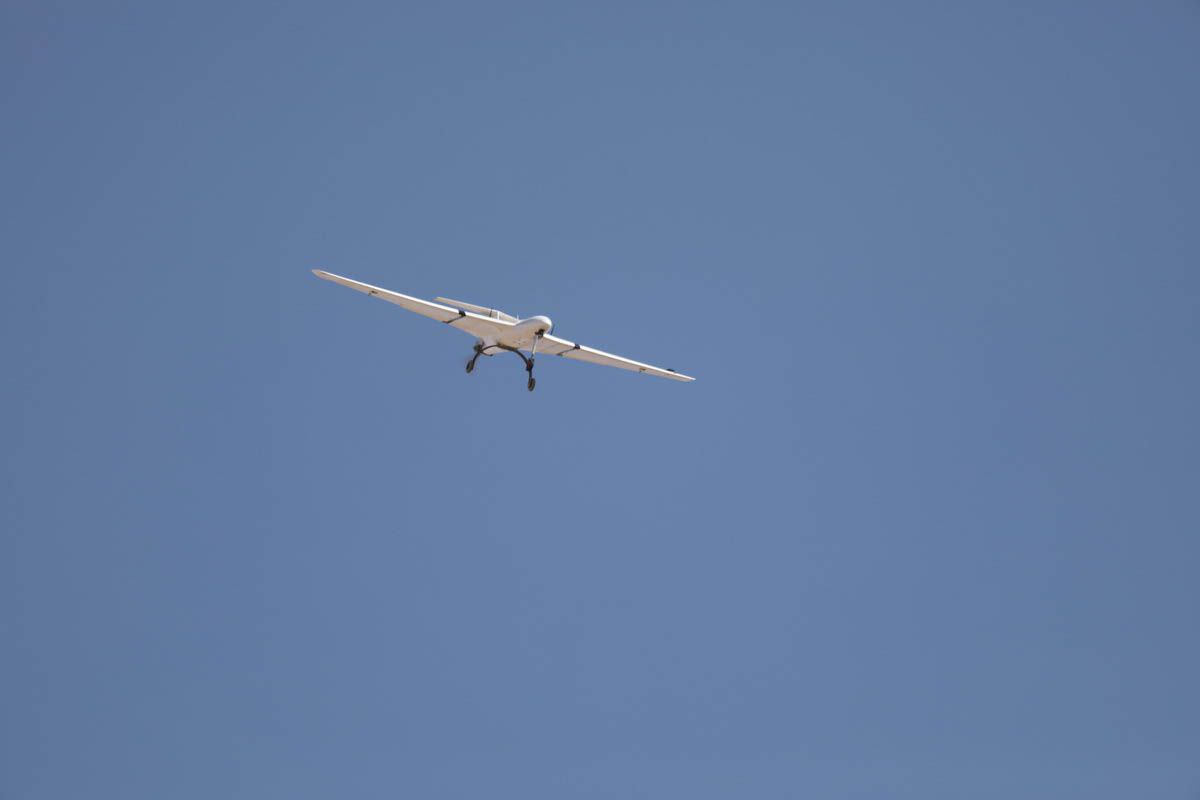
    The Kaman-19 drone, named after the Farsi word for “bow,” is a specialized electronic warfare drone used for information gathering, surveillance, etc.

    It was unveiled during the joint drone exercise of the Islamic Republic of Iran Army in October 2023.

    The Kaman-19 drone, which was showcased for the first time during the joint army exercise, is a simple and very affordable drone while being highly functional.

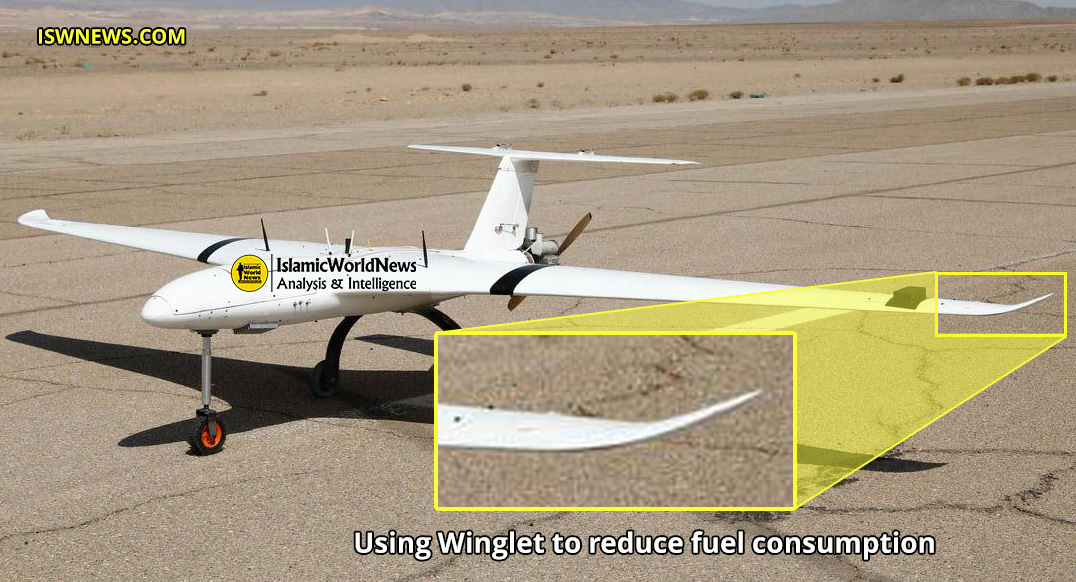
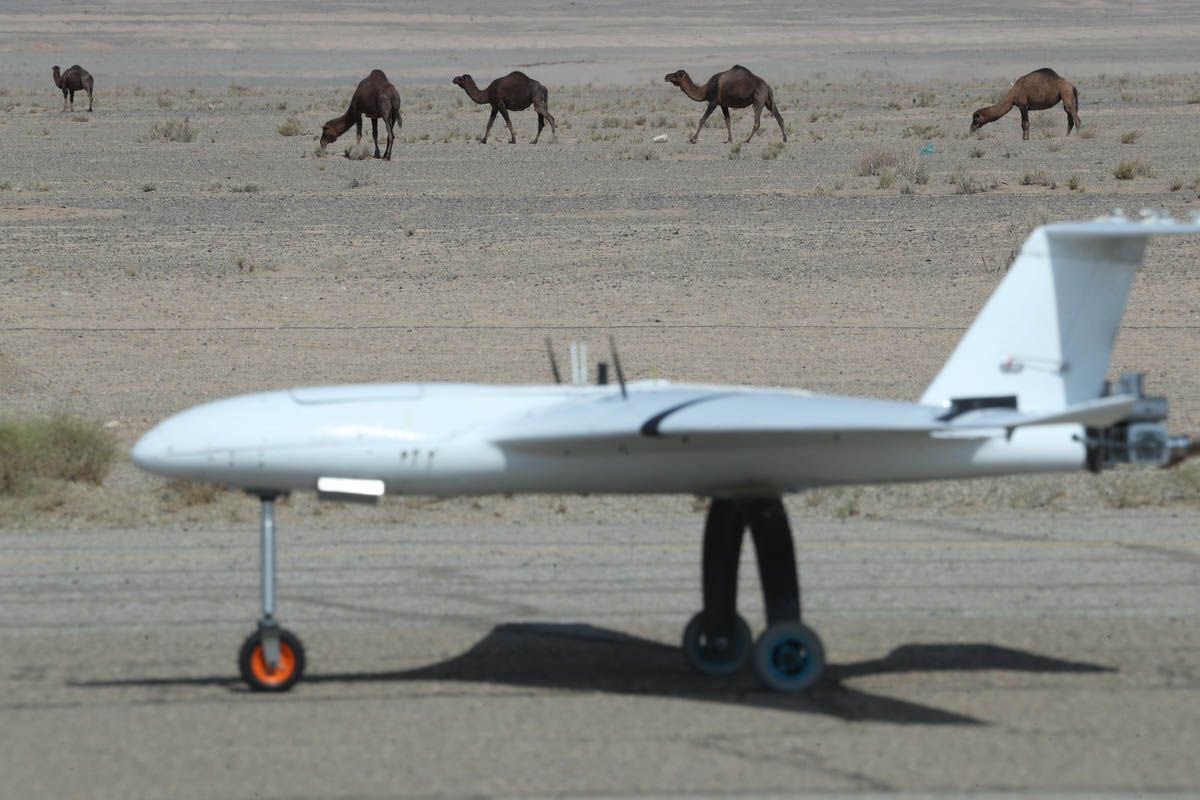
    Although the drone bears resemblance to the Kaman-12 drone, its overall dimensions are smaller. A T-tail design is used in the rear section. The highly swept wings, along with the use of winglets, reduce the vortex effect at the wingtip, resulting in reduced drag and consequently, less fuel consumption. The design of the drone was chosen to increase the flight endurance of the Kaman-19.

    Using winglet to reduce the fuel consumption of Kaman 19 drone

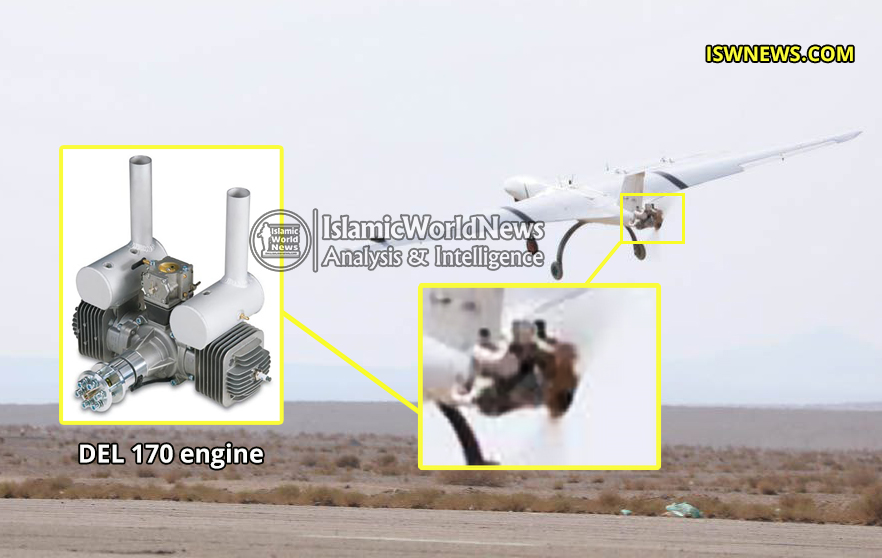
    The engine used in this aircraft is most likely the DLE 170 or a similar type. This small gasoline engine produces about 17.5 horsepower at 7,500 RPM (revolutions per minute). The Kaman-19 drone has a flight endurance of 24 hours, and considering the small size and low fuel consumption of the engine used in it, it seems acceptable.

    According to the pictures, the DEL170 engine is most likely installed on the Kaman 19 UAV

    The Kaman-19 drone does not have a camera and relies on inertial guidance and GPS for flight control. However, it can be used as a complementary drone to the Kaman-12 to carry bombs and perform reconnaissance with its own optics, as well as perform electronic warfare tasks assigned to the Kaman-19.

    The electronic warfare tasks for the Kaman-19 include radar wave disruption, surveillance, radio communication disruption and so on.

    Specifications of Kaman-19 electronic warfare drone:
    Type: electronic warfare drone
    Origin: Iran
    Producer: Islamic Republic of Iran Air Force
    Unveiled: 2023
    Length: 2 to 2.5 meters
    Wingspan: 4.5 to 5.5 meters
    Height: 1.5 to 2 meters
    Engine: 1x two-cylinder DLE 170 engine with a power of 17.5 horsepower
    Endurance: 24 hours

  • Islamic Resistance Of Iraq Unveils New Missile: Sarem

    Islamic Resistance Of Iraq Unveils New Missile: Sarem

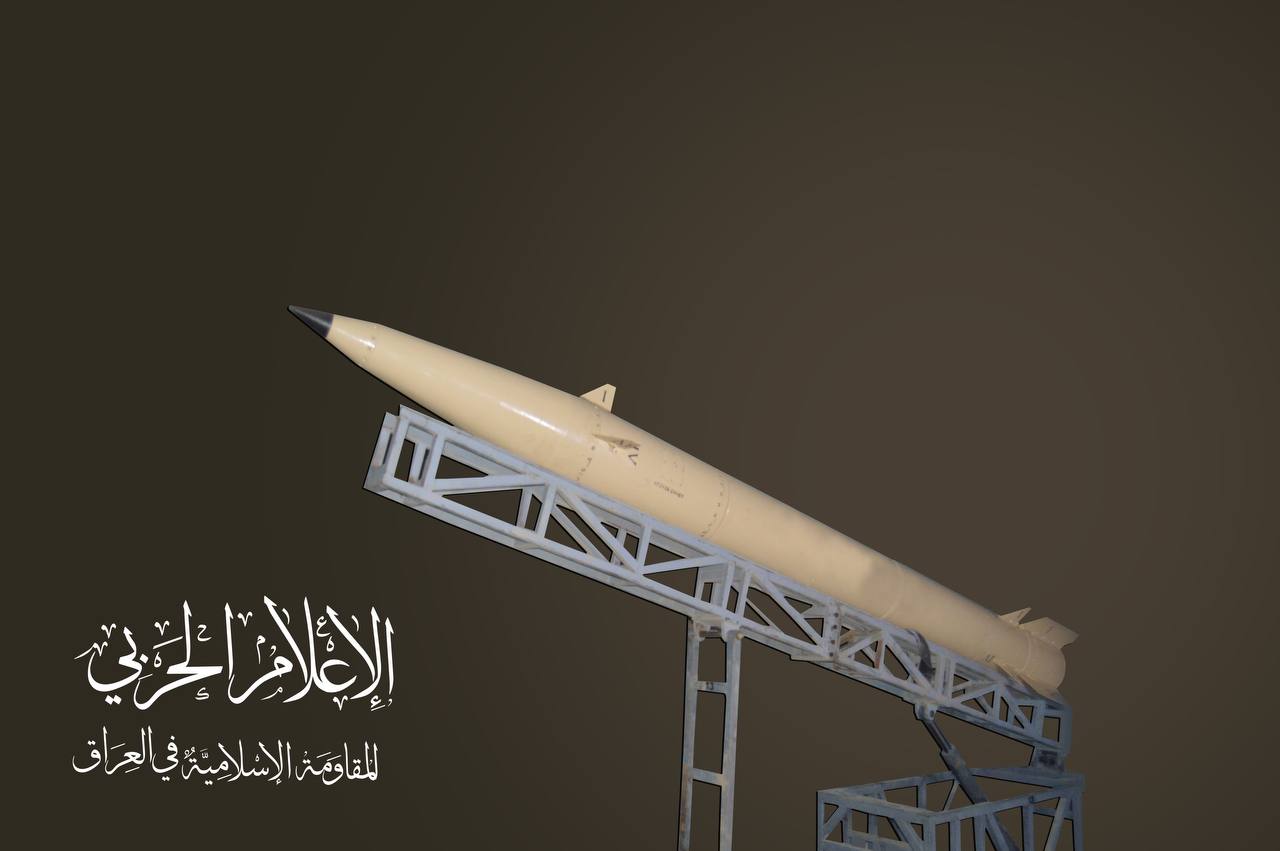
    On November 14, the Islamic Resistance of Iraq issued a statement and released an image of the new ballistic missile dubbed Sarem.

    The Islamic Resistance of Iraq emphasized in the statement that the missile was unveiled as part of the response to the Israeli regime’s war crimes during the invasion of the Gaza Strip, which occurred under the guidance and management of the United States.

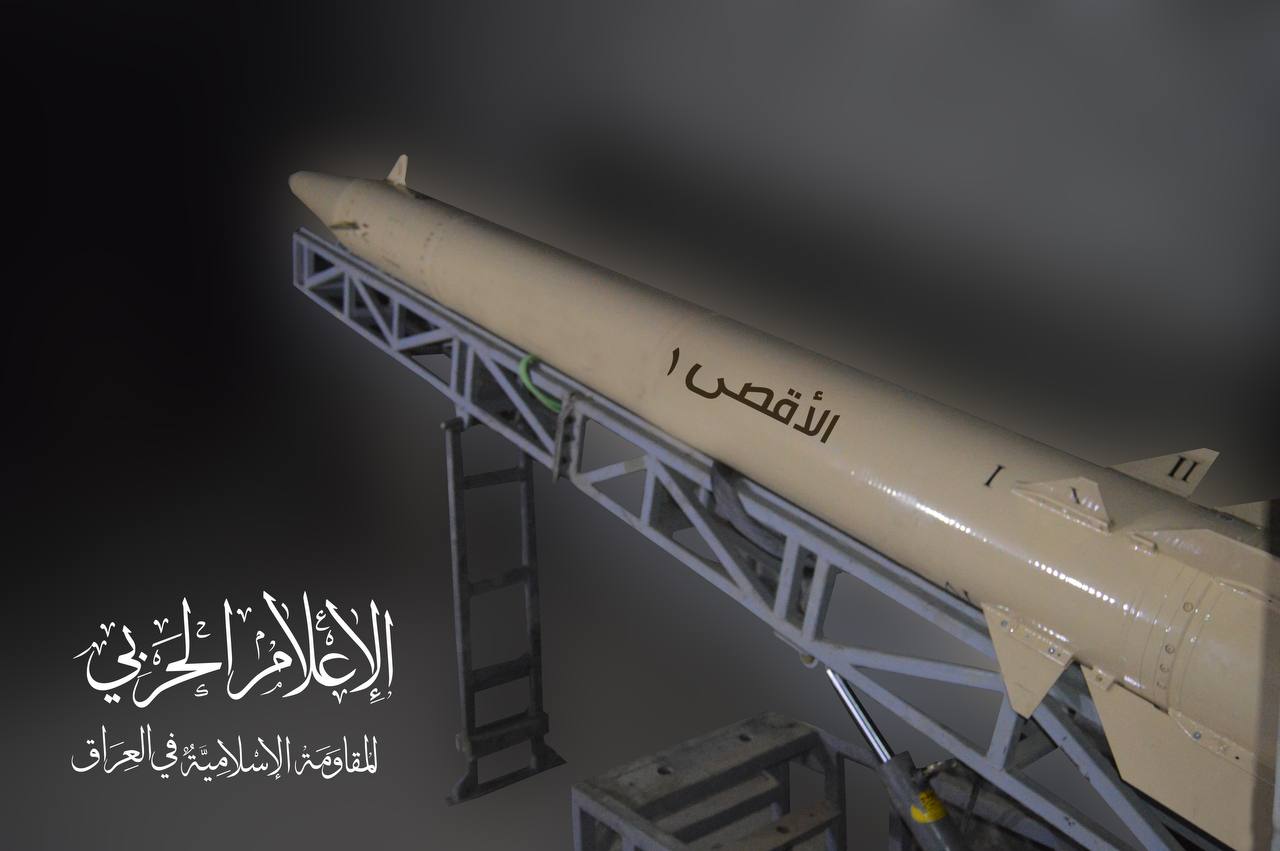
    The images of the Sarem ballistic missile show that it is similar in size and shape to the Al-Aqsa 1 missile, both of which appear to be based on the same warhead design. Both unveiled missiles possess a combination of fins and a similar shape to the Fateh missile family.

    Given the fact that the Islamic Resistance of Iraq has not yet announced the specifications of the two missiles officially, it seems to be difficult to determine their exact type. But, with a diameter of 368 mm, neither of the two examples can be the Fateh 360.

    However, we can consider three possibilities for the two missiles Al-Aqsa 1 and Sarem.

    In the first possibility, Al-Aqsa 1 could be a BM45 missile, and with the possibility of the existence of Al-Aqsa 2, another option must also be sought among the Fateh missile family. In this case, Sarem missile must be a BM250 missile.

    But in the second possibility, Al-Aqsa 1 would be a Fateh-110 missile, and Sarem missile must be a Fateh-313 missile. However, the shape of the wings of the Sarem missile is similar to the Zolfaghar missile as well.

    The third possibility is the production of exclusive missiles for the Islamic Resistance of Iraq, which may have been named and unveiled according to the needs of the time. In this case, the missiles only resemble Iranian models in appearance and may have significant changes to reduce costs while using the same engine.

    It should be noted that the Islamic Resistance of Iraq had previously published an image on November 6 and unveiled another missile called Al-Aqsa 1.

    Read more: Iraqi Islamic Resistance Unveils Al-Aqsa-1 Missile; US bases to be demolished!

  • Military Knowledge: Al-Yassin 105 Anti-Tank Rocket, The Zionists’ Nightmare in Gaza!

    Military Knowledge: Al-Yassin 105 Anti-Tank Rocket, The Zionists’ Nightmare in Gaza!

    On October 14, the Izz ad-Din Al-Qassam Brigades, the military wing of the Palestinian resistance movement, Hamas, unveiled the two-stage anti-tank rocket Al-Yasin 105.

    The Al-Yasin 105 is a type of two-stage anti-tank rocket for the use on RPG7 weapons and is made based on the pattern of the two-stage RPG-7VR portable, reusable, unguided, shoulder-launched, anti-tank, rocket-propelled grenade launcher.

    In a video released by the Izz ad-Din Al-Qassam Brigades, the construction and specifications of this rocket were displayed. Based on the released video, it seems that the knowledge of making this two-stage rocket has been transferred to the Gaza Strip and Palestinian fighters have become self-sufficient in this area.

    The video published by Al-Qassam Brigades about the unveiling of Al-Yasin105

    The two-stage Al-Yasin 105 rocket is designed to overcome explosive reactive armor (ERA) and composite armor installed on the Merkava. In the first stage, the rocket penetrates the reactive armor and neutralizes its effect, and in the second stage, the rocket’s second part hits the main body of the tank.

    The Al-Yasin 105 rocket is a two-stage HEAT (High Explosive Anti-Tank) warhead designed for use on RPG7 weapons. It is made up of a 64mm precursor warhead for penetrating reactive armor and composite armor, followed by a 105mm main warhead for penetrating the tank’s main armor. The secondary warhead has a penetration capability of 600mm of rolled homogeneous steel, or 750mm without reactive armor. If there is no reactive armor, this warhead can penetrate 750 mm rolled steel.

    Different components of Al-Yasin 105 rocket

    The effective range of the rocket is up to 500 meters, with a lethal range of 150 meters, and a speed of approximately 300 meters per second.

    The Al-Yasin 105 rocket was used by Hamas in the early battles to reclaim Palestinian territories and has successfully penetrated the composite armor of the Israeli Merkava Mark 4 tank. This demonstrated that the Trophy active protection system installed on the tank is ineffective against the Al-Yasin 105 rocket, which can successfully penetrate the tank’s armor. According to the images released so far, after the impact of the Al-Yasin 105 rocket on a Merkava tank, one crew member was killed and the other crew members were injured. This incident showed that the Trophy system is unable to deal with this rocket, and the Al-Yasin 105 rocket can successfully penetrate the armor of the Merkava tank. In fact, the Al-Yasin 105 rocket has once again shattered the myth of the invincibility of the Merkava tanks!

    Merkava tank after a hit by Al-Yasin 105 rocket

    The above image clearly shows that the composite armor of the tank has been penetrated and the second stage charge has reached the main armor of the tank. Therefore, this rocket has sufficient power to deal with the armor of the Israeli regime. According to the evidence, a direct hit will disable the tank. However, hitting from the sides will have the potential to destroy the tank turret, which can either completely take the tank out of service or significantly increase its repair time.

    A picture of the destruction of a Namer heavy armored personnel carrier based on the Merkava Mark 4 chassis by Al-Yasin 105 rockets

    Al-Yasin 105 Thermobaric and Anti-Bunker version:

    The Al-Yasin 105 rocket also has another version called TBG. The TBG stands for Thermobaric Anti-Bunker. In this type of rocket, thermobaric is used instead of the precursor warhead in the second stage.

    The important point about this version of the rocket is that due to the use of a precursor warhead in the first stage, this rocket can penetrate concrete and earth bunkers, and then the thermobaric warhead in the second stage can have a very significant impact on inflicting casualties on the enemy.

    Al-Yasin 105 thermobaric and anti trench version

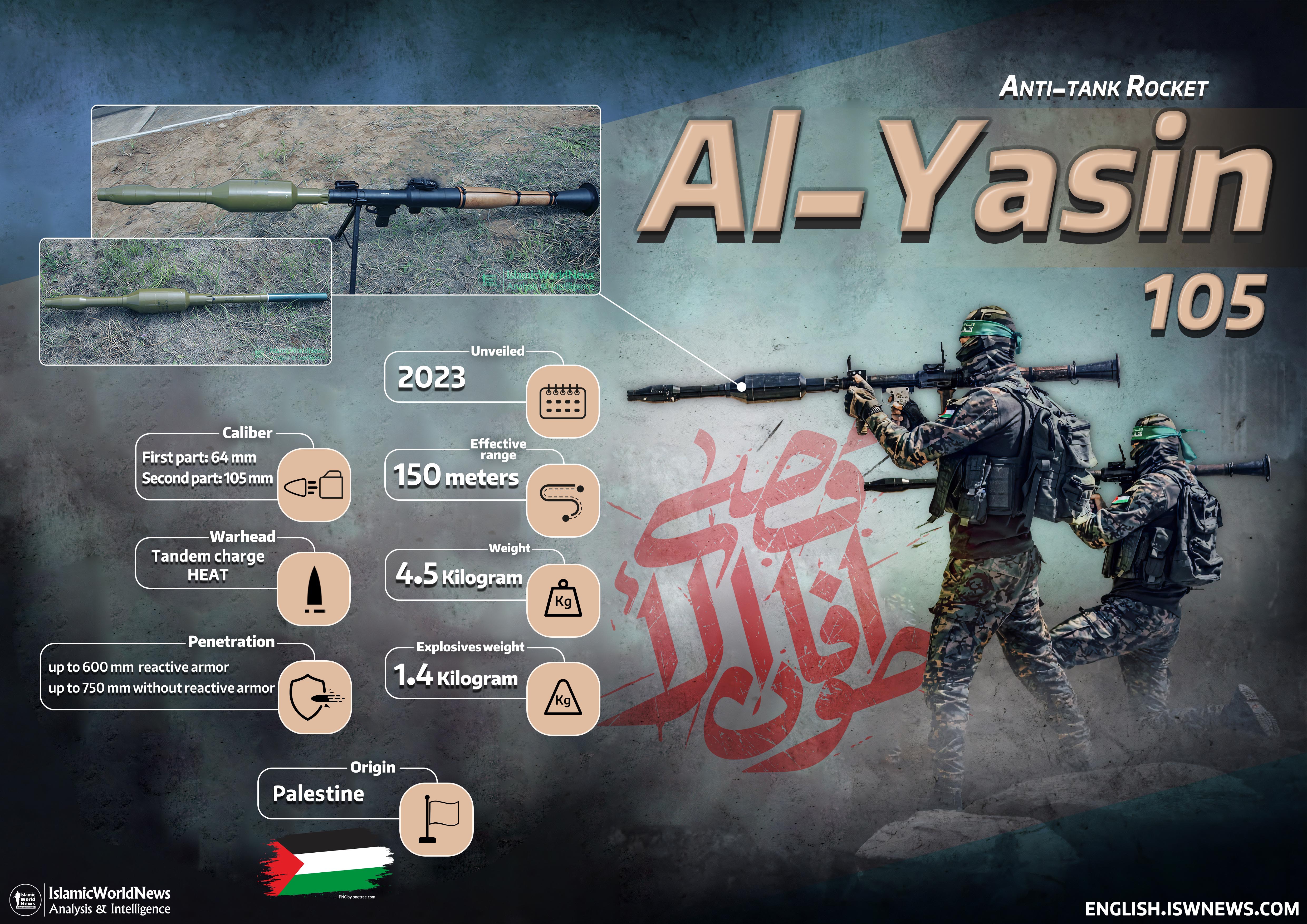
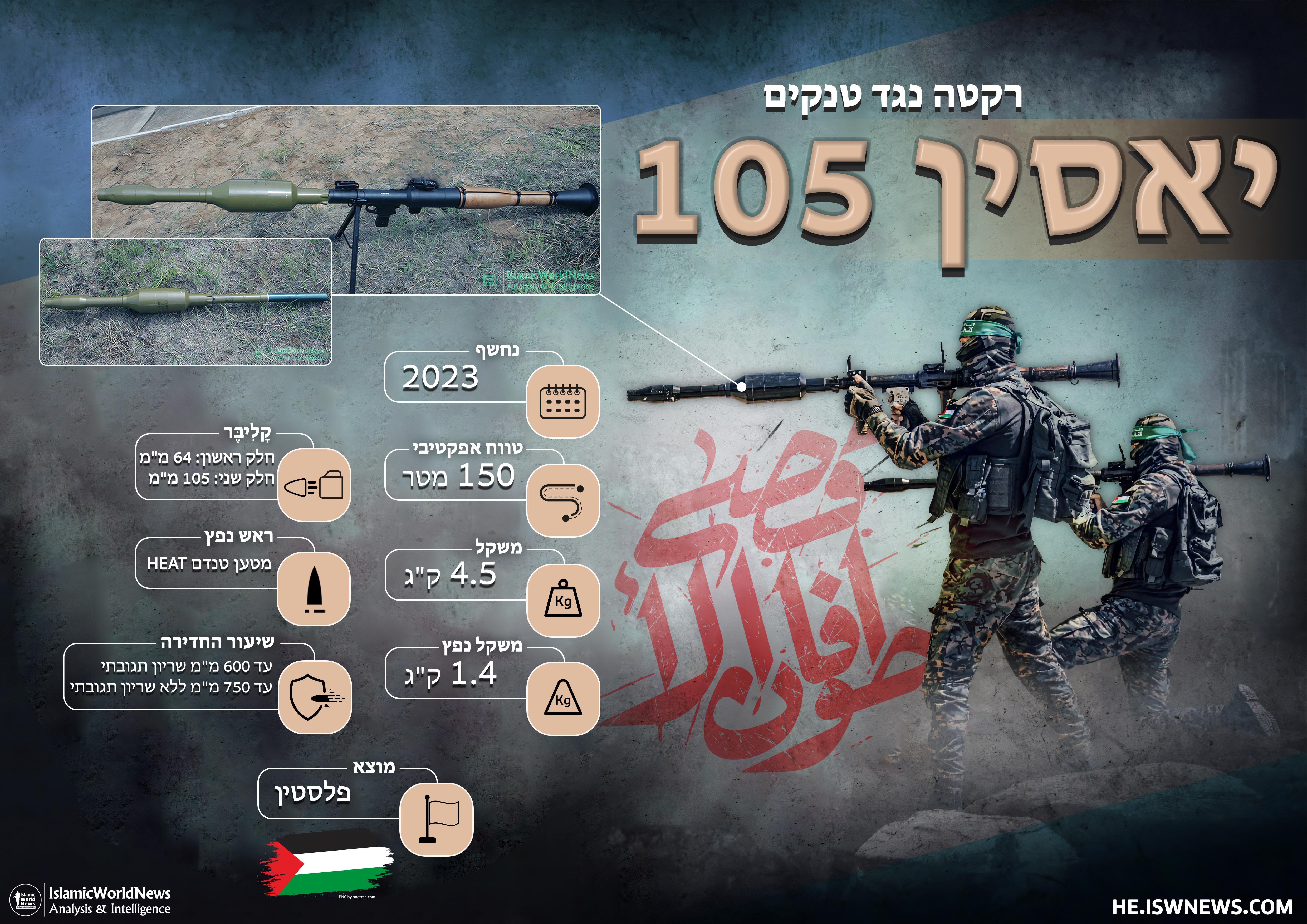
    Al-Yasin 105 anti-tank rocket specifications:
    Type: Two-stage anti-tank munition
    Origin: Palestine
    Unveiled: 2023
    Effective range: 150 meters
    Warhead: Tandem charge HEAT
    Weight: 4.5 kg
    Explosive weight: 1.4 kg
    Caliber:
    The first part: 64 mm
    The second part: 105 mm
    Penetration rate:
    Up to 600 mm reactive armor
    Up to 750 mm without reactive armor
    Speed: ~ 300 m/s

    Al-Yasin 105 anti-tank rocket – click to view full size

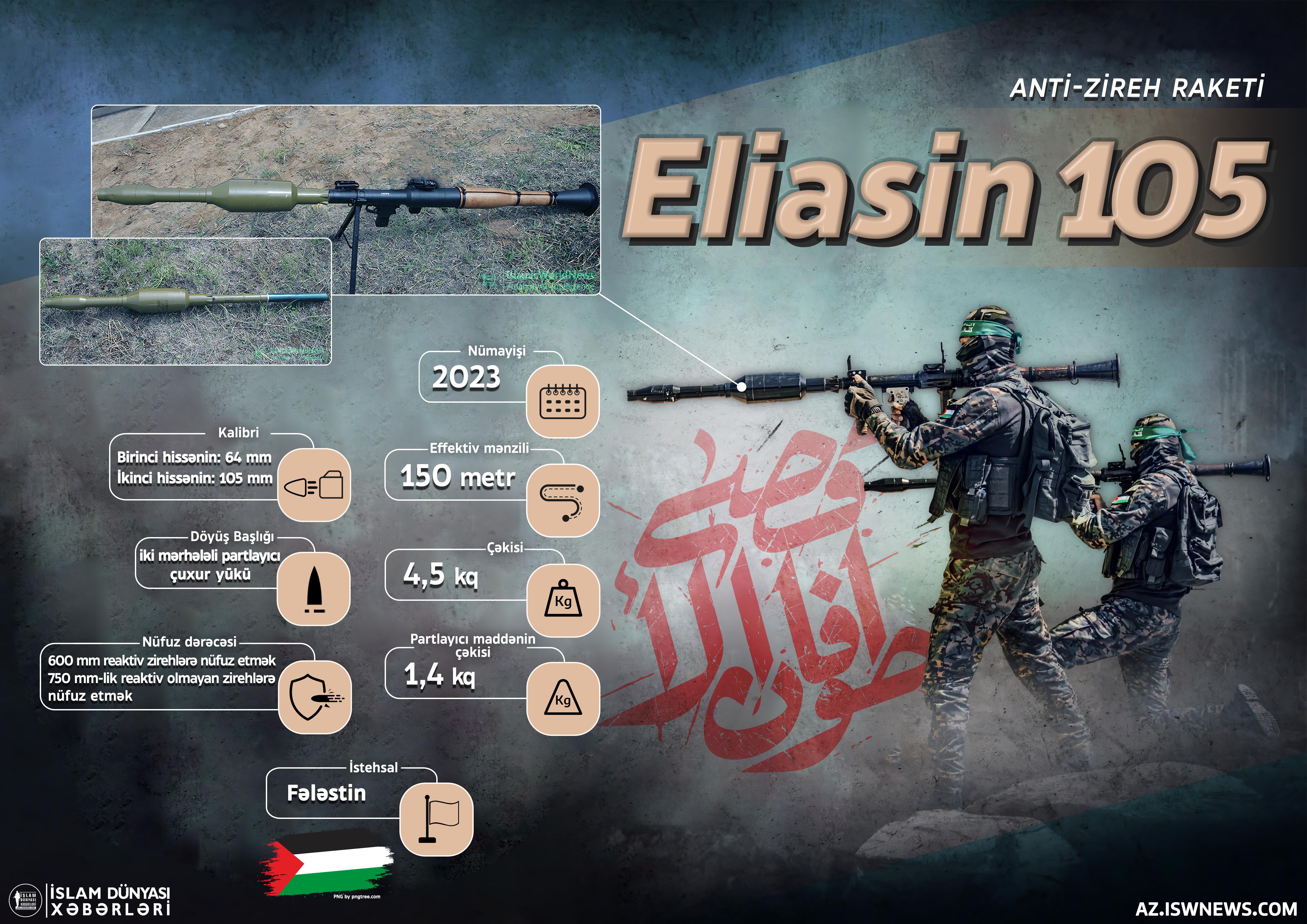
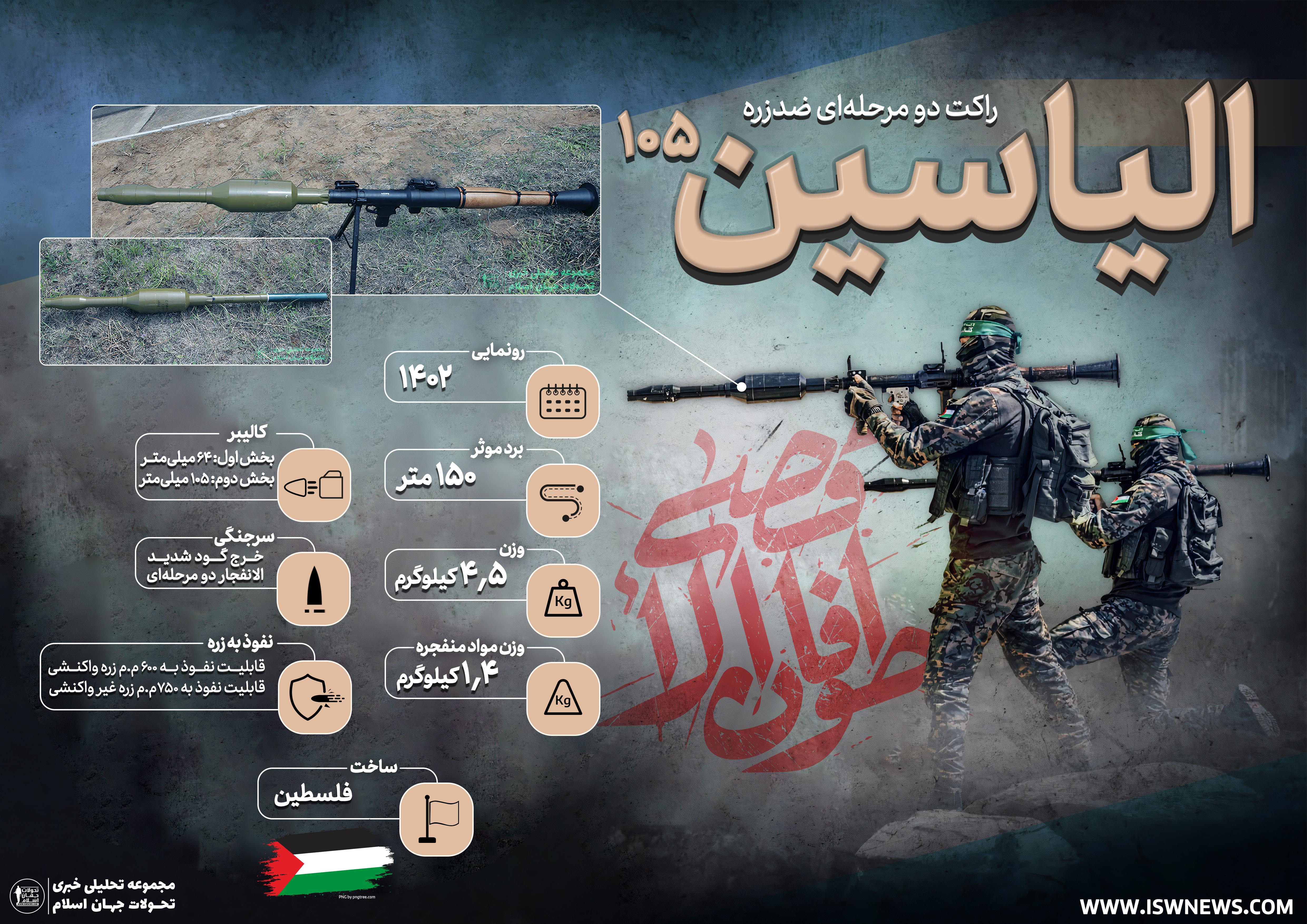
    Infographics of Al-Yasin 105 anti-tank rocket in Russian, Hebrew, Farsi and Azeri:

  • Iraqi Islamic Resistance Unveils Al-Aqsa-1 Missile; US bases to be demolished!

    Iraqi Islamic Resistance Unveils Al-Aqsa-1 Missile; US bases to be demolished!

    On November 6, the Islamic Resistance of Iraq released a picture of the new missile called Al-Aqsa-1. 

    In a statement released by the Iraqi Islamic Resistance, it was stated that the group has unveiled the medium-range missile Al-Aqsa-1 for the first time on Monday as part of responding to the war crimes committed by the occupying regime in Jerusalem al-Quds and its aggression against the Gaza Strip under the guidance and management of the United States.

    The Al-Aqsa-1 missile was used to target the United States’ military bases in Iraq and Syria.
    It is worth mentioning that Al-Aqsa-1 missile is very similar to the Iranian armed forces’ Fateh-110 missile. Fateh-110 is a solid-fueled missile with a 500-kilogram warhead and a range of 300 kilometers.

    In case that Al-Aqsa-1 missile has similar specifications to Fateh-110, the range of influence and destruction of resistance group’s attacks against American occupiers in Iraq would increase significantly.

    The unveiling of the Al-Aqsa-1 missile comes as tensions between resistance groups and the US terrorist army in Iraq and Syria have increased significantly in recent months, and only in recent hours, several military bases belonging to the US occupiers in Iraq and Syria have been targeted by the Islamic Resistance of Iraq.