ISWNews Analysis Group – During the meeting, the Saudi foreign minister expressed Saudi Arabia’s serious intention to pave the way for signing an agreement between the two nations and follow up previous agreements in the fields of security and economy.
Given the development of bilateral relations and the strengthening of regional stability, the representatives of the two countries have begun their work, and the start of the ambassadors’ work will be towards establishing new relations between the two countries, bin Farhan argued.
Amirabdollahian, for his part, announced Iran’s intention to execute existing agreements between the two states in the economic, commercial and security fields. The top Iranian diplomat also said that Tehran has established important relationships with Saudi Arabia and other Arab countries in the West Asia region, including Iraq, Kuwait, Qatar and the United Arab Emirates, and that the Islamic Republic believes regional security and development are in the interest of all regional nations.
Meeting between Amir Abdullahian and Ben Farhan in Riyadh
The Iranian FM further referred to the fact that Saudi King Salman bin Abdulaziz Al Saud has officially invited Iranian President Ebrahim Raisi to visit the kingdom, and that Raisi’s trip to Saudi Arabia will take place at an appropriate time.
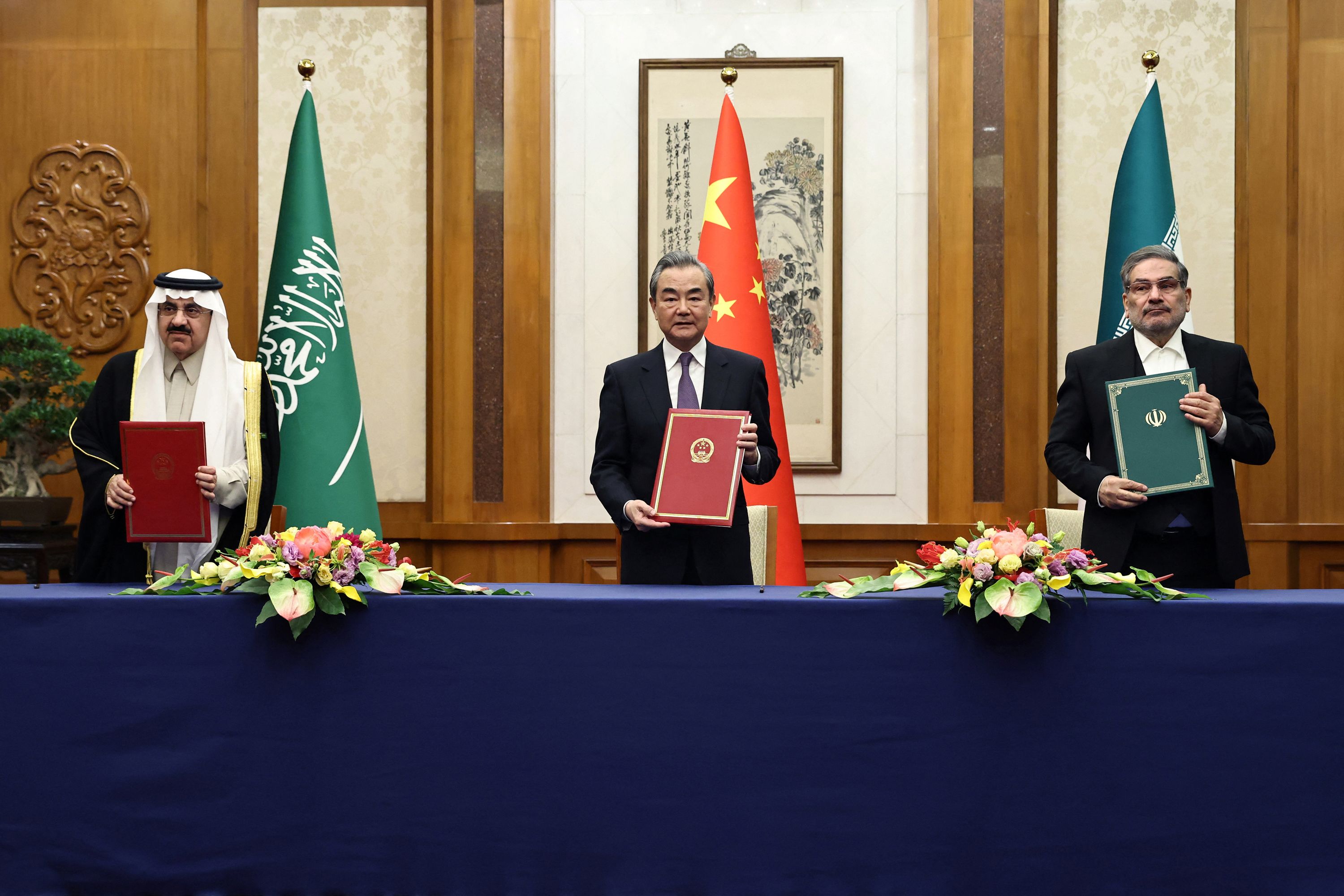
Preparations for negotiations aimed at reconstructing relations between Iran and Saudi Arabia kicked off last year and the talks were finalized with an agreement between representatives of the two countries in Beijing, China, on March 6, 2023, and a trilateral statement was also signed to restore relationship between the two neighboring nations. As a result of the resumption of diplomatic relations between Iran and Saudi Arabia, peace negotiations in Yemen also resumed and negotiations between the Ansar Allah movement and the Saudis continued with Oman’s mediation.
However, Yemen is one of the regional disputes between Iran and Saudi Arabia, and the two countries have also differences over other issues such as Iran’s nuclear capability, the dispute over the three Iranian islands (Abu Musa, Greater and Lesser Tunbs), joint gas fields in the Persian Gulf, regional security issues, Saudi support for opposition media outlets, Arab countries’ relations with the Zionist regime, as well as the United States’ military presence in the West Asia region. It seems that the two countries are determined to solve these problems!
In this meeting, Assad and bin Salman discussed the developments in the Arab countries and the positive reflection of the relations between these countries and emphasized that this atmosphere indicates a collective movement towards common views.
The President of Syria appreciated the efforts of Saudi Arabia for convergence among Arab countries and said that joint actions between the Arab countries will help to realize the interests of their nations.
He congratulated bin Salman on the successful holding of the Jeddah summit and emphasized that this summit will increase cohesion among Arab countries.
The parties also expressed their satisfaction with the re-establishment of Riyadh-Damascus relations and said that this will stabilize the region.
It is worth mentioning that the President of Syria, who attended the 32nd meeting of Arab League in Saudi Arabia, met and talked with a number of senior officials of the Arab countries. The meeting between the President of Syria and the Crown Prince of Saudi Arabia was held after the end of the summit of the heads of the Arab League.
The president of Syria arrived at King Abdulaziz International Airport in the Red Sea port city of Jeddah on Thursday (May 18), when he was welcomed by Saudi authorities.
A day after Bashar al-Assad’s arrival in Saudi Arabia, the thirty-second summit of the leaders of Arab countries was held on Friday in Jeddah. According to Saudi media outlets, Mohammad bin Salman officially welcomed the President of Syria prior the onset of the 32nd summit of the Arab League.
The crown prince of Saudi Arabia welcomed the president of Syria
The summit kicked off with a speech by Mohammad bin Salman and he said at the beginning of the session that we are pleased with the presence of Bashar al-Assad, President of Syria, at the meeting of the leaders of Arab countries.
We hope that Syria’s return to the Arab League will help Syria’s security and the support for the country, he said.
Also, the subject of Palestine is the key issue of Arab and Muslim countries; an issue that is at the top of Saudi Arabia’s priorities, he noted, adding that the issue of Palestine is a focal point in the Arab world and we are working together to find a solution for it.
Bin Salman went on to say that we will not allow our region to become a battlefield; we have had years of conflict, which hurt people, and that we will devote our efforts to support for Yemeni parties to find a solution to the current crisis in their country.
Secretary-General of the Arab League Ahmad Aboul Gheit, for his part, stated at the summit that we welcome the agreement between Iran and Saudi Arabia, and that the Jeddah meeting is an opportunity to revive Arab issues, which had been left to others for a long time.
During the meeting, Bashar al-Assad described Syria as the heart of the Arab community, saying that I thank the heads of delegations who expressed their deep friendliness for Syria. A joint Arab cooperation to promote our role in resolving crises and issues requires common goals and strategies, the Syrian president argued.
Assad further emphasized that we are facing a historic opportunity to reorganize the mechanisms of the Arab League with the least amount of foreign intervention. The reconciliations that have taken place are a historic opportunity to re-examine our own affairs without foreign interference, he mentioned, adding that the world must leave internal affairs to our own people; so, we reject any foreign interference.
The president also concluded that I hope the conference will mark the commencement of a new phase of joint Arab action for solidarity among us so that instead of war and destruction, we can achieve peace, development and prosperity in the region.
Syrian President Bashar al-Assad’s arrival in Saudi Arabia
It is worth mentioning that the Arab League suspended Syria’s membership in this bloc in 2011 under the pretext of some political and security issues. Finally, after 12 years and following the failure of plots hatched to overthrow President Bashar al-Assad from power as well as the victories of the resistance axis in different fields, foreign ministers of Arab countries of the region agreed to return Syria to the Arab League during a meeting in Egypt on May 7.
The Syrian return to the Arab League and President Assad’s visit to Saudi Arabia created concern among the foes of the resistance axis so much that some Hebrew-language media outlets reacted to the promising developments, as they said that “This is the Arab League that has returned to Syria and not vice versa!”
The Zionists are of the opinion that with Syria’s return to the Arab League, the Arab Spring plot has officially come to an end and the issue of Palestine will once again become the main focus and concern of the Arab countries in the West Asia region and North Africa.
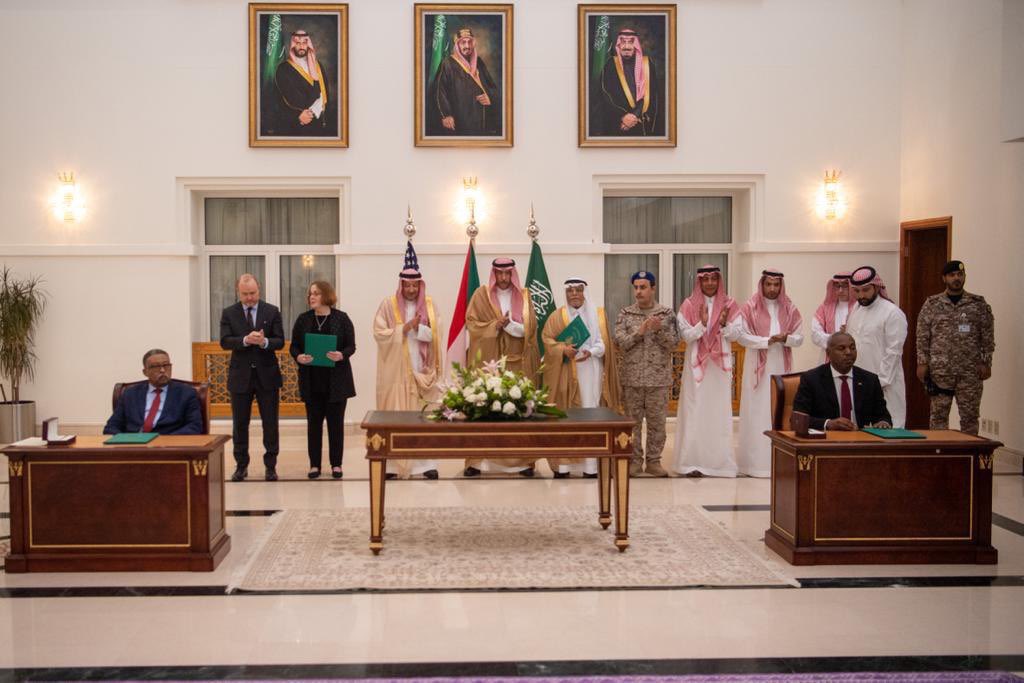
Despite the fact that negotiations between delegations of the Sudanese army and the RSF paramilitary group have been ongoing in the Saudi Arabian city of Jeddah since May 6, some Western media have been citing certain American diplomats as saying for several days that the Sudanese warring parties will soon ink a ceasefire agreement. Conversely, the text of the Jeddah statement does not mention a comprehensive truce.
Given the history of such talks and internal agreements in Sudan, the appearance of this agreement seems to be also similar to their last year agreement, which led to the current dispute in the African nation. The fresh agreement is also expected to pave the way for the second phase of the negotiations, which will again be possible with the mediation by Saudi Arabia and the United States. In addition to the issue, the news stories on an accord in Jeddah indicate other important points:
1- No reconciliation has been made over the disputed issues; so, the new agreement is just a move to create optimism concerning the decline of the internal and external process of the crisis in Sudan.
2- The warring parties in the negotiations put forward their own conditions for the cessation of hostilities based on the viewpoint that each of the sides has the upper hand in the Sudanese developments; however, the US and Saudi mediators halted the discussions and called on the parties to conclude a ceasefire agreement and open safe corridors to allow the dispatch of humanitarian aid. That means the settlement of the dispute in Sudan is also subject to wishes of Saudi Arabia and the United States, while other foreign rivals such as the United Arab Emirates (UAE), Egypt and so on, who have a say in the Sudanese developments, have been sidelined.
What are the conditions of the Sudanese warring parties?
According to statements issued by the Sudanese army officials, the army’s conditions for the cessation of hostilities with the Rapid Support Forces and the opening of safe corridors to dispatch humanitarian aid are as follows:
1- The withdrawal of the Rapid Support Forces from central districts and government buildings of the capital city of Khartoum, including the Khartoum Electricity Distribution Department, the Aljaili Petroleum Refinery as well as residential areas
2- The clearing of trenches and the removal of fronts created during the recent clashes
3- The gathering of the Rapid Support Forces at an agreed military base on the outskirts of Khartoum, which is agreed upon by the Sudanese Armed Forces. The RSF paramilitary group must remain at the military base until a decision is made on their integration into the official armed forces.
The commanders of the RSF paramilitary group also proposed their own conditions:
1- The payment of salaries of the personnel of the Rapid Support Forces by the Sudanese Ministry of Finance
2- The suspension of military flights by the Sudanese Armed Forces as well as the deployment of foreign observers to monitor the cessation of hostilities
3- The assurances for a safe exit route for the commanders and personnel of the Rapid Support Forces from Khartoum to a predetermined destination
4- The authorization to assemble all paramilitary forces, military equipment from the positions of the Rapid Support Forces even in areas where they were stationed before the onset of the recent confrontations
5- The permission for the deployment of the Rapid Support Forces in all positions that they control at present and the provision of medical services to the RSF injured personnel at hospitals
What is the framework of the Jeddah statement?
The delegates of the Sudanese Armed Forces as well as the Rapid Support Forces issued a joint statement dubbed “Jeddah Statement” on May 12 after six days of negotiations in the presence of representatives from the United States and Saudi Arabia.
In the Jeddah Statement, the Sudanese warring parties agreed upon guaranteeing safety of lives and properties of civilians, protecting civilian facilities, creating safe humanitarian routes as well as preserving sovereignty and integrity of Sudan. International organizations are also expected to monitor the implementation of the warring sides’ commitments by the use of satellites, field reports and news stories come from social media networks.
The Jeddah Statement does not mention a comprehensive end of hostilities; however, the American authorities called it a first step toward reaching a ceasefire agreement.
In general, the statement or agreement is not sufficient and effective to pave the ground for resolving the current crisis in Sudan because of the lack of an all-inclusive truce and assessing the implementation of the parties’ conditions as well as the precise monitoring of the warring side’s commitments.
In 28 days of civil war in Sudan, more than 500 people lost their lives and 3,000 others were injured, while tens of thousands were also displaced and foreign countries evacuated their nationals and diplomats from the African country.
The mentioned issues along with Sudan’s economic and political woes indicate a looming crisis that will not be simply resolved even with the complete cessation of hostilities and the formation of an all-inclusive government.
In the meeting, the Saudi foreign minister said that the kingdom underlines the need for maintaining territorial integrity, Arab identity and security of Syria. Bin Farhan assured that Syria will achieve sustainable development, and that Saudi Arabia will make all-out effort to help maintain territorial integrity of Syria and the Syrian refugees will be able to return to their country.
The senior Saudi diplomat also emphasized that in the next phase, the relationships between Syria and other Arab states should return to normalcy, and that Damascus is expected to play its role in terms of Arab and regional affairs better than before.
According to the Syrian presidential office, President Assad and FM Bin Farhan discussed political, Arab, mutual and international issues. The Saudi foreign minister conveyed greetings from King Salman bin Abdul Aziz and Saudi Crown Prince Mohammed bin Salman to President Assad. Bin Farhan also wished security, stability and progress for the Syrian nation.
For his part, Assad stated that brotherhood among Arab nations is much profound than the relations between Arab states. The healthy relationship between Saudi Arabia and Syria is a situation that should be on the ground, he noted, adding that this sort of relation is not only beneficial for the two nations but also it is fruitful for Arab and regional states. The pragmatic policy, which is being pursued by Saudi Arabi will be in favor of Arab and regional countries, the president argued.
The trip by Faisal bin Farhan occurred after Russian state-owned news agency Sputnik quoted sources on condition of anonymity that the Saudi foreign minister will visit Damascus to meet the Syrian authorities in the near future.
It is worth mentioning that this is the first trip of its kind by a top Saudi official to Syria from 2011 up to now. Saudi Arabia played a key role in financing and supplying the terrorist groups and the opponents of the central government in Damascus with weapons in the onset of the crisis in Syria. However, the Saudi kingdom has started improving its relationship with the Syrian government following the failure of their plot to topple Bashar al-Assad and the victories achieved by the resistance movement.
As part of Yemen peace talks with the mediation of Oman, a diplomatic delegation from Saudi Arabia headed by Saudi Arabia’s Ambassador to Yemen Mohammed bin Saeed Al-Jaber and along with some Omani and Yemeni diplomats arrived in the capital city of Sanaa.
Al-Jaber was welcomed by member of the Supreme Revolutionary Committee Mohammed Ali al-Houthi, Deputy Prime Minister of Yemen in defense and security affairs Jalal al-Rowaishan; then, the Saudi envoy met with the Yemeni president of the Supreme Political Council.
The first video of the meeting of the diplomatic delegation of Oman and Saudi Arabia with the head of the Supreme Political Council of Yemen
Mahdi al-Mashat expressed gratitude to Oman for its mediation and positive role in approaching point of views as well as efforts for establishing peace in the war-stricken country, underlining the decisive stance of the National Salvation Government concerning liberation and independence of his country, when he talked to the Saudi delegation.
According to local sources, the Saudi delegation’s trip to Sanaa is in line with their effort to hold talks with the authorities of the Ansar Allah movement to pave the way for fully reopening of airports and ports in Yemen, payment of salaries of all government employees and processes of political transition in the war-torn country. It is expected that the meeting will help speed up the process of implementing ceasefire and lifting the siege of Yemen.
Following Iranian President Ebrahim Raisi’s visit to China in February and his talks with his Chinese counterpart Xi Jinping, the finalization of the agreement between Saudi Arabia and Iran was cemented. After the February consensus, Shamkhani left Tehran for Beijing on March 6 in order to carry out intensive talks with Al-Aiban. The two counterparts held negotiations to restore political relationship as well as resolve security and regional issues, but there have not been released the details of the talks in official sources. The agreement was declared on March 10, when China, Saudi Arabia and Iran issued a joint statement and signed the deal.
What was the other states’ reaction to Saudi-Iran deal?
The authorities of both Saudi Arabia and Iran as well as the most states in the West Asia region and the world welcomed the agreement and described it as a prelude to resolution of other disputes and regional issues, including the Yemen war.
Meanwhile, Coordinator for Strategic Communications at the US National Security Council John Kirby told correspondents that Saudi Arabia informed the United States of the talks with Iran, but Washington did not play any role in the negotiations. Kirby also adopted a hostile stance, when he said we should wait and see if Iran would respect the other side of the deal or not!
Secretary General of Lebanon’s Hezbollah movement Hassan Nasrallah depicted the agreement as an important development in the region, which will promise new horizons in the region and Lebanon.
Mohammad Abdul Salam, spokesman of Yemen’s Ansar Allah movement, who is in charge of negotiations of the National Salvation government, said that restoration of natural relations among regional states is necessary, noting that lack of security has its roots in foreign interventions in particular by the US and the Israeli regime. He said that Iranophobia project is in line with foreigners’ interests, who want to misuse internal rifts to create conflict and aggression in Yemen.
China’s Foreign Ministry issued a statement, announcing that the Iran-Saudi Arabia agreement is a victory for peace.
What are the benefits of the deal for China?
China could gain more credit at international arena and showed that it is a superpower in rivalry with the US after hosting the negotiations between Saudi Arabia and Iran. They also underlined that the United States’ policies and supports for Arab countries are inefficient. As part of its foreign policy, China has not been involved in hard competition with ultra-regional powers in any dispute so far, and the issue has been shown in the Ukraine war and the dispute with Taiwan, but their involvement in the Saudi-Iran agreement indicates that they pursue a special engagement in the West Asia region and they want to adopt soft competition and semi-hard competition with the US.
On the other hand, the resolution of conflict between Saudi Arabia and Iran would guarantee oil and other raw materials required by China.
What are the potential and undisclosed aspects of the deal?
Undoubtedly, the recent agreement between Riyadh and Tehran to restore relationship is a positive news for both countries and the West Asia region. It seems that Saudi Arabia has reached to the conclusion after eight years of war with Yemen that it cannot dominate a popular government and force by resorting to the most advanced and best Western and Eastern military equipment. The Saudis were of the opinion in the beginning of the war on Yemen that the Ansar Allah movement is a militia group, which would be weakened and forced to succumb following some classic operations and aerial bombardment, but the military and political support by Iran along with popular backing of people residing in western provinces of Yemen led to the consolidation of the National Salvation government and the preservation of strategic lands of the Arab country under the rule of Islamic resistance axis. Therefore, Saudi Arabia’s defeat in the war on Yemen is the main reason behind the Saudi’s intention to the negotiating table.
Given the significant role by Iran in Yemen’s developments, it is expected that the peace negotiations in the war-torn country would reach more important results in the coming months. The deployment of foreign forces in different regions and bases inside Yemen, the activities of the separatist groups such as the Southern Transitional Council (STC) and terrorist groups like al-Qaeda and the ISIS, as well as the dependence of anti-Ansar Allah movement factions to the United Arab Emirates (UAE) and Saudi Arabia are expected to be the potential hurdles in the formation of peace in Yemen.
Another issue, which can be mentioned as one of security aspects of the Saudi-Iran deal, is security threats and media activities of both sides against each other. Over the last years, Saudi-funded media apparatus established anti-Iran research centers such as Rasana and Iran International TV network in order to create propaganda campaign, which was along with fomenting unrest in Iran by the West. Seemingly, Saudi Arabia and Iran have reached agreements in this respect, but the details of the accords have not been announced yet.
In a bigger picture at the current regional and international levels, Iran has been facing more harsh tensions and threats by the Western states and Israel on its nuclear dossier and its regional influence comparing to the circumstances in the past years. The expansion of the Zionist regime’s influence in security periphery of Iran, the exacerbation of economic sanctions imposed by Europe, numerous military drills by the US and Israel as well as their joint threats against Iran’s nuclear and defense facilities are all among the West’s new plots against the Islamic Republic. Of course, Saudi Arabia showed via signing the agreement that it intends to get rid of potential Iranian response to the Western states’ strikes and it tries not to turn into a possible battle ground for potential future confrontation between the West and Iran.
In conclusion, the agreement between Saudi Arabia and Iran should be viewed as a mid-term ceasefire. The Saudis’ strategic measures and projects in the Central Asian states and in Azerbaijan Republic can violate Iran’s interests and security, and despite China’s assurances, there is not any guarantee for their sincerity in dealing with the Iranians.
Following the deployment of forces affiliated to Saudi Arabia in a new base in the Mori area, located on the outskirts of Hadibu Airport, dozens of the UAE-backed forces and the Southern Transitional Council militants were put on alert and stationed on the outskirts the airport. The UAE forces and the STC have established a new checkpoint in the streets leading to the airport and control the passage of cars.
The activities of the Saudis on Socotra began after the senior Saudi military held a meeting with Ramzi Mahrous, the former governor of Socotra, and transferred him to Socotra for unspecified measures. Southern media believe that Saudi Arabia is planning a coup against the UAE to control the island of Socotra, and in this regard, it has transferred Ramzi Mahrous and a number of Islah Party militants to this island.
Ramzi Mahrous is a member of the Islah party and the former governor of the Socotra, who was defeated in the tensions of June 2020 with the militants of the Southern Transitional Council and left this island.
It should be noted that the Socotra archipelago is currently under the control of the UAE and the American and Israeli advisers, and its center is the Socotra island. The important role of Socotra Island to control the sea route and its natural resources is one of the reasons for Saudi Arabia’s attempt to control this island.
A media company called “Shahid” affiliated to Al-Malham Institute, which is the media tool of the Al Qaeda terrorist group in the Arabian Peninsula, released an 18-minute documentary, in which the group started condemning the performances of the Saudi Arabian government in particular the acts committed by Crown Prince Mohammed bin Salman in the recent years. The documentary attacked the performance Mohammed bin Salman on behalf of both current wring-leader of Al Qaeda Khalid Saeed Batarfi as well as former head of the terrorist group Qasim Rimi, who was murdered, and urged the Saudi people to initiate a revolution and the overthrow of the Al Saud family from power.
The archive documentary points out to the factors that prove apostasy of Al Saud rulers in particular Mohammed bin Salman on the basis of the viewpoint of the Al Qaeda terrorist group, providing its audience with remarkable statistics of the new period of Al Saud ruling in the form of motion graphics. In the documentary, Al Qaeda terrorist organization censures Mohammad bin Salman’s wish to turn the Land of Revelation into another Dubai, because the group considers the move as an act of blasphemy.
Some of Muhammad bin Salman’s actions, which in this film are considered the reason for his disbelief and apostasy, are: 1- War with Islam in the name of fighting extremism and terrorism with the help of secularists and hypocrites. 2- Helping the enemies of Islam in the East and West and giving up on the main issues of the Islamic world, including the Palestinian issue. 3- Supporting the policies of the Chinese government in Xinjiang province against Uyghur Muslims. 4- Supporting the Indian government against Indian Muslims. 5- Limitless help from western countries. 6- Ruling by other than what God Almighty has decreed. 7- Hidden secularism under the skin of Islam. 8- Setting the groundwork for compromise with Israel in the region. 9- Supporting Arab rulers with the help of the United Arab Emirates to suppress Islamic nations and movements. 10- Inciting war in the region and leaving thousands of Muslim victims (almost 9,000 civilians have been killed by Saudi Arabia’s bombings). 11- Eight years of failure and retreat and inability in the war in Yemen. 12- Struggle with the Islamic call by executing and imprisoning more than 5,000 scholars, preachers, Mujahideen and tribal reformist sheikhs. 13- Stopping Islamic rituals and symbols, including the call to prayer in mosques and… 14- Calling for an apparent Islam acceptable to the West in the name of moderation and creating a center for this purpose. 15- Suppressing people and suffocating protesting and demanding voices through imprisonment and trials behind closed doors. 16- Attempting to promote Westernization and to corrupt the society and to deprive the society of Saudi Arabia of its Islamic identity through: Westernizing education in schools and promoting Westernization through the media. 17- Spreading prostitution by holding music concerts and celebrating polytheistic holidays and film festivals. 18- Issuing regulations to corrupt women in the society. 19- Developing tourism and inviting corrupt people to visit Saudi Arabia 20- Allocating exorbitant expenses to support enemies and extravagance and games and imaginary plans. 21- Providing billion dollar support to America (citing Trump’s words). 22- High prices and impoverishment of Saudi society (one out of five people lives below the poverty line). 23- Saudi youth unemployment. 24- Destruction of people’s houses and mosques and expulsion of people from their villages and neighborhoods.
At the end of the film, the passionate words of Qasim al-Raymi, the slain leader of Al-Qaeda in the Arabian Peninsula, and Khalid Batarfi, the current leader of this group, are presented against Al Saud.
Al Qaeda group in the Arabian Peninsula is a branch of the Al Qaeda terrorist organization, which kicked off its serious actions in countries such as Saudi Arabia and Yemen in 2009. Following the resignation of the then Yemini President Ali Abdullah Saleh and the presidency of his deputy Abdrabbuh Mansur Hadi, the terrorist group started wreaking havoc in a more organized style in Yemen and succeeded in taking full control of some areas in the war-torn country; however, the Ansar Allah movement’s success in taking control of the important cities of Sana’a, Saada and some other areas hindered the Al Qaeda group’s advances; so, the group could deploy its terrorists in some remote regions of Yemen, including the deserts in the east of Yemen as well as the north of Al Bayda Governorate and some other areas. The wring-leaders of the Al Qaeda group enjoy close relationship with different elements in the resigned government of Abdrabbuh Mansour Hadi.
Following the issuance of an order by the Saudi coalition command room for the withdrawal of Southern Transitional Council (STC) forces and Sudanese mercenaries from Al-And Airbase in Lahij province and the deployment of Al-Dara’ al-Watan (Nation Shield) forces in this important base, the tension between the South and Saudi Arabia increased. This tension increased when Al-Dara’s al-Watan forces prevented the 1st Brigade of Southern Transitional Council militants from entering Al-Anad base, and the armed forces of both sides went to the brink of battle.
Despite the increase of tensions, December 25, Sudanese forces have evacuated their positions in the Al-Anad base and handed over to the Dara Al-Watan forces. With this situation, the possibility of the southerners retreating from the suburbs of Al-Anad base also increases.
Al-Dara’ Al-Watan (Nation Nation) forces are militias that formed in November of this year with the support of Saudi Arabia and the key role of Sagheer bin Aziz and Tareq Saleh, from the pro-Saudi tribal armed forces in Hadhramaut province, the forces of Al-Yaman Al-Saeed (subordinate to Saghir bin Aziz) and part of Pro-Tareq Saleh forces in the west of Lahij province.
Undoubtedly, these developments are not unrelated to the house arrest of Aidarus al-Zoubaidi, the head of the Southern Transitional Council in Saudi Arabia, and indicate the implementation of the Saudi plan to limit the power of the southerners in the strategic points of southwest Yemen.
Dubbed the “Scary Weekend” which took place on Thursday and Friday in Riyadh’s Boulevard, revellers dressed up in scary costumes and fancy dress and posed for pictures which have been widely shared on social media. The event was held as part of the ongoing Riyadh Season in the Saudi capital.
The Saudi capital, looked like creatures from a haunted house had escaped and taken over the city. Monsters, witches, bank robbers and even sultry French maids were everywhere, leaning out of car windows and lounging in cafes.
“Saudi is changing,” said Abdulaziz Khaled, 23, a finance student awaiting his turn in line. Switching seamlessly midsentence between Arabic and English, Mr. Khaled said he planned to dress up as a wizard this year.
Waiting beside him, Reema al-Jaber, also 23, and sporting caramel-blond bangs, wanted to go as a white-winged angel for a gathering at a friend’s house. “But I could be a black angel,” she fretted. “We have to see what they have in stock!”
It is not surprising that celebrations have drawn criticism from many Muslim social media users over permitting once-banned non-Muslim festivals, while others have accused Saudi Arabia’s religious establishment of having double standards by not permitting the celebrations of the Prophet Muhammad’s (peace be upon him) birthday, known as Al Mawlid.
Celebration of Halloween in Riyad, Saudi Arabia. The GEA of Saudi organized an event called "Horror Weekend", meanwhile celebration of Mawlid is still banned.
Imagine a country that forbids the commemoration of the Prophet ﷺ because it is more evil than celebrating Halloween… pic.twitter.com/gulK99yO8q
— Musa al-Maghribi ?? ⵣ | مُوسَى المَغْرِبِي (@Musa_Maliki_) October 29, 2022
In 2016, Prince Mohammed announced an economic diversification plan that called for turning the kingdom into an investment powerhouse and global business hub.
The current changes were welcomed with delight by the nourished Saudi youth. Many young Saudis grew up on Western culture, have a Western education, and have spent a long time in the United States, the EU, and the British Commonwealth. They no longer perceive traditional Saudi culture as their own.
However, while they rejoice in the changes on the streets of Riyadh, they forget that the world is also changing. The new neoliberal order is no longer the absolute fate of the World. The peoples of the Earth are waking up and looking around for other cultural pillars. Islam is certainly one of these pillars, and a conservative one at that.
If the political leadership of Saudi Arabia thinks that in this way, step by step, in the best traditions of the “Overton Window,” they can change Islam, they are very much mistaken. They can change a part of their local society, but not the religion.
The Islamic Ummah has long been wary of developments in Saudi Arabia and other Gulf monarchies. It is highly likely that if the trend continues, yes, Islam will change, but in a way where the centers of the Muslim world will be Turkey, Iran and Russia, while Saudi Arabia will be perceived as a territory temporarily occupied by unfaithfuls.
Abdul Razzaq Al-Hajri, Secretary General of Islah Party, the branch of the Muslim Brotherhood in Yemen, during a meeting with representatives of the European Union in the city of Riyadh, the capital of Saudi Arabia, determined his new conditions in exchange for returning to the rule of the Saudi coalition. Emphasizing that the recent developments in Shabwa and Abyan provinces have ended their participation with the Saudi coalition, he announced “the withdrawal of the armed members of the Southern Transitional Council from the bases in southern Yemen, participation in the decisions of the Presidential Council and the commitment of this Council to the transfer of power”, is part of the conditions of returning to the rule of the Saudi coalition.
This meeting was aimed at organizing the power of pro-Saudi coalition groups that have been exposed to collapse due to recent developments.
Islah Party, Southern Transitional Council and Yemen People’s Congress Party (the branch which is opposition to Ansar Allah) are among the powerful factions opposing Ansar Allah in Yemen, which are under the command of the Saudi coalition with the support of Western countries.