Since September 2022 the Southern Transitional Council president has not been able to enter the city; although, the STC militants have refused to hand over their military bases in that area.
These developments could cause fierce skirmishes between the Southern Transitional Council and the Saudi-led coalition forces, but they refuted such a confrontation because of being scared of losing the conflict. Of course, the United Arab Emirates (UAE) played a role and due to the fact that the door of negotiations is still open, fierce fighting did not occur in the southern Yemen.
Meanwhile, the Yemeni Congregation for Reform, frequently called al-Islah Party welcomed a decision by Yemeni politician serving as the chairman of the Presidential Leadership Council Rashad Muhammad al-Alimi to remove members of the Southern Transitional Council from positions of the resigned government.
Simultaneous with the tensions between the Islah Party and the Southern Transitional Council, the Islah Party’s leader Salah Batis expressed readiness to take part in clashes erupting in southern city of Aden on February 26.
On February 22, the Southern Transitional Council recalled four brigades of its militants from Ahwar town in south central Yemen and dispatched them to Mudiyah village in northern Abyan Governorate as a result of tensions between the STC and the Saudi-led coalition.
Mudiyah tribes continued advancing in Umran Wadi region and captured some checkpoints on February 26.
In Aden, the Saudi-led forces and the Al-Dara Al-Watan militants reacted to the arbitrary withdrawal of Prime Minister of Yemen’s resigned government Maeen Abdulmalik Saeed from Aden to Cairo, Egyptian capital, they sealed his residence and avoided the entry of staff and ministers to Al-Maashiq Palace, and even issued unlimited time off for them. These acts by the Saudis can be seen as their reaction to the STC’s threats to sack and expel pro-Saudi forces from southern provinces of Yemen as well as hand over fronts in southern areas to the Ansar Allah movement.
The Southern Transitional Council militants gathered in streets of Crater district of the Aden Governorate and blocked the entrance of the area in response to the Saudi-led coalition’s measures. Furthermore, a convoy of vehicles carrying Governor of Aden Governorate Ahmed Hamed Lamlas, who is a member of the Southern Transitional Council, was raided by unknown armed people in Crater district on February 26. The governor of Aden survived the assassination attempt, while two of his security guards were injured.
On February 27, Turkish drones targeted a car in Khana Sor area in the suburbs of Sinjar city, located in the west of Nineveh province, during which, Pîr Çeko, the commander of the PMU 80th Brigade along with two other forces were martyred.
A picture of Pîr Çeko (Pir Cheko), commander of the 80th Brigade of the Popular Mobilization Organization
On the other hand, the Iraqi Kurdistan Region’s Counter-Terrorism Group announced: “At 12:10 today local time, a Turkish drone targeted a vehicle belonging to the PKK elements in Khana Sor area of Sinjar city, as a result of which In this attack, a commander and two PKK forces were killed.”
According to the statement, it seems that these people were from the former Sinjar Resistance Units (YBŞ), which after some time were organized in the form of the 80th Brigade of the Iraqi Popular Mobilization Organization (PMU).
After this attack, the “Islamic Resistance Ahrar al-Iraq Brigade” reacted by publishing a harsh statement. According to the Ahrar al-Iraq previous activities against the Turkish positions in northern Iraq, it is likely that the “Ahrar al-Iraq” group, in response to this attack, will organize a new round of attacks against the Turkish bases in Iraq.
Statement by Islamic Resistance Ahrar al-Iraq Brigade
It is worth mentioning that this is Turkey’s first targeted drone attack against the PMU’s 80th Brigade in Nineveh province this year. Last year in 22nd of January, 2022, Turkish drones attacked two vehicles of the YBS forces in the Bab Shalo area on the outskirts of Sinjar, during which two YBS militias were killed and several others were injured.
On February 27, three Palestinian youths shot at a Zionist vehicle near Ariha. During this operation, one Israeli was killed and four others were injured. The perpetrators of the shooting operation set fire to their car and fled the scene.
The Islamic Jihad movement, while congratulating the operation of the Palestinian youth near Ariha, praised the courage of the operators and called for the continuation of anti-Israeli operations to inflict heavy blows on the occupiers for their crimes against the Palestinian nation.
It is worth mentioning that on February 26, a Palestinian young man created a fabricated accident scene in Huwara town and stopped a car of two Israelis, then started shooting and killed both of them.
According to the ISIS’s Amaq News Agency, elements of the Islamic State in the Greater Sahara (IS-GS) conducted a fierce ambush in the way of a big caravan of armed forces in the north of Burkina Faso. The convoy planned to approach regions under ISIS dominance in Oudalan Province.
The ambush left 70 military forces dead, tens of others injured and five captured. The ISIS terrorists torched an armored personnel carrier and seized one vehicle and 27 motorcycles. The ISIS claimed that the raid forced Burkina Faso forces to retreat from the region around 10 kilometers.
It is worth mentioning that the IS-GS terrorists carried out an ambush on Niger’s army in Tillabéri in the western region of the African country, which left 48 armed personnel killed and wounded.
On February 26, a Palestinian young man created a fabricated accident scene in Huwara town to stop Israelis’ car and then started shooting at the Zionists, which killed both Israelis. The Palestinian youth succeeded in fleeing from the scene.
Head of the Samaria Council Yossi Dagan acknowledged that the operation was complicated and difficult.
Pictures from the scene of the accident
It is noteworthy that this anti-Israeli operation occurred concurrent with the security Aqaba Summit in a bid to stop Palestinians’ operations in the occupied territories.
It is worth mentioning that it is not the first anti-Israeli operation in West Bank in the current month. On February 10, a Palestinian citizen named Hussein Qaraqe, 30, rammed his car into a number of Israeli settlers at a bus stop in the occupied al-Quds, killing three settlers and injuring six others.
Parliament speakers from Iraq, the United Arab Emirates, Jordan, Palestine, Libya, Egypt as well as heads of delegations of Oman and Lebanon arrived in Damascus on February 26 in an unprecedented move during the last 12 years and were welcomed by the Syrian president.
After the welcoming ceremony, the Syrian parliament held a joint session and the speakers of the Arab parliaments made speeches. Iraq’s Speaker of Parliament Mohammed al-Halbousi along with other Arab counterparts held a special meeting with al-Assad. Al-Halbousi had a separate meeting with the Syrian president.
Images of Bashar al-Assad’s reception from the Arab Parliament delegation
The trip came true after al-Halbousi asked the Arab states in February 25 meeting of the speakers and representatives of the Arab Inter-Parliamentary Union to make a final decision on the return of Syria to the Arab union. Following the beginning of crisis in Syria in 2011, the governments of Saudi Arabia and some other Arab states backed militants opposing the Syrian government and shut down their embassies in Damascus to cut their ties with the war-stricken country. The parliamentarians’ visit in the current period shows that the authorities of the mentioned nations have reached to the conclusion after a decade that the continuation of the past policies and the decline of ties with Syria were not fruitful for them and they should start new relationship with the Arab country.
Ousting of state minister of Nagorno-Karabakh region
The first event was that President of Republic of Artsakh Arayik Harutyunyan, which is De Facto Armenian government of the Nagorno-Karabakh Region also dubbed Artsakh, issued a decree to oust State Minister of Artsakh Ruben Vardanyan. Independent sources believe that the ousting happened as a result of the intervention and pressure by Prime Minister of Armenia Nikol Pashinyan. Vardanyan, who possesses double nationality of Armenia and Russia, returned Karabakh last year and renounced his Russian citizenship. It is said that Vardanyan was to pave the way for the accession of the Nagorno-Karabakh region to the Russian Federation.
The Republic of Azerbaijan claims that Vardanyan is the root cause of crisis in Karabakh’s mines; the illegal excavation, the Baku government alleges, denies the rights of Azerbaijan people as well as causes environmental pollution. The recent protest by environmental activists in Shusha or Shushi, organized by the Baku government, has happened due to the reason.
Conviction of Aliyev’s environmental activists in ICJ
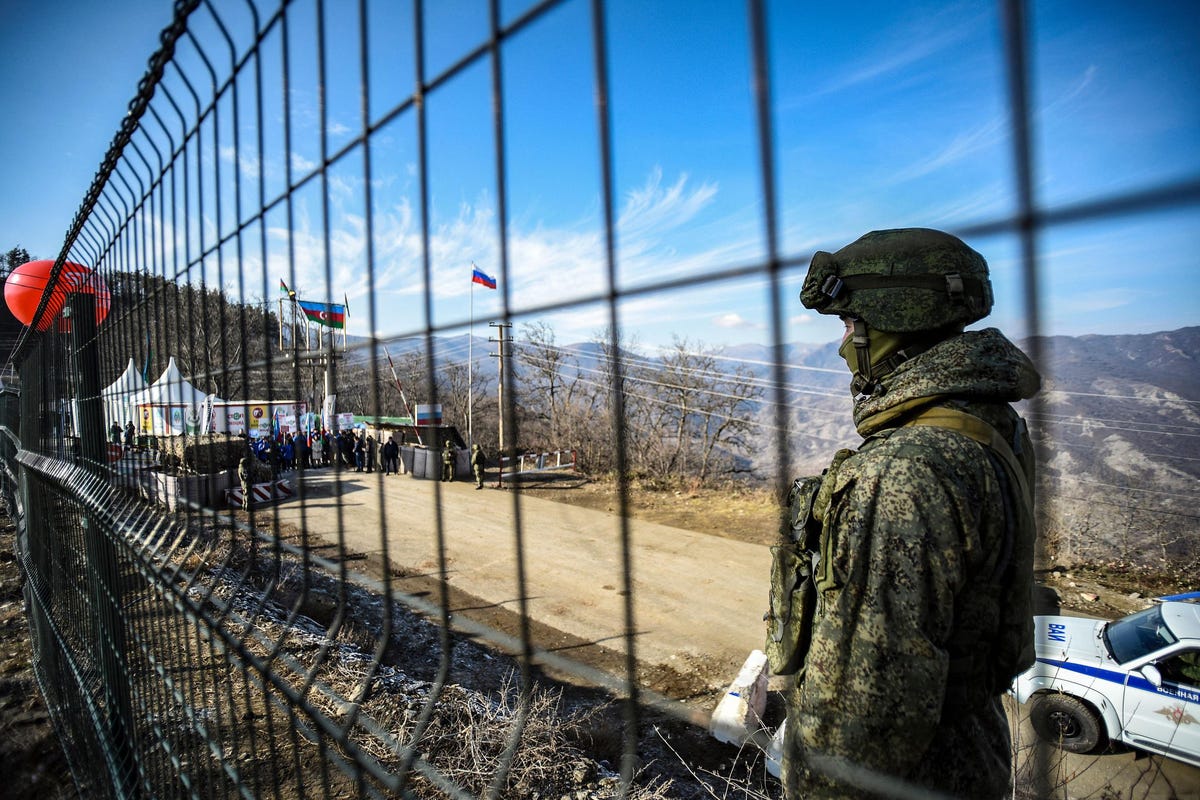
The second event of the past week was the failure of legal efforts by the Republic of Azerbaijan and the victory of Armenia in the International Court of Justice (ICJ) regarding the closure of the corridor between Lachin and Khankendi (Stepanakert), which is the de facto capital of Republic of Artsakh.
On February 22, The Hague Court of Justice found the Azerbaijan government guilty due to acts committed by so-called environmental activists, who closed the connection of the corridor to outside world, ruling that Azerbaijan must open Lachin Corridor. The verdict translates into the violation of human rights of Armenians by the Baku government.
The two governments of Armenia and Azerbaijan had filed lawsuits with the ICJ. The court issued the verdict in the 72nd day of the closure of the road.
The authorities of the government in Baku, including President of Azerbaijan Republic Ilham Aliyev, claimed that the environmental activists have not closed the corridor and the vehicles of the Russian peace-keepers and the Red Cross can transit there. But the Red Cross personnel confirmed statements by the Armenian officials of the Karabakh region on the difficult circumstances of the people there as well as all-out economic siege and the lack of electricity and gas in the region. The blockade kicked off on December 12, 2022 as a result of the presence of hundreds of people in the checkpoint of the north of Shusha city and it still underway. It is not clear, when the government of Aliyev will carry out the verdict of the ICJ.
Control of Karabakh by limiting transit
Orxan Məmmədov, an Azerbaijani analyst, told ISWNews that the point, where the environmental activists have gathered, is an area of 200 meters in the north of Shusha city in a crossroad, where the two roads of Lachin-Shusha and Khankendi-Armenia is located. The Russian peace-keeping forces have two checkpoints there and two other sides are controlled by Azerbaijan Republic. The peace-keeping forces and Azerbaijanis can use the crossroad, and the legal condition is so that the peace-keeping forces cannot uproot tents erected by the environmental activists.
Now, the government in Baku could create an unofficial checkpoint there by the use of the environmental activists in order to avoid the transit of the Armenians of the Karabakh region to Armenia and vice versa without the supervision of Azerbaijan Republic.
The next step by the Aliyev government is a negotiation to set up a customs office and a checkpoint in the area of about 200 meters in a bid to dominate the road, which is the only corridor of the Karabakh region with the outside world.
It is believed that Al-Qaeda members lived in this house and were identified and targeted by the US. Later on February 28, local sources stated that during this attack, Hamad bin Hamoud al-Tamimi alias Abdulaziz al-Adnani, a Sharia official and one of the prominent commanders of al-Qaeda in the Arabian Peninsula, along with one of his bodyguards were killed.
Al-Adnani was the one who announced the succession of Khalid Batarfi after the killing of Qasim al-Raymi, the former leader of al-Qaeda in the Arabian Peninsula, and was one of his main supporters to take over this position.
According to available information, Hamad bin Hamoud Al-Tamimi is a citizen of Saudi Arabia and started learning Islamic sciences in 2002. In 2007, he was arrested by the Saudi security forces and imprisoned for five years, and shortly after his release, he was arrested again, but he was seen in Yemen some time later!
A picture of Hamad bin Hamoud al-Tamimi, the religious leader of the Al-Qaeda terrorist group in the Arabian Peninsula
If this attack was carried out by the US, it can be considered the third US drone attack in Marib. In two previous attacks on Marib, America had attacked the residence and car of al-Qaeda members, which had resulted in the death of three prominent members of this group.
Following the Russian army operation to capture the important city of Bakhmut in the north of Donetsk Oblast, during the last four days, the Russian forces and its allies managed to advance in north of this city and captured the settlements of Berkhivka, Dubovo-Vasylivka and Yagidne. With the advances made, the Russian forces are only 3 kilometers away from the last supply route of the Ukrainian army to the city of Bakhmut. In this axis, the operation to advance towards the Bogdanivka settlement continues.
In the east of Bakhmut city, clashes continue in Zabakhmutka district. During the last week, Russian forces have managed to capture half of this district.
In the western and southern axis of the city, the Russian army has started a new operation to capture Ivanivske. Also, clashes continue in the south of the city and around the Mariupolske cemetery.
According to the progress of the Russian army around Bakhmut, it seems that the city of Bakhmut will be completely besieged in the near future or will be captured by Russia with the retreat of Ukrainian forces.
The commander made the announcement in a televised program of Iran’s national TV network dubbed Saf-e Avval (First Line), informing the details of the state-of-the-art missile and drone weaponries manufactured by the Iranians, including Shahed-149 (Gaza) drone, Paveh cruise missile and hypersonic missile.
Brigadier General Hajizadeh said that “the US officials benefit from making the region insecure, as it can be said given the conflicts in last four decades (Iraq-Iran war, the US’s invasion of Iraq, Saudis’ attack on Yemen, the rise of Takfiri terrorist groups and the strikes on Lebanon’s Hezbollah resistance movement) that our region is facing a security fault, because the root cause of Russia-Ukraine confrontation as well as China-Taiwan quarrel comes from the US. If we are not powerful, the enemy would bring the war into the Iranian territory; so, we should be watchful to maintain security of our country and nation, and if we ignore it, our country may face some challenges.”
He noted that the IRGC Aerospace intends to make the US war machine and capabilities incapable, noting that “the Americans enjoy some components of superiority, but we tried to hit the components and turn them into impracticable. Today, the US’s regional bases are under Iran’s supervision and they are easy targets; so, the bases have turned into the Americans’ weak points, and we can hit the bases whenever it is necessary.”
Touching on the IRGC Aerospace’s missile might, which is an indirect warning to the European countries, he noted that “we are now able to target the US aircraft carriers at a 2,000-kilometer distance. Of course, we kept the limit at the distance to respect the Europeans; so, we hope they respect their esteem.”
On the features of the Iranian hypersonic missile, he said that “the hypersonic missile is capable of maneuvering in outer space and moving in different directions; that means it has an engine, which can start 300, 400 and 500 meters far from a target and kick off maneuvering. The speed of the missile reaches at Mach 12-13 and its main advantage is that the foe’s missile defense system cannot hunt and destroy the hypersonic missile; thus, I’m sure the enemies cannot manufacture a defense system to overcome the Iran-made hypersonic missiles even until tens of years.”
Asked about the timing of unveiling the Iranian hypersonic missile, he replied “given the fact that the projectile travels to outer space, we try to find a way to be able to showcase it; if the Americans do not believe in it, it would be not important, because its capability can be seen on the day of incident.”
The commander also pointed to the upgrade of capabilities of the Iranian ballistic missiles, saying that Iran managed to decrease the weight of the long-range missiles to one-fourth and improved their efficiency; and in terms of precision, all Iran-made missiles are precision-strike projectiles and the time required for their preparation has been reduced to one-sixth.
He further referred to the fact that one of the newest Iranian cruise missiles dubbed Paveh has become operational. The cruise missile with a range of 1,650 kilometers, which can travel 50 meters above earth surface.
A video published by the IRGC Aerospace shows that the missile was test-fired by the use of solid rocket booster from a launcher; then, the main part was detached from the booster after reaching altitudes, and its wings become open and the main engine starts.
The moment of firing Paveh long-range cruise missile with a range of 1650 km and moving at a flight height of 50 meters from the ground and finally hitting the target
The appearance of Paveh cruise missile is very similar to Quds missile of Yemen’s Ansar Allah movement. It seems that the course of development of Paveh missile has been carried out in recent years using the experiences of Yemen war and Ansar Allah’s operations against Aramco’s oil facilities (officially the Saudi Arabian Oil Group). Paveh missile is an evolved example of Iranian cruise missiles Soumar, Hoveyzeh and Ya-Ali etc.
Video of Yemen’s Ansar Allah Missile Force from the moment of firing Quds 1 cruise missileYemeni Ansar Allah Missile Force’s video of Quds 2 cruise missile
Notable advantages of Paveh cruise missile is that it can be carried and fired by marine and ground vessels as well as fighter jets. The significance of the issue would be highlighted, when Russian Sukhoi 35 fighter jets join the Iranian military equipment, because the Iranians would not need foreign weapons to arm their fighter jets.
Brigadier General Hajizadeh went on to say that “the Shahed-149 or Gaza drone (named after the Gaza Strip in honor of the Palestinians’ struggle against Israel amid their crisis in 2021) is huge drone, which is capable of keeping on flying for a remarkable duration and it can carry nine bombs simultaneously.”
The first video of the takeoff and flight of the Shahed-149 UAV (Gaza)
“We have the Shahed-129 and Shahed-139 in our combat drone arsenal, which provide us with good military capabilities, he said, adding that we can utilize the drones for combat, telecommunication and surveillance over border and other areas. The Shahed 129 is equivalent with the US-made MQ-1 and it possesses appropriate abilities, the commander said, noting that the Shahed-136 and Shahed-131 are also unique drones at international level, which have many capabilities.”
Click to view full size
The brigadier general further pointed to Iran’s missile operation on the United States’ airbase in Ayn al Asad (an airbase located in Al Anbar Governorate of western Iraq) in reaction to the Trump administration’s assassination of Lieutenant General Qasem Soleimani at Baghdad Airport on January 3, 2020, saying that “we did not aim to kill the American soldiers in the strike on the Ayn al Asad airbase, but we wanted to break the US’s grandeur; we pursue to avenge former US president Donald Trump and former United States secretary of state Mike Pompeo, who ordered the assassination of General Soleimani.”
Hajizadeh also hinted cooperation among the IRGC Aerospace Force, Iran Space Organization and the Ministry of Defense and Armed Forces Logistics, informing that they try to improve capabilities of satellite carriers to reach higher altitude and increase heavy weights, which will be announced in the future.
The recent operations by the IRGC in the region as well as the resistance movements in Yemen and other countries proved the broaden capabilities of Iran in drone and missile sectors; so that the Western and Eastern politicians as well as military analysts acknowledge the achievements. The understanding of the military superiority of Iran will become more difficult for the Westerners following the massive usage of big drones and hypersonic missiles by the Iranian armed forces.
The US drones targeted a motorcycle on Qah-Mashhad Ruhin road on February 24. It is reported that one of the Hurras al-Din (affiliated with al-Qaeda in Syria) group’s commander named “Abu Abadah Al-Muhajir” nicknamed “Abu Abadah Al-Araqi” was killed along with another person.
The targeted motorcycle in the Qah-Mashhad Ruhin road
So far, no one has claimed responsibility for the attack. The US CENTCOM also did not issue a statement in this regard. However, based on previous attacks, this attack was likely carried out by the US Army.
Hence, it is worth noting that this is the first attack by the US coalition on the northern regions of Syria after the recent devastating earthquake in the country. Since the summer of last year, the US coalition has carried out at least six drone attacks against militants and ISIS terrorists, as a result of which five Al-Qaeda commanders and one ISIS commander were killed.
Late on Saturday, at 22:45 local time, a US military logistical convoy was attacked by the “International Resistance Faction” group in the Qadisiyah province in southern Iraq.
Earlier on February 23rd, two logistical convoys of American forces were attacked by Iraqi resistance forces in Baghdad province.