Tag: Iran

  • What Is Belarus-Iran Axis Of Coop. Amid Lukasheno’s Visit To Tehran?

    What Is Belarus-Iran Axis Of Coop. Amid Lukasheno’s Visit To Tehran?

    Kukashenko arrived in Tehran on Monday (March 13, 2023) ahead of the 30th anniversary of initiating bilateral ties between Belarus and Iran. His two-day visit was made at an official invitation by his Iranian counterpart.

    Both presidents held talks on the sidelines of the 16th summit of the Shanghai Cooperation Organization in Samarkand, Uzbekistan, in September 2022. They underlined on the need for preparing a roadmap to develop bilateral collaborations. The cooperation is in line with both nations’ determination to strengthen economic, trade, transportation, agriculture, culture and art exchanges as prisoners swap and an executive document on the 30th anniversary of establishing diplomatic ties.

    Following the signing ceremony of the MoUs, President Kukashenko along with President Raisi met with Imam Khamenei, when the Supreme Leader stated that the cooperation capacities between the two countries are higher than the current level.

    The Supreme Leader underlined that given the determination of both sides to implement agreements, the level of relationship should improve significantly, and that Belarus and Iran enjoy numerous commonalities, including the fact that both nations are facing the bullying sanctions by the US and certain Western states. The countries, which have been targeted by the US-imposed sanctions, should cooperate with each other and create a joint front in order to defuse the sanction policy and we believe that the job can be done, Imam Khamenei noted, adding if those countries that the US imposed sanctions on them use each other’s capacity, the benefit of the cooperation will be abundant for all sides.

    The United States started imposing sanctions on Iran from the onset of the victory of the Islamic Revolution, and Washington imposed the ruthless sanctions on the country over past 12 years, the Leader said, noting that the harsh sanctions made Iran understand its own capabilities and internal might; so, during the time when Iran was suffering from the sanctions, the ground was paved for many progresses in the country and Iran could achieve wonderful advances in different arenas, including in science and technology, in medicine and biology, in aerospace, in nuclear technology and nanotech.

    According to the Leader, the grounds for cooperation between Belarus and Iran in scientific and technological development as well as in trade and political activities are available at international communities, and in the implementation of the International North–South Transport Corridor along with Russia; thus, both Minsk and Tehran should try to implement it.

    The agreements and talks should not be left behind in meetings, but they should be implemented through special follow-up and identified timing, Ayatollah Khamenei said, arguing that spirituality can play the role of a motivator for nations.

    Lukashenko, for his part, expressed satisfaction with his meeting with the Supreme Leader, saying that he came to Iran to assure he is determined to open a new page to expand bilateral ties, and that with the support and cooperation by the Iranian president, all agreements will be implemented in due timing and special follow-ups.

    Iran achieved wonderful experiences and progresses during the sanction period, and we believe if the embargo circumstance is being used properly, it can be an opportunity for advancement, the Belarusian president said, adding that his goal of the visit to Iran is close acquaintance with Iran’s achievements.

    The current hard situation at international arena has uncovered real and unreal friends for us, and we are determined to pursue particular cooperation with real friends, he argued.

    Considering the remarks made by the Belarusian and Iranian officials as well as released data by Eastern media outlets, the probable axis of collaborations between Belarus and Iran can include the following points:

    -The adoption of joint stances by both countries in the Shanghai Cooperation Organization (SCO) and the Eurasian Economic Union (EAEU), which will be effective to increase economic exchanges between the two nations and other independent states. Imam Khamenei underlined the need for forming an economic-military alliance between anti-Western countries, when he received the Belarusian president. The idea can be proposed at next sessions of the SCO and EAEU, and the member states can pursue a roadmap to form such an alliance.

    -The emphasis on Belarus’ usage of the capacity of the International North–South Transport Corridor especially inside Iran’s territory. The corridor can be very helpful for the economy of the East European states, including Belarus, that do not have access to international waters.

    -The export of industrial, medical and other equipment from Iran to Belarus. Given the fact that Minsk is still grappling with the negative healthcare aftermaths of 1986 explosion at the Chernobyl Nuclear Power Plant in Ukraine, the Iran-made medical equipment can find appropriate market in Belarus.

    -The sale of arms and ammunition such as Iran-made drones and missiles to Belarus. The experience of Russia-Ukraine war has shown the leaders in Belarus and other states, which are suffering from the sanctions imposed by the US and Europe, that the tension between the East and the West fronts can drag them into a battle field. Thus, the Iranian weaponries, which have been tested in different conflicts, can play a key role in guaranteeing their security.

    -The import of livestock, grains and chemical fertilizers from Belarus.

  • What Are Undisclosed Details Of Saudi-Iran Agreement In China?

    What Are Undisclosed Details Of Saudi-Iran Agreement In China?

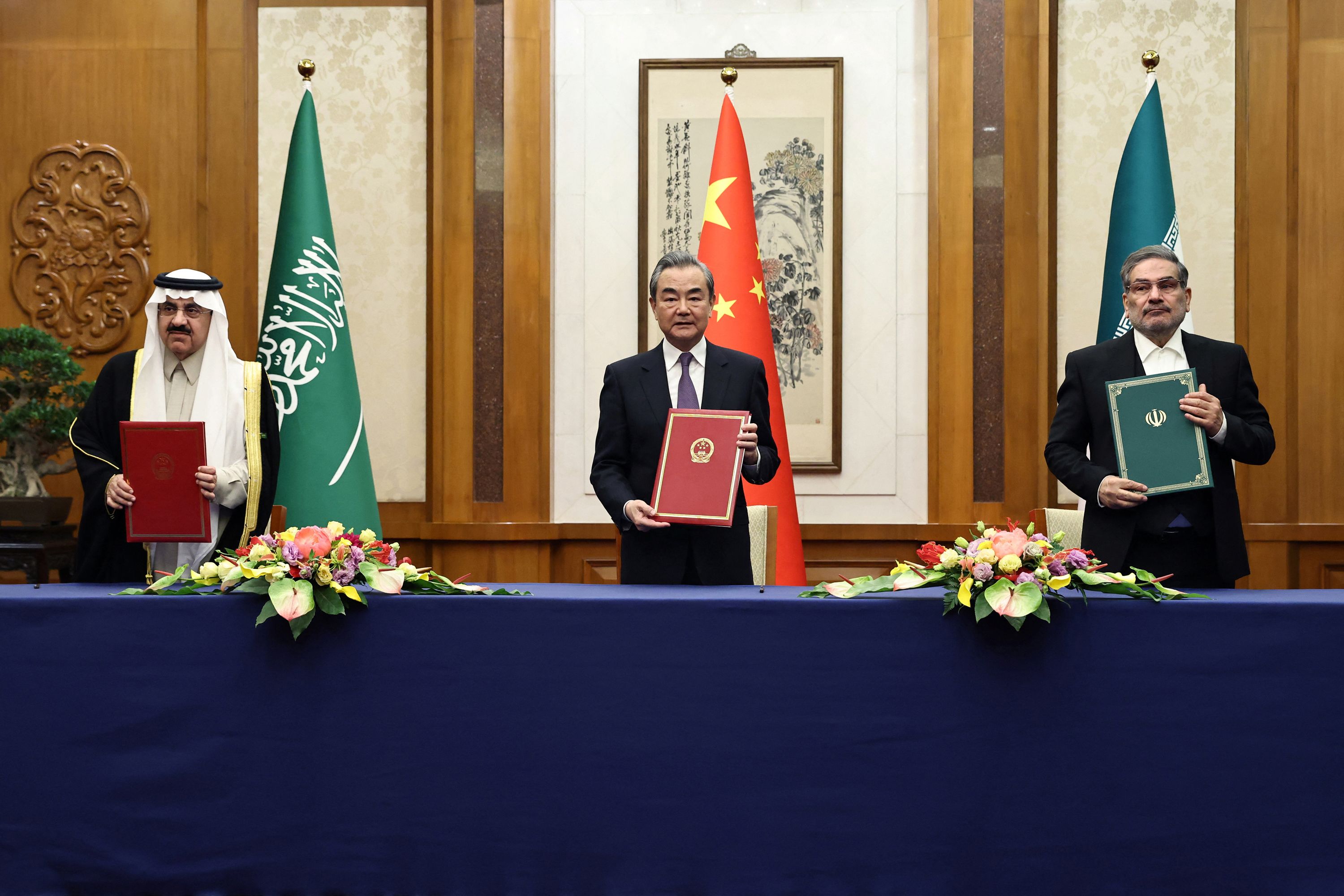
    Following Iranian President Ebrahim Raisi’s visit to China in February and his talks with his Chinese counterpart Xi Jinping, the finalization of the agreement between Saudi Arabia and Iran was cemented. After the February consensus, Shamkhani left Tehran for Beijing on March 6 in order to carry out intensive talks with Al-Aiban. The two counterparts held negotiations to restore political relationship as well as resolve security and regional issues, but there have not been released the details of the talks in official sources. The agreement was declared on March 10, when China, Saudi Arabia and Iran issued a joint statement and signed the deal.

    What was the other states’ reaction to Saudi-Iran deal?

    The authorities of both Saudi Arabia and Iran as well as the most states in the West Asia region and the world welcomed the agreement and described it as a prelude to resolution of other disputes and regional issues, including the Yemen war.

    Meanwhile, Coordinator for Strategic Communications at the US National Security Council John Kirby told correspondents that Saudi Arabia informed the United States of the talks with Iran, but Washington did not play any role in the negotiations. Kirby also adopted a hostile stance, when he said we should wait and see if Iran would respect the other side of the deal or not!

    Secretary General of Lebanon’s Hezbollah movement Hassan Nasrallah depicted the agreement as an important development in the region, which will promise new horizons in the region and Lebanon.

    Mohammad Abdul Salam, spokesman of Yemen’s Ansar Allah movement, who is in charge of negotiations of the National Salvation government, said that restoration of natural relations among regional states is necessary, noting that lack of security has its roots in foreign interventions in particular by the US and the Israeli regime. He said that Iranophobia project is in line with foreigners’ interests, who want to misuse internal rifts to create conflict and aggression in Yemen.

    China’s Foreign Ministry issued a statement, announcing that the Iran-Saudi Arabia agreement is a victory for peace.

    What are the benefits of the deal for China?

    China could gain more credit at international arena and showed that it is a superpower in rivalry with the US after hosting the negotiations between Saudi Arabia and Iran. They also underlined that the United States’ policies and supports for Arab countries are inefficient. As part of its foreign policy, China has not been involved in hard competition with ultra-regional powers in any dispute so far, and the issue has been shown in the Ukraine war and the dispute with Taiwan, but their involvement in the Saudi-Iran agreement indicates that they pursue a special engagement in the West Asia region and they want to adopt soft competition and semi-hard competition with the US.

    On the other hand, the resolution of conflict between Saudi Arabia and Iran would guarantee oil and other raw materials required by China.

    What are the potential and undisclosed aspects of the deal?

    Undoubtedly, the recent agreement between Riyadh and Tehran to restore relationship is a positive news for both countries and the West Asia region. It seems that Saudi Arabia has reached to the conclusion after eight years of war with Yemen that it cannot dominate a popular government and force by resorting to the most advanced and best Western and Eastern military equipment. The Saudis were of the opinion in the beginning of the war on Yemen that the Ansar Allah movement is a militia group, which would be weakened and forced to succumb following some classic operations and aerial bombardment, but the military and political support by Iran along with popular backing of people residing in western provinces of Yemen led to the consolidation of the National Salvation government and the preservation of strategic lands of the Arab country under the rule of Islamic resistance axis. Therefore, Saudi Arabia’s defeat in the war on Yemen is the main reason behind the Saudi’s intention to the negotiating table.

    Given the significant role by Iran in Yemen’s developments, it is expected that the peace negotiations in the war-torn country would reach more important results in the coming months. The deployment of foreign forces in different regions and bases inside Yemen, the activities of the separatist groups such as the Southern Transitional Council (STC) and terrorist groups like al-Qaeda and the ISIS, as well as the dependence of anti-Ansar Allah movement factions to the United Arab Emirates (UAE) and Saudi Arabia are expected to be the potential hurdles in the formation of peace in Yemen.

    Another issue, which can be mentioned as one of security aspects of the Saudi-Iran deal, is security threats and media activities of both sides against each other. Over the last years, Saudi-funded media apparatus established anti-Iran research centers such as Rasana and Iran International TV network in order to create propaganda campaign, which was along with fomenting unrest in Iran by the West. Seemingly, Saudi Arabia and Iran have reached agreements in this respect, but the details of the accords have not been announced yet.

    In a bigger picture at the current regional and international levels, Iran has been facing more harsh tensions and threats by the Western states and Israel on its nuclear dossier and its regional influence comparing to the circumstances in the past years. The expansion of the Zionist regime’s influence in security periphery of Iran, the exacerbation of economic sanctions imposed by Europe, numerous military drills by the US and Israel as well as their joint threats against Iran’s nuclear and defense facilities are all among the West’s new plots against the Islamic Republic. Of course, Saudi Arabia showed via signing the agreement that it intends to get rid of potential Iranian response to the Western states’ strikes and it tries not to turn into a possible battle ground for potential future confrontation between the West and Iran.

    In conclusion, the agreement between Saudi Arabia and Iran should be viewed as a mid-term ceasefire. The Saudis’ strategic measures and projects in the Central Asian states and in Azerbaijan Republic can violate Iran’s interests and security, and despite China’s assurances, there is not any guarantee for their sincerity in dealing with the Iranians.

    Read more:
    Analysis Of Recent Developments In Iran, World Regarding Hybrid Warfare
    A Failed Attack On The Facilities Of Iran’s Ministry of Defense in Isfahan; What Was The Nature Of The Blasts In Tehran And Other Iranian Cities?

  • Iran Air Defense Systems Appear From Underground Base In Major Drills! (Video)

    Iran Air Defense Systems Appear From Underground Base In Major Drills! (Video)

    The joint military drills were conducted by Iran’s Army and the Islamic Revolution Guards Corps (IRGC) in air defense regions in the western, northwester, eastern, southern, northern and central parts of the country.

    The exercises kicked off under the command of Khatam al-Anbia Air Defense Base in an area of more than one million kilometers on February 28.

    In the drills, drones, fighter jets and air defense units of the Islamic Republic of Iran Air Defense Force, as well as air defense and drone units of the Aerospace Force of the Islamic Revolution Guards Corps plus 2,000 observation posts from all Army, IRGC and the Law Enforcement Command of the Islamic Republic of Iran participated in monitoring the airspace of the country.

    During the major exercises, the Iranian armed forces unveiled an underground air defense base for the first time, when the domestically developed Sevom Khordad (3rd Khordad) medium range air defense missile system came out of an underground tunnel.

    The Iranian armed forces also applied other air defense systems such as Khatam, Talash, Majid, Bavar-373 and Mersad 16 in the Modafean Aseman-e Velayat 1401 drills.

    Read more: Bavar-373 long-Range Air Defense System

    The commanders of the military exercises arranged that more than 100 fighter jets and drones play the role of aggressive forces to conduct mock strikes on critical centers, including nuclear facilities, power plants, military and economic bases, through different directions and altitudes as well as by the use of electronic warfare often at nights in order evaluate the performances of aggressive forces as well as air defense units carefully.

    The drills are the fourth specialized joint air defense exercises codenamed the Modafe’an Aseman-e Velayat, which is carried out on the basis of the armed forces’ annual joint drills in a broaden area of about two third of Iran’s airspace.

    The military exercises were conducted in greater number and area this year, which can be seen as a response to several drills by the armies of the United States and the Israeli regime with the aim of getting ready to carry out airstrikes on Iran.

    Following the escalation of the hybrid warfare by the West against the Islamic Republic, the scale of military threats by the heads of the Zionist regime has been mounted and the regime’s army has been time and again speaks of preparations for bombing Iran’s nuclear and military facilities! In such circumstances, it seems that showing the Iranian armed forces’ preparedness to avert the potential aggressions is necessary.

    Read more: Iran’s Air Defense Drill Modafe’an-e Aseman-e Velayat 1400 + Images

    Exit of Sevom Khordad air defense system from the underground tunnel

    Read more: Iran Unveils New Underground Airbase “Eagle 44” + Video

  • What Is IRGC Unveiling Of Drones And Hypersonic Missiles Implying? + Video

    What Is IRGC Unveiling Of Drones And Hypersonic Missiles Implying? + Video

    The commander made the announcement in a televised program of Iran’s national TV network dubbed Saf-e Avval (First Line), informing the details of the state-of-the-art missile and drone weaponries manufactured by the Iranians, including Shahed-149 (Gaza) drone, Paveh cruise missile and hypersonic missile.

    Brigadier General Hajizadeh said that “the US officials benefit from making the region insecure, as it can be said given the conflicts in last four decades (Iraq-Iran war, the US’s invasion of Iraq, Saudis’ attack on Yemen, the rise of Takfiri terrorist groups and the strikes on Lebanon’s Hezbollah resistance movement) that our region is facing a security fault, because the root cause of Russia-Ukraine confrontation as well as China-Taiwan quarrel comes from the US. If we are not powerful, the enemy would bring the war into the Iranian territory; so, we should be watchful to maintain security of our country and nation, and if we ignore it, our country may face some challenges.”

    He noted that the IRGC Aerospace intends to make the US war machine and capabilities incapable, noting that “the Americans enjoy some components of superiority, but we tried to hit the components and turn them into impracticable. Today, the US’s regional bases are under Iran’s supervision and they are easy targets; so, the bases have turned into the Americans’ weak points, and we can hit the bases whenever it is necessary.”

    Touching on the IRGC Aerospace’s missile might, which is an indirect warning to the European countries, he noted that “we are now able to target the US aircraft carriers at a 2,000-kilometer distance. Of course, we kept the limit at the distance to respect the Europeans; so, we hope they respect their esteem.”

    On the features of the Iranian hypersonic missile, he said that “the hypersonic missile is capable of maneuvering in outer space and moving in different directions; that means it has an engine, which can start 300, 400 and 500 meters far from a target and kick off maneuvering. The speed of the missile reaches at Mach 12-13 and its main advantage is that the foe’s missile defense system cannot hunt and destroy the hypersonic missile; thus, I’m sure the enemies cannot manufacture a defense system to overcome the Iran-made hypersonic missiles even until tens of years.”

    Asked about the timing of unveiling the Iranian hypersonic missile, he replied “given the fact that the projectile travels to outer space, we try to find a way to be able to showcase it; if the Americans do not believe in it, it would be not important, because its capability can be seen on the day of incident.”

    Read more:
    IRGC Aerospace Force Commander: Iran Succeeded in Building Hypersonic Missiles!
    Military Knowledge: What is a Waverider?

    The commander also pointed to the upgrade of capabilities of the Iranian ballistic missiles, saying that Iran managed to decrease the weight of the long-range missiles to one-fourth and improved their efficiency; and in terms of precision, all Iran-made missiles are precision-strike projectiles and the time required for their preparation has been reduced to one-sixth.

    He further referred to the fact that one of the newest Iranian cruise missiles dubbed Paveh has become operational. The cruise missile with a range of 1,650 kilometers, which can travel 50 meters above earth surface.

    A video published by the IRGC Aerospace shows that the missile was test-fired by the use of solid rocket booster from a launcher; then, the main part was detached from the booster after reaching altitudes, and its wings become open and the main engine starts.

    The moment of firing Paveh long-range cruise missile with a range of 1650 km and moving at a flight height of 50 meters from the ground and finally hitting the target

    The appearance of Paveh cruise missile is very similar to Quds missile of Yemen’s Ansar Allah movement. It seems that the course of development of Paveh missile has been carried out in recent years using the experiences of Yemen war and Ansar Allah’s operations against Aramco’s oil facilities (officially the Saudi Arabian Oil Group). Paveh missile is an evolved example of Iranian cruise missiles Soumar, Hoveyzeh and Ya-Ali etc.

    Video of Yemen’s Ansar Allah Missile Force from the moment of firing Quds 1 cruise missile
    Yemeni Ansar Allah Missile Force’s video of Quds 2 cruise missile

    Notable advantages of Paveh cruise missile is that it can be carried and fired by marine and ground vessels as well as fighter jets. The significance of the issue would be highlighted, when Russian Sukhoi 35 fighter jets join the Iranian military equipment, because the Iranians would not need foreign weapons to arm their fighter jets.

    Read more: Military Knowledge: Sukhoi Su-35 Multirole Fighter Jet

    Brigadier General Hajizadeh went on to say that “the Shahed-149 or Gaza drone (named after the Gaza Strip in honor of the Palestinians’ struggle against Israel amid their crisis in 2021) is huge drone, which is capable of keeping on flying for a remarkable duration and it can carry nine bombs simultaneously.”

    Read more: Military Knowledge: Shahed–149 (Gaza) Reconnaissance Combat Drone

    The first video of the takeoff and flight of the Shahed-149 UAV (Gaza)

    “We have the Shahed-129 and Shahed-139 in our combat drone arsenal, which provide us with good military capabilities, he said, adding that we can utilize the drones for combat, telecommunication and surveillance over border and other areas. The Shahed 129 is equivalent with the US-made MQ-1 and it possesses appropriate abilities, the commander said, noting that the Shahed-136 and Shahed-131 are also unique drones at international level, which have many capabilities.”

    The brigadier general further pointed to Iran’s missile operation on the United States’ airbase in Ayn al Asad (an airbase located in Al Anbar Governorate of western Iraq) in reaction to the Trump administration’s assassination of Lieutenant General Qasem Soleimani at Baghdad Airport on January 3, 2020, saying that “we did not aim to kill the American soldiers in the strike on the Ayn al Asad airbase, but we wanted to break the US’s grandeur; we pursue to avenge former US president Donald Trump and former United States secretary of state Mike Pompeo, who ordered the assassination of General Soleimani.”

    Hajizadeh also hinted cooperation among the IRGC Aerospace Force, Iran Space Organization and the Ministry of Defense and Armed Forces Logistics, informing that they try to improve capabilities of satellite carriers to reach higher altitude and increase heavy weights, which will be announced in the future.

    The recent operations by the IRGC in the region as well as the resistance movements in Yemen and other countries proved the broaden capabilities of Iran in drone and missile sectors; so that the Western and Eastern politicians as well as military analysts acknowledge the achievements. The understanding of the military superiority of Iran will become more difficult for the Westerners following the massive usage of big drones and hypersonic missiles by the Iranian armed forces.

  • Will Russia’s Kamov Helicopter Arrive In Iran?

    Will Russia’s Kamov Helicopter Arrive In Iran?

    The publication of a footage of Kamov Ka-52 helicopter flying in the eastern Russian city of Vladivostok with a camouflage color proper for the West Asian or African states has reinforced the likelihood of selling this class of helicopter to Iran. Given the fact that the usage of that sort of camouflage color for the helicopters of the Russian Air Force seems not to be common and rational, it is probable that the helicopter has been prepared for selling to Iran or Algeria, who have collaborated and inked several military agreements with Russia in recent years.

    The Kamov Ka-52 helicopter is an advanced Russian-made invasive multi-purpose one capable of flying in different weather circumstances. The Ka-52 helicopter has showcased satisfactory performance during the combats in Syria and Ukraine, and it seems to be an appropriate option for equipping and advancing the helicopter fleet of the Islamic Republic of Iran Armed Forces.

    Read more: Military Knowledge: Ka-52 Attack Helicopter

    Kamov Ka-52 helicopter flying in the eastern Russian city of Vladivostok with a camouflage color proper for the West Asian or African countries

    In recent days, there were various reports of military collaboration between Russia and Iran in selling Iranian-made ballistic missiles and suicide drones in return for Su-35 fighter jets, S-400 air defense systems, and Kamov helicopters (Ka-52), which have been confirmed by certain authorities in Iran. Shahriar Heydari, member of the National Security and Foreign Policy Commission of the Iranian Parliament, confirmed that Iran will buy Russian fighter jets, saying that “the Sukhoi 35 fighter jets that Iran ordered from Russia will enter the Islamic country early next Iranian calendar year (1402). We ordered defense systems, missiles and helicopters to Russia, and most of the arms will arrive in Iran as soon as possible.”

    Read more: Military Knowledge: Sukhoi Su-35 Multirole Fighter Jet

    The Russia-Iran negotiations on the purchase of offensive, multi-purpose and light helicopters started among Iran Aviation Industries Organization, the JSC Kamov Company and other Russian military organizations in 2014, and the process sped up in the past months. The collaboration between Russia and Iran amplified following the continuation of the conflict in Ukraine as well as the Western sanctions on both states, leading to the enhancement of the might of the two countries in different military and economic arenas.

    Read more:
    Russian Su-35 Swap For Iranian Ballistic Missiles To Affect Regional Developments
    Washington Post: Russia has bought Fateh-110 and Zolfaghar missiles from Iran!

  • IRGC Attacks Israeli Regime Ship In The Arabian Sea

    IRGC Attacks Israeli Regime Ship In The Arabian Sea

    According to Israeli sources, the Islamic Revolutionary Guard Corps attacked the Liberian-flagged of Zionist-owned oil tanker Campo Square in the Arabian Sea with a Shahed-136 suicide drone last Friday, 17 February. This ship belonged to “Zodiac” shipping company under the ownership of “Eyal Ofer”. There were no casualties in this attack.

    Archival image of Campo Square tanker

    Israeli media have claimed that this attack was carried out in response to the Israeli attack on a workshop of the Ministry of Defense of Iran in Isfahan.

    So far, no further details have been released about this incident, and Iranian authorities have not commented on this issue so far.

    Read more: Attack on an Israeli ship in the Arabian Sea

  • China In Queue To Receive Iran-made Drones!

    China In Queue To Receive Iran-made Drones!

    An adviser to Iran’s minister of intelligence and the head of political studies think tank of the ministry said at Imam Khomeini International University in the city of Qazvin on February 8 that “the defensive authority of Iran and its influence in the West Asia region is not tolerable for the Westerners, the United States and the Israeli regime.”

    “From the day we looked East and Iran’s policy changed the balance in favor of the Eastern powers and against the West, the Western states could not tolerate the shift,” he said, naming the Ukraine war as an example to explain the shift.

    He went on to say that “today Iran’s capability is at such a level that certain media outlets claim China is in queue to receive 15,000 drones manufactured by Iran.”

    According to the Middle East Monitor, Tehran has deepened its military cooperation with Moscow since the onset of war between Russia and Ukraine; so that the American newspaper The Wall Street Journal quoted unknown sources that Tehran and Moscow are planning to construct a center to manufacture Iranian drones inside the Russian soil with the capacity of producing 6,000 drones.

    Read more: Military Knowledge: Shahed-136 Loitering Munition

    It is noteworthy that following the circulation of the allegations on the sale of the Iran-made drones to Russia and the Russian military forces’ use of the UAVs in the war against Ukraine, many Western countries imposed some sanctions on Iranian companies and individuals in a bid to prevent Iran’s arms support to Russia, because they are of the opinion that they would be able to affect the manufacturing of Iran-made drones in Russia.

    Nonetheless and in contradiction to the Western states’ pressures, the flights of transit airplanes from Iran to Russia have significantly increased in the recent months in comparison to the departures in the previous months, and as the statistics indicate the number of the flights has reached to more than 80 ones recently.

    Read more: Washington Post: Russia has bought Fateh-110 and Zolfaghar missiles from Iran!

  • More Than 20 Million Iranians Participate In February 11 March

    More Than 20 Million Iranians Participate In February 11 March

    The people residing in different areas of the Islamic Republic of Iran renewed their allegiance to the ideals of late Imam Khomeini, martyrs as well as Supreme Leader of the Islamic Revolution Ayatollah Seyyed Ali Khamenei by taking part in the massive march ceremony on February 11 (Bahman 22nd on the Iranian calendar year).

    In accordance with the initial estimates released by the Iranian entities, the number of the Iranians, who attended the February 11 march, is nearly 21 million people, including rally-goers in small towns and villages nationwide. This year’s massive turnout shows the fact that the number of people who participated in the nationwide rallies, increased by around 30% in comparison to the statistics in 2019. This comparison between 2023 and 2019 has its roots in the fact that the annual rallies were affected by the outbreak of the COVID-19 pandemic in the years in between these two years.

    Organizers of the rallies in capital city of Tehran displayed military achievements such as Sejjil and Emad ballistic missiles, Shahed-136 drone, anti-submarine cruise missile, Toofan tactical armored personnel carrier, Ra’d tactical armored personnel carrier and vehicle, as well as Mohajer-6 drone, which stationed on the way of this year’s march.

    Simultaneously with the beginning of the ceremony, journalists and international media such as Sputnik News Agency, Al-Mayadeen Network, AFP, I24 News, Al-Masirah Network, Shafaq News, Al-Nashrah, Associated Press, Reuters News Agency and SANA News Agency covered the enthusiastic presence of the Iranian people in this ceremony.

    On February 1, 1979, Imam Khomeini, the founder of the Islamic Revolution returned to Tehran after fifteen years of exile. Ten days after Imam Khomeini’s return to Iran, on February 11, 1979, the Islamic Revolution of Iran born fruit; hence, from February 1 to February 11, the 10-day Dawn has been named, and every year, special celebrations and ceremonies for the victory of the Islamic Revolution are held during these days.

    This year and these million rallies, which are held after the recent unrest in Iran, once again showed that the arrogance schemes against Iran have failed and despite the Main Stream Media claims, the majority of Iranian people support their government and stand firm for their religious beliefs.

  • Iran Underground Airbase’s Site Undisclosed! Let’s Get Acquainted With “Eagle 44 Airbase”

    Iran Underground Airbase’s Site Undisclosed! Let’s Get Acquainted With “Eagle 44 Airbase”

    The Islamic Republic of Iran Air Force unveiled the Eagle 44 underground airbase on February 7 in the presence of Chief of Staff of the Iranian Armed Forces Major General Mohammad Hossein Bagheri and Commander-in-Chief of Iran’s Army Seyyed Abdolrahim Mousavi.

    A few days following the inaugural ceremony, certain foreign analysts and media reporters used the photos and video footages released during the unveiling ceremony of the Eagle 44 Airbase of the Islamic Republic of Iran Air Force in order to examine the features as well as strengths of the underground airbase.

    Read more: Iran Unveils New Underground Airbase “Eagle 44” + Video

    They pointed out to the presence of high-ranking Iranian commanders in the unveiling ceremony of the Eagle 44 airbase, asserting that the underground airbase is a tactical base, which would be capable of accommodating all types of fighter jets, various bombers and different sorts of drones. The outsized underground airbase will also be capable of housing the Sukhoi Su-35. Furthermore, the Eagle 44 airbase, which is situated tens of meters underneath the mountains, will be sheltered, when it comes to missile attacks and Bunker buster and the underground airbase will be a safe haven to safeguard aircraft.

    The attention-grabbing point in the so-called detection of the location of the airbase is that the foreign media journalists have utilized Open-Source Intelligence (OSINT) to identify and publish the alleged site of the underground airbase. In accordance with the published satellite photos and the allegations leveled by some foreign journalists, the underground airbase is situated in the northwest of Hormozgan Province.

    In line with the published data, the Eagle 44 underground airbase is located nearly 150 km far from the southern maritime boundaries of the Islamic Republic of Iran, and it is positioned in a very suitable area in terms of geographical aspects. It seems to be completely obvious that the military bases, which are situated in vicinity of the border areas, would always be more vulnerable when it comes to insecurity and conflict. Hence, the Eagle 44 airbase enjoys a much higher security standard in comparison to other airbases such as the Chabahar, Bandar Abbas, Omidiyeh and Bushehr airbases.

    The location of Oghab 44 underground airbase at a depth of approximately 150 kilometers from the southern blue borders

    Over and above the mentioned geographical advantage of the underground airbase, the placement of different types of equipment, logistics, and fighter jets and so forth at the depth of tens of meters (perhaps nearly 200 meters) will provide the airbase with an excellent fortification. Moreover, the utilization of long-range, medium-range and short-range air defense systems, such as Sevom (3rd) Khordad, Zubin, Majid and the like will complete the safety parameters needed for the strategic underground airbase.

    It is worth mentioning that the Eagle 44 airbase is not the only one underground airbase of the Iranian armed forces, but there have been built or are being constructed a number of such underground airbases in other areas of the Islamic country, which would be publicized when it is needed to be announced.

    In conclusion, it seems that the Iranian military organizations have released photos and video footages of the Eagle 44 underground airbase, while they were well aware that the publicizing of the airbase would pave the way for revealing the exact location of the military site sooner or later. Therefore, the announcement seems to be a deliberate measure, which contains important messages for the enemies of the Islamic Republic of Iran.

  • Iran Unveils New Underground Airbase “Eagle 44” + Video

    Iran Unveils New Underground Airbase “Eagle 44” + Video

    The vast underground airbase possesses facilities such as alert area, command post, fighter jet maintenance hangars, aircraft repairment and maintenance centers, navigation and airport equipment, fuel tanks, and so on. Moreover, the airbase has the capability to receive and make operational all types of fighter jets, bombers as well as all sorts of drones belonging to the Islamic Republic of Iran Air Force. In accordance to a report by the Army’s public relations department, the underground airbase will also be capable of receiving the state-of-the-art Sukhoi 35 fighters.

    Read more:
    Russian Su-35 Swap For Iranian Ballistic Missiles To Affect Regional Developments
    Military Knowledge: Sukhoi Su-35 Multirole Fighter Jet

    The fighter jets, which are stationed at the airbase, are equipped with electronic combat systems, bombs and long-range missiles named Yasin, Ghaem and Asef, enabling long-range operations and intensifying the range of striking far targets.

    The Eagle 44 Airbase is one of numerous underground tactical airbases of the Islamic Republic of Iran Air Force, which have been constructed in various areas of the Islamic country over the last years on the basis of the passive defense principles.

    As a result of the construction of such airbases under the mountains, the military equipment stationed in the underground airbases are very unlikely to be vulnerable in any surprise strikes by the foes, and it would be unpredictable and hard for the enemies to distinguish the place and timing of arrangements for any surprise aerial operation by the Iranian forces.

    Eagle 44 underground air base

    Deputy Commander-in-Chief of the Iranian Army Brigadier General Mohammad Hossein Dadras, Advisor to the Commander-in-Chief of the Iranian Armed Forces Brigadier General Amir Hatami and Commander-in-Chief of the Iranian Air Force Brigadier General Hamid Vahedi took part in the inaugural ceremony as well.

    Constructing military underground cities, including the missile cities of the Islamic Revolution Guards Corps (IRGC), as well as the Airbase 313 and the Eagle 44 Airbase of the Islamic Republic of Iran Air Force, is one of the major plans to develop the military might and protect the military equipment of the country’s armed forces over the past decades.

    Read more:
    IRGC missile city on the shores of the Persian Gulf
    Iranian Army Unveils Underground “Strategic Drone Base 313” + Video

    The construction of these airbases is of great significance in numerous ways, which are being mentioned briefly:

    1- Abiding by the passive defense principles

    2- The necessity of protecting military equipment in particular fighters and bombers

    3- Thwarting and lowering the harms inflicted by potential strikes by the foes on the Iranian airbases, because defense systems and equipment will not be capable of completely repelling the enemies’ air strikes even though the defense systems are very advanced; so, that was proven in recent conflicts particularly in the Ukraine war.

    4- Lowering the expenses of procuring equipment and training forces to install defense systems in airbases as well as relocating the existing defense equipment in other sensitive positions.

    5- Concealing the data of air force equipment and facilitates, including the number and type of fighter jets, UAVs, defense systems and so on from being detected by the foes’ satellites.

    Publicizing the construction of the Islamic Republic of Iran Air Force’s underground airbase at this point of time, when particular developments are happening in the region, is certainly conveying a message to the United States, Israel and their allies in the Azerbaijan Republic and the certain littoral Arab states of the Persian Gulf.

    The ultra-regional enemies and the regional rivals of the Islamic Republic of Iran are attempting to attain the most advanced aerial and missile weaponries at expensive costs, so that in case of any potential confrontation with Iran, they can strike the military facilities belonging to the IRGC and the Army. Thus, the best method to defuse the hostile tactic of the foes as well as shield precious arms in particular the Army’s fighter jets from Tomcat and Phantom to Sukhoi 35 and MiG 29, is to construct and develop as numerous underground airbases as possible in different areas of Iran.

  • Analysis Of Recent Developments In Iran, World Regarding Hybrid Warfare

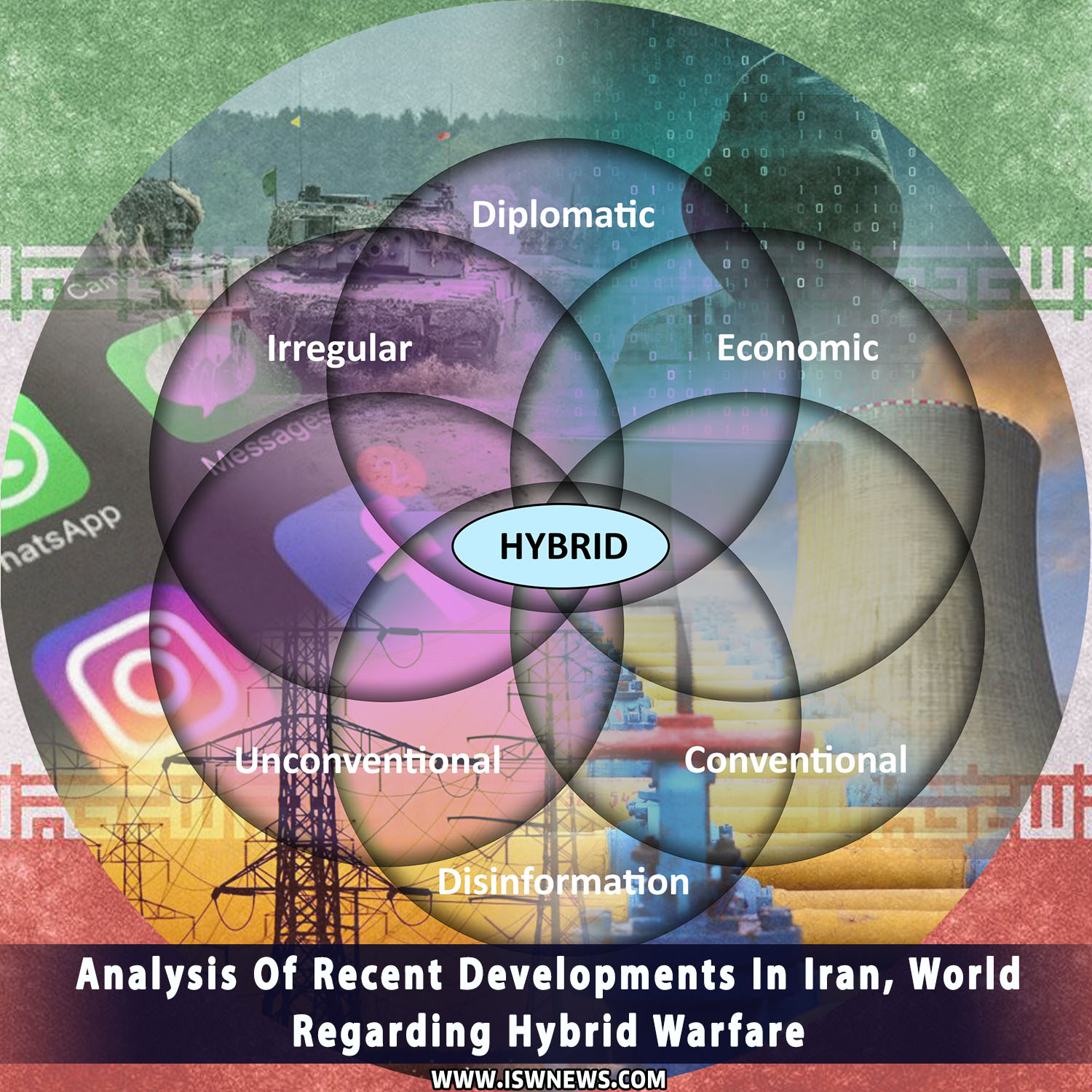
    Analysis Of Recent Developments In Iran, World Regarding Hybrid Warfare

    In addition to the effect of the European Union’s sanctions on the Iranian economy, the recent unknown blasts and strikes, and different incidents that have happened in Iran, we are witnessing the circulation of manipulated and fake news stories, which seems to be a complete example of hybrid warfare. However, who are designing and implementing the attacks?

    In a bid to answer the question; first, let’s review and categorize the recent news reports:

    1- The widespread drone strikes and blasts in Isfahan, Tehran, Tabriz, Rasht, Hamadan and Karaj:

    The nature of the news story collection had its roots in a combination of numerous fake news and a correct story but based on wrong information. The blast in Isfahan was conducted by the unsuccessful strike of three quadcopters on workshops belonging to the Ministry of Defence and Armed Forces Logistics, and the flights carried out by rescue aircraft in Tehran were portrayed as the flights by army fighter jets in a mission to intercept the unmanned combat aerial vehicles (UCAVs). Regarding to reports of strikes on Tabriz, Hamadan, Mahabad, Baneh and so on, whether there was not blast or strike, or the events in the cities were wrongly attributed to airstrikes. For instance, the burning incident of reeds around Yusefkand Lagoon in outskirts of Mahabad city was described as an Israeli drone attack!

    2- Qatari foreign minister’s trip to Iran:

    Minister of Foreign Affairs of the Islamic Republic of Iran Hossein Amirabdollahian met with his Qatari counterpart Sheikh Mohammed bin Abdulrahman Al-Thani on January 29, and said in a joint press conference that today we received messages from various signatories to the Joint Comprehensive Plan of Action (JCPOA) via the Qatari foreign minister.

    The presentation of a proposal for resuming the nuclear negotiations amid the peak of an ongoing conflict conveys the opposite meaning contrary to de-escalating and resolving of disputes in a peaceful manner. The US’s policy in this pattern of information warfare is a kind of double standard attitude similar to “two-edged scissors.” The Americans push ahead their attacks like the sharp edge of the scissors and at the same time, they offer to hold talks like the slow edge of the scissors.

    3- Iran-Russia military collaborations:

    The military collaborations and exchange of weaponries between Russia and Iran, experienced a significant acceleration particularly in the past one year following the onset of the Ukraine conflict as well as the West-imposed sanctions on Russia. It is worth mentioning that the Iran-made Shahed 136 drones have succeeded in inflicting heavy blows on the United States and NATO military projects and equipment. The shipment of the Iranian UAVs and ballistic missiles to Russia as well as the reciprocal transfer of the Russian Sukhoi 35 fighter jets and other Russian-made weaponries to Iran will bring about harsh repercussions for the West and Israel. Hence, they will make all-out efforts to prevent, sabotage and delay the exchange of arms between Russia and Iran.

    4- Ukraine’s warning to Iran:

    The Ukrainian authorities are of the opinion that the recent blast in Isfahan has anything to do with the conflict in the European country. The Ukrainians claim that the Islamic Republic is one of Russia’s military partners, who provides the Russians with lethal weaponries; thus, Iran will not be secure from mysterious strikes. So, Mykhailo Podoliak, an adviser to the president of Ukraine Volodymyr Zelenskyy, wrote on his Twitter account reacting to the blast in Isfahan that “the logic of confrontation is cruel and fatal. The logic holds the culprits and collaborators obstinately accountable. The night time blasts in Iran were conducted against drone and missile manufacturing facilities and oil refineries. Ukraine cautioned you.”

    The warning from Ukraine is not taken into account as a threat to the Islamic Republic of Iran; however, it indicates the repercussions of the Europeans’ anti-Iran stances and deeds. Regrettably, the Iranian authorities have not shown any appropriate reaction to the sanctions by the European Union. In the face of such issues, the officials of the Ministry of Foreign Affairs of the Islamic Republic referred to some phone calls with the European officials, calling the anti-Iran moves as superficial or trying to justify the imposition of sanctions with other matters such as the pressures made by of the US on Europe and so on. However, what is being witnessed actually is the intensification of economic pressure on Iran in particular concerning the issues such as selling crude oil and procuring currency for domestic needs.

    5- Palestinian attacks on settlements in the occupied territories of Palestine and recent incident at the Republic of Azerbaijan’s embassy in Tehran:

    The fresh operations made by the Palestinians in Jerusalem al-Quds have inflicted a heavy blow on the social status of the Zionist regime as well as the credibility of the government of Prime Minister Benjamin Netanyahu. The Israelis opine that the Palestinian resistance groups such as Hamas, Islamic Jihad, and others are fully supported by the Islamic Republic and these groups are operators of Iranians’ strikes on the occupied territories of Palestine. Hence, the Israelis mobilize their agents inside Iran’s soil to conduct proxy attacks. Thanks to Iran’s strong alliances with powerful resistance movements in Lebanon, Palestine, Yemen and other states in the West Asia region, the Islamic Republic enjoys the upper hand in terms of military struggle; so, Tehran is in the position to win any tough confrontation if it reaches the conclusion that it should engage in any military conflict, but the Iranians avoid such struggles because of their economic boundaries. In contradiction to Iran’s military superiority, Israel possesses upper hand in the political and economic fields; moreover, it has recently enhanced its influence in the Caucasus and Central Asian states. The Israeli diplomats as a result of their active and strong diplomacy succeeded in improving the relationship and influence in the Caucasus and Central Asian countries, which is considered as a very grave threat to Iran.

    Meanwhile, Iran increased its non-oil exports via the Caucasus region and Central Asian countries in recent years in a bid to compensate the deficiencies of its economy and decrease the effect of West-imposed sanctions. However, the Zionist regime’s influence in that regions can have the opposite effect and limit Iran’s paths to dodge the sanctions. Furthermore, the incident, which occurred in the Republic of Azerbaijan’s embassy in Tehran can negatively affect the International North–South Transport Corridor (INSTC) and the circumstances may be deteriorated by the hasty reaction by Azerbaijani President Ilham Aliyev’s government and it may linger to end up in severing ties and even initiating a conflict with Iran.

    All in all, now Iran is under pressure and in a hybrid warfare (political, economic, military, etc.). Any irrelevant news and event, such as a fire in a lagoon or an earthquake, can be placed under Western propaganda and used by Westerners to create chaos and achieve sinister goals against Iran. Such efforts will continue in the future, because this is an effective tactic of Westerners in hybrid warfare to deal with independent nations!

    Read more: A Failed Attack On The Facilities Of Iran’s Ministry of Defense in Isfahan; What Was The Nature Of The Blasts In Tehran And Other Iranian Cities?

  • A Failed Attack On The Facilities Of Iran’s Ministry of Defense in Isfahan; What Was The Nature Of The Blasts In Tehran And Other Iranian Cities?

    A Failed Attack On The Facilities Of Iran’s Ministry of Defense in Isfahan; What Was The Nature Of The Blasts In Tehran And Other Iranian Cities?

    The media reported at night of January 28 that several blasts were heard in the cities of Tehran, Isfahan, Tabriz, Karaj and Hamedan. One of the blasts was occurred as a result of an attack by three micro-drones (quadcopters) on the facilities of the Ministry of Defense in the outskirts of the city of Isfahan and the Iranian air defense systems succeeded in destroying at least one of the quadcopters. Also, one explosion was confirmed near or on the rooftop of a workshop. It seems the workshop was saved by special anti-drone structures with which the Iranian military protects their facilities.

    Reacting to the blast in Isfahan, the Ministry of Defence and Armed Forces Logistics wrote in the statement:

    “The failed attack happened at night of January 28, 2023 at around 23:30 local time, but the strike by the micro-drones were successfully repelled due to the forces’ vigilance and defensive preparations. The failed strike caused no casualties and the roof of the workshop damaged slightly, that by God’s grace could not cause any disruption in the equipment and tasks of the facility. The ministry assures the noble people of Iran that the performances of the centers to improve might, authority and security of the Islamic country will continue speedily and seriously, and that the blind acts will not get in the way of the country’s progress.”

    The location of the facilities of the Ministry of Defense of Iran in the suburbs of Isfahan
    The moment of the explosion of one of the micro-drones over the defense facilities of Isfahan city

    According to the additional information that has been published regarding the attack on the Ministry of Defense facilities in Isfahan, it is said that after hearing the sound of the quadcopters, the security agents of the complex took action against these birds with weapons and electronic warfare systems, and managed to shoot down one of them. One of these quadcopters loses its GPS link due to jamming during the confrontation, and this causes it to fall and collide with the rooftop of a workshop. Also, another one of these quadcopters, which was less damaged during the confrontation operation, was given to the security forces stationed in the complex and is being investigated.

    Concurrent with the explosions in Isfahan, video footages of the flight of several transport planes of the Iranian Army in Tehran’s sky have been circulated, that some of them are presumably related to aircraft to be dispatched to northwest Iran to provide relief to the the earthquake victims in Khoy city.

    It should be noted that last night at 9:44 pm local time, an earthquake with a magnitude of 5.9 struck the city of Khoy, in northwest Iran, killing at least three people.

    In some videos that are claimed to be from Tehran, explosions can be heard and fires can also be seen. According to the available information, none of these explosions and fires are related to Tehran, and basically the location and authenticity of this video is unclear and incorrect.

    The video and images that have been published about the fire are related to the fire in a car oil refining factory in the Shahid Salimi industrial area in Tabriz and it has been falsely attributed to Tehran and Isfahan.

    The video attributed to the sound of the explosion in the sky of Tehran
    The video attributed to the fire in Tehran

    According to ISWNEWS.COM, there is also some other reports on explosions in the Iranian cities of Rasht, Hamadan and Karaj as well as strikes in the military and industrial regions of the cities that are completely unfounded. The fact is, most of these fake news were published by the various pro-Israeli and pro-western twitter and telegram channels to promote chaos and fear among the Iranian nation. Therefore, the only correct and verifiable case is the attack on the facilities of the Ministry of Defense in Isfahan.

    Finally, it should be said, based on the history of the intelligence-security warfare between Israel and Iran, the attack on the Ministry of Defense facilities in Isfahan is most likely carried out by Israel, and other fires can be sabotages by the agents of the Israeli regime inside Iran. Its worth mentioning that the Israeli media outlets alleged that the recent attacks by Palestinian groups in al-Quds and other regions of the occupied territories of Palestine were aided and abetted by Iran.

    The drone attack on Isfahan military complex could lead to a military escalation in the Middle East. Tehran will likely retaliate once the side responsible for the attack is identified.

    Read more:
    8 Israelis Killed In Palestinian Operation In Occupied Al-Quds
    Second Anti-Israel Operation In Occupied Jerusalem In The Last 24 Hours