Tag: Iran

  • Israeli-owned oil tanker hit by suicide drone off coast of Oman

    Israeli-owned oil tanker hit by suicide drone off coast of Oman

    According to the information published by the western media, the name of this oil tanker is PACIFIC ZIRCON with the flag of Liberia. This oil tanker was traveling from Sahar port on the coast of Oman to Buenos Aires in Argentina when it was attacked by an unknown suicide drone. According to Israeli regime media reports, this ship belongs to an Israeli billionaire named “Idan Ofer”.

    The Pacific Zircon tanker is operated by Singapore-based Eastern Pacific Shipping. The company stated that there had been “minor damage to the vessel’s hull but there was no spillage of cargo.”

    Israeli media, citing officials of this regime claim that the Pacific Zircon oil tanker was attacked by Iran’s Shahed suicide drone (131 or 136). In addition, a US official said in an interview with Al Jazeera: “Iran attacked an oil tanker associated with Israel in the Gulf of Oman using a suicide drone at 22:00 local time last night (November 15). The ship was damaged above the water level and was able to move.”

    It should be noted that in the summer of last year, two Israeli ships named “MERCER STREET” and “CSAV TYNDALL” were targeted by unknown drone and suicide drone boat off the coast of Oman. Considering the tensions created by the US-Israeli coalition in the West Asian region, it is possible that these attacks were carried out by the Iranian armed forces.

    Read more:
    Attack on an Israeli tanker in the Oman Sea
    Attack on an Israeli ship off the coast of the Oman Sea

  • IRGC Aerospace Force Commander: Iran Succeeded in Building Hypersonic Missiles!

    IRGC Aerospace Force Commander: Iran Succeeded in Building Hypersonic Missiles!

    Brigadier General Amir Ali Hajizadeh, commander of the IRGC Aerospace Force, said on the sidelines of the 11th anniversary of the martyrdom of Hassan Tehrani Moghaddam: “By God’s grace, we managed to obtain an advanced hypersonic ballistic missile, which is capable of operating in the space that there are the most important and advanced missile defense systems, pass through them and target the same missile defense systems which can be among the most important elements of the enemy’s defense.
    This system has a very high speed and has the ability to maneuver in and out of the atmosphere. Both the defense systems that defend inside the atmosphere and the extremely expensive systems that deal with missiles outside the atmosphere, this new missile of the Islamic Republic of Iran will pass all of them, and I don’t think that technology will be found in the next few decades that can deal with it. This missile targets the enemy’s anti-missile systems and is a big generational leap in Iran’s missile field.”

    A hypersonic ballistic missile is a missile that travels at a speed 5 to 25 times higher than the speed of sound. The United States, Russia, China, North Korea and India have so far announced that they have built or purchased this type of missile. In addition, the United States has claimed to build a missile defense system to deal with hypersonic missiles, but no evidence or images have been published about this claim.

    The hypersonic missile is one of the latest missile power technologies, which makes Iran’s hand more open to deal with the US or Israeli defense systems. In recent days, Iran has issued three important military messages to Western countries, which are of great importance: 1- The launch of Qaim-100 satellite carrier, which is a prerequisite for the launch of a long-range or intercontinental ballistic missile. 2- The unveiling of the Sayyad-4 air defense missile, which is capable of dealing with air targets at a range of more than 300 kilometers. 3- Building hypersonic or supersonic missiles.

  • Iran missile and drone attacks on terrorist groups in Iraq’s Kurdistan + Video

    Iran missile and drone attacks on terrorist groups in Iraq’s Kurdistan + Video

    According to local sources, at least two militia members were killed and 10 others were injured since the start of attacks by Iranian armed forces on the positions of terrorist groups in the Kurdistan region.

    In this operation, the IRGC attacks mostly focused on Sidakan heights, south of Sulaymaniyah and the outskirts of Koysinjaq. Currently, the attacks have stopped and new areas will be announced and updated in case of the new round of attacks.

    Naser Kanani, the spokesman of Iran’s Ministry of Foreign Affairs, confirmed this attack this morning during a meeting with reporters without providing further details and said that “Iran will not remain silent regarding the threat to territorial security, especially border threats, and separatist groups and will defend its security.”

    Read more: Iran’s warning to Iraq: Remove the terrorist groups from the Kurdistan Region!

    It is worth mentioning that since the end of September, Iran’s armed forces have launched a new round of operations and missile and drone attacks against the terrorist groups of the Democratic Party of Iranian Kurdistan (KDPI), Kurdistan Free Life Party (PJAK), the Komala Party of Iranian Kurdistan (Komala) and the Kurdistan Freedom Party (PAK). Iran’s armed forces have always warned the Iraqi government and the Iraqi Kurdistan government about the activities and destructive behavior of terrorist groups based in the Kurdistan region against Iran’s national security and wants the bases and military positions of these groups to be dismantled. Therefore, it seems that due to the negligence of the Iraqi side, the Islamic Republic of Iran, in accordance with the right to legitimate defense of its national security, is taking the necessary measures to destroy the positions and bases of terrorists in these areas near Iran’s border.

    The moment the IRGC suicide drone hit one of the positions of the terrorist groups

    A video of the moment one of the IRGC’s suicide drones hit the positions of terrorist groups in the Kurdistan region of Iraq.

    Click to view full size

  • Qaem-100 SLV; Iran’s Official Acquisition Of Intercontinental Ballistic Missiles?!

    Qaem-100 SLV; Iran’s Official Acquisition Of Intercontinental Ballistic Missiles?!

    Intercontinental ballistic missiles (ICBM) are a type of ballistic missiles that can travel a distance of more than 5500 km. These missiles have the ability to reach a flight height of more than 300 km.

    In the past years, Iran has also built many rockets in different classes and with different fuels to develop its space technology infrastructure and has been able to reach a flight height of 500 km.

    In the latest example of the Iranian satellite launch vehicle (SLV), this missile has changed significantly compared to its previous example. The Qaem 100 satellite carrier with the capacity of carrying 80 kg of cargo has had many changes compared to the previous Qaem SLV.

    In the released footage of the launch of the Qaem-100 satellite, shortly after the launch, the rocket quickly changes direction; Therefore, a solid fuel engine with a moving nozzle has been used. Iran has a type of this engine called the ‘Raafe’ (lifter) engine.

    The launch moment of Qaem-100 SLV
    The launch moment of Qaem-100 SLV

    Read more: ‘Raafe’ rocket engine, the most advanced Iranian first stage solid-fueled engine + Video

    As it is clear in the video, due to the composite body and the high power of the Raafe engine, the Qaem-100 satellite carrier has great acceleration. The lightness of the engine, the moving nozzle for the engine and possibly the use of a new combined solid fuel can be mentioned as the new technologies used in the Qaem-100 satellite carrier.
    As a result, due to the use of new fuel with high energy density, extreme thrust, and the use of an all-composite engine, which has reduced the overall weight of the missile, the acceleration has increased greatly, and Iran has practically reached a range of over 5,500 kilometers.

    It is worth mentioning that the launch of the missile that was carried out in the form of the Qaem 100 satellite carrier test is very similar to the US MGM-134 Midgetman missile with a range of 11,000 km.

    In this way, respecting to the ability of the Islamic Revolutionary Guard Corps, if Iran intends to produce intercontinental ballistic missiles, it will have all the necessary technologies. Modern technologies at the disposal of the Islamic Revolutionary Guard Corps allow the construction of missiles with a range of 5,500 to 12,500 kilometers in the form of two-stage and three-stage solid fuel, and it will be possible to attack the desired targets in Europe and even in the American continent.

    This huge achievement has made Iran one of the few countries that have this technology. The Hebrew-Arab and Western axis have also felt threatened by understanding this fact and have become extremely afraid of what Iran has achieved in the field of “deterrence power” through intercontinental ballistic missiles.

    Read more: Iran successfully test launches Zuljanah satellite carrier + Video

  • Million March of Iranian People Against Global Arrogance + Video

    Million March of Iranian People Against Global Arrogance + Video

    On November 4, Millions of people from different sections of the Iranian people, especially students and young people, celebrated the anniversary of the capture of the US embassy i.e. “den of espionage” in Tehran in 1979, by gatherings and demonstrations in all cities.

    The national demonstrations were held in more than 900 cities from 9:30 to 12 a.m. local time, with the large attendance of students and other people. On this day, the people of Iran once again demonstrated their vigilance, unity and empathy by participating in the march against the long-standing plots of global arrogance and especially the recent disturbances in the country.

    In order to honor the memory of martyred students in 4 November 1978, this day has been named “Pupil Day” in the history of the Islamic Revolution. Also, one year after the martyrdom of the students at the beginning of the revolution and during the rule of the interim government, the people, especially the students of the universities of Tehran, captured the American embassy on the same day in 1979 in protest of the destructive efforts of the United States in the path of the revolution. Imam Khomeini (RA) praised this popular movement and called the capture of the spy nest the second revolution and bigger than the first revolution.

    According to estimates, more than 10 million Iranians participated in the 13 Aban (4 November) march across the country. More pictures of the magnificent march of Iranian people on this day:

  • Terrorist attack on a holy shrine in Shiraz kill 13 + Video

    Terrorist attack on a holy shrine in Shiraz kill 13 + Video

    According to the initial statements of the authorities of Fars province, three gunmen entered the shrine area at 17:42 on Wednesday and shot at the shrine attendants and pilgrims.

    A few hours later, the ISIS terrorist group released a statement and contrary to the statements of the authorities of Fars province, announced that this attack was carried out by an armed person who had a history of participating in the terrorist attack on the parade of the Iranian armed forces on September 22, 2018 in Ahvaz.

    According to the available information, the perpetrator of this attack was a foreign national residing in Iran and after being arrested by the security forces, he was taken to a hospital in Shiraz for treatment. But despite the efforts of the medical team to keep him alive, he died due to the severity of his injuries.

    The spokesperson of Iran’s emergency department stated that 13 people have been martyred in this terrorist attack. It was also reported that the condition of two of the wounded was critical, and with the martyrdom of these two people on the morning of October 27, the number of martyrs increased to 15.

    Following the terrorist attack, the presidents and officials of different countries, including “Vladimir Putin” the President of Russia, “Antonio Guterres” the Secretary General of the United Nations, Sultan “Haitham bin Tariq Al Said” the King of Oman, “Raja Pervaiz Ashraf” The Speaker of the National Assembly of Pakistan, Muhammad Ali Al-Houthi, the Chairman of the Yemeni Revolutionary Committee, Qais Khazali and Ammar Hakim, leaders of the Iraqi groups and the Foreign Ministry of Syria, Armenia and the Republic of Azerbaijan issued a statement and sent a message of condolence, condemning this terrorist act and expressed their sympathy with the people of Iran.

    Shah-e-Cheragh (the shrine of the Lord of Light) is a funerary monument and mosque located in the city of Shiraz, where lies the tomb of Sayyed Mir Ahmad and his brother, Sayyed Mir Mohammad, the sons of the seventh Imam and brothers of the eighth Shiite imam, Imam Reza (AS).

    CCTV footage of ISIS terrorist attack on Shah-e-Cheragh Shrine in Shiraz

  • IRGC ‘Eghtedar 1401’ drill in the northwest of Iran

    IRGC ‘Eghtedar 1401’ drill in the northwest of Iran

    The exercise ‘Eghtedar 1401’ was held for four days from October 17 to 20 in the Aras border area located in Iran’s East Azarbaijan and Ardabil provinces.

    This military exercise has a wider geographical scope, force and equipment, so that it covers the entire border strip of Ardabil and East Azerbaijan provinces.

    In this exercise, the various units of the Islamic Revolutionary Guard Corps ground forces conducted heli-borne operations, parachuting, night raid operations, helicopter combat operations, combat and suicide drone operations, construction of pontoon bridge over the Aras River, etc., with the aim of improving the readiness of the IRGC to help other Iranian armed forces in order to defend the borders of the country and respond to recent threats from foreign countries.

    Major General Hossein Salami, Commander-in-Chief of the Islamic Revolution Guards Corps, said at the opening ceremony of the ‘Eghtedar 1401’ drill: “Unfortunately, the Zionist regime has infiltrated the countries of the south and northwest of Iran. We tell the governments of those countries not to let Israel into your country because they are the source of insecurity and evil. We will defend our security decisively and authoritatively in any situation, but you will be in trouble. The principle of our policy with our neighbors is based on friendship and good neighborliness and correct political interaction, but if through these neighbors the security of the Iranian nation is endangered and our country is threatened, then our policy will also change.”

    Eghtedar 1401 military exercise is the third exercise of the Iranian Armed Forces in the northwestern regions of Iran, after the second Karabakh war.

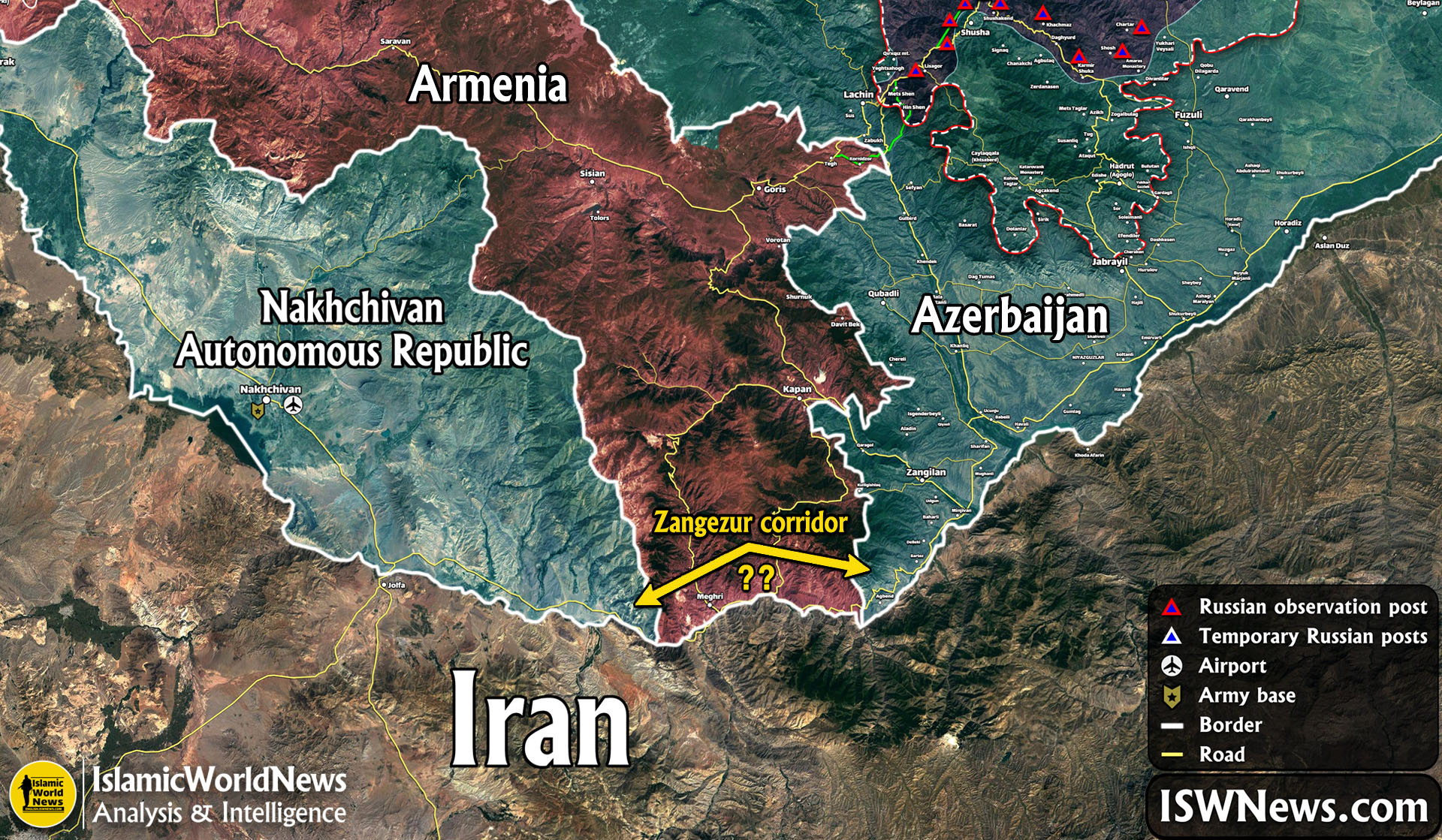
    After the second Karabakh war and the domination of the Republic of Azerbaijan on all its border lines with Armenia, claims have been made about the ownership of the southern lands of Armenia by the Republic of Azerbaijan. The president of Azerbaijan has directly and indirectly emphasized the military aggression on the territory of Armenia and the tensions in the Caucasus region are still strong.
    On the other hand, Iran has clearly stated its opposition to any military aggression in the Caucasus region. Iran has declared that no country has the right to change the geopolitical borders of the Caucasus region, and in case of a new military aggression by anyone in this region, Iran will deal with this issue strongly.
    Therefore, Iran’s Eghtedar 1401 exercise in the north-western borders of the country is clearly a strong warning for the Republic of Azerbaijan and any other aggressor country.

    Read more: Opinion: Iran Increasingly Uneasy About Threats to Common Border With Armenia

  • Opinion: Iran Increasingly Uneasy About Threats to Common Border With Armenia

    Opinion: Iran Increasingly Uneasy About Threats to Common Border With Armenia

    Before the Second Karabakh War, Tehran was not particularly concerned about its border with Armenia. After the war, Iran’s main concern became Azerbaijan’s hopes to realize the Zangezur Corridor by force, in such a way that the 40-km border between Iran and Armenia could be compromised or blocked. In truth, Iran has no objection to the implementation of the ninth clause of the 2020 Karabakh ceasefire agreement, which includes granting Azerbaijan communication access to Nakhchivan. During the past three decades, communication between Baku and this region only took place via Iran. While Tehran does not object to this arrangement, it strongly opposes the change of international borders in the Caucasus, the blocking of the Iranian-Armenian border and the possibility of renewed conflict between Armenia and Azerbaijan.

    For this reason, the massive maneuvers of Iran’s army and the Islamic Revolutionary Guard Corps (IRGC) on its northwestern border in September and October 2021, unprecedented in the three decades since the collapse of the Soviet Union, signals the level and depth of Iran’s concerns about recent developments in the South Caucasus. Indeed, the outbreaks of violence between Armenia and Azerbaijan, the repeated threats of Baku to open the Zangezur Corridor by force, Turkey’s ongoing support of Azerbaijan and Russia’s silence and ambiguous position regarding the region have further exacerbated Tehran’s concerns. On the sidelines of the 7th Summit of the Astana Peace Process in Tehran, Supreme Leader Ayatollah Ali Khamenei met with Turkish President Recep Tayyip Erdoğan and clearly delineated that “if there is a policy to block the Iranian-Armenian border, the Islamic Republic will oppose it because this border has been a communication route for thousands of years.”

    Recent fighting between Armenia and Azerbaijan in September 2022 resulted in nearly 300 deaths and dozens of injuries on both sides, further aggravating Iran’s concerns. Some news sources even announced that Tehran had deployed 50,000 troops to the Armenian border. Indeed, Mohammad Pakpour, commander of the IRGC’s ground forces, on September 16, visited the units located on the border with Armenia, Azerbaijan and Nakhichevan, stating that their readiness level is high. Additionally, the chief of staff of the Iranian Armed Forces, Mohammad Bagheri, during a military parade on the anniversary of the Iran-Iraq War (1980–1988), declared, “Iran will not tolerate any change in the borders in the region and call on Azerbaijan and Armenia to solve the issues between them peacefully, through dialogue. We do not seek conflicts and wars, but we do not remain silent when it is necessary to resist them.”

    Several reasons underline Iran’s concerns regarding the possible blocking or destruction of its border with Armenia. If this border is destroyed, all of Iran’s northwestern regions will border Azerbaijan and Nakhchivan—and the number of Iran’s neighbors will decrease from 15 to 14. Iran will also lose one of its most crucial transit routes to the Caucasus, as the land route through Iran and Armenia that reaches Georgia is a main part of the Persian Gulf–Black Sea Corridor. The Iranian government’s decision to open a consulate in Kapan, the administrative center of Armenia’s Syunik Province bordering the Islamic Republic and the reciprocal decision of the Armenian government to open a consulate in the northwestern Iranian city of Tabriz clearly indicate Tehran’s desire to preserve and strengthen this transit route. Indeed, in terms of diversifying transit routes, Iran hopes to maintain this corridor (Iran-Armenia-Georgia) parallel to the North-South Corridor (Iran-Azerbaijan-Russia).

    Additionally, in terms of water resources in the Aras river basin, Turkey and Armenia are “upstream” countries, while Iran and Azerbaijan are “downstream” countries. Therefore, if Baku captures the southern part of Syunik Province along the Zangezur Corridor, then Azerbaijan will become an “upstream” country, leaving Iran as the only “downstream” country with limited control over the water supply.

    In a wider sense, Iran also has deeper concerns about geopolitical change and the balance of power in the region. In this context, Tehran considers the regional roles of Turkey, Israel, the United States and the North Atlantic Treaty Organization as extremely influential. From this point of view, Iran, unlike Russia and others, does not view the tensions in the South Caucasus merely as a “border clash” between Yerevan and Baku. In truth, opening the Zangezur Corridor would also provide direct military access for Turkey as a NATO member in the Caucasus.

    Indeed, a significant number of Iranian elites and experts believe that Azerbaijani President Ilham Aliyev’s emphasis on “uniting the geography of Turkic world” via the Zangezur Corridor and the expansion of Turkey’s presence in the South Caucasus will strengthen Pan-Turkism in the region, which could incite ethnic and separatist sentiments. In addition, considering the close relations between Azerbaijan and Israel, Tehran is worried that, if Baku does capture the southern part of Syunik Province, this will bolster Israel’s intelligence, espionage and security presence vis-à-vis Iran.

    As a result, although, among Iran’s 15 neighbors, its border with Armenia is the shortest, this 40-km border is of the utmost strategic importance for Tehran. Although the Azerbaijani authorities have stated many times that there is no real threat to the Iranian-Armenian border, Tehran’s reactions in the past two years and after the Second Karabakh War clearly show that Iran is extremely worried about the realization of the Zangezur Corridor by force, especially if this compromises its highly consequential border with Armenia.

    It seems that the new diplomatic developments of the past two months have not reduced Tehran’s worries. In Prague, a quadrilateral meeting between the leaders of Armenia and Azerbaijan together with the presidents of France and the European Council took place, as well as the historic meeting of Armenian Prime Minister Nikol Pashinyan with Turkish President Recent Tayyip Erdogan. Yet, during both the meeting between Iranian President Ebrahim Raisi and Pashinyan on the sidelines of the UN General Assembly and the meeting between the Raisi and Aliyev in Astana, Kazakhstan, Iran’s opposition to changing international borders in the Caucasus was clearly emphasized. As such, Brigadier-General Mohammad Pakpour, commander of the Islamic Revolutionary Guard Corps Ground Forces (IRGC) announced that “the massive exercise dubbed ‘Eghtedar/Power’ of the IRGC ground forces will be held at the northern border in the Aras region at the regional IRGC Ashura military base.”
    Tehran’s decision to hold this military maneuver one year after large-scale military exercises near the Azerbaijani border, clearly shows that “Iran increasingly uneasy about threats to its common border with Armenia”.

    Source: The Jamestown Foundation

  • Iran’s warning to Iraq: Remove the terrorist groups from the Kurdistan Region!

    Iran’s warning to Iraq: Remove the terrorist groups from the Kurdistan Region!

    In recent years, the officials and military commanders of the Islamic Republic of Iran have repeatedly warned about the activity and deployment of terrorist groups near the borders of Iran and the Kurdistan region of Iraq, and have informed the local and government authorities of Iraq about their opposition. However, the central government of Iraq and the authorities of the Kurdistan region have not taken decisive and acceptable measures to expel these groups or prevent their attacks on the territory of the Islamic Republic of Iran.

    Therefore, with the increase of the activities of terrorist groups Komola, KDPI, PAK, PJAK and PKK in Iran’s borders, as well as attempts to carry out terrorist operations, the explosion in one of the country’s sensitive centers in Isfahan province by elements of the terrorist group Komala under the guidance of Mossad (the attack was neutralized in August), the attempt to bringing armed teams and import a large amount of weapons into Iran’s soil and the active role in the recent riots in Iran’s border cities made the Islamic Revolutionary Guard Corps determined to carry out a artillery and drone campaign against the positions of the mentioned terrorist groups in the Kurdistan region of Iraq.

    Considering the number of terrorist groups and their foreign supporters, it seems that the recent attacks of the IRGC are not enough to completely destroy the terrorist groups and this operation is just a warning message and retaliatory action. On the other hand, the authorities of the Islamic Republic of Iran, at the same time as the start of this operation, have put diplomatic consultations with the Iraqi authorities on the agenda and demanded an end to the activities of terrorist groups around their borders, especially in the Kurdistan region of Iraq.
    The presence of terrorist groups in the Kurdistan region of Iraq, in addition to threatening the security of Iran, is also considered a serious threat to the security of Iraq. If proper action is not taken by the Iraqi authorities to expel terrorist groups from the Kurdistan Region, this issue can threaten Iraq’s national security in the long term, create problems in relations with neighboring countries, increase the number of foreign military bases in northern Iraq, and turning the Kurdistan region of Iraq into an arena for resolving regional disputes and military conflicts.

    Currently, the terrorist groups of the Democratic Party of Iranian Kurdistan (KDPI), Kurdistan Free Life Party (PJAK), the Komala Party of Iranian Kurdistan (Komala) and the Kurdistan Freedom Party (PAK) are among the main separatist and terrorist groups in the eastern borders of the Kurdistan Region, focusing on attacking Iran’s national security. During the past years, many documents have been obtained about the use of the mentioned groups by western Intelligences, including the CIA and Mossad, to carry out subversive operations in Iran.

    Considering this issue, if the current negotiations to dismantle and evacuate the headquarters of these groups from the territory of the Kurdistan Region do not succeed, we may witness more effective and serious operations by Iran, including ground operations to clean up the eastern areas of the Kurdistan Region.

    Read more:
    Iran’s missile and drone attacks against terrorist groups in the Kurdistan region + Video
    15 terrorists were killed in Kurdistan Region of Iraq
    IRGC missile attacks on north of Er
    bil

    Map of the dispersion of terrorist groups in the eastern borders of the Kurdistan region of Iraq – Click to view full size
  • IRGC missile attacks on north of Erbil

    IRGC missile attacks on north of Erbil

    The Islamic Revolutionary Guard Corps has announced in its latest official statement that military operations against terrorist groups in the Kurdistan region of Iraq will continue until the complete disarmament of the terrorists. In this regard, Major General Mohammad Bagheri, the Chief of the General Staff of the Iranian Armed Forces, criticized the US support and cooperation with terrorists and separatists and stated that Iran reserves the right to respond to the downing of a Muhajer-6 drone by the US terrorist army. He also warned the neighboring countries where the US and Zionist bases are located, that if any hostile action against Iran’s security and national interests is carried out from these bases, the same bases will be attacked.

    It should be noted that at the same time as the IRGC’s attacks on the north of Erbil today, the Turkish army has also launched an artillery attack on the northern heights of Dohuk province and Sidakan region in the east of Erbil province.

    Due to the incompetence of the Iraqi governments and the cooperation of the leaders of the Kurdistan Region with the United States and the Israeli regime, the heights and different regions of the Iraqi Kurdistan region have become a source for training terrorist and separatist groups on the borders of Iran, Turkey and Syria in recent years. During the recent protests in Iran, these groups plotted and implemented terrorist activities against nuclear facilities, etc., which were thwarted by the intelligence of Iran’s security organizations.

    Read more:
    15 terrorists were killed in Kurdistan Region of Iraq
    Iran’s missile and drone attacks against terrorist groups in the Kurdistan region of Iraq + Video

    Video of #Iran‘s missile and Shahed-136 pinpoint attacks against the terrorist groups in north of Altun Kupri.
  • 15 terrorists were killed in Kurdistan Region of Iraq

    15 terrorists were killed in Kurdistan Region of Iraq

    The Iraqi Kurdistan Region media published the pictures of 8 members of the Kurdistan Freedom Party (PAK) who were killed in the recent drone and missile attacks of the Iranian Armed Forces. With these 8 militants and 7 others from the Kurdistan Democratic Party of Iran (KDPI), the terrorist groups in the Kurdistan region of Iraq have officially admitted death of 15 of their forces.

    Now, six days have passed since the start of missile and drone operations by the IRGC and the Islamic Republic of Iran Army, and the positions of the terrorist groups Komala, KDPI, PAK, PJAK and PKK in different regions of the Iraqi Kurdistan region are still under heavy fire from Iran.

    The new round of Iran’s attacks against terrorist groups in northeastern Iraq began after these groups took advantage of the recent protests in Iran to enter sabotage teams and a large amount of weapons into Iran’s soil And they intended to carry out terrorist operations in Iran. Therefore, these activities were met with a strong reaction from the Iranian armed forces, and their positions were targeted in different parts of the Iraqi Kurdistan region.

    So far, the heads of some countries such as the United States of America, France, Saudi Arabia and the Iraqi government have condemned Iran’s attacks against terrorist groups and demanded that Iran stop the attacks.

    On the other hand, at the same time as these attacks, Turkish fighter jets also bombarded the positions of terrorist groups in Bradust Mountain in the northern Kurdistan region of Iraq.

    Read more: Iran’s missile and drone attacks against terrorist groups in the Kurdistan region of Iraq + Video

    The moment when two Shahed-136 suicide drones hit the positions of terrorist groups in the Kurdistan region of Iraq
  • Iran’s missile and drone attacks against terrorist groups in the Kurdistan region of Iraq + Video

    Iran’s missile and drone attacks against terrorist groups in the Kurdistan region of Iraq + Video

    Based on the available information, in the last four days, the headquarters and camps of the terrorist groups of the KDPI around the city of Koysinjaq, the groups of Komala and PJAK in south of Erbil and north of Sulaymaniyah, and PEJAK and PKK in the Sidekan region have been targeted.

    The Iranian Armed Forces have used suicide drones (Shahed-136), artillery rockets and ballistic missiles in these attacks. The intensity of the attacks has been such that the authorities of these groups have admitted that some of their members were injured and killed. Kurdistan regional media reports that 10 people were killed and more than 24 others were injured, citing the Ministry of Health of Iraqi Kurdistan.

    The moment when two Shahed-136 suicide drones dived and accurately hit the positions of terrorist groups in the Kurdistan region of Iraq.

    It is worth mentioning that the new round of Iran’s attacks against terrorist groups in northeastern Iraq began after these groups took advantage of the recent protests in Iran to enter sabotage teams and a large amount of weapons into Iran’s soil And they intended to carry out terrorist operations in Iran. Therefore, these activities were met with a strong reaction from the Iranian armed forces, and their positions were targeted in different parts of the Iraqi Kurdistan region.

    The attacks against terrorist groups continue and the Iranian authorities have not commented on the results or the end time of these attacks.

    The Iranian Armed Forces had previously warned the Iraqi government and the authorities of the Kurdistan Region of Iraq about the terrorist and illegal activities of the aforementioned groups and had announced that if the Iraqi government and the Kurdistan Region did not take the necessary measures to contain and prevent the terrorist activities of these groups, Iran reserves the right to act against these terrorist groups and suppress them with the strictest necessary measures.

    Click to view full size

    Using the Shahed-136 suicide drone to target terrorist positions in the Kurdistan region of Iraq

    Bombing terrorist positions in the Kurdistan region of Iraq

    Bombing terrorist positions in the Kurdistan region of Iraq

    Bombing terrorist positions in the Kurdistan region of Iraq

    Bombing terrorist positions in the Kurdistan region of Iraq