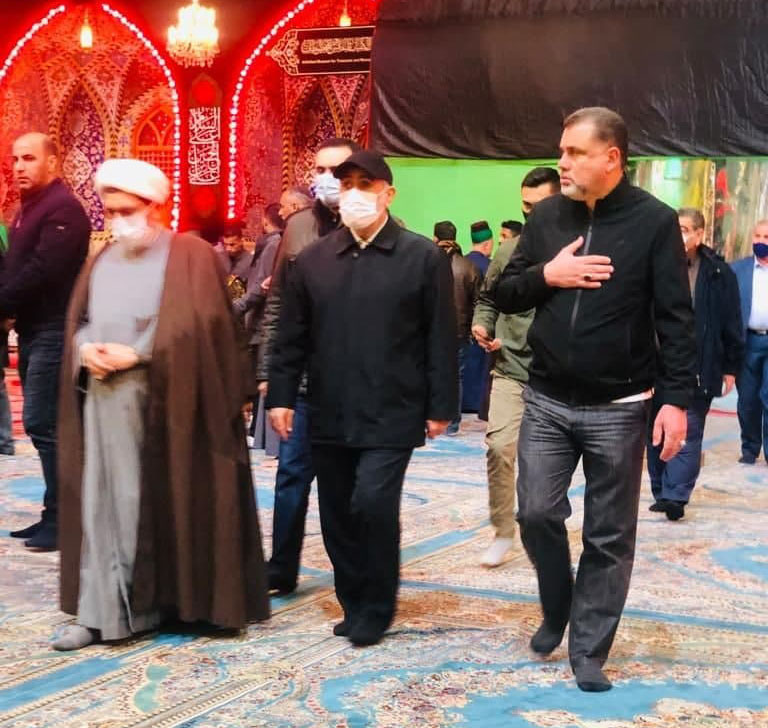
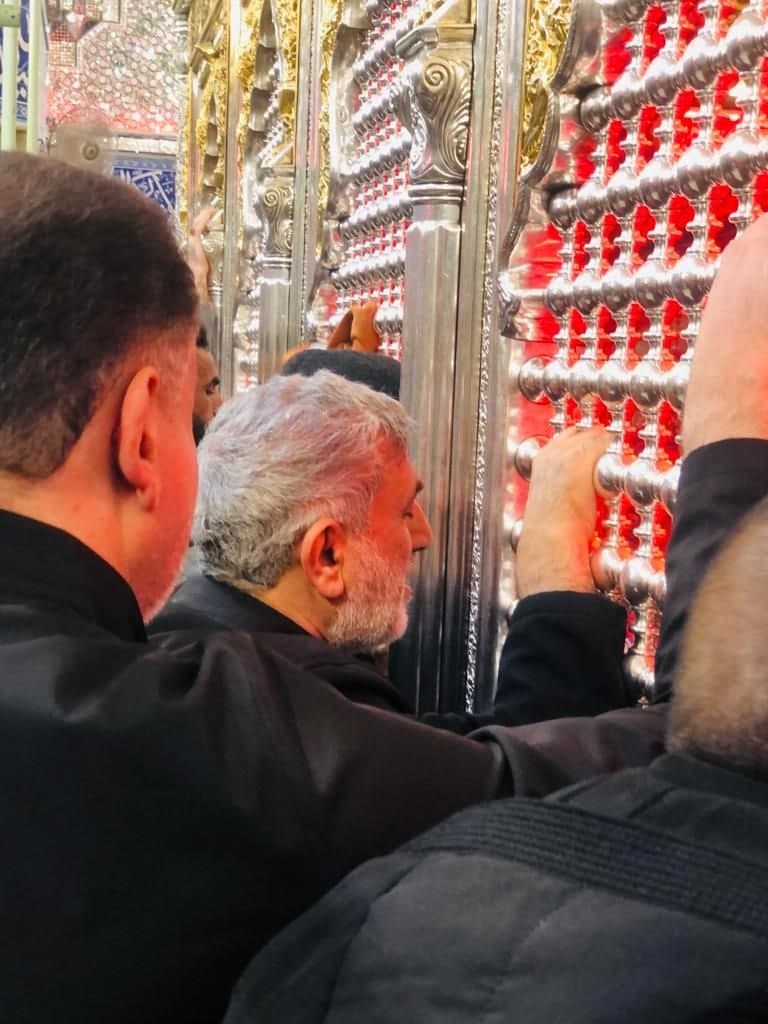
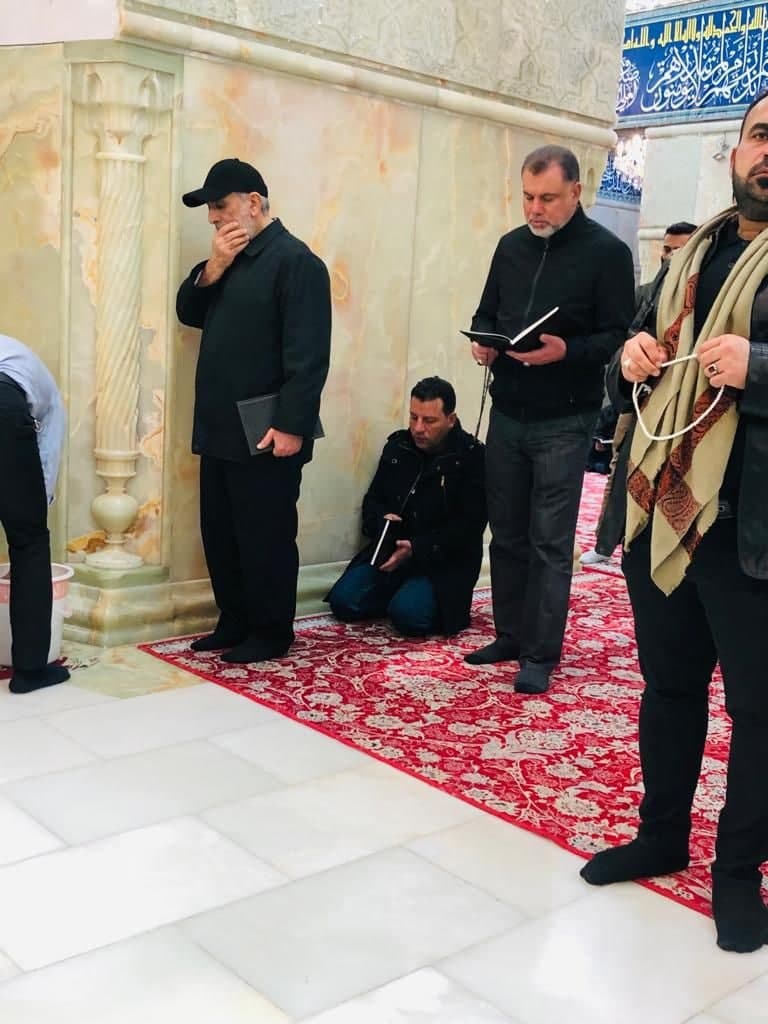
General Qaani visited the holy shrine of Amir al-Mu’minin Ali (as) in the holy city of Najaf al-Ashraf, went to the shrine of Martyr Sadr and the tomb of Martyr Abu Mahdi al-Mohandes, and a few hours later visited the holy shrine of Imam Hussein (as) in Karbala.
Given the current political situation in Iraq, the visit of the commander of the IRGC Quds Force to this country carries various messages to various domestic and foreign parties.
General Qaani, the commander of IRGC Quds Force in the shrine of Imam Ali (as)
General Ismail Qaani, Commander of IRGC Quds Force in the shrine of Imam Hussein (as)
Pilgrimage to the tomb of martyr Seyyed Mohammad Sadegh Sadr and martyr Abu Mahdi al-Mohandes
According to General Abbas Nilforooshan, Deputy Chief of operations of the Islamic Revolutionary Guard Corps and spokesman of the IRGC Great Prophet 17 exercise, this exercise was carried out in order to increase the level of combat readiness of the IRGC and based on the simulation of one of the most advanced offensive plans in combined wars and various war conditions.
In general, during the five days, the IRGC’s ground, naval and aerospace forces carried out various stages of naval, land, drone and missile exercises.
On the second day of the exercise, missile units from the coast and Zulfiqar-class speedboats in the sea simultaneously firing five anti-ship cruise missiles destroyed predetermined targets.
The “Mohajer-6” drones also destroyed the targets of hypothetical enemy with 100% accuracy by launching Qaem air-to-ground glide bomb and Almas smart missile.
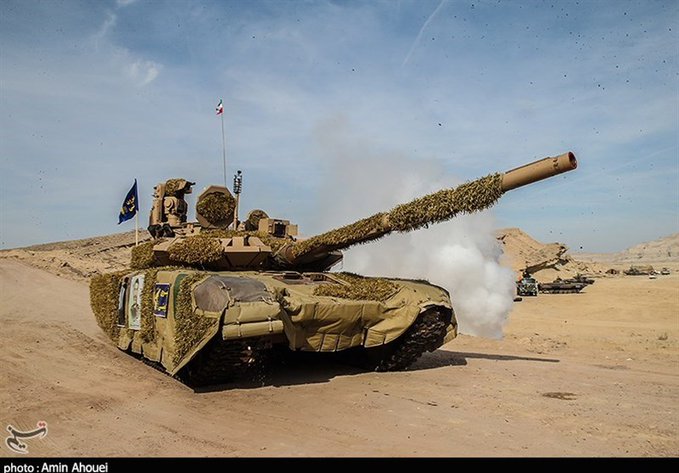
It should be noted that the advanced Karrar tank (upgraded T72M) was delivered to the IRGC ground forces and was used for the first time in this exercise.
Karrar tank
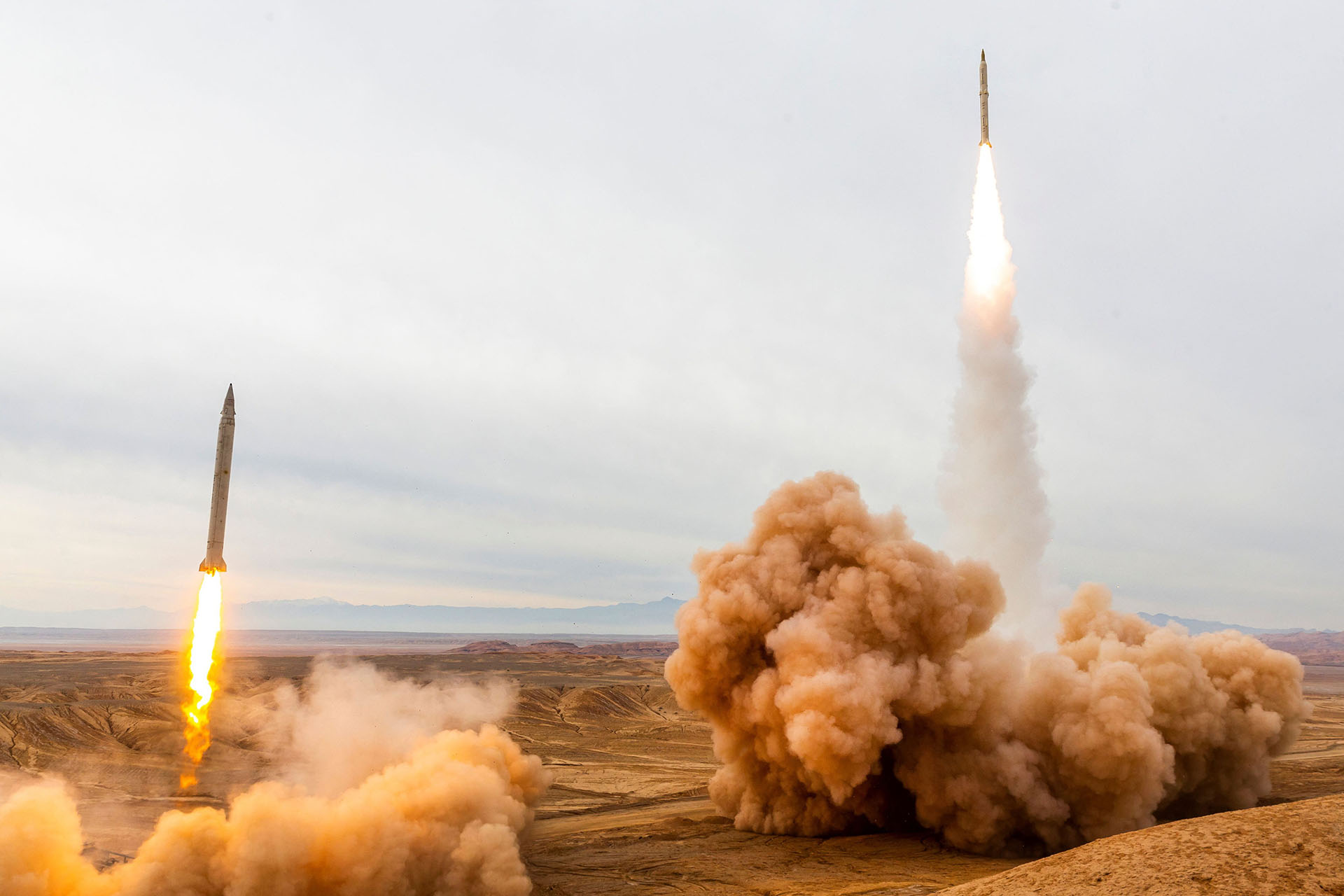
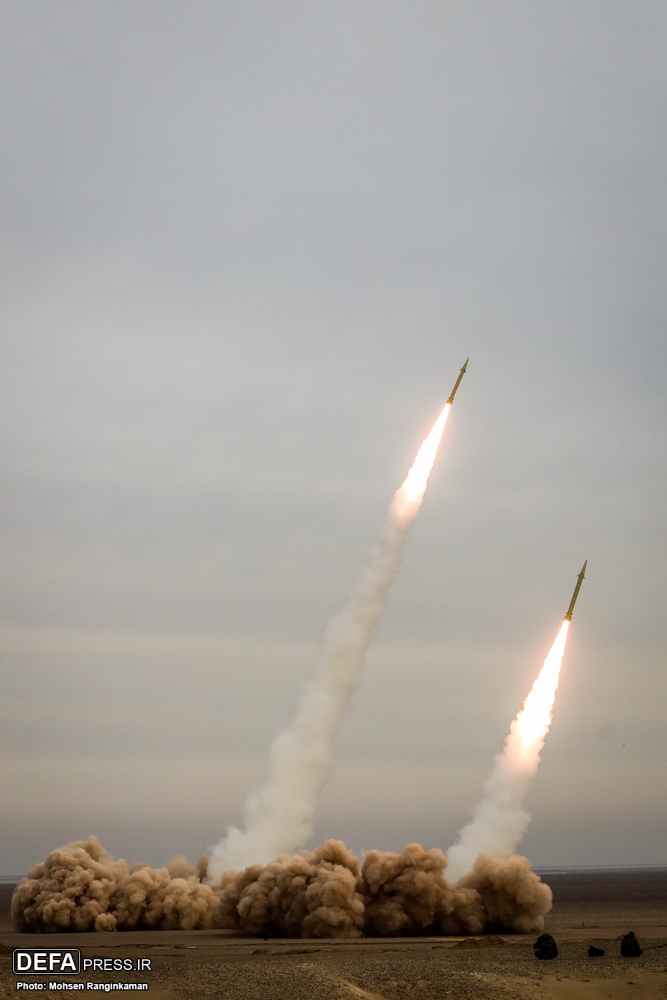
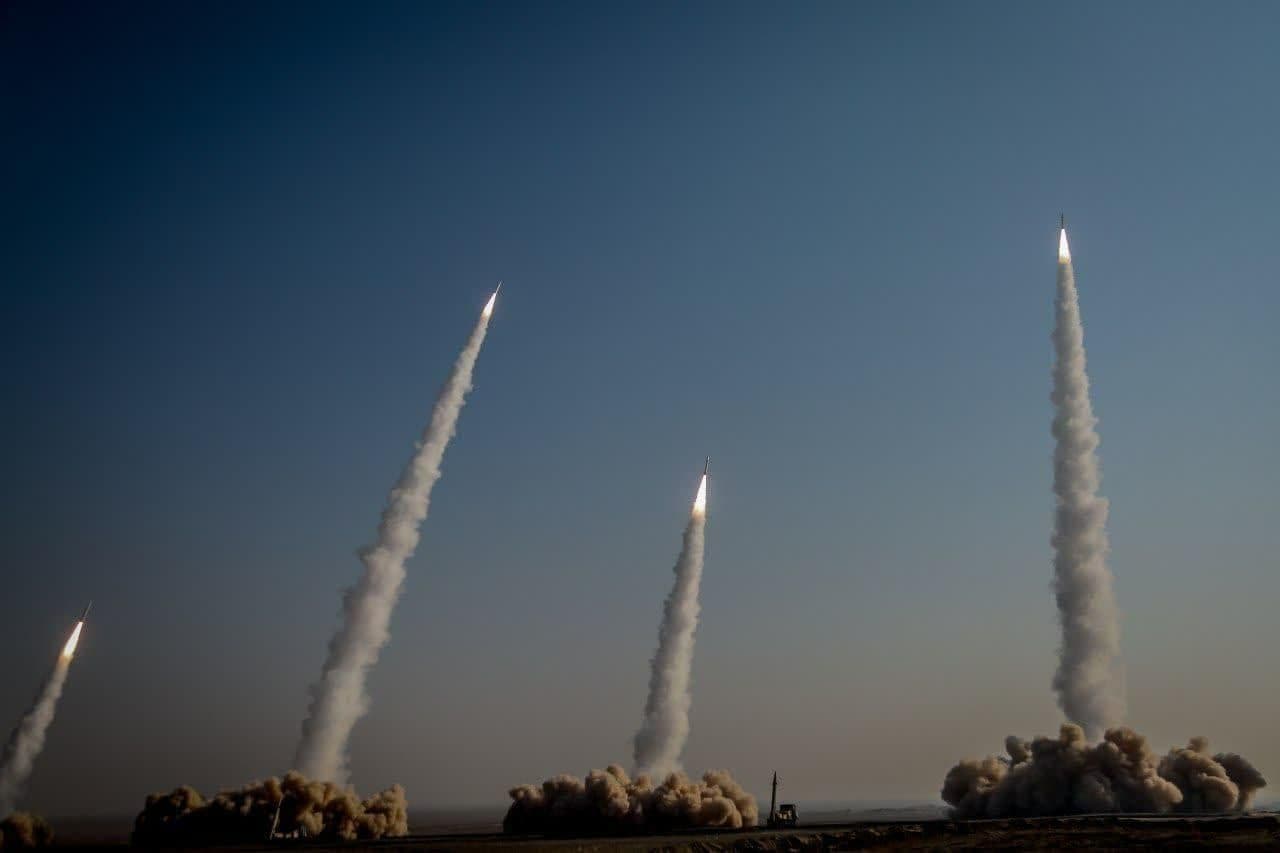
In the final phase of the joint exercise of the Great Prophet 17, 16 missiles of Emad, Qadr, Sejjil, Dezful and Zulfaqar and Zelzal were fired at the simulated targets and destroyed the designated positions with 100% accuracy. Simultaneously with the firing of the missiles, 10 Shahed-136 suicide drones of the IRGC Air Force were fired at the designated targets.
Launch of “Shahed-136” suicide drones from a 5-launcher pod
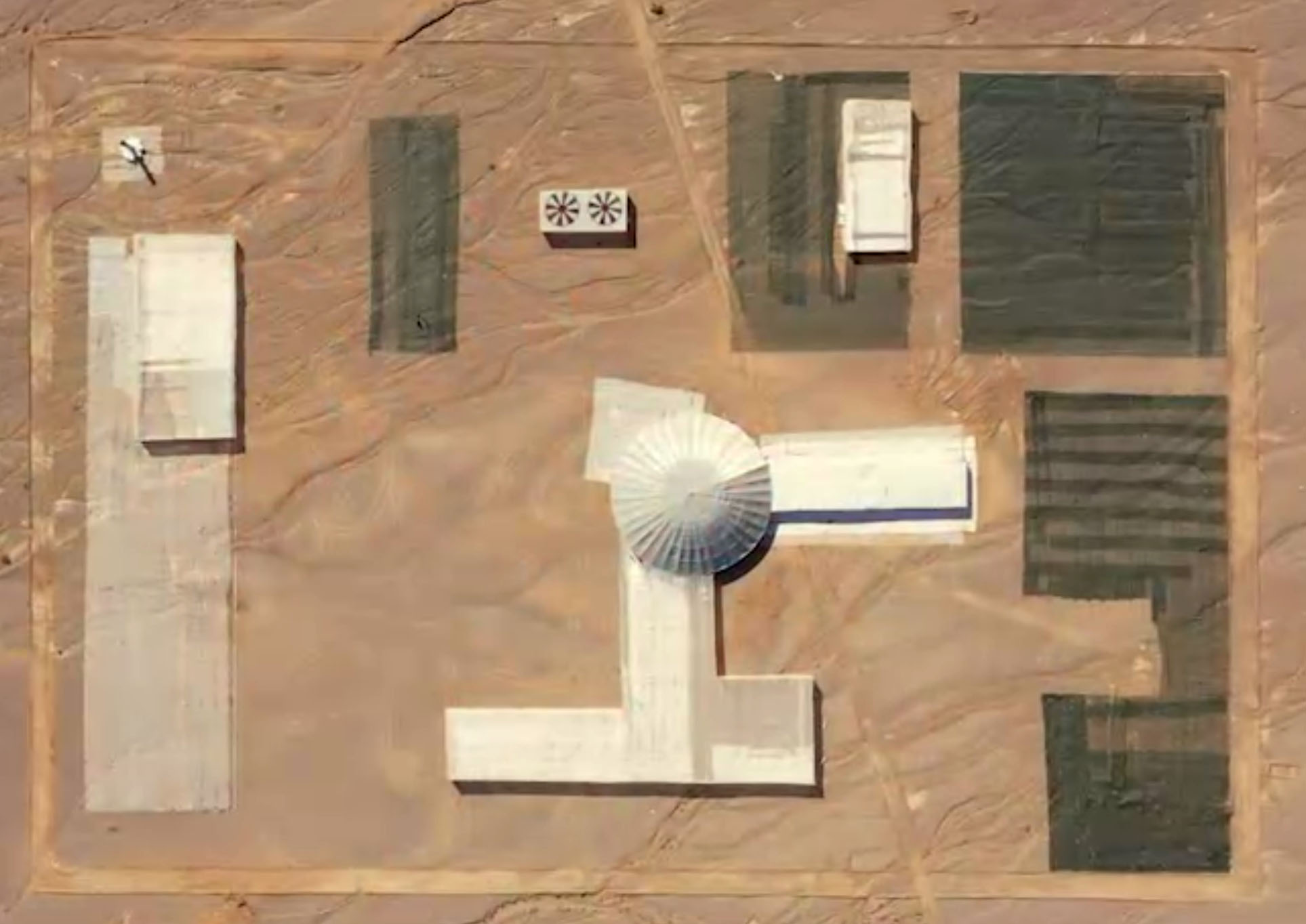
One of the highlights of the operation was the use of a replica of Israel’s Dimona nuclear power plant. The move was in response to recent Israeli threats against Iran. Israel has threatened Iran in recent months to bomb Iran’s nuclear facilities.
Simultaneous firing of 16 long-range, medium-range and short-range missiles of Emad, Qadr, Sejjil, Dezful, Zelzal and ZulfaqarSimulation of the attack on the Zionist regime’s weapons of mass destruction center during the Great Prophet 17 exerciseReplica of Dimona nuclear plant
General Mohammad Bagheri, Chief of General Staff of the Armed Forces, said: “When 16 missiles hit a target, it is a small part of hundreds of missiles that can simultaneously target enemy country (Israel) that intends to fight and attack the Islamic Republic of Iran. The Islamic Republic of Iran does not accept these threats and is currently negotiating with countries to advance the country’s goals and will not tolerate such threats.”
Regarding the missile exercise, Iran unveiled for the first time the exo-atmospheric trajectory maneuvering technology of its warheads for Qadr medium range ballistic missiles. The exo-atmospheric trajectory maneuvering technology, in addition to increase accuracy, guiding and maneuvering of Qadr missile in the atmosphere enhances its penetrability against missile defense.
Interview with General Amir Ali Hajizadeh, commander of the IRGC Aerospace Force – Credit: @AbuReza1990M
Brigadier General Amir Ali Hajizadeh, commander of the IRGC Aerospace Force, said: “It is very difficult to hit ballistic missiles for defense systems and they can hit a small percentage of the missiles, So the hundreds of billions of dollars spent by our enemies are gone and became zero. We have been able to direct ballistic missiles to move and maneuver in different directions, and this phenomenon makes the intercept for the enemy very difficult.”
Dropping Yasin Bomb by Sukhoi-22 FightersCovering the airspace of the Persian Gulf with the Sevvum(3rd) Khordad air defense systems
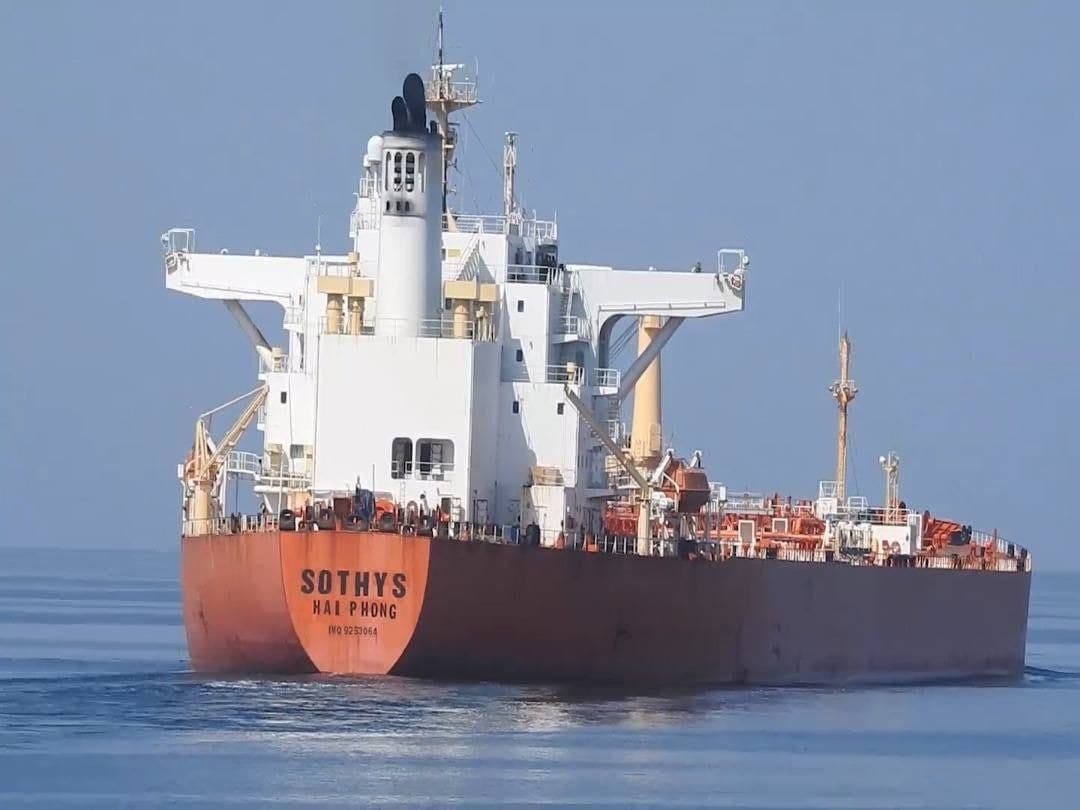
The Sothys left a position off Iran’s Bandar Abbas port and had reached international waters in the nearby Gulf of Oman early Wednesday.
“Admiral Tangsiri” the commander of IRGC Navy said in a meeting with “General Salami” the commander of the IRGC in this regard: “After a long period of intelligence work and continuous monitoring, when the tanker carrying the stolen Iranian oil was about 40 miles off the coast of Jask and in international waters, the selected units began to seize and transfer the tanker to the territorial waters and the coast of our country. With an airdrop operation and the deployment of IRGC special forces on SOTHYS’s deck, American warships approached the scene and took up the warlike position. To prevent our mission from being carried out, the Americans twice flew their drones and helicopters in support of the oil thieves. The Americans’ claim that “we had only monitored the seizure” is a big lie. The distance of American ships with our ships and forces was less than 30 meters. If they were to monitor, they could do so from a distance or even by using planes and drones.”
The operation to retrieve Iranian oil by the IRGC navy took place on October 25, which was met with a reaction and a state of war between American warships and helicopters. After that, on November 3, the IRGC described the incident and released documentary videos of the confrontation, which were accompanied by contradictory denials and claims by the United States.
According to Iranian official statements, during an operation in Sea of Oman, US warships confiscated an Iranian oil tanker carrying export oil and were transporting its oil cargo to another tanker, SOTHYS, to an unknown destination.
Simultaneously with this apparent piracy, the Islamic Revolutionary Guard Corps navy carried out a heliborne operation and IRGC troops landed on the tanker and directed it to the Iranian territorial waters.
The US forces then used several boats and warships to pursue and block the oil tanker route, but failed with the decisive and authoritative entry of the IRGC navy.
According to a statement by the Islamic Revolutionary Guard Corps, the oil tanker carrying Iranian oil docked in Bandar Abbas at 8:00 AM on October 25. The tanker used by the United States to steal Iranian oil is said to belong to Saudi Arabia.
The US piracy in Gulf of Oman is the third in two months against Iran’s navy in international waters and the West Asian region. It should be noted that the actions of the United States and Israel against the Iranian navy are part of their comprehensive war against Iran and the Islamic Resistance.
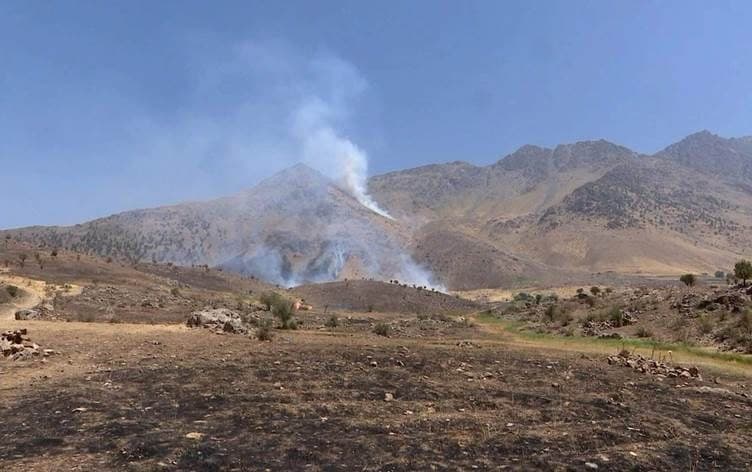
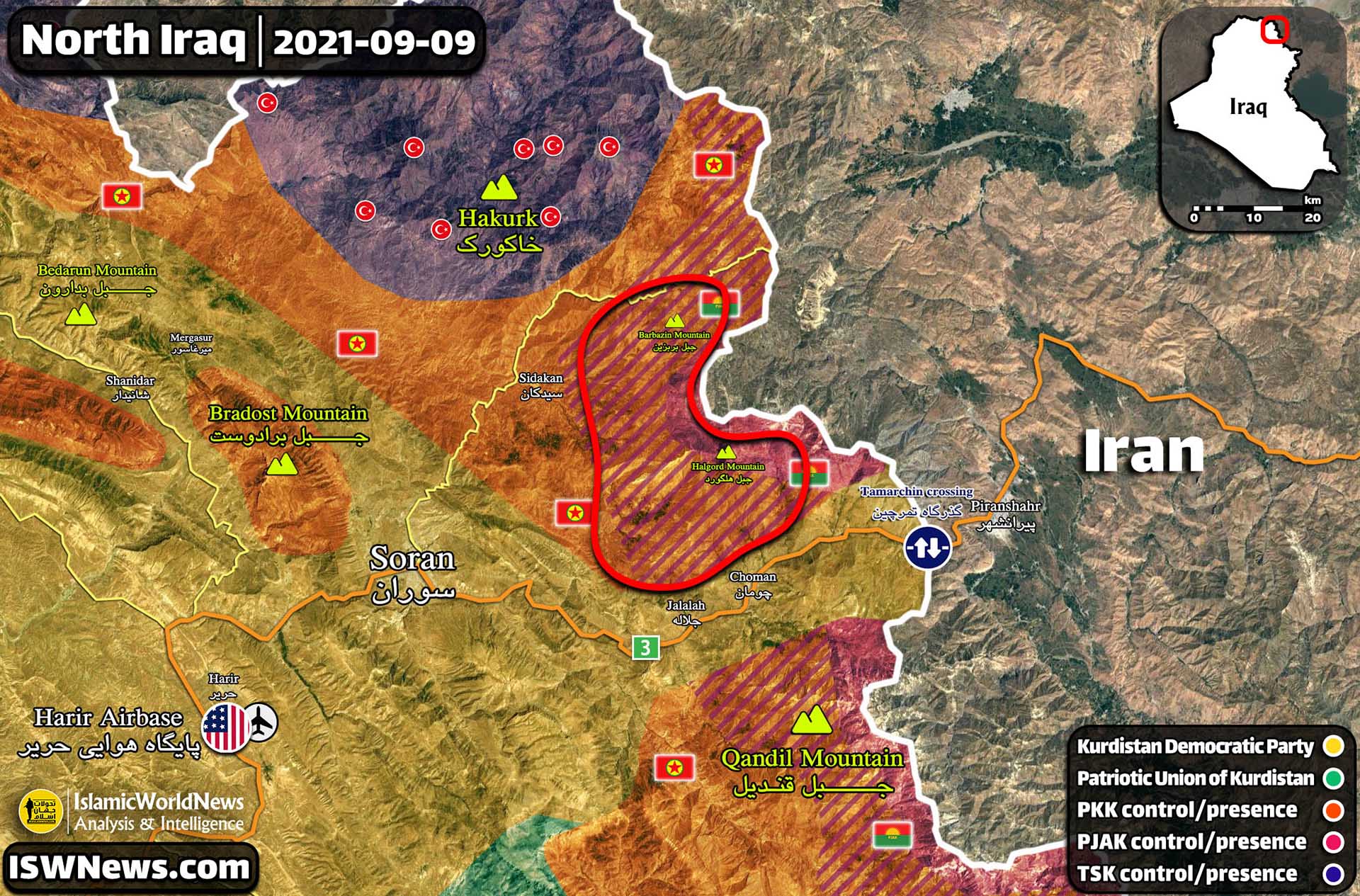
According to local sources, IRGC artillery attacks on positions of PJAK terrorists in the Sidakan area of Iraqi Kurdistan has began since yesterday, and suicide drones were also used to target the hideouts of PJAK militants.
This morning, the positions of the PJAK terrorists in the Barbazin heights were targeted by the IRGC. Although the terrorists have stated that they did not suffer any casualties in these attacks, but air surveillance, along with precision attacks using suicide drones has minimized the error rate in these attacks.
Earlier, Brigadier-General Pakpour, commander of the IRGC’s ground forces, warned the government and residents of the Kurdish region of the possibility of attacking terrorist positions in Iraqi Kurdistan and asked civilians to maintain distance from terrorist groups points in the area. A few days after the warning, on the morning of September 9, the Islamic Revolutionary Guard Corps repeatedly targeted the positions of PJAK terrorists and other terrorist groups in the Iraqi Kurdistan region.
The attacks, which were carried out with the participation of the IRGC Aerospace and Ground Force, several positions of terrorist groups in the Barbazin and Halgord heights, as well as one of the PJAK military camps on the outskirts of Jalalah town, west of Choman were targeted with artillery and suicide drones. Preliminary information indicates high casualties of PJAK terrorists.
A few days ago, after Brigadier-General Pakpour, the commander of the IRGC Ground Forces, has warned the government and residents of the Kurdistan Region about the possibility of attacking terrorist positions in the Iraqi Kurdistan and asked civilians to maintain distance from terrorist groups points in the area; this morning (September 9th) several areas in Choman and Sidakan areas were targeted.
According to local sources, the Islamic Revolutionary Guard Corps (IRGC) has attacked terrorist group positions with drone surveillance and artillery attacks; Suicide drones have also been used in these attacks to accurately destroy the positions of terrorist groups.
The exact number of casualties of terrorist groups has not been published yet.
Click to see the full size mapIRGC attacks terrorist positions in northern Iraq using a suicide droneIRGC attacks on terrorist positions in northern IraqIRGC attacks on terrorist positions in northern Iraq
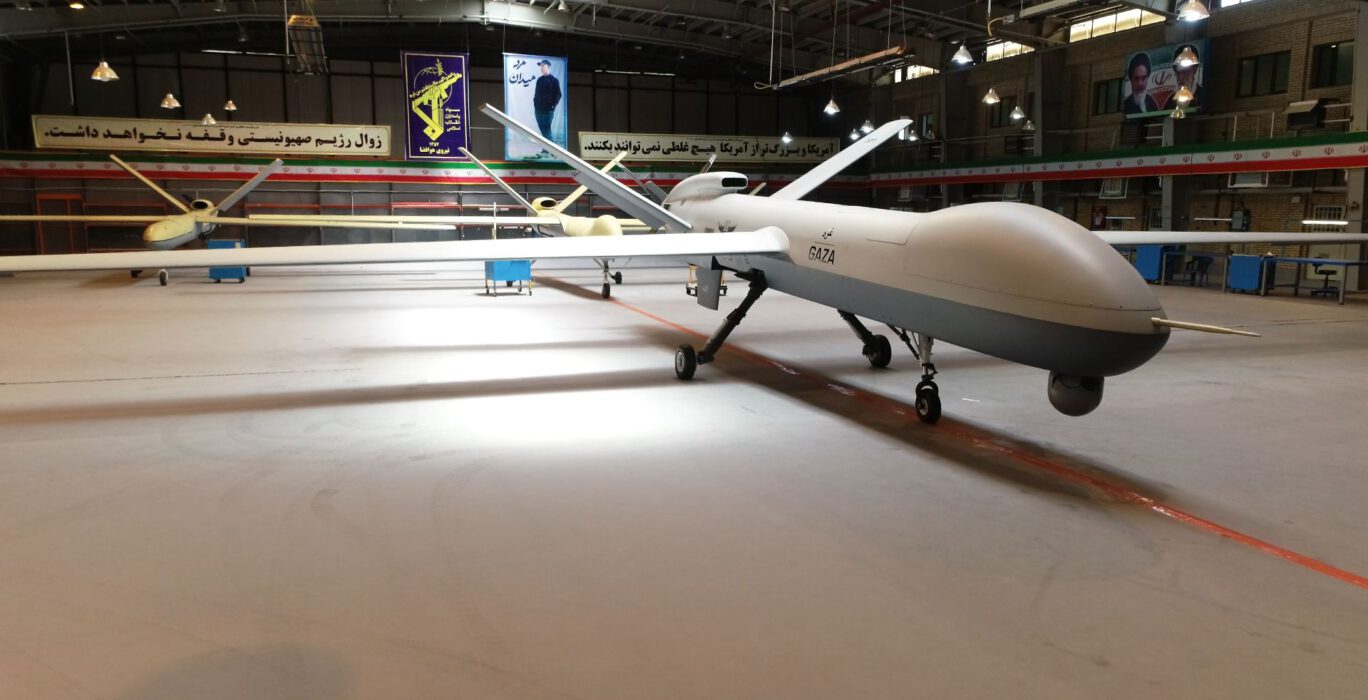
In this ceremony, which was held in the presence of Major General “Hossein Salami”, Commander of the Islamic Revolutionary Guard Corps and General “Amir Ali Hajizadeh”, Commander of the IRGC Aerospace Force, “Gaza” reconnaissance combat drone, “9 Dey” missile and “Quds” radar system Unveiled.
Regarding the name of the Gaza drone, Major General Salami said, “We named this drone Gaza so that, God willing, it will be an eternal honor for those in Gaza who are resisting the Zionist aggression today.”
The Gaza drone, capable of carrying 13 bombs and 500 kilograms of equipment, as well as 35 hours of flight up to a radius of 2,000 kilometers, is capable of carrying out various combat and intelligence operations. The drone is also used in forest surveillance operations and natural disaster relief.
The defense system equipped with 9-Dey missile also has the ability to engage and destroy a variety of threats at close range, including cruise missiles and drones.
The Quds radar system is also capable of detecting low-altitude targets such as cruise missiles, helicopters and drones. This system has high agility and fast deployment and relocation in the required location is another feature of this system.
Unveiling ceremony of new and advanced weapons of the Islamic Revolutionary Guard Corps
At this stage, the new generation of IRGC ballistic missiles were fired in Zulfiqar, Zilzal and Dezful classes and successfully hit the targets. The mentioned missiles are equipped with detachable warheads and the ability to be guided out of the atmosphere, as well as the ability to disrupt and pass through the enemy missile defense systems.
On the sidelines of the IRGC missile exercise, the IRGC Aerospace Force Commander, General Amir-Ali Hajizadeh said: “The missiles used today are a new generation of ballistic missiles and their capabilities are new, and the combination of these with drone operations and the use of achievements and technologies of artificial intelligence has created a new possibility and power.”
The commander-in-chief of the Islamic Revolutionary Guard Corps (IRGC), General Salami also stated the successful test of new technologies in missile and UAV guidance and control systems and very precise command and control of the joint strategic operation scene as salient features of Payambar-e Azam 15 (The Great Prophet 15) Military Exercise.
This morning, in the first phase of the IRGC’s “Payambar-e Azam 15 (The Great Prophet 15) drill, a combined operation of firing ballistic missiles of the new generation of the IRGC was carried out along with the combat, reconnaissance and suicide drones, which you can see in the following pictures.
IRGC suicide drones diving on targets in “The Great Prophet 15) drill”
According to the information provided by Gen. Hajizadeh, in this drill, the use of artificial intelligence is more on the agenda than the previous drills. An example of this can be seen in the formation of Shahed-161s. IRGC suicide drones have also become more effective using AI.
Shahed-161 drones in “The Great Prophet 15) drill”
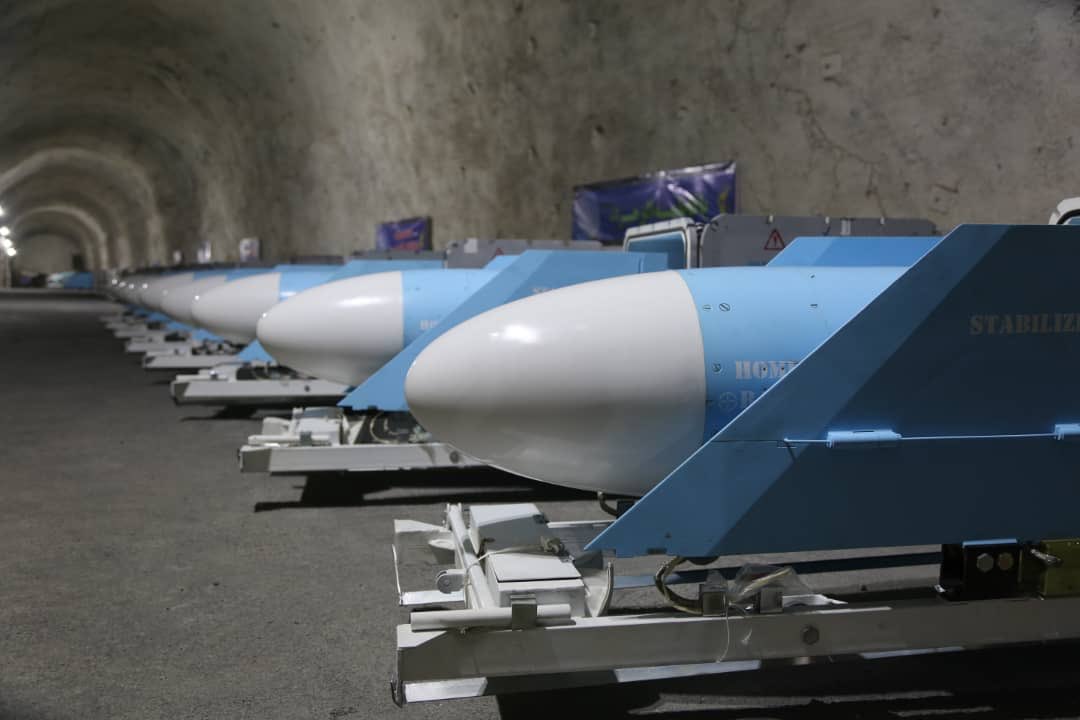
The unveiling ceremony of this missile base was held in the presence of Maj. Gen. “Hossein Salami”, Commander-in-Chief of the Islamic Revolutionary Guard Corps.
Major General Salami said at the ceremony: “The complex is one of several facilities holding IRGC naval strategic missiles that house a column of missiles and launchers. IRGC naval missiles are among the most advanced missiles used in coast-to-sea, surface-to-sea and sea-to-sea battles.”
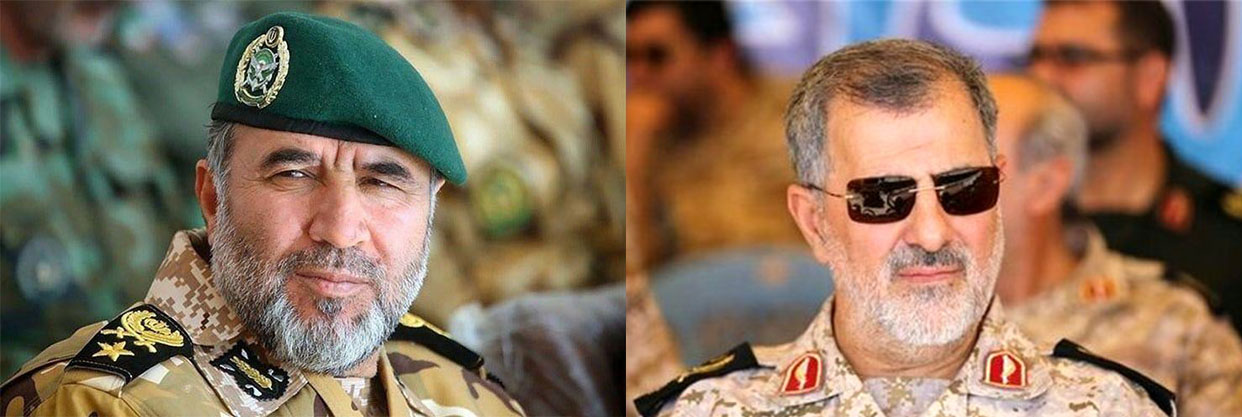
Brigadier general Kioumars Heydari, commander of the Iranian Army’s Ground Forces: Keeping the geopolitics of the region is our red line and no power should change it and we won’t tolerate it. He considered deploying army units at borders to protect the borders as the red lines of the country and added: We never permit anyone to cross red lines of Islamic Republic of Iran, our red line is security, safety and comfort of our people and the army is beside people to provide their security and peace.
Sending Mersad and Tor-M1 air defense systems to the northwestern borders of Iran
Last week Brigadier general, Commander of the Islamic Revolutionary Guard Corps (IRGC) Ground Forces, stated that no change in geopolitical borders is tolerated and it is red line of Islamic Republic of Iran and if it is necessary we increase the presence of our forces at the border.
IRGC Ground Force deployed more forces and equipment at the border area such as Aslanduz, Khoda Afarin and Jolfa after the conflict became tenser in Karabakh last month. In recent days some of Iranian Army’s 16th division armored equipment were deployed to northwest areas of the country.
Sending military equipment to the border areas of northwestern Iran
Some believe that this amount of equipment and forces in northwest of Iran is to prevent Azerbaijan and Turkey to use Iran soil to cut through Iran and Armenia border, which seems to be impossible considering Iran’s military strength and determination. The most probable scenario regarding Iran’s deploying SAMs and equipment and forces to northwest of the country is the “Show of Force”. Iran aims to show the power and decisive intent to keep the security and peace at its northwester border and preparation for any threat.
#Iran Deployment of #IRGC Mechanized Brigades on the Northwestern Borders of Iran
The IRGC ground force mechanized brigade of Imam Zaman (as) was deployed in the northwestern borders of the country.https://t.co/Cfc8oMP3MV
“We are witnessing new achievements in this field (missile program) day by day, and today we are witnessing a nonpareil and a new achievement, which has the ability to launch missiles simultaneously or consecutively at desired intervals,” the chief commander of the IRGC, Major General Hossein Salami, said on Wednesday in a ceremony to launch the new defense system.
He described Iran’s missile might as the result of the will power of the Iranian nation, and said enemies dread the power of Iranian missiles.
“This is a strong pillar of … our establishment’s deterrence [doctrine] and reliable defense, and it is a formidable power by which the political will of our establishment is shown to the enemy and if necessary, it will be imposed on the enemy,” he added.
The top IRGC commander pointed to malicious acts and conspiracies by the enemy and underlined the need for the country’s Armed Forces to fully stand ready and keep a watchful eye on potential threats facing the country.
Emphasizing that Iran’s missile power guarantees the retreat of the enemies, Salami said this power has been successfully employed in various areas, including in the fight against the Daesh Takfiri terrorist group, and in the battle against counter-revolutionary elements in the west of the country and in remote areas, as well as in preventing the enemy from threatening the Iranian nation.
Over the past four decades, Iran has made major breakthroughs in the defense sector, manufacturing several military weapons and equipment for defense purposes, including missiles.
Back in August, Iran unveiled a host of state-of-the-art defense achievements, including long-range ballistic and cruise missiles, designed and manufactured by experts at home as the Islamic Republic marked National Defense Industry Day.
Speaking at the event broadcast live on TV, Iranian Defense Minister Brigadier General Amir Hatami said the country had inaugurated a surface-to-surface ballistic missile with a range of 1,400 kilometers named after top anti-terror commander Lieutenant General Qassem Soleimani, who was martyred by the US military in January.
The Iranian defense chief further said Iran has developed a cruise missile, named Martyr Abu Mahdi, which has a range of over 1,000 kilometers.
Abu Mahdi al-Muhandis was assassinated along with General Soleimani and a number of their comrades in a US drone raid near Baghdad International Airport on January 3, 2020.
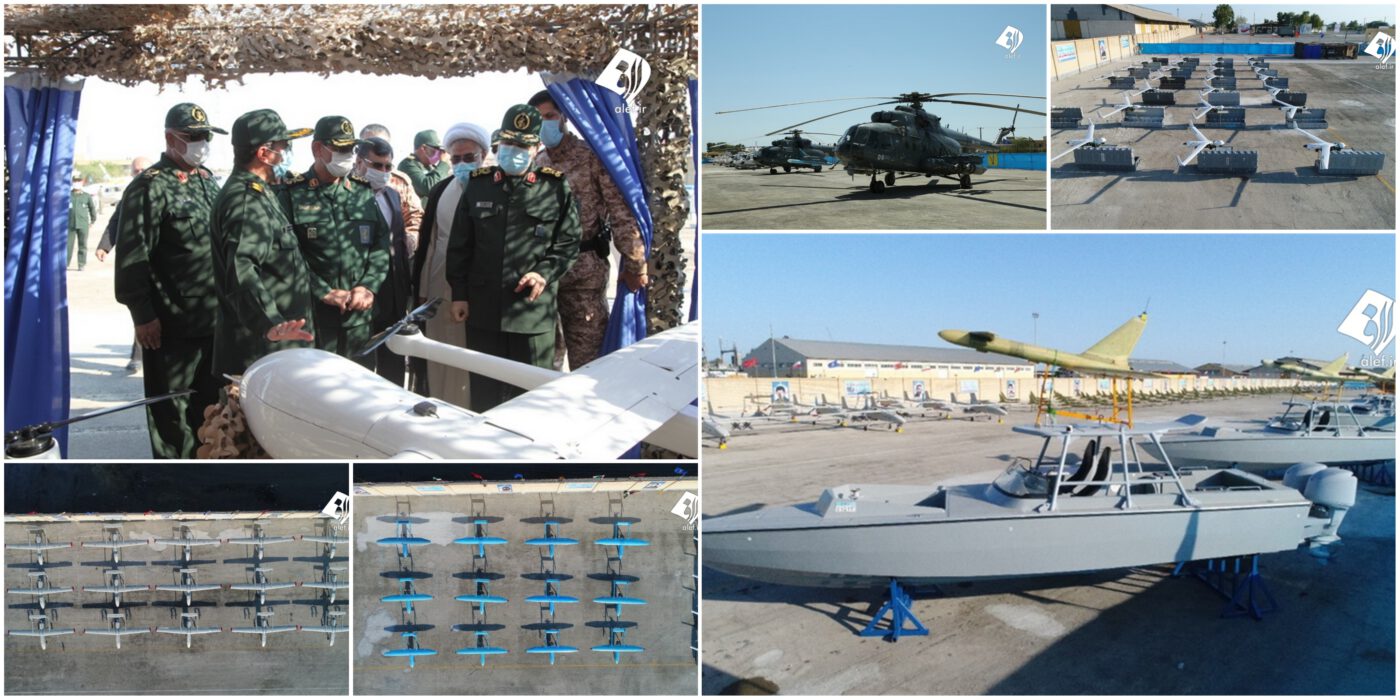
In this ceremony, IRGC commander Hossein Salami and IRGC Navy commander Alireza Tangsiri were present.
Three models of vertical take-off drones “Sepehr”, “Shahab-2” and “HodHod-4” were unveiled for the first time, whose mission is to be launched from vessels. “Mohajer-6” drone, two maritime helicopters and four attack helicopters armed with missiles, were among the aircraft delivered on September 23.
Mohajer-6, is an all-weather pilotless aircraft with a range of 200 km, and it has been designed to carry a payload of four missiles.
Alireza Tangsiri, the IRGC Navy commander said: “All the IRGC Navy operations are now carried out with homemade drones.”