On July 2, the Israeli army claimed to have intercepted and destroyed three drones near the Karish gas field located in the north of occupied Palestinian waters in the Mediterranean Sea. One of these drones was destroyed by a warplane and the other two were destroyed by missiles fired by a warship.
In response to this claim, the Lebanese Islamic Resistance only confirmed the sending of three reconnaissance drones to the disputed area with the Zionist regime in the Mediterranean Sea and did not mention any other details of this matter. Hezbollah considered this operation successful and announced that these drones carried out their mission in a good and appropriate way and the desired message was delivered to Israel.
EEZs in the eastern Mediterranean – Maritime disputes in Mideterenean
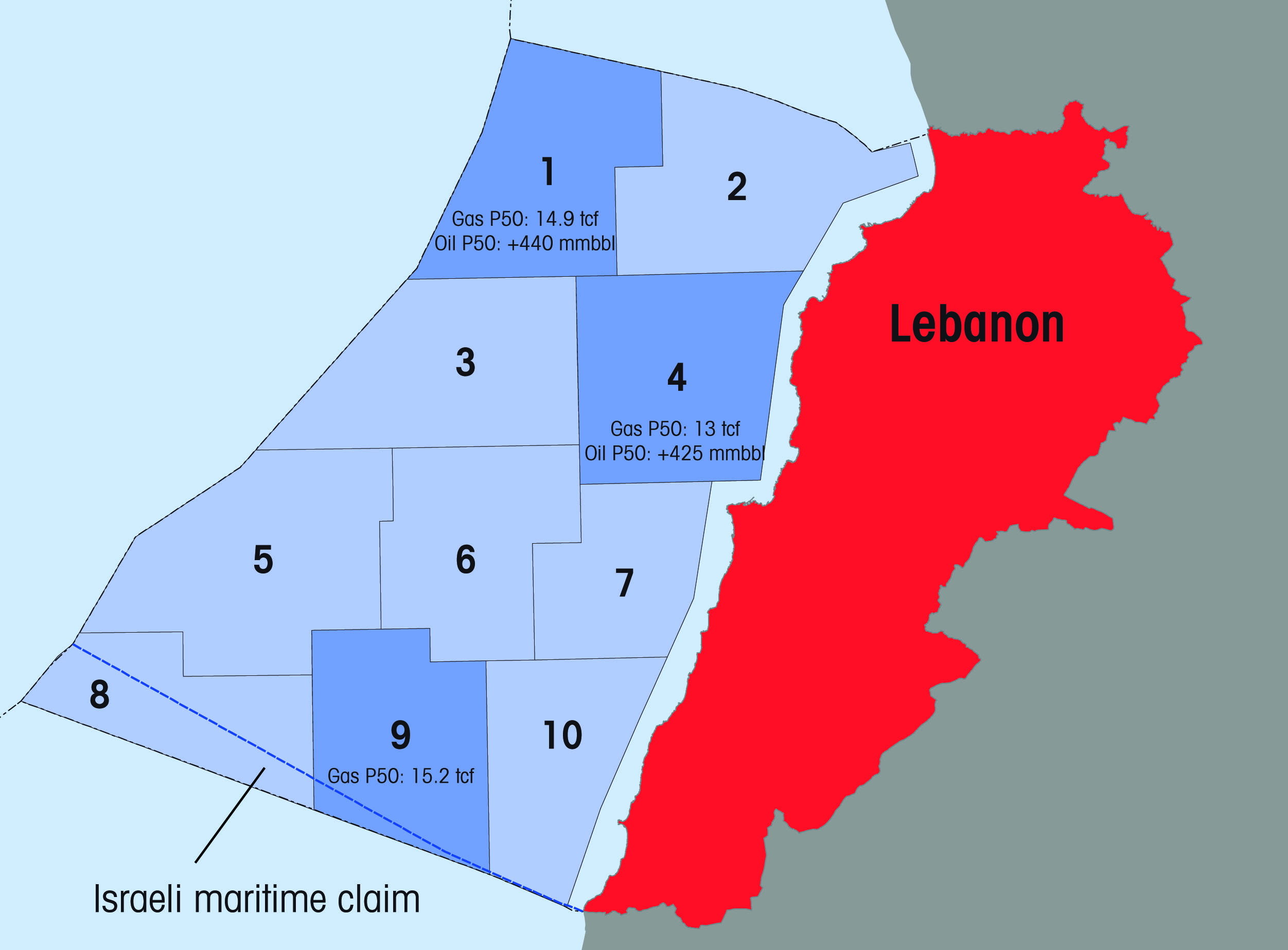
The dispute between Lebanon and the Zionist regime is over the exclusive economic zone (EEZ), as well as the exploration of natural gas and oil energy in parts of these areas. Through the US mediation, Israel is trying to directly negotiate with the Lebanese government to send drilling ships and harvest these common resources, but Lebanon’s Hezbollah considers these actions as occupation and aggression against Lebanon and has announced that it will confront Israel’s activities in this area. Therefore, sending drones to Karish Field is a kind of Hezbollah’s warning to Israel for recent activities in the eastern Mediterranean Sea.
In the early hours of July 2, the Israeli warplanes fired several missiles at Hamidiyah area in south of Tartus. Two civilians reportedly were injured by the attacks.
According to the Syrian military source, “At around 06:30 local time on Saturday, the Israeli enemy fired several missiles from the direction of the Mediterranean Sea, west of Tripoli, Lebanon, and attacked several chicken farms in the suburbs of Hamidiyah town, located in the south of Tartus. This attack resulted in the injury of two civilians, including a woman, and caused material damage.”
The hacking group ‘Moses Staff’ shared a zip file of Israeli regime electricity network information and released a video in both English and Hebrew stating that “This is just the beginning. From now on, you will suffer irreparable damage. We will punish you. The goal is clear, definite and precise. This is only a small part of our access to your power grid … You will soon be in the dark.”
Moses staff hackers had previously obtained and released other classified documents, including personal information of the Israeli military, financial statements, etc., by cyber attacks on Israeli regime’s infrastructure.
In November 2021, Moses Staff released a trove of files containing the details of hundreds of members of the Israeli military, as well as personal pictures of Benny Gantz, the Israeli Defense Minister. They also hacked into Israel’s systems on November 14th and released 22 TB of 3D map of the occupied territories with an accuracy of 5 cm and profiles of dozens of the IDF’s 8200 secret unit.
The American-Israeli computer company Checkpoint has claimed that Iranian hackers hacked into the email accounts of former Israeli officials and carried out targeted phishing attacks against politicians. Some of the people targeted by the hackers are well-known Israeli figures, including former Israeli Foreign Minister Tzipi Livni, an Israeli army general and former US ambassador to occupied Palestine.
The hackers are said to have infiltrated at least six months ago, using the name of this prominent Israeli army general and a number of other well-known figures to gain access to the documents and information of high-ranking Israeli officials.
In recent months, cyber attacks on the sensitive infrastructure and institutions of the Zionist regime have increased sharply. As a result of these attacks, important information was stolen by hackers, which has caused concern among Israeli security and political officials.
On June 8, at around 9:35 pm local time, a suicide drone struck Pirmam Road near the city of Erbil. According to the Iraqi Kurdistan Regional Anti-Terrorism Organization, three civilians were injured and several vehicles were damaged during the attack.
So far no group has claimed responsibility for the attack.
It should be noted that several security agencies and consulates of Germany, the United States and the United Arab Emirates are located near the Pirmam area.
The Minister of Interior of the Kurdistan Region confirmed the news of the drone attack in the Pirmam area and announced that the attacks were carried out by some outlaw groups. Following the attack, Iraqi Kurdistan Regional Government (KRG) Prime Minister Masrour Barzani and Iraqi Prime Minister Mustafa al-Kadhimi spoke by telephone about launching a joint operation to identify the perpetrators of the attack and punish them.
#Iraq#Israel At 21:42 local time, Ilak Ron, a senior official of the Mossad assassination unit, reportedly was killed in a suicide drone attack on Pirmam Road in north of #Erbil. The United States has issued a Level 4 warning for travel to Libya and Iran… pic.twitter.com/HvuBNYSzgM
Some local media outlets believe that the initial target of the drone attack was the US Consulate in Erbil, which was shot down by Kurdish security forces, but a number of other media outlets claim that several members of the Israeli Mossad intelligence agency were killed in the attack. One person named “Ilak Ron”, the commander of the Zionist assassination squad, reportedly was killed.
Local sources also said that the main vehicles targeted were SUVs and that security forces did not allow anyone to take pictures or videos of them.
Footage from the drone attack in Erbil
So far, no credible evidence of this claim has been published, but in a strange move, the media of the Kurdistan Region have published images of the injured in this incident, in which no traces of injuries can be seen! Also, the level and type of injuries of the people in the picture are not commensurate with the extent of the destruction of the car, and this reinforces the speculations about a targeted drone attack on the car carrying the Israeli Mossad operatives.
Slight injuries that do not match with the images of drone attack on vehicleImages of the targeted vehicle in the Pirmam roadA video of the remains of the suicide drone
According to a Syrian military source, “at 04:20 local time, the Israeli army attacked several targets south of Damascus with several missiles from the occupied Golan Heights. Syrian air defenses shot down most of the missiles. The attack injured a civilian and caused material damage.”
According to the Syrian Ministry of Transportation, all flights at Damascus International Airport have been suspended following the attack.
According to a Syrian military source, at 23:18 local time on June 6, the Israeli enemy from the occupied Golan Heights fired several missiles at areas south of Damascus. The Syrian army’s air defenses countered the invading missiles, intercepting and destroying most of them. The attack resulted in material damage.
No further details were released but the attack reportedly carried out on Kiswah area south of Damascus.
According to a statement from the Syrian Ministry of Defense, “At about 23:01 local time on Friday, the Israeli army fired several surface-to-surface missiles from the occupied Golan Heights at south of Damascus. The attack has so far resulted in the martyrdom of three Syrian soldiers and other material damage.”
Als, a civilian was wounded when a wreckage of one of the downed Israeli missiles landed on the outskirts of the Al-Rawdha Hotel in the Zainabiya district of Damascus.
It is also said that as a result of this attack, a large fire broke out near Damascus International Airport and two flights of this airport were delayed.
On May 23, Israeli warplanes fired several missiles from the Mediterranean Sea west of Banias, targeting some points in the central region.
In this regard, the Deputy Head of the Russian Center for Reconciliation in Syria, said: “On Friday evening, from 20:25 to 20:32 local time, six Israeli Air Force F-16 fighter jets without entering Syrian airspace fired 22 missiles at the Syrian Research Center facility in the area of Masyaf and the port of Banias. Syrian air defenses destroyed 16 missiles and a drone.”
He added: “As a result of Israeli airstrikes, three Syrian soldiers and two civilians were killed and two Syrian soldiers were wounded. The special equipment warehouses of the Syrian Research Center were also damaged.
Satellite images released from the Masyaf area show that at least two buildings were severely damaged and parts of them destroyed as a result of Israeli airstrikes.
A Syrian military source stated that, “About 8:20 p.m. this evening, the Israeli enemy carried out an air attack with bursts of missiles from the direction of the Mediterranean west of Baniyas, targeting some points in the central region (likely Hama province). Our air defenses confronted the aggression’s missiles and shot down most of them.” The source added that the aggression “led to the death of five, including one civilian, wounding seven citizens, including a child, and causing some material losses.”
The SANA news agency indicated that the Israeli aggression also resulted in the outbreak of several fires in the farms of Masyaf countryside in the western Hama, as a result of the fall of a number of hostile missiles in those areas.
It should be noted that on April 27 also, the Israeli warplanes fired missiles from Lake Tiberias at targets around the city of Damascus, killing four Syrian soldiers and wounding three others.
The outbreak of war in Ukraine has affected the world energy market. The most important event after the increase in oil and gas prices is the limitation and conditions of the new supply of energy to the EU market by Russia. This is why the European Union is thinking of reducing purchases from Russia to supply gas.
Europe, meanwhile, is thinking of countries that can meet this need. Europe’s strategy is to meet its needs from several sources so that it does not become dependent on one source.
In addition to increasing oil and gas purchases from old suppliers, Europeans are also turning to new suppliers. Over the past month, news of Turkish-Israeli cooperation has shifted the focus of the energy market. The Leviathan and Tamar gas fields in the waters of occupied Palestine, as well as the oil and gas fields in the disputed EEZ between Lebanon, Israel and Cyprus in the eastern Mediterranean, are a new source of gas for Europe.
Lebanon’s oil and gas blocks and the disputed area
Turkey has no territory in this area, but continues its illegal exploration due to the occupation of the northern Republic of Cyprus and the formation of the de facto Turkish government of Northern Cyprus. The news of cooperation with Israel in these fields and the pipeline connecting the Turkish port of Ceyhan is a turning point in European strategy.
Gas pipeline from the Turkish port of Ceyhan to the occupied Palestinian gas fields
These fields are the closest point to the export terminal of Ceyhan port and Europe. From here, Turkey sends Baku-Tbilisi-Ceyhan oil and gas shipments to Europe. The security of this field is much higher than other fields in the Caucasus and Libya due to the military power of Israel and Turkey and the NATO base in Cyprus. The Russian Federation’s naval and air base in the port of Banias and Latakia are not efficient enough to cut it off, but it is a potential danger.
The current challenges for these pipes and fields are protests by the Lebanese and Cypriot governments, Iranian and Russian bases in Syrian ports, and pro-Iranian forces in Lebanon.
Cyprus’s European nature and de facto Northern Cyprus government also do not have much opposition to Turkish influence in this area. They are relinquishing their share, and the main challenge is on the eastern shores of the Mediterranean.
The Lebanese government’s opposition, due to the presence of Iranian supporters, including Shiite parties in the parliament and cabinet, is a serious and important issue that makes things difficult for Israel politically. They are a major obstacle to Israel, Turkey and the European Union, but the Lebanese government needs such a resource to get rid of its crisis-ridden economy. This reduces the share of other parties. In this case, the European Union is trying to attract the Lebanese cabinet with its own groups and negotiate with Iran.
EEZs in the eastern Mediterranean – Maritime disputes in Mideterenean
At around 3 am local time, the Israeli army fired several surface-to-surface missiles at targets near the town of Hadar, causing material damage.
Hours after sunrise, Israeli forces launched a second artillery attack on Syrian territory, targeting SAA 90th Brigades on the outskirts of Jabhat al-Khashab, near the occupied Golan Heights, but no casualties were reported.
Syrian officials and the Israeli regime have not yet commented on the attacks, but it is likely that in the coming days the Israeli army will claim that it carried out these attacks under the pretext of attack on Iranian-backed forces or Hezbollah.
This is the first Israeli attack on Syrian territory since Syrian President Bashar al-Assad’s visit to Iran.
The last attack of the Israeli regime on Syria took place on April 27 this year. Israeli warplanes fired missiles from Lake Tiberias at targets around the city of Damascus, killing four Syrian soldiers and wounding three others.