Facts and figures on the ground show that the Russian Aerospace Forces have not been able to fully control the sky over Ukraine since the beginning of the war, and the Ukrainian army has used defense systems such as S-300 to counter operations deep inside Ukraine by Russian helicopters.
In the past fifteen months, Ukraine received a set of the most advanced missile systems and Western-made defense systems.
However, the Russian army succeeded in utilizing glide bombs. Such bombs, with their programming modules and low-altitude flight capability, accurately hit targets at distances of 40 to 60 kilometers. The glide bomb paves the way for targeting without firing expensive cruise missiles or dispatching aircraft into areas covered by air defense systems.
However, the S-300 systems will still pose a serious threat to Russian aircraft. The Russians say there is a solution to this problem to control Ukraine’s sky.
The solution is to use bomber drones instead of fighter jets and helicopters. Some Russian media outlets believe that instead of using Sukhoi S-70 Okhotnik-B drones, the Russian army should use similar Iranian UAVs.
According to Top War, we talk about the offensive and reconnaissance drones of the Saegheh type, which were reverse-engineered and produced in Iran based on the basis of the technology of the US RQ-170.
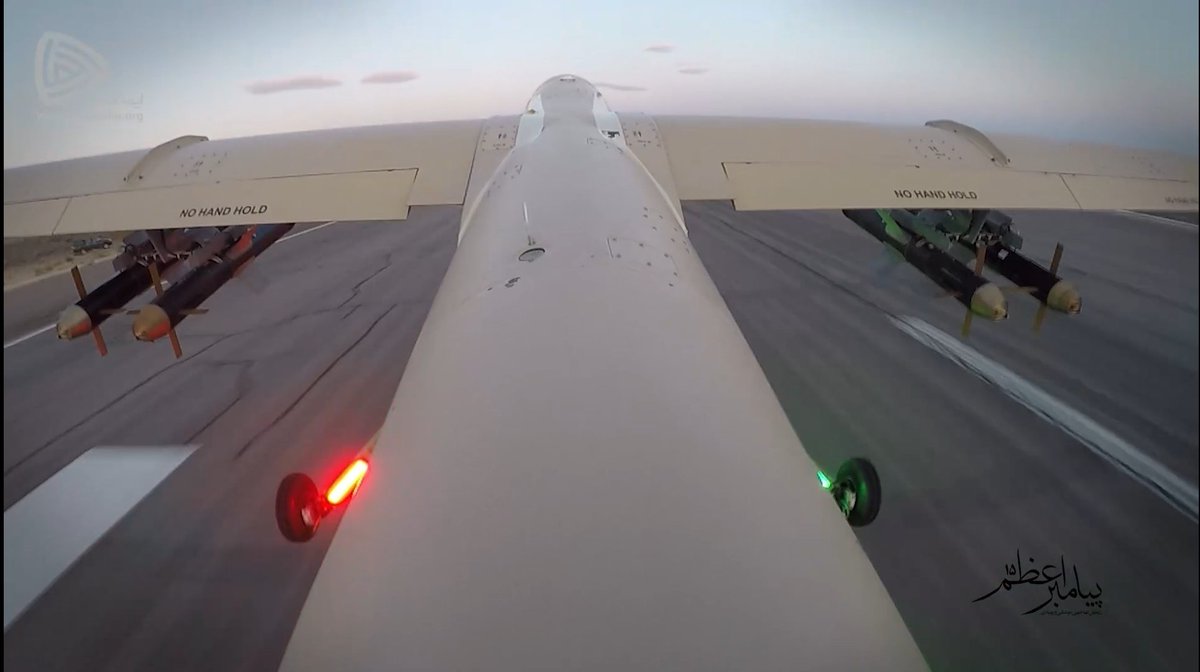
Iran designed, produced and carefully studied several multi-purpose drones using US stealth drone technology. The difference between Shahed 141 and Shahed161 drones is that Shahed 161 uses a jet engine and Shahed 141 uses a piston engine as a propellant.
Shahed 141 drone has a speed of 275 kilometers per hour and its weight during flight reaches 175 kilograms and it can fly up to an altitude of 20,000 feet.
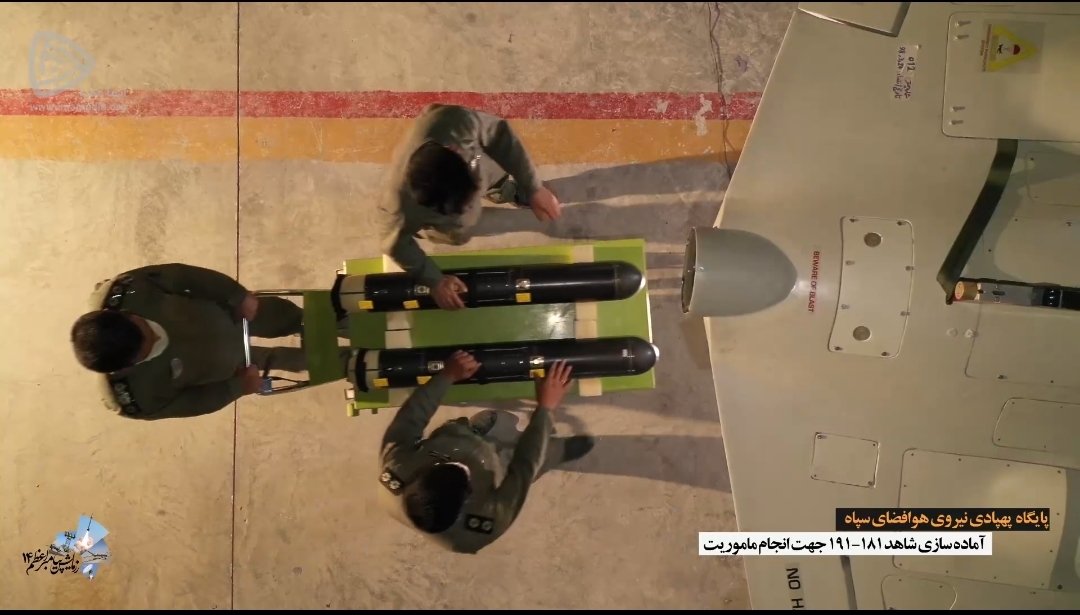
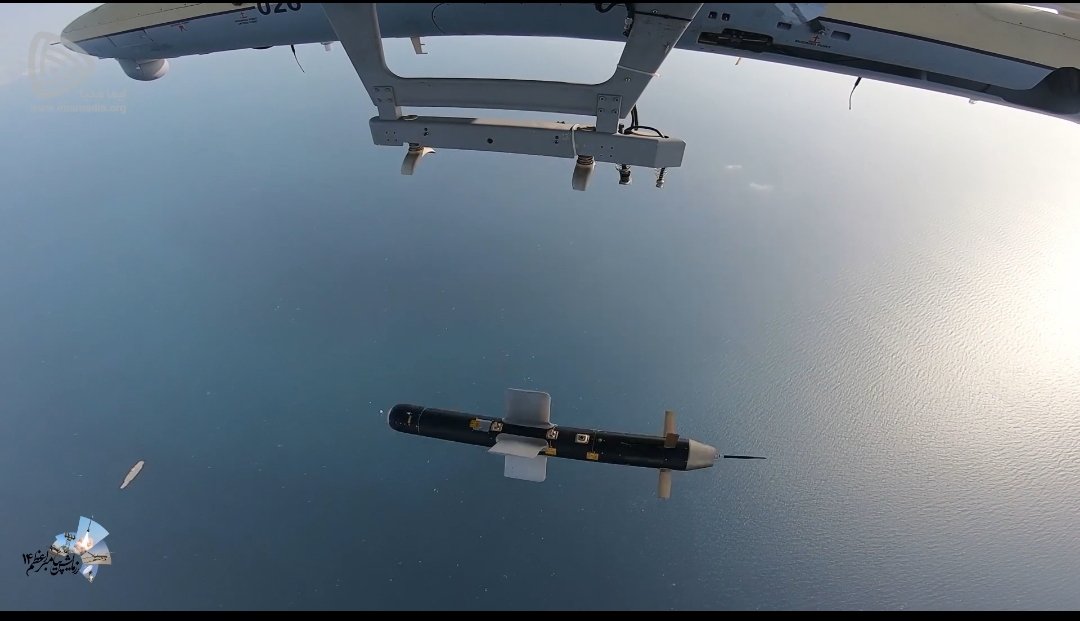
It has the ability to fire two smart “Sadid” bombs with the weight of 34 kilograms. Sadid is a guided anti-armor and air-based missile. And Russians are very interested in it; some Russian military analysts suggested purchase of Sadid-1 and Sadid 345 missiles from Iran!
Sadid 345 is vital for Russia, because the bomb is very suitable for striking enemy radar equipment or artillery personnel. The bomb has three types of guidance, one of which is televised guidance, which has the least accuracy and its error is about 5 meters.
The Russian media argued that by using such drones, it is possible to penetrate deep into enemy defense lines (without endangering the lives of pilots of fighter jets) and easily hit predetermined targets. Also, unlike Geranium-2 (Shahed 136) UAVs, such drones are reusable. The use of composite materials in the construction of the drones has reduced their radar reflection.
In recent months, Western military and intelligence officials announced that the Russian army used more than 400 Iranian-made offensive drones in attacks on urban infrastructure in Ukraine; but, Spokesman for Iran’s Foreign Ministry Nasser Kanani stated that Tehran repeatedly responded to baseless allegations by Ukrainian officials regarding the alleged transferring of drones to Russia and once again it is emphasized that Iran has not exported any military equipment to any party for the usage in the Ukraine war.
There have not been released any documents or evidence regarding Russia’s use of Iranian bomber drones in the Ukraine war so far, but it seems that if the war continues, we will witness the entry of various Iranian weapons, especially Shahed 141 and Shahed 161 drones into the battlefield.
However, war zones are one of the main places to test arms and ammunition and Iran is not an exception in this regard; so, it is expected to take advantage of the opportunity.
The first member of the Sadid family was exhibited at the Kish Air Show in 2010. The first two members of the family, Sadid-1 and Sadid-342, were assembled by the IRGC, and due to the fact that its parts were the same as the Toofan missile, the parts were delivered to the IRGC from Montazer Al-Mahdi Industries belonging to the Ministry of Defense, which produces the Toofan (Iranian TOW) missile.
It seems that the production and use of the Sadid family dates back to before their unveiling in the exhibition of the achievements of the Islamic Revolutionary Guard Corps in 2013. The proof of this is the display of different types for the first time in this exhibition. Sadid’s operational record in all its types in Syria is brilliant.
In the following, we will examine different types of Sadid bombs and missiles. The types that have been officially unveiled so far are as follows:
1- Sadid-1 missile: The first member of the Sadid family is the Sadid-1 missile. This missile was unveiled at the Kish air show in 2010 by installing it on Shahed 258 helicopters.
Shahed 285-C marine model helicopter equipped with Sadid-1 missile at Kish air showShahed 285-A marine model helicopter equipped with Sadid-1 missile at Kish air show
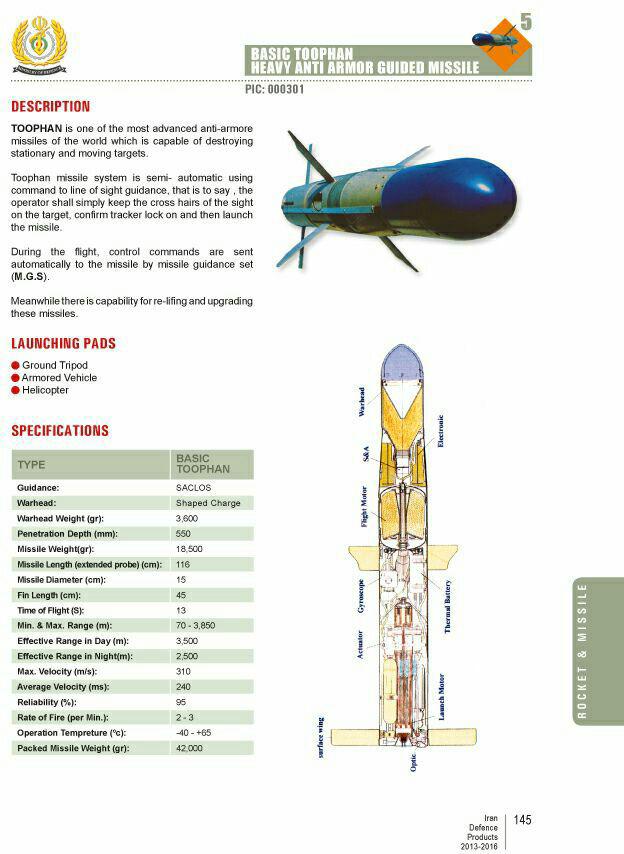
Sadid-1 missile is very similar to Toofan anti-armor missile. If you pay close attention to the placement of the wings and the engine gas outlet in Sadid and Toofan missiles, you will see a great similarity between the two missiles.
Comparing the appearance of Sadid-1 missile and Toofan missile, their similarity is quite obvious.
Sadid-1 missile has two rows of variable wings, like Toofan missile, and the size and direction of folding of wings in both missiles are completely similar to each other. In the middle of the rocket, there are two hot gas outlets for the main rocket engine, and at the end of the rocket, there is the outlet of the primary engine that is used to launch the rocket from inside the tube, which is completely similar to each other. However, at the end of Sadid-1 missile, the parts related to wire guidance, including two wire spindles and xenon lamps related to Tau missile, have been removed, which is the reason for the difference in the way the missile is guided.
Comparison of appearance of Sadid-1 and Toofan anti-armor missiles
The specifications of Sadid-1 missile have not been officially announced yet. But by comparing and matching it with the Toofan anti-armor missile, almost accurate information can be obtained.
Toofan anti-armor missile in prototypes is capable of penetrating 550 mm of armor at an effective range of 3500 meters. Considering the possibility of firing at an initial speed from the drone and the possibility of gliding if released from a height of 5 km, a range of more than 7 km can probably be considered for this type of missile. Due to the launch of this missile from the sky, which allows this missile to attack from above, its 550 mm penetration is enough to target any type of armor. There are also variants of Toofan missiles with a longer range and penetration power of up to 900 mm.
Due to the great similarity of Sadid-1 missile and Toofan anti-armor missile, the weight of these two missiles should be very close to each other. Toofan-1 has a weight of 18.5 kg with a warhead of 3.6 kg, and the weight of the missile and its tube is 42 kg. Due to the fact that the weight of Sadid-1 missile is not announced, this missile can also be considered 18.5 kg. Due to the use of Sadid-1 tube and rocket on UAV and helicopter, the weight of 42 kg should be considered for its set.
Also, the best way to determine the dimensions of the Sadid-1 missile is to consider the dimensions of the Toofan missile. The length of the Toofan missile is 116 cm and its diameter is 15 cm.
Specifications of Toofan 1 missile which has been officially published. Maximum range: 3850 meters Minimum range: 70 meters Effective range: 3.5 km Effective range at night: 2.5 km Missile weight: 18.5 kg Warhead weight: 3.6 kg The weight of the complete package of the missile: 42 kg Missile length: 116 cm Missile diameter: 15 cm Armor penetration rate: 550 mm
The Sadid-1 prototypes did not have seeker in its nose, but in May 2014, during the visit of the Leader of the Revolution to the exhibition of the achievements of the Islamic Revolutionary Guard Corps, two types of Sadid-1 missiles with optical and infrared guidance were seen. This new possibility can bring fire-and-forget capability to Sadid-1 missile.
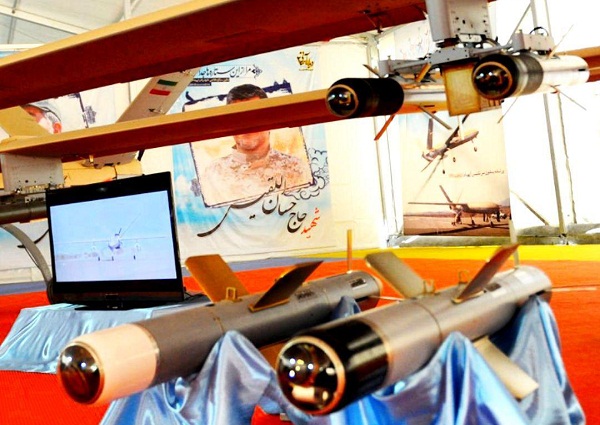
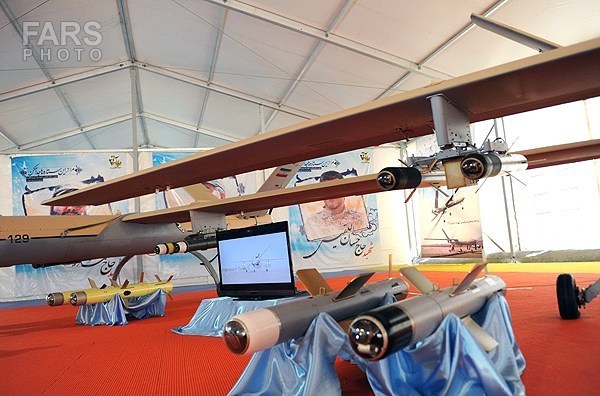
A picture of the first Sadid-1 sample without a seeker in its noseSadid-1 missile with optical seeker on the ground and Sadid-1 missile with infrared seeker under the wing of Shahed 129
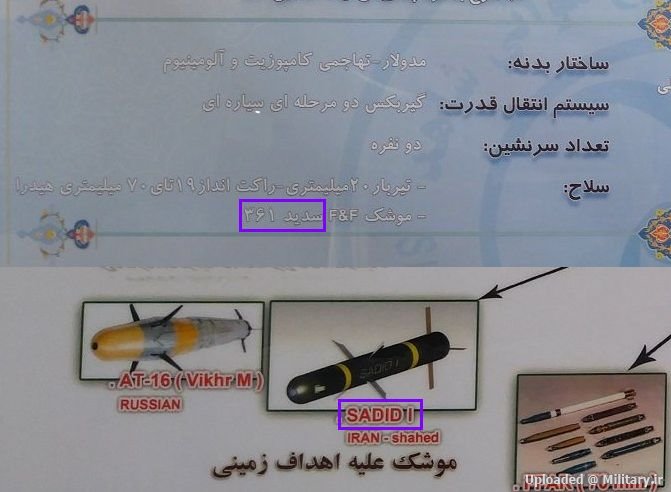
This missile has been introduced in some media with the names of Sadid 361 and Fatah 362 missiles.
The name of Sadid-1 and Sadid 361 missiles on the catalog published for the Shahed 216 helicopter
Possible specifications of Sadid-1 missile: Diameter: 15 cm Length: 116 cm Missile weight: 18.5 kg Warhead weight: 3.6 kg Warhead type: Shaped charge Packed missile weight: 42 kg Range: 7 km if released from a height of 5 km
2- Sadid-342 glide bomb: The Sadid-342 bomb is the second member of the Sadid family, which was showcased in 2014 during the visit of the Iran’s supreme leader to the exhibition of the achievements of the Islamic Revolutionary Guard Corps. However, due to the display of the Sadid-345 bomb in the same exhibition, the operational history of the Sadid-342 probably goes back to before the year of its unveiling.
In this bomb, the engine is removed and the bomb is attached to under the UAV’s wings using two rings. The main difference between Sadid-342 and Sadid-1 missile is these two things. The wings of the bomb are not different from the Sadid-1 missile, and the wings are folded into the body.
Sadid-342 bomb
The Sadid-342 bomb has been produced in three types of television, infrared and thermal guidance.
Sadid-342 bomb in the exhibition of the achievements of the Islamic Revolutionary Guard Corps in 2014. This bomb has an infrared filter, which is often used for infrared seekersSadid-342 bomb with a mercury coating indicating the use of a thermal seeker (IR) in this bombSadid-342 bomb with TV guidance installed on the wing of Shahed-129 drone and Sadid-345 on the ground
Due to the removal of the main engine in this bomb, more explosives can be used without much change in the weight of the bomb. It can be considered that the Sadid-342 bomb will probably be the same weight as the Sadid-1 missile. Removing the main engine will reduce the range of this bomb, and its range can be predicted to be about 3 km if released at a height of 5 km.
Possible specifications of Sadid-342 glide bomb: Diameter: 15 cm Length: 116 cm Missile weight: 18.5 kg Warhead weight: 7 kg, probably twice as much as Sadid-1 missile (there is a possibility of reducing the weight of the warhead and increasing the range) Warhead type: Shaped charge Packed missile weight:: 42 kg Range: 3 km if released from a height of 5 km
3- Sadid-345 glide bomb: Iran’s experiences in using Sadid missiles and bombs in the Syrian war led to the production of a new type of Sadid bombs. Sodid-345 was also showcased in the exhibition of achievements of the Islamic Revolutionary Guard Corps in 2014.
In Sadid-345 bomb, the front wings have become fixed wings and it is designed in a way that brings the maximum amount of lift to drag ratio. But the rear wings are still folded.
It should be noted that the only member of the Sadid family which its specifications have been officially announced is the Sadid-345 glide bomb.
Specifications of Sadid 345 bomb published at MAKS 2017 exhibition in Russia
According to the specifications of Sadid-345, this bomb is suitable for attacking gatherings or radar equipment and enemy artillery personnel. This bomb has three types of guidance, one of which is television guidance, the accuracy of which is the lowest and its error is 5 meters. Clear air is needed to receive television quality images and this is a very big limitation for this bomb. But there is also a type of laser guidance, which the error rate is declared to be 2.5 meters. Laser guidance also loses its effectiveness in dusty and foggy weather conditions. The third type of conventional guidance on this bomb is guidance with an IR seeker, which has brought an accuracy of 2.5 meters, which is a very good number. In addition, the thermal seeker can be used in all weather conditions.
Bottom right: Sadid-345 in the right side with television guidance and in the left side with infrared guidance Top right: Sadid-342 under the wing with TV seeker Left: Sadid-1 television guided missile on the ground and Sadid-1 infrared guided missile installed under the wing of the droneThe bombs on the right side are with television guided and the bombs on left side have a mercury coating to use the thermal (IR) seeker
The warhead weight and the range of Sadid-345 bomb have not been announced. Considering the 470 mm increase in the length of the Sadid-345 and the increase in the weight of the bomb by nearly 15 kg, about 20 kg of explosives can be considered for this bomb. It should be noted that in the above calculation, the increase in the weight of the wings is considered equal to the removal of the engine and its fuel consumption. Of course, a variant with the name Sadid-362 is mentioned in some sources, which must be the same as Fatah 362, which is the Sadid-1 missile.
Specifications of Sadid-345 glide bomb: Weight: 34 kg Length: 1630 mm Diameter: 152 mm Warhead type: Shaped charge Mission: Destroy various moving and stationary targets Warhead: H6 explosive – fragmentation Type of fuse: Impact Lethal radius: 30 meters Type of aircraft: UAV Hit accuracy: – By using IR seeker, the accuracy of impact in radius of target is 2.5 x 2.5 meters. – By using laser seeker, the accuracy of impact from laser radiation is 2.5 meters – By using visible seekers, if there is not image processing errors, the accuracy of radius impact is 5 meters.
A picture of Shahed-129 and Sadid bomb. This image shows us the size and ratio of the Shahed-129 drone and the Sadid bombUsing the Saegheh drone and dropping Sadid-342 bombs from the drone to attack ISIS terrorists in SyriaA video of Sadid’s bomb launch from Shahed-129 drone