Tag: SDF

  • Tension increases in northeast of Syria; Turkey might operate against Kurds again

    Tension increases in northeast of Syria; Turkey might operate against Kurds again

    In the past week, tension and conflict increased between SDF and Turkey’s militant at the contact line of safe zone in northeast of Syria.
    There were always sporadic conflicts in the area but the conflicts of past week were unusual and SDF repelled several limited operations of Turkish-backed forces which imposed significant casualties upon the militants.

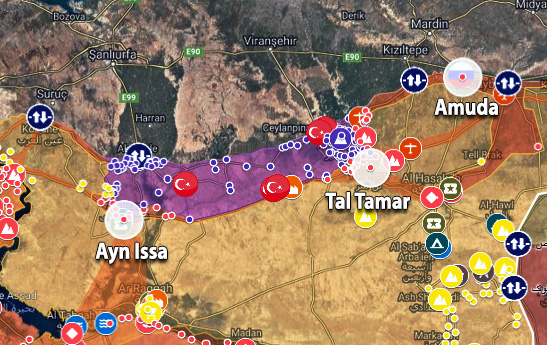
    Most of the conflicts took place near areas Ain Issa and Tal Tamar. The intensity of bombing and conflicts is so high that refugees of Ain Issa camp are evacuating.

    In the last two days due to the conflicts in north of Tal Tamar, near Tal Abu Rasin village and Bab al-Khayr between SDF and Turkey’s militants one Turkish troop killed and several militants wounded.
    Last week several Turkish-backed forces, who intended to infiltrate in north of Ain Issa, were killed and wounded.

    Therefore, the Russian military convoy came to Ain Issa town and met with SDF commanders. According to latest updates, to prevent the Turkey’s possible operation in Ain Issa area, Russia asked SDF to leave the control of the area to Russian-Syrian joint force. In case of SDF agreement, Russia will erect two watch post near Ain Issa.

    During Turkey’s previous operation in the area Turkish troops advanced till Tal Tamar but when Russian and Syrian forces arrived and established watch posts in Tal Tamar area, Turkey’s advance halted.

    It is noteworthy that Turkish army started an operation “peace spring” on Oct 9, 201 in east of Euphrates against SDF. The operation had USA permission and they retreated back and left Kurds alone against Turkey. Finally SDF accepted support of Russia and Syria and they took position in the contact lines between Raas al-Ain and Tal Abyadh which resulted in the operation to stop and a safe zone formed.

    Click to see the full size map
  • SDF commander confessed that PKK present in north of Syria battles

    SDF commander confessed that PKK present in north of Syria battles

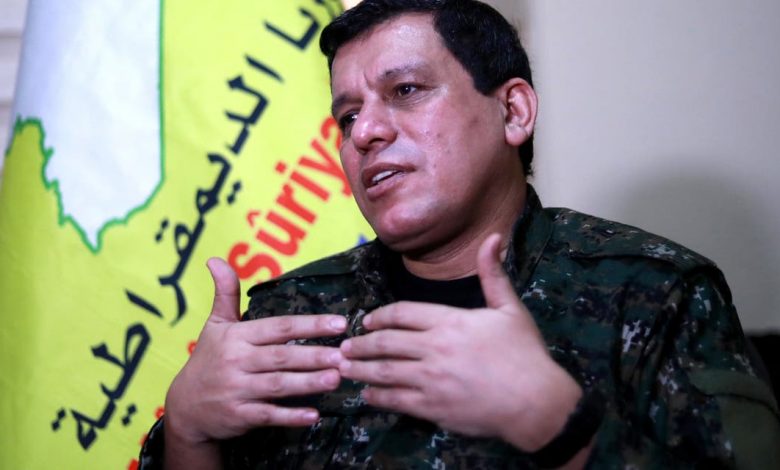
    The commander of the Syrian Democratic Forces (SDF), Mazloum Abdi, said in an interview that 4,000 members of the Kurdistan Workers’ Party (PKK) terrorist group had been killed in recent years in Syria’s north and northeastern battles against ISIS, the Turkish army and its militant proxies.
    These people are those who were killed in the form of YPG or SDF forces or even independently in the form of the PKK group in northern Syria. In the past, the United States and Kurdish forces in northeastern Syria have remained silent or denied the existence of the PKK.

    The official announcement by the SDF commander confirms the accusation of Turkey that SDF works with PKK.

    It is noteworthy that Mazloum Abdi or Ferhat Abdi Şahin is a high rank commander of terrorist group PKK who was assigned as commander of SDF by Americans. In fact USA deceived the public by using the word “democratic” and gathered the militants in north of Syria and helped groups like PKK with all sorts of training supports and weapons.

    Mazlum Abdi has stated that he is looking for a new election in the areas controlled by the Syrian Democratic Forces, which is clearly the final outcome of this election to provide the conditions for achieving autonomy in northern Syria, and now is the ideal time to do so.
    In the recent months and specially after US election and Biden victory, Kurds of north of Syria became highly active and trying to seek autonomy in north of Syria again.

  • SDF name, USA benefit!

    SDF name, USA benefit!

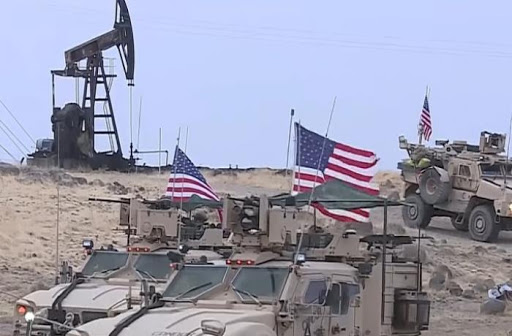
    Lindsey Graham stated that Mazloum Abdi, commander of Syrian Democratic Forces (SDF), signed a contract with an American oil company to renew oil facilities under control of SDF in northeast of Syria.

    In case this is true, first of all, signing contract without Syrian government permission is against international law. USA is present illegally in Syria and is an occupier. Signing a contract between an occupier and their proxies in a country is against international laws and shows US exploiting behavior.
    Second, Mazloum Abdi as a commander cannot be the side to sign the oil contract and it should be signed by politicians.

    Over the past few months, US forces improved security at all major oil fields in northeastern Syria. Hundreds of experienced SDF personnel were recruited and trained by the US to help guard these fields.

    It seems in the areas controlled by US proxies the military is the first power and political offices are only to legalize American occupation!

    YOUR SUPPORT IS CRITICAL TO KEEP ISWNews ALIVE!


    I’d like to thank readers for their confidence and support. Thanks to your support we can continue to perform our duty on reporting the important events in the region. So If you like our contents, please don’t feel embarrassed to contribute and help our project, for as little as 1 Dollar. Your contribution, however small, will help ensure our project continuity. Thank you.


  • Hasakah people protesting against SDF

    Hasakah people protesting against SDF

    According to local sources, in recent days people of al-Shaddadi town, south of Hasakah, protested against the behavior of SDF, which is supported by USA, which was subdued. In the last march on 4 June a civilian died due to SDF bullet and four injured.

    The reasons of protests claimed to be chaos, abduction, murder, exploiting and activities of SDF. In recent months, Hasakah and Deir Ezzor inhabitants protested against SDF and every time they were answered by fire of SDF.

  • SDF assigned to protect Syria’s oil!

    SDF assigned to protect Syria’s oil!

    According to the information, US is using its proxies in Syria, i.e., Syrian Democratic Forces (SDF), is trying to save its influence in east of Euphrates river and exploiting Syria’s gas and oil reservoirs.

    In recent weeks Americans activities increased near Raqqa city and hundreds of SDF are called to duty. Most probably these activities are following the increase in Russian and Syrian forces in east of Euphrates and USA tries to confront it using SDF forces.

  • Article: Damascus policy towards Syrian Democratic Forces and Arab tribes

    Article: Damascus policy towards Syrian Democratic Forces and Arab tribes

    From the beginning of crisis in Syria, to prevent the protests to expand and reach the biggest minority of the country, the government tried to collaborate and give space to Kurds of the area and Democratic Union Party (PYD) to prepare the situation for presence of military forces of the party in Kurdish inhabited areas. In the following sense, two months after the protests started in Syria in the middle of 2012, the government signed an agreement with the party and let them to come back to Syria. Near the end of 2012, Syrian government supported People’s Protection Units (YPG) after attack of opposition militias to Raas al-Ain town and left the service, security, military and economic affairs of Hasakah province, except the security square, to PYD.

    Although Syrian Kurds, after expanding their reign over Kurdish and even Arabic areas located in East of Euphrates river called “Jazirah”, started the system of self-government under support of USA, but their relation with Syrian government was in the state not peace nor war. There were limited engagements between them for time to time but never became a full enmity.

    In this situation, PYD (close to PKK in Turkey) as the main player of Kurds in Syria started the project of expansion and establishing Kurds in 2012 and from the beginning removed Kurdish National Council (ENKS), as the party close to opposition of Syria and Kurdistan Democratic Party (KDP) in Iraq (led by Barzani), from the battle.
    In fact, in the battle between two idealogies of Barzani and Öcalan, PYD led by Öcalan won.

    They established YPG as the military branch of PYD in March 2012 under command of officers from Qandil area as the first step and also formed the security and police forces of Asayish in the same year. In November 2013, formed self-government office in north of Syria, which divides the area ruled by Kurds to three cantons of Island, Kobani and Afrin and in 2014 three councils of lawmakers and executive to govern the three cantons.
    In October 2015, they formed Syrian Democratic Forces (SDF) from Arabs, of east of Euphrates, Kurds and Assyrians, with proposal of then US special envoy in coalition entitled fighting ISIS and under support of the coalition.

    However, the main player was still YPG and SDF was a distraction to avoid Turkey’s bad relationship with PKK forces. After establishment of SDF, Syrian Democratic Council (SDC) was formed as the political branch of it. Then in March 2016 SDF reported of a federal Kurdish government surprisingly which caused Syrian government and regional and international sides engaged in Syria to react negatively. However due to Turkey’s assault to Afrin area and occupying it, the issue of federal Kurdish government was suspended.

    In 2018, Kurds stepped down from federal government and just formed self-government system in north and east of Syria by establishing local councils under the names of different regions. (Jazirah, Kobani, Manbij, Raqqah, Deir Ezzor, Tabqah, Afrin)

    After the areas under control were expanded in east of Euphrates under support of USA, to manage the Arab-Kurd confrontation, SDF followed both attract and surpass policies using USA and Arabic capacities in Arabic tribes of the area.

    On the other hand, to revive the sovereignty on east of Euphrates area, having an upper hand to manage their relationship with SDF and confront USA occupation of the area, Syrian government started to approach tribes of the area by holding numerous sessions in Hasakah town to attract nomads to themselves and confront USA plans in the area. Therefore, the title and agenda of these sessions were more about confronting USA occupation and plans of dividing Syria rather than sovereignty of Damascus on north and east of Euphrates. Currently and after Turkey occupied some parts and after the Sochi agreement between Turkey and Russia, the situation is ready for return of Syrian army and Russian police to some of the area. Even though the sovereignty of Syrian government has increased in some areas ruled by SDF, they still reject to join central government and relying on USA, they try to have more in their hands in future negotiation with Syrian government.

    Therefore, Syrian government tries to use its pressure levers to manage Kurds and lower their bargaining ability in negotiations by approaching the chiefs of tribes there and giving privileges such as dropping charges against them, fixing some issues of local tribes, to make the younger generation to rebel against their chiefs and leave SDF and join the army.
    In the same sense, after Ali Mamluk visit to Qamishli and meeting chiefs and seniors of tribes, a high committee representing Damascus met with Salih Muslim, the former co-chairman of PYD, in Qamishli.
    In this meeting, the Damascus negotiating team offered the local administration which was contained in the reformed constitution in 2012, for the areas controlled by SDF but Kurdish team did not approve nor reject it. According to Faisal Azuz, presented in the negotiations, both sides tried to reach a plan between self-government and local administration plan that was mentioned in article 107 of the constitution.

    In conclusion, Syrian government plan regarding Kurds and Arabic tribes of east of Euphrates is to have full sovereignty in the area and their tactic is to approach and attract Arabic tribes of the area, who are the majority, prepare the situation of division between Kurds and Arabs and eventually having upper hand in negotiations with Kurds. In another word, they want to use the tribes to bring Kurds close to the central government and reduce their demands in the negotiations. However, the primary issue of Syrian government at the moment is Idlib and east of Euphrates comes after it.

  • Kurds and Russians Agreement on Russian Forces Deployments in East of Euphrates

    Kurds and Russians Agreement on Russian Forces Deployments in East of Euphrates

    According to this agreement, Russian forces will deploy in Amuda, Tal Tamar and Ayn Issa and increase their presence in Hasakah province and north of Raqqah.
    This news released while in recent weeks, the news of basing Russian forces in east of Euphrates was rejected strictly by SDF officials.

  • Syrian Army Entered Aliya Silos

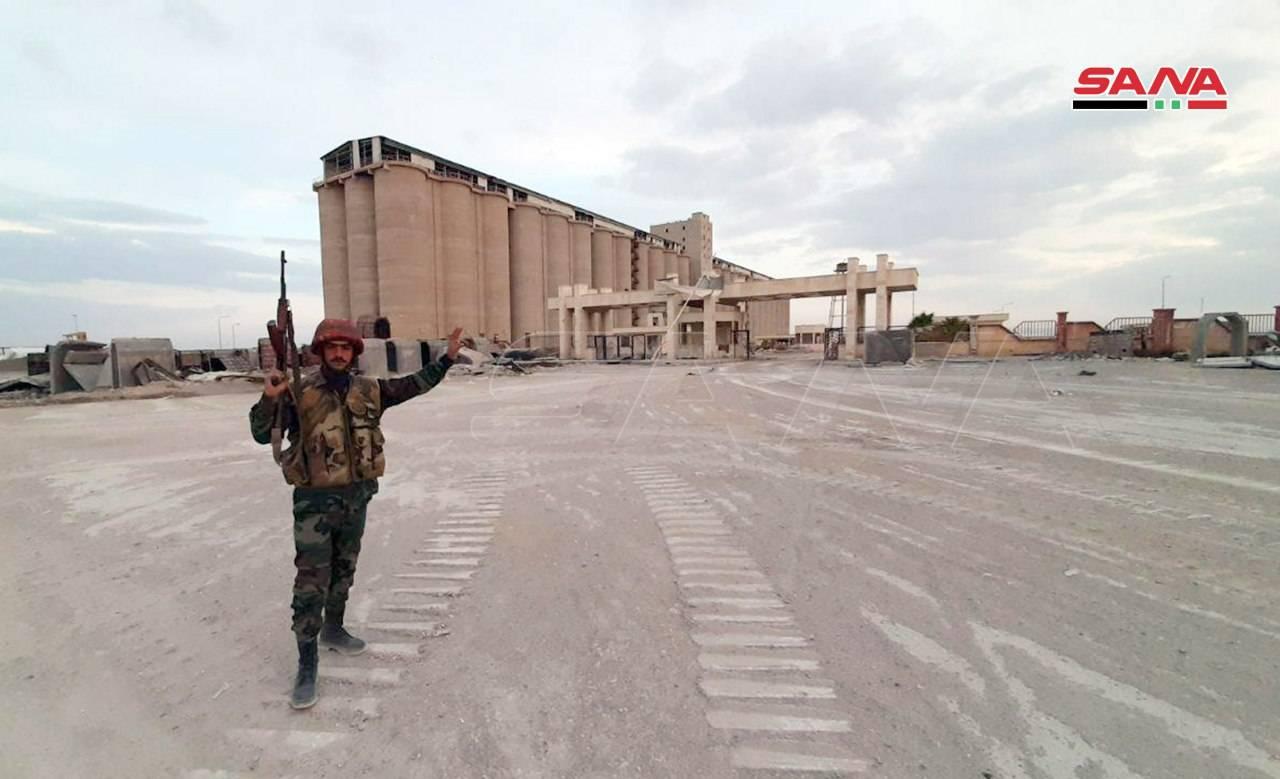
    Syrian Army Entered Aliya Silos

    The situation in the north of Hasakah province and in the Raas al-Ayn area has not changed significantly, and scattered clashes continue between Turkish mercenaries and Syrian Democratic Forces.

  • Map: Latest Military Situation in North of Raqqah, 27 November 2019

    Map: Latest Military Situation in North of Raqqah, 27 November 2019

    In the latest evolutions in Ayn Issa-Tal Abiad axis in north of Raqqah province, Syrian Army forces and SDF could repel Turkey’s militia from near refugee camp in Ayn Issa and north of the town.

  • Latest Updates on Syria, 6 November 2019

    Latest Updates on Syria, 6 November 2019

    1. Aleppo:
    Tahrir al-Sham terrorists shelled Jamiat al-Zahra district in Aleppo city.

    2. Hasakah:
    Heavy clashes between Turkey-led forces and Syrian Democratic Forces in Bab al-Khayr.

    3. Idlib:
    – Russian warplanes struck Rakaya, Kafr Sijna and Sheikh Sindian.
    – Syrian Army artillery pounded Hazarin and Maar Zita towns.
    – According to pro-militant media, one person killed and seven other were wounded due to Russian strikes on Jisr al-Shoghur area.

    4. Raqqah:

    Arrival of four Russian trucks carrying equipments including armored vehicles to the Russian-SDF Coordination Center in Ayn Issa. (image)

  • Latest Updates on Syria, 28 October 2019

    Latest Updates on Syria, 28 October 2019

    1. Idlib
    Russian warplanes struck Kafr Nubl and Hazarin village in south of Idlib. Pro-militant media reported of three person killed in these airstrikes.

    2. Hasakah:
    – Syrian Army has complete control over 90 km of border area in east of Ras al-Ain until Qamishli.
    – Clashes and fire exchange between SDF and Turkey-led forces in villages Tawilah and Saklawiyah in south of Ras al-Ain.
    – Turkey-led forces claimed that three Syrian Army forces were killed in Manajir village.

    3. Raqqah:
    New units of Syrian army deployed in Ayn Issa area, north of Raqqah province.

    4. Aleppo:
    Clashes between Turkish backed forces and SDF were reported in south of Jarablus.

    5. Deir Ezzor:

    Syrian Army officials inaugurated Mari’iyah bridge over Euphrates in presence of Russian officials. This bridge connects Mari’iyah and Marat villages and can bear military vehicles. (image)